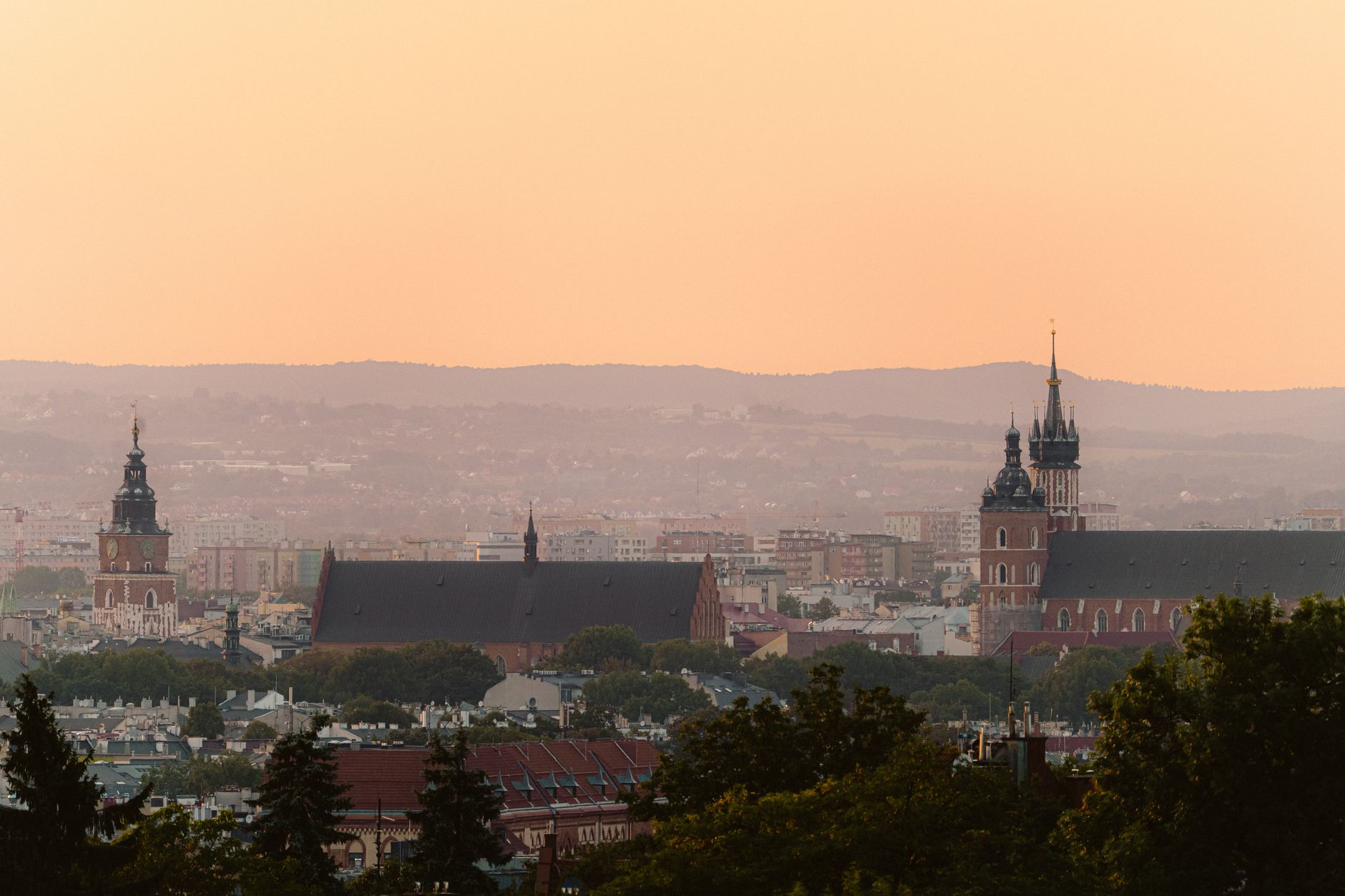
Poland is easy to underestimate.
Start Here
Many first-time visitors arrive with a short mental list: Kraków, Auschwitz-Birkenau, Warsaw, pierogi, vodka, maybe Gdańsk, maybe the Tatra Mountains. Those are important. But they are not the country.
Poland is a rebuilt capital where glass towers rise beside socialist-era avenues and a painstakingly reconstructed old town. It is a royal city where medieval streets, university courtyards, Jewish memory, salt mines, and late-night student life sit within a short tram ride of one another. It is a Baltic port shaped by trade, shipyards, amber, Hanseatic façades, war, Solidarity, and sea wind. It is a western city of islands, bridges, Germanic layers, university energy, and one of Europe’s most enjoyable market squares. It is a lake country, a forest country, a mountain country, a Catholic pilgrimage country, a Jewish heritage country, a borderlands country, and a food country that is far more regional and contemporary than the stereotype suggests.
The best Poland trip starts with a simple correction: Poland is not just Kraków plus a day trip.
Kraków is magnificent and often the easiest first base. Warsaw is essential if you want to understand modern Poland. Gdańsk explains the Baltic and the politics of the twentieth century. Wrocław gives you a joyful western-European urban rhythm with Polish, German, Czech, and Austrian shadows. Toruń, Poznań, Łódź, Lublin, Zamość, Białowieża, Masuria, Zakopane, the Tatras, and the Bieszczady all pull the trip in different directions. The challenge is not finding enough to do. The challenge is choosing a route that makes sense.
Poland rewards travelers who understand three things: history is visible but rarely simple; distances are manageable but not weightless; and the country changes significantly by region. A rushed itinerary can reduce Poland to a museum of trauma or a string of pretty old towns. A better itinerary lets the country breathe: capital, royal city, Baltic coast, mountains, forests, food, memory, and ordinary urban life.
Poland in one sentence: Poland is a layered Central European country of rebuilt cities, royal and Jewish memory, Baltic trade, mountain culture, forests, lakes, Catholic ritual, modern energy, and regional food, where the best trip comes from choosing a coherent historical and geographic corridor instead of treating Kraków, Warsaw, Gdańsk, Auschwitz, the Tatras, and Masuria as interchangeable map pins.
Basic data
| Population | About 37.5 million |
|---|---|
| Area | 312,696 km2 |
| Major religions | Roman Catholic majority with secular, Orthodox, Protestant, Jewish, and Muslim minorities |
| Political system | Unitary parliamentary republic |
| Economic system | Upper-middle-income social market economy led by services, manufacturing, logistics, technology, and trade |
Quick Verdict
| Question | Answer |
|---|---|
| Best for | History, architecture, World War II context, Jewish heritage, old towns, museums, food, affordable city breaks, trains, Christmas markets, castles, mountains, forests, lakes, Baltic coast, Catholic pilgrimage, ancestry travel, design, nightlife, and travelers who like Europe with depth and value. |
| Not ideal for | Travelers who want guaranteed warm weather, beach-resort simplicity, a single postcard identity, frictionless English everywhere outside major routes, or a trip that avoids difficult history entirely. Poland can be beautiful, but it is not emotionally weightless. |
| Ideal first visit | 7–10 days. Seven days gives you Warsaw, Kraków, and one additional axis. Ten days lets you add Gdańsk, Wrocław, the Tatras, or a more thoughtful heritage route without rushing. |
| Minimum worthwhile trip | 3 days for Kraków only; 4–5 days for Kraków plus Auschwitz-Birkenau and Wieliczka, or Warsaw plus Kraków; 6–7 days for Warsaw + Kraków + one add-on. |
| Best first-time route | Warsaw 2 nights, Kraków 3 nights, then either Gdańsk/Malbork, Wrocław, or Zakopane/Tatras depending season and interest. For a very classic week, do Warsaw + Kraków + Gdańsk. |
| Best months | May, June, September, and early October for cities and countryside; July–August for lakes, Baltic coast, festivals, and long days; December for Christmas markets and winter city atmosphere; January–March for mountain winter trips if snow conditions cooperate. |
| Best first-timer bases | Kraków for royal history, food, walkability, Auschwitz-Birkenau, Wieliczka, and the Tatras; Warsaw for modern Poland, museums, politics, and logistics; Gdańsk for Baltic history and coast; Wrocław for a second-city feel and western/southwestern routes. |
| Most underrated region | Lower Silesia around Wrocław, Książ, Świdnica/Jawor, Jelenia Góra, and the Karkonosze; also Podlasie/Białowieża for forests, Orthodox heritage, Tatar food, and borderland culture. |
| Biggest planning mistake | Treating Auschwitz-Birkenau as just another attraction, or trying to combine Warsaw, Kraków, Gdańsk, Wrocław, Zakopane, Auschwitz, Wieliczka, and Masuria in a single week. The map allows it; the trip does not. |
| One thing to book early | Auschwitz-Birkenau entry passes or guided tours, high-demand summer trains, Wieliczka tours, Malbork Castle in peak season, Tatra lodging, Christmas-market hotels, and any serious genealogy or private heritage guide. |
| One thing to leave unscheduled | Café time, milk-bar lunches, old-town wandering, parks, river walks, food halls, neighborhood exploring, and weather-dependent mountain or lake days. |
| Best first-timer advice | Choose one strong route logic: royal-and-memory Poland, capital-to-Baltic Poland, Kraków-and-mountains Poland, western-city Poland, Jewish heritage Poland, or nature-and-borderlands Poland. Poland becomes richer when the itinerary has a point of view. |
The Move
For a first Poland trip, do Warsaw + Kraków + one contrasting region. Add Gdańsk for Baltic trade and Solidarity history, Wrocław for western architecture and Lower Silesia, Zakopane/Tatras for mountains, or Lublin/Zamość/Podlasie for eastern borderlands. Do not try to make every famous stop fit one week.
Who Will Love Poland?
You will probably love Poland if you want:
- A European trip with major history, strong cities, good rail links, and better value than many Western European destinations.
- A country where a first trip can combine reconstructed old towns, royal castles, Jewish heritage, war memory, contemporary museums, cafés, nightlife, and regional food.
- A serious cultural trip that does not treat history as decoration. Poland asks visitors to think.
- A city-to-city route by train: Warsaw, Kraków, Gdańsk, Wrocław, Poznań, Toruń, Łódź, Katowice, Lublin.
- Food that moves from pierogi and soups to modern Polish cooking, bakeries, vodka bars, milk bars, Jewish-inspired restaurants, regional cheeses, Baltic fish, smoked meats, forest mushrooms, sour rye soup, and excellent casual dining.
- Architecture with layers: Gothic brick, Renaissance arcades, Baroque churches, royal castles, wooden churches, socialist realism, postwar reconstruction, industrial mills, modern museums, and contemporary glass.
- A trip that can be urban, reflective, outdoorsy, budget-conscious, family-friendly, or ancestry-focused.
You may struggle with Poland if you want:
- A purely light vacation. Poland can absolutely be fun, but some of its most important places are memorials, museums, cemeteries, ghettos, former camps, and cities rebuilt after destruction.
- Guaranteed sunshine or warm evenings. Weather is variable, and shoulder seasons require layers.
- A simple “old Europe” fantasy. Poland’s charm is inseparable from rupture, rebuilding, borders, migration, occupation, communism, and modern reinvention.
- Effortless rural travel without a car or local planning. Trains work well between major cities, but smaller towns, forests, castles, and national parks may require buses, guides, or a rental car.
- A trip where every restaurant, transport office, or local bus stop operates comfortably in English. Major visitor corridors are manageable; beyond them, translation tools help.
Poland’s best travel moments often happen in contrast: a silent morning at a memorial followed by a lively Kraków food evening; Warsaw’s reconstructed Old Town after a museum about its destruction; a Baltic waterfront after a shipyard exhibition; a mountain trail after a milk-bar lunch; a Gothic castle after a modern train ride. Poland is not simple. That is the point.
Poland at a Glance
| Practical | Detail |
|---|---|
| Country | Republic of Poland, in Central Europe. Poland is an EU member and part of the Schengen area. It is administratively divided into 16 provinces, or voivodeships.[2][3] |
| Capital | Warsaw, the country’s political, business, museum, and air-rail hub. |
| Language | Polish. English is widely usable in major cities, younger-facing businesses, hotels, museums, and tourist routes; it becomes less reliable in small towns, local bus systems, older restaurants, and rural areas. |
| Currency | Polish złoty, written zł or PLN. Poland does not use the euro for everyday payments. Poland’s tourism portal lists Polish notes and coins and notes that cards are widely accepted, especially in major towns and visitor areas.[4] |
| Cards vs cash | Cards/contactless payments are common in cities. Carry some cash for smaller towns, markets, church donations, rural transport, toilets, lockers, small cafés, and older establishments. Use reputable ATMs and avoid bad dynamic currency conversion. |
| Time zone | Central European Time, UTC+1 in winter; Central European Summer Time, UTC+2 in daylight saving time. |
| Main airports | Warsaw Chopin, Kraków, Gdańsk, Wrocław, Katowice, Poznań, and regional airports. Warsaw and Kraków are the easiest first-trip gateways for many travelers; Gdańsk and Wrocław are useful for open-jaw routes. |
| Entry basics | Poland follows Schengen short-stay logic. The Polish government’s visa guidance says a Schengen C visa is for stays in Poland or other Schengen countries of up to 90 days in any 180-day period.[1] Travelers from many visa-exempt countries can visit for short stays but must still respect passport validity, Schengen day counts, and border procedures. |
| Emergency number | 112. The European Commission identifies 112 as the European emergency number, available throughout the EU free of charge.[5] |
| Electrical plugs | Type C and E plugs, 230V/50Hz. Many European two-pin plugs work; travelers from the UK, North America, Australia, and many other regions need an adapter. |
| Tap water | Generally safe in major cities, though local taste varies. Many travelers still buy bottled water, but tap water is a practical default in hotels and apartments unless posted otherwise. |
| Best transit apps | PKP Intercity for intercity trains, KOLEO or carrier sites for rail comparison where useful, Jakdojade for urban public transport in many Polish cities, Google Maps for walking and broad transit planning. Jakdojade’s app listing describes it as a public-transport timetable and ticketing app for Polish cities.[13] |
| Best map habit | Check the exact station. Many cities have multiple rail stations, and Polish station names matter: Kraków Główny, Warszawa Centralna, Warszawa Gdańska, Gdańsk Główny, Wrocław Główny, etc. |
| General safety level | Poland is generally safe for visitors using normal urban precautions. The U.S. State Department’s Poland advisory is Level 1, “Exercise Normal Precautions,” but visitors should still watch for petty theft in stations, transport hubs, nightlife areas, and crowded tourist zones.[6] |
| Most important practical warning | The Ukraine war affects the broader region, and border areas can be sensitive. The UK FCDO notes restricted access to the Ukraine-Poland border and warns that Russian strikes have occurred in Ukraine within 20 km of the Polish border.[8] This does not mean ordinary Poland trips are unsafe, but guides should update border guidance. |
First-Timer Mistake
A lot of travelers ask, “Should I stay in Warsaw or Kraków?” That is the wrong framing. For most first trips, the answer is both if time allows. Warsaw explains modern Poland and twentieth-century rupture. Kraków gives you royal history, walkability, food, and major day trips. The better question is: Which third Poland do you want after them? Baltic, mountain, western, lake, forest, or borderland?
2026 Visitor Notes
Poland Is Schengen, But Your Rules Depend on Your Passport
Poland follows Schengen short-stay rules. The Polish government’s visa information page states that a Schengen C-type visa is for a maximum stay of 90 days in each 180-day period in Poland or other Schengen countries.[1] U.S. State Department country information for Poland says tourist visas are not required for stays under 90 days for U.S. travelers and recommends passport validity beyond the planned Schengen departure period.[7]
The move: Do not rely on a generic “visa-free Europe” assumption. Check your passport nationality, Schengen days already used, passport validity, onward travel, proof-of-funds expectations, and whether you will enter/exit through another Schengen country.
EES Is Live; ETIAS Is Coming
The EU’s Entry/Exit System is designed to register non-EU nationals entering and exiting participating European countries for short stays, replacing manual passport stamping and helping track overstays.[9] ETIAS is a separate travel authorization for visa-exempt travelers to 30 European countries; the official EU ETIAS page says it will start operations in the last quarter of 2026.[10]
The move: Keep EES and ETIAS separate in the guide. EES is border processing. ETIAS is pre-travel authorization once active. Any Poland guide published for late 2026 or later should re-check the exact implementation status before publication.
Poland Uses Złoty, Not Euro
Poland’s currency is the Polish złoty. Poland’s official tourism portal describes Polish notes and coins and says ATMs and card payments are widely accessible, especially in larger towns and tourist areas.[4]
The move: Pay in PLN when a card terminal asks whether to charge in your home currency or złoty. Dynamic currency conversion is usually a bad deal. Carry small cash for old-school places and rural logistics, but do not over-exchange money at airports.
Intercity Trains Are the Backbone of Many Trips
PKP Intercity is the major long-distance train operator many visitors use. Its English site provides ticket-purchase information, and PKP’s FAQ states that tickets can be purchased without creating an account, with the ticket sent by email.[11][12]
The move: Use trains for Warsaw–Kraków, Warsaw–Gdańsk, Warsaw–Poznań, Warsaw–Wrocław, Kraków–Wrocław, and other major city pairs. Book ahead for high-demand services, holidays, summer weekends, and comfortable seat choices. Do not assume every regional route is equally simple.
Auschwitz-Birkenau Requires Advance Respect and Advance Planning
The Auschwitz-Birkenau Memorial states that entrance to both Auschwitz I and Birkenau is possible only with a personalized entry pass, that numbers are limited, and that reservations are made online; no entry cards are available at the Museum entrance.[14]
The move: Book through the official system or use a reputable licensed guide/tour that handles official entry properly. Do not turn the visit into a rushed checkbox between lunch and a salt-mine tour unless that is the only possible option. Build emotional and logistical space around it.
The Tatras Are Real Mountains
Tatra National Park is one of Poland’s national parks and includes Poland’s highest peak, Rysy, within a protected mountain landscape.[15] Conditions can change quickly, and trail closures or avalanche warnings can occur. In spring 2026, Polish authorities temporarily closed Tatra trails amid high avalanche risk and dangerous snow conditions.[16]
The move: Treat Zakopane and the Tatras as mountain travel, not casual city sightseeing. Check official Tatra National Park and mountain rescue updates, wear proper footwear, respect closures, and have a rain/winter plan.
Poland Is a Four-Season Destination
Poland’s tourism portal describes the country as having four seasons, with spring beginning in March, summer from late May/June through August, and winter cold enough for snow and winter-sport conditions in the mountains.[17]
The move: May, June, September, and early October are the easiest first-trip months. July and August are best for lakes, Baltic coast, and long days but are busy. December is charming for Christmas markets. Winter can be beautiful, but plan for cold, short days, and weather disruption.
Poland’s Major Heritage Sites Are Not All in One Place
Poland’s UNESCO-listed sites include the Historic Centre of Kraków, Wieliczka and Bochnia Royal Salt Mines, Auschwitz-Birkenau, Białowieża Forest, Historic Centre of Warsaw, Zamość, Malbork Castle, Toruń, Wrocław’s Centennial Hall, and more.[18][19]
The move: Use UNESCO and heritage sites to shape a route, not to create a frantic checklist. Kraków/Wieliczka/Auschwitz is one cluster. Warsaw is another. Gdańsk/Malbork/Toruń is a northern axis. Wrocław/Świdnica/Jawor/Lower Silesia is a western axis. Białowieża and Podlasie are a nature-borderland axis.
How to Understand Poland
Poland becomes easier when you stop looking for a single “best city” and start reading the country as a set of historical-geographic corridors.
The Seven Polands a Visitor Actually Meets
| Poland | Where you feel it | What it gives you |
|---|---|---|
| Royal and old-capital Poland | Kraków, Wawel, Wieliczka, Kalwaria Zebrzydowska, Tarnów, Ojców | Medieval and Renaissance streets, royal history, university life, churches, salt mines, Jewish memory, strong visitor infrastructure. |
| Modern and rebuilt Poland | Warsaw, Łódź, Katowice, Gdynia | Reconstructed history, modern museums, business districts, socialist-era layers, industrial reinvention, contemporary restaurants, nightlife. |
| Baltic and trade Poland | Gdańsk, Sopot, Gdynia, Malbork, Toruń, Baltic coast | Hanseatic architecture, shipyards, Solidarity, amber, sea air, Teutonic castles, beaches, northern Gothic brick, summer resorts. |
| Western and Lower Silesian Poland | Wrocław, Poznań, Książ, Świdnica, Jawor, Jelenia Góra, Karkonosze | German/Czech/Austrian layers, islands and bridges, market squares, castles, mountain towns, spa towns, excellent road-trip potential. |
| Eastern borderlands Poland | Lublin, Zamość, Podlasie, Białystok, Tykocin, Białowieża | Orthodox churches, synagogues, Tatar villages, forests, borderland food, multicultural memory, slower pace, more planning friction. |
| Lake and forest Poland | Masuria, Warmia, Biebrza, Białowieża, Kampinos, Bory Tucholskie | Lakes, kayaking, sailing, birding, forests, wetlands, wildlife, summer cottages, nature-focused travel. |
| Mountain Poland | Zakopane, Tatras, Pieniny, Beskids, Bieszczady, Karkonosze | Hiking, skiing, highland culture, wooden architecture, sheep cheese, winter trips, mountain safety, weather-dependent plans. |
Local Logic
Poland’s geography is more forgiving than Scandinavia or India, but the country still punishes lazy routing. Warsaw sits roughly in the center-east and works well as a hub. Kraków anchors the south. Gdańsk is north on the Baltic. Wrocław and Poznań pull the trip west. Lublin and Podlasie pull the trip east. Zakopane and the Tatras pull the trip south into the mountains. Masuria pulls the trip northeast into lakes, boats, and seasonal travel.
The rail network makes many city pairs easy. Nature and smaller heritage routes are more mixed. Białowieża, Masuria, castles outside major cities, wooden churches, and mountain trailheads often require buses, a car, or a guide. This is why Poland can feel extremely easy for city travelers and surprisingly fiddly for rural travelers.
The Country’s Central Contrasts
- Memory vs pleasure: Poland has some of Europe’s most sobering memorials and some of its liveliest, best-value cities. Both are real.
- Reconstruction vs survival: Warsaw’s Old Town is a postwar reconstruction; Kraków’s old center largely survived the war. The contrast matters.
- Catholic ritual vs secular urban life: Churches, pilgrimages, feast days, and religious sites are central to Polish culture, but major cities are also modern, diverse, and nightlife-oriented.
- Westward polish vs eastern borderlands: Wrocław and Poznań can feel Central/Western European; Podlasie and Lublin carry borderland histories and a different pace.
- Urban ease vs rural logistics: Warsaw, Kraków, Gdańsk, and Wrocław are simple enough for independent travelers; villages, national parks, and ancestry towns may not be.
- Tourist Kraków vs working Poland: Kraków is beautiful and visitor-friendly, but it is not representative of the whole country.
Local Rhythm
Polish cities wake up at a practical pace. Cafés and bakeries open early enough, museums often close one day a week, churches can be active during services, and restaurants usually run from lunch through dinner in major cities. Lunch can be casual and hearty. Dinner is not as late as Spain or Italy, though big-city restaurants and bars stay lively. Sundays can be quieter, but shopping and restaurant norms vary by city and by legal restrictions. Public holidays matter and can affect museums, transport, and restaurants.
The move: Use mornings for old towns, museums, markets, and train departures. Use afternoons for deeper museums, cafés, parks, and neighborhood walks. Save evenings for restaurants, vodka bars, jazz, riverfronts, and illuminated old squares. Put emotionally heavy sites early in the day and avoid stacking too many of them back-to-back.
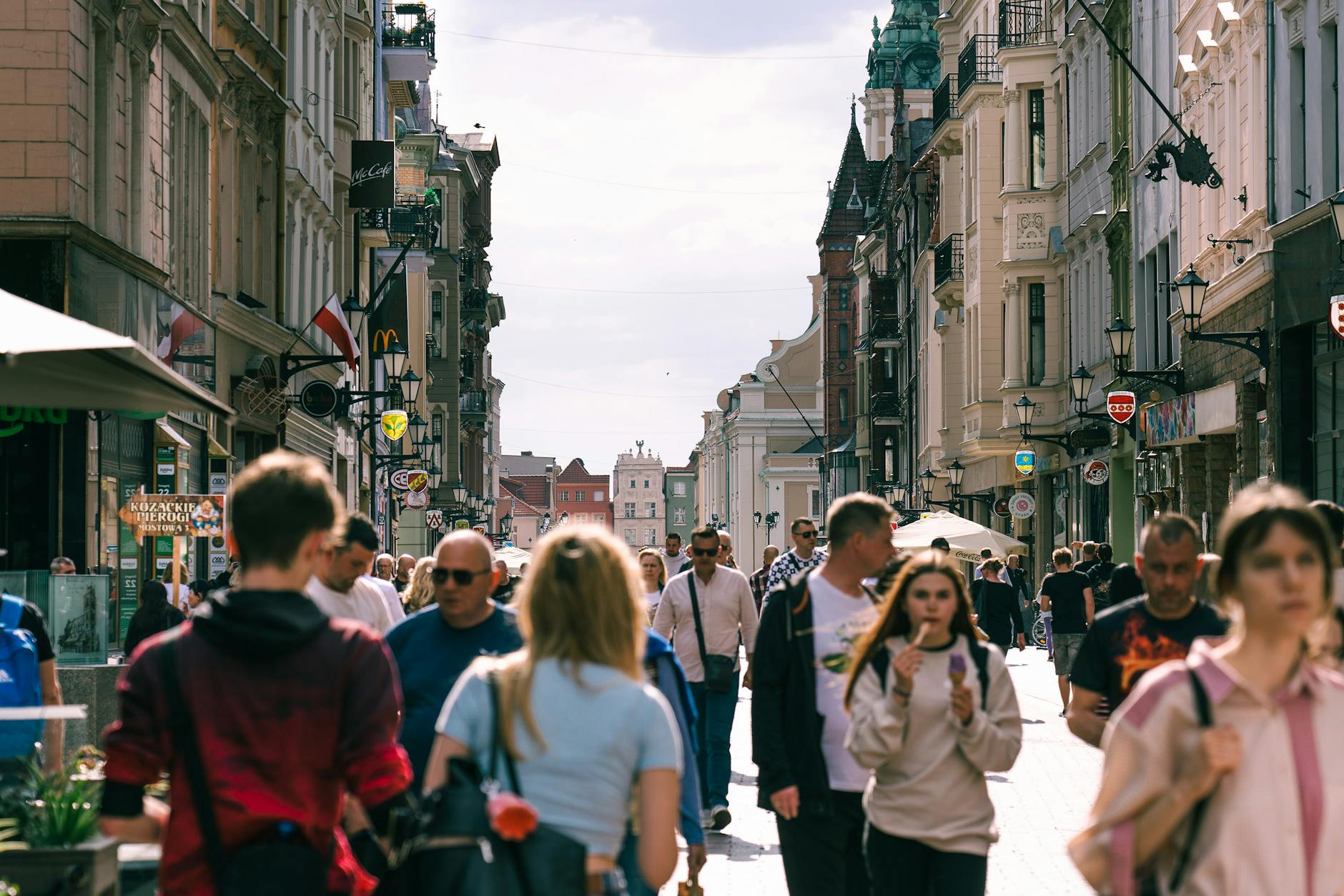
Best Time to Visit Poland
Poland is a four-season country, but the best time depends on whether your trip is urban, coastal, mountain, lake, Christmas-market, or heritage-focused.
Best Overall Months
May and June are excellent for first-timers: longer days, warmer weather, green parks, outdoor cafés, fewer peak-summer domestic crowds than July/August, and strong city conditions.
September and early October may be the best all-around period for culture-heavy trips: mild weather, autumn light, harvest food, strong museum travel, fewer school-holiday crowds, and pleasant walking.
July and August are best for the Baltic coast, Masuria, festivals, lake houses, long evenings, and family travel, but cities and resort areas can be busy and prices rise in high-demand areas.
December is a strong winter-city month, especially for Kraków, Wrocław, Warsaw, and Gdańsk Christmas markets, lights, cafés, hearty food, and indoor culture.
Season-by-Season
| Season | What to expect | Best for | Watch out for |
|---|---|---|---|
| Spring: March–May | March can still be cold; April is variable; May is often lovely. | City breaks, parks, museums, shoulder-season value, cafés, early countryside trips. | Muddy trails, cold snaps, Easter closures, unpredictable rain. |
| Summer: June–August | Warmest period, long days, outdoor events, lakes and coast at their best. | Baltic coast, Masuria, festivals, family travel, mountain hiking, outdoor dining. | Crowds, thunderstorms, higher prices on coast/lakes, busy Kraków and Zakopane. |
| Autumn: September–November | September/early October are excellent; November can be gray and cold. | Culture trips, food, museums, forests, fewer crowds, photography. | Shorter days later in season, rainy weather, limited lake/coast energy after summer. |
| Winter: December–February | Cold, dark, atmospheric; snow possible, more reliable in mountains. | Christmas markets, hearty food, museums, winter cities, Zakopane/skiing. | Short daylight, ice, closures around holidays, weather delays, cold outdoor sightseeing. |
Month-by-Month Guide
| Month | Verdict |
|---|---|
| January | Good for winter mountains, museums, and lower city crowds after New Year. Cold and dark; dress properly. |
| February | Still winter. Better for indoor culture and mountain snow than general sightseeing. Romantic if you like cold cities, cafés, and museums. |
| March | Transitional. Can be gray, muddy, and chilly, but prices may be better. Avoid nature-heavy plans unless flexible. |
| April | Unpredictable but improving. Easter can be culturally rich and logistically disruptive. Good for cities with layers. |
| May | One of the best months. Green, bright, lively, and not yet full high season. Excellent for Warsaw, Kraków, Wrocław, Gdańsk, and day trips. |
| June | Excellent. Long days, festivals, outdoor dining, strong hiking/lake/coast conditions. Book popular weekends. |
| July | Peak summer. Best for Baltic coast, Masuria, mountains, and events; crowded in resort zones. Cities can be warm but lively. |
| August | Still peak leisure season. Strong for lakes/coast, but book ahead. Some locals are on holiday. |
| September | Excellent. One of the best all-around travel months: mild, cultural, comfortable, and less frantic. |
| October | Early October is often beautiful; late October shifts toward colder, darker days. Good for museums, food, and autumn color. |
| November | Probably the least appealing month for first-timers unless focused on museums, food, or budget. Gray days are common. |
| December | Strong for Christmas markets, lights, old squares, churches, cafés, and winter atmosphere. Book festive weekends early. |
Rain and Cold Plan
Poland is easy to salvage in poor weather if you are in the right city. Swap outdoor plans for Warsaw’s POLIN Museum or Warsaw Rising Museum, Kraków’s museums and cafés, Wrocław’s museums and food halls, Gdańsk’s European Solidarity Centre, Wieliczka Salt Mine, or a long lunch. Mountains and lakes are the places where weather can genuinely rewrite the day.
How Many Days You Need
The Honest Answer
You need 7 to 10 days for a satisfying first Poland trip. Three or four days can make an excellent city break, but not a country trip. Two weeks gives Poland space to become much more than Kraków and Warsaw.
| Length | What it feels like |
|---|---|
| 2–3 days | A single-city break: Kraków, Warsaw, Gdańsk, or Wrocław. Do not pretend it is Poland. |
| 4–5 days | Kraków plus Auschwitz-Birkenau and Wieliczka, or Warsaw + Kraków at a brisk pace. Good but narrow. |
| 6–7 days | Strong first route: Warsaw + Kraków + one add-on such as Gdańsk, Wrocław, or Zakopane. |
| 8–10 days | Ideal first trip: Warsaw, Kraków, Gdańsk or Wrocław, plus one major day trip or slower regional piece. |
| 11–14 days | Excellent. Add both Gdańsk and Wrocław, or include mountains, Masuria, Podlasie, or a heritage route without rushing. |
| 3 weeks | Deep Poland: multiple regions, ancestry towns, national parks, Baltic coast, Lower Silesia, eastern borderlands, and time to slow down. |
The Move
If you have one week, choose three bases maximum. If you have ten days, choose three bases plus one meaningful side trip. If you have two weeks, you can start thinking in route families rather than city breaks.
Choose Your Poland Trip
First-Time Highlights
Best route: Warsaw → Kraków → Gdańsk or Wrocław.
Best for: Travelers who want a balanced overview of modern Poland, royal history, memory, food, and one contrasting region.
Why it works: Warsaw and Kraków should not be treated as substitutes. Warsaw explains destruction, reconstruction, state power, and contemporary energy. Kraków gives medieval texture and southern day trips. Gdańsk adds the Baltic and Solidarity; Wrocław adds western Central Europe and Lower Silesia.
Royal Kraków and Southern Poland
Best route: Kraków → Auschwitz-Birkenau → Wieliczka → Ojców or Zakopane/Tatras.
Best for: Short first trips, heritage travelers, food travelers, Catholic/church architecture, students, and travelers who want maximum depth with minimal base changes.
Watch out: Kraków is popular for a reason, but a Poland trip limited to Kraków risks making the country feel prettier and simpler than it is.
Capital-to-Baltic Poland
Best route: Warsaw → Toruń or Malbork → Gdańsk/Sopot/Gdynia.
Best for: War and reconstruction, Solidarity history, shipyards, Baltic coast, amber, Gothic brick, Teutonic castles, summer travel.
Watch out: The Baltic coast is seasonal. In winter, Gdańsk remains worthwhile, but beach expectations should be minimal.
Western Poland and Lower Silesia
Best route: Poznań → Wrocław → Książ/Jawor/Świdnica/Jelenia Góra/Karkonosze.
Best for: Architecture, markets, students, road trips, castles, Central European layers, good food, and travelers repeating Poland.
Watch out: Lower Silesia is easiest with a car or private guide once you move beyond Wrocław.
Eastern Borderlands and Forests
Best route: Warsaw → Lublin → Zamość → Białystok/Tykocin/Białowieża or Podlasie.
Best for: Slower travelers, multicultural history, Jewish heritage, Orthodox churches, Tatar villages, forests, bison, photography, and people willing to handle more logistics.
Watch out: Public transport is thinner. Border areas deserve current safety and access checks.
Lakes and Summer Poland
Best route: Warsaw or Gdańsk → Olsztyn → Mikołajki/Giżycko/Masuria.
Best for: Sailing, kayaking, families, long summer days, nature, cottages, water, and Poles-on-holiday atmosphere.
Watch out: This is seasonal and easier with local planning. Book summer lodging early.
Mountain Poland
Best route: Kraków → Zakopane/Tatras → Pieniny or Bieszczady.
Best for: Hiking, skiing, highland culture, wooden architecture, oscypek cheese, winter scenery, and active travelers.
Watch out: Zakopane can be crowded and commercial. The Tatras are serious mountains. Bieszczady are farther and slower but more atmospheric.
Jewish Heritage and Memory Route
Best route: Warsaw → Łódź → Kraków/Kazimierz → Auschwitz-Birkenau → Lublin/Majdanek → Tykocin or small-town ancestry sites, depending family history.
Best for: Jewish heritage, ancestry, education, memorial travel, synagogue and cemetery history, and travelers seeking a guide-led experience.
Watch out: This route should be handled with care. Use specialist guides, respect cemeteries and memorials, and avoid reducing Jewish Poland only to death camps.
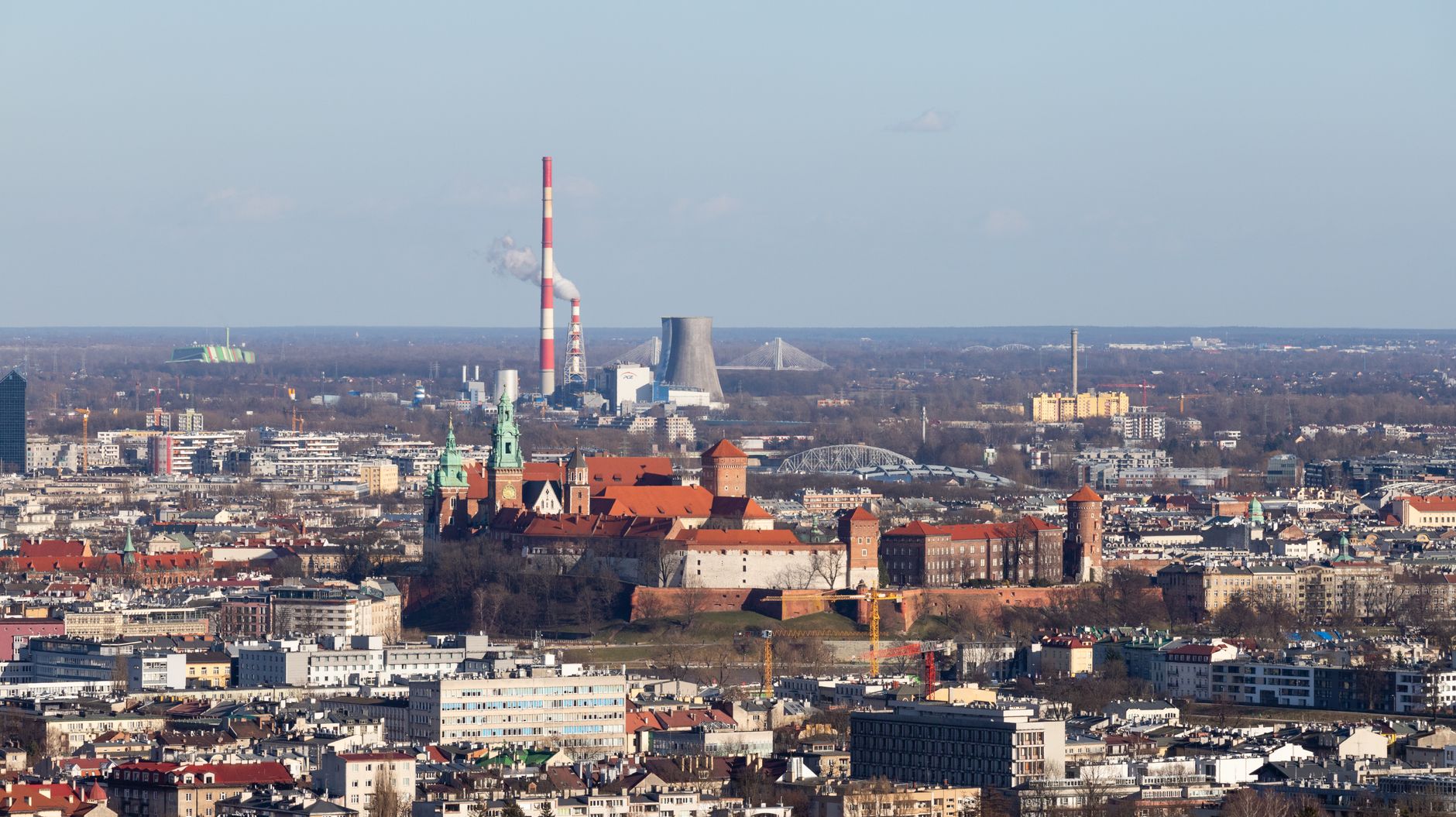
Regions and Places to Go
Warsaw and Mazovia
Identity: Rebuilt capital, political center, museum powerhouse, contemporary food city, and the best place to understand Poland’s twentieth century and present.
Warsaw is not as instantly pretty as Kraków, but it may be more important. The Old Town is a reconstruction, and knowing that makes it more moving, not less. The city also has grand avenues, royal parks, communist-era architecture, riverside bars, modern towers, the POLIN Museum, the Warsaw Rising Museum, excellent restaurants, and a sense of forward motion.
Best for: First-timers who want context, museums, politics, food, nightlife, Jewish history, architecture, and rail/air logistics.
Do not miss: Old Town and Royal Castle area, Royal Route, Łazienki Park, POLIN Museum, Warsaw Rising Museum, Praga, Vistula boulevards, Palace of Culture and Science views, modern restaurant scene.
How long: 2–3 nights for first-timers; more if museum-heavy.
Pair it with: Kraków, Gdańsk, Łódź, Lublin, Toruń, or Białowieża/Podlasie.
Common mistake: Skipping Warsaw because “Kraków is prettier.” That may be aesthetically true for a short stroll, but it is bad cultural planning.
Kraków and Lesser Poland
Identity: Royal capital, university city, major visitor base, food hub, and the easiest gateway to Auschwitz-Birkenau, Wieliczka, Ojców, and the Tatras.
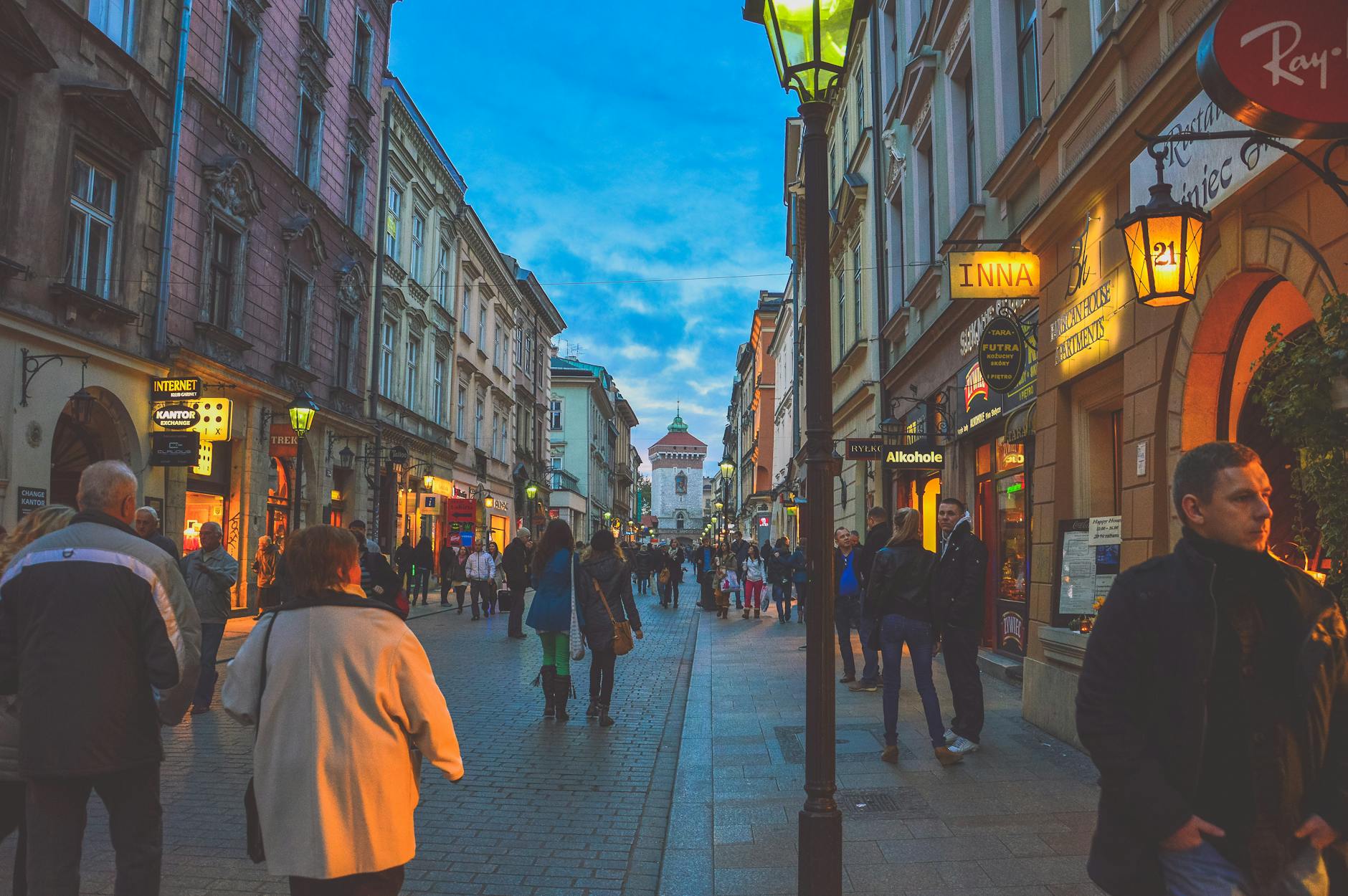
Kraków is Poland’s most polished first-visit city: the Main Market Square, Wawel, Planty, Kazimierz, Podgórze, Gothic and Renaissance architecture, jazz cellars, cafés, churches, and day trips. It is also heavily touristed, so the best Kraków trip goes beyond the obvious square.
Best for: First-timers, history, food, walkability, day trips, nightlife, photography, students, couples, and families.
Do not miss: Main Market Square, Wawel Hill, Kazimierz, Schindler’s Factory area, Podgórze, St. Mary’s Basilica, Collegium Maius, Planty, Nowa Huta if you want socialist-era planning.
How long: 3–4 nights if including Auschwitz-Birkenau and Wieliczka.
Pair it with: Warsaw, Zakopane/Tatras, Wrocław, or southern wooden churches.
Common mistake: Doing Auschwitz-Birkenau and Wieliczka on the same day because it is efficient. It may be possible, but emotionally and physically it can be too much.
Gdańsk, Sopot, Gdynia, and Pomerania
Identity: Baltic Poland: port city, Hanseatic façades, shipyards, Solidarity, amber, sea air, and summer coast.
Gdańsk has one of Poland’s strongest urban identities. It is not just a pretty waterfront. Its history runs through trade, contested borders, World War II, communism, shipyard labor, and democratic resistance. Sopot adds beach-resort energy; Gdynia adds modernist port-city character.
Best for: Baltic history, architecture, summer, families, museums, amber, seafood, and travelers who want a strong third base after Warsaw and Kraków.
Do not miss: Główne Miasto, Motława waterfront, European Solidarity Centre, Museum of the Second World War, shipyard area, Oliwa, Sopot pier, Gdynia if time allows, Malbork as a day trip.
How long: 2–3 nights; longer in summer if using the coast.
Pair it with: Warsaw, Toruń, Malbork, Baltic coast, or northern rail routes.
Common mistake: Treating Gdańsk as interchangeable with Kraków. It is a different Poland entirely.
Wrocław and Lower Silesia
Identity: Islands, bridges, market squares, university life, layered Central European history, and a gateway to castles, churches, spa towns, and mountains.
Wrocław is one of Poland’s most enjoyable cities for wandering. It has a beautiful market square, river islands, cathedral areas, student energy, excellent restaurants, and a complicated German/Polish past. Lower Silesia around it is one of Poland’s best road-trip regions.
Best for: Architecture, food, couples, second-time visitors, road trips, castles, and travelers who like layered borderland cities.
Do not miss: Market Square, Ostrów Tumski, University area, Centennial Hall, Nadodrze, river islands, Książ Castle, Churches of Peace in Jawor and Świdnica, Jelenia Góra, Karkonosze.
How long: 2 nights for city; 4–5 nights with Lower Silesia.
Pair it with: Kraków, Poznań, Prague, Berlin, or the Karkonosze.
Common mistake: Visiting only the old square and missing the wider Lower Silesian region.
Poznań and Wielkopolska
Identity: Trade-fair city, early Polish state history, colorful market square, good food, and western gateway.
Poznań is practical, handsome, and often underrated. It works well for travelers going between Warsaw/Berlin/Wrocław/Gdańsk or those interested in early Polish history around Gniezno and the Greater Poland region.
Best for: Repeat visitors, food, trade fairs, early Polish history, western routes, and travelers who like less-touristed city breaks.
Do not miss: Old Market Square, Cathedral Island, Imperial Castle, Śródka, croissants of St. Martin, Gniezno day trip.
How long: 1–2 nights.
Pair it with: Wrocław, Warsaw, Berlin, Gniezno, or Toruń.
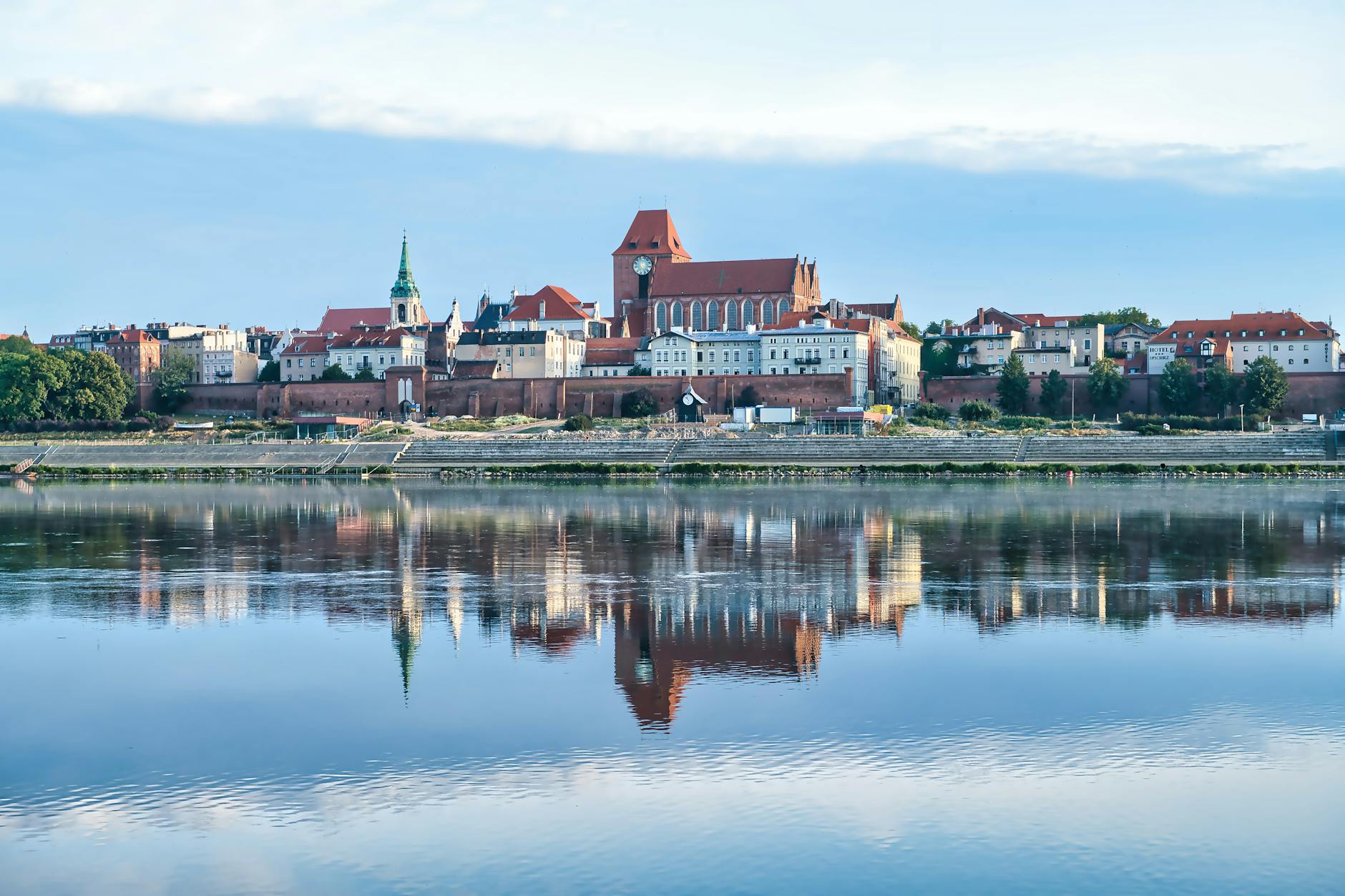
Toruń and Kuyavia-Pomerania
Identity: Gothic brick, Copernicus, gingerbread, a compact UNESCO old town, and an excellent stop between Warsaw and Gdańsk or Poznań.
Toruń is one of Poland’s best smaller-city stops. It is pretty, walkable, historic, and easier to absorb than bigger bases.
Best for: One-night stopovers, architecture, families, photography, and travelers who like compact old towns.
Do not miss: Old Town, Copernicus House, gingerbread museum/workshops, Vistula views.
How long: 1 night or a long day.
Pair it with: Gdańsk, Warsaw, Poznań, Malbork.
Łódź
Identity: Industrial reinvention, film, textile mills, murals, design, Jewish history, and one of Poland’s most interesting urban comeback stories.
Łódź is not postcard Poland. That is why it is valuable. It is gritty, creative, and rewarding for travelers interested in industrial heritage and contemporary culture.
Best for: Design, film, industrial architecture, murals, Jewish heritage, repeat visitors, and travelers who like cities in transition.
Do not miss: Piotrkowska Street, Manufaktura, EC1, Księży Młyn, film culture, street art, Radegast Station memorial if doing Jewish heritage.
How long: 1–2 nights.
Pair it with: Warsaw, Kraków, Wrocław, or a Jewish heritage route.
Lublin, Zamość, and Eastern Poland
Identity: Borderland history, Renaissance urbanism, Jewish memory, old-town charm, Catholic and Orthodox layers, and a slower eastern rhythm.
Lublin is one of Poland’s most underrated cities. Zamość is a planned Renaissance town. Together they give a very different texture from Warsaw/Kraków/Gdańsk.
Best for: History, architecture, Jewish heritage, slower travel, eastern routes, and second-time visitors.
Do not miss: Lublin Old Town, castle area, Grodzka Gate, Majdanek Memorial, Zamość old city, local food.
How long: 2–3 nights for Lublin/Zamość; longer for eastern routes.
Pair it with: Warsaw, Kraków, Podlasie, or family-history towns.
Podlasie and Białowieża
Identity: Forests, bison, Orthodox churches, Tatar villages, wooden architecture, wetlands, and multicultural borderland Poland.
Podlasie is slower, more rural, and less polished for visitors than Kraków or Gdańsk. That is exactly its value. Białowieża Forest is one of Europe’s most important forest landscapes, and the wider region offers Orthodox, Jewish, Belarusian, Lithuanian, and Tatar layers.
Best for: Nature, birding, forests, bison, photography, borderland culture, slow travel, and travelers with a guide or car.
Do not miss: Białowieża, Białystok, Tykocin, Kruszyniany/Bohoniki Tatar heritage, Supraśl, Biebrza wetlands if nature-focused.
How long: 3–5 days.
Pair it with: Warsaw or Lublin.
Common mistake: Trying to visit Białowieża as a casual day trip from Warsaw without understanding transport time.
Masuria and Warmia
Identity: Lakes, sailing, forests, summer cottages, small towns, and a very Polish holiday rhythm.
Masuria is one of Poland’s classic summer escapes. It is less about monuments and more about water, boats, slow days, and nature.
Best for: Summer, families, sailing, kayaking, cycling, nature, domestic-holiday atmosphere.
Do not miss: Mikołajki, Giżycko, lakes, kayaking, Olsztyn, Wolf’s Lair if interested in WWII history, Warmian towns.
How long: 3–5 days in summer.
Pair it with: Warsaw or Gdańsk.
Watch out: Public transport can be awkward. Book lodging early in July/August.
Zakopane, the Tatras, and Mountain Poland
Identity: Highland culture, dramatic mountains, hiking, skiing, wooden architecture, crowds, and real alpine risk.
Zakopane is both atmospheric and overbuilt. The Tatras are genuinely spectacular. The best trip separates the town’s commercial energy from the mountain landscape.
Best for: Hikers, winter travelers, families, scenery, highland food, wooden architecture, active trips.
Do not miss: Tatra National Park trails suited to your ability, Morskie Oko with crowd awareness, Chochołów wooden village, Gubałówka if you want an easy view, Pieniny rafting/hikes as a gentler alternative.
How long: 2–4 nights depending activity level.
Pair it with: Kraków.
Watch out: Heavy crowds in peak summer/winter, mountain weather, avalanche risk, trail closures, traffic between Kraków and Zakopane.
Best Things to Do
1. Understand Warsaw Instead of Skipping It
Warsaw is not merely a transfer city. Its value is narrative: destruction, reconstruction, occupation, uprising, communism, capitalism, Jewish history, and contemporary confidence.
Best for: First-timers, museum travelers, history, food, modern Poland.
Time needed: 2–3 days.
Pair it with: Kraków, Gdańsk, Łódź, Lublin, or Podlasie.
Worth it? Yes. Especially if you want Poland to make sense beyond postcards.
2. Spend Several Days in Kraków, But Go Beyond the Main Square
Kraków is the obvious first love: walkable, atmospheric, food-rich, and full of major sights. But the better Kraków includes Kazimierz, Podgórze, Nowa Huta, local bakeries, side streets, and day trips.
Best for: First-timers, couples, food, architecture, nightlife, day trips.
Time needed: 3–4 nights.
Common mistake: Staying only inside the tourist orbit of Rynek Główny and calling it Poland.
3. Visit Auschwitz-Birkenau With Preparation
Auschwitz-Birkenau is one of the most important memorial sites in the world. It should be approached as a place of mass murder, remembrance, education, and grief, not as an “attraction.” Official entry requires a personalized pass, and reservations are online.[14]
Best for: Travelers prepared for serious historical engagement.
Time needed: Most of a day from Kraków once transport and decompression are included.
Book ahead? Yes.
Local ethics: Do not take performative photos. Do not eat, pose, joke, livestream, or rush through spaces of death.
4. Go Underground at Wieliczka or Bochnia
The Wieliczka and Bochnia Royal Salt Mines are UNESCO-listed and represent centuries of salt mining, underground chapels, chambers, and industrial heritage. UNESCO describes the deposits as mined since the 13th century and among Europe’s oldest of their type.[21]
Best for: Families, history, rainy days, unusual architecture, Kraków day trips.
Time needed: Half-day from Kraków.
Book ahead? Strongly recommended in peak season.
5. Give Gdańsk Enough Time
Gdańsk deserves more than a quick old-town stroll. It is one of the best places in Poland to connect trade, war, maritime culture, Solidarity, and modern memory.
Best for: History, architecture, Baltic coast, summer, museums, amber shopping.
Time needed: 2–3 nights.
Pair it with: Malbork, Sopot, Gdynia, Toruń, Warsaw.
6. Visit Malbork Castle Properly
Malbork is one of Europe’s great brick Gothic castle complexes and a natural day trip from Gdańsk. The official museum provides online ticketing and seasonal opening information.[22]
Best for: Castles, medieval history, families, architecture, photographers.
Time needed: Half to full day from Gdańsk.
Common mistake: Underestimating its scale and arriving late.
7. Use Wrocław as a Western Gateway
Wrocław is joyful on the surface and complicated underneath. Its market square, islands, bridges, and student life make it easy to enjoy; its German Breslau past and postwar population shifts make it deeper.
Best for: Architecture, food, nightlife, Lower Silesia, road trips.
Time needed: 2 nights for city; 4–5 with region.
8. Take Poland’s Food Seriously
Polish food is not just pierogi. The country has soups, pickles, breads, cakes, smoked cheeses, mushrooms, game, fish, modern bistros, milk bars, bakeries, Jewish-influenced cooking, regional specialties, craft beer, cider, vodka, and coffee culture.
Best for: Everyone who eats.
The move: Use one classic meal, one milk-bar meal, one modern Polish dinner, one bakery breakfast, one market/snack stop, and one regional specialty per city.
9. Hike or Winter in the Mountains, But Respect Conditions
The Tatras are Poland’s dramatic mountain showcase; the Bieszczady are wilder and slower; the Karkonosze work well with Lower Silesia. Conditions matter more than ambition.
Best for: Active travelers, winter scenery, families with appropriate trails, hikers.
Book ahead? Lodging in Zakopane and popular mountain towns in peak periods.
Safety note: Check official conditions and do not treat alpine trails as casual walks.
10. Follow Jewish Heritage Beyond Camps
A meaningful Jewish heritage route includes Warsaw’s Muranów/POLIN, Kraków’s Kazimierz and Podgórze, Łódź, Lublin, Tykocin, cemeteries, synagogues, former shtetl towns, archives, and family-history sites. POLIN’s core exhibition covers 1000 years of the history of Polish Jews.[23]
Best for: Heritage travelers, ancestry travelers, historians, students.
Common mistake: Reducing Jewish Poland to Auschwitz. That erases centuries of life, culture, religious learning, language, commerce, art, and community.
11. Spend Time in a Smaller City
Toruń, Poznań, Lublin, Zamość, Tarnów, Sandomierz, Białystok, Opole, and Jelenia Góra all slow the trip down and make Poland feel less like a greatest-hits route.
Best for: Repeat visitors, slow travelers, families, photographers.
The move: Add one one-night smaller-city stop rather than another rushed capital-to-capital transfer.
12. Visit Nature That Is Not Just the Tatras
Poland has lakes, forests, wetlands, dunes, and low mountains. Masuria, Białowieża, Biebrza, Słowiński National Park, Kampinos, Ojców, and the Bieszczady give the country a nature dimension that first-timers often miss.
Best for: Families, birders, hikers, slow travelers, summer visitors.
Watch out: Nature travel often needs more logistical planning than city travel.
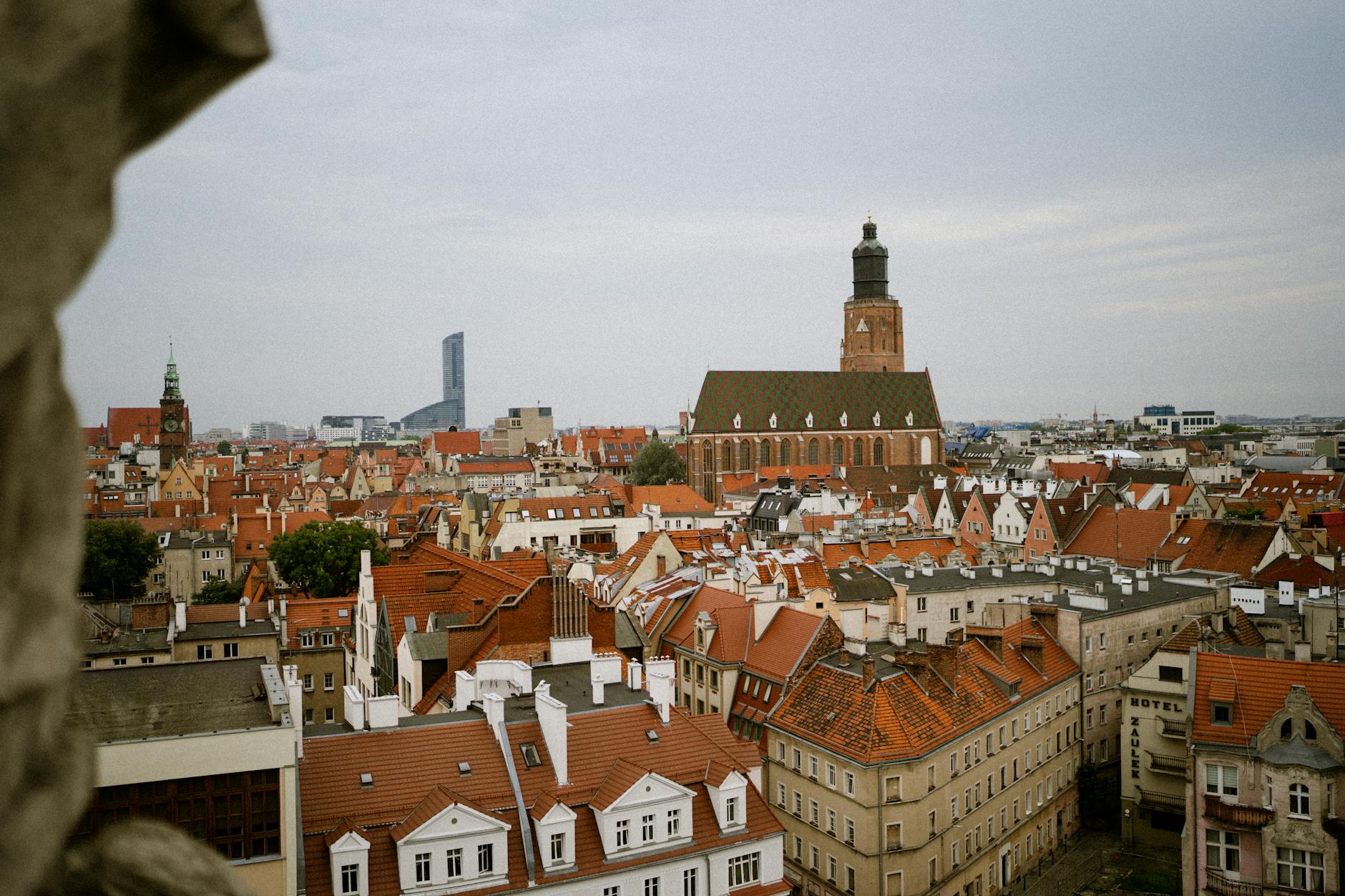
Poland Itineraries
Three Days: Kraków First Taste
Day 1: Kraków Old Town, Planty, Wawel Hill, classic Polish dinner.
Day 2: Kazimierz, Podgórze, Schindler’s Factory area or a Jewish heritage walk, evening food/bar route.
Day 3: Wieliczka Salt Mine or Auschwitz-Birkenau. Do not try to do both unless time is fixed and you accept the pace.
What this gives you: Beautiful first taste, strong food, major history.
What it misses: Warsaw, Baltic, western Poland, mountains beyond a glimpse, modern political context.
Five Days: Warsaw + Kraków
Day 1: Arrive Warsaw. Old Town, Royal Route, Vistula or Praga if time.
Day 2: POLIN Museum or Warsaw Rising Museum, Łazienki Park, modern Warsaw dinner.
Day 3: Train to Kraków. Old Town, Wawel exterior/interior depending energy.
Day 4: Auschwitz-Birkenau or Wieliczka.
Day 5: Kazimierz, Podgórze, Nowa Huta or second Kraków museum; depart.
The move: If this is your first Poland trip and you only have five days, this is stronger than Kraków plus too many day trips.
Seven Days: Classic First Poland
Day 1: Warsaw arrival, Old Town, light dinner.
Day 2: Warsaw museums and Łazienki Park.
Day 3: Train to Kraków, Old Town and Wawel.
Day 4: Auschwitz-Birkenau.
Day 5: Kazimierz/Podgórze or Wieliczka.
Day 6: Train to Gdańsk or Wrocław.
Day 7: Explore Gdańsk/Solidarity/Waterfront or Wrocław/market/islands; depart if possible from that region.
What to cut if tired: Wieliczka or the third base. A slower Warsaw + Kraków week is better than a frantic triangle.
Ten Days: Poland With a Strong Third Act
Days 1–2: Warsaw.
Days 3–5: Kraków, including Auschwitz-Birkenau and either Wieliczka or Kazimierz/Podgórze depth.
Days 6–8: Gdańsk, including European Solidarity Centre, old city, Sopot or Malbork.
Days 9–10: Toruń stopover en route back to Warsaw, or Wrocław if using a different route.
Alternative third act: Replace Gdańsk with Wrocław/Lower Silesia, Zakopane/Tatras, or Lublin/Zamość depending interest.
Two Weeks: The Balanced Poland Route
Days 1–3: Warsaw.
Days 4–6: Kraków.
Day 7: Auschwitz-Birkenau, overnight Kraków or Oświęcim/Katowice depending route.
Days 8–9: Wrocław.
Day 10: Lower Silesia day trip: Książ, Świdnica/Jawor, or Karkonosze.
Days 11–13: Gdańsk with Malbork or Sopot/Gdynia.
Day 14: Toruń or Warsaw departure.
What this gives you: Modern capital, royal city, memory site, western city, Baltic city, and one castle/region.
Food-Focused Poland
Best bases: Kraków, Warsaw, Gdańsk, Wrocław, Poznań.
Structure:
- Warsaw for modern Polish restaurants, bakeries, milk bars, vodka bars, Jewish-influenced and international dining.
- Kraków for classic restaurants, Kazimierz food, obwarzanek, pierogi, soups, nightlife, and day-trip food.
- Gdańsk for Baltic fish, amber-adjacent tourist traps to avoid, and modern northern dining.
- Poznań for St. Martin croissants and western Polish food.
- Podlasie or Lesser Poland for regional food if you have guide/car access.
Jewish Heritage and Memory Route
Best with: Specialist guide, ancestry research, synagogue/cemetery sensitivity, and enough time.
Route model: Warsaw → Łódź → Kraków/Kazimierz → Auschwitz-Birkenau → Lublin/Majdanek → Tykocin/Białystok/ancestry towns.
Important correction: Build the route around Jewish life as well as Jewish death. Include museums, synagogues, cemeteries, neighborhoods, archives, community institutions, and local guides.
Family Poland
Best bases: Kraków, Warsaw, Gdańsk, Wrocław, Masuria in summer.
Good family moves: Train between big cities; choose apartments or hotels near transit; use parks and old squares; balance museums with interactive stops; consider Wieliczka, Malbork, Toruń gingerbread, Wrocław dwarfs, Warsaw science museums, Gdańsk waterfront, Sopot beach, and Masuria.
Avoid: Too many heavy memorials with young children, long single-day transit chains, and overpacked old-town museum days.
Winter Poland
Best bases: Kraków, Wrocław, Warsaw, Gdańsk, Zakopane.
Structure: Christmas markets and museums in cities; hearty food; churches and concerts; possible mountain extension. December is atmospheric. January and February are colder and less festive but can be good value outside ski areas.
Watch out: Short daylight, ice, holiday closures, mountain weather.
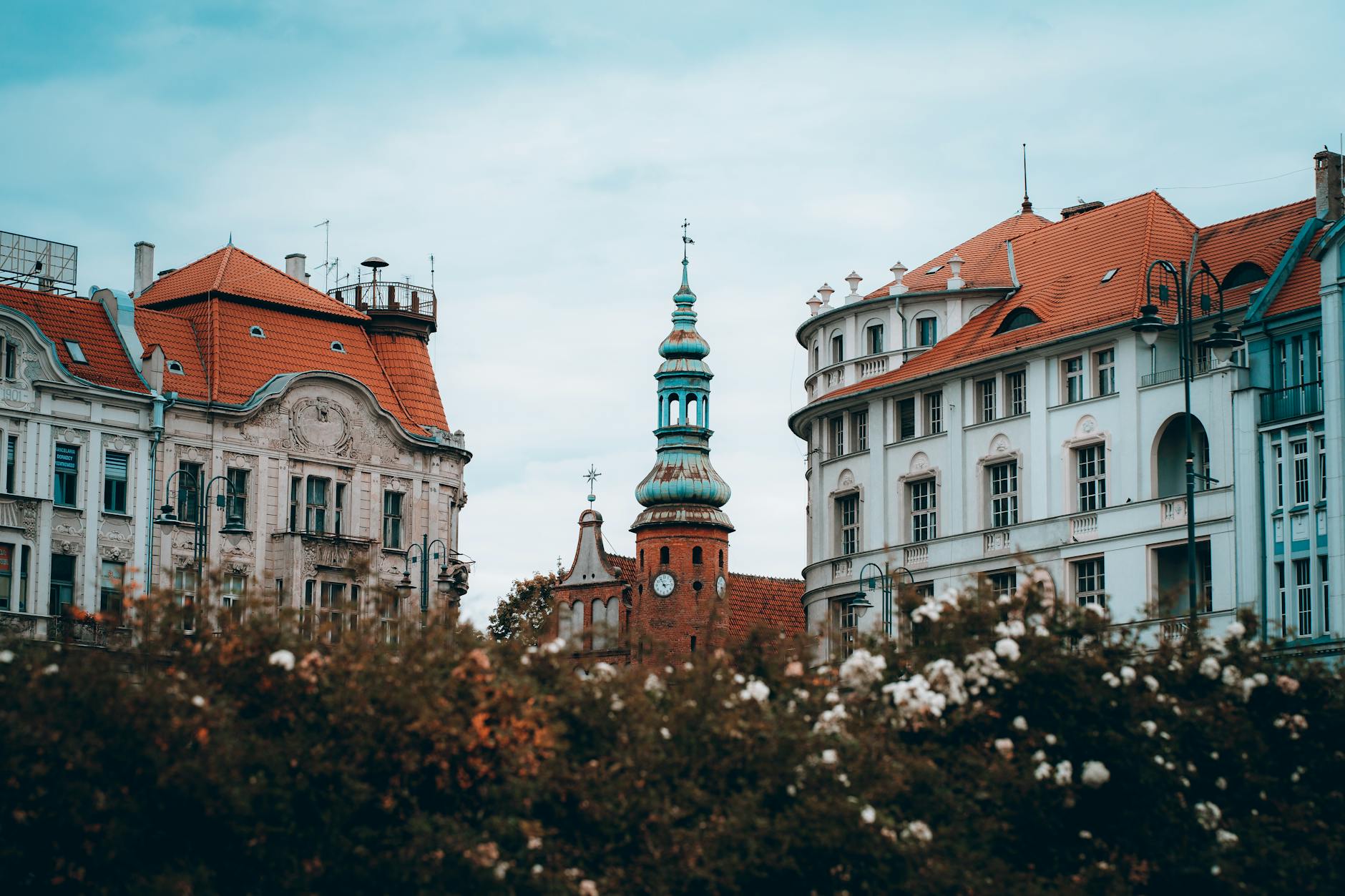
Food and Drink
Polish food is hearty, sour, smoky, fermented, sweet, seasonal, and increasingly creative. The lazy stereotype is dumplings and vodka. The better story includes soups, pickles, rye, buckwheat, cabbage, mushrooms, freshwater fish, Baltic fish, pork, game, poppy seeds, cherries, plums, apples, sheep cheese, bakeries, milk bars, modern bistros, and regional identities.
What to Eat
| Dish or drink | What it is | How to approach it |
|---|---|---|
| Pierogi | Filled dumplings: potato/cheese, meat, cabbage/mushroom, fruit, and more. | Try classic ruskie, then explore regional or modern versions. Avoid places where they look like frozen tourist bait. |
| Żurek | Sour rye soup, often with sausage and egg. | A great cold-weather lunch; versions vary widely. |
| Barszcz | Beet soup, clear or hearty, sometimes with small dumplings. | Common around holidays but available year-round. |
| Bigos | Hunter’s stew with cabbage, sauerkraut, meat, and smoke. | Best in traditional restaurants or winter contexts. |
| Placki ziemniaczane | Potato pancakes. | Often served with sour cream or goulash. Heavy but satisfying. |
| Gołąbki | Stuffed cabbage rolls. | Home-style classic; good in milk bars. |
| Kotlet schabowy | Breaded pork cutlet, often compared to schnitzel. | Simple, filling, and very Polish when done well. |
| Oscypek | Smoked sheep cheese from mountain regions. | Try in Zakopane/Podhale, often grilled with cranberry. Watch for tourist versions. |
| Obwarzanek krakowski | Kraków ring bread/snack. | Best fresh from street stalls. Simple, cheap, iconic. |
| Rogal świętomarciński | Poznań’s St. Martin croissant with white poppy-seed filling. | A must in Poznań; very rich. |
| Pączki | Polish doughnuts, often rose-jam filled. | Bakeries matter. Fat Thursday is the peak ritual. |
| Sernik / szarlotka / makowiec | Cheesecake, apple cake, poppy-seed roll. | Café staples. Try multiple versions. |
| Vodka | Clear and flavored vodkas, often drunk with food. | Vodka bars can be fun; pace yourself. |
| Craft beer and cider | Strong modern scene in big cities. | Look beyond vodka if drinking. |
Where to Eat by Situation
| Situation | Best approach |
|---|---|
| First dinner | A relaxed modern Polish restaurant near your hotel. Do not start with the most touristy old-square place. |
| Budget lunch | Milk bar, soup café, pierogi shop, bakery, lunch set, or casual Polish cafeteria. |
| Classic meal | Traditional restaurant with soups, pierogi, meat dishes, and desserts. Quality varies; read recent reviews. |
| Modern meal | Warsaw, Kraków, Gdańsk, and Wrocław all have strong contemporary Polish restaurants. Book ahead for popular spots. |
| Family meal | Pierogi, soups, pancakes, casual Polish places, food halls, pizza/pasta when kids need a break. |
| Solo dining | Cafés, milk bars, bar counters, casual restaurants, food halls, bakeries, and lunch menus. |
| Late night | Kraków, Warsaw, Gdańsk, and Wrocław have nightlife food; smaller towns are more limited. |
Milk Bars
Milk bars, or bar mleczny, are cafeteria-style holdovers associated with inexpensive Polish meals. Some are nostalgic and local; some have become tourist attractions. They are useful, affordable, and a good way to taste simple dishes without turning every meal into a production.
The move: Go off-peak, know that service may be brisk, and use a translation app if needed. Do not expect fine dining. That is not the point.
Food Practicalities
- Tipping is appreciated but not identical to U.S. norms. Rounding up or leaving around 10% for good table service is common in visitor-facing restaurants; check for service charges.
- Vegetarian eating is increasingly easy in major cities, but traditional menus lean on meat, dairy, eggs, and broth.
- Vegan restaurants exist in Warsaw, Kraków, Wrocław, Gdańsk, and other cities; rural areas need planning.
- Gluten-free eating is possible but requires caution; pierogi, breads, soups, and sauces often involve wheat.
- Allergies should be written in Polish. Do not assume staff will understand cross-contamination issues.
- Sunday and holiday hours vary. Check before relying on a specific restaurant.
Drinks and Nightlife
Poland drinks more broadly than vodka clichés suggest. Vodka bars are fun, but so are cocktail bars, craft beer pubs, wine bars, cafés, and summer riverfront scenes.
Best nightlife cities: Kraków, Warsaw, Wrocław, Gdańsk/Sopot, Poznań, Łódź.
Safety note: Use normal nightlife judgment. Watch drinks, avoid aggressive promoters, check prices before ordering in tourist/nightlife zones, and use official taxis or app-based rides when needed.
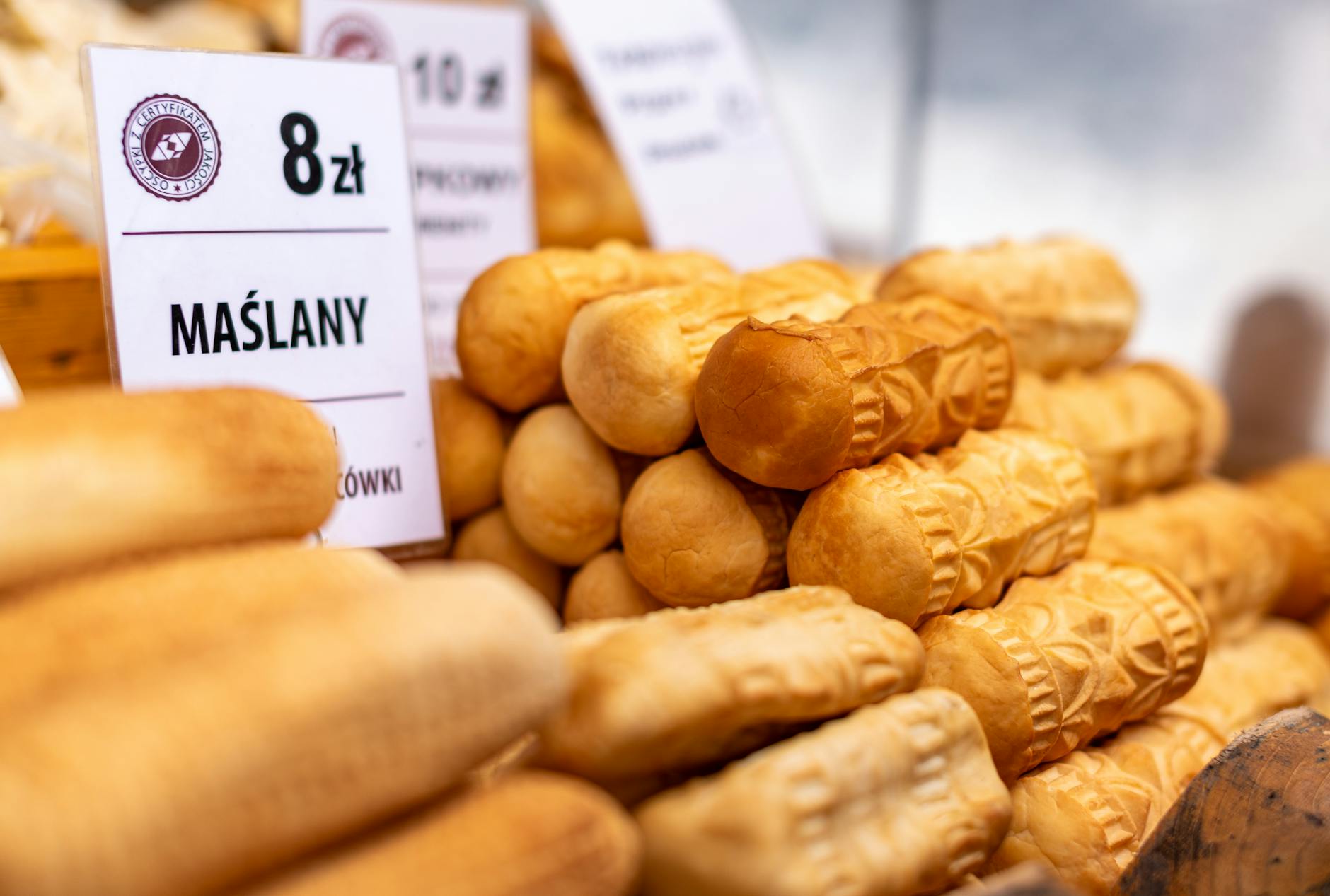
Getting Around Poland
Poland is a strong train country for city-to-city travel and a mixed country for rural travel. The best transport strategy depends on whether your trip is urban, nature-based, ancestry-based, or coastal/mountain-focused.
Intercity Trains
Trains are the default for many first trips. Major routes such as Warsaw–Kraków, Warsaw–Gdańsk, Warsaw–Poznań, Warsaw–Wrocław, and Kraków–Wrocław are generally straightforward. PKP Intercity sells long-distance tickets online and through its app/site.[11]
The move: Book fast/high-demand trains ahead, especially on Fridays, Sundays, holidays, summer weekends, and routes to/from resort areas. Keep your ticket accessible, check the carriage and seat, and know that Polish station names matter.
Regional Trains and Buses
Regional travel uses a mix of rail carriers, buses, and local systems. A route that looks short may require awkward transfers. Regional castles, villages, national parks, and ancestry towns often need more planning than city pairs.
Best practice: Check the return trip before you go. The outbound bus may exist; the evening return may not.
Urban Public Transport
Warsaw, Kraków, Gdańsk, Wrocław, Poznań, Łódź, and other cities have trams, buses, metro in Warsaw, and local rail options. Jakdojade is widely used for public transport planning and ticketing in Polish cities.[13]
The move: Validate paper tickets when required. Know whether tickets are time-based or zone-based. Do not assume buying a ticket is enough if validation is required.
Rental Cars
A car is unnecessary for a city-only first trip and can be annoying in old centers. It becomes useful for Lower Silesia castles, Masuria, Podlasie, Białowieża, small heritage towns, wooden churches, and some mountain/countryside routes.
When a car makes sense: Lower Silesia road trip, Masuria, Podlasie, Bieszczady, rural ancestry, national parks with limited buses.
When a car is a mistake: Warsaw/Kraków/Gdańsk/Wrocław city hopping, old-town stays, nightlife-heavy trips, winter mountains without experience.
Domestic Flights
Domestic flights exist and can save time on awkward long routes, but for most classic first trips trains are more satisfying and city-center friendly. Consider flights if combining distant regions with limited time, such as Kraków/Gdańsk in a short itinerary, or if fares and schedules beat rail.
Arrival Airports
- Warsaw Chopin: Best all-purpose hub and central Poland gateway.
- Kraków: Best for southern Poland, Kraków/Wieliczka/Auschwitz/Tatras.
- Gdańsk: Best for Baltic/Pomerania.
- Wrocław: Best for Lower Silesia and western routes.
- Katowice: Useful for Silesia and sometimes budget flights; less atmospheric as a first base.
- Poznań: Good for western Poland, trade fairs, and Berlin links.
Luggage
Old towns often have cobblestones, stairs, apartment walkups, and pedestrian zones. Polish trains can involve steps into carriages and overhead luggage racks. Pack lighter than you think, especially if moving every two nights.
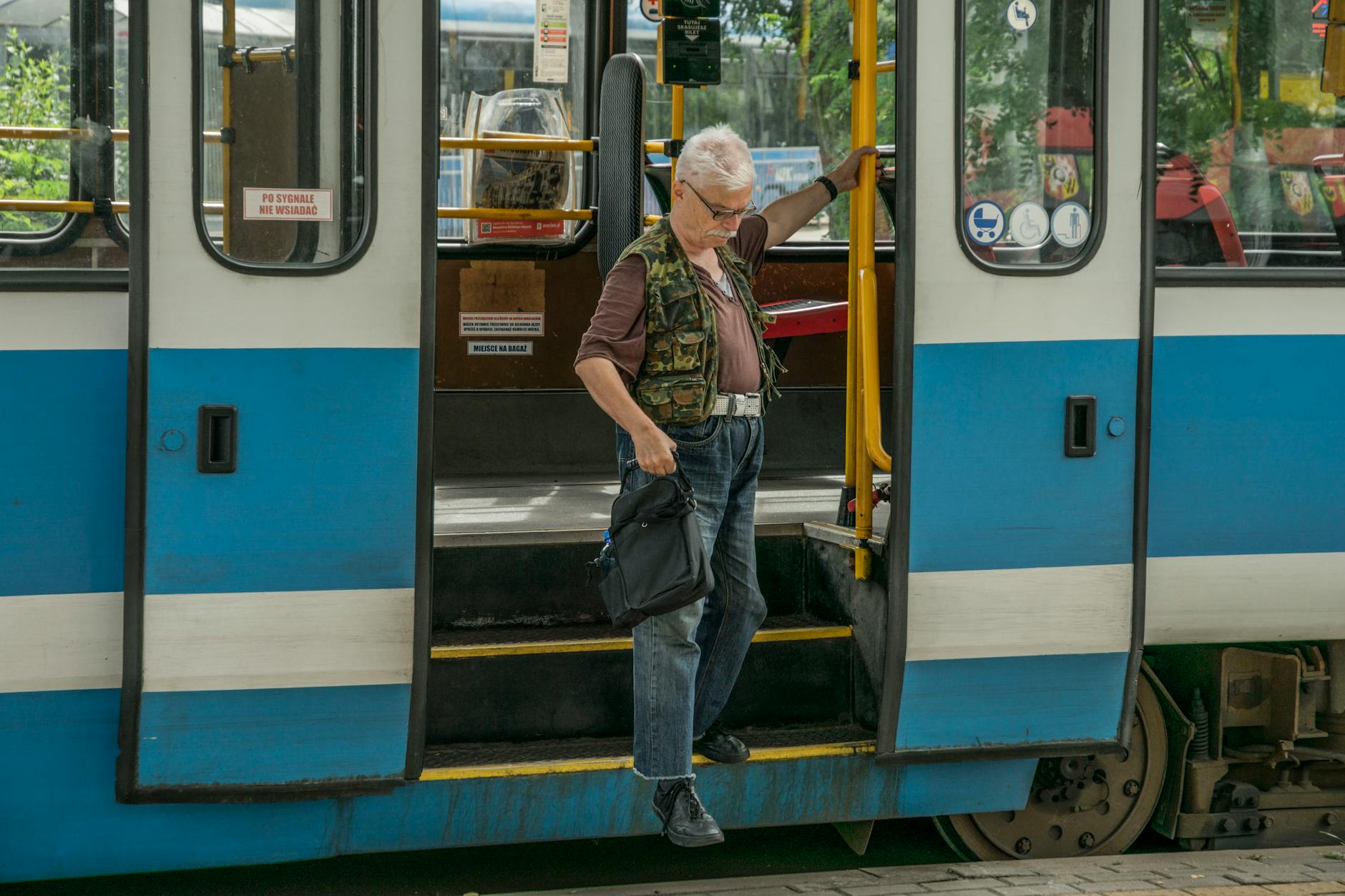
Budget and Costs
Poland remains good value relative to much of Western/Northern Europe, but prices in major city centers, peak summer resorts, Christmas-market weekends, and high-quality restaurants are no longer “cheap” in an old backpacker sense. The biggest budget swings are hotel location, restaurant style, train timing, guides, and high-season nature/coast lodging.
Daily Budget Ranges
| Traveler type | Daily estimate, excluding long-distance transport and major shopping | What it means |
|---|---|---|
| Shoestring | 180–300 PLN | Hostel or basic room, milk bars, bakeries, public transport, free walks, limited paid museums. |
| Budget comfort | 300–550 PLN | Simple hotel/apartment, casual restaurants, several museums, local transit, occasional intercity train. |
| Mid-range | 550–950 PLN | Good hotel, strong location, restaurant dinners, paid museums/tours, intercity trains, cafés and bars. |
| Comfortable | 950–1,700 PLN | Better hotels, private transfers where useful, guided tours, strong restaurants, more taxis/rideshare. |
| Luxury | 1,700+ PLN | Top hotels, private guides, fine dining, premium transport, custom heritage or nature trips. |
Cost Notes
| Item | Rough expectation |
|---|---|
| Coffee and pastry | Often affordable compared with Western Europe, but central specialty cafés can approach Western prices. |
| Milk-bar lunch | One of the best-value meals in the country. |
| Casual dinner | Good value if you avoid old-square tourist traps. |
| Museum ticket | Usually reasonable, but multiple museums per day add up. |
| Intercity train | Good value when booked sensibly; high-demand fast trains cost more close to departure. |
| Private guide | Worth it for Auschwitz-Birkenau, Jewish heritage, Warsaw history, Lower Silesia, or ancestry routes; not necessary for every old-town walk. |
| Hotels | Strong value outside peak periods; Kraków, Gdańsk summer, Wrocław weekends, Warsaw business periods, and Christmas markets can spike. |
Best Value Moves
- Use trains instead of one-way car rentals for major city pairs.
- Stay just outside the most obvious old square if transit/walking is still easy.
- Eat lunch as a bigger meal; use milk bars and lunch menus.
- Choose one serious private guide where it matters rather than several generic walking tours.
- Visit smaller cities like Toruń, Lublin, Poznań, or Łódź for lower-pressure costs.
- Book Kraków/Gdańsk/Wrocław Christmas-market weekends early.
- Avoid airport exchange counters and dynamic currency conversion.
Splurge-Worthy
- A specialist guide for Jewish heritage or Warsaw/Kraków history.
- A well-located hotel in Kraków or Warsaw on a short trip.
- A proper Auschwitz-Birkenau guided visit if you need context.
- Lower Silesia or Podlasie private day/overnight guide if not renting a car.
- A modern Polish restaurant in Warsaw, Kraków, Gdańsk, or Wrocław.
Usually Not Worth It
- Generic “see all Poland in seven days” bus tours with too much transit.
- Tourist restaurants directly on the most obvious squares without quality signals.
- A rental car for Warsaw/Kraków/Gdańsk/Wrocław city hopping.
- Overpriced amber or folk souvenirs with unclear origin.
- Combining too many memorials in one day to “save time.”
Safety, Health, and Weather
Poland is generally safe for travelers who use normal city awareness. The biggest issues for typical visitors are petty theft in crowded areas, nightlife overcharging, road safety, weather, winter ice, mountain conditions, and the need to stay updated around eastern border areas.
General Safety
The U.S. State Department currently lists Poland at Level 1, “Exercise Normal Precautions.”[6] That is reassuring, not permission to be careless. Watch bags in stations, airports, crowded trams, markets, old-town nightlife, and busy festivals.
Border and Regional Awareness
The war in Ukraine does not make ordinary travel to Warsaw, Kraków, Gdańsk, Wrocław, Poznań, or most of Poland inherently unsafe. But border areas and security conditions are date-sensitive. The UK FCDO notes restricted access to the Ukraine-Poland border and mentions Russian strikes in Ukraine close to the Polish border.[8]
The move: A guide should update border guidance close to publication, especially for eastern routes, humanitarian travel, or cross-border plans.
Common Scams and Annoyances
- Taxi overcharging from airports/stations if you use unofficial drivers.
- Bad currency exchange rates in tourist corridors.
- Dynamic currency conversion on card terminals.
- Pickpockets in crowded stations, trams, markets, and nightlife zones.
- Overpriced tourist restaurants on prime squares.
- Nightlife promoters leading visitors to unclear pricing.
- Fake or low-quality amber and mass-produced folk goods sold as artisan.
Health
CDC traveler guidance for Poland recommends being up to date on routine vaccines and includes destination-specific recommendations such as hepatitis A for unvaccinated travelers.[24] This does not replace personal medical advice.
The move: Check CDC or your national travel-health authority before travel, especially for long stays, rural travel, outdoor exposure, immunocompromised travelers, and families.
Weather Risks
- Winter: Ice, snow, short days, delayed transport, cold wind.
- Summer: Heat waves can happen, especially in cities; thunderstorms are possible.
- Mountains: Rapid weather changes, snow outside deep winter at higher elevations, avalanche risk, closures, slippery trails.
- Lakes/coast: Storms, cold water, boating safety, mosquitoes in some regions.
- Forests/wetlands: Ticks; consider protection and check after hikes.
Emergency Habits
Save 112, your hotel address, embassy/consulate contact, insurance details, and medication information. Keep offline maps and a battery pack. In mountains, know the relevant rescue information and do not rely only on mobile signal.
Accessibility and Mobility
Poland’s accessibility is uneven. Major museums, modern hotels, airports, newer rail stations, and new developments can be accessible. Older towns, cobblestones, church steps, medieval cellars, apartment rentals, historic trams, small restaurants, and rural sites can be difficult.
What Helps
- Warsaw has modern infrastructure in many central areas and a metro system, though not every route is simple.
- Major museums often provide accessibility information and lifts.
- Newer hotels in Warsaw, Kraków, Gdańsk, and Wrocław are more likely to have reliable accessible rooms.
- Taxis/rideshare can solve some mobility gaps.
- Large train stations have improved, but platform changes and lifts should still be checked.
What Is Hard
- Kraków Old Town and Kazimierz have cobblestones and older buildings.
- Auschwitz-Birkenau includes uneven surfaces and emotionally/physically demanding distances.
- Wieliczka Salt Mine has underground routes that may not suit all mobility needs.
- Malbork Castle has historic surfaces and stairs.
- Zakopane/Tatras require serious terrain planning.
- Small-town heritage sites may not have modern accessibility infrastructure.
Lower-Walking Strategy
Base near central transit, use fewer hotel changes, choose hotels with elevators and confirmed accessible rooms, book private transfers for difficult day trips, and plan one major site per day. For Kraków, staying near but not necessarily inside the busiest old-town core can reduce cobblestone fatigue.
Families, Solo Travelers, LGBTQ+ Travelers, Jewish Heritage, and Special Considerations
Families
Poland can be excellent with kids: old squares, castles, trains, parks, interactive museums, food that children often tolerate, and relatively good value. The main challenge is pacing and emotional content.
Best family bases: Kraków, Warsaw, Gdańsk/Sopot, Wrocław, Toruń, Masuria in summer.
Good family experiences: Wrocław dwarfs, Toruń gingerbread, Malbork Castle, Wieliczka Salt Mine, Warsaw science museums, parks, river walks, Sopot beach, Kraków horse-carriage-free walking routes, gentle mountain walks.
Use judgment: Auschwitz-Birkenau, Majdanek, and heavy war museums may not be appropriate for young children or may require careful preparation for teens.
Solo Travelers
Poland is strong for solo travelers. Cities are walkable, trains are usable, casual dining is easy, cafés are common, hostels and apartments are plentiful, and costs are manageable.
Solo tips: Stay near transit, use tours for social contact or deeper context, avoid poorly lit late-night shortcuts when uncomfortable, and do not let every day become a heavy museum day.
Women Traveling Solo
Many women travel comfortably in Poland, especially in major cities. Use ordinary precautions: watch drinks, choose lodging carefully, avoid aggressive nightlife promoters, use reputable rides home, and be alert in stations late at night.
LGBTQ+ Travelers
LGBTQ+ travelers should find the most comfort and visibility in Warsaw, Kraków, Wrocław, Gdańsk, and Poznań, especially around younger, urban, cultural, and nightlife spaces. Social attitudes and legal recognition are more complicated than in some Western/Northern European countries; ILGA-Europe’s Rainbow Map tracks legal and policy conditions across Europe, and current guide content should be checked before publication.[25]
Practical advice: Big-city travel is usually straightforward, but public displays of affection may draw attention in conservative or rural areas. Choose inclusive hotels and current local LGBTQ+ resources if comfort is a priority.
Jewish Heritage and Ancestry Travelers
Poland is one of the world’s most important countries for Jewish heritage travel. It is also one of the easiest to mishandle. The history includes centuries of Jewish life, learning, publishing, trade, Hasidism, Yiddish culture, synagogues, cemeteries, political movements, neighborhoods, and family memory, as well as ghettos, camps, extermination, and postwar absence.
The move: Hire specialist guides where appropriate. Bring family documents if doing ancestry travel. Build in time for archives, cemeteries, small towns, and local context. Do not make Auschwitz the only Jewish-history stop.
Religious Travelers
Catholic sites, pilgrimage routes, churches, monasteries, and feast-day traditions are central to Poland’s cultural landscape. Dress and behave respectfully in churches, especially during services. Photography may be restricted.
Older Travelers
Poland can work well for older travelers if paced carefully. Warsaw and Kraków have excellent museums and restaurants, but cobblestones, stairs, heavy walking, and train luggage can be tiring. Use taxis, private guides, and fewer base changes.
Shopping and Souvenirs
Poland’s souvenir scene ranges from excellent craft to mass-produced filler. Buy carefully.
Good Souvenirs
- Amber from reputable shops, especially in Gdańsk.
- Polish ceramics, including Bolesławiec pottery.
- Linen, wool, and folk-pattern textiles when authentic.
- Books, posters, design goods, museum-shop items.
- Vodka, nalewka, mead, or craft spirits if legal to bring home.
- Sweets: Wedel chocolate, pierniki from Toruń, local honey, preserves.
- Woodwork and regional crafts from verified makers.
- Judaica or heritage books from museum shops, handled respectfully.
What Not to Buy Thoughtlessly
- “Amber” from street sellers without confidence in authenticity.
- Folk goods that are obviously mass-produced elsewhere.
- Military/war memorabilia with unclear provenance.
- Religious items used as ironic props.
- Antiques, icons, or cultural goods without understanding export rules.
- Food or alcohol that violates your home customs rules.
Best Shopping Cities
| City | Best for |
|---|---|
| Warsaw | Design, books, fashion, museum shops, modern Polish brands. |
| Kraków | Crafts, books, food gifts, amber, tourist souvenirs, Judaica/museum shops. |
| Gdańsk | Amber, maritime gifts, design, Baltic-themed souvenirs. |
| Wrocław | Design, food gifts, books, ceramics access. |
| Poznań/Toruń | Regional food gifts, croissants/gingerbread, smaller-city finds. |
Arts, Culture, History, and Context
Short History for Travelers
Poland’s travel story is shaped by power, disappearance, survival, and rebuilding.
The early Polish state formed in the medieval period, with dynastic and religious identity tied to the Piast rulers and Christianization. Kraków became a royal and cultural center. The Polish-Lithuanian Commonwealth grew into one of Europe’s largest and most diverse political entities, with Polish, Lithuanian, Ruthenian, Jewish, German, Armenian, Tatar, and other communities contributing to a complex social world.
The partitions of the late eighteenth century erased Poland from the political map for more than a century, dividing its lands among Russia, Prussia, and Austria. This matters for travelers because regions still carry different architectural, administrative, religious, and cultural traces.
Poland regained independence after World War I, only to be invaded by Nazi Germany and the Soviet Union in 1939. The Holocaust, occupation, resistance, Warsaw Uprising, population transfers, border shifts, and enormous destruction reshaped the country. Postwar Poland became a communist state within the Soviet sphere. Solidarity, born in the Gdańsk shipyards, became central to the collapse of communist rule. Since 1989, Poland has transformed rapidly, joining NATO and the EU and rebuilding its cities, economy, institutions, and public life.
This is why Poland can feel both old and new. It has medieval squares and modern malls, Gothic churches and postwar blocks, royal castles and shipyard museums, cemeteries and cocktail bars. The layers are the destination.
Cultural Norms
- Greetings are usually polite and somewhat formal at first.
- Churches are active religious spaces; dress and behave respectfully.
- Learn basic Polish words: dzień dobry (good day), dziękuję (thank you), proszę (please/you’re welcome), przepraszam (excuse me/sorry).
- Do not assume Poles want jokes about communism, vodka, Russia, or war.
- Tipping is appreciated for good service but not an American-style obligation at the same level.
- Remove hats in churches where appropriate.
- Be careful with photography at memorials, cemeteries, and religious sites.
- Punctuality matters for trains, tours, and reservations.
Books, Films, and Preparation
A guide should include a curated cultural preparation section, such as:
- A short readable Polish history overview.
- A book on Warsaw’s destruction and reconstruction.
- A Jewish Poland history book or POLIN-related resource.
- Polish films by Andrzej Wajda, Krzysztof Kieślowski, Agnieszka Holland, or contemporary directors.
- Music ranging from Chopin to jazz, folk, and contemporary Polish artists.
- A food primer covering pierogi, soups, milk bars, regional cuisine, and modern Polish dining.
The key is not to overload the reader. Give them a short path into the country, not homework guilt.
Seasonal and Month-by-Month Guide
Spring
Spring is a shoulder-season reset. March is often too early for a beautiful trip unless you are price-driven or museum-focused. April improves but can be fickle. May is excellent.
Best experiences: Warsaw parks, Kraków cafés, Wrocław islands, Gdańsk before peak season, countryside flowers, lighter crowds.
Watch out: Easter closures, chilly evenings, muddy trails.
Summer
Summer is Poland outdoors: lakes, Baltic coast, outdoor dining, festivals, riverfronts, long evenings, and mountain hiking. It is also the busiest season for Kraków, Zakopane, Masuria, and the coast.
Best experiences: Gdańsk/Sopot, Masuria, Tatras, Wrocław evenings, Warsaw riverfront, festivals.
Watch out: Thunderstorms, high-demand lodging, crowds at Morskie Oko, old-town tourist restaurants.
Autumn
September and early October are outstanding. Later autumn is more museum-and-food oriented.
Best experiences: City culture, forests, food, photography, museum-heavy routes, fewer crowds.
Watch out: Shorter days, rain, colder evenings, less summer energy in lakes/coast.
Winter
Winter can be atmospheric and beautiful if you plan for it. December is strongest for general travelers. January/February are best for mountains or low-crowd museum trips.
Best experiences: Christmas markets in Kraków/Wrocław/Gdańsk/Warsaw, hearty food, churches, concerts, cafés, Zakopane winter.
Watch out: Ice, short daylight, holiday closures, cold weather, mountain hazards.
What to Skip
Skip: Treating Auschwitz-Birkenau as a Quick Attraction
Better alternative: Give it most of a day, book properly, and build in quiet time afterward.
Skip: A One-Week “All of Poland” Itinerary
Warsaw, Kraków, Auschwitz, Wieliczka, Zakopane, Wrocław, Gdańsk, Malbork, Toruń, and Masuria in one week is not ambitious. It is bad pacing.
Better alternative: Choose three bases and one major day trip.
Skip: Eating Every Meal on the Main Square
Some prime-square restaurants are fine. Many are not the best value or food.
Better alternative: Walk 10–15 minutes into side streets or neighborhoods.
Skip: Assuming Kraków Represents Poland
Kraków is essential, but it is not Warsaw, Gdańsk, Wrocław, Łódź, Lublin, Podlasie, Masuria, or the Tatras.
Better alternative: Add one contrasting region.
Skip: Renting a Car for Major Cities
Parking, old centers, trams, traffic, and hotel logistics make cars annoying in major cities.
Better alternative: Train between cities, rent only for rural/regional extensions.
Skip: Zakopane Without a Plan
Zakopane can be crowded, commercial, and frustrating if you arrive expecting untouched mountain romance.
Better alternative: Choose specific trails, check weather, stay outside peak weekends, or consider Pieniny/Bieszczady/Karkonosze.
Skip: Jewish Heritage Without Context
Do not reduce Jewish Poland to camps and tragedy alone.
Better alternative: Include museums, synagogues, cemeteries, former neighborhoods, archives, and stories of life.
Common Mistakes
- Skipping Warsaw because it is not “pretty enough.” Warsaw is essential context.
- Trying to do too many regions in one trip. Poland is manageable, but not tiny.
- Booking Auschwitz-Birkenau too late. Official passes are limited and online.
- Doing emotionally heavy sites back-to-back. You are not a machine.
- Using “Kraków” and “Poland” as synonyms. Kraków is one version.
- Underestimating Tatra conditions. Mountains do not care about your itinerary.
- Assuming all train routes are equally fast. Major routes are easy; regional routes vary.
- Not validating transit tickets. Fines are a bad souvenir.
- Over-exchanging cash. Cards are common; use cash strategically.
- Eating only pierogi. You will miss the food scene.
- Staying directly on loud nightlife streets. Check noise if sleep matters.
- Treating memorials as content backdrops. Be a decent person.
- Assuming English everywhere. Major routes, yes; rural/specialist routes, not always.
- Forgetting public holidays. Museums, shops, and transport can change.
- Planning rural ancestry travel without a guide or documents. Small-town research takes preparation.
Responsible Travel
Poland’s most important responsible-travel issue is respect for memory. The country contains active cemeteries, former ghettos, concentration and extermination camps, mass-grave sites, synagogues, churches, war ruins, and contested histories. These are not props.
Do
- Book memorial visits properly and behave quietly.
- Support local guides, especially for Jewish heritage, Warsaw history, and borderland regions.
- Learn basic Polish courtesy phrases.
- Use trains where practical.
- Spend beyond the most crowded old-town cores.
- Respect churches during services.
- Ask before photographing people closely.
- Treat cemeteries and former Jewish sites with care.
- Follow national-park rules, trail closures, and wildlife guidance.
Do Not
- Pose casually at Auschwitz-Birkenau or other memorial sites.
- Enter abandoned buildings, ruins, or restricted border areas for photos.
- Buy questionable antiques or war memorabilia.
- Treat rural poverty, religious practice, or old Jewish cemeteries as aesthetic content.
- Ignore mountain warnings because “the trail looks popular.”
- Assume Poland’s history can be reduced to one political story.
Local Logic
Poland has been narrated by outsiders for centuries. A good visitor listens more than they explain. The goal is not to arrive with a simplified story. The goal is to leave with a more complicated one.
Packing List
Essentials
- Comfortable walking shoes for cobblestones.
- Layers, even in summer.
- Rain jacket or compact umbrella.
- EU plug adapter, Type C/E compatible.
- Portable battery pack.
- Small cash in PLN.
- No-foreign-transaction-fee card.
- Day bag with secure pockets.
- Translation app with Polish downloaded.
- Offline maps and saved hotel addresses.
- Modest layer for churches and memorials.
- Prescription medications with documentation.
- Reusable water bottle.
Seasonal Additions
| Season | Pack |
|---|---|
| Spring | Layers, rain gear, warmer jacket for evenings, waterproof shoes if doing countryside. |
| Summer | Light clothing, sunscreen, hat, swimwear for lakes/coast, bug protection for forests/lakes, light rain layer. |
| Autumn | Sweater, jacket, rain gear, comfortable shoes, scarf by late season. |
| Winter | Warm coat, gloves, hat, scarf, thermal layers, waterproof shoes/boots, traction awareness for ice. |
Mountain Additions
- Real hiking shoes or boots.
- Weatherproof layer.
- Warm layer even in summer.
- Water and snacks.
- Map/offline route.
- Headlamp for longer hikes.
- First-aid basics.
- Microspikes/avalanche gear only if appropriate and you know how to use them; otherwise avoid conditions that require them.
What Not to Overpack
- Too many dressy outfits unless you have fine-dining or concert plans.
- Huge luggage if moving by train.
- Heavy guidebooks for every city.
- Appliances that do not match European voltage.
- Assumptions that you can buy niche medications easily without Polish names.
FAQ
Is Poland worth visiting for a first trip to Europe?
Yes, especially if you care about history, cities, food, and value. It is not the softest first Europe trip emotionally, because major sites involve war, occupation, and genocide, but it is one of the most rewarding.
How many days do I need in Poland?
Seven to ten days is ideal for a first country trip. Three days works for Kraków or Warsaw only. Two weeks lets you add Gdańsk, Wrocław, mountains, or eastern regions without rushing.
Should I visit Warsaw or Kraków?
Both if possible. Kraków is more immediately beautiful and walkable. Warsaw is more important for understanding modern Poland and twentieth-century history.
Is Poland expensive?
Poland is generally better value than much of Western/Northern Europe, but central hotels, peak summer coast/lakes, Christmas markets, premium trains, and top restaurants can be expensive. Budget travel is still very possible.
Is Poland safe?
Generally yes for ordinary travelers using normal precautions. Watch for petty theft, nightlife pricing, taxi issues, weather, and mountain risks. Keep border guidance updated for eastern areas.
Do I need a car in Poland?
Not for Warsaw, Kraków, Gdańsk, Wrocław, Poznań, or classic rail routes. A car helps for Lower Silesia, Masuria, Podlasie, Bieszczady, ancestry towns, wooden churches, and rural nature routes.
What should I book ahead?
Auschwitz-Birkenau entry/guides, Wieliczka tours in peak periods, popular fast trains, peak-season Gdańsk/Masuria/Zakopane lodging, Malbork Castle in high season, and specialist heritage guides.
Is Auschwitz-Birkenau a day trip from Kraków?
Yes, but treat it as a serious memorial visit, not a casual attraction. Book official entry, plan transport carefully, and avoid stacking too many emotional sites that day.
What is the best first-time route?
Warsaw + Kraków + Gdańsk is the best classic first route. Warsaw + Kraków + Wrocław is strong for city/architecture travelers. Kraków + Zakopane/Tatras works for shorter southern trips.
What is the best month to visit Poland?
May, June, September, and early October are the easiest all-around months. July/August are best for lakes/coast but busier. December is best for Christmas-market atmosphere.
Is Poland good with kids?
Yes, if paced carefully. Wrocław, Toruń, Gdańsk/Sopot, Kraków, Warsaw parks/museums, Malbork, and Masuria are good family options. Use judgment with memorial sites.
Can vegetarians and vegans eat well in Poland?
Yes in major cities, increasingly well. Traditional food is meat/dairy-heavy, but Warsaw, Kraków, Wrocław, Gdańsk, and Poznań have many vegetarian and vegan options.
Is Poland good for Jewish heritage travel?
Yes, profoundly so, but it should be planned carefully. Include Jewish life, culture, neighborhoods, cemeteries, synagogues, archives, and museums, not only camps and memorials.
Source Notes
Date-sensitive details in this guide were checked against official or high-reliability sources where possible. Re-check every price, fare, schedule, entry rule, museum rule, safety advisory, and trail condition before publication.
- 1. Gov.pl / Poland in the US, “Visas – general information,” https://www.gov.pl/web/usa-en/visas---general-information
- 2. European Union, “Poland – EU country,” https://european-union.europa.eu/principles-countries-history/eu-countries/poland_en
- 3. Poland Travel, “Regions,” https://www.poland.travel/en/regions/
- 4. Poland Travel, “Money in Poland (notes and coins),” https://www.poland.travel/en/money-in-poland-notes-and-coins/
- 5. European Commission, “112 – the EU’s emergency phone number,” https://digital-strategy.ec.europa.eu/en/policies/112
- 6. U.S. Department of State, “Poland Travel Advisory,” https://travel.state.gov/content/travel/en/traveladvisories/traveladvisories/poland-travel-advisory.html
- 7. U.S. Department of State, “Poland International Travel Information,” https://travel.state.gov/content/travel/en/international-travel/International-Travel-Country-Information-Pages/Poland.html
- 8. UK Foreign, Commonwealth & Development Office, “Poland travel advice,” https://www.gov.uk/foreign-travel-advice/poland
- 9. European Union, “Entry/Exit System (EES),” https://travel-europe.europa.eu/en/ees
- 10. European Union, “European Travel Information and Authorisation System (ETIAS),” https://travel-europe.europa.eu/en/etias
- 11. PKP Intercity, English passenger site, https://www.intercity.pl/en/
- 12. PKP Intercity, “FAQ,” https://www.intercity.pl/en/site/travelers-essentials/where-to-buy-the-ticket/internet/faq.html
- 13. Jakdojade official app listing, https://apps.apple.com/be/app/jakdojade-timetables/id506795511
- 14. Auschwitz-Birkenau Memorial and Museum, “Visiting,” https://www.auschwitz.org/en/visiting/
- 15. Tatra National Park, official English information, https://tpn.gov.pl/tatra-national-park
- 16. Polish Press Agency, “Poland closes all trails in Tatras over high avalanche risk,” https://www.pap.pl/en/news/poland-closes-all-trails-tatras-over-high-avalanche-risk
- 17. Poland Travel, “Poland weather – everything you need to know about Polish climate,” https://www.poland.travel/en/poland-weather-everything-you-need-to-know-about-polish-climate/
- 18. UNESCO World Heritage Centre, “World Heritage List – Poland,” https://whc.unesco.org/en/list/
- 19. Poland Travel, “World Heritage Sites,” https://www.poland.travel/en/unesco-sites/
- 20. Wieliczka Salt Mine official site, https://www.wieliczka-saltmine.com/
- 21. UNESCO World Heritage Centre, “Wieliczka and Bochnia Royal Salt Mines,” https://whc.unesco.org/en/list/32/
- 22. Malbork Castle Museum, “Opening hours,” https://zamek.malbork.pl/en/opening-hours/
- 23. POLIN Museum of the History of Polish Jews, “About the Museum,” https://polin.pl/en/about-museum
- 24. CDC Travelers’ Health, “Poland,” https://wwwnc.cdc.gov/travel/destinations/traveler/none/poland
- 25. ILGA-Europe, “Rainbow Map,” https://rainbowmap.ilga-europe.org/