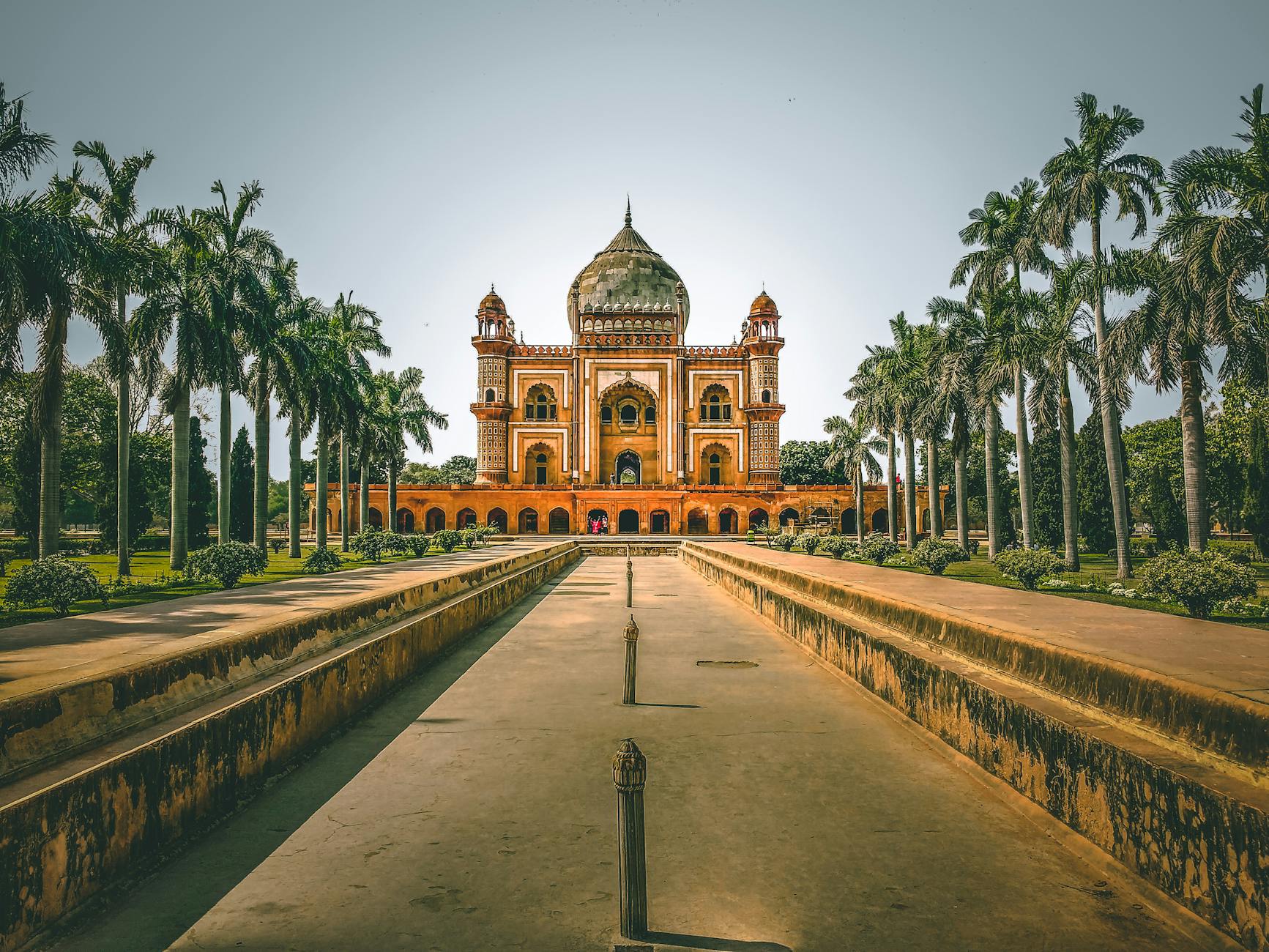
India is not a destination you “cover.” It is a continent-scale civilization compressed into one country: Himalayan valleys and desert forts, megacities and pilgrimage towns, Mughal tombs and Dravidian temples, tea plantations and mangrove deltas, beach villages and tiger reserves, textile markets and startup corridors, Portuguese churches and Buddhist monasteries, street food lanes and palaces converted into hotels.
Start Here
The first mistake is thinking of India as one trip.
A traveler who wants Rajasthan’s forts and desert color should not plan the same journey as a traveler who wants Kerala’s backwaters and coastal food. A first-time visitor drawn to Delhi, Agra, and Jaipur is not taking the same trip as a trekker heading for Ladakh, a family going to Goa, a spiritual traveler going to Varanasi and Rishikesh, or a food-obsessed visitor building a route around Mumbai, Hyderabad, Kolkata, Lucknow, Chennai, and Amritsar. India contains all of these, but it does not reward pretending they fit neatly into one short itinerary.
A good India trip begins with restraint. Pick a region. Pick a season. Pick a pace. Build around a route that respects distance, heat, festivals, traffic, rail logistics, flight buffers, and the emotional intensity of the place. India can be astonishing, generous, beautiful, maddening, exhausting, funny, sacred, chaotic, elegant, bureaucratic, and intimate, sometimes in the same afternoon. The goal is not to see everything. The goal is to choose the right India for the trip you actually have.
India in one sentence: India is a many-country country, where the best journey comes from choosing one coherent region or theme, respecting the season, moving deliberately, and letting the country’s scale, complexity, food, faith, history, and daily life unfold without trying to force it into a checklist.
Quick Verdict
| Question | Answer |
|---|---|
| Best for | History, food, architecture, textiles, photography, spiritual travel, wildlife, rail journeys, palaces, temples, festivals, mountains, beaches, markets, crafts, literature, luxury hotels, budget backpacking, and travelers who enjoy deep cultural contrast. |
| Not ideal for | Travelers who need a low-friction vacation, dislike crowds, cannot tolerate heat or sensory overload, want every logistics problem solved instantly, or expect one region to explain the whole country. India is rewarding, but it is not effortless. |
| Ideal first trip length | 10–14 days. One week is possible if you focus tightly. Three weeks is better if you want more than one region. A month lets you travel with much less distortion. |
| Best first-timer route | The classic North India triangle: Delhi, Agra, Jaipur, with possible extensions to Varanasi, Udaipur, Jodhpur, Ranthambore, or Rishikesh depending interest and season. |
| Best alternative first trip | Kerala and South India: Kochi, Munnar, Alleppey/Kumarakom backwaters, Madurai, Thanjavur, Pondicherry, Chennai, or Mysuru/Bengaluru depending route. Better for travelers who want a softer landing than North India’s intensity. |
| Best overall months | Roughly October to March for much of the country, with major regional exceptions. The Himalaya and Ladakh have different windows. Monsoon can be beautiful in the right places but disruptive in the wrong ones. |
| Biggest planning mistake | Trying to visit Delhi, Agra, Jaipur, Varanasi, Mumbai, Goa, Kerala, Rajasthan, and the Himalaya in one short trip. India punishes geographic greed. |
| One thing to book early | Peak-season trains, key domestic flights, tiger safaris, high-end hotels in Rajasthan/Kerala/Goa, festival-period lodging, and any heritage hotel or luxury rail experience that defines the trip. |
| One thing to leave unscheduled | Market wandering, food walks, neighborhood time, rest afternoons, conversations, a second visit to a place that surprised you, and recovery time after long transfers. |
| Most important warning | Distances are larger, heat is stronger, traffic is slower, bureaucracy is more real, and emotional fatigue arrives faster than many visitors expect. Build slack into the trip. |
The Move
For a first visit, choose one primary route family: North India classics, Rajasthan depth, Kerala/South India, Himalaya/Ladakh, wildlife, spiritual India, or food-and-cities. Add no more than one meaningful extension. The quality of an India trip usually improves when the map gets smaller.
Who Will Love India?
You will probably love India if you want:
- Travel that feels layered rather than polished: street life, ritual, ruins, markets, trains, old cities, modern malls, tea stalls, palace hotels, public argument, private warmth, and constant improvisation.
- Architecture with civilizational range: Buddhist sites, Hindu temples, Islamic tombs and mosques, Sikh gurdwaras, colonial civic buildings, stepwells, forts, palaces, churches, synagogues, havelis, monasteries, and contemporary urban design.
- Food that changes dramatically by region: Punjabi, Awadhi, Bengali, Tamil, Keralan, Goan, Gujarati, Rajasthani, Hyderabadi, Kashmiri, Northeastern, Parsi, coastal, Mughlai, Jain, street food, temple food, home cooking, and more.
- A country where faith and public life are visible: processions, bells, calls to prayer, temple queues, shrine offerings, river rituals, festival lights, pilgrimage routes, and sacred geography.
- Strong contrasts: ultra-luxury and poverty, old and new, rural and digital, sacred and commercial, beauty and inconvenience, generosity and hard bargaining.
- A trip that requires curiosity, humility, and some tolerance for mess.
You may struggle with India if you want:
- A tidy, predictable, uniformly comfortable vacation.
- Minimal crowds, noise, dust, traffic, heat, or bureaucratic friction.
- A country where every meal, restroom, sidewalk, ticket office, and transfer feels easy.
- A short itinerary that hops across the map without consequences.
- Cultural difference without discomfort.
India is not “hard” in one simple way. It is variable. The same day can include a sublime temple at sunrise, a stunning meal, a maddening traffic jam, a warm conversation, a scam attempt, an exquisite textile shop, a power cut, a hotel staff member who solves everything, and a train platform that makes you question your life choices. That is not a defect in the guide. That is why the guide needs to be honest.
India at a Glance
| Practical | Detail |
|---|---|
| Country | Republic of India. Federal republic with 28 states and 8 union territories. Travel experience varies sharply by state, language, terrain, religion, wealth, infrastructure, and season. |
| Capital | New Delhi, within the National Capital Territory of Delhi. |
| Largest cities visitors commonly use | Delhi, Mumbai, Bengaluru, Chennai, Kolkata, Hyderabad, Ahmedabad, Jaipur, Kochi, Goa’s coastal hubs, Varanasi, Udaipur, Jodhpur, Amritsar, Lucknow, Mysuru, Leh, and others. |
| Languages | Hindi and English are widely used in government and travel contexts, but India has many major languages, including Bengali, Telugu, Marathi, Tamil, Urdu, Gujarati, Kannada, Malayalam, Odia, Punjabi, Assamese, and others. English is useful in hotels, airports, larger cities, and formal tourism, but local-language help matters outside the main circuits. |
| Currency | Indian rupee, written as ₹ or INR. |
| Cards vs cash | Cards and UPI-style digital payments are common in cities and formal businesses, but foreign travelers should carry cash for small shops, drivers, tips, markets, rural areas, temples, and local transport. |
| Time zone | India Standard Time, UTC+5:30 year-round. India does not use daylight saving time. |
| Main international gateways | Delhi, Mumbai, Bengaluru, Chennai, Hyderabad, Kolkata, Kochi, Ahmedabad, Goa, and others depending airline network. |
| Visa basics | Most foreign tourists need a visa or e-Tourist visa before arrival. India’s official e-Visa portal lists e-Tourist Visa options including 30-day, 1-year, and 5-year categories, with validity and entry rules varying by type.[1] |
| Passport validity | Indian diplomatic guidance for e-Visa applicants commonly requires at least six months’ passport validity from the date of arrival and sufficient blank pages; check the official portal or relevant Indian mission for your nationality.[2] |
| Tourist helpline | India’s Ministry of Tourism lists a 24x7 toll-free tourist helpline: 1800-11-1363, short code 1363, with multiple supported languages.[3] |
| Emergency numbers | 112 is India’s all-in-one emergency number. Local police, ambulance, fire, tourist helplines, hotel contacts, and embassy/consulate numbers should be saved before travel. |
| Electricity | 230V, 50Hz. Plug types C, D, and M are commonly encountered. Bring a universal adapter. |
| Tap water | Do not assume tap water is safe to drink. Use sealed bottled water, properly filtered water, or hotel-provided safe water. Be careful with ice and raw foods depending venue. |
| Best planning tools | Official visa site, airline apps, IRCTC for rail, hotel concierge or trusted local operator for complex logistics, Google Maps, WhatsApp, ride-hailing apps where available, and state tourism sites. |
| Common first-timer shock | Traffic, horns, crowds, heat, poverty, bargaining, attention from touts, and the sheer density of people and activity in North Indian tourist corridors. |
First-Timer Mistake
Do not build the trip from a list of famous names. Build it from route logic. Delhi–Agra–Jaipur works because the geography works. Kochi–Munnar–Backwaters works because the geography works. Mumbai–Varanasi–Goa–Kerala–Ladakh in one short trip does not work just because the names are famous.
2026 Visitor Notes
Visa Rules Are Manageable, But They Are Not Optional
India’s official e-Visa portal says the e-Tourist Visa is offered in 30-day, 1-year, and 5-year forms, with rules on validity, entries, and maximum stay depending the visa type.[1] U.S. State Department travel information also emphasizes that travelers must enter India with a visa in their passport or an e-Tourist visa, and that e-Tourist visa entry is limited to designated international airports and seaports.[4]
The move: Apply only through official Indian government channels or trusted visa processors. Beware lookalike visa sites. Check your nationality, port of entry, validity period, allowed activities, and whether your itinerary includes protected/restricted areas that require additional permits.
Travel Advisories Are Region-Specific
India is not one security environment. Advisories from foreign governments often distinguish ordinary tourist corridors from areas with terrorism, insurgency, border tensions, communal violence, or civil unrest risks. The U.S. State Department’s India advisory includes India-wide guidance plus stronger warnings for specific places such as Jammu and Kashmir, the India-Pakistan border area, parts of Central and East India, and Manipur.[4]
The move: Do not read a countrywide advisory as if every neighborhood in India carries the same risk. Also do not ignore it. Check the exact states and districts on your route.
Monsoon Is Not One Weather Event
India’s southwest monsoon usually shapes travel from roughly June to September, but it arrives, peaks, and withdraws at different times across the country. The India Meteorological Department maintains official monsoon information, including progress and long-range forecasts.[5] For 2026, regional forecasts and heat/monsoon warnings should be checked close to travel because rainfall distribution matters more than a generic “monsoon season” label.
The move: Monsoon can be lush and beautiful in Kerala, the Western Ghats, and parts of the Northeast, but it can also mean landslides, flooded roads, leeches on trails, beach closures, cancelled transport, and uncomfortable humidity. Plan by region, not by month alone.
Trains Are Wonderful, But Not Always Simple
Indian rail travel can be one of the great pleasures of the country, but booking classes, quotas, waitlists, station changes, and long travel times require planning. IRCTC materials note that foreign tourists and NRIs with valid passports can use Foreign Tourist Quota booking online, with some bookings possible up to 365 days in advance.[6]
The move: Use trains when the route makes sense, especially classic overnight or scenic routes, but do not romanticize every long ride. Sometimes a domestic flight is the difference between a good itinerary and a punishing one.
Health Preparation Matters
CDC traveler guidance for India emphasizes being up to date on routine vaccinations, highlights measles vaccination for international travelers, and notes rabies risk from dogs and some wildlife.[7] The CDC Yellow Book also discusses India-specific vaccination considerations such as hepatitis A, hepatitis B, and COVID-19, with guidance varying by age and risk.[8]
The move: See a travel medicine professional early, especially if you will visit rural areas, spend time with animals, travel during monsoon, trek, visit malaria-risk areas, or have medical conditions.
How to Understand India
India becomes easier when you stop treating it as a single destination and start reading it as a set of overlapping systems: regions, languages, religions, climates, food cultures, transport corridors, historical layers, and social codes.
The Country’s Core Travel Logic
India is huge, but the problem is not only size. It is intensity plus variation. A 300-kilometer journey can be fast by air, slow by road, atmospheric by train, or impossible during weather disruption. A city can be magnificent and exhausting. A famous site can be worth the effort and still require defensive planning. A luxury hotel can be world-class, while the street outside is chaotic. A spiritual place can be sacred, commercial, moving, and overwhelming all at once.
The best India travelers do three things:
- They narrow the map. They choose fewer regions and go deeper.
- They respect conditions. Heat, monsoon, altitude, pollution, traffic, and festivals are not minor details.
- They preserve energy. They build rest, comfort, and flexibility into the itinerary.
India’s Central Contrasts
- Civilization vs nation-state: India’s cultural history is ancient; the modern republic is young and fast-changing.
- Scale vs intimacy: megacities and crowds coexist with small rituals, courtyard homes, tiny shrines, village tea stalls, and deeply personal hospitality.
- Sacred vs commercial: pilgrimage towns can feel devotional and entrepreneurial at the same time.
- Luxury vs hardship: India has some of the world’s most extraordinary hotels, trains, restaurants, and crafts beside visible poverty and uneven infrastructure.
- Continuity vs reinvention: classical music, handloom weaving, Sanskritic ritual, Mughal architecture, colonial institutions, Bollywood, IT hubs, metro systems, and digital payments all coexist.
- Regional pride vs national identity: India is one country, but regional language, cuisine, politics, dress, religion, and historical memory matter enormously.
The India Most First-Timers Meet
| India | Where you feel it | What it gives you |
|---|---|---|
| Classic North India | Delhi, Agra, Jaipur, Varanasi, Udaipur, Jodhpur, Amritsar | Mughal and Rajput history, forts, tombs, bazaars, sacred rivers, desert color, major icons. |
| South India | Kerala, Tamil Nadu, Karnataka, Andhra/Telangana, Pondicherry | Temples, backwaters, spice, coconut, coastal culture, Dravidian architecture, hill stations, gentler pacing in many routes. |
| Himalayan India | Ladakh, Himachal Pradesh, Uttarakhand, Sikkim, parts of Kashmir, Northeast hill states | Mountains, monasteries, trekking, altitude, pilgrimage, remote roads, seasonal access. |
| Urban India | Delhi, Mumbai, Bengaluru, Hyderabad, Chennai, Kolkata, Ahmedabad | Food, commerce, colonial and modern history, museums, nightlife, traffic, markets, art, contemporary India. |
| Wild India | Madhya Pradesh, Rajasthan, Assam, Karnataka, Uttarakhand, Gujarat, West Bengal | Tiger reserves, rhinos, lions, elephants, birds, forests, wetlands, safari logistics. |
| Coastal India | Goa, Kerala, Karnataka coast, Tamil Nadu coast, Odisha, Andaman Islands | Beaches, seafood, churches, ports, monsoon landscapes, Ayurveda/wellness, islands. |
| Spiritual India | Varanasi, Rishikesh, Haridwar, Amritsar, Bodh Gaya, Madurai, Tirupati, Puri, Ajmer, Pushkar | Pilgrimage, rituals, temples, ashrams, gurdwaras, mosques, monasteries, sacred rivers. |
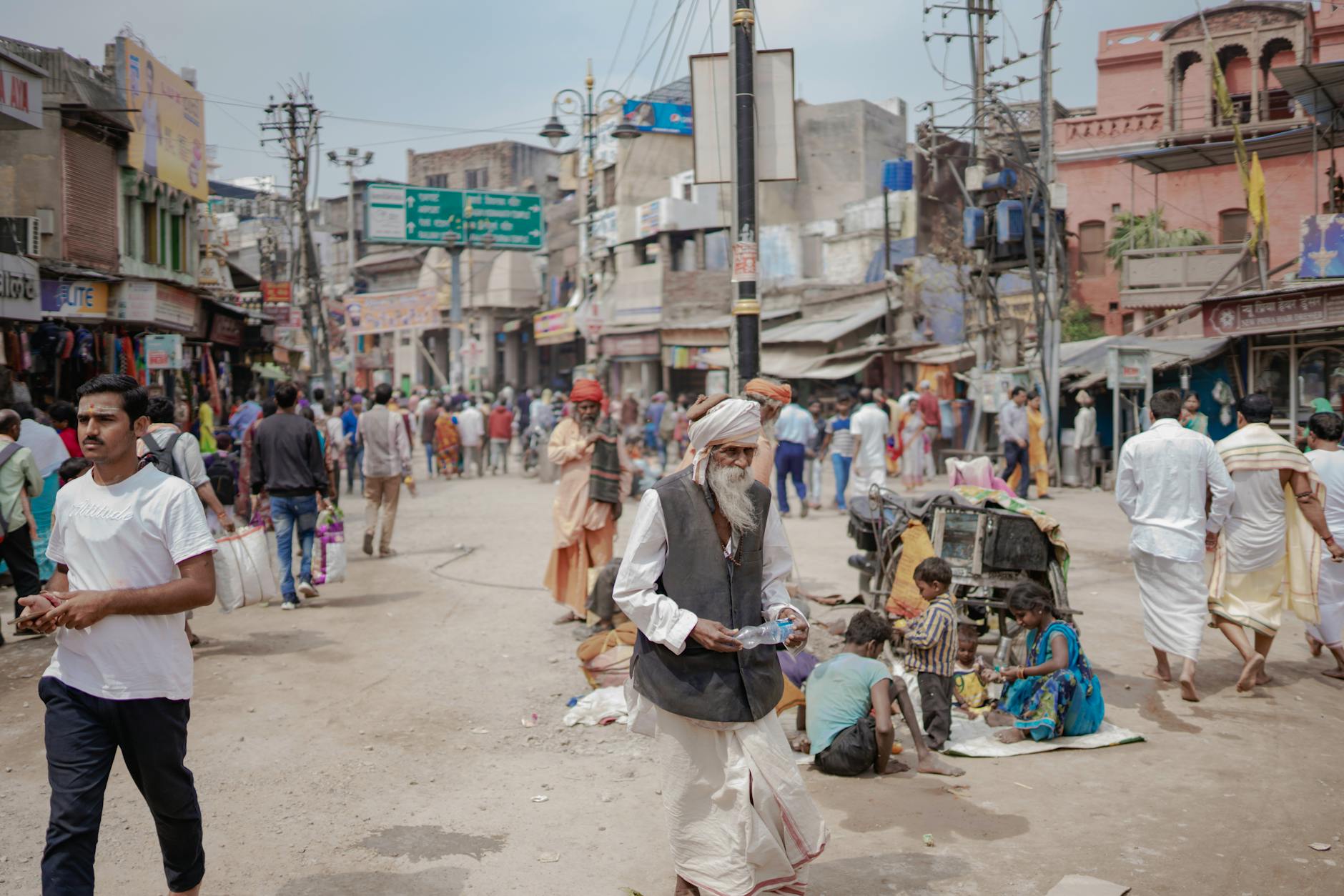
Choose Your India
This is the most important planning section. Before asking “Where should I go in India?” ask “What kind of India trip am I actually trying to have?”
Choose North India If You Want Icons, Forts, and Historic Drama
Best route: Delhi → Agra → Jaipur, with extensions to Udaipur, Jodhpur, Varanasi, Ranthambore, or Amritsar.
Best for: First-timers, architecture, photography, history, markets, luxury heritage hotels, and major bucket-list sites.
Watch out for: Crowds, touts, air pollution, long drives, heat, scams, and sensory overload.
Ideal length: 7–14 days.
Choose Rajasthan If You Want Color, Palaces, Desert Landscapes, and Heritage Hotels
Best route: Jaipur → Pushkar/Ajmer → Jodhpur → Jaisalmer → Udaipur, with possible Ranthambore or Bundi.
Best for: Forts, textiles, photography, romantic hotels, desert atmosphere, crafts, road-trip-style travel.
Watch out for: Long drives, summer heat, overly touristy shopping stops, and the temptation to cram every city.
Ideal length: 10–16 days.
Choose Kerala If You Want a Softer, Greener First India
Best route: Kochi → Munnar → Thekkady/Periyar → Alleppey/Kumarakom backwaters → Marari/Varkala/Kovalam, with Madurai as an extension.
Best for: Couples, families, food, backwaters, spice, coastal culture, wellness, slower travel.
Watch out for: Monsoon intensity, beach seasonality, mosquito exposure, and overbuilt houseboat tourism.
Ideal length: 8–12 days.
Choose Tamil Nadu If You Want Temples, Classical Culture, and Deep South India
Best route: Chennai → Mahabalipuram → Pondicherry → Thanjavur → Madurai → Chettinad, with possible Rameswaram or Kanyakumari.
Best for: Temple architecture, history, vegetarian food, music/dance culture, pilgrimage towns, serious cultural travel.
Watch out for: Heat, conservative dress expectations at temples, and long road transfers.
Ideal length: 10–14 days.
Choose Ladakh or the Himalaya If You Want Mountains, Monasteries, and High-Altitude Drama
Best route: Leh → acclimatization → monasteries → Nubra Valley → Pangong/Tso Moriri, or Himachal/Uttarakhand/Sikkim depending season.
Best for: Mountains, photography, Buddhist culture, trekking, road journeys, adventure.
Watch out for: Altitude sickness, seasonal road closures, permits, harsh sun, cold nights, landslides, and limited medical infrastructure.
Ideal length: 8–14 days, with acclimatization built in.
Choose Wildlife India If You Want Tigers, Rhinos, Birds, and Forests
Best route: Central India tiger circuit, Rajasthan + Ranthambore, Assam + Kaziranga, Gujarat + Gir, or Karnataka parks.
Best for: Safari travelers, photographers, families with older children, nature lovers.
Watch out for: Park seasons, safari permit rules, heat, availability, long drives, and unrealistic expectations of tiger sightings.
Ideal length: 7–14 days depending circuit.
Choose Food India If You Want to Eat Your Way Across Regions
Best route: Delhi/Lucknow/Amritsar for North Indian depth; Mumbai/Goa/Kerala for coast; Kolkata for Bengali food; Hyderabad for biryani and Deccan cuisine; Chennai/Madurai for Tamil food; Ahmedabad for Gujarati vegetarian culture.
Best for: Serious eaters, culinary history, markets, street food, cooking classes.
Watch out for: Food safety, overambitious street-food sampling, spice tolerance, and rushing meals between transfers.
Ideal length: 10–21 days.
Choose Spiritual India If You Want Ritual, Pilgrimage, and Sacred Geography
Best route: Varanasi + Sarnath; Rishikesh + Haridwar; Amritsar; Bodh Gaya; Madurai/Rameswaram; Puri; Pushkar/Ajmer.
Best for: Religion, philosophy, yoga, sacred rivers, temple culture, Sikh hospitality, Buddhist history.
Watch out for: Commercialization, crowds, scams, sensitive photography, and mistaking sacred places for performances.
Ideal length: 7–14 days.
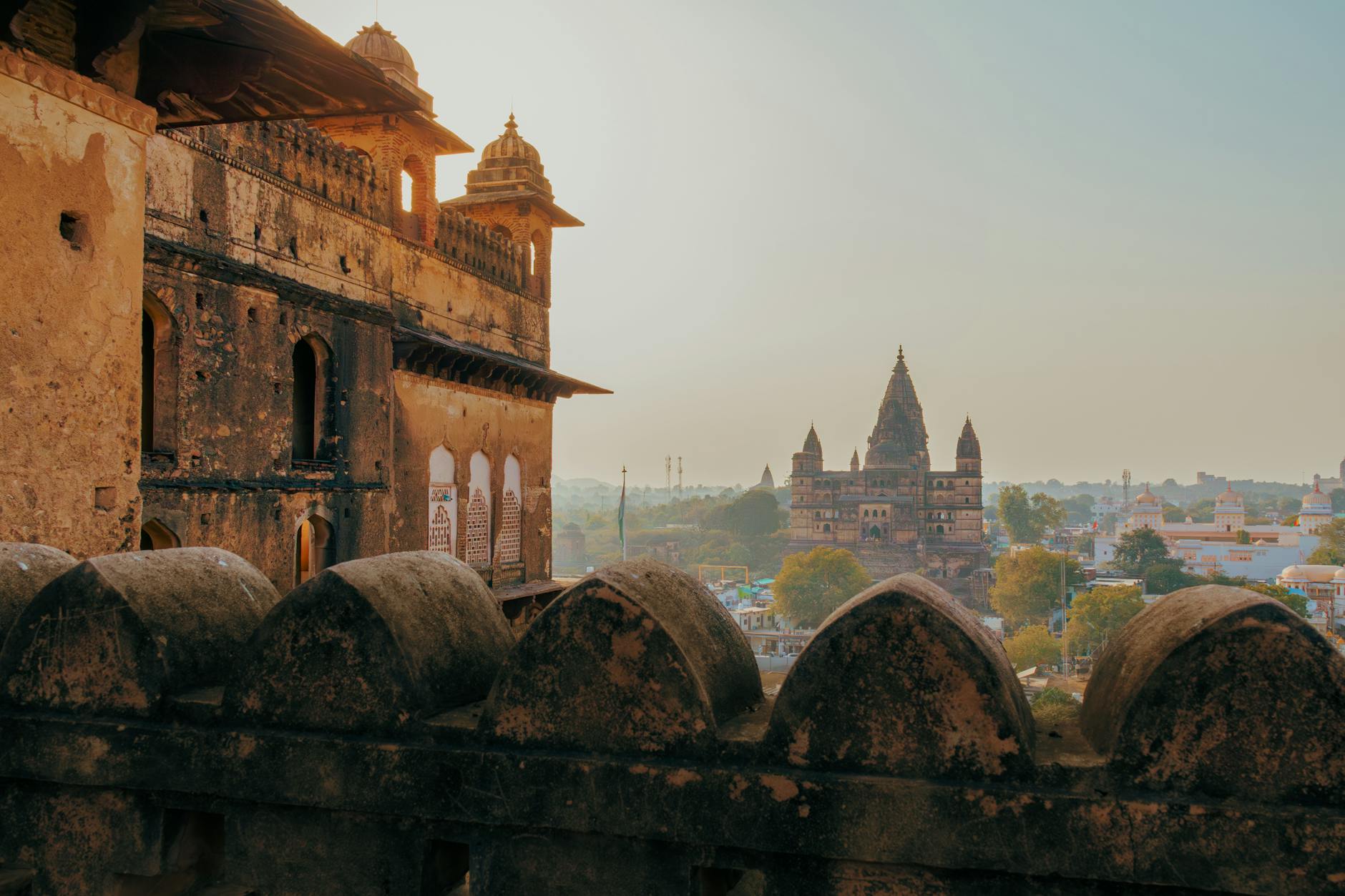
Best Time to Visit India
The cleanest answer is: October to March is the best general window for much of India, especially the classic North India and Rajasthan circuits. But India’s climate is too varied for one answer. The Himalaya, Ladakh, Kerala, Goa, the Northeast, Central India wildlife parks, and Tamil Nadu each require more nuance.
Season-by-Season Overview
| Season | What to expect | Best for | Watch out for |
|---|---|---|---|
| Winter: November–February | Cooler, drier conditions across much of North and Central India; pleasant in Rajasthan and many cities; cold in the Himalaya. | First-timer routes, Rajasthan, Delhi/Agra/Jaipur, Kerala, Goa, wildlife, cities, temples. | North India fog, air pollution, peak-season hotel prices, cold nights in deserts and mountains. |
| Spring: March–April | Warming quickly. Holi often falls in March. Good in some regions early; increasingly hot in the plains. | Holi, wildlife, early Himalayan foothills, late-season Rajasthan if heat-tolerant. | Heat ramps up; Holi requires planning and consent; dehydration. |
| Summer/pre-monsoon: April–June | Very hot in much of the plains; hill stations and high mountains become attractive. | Ladakh opening period, hill stations, some wildlife viewing, mountain escapes. | Dangerous heat in North/Central India, dust, school-holiday crowds in hill stations. |
| Monsoon: June–September | Rain spreads unevenly across India. Lush landscapes, lower prices, disruptions. | Kerala/Western Ghats atmosphere, monsoon photography, Ayurveda, some cultural city travel, Ladakh in rain-shadow areas. | Flooding, landslides, beach closures, leeches, humidity, road disruptions, park closures. |
| Autumn/post-monsoon: September–October | Green landscapes, improving weather, festival season builds. | Rajasthan from late October, Kerala after rains, cities, festivals, wildlife reopening. | Lingering humidity, regional flooding, festival travel spikes. |
Best Months by Trip Type
| Trip type | Best months | Notes |
|---|---|---|
| Classic Delhi–Agra–Jaipur | October–March | December/January can bring fog and pollution; April gets hot. |
| Rajasthan | October–March | Best balance of weather and atmosphere; desert nights can be cold. |
| Kerala | November–March | Monsoon is lush but not ideal for everyone; check beach and backwater conditions. |
| Goa | November–February | Peak beach season; Christmas/New Year prices spike. |
| Tamil Nadu temples | November–February | Hot much of the year; northeast monsoon can affect parts of Tamil Nadu around Oct–Dec. |
| Ladakh | June–September | High-altitude season; acclimatization essential. |
| Himachal/Uttarakhand | March–June and September–November | Monsoon can bring landslides; winter brings snow to higher areas. |
| Wildlife/tiger parks | Roughly October–June, park-dependent | Hot months can improve sightings but are uncomfortable; many parks close during monsoon. |
| Northeast India | October–April for many routes | Monsoon can be intense; permits/logistics vary by state. |
| Andaman Islands | November–April | Monsoon affects sea conditions and ferries. |
Month-by-Month Guide
| Month | Verdict |
|---|---|
| January | Good for Rajasthan, Delhi/Agra/Jaipur, Kerala, Goa, Tamil Nadu, and wildlife. Watch fog and pollution in North India; cold in deserts at night. |
| February | One of the best all-around months. Comfortable in much of the country; strong for first-timers. |
| March | Still good early, increasingly hot later. Holi can be wonderful or overwhelming depending where and how you experience it. |
| April | Hot in the plains. Better for hill stations, some wildlife, and heat-tolerant travelers. Avoid overambitious city sightseeing. |
| May | Very hot in much of India. Consider mountains, Ladakh preparation, or avoid unless you know what you are doing. |
| June | Monsoon arrives in parts of India; Ladakh and high Himalaya become more viable. Heat remains an issue in many areas. |
| July | Monsoon season. Beautiful in some landscapes, disruptive in others. Avoid fragile road routes prone to landslides unless well planned. |
| August | Monsoon continues. Good for lush scenery and fewer crowds in some places; not ideal for beaches or many treks. |
| September | Transitional. Ladakh remains good earlier; many regions still humid or wet; post-monsoon green appears. |
| October | Excellent in many regions by late month. Festival season, improving weather, wildlife parks reopen. |
| November | One of the best months: festivals, cooler weather, strong for North India, Rajasthan, Kerala, and Goa. |
| December | Peak season. Great weather in many regions, but prices rise. North India fog/pollution can affect flights and road/rail timing. |
Rain Plan
India’s rainy-day alternatives depend heavily on region. In cities, use museums, food tours, covered bazaars, hotel downtime, cooking classes, craft workshops, temple visits with caution, and indoor shopping. In mountains or monsoon zones, rain can shut roads; “rain plan” may mean changing the route, not just swapping an attraction.
How Many Days You Need
The Honest Answer
For a first India trip, 10 to 14 days is the sweet spot. One week can work only if you choose a tight route. Three weeks lets you combine two regions intelligently. A month lets India breathe.
| Length | What it feels like |
|---|---|
| 5–7 days | A focused taste: Delhi–Agra–Jaipur, Kerala core, Goa only, or one city plus nearby region. Do not attempt multiple distant regions. |
| 8–10 days | A strong first trip if focused: Golden Triangle plus one extension, Kerala route, Rajasthan short circuit, or Tamil Nadu temple route. |
| 11–14 days | Ideal for most first-timers. Allows a classic route plus rest, one wildlife park, Varanasi, Udaipur/Jodhpur, or Kerala depth. |
| 15–21 days | Lets you combine North India + Rajasthan, South India + Kerala/Tamil Nadu, or cities + wildlife without ruining the pace. |
| 1 month | A real country journey. Two or three coherent regions, slower travel, recovery days, and meaningful context. |
| 2+ months | Deep travel: language, volunteering, long-stay wellness, serious trekking, multi-region food/culture, or research-oriented travel. Visa rules and health planning matter more. |
Pacing Rule
For India, count transfer days honestly. A four-hour drive may become six. A train may be delayed. A domestic flight may still consume half a day once traffic, airport time, security, baggage, and hotel transfer are included. Do not schedule major sightseeing immediately after every transfer.
The Move
Use a two-night minimum for most meaningful stops. One-night stops are useful only for transit, pilgrimage, or a very specific sight. Too many one-night stops turn India into logistics with monuments attached.
Best First-Time Routes
Route 1: The Classic Golden Triangle
Best for: First-timers, history, architecture, major icons, short trips.
Length: 7–9 days.
Route: Delhi → Agra → Jaipur → Delhi.
What it gives you: Old Delhi, New Delhi, Mughal history, the Taj Mahal, Fatehpur Sikri or Agra Fort, Jaipur’s palaces and forts, bazaars, food, and a manageable introduction to North India.
Suggested pacing:
- Days 1–3: Delhi. Old Delhi, Humayun’s Tomb, Qutub Minar, India Gate/central Delhi, food, markets.
- Day 4: Agra. Taj Mahal at sunrise or sunset, Agra Fort.
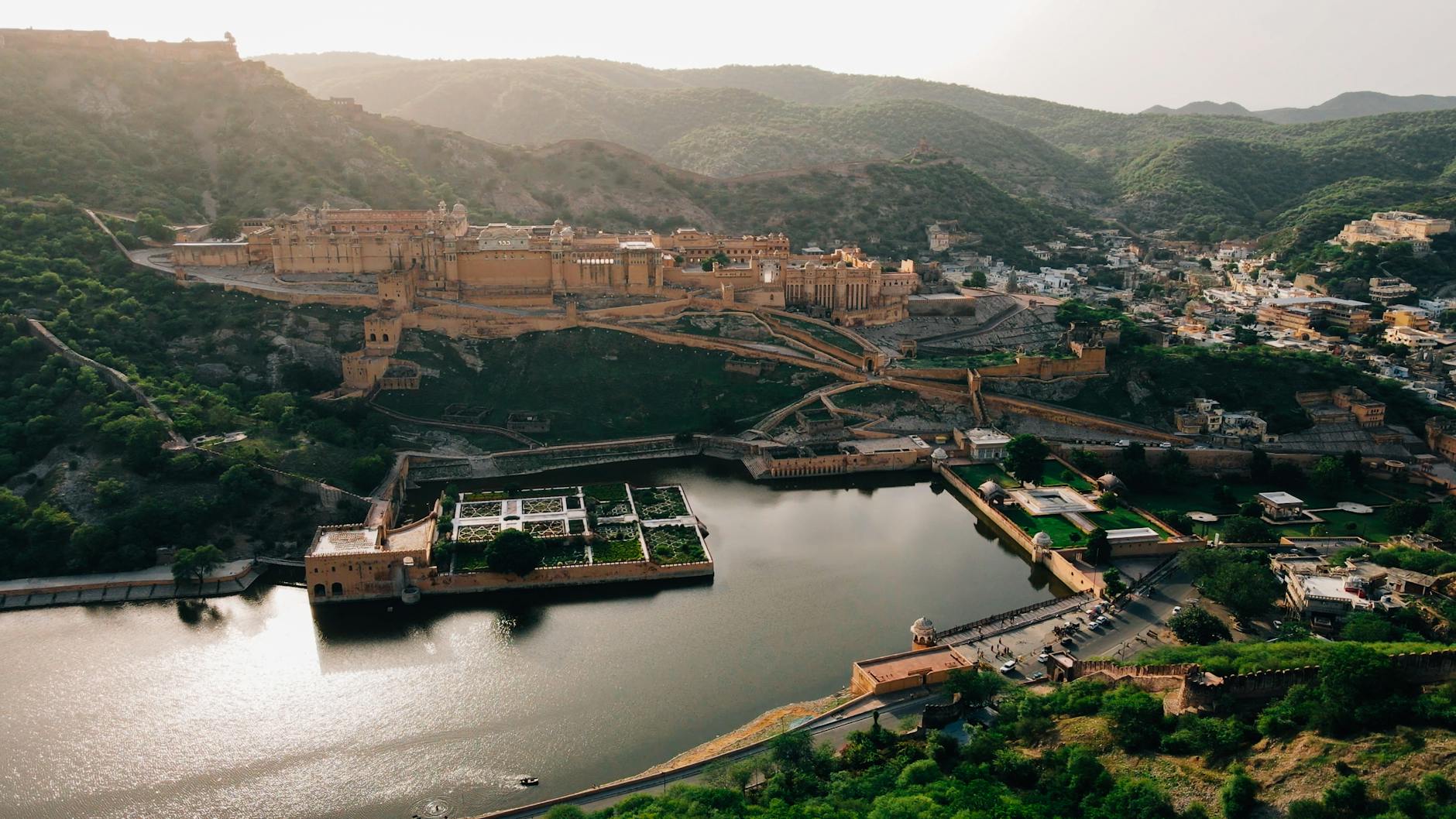
- Days 5–7: Jaipur. Amber Fort, City Palace, Jantar Mantar, markets, stepwells, food.
- Day 8/9: Return to Delhi or add buffer.
Better alternative: Add one night in Agra rather than doing the Taj as a brutal day trip from Delhi unless time is extremely short.
Route 2: Golden Triangle Plus Varanasi
Best for: First-timers who want sacred India and can handle intensity.
Length: 10–12 days.
Route: Delhi → Agra → Jaipur → Varanasi → Delhi.
Why add Varanasi: It is one of the world’s great sacred cities, but it is emotionally and logistically intense. It should not be a rushed afterthought.
Watch out for: Flights, ghats crowding, scams, funeral ritual sensitivity, narrow lanes, and emotional overload.
Route 3: Rajasthan Properly
Best for: Forts, palaces, romance, desert color, textiles, photography, heritage hotels.
Length: 12–16 days.
Route: Delhi or Jaipur → Jaipur → Pushkar/Ajmer or Bundi → Jodhpur → Jaisalmer → Udaipur → Delhi/Mumbai.
The move: Do not add every fort city. Jaipur, Jodhpur, Jaisalmer, and Udaipur already form a rich route. Choose Pushkar, Bundi, or Ranthambore based on interest.
Route 4: Kerala, Slow and Green
Best for: Couples, families, food, wellness, backwaters, softer entry.
Length: 8–12 days.
Route: Kochi → Munnar → Thekkady/Periyar → Alleppey/Kumarakom → Marari/Varkala/Kovalam → Kochi/Trivandrum.
What it gives you: Fort Kochi, tea hills, spice landscapes, wildlife-lite, backwaters, coastal rest, Keralan food.
Watch out for: Houseboat quality varies. Choose carefully and consider an overnight at a backwater resort instead of assuming a houseboat is mandatory.
Route 5: Tamil Nadu Temple and Culture Route
Best for: Serious culture travelers, temple architecture, South Indian food, classical arts.
Length: 10–14 days.
Route: Chennai → Mahabalipuram → Pondicherry → Chidambaram/Kumbakonam → Thanjavur → Chettinad → Madurai → optional Rameswaram.
What it gives you: Dravidian temple architecture, bronze sculpture traditions, Carnatic/classical culture, Tamil food, French-influenced Pondicherry, temple towns, palace/craft traditions.
Route 6: North India Spiritual Route
Best for: Sacred geography, yoga, pilgrimage, religion, philosophy.
Length: 10–14 days.
Route: Delhi → Rishikesh/Haridwar → Varanasi/Sarnath → Bodh Gaya or Amritsar depending tradition/interest.
Watch out for: Ashram quality, commercialized spirituality, overcrowded festival days, and photography sensitivity.
Route 7: Wildlife and Heritage
Best for: Tigers, forts, nature, family with older children.
Length: 10–14 days.
Route option: Delhi → Jaipur → Ranthambore → Agra → Delhi, or Mumbai/Delhi → Kanha/Bandhavgarh/Pench circuit.
The move: Pick fewer parks and stay longer. Tiger sightings are never guaranteed. A good safari trip is about forest, birds, guides, dawn, patience, and luck—not just a checklist animal.
Route 8: Ladakh and the High Himalaya
Best for: Mountains, monasteries, dramatic roads, Buddhist culture, adventure.
Length: 9–14 days.
Route: Delhi → Leh → acclimatization → monasteries → Nubra Valley → Pangong or Tso Moriri → Leh → Delhi.
Non-negotiable: Acclimatization. Do not fly to Leh and immediately drive high passes. Altitude sickness can be serious.
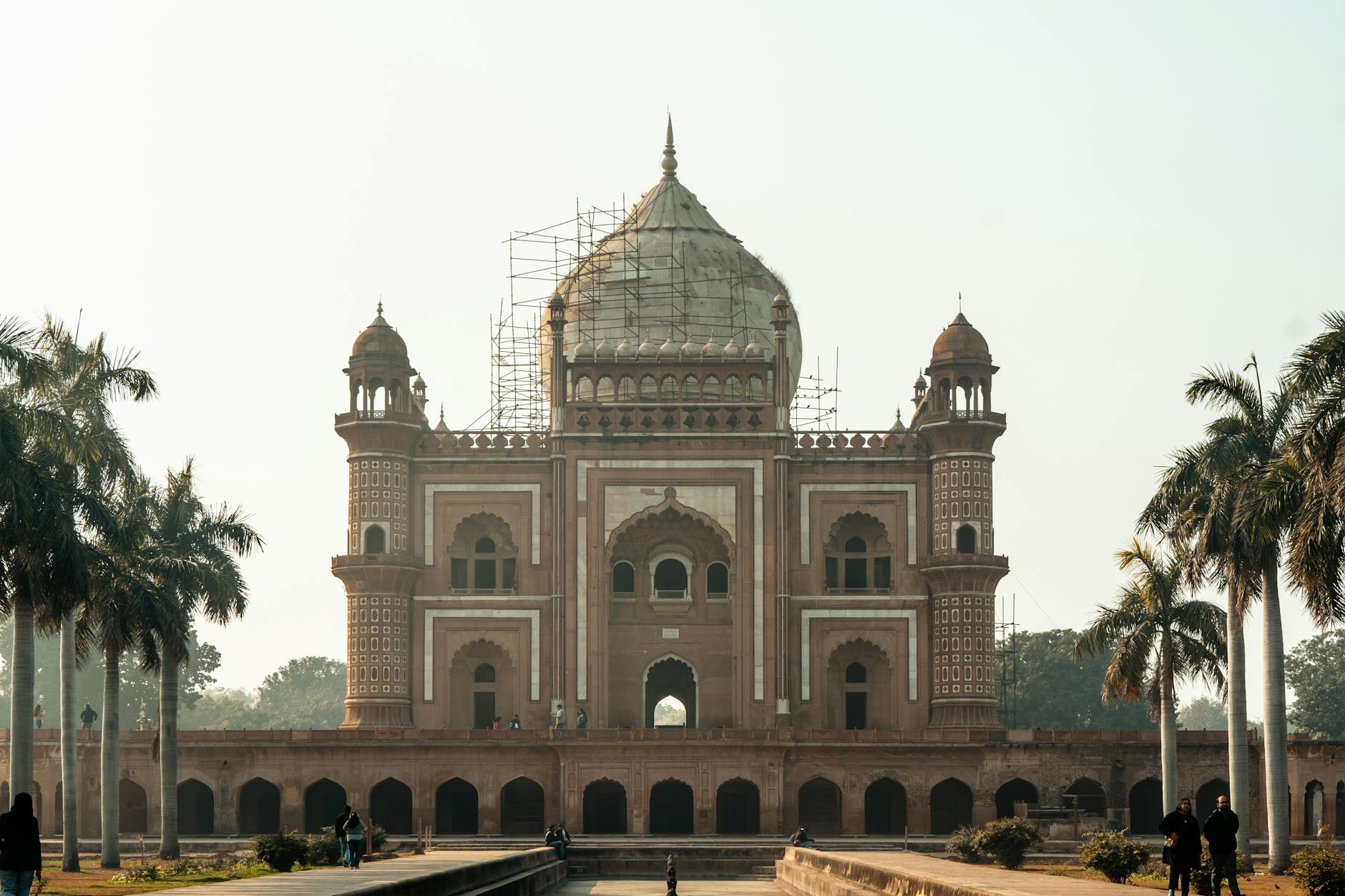
Regional Guide
Delhi and the National Capital Region
Identity: Political capital, historical palimpsest, food city, gateway, and shock absorber.
Delhi is often treated as a transit point, which is a mistake. It is difficult, polluted at times, sprawling, and traffic-heavy, but it is also one of India’s great historical cities. The Delhi region contains multiple Delhis: Sultanate ruins, Mughal Old Delhi, imperial New Delhi, refugee colonies, markets, malls, embassies, tomb gardens, universities, and metro-connected suburbs.
Best for: History, food, architecture, museums, first arrivals, onward flights/trains.
Do not miss: Humayun’s Tomb, Qutub Minar, Old Delhi food/markets with a good guide, Lodhi Garden, Jama Masjid area, National Museum, Gurudwara Bangla Sahib, India Gate/Rajpath area, and one serious meal.
Watch out for: Air pollution, scams, traffic, heat, and overambitious first-day sightseeing.
Agra and the Taj Corridor
Identity: Mughal monument city with one masterpiece that overshadows everything else.
Agra is more than the Taj Mahal, but the Taj is the reason to go. Agra Fort, Itmad-ud-Daulah, Mehtab Bagh, and nearby Fatehpur Sikri can deepen the visit.
Best for: Taj Mahal, Mughal architecture, photography, Golden Triangle route.
The move: Sleep in Agra if you want sunrise without a punishing pre-dawn road transfer. Avoid judging the city only by its tourist gauntlet.
Rajasthan
Identity: Forts, palaces, desert, textiles, color, aristocratic memory, and some of India’s most travel-ready heritage infrastructure.
Rajasthan is not subtle. It gives visitors cinematic India: painted cities, camel fairs, palace hotels, mirrored halls, desert sunsets, turbans, bazaars, stepwells, havelis, and sweeping fort walls. It is also heavily touristed, semi-arid, and full of shopping commissions if you travel carelessly.
Best places: Jaipur, Udaipur, Jodhpur, Jaisalmer, Pushkar, Ajmer, Bundi, Bikaner, Ranthambore, Shekhawati.
Best for: First-timers, couples, photographers, textiles, hotels, forts, road trips.
Watch out for: Heat, long drives, tourist shopping traps, and rushed city-hopping.
Varanasi and the Middle Ganges
Identity: Sacred river city, death and life, ritual, music, pilgrimage, narrow lanes, sunrise boats, and intense spiritual tourism.
Varanasi is one of India’s most powerful destinations and one of the easiest to mishandle. It is not a theme park of spirituality. People live, pray, grieve, work, bathe, cremate, sell, study, sing, and argue along the ghats.
Best for: Spiritual travel, photography with sensitivity, Hindu ritual, music, textiles, Sarnath Buddhist history.
Watch out for: Scams, emotional intensity, narrow lanes, crowding, sensitive funeral rituals, and poor river hygiene.
The move: Take a sunrise boat ride, walk slowly, visit Sarnath, and hire a guide who understands both history and boundaries.
Mumbai and Maharashtra
Identity: Financial capital, film city, port city, colonial architecture, sea drives, food, art, commerce, and density.
Mumbai is not a first-timer’s “easy India,” but it is one of the country’s great urban experiences. It feels more coastal, cosmopolitan, and commercially driven than Delhi, with Gothic and Art Deco architecture, local trains, street snacks, galleries, markets, and the Arabian Sea.
Best for: Urban India, food, architecture, Bollywood context, art, nightlife, business travel.
Do not miss: Colaba/Fort heritage walks, Chhatrapati Shivaji Maharaj Terminus exterior, Marine Drive, Elephanta Caves, Crawford Market, Kala Ghoda galleries, Parsi/Irani cafés, street food with care.
Watch out for: Traffic, monsoon flooding, humidity, and expensive hotels.
Goa
Identity: Beaches, churches, Portuguese layers, nightlife, seafood, villages, and seasonal tourism.
Goa is both India and a break from India. It is not just beaches; it has churches, old Portuguese-era houses, spice farms, village roads, markets, cashew feni, and layered Catholic/Hindu/Konkani culture. But it is also heavily commercialized in parts.
Best for: Beach time, food, nightlife, families, couples, slower travel.
North vs South: North Goa is livelier and more developed; South Goa is generally calmer and resort-oriented.
Watch out for: Peak-season prices, traffic, unsafe swimming, party excess, and choosing the wrong beach for your style.
Kerala
Identity: Green, literate, coastal, spice-scented, backwater-rich, politically distinctive, and often gentler for first-time visitors.
Kerala is one of India’s best routes for travelers who want beauty and culture without the full shock of the North Indian tourist corridor. Kochi gives history and art; Munnar gives tea hills; the backwaters give slow water life; the coast gives rest; the food gives coconut, seafood, appam, stew, fish curry, puttu, and banana-leaf meals.
Best for: Couples, families, food, wellness, backwaters, tea, softer pacing.
Watch out for: Monsoon, mosquitoes, houseboat quality, and over-sanitized wellness clichés.
Tamil Nadu
Identity: Temple civilization, classical culture, Tamil language pride, heat, vegetarian excellence, monumental gopurams, and deep continuity.
Tamil Nadu is one of the best regions for travelers who care about architecture and living religious culture. The temples are not ruins; they are active ritual worlds. Dress, behavior, and photography rules matter.
Best for: Temples, history, vegetarian food, classical music/dance, culture-heavy itineraries.
Watch out for: Heat, temple etiquette, conservative dress, long drives.
Karnataka
Identity: Bengaluru modernity, Mysuru heritage, Hampi ruins, Western Ghats, coffee, coast, and layered history.
Karnataka can support multiple trips: urban Bengaluru, royal Mysuru, temple/ruin circuits, Hampi’s boulder landscape, Coorg coffee country, and coastal Karnataka.
Best for: Hampi, Mysuru, Bengaluru, coffee, heritage, South India route extensions.
Kolkata and West Bengal
Identity: Intellectual, literary, colonial, Bengali, riverine, food-rich, and emotionally distinct.
Kolkata is not polished in a conventional travel-brochure way, but it is one of India’s most characterful cities: old mansions, tram nostalgia, bookstores, sweets, Durga Puja, clubs, markets, colonial architecture, and intense cultural self-awareness.
Best for: Literature, food, Durga Puja, colonial history, photography, serious city travelers.
Watch out for: Humidity, traffic, aging infrastructure, and needing time to understand the city’s mood.
Punjab and Amritsar
Identity: Sikh devotion, borderland history, food generosity, partition memory, and agricultural heartland.
Amritsar’s Golden Temple is one of India’s most moving sites. The langar, devotional music, marble reflections, and atmosphere can be profound. The city also offers partition history, Punjabi food, and the Wagah border ceremony nearby.
Best for: Sikh culture, food, history, spiritual travel.
Watch out for: Crowds, heat, border-area sensitivities, and reducing the region to one ceremony.
The Himalaya: Himachal Pradesh, Uttarakhand, Ladakh, Sikkim, and Beyond
Identity: Mountain India is not one thing: Hindu pilgrimage towns, Buddhist monasteries, trekking routes, colonial hill stations, high-altitude deserts, forest valleys, and borderland cultures.
Best for: Trekking, mountains, monasteries, yoga, pilgrimage, cooler weather, long stays.
Watch out for: Altitude, landslides, road conditions, permits, overbuilt hill towns, and monsoon danger.
Northeast India
Identity: Culturally distinct, mountainous, biodiverse, ethnically complex, and under-visited by many foreign travelers.
The Northeast is not a single destination. Assam, Meghalaya, Nagaland, Arunachal Pradesh, Sikkim, Manipur, Mizoram, and Tripura differ significantly. Permits, access, weather, and security conditions must be checked carefully.
Best for: Experienced India travelers, nature, tribal/cultural diversity, living root bridges, tea, rhinos, mountains, music, borderland history.
Watch out for: Permits, long travel times, monsoon, limited infrastructure in places, and region-specific advisories.
Cities and Bases
Best First Arrival Cities
| City | Best for | Why arrive here |
|---|---|---|
| Delhi | North India, Golden Triangle, Rajasthan, Himalaya | Best for classic first-timer routes and onward rail/flight connections. |
| Mumbai | Western India, Goa, Maharashtra, urban India | Good for travelers focused on cities, food, arts, or western routes. |
| Kochi | Kerala | Excellent softer landing for South India and backwaters. |
| Chennai | Tamil Nadu | Best for temple routes and Southeast India. |
| Bengaluru | Karnataka, Mysuru, Hampi, business | Practical gateway for southern interior routes. |
| Kolkata | Bengal, Northeast, culture | Strong for experienced travelers, food, Durga Puja, and eastern routes. |
| Hyderabad | Deccan, food, business | Biryani, history, and central-southern access. |
Best Bases by Traveler Type
| Traveler type | Strong bases |
|---|---|
| First-timer | Delhi, Jaipur, Agra, Udaipur, Kochi, Goa, Varanasi with caution. |
| Food traveler | Delhi, Mumbai, Kolkata, Lucknow, Hyderabad, Chennai, Amritsar, Kochi, Ahmedabad. |
| Luxury traveler | Delhi, Jaipur, Udaipur, Jodhpur, Mumbai, Goa, Kerala, Ranthambore. |
| Backpacker | Delhi, Rishikesh, Pushkar, Jaipur, Varanasi, Goa, Hampi, Kochi, Dharamshala, Manali, Leh. |
| Family | Kerala, Goa, Jaipur/Udaipur, Delhi with good hotel planning, wildlife lodges, Mysuru. |
| Spiritual traveler | Varanasi, Rishikesh, Haridwar, Amritsar, Bodh Gaya, Madurai, Tirupati, Puri. |
| Wildlife traveler | Ranthambore, Kanha, Bandhavgarh, Pench, Kaziranga, Gir, Corbett, Nagarhole/Kabini. |
| Design/craft traveler | Jaipur, Ahmedabad, Kutch, Bhuj, Delhi, Chennai, Kanchipuram, Varanasi, Kolkata. |
Where to Stay
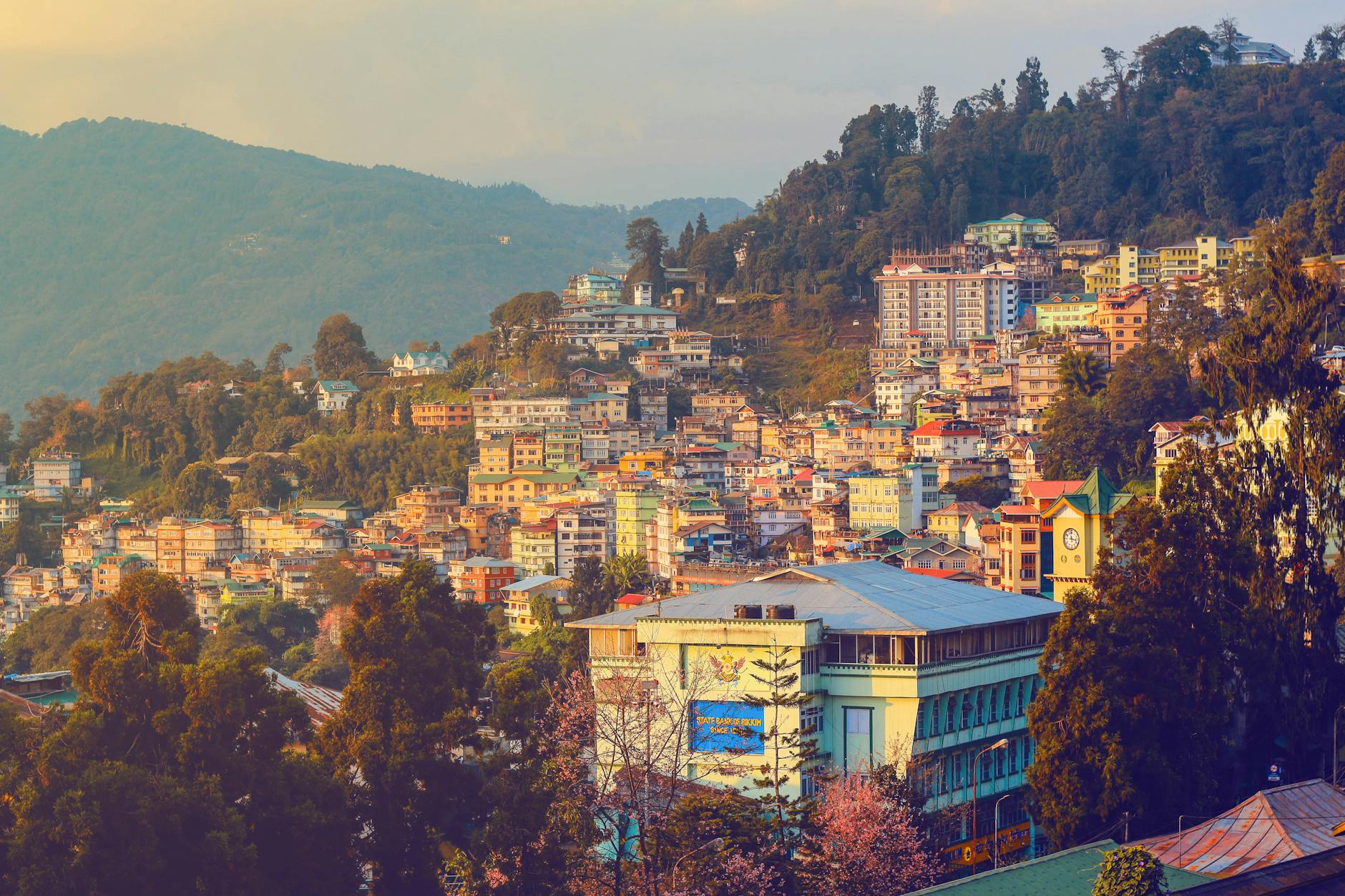
Accommodation in India ranges from some of the world’s finest hotels to basic guesthouses, homestays, ashrams, hostels, houseboats, safari lodges, plantation bungalows, beach resorts, palace hotels, and business chains.
The Short Answer
- For a first trip, spend more on hotels than you think you need, especially in Delhi, Varanasi, and arrival cities.
- In Rajasthan, heritage hotels can define the trip, but choose quality over fantasy photos.
- In Kerala, backwater resorts or carefully vetted houseboats are worth researching deeply.
- In wildlife parks, lodge location and safari access matter more than decorative luxury.
- In pilgrimage towns, location near the core can be atmospheric but noisy and difficult with luggage.
- In beach destinations, choose by beach personality, not just hotel photos.
Lodging Types
| Type | Best for | Cautions |
|---|---|---|
| Luxury palace/heritage hotels | Rajasthan, special occasions, history, romance | Expensive; some “heritage” labels are loose. |
| Business hotels | Delhi, Mumbai, Bengaluru, Chennai, Hyderabad | Reliable comfort, less atmosphere. |
| Boutique hotels | Kochi, Jaipur, Delhi, Goa, Udaipur | Quality varies; check recent reviews. |
| Homestays | Kerala, mountains, rural/craft regions | Great for context; privacy/service levels vary. |
| Ashrams | Rishikesh, spiritual routes | Not hotels; rules, schedules, and expectations matter. |
| Houseboats | Kerala backwaters, Kashmir | Quality, hygiene, route, noise, and sustainability vary. |
| Safari lodges | Wildlife parks | Book early; understand safari permit system. |
| Hostels/guesthouses | Budget travel, backpacker routes | Check safety, cleanliness, lockers, location. |
| Beach resorts | Goa, Kerala, Andamans | Beach quality, season, swimming safety, and noise differ. |
Booking Mistakes
- Choosing the cheapest acceptable hotel in Delhi after a long-haul flight.
- Booking inside a dense old city without considering luggage, taxis, stairs, or noise.
- Assuming “heritage” means well-maintained.
- Booking a houseboat based only on pretty photos.
- Ignoring air conditioning in hot regions.
- Ignoring heating in winter Rajasthan or Himalayan areas.
- Staying too far from the station/airport before an early departure.
- Booking beach accommodation without checking whether the beach is swimmable or seasonal.
Best Things to Do
India’s best experiences are not just sights. They are categories of experience: monuments at the right hour, markets with context, meals with regional understanding, rituals observed respectfully, trains taken for the right reason, landscapes reached in the right season, and conversations that happen because the itinerary has enough slack.
1. See the Taj Mahal, But Do It Properly
What it is: The most famous Mughal monument and India’s most recognizable landmark.
Best for: First-timers, architecture, photography, history.
How to do it well: Stay overnight in Agra if possible, go early, understand its Mughal context, pair with Agra Fort, and avoid letting aggressive tourism around the site sour the experience.
Worth it? Yes. Even overexposed icons can be extraordinary when approached well.
2. Spend Real Time in Old Delhi
What it is: Dense Mughal-era and post-Mughal urban life: lanes, mosques, markets, food, wires, rickshaws, crowds, and layers.
Best for: Food, history, photography, urban intensity.
How to do it well: Go with a good guide, especially for food. Do not make it your first jet-lagged afternoon if crowds overwhelm you.
3. Stay in a Heritage Hotel in Rajasthan
What it is: Forts, palaces, havelis, and restored residences turned into hotels.
Best for: Romance, architecture, luxury, photography, atmosphere.
How to do it well: Choose fewer, better stays. A great hotel in Udaipur, Jaipur, Jodhpur, or a smaller town can be a destination itself.
4. Take a Sunrise Boat in Varanasi
What it is: A dawn view of the ghats, river ritual, and the city’s sacred geography.
Best for: Spiritual travel, photography with restraint, culture, deep India.
How to do it well: Use a reputable boatman/guide. Do not photograph cremations or private grief. Let the experience be more than a camera exercise.
5. Eat Regionally, Not Generically
What it is: The difference between “Indian food” and India’s actual food cultures.
Best for: Everyone.
How to do it well: In each region, ask what is local: thali in Gujarat/Rajasthan, chaat in Delhi, biryani in Hyderabad/Lucknow/Kolkata, fish curry in Kerala/Goa/Bengal, idli/dosa/meals in the South, kebabs in Lucknow, sarson da saag and Amritsari kulcha in Punjab, sweets in Bengal, and so on.
6. Visit a Living Temple, Mosque, Gurdwara, Church, or Monastery Respectfully
What it is: India’s religious architecture as active public life, not only heritage.
Best for: Cultural understanding, spiritual travel, architecture.
How to do it well: Dress modestly, remove shoes when required, cover head where expected, ask before photographing, and follow local movement patterns.
7. Ride a Train Where the Train Makes Sense
What it is: A classic Indian travel experience, from fast trains to overnight sleepers and mountain railways.
Best for: Rail lovers, slower travelers, cultural texture.
How to do it well: Choose the right class, book early, protect luggage, bring snacks/water, and avoid overly romantic long routes if time is short.
8. Go on Safari, But Manage Expectations
What it is: Tiger reserves, rhino parks, lion habitat, bird sanctuaries, and forest landscapes.
Best for: Wildlife, families with older children, photographers.
How to do it well: Book permits early, choose quality naturalists, stay enough nights, and treat sightings as luck.
9. Explore a Craft Tradition at the Source
What it is: Textiles, block printing, weaving, blue pottery, metalwork, woodwork, carpets, embroidery, jewelry, leather, papier-mâché, bronze casting, stone carving, and more.
Best for: Shoppers, design travelers, cultural depth.
How to do it well: Visit workshops, cooperatives, museums, and serious shops. Learn enough to distinguish handmade from mass-produced tourist goods.
10. Slow Down in Kerala’s Backwaters
What it is: Lagoons, canals, coconut groves, boats, villages, birds, and water-based life.
Best for: Couples, families, relaxation, photography.
How to do it well: Choose between a houseboat and a backwater lodge carefully. Smaller, slower, and more responsible is usually better.
11. Experience a Festival, Carefully
What it is: Diwali lights, Holi colors, Durga Puja pandals, Pushkar Fair, Onam, Eid, Christmas in Goa/Kerala, Ganesh Chaturthi, Navaratri, Pongal, and countless regional festivals.
Best for: Culture, photography, energy, memory.
How to do it well: Understand crowding, consent, safety, lodging spikes, dress, and local meaning. Holi especially requires planning, not just showing up.
12. Take One Serious Walk
A great guided walk can transform India: Old Delhi food, Mumbai Art Deco, Kolkata colonial neighborhoods, Jaipur bazaars, Kochi heritage, Varanasi lanes, Lucknow food, Ahmedabad pols, Chennai temples, or craft villages.
The move: Pay for context. In India, a good guide is not just convenience; it is interpretation and friction reduction.
Food and Drink
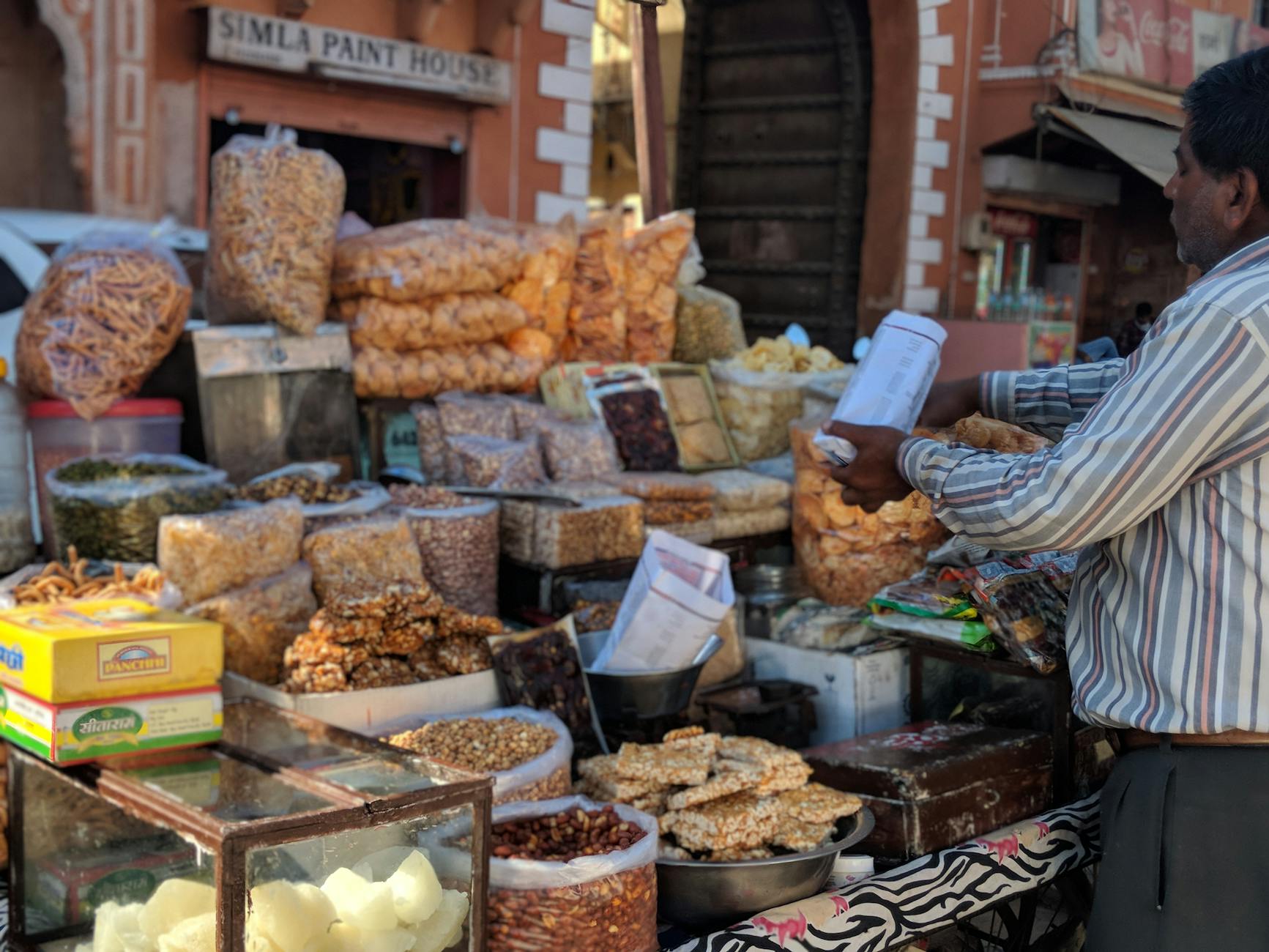
India is one of the world’s great food countries, but “Indian food” is almost too broad to be useful. The better question is: Where are you, what is local, what is seasonal, what is religiously or culturally shaped, and who is cooking?
Food Identity by Region
| Region | Food personality |
|---|---|
| Delhi/North India | Chaat, kebabs, parathas, butter chicken, Mughlai influences, Punjabi food, sweets, Old Delhi lanes. |
| Rajasthan | Dal baati churma, laal maas, ker sangri, gatte ki sabzi, sweets, thalis, desert preservation traditions. |
| Punjab/Amritsar | Kulcha, chole, lassi, tandoori food, generous portions, gurdwara langar. |
| Lucknow/Awadh | Kebabs, biryani, slow-cooked meat dishes, refined courtly cuisine. |
| Bengal/Kolkata | Fish, mustard, sweets, rolls, biryani variant, puchka, literary café culture. |
| Gujarat | Vegetarian thalis, farsan, sweet-salty balance, Jain influences, snacks. |
| Maharashtra/Mumbai | Vada pav, pav bhaji, seafood, Parsi food, coastal Maharashtrian food, street snacks. |
| Goa | Seafood, pork vindaloo, xacuti, bebinca, cashew feni, Catholic/Konkani/Portuguese influences. |
| Kerala | Appam, stew, fish curry, puttu, avial, sadya, banana leaf meals, coconut, spices. |
| Tamil Nadu | Idli, dosa, sambar, rasam, Chettinad cuisine, filter coffee, temple prasadam, meals. |
| Hyderabad/Deccan | Hyderabadi biryani, haleem, kebabs, Irani cafés, Deccan Muslim cuisine. |
| Northeast India | Rice, fermented foods, pork in many communities, bamboo shoots, smoked meats, distinct tribal cuisines. |
How to Eat Well Without Getting Sick
- Favor busy places with high turnover.
- Be careful with raw salads, cut fruit, ice, and water unless you trust the venue.
- Start gradually with street food; do not make your first meal a full assault on your stomach.
- Carry oral rehydration salts and basic medication advised by a clinician.
- Wash or sanitize hands frequently.
- Use a good food guide in cities where street food is a priority.
- Consider vegetarian food in places where it is local strength, not a compromise.
Where to Eat by Situation
| Situation | Best approach |
|---|---|
| First night | Eat at the hotel or a reliable nearby restaurant. Save street food for when rested. |
| Food tour | Use a reputable guide in Old Delhi, Mumbai, Kolkata, Lucknow, Jaipur, Hyderabad, or Amritsar. |
| Vegetarian traveler | India can be excellent, especially Gujarat, Rajasthan, South India, and many temple towns. Ask about ghee, onion/garlic, and hidden ingredients if relevant. |
| Vegan traveler | Possible but requires care; dairy/ghee are common. South Indian food can be easier if clarified. |
| Halal traveler | Options are widespread in many cities, especially Muslim food districts, but verify. |
| Alcohol | Laws vary by state; Gujarat is dry with permit rules, some states restrict alcohol, and availability differs dramatically. |
| Fine dining | Delhi, Mumbai, Bengaluru, Goa, Jaipur, and other metros have strong modern Indian and global dining scenes. |
Drink Culture
Tea is everywhere, but not one thing. Masala chai, cutting chai, Darjeeling tea, Assam tea, Nilgiri tea, Kashmiri kahwa, and roadside tea stalls all belong to different worlds. South India has serious filter coffee culture. Alcohol rules vary by state; do not assume Goa’s ease applies elsewhere.
The Move
Eat the food of the place you are in. Do not go to Kerala and order generic North Indian restaurant food every night. Do not go to Jaipur and ignore Rajasthani dishes. Do not go to Kolkata and miss sweets. India’s food geography is one of the main reasons to travel there.
Getting Around India
India’s transport system is vast, functional, frustrating, and fascinating. The best itinerary usually combines domestic flights, trains, hired cars with drivers, metros, ride-hailing, walking, and occasional local transport.
Domestic Flights
Use flights for long-distance jumps: Delhi to Kochi, Mumbai to Varanasi, Bengaluru to Jaipur, Delhi to Leh, Kolkata to Northeast gateways, etc. India’s domestic network is extensive, but airport time, traffic, delays, and baggage rules still matter.
Best for: Multi-region trips, limited time, avoiding brutal overland distances.
Watch out for: Weather delays, fog in North India winter, monsoon disruption, early airport reporting, and traffic to/from airports.
Trains
Indian trains range from efficient intercity services to long overnight journeys. They can be atmospheric, economical, and practical, but they require booking knowledge.
Common useful classes: Executive/Chair Car on faster day trains, AC classes for longer journeys, sleeper classes for budget travelers who know what to expect.
Foreign tourist booking: IRCTC materials describe a Foreign Tourist Quota for eligible foreign tourists and NRIs with valid passports.[6]
Best for: Delhi–Agra, Delhi–Jaipur, some Rajasthan links, overnight classics, mountain railways, travelers who enjoy rail.
Not ideal for: Every route. Sometimes the train is slower and more tiring than a flight.
Hired Car and Driver
For Rajasthan, Kerala, Tamil Nadu, and some regional circuits, a private car with driver can be the most efficient and comfortable option.
Best for: Regional routes, families, photographers, flexible stops, luggage, heritage circuits.
Watch out for: Long drives, pressure to visit commission shops, road safety, seatbelts, fatigue, and unclear daily allowances.
Buses
Buses are important for budget and regional travel but vary widely. Luxury Volvo-style buses can be useful; local buses can be crowded and slow.
Best for: Backpacker routes, mountain routes where rail does not go, budget travel.
Watch out for: Motion sickness, overnight road safety, comfort, and luggage security.
Metros and Urban Transport
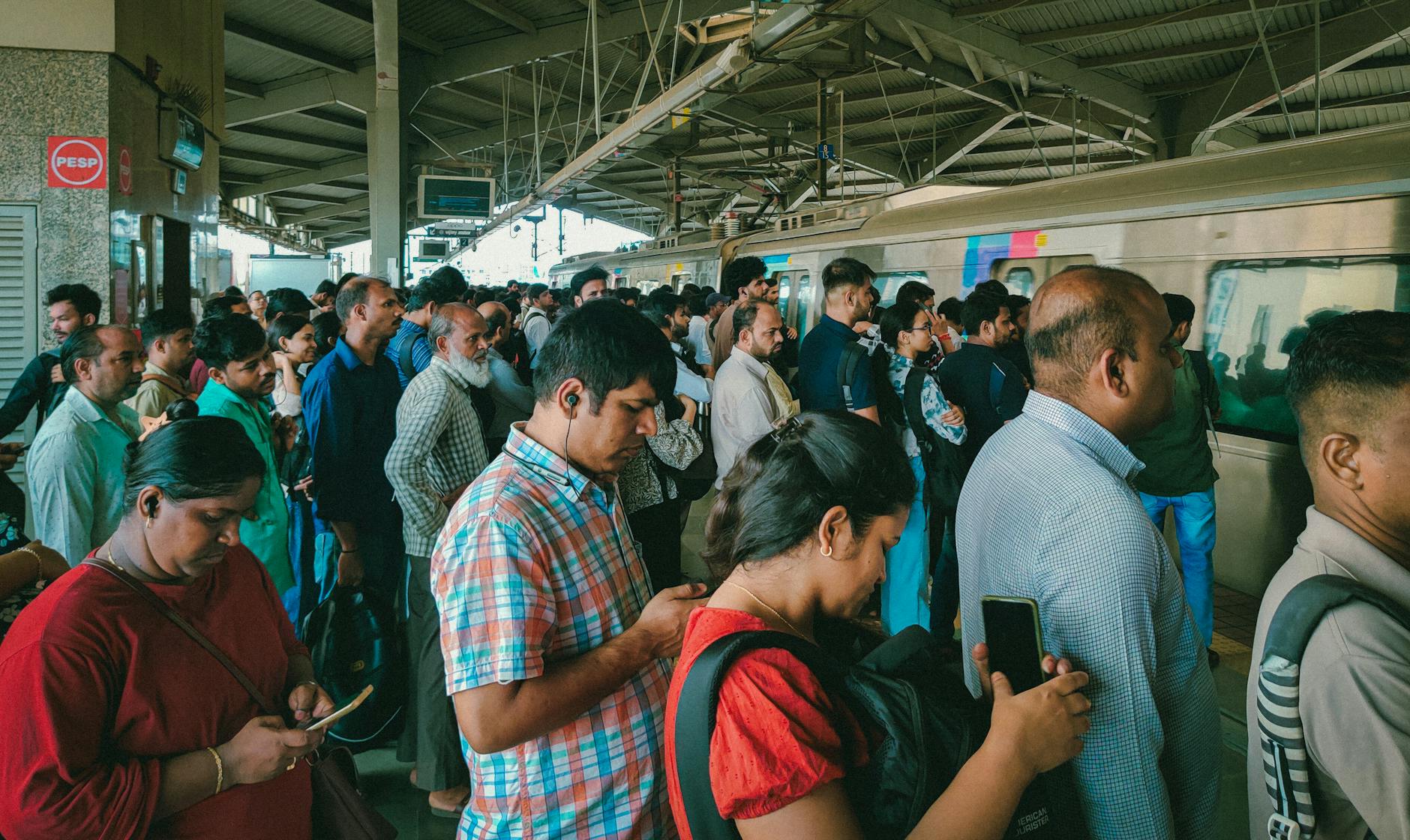
Delhi’s metro is extremely useful. Mumbai has suburban rail, metro expansion, taxis, auto-rickshaws in suburbs, and ride-hailing. Bengaluru, Chennai, Hyderabad, Kolkata, Jaipur, Kochi, and other cities have varying metro systems.
The move: In Delhi, use the metro strategically to avoid traffic, but do not force metro use when luggage, heat, or last-mile complexity makes a taxi better.
Auto-Rickshaws and Taxis
Auto-rickshaws are useful in many cities but require fare clarity. Ride-hailing apps reduce bargaining friction where available. Traditional taxis vary by city.
Safety tip: Share trip details, check plates, avoid unlicensed rides, and be cautious late at night.
Walking
India is not uniformly walkable. Old cities can be best on foot, while many modern streets are hostile to pedestrians. Sidewalks may be broken, blocked, or absent.
The move: Walk for atmosphere in the right neighborhoods with a plan. Do not assume a 20-minute map walk is pleasant, shaded, or safe.
Budget and Costs
India can be very affordable or very expensive. The same country supports backpacker guesthouses, domestic trains, and street food; it also supports ultra-luxury palace hotels, private guides, safari lodges, and high-end wellness retreats.
Daily Budget Ranges
| Traveler type | Daily estimate, excluding major intercity flights/shopping | What it means |
|---|---|---|
| Shoestring | ₹2,000–₹4,000 | Hostels/guesthouses, local transport, budget meals, trains/buses, limited paid guiding. |
| Budget comfort | ₹4,000–₹8,000 | Simple hotels, casual restaurants, selective taxis, some guided activities. |
| Mid-range | ₹8,000–₹18,000 | Good hotels, private drivers for some legs, guided walks, domestic flights, better restaurants. |
| Comfortable | ₹18,000–₹40,000 | Strong hotels, private car/driver, quality guides, better rooms, occasional luxury meals. |
| Luxury | ₹40,000+ | Palace hotels, safari lodges, premium rooms, private guides, internal flights, curated experiences. |
What Is Surprisingly Affordable
- Casual meals and snacks.
- Many local trains and metros.
- Some domestic flights if booked early.
- Tailoring and certain crafts, if bought carefully.
- Good mid-range hotels in non-peak periods.
- Guided walks compared with Western pricing.
What Gets Expensive Fast
- Peak-season heritage hotels.
- Wildlife lodges and safari permits.
- Luxury hotels in Rajasthan, Goa, Mumbai, Delhi, and Kerala.
- Private cars over long distances.
- Last-minute flights.
- Festival-period lodging.
- High-quality textiles, jewelry, carpets, and crafts.
Best Value Moves
- Spend more on arrival hotels and difficult cities.
- Use domestic flights for bad long-distance links.
- Use trains for routes where they are efficient and atmospheric.
- Hire good guides for dense old cities and historical sites.
- Eat locally instead of eating generic hotel buffet food every night.
- Choose one or two luxury splurges rather than making every night expensive.
- Book safari and peak-season hotels early.
Usually Not Worth It
- Very cheap hotels in chaotic neighborhoods on arrival night.
- Commission-heavy shopping tours.
- Rushed day trips that spend most of the day in traffic.
- Long private drives that could be replaced by a flight.
- Overpriced “spiritual” packages with vague credentials.
- Poorly vetted houseboats or camel safaris.
Safety, Health, and Scams
India safety advice should be calm, specific, and region-aware. Millions of foreign travelers visit India, and many have extraordinary trips. But visitors should not be naive about scams, road safety, harassment, health risks, crowd crush potential, air pollution, weather, and regional security concerns.
General Safety
Use normal urban caution, then add India-specific awareness: protect valuables, avoid isolated areas late at night, use reputable transport, be careful around political demonstrations, and check region-specific advisories.
The U.S. State Department’s India advisory includes a country-level warning plus stronger guidance for certain regions and border areas.[4] Other governments issue their own advisories, and travelers should check the advice relevant to their nationality.
Common Scams
| Scam | What it looks like | How to avoid it |
|---|---|---|
| Fake closed hotel/attraction | Driver or tout says your hotel, train, or attraction is closed and redirects you. | Confirm directly; do not follow unsolicited alternatives. |
| Commission shopping stops | Driver/guide insists on “official” textile, carpet, gem, or craft shops. | Set expectations clearly; use vetted shops/workshops. |
| Overpriced taxis | Inflated fare, broken meter, wrong route. | Use prepaid booths, hotel-arranged cars, or ride-hailing where possible. |
| Fake ticket/help desk | Someone near station/attraction claims you need special help. | Use official counters and signage; ignore unsolicited fixers. |
| Gem/export schemes | Stranger proposes profitable gem shipping or resale. | Walk away. |
| Spiritual donation pressure | Aggressive blessings, rituals, or donations. | Clarify before participating; refuse politely and firmly. |
| Photo/guide fee surprises | Someone offers help, then demands payment. | Agree price first or decline. |
| SIM/ATM/payment issues | Bad exchange rates, skimming, confusing fees. | Use bank ATMs, official shops, and protect PINs. |
Health Practicalities
- Consult a travel clinic before departure.
- Be up to date on routine vaccinations.
- Discuss hepatitis A/B, typhoid, rabies, Japanese encephalitis, malaria prevention, and traveler’s diarrhea preparation depending itinerary.
- Avoid drinking untreated tap water.
- Use mosquito precautions in risk areas.
- Take heat seriously.
- Carry prescription medications in original packaging with documentation.
- Buy travel insurance that covers your activities and evacuation if needed.
CDC guidance for India includes routine vaccination reminders, measles protection for international travelers, and rabies considerations because dogs infected with rabies are commonly found in India.[7]
Women Travelers
Many women travel successfully in India, including solo, but planning matters. Harassment, staring, unwanted attention, groping in crowds, and transport discomfort can happen. Choose lodging carefully, use reputable transport, avoid arriving late in unfamiliar places, dress with local context in mind, and trust your instincts.
Road Safety
Road travel is one of the most serious practical risks. Traffic can be chaotic, driving styles aggressive, roads uneven, and night driving more dangerous.
The move: Avoid unnecessary night road travel. Hire reputable drivers. Wear seatbelts when available. Do not pressure drivers to go faster.
Air Pollution
North Indian cities can experience severe air pollution, especially in winter. Delhi is the main concern, but pollution can affect other cities. Travelers with asthma, heart/lung disease, children, and older adults should plan accordingly.
Heat
Pre-monsoon heat in North and Central India can be dangerous. Recent heat waves have pushed parts of North India into extreme temperatures; travelers should monitor forecasts, avoid midday exertion, hydrate, and build indoor breaks.
Accessibility and Mobility
India can be challenging for travelers with mobility, vision, hearing, or sensory-access needs. Conditions vary sharply by city, hotel, attraction, and budget level.
What Helps
- Luxury and international hotels often provide better accessibility.
- Newer airports and metro systems can be accessible in parts.
- Private cars and drivers reduce some friction.
- Major monuments may have ramps or assistance, though not always consistently.
- Good operators can design lower-mobility itineraries.
What Is Hard
- Broken or missing sidewalks.
- Crowded markets and stations.
- Stairs, uneven surfaces, old buildings, ghats, temple complexes, forts, and stepwells.
- Limited accessible restrooms.
- Heat, dust, noise, and sensory overload.
- Unclear online accessibility information.
Lower-Mobility Strategy
Choose fewer stops, better hotels, private transfers, ground-floor or elevator-confirmed rooms, shorter sightseeing blocks, and cities/regions with manageable infrastructure. Rajasthan forts, Varanasi ghats, old-city lanes, and Himalayan routes require especially careful planning.
Families, Solo Travelers, Women Travelers, LGBTQ+ Travelers, and Special Considerations
Families
India can be wonderful with children if paced carefully. Kids may love trains, forts, animals, colors, sweets, beaches, markets, and hotel pools. They may struggle with heat, crowds, food changes, long drives, and sensory overload.
Best family routes: Kerala, Goa, Rajasthan with good hotels, wildlife lodges, Mysuru/Karnataka, and a softened Golden Triangle.
Family tips:
- Use better hotels than you might as adults.
- Avoid too many one-night stops.
- Schedule pool/rest time.
- Be conservative with street food.
- Use private drivers for regional circuits.
- Plan bathroom breaks.
- Avoid extreme heat months.
Solo Travelers
India is rich for solo travelers but requires judgment. Hostels, group tours, guided walks, yoga centers, and backpacker towns can create social contact. Solo dining is possible but context varies.
Best solo routes: Rishikesh, Jaipur, Delhi with caution, Varanasi, Goa, Kochi, Hampi, Dharamshala, Pushkar, Udaipur, Leh.
Women Traveling Solo
Choose routes with stronger traveler infrastructure for a first solo trip: Kerala, Goa, Rajasthan, Rishikesh, Kochi, Udaipur, Jaipur, and reputable group tours. Avoid late-night arrivals in unfamiliar places. Use women-only train compartments where relevant, ride-hailing safety features, hotel-arranged transfers, and local advice.
LGBTQ+ Travelers
India’s legal and social environment has changed significantly over time, but public attitudes vary widely by region, class, religion, and family context. Major cities have queer communities and some visible nightlife/events, while public displays of affection can draw attention for any couple. Choose inclusive lodging and local advice if comfort and discretion are concerns.
Older Travelers
India can be excellent for older travelers if comfort is prioritized: private cars, better hotels, fewer transfers, guides, and moderate weather. Avoid heat-heavy schedules and build rest days.
Religious, Dietary, and Cultural Travelers
India can support many religious and dietary needs, but assumptions are dangerous. Vegetarian food is widespread, but vegan, gluten-free, kosher, halal, Jain, and allergy-safe travel all require specific planning.
Culture, History, and Etiquette
Short History for Travelers
A useful India history briefing should not try to compress thousands of years into trivia. The travel-relevant point is that India’s landscapes are layered.
Travelers encounter the Indus Valley world through archaeology; Buddhist history through sites like Sarnath, Bodh Gaya, Ajanta, and monasteries; Hindu temple civilizations through Tamil Nadu, Odisha, Khajuraho, Hampi, and countless living shrines; Islamic and Indo-Islamic history through Delhi, Agra, Hyderabad, Lucknow, Ahmedabad, Bijapur, and Kashmir; Sikh history through Punjab and Amritsar; colonial history through Kolkata, Mumbai, Chennai, Delhi, hill stations, railways, churches, clubs, and civic buildings; modern India through parliaments, universities, tech corridors, metros, film industries, malls, protests, startups, and social media.
India is not a museum of the past. The past is active, argued over, worshipped, renovated, politicized, commercialized, and lived inside.
Etiquette That Matters
- Dress modestly at religious sites and in conservative areas.
- Remove shoes where required.
- Cover head at Sikh gurdwaras and certain religious sites.
- Ask before photographing people closely.
- Do not photograph cremations or private religious rituals without clear permission.
- Use the right hand for giving, receiving, and eating where traditional etiquette matters.
- Avoid touching people’s heads or pointing feet at sacred objects/people.
- Public displays of affection can draw attention.
- Bargaining is normal in markets but not everywhere.
- Be patient with bureaucracy and security checks.
- Do not insult religion, national symbols, or local customs.
Local Logic
India often runs on relationships, context, and negotiation. A rule may be firm, flexible, or dependent on who is asking, where, and how. Getting angry rarely helps. Calm persistence, politeness, and local assistance are usually more effective.
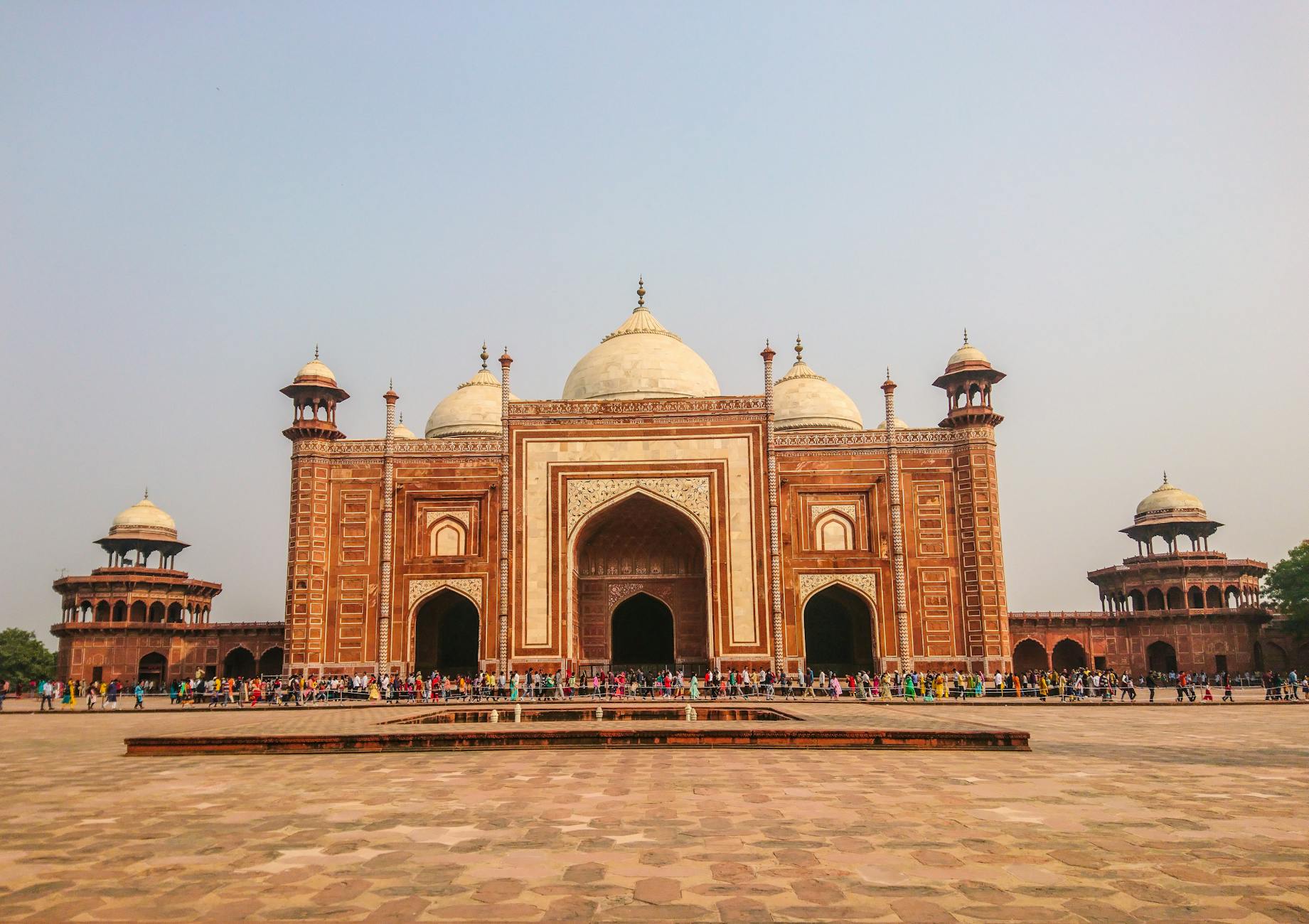
Shopping and Souvenirs
India is one of the world’s great shopping countries, especially for textiles, crafts, jewelry, spices, tea, books, art, and home goods. It is also full of tourist traps. The difference between a meaningful purchase and a mistake is knowledge.
What India Is Known For
| Category | Good places to explore |
|---|---|
| Textiles | Jaipur, Ahmedabad, Kutch, Varanasi, Kolkata, Chennai/Kanchipuram, Kerala, Delhi. |
| Block printing | Jaipur, Bagru, Sanganer, parts of Rajasthan/Gujarat. |
| Silk | Varanasi, Kanchipuram, Mysuru, Assam, Bengal. |
| Carpets/rugs | Jaipur, Kashmir, Agra, Bhadohi/Varanasi region. |
| Jewelry | Jaipur, Delhi, Mumbai, Hyderabad, Rajasthan. |
| Spices/tea | Kerala, Assam, Darjeeling, Nilgiris, markets nationwide. |
| Blue pottery | Jaipur. |
| Metal/stone/wood crafts | Rajasthan, Uttar Pradesh, Tamil Nadu, Karnataka, Odisha. |
| Books | Delhi, Kolkata, Mumbai, Bengaluru, literary festivals. |
How to Shop Well
- Learn basic quality markers before buying expensive items.
- Beware pressure tactics and “export quality” claims.
- Use reputable stores, cooperatives, craft museums, and workshop visits.
- Ask about shipping, customs, and return policies.
- Understand that bargaining is expected in some markets but rude in fixed-price shops.
- Do not buy wildlife products, antiques of questionable legality, or religious objects removed from living contexts.
The Move
For serious shopping, build it into the itinerary rather than treating it as random afterthought. A half-day with a textile expert in Jaipur or Ahmedabad may be more valuable than three pressured emporium stops.
Wildlife and Nature
India is a major wildlife destination, but it requires planning discipline. Tiger safaris are the headline, but India also offers Asiatic lions, one-horned rhinos, elephants, leopards, snow leopards, birds, mangroves, deserts, coral islands, rainforests, and high mountains.
Major Wildlife Experiences
| Experience | Where | Best for |
|---|---|---|
| Tigers | Ranthambore, Bandhavgarh, Kanha, Pench, Tadoba, Corbett, others | Safari travelers, photographers. |
| One-horned rhinos | Kaziranga, Assam | Wildlife and Northeast routes. |
| Asiatic lions | Gir, Gujarat | Unique species-focused trip. |
| Birding | Bharatpur/Keoladeo, Ranganathittu, Chilika, Thattekad, Northeast | Birders, photographers. |
| Mangroves/tigers | Sundarbans | Experienced nature travelers; logistics and expectations matter. |
| Elephants and forests | Kerala, Karnataka, Assam, Uttarakhand | Wildlife/nature routes; prioritize ethical experiences. |
| High-altitude landscapes | Ladakh, Spiti, Sikkim, Uttarakhand | Mountains, trekking, photography. |
| Islands and reefs | Andaman and Nicobar Islands, Lakshadweep with rules | Beaches, diving, remoteness. |
Safari Planning Rules
- Book permits early.
- Understand park zones and gate logistics.
- Stay enough nights for multiple drives.
- Choose naturalist quality over hotel decoration.
- Do not demand tiger sightings from guides.
- Follow park rules; never pressure drivers to crowd animals.
- Avoid unethical elephant rides or animal-interaction experiences.
Festivals and Seasonal Events
India’s festival calendar is extraordinary, but festival travel requires planning. Dates may follow lunar calendars and change each year.
Major Festivals Travelers Ask About
| Festival | Why it matters | Planning notes |
|---|---|---|
| Diwali | Festival of lights, family, lamps, sweets, fireworks. | Beautiful but travel and pollution impacts can be significant; book ahead. |
| Holi | Color festival associated with spring. | Can be joyful but rough; choose controlled/safer settings, especially for women/families. |
| Durga Puja | Kolkata and Bengal’s great public art/devotional festival. | One of India’s best festival experiences; crowds huge. |
| Onam | Kerala harvest festival. | Good for culture and food; dates vary. |
| Pongal | Tamil harvest festival. | Strong Tamil cultural experience. |
| Pushkar Fair | Rajasthan livestock/camel fair and tourist event. | Photogenic but heavily touristed; book early. |
| Eid | Celebrated in Muslim communities nationwide. | Food and community traditions; respect prayer times and local context. |
| Christmas | Goa, Kerala, Northeast, and Christian communities. | Goa prices spike; book well ahead. |
| Ganesh Chaturthi | Especially strong in Maharashtra/Mumbai. | Immersions draw huge crowds. |
| Navaratri/Garba | Gujarat and other regions. | Dance, devotion, dress; logistics vary. |
Festival Travel Rule
Do not add a festival just because it is famous. Ask: Is it safe? Is it accessible? Is it meaningful to me? Can I get lodging? Do I understand the etiquette? What happens to transport and crowds?
What to Skip
Skip Trying to “Do India” in Two Weeks
You cannot see India in one trip. You can see one or two coherent versions of India well.
Better alternative: Pick a route family and commit.
Skip Same-Day Taj Mahal From Delhi If You Can Stay Overnight
It is possible, but sunrise/sunset and lower stress often justify one night in Agra.
Skip Commission Shopping Tours
If every sightseeing day somehow ends at a carpet, gem, textile, or marble shop, something is wrong.
Skip Long Night Drives
They may save a hotel night, but road safety and fatigue are not worth it.
Skip Treating Varanasi as a Quick Photo Stop
Varanasi deserves time, respect, and emotional bandwidth.
Skip Unvetted Animal Experiences
Avoid elephant rides, exploitative animal cafés, snake charmers, photo animals, and any wildlife interaction that looks stressful or unnatural.
Skip Ultra-Cheap Arrival Hotels
Your first 24 hours in India matter. A bad arrival hotel can poison the trip.
Skip Generic “Best of India” Tours That Cross the Map Too Fast
A route that looks impressive on a brochure may be miserable in practice.
Common Mistakes
- Trying to cover too much geography. India is not a checklist country.
- Ignoring season. Heat, monsoon, fog, pollution, and snow matter.
- Underestimating travel time. Distance is not the same as travel effort.
- Booking poor arrival logistics. First impressions matter.
- Not checking visa details carefully. Use official sources.
- Eating recklessly on day one. Build up gradually.
- Assuming English solves everything. It helps, but local context still matters.
- Taking every “helpful” stranger at face value. Many people are kind; some are selling something.
- Not using guides where guides are worth it. Old cities and historical sites reward context.
- Dressing carelessly at religious sites. Respect goes a long way.
- Booking too many one-night stops. This destroys energy.
- Forgetting cash. Digital payment is widespread, but not universal for foreign travelers.
- Ignoring air pollution. Especially in North India winter.
- Treating poverty as scenery. Be ethical with photography and behavior.
- Expecting India to be easy because you booked nice hotels. Comfort helps, but the country still requires attention.
Responsible Travel
India does not need visitors to perform reverence, but it does require respect.
Do
- Support local guides, craftspeople, family-run hotels, and responsible operators.
- Ask before photographing people.
- Dress appropriately at religious sites and in conservative communities.
- Avoid giving money to children in ways that reinforce begging networks; support reputable organizations instead.
- Use refill stations or filtered water where safe to reduce plastic.
- Respect wildlife distance and park rules.
- Learn basic greetings and thanks.
- Be patient in queues, security checks, and bureaucratic moments.
- Pay fair prices; bargain without humiliation.
Do Not
- Treat sacred rituals as content.
- Photograph cremations or private grief.
- Support exploitative animal tourism.
- Enter restricted or sensitive areas without permits.
- Use drones casually; rules and sensitivities can be serious.
- Wear revealing clothing at temples, mosques, gurdwaras, or conservative sites.
- Loudly judge local practices you do not understand.
- Assume poverty gives you permission to intrude.
Local Logic
India rewards travelers who arrive with humility but not passivity. Be open, but not gullible. Be respectful, but not timid. Be flexible, but not careless.
Packing List
Essentials
- Passport with visa/e-Visa documentation.
- Printed and offline copies of bookings, visa, insurance, and emergency contacts.
- Universal adapter.
- Unlocked phone or eSIM/Indian SIM plan.
- Portable power bank.
- Comfortable walking shoes and sandals.
- Modest lightweight clothing.
- Sun hat, sunglasses, sunscreen.
- Hand sanitizer and tissues.
- Oral rehydration salts.
- Basic medication kit advised by a clinician.
- Insect repellent.
- Reusable bottle with safe filtration strategy, if appropriate.
- Small daypack.
- Scarf/shawl for religious sites, sun, dust, and air conditioning.
- Earplugs.
- N95/KN95 masks for pollution/dust if sensitive.
Seasonal Additions
| Season/region | Pack |
|---|---|
| North India winter | Layers, warm jacket for nights/mornings, pollution mask. |
| Rajasthan winter | Warm layers for desert nights; sun protection by day. |
| Summer/plains | Breathable clothing, electrolyte packets, serious sun protection. |
| Monsoon | Quick-dry clothes, sandals with grip, rain shell, waterproof bags, leech socks for some treks. |
| Himalaya/Ladakh | Layers, sun protection, warm hat/gloves, altitude-aware medical planning. |
| Temples/religious sites | Modest clothing, scarf, easy-remove shoes. |
What Not to Overpack
- Heavy formal clothing unless needed for specific events.
- Too many shoes.
- Excess electronics.
- Fragile luggage that cannot handle rough transfers.
- Large hard-sided bags for old-city stays with stairs and lanes.
The Move
Pack for dignity, heat, dust, and religious-site flexibility. A lightweight scarf or shawl may be the most useful single item in the bag.
FAQ
Is India good for a first international trip?
Usually not as a first-ever international trip unless you are adventurous, well supported, or joining a strong tour. India is better for travelers with some tolerance for complexity. That said, a well-designed Kerala, Rajasthan luxury, or guided Golden Triangle trip can work for first-time international travelers.
What is the best first trip to India?
For classic India: Delhi, Agra, Jaipur, with perhaps Varanasi or Udaipur. For a gentler first trip: Kerala. For deep culture: Tamil Nadu. For comfort and romance: Rajasthan with good hotels.
How many days do I need?
Ten to fourteen days is ideal for a first trip. One week can work if tightly focused. Three weeks is much better for combining regions.
Is India safe?
India can be safe for well-prepared travelers, but risks vary by region and traveler profile. Check current advisories, use reputable transport, be careful with scams and health precautions, and take extra care as a solo woman traveler or in unfamiliar areas at night.
When is the best time to visit?
October to March is the best general window for much of the country. Ladakh and some Himalayan areas are better in summer. Monsoon travel can be beautiful but must be planned regionally.
Should I visit Delhi or skip it?
Do not skip Delhi if history, food, or architecture matter. But plan it carefully: good hotel, good guide, realistic pacing, and awareness of pollution/traffic.
Is the Taj Mahal worth it?
Yes. It is famous for a reason. The key is to visit with good timing and context, not as a rushed box-check.
Should I take trains?
Yes, selectively. Use trains where they are efficient, scenic, or culturally meaningful. Use flights for long-distance jumps that would otherwise wreck the itinerary.
Is street food safe?
It can be, but not all street food is equal. Use reputable guides, choose busy stalls with high turnover, avoid unsafe water/ice/raw items, and do not overdo it early in the trip.
Can vegetarians travel easily in India?
Yes. India is one of the world’s best countries for vegetarian travelers. Vegan and allergy-safe travel require more explanation because dairy, ghee, wheat, nuts, and hidden ingredients are common.
Should I hire a driver?
For Rajasthan, Kerala, Tamil Nadu, and some regional circuits, yes, a car with driver can be extremely useful. For major city-to-city jumps across long distances, consider flights or trains.
What should I book ahead?
Visa, peak hotels, trains, domestic flights, tiger safaris, heritage hotels, festival lodging, special guides, and any luxury or remote stay that anchors the trip.
Source Notes
- 1. Government of India, Indian e-Visa portal, “Indian e-Visa Online,” https://indianvisaonline.gov.in/evisa/tvoa.html
- 2. Embassy/Consulate guidance on Indian e-Visa requirements, example: Embassy of India/Consulate General pages, https://www.indianembassyusa.gov.in/ and https://www.cgisf.gov.in/page/e-visa/
- 3. Ministry of Tourism, Government of India, official site, https://tourism.gov.in/
- 4. U.S. Department of State, “India Travel Advisory,” https://travel.state.gov/en/international-travel/travel-advisories/india.html
- 5. India Meteorological Department, “Monsoon Information,” https://mausam.imd.gov.in/responsive/monsooninformation.php
- 6. IRCTC, “Foreign Tourist Quota Booking,” https://contents.irctc.co.in/en/ForeignTouristQuotaBooking.pdf
- 7. CDC Travelers’ Health, “India - Traveler View,” https://wwwnc.cdc.gov/travel/destinations/traveler/none/india
- 8. CDC Yellow Book, “India,” https://www.cdc.gov/yellow-book/hcp/asia/india.html
- 9. Incredible India, Ministry of Tourism, Government of India, https://www.incredibleindia.gov.in/en