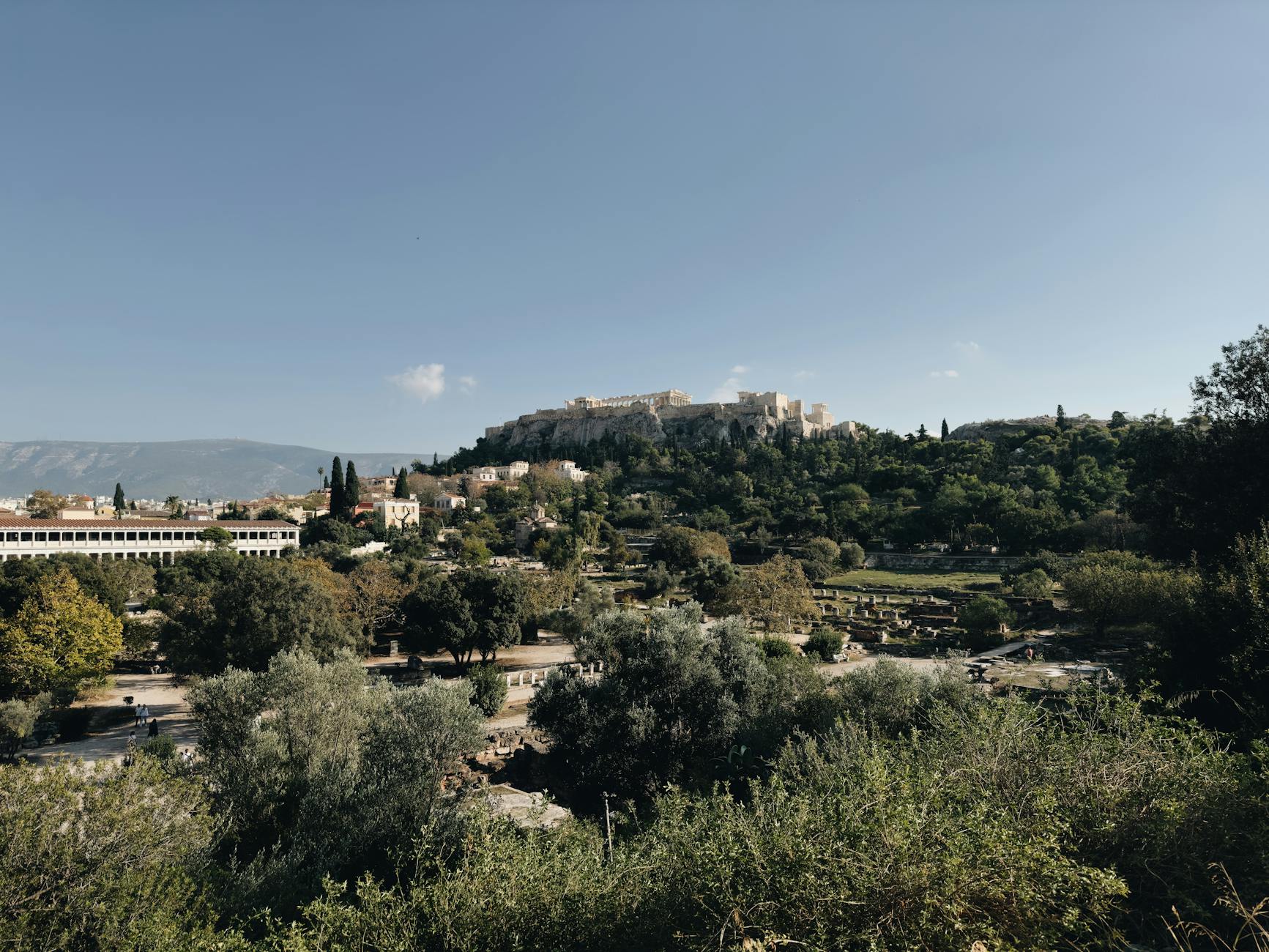
Greece is not one destination. It is an argument between sea and stone.
Start Here
It is Athens at dusk, when the Acropolis glows over traffic and apartment balconies. It is an island ferry pulling out of Piraeus before sunrise. It is an old woman sweeping a whitewashed lane in the Cyclades, a monastery suspended over Meteora, a Cretan mountain village smelling of wood smoke and thyme, a Thessaloniki bakery window full of bougatsa, a Peloponnese road curling past olive groves and ruined fortresses, a taverna table where lunch somehow becomes the afternoon, and a beach where the water looks impossible until you step into it.
Most first-time visitors arrive with a narrow mental picture: Athens, Santorini, Mykonos, maybe a caldera sunset, a Greek salad, and blue-domed churches. Greece can give you that. But the best Greek trips understand something deeper: Greece is a route country. Its greatness is distributed across island groups, mountain regions, archaeological landscapes, food cultures, ferry corridors, local winds, and seasonal rhythms. A good trip is not about seeing “the Greek islands.” It is about choosing the right version of Greece for your time, budget, heat tolerance, ferry patience, and appetite for ruins, beaches, villages, food, hiking, nightlife, or quiet.
The first-timer mistake is trying to make Greece behave like a compact city break. Athens, Santorini, Mykonos, Crete, Meteora, Delphi, Zakynthos, Rhodes, Corfu, Naxos, and Thessaloniki are not one easy loop. Some are connected by ferry. Some are better by flight. Some sit on entirely different seas. Some are summer destinations; others are better in spring or autumn. Some need a car. Some punish a car. Some look close on a map and burn a full travel day.
This guide is designed to help you choose a coherent Greece trip rather than collect famous names. It explains where to go, when to go, how many days you need, how to think about islands, when ferries are a joy and when they are a trap, what to book ahead, what to skip, how to eat well, how to move between regions, how to avoid the worst high-season mistakes, and how to experience Greece with pleasure rather than logistical exhaustion.
Greece in one sentence: Greece is an ancient, island-fractured, mountain-backed Mediterranean country where the best trip comes from choosing one clear route family, respecting season and distance, and giving yourself enough time for sea, food, ruins, villages, and weather to set the pace.
Quick Verdict
| Question | Answer |
|---|---|
| Best for | Ancient history, islands, beaches, sailing, food, road trips, archaeology, mythology, Orthodox monasteries, village life, family travel, honeymoons, hiking, photography, wine, relaxed lunches, and travelers who like pairing culture with sea. |
| Not ideal for | Travelers who want one simple, all-inclusive country loop in a week; people who dislike heat, boats, stairs, dry landscapes, crowds, or planning around transport; visitors who want every island to feel quiet in August; travelers who expect Santorini prices everywhere or budget prices on Santorini. |
| Ideal first trip | 10 to 14 days. One week works if you choose Athens plus one island group or one mainland route. Two weeks lets you combine Athens, one island group, and either Crete or a mainland archaeology/nature route. |
| Best first-timer route | Athens + one island group. For balance, choose Athens + Naxos/Paros/Santorini; Athens + Crete; or Athens + Nafplio/Delphi/Meteora if history and landscapes matter more than beach time. |
| Best months overall | May, early June, September, and early October for most travelers. July and August are classic beach months but bring heat, crowds, high prices, ferry pressure, and stronger Aegean winds. Spring and autumn are better for Athens, ruins, hiking, and mainland road trips. |
| Best island for first-timers | Naxos for beaches, villages, food, and ease; Paros for a social but not purely luxury trip; Crete for a full standalone island journey; Santorini for caldera drama; Milos for beaches and geology; Rhodes for old town plus beaches; Corfu for Ionian greenery and Venetian texture. |
| Best mainland base after Athens | Nafplio for the Peloponnese, Kalambaka/Kastraki for Meteora, Thessaloniki for northern Greece, Chania or Heraklion for Crete, and Ioannina or Zagori villages for Epirus. |
| Biggest planning mistake | Trying to visit islands from different island groups in one short trip. The Cyclades, Ionian Islands, Dodecanese, Sporades, Saronic Islands, North Aegean, and Crete are separate travel systems, not interchangeable dots. |
| One thing to book early | Acropolis timed tickets in peak season, ferries on popular summer routes, domestic flights, Santorini/Mykonos hotels, rental cars on islands and in Crete, and any high-demand restaurant, boat day, or small boutique lodging in July–August. |
| One thing to leave unscheduled | A long taverna lunch, a beach afternoon, a village wander, an extra swim, a sunset you did not plan, or the day after a ferry delay. Greece punishes overprecision. |
| Best free or low-cost pleasures | Neighborhood walks in Athens, beaches outside organized club zones, village squares, church courtyards, harbor strolls, local bakeries, market browsing, hilltop views, ferry deck time, and cheap-but-excellent souvlaki, pies, yogurt, fruit, and coffee. |
| Most important warning | Summer heat, wildfire risk, sea conditions, and ferry disruption are real planning factors. Do not schedule a same-day ferry-to-international-flight connection unless you enjoy gambling with your trip. |
The Move
For a first Greece trip, choose one of three clean structures:
- Athens + Cyclades if you want the postcard island trip.
- Athens + Peloponnese/Delphi/Meteora if you want history, landscapes, and road-trip depth.
- Athens + Crete if you want one island that can carry the whole trip without constant hopping.
The country opens up once you stop asking, “Which Greek islands should I see?” and start asking, “Which Greece am I actually building?”
Who Will Love Greece?
You will probably love Greece if you want:
- Ancient ruins that are not abstract: the Acropolis, Delphi, Olympia, Mycenae, Epidaurus, Delos, Knossos, Philippi, Mystras, and dozens more.
- Islands that are genuinely different from one another rather than a single beach-resort formula.
- Food that is simple, regional, seasonal, and better when you stop ordering only the obvious dishes.
- A trip where beaches, archaeology, villages, monasteries, mountains, ferries, and slow meals can coexist.
- A country where the sea is not just scenery but infrastructure.
- Spring and autumn travel that feels richer than peak-summer tourism.
- A place where local life still matters if you leave the most saturated visitor corridors.
You may struggle with Greece if you want:
- A countrywide greatest-hits trip with no domestic travel friction.
- Cool summer sightseeing.
- Guaranteed ferry punctuality in windy weather.
- Car-free access to every beach and village.
- Quiet, affordable, authentic-feeling Santorini in August.
- A one-size-fits-all island recommendation.
- Highly predictable service rhythms everywhere; Greece works, but it does not always work on spreadsheet time.
Greece is easy to love. It is not always easy to sequence. The point of planning is not to control the country. The point is to stop making decisions that fight its geography.
Greece at a Glance
| Practical | Detail |
|---|---|
| Official name | Hellenic Republic. |
| Capital | Athens. |
| Language | Greek. English is widely used in major tourism areas, hotels, restaurants, ferry offices, and airports, but less reliable in villages and older local businesses. Learn basic greetings and use translation tools respectfully. |
| Currency | Euro. Greece is an EU member and uses the euro as its official currency.[7] |
| Cards vs cash | Cards are common in cities and tourist areas, but carry cash for small tavernas, rural areas, markets, buses, beachbeds, tips, monasteries, and occasional island situations. ATMs are widespread, but avoid expensive standalone machines when possible. |
| Time zone | Eastern European Time, UTC+2; Eastern European Summer Time, UTC+3 during daylight saving time. |
| Entry system | Greece is in the Schengen Area. Visa needs depend on nationality. Schengen short-stay logic is generally up to 90 days in any 180-day period for eligible visa-free travelers or Schengen visa holders.[1][2] |
| Current Europe-entry note | EES is the EU’s digital Entry/Exit System for non-EU short-stay travelers crossing external Schengen borders, and ETIAS is scheduled to start in the last quarter of 2026 for visa-exempt travelers to participating European countries.[3][5] |
| Main international airport | Athens International Airport. Thessaloniki, Heraklion, Chania, Rhodes, Corfu, Santorini, Mykonos, Kos, Zakynthos and others also receive international flights seasonally or year-round. |
| Main ferry ports near Athens | Piraeus, Rafina, and Lavrio. Piraeus is the major hub; Rafina is useful for some Cyclades routes; Lavrio is useful for Kea, Kythnos, and select routes. |
| Main transport tools | Ferry-company websites or aggregators, Hellenic Train for rail, regional KTEL bus operators, airline apps, Athens public-transport apps, Google Maps, and local taxi apps where available. |
| Emergency number | 112. Greece also has national emergency services such as police, fire, ambulance, and coast guard, but 112 is the simplest all-purpose emergency number for travelers.[6] |
| Tap water | Generally safe in major cities and many larger islands; on drier islands with desalinated or imported water, visitors often prefer bottled water for taste and comfort. |
| Electrical plugs | Type C and F, 230V, 50Hz. |
| Driving side | Right. A car is useful for the Peloponnese, Crete, Epirus, Pelion, Halkidiki, and many islands, but not useful inside central Athens. |
| Core planning constraint | You cannot “do the Greek islands” as a single category. Pick an island group or a large island. |
First-Timer Mistake
Many travelers build a Greece itinerary by stacking names: Athens, Santorini, Mykonos, Crete, Rhodes, Corfu, Meteora. That is not an itinerary. It is a map of avoidable transport stress. Start with geography, not fame.
2026 Visitor Notes
Greece Is Schengen, So Count Your Days Properly
Greece follows Schengen short-stay rules. For many non-EU travelers, that means up to 90 days in any 180-day period across the Schengen Area, not 90 days in Greece plus another 90 in France, Italy, Spain, or Germany.[1][2] Visa-exempt travelers should also watch the ETIAS rollout, scheduled for the last quarter of 2026.[5]
The move: Do the Schengen math before building a long Europe trip. If Greece is part of a broader itinerary, your time in Italy, France, Spain, Portugal, Germany, Austria, the Netherlands, Switzerland, and other Schengen countries usually counts against the same 90/180-day allowance.
EES Has Changed Border Processing for Many Non-EU Travelers
The EU Entry/Exit System registers non-EU nationals traveling for short stays when they cross external borders of participating European countries; it records identity, travel-document data, biometric data, entry/exit dates and places, and refusals of entry.[3] Greece’s MFA described Greece’s rollout as beginning in October 2025 with staged implementation.[4]
The move: Build extra time into your first Schengen arrival or departure, especially at busy airports and ferry/cruise borders. Do not cut international connections tightly because “passport control was fast last time.”
Archaeological Sites Are Moving Toward Timed, Official E-Ticketing
Greece’s official Hellenic Heritage e-Ticket platform sells tickets for museums, monuments, and archaeological sites, and the Acropolis has timed-entry logic.[22][23] The Acropolis Museum has separate ticketing from the Acropolis archaeological site.[24]
The move: For Athens in peak season, book the Acropolis early morning or late afternoon. Do not visit the Acropolis at midday in July unless you want the least comfortable version of one of the world’s great sites.
Ferry Schedules Are Seasonal, and Weather Can Overrule Plans
Visit Greece notes that Greece has a vast ferry network, running all year but most frequently from March to October, with limited winter services to some islands.[9] Summer Aegean winds, especially the meltemi, can cool hot days but also complicate ferry schedules.[8]
The move: Put a buffer night before international departures. Use flights for far-flung island jumps when the route would otherwise cost a full day. Avoid changing islands every two nights.
Greece Is Safe for Normal Travel, But Nature and Crowds Matter
The U.S. State Department rates Greece Level 1, “Exercise normal precautions,” while standard advice still includes normal urban awareness, local laws, and travel preparation.[26] Greece’s Civil Protection authority publishes fire-risk maps and emergency guidance, and summer wildfires, heat, high winds, and sea conditions can affect trips.[28][29]
The move: Treat July and August as weather-management months, not just beach months. Check fire risk, ferry status, heat warnings, and local guidance before long drives, hikes, boat days, or remote beach plans.
How to Understand Greece
Greece is often marketed through its islands, but the country has four overlapping identities:
- Ancient Greece: temples, theaters, sanctuaries, mythic landscapes, and archaeological museums.
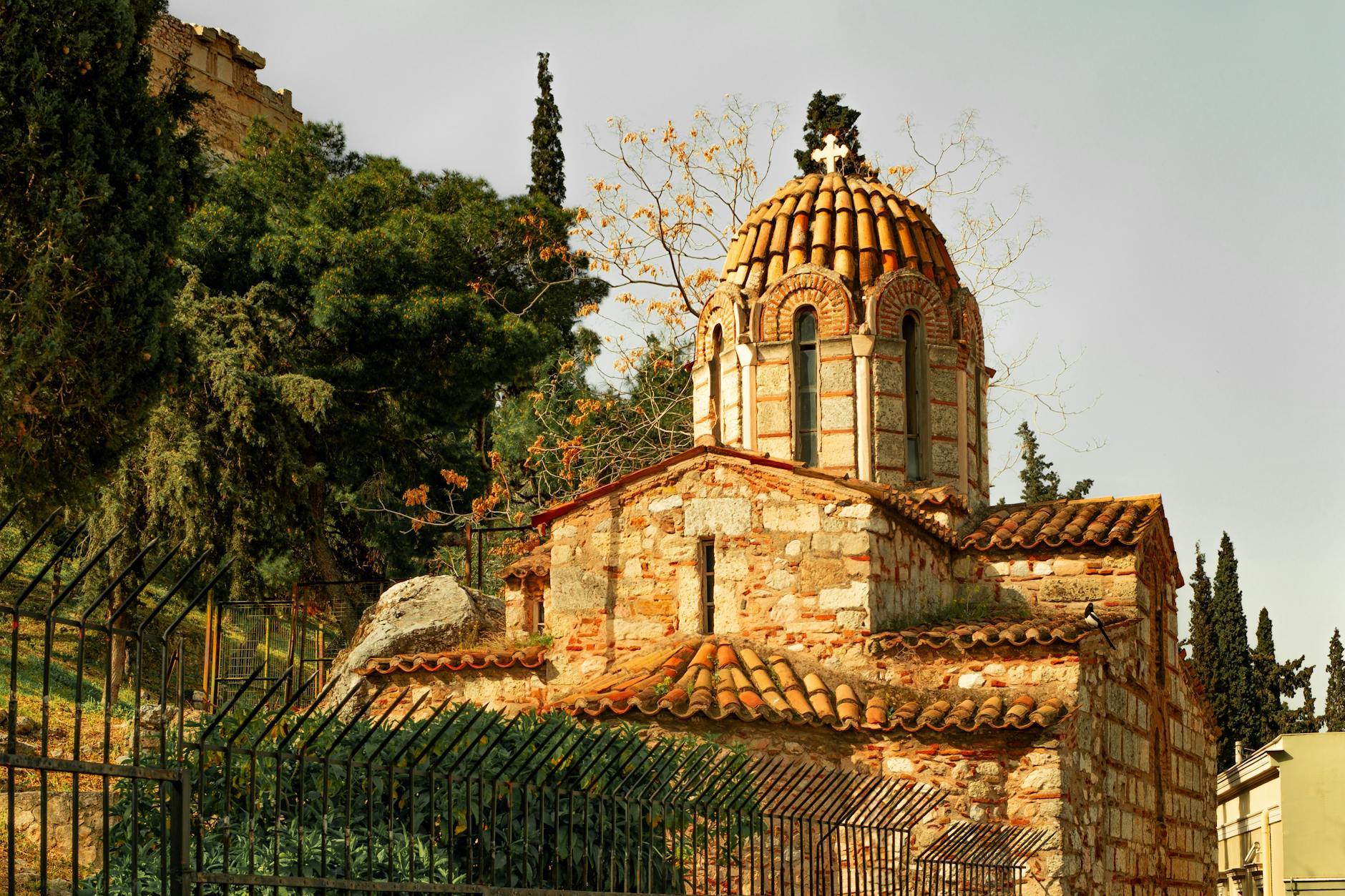
- Byzantine and Orthodox Greece: monasteries, icons, church domes, Mount Athos, Meteora, Mystras, Thessaloniki, island chapels.
- Ottoman, Venetian, and regional Greece: old towns, fortresses, ports, mountain villages, island architecture, layered food traditions.
- Modern Greece: Athens neighborhoods, Thessaloniki nightlife, ferries, tourism pressure, island economies, migration, family businesses, cafés, beaches, and everyday Mediterranean life.
The best trip does not reduce Greece to marble ruins and blue domes. It connects layers.
The Country’s Physical Logic
Greece has a rugged mainland, long coastlines, mountains, peninsulas, and island groups spread across different seas. That geography creates the whole planning problem.
- Athens and Attica are the entry hub and cultural anchor.
- The Peloponnese is road-trip Greece: Nafplio, Mycenae, Epidaurus, Olympia, Mani, Monemvasia, Kalamata, Nemea wine, mountains, beaches.
- Central Greece and Thessaly include Delphi, Meteora, Pelion, and mountain/sea combinations.
- Northern Greece is Thessaloniki, Macedonia, Thrace, Halkidiki, Mount Olympus, Byzantine monuments, food, and less frantic summer beaches.
- Epirus is mountainous, greener, quieter Greece: Zagori, Vikos Gorge, Ioannina, Pindos villages, rafting, hiking.
- Crete is large enough to be its own trip: Minoan sites, beaches, mountains, gorges, villages, and one of Greece’s strongest regional cuisines.
- The Cyclades are the whitewashed Aegean postcard, but each island has a different role.
- The Ionian Islands are greener, more Venetian, and face Italy rather than the Aegean.
- The Dodecanese sit toward Turkey and have medieval, Ottoman, Italianate, and eastern Mediterranean layers.
- The Sporades are pine-covered and quieter for beach-and-sea trips.
- The North Aegean is larger, less packaged, and more local-feeling.
- The Saronic Islands are the easiest island add-ons from Athens.
Local Logic
Greece rewards pacing. Morning is for ruins, hikes, markets, ferries, and heat-sensitive activities. Afternoon is for lunch, shade, rest, sea, or travel. Evening is for promenades, sunsets, villages, dinner, and social life.
A plan that looks efficient in a spreadsheet may fail in Greece because of heat, ferry timing, hotel check-in gaps, port transfers, road curves, archaeology fatigue, or a lunch that deserves two hours. The country works better when you build days around one anchor and one mood.
The Central Contrasts
Greece is full of tensions that make it richer than the travel clichés:
- Ancient monument vs modern city: Athens is not a museum city; it is a living capital wrapped around ruins.
- Island fantasy vs island infrastructure: Ferries, ports, water scarcity, wind, and seasonality are part of the real island experience.
- Beach leisure vs sacred history: You can swim in the morning and stand in a Bronze Age palace or Byzantine monastery in the afternoon.
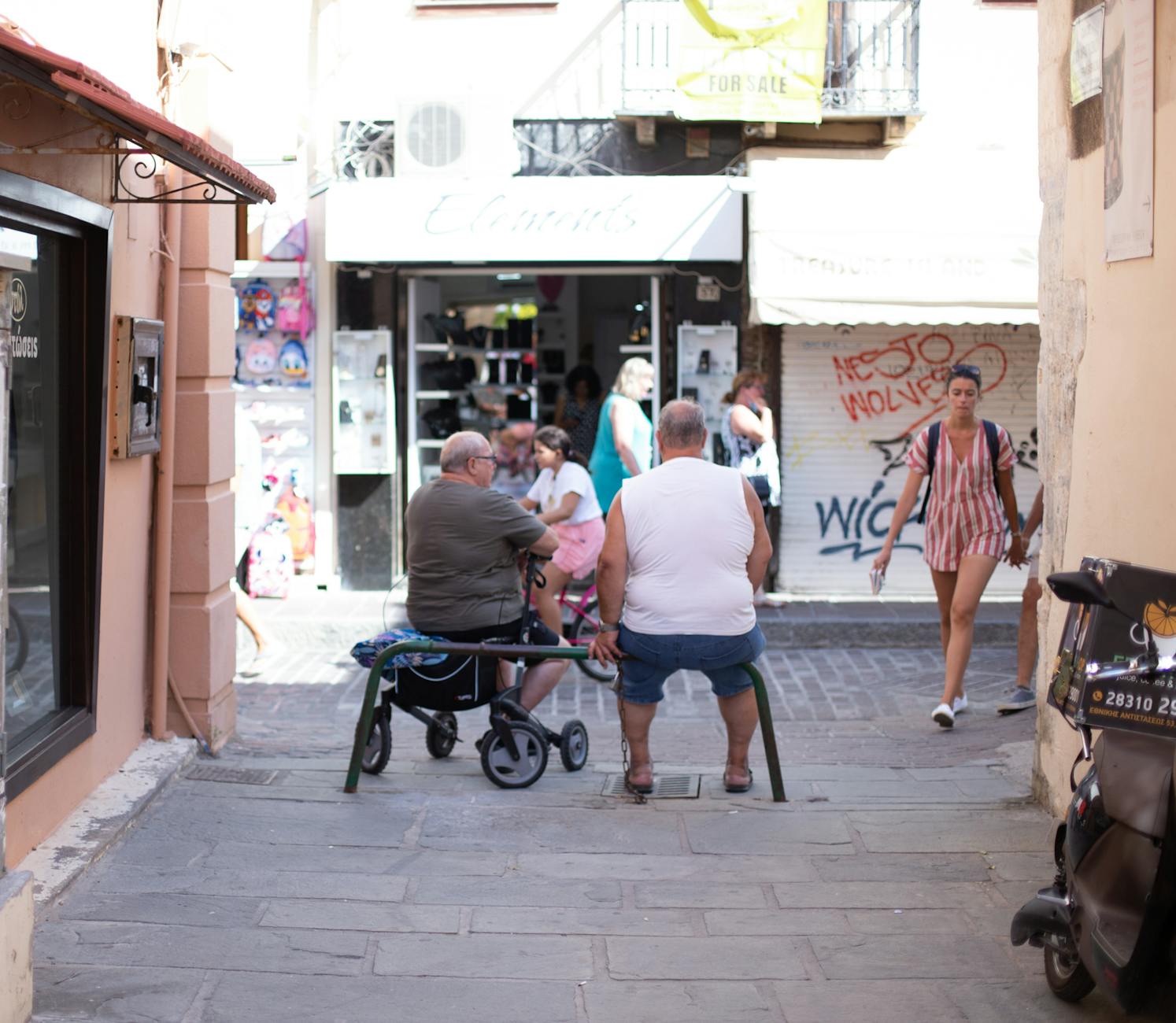
- Global tourism vs local life: Santorini and Mykonos are not the whole country. Village Greece still exists if you leave the crush.
- Dry Aegean vs green Ionian: Greek islands do not all look or feel alike.
- Mainland depth vs island fame: Many of Greece’s most profound places are not on islands at all.
The Move
For a deeper trip, pair one famous place with one grounding place. Santorini plus Naxos. Athens plus Nafplio. Meteora plus Pelion. Mykonos plus Tinos. Crete’s Chania plus mountain villages. Rhodes plus Symi or Patmos. This prevents the trip from becoming either pure tourism spectacle or pure logistics.
Choose Your Greece: Route Families
A country guide should not ask “Where should you go?” without first asking “What kind of Greece trip are you building?”
1. The Classic First-Timer: Athens + Cyclades
Best for: First-time visitors, couples, friends, beaches, iconic views, easy tourism infrastructure.
Typical route: Athens → Naxos or Paros → Santorini; optional Milos, Tinos, or Mykonos depending style.
Why it works: You get Athens’ ancient core plus the classic Aegean island mood.
Risk: Overhopping. Three islands in seven nights is usually too much.
Best length: 9 to 12 days.
The move: Use Naxos or Paros as the grounding island. Treat Santorini as a dramatic finale, not the whole island experience.
2. The History-and-Landscape Route: Athens + Delphi + Meteora + Peloponnese
Best for: Travelers who care about ancient Greece, monasteries, mountain landscapes, ruins, road trips, and substance over beaches.
Typical route: Athens → Delphi → Meteora → Nafplio → Mycenae/Epidaurus → Olympia or Mani/Monemvasia.
Why it works: It shows the depth of mainland Greece, not just the beaches.
Risk: Too many ruins back-to-back in heat.
Best length: 10 to 14 days.
The move: Use Nafplio as a base. It is one of Greece’s best towns for first-time mainland travelers.
3. The Crete Standalone Trip
Best for: Food, beaches, families, road trips, hiking, history, slower travel, travelers who hate constant packing.
Typical route: Chania → Rethymno → Heraklion/Knossos → south coast or eastern Crete.
Why it works: Crete is Greece in one large island: Minoan sites, Venetian towns, mountains, gorges, beaches, villages, and serious food. Visit Greece describes Crete as Greece’s largest island and the fifth largest in the Mediterranean.[15]
Risk: Underestimating driving distances and mountain roads.
Best length: 7 to 14 days.
The move: Do not stay in one corner and pretend you saw Crete. Either choose one region deeply or build a two-base route.
4. The Honeymoon / Romance Route
Best for: Couples, scenic hotels, slow meals, wine, sunsets, private boat days.
Typical route: Athens → Santorini → Milos or Paros/Naxos; or Athens → Crete → Santorini.
Why it works: Caldera drama, beaches, cave hotels, wine, villages, and sea.
Risk: Overpaying for Instagram Greece while missing the quieter pleasures.
Best length: 10 to 12 days.
The move: Spend money on location and view once, not every night. Santorini is worth a splurge if you choose intentionally.
5. The Food Greece Route
Best for: Food travelers, wine lovers, market people, slow diners.
Typical route: Athens → Thessaloniki → Naxos/Tinos/Sifnos or Crete; or Athens → Nemea/Nafplio → Crete.
Why it works: Greek food is deeply regional. Island produce, Cretan olive oil and cheeses, Macedonian pies, seafood, wild greens, legumes, wine, and pastries all change by place.
Risk: Eating only tourist-center moussaka, souvlaki, and Greek salad.
Best length: 10+ days.
The move: Ask what is local, seasonal, and cooked that day. The best meal may be a dish you did not know to search for.
6. The Northern Greece Route
Best for: Second-time visitors, food, Byzantine history, less obvious beaches, mountains, wineries, road trips.
Typical route: Thessaloniki → Halkidiki → Mount Olympus or Meteora → Zagori/Ioannina; optional Kavala/Thrace.
Why it works: It breaks the Athens-islands pattern and shows a different Greece.
Risk: Public transport can be fragmented; a car helps.
Best length: 8 to 14 days.
The move: Build around Thessaloniki, then choose either Halkidiki beaches or mountain Epirus rather than trying to rush both.
7. The Ionian Route
Best for: Green islands, Venetian towns, beaches, families, Italy-adjacent travel, sailing.
Typical route: Corfu → Paxos/Antipaxos; or Lefkada → Kefalonia → Ithaca/Zakynthos.
Why it works: The Ionian Islands feel different from the dry Cyclades. Visit Greece describes the Ionian group as lying off western Central Greece and south of the Peloponnese.[13]
Risk: Trying to combine Ionian islands with Cyclades in a short trip.
Best length: 7 to 12 days.
The move: Fly into Corfu or Zakynthos/Kefalonia when possible, or use the mainland west-coast ports rather than forcing everything through Athens.
8. The Dodecanese Route
Best for: Medieval towns, warm shoulder seasons, island hopping, history, families, Turkey-adjacent geography.
Typical route: Rhodes → Symi → Kos or Patmos; optional Kalymnos, Leros, Nisyros.
Why it works: The Dodecanese sit in the southeastern Aegean and combine beaches, medieval fortifications, archaeology, and layered eastern Mediterranean history.[14]
Risk: Long ferries from Athens if you do not fly.
Best length: 8 to 12 days.
The move: Start or end by flying to Rhodes or Kos. Do not waste two vacation days proving you can ferry from Piraeus.
9. The Outdoor Greece Route
Best for: Hikers, photographers, mountain travelers, spring/autumn visitors.
Typical route: Zagori/Vikos Gorge → Meteora → Pelion or Olympus; or Crete gorges and south coast; or Naxos/Andros/Tinos hiking.
Why it works: Greece is far more mountainous than many beach-focused travelers realize.
Risk: Underestimating heat, trail exposure, and rural logistics.
Best length: 10+ days.
The move: Avoid serious exposed hikes in summer midday. Spring and autumn are better.
10. The Family Greece Route
Best for: Families with children, multigenerational trips, low-stress beach time.
Typical route: Athens → Naxos/Paros/Crete; or Athens → Saronic Islands/Nafplio; or Crete only.
Why it works: You can combine ancient sites, easy beaches, safe-feeling towns, casual food, and short moves.
Risk: Too many ferries and luggage transfers.
Best length: 8 to 14 days.
The move: Choose islands with good beaches near towns and avoid cliff-heavy lodging if traveling with toddlers, strollers, or older relatives.
Best Time to Visit Greece
Greece is a year-round country, but not every Greece trip works year-round. The best month depends on whether you want beaches, ruins, hiking, nightlife, ferries, festivals, lower prices, or quieter towns.
Visit Greece describes the country’s climate as Mediterranean, with plenty of sunshine, mild temperatures, limited rainfall, and significant variation because of geography, relief, and the distribution between mainland and sea.[8]
Best Overall Months
May and early June are excellent for first-timers: warm weather, flowers, increasingly swimmable seas, long days, good ferry schedules, and fewer crowds than high summer.
September and early October are often the best balance for islands: sea temperatures remain warm, crowds ease, restaurants and hotels are still open, and sightseeing is more humane.
April and late October are better for Athens, the Peloponnese, Delphi, Meteora, Thessaloniki, and hiking than for guaranteed beach weather.
July and August are best only if beach weather, nightlife, and high-summer energy matter more than comfort, prices, and crowds.
Season-by-Season
| Season | What to expect | Best for | Watch out for |
|---|---|---|---|
| Spring: March–May | Wildflowers, cooler ruins, variable sea temperatures, Easter traditions, improving island service. | Athens, Peloponnese, Delphi, Meteora, hiking, Crete, quieter islands. | Some island businesses open gradually; Greek Orthodox Easter affects travel; sea may be cool early. |
| Summer: June–August | Hot, dry, crowded, festive, ferry-heavy, beach-focused. July/August bring peak heat, prices, and Aegean wind. | Beaches, sailing, nightlife, island energy, family summer holidays. | Heat, wildfires, crowding, ferry disruption, sold-out cars/hotels, cruise pressure. |
| Autumn: September–November | Warm seas early, softer light, harvest foods, good hiking, reduced crowds. | Islands in September, mainland in October, wine, food, ruins. | Late autumn island closures; storms can increase; daylight shortens. |
| Winter: December–February | Mild in many lowland/coastal areas, cold in mountains, quiet islands, lively cities. | Athens, Thessaloniki, museums, food, mainland villages, winter mountains. | Limited ferry/hotel/restaurant options on smaller islands; wet/cold spells; short days. |
Month-by-Month Guide
| Month | Verdict |
|---|---|
| January | Good for Athens, Thessaloniki, museums, food, and low-crowd cultural travel. Poor for classic island hopping. Mountain villages can be atmospheric. |
| February | Still winter. Useful for city trips and mainland culture. Carnival season can be interesting depending dates and region. |
| March | Spring begins. Good for Athens and ruins, but the islands are still quiet. Weather can be changeable. |
| April | Excellent for mainland and Athens. Greek Orthodox Easter can be unforgettable but changes schedules and prices. Beaches are scenic, not guaranteed warm. |
| May | One of the best months. Warm but not brutal, flowers, increasingly open islands, strong for Athens plus islands. |
| June | Excellent beach month before full peak. Warm seas, long days, busy but not as extreme as July/August. |
| July | High summer. Great for beach and nightlife, hard for midday ruins and budget travelers. Book early. |
| August | Peak domestic and international holiday month. Beautiful for sea, intense for crowds, heat, and prices. Avoid overplanning. |
| September | Arguably the best island month. Warm sea, slightly calmer crowds, good ferry network, softer evenings. |
| October | Excellent for Athens, Crete, Rhodes, Peloponnese, hiking, and food. Smaller islands start winding down later in the month. |
| November | Better for cities and mainland than islands. Good for budget and cultural travel, but weather is more variable. |
| December | Good for Athens/Thessaloniki, food, museums, Christmas lights, and mainland villages. Not a typical beach-island month. |
Rain Plan
Greece is not just beaches. Rainy-day substitutes include the Acropolis Museum, National Archaeological Museum, Benaki Museum, Byzantine and Christian Museum, Thessaloniki museums, wineries, food markets, cooking classes, cafés, monasteries where weather allows, and long tavernas. On islands, rainy days are harder; choose a larger island or town with museums, workshops, and year-round life if traveling shoulder season.
How Many Days You Need
The Honest Answer
A first Greece trip needs 10 to 14 days if you want Athens plus islands or mainland depth without rushing. Seven days is workable only with discipline. Two weeks is the sweet spot for balance.
| Length | What it feels like |
|---|---|
| 3–4 days | Athens city break, maybe with one nearby day trip such as Delphi, Hydra, Aegina, Cape Sounion, or Nafplio. Not enough for proper islands unless you fly directly to one island and stay put. |
| 5–6 days | Athens plus one island, or Athens plus Nafplio/Delphi. Keep it simple. |
| 7 days | Athens + one island, or Crete only, or Athens + Peloponnese highlights. Do not add three islands. |
| 8–10 days | Strong first trip: Athens + two Cyclades islands, or Athens + Crete, or Athens + Delphi/Meteora/Nafplio. |
| 11–14 days | Ideal: Athens + Cyclades + Crete, or Athens + Peloponnese + one island, or northern Greece plus one island/peninsula. |
| 15–21 days | Lets you build a serious country route: Athens, mainland archaeology, one island group, Crete or northern Greece. |
| One month | Greece becomes regional. You can slow down, avoid peak transport stress, and build a route around food, islands, mountains, and history. |
Trip Length Recommendations
One week: Athens + Naxos, Athens + Paros, Athens + Santorini, Athens + Nafplio, or Crete only.
Ten days: Athens + Naxos + Santorini; Athens + Paros + Naxos; Athens + Delphi/Meteora + Nafplio; Crete with two bases.
Two weeks: Athens + Cyclades + Crete; Athens + Peloponnese + Hydra/Spetses; Athens + Delphi/Meteora + Naxos/Paros; Thessaloniki + Meteora + Zagori + Corfu.
Three weeks: One proper mainland route plus one island group plus Crete or northern Greece.
Itinerary Philosophy
A good Greece itinerary has:
- One arrival buffer in Athens or a major hub.
- One cultural anchor early: Acropolis, Delphi, Meteora, Knossos, Mycenae, or Thessaloniki.
- One slow base where you stay at least three nights.
- One sea pause with no daily sightseeing pressure.
- One transport buffer before international departure.
The Move
Count nights, not places. A “3-night island stay” often means two full days. A “2-night island stay” can mean one real day after ferry arrival and before ferry departure. Greece rewards three-night minimums outside Athens.
Where to Go: Regions and Island Groups
Athens and Attica
Identity: Ancient capital, modern city, entry hub, museum city, nightlife city, neighborhood city.
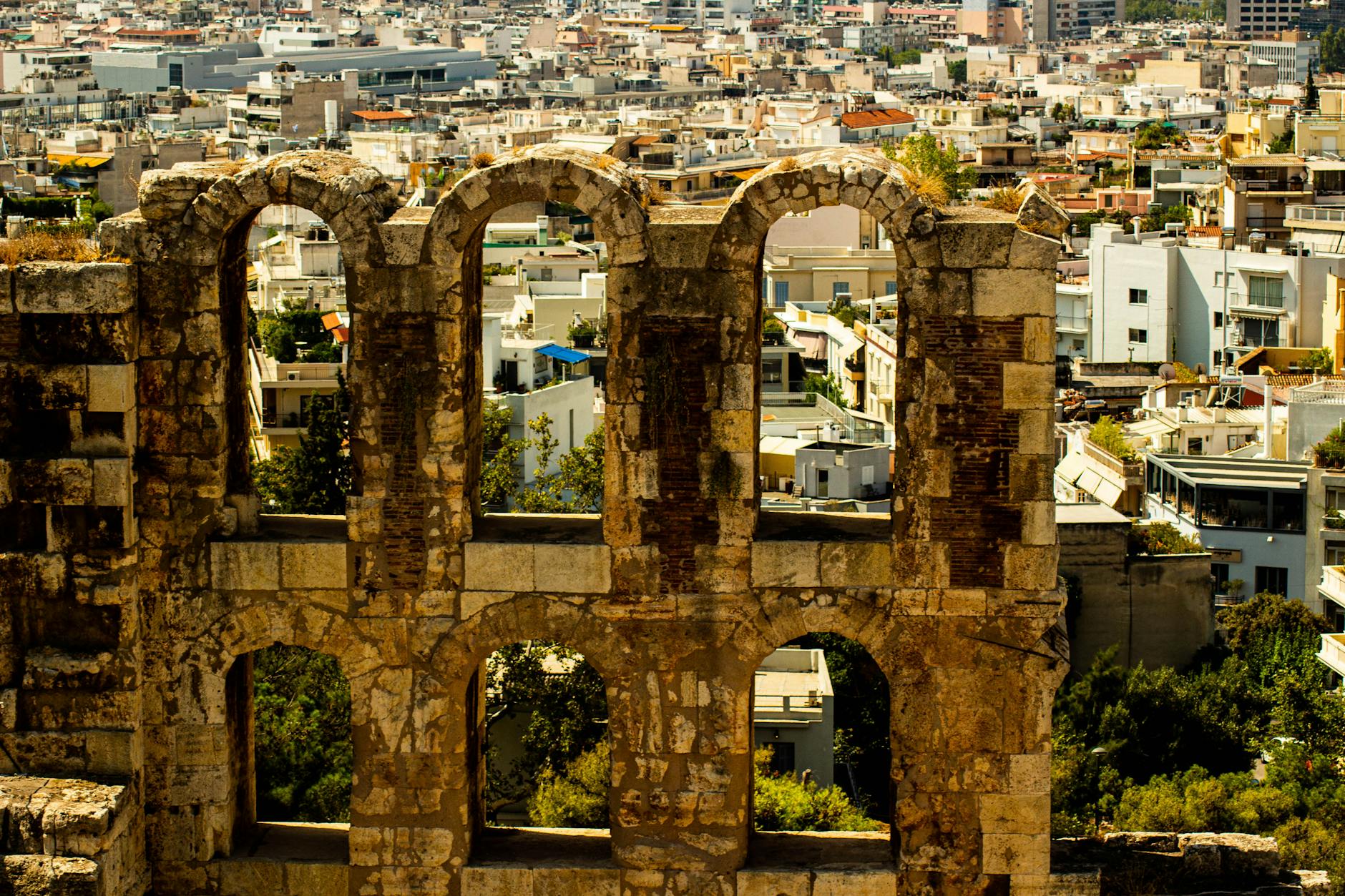
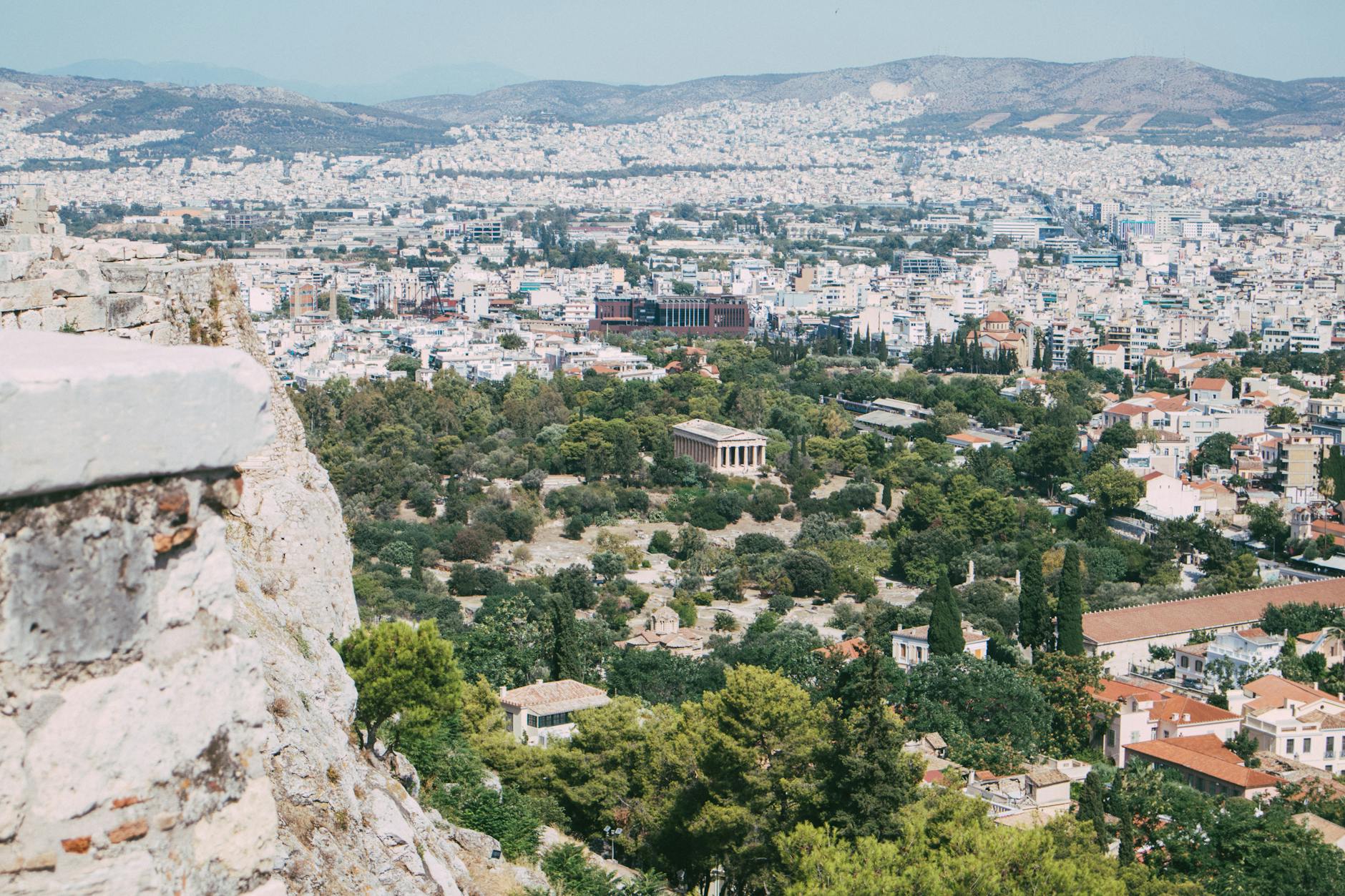
Athens is not just a launchpad. It is one of Europe’s most interesting capitals when treated properly: the Acropolis and its slopes, the Acropolis Museum, the Ancient Agora, the National Archaeological Museum, Plaka, Anafiotika, Monastiraki, Psyrri, Koukaki, Pangrati, Exarchia, coastal tram suburbs, and day trips to Cape Sounion or Aegina.
Best for: First-timers, ancient history, museums, food, nightlife, city texture.
How long: 2 to 4 nights on a first trip.
Common mistake: Arriving, seeing only the Acropolis in midday heat, then declaring Athens chaotic and leaving.
The move: Stay centrally, do ruins early, museums midday, neighborhoods late afternoon, and dinner after the heat breaks.
The Cyclades
Identity: Whitewashed Aegean islands, dry hills, wind, chapels, beaches, ferries, and the Greece most visitors imagine.
Visit Greece describes the Cyclades as a famous Aegean island group known for sandy beaches, white-and-blue architecture, traditional lifestyle, folk culture, and barren landscapes with isolated chapels.[12]
| Island | Best for | Watch out for |
|---|---|---|
| Santorini | Caldera views, romance, wine, volcanic drama, bucket-list hotels. | Crowds, prices, cruise pressure, stairs, limited beaches compared with other islands. |
| Mykonos | Nightlife, luxury, beach clubs, design hotels, LGBTQ+ travel, Delos access. | Very high prices, party scene, wind, cruise crowds, not ideal for quiet budget travel. |
| Naxos | Beaches, villages, food, families, hiking, good value. | Less dramatic than Santorini; needs a car/bus planning for villages and beaches. |
| Paros | Social energy, beaches, villages, food, couples/friends, Antiparos. | Getting busier and pricier; can feel crowded in high season. |
| Milos | Geology, beaches, boat trips, couples, photographers. | Rental car/ATV logistics; popular beaches and boat trips book up. |
| Tinos | Villages, food, marble crafts, pilgrimage, quiet alternative to Mykonos. | Windy; less obvious beach-resort infrastructure. |
| Syros | Year-round life, neoclassical Ermoupoli, culture, good ferry logic. | Not the pure whitewashed beach fantasy many expect. |
| Sifnos | Food, villages, low-key charm, couples. | Limited nightlife; popular in peak season. |
| Amorgos | Dramatic landscapes, hiking, slow travel. | Longer ferries, less convenient for short trips. |
Best length: 4 to 10 nights depending island count.
The move: Pick two Cyclades islands for a 10-day trip, not four.
Crete
Identity: Greece’s largest island and a self-contained travel world.
Crete offers Chania’s Venetian harbor, Rethymno’s old town, Heraklion and Knossos, Minoan sites, beaches such as Elafonissi and Balos, the Samaria Gorge, mountain villages, south-coast hideaways, olive oil, cheese, dakos, lamb, herbs, raki, and one of Greece’s most distinctive regional food cultures.[15]
Best for: Food, road trips, beaches, families, hiking, ancient history, longer stays.
How long: 7 days minimum for a taste; 10 to 14 days better.
Common mistake: Assuming Chania to Elafonissi or Balos is a casual beach hop. Crete is large and mountainous.
The move: Use two bases: Chania/Rethymno for the west, Heraklion/Agios Nikolaos/Elounda or south coast for central/east.
The Peloponnese
Identity: Myth, ruins, mountains, olive groves, Venetian towns, seaside fortresses, and road-trip Greece.
Visit Greece frames the Peloponnese as “where myth meets history,” with major archaeological sites such as Olympia, Epidaurus, Mycenae, Tiryns, the Temple of Apollo Epicurius, Byzantine churches, and monasteries.[16]
Best places: Nafplio, Mycenae, Epidaurus, Nemea, Olympia, Mystras, Monemvasia, Mani, Kardamyli, Areopoli, Kalamata, Pylos, Voidokilia, ancient Messene.
Best for: Road trips, history, couples, families, food, wine, quieter Greece, spring/autumn travel.
How long: 4 to 10 days.
Common mistake: Treating it as one day from Athens. Nafplio alone deserves at least two nights.
The move: Sleep in Nafplio, then decide whether your deeper Peloponnese is Olympia, Mani, Monemvasia, or Messene/Pylos.
Delphi and Central Greece
Identity: Sacred mountain Greece, ancient oracle, olive valleys, villages, and dramatic topography.
Delphi is one of the most powerful ancient sites in Greece because the landscape still feels like part of the meaning. It pairs naturally with Arachova, Galaxidi, Osios Loukas, and onward travel to Meteora.
Best for: Ancient history, mythology, landscapes, road trips.
How long: Day trip possible; overnight better.
Common mistake: Visiting Delphi as a rushed bus stop with no museum time.
The move: Sleep nearby or in Galaxidi/Arachova if you want atmosphere and less pressure.
Meteora and Thessaly
Identity: Monasteries suspended over sandstone pillars, mountain landscapes, and spiritual drama.
Visit Greece highlights Thessaly’s mountains, rivers, beaches, Plastira Lake, Tempi Valley, and Meteora as one of the region’s defining sites.[17]
Best for: Monasteries, photography, landscapes, religious history, hiking.
How long: 1 to 2 nights.
Common mistake: Treating Meteora as a quick in-and-out photo stop. The light changes everything.
The move: Stay in Kastraki or Kalambaka, see monasteries early/late, and respect dress codes.
Thessaloniki and Northern Greece
Identity: Food city, Byzantine city, waterfront city, Balkan crossroads, northern base.
Thessaloniki is Greece’s second-city answer to Athens: easier, food-obsessed, social, walkable along the waterfront, dense with Byzantine and Ottoman layers, and a strong base for Macedonia, Halkidiki, Mount Olympus, Vergina/Aigai, Pella, and Kavala.
Best for: Food, nightlife, history, northern routes, less obvious Greece.
How long: 2 to 4 nights.
Common mistake: Skipping it because it lacks beaches in the center. Thessaloniki’s value is food, culture, and rhythm.
The move: Pair Thessaloniki with Halkidiki beaches or mountain/heritage trips, not both unless you have time.
Epirus and Zagori
Identity: Stone villages, bridges, gorges, mountains, forests, rivers, Ioannina, and Greece without beach clichés.
Visit Greece describes Epirus as lying in northwestern Greece between the Pindos mountain range and the Ionian Sea, with forests, mountain lakes, and adventure activities such as hiking, mountain biking, rafting, and kayaking.[18]
Best for: Hiking, villages, scenery, photography, slow travel, autumn, spring.
How long: 3 to 6 nights.
Common mistake: Treating Zagori as a beach-trip add-on. It is a mountain journey.
The move: Rent a car and stay in one or two villages rather than trying to day trip from too far away.
The Ionian Islands
Identity: Green islands, Venetian towns, cypress trees, cliffs, turquoise coves, and a western Greek feel.
Best islands: Corfu, Paxos, Lefkada, Kefalonia, Ithaca, Zakynthos.
Best for: Families, sailors, beach lovers, greener landscapes, Italy-to-Greece combos, road trips.
How long: 5 to 12 nights.
Common mistake: Combining Corfu and Santorini as if they are neighboring islands.
The move: Choose one Ionian sub-route: Corfu + Paxos, or Lefkada + Kefalonia + Ithaca/Zakynthos.
The Dodecanese
Identity: Southeastern Aegean, medieval Rhodes, sponge-diving Kalymnos, Patmos spirituality, Symi beauty, Kos beaches, volcanic Nisyros, and closer ties to the eastern Mediterranean.
Visit Greece describes the Dodecanese as a southeastern Aegean island complex with twelve large islands, numerous smaller islands, beaches, archaeological finds, Byzantine and medieval monuments, and traditional settlements.[14]
Best for: Rhodes old town, island hopping, families, warm shoulder season, history, Turkey-adjacent itineraries.
How long: 7 to 12 nights.
Common mistake: Ferrying from Athens to Rhodes just to save the cost of a flight when time is limited.
The move: Fly to Rhodes or Kos, then ferry locally.
The Sporades
Identity: Pine forests, beaches, relaxed island life, and a different rhythm from the Cyclades.
Best islands: Skiathos, Skopelos, Alonnisos, Skyros.
Best for: Green beach trips, families, sailing, low-key summer.
How long: 5 to 10 nights.
Common mistake: Expecting Cycladic architecture. The Sporades are their own thing.
The move: Pair Skiathos and Skopelos, or slow down on Alonnisos for marine-park nature.
The Saronic Islands
Identity: Easy islands near Athens.
Best islands: Aegina, Hydra, Poros, Spetses, Agistri.
Best for: Short trips, no domestic flights, car-light islands, Athens add-ons, families, weekend energy.
How long: Day trip to 5 nights.
Common mistake: Thinking “near Athens” means second-rate. Hydra and Spetses are beautiful; Aegina is practical and local.
The move: Use the Saronics if you have limited time or want less ferry risk before flying home.
The North Aegean Islands
Identity: Larger, less packaged, more local islands with history, food, landscapes, and slower travel.
Best islands: Lesvos, Chios, Samos, Ikaria, Lemnos, Samothrace.
Best for: Repeat visitors, food, nature, fewer crowds, long stays.
How long: 5 to 12 nights.
Common mistake: Adding them to a Cyclades trip without understanding ferry geography.
The move: Fly in/out or build them as their own route.
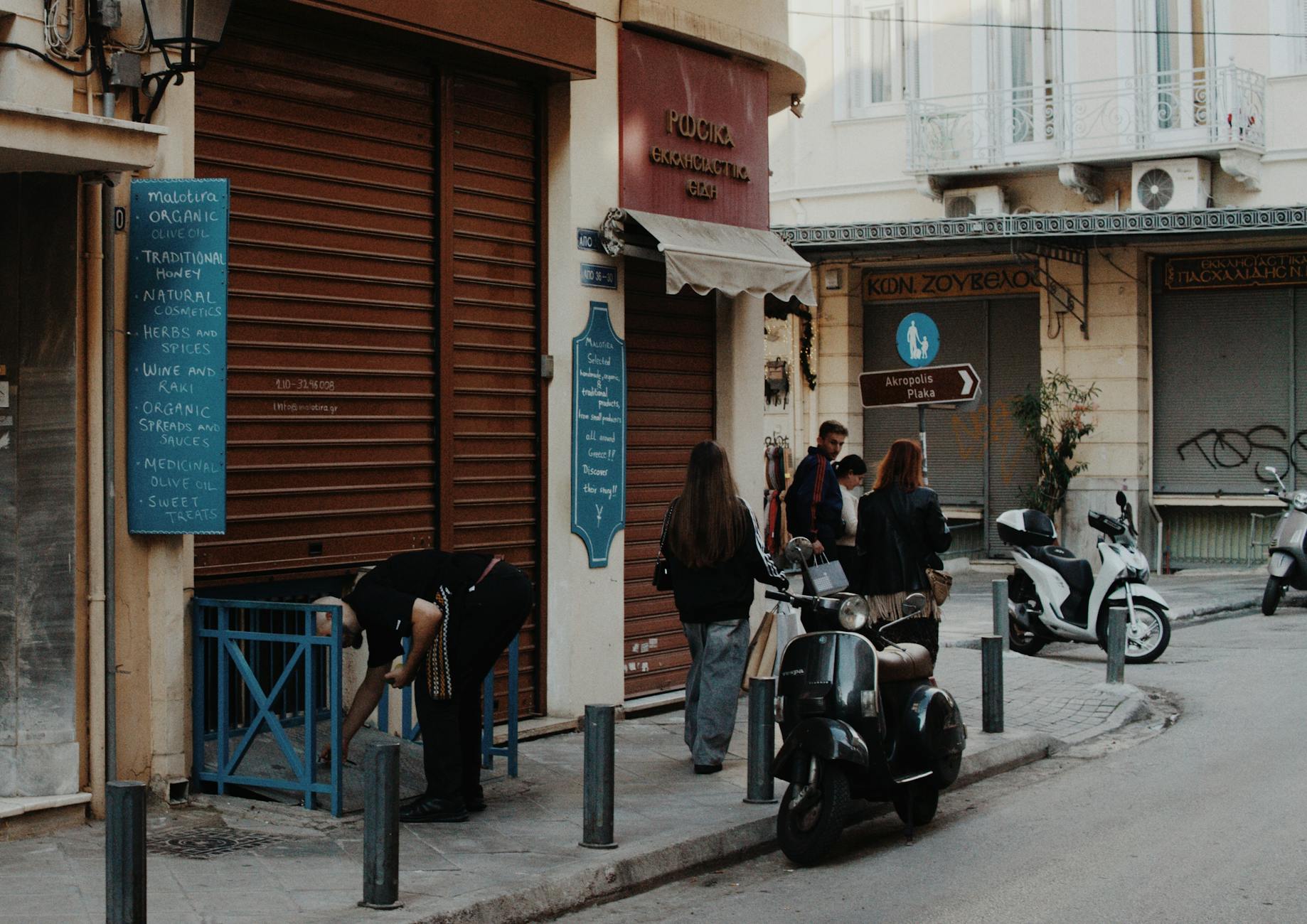
Where to Stay: Best Bases
Country-level lodging advice is about bases, not hotel lists.
Athens
Best bases: Syntagma, Plaka, Koukaki, Makrygianni, Monastiraki, Psyrri, Kolonaki, Pangrati.
Best for first-timers: Koukaki/Makrygianni for Acropolis access and calmer evenings; Syntagma/Plaka for convenience; Psyrri/Monastiraki for nightlife and urban energy.
Avoid: Staying far out to save modest money if you only have two nights. Athens rewards central walking.
Santorini
Best bases: Fira for transport and convenience; Firostefani/Imerovigli for caldera views with slightly calmer mood; Oia for romance and sunset fame; Kamari/Perissa for beach/value.
Best for first-timers: Imerovigli or Firostefani if you want the caldera without Oia’s maximum crowd pressure.
Avoid: Booking a cheap inland room expecting caldera magic. Pay for the view intentionally or spend elsewhere.
Mykonos
Best bases: Mykonos Town for nightlife and buses; Ornos/Platis Gialos for beach access; quieter villas only if you have transport.
Best for: Nightlife, luxury, beach clubs, groups.
Avoid: Mykonos if you want quiet, cheap, low-key Greece in high season.
Naxos
Best bases: Naxos Town for food, transport, and evening life; Agios Prokopios/Agia Anna/Plaka for beaches; mountain villages for slow travelers.
Best for: Families, first-time island balance, food, beaches, value.
Avoid: Staying too remote without a car.
Paros
Best bases: Parikia for ferry and convenience; Naoussa for style, food, nightlife; Lefkes or inland villages for slower charm; beach zones for families.
Best for: Couples, friends, social island life.
Avoid: Assuming Naoussa is still a quiet village in August.
Crete
Best bases: Chania for beauty and western beaches; Rethymno for central charm; Heraklion for Knossos and transport; Agios Nikolaos/Elounda for polished east; south coast for quiet, hiking, and sea.
Best for first-timers: Chania + Heraklion or Chania + Rethymno/eastern base.
Avoid: One-base itineraries that involve constant cross-island driving.
Peloponnese
Best bases: Nafplio for first-timers; Kalamata for Mani/Messinia; Kardamyli/Stoupa for Mani coast; Monemvasia for atmosphere; Olympia for site-focused overnights.
Best for: Road trips, history, couples, families.
Avoid: Treating the entire Peloponnese as a day trip.
Meteora
Best bases: Kastraki for village atmosphere and monastery views; Kalambaka for transport and practical hotels.
Best for: One or two nights.
Avoid: Visiting only at midday as a long day trip from Athens if you can possibly stay overnight.
Thessaloniki
Best bases: City center, Ladadika, Aristotelous, waterfront, Ano Poli for atmosphere if you are comfortable with hills.
Best for: Food, nightlife, northern Greece.
Avoid: Treating it only as a transit stop.
Corfu
Best bases: Corfu Town for culture and restaurants; Paleokastritsa for scenery; northeast coast for upscale villas; west/south for beaches and families.
Best for: Ionian trips, families, greenery, Venetian atmosphere.
Avoid: Staying in a resort bubble if you want old-town life.
Itineraries
One Perfect Week: Athens + One Island
Day 1: Arrive Athens. Easy neighborhood walk, dinner, sleep.
Day 2: Acropolis early, Acropolis Museum, Plaka/Koukaki, dinner in Athens.
Day 3: Ancient Agora, National Archaeological Museum or food walk, evening in Psyrri/Pangrati.
Day 4: Ferry or flight to Naxos/Paros/Santorini/Crete. Settle in.
Day 5: Beach + village/town.
Day 6: Boat day, ruins, wine, hiking, or road trip depending island.
Day 7: Slow morning, return to Athens or stay near airport/port if flying next day.
Best island choices: Naxos for balance, Paros for social style, Santorini for drama, Crete for a bigger island taste.
What to cut if tired: The second Athens museum or the boat day.
Ten Days: Athens + Naxos + Santorini
Days 1–3: Athens.
Days 4–7: Naxos. Beaches, Chora, inland villages, Portara sunset, food, possible small-boat day.
Days 8–10: Santorini. Caldera walk, Akrotiri, wine, Oia/Imerovigli, one splurge dinner or hotel view.
Why it works: Naxos gives you everyday island Greece; Santorini gives you once-in-a-lifetime scenery.
Common mistake: Reversing it if your flight home from Athens is tight. Keep a buffer.
Ten Days: Athens + Mainland Classics
Days 1–3: Athens.
Day 4: Delphi overnight.
Days 5–6: Meteora overnight, monastery day.
Days 7–9: Nafplio base for Mycenae, Epidaurus, old town, beaches, Nemea wine.
Day 10: Return to Athens.
Why it works: It shows Greece’s ancient, sacred, and landscape depth without ferry dependence.
Best season: March–June and September–November.
Two Weeks: Athens + Cyclades + Crete
Days 1–3: Athens.
Days 4–6: Paros or Naxos.
Days 7–9: Santorini or Milos.
Days 10–14: Crete, with Chania plus one other base if possible.
Why it works: You get capital, Cyclades, and a large regional island.
Risk: Too much moving if you add a third Cyclades island.
The move: Use flights for Santorini/Crete/Athens if ferry timing is ugly.
Two Weeks: Athens + Peloponnese + Island Pause
Days 1–3: Athens.
Days 4–6: Nafplio, Mycenae, Epidaurus, Nemea.
Days 7–9: Mani or Monemvasia.
Days 10–11: Olympia or Messinia/Pylos.
Days 12–14: Hydra, Spetses, Aegina, or a nearby coastal base before returning to Athens.
Why it works: You see a deeper Greece and still get sea time.
Best for: Couples, families, history lovers, road trippers.
Two Weeks: Northern Greece + Ionian
Days 1–3: Thessaloniki.
Days 4–5: Meteora.
Days 6–9: Zagori/Ioannina/Epirus.
Days 10–14: Corfu or Lefkada/Kefalonia.
Why it works: Mountains, food, monasteries, villages, and green islands.
Best season: May–June or September–October.
Crete-Only Ten Days
Days 1–4: Chania. Old town, western beaches, food, Apokoronas villages.
Days 5–6: Rethymno or south coast. Arkadi, Preveli, villages, beaches.
Days 7–8: Heraklion and Knossos, museum, wine/olive oil.
Days 9–10: Eastern Crete or back to Chania depending flights.
Why it works: No ferry hopping, lots of depth.
Common mistake: Spending all ten nights in Chania and day-tripping too far.
Special-Interest Itineraries
Food Lover’s Greece
Athens markets and modern tavernas, Thessaloniki bakeries and meze, Naxos cheeses and potatoes, Sifnos cooking, Tinos villages and produce, Crete’s olive oil/cheese/wild greens, Nemea wine, Santorini assyrtiko.
Ancient Greece Route
Athens, Eleusis, Delphi, Olympia, Mycenae, Epidaurus, Corinth, Delos, Knossos, Phaistos, Vergina/Aigai, Philippi.
Family Greece
Athens for two nights, Naxos or Crete for a week, then one gentle final Athens/airport night. Keep beaches easy, ferries limited, and hotels practical.
No-Car Greece
Athens, Hydra/Aegina/Spetses, Naxos/Paros/Syros, Thessaloniki, and guided mainland day trips. Avoid rural Peloponnese, Zagori, and deep Crete unless using private transfers/tours.
Hiking and Nature Greece
Zagori/Vikos Gorge, Meteora trails, Pelion, Mount Olympus lower trails, Andros/Tinos/Naxos hiking, Crete’s Samaria or Imbros Gorge, Menalon Trail in the Peloponnese.
Food and Drink
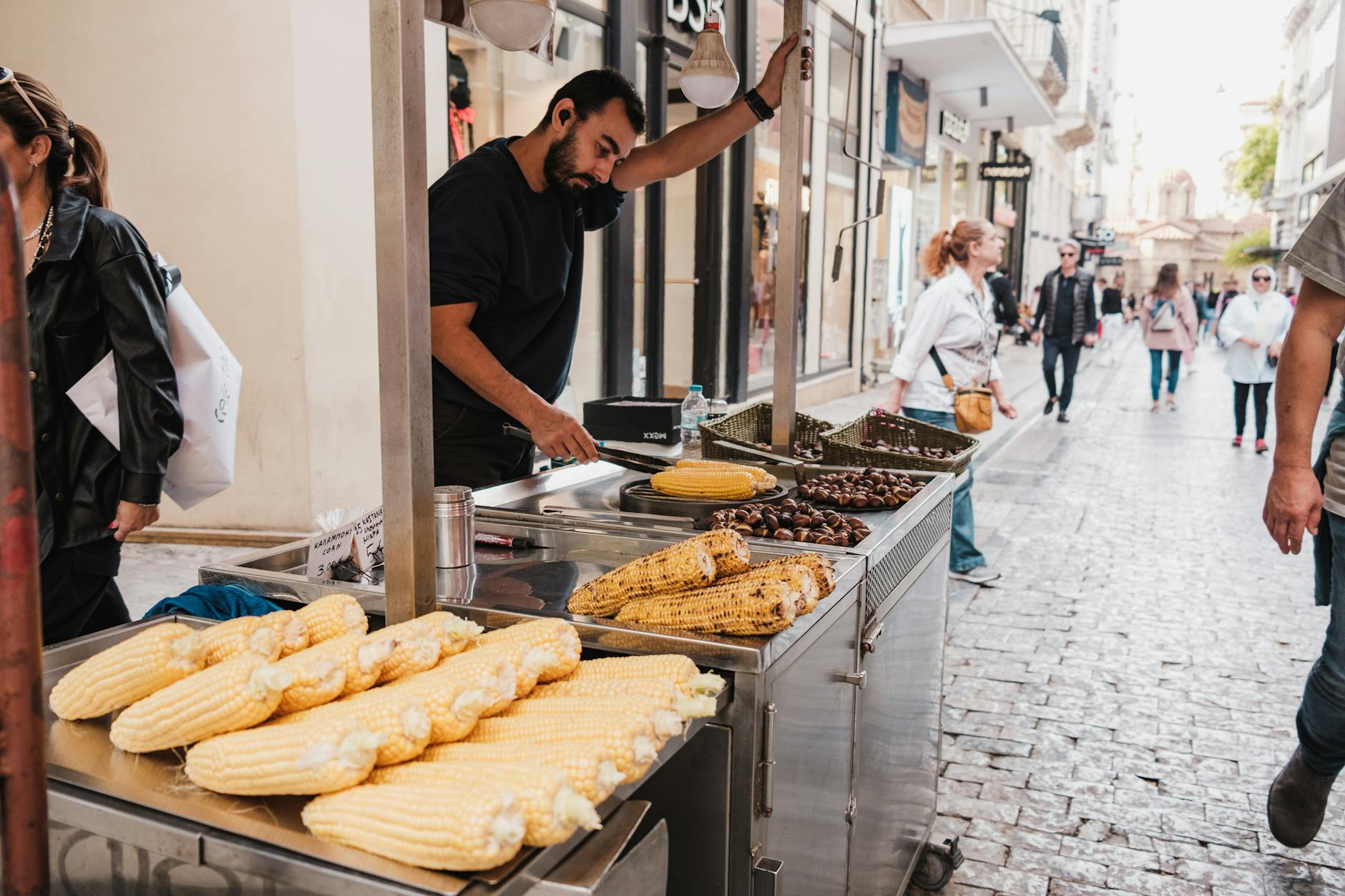
Greek food is often reduced abroad to a few dishes. In Greece, the real pleasure is regional, seasonal, and situational: pies in Epirus, fish on islands, chickpeas in Sifnos, fava and assyrtiko in Santorini, cheeses and potatoes in Naxos, dakos and wild greens in Crete, bougatsa in Thessaloniki, mastiha in Chios, olives and oil in the Peloponnese, spoon sweets, mountain meats, and endless variations on mezze.
Greek Food Identity
Greek cuisine is built around:
- Olive oil.
- Bread, pies, and grains.
- Legumes and vegetables.
- Herbs, lemon, oregano, thyme, mint, dill.
- Sheep and goat cheeses.
- Yogurt and honey.
- Fish and seafood where local and seasonal.
- Lamb, goat, pork, chicken, and regional meats.
- Wild greens and seasonal produce.
- Coffee, meze, wine, tsipouro, ouzo, raki/tsikoudia.
Visit Greece’s gastronomy pages emphasize regional variation, including local pies across Thrace, Macedonia, Thessaly, Epirus, and the Peloponnese.[19]
What to Eat
| Dish or category | What it is | Where it shines |
|---|---|---|
| Horiatiki | Greek village salad: tomato, cucumber, onion, olives, feta, oil. | Summer everywhere, best with ripe tomatoes. |
| Dakos | Cretan barley rusk with tomato, cheese, olive oil. | Crete. |
| Fava | Yellow split-pea puree, often with onion/capers. | Santorini and Cyclades. |
| Gemista | Stuffed tomatoes/peppers with rice/herbs, sometimes meat. | Summer tavernas. |
| Dolmades | Stuffed vine leaves. | Homemade/meze places. |
| Moussaka | Baked eggplant/potato/minced meat/béchamel dish. | Good tavernas, not every tourist menu. |
| Pastitsio | Baked pasta with meat sauce and béchamel. | Family-style tavernas. |
| Souvlaki/gyros | Grilled meat skewers or pita wraps. | Athens, island towns, casual meals. |
| Kleftiko / lamb dishes | Slow-cooked lamb/goat. | Mountain and village tavernas. |
| Fresh fish | Priced by weight in many places. | Islands and coastal towns; ask price before ordering. |
| Octopus | Grilled, stewed, or vinegar-marinated. | Islands and seafood tavernas. |
| Cheese pies / spinach pies | Tiropita, spanakopita, regional pies. | Bakeries, Epirus, Macedonia, islands. |
| Bougatsa | Custard, cheese, or meat pastry. | Thessaloniki and northern Greece. |
| Loukoumades | Fried dough with honey/syrup. | Dessert shops, fairs. |
| Yogurt and honey | Simple, excellent breakfast/dessert. | Everywhere. |
| Cretan food | Dakos, graviera, mizithra, wild greens, snails, lamb, raki. | Crete. |
Where to Eat by Situation
| Situation | Best approach |
|---|---|
| First Athens dinner | Casual taverna or modern Greek place near your hotel, not an overplanned destination after a long flight. |
| Beach lunch | Simple taverna: salad, grilled fish or meat, fries, greens, cold beer, watermelon. |
| Island dinner | Book popular spots in July/August, especially in Santorini, Mykonos, Paros, Milos, and small harbor villages. |
| Budget meal | Souvlaki, pies, bakeries, markets, gyros, simple meze, local grills. |
| Splurge meal | Santorini caldera dinner, Athens modern Greek, Cretan tasting menu, seafood by the water, wine estate lunch. |
| Family meal | Tavernas with outdoor space, early dinner, pasta/grilled meat, Greek salad, fries, simple fish. |
| Vegetarian meal | Greece is good for vegetarians if you use vegetable/legume dishes, but ask about meat stock and fish/seafood in sauces. |
| Vegan meal | Possible with ladera vegetable dishes, legumes, salads, bread, olives, and fasting cuisine, but easier in Athens/large towns. |
| Seafood meal | Ask what is fresh, what is local, and price per kilo before ordering whole fish. |
Restaurant Practicalities
- Dinner often starts later than in northern Europe or North America, especially in summer.
- Tavernas may serve food all afternoon in tourist areas, but serious local dinner energy often arrives later.
- Tipping is appreciated but not as rigid as in the U.S. Rounding up or leaving 5–10% for good service is common.
- Bread may appear automatically and may be charged.
- Fish is often priced by weight; ask before committing.
- House wine can be fine, but Greece has excellent bottled wine worth exploring.
- Do not judge a taverna only by tablecloths. Some excellent places are simple.
- Avoid restaurants with aggressive hawkers, photo-heavy menus in prime tourist lanes, and “Greek night” pressure unless you want that experience.
Drinks
- Greek coffee: strong, served in small cups.
- Freddo espresso / freddo cappuccino: essential modern Greek cold coffee drinks.
- Ouzo: anise-flavored spirit, often with seafood/meze.
- Tsipouro / tsikoudia / raki: grape-based spirits; Crete and northern Greece have strong traditions.
- Wine: Assyrtiko from Santorini, Agiorgitiko from Nemea, Xinomavro from northern Greece, Moschofilero from the Peloponnese, Vidiano from Crete, and more.
- Beer: widely available, good for hot lunches.
The Move
Order by category, not by checklist: something fresh, something grilled, something baked, something local, something green, and something you cannot pronounce. Greece is better when you let the table fill gradually.
Getting Around Greece
Greece has a broad transport network, but it is not a single integrated system like Switzerland or Japan. You will likely combine flights, ferries, buses, trains, rental cars, taxis, and walking.
Visit Greece summarizes the core reality: public transport is reasonably easy thanks to a broad network; domestic air connects many regions; KTEL buses cover regions and towns; ferries run throughout the year with more frequent service March–October; and Hellenic Train operates the rail network.[9]
Arrival
Athens International Airport is the main entry point. It is the best hub for Athens, the Cyclades via Piraeus/Rafina/Lavrio, the Peloponnese, Delphi, and most domestic connections.
Thessaloniki Airport is the northern hub for Thessaloniki, Halkidiki, Macedonia, Mount Olympus, and parts of northern Greece.
Island airports such as Santorini, Mykonos, Heraklion, Chania, Rhodes, Corfu, Kos, Zakynthos, and others are useful for avoiding long ferries, especially in peak season or when combining distant island groups.
Ferries
Ferries are central to Greek travel, but not all ferries are equal.
Main Athens-area ports:
- Piraeus: largest and most useful for many islands, including Cyclades, Dodecanese, Crete, Saronics.
- Rafina: useful for Andros, Tinos, Mykonos, and some Cyclades routes; often easier from Athens airport than Piraeus.
- Lavrio: useful for Kea, Kythnos, and select routes.
Types:
- Conventional ferries: slower, larger, more stable, often better in wind.
- High-speed ferries/catamarans: faster, sometimes more expensive, more weather-sensitive, often less pleasant if seas are rough.
- Overnight ferries: useful for distant islands such as Rhodes, Crete, or North Aegean routes.
Ferry rules that save trips:
- Do not book a same-day ferry connection to an international flight.
- Know your port, terminal, and gate.
- Build in wind flexibility in July/August.
- Book summer popular routes early.
- For far routes, compare flights before automatically choosing a ferry.
- Keep luggage manageable; ports can be chaotic.
Domestic Flights
Domestic flights are useful for:
- Athens ↔ Crete.
- Athens ↔ Rhodes/Kos/Dodecanese.
- Athens ↔ Corfu/Ionian.
- Athens ↔ Santorini/Mykonos if time is short.
- Thessaloniki ↔ islands or Athens depending route.
Flights can turn a lost travel day into a usable day. They also help when ferries are cancelled, but in peak season they sell out or become expensive.
Trains
Greece’s rail network is useful but limited compared with many European countries. Visit Greece says the railway network covers much of the mainland and identifies Athens–Thessaloniki as a key line.[9] Hellenic Train is the operator for ticketing and service updates.[20]
Useful for: Athens–Thessaloniki, some mainland routes, airport/suburban rail in Athens, and certain regional trips if schedules work.
Not useful for: Most islands, much of the Peloponnese, many rural archaeological sites, and flexible road-trip exploration.
Buses
KTEL is the long-distance regional bus system, and each region has its own operator. Visit Greece notes that KTEL coaches serve local/regional routes and connect major towns with Athens and Thessaloniki.[9]
Useful for: Delphi, Nafplio, some Peloponnese towns, island bus networks, mainland towns, budget travel.
Challenge: Schedules and booking can be fragmented by region. “KTEL Greece” is not always one seamless booking experience.
Rental Cars
A car is very useful for:
- Peloponnese.
- Crete.
- Epirus/Zagori.
- Pelion.
- Halkidiki.
- Kefalonia, Lefkada, Corfu outside main towns, Naxos villages, Milos beaches.
A car is often a mistake for:
- Central Athens.
- Hydra and other car-free/car-light islands.
- Santorini if you are staying on the caldera and only doing a short visit.
- Mykonos if you will mostly party and use hotel transfers/taxis.
Driving notes: Roads can be narrow, mountainous, windy, and poorly lit in rural areas. Do not drive tired after ferries. Avoid night driving on unfamiliar rural roads when possible.
Taxis and Transfers
Taxis are useful in Athens, airports, ports, and larger towns. In islands, pre-book transfers during peak season, especially for late arrivals. Taxi supply can be limited in Santorini, Mykonos, Milos, Naxos, and smaller islands during peak times.
Walking
Greek towns reward walking, but terrain matters:
- Athens central neighborhoods are walkable but hot and hilly in places.
- Santorini has many stairs and cliff paths.
- Hydra, Symi, and old towns involve steps.
- Archaeological sites can be exposed, uneven, and slippery.
- Villages may have cobblestones and steep lanes.
Footwear: Bring real walking sandals or shoes. Greece is not a flip-flop-only country.

Budget and Costs
Greece can be moderate, expensive, or shockingly expensive depending on where and when you go. Santorini, Mykonos, luxury Crete, and peak-August Cyclades can rival high-end Mediterranean destinations. Mainland towns, Naxos, Syros, Thessaloniki, parts of Crete, the Peloponnese, and shoulder-season travel can be good value.
Daily Budget Ranges
These are broad planning ranges per person, excluding long-haul flights and major shopping.
| Traveler type | Daily estimate | What it means |
|---|---|---|
| Shoestring | €45–€80 | Hostel/simple rooms, bakeries, souvlaki, buses, free beaches, limited paid sites. Easier outside peak islands. |
| Budget comfort | €80–€150 | Simple hotel/guesthouse, casual tavernas, public transport, some ferries/sites. |
| Mid-range | €150–€280 | Good location hotels, tavernas, some taxis/transfers, rental car days, paid sites, occasional boat/wine tour. |
| Comfortable | €280–€500 | Boutique hotels, better restaurants, private transfers, boat days, caldera or beach-view lodging in moderation. |
| Luxury | €500+ | High-end hotels/villas, Santorini/Mykonos splurges, private boats, fine dining, guides, drivers. |
Cost Drivers
- Month: August is often the most expensive.
- Island: Mykonos and Santorini are not normal Greece prices.
- View: Caldera, beachfront, and old-town premium locations cost more.
- Transport: Last-minute ferries/flights/rental cars rise in price.
- Car rental: islands and Crete can sell out or spike.
- Boat tours: excellent but costly.
- Archaeological tickets: manageable individually but add up across a ruins-heavy route.
- Accommodation taxes/fees: Greece has climate-resilience accommodation fees; check current rates before publishing or budgeting.[30]
Best Value Moves
- Travel in May, early June, September, or October.
- Choose Naxos, Syros, Tinos, Sifnos, Lefkada, Peloponnese, Thessaloniki, or Crete over Santorini/Mykonos for longer stays.
- Spend two nights in Santorini and five nights somewhere less expensive.
- Eat casual Greek food often; not every meal needs a view.
- Use ferries intelligently but fly when far routes waste a day.
- Rent a car for targeted days, not the entire trip.
- Book archaeological sites and ferries directly/early when possible.
- Stay near a town so you can walk to dinner and reduce taxi costs.
Splurge-Worthy
- A caldera-view room in Santorini for one or two nights if it matters to you.
- A private/semi-private boat day in Milos, Santorini, Paros/Antiparos, Crete, or the Ionian.
- A guide for the Acropolis, Delphi, Knossos, Mycenae, or Meteora.
- A well-located Athens hotel if you only have two nights.
- A rental car in Crete or the Peloponnese.
- A serious Greek wine tasting or food tour.
Usually Not Worth It
- Staying in Mykonos because you think all Greek islands are like Mykonos.
- Overpriced sunset restaurants where the view is better than the food.
- A full-day Athens-to-Santorini trip.
- Too many guided day trips that leave no time to feel a place.
- Renting a car in central Athens.
- Saving €40 on a bad ferry/flight connection that ruins a day.
Safety, Health, and Scams
Greece is generally a safe and straightforward country for ordinary visitors. The U.S. State Department rates Greece Level 1: Exercise normal precautions.[26] The more relevant risks for travelers are petty theft, road safety, heat, wildfire, sea conditions, ferry disruptions, nightlife judgment, strikes, and site-specific terrain.
General Safety
Urban awareness: Athens, Thessaloniki, and crowded tourist zones have pickpocket risk. Be alert in metro stations, markets, crowded streets, ferry queues, and busy viewpoints.
Nightlife: Watch drinks, avoid aggressive promoters, and understand prices before ordering in club/bar zones, especially in party islands.
Demonstrations and strikes: Greece occasionally has strikes that can affect flights, ferries, public transport, taxis, museums, and city centers. Check close to travel.
Road safety: Rural roads, scooters, quads, mountain curves, and nightlife driving are real risks. Do not rent a scooter/ATV casually if you are inexperienced.
Heat, Wildfires, and Weather
Summer heat can be intense, especially in Athens, archaeological sites, and treeless island landscapes. Greece’s Civil Protection authority publishes protection guidance and fire-risk maps; the fire-risk map is a key summer resource.[28][29]
Practical rules:
- Visit ruins early or late.
- Carry water and sun protection.
- Avoid exposed hikes in midday heat.
- Do not ignore 112 emergency alerts.
- Follow evacuation orders immediately.
- Avoid activities that could start fires.
- Keep fuel, water, and phone battery in reserve for rural drives.
Sea and Beach Safety
The sea is part of the joy and part of the risk.
- Check wind and flags.
- Do not swim beyond your ability.
- Be careful with cliffs and slippery rocks.
- Avoid alcohol before swimming.
- On boat days, respect captain decisions about weather.
- Do not treat remote beaches as consequence-free; access can be hard.
Health
CDC’s Greece traveler page emphasizes routine vaccination and current global measles precautions; specific recommendations depend on traveler, itinerary, and medical history.[27]
Common practical concerns:
- Sunburn and heat exhaustion.
- Dehydration.
- Mosquitoes in some areas/season.
- Motion sickness on ferries.
- Food allergies and cross-contamination.
- Pharmacy access on islands, especially off-season.
Common Scams and Annoyances
| Issue | What it looks like | How to avoid it |
|---|---|---|
| Pickpocketing | Crowded metro, markets, ferry queues, tourist streets. | Cross-body bag, front pocket, no phone dangling. |
| Taxi overcharging | No meter, vague price, airport/port confusion. | Use official taxis/apps, confirm fare, know fixed airport logic where applicable. |
| Restaurant pressure | Pushy hosts, photo menus, unclear seafood-by-weight prices. | Ask prices, read reviews, avoid aggressive touting. |
| Beachbed surprise charges | “Free” loungers requiring expensive minimum spend. | Ask before sitting. |
| ATV/scooter damage disputes | Rental return arguments. | Photograph vehicle, use reputable companies, understand insurance. |
| Unofficial ticket sellers | “Skip line” claims near sites/ports. | Use official ticket platforms when possible. |
| Ferry-port confusion | Wrong port, wrong gate, wrong island with same/similar name. | Check port and ferry company the day before. |
Traveler-Specific Safety
Solo travelers: Greece is good for solo travel, especially Athens, Naxos, Syros, Crete, Thessaloniki, and Saronic islands. Use normal nightlife and transport caution.
Women traveling solo: Many women travel Greece comfortably. Choose central lodging, be careful late at night, watch drinks, and avoid isolated beaches/trails alone if conditions are uncertain.
LGBTQ+ travelers: Athens, Mykonos, and larger tourist areas are generally comfortable. Rural and conservative areas can be more reserved. Use normal judgment with public displays of affection outside liberal zones.
Older travelers: Greece is rewarding but can involve stairs, heat, uneven stones, ferries, and luggage carries. Choose lodging carefully.
Travelers with medical needs: Check ferry/flight access, pharmacies, hospital proximity, and island medical services before remote stays.
Accessibility and Mobility
Greece can be difficult for travelers with mobility limitations, but not uniformly. Newer hotels, airports, museums, and some urban areas are manageable; old towns, cliff villages, ferries, small boats, monasteries, beaches, and archaeological sites can be challenging.
What Helps
- Athens has major museums with accessibility provisions.
- The Acropolis has accessibility improvements, but availability and procedures should be checked directly before travel.
- Large hotels and resorts often have better step-free infrastructure.
- Private transfers can reduce port/transport stress.
- Larger islands and cities have more medical and transport support.
- Crete, Rhodes, Corfu, and Athens have broader lodging choices than tiny islands.
What Is Hard
- Santorini stairs and cliff paths.
- Hydra, Symi, and hilly old towns.
- Meteora monastery stairs.
- Archaeological sites with uneven stone.
- Beaches without ramps or shade.
- Ferry boarding with luggage, steps, crowds, and ramps.
- Old buildings without elevators.
- Cobblestone lanes and steep villages.
Lower-Walking Strategy
Choose Athens hotels near flat, central areas; use taxis strategically; prioritize museums and selected sites; avoid high-summer midday; choose beach hotels with direct access; use private tours for Delphi/Meteora; and consider Crete/Rhodes/Corfu resorts with confirmed accessibility over cliff-heavy islands.
The Move
Never accept “accessible” at face value. Ask for photos of the exact route from street to room, bathroom, breakfast area, pool/beach, and nearby restaurants. In Greece, one step can mean twenty.
Families, Solo Travelers, LGBTQ+ Travelers, and Special Considerations
Families With Children
Greece can be excellent for families: beaches, simple food, ferries, mythology, ruins, cats, ice cream, boat rides, and generally welcoming attitudes toward children. The hard parts are heat, stairs, luggage, ferry timing, and overambitious itineraries.
Best family choices: Naxos, Paros, Crete, Rhodes, Corfu, Peloponnese/Nafplio, Saronic Islands, Halkidiki.
Family tips:
- Choose sandy beaches near lodging.
- Limit island changes.
- Book ferries at reasonable times.
- Avoid cliff hotels with toddlers.
- Do the Acropolis early.
- Keep ruins short and story-driven.
- Rent a car only where useful.
- Build in shade, naps, and low-pressure dinners.
Solo Travelers
Best areas: Athens, Thessaloniki, Naxos, Syros, Crete, Paros, Corfu, Rhodes, Hydra, hiking groups/tours.
Solo tips:
- Eat at casual tavernas and cafés confidently.
- Join walking/food tours early.
- Avoid isolated late-night walks in unknown areas.
- Choose lodging in town, not remote beach roads.
- Use group boat days/hikes for social time.
Couples and Honeymooners
Best choices: Santorini, Milos, Sifnos, Folegandros, Paros, Naxos, Crete, Hydra, Monemvasia, Mani, Corfu, Patmos.
Couple tip: Do one glamorous place and one real place. Santorini + Naxos, Milos + Sifnos, Crete + Santorini, Hydra + Peloponnese.
LGBTQ+ Travelers
Athens and Mykonos are the most visible LGBTQ+ destinations. Major tourist islands and cities are usually straightforward, though Greece still has conservative pockets. Same-sex couples should be comfortable in many visitor contexts, but public affection may attract attention in rural or traditional areas.
Older Travelers
Choose central hotels, reduce transfers, avoid excessive island hopping, and prioritize shoulder seasons. Nafplio, Athens museums, Thessaloniki, Crete with transfers, Rhodes Old Town with careful lodging, and Saronic islands can work well. Be cautious with Santorini stairs and Meteora monastery access.
Remote Workers and Long-Stay Visitors
Athens, Thessaloniki, Crete, Syros, Naxos, Paros, Rhodes, and Corfu have better long-stay logic than seasonal tiny islands. Check visa/residency rules, Wi-Fi, healthcare, winter availability, heating, and transport before committing.
Shopping and Souvenirs
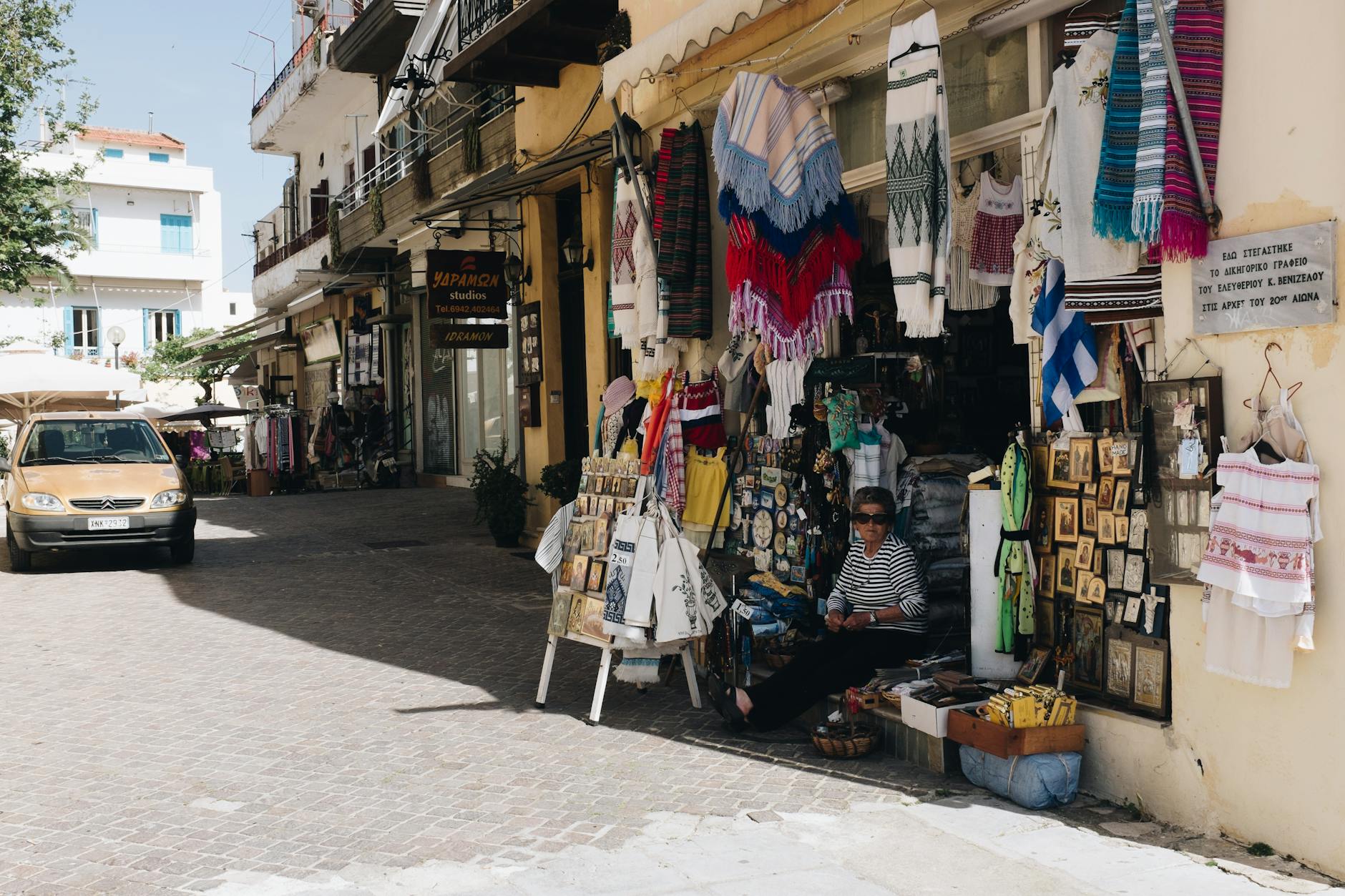
Greek shopping is best when it is local, edible, handmade, or regionally specific.
Good Souvenirs
- Olive oil, if packed and transported properly.
- Honey, especially thyme honey.
- Dried herbs, oregano, mountain tea.
- Greek coffee and sweets.
- Mastiha products from Chios.
- Wine: Santorini assyrtiko, Nemea agiorgitiko, northern xinomavro, Cretan wines.
- Ceramics.
- Woven textiles.
- Jewelry from independent designers.
- Leather sandals from quality makers.
- Religious icons, respectfully sourced.
- Cookbooks and regional food products.
- Sea sponges from reputable sources.
- Marble crafts in Tinos, where appropriate.
Best Shopping Areas
| Place | Best for |
|---|---|
| Athens | Sandals, design shops, museum shops, food products, jewelry, books. |
| Thessaloniki | Food, sweets, markets, design, clothing. |
| Crete | Olive oil, honey, herbs, ceramics, knives, textiles, raki. |
| Tinos | Marble crafts, villages, food products. |
| Naxos | Cheese, local food, ceramics, textiles. |
| Santorini | Wine, jewelry, art, design goods. |
| Corfu | Kumquat products, olive wood, ceramics, Venetian-style crafts. |
| Chios | Mastiha products. |
What Not to Buy Thoughtlessly
- “Ancient” artifacts or antiquities. Export rules are strict.
- Mass-produced souvenirs pretending to be local craft.
- Shells, stones, or natural items from protected beaches/sites.
- Oversized liquids without checked-luggage planning.
- Cheap sandals that will die in two days.
- Food products that cannot be imported into your home country.
Arts, Culture, History, and Context
Greece is not merely “ancient Greece.” Its history is long, layered, and regionally visible.
Short History for Travelers
The Greek story begins long before classical Athens. The Minoan civilization flourished on Crete. Mycenaean palaces and fortresses shaped Bronze Age mainland Greece. The classical period gave the world Athens, democracy in its ancient and limited form, philosophy, theater, art, and monumental architecture. Hellenistic kingdoms spread Greek language and culture across the eastern Mediterranean after Alexander.
Roman rule folded Greece into a larger empire while preserving and transforming its cities. Byzantine Greece made Orthodox Christianity, mosaics, churches, and monasteries central to identity. Frankish, Venetian, Genoese, and other powers shaped ports and islands. Ottoman rule transformed much of the mainland and islands for centuries. The modern Greek state emerged through the War of Independence in the 19th century, then expanded and changed through wars, population exchanges, occupation, civil conflict, dictatorship, EU membership, economic crisis, migration, and contemporary tourism.
This matters because Greece does not look like one era. Athens, Rhodes, Corfu, Thessaloniki, Crete, Nafplio, Mystras, Meteora, Chios, Ioannina, and the Cyclades each reveal different layers.
UNESCO and Heritage
UNESCO currently lists 20 World Heritage properties in Greece, including the Acropolis, Delphi, Olympia, Meteora, Mount Athos, Medieval Rhodes, Mystras, Mycenae and Tiryns, Delos, Corfu Old Town, Zagori Cultural Landscape, and the Minoan Palatial Centres inscribed in 2025.[25]
The move: Do not treat heritage sites as interchangeable ruins. Each site has a different role: Delphi is landscape and oracle; Epidaurus is theater and healing; Mycenae is Bronze Age power; Olympia is athletic ritual; Delos is sacred island; Mystras is Byzantine; Meteora is monastic landscape.
Museums Worth Prioritizing
| Museum/site | Best for | Notes |
|---|---|---|
| Acropolis Museum, Athens | Acropolis context, sculpture, architecture. | Separate from the Acropolis site ticket.[24] |
| National Archaeological Museum, Athens | Greece-wide ancient collections. | Best broad archaeological museum. |
| Ancient Agora, Athens | Civic Athens, democracy context. | Pair with Acropolis. |
| Benaki Museum, Athens | Greek culture across eras. | Excellent for broader context. |
| Byzantine and Christian Museum, Athens | Byzantine/Orthodox Greece. | Useful corrective to ancient-only trips. |
| Archaeological Museum of Heraklion | Minoan Crete. | Pair with Knossos. |
| Museum of Byzantine Culture, Thessaloniki | Byzantine history. | Crucial for northern Greece. |
| Delphi Museum | Sanctuary context. | Do not skip after the site. |
| Olympia Museum | Ancient games, sculpture. | Essential if visiting Olympia. |
| Vergina/Aigai museum | Macedonian royal tombs. | Powerful northern Greece stop. |
Etiquette and Cultural Norms
- Greet people with basic courtesy: “kalimera” in the morning, “kalispera” later, “efcharisto” for thank you.
- Dress modestly in monasteries and churches. Shoulders and knees may need covering.
- Do not photograph worshippers intrusively.
- Do not touch archaeological remains or climb on ruins.
- Respect quiet hours where observed, especially in residential villages.
- Be patient with service rhythms. Directness is not always rudeness.
- Do not flush anything except toilet paper where signs say not to; older plumbing can be sensitive.
- Ask before photographing people close up.
- Support small businesses without turning them into photo props.
Seasonal and Month-by-Month Guide
Spring Greece
Best for: Athens, ruins, Peloponnese, Delphi, Meteora, Epirus, Crete, hiking, flowers, food.
Why go: Greece is green, temperatures are manageable, and archaeological sites are far more enjoyable.
Watch out: Easter crowds/schedule changes; cooler sea; some island businesses not fully open.
Summer Greece
Best for: Beaches, sailing, nightlife, island hopping, festivals.
Why go: This is the classic sea-and-sun Greece.
Watch out: Heat, high prices, crowds, meltemi winds, ferry pressure, wildfires, cruise congestion.
The move: If traveling in August, choose fewer places and better lodging. Do not turn high summer into a constant transfer exercise.
Autumn Greece
Best for: Warm seas, food, wine, hiking, ruins, shoulder-season islands, Crete, Dodecanese.
Why go: September may be Greece’s best island month; October is superb for mainland and larger islands.
Watch out: Smaller islands wind down later in October; weather becomes less predictable by November.
Winter Greece
Best for: Athens, Thessaloniki, museums, food, mountain villages, lower prices, fewer crowds.
Why go: Greece’s cities and mainland culture are still alive when the beach machine sleeps.
Watch out: Small islands can feel closed; ferry schedules are limited; weather can be wet/cold.
Island Planning and Ferry Logic
This is the section that saves the most Greece trips.
The Island Groups Are Separate Travel Systems
| Island group | Main feel | Good first choices | Planning note |
|---|---|---|---|
| Cyclades | Whitewashed, dry, windy, iconic Aegean. | Naxos, Paros, Santorini, Milos, Syros, Tinos. | Best for classic island-hopping from Athens. |
| Ionian | Green, Venetian, west-facing, lush. | Corfu, Kefalonia, Lefkada, Zakynthos. | Usually not combined with Cyclades unless flying. |
| Dodecanese | Medieval/eastern Aegean, warm, historic. | Rhodes, Kos, Patmos, Symi. | Fly to Rhodes/Kos for efficiency. |
| Sporades | Pine forests, beaches, relaxed. | Skiathos, Skopelos, Alonnisos. | Better as its own north-Aegean beach route. |
| Saronic | Easy from Athens, short ferries. | Hydra, Aegina, Poros, Spetses. | Great for short trips and final buffers. |
| North Aegean | Larger, less packaged, local. | Lesvos, Chios, Samos, Ikaria, Lemnos. | Best for repeat visitors or long stays. |
| Crete | Large island-world. | Chania, Rethymno, Heraklion, Lasithi. | Treat as a standalone trip or major segment. |
Good Island Pairings
- Santorini + Naxos.
- Santorini + Paros.
- Naxos + Paros.
- Milos + Sifnos.
- Mykonos + Tinos.
- Syros + Tinos.
- Crete + Santorini.
- Rhodes + Symi.
- Rhodes + Patmos/Kos.
- Corfu + Paxos.
- Lefkada + Kefalonia.
- Athens + Hydra/Spetses/Aegina.
Bad Island Pairings for Short Trips
- Santorini + Corfu without flights and time.
- Mykonos + Zakynthos in one week.
- Rhodes + Milos + Crete in one week.
- Crete + Corfu + Santorini unless you have two weeks plus flights.
- Any itinerary with four islands in seven nights.
The Move
Do not ask, “Which islands are best?” Ask:
- Which airport or port am I entering/exiting?
- How many full nights do I have?
- Do I want beaches, food, nightlife, romance, hiking, or villages?
- Am I willing to rent a car?
- How much ferry uncertainty can I tolerate?
- What month is it?
The right island is the one that fits the trip, not the one that gets the most likes.
Mainland Road Trips
Mainland Greece is underrated by first-timers and beloved by travelers who come back.
Peloponnese Road Trip
Best route: Athens → Corinth Canal/Ancient Corinth → Nafplio → Mycenae/Epidaurus → Nemea → Mystras/Sparta → Mani → Monemvasia → Olympia or Messinia → Athens.
Best for: History, villages, beaches, wine, couples, families.
Minimum: 5 days.
Ideal: 8 to 10 days.
Delphi and Meteora Route
Best route: Athens → Delphi → Arachova/Galaxidi → Meteora → Pelion or Thessaloniki.
Best for: Sacred landscapes, monasteries, photography.
Minimum: 3 days.
Ideal: 4 to 6 days.
Northern Greece Route
Best route: Thessaloniki → Vergina/Aigai → Mount Olympus/Pieria → Halkidiki or Meteora → Zagori/Ioannina.
Best for: Food, history, mountains, beaches without Cyclades pressure.
Minimum: 7 days.
Ideal: 10 to 14 days.
Epirus/Zagori Route
Best route: Ioannina → Zagori villages → Vikos Gorge viewpoints/hikes → Metsovo → Meteora or Ionian coast.
Best for: Hiking, stone villages, autumn, mountain Greece.
Minimum: 3 days.
Ideal: 5 to 7 days.
Crete Road Trip
Best route: Chania → western beaches/villages → Rethymno → Heraklion/Knossos → Lasithi/eastern Crete or south coast.
Best for: Food, beaches, hiking, history, families.
Minimum: 7 days.
Ideal: 10 to 14 days.
Driving Warning
Greece is a good road-trip country for confident drivers, but roads can be narrow, mountainous, badly lit, and full of local driving habits that surprise visitors. Avoid driving into central Athens, avoid night mountain roads where possible, and do not underestimate island parking.
What to Skip
Skipping is not about cynicism. It is about protecting the trip.
Skip: Trying to See Santorini, Mykonos, Crete, and Athens in One Week
You will spend too much time packing, transferring, and waiting.
Better alternative: Athens + Santorini + Naxos/Paros, or Athens + Crete.
Skip: Mykonos If You Do Not Want Mykonos
Mykonos is excellent for nightlife, luxury, beach clubs, and certain social scenes. It is poor value if you want quiet villages and affordable tavernas.
Better alternative: Tinos, Syros, Naxos, Sifnos, or Paros depending style.
Skip: Midday Acropolis in July/August
The Acropolis is magnificent. Midday summer heat is not.
Better alternative: First timed entry of the day or late afternoon, then museum/shade.
Skip: Same-Day Island Ferry to International Flight
Ferry delays happen. Wind happens. Strikes happen.
Better alternative: Return to Athens the night before.
Skip: Too Many Similar Ruins Back-to-Back
Even history lovers burn out.
Better alternative: Alternate ruins with villages, beaches, museums, food, and landscapes.
Skip: Cruise-Day Santorini Expectations
If you visit Santorini by cruise on a peak day, you may experience crowds, cable-car queues, and compressed time rather than island magic.
Better alternative: Stay overnight or choose a less strained island.
Skip: Remote Villas Without Transport Planning
A beautiful villa can become a taxi prison.
Better alternative: Stay in or near a town unless you rent a car or have private transfers.
Common Mistakes
- Planning too many islands. Two islands in ten days often beats four.
- Ignoring island groups. Corfu and Santorini are not easy neighbors.
- Flying home the same day as a ferry. Do not do this.
- Underestimating Athens. It deserves more than a jet-lagged afternoon.
- Visiting ruins at the hottest time of day. Start early.
- Assuming all Greek islands are whitewashed Cyclades. Ionian, Dodecanese, Sporades, North Aegean, and Crete are different worlds.
- Renting a car in Athens. Pick it up when leaving the city.
- Booking scenic but impractical lodging. Stairs, luggage, taxis, and heat matter.
- Skipping the mainland. Some of Greece’s best places are not islands.
- Treating ferry time as dead time but not planning for it. Ports, transfers, delays, and check-in eat hours.
- Expecting small islands to work off-season like August. Many businesses close or reduce service.
- Eating only in view restaurants. The best food may be inland or on a side street.
- Underestimating Crete. It is not a quick island hop.
- Choosing Santorini for beaches. Choose it for the caldera; choose other islands for beaches.
- Forgetting water scarcity and heat. Island comfort depends on respecting local limits.
Responsible Travel
Greece is under real pressure in popular places: overtourism, housing stress, water scarcity, waste, cruise congestion, wildfire risk, and fragile archaeological/natural sites.
Do
- Stay longer in fewer places.
- Travel shoulder season when possible.
- Support local tavernas, producers, guides, and guesthouses.
- Use official paths and respect site barriers.
- Carry reusable water where practical, but understand local island water limits.
- Respect churches and monasteries.
- Avoid loud behavior in villages at night.
- Reduce unnecessary car use in dense towns.
- Follow wildfire rules and local emergency guidance.
- Choose boat and wildlife experiences responsibly.
Do Not
- Climb on ruins for photos.
- Remove stones, sand, shells, or pottery fragments.
- Fly drones without understanding rules.
- Waste water on dry islands.
- Block narrow village lanes for photos.
- Treat working neighborhoods as stage sets.
- Ignore evacuation alerts.
- Assume all beaches can absorb unlimited visitors.
- Support exploitative animal rides or bad welfare experiences.
Local Logic
The version of Greece visitors love is not self-maintaining. Quiet villages, clean beaches, working ferries, family tavernas, archaeological sites, and island water systems all have limits. Good travelers make fewer, better, slower choices.
Packing List
Essentials
- Passport and Schengen/visa documents.
- Comfortable walking shoes.
- Walking sandals with grip.
- Sun hat.
- Sunglasses.
- High-SPF sunscreen.
- Reusable water bottle.
- Light scarf or cover-up for churches/monasteries.
- Swimwear.
- Light layers.
- Portable battery.
- Type C/F adapter.
- Motion-sickness medication if ferry-prone.
- Small cash reserve.
- Day bag.
- Copies of documents.
- Travel insurance details.
Spring
- Light jacket.
- Rain layer.
- Layers for evenings.
- Hiking shoes if doing mainland/nature.
Summer
- Breathable linen/cotton clothing.
- Extra swimwear.
- Sun shirt or rash guard.
- Electrolytes.
- After-sun/aloe.
- Beach shoes for rocky beaches.
- Minimal heavy luggage for ferries.
Autumn
- Light jacket.
- Rain layer later in season.
- Swimwear for September/early October.
- Walking clothes for ruins/hikes.
Winter
- Warm layers.
- Rain jacket.
- Real shoes.
- Mountain gear if heading inland.
- Do not pack like all Greece is tropical.
What Not to Overpack
- Formal clothes unless you have specific luxury restaurants/events.
- Huge suitcases for ferry/island hopping.
- High heels for cobblestones.
- Too many beach outfits and not enough walking gear.
- Expensive jewelry for beach/island logistics.
The Move
Pack as if you will carry your bag up stairs, across a port, onto a ferry, through a cobbled lane, and into a room without an elevator. Because at some point, you probably will.
FAQ
Is Greece worth visiting for a first trip to Europe?
Yes, especially if you care about ancient history, islands, beaches, food, and Mediterranean culture. It is not the easiest country for a whirlwind multi-city itinerary, but it is one of Europe’s most rewarding places when paced well.
How many days do I need in Greece?
Ten to fourteen days is ideal for a first trip. One week works if you choose Athens plus one island or Crete only. Two weeks lets you combine Athens, an island group, and either Crete or a mainland route.
What is the best first Greece itinerary?
Athens + Naxos/Paros + Santorini is the classic island answer. Athens + Nafplio/Delphi/Meteora is the history-and-landscape answer. Athens + Crete is the best one-island answer.
Is Santorini worth it?
Yes, if you want caldera views, romance, wine, and volcanic drama. No, if you mainly want beaches, quiet value, or low-crowd local life in peak season.
Is Mykonos worth it?
Yes, for nightlife, luxury, beach clubs, LGBTQ+ travel, design hotels, and Delos access. No, if you want inexpensive, quiet, traditional island travel.
Which Greek island is best for first-timers?
Naxos is one of the best balanced first-timer islands. Crete is best if you want one large island with history, food, beaches, and road trips. Santorini is best for iconic views. Paros is best for social island energy.
Do I need a car in Greece?
Not in Athens. Often yes for Crete, the Peloponnese, Epirus, Pelion, Kefalonia, Lefkada, and parts of Naxos/Milos/Corfu. Not necessarily for Hydra, central Santorini, Mykonos party trips, or short Athens/Saronic itineraries.
Are Greek ferries reliable?
They are central and usually work well, but weather, winds, strikes, port congestion, and seasonal schedules matter. Build buffers and avoid same-day ferry-to-international-flight plans.
What is the best time to visit Greece?
May, early June, September, and early October are the best months for most travelers. July and August are best for beach weather and nightlife but bring heat, crowds, and high prices.
Is Greece safe?
Generally yes for normal travel. Use standard precautions for pickpockets, nightlife, roads, heat, sea conditions, and wildfires. Follow local emergency guidance and 112 alerts.
Can I drink tap water in Greece?
In major cities and many larger islands, generally yes. On some drier islands, tap water may be desalinated, imported, or unpleasant-tasting, so many visitors use bottled water.
Should I visit Greece on a cruise?
Cruises can introduce Greece, but they often compress islands into crowded daytime windows. Greece is better when you sleep in places, especially Santorini, Crete, Rhodes, Corfu, and Athens.
What should I book ahead?
Acropolis timed tickets, high-season ferries, domestic flights, Santorini/Mykonos/Naxos/Paros/Milos hotels, rental cars, boat days, and popular restaurants in peak season.
What should I skip on a first trip?
Skip overhopping, same-day ferry-to-flight connections, Mykonos unless it fits your style, midday summer ruins, and distant island combinations that look easy only on a map.
Source Notes
This guide uses official or high-reliability sources for date-sensitive entry, transport, climate, emergency, health, safety, and heritage information. Re-check every ticket price, ferry schedule, opening hour, tax/fee, strike advisory, and entry rule close to publication and again before peak travel periods.
- 1. European Commission, “Visa policy,” https://home-affairs.ec.europa.eu/policies/schengen/visa-policy_en
- 2. Ministry of Foreign Affairs of Greece, “Visas - Greece in the USA,” https://www.mfa.gr/usa/en/services/visas/
- 3. European Commission, “Entry/Exit System (EES),” https://home-affairs.ec.europa.eu/policies/schengen/smart-borders/entry-exit-system_en
- 4. Ministry of Foreign Affairs of Greece, “Greece to start using EU Digital Entry/Exit System,” https://www.mfa.gr/missionsabroad/en/ireland-en/news/greece-to-start-using-eu-digital-entryexit-system-on-12-october-2025.html
- 5. European Union, “European Travel Information and Authorisation System (ETIAS),” https://travel-europe.europa.eu/en/etias
- 6. gov.gr, “112 - European emergency service line,” https://www.gov.gr/en/sdg/healthcare/national-emergency-numbers/general/112
- 7. Visit Greece, “FAQ,” https://www.visitgreece.gr/faq/
- 8. Visit Greece, “Climate,” https://www.visitgreece.gr/before-travelling-to-greece/climate/
- 9. Visit Greece, “Transportation,” https://www.visitgreece.gr/transportation/
- 10. Visit Greece, “Mainland,” https://www.visitgreece.gr/mainland/
- 11. Visit Greece, “Islands,” https://www.visitgreece.gr/islands/
- 12. Visit Greece, “Cyclades,” https://www.visitgreece.gr/islands/cyclades/
- 13. Visit Greece, “Ionian Islands,” https://www.visitgreece.gr/islands/ionian-islands/
- 14. Visit Greece, “Dodecanese,” https://www.visitgreece.gr/islands/dodecanese/
- 15. Visit Greece, “Crete,” https://www.visitgreece.gr/islands/crete/
- 16. Visit Greece, “Peloponnese,” https://visitgreece.gr/mainland/peloponnese/
- 17. Visit Greece, “Thessaly,” https://www.visitgreece.gr/mainland/thessaly/
- 18. Visit Greece, “Epirus,” https://www.visitgreece.gr/mainland/epirus/
- 19. Visit Greece, “Local flavours of the Greek cuisine,” https://visitgreece.gr/experiences/gastronomy/traditional-cuisine/local-flavours-of-the-greek-cuisine/
- 20. Hellenic Train, https://www.hellenictrain.gr/en
- 21. KTEL Bus, https://ktelbus.com/en/
- 22. Hellenic Organization of Cultural Resources Development, “Tickets,” https://www.odap.gr/en/services/tickets/
- 23. Hellenic Heritage e-Ticket, “Acropolis & Slopes,” https://hhticket.gr/tap_b2c_new/english/tap.exe?PM=P1P&place=000000002
- 24. Acropolis Museum, “Plan your visit,” https://www.theacropolismuseum.gr/en/plan-your-visit
- 25. UNESCO World Heritage Centre, “Greece,” https://whc.unesco.org/en/statesparties/gr
- 26. U.S. Department of State, “Greece Travel Advisory,” https://travel.state.gov/en/international-travel/travel-advisories/greece.html
- 27. CDC Travelers’ Health, “Greece,” https://wwwnc.cdc.gov/travel/destinations/traveler/none/greece
- 28. Ministry for Climate Crisis and Civil Protection, https://civilprotection.gov.gr/en
- 29. Ministry for Climate Crisis and Civil Protection, “Fire Risk Map,” https://civilprotection.gov.gr/en/xartis
- 30. Independent Authority for Public Revenue, “Climate Crisis Resilience Fee Issuance Statement,” https://www.aade.gr/en/climate-crisis-resilience-fee-issuance-statement