*A practical analysis for visitors, foreign residents, and local users* Prepared: April 22, 2026
Scope and audience
This paper explains how transportation works in Greece at both the national and city scale. The first part covers the countrywide transport model: Athens metro and urban movement, intercity rail, long-distance coaches, ferries, domestic flights, taxis and transfers, rental cars, island road logic, airport and port access, payment fragmentation, accessibility, and disruption patterns. The second part applies those principles to the Greek destinations we currently cover directly: Athens and Santorini, while also addressing the broader Athens-to-islands logic that shapes most real trips.
Greece is one of Europe's classic transport illusion countries. On paper, the route often looks easy: a few days in Athens, then a ferry, then an island, maybe another island, perhaps some mainland detour. In motion, the structure is much less forgiving. Athens is a real city with heat, traffic, and district logic. Ferries are not decorative; they are scheduling systems. Islands vary widely in port friction, road quality, internal transport, and transfer burden. Domestic flights can be disproportionately useful. A good Greece trip is therefore not just about what exists. It is about choosing a transport backbone that matches the kind of Greece you are actually trying to buy.
Contents
- Executive summary
- Part I - National transportation in Greece
- 1. The Greek transportation model
- 2. The practical decision framework
- 3. Athens as the transport hinge
- 4. Domestic aviation
- 5. Ferries, fast ferries, island ports, and sea logistics
- 6. Intercity rail
- 7. Long-distance coaches and regional buses
- 8. Athens metro, suburban rail, trams, buses, and urban transit
- 9. Taxis, ride-hailing, transfers, and hotel-arranged cars
- 10. Private vehicles, rental cars, roads, parking, and island driving
- 11. Walking, heat, hills, stairs, and seasonal fatigue
- 12. Tickets, payment, apps, and information friction
- 13. Accessibility, luggage, families, and older travelers
- 14. Weather, strikes, meltemi, ferry disruption, and route resilience
- 15. Main concerns for residents and local users
- 16. Recommended strategies by traveler type
- Part II - City and route analysis
- Athens
- Athens arrival and airport access
- Piraeus and ferry departure logic
- Santorini
- Athens to Santorini
- Athens plus one-island logic
- Island hotel-transfer logic
- Practical route examples
- References
Executive summary
Greece is one of the most rewarding transport countries in Europe when the route is edited properly and one of the most irritating when it is not. The country rarely fails because nothing exists. It fails because travelers combine too many movement types too casually: an Athens stay shaped like an island trip, an island move treated like a train hop, a ferry day placed where a flight would have been wiser, or a beautiful hotel booked without enough respect for port transfer reality.
The national travel logic is straightforward:
Greece works best when the traveler chooses one strong route backbone: Athens plus one island family, Athens plus one mainland complement, or one island done properly. What weakens the trip is turning Greece into a chain of transitions.
- Use Athens as a real urban anchor, not just as a ferry prelude.
- Use domestic flights when an island or long-distance mainland jump needs to preserve time and energy.
- Use ferries deliberately, with buffer and hotel-transfer thinking built in from the start.
- Use metro, suburban rail, buses, and walking strategically in Athens.
- Use taxis and arranged transfers tactically for airport runs, ferry departures, port arrivals, and hill-heavy island stays.
- Use rental cars selectively, especially when the trip is mainland-heavy or when the island in question truly rewards road freedom.
- Expect payment and operator fragmentation rather than one elegant national rider experience.
- Build in buffer for wind, ferry schedule shifts, strikes, heat, and ordinary transition fatigue.
1. The Greek transportation model
Greece runs on a transport mix that makes intuitive sense for the country's geography but still demands judgment from the traveler. The country is divided between mainland movement, Athens metropolitan logic, and island access. Those are not interchangeable systems and should not be planned as if they were.
The national model rests on a few practical truths:
That combination is why Greece is often misread. It is not "hard," exactly. It is just a country where every leg should earn its place.
- Athens is the hinge. It is the main urban anchor, the main international gateway, and the main distribution point into the rest of the country.
- Sea transport is structurally important. Ferries are not just scenic add-ons. They are core infrastructure.
- Domestic flights often matter more than first-timers expect. Greece is not huge, but movement can still be tiring.
- Road transport still fills large gaps. Coaches, taxis, hotel transfers, and rental cars matter a great deal.
- Islands are not transport-identical. Port structure, terrain, road culture, and hotel placement vary sharply.
2. The practical decision framework
Choose one backbone
The strongest Greece trip has a visible structure. Athens plus Santorini. Athens plus one mainland route. One island, properly used. As soon as the route starts looking like a proof of how many ticket confirmations you can manage, quality drops.
Choose flights when transition quality matters more than maritime romance
Ferries can be beautiful and entirely appropriate. They can also consume a day. Domestic flights are often the adult answer when time is short or when the island move is only a support function for the trip rather than its emotional center.
Choose ferries when the sea leg is part of the trip you actually want
Ferries are strongest when:
Choose cars only when geography truly demands them
A rental car can be useful on parts of mainland Greece and on selected islands, but it can also become a burden in compact urban or scenic-core settings where parking, narrow roads, and hotel access fight the traveler.
- the island pair makes sense
- the schedule fits the hotel logic
- weather risk is acceptable
- the traveler wants the maritime transition rather than merely tolerating it
3. Athens as the transport hinge
Athens matters because it is both city and switching yard. Most international trips into Greece either begin there, pass through there, or depend on its airport and port logic. That makes Athens the place where many Greece trips are either stabilized or quietly damaged.
The city is more usable than some first-time visitors fear, but it still asks for real planning. District choice matters. Airport access matters. Piraeus access matters. Heat matters. The route from hotel to site to evening district needs more shape than "we'll just figure it out" usually delivers.
The best Athens movement is usually hybrid: metro where it is strong, walking where the district logic supports it, and tactical taxis when luggage, heat, or timing make point-to-point control the wiser option.
4. Domestic aviation
Domestic flights are one of the most underappreciated transport tools in Greece. They are especially important when the route includes islands or when the traveler has little appetite for a full ferry-and-transfer day. The purpose of the flight is not to defeat the romance of Greece. The purpose is to preserve the trip.
Flights are strongest for:
The main cost is not only the ticket. It is airport procedure, luggage handling, and another set of timing obligations. Even so, flights often offer the cleanest trade when a ferry would turn a whole day into logistics.
- Athens to major island or regional jumps
- premium or short itineraries
- family travel
- travelers who want more hotel time and fewer transit hours
- reducing risk when the itinerary is already tight
5. Ferries, fast ferries, island ports, and sea logistics
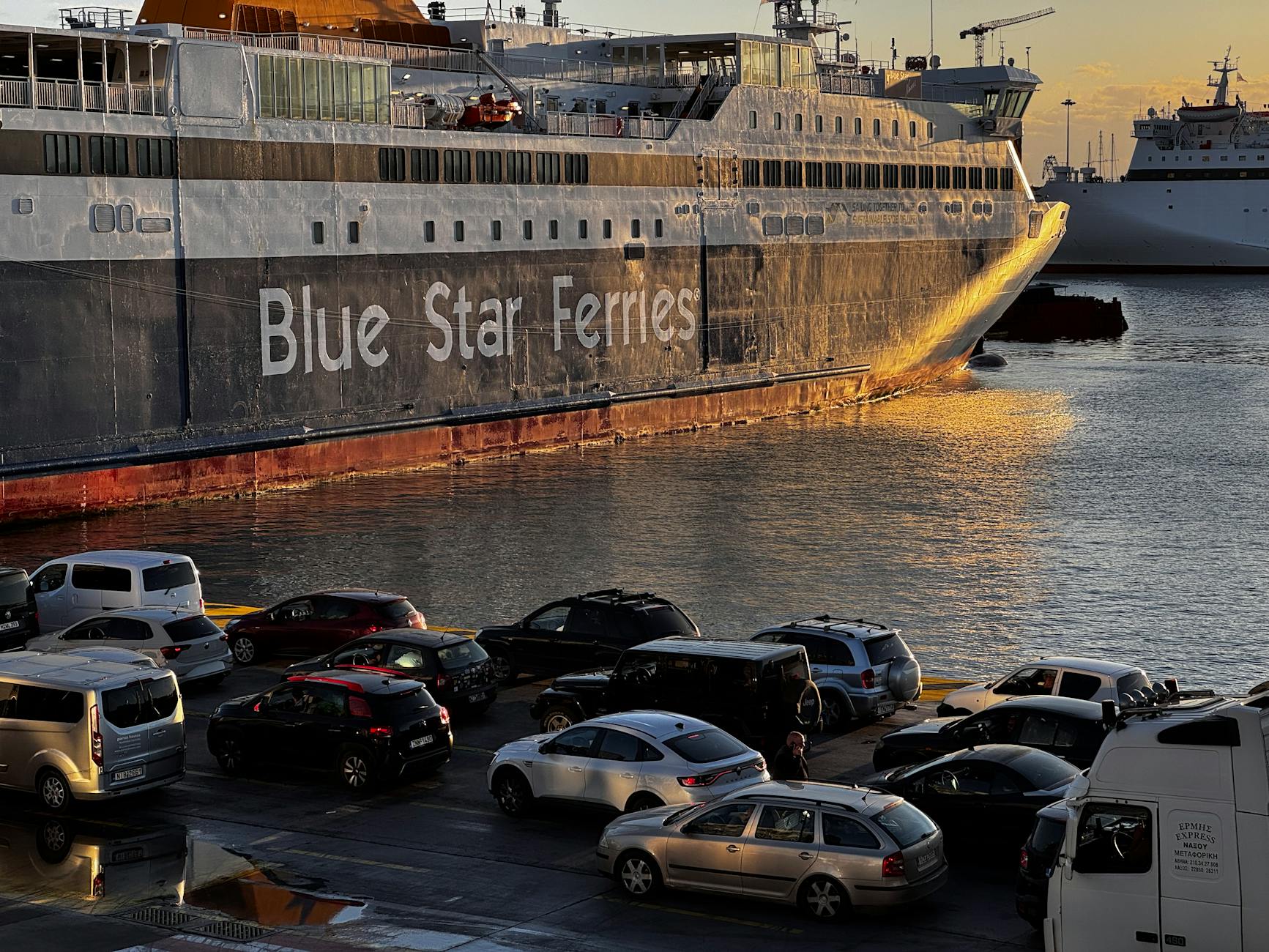
Ferries are one of the defining transport experiences in Greece, but they should be treated with more seriousness than postcard culture usually encourages. A ferry leg is rarely just a ferry leg. It includes hotel checkout, port transfer, waiting conditions, boarding, arrival timing, possible delays, port-side chaos, luggage handling, and the final transfer to the new hotel.
Ferries are strongest when:
They are weaker when:
The classic Greece mistake is underestimating the whole-system burden of the ferry day.
- the island route is logical
- the hotel can support port transfer on both ends
- the traveler has enough time margin
- the sea leg contributes positively to the trip's mood
- the island stop is too short to justify the movement cost
- wind or weather risk is meaningful
- the traveler is carrying heavy luggage into a cliffside hotel environment
- the route is being used for bragging-rights island count rather than genuine trip quality
6. Intercity rail
Rail in Greece matters, but it is not the central fantasy layer for most international travelers in the same way it is in Italy or Switzerland. It is a useful mainland tool where the route and traveler expectations align. It is much less useful when the trip's real complexity lies in sea access or island sequencing.
Rail is strongest when:
Rail is weaker when:
Greece can reward rail, but usually on narrower route shapes than many travelers initially imagine.
- the route stays on the mainland
- the traveler wants to avoid road fatigue
- station-to-hotel connections are workable
- the trip is island-led
- the traveler is expecting one seamless national network experience
- the last mile is ugly enough to erase the gain
7. Long-distance coaches and regional buses
Buses matter a great deal in Greece because they often complete what rail does not. On the mainland, coach systems can be essential. On islands, local bus systems may be the practical middle ground between taxis and car rental.
Buses are strongest when:
Buses are weaker when:
The main lesson is that Greek buses are often useful, but they should be evaluated as part of the whole day, not in isolation.
- the route is point-to-point and common
- the traveler is traveling light
- the timetable matches the day cleanly
- the destination is structured enough that a local taxi is only needed at one end
- the route is luggage-heavy
- the traveler is staying in a difficult-access hotel
- the day is already full of transitions
8. Athens metro, suburban rail, trams, buses, and urban transit
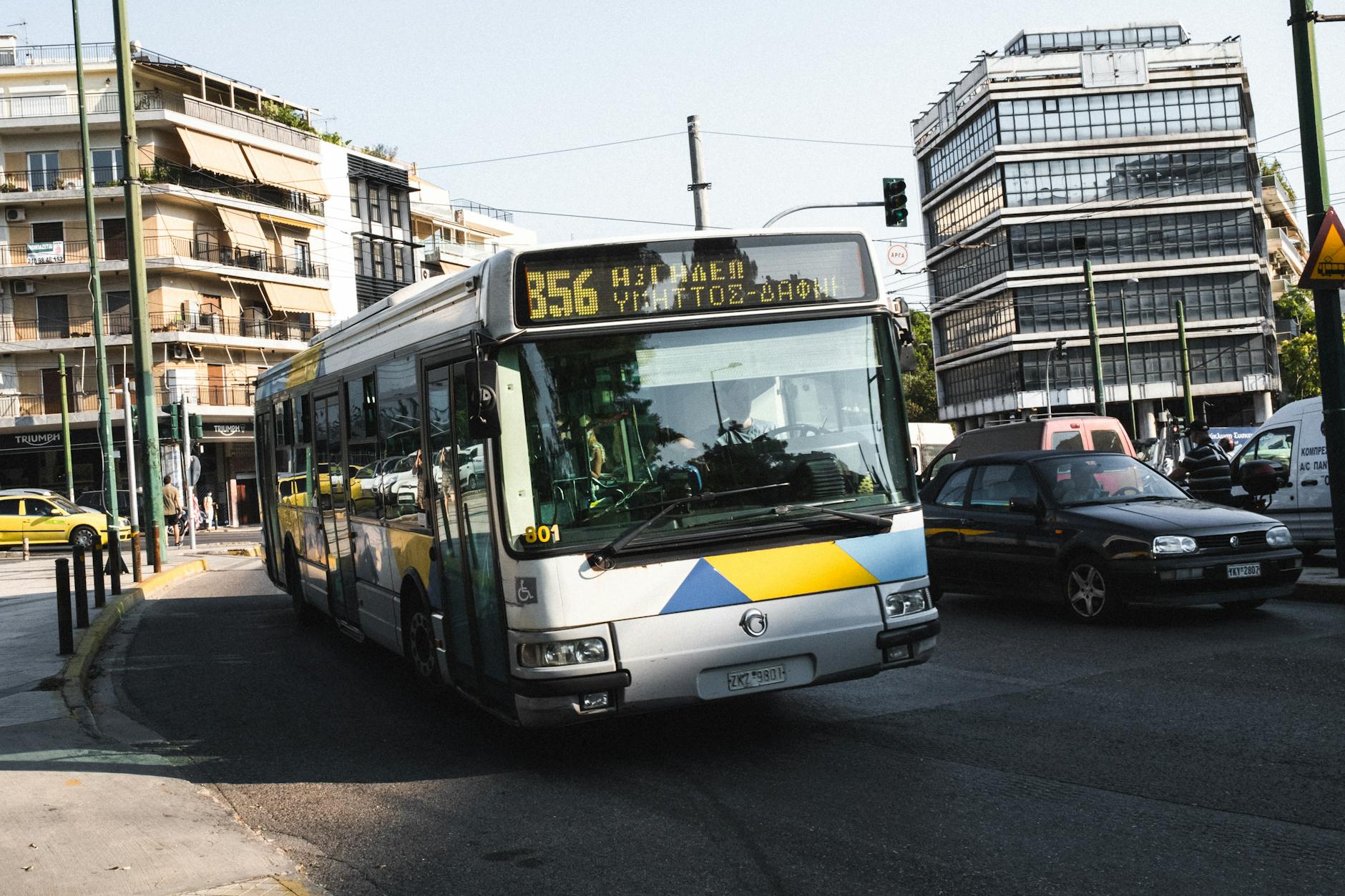
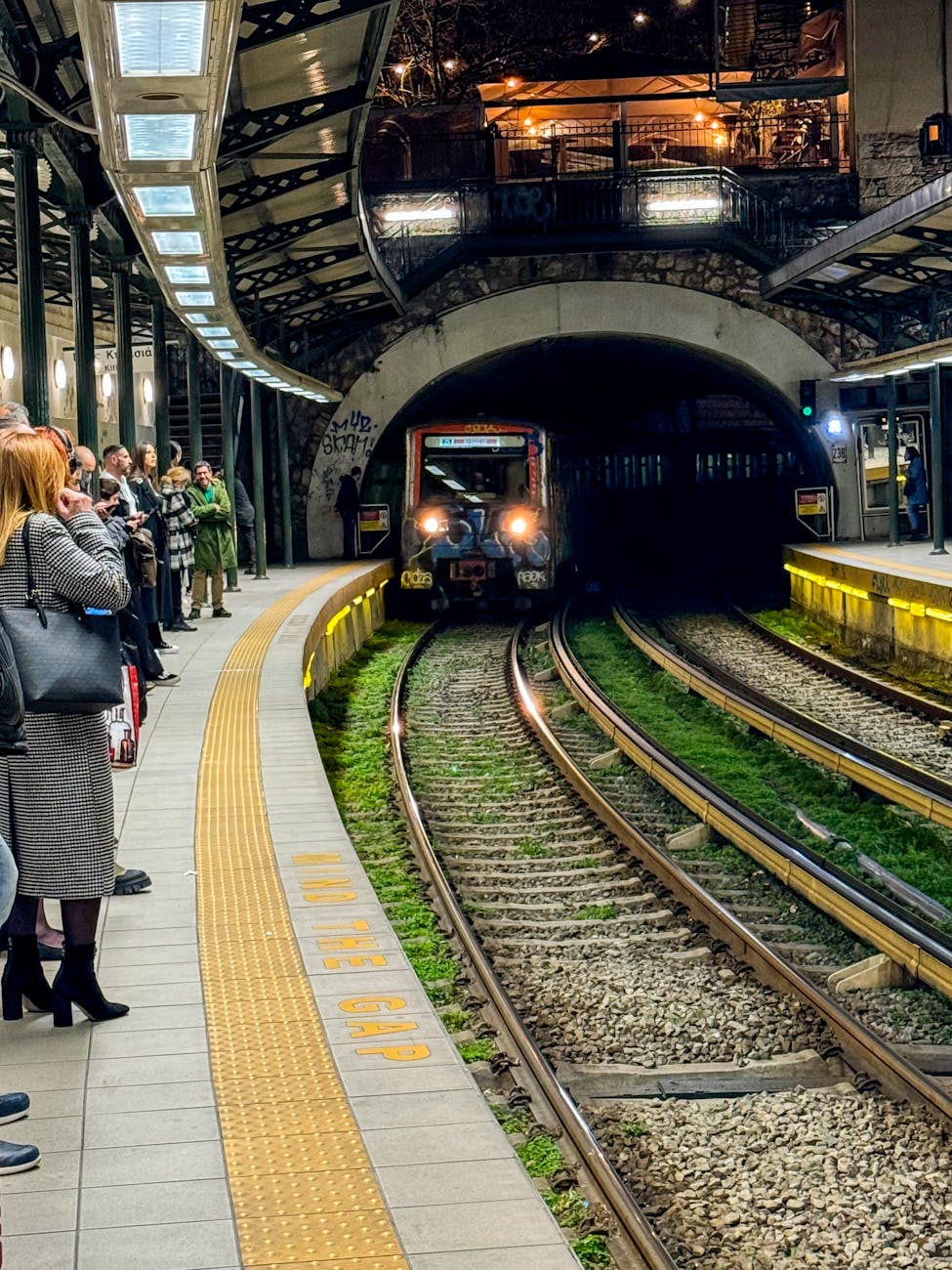
Athens has a real urban transport system and should not be underestimated. Metro and suburban rail are especially important for airport and cross-city movements, while buses, trams, and walking complete the network. The problem is not that the system fails to exist. The problem is that many visitors use it with the wrong assumptions about heat, district fit, and daily stamina.
For travelers, Athens transit is strongest when:
It is weaker when:
Athens improves quickly when the traveler stops treating every metro access point as equally useful.
- the route stays within strong metro logic
- the hotel is well placed
- the day has one clear geographic center
- luggage is minimal
- a metro trip still needs a long exposed walk
- the traveler is changing hotels
- the heat is high
- the route is being overoptimized beyond the point of comfort
9. Taxis, ride-hailing, transfers, and hotel-arranged cars
Point-to-point car services are disproportionately important in Greece because they often clean up the awkward edges of otherwise good itineraries. Airport arrivals, port departures, port arrivals, late dinners, and hill-heavy or stair-heavy hotel access are exactly the moments when a short paid transfer can protect the whole day.
These services are especially useful for:
The smart Greece pattern is rarely ideological. It is mixed. Use public transport where it is strong. Buy relief where it matters.
- airport and port runs
- luggage-heavy days
- families and older travelers
- very early departures
- island arrivals where the hotel is not casually walkable
10. Private vehicles, rental cars, roads, parking, and island driving
Rental cars are one of the most commonly overbooked and under-justified transport tools in Greece. On some routes they are absolutely correct. On others they are just a way to carry stress into a trip that was meant to feel graceful.
Cars are strongest for:
Cars are weakest for:
On many Greek islands, the real question is not "car or no car?" It is "which exact days of the trip actually justify a car?"
- mainland routes with dispersed sites
- rural and scenic regions
- some larger islands where exploration is the point
- families or travelers with gear
- central Athens
- short city-heavy stays
- islands where parking and narrow roads are part of the difficulty
- hotels whose romance depends on pedestrianized or stair-heavy access
11. Walking, heat, hills, stairs, and seasonal fatigue
Greek transport cannot be understood without discussing physical effort. Heat changes distance. Hills change luggage. Stairs change hotel value. A route that looks idyllic on a screen can become draining quickly in high season.
Walking is strongest when:
Walking is weakest when:
Greece often becomes more luxurious the moment the traveler stops pretending every beautiful route should be walked with full baggage.
- the district is dense and scenic
- the route is short and intentional
- the time of day is right
- the hotel is well placed
- the traveler is dragging luggage through port or cliffside environments
- the route is exposed at midday
- hills and staircases stack up invisibly in the plan
12. Tickets, payment, apps, and information friction
Greece is workable, but not uniformly elegant. Airline bookings, ferry systems, local bus systems, metro tickets, hotel transfers, and island taxi realities do not all live inside one polished national interface. That means information friction is part of the trip.
The right response is not anxiety. It is simplification:
The country's transport is usually manageable. The danger is usually too much complexity, not total failure.
- keep confirmations organized
- verify ferry and airport details directly
- confirm hotel transfer feasibility early
- do not build a route that depends on five perfect handoffs in one day
13. Accessibility, luggage, families, and older travelers
Greece can be wonderful for travelers with additional needs, but only if the route has been designed honestly. The main threats are not mystery. They are stairs, slopes, heat, luggage burden, port friction, and overlong transfer days.
The strongest approach for users with strollers, mobility concerns, or heavy luggage is usually:
Families and older travelers often have very good Greece trips when the number of transitions is kept low.
- reduce destination count
- pay more attention to hotel approach than to hotel photos alone
- prefer directness over theoretical savings
- use managed transfers more often
14. Weather, strikes, meltemi, ferry disruption, and route resilience
Greece is one of those countries where the general transport logic is stable but the exact day can still move against you. Weather matters, especially wind for sea routes. Strikes and operational disruption matter. Summer congestion matters. Port timing matters.
The practical realities are:
The more fragile the itinerary, the more likely Greece is to expose it.
- ferry plans need margin
- summer heat and demand reduce the forgiveness of the schedule
- island transitions are less resilient than city-only days
- flight-and-ferry combinations on the same day should be handled with caution
15. Main concerns for residents and local users
Locals in Greece think about transport through affordability, frequency, daily reliability, summer pressure, road culture, and the tension between core urban systems and peripheral geography. Their concerns often center on:
That perspective helps explain why the visitor should care so much about structure. Greece is not designed around the assumption that every travel day will be leisurely and frictionless.
- congestion in Athens
- practical access rather than tourist fantasy
- ferry dependence and weather sensitivity
- uneven integration between different transport layers
- the cost of preserving convenience
16. Recommended strategies by traveler type
First-time traveler
Do Athens plus one island or one mainland complement. Use one strong backbone and let it breathe.
Luxury or high-comfort traveler
Use airport and port transfers, stronger hotels, domestic flights where they save the day, and fewer total moves. Greece often rewards comfort spending because it removes friction from the exact moments that most damage the trip.
Budget traveler
Use ferries and buses where they truly fit, but do not chase savings into a route that is all transitions and no life.
Family traveler
Minimize hotel changes. Use transfers more often than you think you should. Choose islands and hotels that are genuinely family-usable, not just photogenic.
Business traveler
Treat Athens as a real city problem, protect airport margins, and avoid unnecessary same-day sea dependencies.
Athens
Athens is the country's main urban transport environment and deserves to be treated as a city in its own right rather than just as a pre-port holding area. The city works best when the traveler uses district logic properly and stops trying to flatten the whole place into one giant open-air museum.
For most visitors, the strongest movement pattern is metro plus walking plus occasional short taxi use. This is especially true when the hotel is in a district that matches the actual trip shape. The wrong hotel can make Athens feel harsher than it is. The right one makes the city much more persuasive.
Athens does not reward aimless geographic sprawl. It rewards clustering.
Athens arrival and airport access
Athens arrival is one of the most important transport decisions in Greece because it often determines whether the trip begins feeling orderly or slightly ragged. Airport rail access is useful, but only if it actually matches the hotel's district and the traveler's luggage reality. A taxi or arranged transfer can be worth far more than it first appears after a long flight.
This is especially true when the traveler is not actually staying long in Athens and needs the city to feel coherent immediately.
Piraeus and ferry departure logic
Piraeus is where many Greece trips either look beautifully maritime or suddenly feel like a labor problem. Port access, departure timing, baggage, terminal understanding, and the onward ferry all combine into one dense leg. Travelers routinely underrate how much cleaner this gets with a well-timed transfer and a realistic amount of margin.
The stronger move is to treat the port day as its own event, not as a casual side task before lunch.
Santorini
Santorini is one of the clearest examples in Greece of how transport and hotel choice cannot be separated. The island is not only about getting there. It is about how you arrive, how you handle luggage, what the hotel approach looks like, and how much internal movement the trip truly needs.
For many travelers, the best Santorini stay is not transport-heavy at all. It is hotel-heavy, dinner-heavy, and view-heavy, with a relatively narrow radius of daily movement. That often means paying for transfer simplicity and declining to prove too much once on the island.

Athens to Santorini
This is one of the defining Greek routing choices. Ferries can work very well when the traveler wants the sea leg and the schedule supports it. Flights often work better when the traveler wants to preserve energy, shorten transition time, or avoid building the whole trip around one transport day.
There is no universally virtuous answer. The right answer is the one that fits the trip's real backbone.
Athens plus one-island logic
This is often the strongest Greece structure for ordinary travelers. Athens gives culture, city life, and historical gravity. One island gives sea, hotel rhythm, and decompression. The transport gain comes from not asking the country to do too much in one week.
This route works because it respects that city movement and island movement are different products.
Island hotel-transfer logic
The hotel-transfer question is one of the most underappreciated parts of Greek transport. Port to hotel. Hotel to dinner. Hotel to airport. Hotel to beach. These are not minor side notes on many islands; they are the practical shape of the day.
A hotel can look extraordinary online and still be a weak transport choice if every arrival or departure becomes a staircase, heat, and baggage event. Greece gets easier the moment the traveler respects the approach as much as the view.
Practical route examples
Athens-only city break
This is stronger than many travelers assume. A well-based Athens stay can deliver history, food, atmosphere, and evening life without the cost of a ferry leg.
Athens + Santorini
This is one of the cleanest high-value Greece combinations when the transition is chosen well and the island stay is not overcomplicated.
Athens + one mainland complement
This is often a better choice for travelers who want culture and movement without relying on sea schedules. It can produce a more stable trip than the classic island-hopping fantasy.
One island done properly
This is frequently the most luxurious Greece. Fewer transitions, stronger hotel time, and a calmer route often beat a week of ferry receipts.
References
- Official airline, airport, ferry operator, metro, rail, bus, and port resources should be checked for live operational details before travel.
- In Greece, the underlying transport logic is usually understandable, but weather, strikes, seasonal demand, and port or hotel-transfer realities can materially change day-of-travel quality.