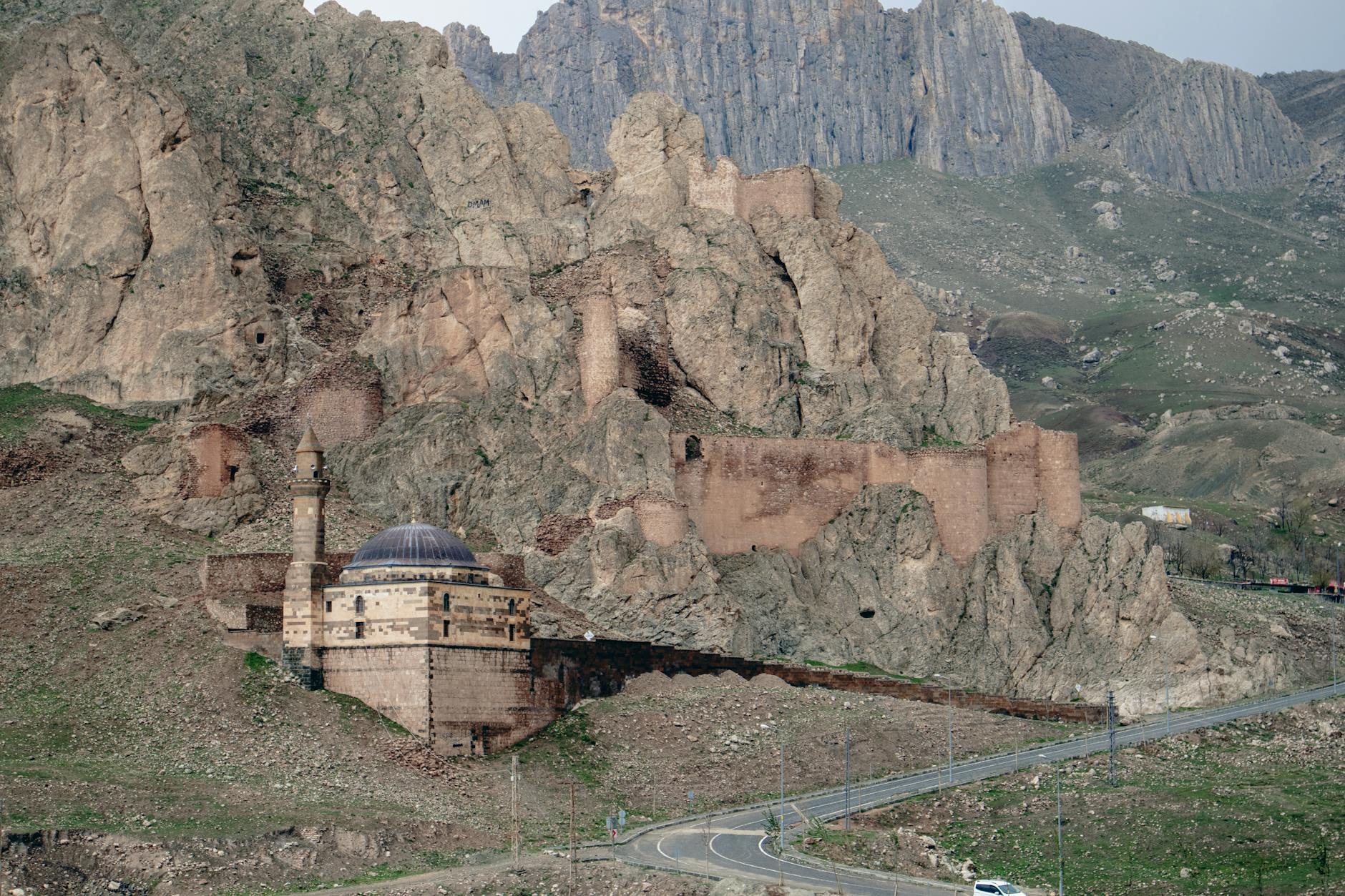
Türkiye is not one trip. It is a bridge country, a coast country, a plateau country, a ruin country, a food country, a mountain country, a pilgrimage country, a beach country, and a city country all at once.
Start Here
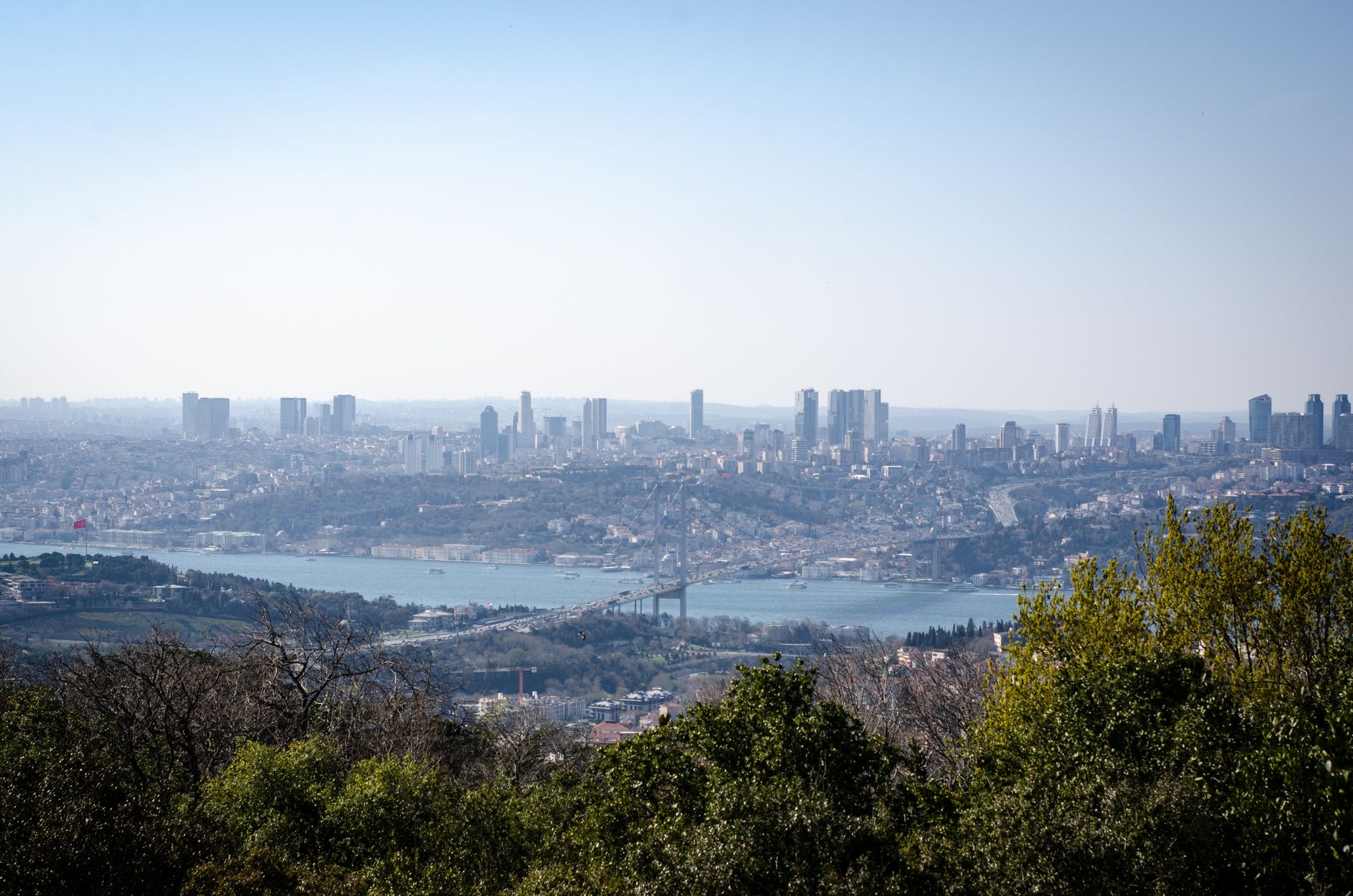
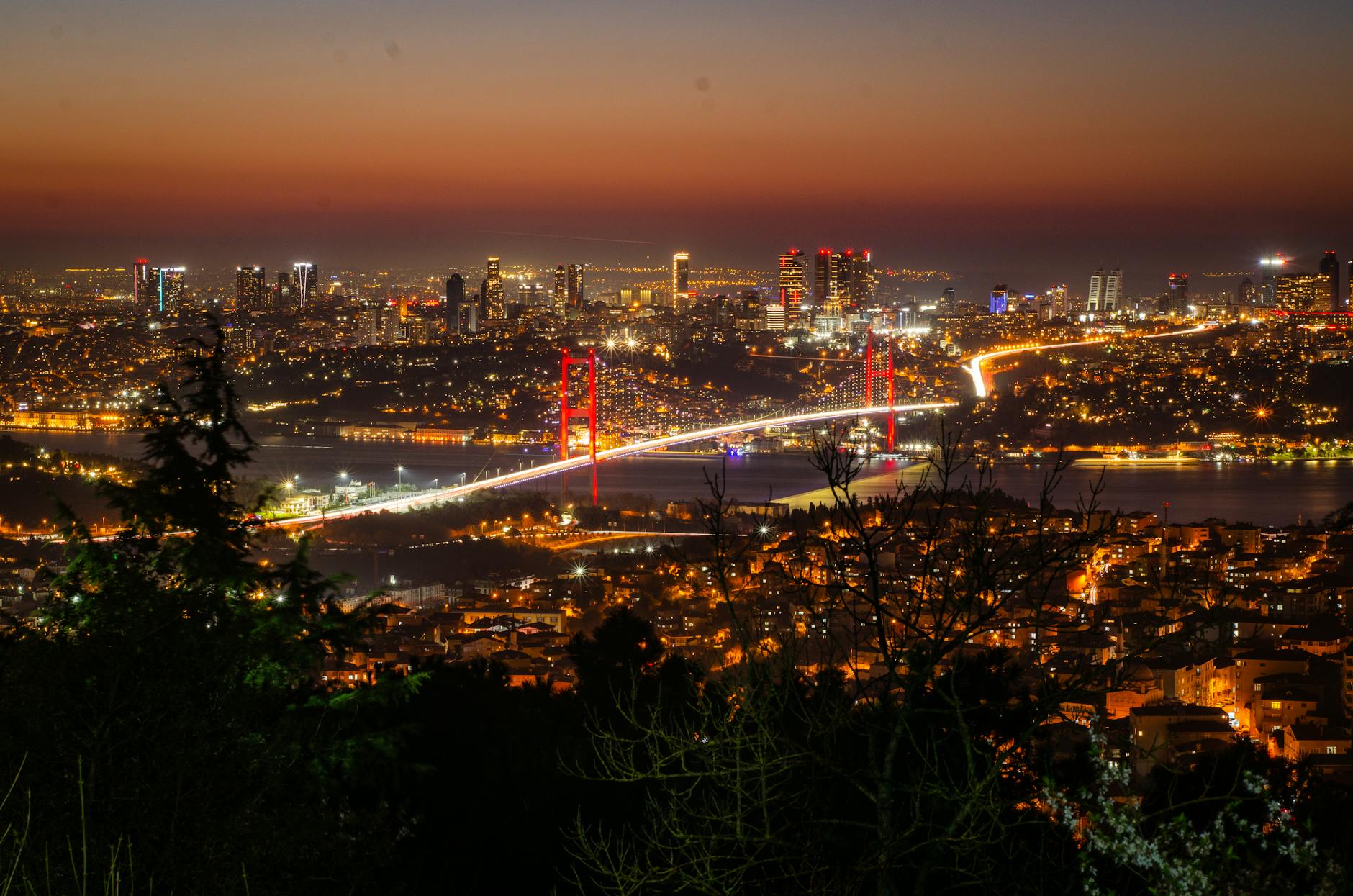
It is Istanbul at blue hour, when ferry horns echo across the Bosphorus and mosque domes turn into silhouettes. It is Cappadocia at sunrise, when balloons lift over volcanic valleys and cave churches. It is Ephesus in the morning before the tour buses arrive, the marble streets still cool underfoot. It is a slow fish lunch on the Aegean, a tea glass on a Black Sea terrace, a hammam towel snapped before steam, a breakfast table that seems to cover the whole horizon, a Roman theater above the Mediterranean, a caravanserai on the old roads of Anatolia, a whirling dervish ceremony in Konya, a saffron-colored lane in Mardin, a high plateau road near Kars, and a gulet anchored in water so blue it looks unreal.
Most first-time visitors arrive with a simple mental map: Istanbul, Cappadocia, maybe Ephesus, maybe Pamukkale, maybe a beach resort. That can be an excellent first trip. But Türkiye becomes richer when you understand that it is not a single loop. It is a set of route families. There is Ottoman and Byzantine Istanbul. There is classical Aegean Türkiye. There is cave-and-volcano Cappadocia. There is the Turquoise Coast. There is conservative central Anatolia. There is lush Black Sea Türkiye. There is food-rich southeast Türkiye, which also requires current security judgment. There is eastern mountain Türkiye, where distances, weather, altitude, and border politics matter. There is resort Türkiye, museum Türkiye, hiking Türkiye, sailing Türkiye, pilgrimage Türkiye, and road-trip Türkiye.
The biggest mistake is trying to turn all of that into one frantic circuit. A good Türkiye trip is not built by adding every famous place. It is built by choosing the right version of the country for your season, budget, tolerance for domestic flights, appetite for ruins, comfort with driving, beach expectations, and interest in culture beyond the postcard.
This guide is designed to answer the decisions that actually shape a great Türkiye trip: how long to spend in Istanbul, whether Cappadocia is worth the detour, when to visit ruins, how to combine the Aegean and Mediterranean coasts, whether to fly or take trains/buses, how to think about safety in the southeast, what to book ahead, how to avoid taxi and shopping friction, how Turkish food actually works, what to wear at mosques and archaeological sites, when the heat becomes a problem, where a car is useful, where it is a mistake, and how to experience Türkiye with pleasure, intelligence, and respect.
Türkiye in one sentence: Türkiye is a layered country of empires, coasts, plateaus, faith, food, ruins, and routes, where the best trip comes from choosing one coherent travel logic instead of chasing every famous sight.
Quick Verdict
| Question | Answer |
|---|---|
| Best for | Istanbul, history, ruins, Ottoman and Byzantine architecture, Islamic art, bazaars, ferries, food, hammams, landscapes, beaches, sailing, road trips, cave hotels, hot-air balloons, archaeological sites, photography, family resorts, cultural depth, and travelers who like places where Europe, Asia, the Mediterranean, the Middle East, and the Black Sea overlap. |
| Not ideal for | Travelers who want all logistics to be effortless, cool weather in summer everywhere, fully transparent taxi/shop pricing without vigilance, silent archaeological sites in peak season, spontaneous access to balloon flights or famous restaurants, or a country where every region can be covered well in one week. |
| Ideal first trip length | 10 to 14 days. One week works for Istanbul plus Cappadocia or Istanbul plus the Aegean. Two weeks lets you add Cappadocia, Ephesus/Pamukkale, and a coast leg without turning the trip into constant transit. |
| Minimum worthwhile trip | 4 to 5 days for Istanbul alone. 7 days for Istanbul plus one region. A 3-day stopover can be good, but it is not a country trip. |
| Best first-time route | Istanbul for 3–5 nights, Cappadocia for 2–3 nights, then either Ephesus/Pamukkale/Aegean or Antalya/Turquoise Coast depending whether you want archaeology or sea. |
| Best bases | Istanbul, Göreme/Uçhisar/Ürgüp in Cappadocia, Selçuk/Şirince/İzmir for Ephesus, Denizli/Pamukkale for travertines, Antalya/Kaş/Fethiye/Bodrum for the coast, Ankara/Konya for central Anatolia, Trabzon/Rize for the eastern Black Sea, Kars for the far northeast, and Mardin/Gaziantep/Şanlıurfa only with current safety-advisory checks. |
| Best time to visit | April–May and September–October are the easiest months for a broad cultural trip. Late May–June and September are strong for coast plus ruins. July–August are beach-friendly but can be punishing for ruins and inland cities. Winter is underrated for Istanbul, Cappadocia, museums, hammams, and lower crowds, but snow and cold affect central/eastern routes. |
| Biggest planning mistake | Trying to do Istanbul, Cappadocia, Ephesus, Pamukkale, Antalya, Fethiye, Bodrum, Konya, Ankara, Troy, Gallipoli, Mardin, Gaziantep, Mount Nemrut, and the Black Sea in one short trip. Türkiye rewards routing discipline. |
| One thing to book early | Cappadocia cave hotels and balloon flights, Istanbul hotels in peak periods, popular hammams, guided tours for major ruins, internal flights on popular routes, gulet or Blue Voyage cabins, and coastal lodging in summer. |
| One thing to leave flexible | Istanbul ferry rides, tea stops, market wandering, neighborhood walks, meyhane dinners, sunset viewpoints, hamam timing, weather-sensitive balloon watching, and one unstructured day after heavy sightseeing. |
| Most important safety note | Most classic visitor routes are heavily traveled, but security advice is region-specific. Check official advisories before any southeast or border-area travel; current U.S. advice says to reconsider southeast Türkiye and not travel near the Syria/Iraq border, while UK advice warns against all travel within 10 km of the Türkiye-Syria border.[4][5] |
The Move
For a first Türkiye trip, choose one of these clean structures:
- Classic first-timer: Istanbul + Cappadocia + Ephesus/Pamukkale.
- City plus coast: Istanbul + Bodrum, Fethiye, Kaş, or Antalya.
- Ruins and sea: İzmir/Selçuk/Ephesus + Pamukkale + Bodrum or Antalya.
- Istanbul deep dive: Istanbul only, with Princes’ Islands, Bosphorus, Asian-side neighborhoods, and maybe Edirne or Bursa.
- Cappadocia and central Anatolia: Istanbul + Cappadocia + Konya + Ankara or Lake Tuz.
- Food and southeast culture: Istanbul + Gaziantep/Mardin/Şanlıurfa, only after checking current advisories and local conditions.
- Black Sea and mountains: Trabzon + Rize + Kaçkar region, best as a season-specific nature trip.
- Eastern Türkiye: Kars/Ani/Van/Doğubayazıt, best for experienced travelers who accept longer distances and more variable logistics.
Who Will Love Türkiye?
You will probably love Türkiye if you want:
- A country where the historical layers are visible in a single day: Greek, Roman, Byzantine, Seljuk, Ottoman, republican, and contemporary.
- A city like Istanbul, where ferries, mosques, churches, palaces, markets, hills, street food, museums, and neighborhoods can fill a week without repetition.
- Archaeological sites that are not minor side attractions: Ephesus, Aphrodisias, Pergamon, Troy, Hierapolis/Pamukkale, Göbeklitepe, Hattuşa, Xanthos-Letoon, Aspendos, Perge, Termessos, Ani, and more.
- Food culture that is deep, regional, social, and generous: breakfast spreads, kebabs, meze, seafood, baklava, pide, lahmacun, mantı, börek, gözleme, döner, köfte, tea, coffee, rakı, regional soups, olive oil dishes, pistachios, spices, and market food.
- Landscapes that change fast: Bosphorus water, Aegean olive hills, Mediterranean cliffs, Anatolian steppe, Cappadocian valleys, Black Sea tea fields, eastern mountains, salt lakes, thermal terraces, and pine-fringed bays.
- A trip where ordinary rituals matter: tea in tulip glasses, ferry commuting, hammam bathing, mosque courtyards, fish markets, lokanta lunches, evening promenades, and bargaining or conversation in small shops.
You may struggle with Türkiye if you want:
- A fully frictionless, no-planning, no-negotiation trip.
- Cool weather in July and August while visiting inland ruins.
- A country where driving, parking, and city traffic are always relaxed.
- A country where every tourist interaction is fixed-price and transparent.
- A simple political/security map; Türkiye’s regional context matters.
- A trip where you never need to think about religious etiquette, dress norms, conservative areas, or local sensitivities.
Türkiye is not difficult because travelers cannot get around it. Major tourist routes are well served by flights, buses, tours, and hotels. It is difficult because it tempts you to overreach. The country is large, the regions are distinct, the heat can be real, and the best experiences often require patience rather than speed.
Türkiye at a Glance
| Practical | Detail |
|---|---|
| Official name | Republic of Türkiye. “Turkey” remains common in English, while “Türkiye” is the official international usage. |
| Capital | Ankara. Istanbul is the largest city and main tourism gateway, but it is not the capital. |
| Main international gateways | Istanbul Airport (IST), Sabiha Gökçen Airport (SAW), Antalya (AYT), İzmir Adnan Menderes (ADB), Ankara Esenboğa (ESB), Bodrum-Milas (BJV), Dalaman (DLM), and regional airports serving Cappadocia, the Black Sea, and eastern Türkiye. |
| Language | Turkish. English is common in major tourism zones and larger hotels, but limited in smaller towns, local transport, and rural areas. A translation app helps. |
| Currency | Turkish lira (TRY). Prices can change quickly because of currency movements and inflation; re-check all costs close to travel. |
| Cards vs cash | Cards are common in hotels, restaurants, larger shops, airports, and many tourist areas. Carry cash for markets, small cafés, taxis, tips, public toilets, dolmuş/minibuses, rural areas, and small archaeological-site extras. |
| Time zone | Türkiye Time, UTC+3 year-round. |
| Electricity | Type C and F plugs, 230V, 50Hz. Travelers from North America, the UK, Australia, and many other regions need adapters; voltage-sensitive devices need checking. |
| Emergency number | 112 for ambulance, fire, and police emergencies.[6] |
| Entry rules | Passport- and nationality-specific. Türkiye’s Ministry of Foreign Affairs says visa or visa-exempt stays cannot exceed 90 days in any 180-day period, and the official e-Visa portal is run by the Ministry of Foreign Affairs for tourism and trade purposes.[1][2] |
| Official e-Visa site | Use only the official e-Visa portal. Avoid lookalike visa websites that charge inflated fees or create errors.[2] |
| Museum pass | MuseumPass Türkiye is available through the official museum system and covers 350+ Ministry of Culture and Tourism / National Palaces museums and sites for 15 days, with one entry per site; prices and inclusions should be verified before purchase.[8] |
| Official weather source | Turkish State Meteorological Service (MGM) publishes forecasts and climate resources.[11] |
| Disaster authority | AFAD is Türkiye’s official disaster and emergency management authority; earthquake preparedness matters because Türkiye is highly earthquake-prone.[12] |
| Official tourism source | GoTürkiye is the official travel promotion platform.[14] |
First-Timer Mistake
The wrong question is: “Can I see all the highlights in ten days?” The better question is: “Which route family gives me the deepest trip for ten days without making every other day a transit day?” In Türkiye, the right route is more important than the longest list.
2026 Visitor Notes
Visa Rules Are Passport-Specific, Not Vibe-Specific
Do not rely on a friend’s old experience, a tour operator’s shorthand, or a generic “Turkey is visa-free” claim. Türkiye’s Ministry of Foreign Affairs lists rules by nationality and passport type, with some travelers visa-exempt, some eligible for e-Visa, and others needing consular visas or meeting special conditions.[3] The general rule that visa or visa-exempt stays cannot exceed 90 days in any 180-day period is important, but your specific eligibility still depends on passport and purpose.[1]
The move: Check your passport nationality on the Turkish Ministry of Foreign Affairs site and the official e-Visa portal before booking. Use the official e-Visa site only; it states that it is the government portal run by the Ministry of Foreign Affairs and that e-Visas are for touristic and trade purposes.[2]
Security Advice Is Regional
Classic tourist routes such as Istanbul, Cappadocia, Ephesus, Pamukkale, and the Aegean/Mediterranean coasts are heavily traveled, but that does not mean all of Türkiye should be treated the same. Current U.S. advice says to exercise caution in crowded public spaces, reconsider travel to southeast Türkiye, and not travel within 10 km of the Syria/Iraq border because of terrorism and armed conflict risks.[4] UK advice separately warns against all travel within 10 km of the Türkiye-Syria border.[5]
The move: Treat “Is Türkiye safe?” as the wrong question. Ask: Which province, which road, which border, which date, which event, which personal risk tolerance? For Istanbul and mainstream western/central routes, use ordinary urban caution. For southeast/eastern routes, check current official advisories and local expertise before committing.
Istanbul Airport Transfers Are Better Than They Used to Be, But Still Need Planning
Istanbul Airport is far from many central neighborhoods. Current transport options include the M11 metro between Gayrettepe and Istanbul Airport, Havaist airport buses to many city points, and IETT public buses.[10] Taxis can be useful with luggage or late arrivals, but traffic and pricing friction make pre-planning worthwhile.
The move: Decide your airport route before arrival. For Sultanahmet, Karaköy, Galata, Nişantaşı, Kadıköy, or Beşiktaş, the “best” option differs by time of day, luggage, hotel location, and traffic.
Istanbulkart Is the City Tool
The Istanbulkart is the public-transport payment method for buses, subway, tram, cable car, Marmaray, Metrobus, and ferries, and it also has some non-transport uses; visitors need to top it up in lira, and unused card balance may not be refundable.[9]
The move: Use public transport and ferries in Istanbul, especially when traffic is heavy. A ferry ride is not just transport. It is one of the city’s defining experiences.
MuseumPass Can Be Valuable, But Only for the Right Route
The official MuseumPass Türkiye covers 350+ museums and archaeological sites for 15 days, with one entry per museum, but it is not valid for night-museum applications and the price changes should be checked before travel.[8]
Worth it if: You are doing Istanbul museums plus Ephesus, Pamukkale/Hierapolis, Aphrodisias, Pergamon, Cappadocia open-air museums, or multiple Ministry-affiliated sites.
Not worth it if: Your trip is mostly beaches, private museums, mosques, free walks, food, and a small number of paid archaeological sites.
Earthquake Preparedness Is Not Optional
Türkiye is a seismically active country. AFAD states that Türkiye ranks third in the world for earthquake-related casualties and eighth for total number of people affected, and experiences at least one magnitude-5 earthquake each year.[12]
The move: Know your hotel exit route, keep passport/phone/battery/shoes accessible at night, follow local instructions, avoid damaged buildings after tremors, and read basic earthquake procedures before travel. This should not scare you out of a trip; it should make you a competent visitor.
Prices Change Fast
Türkiye can feel affordable or expensive depending on exchange rates, location, and inflation. Old blog prices for taxis, museum entries, restaurant bills, hammams, balloon flights, and hotels can become useless quickly.
The move: date every price. In your own planning, check official ticket pages and current local sources rather than relying on two-year-old cost estimates.
How to Understand Türkiye
Türkiye is easier to plan when you stop thinking of it as one country-wide itinerary and start seeing it as overlapping travel systems.
The Six Türkiyes Most Visitors Actually Choose From
| Türkiye | Where you feel it | What it gives you |
|---|---|---|
| Istanbul and Marmara | Istanbul, Princes’ Islands, Bursa, Edirne, Gallipoli, Troy | Imperial history, ferries, palaces, mosques, churches, markets, urban food, Ottoman capitals, WWI memory, manageable short trips. |
| Cappadocia and Central Anatolia | Göreme, Uçhisar, Ürgüp, Kaymaklı, Derinkuyu, Konya, Ankara, Hattuşa | Volcanic landscapes, cave churches, underground cities, balloons, Seljuk heritage, dervish culture, Anatolian steppe, ancient Hittite history. |
| Aegean Türkiye | İzmir, Selçuk/Ephesus, Şirince, Pergamon, Aphrodisias, Pamukkale, Bodrum, Çeşme, Alaçatı | Classical ruins, olive oil food, wine villages, beaches, whitewashed towns, thermal terraces, easier driving, seafood, Greek/Roman/Byzantine layers. |
| Mediterranean / Turquoise Coast | Antalya, Kaş, Fethiye, Patara, Kalkan, Olympos, Side, Aspendos, Alanya | Cliffs, beaches, boat trips, Lycian ruins, resorts, gulets, hiking, Roman theaters, warm seas, summer holidays. |
| Black Sea Türkiye | Trabzon, Rize, Artvin, Uzungöl, Ayder, Kaçkar Mountains, Safranbolu | Tea fields, mountains, rain, alpine villages, monasteries, wooden architecture, cool summer escapes, hiking, lush scenery. |
| Eastern and Southeastern Türkiye | Gaziantep, Şanlıurfa, Mardin, Diyarbakır, Van, Kars, Ani, Mount Ararat region | Food, deep history, Kurdish/Arabic/Armenian/Syriac layers, borderland culture, ancient sites, high plateaus, more sensitive security/logistics. |
Local Logic
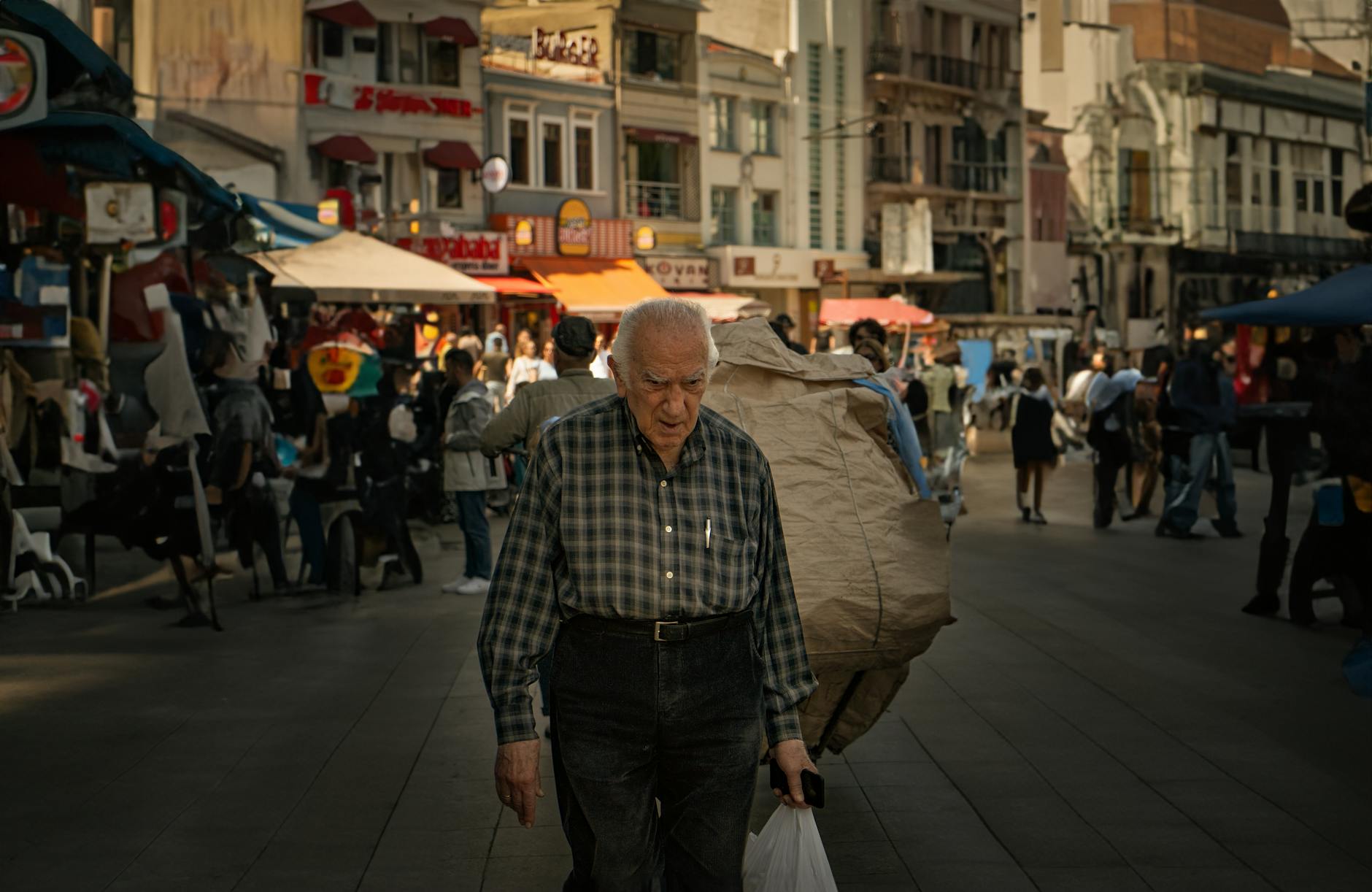
Türkiye is built around hospitality, hierarchy, conversation, commerce, faith, and regional pride. It is also a country where public identity can shift quickly by setting. Istanbul can feel cosmopolitan and secular in one neighborhood, conservative and devotional in another, village-like across the water, and global in a hotel lobby. Coastal resort towns do not function like central Anatolian towns. Tourist bazaars do not work like neighborhood markets. A famous mosque, a meyhane, a beach club, a family lokanta, and a rural tea house all have different behavioral codes.
The move: Read the room. Türkiye rewards warmth, politeness, modesty where appropriate, and curiosity. It punishes the traveler who treats every space like a resort.
The Country’s Central Contrasts
Türkiye is compelling because its contrasts are not abstract.
- Europe and Asia: Istanbul physically spans continents, but the country’s real complexity is cultural, historical, and regional, not just geographic.
- Imperial and republican: Ottoman palaces and mosques sit beside republican monuments, secular institutions, and modern political life.
- Secular and religious: Daily life ranges from cosmopolitan nightlife to deeply observant communities. Travelers need flexibility and respect.
- Urban and rural: Istanbul and İzmir are not rural Anatolia. Village hospitality, language, dress, and pacing can differ sharply.
- Mediterranean and steppe: Coasts feel relaxed and blue; central Anatolia is drier, more conservative, and more monumental.
- Tourist machine and local life: Bazaars, balloon viewpoints, cruise-port stops, and beach resorts can be heavily commercialized. Ten minutes away, daily life may become quieter and far more interesting.
The Route Problem
Distances are bigger than many travelers expect. Istanbul to Cappadocia is not a casual side trip by road. Cappadocia to the Aegean usually means a flight, a long bus, or a multi-step route. The Turquoise Coast is long, and Bodrum, Fethiye, Kaş, Antalya, and Alanya are not interchangeable. Eastern Türkiye is huge and mountainous. The Black Sea coast is scenic but slow.
A strong Türkiye itinerary should have a spine:
- City spine: Istanbul, possibly with Bursa/Edirne/Princes’ Islands.
- Cultural triangle: Istanbul + Cappadocia + Ephesus/Pamukkale.
- Coast spine: Istanbul + one coast base, not every coast base.
- Archaeology spine: Istanbul + Aegean ruins + Mediterranean ruins.
- Nature spine: Cappadocia + Lycian Way/coast or Black Sea/Kaçkar.
- Food/heritage spine: Istanbul + Gaziantep/Şanlıurfa/Mardin, safety-aware.
Choose Your Türkiye Trip
Choose the Classic First Trip If...
You want the strongest “first time in Türkiye” experience and can handle a couple of internal moves.
Route: Istanbul + Cappadocia + Ephesus/Pamukkale.
Best length: 10 to 12 days.
Why it works: You get the empire city, the dream landscape, and world-class classical ruins.
Main risk: Too many transfers if you try to add the coast without enough time.
Choose Istanbul + One Region If...
You have one week or you dislike constant movement.
Route options:
- Istanbul + Cappadocia.
- Istanbul + Ephesus/İzmir.
- Istanbul + Bodrum/Fethiye/Antalya.
- Istanbul + Bursa/Edirne/Princes’ Islands.
Best length: 6 to 8 days.
Why it works: Istanbul can carry half the trip. One second region gives contrast without exhaustion.
Choose the Coast If...
You want warm sea, boat days, ruins, and slower pacing.
Route: Istanbul or direct arrival + Bodrum, Fethiye, Kaş, Kalkan, Antalya, or a gulet route.
Best length: 7 to 14 days.
Best months: May–June and September–October for balance; July–August for pure beach/resort travel if you accept heat and crowds.
Main risk: Treating the coast as a single place. Bodrum, Fethiye, Kaş, Antalya, and Alanya have different moods and logistics.
Choose Archaeology Türkiye If...
You care more about ancient sites than beaches.
Route: Istanbul + Troy/Gallipoli + Pergamon + Ephesus + Aphrodisias + Pamukkale/Hierapolis + Antalya/Perge/Aspendos/Termessos.
Best length: 12 to 18 days.
Best months: April, May, September, October.
Main risk: Heat and site fatigue. Ancient stones at noon in August are not romantic.
Choose Food Türkiye If...
You travel by appetite.
Route: Istanbul + İzmir/Aegean + Gaziantep/Şanlıurfa/Mardin or Istanbul + Black Sea or Istanbul + Antakya region only when conditions allow.
Best length: 8 to 14 days.
Main risk: Some of Türkiye’s greatest food regions overlap with areas that require current security and earthquake-recovery checks.
Choose Black Sea Türkiye If...
You want green mountains, tea fields, rain, regional food, and a completely different side of the country.
Route: Trabzon + Rize + Ayder/Kaçkar + Artvin, possibly with Safranbolu or Amasya.
Best length: 7 to 12 days.
Best months: Late spring to early autumn, depending hiking goals.
Main risk: Weather, landslides, winding roads, and underestimating how different the Black Sea is from Mediterranean Türkiye.
Choose Eastern Türkiye If...
You are a more experienced traveler and want high plateau landscapes, Armenian/Seljuk/Ottoman layers, winter rail journeys, and borderland history.
Route: Ankara or Istanbul + Kars/Ani + Erzurum + Van, or a guided/custom route.
Best length: 10 to 16 days.
Main risk: Long distances, winter weather, fewer English-language services, and security/advisory complexity near borders.
Best Time to Visit Türkiye
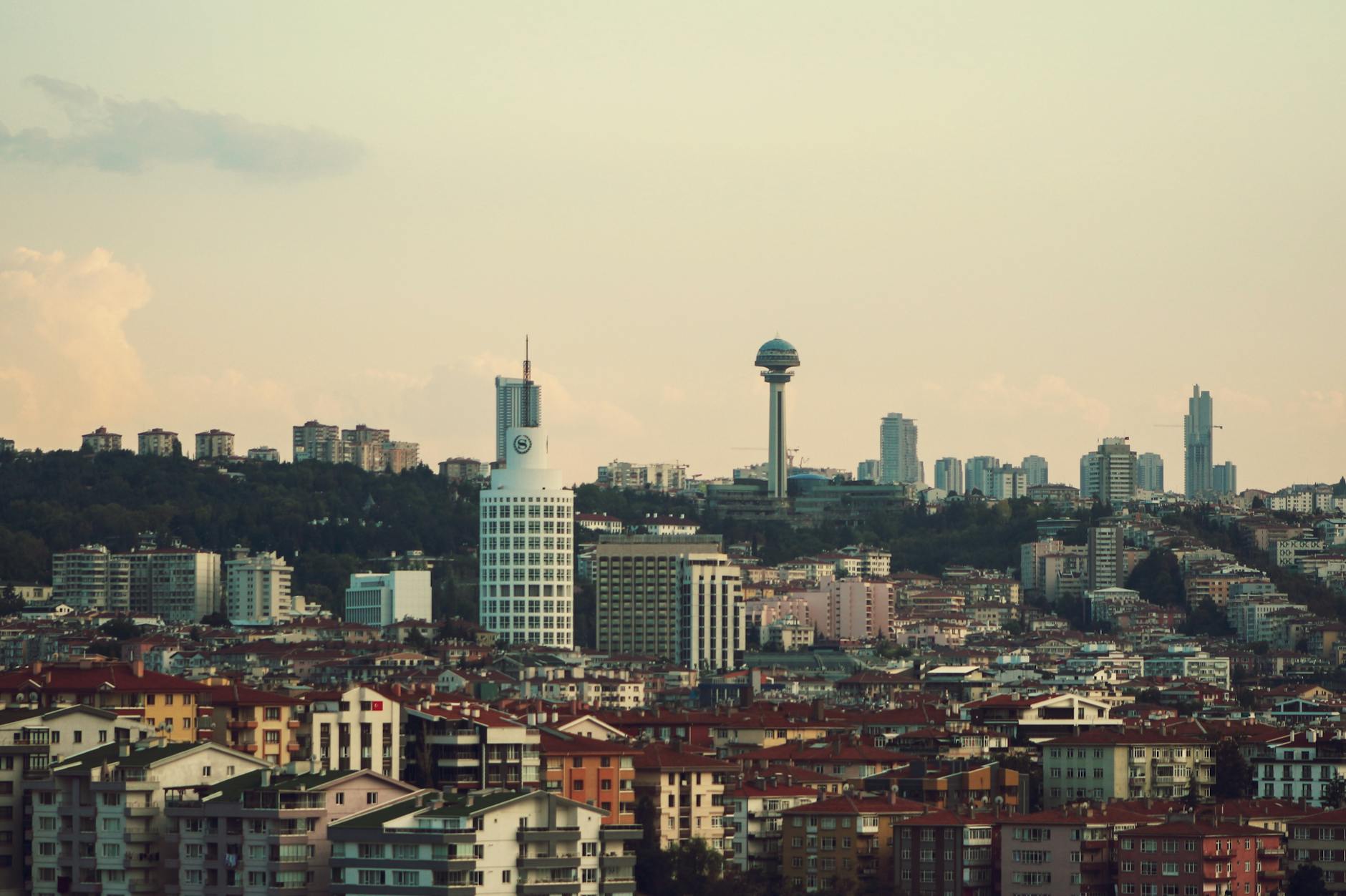
Türkiye’s best season depends on whether your trip is city/culture, ruins, beach, balloon, mountain, or ski focused. The country has Mediterranean coasts, a humid Black Sea, a continental interior, high eastern mountains, and huge seasonal differences.
Best Overall Months
April, May, September, and October are the best broad months for most travelers. They give Istanbul and ruins a better climate, make Cappadocia more comfortable, and avoid the worst heat of the coasts and inland archaeological sites.
June is excellent if you want the coast but still plan cultural touring.
July and August are strong for beaches and resort travel but hard for Istanbul crowds, Cappadocia midday heat, and ancient sites without early starts.
November to March can be excellent for Istanbul museums, hammams, lower crowds, and atmospheric Cappadocia, but winter cold, rain, snow, and shorter days matter.
Season-by-Season
| Season | What to expect | Best for | Watch out for |
|---|---|---|---|
| Spring: March–May | Mild to warm, flowers, greener landscapes, variable rain, strong cultural touring. | Istanbul, Cappadocia, ruins, road trips, hiking lower elevations, fewer crowds than summer. | March can be chilly; April weather varies; religious holidays and school breaks can affect crowds. |
| Summer: June–August | Hot and dry on Aegean/Mediterranean coasts, humid in Istanbul, very hot inland/southeast. | Beaches, sailing, gulets, resort travel, Blue Voyage, long evenings. | Ruins in midday heat, crowded coasts, high hotel rates, sun exposure, wildfire/heat risk. |
| Autumn: September–November | Warm seas early, comfortable cities/ruins, harvest season, strong all-round travel. | First-timers, coast plus culture, Cappadocia, food, archaeology, Istanbul. | November can turn wet/cold; shorter days; balloon/weather variability. |
| Winter: December–February | Cold in Istanbul and Cappadocia, snow in central/eastern Türkiye, rain on some coasts. | Hammams, museums, lower crowds, atmospheric Cappadocia, skiing, eastern rail trips. | Snow/ice, limited coast energy, shorter days, weather disruptions. |
Best Time by Trip Type
| Trip type | Best months | Why |
|---|---|---|
| First-time cultural route | April–May, September–October | Best mix of weather, daylight, and manageable crowds. |
| Istanbul only | April–June, September–November; December for atmosphere | Istanbul works year-round, but extremes and peak crowds matter. |
| Cappadocia | April–June, September–October; winter if you like snow | Valleys are better in mild weather; balloons depend on daily conditions. |
| Aegean ruins | April–May, September–October | Ephesus, Pergamon, Aphrodisias, and Pamukkale are far better outside peak heat. |
| Beach/coast | Late May–October; September often ideal | Sea stays warm into autumn; July/August are peak and hot. |
| Gulet/sailing | June–September, with September especially pleasant | Warm sea and stable summer weather. |
| Black Sea mountains | June–September | Higher meadows and mountain roads are more accessible. |
| Eastern Türkiye | May–June, September–October; winter for Kars/snow travelers | Avoid harsh winter unless that is the point. |
| Skiing | December–March depending resort and snow | Uludağ, Palandöken, Erciyes, Kartalkaya, Sarıkamış and others vary by season. |
Rain Plan
Türkiye is easier in rain if you are in Istanbul, Ankara, İzmir, or another city with museums, hammams, bazaars, cafés, galleries, and restaurants. Rain is harder if your day depends on Cappadocia ballooning, open-air ruins, Pamukkale terraces, boat trips, or Black Sea mountain roads.
The move: On mixed-weather trips, build flex days around Cappadocia, the coast, and any long scenic drive. Do not schedule one single morning for the thing you would be heartbroken to miss.
How Many Days You Need
The Honest Answer
You need 10 to 14 days for a satisfying first Türkiye trip. A week can be excellent if focused. Three weeks lets the country open up. Anything shorter should be treated as Istanbul plus one carefully chosen contrast.
| Length | What it feels like |
|---|---|
| 3 days | Istanbul stopover. Pick Sultanahmet, Beyoğlu/Karaköy, a Bosphorus ferry, and one major museum or hammam. Do not leave the city. |
| 5 days | Strong Istanbul trip or Istanbul plus a rushed Cappadocia/Ephesus add-on. Better to stay in Istanbul unless you have a specific reason. |
| 7 days | Istanbul + Cappadocia, or Istanbul + Ephesus/İzmir, or Istanbul + a coast base. Good but selective. |
| 10 days | Classic first-timer length: Istanbul + Cappadocia + Ephesus/Pamukkale, or Istanbul + coast + one inland highlight. |
| 12–14 days | Ideal first-time range. Add the coast or another region without destroying pacing. |
| 3 weeks | You can combine Istanbul, Cappadocia, Aegean ruins, the Turquoise Coast, and one deeper region. Still not “all Türkiye.” |
| 1 month+ | Slow regional travel becomes possible: Black Sea, eastern Türkiye, southeastern food/history, long-distance hiking, extended coast, or overland routes. |
Itinerary Philosophy
A strong Türkiye itinerary usually has:
- One big city base: Usually Istanbul.
- One landscape contrast: Cappadocia, coast, Black Sea, eastern mountains, or Pamukkale.
- One historical spine: Ottoman/Byzantine Istanbul, classical Aegean, Lycian/Mediterranean ruins, Seljuk central Anatolia, or southeastern heritage.
- Enough slack: At least one day that is not ruined if weather, traffic, a delayed flight, or tiredness changes the plan.
The Move
Do not count travel days as sightseeing days. A domestic flight plus airport transfers, hotel check-in, and meals can consume most of the day even when the flight itself is short.
Where to Go: Regions and Route Logic
Istanbul and Marmara
Best for: First-timers, history, food, ferries, mosques, palaces, museums, markets, nightlife, urban wandering.
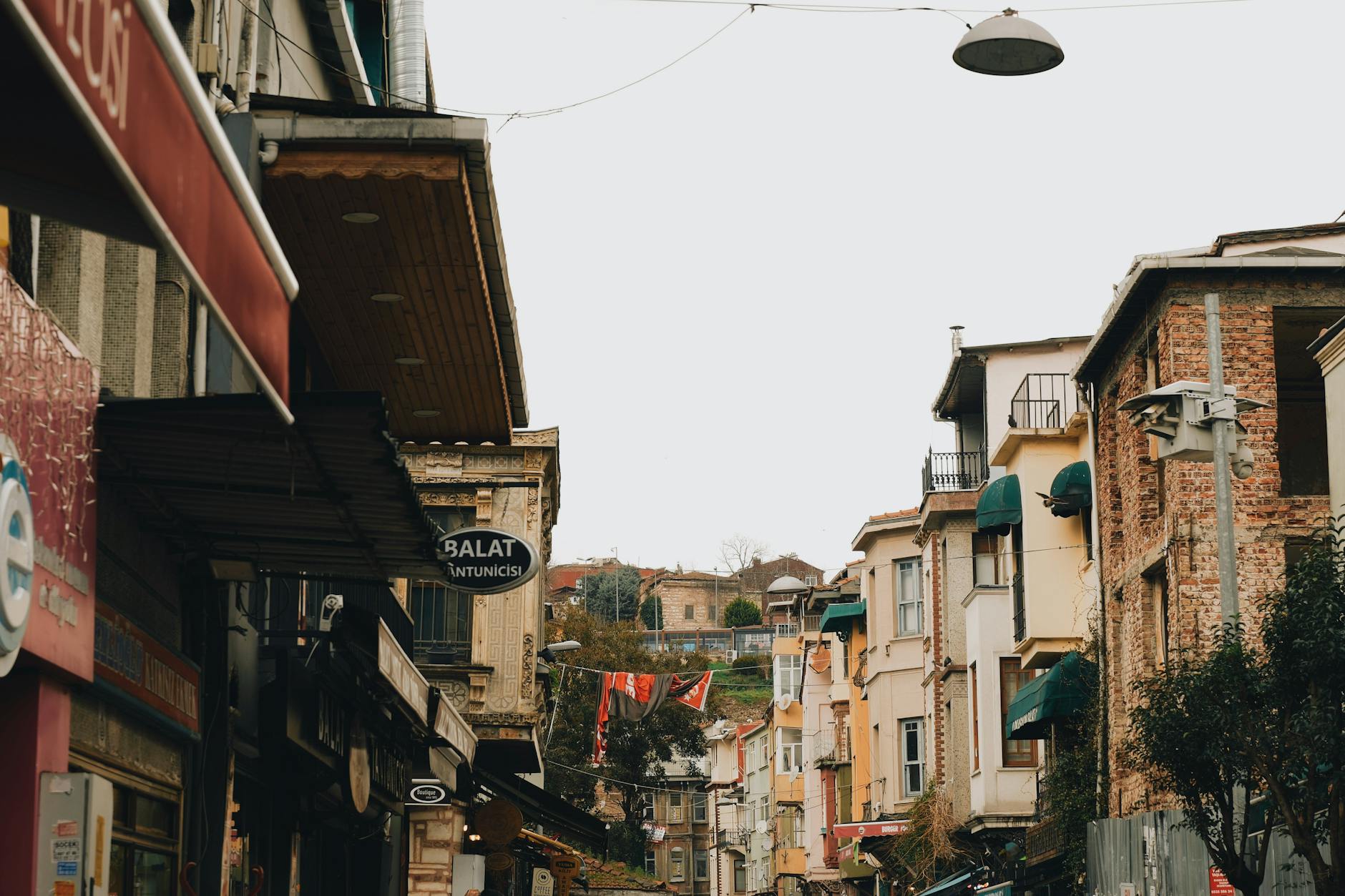
Istanbul is not just a gateway. It is one of the world’s great travel cities, and it deserves real time. The mistake is staying only in Sultanahmet and treating the city as a checklist of monuments. Sultanahmet has essential sights, but Istanbul’s rhythm lives across the Golden Horn, along the Bosphorus, in Beyoğlu, Karaköy, Galata, Beşiktaş, Ortaköy, Kadıköy, Moda, Üsküdar, Balat/Fener, Nişantaşı, and the ferry system itself.
Best bases: Sultanahmet for first-time monument access; Karaköy/Galata/Beyoğlu for food/nightlife/transport; Nişantaşı for polished comfort; Kadıköy/Moda for Asian-side energy; Beşiktaş/Ortaköy for Bosphorus atmosphere.
Good add-ons: Princes’ Islands, Bursa, Edirne, Gallipoli, Troy, Sapanca, Şile/Ağva, and Bosphorus villages.
The move: Give Istanbul at least four nights if you can. Every day you add makes the city less like a museum stop and more like a living place.
Cappadocia and Central Anatolia
Best for: Landscapes, balloons, cave hotels, hiking valleys, underground cities, Byzantine cave churches, photography, slower mornings, dramatic hotels.
Cappadocia is worth the detour if you do it properly. The landscape is fragile, strange, and genuinely unlike anywhere else. But it is also highly touristed, and a two-night stay can feel rushed if balloon flights are canceled by weather.
Best bases: Göreme for convenience and backpacker/tour access; Uçhisar for views and boutique hotels; Ürgüp for a more town-like base; Ortahisar for calmer atmosphere.
How long: Minimum two nights; three nights is better if ballooning matters.
Pair with: Istanbul, Konya, Ankara, Lake Tuz, or a longer central Anatolia route.
Common mistake: Flying in for one night and expecting a guaranteed balloon flight. Balloon flights are weather-dependent.
The Aegean: İzmir, Ephesus, Pamukkale, Bodrum, and More
Best for: Classical ruins, olive oil food, wine villages, beach towns, whitewashed resort energy, easier road trips.
The Aegean is where Türkiye’s ancient Mediterranean identity becomes obvious. Ephesus is the star, but the region also includes Pergamon, Aphrodisias, Priene, Miletus, Didyma, Şirince, İzmir, Alaçatı, Çeşme, Bodrum, and Pamukkale/Hierapolis inland.
Best bases: Selçuk for Ephesus practicality; Şirince for village atmosphere; İzmir for city access; Bodrum for coast/luxury/nightlife; Alaçatı/Çeşme for summer resort style; Denizli/Pamukkale only if you need local access to the travertines.
How long: 3 to 7 days depending ruins/coast balance.
The move: If archaeology matters, stay near Ephesus and go early. If the coast matters, do not treat Bodrum as just a launch point; choose your specific coast mood.
The Turquoise Coast: Antalya, Fethiye, Kaş, Kalkan, Olympos, and Beyond
Best for: Beaches, gulets, cliffs, boat trips, Lycian ruins, hiking, resorts, family holidays, warm seas.
The Turquoise Coast is not one destination. Antalya has a city/resort/ruin mix. Fethiye is a practical base for Ölüdeniz, boat trips, and Lycian Way access. Kaş is more intimate, diving-oriented, and scenic. Kalkan is polished and villa-heavy. Olympos/Çıralı are more rustic. Bodrum feels Aegean rather than Lycian. Alanya is a resort city farther east.
Best bases: Antalya for access and families; Kaş for atmosphere and boat/diving; Fethiye for logistics and Lycian Way/Ölüdeniz; Bodrum for stylish coast and nightlife; Çıralı/Olympos for lower-key nature.
How long: 4 to 10 days.
Common mistake: Trying to “do the Turkish coast” in three days. Choose one base or one short coastal sequence.
Ankara, Konya, and the Anatolian Interior
Best for: Seljuk history, museums, republican history, dervish culture, steppe landscapes, transit between Istanbul/Cappadocia.
Central Anatolia is often treated as transit, but it explains Türkiye in a way coastal routes do not. Ankara gives republican history and the Museum of Anatolian Civilizations. Konya gives Seljuk architecture and Mevlana/Rumi-related heritage. Hattuşa gives Hittite history. Lake Tuz gives surreal landscape. The region is more conservative than the western coast and should be approached with respect.
Best bases: Ankara, Konya, Cappadocia towns.
How long: 2 to 5 days as an add-on.
The move: Add Konya if you care about spiritual/Seljuk history. Add Ankara if you want to understand modern Türkiye beyond Istanbul.
Black Sea Türkiye
Best for: Tea fields, mountains, monasteries, cooler summer landscapes, regional food, hiking, road trips.
The Black Sea region is green, humid, and distinct. It is not Mediterranean Türkiye with different scenery; it has its own culture, music, food, climate, and roads. The eastern Black Sea is spectacular but weather-sensitive.
Best bases: Trabzon, Rize, Ayder/Kaçkar, Artvin, Safranbolu, Amasya.
How long: 5 to 10 days.
Best season: Summer for highlands; spring/autumn for lower routes.
Common mistake: Expecting sunny beach weather. Rain is part of the Black Sea identity.
Southeastern Türkiye
Best for: Food, bazaars, ancient sites, Islamic architecture, Kurdish/Arabic/Turkish cultural layers, Göbeklitepe, Mardin stone architecture, Gaziantep cuisine.
This region can be one of the most rewarding parts of Türkiye, but it requires a different level of planning. Gaziantep, Şanlıurfa, Mardin, Diyarbakır, Mount Nemrut, and surrounding areas have major cultural appeal, but safety advisories, border proximity, political conditions, and local realities must be checked close to travel.
Best bases: Gaziantep, Mardin, Şanlıurfa, Diyarbakır, depending current conditions.
How long: 5 to 10 days.
The move: Do not treat southeast Türkiye as a casual add-on after reading one food article. Check current advisories, choose reliable transport and lodging, and consider a good local guide.
Eastern Türkiye
Best for: Kars, Ani, Van, high plateaus, winter rail atmosphere, Armenian/Seljuk/Ottoman layers, dramatic landscapes.
Eastern Türkiye is large, high, cold in winter, and deeply interesting. It is best for travelers who have already seen the classic route or who specifically want frontier landscapes and historical complexity.
Best bases: Kars, Van, Erzurum, Doğubayazıt, depending route and current conditions.
How long: 7 to 14 days.
Common mistake: Underestimating distances and winter weather.
Best First-Time Routes
Route 1: Istanbul + Cappadocia
Best for: One-week travelers who want the most dramatic contrast.
Length: 7 days.
Structure:
- Days 1–4: Istanbul.
- Days 5–7: Cappadocia.
Why it works: Istanbul gives cultural depth; Cappadocia gives landscape and dream factor.
What it misses: Aegean ruins, Pamukkale, coast, and beach time.
Upgrade: Add one extra Cappadocia night for balloon-weather flexibility.
Route 2: Classic Türkiye Triangle
Best for: First-timers with 10 to 12 days.
Length: 10–12 days.
Structure:
- Days 1–4: Istanbul.
- Days 5–7: Cappadocia.
- Days 8–10: Ephesus/Selçuk/Şirince.
- Optional Days 11–12: Pamukkale/Aphrodisias or İzmir/Alaçatı.
Why it works: You get Istanbul, Cappadocia, and the Aegean archaeology spine.
What to watch: Domestic flight timing and transfer fatigue.
Route 3: Istanbul + Aegean Ruins + Coast
Best for: Travelers who care about archaeology and sea more than Cappadocia.
Length: 10–14 days.
Structure:
- Days 1–4: Istanbul.
- Days 5–7: Selçuk/Ephesus/Şirince/İzmir.
- Days 8–10: Pamukkale/Aphrodisias/Bodrum.
- Days 11–14: Bodrum, Fethiye, Kaş, or Antalya.
Why it works: Less zigzagging than trying to add central Anatolia.
The move: Rent a car only after leaving big-city traffic if you want flexibility.
Route 4: Istanbul + Turquoise Coast
Best for: Couples, families, beach travelers, summer trips.
Length: 8–12 days.
Structure:
- Days 1–4: Istanbul.
- Days 5–10: One coast base or short coast sequence.
- Days 11–12: Optional ruins or boat days.
Best bases: Antalya for family/resort/ruins; Kaş for scenery and smaller-town feel; Fethiye for boat trips and Lycian Way access; Bodrum for style and nightlife.
What it misses: Cappadocia and deep archaeology unless extended.
Route 5: Istanbul Deep Dive
Best for: Short trips, food/culture travelers, people who dislike moving.
Length: 5–8 days.
Structure:
- Sultanahmet and historic peninsula.
- Beyoğlu/Galata/Karaköy.
- Bosphorus ferry and neighborhoods.
- Asian side: Kadıköy/Moda/Üsküdar.
- Balat/Fener or Eyüp.
- Princes’ Islands, Bursa, or Edirne.
Why it works: Istanbul is deep enough for a full trip.
Route 6: Food and Heritage Southeast
Best for: Experienced travelers, food lovers, history travelers.
Length: 8–12 days.
Structure:
- Istanbul.
- Gaziantep.
- Şanlıurfa/Göbeklitepe.
- Mardin.
- Optional Diyarbakır/Mount Nemrut depending advisory and logistics.
Critical caveat: Check current security advice by province and route.
Türkiye Itineraries
One Perfect Week: Istanbul + Cappadocia
Day 1: Arrive in Istanbul
Keep the first day gentle. Check in, walk near your hotel, eat something simple, and get oriented. Do not schedule a prepaid hammam, tasting menu, or late cross-city dinner after a long flight.
Day 2: Sultanahmet Properly
Start early with Hagia Sophia area, the Blue Mosque, Sultanahmet square, Basilica Cistern, and the Hippodrome. Add the Istanbul Archaeology Museums or Topkapı Palace depending energy. Finish away from the most touristy restaurant strip.
Rain alternative: Museums, cistern, hammam.
Common mistake: Trying to see every historic peninsula sight in one day.
Day 3: Palaces, Ferries, and Beyoğlu
Use the Bosphorus as transport and theatre. Consider Dolmabahçe Palace or a Bosphorus ferry route, then Karaköy, Galata, İstiklal, and dinner in Beyoğlu or nearby.
The move: At least once, cross by ferry instead of car or metro.
Day 4: Asian Side and Local Istanbul
Take a ferry to Kadıköy or Üsküdar. Spend time in markets, cafés, Moda, waterfront walks, or Kuzguncuk. This day makes Istanbul feel like a living city instead of a museum complex.
Day 5: Fly to Cappadocia
Arrive, check into a cave hotel, walk a nearby valley or viewpoint, and sleep early if ballooning is planned.
Day 6: Cappadocia Landscape Day
Balloon flight if conditions allow, then Göreme Open-Air Museum, Uçhisar, valley walks, or an underground city. Do not overpack after a 4 a.m. wake-up.
Day 7: Cappadocia Morning and Departure
Use the morning for a valley walk, viewpoint, or slow breakfast. Fly onward or back to Istanbul.
Ten Days: Classic Türkiye Triangle
Days 1–4: Istanbul
Spend four nights in Istanbul. Cover Sultanahmet, Topkapı or the Archaeology Museums, the Grand Bazaar/Spice Bazaar area, Beyoğlu/Karaköy, a Bosphorus ferry, and the Asian side.
Days 5–7: Cappadocia
Fly to Cappadocia. Stay three nights if ballooning matters; two nights if time is tight. Prioritize one balloon attempt, Göreme Open-Air Museum, an underground city, Uçhisar, and at least one valley walk.
Days 8–10: Ephesus and Aegean
Fly or connect to İzmir, stay in Selçuk or Şirince, visit Ephesus early, and add the Ephesus Museum, St. John Basilica area, Şirince, or a day to Pamukkale/Hierapolis if you accept the transfer.
Better pacing: Add two more days for Pamukkale/Aphrodisias and a coast stop.
Two Weeks: Istanbul, Cappadocia, Aegean, and Coast
Days 1–4: Istanbul
Do the city properly, including one less obvious neighborhood day.
Days 5–7: Cappadocia
Three nights for landscape, balloons, underground cities, and a slower pace.
Days 8–10: Ephesus, Şirince, and Pamukkale/Aphrodisias
Stay in Selçuk/Şirince, see Ephesus early, then either Pamukkale/Hierapolis or Aphrodisias. Consider a private driver for sites that are awkward by public transport.
Days 11–14: Coast
Choose one: Bodrum for style and nightlife; Fethiye for boat trips and Lycian Way access; Kaş for scenic small-town coast; Antalya for family/resort/ruin convenience.
Three Weeks: Big First-Timer Route Without Losing Your Mind
- Days 1–5: Istanbul.
- Days 6–8: Cappadocia.
- Days 9–12: Ephesus, Şirince, Aphrodisias, Pamukkale.
- Days 13–17: Turquoise Coast: Kaş/Fethiye/Antalya.
- Days 18–21: Choose Black Sea, Konya/Ankara, or a southeast food/heritage route if conditions support it.
Special-Interest Itineraries
Food-Led Türkiye
- Istanbul: markets, meyhane, street food, breakfast, lokanta, modern Turkish cuisine.
- İzmir/Aegean: seafood, olive oil dishes, herbs, boyoz, kumru, wine villages.
- Gaziantep: baklava, kebab, pistachios, breakfast, regional soups, lahmacun, katmer.
- Black Sea: pide, corn bread, hamsi, muhlama/kuymak, tea culture.
- Central Anatolia: Konya etli ekmek, tandır, mantı in Kayseri if routing allows.
Safety note: Some major food regions require current travel-advisory checks.
Archaeology Türkiye
Istanbul Archaeology Museums, Troy, Pergamon, Ephesus, Priene, Miletus, Didyma, Aphrodisias, Hierapolis/Pamukkale, Laodicea, Xanthos-Letoon, Patara, Myra, Perge, Aspendos, Termessos, Hattuşa, Göbeklitepe, Ani.
The move: Do fewer sites with better timing. Early morning at one world-class site beats five overheated drive-by stops.
Beach and Sailing Türkiye
Choose one coast style:
- Bodrum: stylish, nightlife, marinas, beach clubs, gulets, design hotels.
- Fethiye: practical, boat trips, Ölüdeniz, Lycian Way access.
- Kaş: scenic, smaller, diving, boat trips, couples, independent travelers.
- Antalya: family-friendly, old town, resorts, waterfalls, ruins, airport access.
- Çıralı/Olympos: lower-key, nature, ruins, backpacker/rustic energy.
No-Car Türkiye
Istanbul + Cappadocia tours + Selçuk/Ephesus + İzmir + Antalya works without a rental car if you use flights, trains, buses, transfers, and tours. You lose flexibility at rural ruins and coast villages, but you avoid traffic, parking, and driving stress.
Lower-Walking Türkiye
Base in Istanbul near tram/ferry/metro and use taxis carefully. Choose accessible hotels, fewer archaeological sites, hammams with easy access, private transfers in Cappadocia, and museum-heavy days. Avoid steep old towns, cave hotels with stairs, and hot midday ruins.
Where to Stay by Trip Type
Istanbul
| Area | Best for | Why stay | Watch out for |
|---|---|---|---|
| Sultanahmet | First-time monument access | Walk to Hagia Sophia, Blue Mosque, Topkapı, Basilica Cistern. | Touristy at night, less local dining, quieter after dark. |
| Karaköy / Galata | Food, ferries, nightlife, central movement | Good access to old city, Beyoğlu, ferries, restaurants. | Hills, noise, boutique-hotel quality varies. |
| Beyoğlu / Cihangir / Pera | Nightlife, cafés, museums, urban energy | Strong for restaurants, bars, galleries, walking. | Can be noisy; traffic and hills. |
| Nişantaşı / Şişli | Comfort, shopping, polished hotels | Upscale, practical, less touristy, good food. | Less atmospheric for first monument-heavy days. |
| Beşiktaş / Ortaköy | Bosphorus life, nightlife, ferries | Local energy, waterfront, food, easy Bosphorus mood. | Traffic; less convenient for Sultanahmet. |
| Kadıköy / Moda | Asian-side food and local life | Excellent for repeat visitors, nightlife, markets, ferries. | Longer to old-city sights. |
| Üsküdar | Bosphorus views, conservative/local atmosphere | Ferry access, mosque views, quieter evenings. | Less nightlife; hotel selection narrower. |
Booking mistake: Choosing a hotel only because it says “Istanbul center.” Istanbul has multiple centers, and traffic can turn a short map distance into a bad idea.
Cappadocia
| Area | Best for | Why stay | Watch out for |
|---|---|---|---|
| Göreme | First-timers, tours, budget/mid-range, convenience | Central for tours, restaurants, balloon logistics, valley walks. | More touristy and crowded. |
| Uçhisar | Views, boutique hotels, couples | Great panoramas, quieter, upscale cave hotels. | Fewer restaurants; car/taxi useful. |
| Ürgüp | Town feel, wine, nicer hotels | More local-town energy, good hotel options. | Less central for some valley walks. |
| Ortahisar | Calm, atmosphere, repeat visitors | Quieter cave-village feel. | Less convenient without car/driver. |
Booking mistake: Reserving a cave hotel without checking stairs, ventilation, humidity, heating/AC, and luggage access.
Aegean and Ruins
- Selçuk: Best practical base for Ephesus. Small, convenient, good for early site access.
- Şirince: Atmospheric village near Ephesus, good for couples and slower travel.
- İzmir: Better for city life, restaurants, flights, and wider Aegean access.
- Alaçatı / Çeşme: Stylish summer, beaches, windsurfing, nightlife, higher prices.
- Bodrum: Coast, marinas, nightlife, luxury, gulets, beach clubs.
- Pamukkale / Denizli: Practical for travertines/Hierapolis, but not always worth a long stay.
Turquoise Coast
- Antalya Kaleiçi: Historic old-town base, good for culture and access.
- Lara / Belek / Side: Resorts and family hotels.
- Kaş: Scenic, boutique, boat trips, diving, couples.
- Fethiye: Practical, boat trips, Ölüdeniz, Lycian Way.
- Kalkan: Villas, views, polished food, couples/families.
- Çıralı / Olympos: Nature, lower-key, beach plus ruins.
Best Things to Do
1. Give Istanbul Enough Time
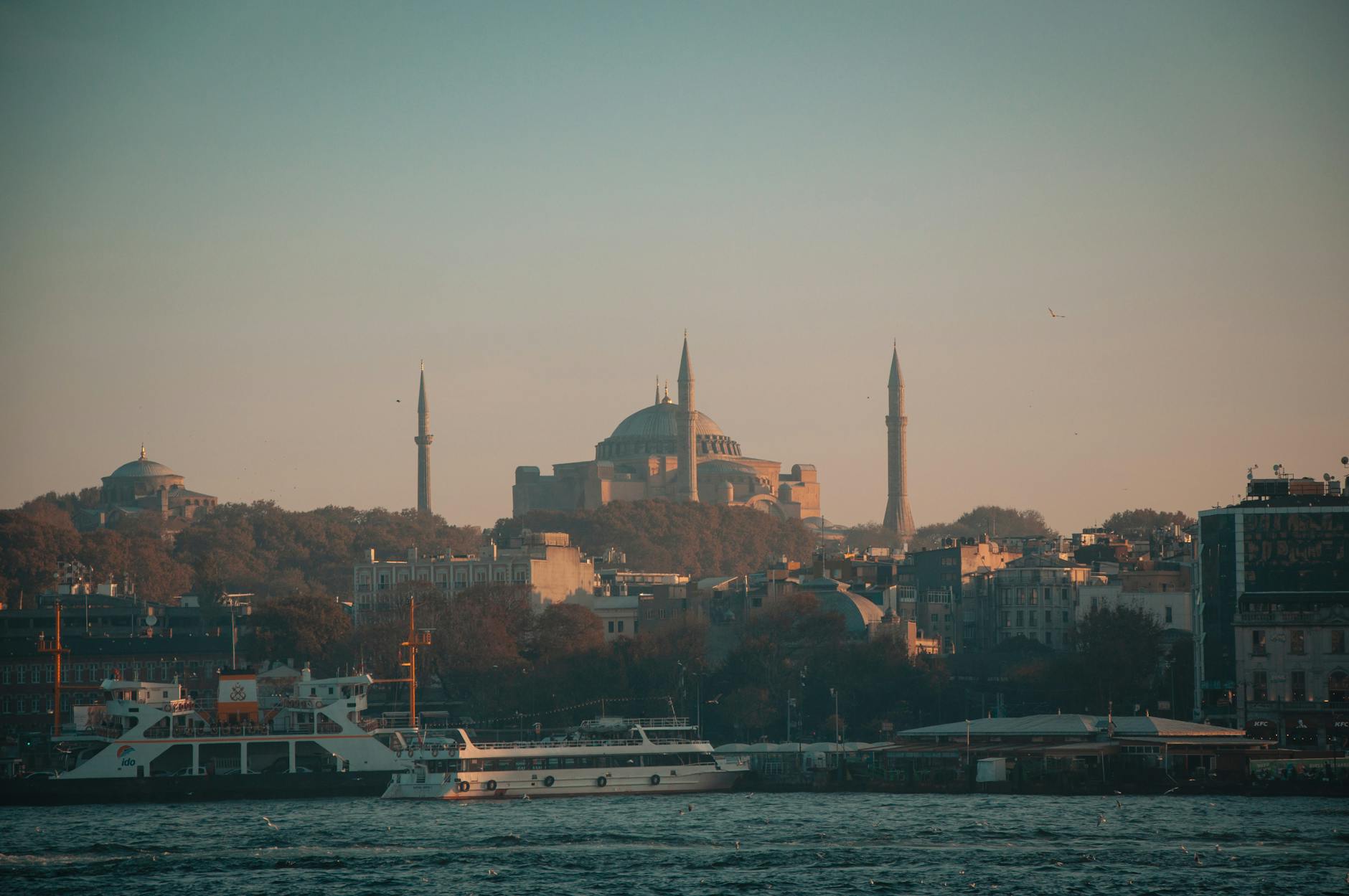
Istanbul is the anchor of most Türkiye trips for good reason. The city has Hagia Sophia, the Blue Mosque, Topkapı Palace, Basilica Cistern, Süleymaniye Mosque, Grand Bazaar, Spice Bazaar, Galata, Beyoğlu, ferries, Bosphorus neighborhoods, Asian-side markets, palaces, hammams, meyhanes, and enough layers to fill a week.
Time needed: Minimum 3 full days; 5 to 7 days if you like cities.
Worth it? Absolutely. Do not treat it as a one-night gateway.
Common mistake: Seeing Sultanahmet only and declaring Istanbul “too touristy.”
2. Ride Ferries in Istanbul
The ferry system is one of Istanbul’s great pleasures. It gives you views, local life, movement, and relief from traffic.
Best for: Orientation, photos, low-cost pleasure, Asian-side exploration.
Pair with: Kadıköy, Üsküdar, Karaköy, Beşiktaş, Bosphorus villages, Princes’ Islands.
The move: Take a ferry at golden hour, then eat on the other side.
3. Visit Cappadocia, But Do It Properly
Cappadocia’s fairy chimneys, valleys, cave churches, underground cities, and balloon-filled mornings justify the detour. But it is not just a balloon backdrop.
Time needed: 2 nights minimum, 3 nights better.
Book ahead? Yes for good cave hotels and balloon flights.
Skip if: You have only 6 days and hate extra flights/transfers; Istanbul plus one western region may be better.
Common mistake: Not leaving a backup morning for balloon cancellations.
4. See Ephesus Early
Ephesus is one of the world’s great ancient cities. The Library of Celsus, theater, marble streets, terrace houses, and surrounding sites reward early arrival and context.
Time needed: Half-day to full day including museum/nearby sites.
Best base: Selçuk or Şirince.
Worth it? Yes, especially for history travelers.
Common mistake: Arriving with the midday heat and cruise crowds.
5. Use a Hammam as Culture, Not Just Spa
A Turkish bath can be a memorable ritual: steam, scrub, wash, rest, tea. Historic hammams in Istanbul can be expensive but atmospheric; local hammams can be more basic and less visitor-oriented.
Best for: Culture, rainy days, recovery after travel, couples/friends if venue allows.
Book ahead? Yes for famous historic hammams.
Etiquette: Understand gender arrangements, clothing/towel norms, and service expectations before going.
6. Choose One Great Mosque Beyond the Checklist
Hagia Sophia and the Blue Mosque are essential for many visitors, but Süleymaniye Mosque often offers a more expansive and less frantic experience. Smaller mosques and courtyards can be just as moving.
Best for: Architecture, faith/culture, quiet observation.
Dress: Modest clothing; women usually need head covering in mosques; everyone removes shoes.
Common mistake: Treating active mosques like museum sets.
7. Spend a Day on the Bosphorus
The Bosphorus is not just a view. It is Istanbul’s organizing force. Palaces, waterside mansions, fortresses, fishing villages, ferry stops, and neighborhoods make it a full travel day.
Best for: Couples, photographers, first-timers, repeat visitors.
Options: Public ferry, short cruise, private boat, waterfront neighborhoods.
The move: Avoid the most generic hard-sell boat tours; use public ferries or reputable operators.
8. Explore Pamukkale and Hierapolis With Realistic Expectations
Pamukkale’s white travertines are famous for a reason, and Hierapolis adds archaeological substance. But the site is busy, highly photographed, and sometimes less pristine than images suggest.
Best for: Geology, photography, archaeology.
Time needed: Half-day.
Worth it? Yes if it fits the route; not worth a huge detour for everyone.
Common mistake: Going only for Instagram and skipping Hierapolis.
9. Pick the Right Coast Base
Türkiye’s coast can make or break the trip. Bodrum, Kaş, Fethiye, Antalya, Çıralı, Kalkan, Alaçatı, and Çeşme are not interchangeable.
Best for: Beaches, boat trips, families, couples, diving, nightlife, ruins.
The move: Choose by mood: stylish, family, rustic, scenic, nightlife, ruins, sailing, or quiet.
10. Eat Regionally
Turkish food is not just kebab. Istanbul, Gaziantep, Hatay, the Black Sea, the Aegean, Kayseri, Konya, eastern Türkiye, and the coast all eat differently.
Best for: Everyone.
The move: In each region, ask what that place is known for rather than ordering the same dishes everywhere.
11. Add a Guide Where Context Matters
A good guide can transform Topkapı, Hagia Sophia context, Ephesus, Gallipoli, Cappadocia churches, Göbeklitepe, Mardin, or southeastern heritage routes.
Worth it if: You care about history, religion, archaeology, or complex political/cultural context.
Not necessary if: You mainly want beaches, wandering, or casual food.
12. See One Lesser-Prioritized Heritage Town
Safranbolu, Amasya, Bursa, Edirne, Şirince, Mardin, Kars, and smaller Aegean or Black Sea towns give a different texture than headline sights.
Best for: Second-time visitors, road trips, photographers, slower travelers.
The move: Add one smaller place instead of one extra famous stop.
Food and Drink
Turkish food is one of the biggest reasons to travel in Türkiye, but visitors often flatten it into kebab, baklava, and Turkish breakfast. Those are important, but the country’s food culture is regional, seasonal, social, and deeply tied to bread, vegetables, grilled meats, dairy, herbs, seafood, grains, pulses, sweets, tea, coffee, and hospitality.
Food Identity
Türkiye’s food culture is shaped by:
- Ottoman palace cooking and urban restaurant traditions.
- Central Asian, Balkan, Caucasian, Arab, Kurdish, Greek, Armenian, Jewish, Levantine, Mediterranean, and Black Sea influences.
- Regional ingredients: pistachios, olives, figs, hazelnuts, tea, lamb, yogurt, wheat, bulgur, pomegranates, herbs, seafood, honey, butter, cheeses, and spices.
- Social eating: breakfast spreads, meze, rakı tables, tea conversations, family grills, market snacks, and long dinners.
- Everyday institutions: lokanta, kebapçı, pideci, börekçi, pastane, meyhane, kahvehane/çay bahçesi, fish restaurants, street-food stalls, and bakeries.
What to Eat
| Dish or experience | What it is | Where it shines |
|---|---|---|
| Turkish breakfast | Bread, cheeses, olives, tomatoes, cucumbers, eggs, honey, jams, clotted cream, börek, pastries, tea. | Istanbul, Aegean towns, Van-style breakfast, boutique hotels. |
| Meze | Small dishes with vegetables, seafood, yogurt, herbs, beans, eggplant, and more. | Istanbul, Aegean, Mediterranean, meyhane meals. |
| Kebab | Many regional grilled meat traditions, not one dish. | Gaziantep, Adana, Urfa, Istanbul, southeast. |
| Lahmacun | Thin flatbread with minced meat/spices/herbs. | Southeast, Istanbul casual places. |
| Pide | Boat-shaped flatbread with cheese, meat, egg, or vegetables. | Black Sea and nationwide. |
| Mantı | Small dumplings often served with yogurt and butter/chili. | Kayseri and central Anatolia. |
| Börek | Filled pastry with cheese, meat, spinach, potato, or other fillings. | Breakfasts, bakeries, Istanbul, home-style places. |
| Döner | Vertically roasted meat served in bread, wrap, or plated. | Everywhere; quality varies. |
| Köfte | Meatballs with many regional styles. | Istanbul, İzmir, Tekirdağ, nationwide. |
| Balık ekmek | Fish sandwich, associated with waterfront Istanbul. | Istanbul, but choose quality/context carefully. |
| Olive oil dishes | Cold or room-temperature vegetable dishes cooked in olive oil. | Aegean and Mediterranean. |
| Baklava | Layered pastry with nuts and syrup. | Gaziantep especially; Istanbul also has excellent shops. |
| Künefe | Cheese pastry dessert with syrup. | Hatay/southeast traditions; widespread. |
| Turkish delight | Lokum, sweets in many flavors. | Good confectioners, not random tourist boxes. |
| Turkish coffee | Strong unfiltered coffee served in small cups. | Cafés, traditional restaurants, after meals. |
| Tea | Black tea in tulip-shaped glasses; a daily ritual. | Everywhere, especially Black Sea culture. |
| Rakı table | Anise spirit with meze and long conversation. | Meyhanes, coastal restaurants, Istanbul. |
Where to Eat by Situation
| Situation | Best approach |
|---|---|
| First night in Istanbul | Stay near your hotel and choose a reliable lokanta, meyhane, kebab place, or modern Turkish restaurant. Avoid aggressive tourist-menu streets. |
| Solo lunch | Lokanta, pide, lahmacun, döner, köfte, soup, börek, street food. |
| Family meal | Lokanta, kebab restaurants, pide places, hotel restaurants, seaside restaurants, casual grills. |
| Romantic dinner | Bosphorus views, meyhane, rooftop with serious food, Aegean seafood, Kaş/Bodrum/Antalya waterfront. |
| Budget meal | Soup, pide, lahmacun, döner, börek, lokanta, market snacks, gözleme, köfte. |
| Splurge meal | Modern Turkish tasting menus, serious meyhane, seafood, Bosphorus restaurants, high-end regional cuisine. |
| Vegetarian meal | Meze, olive oil dishes, lentil soup, börek, gözleme, salads, vegetable stews, but ask about meat stock. |
| Halal | Most mainstream Turkish food is halal-friendly, but alcohol-serving restaurants and pork in international venues require checking. |
| Gluten-free | Harder because bread/wheat are central. Plan carefully and use translation cards. |
Food Practicalities
- Bread appears often and may be charged or included depending restaurant.
- Tea is social currency; refusing is fine, but accepting can open doors.
- Tipping is appreciated in restaurants and by guides/drivers, though norms vary by setting.
- Tourist restaurants near major monuments often underperform.
- Menus in heavy visitor zones can be multilingual; local places may have Turkish only.
- In conservative areas, alcohol may be less visible or unavailable in many restaurants.
- During Ramadan, tourist areas remain functional, but local rhythms can shift; be respectful in more observant communities.
- Food hygiene varies by venue. Choose busy places, use basic caution with street food, and hydrate in hot months.
Drinks and Nightlife
Türkiye has a complex relationship with alcohol because social norms differ by region and setting. Istanbul, İzmir, Bodrum, Çeşme, Kaş, Antalya, and resort areas have bars, meyhanes, clubs, and wine/cocktail scenes. More conservative central and eastern areas may be quieter or less alcohol-oriented.
Best nightlife areas: Istanbul’s Beyoğlu, Karaköy, Kadıköy, Beşiktaş, Nişantaşı, and some Bosphorus areas; İzmir; Bodrum; Alaçatı; Antalya; Kaş in season.
Watch out: Nightlife pricing, drink-spiking concerns, overcharging scams, and taxi friction late at night.
The move: Choose venues yourself. Do not follow street touts into bars or clubs.
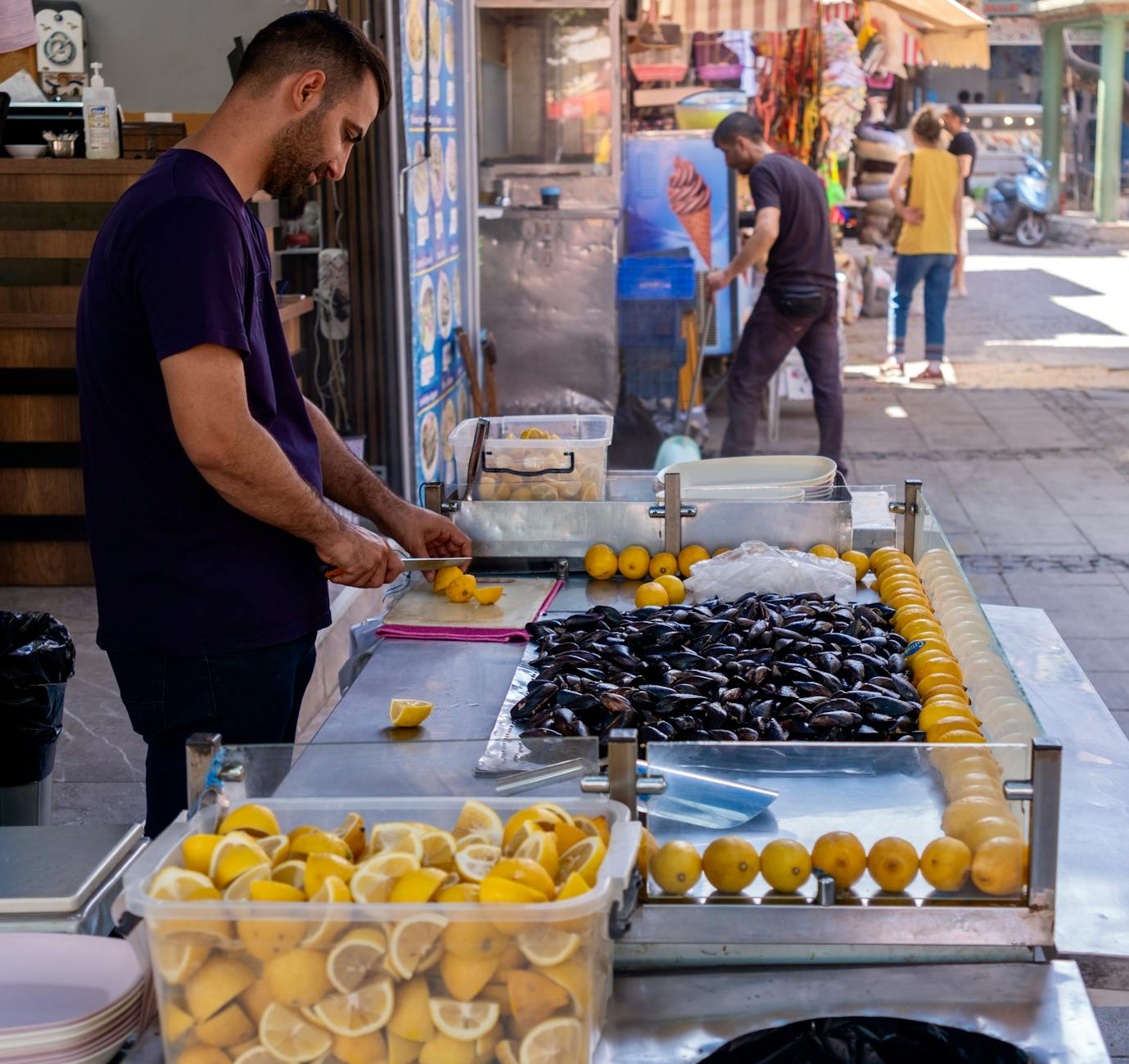
Getting Around Türkiye
Türkiye’s transport network is strong on major routes but uneven by region. Domestic flights are often the practical choice for long distances. Buses are extensive. Trains are useful on some corridors but not a complete country-wide solution. Cars are excellent for some regions and a headache in others.
Domestic Flights
Domestic flights are often the easiest way to connect Istanbul with Cappadocia, İzmir, Antalya, Bodrum, Dalaman, Trabzon, Gaziantep, Van, Kars, and other regional cities. They save time, but airport transfers can eat into the day.
Use flights for: Istanbul–Cappadocia, Istanbul–Antalya, Istanbul–Dalaman/Bodrum, Istanbul–Trabzon, Istanbul–Gaziantep, Istanbul–Van/Kars.
Common mistake: Assuming a one-hour flight equals a one-hour travel day. Add packing, transfer, security, boarding, landing, baggage, and hotel transfer.
Trains
Türkiye has high-speed rail on selected corridors, especially around Istanbul, Ankara, Konya, Eskişehir, Karaman, and Sivas, and conventional long-distance trains elsewhere.[15] Rail can be comfortable and scenic, but it does not replace flights or buses for many tourist routes.
Good train logic: Istanbul–Ankara, Ankara–Konya, Ankara–Sivas, Istanbul–Konya/Karaman in some cases, and scenic/eastern rail journeys for travelers who enjoy the train itself.
Less useful for: Reaching much of the coast quickly, complex Aegean ruin hopping, or short time-sensitive routes.
Intercity Buses
Buses are extensive and often more useful than trains for regional movement. They connect coastal towns, inland cities, and routes not served by rail. Quality varies, but major companies can be comfortable.
Good for: Antalya–Fethiye–Kaş, İzmir–Selçuk, Cappadocia regional access, many secondary routes.
Watch out: Long rides, bus-station locations outside town, night-bus fatigue, and less English in smaller stations.
Rental Cars
A car is useful in the Aegean, Turquoise Coast, Cappadocia outskirts, Black Sea highlands, and rural archaeology routes. It is a bad idea for central Istanbul and often unnecessary in major cities.
Car makes sense for: Aphrodisias, rural Aegean ruins, Lycian coast, Kaş/Fethiye villages, Black Sea mountains, some eastern routes.
Car is a mistake for: Central Istanbul sightseeing, parking-heavy old towns, travelers uncomfortable with assertive driving, and routes where a private transfer/driver is easier.
Istanbul Transport
Istanbul’s transport network includes metro, tram, ferries, Marmaray, Metrobus, buses, funiculars, taxis, and airport shuttles. Istanbulkart is the main payment tool for public transport, including bus, subway, tram, cable car, Marmaray, Metrobus, and ferry.[9]
Airport note: Istanbul Airport has M11 metro access, Havaist airport buses to many city points, and IETT public buses.[10]
The move: In Istanbul, public transport plus ferries is often more pleasant than taxis. Taxis can be useful, but traffic and route disputes can frustrate visitors.
Taxis and Rideshare
Use taxis carefully. Have your destination written or pinned, follow the route on your phone, confirm meter/price norms, and avoid unofficial drivers. App-based options can reduce but not eliminate friction.
Common taxi problems: Refusing short rides, inflated prices, “broken meter,” traffic delays, and airport/tourist-zone overcharging.
Ferries and Boats
Ferries are essential in Istanbul and useful along coasts. Boat trips are also central to Bodrum, Fethiye, Kaş, Kekova, Göcek, and gulet routes.
The move: A boat day can be the best day of a coast trip. But choose reputable operators and check safety, crowding, route, food, and swimming stops.
Budget and Costs
Türkiye can be good value compared with much of western Europe, but visitor costs vary wildly by exchange rate, season, city, and travel style. Istanbul luxury hotels, Cappadocia cave hotels, balloon flights, coastal summer stays, private guides, and museum entries can be expensive. Local food, public transport, ferries, and simpler lodging can still be very good value.
Daily Budget Ranges
| Traveler type | Daily estimate, excluding major flights and shopping | What it means |
|---|---|---|
| Shoestring | Low to moderate | Hostels or basic pensions, street food/lokanta, buses, limited paid sights, careful routing. |
| Budget comfort | Moderate | Simple hotels, casual restaurants, public transport, a few museum/site entries, occasional taxi. |
| Mid-range | Moderate to high | Good boutique hotels, domestic flights, guided day tours, hammam, strong restaurants, some taxis/transfers. |
| Comfortable | High | Better hotels, private transfers, good guides, cave hotel, balloon flight, coast lodging, nicer restaurants. |
| Luxury | Very high | Istanbul luxury hotel, private guide/driver, top hammam, yacht/gulet, high-end coast resort, fine dining. |
Because prices move quickly, a guide should use dated, verified ranges rather than static claims.
What Is Surprisingly Affordable
- Street food and casual meals.
- Public ferries in Istanbul.
- Many local cafés and tea stops.
- Intercity buses.
- Some family-run pensions outside peak season.
- Smaller towns away from coastal summer demand.
What Is Surprisingly Expensive
- Prime Istanbul hotels.
- Famous historic hammams.
- Cappadocia balloon flights and premium cave hotels.
- Coastal hotels in July/August.
- Imported alcohol and cocktails.
- Private guides/drivers over multiple days.
- Tourist-trap restaurants near major monuments.
Best Value Moves
- Stay in a well-connected Istanbul neighborhood rather than chasing the cheapest distant hotel.
- Eat lunches at lokanta and save splurges for special dinners.
- Use ferries and trams instead of taxis in Istanbul.
- Travel shoulder season.
- Book domestic flights early on popular routes.
- Use a MuseumPass only if your route actually includes enough covered sites.
- Stay in Selçuk instead of using an expensive day trip for Ephesus.
- Choose one coast base instead of paying for constant transfers.
Splurge-Worthy
- A strong Istanbul hotel location.
- A reputable Cappadocia balloon flight if it matters to you.
- A good guide for Ephesus, Istanbul history, or southeastern heritage.
- A proper hammam in Istanbul.
- A boat day or gulet segment on the coast.
- A private driver for awkward archaeology routes.
Usually Not Worth It
- Generic shopping stops disguised as tours.
- Overpriced carpet/leather/jewelry pitches if you are not shopping seriously.
- Midday summer tours of exposed ruins.
- Very cheap hot-air balloon operators with unclear safety standards.
- Taxis across Istanbul in heavy traffic when ferry/metro/tram would work.
- One-night Cappadocia trips if ballooning is the main goal.
Safety, Health, Weather, and Natural Hazards
Türkiye safety needs a calm, specific approach. Millions visit without incident, especially on classic routes. But the country also has terrorism risk, regional conflict-adjacent zones, earthquakes, heat, traffic issues, scams, and occasional demonstrations.
General Safety
Use ordinary urban awareness in Istanbul and other major cities: secure your phone and wallet, watch bags in crowds, avoid isolated late-night areas, choose nightlife carefully, and use licensed transport. The U.S. advisory specifically calls out caution in crowded public spaces including transportation hubs, markets, malls, government buildings, hotels, restaurants, clubs, places of worship, educational institutions, parks, airports, and major events.[4]
Regional Security
Current U.S. advice says to reconsider travel to southeast Türkiye and not travel within 10 km of the Syria/Iraq border because of terrorism and armed conflict risk.[4] UK advice warns against all travel within 10 km of the Türkiye-Syria border.[5]
Practical meaning: Istanbul, Cappadocia, the Aegean, and mainstream Mediterranean routes should not be evaluated the same way as border-adjacent routes. For southeast/east travel, check the exact province, road, and current conditions.
Common Scams and Friction Points
| Issue | What it looks like | How to avoid it |
|---|---|---|
| Taxi overcharging | Refused meters, long routes, inflated airport/tourist prices. | Use reputable apps/stands, follow route, confirm norms, use public transport when better. |
| Shoe-shine brush trick | Someone drops a brush, you help, then get pressured for payment. | Keep walking politely. |
| Carpet/leather/jewelry pressure | “Friendly” invitation becomes sales pitch. | Be clear, do not accept unless interested, leave firmly. |
| Restaurant menu surprises | Prices unclear, seafood by weight, unexpected cover/service. | Read menu, ask price before ordering, avoid aggressive tourist strips. |
| Nightlife overcharging | Invited into bar/club, huge bill, pressure. | Choose venues yourself; avoid touts. |
| Fake guides | Unlicensed guiding or unsolicited “help” at sites. | Use licensed guides or reputable providers. |
| Currency confusion | Wrong exchange, card terminal issues, old price assumptions. | Pay attention to totals, currency, and receipt. |
Earthquakes
Earthquakes are a real part of Türkiye’s risk profile. AFAD’s own material emphasizes the country’s major exposure to earthquake impacts.[12]
Before travel:
- Know your hotel’s emergency exits.
- Keep shoes, phone, power bank, passport, and water accessible.
- Follow local instructions after tremors.
- Avoid damaged buildings and unstable masonry.
- Register with your country’s travel-alert system if available.
Heat and Sun
Summer heat is serious at Ephesus, Pamukkale, Cappadocia valleys, central Anatolia, and the southeast. Plan early starts, shade, water, hats, sunscreen, and rest.
The move: In July/August, ruins are morning activities. Coast, pool, siesta, hammam, museum, or shaded meals are afternoon activities.
Health Practicalities
CDC’s Türkiye traveler-health page should be checked before departure for vaccine and health guidance; it notes that yellow fever vaccine is not recommended and not required for entry, but broader health recommendations depend on traveler profile.[13]
Practical notes:
- Bring prescription medicines in original packaging with documentation.
- Pharmacies are common in cities and tourist towns.
- Travel insurance should cover planned activities.
- Ask locally about tap water; many visitors use bottled or filtered water, especially outside major hotels.
- In hot months, dehydration ruins trips faster than most people expect.
Road, Sea, and Outdoor Safety
- Roads can be winding and assertive, especially on the coast and in mountains.
- Do not swim where currents, boat traffic, or rocks make conditions unsafe.
- Boat trips vary in safety and crowding; choose carefully.
- The Lycian Way and mountain routes require real footwear, water, maps, and weather awareness.
- Winter routes in eastern/central Türkiye can be snow-affected.
Accessibility and Mobility
Türkiye can be rewarding but challenging for travelers with mobility concerns. Major hotels, airports, modern malls, and some museums are accessible, but old cities, archaeological sites, cave hotels, steep streets, ferries, uneven sidewalks, and historic buildings can be difficult.
What Helps
- Major airports and many modern hotels.
- Istanbul metro/tram sections, though not all transfers are easy.
- Private drivers and guides.
- Newer museums and shopping centers.
- Resort hotels with accessible rooms, if verified directly.
What Is Hard
- Sultanahmet crowds, cobbles, curbs, and slopes.
- Galata/Beyoğlu hills.
- Cave hotels in Cappadocia with stairs and uneven rock corridors.
- Ephesus marble streets and uneven ancient paving.
- Pamukkale travertines and wet/slippery surfaces.
- Small ferries, old restaurants, rooftop venues without elevators.
- Rural ruins and mountain villages.
Lower-Mobility Strategy
Choose hotels carefully, minimize hotel changes, hire drivers for Cappadocia and archaeological routes, visit major sites early, avoid midday heat, confirm elevators and bathroom access, and do not assume that “historic charm” is accessible.
The move: For Cappadocia, do not book a cave hotel until you confirm step count, elevator availability, room access, vehicle access, and luggage help.
Families, Solo Travelers, LGBTQ+ Travelers, and Special Considerations
Families With Children
Türkiye can be excellent with kids: food is flexible, people are often warm toward families, beaches are strong, hotels can be family-friendly, and Istanbul has ferries, parks, palaces, cisterns, aquariums, and sweets.
Best family routes: Istanbul + Antalya resort; Istanbul + Cappadocia; Istanbul + Bodrum/Fethiye; Istanbul + Ephesus with careful pacing.
Family tips:
- Avoid exposed ruins at midday in summer.
- Use private transfers when luggage/heat/kids make public transport painful.
- Choose hotels with real room space.
- Build in pool/coast days.
- Keep snacks and water handy.
- Do not overdo mosques and museums back-to-back.
Solo Travelers
Türkiye can be very rewarding solo, especially Istanbul, Cappadocia, the Aegean, and coastal towns. Solo dining is feasible, but some meyhane/social dining contexts feel better with company.
Solo tips:
- Join a food walk or guided tour early.
- Use ferries and public transport confidently in Istanbul.
- Choose central lodging.
- Be firm with touts and sales pressure.
- Use extra caution around nightlife and taxis.
Women Traveling Solo
Many women travel Türkiye successfully, but experiences vary by region, dress, time of day, and context. Istanbul, coastal resorts, Cappadocia, and major tourist towns are more accustomed to foreign solo travelers than some conservative rural areas.
Practical tips:
- Dress more modestly in conservative areas and religious sites.
- Avoid isolated late-night walks.
- Use reputable taxis/transfers at night.
- Trust discomfort and leave situations early.
- Be clear and firm with unwanted attention.
LGBTQ+ Travelers
Türkiye has LGBTQ+ communities and nightlife, especially in Istanbul, but public attitudes and legal/social realities are more complex than in some western European destinations. Discretion may be advisable, especially outside cosmopolitan neighborhoods and resort areas.
The move: Choose inclusive lodging, understand local context, and avoid assuming that tourist tolerance equals full public acceptance everywhere.
Older Travelers
Türkiye can work very well for older travelers if paced thoughtfully. Use centrally located hotels, private transfers where helpful, fewer hotel changes, morning sightseeing, and comfortable restaurants/hammams.
Religious Travelers
Muslim travelers will find halal food widely available and mosque access straightforward. Christian, Jewish, and other heritage travelers will find deep sites, but should check access, restoration status, security rules, and service times.
Culture, History, Religion, and Etiquette
Short History for Travelers
Türkiye’s story is not one civilization replacing another cleanly. It is a palimpsest.
Ancient Anatolia included Hittite, Phrygian, Lydian, Urartian, Greek, Persian, Roman, Armenian, and many other worlds. The Roman and Byzantine layers shaped cities, roads, churches, aqueducts, and imperial politics. Constantinople was one of history’s great capitals. Seljuk Turks brought new political, architectural, and religious forms into Anatolia. The Ottoman Empire rose from northwestern Anatolia and became a vast imperial power linking the Balkans, Middle East, North Africa, Black Sea, and eastern Mediterranean. The modern Republic of Türkiye was founded in 1923 after the collapse of the Ottoman Empire, war, population exchange, reform, and nation-building.
This history explains why Türkiye feels so layered. A single route can include a Greek theater, a Roman library, a Byzantine church, a Seljuk caravanserai, an Ottoman mosque, a republican monument, and a contemporary café.
Religious Etiquette
Mosques are active religious spaces. Visitors are usually welcome outside prayer times and according to local rules, but respect matters.
- Dress modestly.
- Women usually cover hair in mosques.
- Remove shoes.
- Avoid walking in front of worshippers.
- Keep voices low.
- Do not treat prayer as a spectacle.
- Check photography rules.
- Avoid visiting during Friday prayer unless explicitly appropriate.
Social Etiquette
- Greet politely; a little Turkish goes far.
- Tea offers may be genuine hospitality or part of commerce; context matters.
- Bargaining is normal in some markets, not in fixed-price shops.
- Do not photograph people closely without permission.
- Be careful discussing politics, religion, military issues, and sensitive historical topics casually.
- In conservative areas, public affection and revealing clothing may draw attention.
- During Ramadan, be more discreet with eating/drinking in public in observant areas, though tourist zones still function.
Useful Turkish Phrases
| Turkish | Meaning |
|---|---|
| Merhaba | Hello |
| Teşekkürler | Thanks |
| Lütfen | Please |
| Pardon / Affedersiniz | Excuse me / sorry |
| Günaydın | Good morning |
| İyi akşamlar | Good evening |
| Ne kadar? | How much? |
| Hesap lütfen | The bill, please |
| Tuvalet nerede? | Where is the bathroom? |
| İngilizce biliyor musunuz? | Do you speak English? |
| Çok güzel | Very beautiful / very good |
Seasonal and Month-by-Month Guide
January
Cold in Istanbul and central Anatolia; snowy in Cappadocia/eastern Türkiye; wet on some coasts. Good for museums, hammams, lower crowds, winter photography, and Istanbul atmosphere.
Verdict: Good for city/culture travelers who do not need beach weather.
February
Still winter. Cappadocia can be beautiful with snow if roads/weather cooperate. Istanbul remains museum-and-hammam friendly.
Verdict: Good value and low crowds; weather can be gray or cold.
March
Transitional. Istanbul becomes more pleasant, but weather remains variable. Good for early cultural trips with layers.
Verdict: Better late in the month.
April
One of the best broad months. Istanbul is lively, ruins are comfortable, and Cappadocia is more pleasant.
Verdict: Excellent for first-timers.
May
Excellent. Warm but not yet peak summer. Strong for Istanbul, Cappadocia, Aegean ruins, and the coast beginning to wake up.
Verdict: One of the best months.
June
Great for combining culture and coast. Inland sites start to heat up, but mornings/evenings remain workable.
Verdict: Excellent if you plan around heat.
July
Peak summer. Hot, crowded on coasts, and difficult for midday ruins. Good for beach/resort travel.
Verdict: Good for coast; tough for heavy cultural touring.
August
Hot and busy. Coastal travel dominates. Inland ruins and cities need early starts.
Verdict: Choose beaches, boats, shade, and slow pacing.
September
One of the best months. Seas remain warm, crowds ease, and cultural touring improves.
Verdict: Excellent all-round.
October
Excellent for Istanbul, Cappadocia, ruins, and coast in many areas. Weather starts to vary later in the month.
Verdict: Excellent first-time month.
November
Shoulder/low season. Istanbul and museums remain good; coast quiets; weather can turn wetter/cooler.
Verdict: Good for lower crowds and city culture.
December
Winter atmosphere, hammams, museums, lower crowds, and possible snow in central/eastern Türkiye.
Verdict: Good for cities and winter mood, not for beaches.
Holidays and Events to Watch
- Ramadan and Eid dates shift each year and affect rhythms, transport, and family travel.
- Turkish national holidays can affect openings and crowds.
- Istanbul’s spring tulip season can make parks beautiful.
- Coastal peak season runs through summer.
- Cappadocia balloon demand can spike during holidays.
- Religious and political events can affect access or demonstrations.
Nature, Hiking, Sailing, Beaches, and Outdoors
Cappadocia Valleys
Cappadocia is best on foot at least once. Valleys such as Rose, Red, Pigeon, Love, and others vary in difficulty and wayfinding. Use proper shoes, water, and local advice.
Best season: Spring and autumn.
Watch out: Heat, loose rock, confusing paths, and sunrise/sunset timing.
Lycian Way
The Lycian Way is one of Türkiye’s great long-distance hiking routes, tracing sections of the southwest coast through ruins, villages, cliffs, and beaches.
Best season: Spring and autumn.
Best for: Experienced walkers, slow travelers, coast plus ruins.
Watch out: Heat, water availability, trail marking variability, and accommodation planning.
Gulets and Blue Voyage
A gulet trip can be a defining Türkiye experience: swimming coves, simple meals, deck time, ruins from the sea, and slow travel.
Best routes: Bodrum/Gökova, Fethiye/Göcek, Marmaris, Kaş/Kekova, depending boat and season.
Best months: June–September, with September often ideal.
Questions to ask: Cabin size, AC, route flexibility, food, alcohol policy, group size, swimming stops, crew reputation, weather cancellation, and what is included.
Beaches
Türkiye has sandy beaches, pebble beaches, resort beaches, wild coves, family beaches, and beach clubs. Do not assume every famous beach is quiet or undeveloped.
Best known areas: Bodrum, Çeşme/Alaçatı, Fethiye/Ölüdeniz, Patara, Kaş/Kalkan, Antalya, Side, Alanya, Çıralı/Olympos.
The move: For beauty, go early or by boat. For comfort, choose a beach club or resort. For solitude, research beyond the top Instagram names.
Black Sea Highlands
The Black Sea highlands are lush and dramatic, with tea fields, wooden houses, mountain roads, and mist. They are also wet, winding, and less like the resort coast.
Best season: Summer for high elevations.
Watch out: Road conditions, weather, landslides, and overdevelopment in some popular spots.
Skiing and Winter Nature
Türkiye has ski resorts such as Uludağ, Palandöken, Erciyes, Kartalkaya, Sarıkamış, and others. Conditions vary, and winter travel requires current snow and road checks.
Shopping and Souvenirs
Türkiye is a strong shopping country if you buy thoughtfully. The trap is tourist filler; the reward is craft, textiles, ceramics, food, books, copper, jewelry, leather, and regional products.
Good Souvenirs
- Turkish coffee and cezve/ibrik coffee pot.
- Tea glasses or quality tea.
- Spices from reputable sellers.
- Olive oil, pomegranate molasses, dried fruits, nuts, pistachios, subject to customs rules.
- Ceramics from İznik/Kütahya-style traditions or good contemporary makers.
- Towels, peshtemal, textiles, scarves.
- Copperware.
- Evil-eye beads, if you like symbolic souvenirs.
- Books, prints, maps, calligraphy, design objects.
- Regional sweets from serious confectioners.
- Handwoven carpets/kilims only if you are prepared to shop seriously.
Where to Shop
| Place | Best for |
|---|---|
| Grand Bazaar, Istanbul | Atmosphere, jewelry, textiles, carpets, ceramics, bargaining. |
| Spice Bazaar / Eminönü | Spices, sweets, tea, edible souvenirs, crowds. |
| Nişantaşı / Galata / Karaköy / Cihangir | Design, boutiques, fashion, modern Turkish brands. |
| Kadıköy | Food markets, books, records, local shops. |
| Cappadocia | Ceramics, carpets, local wine, craft, tourist goods. |
| İzmir/Aegean towns | Olive oil, herbs, local food, ceramics, textiles. |
| Gaziantep | Pistachios, baklava, copper, spices. |
| Black Sea | Tea, hazelnuts, regional foods, textiles. |
Shopping Cautions
- Do not buy antiquities or items that could be cultural property.
- Be careful with carpet claims, shipping, customs, and returns.
- Compare quality and prices; hard-sell environments are not your friend.
- Food souvenirs may face customs limits in your home country.
- “Handmade” and “local” are not guarantees; ask questions.
What to Skip
Skip: Trying to See Every Famous Place
Türkiye’s top sights are too spread out for one neat sprint. More stops can mean less Türkiye.
Better alternative: Choose one strong route family and leave a second country trip for later.
Skip: One-Night Cappadocia If Balloons Are the Point
Balloon flights are weather-dependent. One morning is a gamble.
Better alternative: Stay at least two nights, preferably three if ballooning matters deeply.
Skip: Midday Ruins in High Summer
Ephesus, Pamukkale, Aphrodisias, Perge, and other exposed sites are punishing in July/August afternoons.
Better alternative: Go at opening, hydrate, wear a hat, and rest midday.
Skip: Carpet/Leather/Jewelry Stops You Did Not Choose
A “free demonstration” can become a sales trap.
Better alternative: Shop intentionally with reputable sellers or skip entirely.
Skip: Generic Bosphorus Cruises With Aggressive Sales
Some are fine; others are mediocre.
Better alternative: Use public ferries, a reputable short cruise, or a private boat with clear terms.
Skip: Overpriced View Restaurants With Bad Food
Views are everywhere in Türkiye. You do not need to accept mediocre food for a skyline.
Better alternative: Drink tea or coffee with a view, then eat somewhere chosen for the kitchen.
Skip: Treating Southeast Türkiye as a Casual Food Detour
The food is extraordinary, but security/advisory context matters.
Better alternative: Check current conditions, use reliable local planning, and go deliberately.
Common Mistakes
- Underestimating Türkiye’s size. The map looks manageable until transfer days multiply.
- Spending too little time in Istanbul. The city deserves more than a stopover.
- Booking Cappadocia for one night. Weather can cancel balloons.
- Visiting ruins too late in the day in summer. Heat ruins attention.
- Choosing coast towns by name only. Bodrum, Fethiye, Kaş, and Antalya are different trips.
- Renting a car in Istanbul. Do not do this for city sightseeing.
- Relying on old prices. Inflation and exchange rates make old guides unreliable.
- Ignoring mosque etiquette. Dress, shoes, prayer, and photography matter.
- Following touts into shops or bars. Friendly pressure can become expensive.
- Assuming all of Türkiye is equally secular or tourist-oriented. Regional norms vary.
- Using taxis when ferries/metro/tram are better. Especially in Istanbul.
- Skipping travel insurance. Medical, delays, cancellations, and activities matter.
- Forgetting earthquake preparedness. Basic awareness is sensible, not paranoid.
- Overpacking luggage for old towns and cave hotels. Stairs and cobbles are real.
- Not checking regional advisories. Especially southeast/east/border routes.
Responsible Travel
Türkiye receives huge visitor numbers in its most famous places, and good behavior matters.
Do
- Dress respectfully in mosques and conservative areas.
- Use licensed guides where required or appropriate.
- Support local restaurants, craftspeople, and small hotels.
- Avoid damaging ruins, rock formations, travertines, and fragile landscapes.
- Follow site rules at Pamukkale, Cappadocia valleys, archaeological sites, and mosques.
- Ask before photographing people, especially in religious or conservative contexts.
- Use reputable animal and outdoor operators.
- Tip fairly where service warrants it.
- Learn basic Turkish phrases.
- Check whether short-term rentals are legal and respectful of local housing pressure.
Do Not
- Climb on ruins or touch frescoes/fragile stone.
- Treat mosques as costume-photo studios.
- Remove stones, sand, ceramics, or archaeological fragments.
- Fly drones without checking rules.
- Bargain aggressively with small vendors over tiny amounts while overspending elsewhere.
- Assume local political/religious sensitivities are entertainment.
- Block narrow streets or prayer spaces for content.
Local Logic
Hospitality is not a license to be careless. Türkiye often welcomes visitors warmly, but the best guests understand when they are in a sacred space, a neighborhood, a fragile landscape, or a commercial setting.
Packing List
Essentials
- Passport and visa/e-Visa documentation if required.
- Travel insurance details.
- Comfortable walking shoes.
- Modest clothing for mosques and conservative areas.
- Scarf or shawl for mosque visits.
- Sun hat, sunglasses, sunscreen.
- Reusable water bottle.
- Light day bag.
- Power adapter: Type C/F.
- Portable battery.
- Offline maps and translation app.
- Cash backup and cards.
- Medication in original packaging with documentation.
- Small tissue/wipes and hand sanitizer.
Seasonal Additions
| Season | Pack |
|---|---|
| Spring | Layers, light rain jacket, comfortable shoes, scarf, warmer layer for Cappadocia/evenings. |
| Summer | Breathable clothing, strong sun protection, swimwear, sandals, linen/cotton layers, electrolyte packets. |
| Autumn | Layers, light jacket, rain layer, swimwear for early autumn coast. |
| Winter | Warm coat, hat, gloves, waterproof shoes, layers, especially for Cappadocia/eastern/central Türkiye. |
Trip-Type Additions
- Cappadocia: Shoes with grip, warm layer for sunrise, daypack.
- Ruins: Hat, water, sun shirt, guidebook/app, lightweight scarf.
- Coast: Reef/water shoes for pebbly beaches, dry bag, swim cover-up.
- Hiking: Proper shoes, water capacity, offline trail map, first aid basics.
- Hammam: Most venues provide supplies, but bring personal items if preferred.
What Not to Overpack
- Too many dressy outfits unless staying luxury/resort.
- Large heavy bags for cave hotels, old towns, or ferry-heavy routes.
- Expensive jewelry for crowded markets.
- Drone equipment without researching rules.
- Assumptions that every hotel has elevator access.
FAQ
Is Türkiye worth visiting for a first international trip?
Yes, if you are ready for a culturally rich, sometimes intense, logistically varied country. Istanbul plus one region makes a strong first trip. Travelers who need everything fully predictable may prefer a more contained itinerary.
Is Turkey or Türkiye the correct name?
The official international name is Türkiye, but “Turkey” remains widely used in English. This guide uses both so travelers can search and understand current naming.
How many days do I need in Türkiye?
Ten to fourteen days is ideal for a first country trip. One week is good for Istanbul plus Cappadocia or Istanbul plus one coast/Aegean region. Istanbul alone deserves at least four nights if you like cities.
What is the best first-time itinerary?
Istanbul + Cappadocia + Ephesus/Pamukkale is the classic first-time triangle. Add the coast if you have two weeks or more.
Is Cappadocia worth it?
Yes, if you give it enough time and care about landscapes, cave churches, valleys, underground cities, and the possibility of balloons. It is less worth it as a rushed one-night detour.
Is Pamukkale worth it?
Yes if it fits your route and you also value Hierapolis. It is less worth a huge detour if you only want the white-terrace photo.
Is Türkiye safe?
Many classic tourist routes are heavily visited, but safety is region-specific. Check current official advisories, especially for southeast/eastern and border-area routes. Use normal urban caution in major cities and avoid demonstrations and crowded-risk situations when advised.
Do I need a visa for Türkiye?
It depends on your passport, passport type, and purpose. Check the Turkish Ministry of Foreign Affairs and official e-Visa portal. Do not use unofficial visa sites.
Is Türkiye expensive?
It depends on region, season, exchange rates, and style. Local food and public transport can be good value; luxury hotels, balloon flights, summer coast stays, private guides, and major sights can add up quickly.
Should I rent a car?
Not in Istanbul. A car can be useful on the Aegean, Turquoise Coast, rural archaeology routes, Black Sea highlands, and some eastern routes. For many first-timers, flights, transfers, buses, tours, and limited car rental are better than driving everywhere.
What should I book ahead?
Cappadocia balloons and cave hotels, Istanbul hotels in peak periods, famous hammams, good guides, domestic flights, coast lodging in summer, gulets, and special restaurants.
What is the best food city?
Istanbul is the best all-around food city because it contains many regional cuisines. Gaziantep may be Türkiye’s most famous food destination, but it requires current security/context checks. İzmir/Aegean, Black Sea, Konya/Kayseri, and southeastern cities each have distinct food identities.
Can I visit during Ramadan?
Yes. Tourist zones continue to function, but rhythms shift, especially in more observant areas. Be respectful about eating/drinking in public in conservative places during daylight, check opening hours, and enjoy evening atmosphere where appropriate.
Is Türkiye good with kids?
Yes, especially Istanbul plus the coast, Cappadocia, and family-friendly resorts. Avoid overpacked city days and exposed ruins in summer heat.
What should I skip on a short trip?
Skip anything that creates bad route logic. If you have seven days, do not try to include Istanbul, Cappadocia, Ephesus, Pamukkale, and the coast. Choose Istanbul plus one region.
Source Notes
Date-sensitive details in this guide were checked against official or primary sources where possible. Re-check every price, fare, schedule, visa rule, ticketing procedure, attraction rule, regional advisory, weather alert, and safety warning before publication.
- 1. Republic of Türkiye Ministry of Foreign Affairs, “General Information About Turkish Visas,” https://www.mfa.gov.tr/general-information-about-turkish-visas.en.mfa
- 2. Republic of Türkiye Ministry of Foreign Affairs, official e-Visa portal, “Get Information,” https://www.evisa.gov.tr/en/tour/
- 3. Republic of Türkiye Ministry of Foreign Affairs, “Visa Information For Foreigners,” https://www.mfa.gov.tr/visa-information-for-foreigners.en.mfa
- 4. U.S. Department of State, “Turkey Travel Advisory,” https://travel.state.gov/content/travel/en/traveladvisories/traveladvisories/turkey-travel-advisory.html
- 5. GOV.UK Foreign Travel Advice, “Turkey: Regional risks,” https://www.gov.uk/foreign-travel-advice/turkey/regional-risks
- 6. GOV.UK Foreign Travel Advice, “Turkey: Getting help,” https://www.gov.uk/foreign-travel-advice/turkey/getting-help
- 7. Republic of Türkiye Ministry of Culture and Tourism, Culture Portal, “Dünya Mirasında Türkiye,” https://www.kulturportali.gov.tr/portal/dunyamirasindaturkiye-1
- 8. Republic of Türkiye Ministry of Culture and Tourism / MüzeKart, “MuseumPass Türkiye E-Kart,” https://muze.gov.tr/urun-detay?CatalogNo=WEB-MSP01-27-009
- 9. Visit Istanbul, “Istanbul Card,” https://visit.istanbul/istanbul-card
- 10. Turkish Airlines, “Istanbul Airport Transportation Information,” https://www.turkishairlines.com/en-us/reaching-istanbul-airport/
- 11. Turkish State Meteorological Service, “Weather Forecast / Climate,” https://www.mgm.gov.tr/eng/forecast-cities.aspx
- 12. Republic of Türkiye Disaster and Emergency Management Authority (AFAD), “About Us,” https://en.afad.gov.tr/about-us
- 13. CDC Travelers’ Health, “Türkiye (Turkey) - Traveler View,” https://wwwnc.cdc.gov/travel/destinations/traveler/none/turkey
- 14. GoTürkiye, official travel guide, https://goturkiye.com/
- 15. TCDD Taşımacılık, “Yüksek Hızlı Tren / High Speed Train,” https://www.tcddtasimacilik.gov.tr/en/high_speed_train