A practical analysis for visitors, foreign residents, and local users, with a focused city analysis of Istanbul
Audience: Independent travelers, families, business travelers, longer-stay visitors, foreign residents, students, and locals comparing practical mobility options.
Contents
Turkey is not a single-mode transportation country. It is a country where the best answer changes sharply by distance, region, budget, season, terrain, and the exact neighborhood where a traveler is staying. The national system is built around four pillars: domestic aviation for long distances, intercity buses for broad coverage, rail for selected high-demand corridors, and local city-specific systems for the last mile.
For visitors, the most important lesson is that Turkey is larger than many first-time travelers expect. Istanbul to Cappadocia, Istanbul to Antalya, Istanbul to Trabzon, Istanbul to Gaziantep, and Istanbul to eastern Turkey are not casual day trips. Domestic flights and night buses remain central to national mobility. High-speed rail is very useful on the Istanbul-Ankara-Konya-Eskişehir-Sivas axis, but it does not yet replace buses or flights everywhere.
For locals and longer-stay residents, the main concern is not whether transport exists. In most populated areas, it does. The concern is reliability, crowding, fare inflation, traffic congestion, parking scarcity, road safety, transfer friction, and the mismatch between expanding metropolitan housing and uneven public transport coverage.
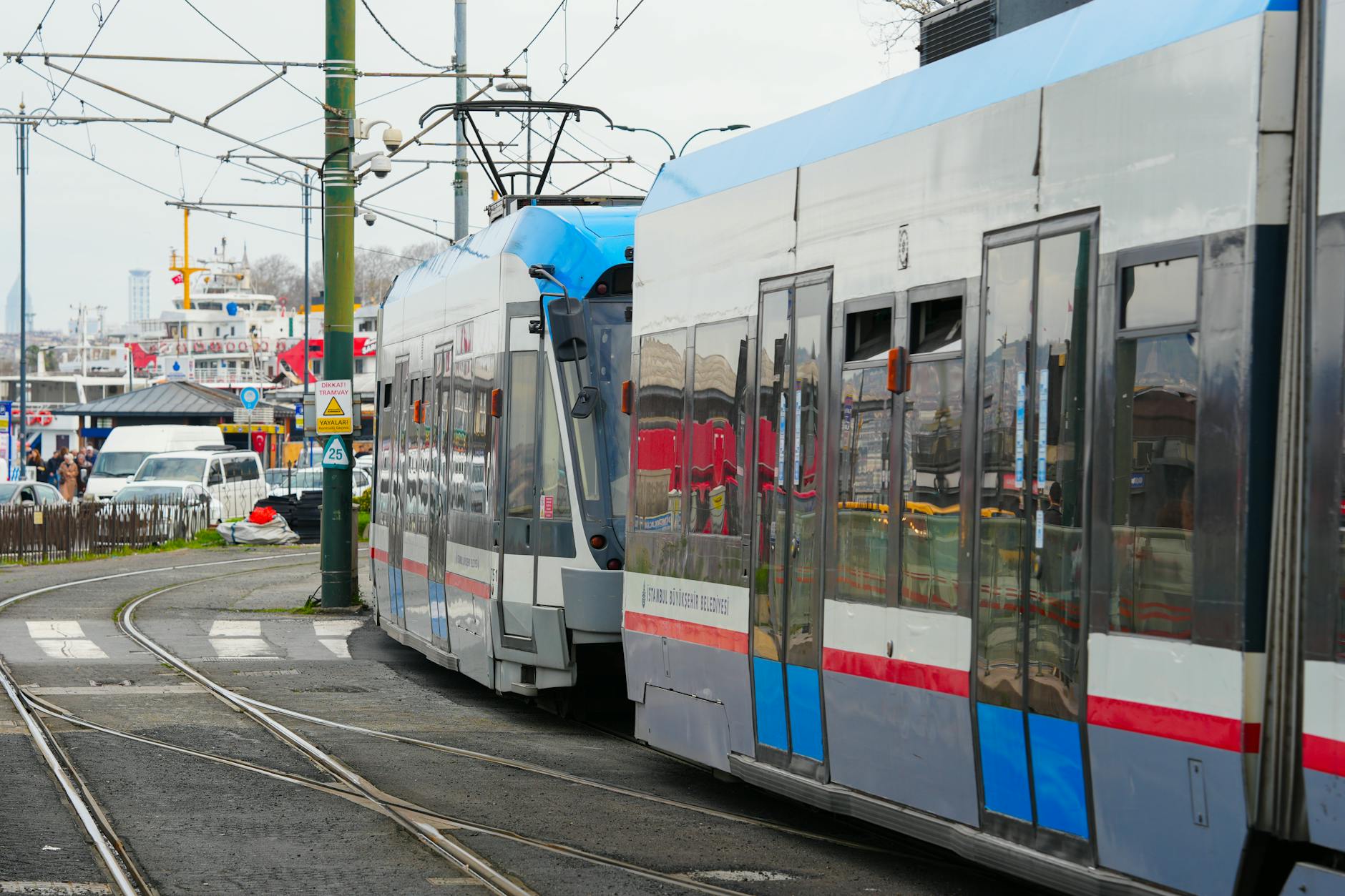
Istanbul deserves special treatment because it is Turkey's most complex transport environment. It has two major airports, an expanding rail network, ferries, Metrobüs, buses, trams, funiculars, cable cars, Marmaray rail under the Bosphorus, private shuttles, taxis, dolmuş services, and some of the worst traffic congestion travelers are likely to encounter. Istanbul can be easy if a visitor stays near the right rail, tram, ferry, or airport-bus corridor. It can be exhausting if they stay far from a useful line and rely on taxis for every move.
The strongest overall advice is simple: in Turkey, plan the long-distance leg and the last mile separately. A cheap flight or train is not truly convenient if arrival leaves you stranded far from your hotel at midnight. A central hotel is not truly central if it sits at the top of a steep hill, far from a transit line, with luggage. Good transportation planning in Turkey is less about memorizing every route and more about choosing the right mobility stack for each journey.
- [Executive summary](#executive-summary)
- [Part I — National-scale transportation in Turkey](#part-i--national-scale-transportation-in-turkey)
- [1. The basic structure of Turkish transportation](#1-the-basic-structure-of-turkish-transportation)
- [2. How to choose the right mode](#2-how-to-choose-the-right-mode)
- [3. Domestic flights and airports](#3-domestic-flights-and-airports)
- [4. Intercity rail](#4-intercity-rail)
- [5. Intercity buses and coaches](#5-intercity-buses-and-coaches)
- [6. Urban public transport across Turkey](#6-urban-public-transport-across-turkey)
- [7. Taxis, ride-hailing, transfers, and dolmuş](#7-taxis-ride-hailing-transfers-and-dolmuş)
- [8. Ferries, sea buses, and maritime transport](#8-ferries-sea-buses-and-maritime-transport)
- [9. Private vehicles, rental cars, highways, and tolls](#9-private-vehicles-rental-cars-highways-and-tolls)
- [10. Walking, cycling, scooters, accessibility, and luggage](#10-walking-cycling-scooters-accessibility-and-luggage)
- [11. Payments, tickets, and route-planning tools](#11-payments-tickets-and-route-planning-tools)
- [12. Common risks, friction points, and local concerns](#12-common-risks-friction-points-and-local-concerns)
- [13. Recommended mobility strategies by traveler type](#13-recommended-mobility-strategies-by-traveler-type)
- [Part II — Istanbul transportation analysis](#part-ii--istanbul-transportation-analysis)
- [1. Why Istanbul is different](#1-why-istanbul-is-different)
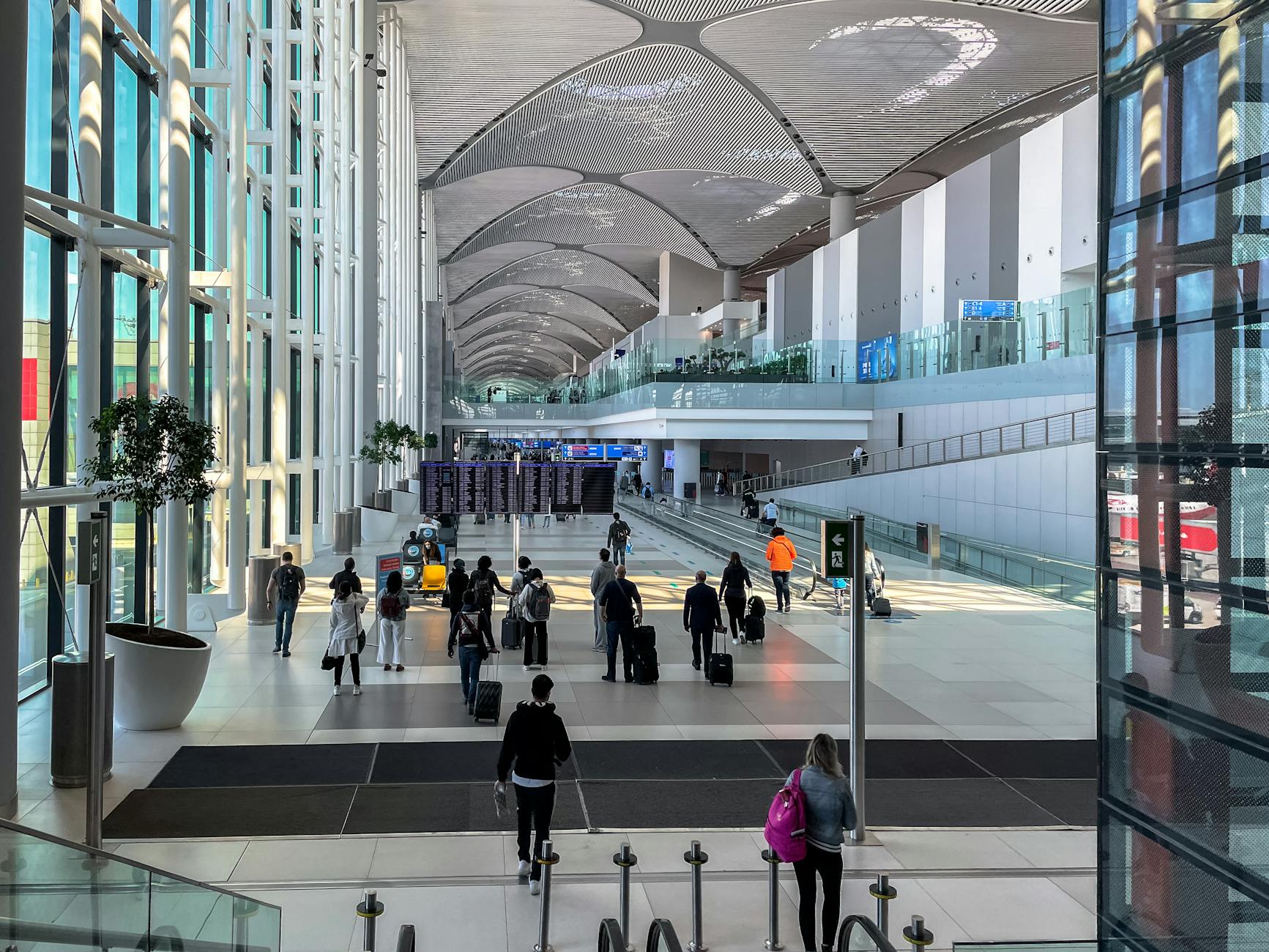
- [2. Istanbul airports and airport access](#2-istanbul-airports-and-airport-access)
- [3. Istanbulkart, fares, passes, and payment choices](#3-istanbulkart-fares-passes-and-payment-choices)
- [4. Metro, tram, funicular, cable car, Marmaray, and suburban rail](#4-metro-tram-funicular-cable-car-marmaray-and-suburban-rail)
- [5. Buses and Metrobüs](#5-buses-and-metrobüs)
- [6. Ferries and water transport](#6-ferries-and-water-transport)
- [7. Taxis, ride-hailing, private transfers, and airport taxi issues](#7-taxis-ride-hailing-private-transfers-and-airport-taxi-issues)
- [8. Dolmuş, minibuses, and informal-feeling local services](#8-dolmuş-minibuses-and-informal-feeling-local-services)
- [9. Walking, cycling, scooters, accessibility, and luggage in Istanbul](#9-walking-cycling-scooters-accessibility-and-luggage-in-istanbul)
- [10. Driving, parking, bridges, tunnels, and car rental in Istanbul](#10-driving-parking-bridges-tunnels-and-car-rental-in-istanbul)
- [11. Neighborhood-by-neighborhood mobility guidance](#11-neighborhood-by-neighborhood-mobility-guidance)
- [12. Istanbul itineraries and practical route choices](#12-istanbul-itineraries-and-practical-route-choices)
- [13. Local residents' transportation concerns in Istanbul](#13-local-residents-transportation-concerns-in-istanbul)
- [14. Bottom-line recommendations for Istanbul](#14-bottom-line-recommendations-for-istanbul)
- [Conclusion](#conclusion)
- [References](#references)
1. The basic structure of Turkish transportation
Turkey's transportation network reflects the country's geography. It spans Europe and Asia, has long coastlines, mountain ranges, densely populated western cities, major tourism corridors, and large interior and eastern regions where distances are substantial. That geography produces a layered system:
The system is effective, but it is decentralized. There is no single national transit card that works everywhere. Istanbulkart is not the same as AnkaraKart, Izmirim Kart, AntalyaKart, Kentkart, or other city systems. A visitor moving between Turkish cities should expect to reset their local transit knowledge in each destination.
The main national transportation principle
Turkey rewards multimodal planning. A strong itinerary often combines:
The mistake is assuming that one mode will carry the entire trip. Turkey is easier when travelers deliberately combine modes.
- Domestic flights connect Istanbul, Ankara, Izmir, Antalya, coastal resort airports, Black Sea cities, southeast cities, and eastern provinces.
- Intercity buses fill almost every gap and remain one of the most complete national transport networks.
- High-speed rail is strongest in the central and northwest corridor, especially routes involving Istanbul, Ankara, Eskişehir, Konya, Karaman, and Sivas.
- Conventional trains serve selected long-distance, regional, and scenic routes, but are slower and less comprehensive than buses.
- Urban transit varies by city: Istanbul is multimodal and rail-heavy; Ankara and Izmir have rail and bus systems; many medium cities rely heavily on buses, minibuses, tram lines, or local cards.
- Dolmuş and minibuses are crucial in towns, suburbs, resort areas, and places where formal rail is absent.
- Private cars and rental cars are useful for rural, coastal, archaeological, and multi-stop travel, but can be frustrating in major cities.
- Ferries and sea buses matter most around Istanbul, the Sea of Marmara, the Dardanelles, the Aegean coast, and island/coastal tourism routes.
- domestic flight or high-speed train for the long leg;
- airport bus, rail, coach shuttle, or taxi for the city approach;
- local card, tram, metro, dolmuş, ferry, or walking for the last mile.
2. How to choose the right mode
Mode selection matrix
| Trip type | Usually best option | Why |
|---|---|---|
| Istanbul-Ankara | High-speed train or flight | Train avoids airports and can be city-to-city practical; flights may be better for airport-side stays or tight schedules. |
| Istanbul-Eskişehir-Konya-Sivas corridor | High-speed rail | Rail is comfortable, reserved-seat, and often less stressful than road travel. |
| Istanbul-Antalya, Istanbul-Dalaman/Bodrum, Istanbul-Trabzon, Istanbul-Gaziantep, Istanbul-Van | Flight | Distances are large; flights save significant time. |
| Medium-distance city pairs without good rail | Intercity coach | Coach network is dense and often direct. |
| Rural archaeological sites, beaches, mountain villages, multi-stop coast trips | Rental car or private transfer | Public transport may exist but be slow, infrequent, or indirect. |
| Istanbul local sightseeing | Tram, metro, ferry, Marmaray, walking | Avoids traffic and covers major tourist zones well. |
| Resort-town local travel | Dolmuş, taxi, rental car, scooter only with caution | Formal transit varies; roads can be busy in summer. |
| Late-night arrivals | Pre-planned airport bus, hotel transfer, or taxi from official stand | Public transport frequency drops late at night. |
The traveler decision tree
Use a flight when: the route crosses a large part of the country, the trip would otherwise exceed 7-8 hours by road, or a regional airport is close to the destination.
Use high-speed rail when: both origin and destination are on the YHT network and the stations are reasonably convenient. Rail is especially good when it avoids airport transfers on both ends.
Use an intercity bus when: rail is unavailable, the bus is direct, the destination is a town rather than an airport city, or the fare is much cheaper than flying.
Use a rental car when: you want flexibility outside city centers, are visiting multiple dispersed sites, have luggage, or are traveling as a family/group. Avoid driving in central Istanbul unless there is a clear reason.
Use taxis and transfers when: arrival time, luggage, mobility needs, children, or bad weather make public transport impractical. But in major cities, taxis should be a tactical tool, not the default for every journey.
3. Domestic flights and airports
Domestic aviation is one of Turkey's strongest national mobility tools. Turkey recorded an all-time high of roughly 247.2 million air passengers in 2025 according to data released by the General Directorate of State Airports Authority and reported by Invest in Türkiye. That scale matters for travelers: domestic flights are not a luxury edge case; they are a normal part of moving around the country.
Major practical airport categories
Istanbul airports
Tourism and coastal airports
Interior and eastern airports
What visitors need to know
Airport location can matter as much as airfare. The cheapest flight may arrive at an airport far from your destination, especially in Istanbul. IST and SAW are on opposite sides of a huge metropolitan area. Choosing the wrong airport can add 90 minutes or more during traffic.
Domestic flights can be cheaper than long buses, but baggage changes the calculation. Low fares often exclude checked baggage or charge for seat choice. Families and travelers with large bags should compare full trip cost, not headline fare.
Allow time for airport access. Airport travel in Turkey is usually predictable only when using rail or dedicated airport buses on a low-traffic route. Road transfers in Istanbul, Antalya in summer, and some coastal regions can vary widely.
Weather and operational disruptions happen. Istanbul winter fog/snow events, Black Sea weather, summer congestion, and holiday peaks can affect travel. Build buffers before cruises, international flights, weddings, business meetings, or guided tours.
Domestic flight security is still real airport time. Even if the flight is only one hour, the door-to-door trip may become four to five hours after transfer, check-in, security, boarding, baggage claim, and onward transfer.
When flights are the wrong choice
Flights are inefficient when:
For example, Istanbul to Eskişehir or Ankara may be easier by high-speed rail than by flying, depending on where you are staying. Istanbul to Cappadocia may still be best by flight, but only if the arrival airport and hotel transfer are planned together.
- Istanbul Airport (IST): the primary long-haul and Turkish Airlines hub, northwest of the city.
- Sabiha Gökçen Airport (SAW): a major Asian-side airport used heavily by Pegasus, AnadoluJet/AJet, Turkish Airlines, and international low-cost carriers.
- Antalya
- Dalaman
- Milas-Bodrum
- Izmir Adnan Menderes
- Trabzon
- Kayseri and Nevşehir for Cappadocia access
- Ankara Esenboğa
- Konya
- Gaziantep
- Diyarbakır
- Erzurum
- Van
- Kars
- Mardin and Şanlıurfa regional options
- the destination is actually closer by train or coach after airport transfer time;
- arrival is late at night and local onward transport is poor;
- the trip requires expensive airport taxis at both ends;
- the itinerary includes scenic interior stops where a bus or car would be more flexible.
4. Intercity rail
Turkey's rail system is improving, but it is not uniformly useful everywhere. The best rail experiences are on high-speed routes and selected scenic or sleeper-style conventional routes. The worst mistake is assuming that every famous Turkish destination has a convenient train station.
High-speed rail: YHT
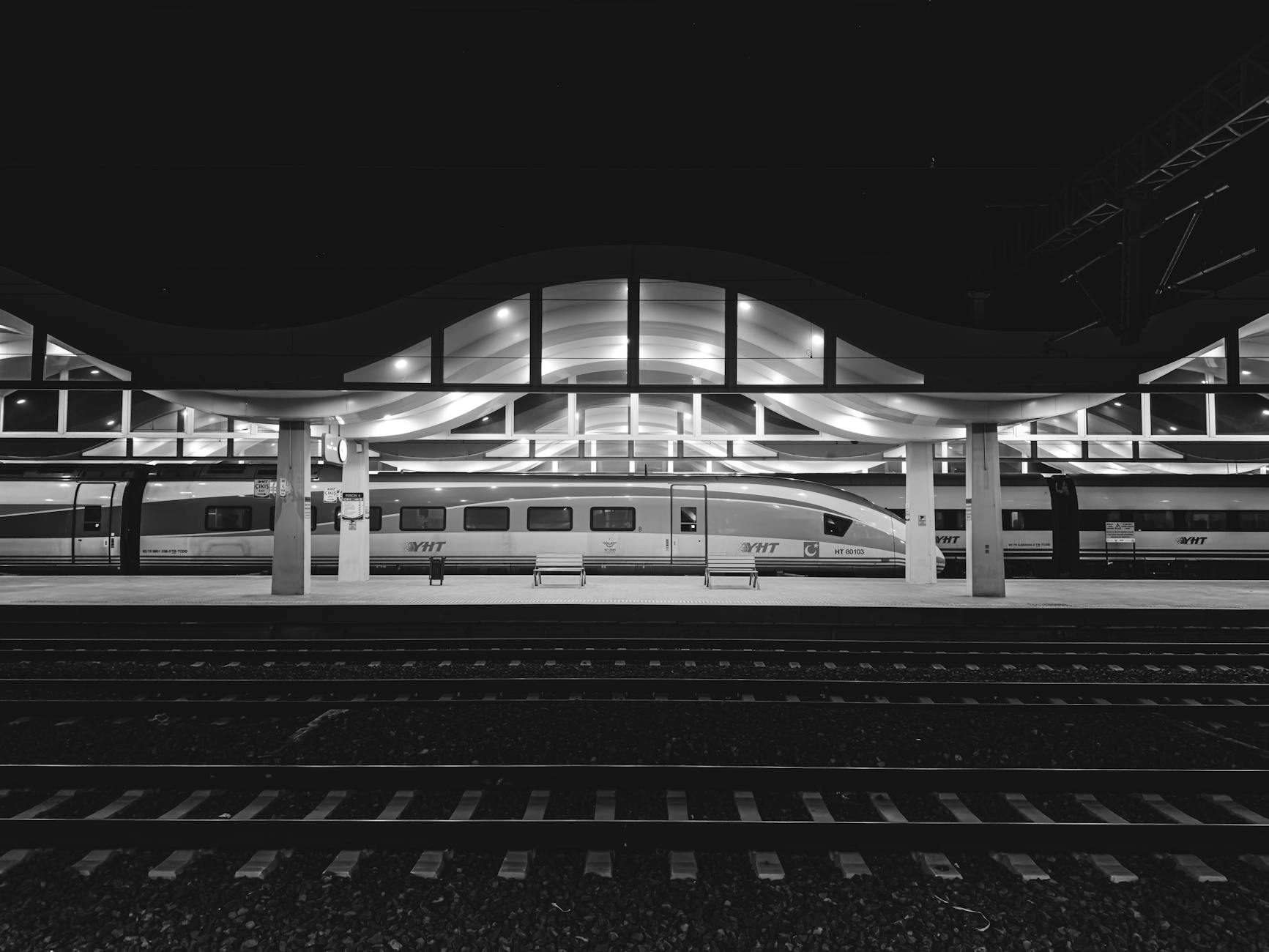
Turkey's high-speed train system is branded YHT. TCDD Taşımacılık operates services and sells tickets through its e-ticket platform. Official YHT route pages list major services including Ankara-Istanbul, Ankara-Konya, Ankara-Sivas, Sivas-Istanbul, Istanbul-Konya, and other high-speed or high-speed-linked services.
YHT is especially relevant for:
The high-speed network is strongest when the traveler is already near a useful station. Istanbul's rail geography is complex: high-speed services may use stations such as Halkalı, Söğütlüçeşme, Bostancı, or Pendik depending on the route and service pattern, so travelers should check the exact station before booking.
What YHT is good for
What YHT is not good for
Conventional and regional trains
Turkey also has conventional trains, including overnight and scenic services. These can be rewarding but are not usually the fastest option. Examples include long-distance services toward eastern Anatolia, the Aegean, and southeastern routes. TCDD Taşımacılık lists conventional services such as the Ankara Express, regional expresses, and named routes on its passenger service pages.
Conventional trains can be worthwhile for:
They are less ideal for travelers who need certainty, speed, or same-day onward tours.
Rail ticketing issues
Rail accessibility and luggage
YHT is generally more manageable than coaches for passengers who dislike long road trips, but not every station or transfer route is equally easy. Elevators and escalators may be present but can fail or be crowded. Luggage storage space exists but may be limited in peak periods. Travelers with large suitcases should board early and avoid tight transfers.
- Istanbul-Ankara
- Istanbul-Eskişehir
- Ankara-Eskişehir
- Ankara-Konya
- Istanbul-Konya
- Ankara-Sivas
- Istanbul-Sivas
- connections involving Karaman through Konya
- Comfortable reserved seating.
- Reliable city-to-city travel on core routes.
- Avoiding airport security and road congestion.
- Travelers with moderate luggage.
- Business travel between rail-connected cities.
- Families who prefer stations over airports.
- Destinations not on the high-speed network.
- Late-night flexibility if the timetable does not fit.
- Travelers staying far from departure stations.
- Itineraries that require multiple rural stops.
- slow travel and scenery;
- rail enthusiasts;
- budget travelers with time;
- overnight trips where accommodation savings matter;
- eastern Turkey itineraries where the train experience is part of the trip.
- Use official TCDD channels when possible.
- Seats can sell out on popular YHT and sleeper routes, especially around holidays.
- Passport details may be required for online booking by foreign visitors.
- Station names matter: Istanbul has multiple long-distance rail access points.
- Security checks may exist at larger stations.
- Arrive early enough to navigate platforms, elevators, luggage, and ticket issues.
5. Intercity buses and coaches
Intercity buses are the backbone of Turkey's non-air national mobility. They connect large cities, smaller provincial centers, resort towns, and places rail does not reach. For many Turks, the intercity coach is a normal, practical, and affordable way to travel.
How the system works
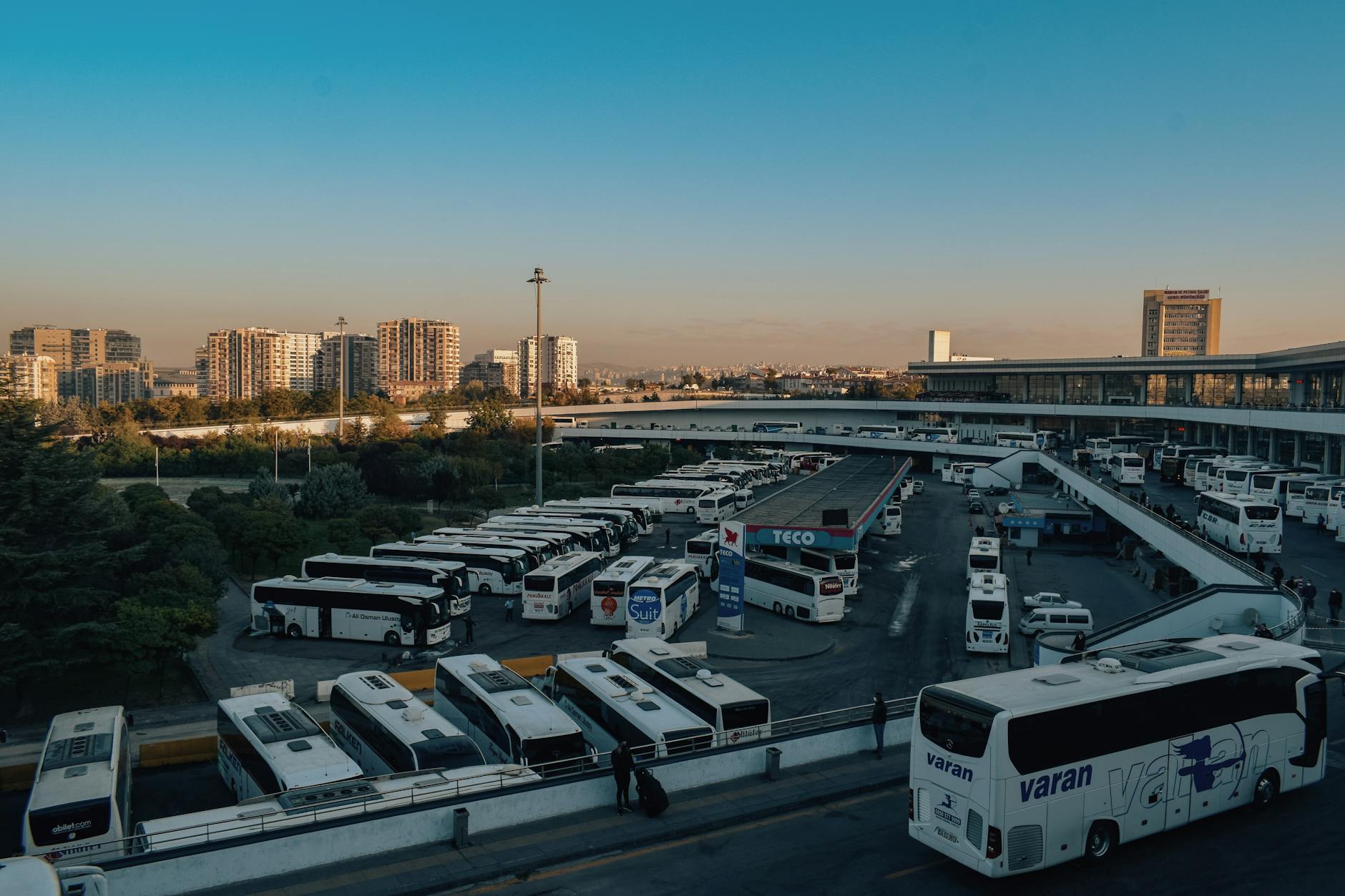
Most intercity routes are operated by private coach companies. Major cities have an otogar or bus terminal. In Istanbul, Esenler/Bayrampaşa is the classic main terminal, while other terminals and pickup points serve different directions and companies. In smaller towns, the bus terminal may be central or on the edge of town.
Tickets are sold through:
What coaches are good for
What coaches are not good for
Onboard experience
Turkish intercity coaches are often better than first-time visitors expect. Many offer assigned seats, air conditioning, rest stops, onboard attendants, snacks or drinks, and relatively modern vehicles. But standards vary by company and route. Premium companies and major corridors usually perform better.
Gender seating and seat selection
On some Turkish bus booking systems, gender can affect adjacent seating. This is not necessarily discriminatory in intent; it reflects local practice where unrelated male and female passengers may not always be seated together if booked separately. Couples and families should book together and choose seats carefully.
Rest stops
Long-distance buses usually stop at large roadside facilities with toilets, food, shops, prayer rooms, and smoking areas. These stops are useful but can extend travel time. Keep small cash or a payment card available, and watch the bus departure time. Do not wander too far.
Local terminal transfer problem
The biggest bus friction point is often not the bus ride. It is getting to and from the terminal. Many otogars are outside the old center. Some companies run free or low-cost shuttle services known as servis to local districts, but these are not always obvious to foreigners. Ask the company before arrival: "Servis var mı?" means "Is there a shuttle?"
- bus company websites;
- large Turkish travel platforms;
- terminal counters;
- local agencies;
- mobile apps;
- sometimes hotel or tour-office arrangements in smaller places.
- Direct service to cities and towns without rail.
- Cheaper overnight travel.
- Medium-distance routes where airports are inconvenient.
- Routes along the Aegean, Mediterranean, Black Sea, and inland corridors.
- Travelers who can tolerate long seated journeys.
- Tight itineraries after overnight rides.
- Travelers with back problems or motion sickness.
- Families with infants on very long routes.
- Travelers who need toilets on board; many Turkish coaches rely on rest stops rather than onboard toilets.
- Anyone who cannot handle late arrivals at peripheral bus terminals.
6. Urban public transport across Turkey
Urban transport in Turkey is city-specific. Istanbul's system is the most complex, but other cities may have metro, tram, suburban rail, buses, ferries, cable cars, minibuses, and local smartcards.
City cards and payment fragmentation
A key national-scale issue is that each city commonly has its own payment ecosystem. Examples include:
Some cities accept contactless bank cards on selected modes, but this is not universal enough to rely on without checking locally. Visitors moving between cities should expect to buy or use a new local card or app in each place.
Buses
Municipal buses are widespread and cheap, but they require local knowledge. In many cities, bus stop names, directionality, and route variants are confusing. Buses are essential for residents but can be stressful for short-stay visitors unless route-planning apps are reliable in that city.
Metros and trams
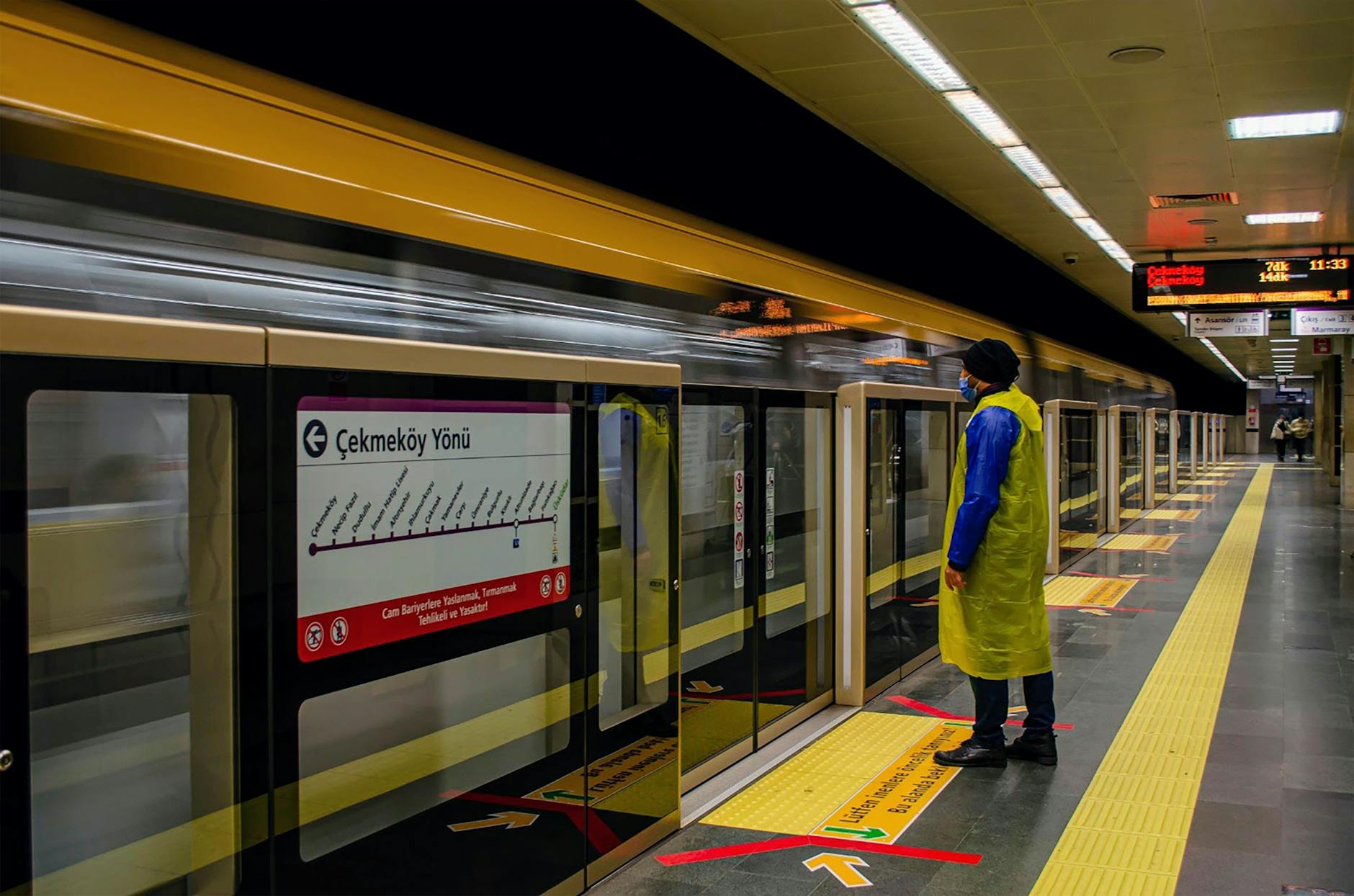
Rail systems are easiest for visitors because lines are fixed, stations are visible, and maps are simpler. Istanbul, Ankara, Izmir, Bursa, Antalya, Konya, Kayseri, Samsun, Eskişehir, and other cities have rail or tram systems of varying scale. Visitors should favor hotels near rail stops when the itinerary is city-focused.
Dolmuş and minibuses
A dolmuş is a shared minibus or shared taxi-style route service. In practice, dolmuş and minibuses fill the gaps between formal public transport and taxis. They are common in towns, suburbs, and resort areas.
Typical features:
Visitors often find dolmuş intimidating at first. Locals rely on them because they are frequent, practical, and often cheaper than taxis.
Urban ferries
Ferries are local transit in Istanbul and a few coastal areas, not just sightseeing. In Istanbul they are central to crossing between Europe and Asia and moving along the Bosphorus. In other regions, ferries may connect towns, islands, or car routes across straits.
- Istanbulkart in Istanbul;
- AnkaraKart in Ankara;
- Izmirim Kart in Izmir;
- AntalyaKart in Antalya;
- local Kentkart-style systems in several municipalities.
- fixed or semi-fixed route;
- low fare;
- cash often used, though practices vary;
- stops may be informal;
- passengers may call out where they want to get off;
- signage may be Turkish-only;
- luggage space can be limited;
- crowded conditions are common at peak times.
7. Taxis, ride-hailing, transfers, and dolmuş
Taxis
Licensed taxis in Turkey are metered, and major cities have extensive taxi supply. However, travelers frequently report practical problems in tourist areas: refusal of short rides, pressure for fixed fares, circuitous routing, reluctance to use meters, limited English, cash preference, and disputes over tolls or airport routes.
Basic taxi rules:
Ride-hailing
Ride-hailing exists in Turkey but can work differently from countries where private ride-hailing cars dominate. In Istanbul, app-based services often dispatch licensed taxis rather than private cars. Apps can still help because they provide a record of the ride, approximate route, and sometimes payment structure.
Private transfers
Private transfers are worthwhile for:
But transfers should be booked through a reputable operator, hotel, or established platform. Avoid unlicensed arrivals-hall solicitation.
Dolmuş versus taxi
A dolmuş is usually cheaper but less private, less luggage-friendly, and harder for first-time visitors. A taxi is more direct but more vulnerable to traffic and price disputes. Locals use both strategically.
- Use official taxis or reputable app-based dispatch when possible.
- Confirm the meter is running unless a legitimate fixed airport/private transfer has been booked in advance.
- Use navigation on your phone to follow the route.
- Keep small bills or confirm card acceptance before departure.
- Photograph or note the taxi number if a problem occurs.
- At airports, use official taxi ranks, not unsolicited arrivals-hall offers.
- late-night airport arrivals;
- families with children;
- travelers with large luggage;
- older travelers;
- groups of three or more;
- resort arrivals where the airport is far from the hotel;
- destinations without a reliable bus or rail link.
8. Ferries, sea buses, and maritime transport
Turkey's maritime transport matters in three main contexts: Istanbul urban movement, Sea of Marmara intercity travel, and regional/coastal crossings.
Istanbul and the Sea of Marmara
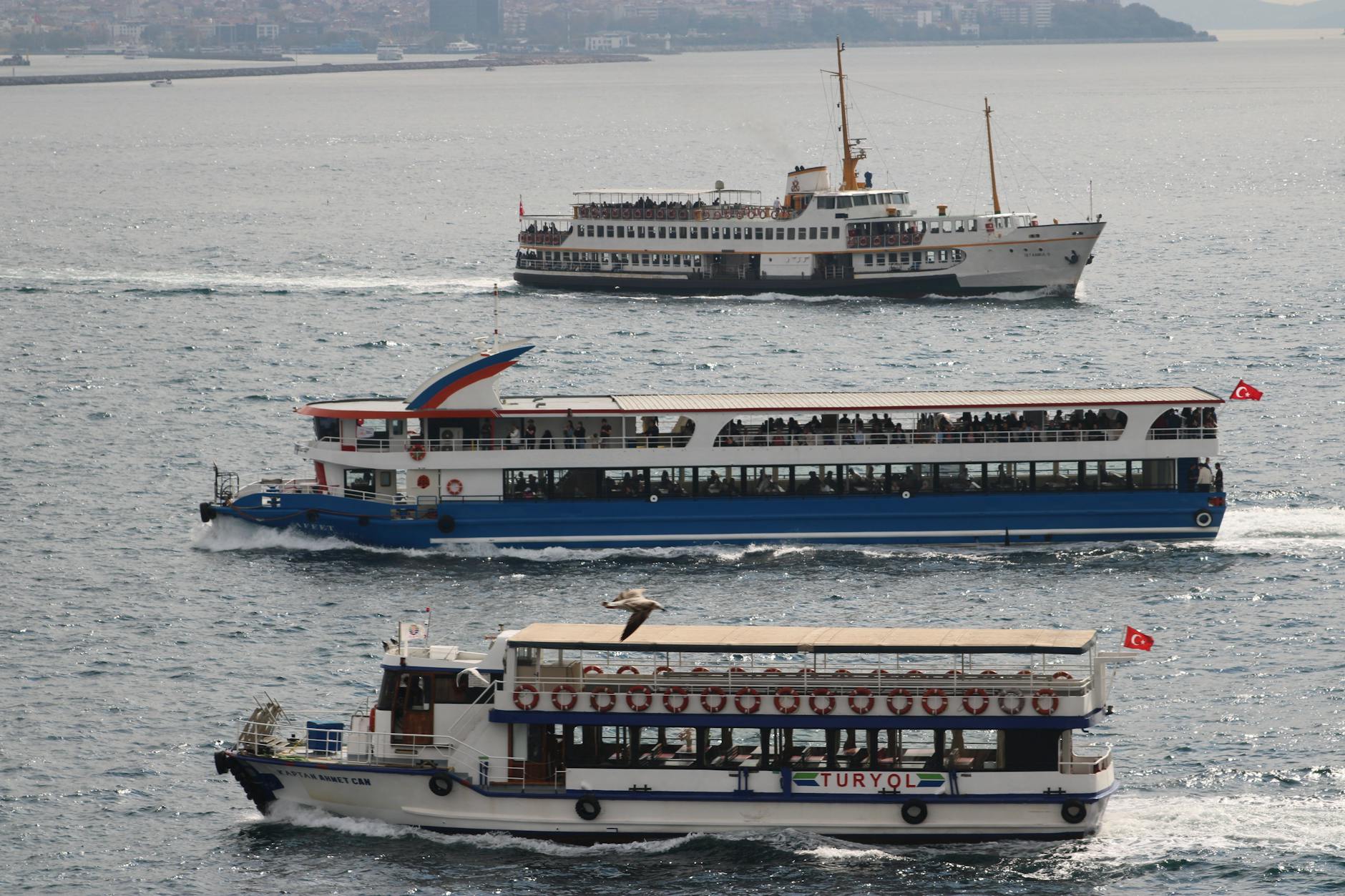
Istanbul's public ferry company Şehir Hatları operates many inner-city, Bosphorus, and Princes' Islands lines. Private and intercity operators also serve routes across the Sea of Marmara. İDO provides sea bus and ferry services around Istanbul and Marmara routes, with online timetable resources. BUDO connects Bursa/Mudanya with Istanbul-area piers and, as of January 1, 2026, notes that its former Eminönü/Sirkeci pier was relocated to Kabataş Transfer Center.
Dardanelles and car ferries
For road trips involving Çanakkale, Troy, Gallipoli, Bozcaada, or Gökçeada, ferries may become part of the road network. Weather, queues, and holiday traffic can affect crossings. The 1915 Çanakkale Bridge has changed some road patterns, but ferries remain relevant for local and island access.
Aegean and Mediterranean island/coastal ferries
Seasonal routes may connect Turkish ports with Greek islands or nearby coastal destinations. These are very seasonal and can be affected by weather, customs, and immigration requirements. Always verify schedules directly close to travel.
Ferry practicalities
- Check whether the ferry accepts vehicles or passengers only.
- Check the exact pier; pier changes are common enough to matter.
- Weather can cancel or delay sailings.
- Luggage is usually easier than on buses, but boarding ramps and crowds can be difficult.
- For island trips, return capacity matters. Do not assume you can leave at any time.
9. Private vehicles, rental cars, highways, and tolls
Private vehicles are extremely useful in some parts of Turkey and a bad idea in others. The key is to separate national road-trip Turkey from central Istanbul Turkey.
When a car is useful
A car helps with:
When a car is a liability
A car is a liability in:
Driving rules and safety
The U.S. State Department advises defensive driving in Turkey and notes that drivers may ignore traffic regulations; it also notes penalties for drunk driving and that mobile phone use while driving is illegal. For U.S. visitors, it says a valid U.S. driver's license or International Driving Permit plus U.S. license is acceptable for stays up to 180 days, while longer stays require obtaining a Turkish license.
Non-U.S. travelers should verify rules for their own license nationality. A notarized Turkish translation or International Driving Permit may be wise or required depending on license language, rental company, and length of stay.
Road character
Turkey's main highways can be excellent. Rural roads can be narrow, winding, or poorly lit. Mountain roads may involve sudden weather changes. Urban traffic can be aggressive. Motorcycles, tractors, pedestrians, animals, delivery vehicles, and informal stopping behavior can appear unexpectedly.
Tolls and HGS
Turkey's toll system uses HGS, the electronic fast-pass system. The General Directorate of Highways states that foreign-plate vehicles must register to HGS before using tollways and must have sufficient credit; unpaid toll fines can prevent foreign-plate vehicles from leaving Turkey.
For rental cars, most reputable companies provide vehicles with an HGS tag and bill tolls after the rental. Travelers should still confirm:
Parking
Parking is one of the most underestimated difficulties in Turkey. Many city neighborhoods have paid street attendants, municipal lots, private garages, and informal-looking systems. In dense places, a hotel with parking can be more valuable than a slightly cheaper room. Never assume a rental apartment has legal or easy parking unless confirmed.
Fuel and service stations
Fuel stations are common on major roads and often have restrooms, markets, and food options. In remote areas, refill before the tank is low. Payment by card is common, but keep some cash as a backup.
- Cappadocia valleys and viewpoints;
- rural archaeological sites;
- Aegean and Mediterranean beach-hopping;
- mountain villages;
- family travel with luggage;
- off-season resort travel when dolmuş frequency is lower;
- multi-stop itineraries where buses would require repeated terminal transfers.
- central Istanbul;
- old-city districts with narrow streets;
- dense tourist areas with scarce parking;
- neighborhoods with steep, confusing, one-way roads;
- high-season beach towns with limited parking;
- snowy mountain or eastern winter conditions for inexperienced drivers.
- whether the car has HGS;
- how tolls are charged;
- whether there is an admin fee;
- whether bridges and tunnels are included;
- how to get an itemized toll record.
10. Walking, cycling, scooters, accessibility, and luggage
Walking
Walking can be excellent in historic cores, waterfronts, markets, and compact towns. It can also be physically demanding. Turkish cities often have hills, uneven pavements, curb cuts blocked by parked vehicles, busy crossings, and construction.
Visitors should not judge a route only by distance. A 900-meter walk with luggage in Istanbul or a hill town can be harder than a 3-kilometer flat waterfront walk.
Cycling
Cycling infrastructure varies widely. Some waterfront areas and newer districts have usable paths. Many urban roads are not comfortable for casual cyclists. Intercity cycling is possible for experienced riders but requires careful route planning.
E-scooters
Shared scooters exist in some cities and resort areas, but they are best for short, low-luggage trips on calm streets or waterfront paths. They are a poor choice on tram tracks, cobblestones, steep hills, heavy traffic roads, or pedestrian-dense old towns.
Accessibility
Accessibility is improving but uneven. Newer metro stations, airports, and malls are usually more accessible than older streets, ferries, historic districts, and minibuses. Travelers with mobility constraints should prioritize:
Luggage
Large rolling suitcases are a major mobility constraint. They make dolmuş rides, ferry boarding, tram crowds, and steep old-town streets harder. In Turkey, luggage strategy is transportation strategy.
- hotels near level transit access;
- newer metro stations over old tram-and-stair combinations;
- private transfers for airport arrival;
- direct rail routes where possible;
- avoiding hillside accommodations unless elevators and vehicle access are confirmed.
11. Payments, tickets, and route-planning tools
National payment reality
Turkey is technologically advanced in many payment contexts, but transport payment is fragmented. Cards, apps, QR codes, cash, and local smartcards all coexist. Visitors should carry:
Booking tools
Useful categories include:
Ticketing cautions
- at least one physical payment card;
- a backup card;
- some cash in Turkish lira;
- a charged phone;
- offline hotel address details;
- enough small notes for taxis, dolmuş, tips, toilets, and rest stops.
- airline websites and apps;
- TCDD e-ticket platform for rail;
- bus booking platforms and company sites;
- city transit apps;
- Google Maps, Apple Maps, Moovit, Trafi-style apps where supported;
- taxi dispatch apps;
- ferry operator timetable pages.
- Fares in Turkey can change frequently, especially in high-inflation periods.
- Third-party platforms may charge service fees.
- Some foreign cards may fail on local ticketing websites.
- Name spelling should match ID documents for flights and rail.
- Bus and train station names may be similar but not identical.
- Screenshots of tickets help if mobile data fails.
12. Common risks, friction points, and local concerns
Visitor friction points
1. Assuming Istanbul is one airport city. IST and SAW are far apart. A connection between them is a cross-city journey, not a terminal transfer.
2. Underestimating distance. Turkey is big. Map distances may look manageable but involve mountains, traffic, or limited public transport.
3. Booking a cheap hotel far from transit. Savings disappear in taxi time and stress.
4. Treating taxis as simple. Taxis can be useful, but disputes and refusals are common enough to plan around.
5. Ignoring last-mile transport. A train to a station or flight to an airport is only part of the journey.
6. Overpacking. Heavy luggage creates avoidable problems on trams, ferries, stairs, and steep streets.
7. Assuming cashless everywhere. Many formal systems are cashless or card-based, but some informal or small-town transport still expects cash.
Local resident concerns
Congestion: Istanbul and other major cities suffer from intense peak traffic. Road travel time can be unpredictable.
Fare pressure: Transport fare increases affect daily commuters, students, and lower-income households.
Crowding: Rail, Metrobüs, buses, and ferries can be crowded at commute times.
Last-mile gaps: Housing growth can outpace transit expansion, making peripheral commutes long.
Road safety: Aggressive driving, pedestrian conflicts, motorbike/delivery traffic, and poor crossing behavior remain concerns.
Parking scarcity: Dense districts have chronic parking shortages.
Accessibility: New infrastructure is better, but many older areas remain difficult for disabled users, older residents, and parents with strollers.
Environmental impact: More rail and ferry use can reduce car dependence, but urban sprawl and private vehicle growth remain major pressures.
13. Recommended mobility strategies by traveler type
First-time Istanbul-focused visitor
Stay near T1 tram, M2 metro, Marmaray, or a major ferry pier. Buy/use Istanbulkart or contactless payment. Use taxis only when luggage, weather, late nights, or mobility needs justify them.
Turkey multi-city traveler
Use flights for long jumps, YHT where it fits, and intercity buses for gaps. Plan each arrival transfer before buying the long-distance ticket.
Family with children
Prioritize direct transfers and rail over complex minibus chains. Pay more for hotel location and airport convenience. Avoid very late arrivals unless a transfer is booked.
Older traveler or traveler with mobility limitations
Use private airport transfers, newer metro lines, ferries with careful boarding, and hotels with elevator access. Avoid steep old-city accommodations unless vehicle access is confirmed.
Budget backpacker
Use intercity buses, YHT advance fares, ferries, local transit cards, and dorm/guesthouse locations near transit. Keep cash for dolmuş and local buses in smaller towns.
Road-trip traveler
Rent a car outside Istanbul if possible. Build itineraries around parking, road conditions, daylight driving, and HGS toll handling. Do not use a car to explore central Istanbul.
Long-stay resident
Learn the local card/app system, commute patterns, taxi alternatives, and peak-hour flows. Housing should be chosen around transport reality, not just rent or apartment quality.
1. Why Istanbul is different
Istanbul is not just Turkey's largest city. It is a transport puzzle shaped by water, hills, history, bridges, tunnels, and extreme demand. It sits across Europe and Asia, divided by the Bosphorus and shaped further by the Golden Horn and the Sea of Marmara.
That geography makes Istanbul uniquely multimodal. A rational trip may involve tram, ferry, funicular, metro, and walking. A bad trip may be a taxi sitting in traffic while a tram or ferry would have been faster and cheaper.
Istanbul's transportation hierarchy
For most visitors, the practical order is:
The hotel-location rule
In Istanbul, hotel location can improve or ruin the trip. A good location is not simply "central." A good location is close to the line you will actually use.
For classic sightseeing, staying near Sultanahmet, Sirkeci, Gülhane, Eminönü, Karaköy, Kabataş, Taksim, Şişhane, Kadıköy, or Üsküdar can work well depending on priorities. Staying far from rail or ferry access can force repeated taxi use and traffic exposure.
- Rail and tram for predictable movement.
- Ferry for cross-Bosphorus and waterfront trips.
- Marmaray for fast Europe-Asia rail crossing.
- Metrobüs for long east-west road-corridor movement, especially when traffic is bad.
- Buses for coverage beyond rail.
- Taxis/transfers for luggage, late nights, difficult addresses, and mobility needs.
- Dolmuş/minibus for specific local routes once you understand them.
- Private car only when there is a strong reason.
2. Istanbul airports and airport access
Istanbul has two major passenger airports. Choosing between them is a transportation decision, not just an airfare decision.
Istanbul Airport (IST)
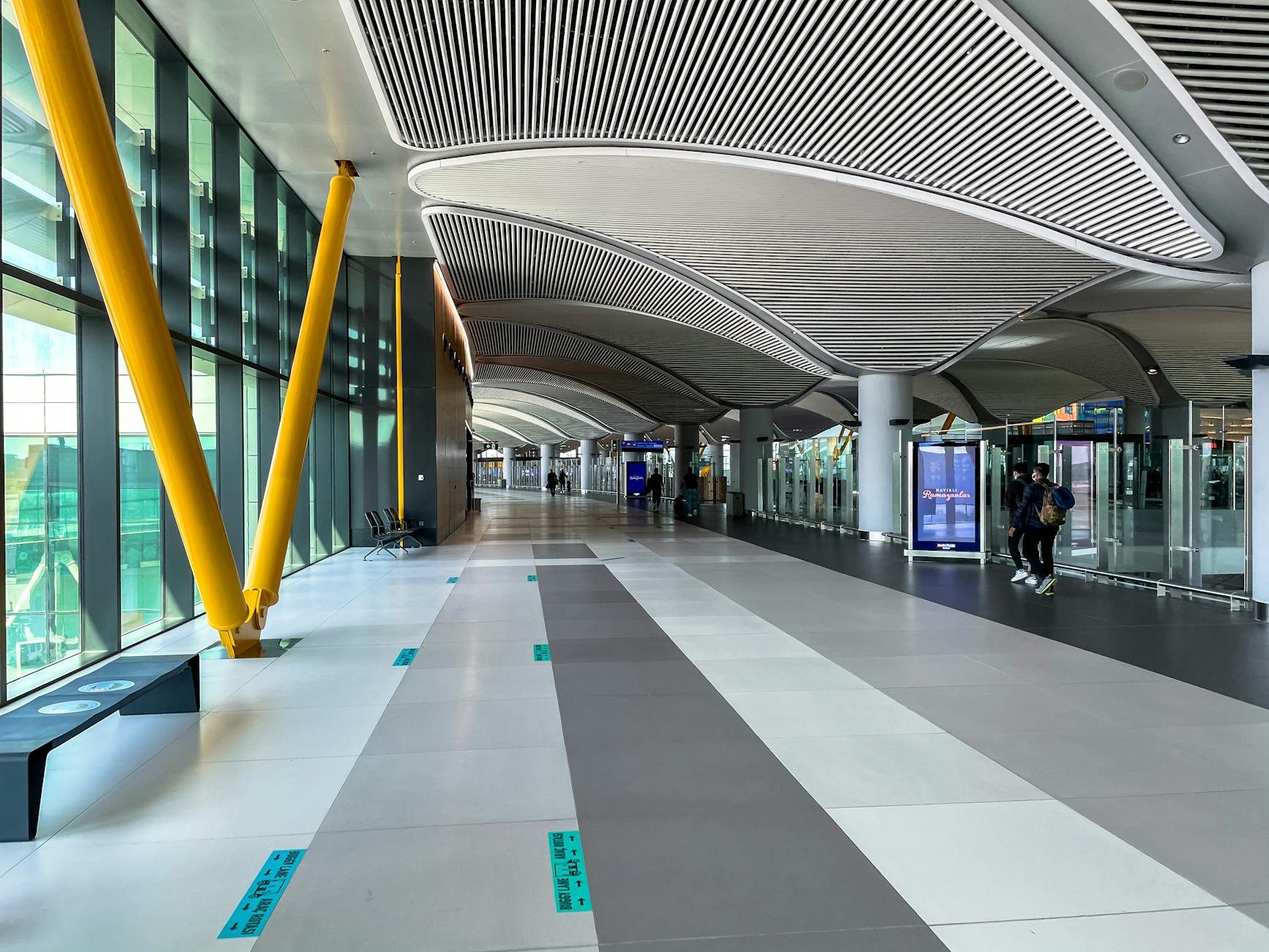
Istanbul Airport is the main long-haul airport and Turkish Airlines hub. It is northwest of the central city. Official airport transportation resources list public transport options including the M11 metro and Havaist airport buses.
#### IST to the city: main options
M11 metro
The M11 metro is traffic-free and useful for destinations connected through Gayrettepe, Kağıthane, and onward metro transfers. It is usually best for travelers with manageable luggage and hotels near M2/M11-compatible routes.
Pros:
Cons:
Havaist airport buses
Havaist buses serve multiple city districts. They are often more comfortable than metro transfers for luggage, but they use roads and are vulnerable to traffic.
Pros:
Cons:
Taxi or private transfer
Best for families, late-night arrivals, heavy luggage, and hotels not near a rail/bus node. It is expensive compared with transit but can be worth it after a long international flight.
Sabiha Gökçen Airport (SAW)
Sabiha Gökçen is on the Asian side. It is especially useful for Kadıköy, Moda, Üsküdar, Ataşehir, Bostancı, Pendik, and Asian-side stays. The airport's official site states that HAVABUS connects SAW with Kadıköy and Taksim, with shuttles parked outside terminal exits on the arrivals floor.
#### SAW to the city: main options
M4 metro to Kadıköy
The M4 line connects Sabiha Gökçen Airport with Kadıköy, passing through important Asian-side districts. Metro Istanbul's timetable listing includes M4 Kadıköy-Sabiha Gökçen Airport.
Pros:
Cons:
HAVABUS
HAVABUS is practical for Kadıköy and Taksim. It is easier with luggage than a multi-transfer metro trip but vulnerable to bridge traffic for European-side destinations.
Taxi/private transfer
Useful for late arrivals, families, and Asian-side hotels not on M4. For European-side hotels, price and traffic can be high.
Which Istanbul airport should visitors choose?
- avoids road traffic;
- predictable cost;
- connects to the metro system;
- good for solo travelers and light luggage.
- transfers can involve walking and escalators/elevators;
- not ideal for every old-city hotel;
- can be tiring with large luggage;
- service is not a door-to-door solution.
- useful for Taksim, Aksaray, Kadıköy, and other major nodes;
- luggage hold underneath;
- fewer stairs than metro transfers;
- good for travelers near the bus stop.
- traffic can be severe;
- the stop may still require a taxi or walk;
- late-night frequency should be checked.
- cheap and traffic-free;
- excellent for Asian-side destinations;
- connects to ferries and Marmaray via Kadıköy/Ayrılık Çeşmesi-style transfers.
- long ride to the European side if your hotel is there;
- transfers with luggage can be tiring;
- less convenient for Sultanahmet or Taksim than it looks on a map.
- Staying in Sultanahmet/Fatih/Beyoğlu: IST is often easier, but a good SAW fare can still work if transfer is planned.
- Staying in Kadıköy/Moda/Üsküdar: SAW is often more convenient.
- Connecting to domestic flights: use whichever airport has the route and time, but do not plan a short connection between IST and SAW.
- Departing after a cruise or early morning tour: choose the airport based on reliable transfer time, not only ticket price.
3. Istanbulkart, fares, passes, and payment choices
Istanbul's fare system changes over time, so all fare amounts should be verified close to travel. As of the sources reviewed for this paper, Istanbul public transport had 2026 fare updates.
Istanbulkart
Istanbulkart is the core local payment card. Visit Istanbul states that Istanbulkart can be used on public transportation including bus, subway, tram, cable car, Marmaray, Metrobüs, and ferry. It also states that the card can be used at many non-transit points and that remaining balance is not refunded at the end of a visit.
Contactless bank cards
Visit Istanbul says contactless credit and debit cards can be used for public transportation payments across modes including bus, subway, tram, cable car, Metrobüs, and ferry. This is convenient for visitors, but Istanbulkart can still be useful for transfer logic, local familiarity, and avoiding foreign-card glitches.
Tourist pass options
Visit Istanbul describes an Istanbul City Card offering unlimited public transportation for 1, 3, 5, 7, or 15 days. This can be convenient for tourists who will ride frequently, but it is not automatically the cheapest choice for light users. Compare pass cost with expected rides.
Limited-use tickets
Limited-use tickets such as one-pass, two-pass, three-pass, five-pass, or ten-pass options are also described by Visit Istanbul. These can work for very short stays but are less flexible than a reloadable card for repeated rides.
2026 fare snapshot
Metro Istanbul's official fare page lists an anonymous Istanbulkart full fare of 42 TL, student fare of 20.50 TL, and Blue Card monthly full fare of 3,298 TL for 180 uses. Electronic limited tickets were listed at 60 TL for 1 pass and 480 TL for 10 passes.
Şehir Hatları ferry fare tables show many core cross-city ferry routes in the roughly 53-59 TL range, with longer or special routes such as Bosphorus or Princes' Islands services costing more.
Fare cautions
- Fares change frequently. Verify before travel.
- Marmaray, Metrobüs, ferries, airport metro/bus, and special routes may not price like a simple tram/metro ride.
- Some distance-based services require refund machines or personalized-card rules; visitors should not assume they will receive every local discount or refund.
- A single card may be convenient for groups in some contexts, but individual payment is cleaner for transfers, refunds, and city-card logic.
- Contactless cards are convenient, but foreign-card fees and bank declines can occur.
4. Metro, tram, funicular, cable car, Marmaray, and suburban rail
Istanbul's rail system is the backbone of visitor-friendly transport. Metro Istanbul's official timetable page lists metro lines, tram lines, funicular lines, and cable car lines, including M1A/M1B, M2, M3, M4, M5, M6, M7, M8, M9, T1, T3, T4, T5, F1, F4, TF1, and TF2 among operated services.
Metro
The metro is best for longer cross-city trips, business districts, airports, and neighborhoods beyond tram reach.
Important visitor-oriented lines:
Tram
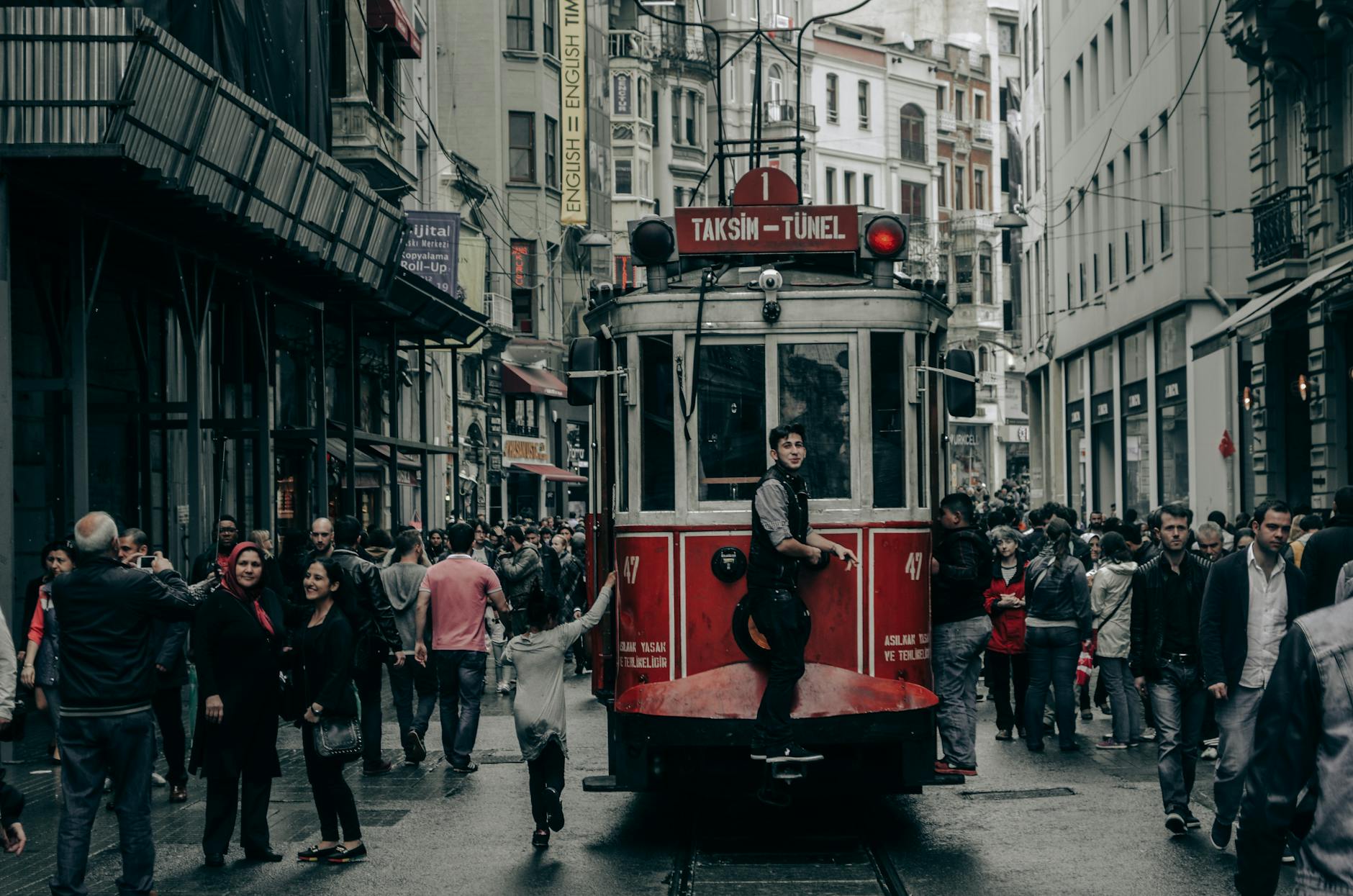
The tram is the visitor's friend, especially T1. Metro Istanbul's T1 listing includes stops such as Kabataş, Tophane, Karaköy, Eminönü, Sirkeci, Gülhane, Sultanahmet, Çemberlitaş, Beyazıt-Grand Bazaar, Laleli, Aksaray, Yusufpaşa, Topkapı, Zeytinburnu, and Bağcılar.
T1 is ideal for:
T1 is also extremely crowded. During peak sightseeing and commute periods, walking one stop or boarding earlier can be less stressful.
Funiculars
Funiculars solve Istanbul's hill problem.
Historic funicular-style or tunnel services are also part of Istanbul's mobility culture, but visitors should separate charming historic rides from core daily transport needs.
Cable cars
Cable cars such as the Eyüp-Pierre Loti line are useful for specific viewpoints and neighborhoods. They are not core citywide transport, but they matter for visitors going to the Golden Horn viewpoint area.
Marmaray
Marmaray is the heavy-rail line crossing under the Bosphorus and continuing along the Marmara corridor. For visitors, its main value is fast Europe-Asia crossing without bridge traffic. It connects useful areas such as Halkalı, Bakırköy, Yenikapı, Sirkeci, Üsküdar, Ayrılık Çeşmesi, Söğütlüçeşme, Bostancı, Pendik, and Gebze depending on the journey.
Use Marmaray when:
Avoid Marmaray when:
Night Metro
Metro Istanbul states that Night Metro operates on selected lines from Friday morning through Sunday midnight, with uninterrupted operation on nights connecting Friday-Saturday and Saturday-Sunday on lines including M1A, M1B, M2, M4, M5, M6, and M7. This is valuable for nightlife and late arrivals, but only on the listed corridors. Do not assume every line is 24-hour.
- M2 Yenikapı-Hacıosman: key north-south European-side line serving Taksim, Şişhane, Osmanbey, Şişli/Mecidiyeköy, Levent, and Maslak-direction access.
- M4 Kadıköy-Sabiha Gökçen Airport: essential Asian-side line and SAW airport rail access.
- M5 Üsküdar-Samandıra Merkez: major Asian-side line with Üsküdar and Altunizade access.
- M7 Yıldız/Mecidiyeköy-Mahmutbey: useful for northwestern European districts and connections.
- M11 airport metro: key rail access to Istanbul Airport via Gayrettepe/Kağıthane connections.
- Hagia Sophia / Sultanahmet;
- Blue Mosque area;
- Topkapı Palace area;
- Gülhane;
- Sirkeci;
- Eminönü;
- Karaköy;
- Kabataş ferry/funicular connections;
- Grand Bazaar access via Beyazıt-Kapalıçarşı.
- F1 Kabataş-Taksim: excellent for connecting the waterfront/T1 tram/ferry area with Taksim and M2.
- F4 Aşiyan-Boğaziçi Üniversitesi/Hisarüstü: useful for the Aşiyan waterfront and upper Bosphorus/Hisarüstü connection.
- crossing Europe-Asia quickly;
- connecting Sirkeci/Yenikapı with Üsküdar/Kadıköy-side rail;
- reaching Asian-side rail corridors;
- connecting to some high-speed rail stations.
- a ferry would be more scenic and only slightly slower;
- you have large luggage and complex transfers;
- you do not understand the direction or distance-based fare/refund rules.
5. Buses and Metrobüs
City buses
Istanbul buses are extensive and often necessary beyond rail corridors. They are useful for neighborhoods, hills, Bosphorus villages, and local connections. They are less visitor-friendly than metro/tram because routes are complex, traffic affects timing, and stops can be confusing.
Use buses when:
Avoid buses when:
Metrobüs
Metrobüs is a bus rapid transit corridor on dedicated lanes across Istanbul's main east-west road spine. It is not glamorous, and it can be extremely crowded, but it is one of the city's most important commuter systems. For some cross-city trips, it is faster than a taxi because it bypasses much of the traffic.
Metrobüs is best for:
Visitors should use Metrobüs only when it clearly solves a route problem. It can be uncomfortable with luggage or children during peak hours.
- rail does not reach the destination;
- you are following a route app confidently;
- the route is short and direct;
- you are connecting to a ferry or metro.
- you are in a hurry during peak traffic;
- you have large luggage;
- you are unfamiliar with the route and cannot track your location;
- a rail or ferry option exists.
- long corridor trips where rail is indirect;
- crossing between European and Asian sides via the Bosphorus bridge corridor;
- commuting patterns rather than leisurely sightseeing;
- experienced users who can handle crowds.
6. Ferries and water transport
Ferries are one of Istanbul's great transportation advantages. They are practical, scenic, and often calmer than roads. Şehir Hatları lists inner Istanbul ferry lines including Kadıköy-Kabataş, Kadıköy-Karaköy-Eminönü, Üsküdar-Karaköy-Eminönü, Kadıköy-Beşiktaş, Üsküdar-Haliç, Kadıköy-Karaköy-Beşiktaş, Üsküdar-Aşiyan, and multiple Bosphorus and Princes' Islands lines.
Ferry use cases
Crossing between Europe and Asia
Bosphorus movement
Golden Horn
Princes' Islands
Ferry fare and refund notes
Şehir Hatları fare pages include distance-based and transfer notes, plus higher prices for longer/special routes and the Princes' Islands. Some routes use refund machines or special rules; tourists should read signs and not assume all lines price identically.
Ferry strategy
For visitors, ferries are not just transportation; they are also the best low-cost Bosphorus experience. A normal commuter ferry between Eminönü/Karaköy/Beşiktaş and Kadıköy/Üsküdar can be more satisfying than a rushed paid sightseeing cruise.
- Eminönü/Karaköy/Beşiktaş/Kabataş to Kadıköy or Üsküdar.
- Often more pleasant than Marmaray if time allows.
- Great for orientation and views.
- Useful for neighborhoods such as Beşiktaş, Ortaköy, Arnavutköy, Bebek, Emirgan, Kanlıca, Anadolu Hisarı, and Sarıyer depending on line.
- Schedules matter; not every pier has frequent all-day service.
- Useful for Balat, Fener, Eyüp, and Golden Horn exploration.
- Can avoid road traffic and add scenic value.
- Ferry-dependent day trips.
- Return planning is essential, especially weekends and holidays.
- Weather and crowds affect experience.
7. Taxis, ride-hailing, private transfers, and airport taxi issues
Taxis are necessary in Istanbul but should be used carefully. The city's traffic and tourist demand create friction.
When taxis make sense
When taxis are a bad idea
Common taxi issues
Practical taxi discipline
Airport taxis and transfers
For IST and SAW, a private transfer can be worth it for groups, luggage, or late arrivals. But it should be pre-booked through a reputable provider. Random offers inside the terminal are not the same as a proper transfer.
- Airport arrival with heavy luggage.
- Very early or late travel outside rail hours.
- Rain, mobility issues, or children.
- Short local trips where hills make walking difficult.
- Hotel-to-restaurant trips in areas poorly served by rail.
- Sultanahmet to Karaköy/Eminönü during tram-accessible times.
- Taksim to Kabataş when F1 is convenient.
- Europe-Asia crossing during bridge congestion when ferry or Marmaray works.
- Any route where the tram/metro is direct.
- refusal of short rides;
- pressure for off-meter fares;
- route detours;
- toll disputes;
- cash-change problems;
- claims that the meter or card terminal is broken;
- airport arrivals-hall touts.
- Use official ranks or app dispatch.
- Confirm meter or agreed legitimate transfer price before moving.
- Keep your phone map open.
- Avoid arguing inside the vehicle; note the plate/taxi number if needed.
- Ask your hotel to help with reputable taxi or transfer arrangements for important rides.
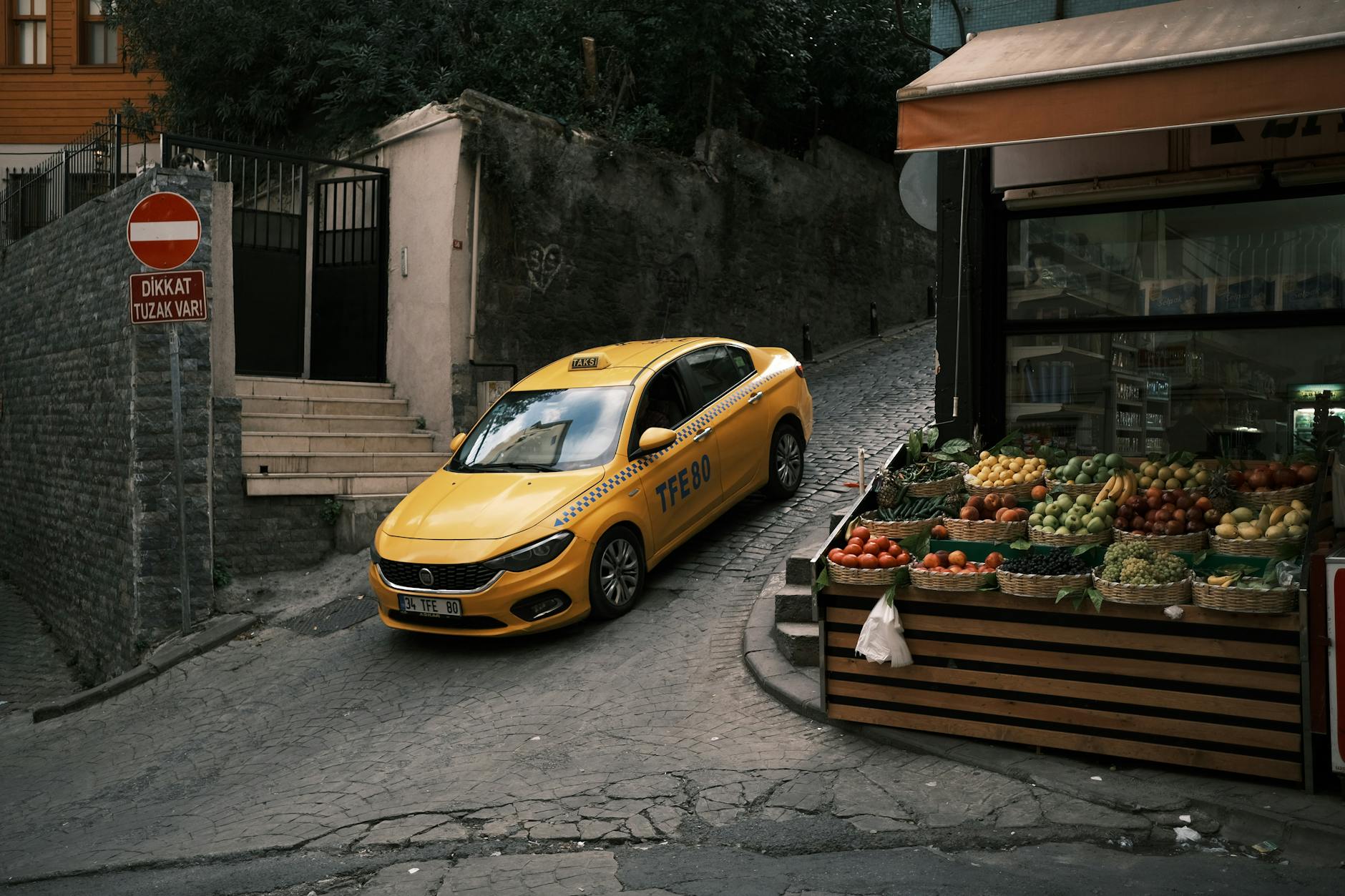
8. Dolmuş, minibuses, and informal-feeling local services
Dolmuş and minibuses are part of daily Istanbul life, especially for corridors not perfectly served by rail. They can be fast and cheap, but they are less transparent for visitors.
Where they help
What visitors should know
Good rule
Use dolmuş after you understand the route or when a local/hotel gives clear instructions. Do not make it your first mode after arriving in Istanbul with luggage.
- short Asian-side routes;
- Bosphorus hillside neighborhoods;
- local connections from ferry or metro nodes;
- late-evening routes where a bus is infrequent;
- districts with dense demand but awkward rail access.
- Routes are usually displayed on signs in the windshield.
- Payment may be cash or local card depending on service type.
- You may need to tell the driver where you want to get off.
- Drivers may stop informally.
- Luggage space is limited.
- The driving style can feel abrupt.
9. Walking, cycling, scooters, accessibility, and luggage in Istanbul
Walking
Istanbul is a superb walking city and a difficult walking city at the same time. It has world-class waterfronts, historic lanes, bazaars, and viewpoints. It also has steep hills, broken pavements, crowds, aggressive traffic at crossings, and tiring surfaces.
Excellent walking areas include:
Luggage and hills
The main warning: do not book a hillside apartment or hotel based only on map distance. Galata, Cihangir, Balat, Tarlabaşı edges, Beşiktaş hills, and parts of Üsküdar/Kuzguncuk can be punishing with suitcases.
Cycling and scooters
Cycling is best on waterfront paths and parks, not in dense old-city traffic. Scooters are useful for short flat trips but risky on cobblestones, tram tracks, wet streets, and steep hills.
Accessibility
Metro Istanbul's rail network map information notes broad accessibility across many rail stations, while exceptions exist for historic lines and specific stations. In practice, disabled travelers should still verify elevators and station conditions because street-level approaches can be harder than the station itself.
Accessibility challenges include:
Private transfers and carefully chosen hotels are often the difference between a manageable and exhausting trip.
- Sultanahmet-Gülhane-Sirkeci-Eminönü;
- Galata-Karaköy if hills are acceptable;
- Istiklal-Tünel-Galata, though crowded;
- Kadıköy-Moda waterfront;
- Üsküdar waterfront;
- parts of Balat/Fener with care;
- Bosphorus promenade segments.
- steep hills;
- old sidewalks;
- crowded trams;
- ferry ramps that vary with water level;
- broken or blocked curb cuts;
- inaccessible older buildings;
- elevator outages.
10. Driving, parking, bridges, tunnels, and car rental in Istanbul
Driving in Istanbul is rarely recommended for visitors. The city has heavy congestion, complex lane behavior, limited parking, toll crossings, aggressive merging, and neighborhoods built long before modern traffic.
When a car might make sense
When a car is a mistake
Bridges and tunnels
The Bosphorus crossings and Eurasia Tunnel are strategically important but can be expensive and congested. Tolls are typically handled electronically through HGS/OGS-style systems or rental-car billing arrangements. Confirm with the rental company.
Rental car strategy
Best practice is to pick up the car when leaving Istanbul, not on arrival. If your Turkey itinerary begins with several days in Istanbul, use public transport and transfers first, then rent the car at an airport or outer-city location on departure day.
- You are leaving Istanbul for a road trip and can pick up the car at the edge of the city or airport.
- You are staying in outer districts with parking.
- You need mobility for family, medical, or business reasons.
- You are moving luggage between distant non-transit neighborhoods.
- Staying in Sultanahmet, Galata, Karaköy, Taksim, Kadıköy, Beşiktaş, or Üsküdar.
- Visiting old-city attractions.
- Crossing Europe-Asia at peak times.
- Assuming street parking exists.
- Planning to "drive along the Bosphorus" on a weekend without traffic patience.
11. Neighborhood-by-neighborhood mobility guidance
Sultanahmet, Sirkeci, Gülhane, Eminönü, and the Old City
Best modes: walking, T1 tram, Marmaray at Sirkeci/Yenikapı, ferries at Eminönü, occasional taxi early/late.
Avoid: driving, taxis during tram-friendly daytime routes, hotels far uphill with luggage.
This area is best for first-time sightseeing. T1 provides direct access to major historic sites and connects to Karaköy/Kabataş. Eminönü is a ferry hub. Sirkeci gives Marmaray access. The downside is crowding and tourist pressure.
Grand Bazaar, Beyazıt, Laleli, Aksaray
Best modes: T1 tram, M2/Marmaray via Yenikapı connections, walking if comfortable.
Avoid: taxis in bazaar traffic.
Good for shopping and old-city access, but streets can be congested and chaotic. Aksaray is useful for airport-bus connections but less charming than Sultanahmet/Sirkeci.
Karaköy, Galata, Şişhane, and Tünel
Best modes: T1 tram at Karaköy/Tophane, M2 at Şişhane, ferries, walking.
Challenge: hills.
Avoid: assuming a short map distance is easy with luggage.
Karaköy is one of Istanbul's best transport bases because it has tram, ferry, bridge walking access, and proximity to Galata/Beyoğlu. Galata and Şişhane are atmospheric but steep.
Taksim, Cihangir, and Istiklal
Best modes: M2, F1 from Kabataş, walking, taxis only strategically.
Challenge: crowds, nightlife traffic, hills.
Avoid: dragging luggage from Kabataş uphill without using F1 or a transfer.
Taksim is a nightlife and transit hub, not necessarily the easiest old-city sightseeing base. It works well if you use M2/F1/T1 connections intelligently.
Kabataş, Beşiktaş, Ortaköy
Best modes: ferries, buses, F1/T1 at Kabataş, walking along selected waterfronts.
Challenge: Beşiktaş lacks the same direct metro/tram simplicity as some areas, so buses and ferries matter.
Avoid: weekend taxi dependence near Ortaköy.
Kabataş is a strong transfer point. Beşiktaş is lively and ferry-rich. Ortaköy is beautiful but traffic-prone.
Şişli, Mecidiyeköy, Levent, Maslak
Best modes: M2, Metrobüs/M7 connections, business-district taxis when needed.
Best for: business travelers, shopping malls, modern hotels, northern business access.
Downside: less atmospheric for classic tourism; old-city access requires transfers.
These districts are practical for business and modern-city life. For pure sightseeing, they are less romantic but can be efficient.
Kadıköy and Moda
Best modes: ferry, M4, Marmaray via Ayrılık Çeşmesi/Söğütlüçeşme area, walking.
Best for: food, nightlife, Asian-side local life, SAW access.
Challenge: old-city sightseeing requires ferry/Marmaray planning.
Kadıköy is one of the best bases for visitors who want local atmosphere and do not mind crossing to Europe for historic sites. Ferries make the commute scenic rather than unpleasant.
Üsküdar, Kuzguncuk, and Çamlıca access
Best modes: Marmaray, ferries, M5, buses/taxis for hills.
Best for: waterfront views, mosques, Asian-side calm, fast Sirkeci connection via Marmaray.
Challenge: hillside attractions require bus/taxi planning.
Üsküdar can be more convenient than it first appears because Marmaray crosses to Sirkeci quickly.
Balat, Fener, Eyüp, and the Golden Horn
Best modes: T5 tram, Golden Horn ferries, buses, walking.
Challenge: hills, uneven streets, tourist crowding in Balat.
Avoid: relying on taxis in narrow streets at peak times.
This area is rewarding but logistically different from Sultanahmet. The T5 tram and ferries make it easier than in the past.
Bosphorus villages: Arnavutköy, Bebek, Emirgan, Kanlıca, Anadolu Hisarı, Sarıyer
Best modes: ferries where schedules work, buses, occasional taxi.
Challenge: road congestion and limited direct rail.
Strategy: travel off-peak and return before ferry frequency drops.
Bosphorus villages are beautiful but can be slow. A route that looks simple by taxi may become a traffic trap.
Princes' Islands
Best modes: Şehir Hatları or other ferries from appropriate piers; walking, cycling, local electric vehicles on the islands as permitted.
Challenge: return queues, weather, weekend crowds.
Strategy: leave early, check last return, avoid peak weekends if possible.
The islands are ferry-dependent. Treat the ferry schedule as the spine of the day.
Istanbul Airport corridor
Best modes: M11 metro, Havaist, private transfer.
Challenge: distance and late-night service.
Strategy: choose hotel and flight times together.
Sabiha Gökçen corridor
Best modes: M4 metro, HAVABUS, private transfer.
Challenge: European-side transfer time.
Strategy: Asian-side stays benefit most from SAW.
12. Istanbul itineraries and practical route choices
Classic first day: Sultanahmet to Karaköy and Kadıköy
This gives a newcomer a quick understanding of Istanbul's rail, ferry, and walking logic.
Airport arrival to Sultanahmet
From IST:
From SAW:
Taksim to Sultanahmet
Best normal route: F1 Taksim-Kabataş, then T1 tram to Sultanahmet.
Alternative: M2 to Vezneciler and walk/transfer depending on destination.
Taxi is often slower during busy periods.
Kadıköy to Sultanahmet
Scenic route: ferry to Eminönü/Karaköy, then walk or T1.
Fast route: Marmaray from Ayrılık Çeşmesi/Söğütlüçeşme-side access to Sirkeci, then walk/tram.
Best choice depends on weather, time, and mood.
Old City to Dolmabahçe/Beşiktaş
T1 to Kabataş, then walk to Dolmabahçe or continue by bus/ferry/taxi for Beşiktaş. Taxis from Sultanahmet can be frustrating because of traffic and access restrictions.
Bosphorus day
Use ferries where possible, buses for gaps, and avoid peak road traffic. Do not plan too many Bosphorus villages in one day unless you enjoy slow travel.
Princes' Islands day
Start from the pier that makes sense for your hotel, check the return schedule, and leave early. Weekends can be very crowded.
- Walk Sultanahmet-Gülhane-Sirkeci if weather is good.
- Take T1 or walk to Eminönü/Karaköy.
- Ferry to Kadıköy.
- Return by ferry for views or Marmaray for speed.
- M11 to Gayrettepe, transfer onward through M2/T1 or Marmaray depending on hotel; good for light luggage.
- Havaist to Aksaray or a relevant stop, then tram/taxi; good for moderate luggage.
- Private transfer/taxi; best for late arrival, families, heavy luggage.
- M4 to Kadıköy, ferry/Marmaray onward; scenic but transfer-heavy.
- HAVABUS to Taksim plus onward transfer; good if staying Beyoğlu/Taksim.
- Private transfer; best for late arrival or heavy luggage.
13. Local residents' transportation concerns in Istanbul
Congestion and commute time
Istanbul's road congestion shapes daily life. Locals often plan around bridge traffic, school traffic, weather, football matches, construction, and peak commuting flows. For many workers, the question is not distance in kilometers but whether a route requires a bridge, tunnel, transfer, or bus stuck in mixed traffic.
Housing and transit mismatch
As housing costs push residents outward, commutes can lengthen. New metro lines help, but expansion often lags behind development. Peripheral districts may have cheaper housing but longer, less reliable commutes.
Fare increases
Public transport remains cheaper than private car use, but fare increases matter for students, low-income workers, and households with multiple daily trips. Monthly passes help regular commuters, but pass prices also rise.
Crowding
Marmaray, Metrobüs, M2, T1, ferries, and key buses can be extremely crowded. Crowding affects comfort, safety perceptions, pickpocket risk, stroller access, and the daily stress of commuting.
Taxi dissatisfaction
Taxi complaints are common among both locals and visitors. Problems include refusal, route disputes, short-trip reluctance, and availability during rain or peak periods.
Accessibility inequality
Newer systems are better, but a fully accessible journey requires accessible sidewalks, stations, vehicles, elevators, and destination buildings. Istanbul's hilly historical fabric makes this difficult.
Environmental and public-space pressure
Cars, delivery motorbikes, scooters, taxis, buses, pedestrians, and street vendors compete for limited street space. Better rail and ferry use can reduce pressure, but behavior and enforcement matter.
14. Bottom-line recommendations for Istanbul
Turkey's transportation system is broad, flexible, and often very effective, but it is not frictionless. The country works best for travelers who combine modes intelligently: flights for long distances, high-speed rail where the network is strong, coaches where coverage matters, local cards and rail in big cities, dolmuş and taxis for gaps, ferries where geography favors the water, and rental cars for rural or multi-stop flexibility.
Istanbul is the country's most important transportation lesson. It shows both the power and complexity of Turkish mobility. The city can feel chaotic if approached through taxis and traffic alone. It becomes much more manageable when approached as a rail-ferry-walking city with taxis reserved for specific needs.
For visitors, the practical mandate is to plan the whole chain: origin, long-distance mode, arrival station or airport, last-mile transfer, luggage, time of day, and neighborhood terrain. For locals and residents, the central issues are cost, crowding, road safety, last-mile access, and the constant tension between urban growth and transit capacity.
The best transportation strategy in Turkey is not to chase a single "best" mode. It is to know when each mode stops being useful and to switch before it becomes a problem.
: Invest in Türkiye, "Türkiye Sets All-Time Record in Air Passenger Traffic with 247.2 Million Travelers," January 7, 2026. https://www.invest.gov.tr/en/news/news-from-turkey/pages/turkiye-sets-all-time-record-in-air-passenger-traffic-with-247.2-million-travelers.aspx
: TCDD Taşımacılık official e-ticket platform. https://ebilet.tcddtasimacilik.gov.tr/
: TCDD Taşımacılık, official YHT high-speed train route pages and service listings. https://www.tcddtasimacilik.gov.tr/seferler/yuksek-hizli-tren/
: TCDD Taşımacılık, conventional and mainline train service pages, including named intercity services. https://www.tcddtasimacilik.gov.tr/seferler/toros-ekspresi
: U.S. Department of State, Turkey International Travel Information, public transportation section noting taxis, subways, ferries, trains, buses, minibuses, and intercity bus/train/air services. https://travel.state.gov/content/travel/en/international-travel/International-Travel-Country-Information-Pages/Turkey.html
: U.S. Department of State, Turkey International Travel Information, traffic laws and driver's license guidance. https://travel.state.gov/content/travel/en/international-travel/International-Travel-Country-Information-Pages/Turkey.html
: Republic of Turkey General Directorate of Highways, HGS Fast-Pass System guidance for foreign licence plates. https://www.kgm.gov.tr/Sayfalar/KGM/SiteEng/Root/HGSeng.aspx
: İDO, official timetable and route information. https://www.ido.com.tr/en/sefer-saatleri/
: BUDO / BURULAŞ, frequently asked questions, including 2026 pier relocation notice and accessibility notes. https://budo.burulas.com.tr/en/Budo/FrequentlyAskedQuestions
: Istanbul Airport, official airport transportation guide, public transportation and Havaist route information. https://www.istairport.com/en/airport/airport-transportation?locale=en
: Istanbul Sabiha Gökçen International Airport, HAVABUS official airport shuttle information. https://www.sabihagokcen.aero/havabus-en
: Visit Istanbul / Istanbul Metropolitan Municipality Tourism Branch, Istanbul Card information, including Istanbulkart, Istanbul City Card, limited pass tickets, and contactless payment. https://visit.istanbul/istanbul-card
: Metro Istanbul, official Tickets and Fares page, 2026 fare listings reviewed April 21, 2026. https://www.metro.istanbul/en/SeferDurumlari/BiletUcretleri
: Metro Istanbul, official timetables and line listings for metro, tram, funicular, and cable car services. https://www.metro.istanbul/en/SeferDurumlari/SeferDetaylari
: Metro Istanbul, Night Metro operating information and listed Night Metro lines. https://www.metro.istanbul/en/content/Gece-Metrosu
: Metro Istanbul, official network maps and accessibility note in railway systems map resources. https://www.metro.istanbul/en/YolcuHizmetleri/AgHaritalari
: Şehir Hatları, official Domestic Trips page listing inner Istanbul, Bosphorus, and Princes' Islands ferry lines. https://sehirhatlari.istanbul/en/timetables/domestic-trips
: Şehir Hatları, official ferry line price tariffs. https://sehirhatlari.istanbul/en/price-list
- Stay near useful transit. For first-timers, T1, M2, Marmaray, ferry piers, or Kadıköy/Üsküdar connections matter more than a hotel being vaguely "central."
- Use trams and metro for predictability. They are usually the cleanest answer for sightseeing and commuting.
- Use ferries deliberately. They are transportation, orientation, and sightseeing at once.
- Do not rely on taxis for the main sightseeing day. Use them as a backup, not a backbone.
- Choose the airport based on your hotel side. IST and SAW are not interchangeable.
- Avoid large luggage transfers through complex routes. Pay for a transfer when the physical burden would ruin the start or end of the trip.
- Check ferry and night-service schedules. Istanbul has late options, but not every route runs late.
- Use Marmaray for fast Europe-Asia movement. Use ferries when the view and experience matter more than speed.
- Avoid driving in central Istanbul. Rent a car only when leaving the city or if your itinerary genuinely requires it.
- Plan around hills. Map distance is not physical effort.