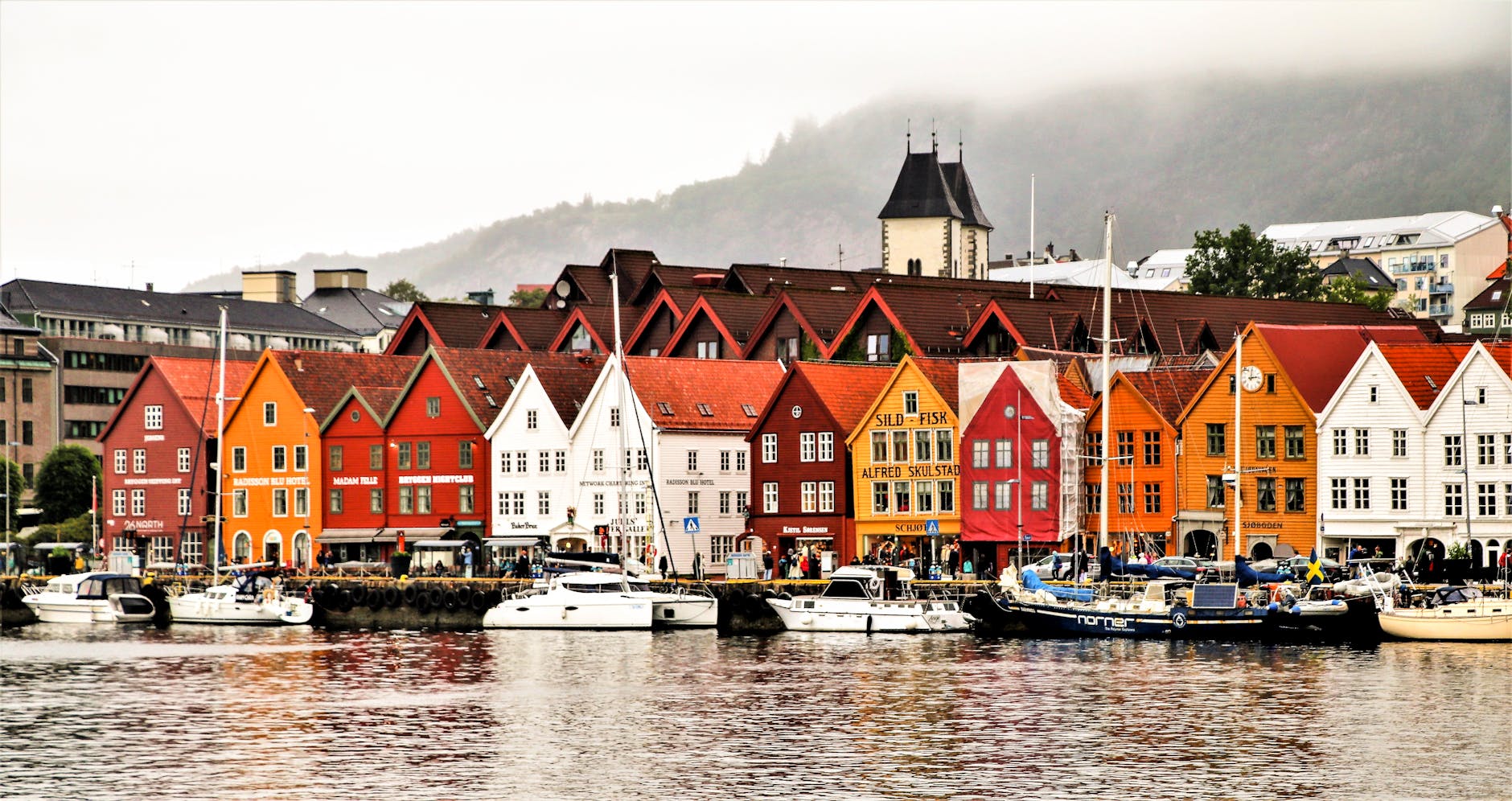
Norway is one of the most beautiful countries in Europe, but it is also one of the easiest to plan badly.
Start Here
From far away, the country looks simple: fjords, mountains, northern lights, red cabins, Viking ships, sleek Oslo, colorful Bergen, Lofoten fishing villages, snow, waterfalls, ferries, and a road disappearing around a cliff. Then you start building an itinerary and Norway becomes less like a postcard and more like a logistics puzzle. The country is long, mountainous, watery, expensive, seasonal, and weather-shaped. A route that looks elegant on a map can become slow because of ferries, tunnels, mountain passes, narrow roads, short winter daylight, cruise crowds, or a hike that is unsafe outside the right season.
That is not a flaw. It is the point.
Norway is not a country you rush through by collecting famous viewpoints. It is a country where the journey is often the experience: the Bergen Railway crossing high plateaus, the ferry sliding through a fjord, the bus switchbacking above waterfalls, the coastal road stitched together by boats, the midnight sun keeping a fishing village awake, the blue hour settling over Tromsø, the sudden weather that makes a mountain feel serious rather than decorative.
The best Norway trip starts with one decision: which Norway are you trying to experience?
There is the classic first-timer Norway: Oslo, Bergen, the Bergen Railway, Flåm, Nærøyfjord, waterfalls, and a compact taste of the fjord country. There is the deep fjord-and-road-trip Norway: Hardanger, Sognefjord, Geiranger, Ålesund, the Atlantic Road, stave churches, mountain roads, and small villages. There is the Arctic Norway: Tromsø, Alta, Senja, Lofoten, Vesterålen, Lyngen, Finnmark, northern lights, midnight sun, whales, Sami culture, and winter logistics. There is the city-and-culture Norway: Oslo’s museums and sauna culture, Bergen’s harbor, Trondheim’s cathedral and food scene, Stavanger’s old town and Lysefjord. There is the outdoor Norway: hiking, cabins, ski touring, cross-country skiing, glaciers, national parks, and the Norwegian habit of treating nature as a serious place. And there is Svalbard, which is Norway politically but a different kind of trip entirely: polar, remote, fragile, guided, expensive, and not a casual add-on.
Norway rewards restraint. The mistake is trying to do Oslo, Bergen, Geiranger, Lofoten, Tromsø, Svalbard, Pulpit Rock, Trolltunga, and the North Cape in one short trip. The better move is to choose a coherent route, give weather space to the landscapes that matter, and understand that in Norway, distance is not measured only in kilometers. It is measured in daylight, ferries, mountains, money, road conditions, and how much silence you are willing to let into the trip.
Norway in one sentence: Norway is a long, water-cut, mountain-built country where the best trips come from matching season, region, transport, and ambition instead of trying to force fjords, cities, Arctic light, hikes, and road trips into one rushed postcard.
Basic data
| Population | About 5.6 million |
|---|---|
| Area | 385,207 km2 |
| Major religions | Christian heritage with a largely secular population and Muslim minorities |
| Political system | Unitary parliamentary constitutional monarchy |
| Economic system | High-income mixed economy led by energy, maritime industries, services, aquaculture, and technology |
Quick Verdict
| Question | Answer |
|---|---|
| Best for | Fjords, mountains, scenic rail journeys, ferries, road trips, hiking, winter landscapes, northern lights, midnight sun, seafood, design, outdoor culture, families, solo travelers, photography, slow travel, saunas, cabins, wildlife, and travelers who like nature with real logistics. |
| Not ideal for | Travelers who want a cheap destination, guaranteed good weather, dense city sightseeing every day, spontaneous peak-summer lodging, easy late-night nightlife everywhere, or an itinerary where every famous place is close together. |
| Ideal first visit | 7 days for Oslo, Bergen, and one fjord route; 10 days for Oslo/Bergen plus deeper western fjords; 12–14 days for a first trip that adds Ålesund, Stavanger, Trondheim, or Northern Norway without feeling manic. |
| Minimum worthwhile trip | 3–4 days for Oslo or Bergen plus a very small fjord taste; 5 days for Oslo–Bergen by rail with one fjord day; 6–7 days for a proper classic first-timer route. Do not add Lofoten or Tromsø to a tiny trip unless the Arctic is the whole point. |
| Best first-time route | Oslo for 1–2 nights, Bergen Railway to Bergen or Flåm, Nærøyfjord/Sognefjord scenery, Bergen for 2–3 nights, then either Hardanger, Ålesund/Geiranger, Stavanger/Lysefjord, or a flight north depending time and season. |
| Best months | June–August for long days, fjords, hiking, road trips, ferries, and the easiest national travel; May and September for lower crowds and good shoulder-season value; late September–March for northern lights in the north; December–March for snow, Arctic winter, skiing, and winter activities. |
| Best first-timer bases | Oslo for urban Norway and rail connections; Bergen for fjords; Ålesund for Geiranger/Sunnmøre; Stavanger for Lysefjord/Pulpit Rock; Tromsø for Arctic winter and northern lights; Lofoten for dramatic coastal landscapes. |
| Most underrated regions | Sunnmøre around Ålesund, Trøndelag around Trondheim, the Helgeland coast, Senja, Hardanger outside the most obvious stops, and Southern Norway’s wooden coastal towns. |
| Biggest planning mistake | Treating Norway as compact because the map pins look manageable. Roads curve around mountains and water, ferries matter, some scenic routes close in winter, and bad weather can erase the view you built the day around. |
| One thing to book early | Peak-summer fjord lodging, Lofoten stays, Tromsø winter activities, popular rail legs, rental cars for high season, cabin routes, guided glacier/hiking trips, and any Svalbard travel. |
| One thing to leave unscheduled | Weather-dependent views, a spare fjord afternoon, sauna time, a café or bakery stop, ferry waits, short walks, rain plans, and one flexible day for the landscape that unexpectedly grabs you. |
| Best first-timer advice | Build around one strong axis: Oslo + Bergen + fjords, Bergen + western fjords, Stavanger + Lysefjord, Ålesund + Geiranger/Sunnmøre, Tromsø + Arctic winter, or Lofoten + north coast. Do not try to do all of Norway. |
The Move
For a first Norway trip, choose either classic rail-and-fjord Norway, western road-trip Norway, or Arctic northern-light/midnight-sun Norway. Mixing all three can work only with enough time and flights. Norway gets better when you let one landscape have the center of gravity.
Who Will Love Norway?
You will probably love Norway if you want:
- A country where landscapes are not background scenery but the main event.
- Scenic transportation: trains across plateaus, ferries through fjords, coastal boats, tunnels, mountain roads, and buses that behave like moving viewpoints.
- A trip where cities are small enough to handle but rich enough to anchor: Oslo, Bergen, Trondheim, Stavanger, Tromsø, and Ålesund.
- Outdoor culture that feels normal rather than performative: hiking, skiing, sauna, cabins, cold-water swimming, practical clothing, packed lunches, and the idea that bad weather is not automatically a reason to stay inside.
- Summer light, waterfalls, road trips, hiking, seafood, islands, and long evenings.
- Winter atmosphere, snow, polar night, northern lights, whales, dog sledding, cross-country skiing, and Arctic blue light.
- A safe-feeling country for solo travel and families, with high English proficiency and good public systems.
- Clean design, strong museums, Nordic food, coffee, bakeries, and modern cities tied closely to water and nature.
You may struggle with Norway if you want:
- A low-cost trip. Norway can be managed intelligently, but it is not a budget destination by global standards.
- Guaranteed weather. Fog, rain, low cloud, wind, snow, and closed roads are part of the country’s logic.
- A single compact route that covers every famous place.
- Easy spontaneity in July, August, Christmas/New Year, ski holidays, Lofoten high season, or Tromsø aurora season.
- Hiking without preparation. Norwegian trails can be steep, exposed, muddy, snowy, unguarded, and weather-sensitive.
- City nightlife as the main reason to come. Oslo, Bergen, Trondheim, Stavanger, and Tromsø have bars and restaurants, but Norway’s strongest travel experiences usually start outside the club.
- Warm beach weather. Norway has beaches and swimming culture, but it is not the Mediterranean.
Norway’s pleasures are often elemental: a ferry horn, rain on a cabin roof, a waffle at a mountain lodge, a train window filled with snow, a waterfall you hear before you see, cod drying on racks, a sauna door opening to cold air, a road sign warning of reindeer, a midnight sun that makes 11 p.m. feel like late afternoon, a fjord so still it feels less like water than glass.
Norway at a Glance
| Practical | Detail |
|---|---|
| Country | Norway, officially the Kingdom of Norway. Mainland Norway sits in Northern Europe on the Scandinavian Peninsula, with a long Atlantic coast, Arctic territory, fjords, mountains, islands, and the Svalbard archipelago far to the north. |
| Capital | Oslo. It is the main international gateway, the best city for museums and contemporary urban Norway, and the practical rail hub for many first trips. |
| Language | Norwegian, with two written forms: Bokmål and Nynorsk. Sámi languages are important in parts of Northern Norway and Sápmi. English is widely spoken in visitor-facing contexts, but learning basic Norwegian courtesy goes a long way. |
| Currency | Norwegian krone, NOK. Visit Norway notes that cash is no longer king and that card or phone payment is accepted almost everywhere.[6] |
| Typical payment methods | Cards and mobile/contactless payments are normal. Carry a small backup card and some cash for edge cases, but do not expect cash to be the most convenient method everywhere. |
| Time zone | Central European Time, UTC+1, and Central European Summer Time, UTC+2, during daylight saving time. |
| Main airports | Oslo Gardermoen is the main gateway. Other useful airports include Bergen, Stavanger, Trondheim, Tromsø, Bodø, Evenes/Harstad-Narvik, Ålesund, Alta, Kirkenes, Longyearbyen, and smaller regional airports. |
| Entry basics | Norway is in the Schengen Area. Many visa-exempt visitors can stay in Norway and the wider Schengen area for up to 90 days in any 180-day period; some nationalities need a Schengen visa.[1][2] |
| EES and ETIAS | The EU Entry/Exit System registers non-EU short-stay travelers at external Schengen borders. Norway has stated EES is being implemented at Norwegian border points. ETIAS is scheduled to start in the last quarter of 2026 for visa-exempt travelers to participating European countries.[3][4][5] |
| Electricity | Visit Norway lists 220 volts AC, 50 Hz, using the continental European standard socket.[7] Most travelers from North America, the UK, Australia, and many other regions need an adapter; check voltage compatibility for appliances. |
| Tap water | Tap water is safe to drink; Visit Norway’s family travel guidance explicitly reassures visitors that tap water is safe.[8] Carry a reusable bottle. |
| Emergency numbers | Fire: 110. Police: 112. Ambulance: 113. Emergencies at sea: 120.[7] |
| Main transport logic | Trains are excellent for Oslo–Bergen, Oslo–Trondheim, Oslo–Stavanger, and scenic routes. Ferries and express boats matter in fjord and coastal Norway. Domestic flights are practical for Northern Norway. A car is useful for many rural fjord/coastal routes, but not for central Oslo/Bergen. |
| Best travel apps | Entur for national public transport planning, Vy and operator apps for trains/buses, regional transit apps such as Ruter/kolumbus/Skyss/AtB, Yr for weather, Varsom for avalanche and natural hazard warnings, Norwegian Public Roads Administration traffic tools for road conditions, Google/Apple Maps as secondary tools. |
| Official tourism source | Visit Norway is the national tourism site and a useful starting point for season, region, nature, transport, and responsible-travel planning.[9] |
First-Timer Mistake
A lot of travelers plan Norway by asking, “How many famous sights can I fit in?” Ask a better question: Which transport corridor and season make those sights make sense? Oslo–Bergen–Flåm is a different trip from Bergen–Ålesund–Geiranger, which is a different trip from Lofoten–Tromsø, which is a different trip from Svalbard.
2026 Visitor Notes
Norway Is Schengen, But Your Passport Still Matters
Norway’s official visitor-visa guidance states that a visitor’s visa allows stays in Norway or other Schengen countries for up to 90 days over a 180-day period, and UDI says visa-exempt travelers can visit Norway for up to 90 days if they meet the applicable conditions.[1][2]
The move: Do not rely on a generic “Norway is visa-free” sentence. Check your passport nationality, Schengen days already used, passport validity, onward travel, working/remote-work limits, and whether your itinerary includes Svalbard.
EES Is Separate From ETIAS
The EU describes the Entry/Exit System as an automated system that registers non-EU nationals traveling for a short stay each time they cross the external borders of participating European countries.[3] Norway has stated that EES is being implemented gradually in Norway, with Oslo airport Gardermoen among the first locations.[4] ETIAS is the separate pre-travel authorization for visa-exempt travelers and is scheduled to begin operations in the last quarter of 2026.[5]
The move: For travel content, update this section close to travel. EES is a border-processing system. ETIAS is a travel authorization that applies to many visa-exempt travelers once active. They are related but not the same.
Norway Uses Kroner, Not Euros
Norway is not in the eurozone. Visit Norway identifies the currency as Norwegian kroner, currency code NOK, and notes that electronic payment by card or phone is accepted almost everywhere.[6]
The move: Pay in NOK when a terminal offers currency conversion. Use a card with low foreign-transaction fees. Carrying a small amount of cash is fine; carrying large cash because you assume Norway is cash-based is not necessary.
Svalbard Is Not a Casual Schengen Add-On
Svalbard is part of the Kingdom of Norway but not part of the Schengen Area in the ordinary travel-planning sense. UDI warns that travelers who require a Schengen visa must have a visa allowing them to return to Norway/the Schengen area after visiting Svalbard.[26] The Governor of Svalbard also states that Norwegian authorities do not require a visa for entry to Svalbard itself, but travelers going via mainland Norway must handle Schengen requirements correctly.[27]
The move: Treat Svalbard as a separate expedition-style trip, not a casual daydream after Oslo. Check passport, insurance, weather, guided-activity rules, and visa-entry count before booking.
Summer Is Easiest, But Not Automatically Best
Visit Norway’s seasonal planning emphasizes that Norway changes dramatically by month, from summer hiking and long light to winter and northern-lights travel.[10] Summer gives the easiest access to roads, ferries, hiking, and rural lodging, but it also brings peak demand and higher prices in popular areas.
The move: Choose the season by trip type. Go in summer for road trips, fjords, hiking, midnight sun, and family logistics. Go in winter for snow, auroras, skiing, and Arctic atmosphere. Go in May or September if you want fewer crowds and can tolerate weather uncertainty.
Northern Lights Are Real, But Not Guaranteed
Visit Norway says northern lights can be experienced as early as late September until late March in Northern Norway, while noting that auroras are a natural phenomenon with no guarantee.[11]
The move: If auroras matter, go north, stay multiple nights, avoid full urban light when possible, and plan a winter trip you will still enjoy if clouds win. Tromsø, Alta, Senja, Lyngen, Lofoten, Vesterålen, Kirkenes, and Svalbard all have different tradeoffs.
The Midnight Sun Changes Northern Summer Travel
Visit Norway explains that the midnight sun occurs in summer above the Arctic Circle, including Northern Norway, and that the farther north you go, the more nights of midnight sun you get.[12]
The move: Northern Norway in June and July is not just “Norway with more daylight.” It changes sleep, photography, hiking, driving, crowds, and your sense of time. Bring an eye mask and plan at least one late-night walk or drive.
Public Transport Is Strong, But Rural Norway Needs Careful Planning
Visit Norway notes that the official national travel planner Entur provides updated route and timetable information across buses, trams, trains, subways, ferries, scooters, and city bikes.[13] Trains work beautifully on major corridors, but fjord and coastal travel often depends on buses, ferries, express boats, and seasonal timetables.
The move: Use Entur early, not just once you arrive. Google Maps can be useful, but for Norwegian public transport, Entur is often the better planning backbone.
Driving Is Scenic, Slow, and Weather-Dependent
Norwegian Scenic Routes are 18 selected roads through landscapes with distinctive natural qualities, from coasts and fjords to mountains and waterfalls.[17] The Norwegian Public Roads Administration provides traffic information, mountain-pass status, ferry information, webcams, and road-condition tools.[18] Visit Norway’s winter-driving guidance also points travelers to real-time road updates and the NPRA traffic app.[16]
The move: On a Norway road trip, the drive is not dead time. Build shorter driving days, check ferries, expect tunnels, respect speed limits, and verify mountain roads before assuming the route is open.
Mountain Safety Is Not Optional
Visit Norway’s mountain safety guidance warns that weather can change quickly in Norwegian mountains and presents the mountain safety code.[19] DNT’s Norwegian Mountain Code starts with planning your trip and informing others about your route.[20]
The move: Treat famous hikes like real mountain days. Pulpit Rock can be manageable in good conditions; Trolltunga, Besseggen, Romsdalseggen, and glacier travel demand more planning, fitness, daylight, clothing, and weather judgment.
How to Understand Norway
Norway becomes easier when you stop thinking of it as a list of sights and start reading it as a set of route systems: rail corridors, fjord gateways, coastal roads, Arctic bases, mountain passes, ferries, and seasonal windows.
The Seven Norways a Visitor Actually Meets
| Norway | Where you feel it | What it gives you |
|---|---|---|
| Urban-water Norway | Oslo, Oslofjord, Bergen, Stavanger, Trondheim, Tromsø | Museums, food, harbors, saunas, neighborhoods, design, music, compact city life, and water close by. |
| Classic fjord Norway | Bergen, Flåm, Nærøyfjord, Sognefjord, Hardangerfjord, Voss | Rail-and-ferry scenery, waterfalls, orchards, steep cliffs, easy first-timer fjord access, and the postcard version done properly. |
| Deep western Norway | Ålesund, Sunnmøre, Geirangerfjord, Hjørundfjord, Loen, Olden, Nordfjord, the Atlantic Road | Bigger landscapes, dramatic driving, fjord villages, mountain roads, coastal weather, and scenery that rewards more time. |
| Southwestern Norway | Stavanger, Lysefjord, Pulpit Rock, Kjerag, Jæren, Ryfylke | Iconic hikes, oil-city history, white wooden streets, beaches, fjords, and strong road-trip logic. |
| Central and historic Norway | Trondheim, Røros, Dovrefjell, Trøndelag, Helgeland | Nidaros Cathedral, food culture, old mining towns, coastal routes, musk ox country, and a bridge between south and north. |
| Arctic coastal Norway | Bodø, Lofoten, Vesterålen, Senja, Tromsø, Alta, Finnmark, Kirkenes | Northern lights, midnight sun, fishing villages, whales, Sami culture, jagged islands, Arctic weather, and expensive but unforgettable nature. |
| Polar Norway | Svalbard | Glaciers, polar-night/midnight-sun extremes, expedition travel, guided outdoor activities, wildlife safety, fragile ecosystems, and serious remoteness. |
Local Logic
Norway is wealthy, orderly, outdoorsy, and highly functional, but that does not mean every trip is easy. The country has excellent public systems in cities and main transport corridors, then suddenly becomes rural, weather-exposed, ferry-dependent, and sparse. Many things work; they just do not work on your fantasy schedule.
A train may be the most beautiful way to cross the country. A bus may connect the fjord village that looks impossible to reach. A car may be essential for a scenic road but useless inside Bergen. A ferry may be both transportation and the highlight of the day. A hotel may be available in May but impossible in July. A famous hike may be safe on a dry August morning and irresponsible in fog, snow, or late-afternoon darkness. A northern-lights tour may be excellent and still see nothing because clouds do not care about your booking.
Norway is not hard because it is chaotic. Norway is hard because nature remains in charge.
The Country’s Central Contrasts
- Postcard beauty vs practical severity: Fjords and mountains are stunning because they are not easy terrain.
- Urban polish vs outdoor seriousness: Oslo can feel sleek and casual; a mountain hike two hours away can require real preparation.
- Summer abundance vs winter limitation: Long summer light opens the country; winter makes some places magical and others logistically constrained.
- Public access vs responsibility: The right to roam is generous, but it depends on not damaging land, disturbing people, ignoring fire rules, or treating private/rural spaces as a theme park.
- Short map distances vs slow movement: Water, tunnels, ferries, mountain passes, and narrow roads change the meaning of distance.
- Arctic romance vs Arctic cost: Northern Norway and Svalbard can be extraordinary, but flights, lodging, tours, clothing, and weather backup matter.
Norway’s Rhythm
Norway wakes early by southern European standards. Breakfast is usually practical, lunch can be simple, dinner is earlier than in Mediterranean countries, and Sundays can be quieter. Outdoor days start early because weather, daylight, and transport windows matter. Summer evenings stretch beautifully, especially in the north. Winter days require a daylight strategy.
The move: In Norway, build days around the thing that is weather-sensitive first: a hike, fjord cruise, viewpoint, road, ferry, or aurora window. Put museums, cafés, saunas, food halls, and city wandering around that anchor.
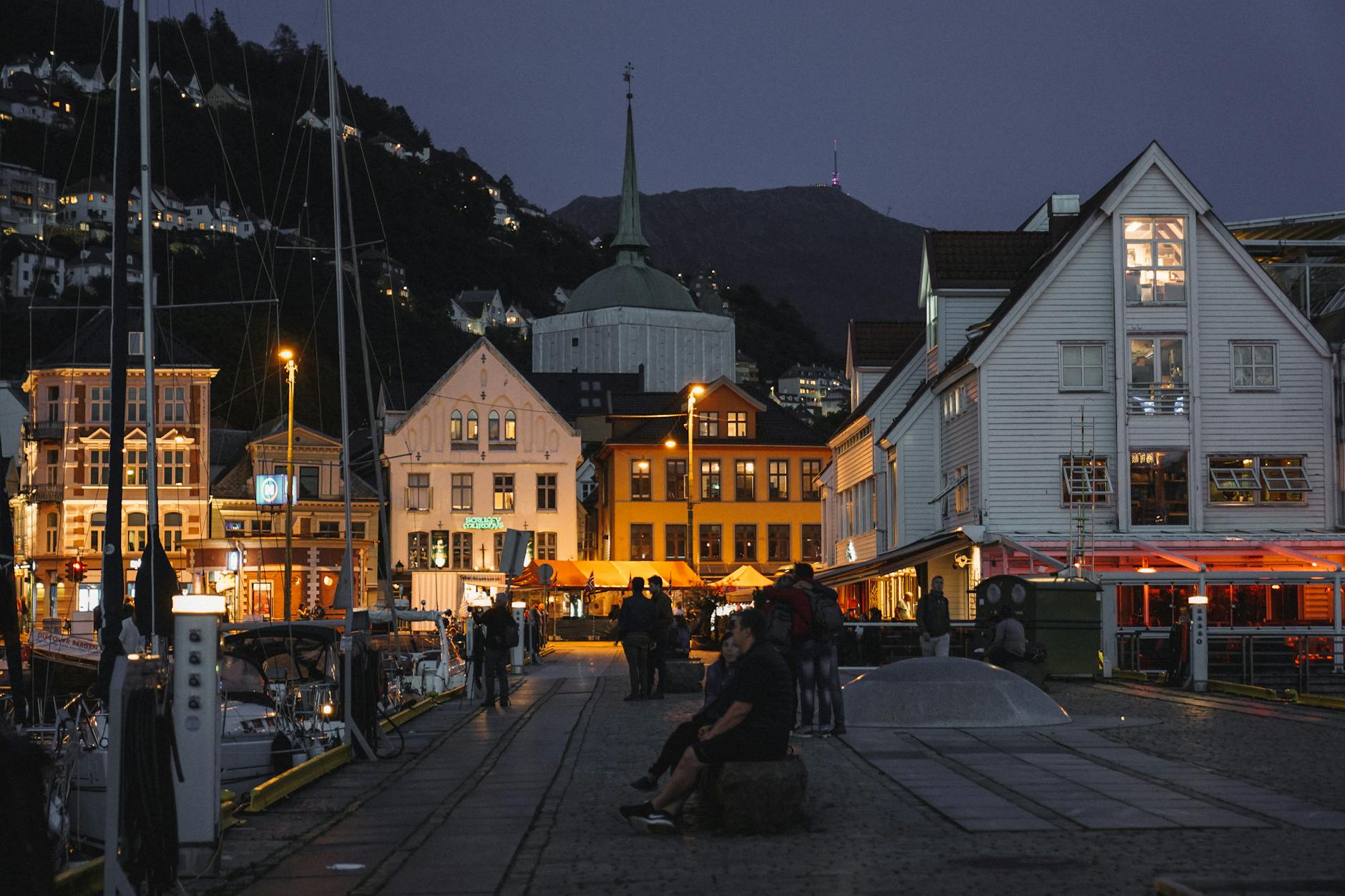
Best Time to Visit Norway
Norway is a year-round destination only if you match the trip to the season. The wrong season does not make Norway bad; it makes the wrong itinerary bad.
Best Overall Months
June to August are the easiest months for first-time travelers who want fjords, road trips, hiking, long days, ferries, and broad access. The tradeoff is price and crowding in famous areas.
May and September are often excellent shoulder months. May brings spring energy, snow still in the high mountains, strong waterfalls, and fewer crowds, though some high roads and trails may not be fully ready. September brings autumn color, calmer towns, possible aurora in the north, and a more contemplative mood, but weather becomes more variable.
October to March is the best window for Arctic winter, northern lights, snow experiences, whale watching in some northern areas, skiing, and polar-night atmosphere. It is not the best time for a classic western-fjord road trip unless you plan carefully around daylight, road closures, weather, and limited services.
Season-by-Season
| Season | What to expect | Best for | Watch out for |
|---|---|---|---|
| Spring: April–May | Longer days, melting snow, powerful waterfalls, flowers in lower areas, lingering winter in mountains. | Cities, fjords, waterfalls, shoulder-season value, lower crowds. | Closed high roads, muddy/snowy trails, variable weather, limited rural services before summer. |
| Summer: June–August | Long light, green landscapes, high-season ferries, hiking, road trips, midnight sun in the north. | First-timers, fjords, families, camping, road trips, hiking, islands, Arctic summer. | High prices, cruise crowds, booked-out lodging, busy trailheads, insects in some areas, rain. |
| Autumn: September–November | Quieter travel, golden landscapes, darker nights, aurora returning in the north, stormier weather later. | Shoulder travel, photography, food, city breaks, northern lights from late September. | Shorter days, closures, cold rain, early snow in mountains, storm disruptions. |
| Winter: December–March | Snow, polar night/blue hour in the north, skiing, auroras, Christmas atmosphere, icy roads. | Tromsø, Alta, Kirkenes, Svalbard, skiing, winter cabins, northern lights, city museums. | Darkness, cold, avalanches, road closures, expensive Arctic tours, weather cancellations. |
Month-by-Month Guide
| Month | Verdict |
|---|---|
| January | Best for Arctic winter, snow, skiing, polar-night atmosphere, and northern lights in the north. Poor for classic road trips unless winter driving is the point. |
| February | A strong winter month: more light than January, good for skiing, Tromsø/Alta aurora trips, winter activities, and snowy landscapes. Still cold and expensive in popular Arctic areas. |
| March | One of the best winter-spring crossover months: longer days, snow, ski conditions, northern lights possible in the north, and more daylight for activities. |
| April | Transitional. Good for city breaks and some snow/ski areas, but not ideal for high mountain hiking or assuming summer access. Easter can affect prices and domestic travel. |
| May | Excellent shoulder month for cities, fjords, waterfalls, and lower crowds. Some famous hikes and roads may still be snowy or closed. National Day on May 17 is festive and culturally rich. |
| June | One of the best months: long days, green landscapes, many services open, midnight sun in the north, strong waterfalls. Early June can still have snow on high trails. |
| July | Peak summer. Best access, maximum services, warmest weather, and busiest famous routes. Book early and expect pressure in Lofoten, Bergen/fjord routes, and iconic hikes. |
| August | Still strong for hiking, fjords, road trips, and northern summer. Late August begins to feel calmer as school returns. Weather can be variable. |
| September | Excellent for shoulder travel, autumn color, food, fewer crowds, and possible aurora in the north. Some seasonal routes begin to wind down. |
| October | Moody, photogenic, and quieter. Good for cities and some northern lights travel, but rain, storms, and early winter conditions become more relevant. |
| November | Low-season in many areas. Good for urban trips, early winter atmosphere, and some Arctic travel, but daylight is short and weather can be raw. |
| December | Strong for Christmas atmosphere, snow travel where conditions cooperate, skiing, northern lights, and Arctic blue light. Holiday closures and high-demand periods need planning. |
Rain Plan
Norway is built for rain emotionally, but not every traveler is. For wet days, pivot to Oslo museums, Bergen’s Bryggen and seafood halls, saunas, cafés, food markets, train journeys, scenic ferries with indoor space, libraries, aquariums, churches, design shops, and short walks with proper gear. In fjord country, rain can make waterfalls spectacular; fog can also erase views entirely.
How Many Days You Need
The Honest Answer
You need 7 days for a satisfying first Norway route. Ten days is much better. Two weeks lets you combine the classic south/west with one northern or deeper fjord extension. Less than a week can still be good, but only if you stay disciplined.
| Length | What it feels like |
|---|---|
| 2–3 days | A city break: Oslo, Bergen, Stavanger, Trondheim, or Tromsø. Add only a nearby nature day. Do not pretend you have seen Norway. |
| 4–5 days | A focused taste: Bergen plus a fjord day, Oslo plus Bergen by train, Tromsø winter, or Stavanger plus Lysefjord. Good if the route is tight. |
| 6–7 days | Best minimum first trip: Oslo, Bergen Railway, Flåm/Nærøyfjord or another fjord route, Bergen, and maybe one extension. |
| 8–10 days | Strong first trip. Add Hardanger, Ålesund/Geiranger, Stavanger/Lysefjord, or Trondheim without destroying the pace. |
| 11–14 days | Ideal for travelers who want both classic fjords and one northern or road-trip region. Still choose carefully. |
| 15–21 days | You can build a serious Norway route: Oslo, Bergen/fjords, Ålesund/Geiranger, Trondheim/Helgeland, Lofoten/Tromsø, or a slow road trip. |
| One month | Norway becomes spacious. You can travel by rail, road, ferries, cabins, and coastal routes without racing the map. |
Itinerary Philosophy
A good Norway day usually has:
- One landscape anchor: a fjord, hike, ferry, road, viewpoint, train, island, mountain, or aurora activity.
- One weather backup: museum, sauna, food hall, café, short walk, scenic drive, indoor boat seating, or flexible second attempt.
- One logistics check: ferry time, train time, road status, weather, daylight, and food availability.
- One pause: Norway’s best moments often happen between destinations.
The Move
Do not create a route where every day depends on perfect weather. A brilliant Norway itinerary has slack. A fragile Norway itinerary has one famous viewpoint per day and no backup.
Choose Your Norway Trip
Choose Classic Norway If You Want the First-Timer Core
Best route: Oslo → Bergen Railway → Flåm/Nærøyfjord/Sognefjord → Bergen → optional Hardanger or Stavanger.
Best for: First-timers, rail travelers, couples, families, fjord scenery without renting a car, city-and-landscape balance.
Ideal length: 6–9 days.
Why it works: It gives you Oslo’s museums, one of Europe’s great train journeys, fjord scenery, Bergen atmosphere, and a clear route without needing to solve the whole country.
Common mistake: Treating Flåm as the whole fjord region. It is a useful gateway, not the only answer.
Choose Western Fjord Norway If You Want Maximum Landscape
Best route: Bergen → Hardanger/Sognefjord → Nordfjord/Loen/Olden → Ålesund/Sunnmøre → Geiranger/Hjørundfjord → optional Atlantic Road.
Best for: Road trippers, photographers, hikers, fjord obsessives, repeat visitors, travelers who want less city time.
Ideal length: 8–14 days.
Why it works: The western fjords need time because the distances are beautiful but slow. This route lets the landscape build rather than becoming a series of transfers.
Common mistake: Driving too far every day and never actually stopping in the places you came to see.
Choose Stavanger and Lysefjord If You Want Iconic Hiking
Best route: Stavanger → Lysefjord → Pulpit Rock → optional Kjerag → Jæren beaches → Ryfylke.
Best for: Hikers, shorter trips, travelers who want one iconic fjord hike, people combining Norway with other parts of Scandinavia.
Ideal length: 4–7 days.
Why it works: Stavanger is a compact base with strong access to Pulpit Rock and Lysefjord.
Common mistake: Assuming Pulpit Rock and Kjerag are equal in difficulty. They are not. Kjerag is more demanding and seasonal.
Choose Northern Norway If You Want Arctic Drama
Best route: Tromsø → Lyngen/Senja → Lofoten/Vesterålen → Bodø or Evenes; or Tromsø → Alta → Finnmark/Kirkenes.
Best for: Northern lights, midnight sun, whales, Arctic culture, jagged landscapes, road trips, photography, winter activities.
Ideal length: 7–14 days.
Why it works: Northern Norway is not one place. Tromsø is a strong winter base; Lofoten is scenic and road-trip oriented; Senja is quieter and dramatic; Finnmark feels vast, sparse, and culturally distinct.
Common mistake: Flying to Tromsø for two nights and expecting guaranteed auroras. Stay longer or manage expectations.
Choose Lofoten If You Want the Picture-Postcard North
Best route: Fly to Evenes, Bodø, Svolvær, or Leknes depending season and plan; road trip through Lofoten with time for weather; add Vesterålen or Senja if you have enough days.
Best for: Photographers, hikers, road trippers, fishing-village atmosphere, Arctic summer, dramatic coast.
Ideal length: 5–8 days for Lofoten alone; 10–14 days with Senja/Tromsø/Vesterålen.
Why it works: Lofoten is spectacular, but it is not a quick side trip from Oslo or Bergen.
Common mistake: Underbooking lodging in peak summer or building a route with no rain/wind buffer.
Choose Svalbard If You Want Polar Norway
Best route: Fly to Longyearbyen; use guided activities for glaciers, wildlife, snowmobiles, boat trips, dog sledding, or northern lights depending season.
Best for: Polar landscapes, expedition travelers, serious photographers, adventurous travelers with budget and flexibility.
Ideal length: 4–7 days minimum.
Why it works: Svalbard is one of the most accessible High Arctic destinations, but it still demands respect.
Common mistake: Treating Svalbard like a normal town break. Outdoor travel requires guides, polar-bear safety awareness, weather judgment, and specialized planning.
Choose Southern Norway If You Want Softer Coastal Travel
Best route: Oslo → Kristiansand → Arendal/Risør/Grimstad → Stavanger or back to Oslo.
Best for: Families, summer cottages, coastal towns, slower travel, swimmers, road trippers who prefer gentle scenery over dramatic fjords.
Ideal length: 5–9 days.
Why it works: Southern Norway is warmer, gentler, and more domestic-holiday oriented than the fjord and Arctic icons.
Common mistake: Ignoring it because it is less internationally famous.
Regions and Places to Go
Oslo and the Oslofjord
Identity: Norway’s capital: waterfront, museums, architecture, islands, sauna culture, forests, food, and a more interesting urban personality than its old “just a gateway” reputation suggests.
Best for: First nights, museums, design, food, families, sauna, urban swimming, rail connections, contemporary Norway.
Why go: Oslo gives cultural grounding before the fjords. The National Museum, MUNCH, the Opera House, Deichman library, Akershus Fortress, Vigeland Park, the Bygdøy museums, Grünerløkka, waterfront saunas, and forest access make it a strong city break.
How long: 1–2 nights on a classic route; 3 nights if you like museums, food, architecture, and slower city travel.
Best time: Year-round. Summer for islands and waterfront; winter for museums, sauna, and snowy forest if conditions cooperate.
Common mistake: Skipping Oslo entirely. If you only have five days, maybe. If you have a week or more, Oslo is not wasted time.
Bergen and the Fjord Gateway
Identity: Rainy, colorful, steep, historic, maritime, and atmospheric. Bergen is Norway’s best first-timer fjord base.
Best for: Fjord access, Bryggen, seafood, funicular views, compact city walking, rail/ferry connections.
Why go: Bergen sits between city and landscape. It is touristy in parts, but it earns its place: harbor, hills, wooden streets, weather, museums, restaurants, and quick access to Hardanger, Sognefjord, and Flåm routes.
How long: 2–3 nights minimum; more if using it as a base.
Best time: May–September for easiest fjord travel; winter for moodier low-season atmosphere.
Common mistake: Planning only one day and being surprised by rain. Bergen needs a rain jacket and a flexible attitude.
Sognefjord, Nærøyfjord, and Flåm
Identity: Classic fjord Norway: deep water, steep walls, rail drama, ferry routes, waterfalls, and high first-timer accessibility.
Best for: First-time fjord scenery, train/ferry combinations, travelers without a car, slow scenic days.
Why go: Nærøyfjord and Geirangerfjord are the UNESCO-name fjords most travelers hear about; Visit Norway notes that the fjords of Fjord Norway, exemplified by Geirangerfjord and Nærøyfjord, received UNESCO World Heritage status in 2005.[25]
How long: 1–2 days for a taste; 3–4 days if staying in villages and adding walks.
Best time: May–September for broad access; winter for quiet drama if you verify schedules.
Common mistake: Treating Flåm as a destination to check off rather than a logistics node to use intelligently.
Hardangerfjord
Identity: Orchards, waterfalls, fjord villages, cider, mountain edges, and a softer alternative or complement to the headline fjord route.
Best for: Spring blossoms, fruit/cider, road trips, fjord villages, waterfalls, travelers who want beauty with slightly less checklist pressure.
Why go: Hardanger is scenic, food-rich, and often easier to love slowly than as a rushed day trip.
How long: 2–4 days.
Best time: May for blossoms and waterfalls; summer for road trips; September for harvest mood.
Common mistake: Planning Trolltunga without understanding the distance, exposure, season, weather, and fitness requirements.
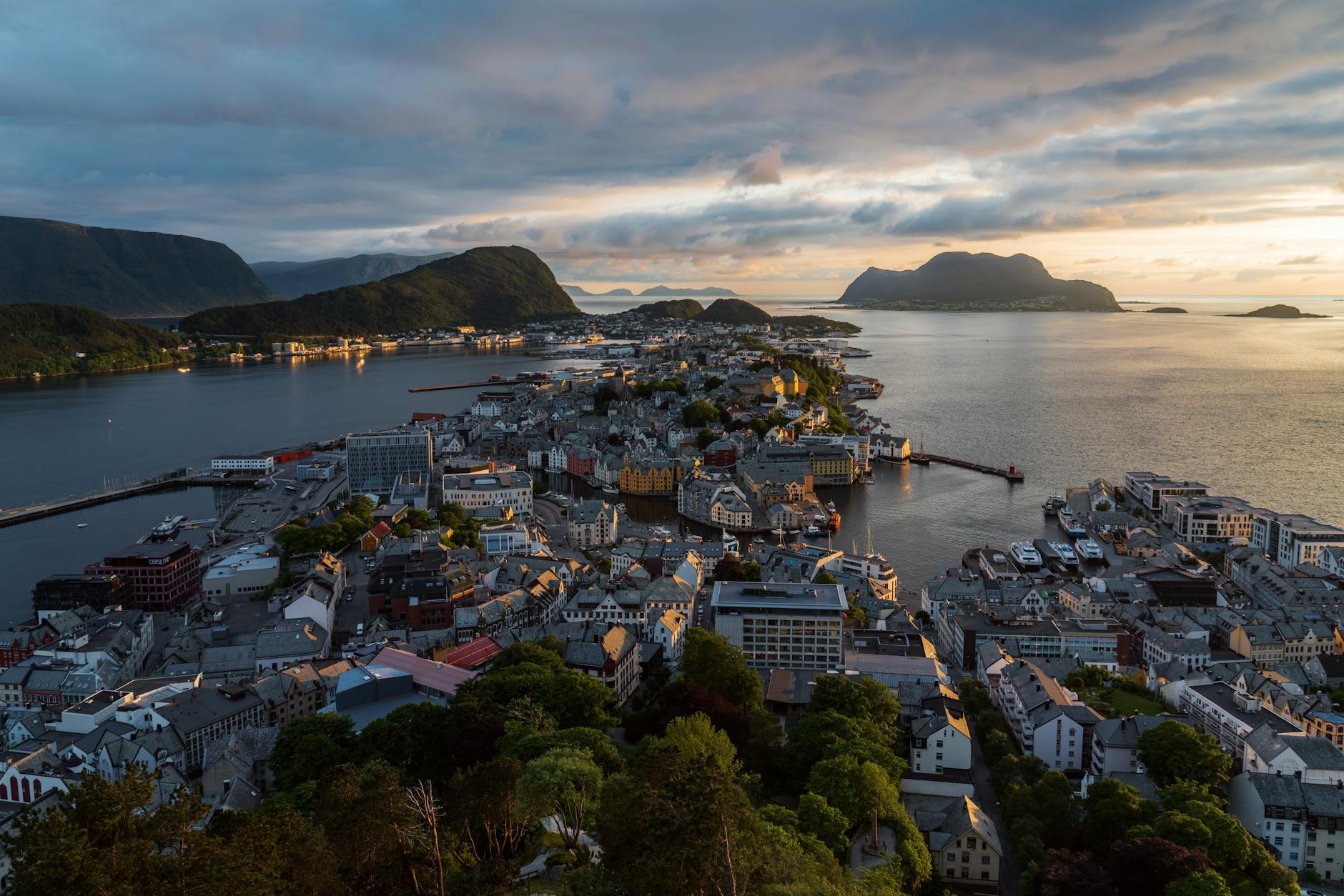
Ålesund, Sunnmøre, Geiranger, and Hjørundfjord
Identity: Art Nouveau town, island coast, sharp mountains, deep fjords, dramatic roads, and some of Norway’s most cinematic scenery.
Best for: Photographers, road trippers, fjord lovers, architecture, travelers who want more than the standard Flåm loop.
Why go: Ålesund is one of Norway’s most attractive small cities, and the surrounding region gives access to Geirangerfjord, Hjørundfjord, the Sunnmøre Alps, Runde bird island, and coastal drives.
How long: 3–5 days.
Best time: June–September for roads and fjord access; winter for atmosphere if you are flexible.
Common mistake: Trying to day-trip Geiranger from too far away without considering road/ferry timing.
Stavanger, Lysefjord, Pulpit Rock, and Ryfylke
Identity: Oil city, wooden old town, harbor restaurants, nearby beaches, and gateway to Lysefjord’s iconic cliffs.
Best for: Pulpit Rock, Lysefjord, short hiking-focused trips, food, coastal drives, travelers coming from or continuing to southern/western Norway.
Why go: Stavanger combines a real city with one of Norway’s most famous hikes nearby. It is also a useful entry to Ryfylke and the southwestern coast.
How long: 3–5 days.
Best time: May–September for easier hiking; winter with caution and local advice.
Common mistake: Treating Pulpit Rock as a casual stroll in any weather. It is popular, but still a mountain hike.
Trondheim and Trøndelag
Identity: Historic, student-filled, food-forward, and calmer than Oslo/Bergen, with Nidaros Cathedral as the cultural anchor.
Best for: History, food, architecture, central Norway, rail routes, travelers continuing toward the north.
Why go: Trondheim has a strong sense of place: cathedral, riverfront warehouses, neighborhoods, cafés, music, and access to Trøndelag’s food culture and coast.
How long: 2–3 nights.
Best time: Year-round; summer for city wandering and coastal extensions.
Common mistake: Skipping it because it is not a fjord icon. It adds a different Norway.
Lofoten and Vesterålen
Identity: Jagged mountains rising from the sea, fishing villages, beaches, cod-drying racks, road-trip scenery, hiking, and Arctic light.
Best for: Photography, road trips, summer hiking, winter scenery, surf, fishing villages, northern lights with the right conditions.
Why go: Lofoten is famous for a reason. Vesterålen can be quieter and excellent for whales, islands, and less-saturated northern travel.
How long: 5–7 days for Lofoten; 8–12 days with Vesterålen or Senja.
Best time: June–August for access and midnight sun; September for calmer mood; February–March for winter light and aurora potential.
Common mistake: Visiting for two nights and spending most of it driving or waiting for weather.
Senja
Identity: Wild, sharp, dramatic, and less internationally famous than Lofoten, with huge coastal views and serious weather.
Best for: Road trippers, photographers, hikers, northern scenery, travelers who want fewer crowds.
Why go: Senja gives a more spacious version of northern coastal drama and pairs well with Tromsø.
How long: 2–4 days.
Best time: Summer and early autumn for driving/hiking; winter for experienced travelers with weather flexibility.
Common mistake: Assuming services are as dense as in more tourist-developed areas.
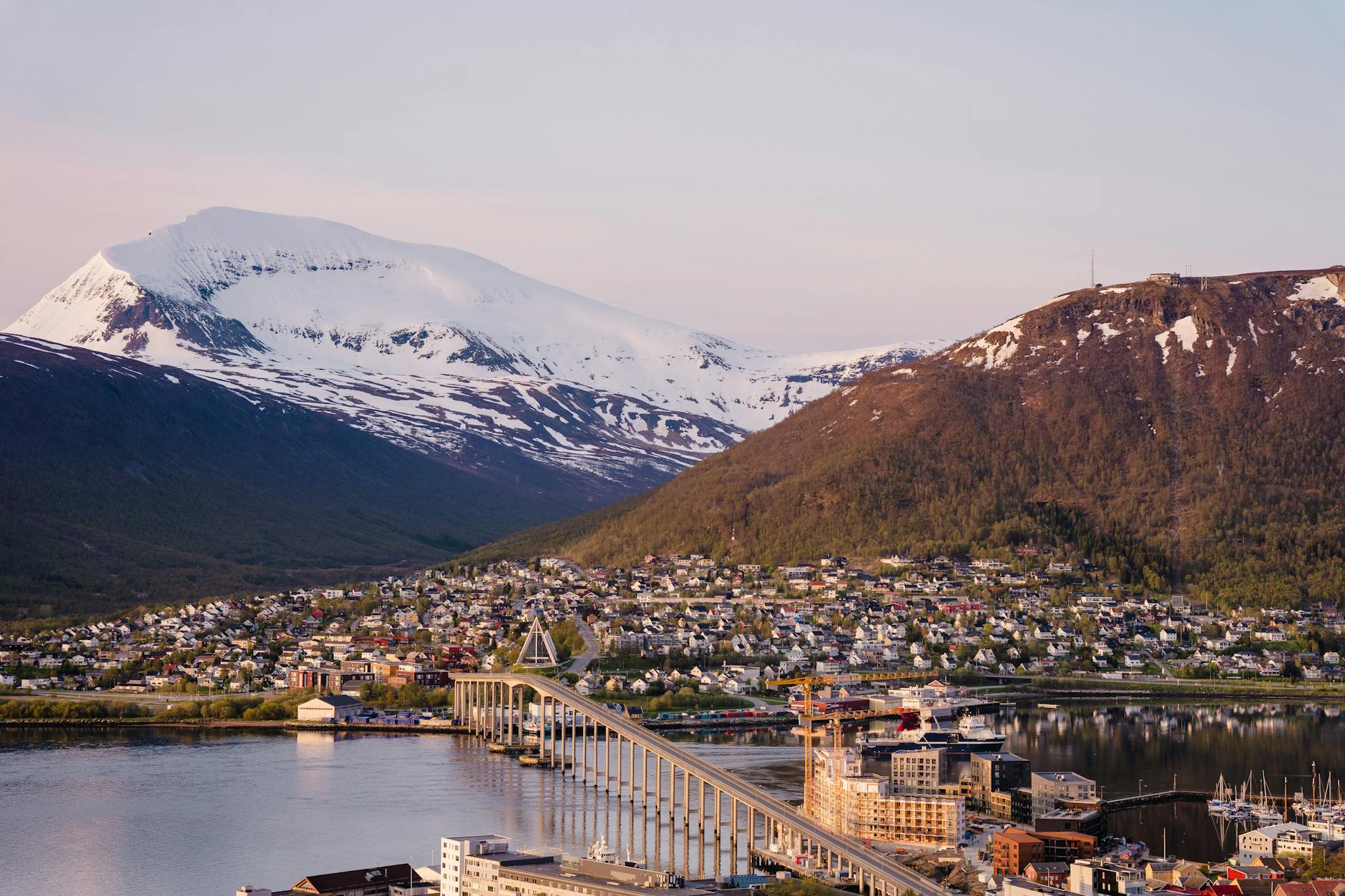
Tromsø, Lyngen, Alta, and Arctic Norway
Identity: Arctic city life, northern lights, whales, Sami culture, fjords, mountains, winter tours, midnight sun, and the gateway to the far north.
Best for: Northern lights, winter activities, first Arctic trip, solo travelers, families with older kids, short winter breaks.
Why go: Tromsø is the easiest Arctic base for many visitors because it has a real city, airport, tours, restaurants, museums, and access to dark-sky surroundings. Alta is quieter and strong for aurora and Sami/northern culture. Lyngen is dramatic and more adventure-oriented.
How long: 4–6 nights for an aurora-focused trip; longer if adding Senja, Alta, or Lyngen.
Best time: Late September–March for aurora; November–January for polar-night/blue-hour mood; February–March for more daylight plus winter landscapes; June–July for midnight sun.
Common mistake: Booking one aurora tour and feeling cheated by clouds. Stay longer.
Svalbard
Identity: High Arctic, glaciers, polar bears, mining history, expedition travel, polar night, midnight sun, and landscapes that are beautiful because they are not forgiving.
Best for: Adventurous travelers, photographers, polar travel, winter darkness, spring snowmobile expeditions, summer boat trips, serious nature.
Why go: Svalbard is one of the world’s most accessible Arctic experiences, but it still operates on Arctic terms. Outdoor travel beyond Longyearbyen requires proper safety planning and usually guides.
How long: 4–7 days minimum.
Best time: February–May for snow and returning light; June–August for boat trips and midnight sun; October–February for darkness and polar-night atmosphere.
Common mistake: Treating it like a normal Norwegian city. It is not.
Southern Norway
Identity: White wooden towns, skerries, summer cottages, boating, family holidays, and a gentler coastal rhythm.
Best for: Families, summer road trips, swimming, small towns, coastal culture, travelers who want less dramatic but easier Norway.
Why go: Kristiansand, Arendal, Grimstad, Risør, and nearby coastal areas show a domestic-holiday version of Norway many international visitors miss.
How long: 3–7 days.
Best time: June–August.
Common mistake: Expecting western-fjord drama. Southern Norway is subtler.
Mountain and Inland Norway
Identity: Plateaus, national parks, ski towns, cabins, trails, stave churches, lakes, and the Norwegian interior.
Best for: Hiking, skiing, cabins, road trips, cross-country culture, travelers who want to understand friluftsliv.
Where to look: Jotunheimen, Rondane, Hardangervidda, Dovrefjell, Lillehammer, Geilo, Hemsedal, Røros.
How long: 3–7 days depending activity.
Best time: Summer/early autumn for hiking; winter for skiing.
Common mistake: Going into mountain areas with city clothing and city assumptions.
Best Things to Do
1. Cross Norway by Train on the Bergen Railway
The Oslo–Bergen rail journey is one of Europe’s great scenic train rides, crossing forests, valleys, high plateaus, and mountain country before descending toward the west.
Best for: First-timers, rail lovers, landscape orientation, bad-weather travel that still feels scenic.
Time needed: A full travel day if doing Oslo–Bergen, longer if breaking the trip.
Best pairing: Flåm Railway, Nærøyfjord, Bergen.
Worth it? Yes, especially for a first trip. It turns transit into one of the main experiences.
2. See a Fjord From the Water
A fjord is not just a view from above. You understand the scale differently from the water: cliffs rising, waterfalls dropping, villages tucked along shorelines, weather moving across the surface.
Best for: Everyone on a first Norway trip.
Where: Nærøyfjord, Sognefjord, Hardangerfjord, Geirangerfjord, Hjørundfjord, Lysefjord, Trollfjord, and many smaller routes.
Best time: May–September for easiest access; winter routes can be beautiful but schedule-dependent.
Common mistake: Only seeing fjords from a tour bus viewpoint.
3. Base in Bergen for a Few Days
Bergen is touristy, rainy, and still essential. Its harbor, hills, wooden streets, fish-market culture, museums, funicular views, and fjord access make it one of Norway’s best bases.
Best for: First-timers, couples, solo travelers, food, fjords, car-free travelers.
Time needed: 2–3 nights.
Rain plan: Lean into it. Bergen without rain is nice; Bergen with rain is often more itself.
4. Hike Pulpit Rock, But Treat It Like a Hike
Preikestolen/Pulpit Rock is one of Norway’s iconic viewpoints: a broad rock platform above Lysefjord. It is popular, but popularity does not remove risk.
Best for: Active travelers, iconic views, Stavanger-based trips.
Time needed: Half to full day from Stavanger depending transport.
Go early / go late: For crowds and light, but not so late that you compromise daylight.
Skip if: Weather is poor, you lack proper footwear, or you are uncomfortable on exposed viewpoints.
5. Drive Part of the Norwegian Scenic Routes
Norway’s 18 official Scenic Routes are designed so that roads, viewpoints, rest areas, art, architecture, and landscape become a combined travel experience.[17]
Best for: Road trippers, photographers, design lovers, fjord/coastal travelers.
Time needed: Several hours to several days depending route.
Local logic: These are not fastest routes. That is the point.
6. Spend Time in Northern Norway
Lofoten, Vesterålen, Senja, Tromsø, Alta, Lyngen, and Finnmark are not just “more Norway.” They are a different travel logic: Arctic light, fishing culture, longer distances, weather exposure, northern lights, midnight sun, and Sami presence.
Best for: Photographers, winter travelers, road trippers, aurora hunters, nature lovers.
Time needed: At least 5–7 days for one northern region.
Common mistake: Treating Northern Norway as an add-on after a full southern itinerary.
7. Chase Northern Lights With Realistic Expectations
Northern lights can be extraordinary in Northern Norway from late September to late March, but weather, solar activity, moonlight, and location matter.[11]
Best for: Winter travelers, photographers, Arctic city breaks.
Where: Tromsø, Alta, Senja, Lyngen, Lofoten, Vesterålen, Kirkenes, Svalbard.
The move: Book multiple nights, not one magical evening.
8. Experience the Midnight Sun
Above the Arctic Circle, summer light changes everything. You can hike late, photograph all night, drive under golden light, and lose track of normal time.
Best for: Summer travelers, photographers, road trippers, hikers.
Where: Tromsø, Lofoten, Vesterålen, Senja, Alta, North Cape, Svalbard.
Pack: Eye mask. Seriously.
9. Visit Oslo’s Museums and Waterfront
Oslo is the best place to understand contemporary Norway: art, polar exploration, maritime history, architecture, politics, food, and public space.
Best for: First/last nights, rainy days, families, culture travelers.
Time needed: 2 days if you care about museums.
The move: Pair one major museum with a sauna or waterfront walk rather than museum-binging all day.
10. Add a Sauna and Cold-Water Moment
Norway’s sauna culture has grown visibly in urban waterfronts and nature settings. It is one of the easiest ways to connect city, water, and weather.
Best for: Oslo, Bergen, Tromsø, fjord hotels, winter trips, rainy days.
Etiquette: Check swimwear/nudity rules by venue, shower first, respect quiet, and do not push cold exposure beyond your health comfort.
11. Eat Seafood Near the Source
Cod, skrei, salmon, shellfish, king crab, shrimp, mussels, and fish soup all make more sense in Norway when eaten near the coast.
Best for: Bergen, Ålesund, Stavanger, Trondheim, Lofoten, Tromsø, Kirkenes.
The move: One great seafood meal is often a better splurge than one more generic hotel breakfast upgrade.
12. Sleep Somewhere the Landscape Is the Point
A fjord hotel, fisherman’s cabin, mountain lodge, lighthouse stay, Arctic lodge, DNT cabin, or remote guesthouse can be more memorable than another city hotel.
Best for: Couples, photographers, slow travelers, hikers, road trippers.
Book ahead: Yes, especially in summer and winter high-demand areas.
13. Learn the Right to Roam Properly
Norway’s right to roam allows broad access to nature, but it is based on respect. Visit Norway explains that you can enjoy the outdoors as long as you leave nothing behind and show respect for nature and property.[23]
Best for: Hikers, campers, road trippers, outdoor travelers.
Local logic: Freedom in Norwegian nature is tied to responsibility, not entitlement.
14. Take a Coastal Boat or Ferry That Is Not Just Transport
Norway’s ferries and coastal boats can become the most memorable parts of the trip: moving through islands, fjords, and weather at human speed.
Best for: Fjord routes, Helgeland coast, Lofoten/Vesterålen, western road trips, car-free travelers.
Common mistake: Seeing ferry waits as wasted time. In Norway, they are often part of the day.
15. Do One Less Famous Thing Well
A short walk above a village, a quiet fjord branch, a small museum, a bakery, a local ferry, a stave church, a swim, or a scenic rest stop can beat the crowded viewpoint everyone else is chasing.
Best for: Any trip.
The move: Replace one famous overreach with one slower local experience.
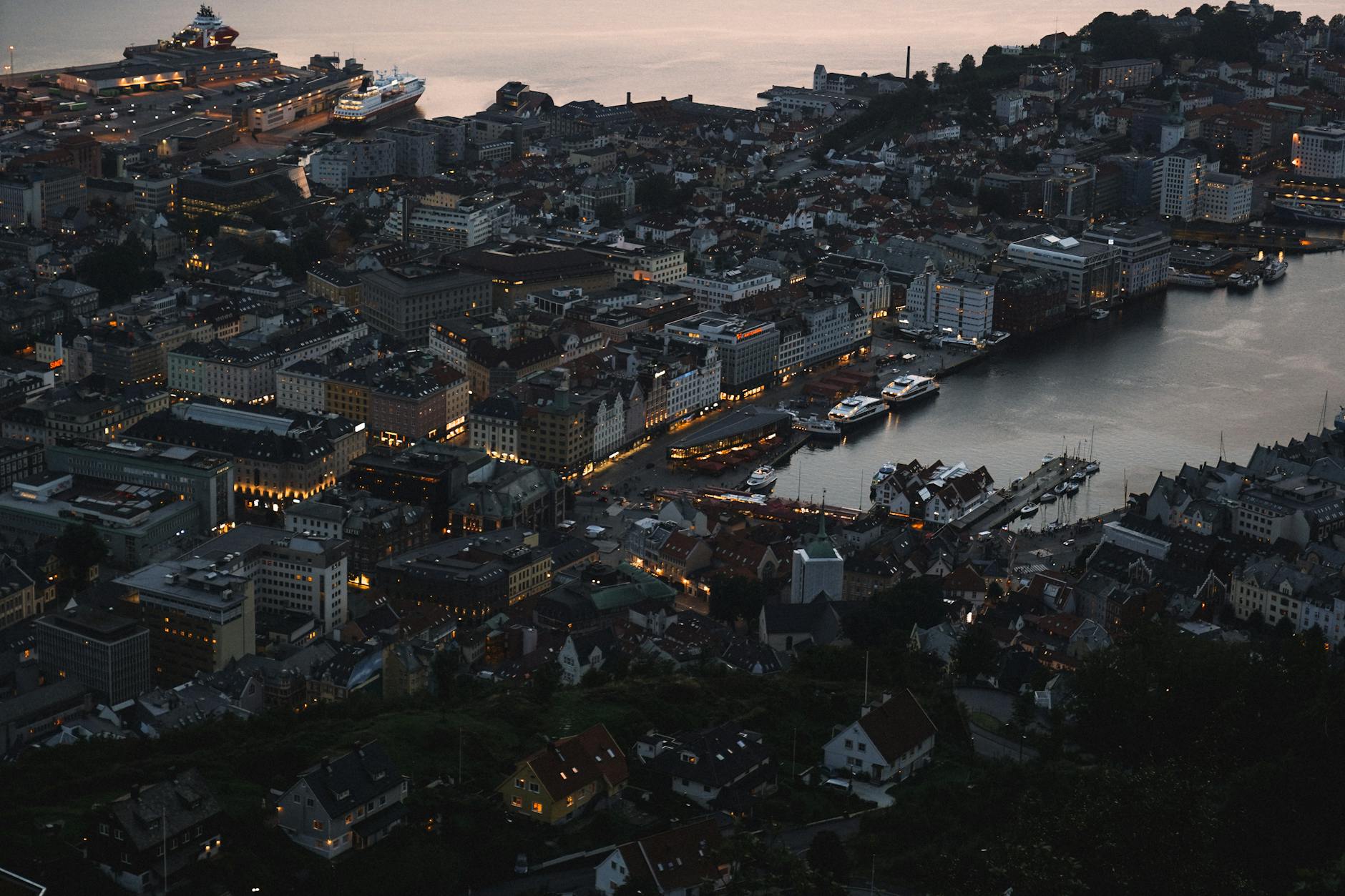
Norway Itineraries
These itineraries are pacing models, not commandments. Adjust by season, weather, daylight, transport availability, budget, and how much you actually enjoy moving.
4 Days: Bergen and a Fjord Taste
Best for: Travelers with limited time who want a true Norway feel without overreaching.
Day 1: Bergen arrival
Walk Bryggen, the harbor, and nearby streets. Ride the funicular if weather is clear. Eat seafood or a simple local dinner.
Day 2: Fjord day
Do a Nærøyfjord/Flåm/Sognefjord route or a Hardangerfjord day depending season and availability. Keep the evening easy.
Day 3: Bergen deeper
Museums, neighborhoods, markets, mountain walk, sauna, or a short local excursion. Use this as a weather backup if Day 2 fails.
Day 4: Departure or onward train
Take the Bergen Railway toward Oslo, or continue by air/road.
What this misses: Oslo, Ålesund, Stavanger, Lofoten, Tromsø, and deeper fjord time.
7 Days: Classic First-Time Norway
Day 1: Oslo
Arrive, walk the waterfront, see the Opera House, sauna if desired, easy dinner.
Day 2: Oslo culture
Choose museums: National Museum, MUNCH, Fram/Bygdøy, Vigeland Park, Akerselva, Grünerløkka. Do not overdo it before a travel day.
Day 3: Oslo to Flåm or fjord village by rail
Take the Bergen Railway route and connect to Flåm/Nærøyfjord/Sognefjord depending itinerary. Sleep near the fjord if you can.
Day 4: Fjord day
Ferry, short hikes, viewpoints, railway, or village time. Keep logistics realistic.
Day 5: Bergen
Arrive in Bergen. Bryggen, funicular, harbor, seafood, and old streets.
Day 6: Bergen or Hardanger day
Use Bergen as a base for a second fjord experience, Hardanger, Voss, or a city rain day.
Day 7: Depart or continue
Fly home, train onward, or add Stavanger/Ålesund.
The move: Sleep one night in a fjord area instead of doing everything as a pass-through if budget and schedule allow.
10 Days: Oslo, Bergen, Fjords, and Ålesund
Day 1–2: Oslo
Urban orientation, museums, waterfront, sauna.
Day 3: Bergen Railway / Flåm route
Cross the mountains and break in Flåm/Aurland or continue to Bergen depending lodging.
Day 4–5: Bergen
City, views, rain plan, food, nearby fjord or island day.
Day 6: Hardanger or Sognefjord
Go deeper into fjord country by car, bus, or organized route.
Day 7: Travel toward Ålesund
Fly, drive, or combine transport depending season and route. Do not underestimate this transfer.
Day 8–9: Ålesund, Sunnmøre, Geiranger/Hjørundfjord
Use Ålesund as a base. Pick Geiranger if you want iconic scenery; Hjørundfjord/Sunnmøre for a quieter mood.
Day 10: Depart
Fly from Ålesund or continue by road/rail toward Trondheim.
10 Days: Stavanger, Bergen, and Fjord Road Trip
Best for: Hikers and road trippers.
Day 1–2: Stavanger
Old Stavanger, harbor, food, oil museum if interested, Lysefjord orientation.
Day 3: Pulpit Rock / Lysefjord
Hike or take a fjord cruise depending weather and fitness.
Day 4: Ryfylke / scenic route
Begin road-trip mode. Keep ferry and tunnel timing realistic.
Day 5–6: Hardanger
Waterfalls, orchards, cider, fjord villages. Add a hike only if conditions are right.
Day 7–9: Bergen
City, funicular, Bryggen, seafood, nearby fjord day.
Day 10: Depart or continue to Oslo by train
Finish with the Bergen Railway if possible.
7 Days: Tromsø Winter and Northern Lights
Best for: Aurora-focused winter travelers.
Day 1: Arrive Tromsø
Settle in, check clothing, walk the city, easy dinner.
Day 2: Tromsø city and first aurora attempt
Museum, cable car if weather allows, Arctic Cathedral, evening aurora tour or self-guided dark-sky outing with caution.
Day 3: Fjords / whale / snow activity
Season-dependent whale trip, fjord tour, dog sledding, snowshoeing, or reindeer/Sami cultural experience with a responsible operator.
Day 4: Buffer and second aurora attempt
Do not schedule the trip around one night. Use this as weather insurance.
Day 5: Lyngen or nearby overnight
Add a quieter fjord/lodge experience if budget allows.
Day 6: Return to Tromsø / third aurora window
Café, sauna, relaxed city time, final aurora attempt.
Day 7: Depart
Leave with a better chance of seeing auroras because you stayed long enough.
12 Days: Lofoten, Senja, and Tromsø
Best for: Northern Norway summer road trip or late-winter photography.
Day 1: Fly to Evenes/Bodø/Svolvær/Leknes
Pick arrival based on route and car availability.
Day 2–5: Lofoten
Fishing villages, beaches, short hikes, weather-dependent viewpoints. Do not move accommodation every night unless you enjoy packing.
Day 6–7: Vesterålen or travel buffer
Whale routes, quieter islands, or extra time if weather hit Lofoten.
Day 8–9: Senja
Scenic drives, coastal viewpoints, slower villages.
Day 10–11: Tromsø
City, museums, fjords, cable car, sauna, dining.
Day 12: Depart
Fly onward.
The move: In summer, remember the midnight sun can make late-night drives and hikes tempting. Do not confuse daylight with unlimited energy.
14 Days: Classic Norway Plus the Arctic
Best for: First-timers who want both fjords and northern lights/midnight sun.
Day 1–2: Oslo
Culture, waterfront, museums.
Day 3: Bergen Railway / Flåm route
Scenic transfer.
Day 4–6: Bergen and fjords
Bergen plus Nærøyfjord/Hardanger/Sognefjord.
Day 7–8: Ålesund or Stavanger
Pick one: Ålesund for Sunnmøre/Geiranger; Stavanger for Lysefjord/Pulpit Rock.
Day 9: Fly north
Do not attempt to drive this unless the road trip itself is the trip.
Day 10–13: Tromsø, Lofoten, or Alta
Choose one northern base or region. In winter, Tromsø/Alta are easier. In summer, Lofoten/Senja become stronger.
Day 14: Depart
Fly via Oslo or onward.
Special-Interest Itineraries
Food and Fjords
Oslo for restaurants and museums, Bergen for seafood and fjord access, Hardanger for cider/orchards, Ålesund for coastal seafood, Trondheim for food culture, and Lofoten or Tromsø if you want Arctic seafood.
Public-Transport Norway
Oslo, Bergen Railway, Flåm/Nærøyfjord, Bergen, bus/ferry combinations to Hardanger or Sognefjord, then train or flight onward. Use Entur as the planning backbone.
Family Norway
Oslo for museums and islands, Bergen for funicular/fjord day, Flåm for trains/ferries, Voss for activities, and a simple cabin/fjord stay. Avoid changing hotels every night.
Hiking Norway
Stavanger/Lysefjord for Pulpit Rock/Kjerag, Jotunheimen for mountain routes, Åndalsnes/Romsdalen for dramatic hikes, Hardanger for Trolltunga only if prepared, and Lofoten for coastal hikes. Build in weather days.
Winter Norway
Tromsø/Alta/Kirkenes for auroras and activities; Lillehammer/Geilo/Hemsedal/Trysil for ski culture; Oslo/Bergen for urban winter. Avoid assuming summer routes work the same way.
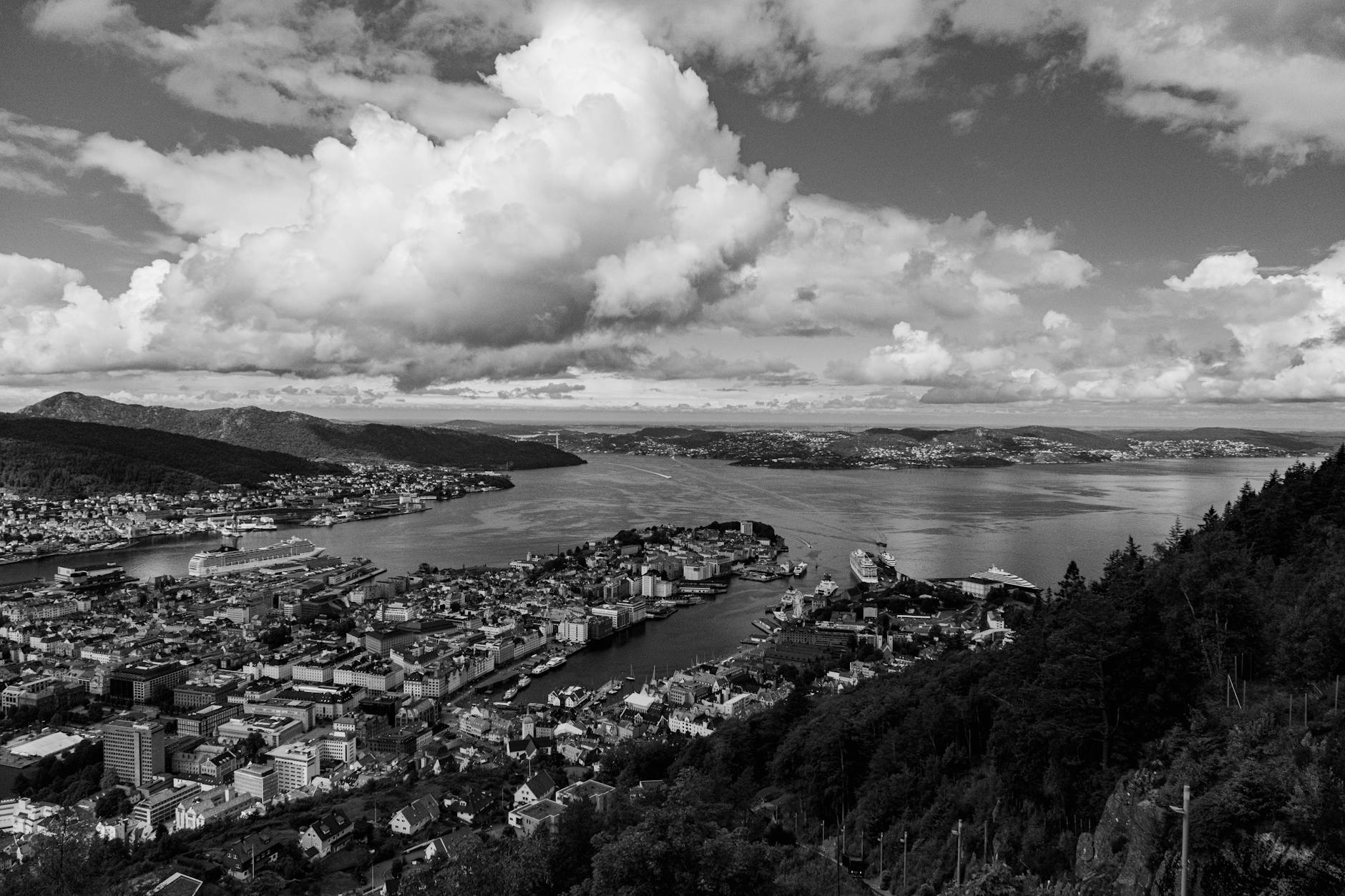
Food and Drink
Norwegian food is better than lazy stereotypes suggest. It is not a constant parade of luxury restaurants, but it can be deeply satisfying when you eat by region and season: seafood on the coast, lamb in the mountains, berries in summer, waffles at lodges, bread and cheese for simple lunches, cod in winter, and modern Nordic cooking in cities.
Norway’s Food Identity
Norwegian food culture is shaped by:
- The sea: cod, skrei, salmon, trout, herring, shrimp, mussels, scallops, crab, king crab, and fish soup.
- Preservation: drying, curing, smoking, fermenting, salting, and pickling.
- Mountains and farms: lamb, goat cheese, dairy, berries, potatoes, flatbread, and game.
- Practical outdoor eating: packed lunches, thermoses, waffles, hot dogs, simple cafés, and lodge food.
- Modern Nordic cooking: seasonal ingredients, clean presentation, fermentation, local sourcing, and high prices in the best restaurants.
- Coffee and bakery culture: strong coffee, cinnamon/cardamom buns, skolebrød, waffles, and café breaks.
What to Eat
| Food or drink | What it is | How to approach it |
|---|---|---|
| Fish soup | Creamy or clear seafood soup, common along the coast. | A reliable first coastal meal in Bergen, Ålesund, Stavanger, or Tromsø. |
| Skrei | Migrating Arctic cod, a winter seasonal specialty. | Look for it in northern/coastal restaurants in season. |
| Shrimp and shellfish | Often eaten simply, especially in summer. | Best near the coast; ask what is local and seasonal. |
| King crab | Especially associated with far northern Norway. | Often expensive; best as a deliberate splurge, not a casual snack. |
| Brunost | Brown whey cheese with a sweet, caramel-like flavor. | Try it on bread or waffles before deciding whether you love or hate it. |
| Norwegian waffles | Heart-shaped waffles, often with sour cream/jam or brunost. | Perfect at cafés, cabins, ferry stops, and mountain lodges. |
| Kjøttkaker | Norwegian meat cakes, a home-style classic. | Good for traditional comfort food. |
| Lamb / fårikål | Lamb stew and lamb dishes tied to autumn and mountain/farm culture. | Seek seasonal versions outside tourist menus. |
| Reindeer | Common in northern/Sami-influenced contexts. | Eat respectfully; choose places that explain sourcing and culture. |
| Rømmegrøt | Sour-cream porridge, traditional and rich. | Best as cultural comfort food, especially in rural/mountain areas. |
| Lefse / flatbread | Traditional breads, with regional styles. | Good as snacks or with traditional meals. |
| Cloudberries and berries | Seasonal berries used in desserts and jams. | Try in summer/autumn or preserved forms. |
| Aquavit | Caraway/dill-spiced spirit. | Strong; usually with traditional meals. |
| Coffee | Norwegians drink a lot of coffee, and cafés are central to urban travel. | Use coffee breaks as planning breaks. |
Where to Eat by Situation
| Situation | Best approach |
|---|---|
| First dinner after arrival | Keep it near the hotel. Oslo/Bergen/Stavanger/Trondheim have strong options; in small towns, check closing times. |
| Budget lunch | Bakery, supermarket picnic, food hall, packed sandwich, soup, hot dog, casual café, or self-catering. |
| Splurge meal | Seafood in Bergen/Ålesund/Tromsø, modern Nordic in Oslo, cider/food in Hardanger, food culture in Trondheim, king crab in the far north. |
| Road trip meal | Plan ahead. Rural restaurants may close early or seasonally. Carry snacks. |
| Family meal | Cafés, hotel restaurants, casual pizza/burger/fish spots, food halls, supermarkets, and bakeries. |
| Rainy day | Food halls, cafés, museums, saunas plus casual restaurant, Bergen/Oslo indoor markets. |
| Vegetarian/vegan | Cities are manageable; rural and traditional areas require planning. Fish and meat appear often in classic menus. |
| Alcohol | Expensive. Strong alcohol is sold through Vinmonopolet, and ordinary grocery-store alcohol rules are more limited than many visitors expect. Check local hours. |
Food Practicalities
- Restaurant meals are expensive; use supermarkets and bakeries strategically.
- Many hotels include breakfast. In Norway, that can save serious money.
- Lunch is often lighter and more practical than in countries with long restaurant lunches.
- Dinner is earlier than in southern Europe.
- Tipping is appreciated but not expected at North American levels; service and taxes are generally included in listed prices.
- Tap water is safe; buying bottled water constantly is unnecessary.
- Reservations matter for popular restaurants in Oslo, Bergen, Stavanger, Trondheim, Tromsø, and peak tourist areas.
- Rural restaurants may close outside high season or on quiet weekdays.
- Alcohol is costly; check Vinmonopolet/grocery rules rather than assuming you can buy wine late at night.
The Move
In Norway, food value often comes from mixing one splurge with several smart simple meals: hotel breakfast, bakery lunch, supermarket picnic, lodge waffle, seafood dinner, then repeat. Trying to eat three restaurant meals per day will punish the budget without necessarily improving the trip.

Getting Around Norway
Norway’s transport is part of the attraction, but only if you plan it realistically. Trains, ferries, express boats, buses, roads, tunnels, domestic flights, and coastal routes all matter. The right answer changes by region and season.
The Core Rule
Use trains for major scenic corridors, ferries and buses for fjord/coastal links, cars for flexible rural road trips, and flights for the far north unless the slow journey is your goal.
Trains
Visit Norway lists several operators in Norway, including Vy, Flytoget, Go-Ahead Nordic, and SJ NORD.[14] Trains are especially strong for:
- Oslo–Bergen: Bergen Railway, one of the classic scenic routes.
- Oslo–Trondheim: Dovre Line.
- Oslo–Stavanger: Sørland Line.
- Oslo airport connections.
- Some regional connections around cities.
Worth it: Scenic rail travel is one of Norway’s best first-timer moves.
Watch out: Advance tickets can be cheaper; disruptions happen; not every scenic place is rail-accessible.
Entur and Public Transport
Visit Norway describes Entur as the official national travel planner with updated information across buses, trams, trains, subways, ferries, scooters, and city bikes.[13]
The move: Build routes in Entur before booking hotels. If Entur shows a village is reachable only once or twice a day, believe it.
Driving
Driving gives flexibility in the fjords, Lofoten, Senja, coastal Norway, and mountain regions. It is not useful for central Oslo or Bergen.
Advantages: Freedom, viewpoints, villages, scenic routes, photography stops, rural lodging.
Challenges: Narrow roads, tunnels, ferries, tolls, expensive fuel/rentals, weather, speed limits, sheep/reindeer, mountain-pass closures, winter driving.
Road conditions: The Norwegian Public Roads Administration provides road and traffic information, including mountain passes and ferries.[18]
The move: Plan by time, not distance. A 180-kilometer drive in Norway can be a full scenic day.
Ferries and Express Boats
Ferries are not a side note. They are the stitching of coastal and fjord Norway. Visit Norway notes that most ferry journeys in Norway are paid through AutoPASS, and FerryPay can be used for automatic per-journey card payment where applicable.[15]
Best for: Fjord road trips, western Norway, northern coast, islands, local day trips.
Common mistake: Ignoring ferry schedules until the day of travel.
Domestic Flights
Norway is long enough that flying can be the most humane choice. Oslo to Tromsø, Bergen to Bodø, Oslo to Evenes, Oslo to Alta, and similar routes save enormous time.
Best for: Northern Norway, short trips, winter trips, combinations of fjords and Arctic regions.
Common mistake: Refusing to fly on principle, then losing two or three days to transit that you did not actually want.
Coastal Voyages
Norway’s coast can be traveled by coastal ships, express boats, and cruise products. They can be wonderful if the voyage is the point.
Best for: Slow travelers, seniors, photographers, coastal culture, winter light, travelers who enjoy ship life.
Watch out: Cruise passengers often see places briefly and at crowded times. Independent travelers should be aware of cruise schedules in small ports.
City Transit
- Oslo: Metro, trams, buses, ferries, trains; Ruter is the core local system.
- Bergen: Light rail, buses, funiculars/cable access, ferries; Skyss is key regionally.
- Trondheim: Buses/trams; AtB regionally.
- Stavanger: Buses, trains, ferries; Kolumbus regionally.
- Tromsø: Buses and tours; many visitors use organized activities in winter.
The move: Download the local app for the city/region you are actually in; do not expect one city’s app to solve the whole country.
Winter Driving
Winter driving in Norway is serious. Visit Norway’s winter-driving guidance points travelers toward real-time national traffic updates, icy-road forecasts, mountain-pass status, tunnel status, and the NPRA traffic app.[16]
Do not drive in winter if: You are inexperienced with ice, snow, darkness, mountain weather, and narrow roads.
Better alternative: Use trains, buses, flights, tours, and bases where operators handle the driving.
Cars vs Public Transport
| Trip type | Best transport |
|---|---|
| Oslo + Bergen + Flåm/Nærøyfjord | Train/ferry/bus. No car necessary. |
| Bergen + Hardanger/Sognefjord villages | Public transport possible; car helpful for flexibility. |
| Ålesund + Geiranger/Sunnmøre | Car or carefully planned bus/ferry. |
| Stavanger + Pulpit Rock | Public transport/tour possible; car useful for wider Ryfylke. |
| Lofoten/Senja | Car strongly helpful, especially outside narrow tour plans. |
| Tromsø winter aurora trip | Base in Tromsø; tours/transport often better than self-driving. |
| Svalbard | Guided activities, not normal independent driving. |
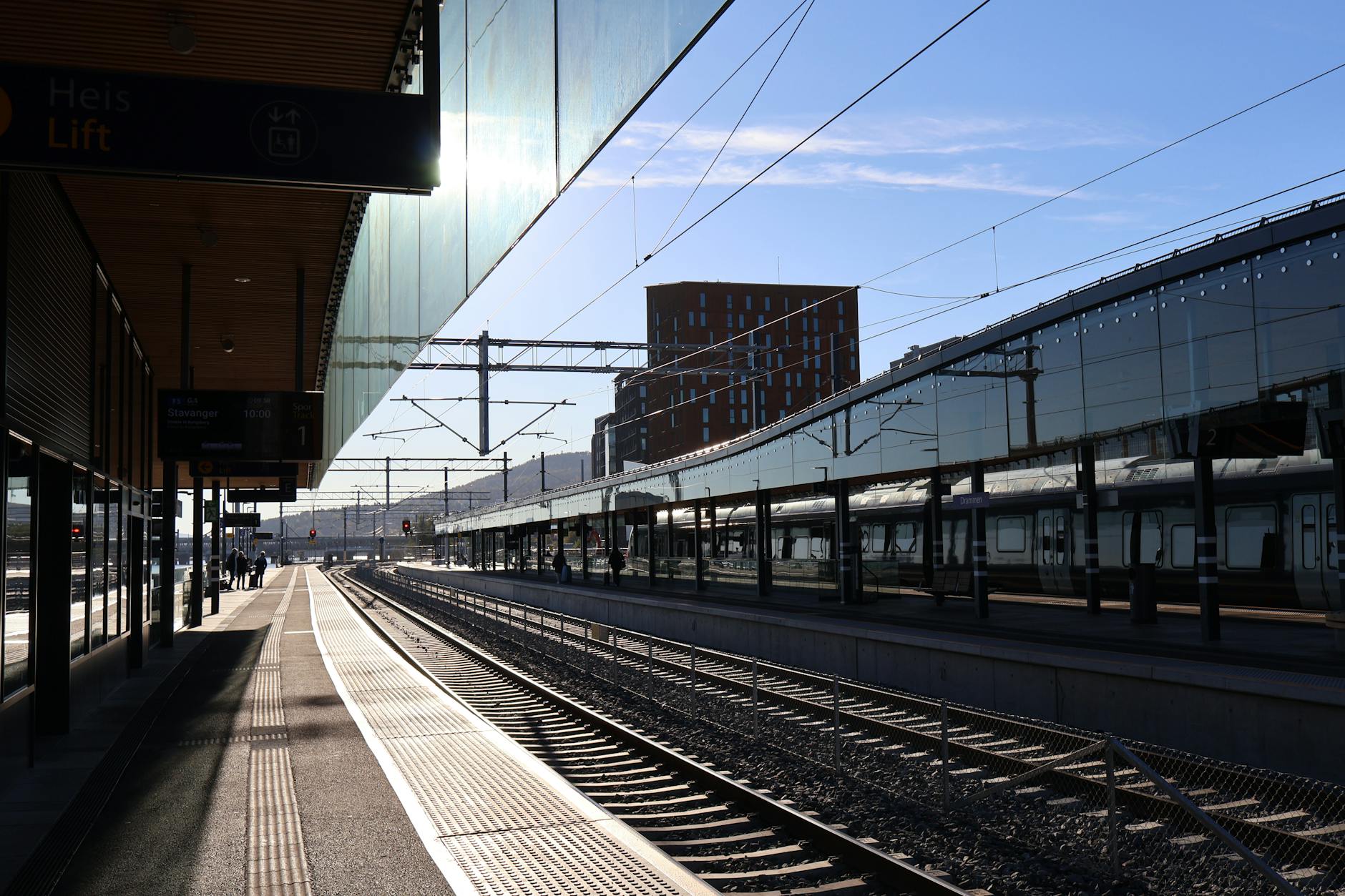
Budget and Costs
Norway is expensive, but not impossible. The key is to spend where Norway is uniquely strong—landscape, transport, lodging location, special meals, guided nature—and save on things that do not matter.
Daily Budget Ranges
These are broad planning ranges for one person, excluding major international flights, major shopping, and unusual luxury experiences.
| Traveler type | Daily estimate | What it means |
|---|---|---|
| Shoestring | NOK 900–1,500 | Hostel/camping/simple cabin, supermarket meals, limited restaurants, public transport, free walks. Hard in peak areas. |
| Budget comfort | NOK 1,500–2,500 | Budget hotel/guesthouse, strong hotel breakfast, simple lunches, occasional paid sights, public transport. |
| Mid-range | NOK 2,500–4,500 | Good hotel, restaurants in moderation, scenic transport, museums, some tours, occasional taxi. |
| Comfortable | NOK 4,500–8,000 | Better hotels, rental car or guided tours, good meals, fjord rooms, flexible transport. |
| Luxury | NOK 8,000+ | High-end hotels/lodges, private guides, premium restaurants, Svalbard/Arctic packages, scenic suites, bespoke logistics. |
What Is Surprisingly Expensive
- Hotels in peak summer fjord areas, Lofoten, Tromsø winter, and Svalbard.
- Rental cars, fuel, tolls, parking, and one-way drop-offs.
- Restaurant dinners and alcohol.
- Guided Arctic activities, dog sledding, snowmobiling, whale trips, and private tours.
- Last-minute trains/flights in high-demand periods.
- Remote lodging with a view.
What Can Be Good Value
- Tap water.
- Hotel breakfasts when included.
- Supermarket picnics.
- Trains booked early.
- Public ferries and ordinary local transport used intelligently.
- Free nature walks.
- City passes only when they match your plan.
- Cabins/apartments with kitchens for families or longer stays.
Best Value Moves
- Book transport and lodging early for summer and Arctic winter.
- Use Bergen/Oslo/Trondheim hotel breakfasts as a real meal.
- Self-cater lunches on road-trip days.
- Pick one or two splurge meals, not one every night.
- Travel in May or September when it fits your route.
- Use public transport for Oslo/Bergen/Flåm classic routes.
- Rent a car only for the days when it adds value.
- Avoid changing bases every night; relocation costs time and money.
Splurge-Worthy
- A fjord-view room for one or two nights.
- A good seafood meal near the coast.
- A guided winter activity in Northern Norway.
- A private or small-group guide for mountain/glacier safety.
- A scenic rail/ferry route rather than the cheapest flight.
- A sauna/cold-water experience.
- Svalbard, if polar travel is truly your priority.
Usually Not Worth It
- Renting a car in Oslo or central Bergen.
- Paying for multiple redundant fjord cruises without changing perspective.
- Booking a hotel far from transport just to save a small amount.
- Driving huge distances every day to “save time.”
- Chasing famous hikes in unsafe weather.
- Treating every meal as a restaurant meal.
- Adding Svalbard or Lofoten to a short southern Norway trip just because it looks close on a map.
Safety, Health, and Weather
Norway is generally a very safe country for visitors, but the main risks are practical rather than urban-crime related: mountains, weather, cold water, winter roads, avalanches, remote areas, exposure, and underestimating nature.
General Safety
The U.S. State Department’s Norway advisory is Level 1, “Exercise Normal Precautions,” as of its 2025 review.[29] That is a good broad signal, but it does not mean travelers can be careless in the outdoors.
Urban safety: Normal city awareness is enough in most places. Watch belongings in transport hubs and nightlife areas, but Norway is not a high-pickpocket-anxiety destination compared with many European tourist centers.
Emergency Numbers
Visit Norway lists:
- Fire: 110
- Police: 112
- Ambulance: 113
- Emergencies at sea: 120[7]
Save them, along with your hotel address and travel-insurance information.
Mountain Safety
Norwegian mountains can become serious quickly. Visit Norway states that mountain weather can change quickly and presents the mountain safety code.[19] DNT’s Mountain Code begins with planning your trip and informing others about your selected route.[20]
Practical rules:
- Check weather with a Norway-specific source such as Yr.
- Start early.
- Carry layers, waterproofs, food, water, map/offline route, battery, and emergency basics.
- Turn around before conditions become dangerous.
- Do not rely on Instagram conditions from another month.
- Use guides for glaciers, winter backcountry, exposed terrain, and routes beyond your experience.
Avalanches and Winter Hazards
Visit Norway warns that avalanches can occur wherever there is snow and a 30-degree or steeper incline, and recommends avalanche training/equipment for relevant travel.[21] Varsom provides avalanche, lake ice, flood, and landslide warnings for Norway.[22]
The move: If you do not know how to evaluate avalanche terrain, do not ski tour or snowshoe into it unguided.
Road Safety
Norway’s roads are well maintained but can be narrow, winding, dark, icy, and weather-exposed. Mountain passes can close. Ferries affect timing. Animals may be on roads.
Winter driving: Use official road-condition tools and do not let a rental-car booking push you into unsafe conditions.
Water, Fjords, and Cold Exposure
Cold water is a real risk even in summer. Fjords, rivers, waterfalls, and Arctic beaches are not theme-park water features.
Practical rules:
- Wear life jackets on boats where required/recommended.
- Do not approach waterfall edges or slippery rocks casually.
- Respect cold-water shock.
- Do not swim alone in remote/cold areas.
- Check local advice for kayaking and paddleboarding.
Health Practicalities
The CDC’s Norway traveler page emphasizes general actions to stay healthy and safe; routine health preparation still matters even in a low-risk destination.[30]
Consider:
- Travel insurance that covers outdoor activities.
- Medication documentation.
- Tick precautions in relevant coastal/wooded areas in warmer months.
- Sun protection in snow and summer.
- Footwear and blister care.
- Motion sickness medication for ferries, buses, and winding roads if prone.
Svalbard Safety
Svalbard requires separate planning. Polar-bear safety, weather, guided travel, remoteness, insurance, and limited medical infrastructure matter. Do not leave Longyearbyen into the wilderness without appropriate guidance and equipment.
Accessibility and Mobility
Norway can be both accessible and difficult. Cities, airports, many museums, trains, and modern hotels can work well. Fjords, mountains, snow, historic wooden streets, ferries, steep towns, rural lodging, and outdoor attractions can be challenging.
What Helps
- Modern airports and major stations.
- Good English-language communication in many travel contexts.
- Museums and major attractions with accessibility information.
- City transit systems in Oslo and other larger cities.
- Hotels with elevators and accessible rooms when booked carefully.
- Ferries and scenic transport that can make landscapes visible without hiking.
What Is Hard
- Bergen’s hills, cobbles, rain, and steep streets.
- Historic wooden areas and older lodgings without elevators.
- Snow, ice, slush, and darkness in winter.
- Trail-based viewpoints and famous hikes.
- Rural guesthouses/cabins with steps or uneven terrain.
- Ferries and small boats depending vessel and dock.
- Long transfers where accessible taxis or elevators are not guaranteed.
Lower-Walking Strategy
Base in Oslo and Bergen for city access, use scenic trains and ferries, choose fjord cruises with step-free or limited-step access, book hotels close to transport, avoid one-night rural hops, and contact operators directly before booking activities.
Best Accessible-Oriented Route
Oslo for museums and waterfront, Bergen by rail, Bergen city with careful hotel choice, a fjord cruise from a major hub, and possibly Ålesund or Tromsø by flight. Avoid building the trip around famous hikes unless mobility and conditions fit.
Families, Solo Travelers, LGBTQ+ Travelers, and Special Considerations
Families With Children
Norway can be excellent for families: safe-feeling cities, trains, ferries, outdoor space, museums, aquariums, cabins, beaches, snow, and easy picnic culture. The challenge is cost and movement.
Best family routes:
- Oslo + Bergen + Flåm/fjord.
- Bergen + Voss + Hardanger.
- Stavanger + Lysefjord + beaches.
- Southern Norway coast in summer.
- Tromsø winter with older children and guided activities.
Family tips:
- Do fewer bases than you think.
- Book lodging with breakfast or kitchen access.
- Use trains and ferries as experiences.
- Bring rain gear for everyone.
- Keep hikes age-appropriate.
- Build in playgrounds, swimming, waffles, and downtime.
Solo Travelers
Norway is one of Europe’s easier solo destinations if you can handle the cost. Safety, English, hostels, trains, tours, and outdoor culture help.
Solo tips:
- Join guided hikes or activities for social contact and safety.
- Avoid remote solo hiking beyond your ability.
- Use public transport routes to reduce driving fatigue.
- Book aurora/whale/dog-sledding tours in the north.
- Carry battery backup and offline maps.
Women Traveling Solo
Many women find Norway low-stress compared with other destinations. Normal urban caution still applies, especially around nightlife and isolated late-night areas.
The bigger issue: Outdoor safety. Tell someone your route, check weather, and do not hike remote trails alone if conditions are uncertain.
LGBTQ+ Travelers
Norway is generally LGBTQ+ friendly by global standards, especially in cities. Oslo has the most visible queer nightlife and Pride infrastructure; smaller towns are quieter but generally not hostile.
Practical advice: Choose central lodging, research community spaces if nightlife matters, and expect social reserve rather than constant public warmth.
Older Travelers
Norway can be very rewarding for older travelers because scenic trains, fjord cruises, museums, and compact cities reduce the need for extreme activity.
Best routes: Oslo–Bergen by rail, Bergen fjord cruises, Ålesund/Geiranger with careful transfers, Tromsø with guided tours.
Avoid: Overly aggressive one-night road trips, self-driving in winter, and itineraries built around strenuous hikes unless fitness is strong.
Remote Workers and Long-Stay Visitors
Norway is beautiful but expensive for long stays. Oslo, Bergen, Trondheim, Stavanger, and Tromsø are the easiest bases. Check visa/residence rules carefully; a tourist stay is not a general permission to work from Norway indefinitely.
Shopping and Souvenirs
Norway is better for useful, high-quality, place-connected objects than cheap souvenir piles.
Good Souvenirs
- Wool sweaters, hats, socks, and mittens.
- Norwegian outdoor gear.
- Local chocolate and sweets.
- Brown cheese or food items where customs rules allow.
- Tinned fish or specialty seafood products where legal to import.
- Ceramics, glass, and design objects.
- Books, maps, and prints.
- Sami handicrafts bought from reputable sources.
- Aquavit where import rules allow.
- Knives or outdoor tools only if legal and packed correctly.
Best Shopping Areas
| Area | Best for |
|---|---|
| Oslo | Design, fashion, books, outdoor gear, food halls, museums shops. |
| Bergen | Knitwear, rainwear, seafood products, local craft, Bryggen shops. |
| Trondheim | Food, design, independent shops, local goods. |
| Tromsø / Alta | Arctic gear, northern food products, Sami-related goods from careful sources. |
| Lofoten | Local art, photography, wool, ceramics, fishing-related gifts. |
| Rural road trips | Farm shops, cider, local food, small craft studios. |
What Not to Buy Thoughtlessly
- Mass-produced “Nordic” souvenirs with no local connection.
- Sami-style items not made by Sami artisans.
- Food products that your home country will not allow you to import.
- Outdoor gear you can buy cheaper at home unless you need it immediately.
- Fragile items if your route involves many transfers.
Tax-Free Shopping
Norwegian Customs states that tourists resident abroad may have VAT reimbursed when buying goods in Norway and taking them out of the country, but the store/refund provider handles reimbursement rather than Norwegian Customs directly.[28]
The move: Ask at the store, keep forms/receipts, and do not assume every purchase qualifies.
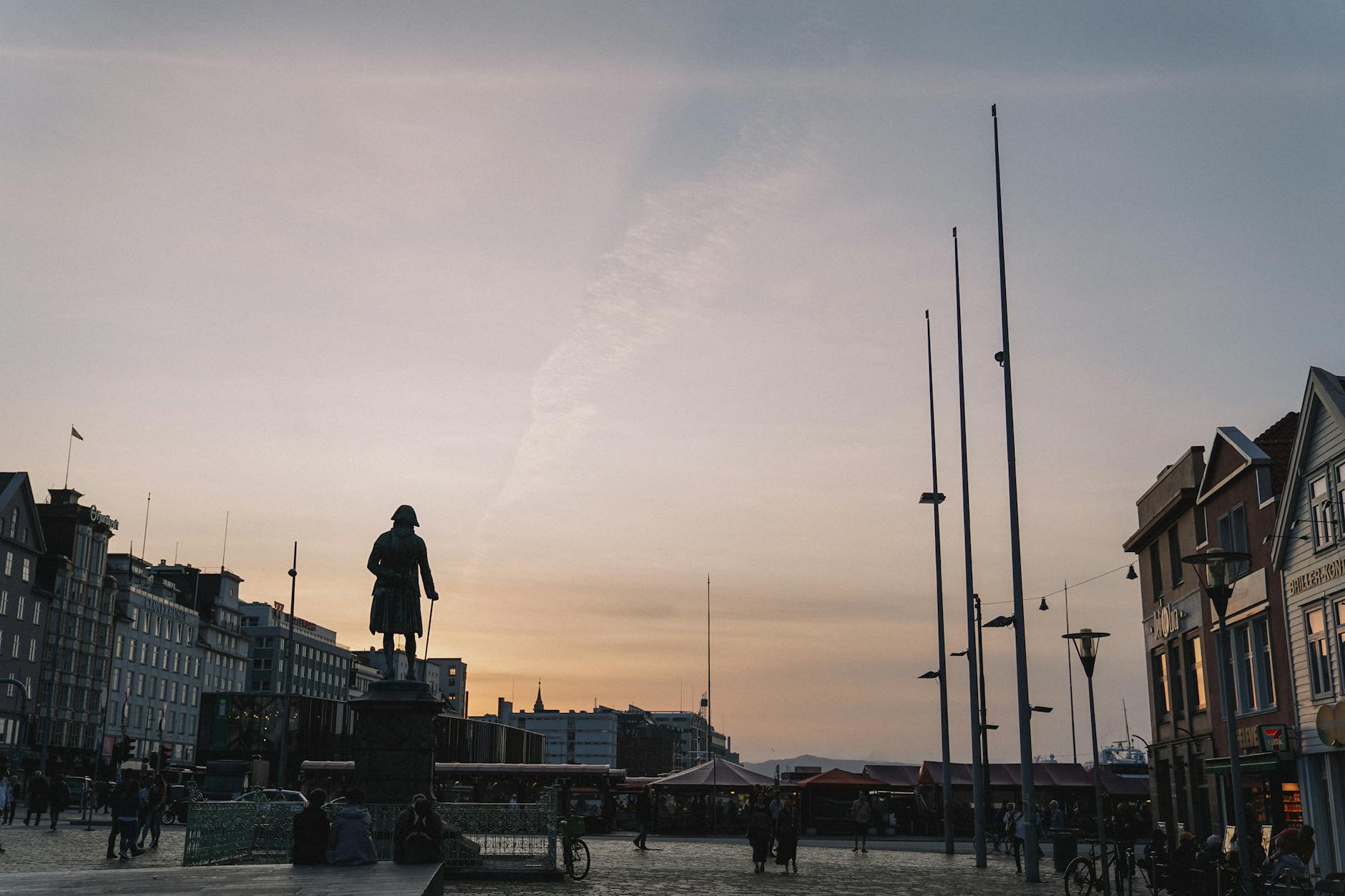
Arts, Culture, History, and Context
Norway’s travel identity is often sold as nature, but the country’s culture is just as important: seafaring, farming, mountain life, Christianity, Sami presence, unions and independence, oil wealth, social trust, design, literature, black metal, public architecture, and the modern tension between resource extraction and environmental identity.
Short History for Travelers
Norway’s coastline and mountains shaped its history from the beginning. Seafaring, fishing, farming, and local communities mattered because movement over land was difficult and movement by water was often easier. The Viking Age made Norway part of a wider North Atlantic world, with voyages, trade, settlement, and conflict stretching far beyond Scandinavia.
Christianity, medieval kingship, plague, union with Denmark, later union with Sweden, and eventual independence in 1905 shaped Norway’s political identity. Modern Norway changed dramatically with industrialization, hydropower, shipping, fisheries, and especially oil and gas after the late 20th century. Today’s Norway combines a wealthy welfare state, strong environmental self-image, major energy resources, urban growth, rural depopulation pressures, and Indigenous Sami rights/culture in the north.
For travelers, this history explains why Norway is not just fjords and cabins. It is also maritime museums, stave churches, mining towns, polar exploration, fishing villages, oil museums, Sami cultural institutions, contemporary architecture, and a national identity built around both outdoor access and public systems.
Cultural Norms That Matter
- Personal space is valued.
- Loud public behavior is not admired.
- Queuing and rules matter.
- Nature is shared, but not abused.
- Punctuality is appreciated.
- English is widely spoken, but do not assume every rural situation is frictionless.
- Casual dress is normal, but practical outdoor clothing should be genuinely practical.
- Modesty is culturally valued; bragging reads poorly.
- Alcohol is expensive and regulated.
- Sundays and holidays can be quiet.
- Respect Sami culture as living culture, not tourist decoration.
Useful Norwegian Concepts
| Concept | Why it matters |
|---|---|
| Friluftsliv | Outdoor life as a core cultural value; not extreme adventure, but everyday relationship with nature. |
| Allemannsretten | Right to roam; freedom to access nature with responsibility. |
| Kos | Coziness/comfort, often less commercialized than the exported idea of hygge. |
| Dugnad | Community work/collective contribution; reflects social responsibility. |
| Matpakke | Packed lunch culture; useful for budget and outdoor days. |
| På tur | Being out on a walk/trip; the point is often simply going outside. |
Museums and Cultural Institutions to Consider
| Place | Best for | Notes |
|---|---|---|
| National Museum, Oslo | Art, design, national culture | Strong first cultural stop. |
| MUNCH, Oslo | Edvard Munch, modern art | Excellent with Oslo waterfront. |
| Fram Museum, Oslo | Polar exploration | Especially relevant before Arctic travel. |
| Norwegian Folk Museum, Oslo | Open-air cultural history | Good for families and context. |
| Viking-related museums/sites | Viking history | Check current openings; museum projects can affect access. |
| Bryggen, Bergen | Hanseatic history | Best with historical context, not just photos. |
| Nidaros Cathedral, Trondheim | Medieval history, pilgrimage, architecture | One of Norway’s great cultural landmarks. |
| Norwegian Petroleum Museum, Stavanger | Oil, economy, modern Norway | More important than many visitors expect. |
| Alta Museum | Rock art, northern history | Strong if visiting Finnmark/Alta. |
| Sami cultural centers | Sami history and living culture | Choose respectful, locally rooted experiences. |
Books, Films, and Listening Before You Go
curate this section carefully. Good themes include:
- A short history of Norway.
- Viking history written for general readers.
- Sami culture and contemporary Indigenous rights.
- Norwegian crime fiction for mood, without mistaking fiction for daily life.
- Edvard Munch and Norwegian art.
- Polar exploration accounts.
- Music from classical to jazz, folk, electronic, and black metal.
- Practical outdoor safety resources.
Seasonal and Month-by-Month Guide
Spring
Spring is a split season. Oslo may feel alive and mild while high mountains remain snowy. Waterfalls gain power as snow melts. Orchards bloom in some fjord areas. Hiking season has not fully arrived everywhere.
Best experiences: Oslo/Bergen city trips, waterfalls, Hardanger blossoms, lower-elevation walks, National Day on May 17, shoulder-season fjord travel.
Watch out: Snow on trails, closed roads, unstable weather, limited services before high season.
Summer
Summer is the easiest national travel season. Ferries run more often, roads open, hikes become possible, villages wake up, and northern light stretches late into night or disappears entirely above the Arctic Circle.
Best experiences: Fjords, road trips, hiking, Lofoten, Senja, southern coast, camping, islands, midnight sun.
Watch out: Prices, crowds, cruise traffic, booked lodging, weather swings, insects in some inland/northern areas.
Autumn
Autumn is beautiful and quieter. September can be superb; October becomes moodier; November is low-season in many places. Northern lights return as darkness returns.
Best experiences: Photography, food, cities, quieter fjords, northern lights in the north, autumn hiking where conditions permit.
Watch out: Shortening days, rain, storms, early snow, seasonal closures.
Winter
Winter Norway is not one thing. Oslo can be city-winter; Bergen can be wet and atmospheric; Tromsø can be Arctic and aurora-focused; mountains can be ski country; Svalbard becomes polar.
Best experiences: Northern lights, skiing, snow activities, blue hour, saunas, winter cabins, Christmas mood.
Watch out: Darkness, cold, icy roads, avalanches, expensive Arctic tours, weather cancellations, limited rural services.
Key Annual Timing Issues
- May 17: Norwegian Constitution Day. Festive, patriotic, and culturally important; book lodging and understand closures.
- June–August: Peak summer travel, especially fjords, Lofoten, coastal towns, and hiking areas.
- Late September–March: Main northern-lights window in Northern Norway.[11]
- June–July: Midnight sun above the Arctic Circle, with exact duration increasing farther north.[12]
- Winter/spring: Avalanche season and winter mountain risk; check Varsom and local guidance.[22]
- School holidays/Easter: Domestic travel can raise demand in mountain/ski areas.
- Road-opening season: High mountain roads and Scenic Routes can have seasonal closures; verify with official road sources.
Day Trips, Side Trips, and Extensions
From Oslo
| Trip | Best for | Notes |
|---|---|---|
| Oslofjord islands | Easy summer nature, swimming, ferries | Low-effort and rewarding. |
| Drøbak | Small-town fjord atmosphere | Good gentle day trip. |
| Fredrikstad | Fortified old town | Useful if you want history without mountains. |
| Lillehammer | Olympic history, lake, museums | Better as a long day or overnight. |
| Kongsberg / Hadeland / forests | Local history/nature | Depends on interests. |
From Bergen
| Trip | Best for | Notes |
|---|---|---|
| Nærøyfjord/Flåm | Classic fjord day | Long but iconic; consider overnight. |
| Hardangerfjord | Orchards, waterfalls, cider | Strong in spring/summer/autumn. |
| Voss | Activities, adventure, rail access | Good active day. |
| Local islands/fjords | Lower-key scenery | Good if you want less famous places. |
From Stavanger
| Trip | Best for | Notes |
|---|---|---|
| Pulpit Rock | Iconic hike | Weather and footwear matter. |
| Lysefjord cruise | Fjord views without hiking | Good family/low-walking option. |
| Jæren beaches | Coastal scenery, surfing, open skies | Different from fjord Norway. |
| Kjerag | Serious hike/viewpoint | More demanding and seasonal. |
From Ålesund
| Trip | Best for | Notes |
|---|---|---|
| Geirangerfjord | Iconic fjord scenery | Watch road/ferry season. |
| Hjørundfjord | Quieter fjord drama | Excellent alternative. |
| Runde | Birdlife | Seasonal and weather-dependent. |
| Atlantic Road | Scenic driving | Better as part of a route than a quick tick. |
From Tromsø
| Trip | Best for | Notes |
|---|---|---|
| Kvaløya / fjord drives | Arctic scenery near city | Weather-dependent. |
| Lyngen Alps | Dramatic mountains, ski/adventure | Use guides for serious activities. |
| Aurora tour | Northern lights | Multiple nights improve odds. |
| Whale trips | Seasonal wildlife | Check current season/location. |
| Senja | Scenic extension | Better overnight. |
Regional Extension Ideas
| Extra time | Best extension |
|---|---|
| 3 extra days | Add Stavanger/Lysefjord, Ålesund/Geiranger, or Tromsø depending route. |
| 5 extra days | Add Lofoten, Hardanger + Sognefjord, or Trondheim + coast. |
| One week | Add Northern Norway, a serious western road trip, or Svalbard. |
| Two weeks | Combine classic south/west Norway with one northern region. |
What to Skip
Skip: Trying to Do All the Famous Places in One Short Trip
Norway’s famous places are spread across a large, difficult landscape. Oslo, Bergen, Geiranger, Ålesund, Stavanger, Trolltunga, Lofoten, Tromsø, and Svalbard do not belong in one rushed week.
Better alternative: Choose one route family and do it well.
Skip: Trolltunga Unless You Are Prepared
Trolltunga is famous, but it is a long, serious mountain hike with weather, distance, and daylight considerations.
Better alternative: Choose shorter fjord viewpoints, guided hikes, or Pulpit Rock if appropriate.
Skip: Renting a Car for the Whole Trip by Default
A car is useful in rural Norway. It is a burden in central Oslo/Bergen and unnecessary on many rail/fjord routes.
Better alternative: Use train/ferry for the classic route, then rent a car only for western fjords, Lofoten, Senja, or rural road-trip days.
Skip: One-Night Stays Every Night
Norway’s movement is slow enough that constant hotel changes become exhausting.
Better alternative: Use 2–3 night bases and do day trips or short transfers.
Skip: Chasing Northern Lights From the Wrong Region
Bergen, Oslo, and Stavanger are not northern-lights bases. You may get lucky extremely rarely, but that is not planning.
Better alternative: Go to Tromsø, Alta, Senja, Lofoten, Vesterålen, Kirkenes, or Svalbard in the dark season.
Skip: Treating Cruise-Port Stops as “Seeing Norway”
A cruise can be enjoyable, but a few hours in a port is not the same as understanding a region.
Better alternative: Stay overnight in at least one fjord/coastal town and see what happens after day-trippers leave.
Skip: Outdoor Activities Without Backup Clothing
Norway punishes cotton, bad shoes, and optimism.
Better alternative: Dress for changing weather and carry layers even on short hikes.
Skip: Eating Every Meal in Restaurants
That is financially painful and not always more enjoyable.
Better alternative: Hotel breakfast, bakery/supermarket lunch, one good dinner.
Common Mistakes
- Underestimating distance. Roads curve around mountains and water.
- Ignoring ferries. Ferries are transport, timetable, and experience.
- Booking peak summer too late. Lofoten, fjords, and famous routes fill early.
- Assuming all hikes are open year-round. Snow and ice linger.
- Planning every viewpoint with no weather backup. Fog happens.
- Driving too much every day. Norway is not a highway country in the way many visitors expect.
- Skipping Oslo automatically. The capital adds context and strong museums.
- Treating Bergen rain as a disaster. Pack for it.
- Expecting cheap alcohol and dining. Budget accordingly.
- Buying the wrong transport pass or none at all without route math. Use actual plans.
- Assuming English solves every rural logistics issue. It helps, but schedules still matter.
- Renting a car in winter without winter-driving skill. Dangerous and stressful.
- Expecting auroras on command. Stay multiple nights.
- Adding Svalbard casually. It is a separate polar trip.
- Not checking official road/weather/hazard sources. Especially in mountains and winter.
- Mistaking right to roam for right to disturb. Respect land, people, wildlife, and fire rules.
- Overpacking cities and underpacking nature. The opposite mistake also happens.
- Leaving no downtime. Norway’s best moments often need space.
Responsible Travel
Norway’s nature is generous, but it is not indestructible. Popular places face pressure from cars, cruise traffic, illegal camping, trail erosion, waste, drone misuse, and visitors treating small communities as scenery.
Do
- Follow the right to roam responsibly.
- Stay on marked trails where requested.
- Carry out trash.
- Use toilets properly; do not foul trails or viewpoints.
- Respect private property, cabins, farms, and livestock.
- Book local guides for activities that need expertise.
- Use public transport where it makes sense.
- Support local restaurants, farms, and operators.
- Check fire bans before lighting anything.
- Respect Sami culture and buy Sami crafts from authentic sources.
- Give wildlife distance.
- Reduce drone use and obey drone restrictions.
Do Not
- Camp in obvious “no camping” areas or too close to homes.
- Park illegally at trailheads or on narrow roads.
- Step beyond safety barriers for photos.
- Build cairns, carve names, or damage moss/vegetation.
- Treat private docks, cabins, or farms as public props.
- Drive off-road.
- Approach reindeer or other wildlife for photos.
- Assume a small village wants to become an Instagram backdrop.
Local Logic
Norway’s outdoor freedom works because people are expected to behave like adults. The country gives visitors remarkable access. Return the favor by leaving places calmer, cleaner, and less burdened than you found them.
Packing List
Essentials
- Waterproof rain jacket.
- Comfortable walking shoes.
- Waterproof hiking shoes/boots if doing trails.
- Layers: base layer, fleece/wool, wind/rain shell.
- Warm hat and gloves outside high summer or for mountains/north.
- Daypack.
- Reusable water bottle.
- Portable battery pack.
- Type C/F adapter.
- Sunglasses and sunscreen, especially for snow, mountains, and long summer light.
- Sleep mask for summer/north.
- Swimsuit for sauna, fjord swims, hotels, and beaches.
- Offline maps and saved hotel/transport details.
- Basic first aid and blister care.
- Motion sickness medication if prone to ferries/buses.
- Travel insurance details.
Seasonal Additions
| Season | Pack |
|---|---|
| Spring | Layers, waterproofs, warm mid-layer, shoes that handle mud, hat/gloves for mountain or northern travel. |
| Summer | Rain gear, light layers, eye mask in the north, swimwear, insect repellent for some areas, hiking socks, sun protection. |
| Autumn | Warm layers, waterproofs, gloves/hat, sturdy shoes, reflective detail for darker evenings. |
| Winter | Insulated coat, thermal base layers, wool socks, winter boots, gloves, hat, neck warmer, traction aids where appropriate, moisturizer/lip balm, headlamp for rural/outdoor use. |
What Not to Overpack
- Dressy clothes unless you have specific restaurant plans.
- Huge hard-sided luggage for rail/ferry road trips.
- Umbrella as your only rain plan in windy coastal areas.
- Cotton clothing for hiking.
- Too many electronics that require charging on remote days.
The Move
Pack for the Norway you are actually visiting. July in Oslo, September in Lofoten, February in Tromsø, and May in Hardanger are four different packing problems.
FAQ
Is Norway worth visiting for a first trip to Scandinavia?
Yes, if landscapes are a priority. Norway is arguably the strongest Scandinavian choice for fjords, mountains, dramatic coast, Arctic light, and scenic transport. If you want design cities and lower logistical difficulty, Denmark or Sweden may feel easier. If you want nature with serious visual impact, Norway is hard to beat.
How many days should I spend in Norway?
Seven days is the minimum satisfying first route. Ten days is better. Two weeks lets you combine classic fjords with one major extension such as Ålesund, Stavanger, Trondheim, Lofoten, or Tromsø.
Is Norway expensive?
Yes. Hotels, rental cars, restaurants, alcohol, tours, and Arctic travel can be expensive. You can reduce costs with hotel breakfasts, supermarkets, public transport, early booking, shoulder-season travel, and careful car-rental days.
Do I need a car in Norway?
Not for Oslo, Bergen, or the classic Oslo–Bergen–Flåm/Nærøyfjord route. A car becomes useful for western fjord road trips, Lofoten, Senja, rural coastal routes, and flexible mountain/cabin travel. In winter, only rent if you can handle conditions.
What is the best first-time Norway route?
Oslo → Bergen Railway → Flåm/Nærøyfjord/Sognefjord → Bergen is the cleanest first-timer backbone. Add Hardanger, Stavanger/Lysefjord, Ålesund/Geiranger, or Tromsø depending season and days.
What is the best time to visit Norway?
June–August is easiest for first-timers, road trips, fjords, hiking, and long days. May and September are excellent shoulder months. Late September–March is best for northern lights in Northern Norway. December–March is best for winter activities.
Can I see the northern lights in Oslo or Bergen?
Do not plan on it. Go to Northern Norway in the dark season if auroras matter. Tromsø, Alta, Senja, Lofoten, Vesterålen, Kirkenes, and Svalbard are far better choices.
Is Norway safe?
Norway is generally very safe for visitors. The main risks are weather, mountains, winter roads, cold water, avalanches, and underprepared outdoor plans rather than urban crime.
Is Bergen too rainy?
No, but you need to plan for rain. Bergen is atmospheric in wet weather and still one of Norway’s best bases. Bring proper rain gear and use museums, cafés, seafood, and funicular/weather windows intelligently.
Should I visit Lofoten on a first trip?
Yes, if you have enough time or if northern coastal scenery is your main goal. No, if you only have a week and already want Oslo, Bergen, and the fjords. Lofoten deserves several days and weather flexibility.
Is Svalbard worth it?
Yes for polar landscapes and expedition-style travel. But it is expensive, remote, and logistically separate. Do not add it casually to a short mainland Norway trip.
Can I visit Norway on a budget?
You can make it less expensive, but not cheap. Travel off-peak, book early, use public transport, self-cater some meals, stay in hostels/cabins/apartments, and prioritize free nature over constant paid tours.
What should I book ahead?
Peak-summer lodging, Lofoten stays, Tromsø winter tours, Svalbard activities, rental cars, popular trains, fjord hotels, guided hikes/glacier trips, and any special restaurant or lodge.
What is the biggest mistake first-time visitors make?
Trying to cover too much. Norway is not small, and its beauty is tied to slow geography. A focused trip beats a famous-name checklist.
Source Notes
Date-sensitive details in this guide were checked against official or high-reliability sources where possible. A guide should re-check entry rules, EES/ETIAS status, road closures, ferry timetables, rail schedules, tour availability, weather/hazard guidance, and opening hours before publication.
- 1. Royal Norwegian Embassy / Norway.no, “Visitor’s visa,” https://www.norway.no/en/usa/services-info/visitors-visa-res-permit/visitors-visa/
- 2. Norwegian Directorate of Immigration (UDI), “Visit Norway without a visa,” https://www.udi.no/en/want-to-apply/visit-and-holiday/to-visit-norway-without-a-visa/
- 3. European Commission, “Entry/Exit System (EES),” https://home-affairs.ec.europa.eu/policies/schengen/smart-borders/entry-exit-system_en
- 4. Norway.no, “Entry/Exit System – a new border control system in the Schengen area,” https://www.norway.no/en/usa/norway-usa/news/entryexit-system/
- 5. European Union, “European Travel Information and Authorisation System (ETIAS),” https://travel-europe.europa.eu/en/etias
- 6. Visit Norway, “Currency and prices,” https://www.visitnorway.com/plan-your-trip/travel-tips-a-z/currency-and-prices/
- 7. Visit Norway, “Travel tips A-Z,” https://www.visitnorway.com/plan-your-trip/travel-tips-a-z/
- 8. Visit Norway, “Practical travel tips for families going to Norway,” https://www.visitnorway.com/things-to-do/family-fun/travel-tips/
- 9. Visit Norway, official travel guide, https://www.visitnorway.com/
- 10. Visit Norway, “When is the best time to go to Norway,” https://www.visitnorway.com/plan-your-trip/seasons-climate/norway-month-by-month/
- 11. Visit Norway, “The northern lights in Norway,” https://www.visitnorway.com/things-to-do/nature-attractions/northern-lights/
- 12. Visit Norway, “The midnight sun,” https://www.visitnorway.com/things-to-do/nature-attractions/midnight-sun/
- 13. Visit Norway, “Getting around by bus,” https://www.visitnorway.com/plan-your-trip/getting-around/by-bus/
- 14. Visit Norway, “Getting around by train,” https://www.visitnorway.com/plan-your-trip/getting-around/by-train/
- 15. Visit Norway, “Getting around by car,” https://www.visitnorway.com/plan-your-trip/getting-around/by-car/
- 16. Visit Norway, “Driving in Norway in winter conditions,” https://www.visitnorway.com/plan-your-trip/getting-around/by-car/driving-in-winter/
- 17. Norwegian Scenic Routes, official site, https://www.nasjonaleturistveger.no/en/
- 18. Norwegian Public Roads Administration, “Traffic information,” https://www.vegvesen.no/en/traffic-information/traffic-information/
- 19. Visit Norway, “Stay safe in the mountains,” https://www.visitnorway.com/safe-travel/mountain-safety/
- 20. The Norwegian Trekking Association (DNT), “The Norwegian Mountain Code,” https://www.dnt.no/om-dnt/english/need-to-know-about-norwegian-outdoor-life/the-norwegian-mountain-code/
- 21. Visit Norway, “Stay safe in the winter mountains,” https://www.visitnorway.com/safe-travel/stay-safe-in-the-winter-mountains/
- 22. Varsom, “About the Varsom app and Regobs,” https://www.varsom.no/en/about/regobs/
- 23. Visit Norway, “The right to roam,” https://www.visitnorway.com/plan-your-trip/travel-tips-a-z/right-of-access/
- 24. Government of Norway, “Outdoor Recreation Act,” https://www.regjeringen.no/en/documents/outdoor-recreation-act/id172932/
- 25. Visit Norway, “Experience the Norwegian fjords,” https://www.visitnorway.com/things-to-do/nature-attractions/fjords/
- 26. UDI, “Svalbard - visa and residence requirements,” https://www.udi.no/en/word-definitions/svalbard/
- 27. Governor of Svalbard, “Visas and immigration,” https://www.sysselmesteren.no/en/visas-and-immigration/
- 28. Norwegian Customs, “Reimbursement of VAT to tourists,” https://www.toll.no/en/travelling-to-and-from-norway/reimbursement-of-vat-to-tourists
- 29. U.S. Department of State, “Norway Travel Advisory,” https://travel.state.gov/content/travel/en/traveladvisories/traveladvisories/norway-travel-advisory.html
- 30. CDC Travelers’ Health, “Norway - Traveler view,” https://wwwnc.cdc.gov/travel/destinations/traveler/none/norway