
China is not one trip. It is a civilization-scale country with a modern transport system laid across mountains, deserts, river deltas, megacities, food regions, old capitals, minority cultures, sacred landscapes, industrial corridors, and high-speed rail lines that can make the map look easier than it is.
Start Here
It is the Forbidden City at opening, a Great Wall ridge disappearing over brown hills, a bowl of noodles in Xi'an, the neon of Shanghai reflected in the Huangpu River, tea fields above Hangzhou, pandas outside Chengdu, a hotpot table in Chongqing, limestone peaks around Guilin and Yangshuo, Hani rice terraces in Yunnan, Buddhist caves in Dunhuang, classical gardens in Suzhou, a ferry on the Pearl River, winter ice in Harbin, Tibetan monasteries on the plateau, tulou houses in Fujian, and a bullet train leaving exactly when the board says it will.
Most first-time visitors underestimate China in two opposite ways. They imagine it is impossibly difficult, when many major routes are now remarkably efficient. Then they overcorrect and plan it like a simple city-hopping trip, forgetting that language, payment, apps, ticketing, crowds, regional climate, legal rules, and domestic holiday waves can shape every day. China is not a country where you should arrive with nothing but a passport and a vague list of landmarks. It rewards preparation.
The best first China trip is not about “seeing China.” It is about choosing a coherent China: imperial China around Beijing and Xi'an; modern China around Shanghai, Hangzhou, Suzhou, and Nanjing; food China around Chengdu, Chongqing, Xi'an, Guangzhou, Shunde, and Yunnan; landscape China around Guilin, Zhangjiajie, Huangshan, Yunnan, Guizhou, and Jiuzhaigou; Silk Road China through Gansu and Xinjiang; winter China in Harbin and the northeast; or a slower regional route that lets one part of the country become legible.
This guide is designed for travelers who want more than a list of “best places to visit in China.” It explains how the country works, how to choose the right route, when high-speed rail is brilliant and when flights are necessary, what to set up before arrival, what to book early, where independent travel becomes complicated, how to eat well, what to skip, how to think about safety and local rules, and how to avoid turning a fascinating trip into an exhausting logistics contest.
China in one sentence: China is a vast, route-driven, app-mediated country where the best trip comes from choosing one strong regional story, preparing the practical systems before arrival, and letting history, food, landscape, and modern life unfold at a human pace.
Basic data
| Population | About 1.4 billion |
|---|---|
| Area | 9.6 million km2 |
| Major religions | Largely secular public life with Buddhist, Daoist, Muslim, Christian, and folk religious traditions |
| Political system | Socialist one-party state |
| Economic system | Upper-middle-income mixed socialist market economy led by manufacturing, services, trade, technology, and infrastructure |
Quick Verdict
| Question | Answer |
|---|---|
| Best for | Deep history, food, megacities, high-speed rail, ancient capitals, UNESCO heritage, mountain landscapes, tea culture, photography, architecture, family travel, contemporary urban life, river towns, sacred sites, museums, gardens, night markets, and travelers who enjoy countries with scale and contrast. |
| Not ideal for | Travelers who want a friction-free trip without app setup, people who need unrestricted access to Western internet services at all times, visitors who dislike crowds, travelers who want to improvise every train and attraction ticket during peak periods, and anyone expecting independent access to every sensitive or restricted region. |
| Ideal first visit | 10 to 14 days for one classic route. Seven days works for one corridor: Beijing + Xi'an, Shanghai + Hangzhou/Suzhou, or Chengdu + Chongqing. Three weeks lets you add a second region without turning the trip into airports. A true “all-China” trip needs months, not weeks. |
| Best first-timer route | Beijing, Xi'an, and Shanghai, with either Suzhou/Hangzhou or Chengdu added if time allows. This gives imperial history, archaeology, modern city life, rail confidence, and strong food variety without excessive complexity. |
| Best months overall | April, May, September, October, and early November for many first-time routes. Avoid assuming one national “best time”: Yunnan, the northeast, Tibet, Hainan, Xinjiang, and southern coast all behave differently. |
| Biggest planning mistake | Trying to combine Beijing, Xi'an, Shanghai, Guilin, Chengdu, Zhangjiajie, Tibet, Hong Kong, and maybe Japan or Korea in one rushed two-week trip. China rewards narrowing, not collecting. |
| One thing to book early | Train tickets around holidays, Forbidden City/Palace Museum, high-demand museums and attractions, domestic flights for long jumps, panda experiences, Huangshan/Zhangjiajie lodging, Tibet permits and tour arrangements, and hotels during Spring Festival, May Day, and National Day. |
| One thing to leave unscheduled | Food neighborhoods, evening walks, tea houses, parks, markets, riverfronts, and second tries. China is full of small moments that are better than the planned attraction after you are tired. |
| Best car-free trip | Beijing, Xi'an, Shanghai, Hangzhou, Suzhou, Nanjing, Chengdu, Chongqing, Guangzhou, and Shenzhen are all strong without a rental car. High-speed rail plus metro covers many first-time routes. |
| Best route with nature | Guilin/Yangshuo/Longji; Zhangjiajie/Fenghuang; Chengdu/Jiuzhaigou/Leshan/Emei; Yunnan's Kunming-Dali-Lijiang-Shangri-La corridor; or Huangshan plus ancient villages. |
| Most important warning | China is not just a travel puzzle; it is also a legal and digital environment with rules visitors must take seriously. Follow local law, carry your passport, register accommodations, avoid sensitive behavior, and do not assume your usual apps, payment habits, or political freedoms work the same way. |
The Move
Choose one route family before choosing attractions. A first trip should be “Beijing-Xi'an-Shanghai,” “Shanghai and the Yangtze Delta,” “Chengdu-Chongqing-Sichuan,” “Guilin and southern landscapes,” “Yunnan slowly,” or “Silk Road/northwest,” not “China highlights from every corner.” China gets better when the itinerary gets sharper.
Who Will Love China?
You will probably love China if you want:
- A country where history is not confined to one museum: imperial palaces, city walls, tombs, temples, gardens, grottoes, old merchant towns, villages, canals, monasteries, and archaeological sites are part of the national travel grid.
- Food that changes dramatically by region: Beijing roast duck, Xi'an noodles and breads, Sichuan mala, Chongqing hotpot, Cantonese dim sum, Jiangnan delicacy, Yunnan mushrooms and rice noodles, Xinjiang lamb and flatbread, Hunan heat, Fujian seafood, and endless local breakfast cultures.
- Megacities that feel genuinely modern rather than merely large: Shanghai, Shenzhen, Beijing, Guangzhou, Chengdu, Hangzhou, Chongqing, and others each show a different version of urban China.
- A rail system that can turn a complex route into a smooth one if you plan correctly.
- Landscapes that vary wildly: karst rivers, desert dunes, sacred mountains, rice terraces, gorges, forests, plateaus, tropical islands, high-altitude lakes, and winter ice worlds.
- A travel experience where preparation pays off. Setting up payments, translation, rail booking, offline maps, and attraction reservations before arrival changes everything.
You may struggle with China if you want:
- Total spontaneity during domestic holiday periods.
- A trip built entirely around Western apps, Google services, WhatsApp, Instagram, and familiar card payments.
- A destination where English is consistently spoken outside international hotels, airports, and major attractions.
- A political and legal environment that feels identical to Europe, North America, Australia, or Japan.
- Easy independent travel to every region. Tibet, border areas, some minority regions, military-sensitive zones, and certain protected or restricted places require special handling or may become inaccessible with little notice.
- Small-country distances. Beijing to Shanghai is easy by high-speed train; Beijing to Kashgar, Lhasa, or Xishuangbanna is a serious long-distance move.
China is not hard because nothing works. Much of it works extremely well. The difficulty is that it works through systems that visitors need to learn: real-name ticketing, mobile payments, passport checks, QR codes, mini-programs, translation apps, high-speed rail stations, security screening, accommodation registration, domestic holiday crowds, and regional regulations. Once you prepare for that system, the country opens up.
China at a Glance
| Practical | Detail |
|---|---|
| Scope of this guide | Mainland China. Hong Kong and Macao are Special Administrative Regions with separate border, currency, transport, and travel-planning systems. Taiwan is also a separate travel-planning and entry-rule system. Many China itineraries can combine them, but do not treat border rules as domestic movement. |
| Capital | Beijing. |
| Largest visitor gateways | Beijing, Shanghai, Guangzhou, Shenzhen, Chengdu, Xi'an, Hangzhou, Chongqing, Kunming, Xiamen, Qingdao, Harbin, Urumqi, and others depending route. |
| Language | Standard Mandarin is the national common language. Regional languages and dialects are important: Cantonese in Guangdong and parts of the Pearl River Delta, Shanghainese in Shanghai, Minnan in parts of Fujian, Tibetan, Uyghur, Mongolian, Zhuang, Korean, and many others. English is uneven. Translation tools matter. |
| Currency | Renminbi/yuan, usually written RMB, CNY, or ¥. Hong Kong dollars, Macanese pataca, and New Taiwan dollars are separate currencies. |
| Payments | Mobile payments dominate daily life. Foreign visitors can use a mix of Alipay, WeChat Pay/Weixin Pay, UnionPay, bank cards, and cash, but mobile setup before arrival is strongly recommended. China's government payment guide notes that overseas visitors have several payment options and that foreign users can link international credit cards such as Visa and Mastercard to Alipay and WeChat Pay.[4] |
| Time zone | China Standard Time, UTC+8 nationwide. There is no daylight saving time. This creates unusual daylight patterns in western regions. |
| Electricity | 220V, 50Hz. Common sockets include Type A, C, and I-style plugs. Bring a universal adapter. |
| Emergency numbers | Police: 110. Fire: 119. Ambulance: 120. Traffic accidents: 122. In major cities, hotel staff can help communicate with emergency services. |
| Tap water | Do not assume tap water is drinkable. Most travelers use bottled, filtered, boiled, or hotel-provided water. Hot water dispensers are common in trains, hotels, and public places. |
| Best transport app/source | 12306 is the official China Railway ticketing platform; it has an English site/app flow for foreign passport holders, though many travelers still use intermediaries for ease.[5][6] |
| Maps and navigation | International map apps may be unreliable or blocked. Use China-compatible map tools, hotel pins in Chinese, screenshots, offline backups, and translation. |
| Internet | Several foreign websites, social media platforms, search engines, and services may be blocked in mainland China, and travelers should not expect internet privacy. Canada and UK travel guidance both warn about blocked services, monitoring, and licensed VPN requirements.[10][11] |
| Official tourism source | Travel China / Nihao China is the official tourism website of the People's Republic of China and is run by the Ministry of Culture and Tourism.[7] |
First-Timer Mistake
Many travelers ask, “Can I travel China without Chinese?” The better question is: Have I prepared the systems that reduce language friction? Before arrival, set up mobile payments, translation, rail booking, offline hotel addresses in Chinese, backup maps, eSIM/roaming/VPN plan, and a way to contact hotels. That preparation matters more than memorizing dozens of phrases.
2026 Visitor Notes
Mainland China Is Easier to Enter Than It Used to Be, But Rules Are Passport-Specific
China has expanded both unilateral visa-free entry and visa-free transit, but the details are nationality-specific and change often. As of February 17, 2026, China's National Immigration Administration listed ordinary passport holders from 50 countries across Europe, Oceania, Asia, and the Americas as eligible for unilateral visa-free entry for tourism, business, family visits, exchange visits, or transit for stays of up to 30 days.[1]
That does not mean every major visitor nationality is covered. U.S. ordinary passport holders, for example, were not in the unilateral 30-day visa-free list shown by NIA, though they are included in the 240-hour transit-without-visa country list. Always check your own passport and purpose of travel, not a generic headline.
The move: Treat entry as part of itinerary design. A classic visa-free transit routing may work if China is genuinely a stop between two different countries or regions. A normal round trip may still require a visa unless your passport qualifies for unilateral visa-free entry.
The 240-Hour Visa-Free Transit Policy Can Be Very Useful
China's 240-hour visa-free transit policy allows eligible travelers from 55 countries to enter through designated ports in 24 provincial-level areas and stay in permitted areas for up to 10 days when transiting to a third country or region. NIA states that, as of November 2025 measures, the policy applies through 65 ports and requires valid international travel documents and confirmed onward arrangements to a third country or region within 240 hours.[2][3]
This can make China an excellent stopover trip: for example, flying Country A to Beijing/Shanghai/Chengdu/Guangzhou, spending several days, then continuing to Country B or Hong Kong/Macao/Taiwan where eligible. The exact routing, ports, regions, onward tickets, and passport validity matter.
The move: Do not improvise transit-without-visa at the check-in counter. Print or save onward-ticket details, hotel bookings, itinerary, passport validity, and the NIA policy page. Airlines can be conservative because they are responsible for boarding rules.
Online Arrival Card Procedures Are Now Part of the Planning Checklist
NIA announced that, effective November 20, 2025, foreigners may fill in relevant entry information online before coming to China through NIA channels, including the official website, government service platform, NIA 12367 app, and WeChat/Alipay mini-programs; travelers unable to do it before arrival may complete it at the port.[3]
The move: Add “arrival card” to the same pre-trip checklist as payments, rail account, translation, and hotel addresses. If the system changes or fails, have enough time at arrival.
Accommodation Registration Is Not Optional
Foreigners staying in hotels are normally registered by the hotel. Foreigners staying in non-hotel accommodation must register with local public security authorities within 24 hours of arrival; NIA guidance also notes penalties for failing to complete registration formalities.[15] In 2026, China began piloting online accommodation registration for foreigners staying in non-hotel dwellings in several provincial-level regions, with plans to expand.[16]
The move: For a first trip, stay in established hotels, especially your first night in each city. If staying with friends, in apartments, or in small guesthouses, confirm registration procedures before arrival.
Payment Setup Is a Real Travel Skill
China can feel cashless even though cash remains legal. The practical reality is that many daily transactions work best through QR-code mobile payment. The State Council payment guide for overseas visitors states that visitors can use mobile payments, bank cards, and cash; Alipay and WeChat Pay allow foreign users to link international credit cards such as Visa and Mastercard.[4]
The move: Install and test Alipay and/or WeChat before departure, link more than one card if possible, carry some RMB cash, and keep a physical card for hotels and backup. Do not make “I'll just use cash everywhere” your only plan.
Rail Is Excellent, But Real-Name Ticketing Matters
China Railway's 12306 English website provides official ticketing and uses foreign passports for registration and booking. 12306 says valid foreign passports are accepted on the English site.[6] The platform is official, but it can still feel less friendly than commercial travel platforms for some visitors.
The move: Use high-speed rail for natural corridors: Beijing-Xi'an, Beijing-Shanghai, Shanghai-Hangzhou-Suzhou-Nanjing, Chengdu-Chongqing, Guangzhou-Shenzhen, and many regional routes. Fly for true long-haul jumps: Shanghai to Kashgar, Beijing to Lhasa, Chengdu to Xishuangbanna, or Shanghai to Urumqi.
Digital Reality Requires Preparation
China blocks access to several foreign websites, social media platforms, search engines, and online services. Canadian travel guidance warns travelers not to expect internet privacy and says authorities may monitor communications or review content on electronic devices.[10] UK guidance notes that China's cybersecurity laws require online products and services such as VPNs to be licensed by the Chinese government.[11]
The move: Set up your connectivity before arrival: eSIM/roaming/local SIM, translation, maps, payment apps, cloud access, password recovery, and legal awareness. Avoid sensitive content, do not photograph restricted sites, and keep work devices/data considerations serious.
Safety Is Usually Good Day-to-Day, But Legal Risk Is Not Abstract
Many visitors experience China as orderly and physically safe, especially in major cities. However, the U.S. State Department's China advisory is Level 2 and warns of arbitrary enforcement of local laws, including exit bans; it also notes that travelers may only learn of an exit ban when trying to depart.[9]
The move: Separate ordinary street-safety confidence from legal/political caution. You can enjoy food streets, metros, parks, and train stations while still being careful about laws, visas, prohibited items, photography, religious or political activity, research, business disputes, and digital communications.
Tibet Requires Special Handling
Foreign travelers generally cannot treat the Tibet Autonomous Region like a normal independent backpacking destination. UK travel guidance states that travelers must obtain a permit through a specialist travel agent in China and travel on an organized tour, and that authorities may stop issuing permits or restrict travel without notice.[12]
The move: Do not bolt Tibet casually onto a first China trip. Plan it as a separate, high-altitude, permit-dependent, guide-led journey with weather, acclimatization, and access rules built in.
How to Understand China
China becomes easier when you stop thinking of it as one destination and start reading it as a set of travel systems.
The Eight Chinas a Visitor Actually Encounters
| China | Where you feel it | What it gives you |
|---|---|---|
| Imperial and ancient-capital China | Beijing, Xi'an, Luoyang, Nanjing, Datong, Pingyao, Qufu, Chengde | Palaces, tombs, walls, temples, city planning, ritual architecture, dynastic history. |
| Modern megacity China | Shanghai, Shenzhen, Guangzhou, Beijing, Hangzhou, Chengdu, Chongqing | Skylines, metro systems, malls, tech, cafés, contemporary art, night views, urban food scenes. |
| Jiangnan and canal China | Suzhou, Hangzhou, Wuzhen, Tongli, Nanxun, Nanjing, Yangzhou | Gardens, water towns, tea, literati culture, canals, silk, delicate food, softer landscapes. |
| Food China | Chengdu, Chongqing, Guangzhou, Shunde, Xi'an, Shanghai, Beijing, Changsha, Kunming, Kashgar | Regional cuisines, breakfast rituals, street snacks, hotpot, tea, noodles, dim sum, markets. |
| Landscape China | Guilin/Yangshuo, Zhangjiajie, Huangshan, Jiuzhaigou, Yunnan, Guizhou, Xinjiang, Qinghai, Tibet | Karst, mountains, gorges, terraces, forests, deserts, lakes, plateaus, dramatic photography. |
| Silk Road and northwest China | Xi'an, Lanzhou, Zhangye, Jiayuguan, Dunhuang, Turpan, Urumqi, Kashgar | Caves, deserts, frontier cities, Islamic and Central Asian influences, ancient trade routes. |
| Minority and borderland China | Yunnan, Guizhou, Guangxi, Inner Mongolia, Xinjiang, Tibet, Qinghai, Jilin | Distinct languages, dress, religion, architecture, food, music, landscapes, and sensitivities. |
| Seasonal spectacle China | Harbin, Hainan, Yunnan, Tibet/Qinghai, Xinjiang, coastal Guangdong/Fujian, northeast snow regions | Ice festivals, beaches, cherry/plum blossoms, autumn foliage, snow towns, summer highlands, tropical winters. |
Local Logic
China's major-city infrastructure can be astonishingly efficient: high-speed rail stations, metro networks, airports, digital ticketing, highway systems, and delivery/payment platforms all make travel smoother than many first-timers expect. But that efficiency rests on real-name identification, security checks, app ecosystems, and rules that can feel unfamiliar.
The visitor who prepares the system has a much easier trip. The visitor who refuses the system often spends the trip blocked at ticket machines, unable to pay small merchants, confused by map names, stuck without internet access, or trying to solve issues at the worst possible time.
Scale and Corridor Logic
China is large enough that route logic matters more than ranking attractions. High-speed rail can make eastern and central routes efficient, but it does not erase geography. Beijing-Xi'an-Shanghai works. Shanghai-Hangzhou-Suzhou-Nanjing works. Chengdu-Chongqing works. Guangzhou-Shenzhen-Hong Kong/Macao works if border rules are handled correctly. Yunnan works as its own loop. The Silk Road works as a corridor. But jumping from Beijing to Guilin to Chengdu to Shanghai to Lhasa to Zhangjiajie in ten days is not a route; it is a spreadsheet.
The Country's Central Contrasts
China is compelling because its contrasts are daily, physical, and unavoidable.
- Ancient statecraft vs hypermodern life: imperial axes and palace gates coexist with facial-recognition gates, QR-code menus, and cashless food courts.
- National unity vs regional depth: Mandarin and national institutions bind the country, but food, architecture, language, landscape, and local identity change fast.
- Order vs intensity: stations and metros can be highly organized, while holiday crowds can be overwhelming.
- Global city vs local habit: Shanghai and Shenzhen are global, but daily routines remain rooted in tea, breakfast stalls, parks, family networks, and regional food.
- Spectacle vs intimacy: the Great Wall, Terracotta Warriors, and Shanghai skyline are famous for a reason, but a quiet noodle shop or neighborhood park can be more memorable.
- Accessibility vs restriction: many places are easier than ever to reach, while some regions, data systems, laws, and travel categories remain tightly controlled.
The Move
Build each travel day around one anchor and one nearby ecosystem. Forbidden City plus hutong walk. Terracotta Warriors plus Muslim Quarter or city wall. Shanghai Bund plus French Concession or museums. Chengdu panda base plus teahouse and Sichuan dinner. China punishes days that cross a city or province repeatedly for disconnected icons.
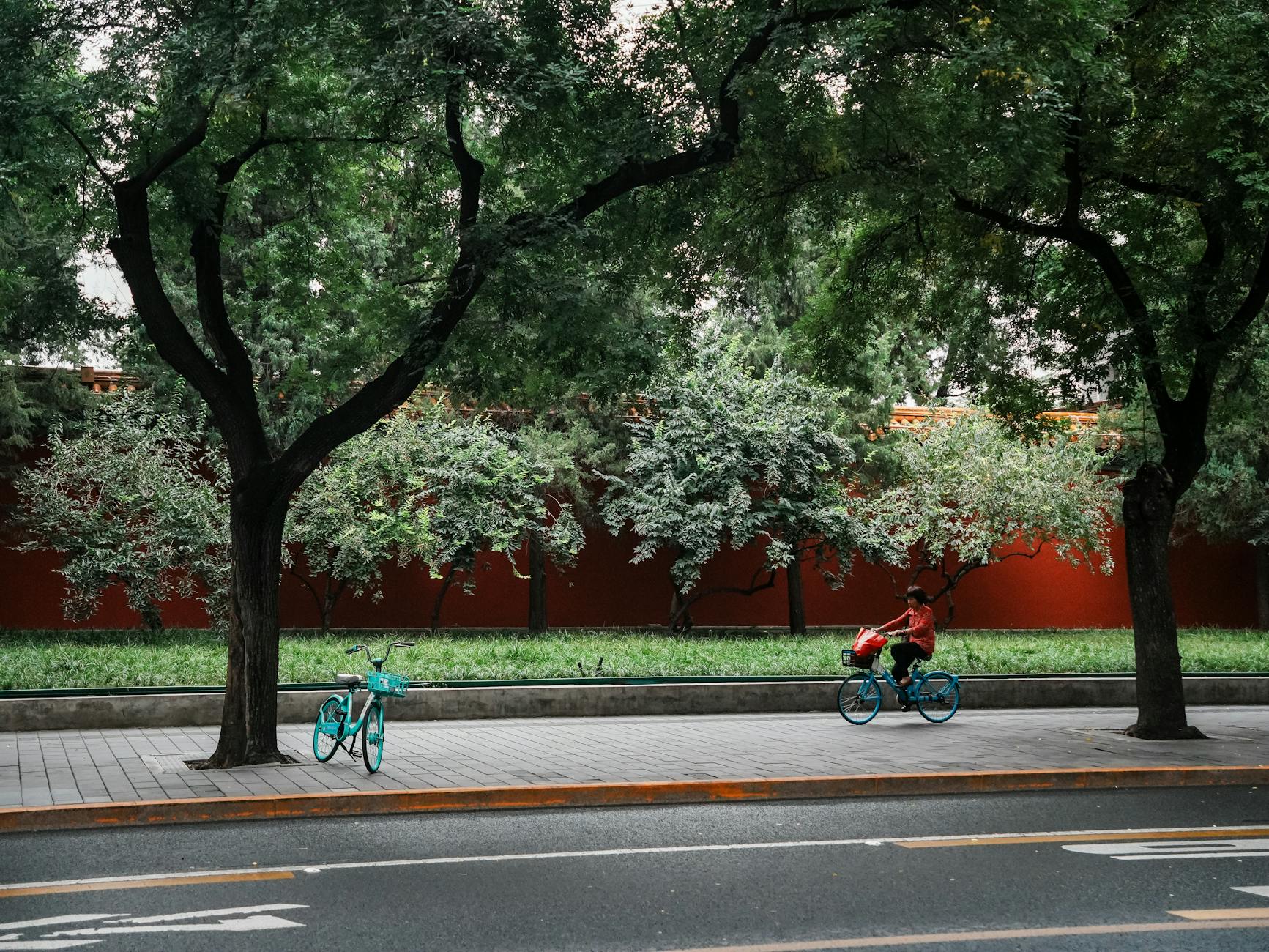
Choose Your China Trip
The Classic First China Route
Best for: First-timers, history, archaeology, modern city life, families, rail confidence.
Route: Beijing → Xi'an → Shanghai, with optional Suzhou or Hangzhou.
This is the cleanest first-time introduction. Beijing gives imperial China and the Great Wall. Xi'an gives Tang/Qin history, food, and the Terracotta Warriors. Shanghai gives modern China, the Bund, museums, neighborhoods, and easy access to Suzhou/Hangzhou.
Ideal length: 10 to 14 days.
Why it works: The route has strong rail/flight connections, a clear narrative, and enough contrast without requiring advanced logistics.
What to avoid: Adding too many distant landscapes. If you add Guilin, Chengdu, or Zhangjiajie, drop something else or extend the trip.
The Yangtze Delta Route
Best for: First-timers who prefer art, gardens, canals, food, and easier logistics.
Route: Shanghai → Suzhou → Hangzhou → Nanjing, with optional water town or Huangshan.
This is one of China's most visitor-friendly regions: good rail, beautiful urbanism, strong museums, classical gardens, tea culture, historic capitals, and modern comfort.
Ideal length: 7 to 12 days.
The move: Use Shanghai as a first/last gateway, but do not spend the entire trip in Shanghai. Suzhou and Hangzhou are not minor side notes; they are central to understanding Jiangnan culture.
The Sichuan and Chongqing Route
Best for: Food lovers, pandas, teahouses, hotpot, landscapes, Buddhist sites, slower urban travel.
Route: Chengdu → Leshan/Emei → Chongqing, with optional Jiuzhaigou, Dujiangyan/Qingcheng, or Dazu.
This route is excellent for travelers who want food and culture more than postcard collecting. Chengdu is a soft landing with strong daily life. Chongqing is vertical, intense, and unforgettable. Leshan and Emei add sacred and scenic depth.
Ideal length: 7 to 12 days.
Watch out: Jiuzhaigou is beautiful but logistics-heavy. Do not treat it as a casual afternoon from Chengdu.
The Southern Landscape Route
Best for: Photography, karst scenery, rivers, villages, light hiking, families, slower travel.
Route: Guilin → Yangshuo → Longji Rice Terraces, with optional Guizhou villages or Zhangjiajie.
Guilin/Yangshuo is one of the easiest ways to experience China's famous karst landscapes. Longji adds rice terraces and mountain villages. Zhangjiajie is dramatic but not close enough to be treated as a light add-on.
Ideal length: 5 to 10 days.
The move: Sleep in Yangshuo or the countryside rather than treating the region as a rushed bus-tour day from Guilin.
The Yunnan Route
Best for: Slow travelers, ethnic diversity, mild climates, tea, old towns, mountains, landscapes, food.
Route: Kunming → Dali → Lijiang → Shangri-La, with optional Xishuangbanna, Yuanyang rice terraces, or Pu'er tea country.
Yunnan is one of China's best regions for a slower trip. It has huge variety, but that variety is spread out. Dali, Lijiang, Shangri-La, Xishuangbanna, and Yuanyang are not interchangeable; they are different worlds.
Ideal length: 10 to 18 days.
Watch out: Altitude increases as you move toward Lijiang and Shangri-La. Build pacing accordingly.
The Silk Road / Northwest Route
Best for: History, desert landscapes, Buddhism, Islamic culture, ancient trade routes, archaeology, big skies.
Route: Xi'an → Lanzhou → Zhangye → Jiayuguan → Dunhuang → Turpan/Urumqi → Kashgar.
This is one of the great overland route ideas in Asia, but it is more advanced than the classic route. Distances are large, climate is harsh, and some areas require current advisory checks.
Ideal length: 12 to 21 days.
The move: Do not rush Dunhuang. The Mogao Caves, dunes, night markets, and desert light deserve real time.
The Tibet / Plateau Route
Best for: Spiritual landscapes, high-altitude culture, mountains, monasteries, serious travelers.
Route: Lhasa → Yamdrok Lake → Shigatse → Everest region or other permitted route, usually with a licensed operator.
This is not a normal independent route. Permits, guides, altitude, road conditions, and political sensitivities all matter.
Ideal length: 7 to 14 days after reaching Lhasa, with acclimatization.
Watch out: Altitude is not a vibe; it is a medical factor.
The Harbin and Northeast Winter Route
Best for: Winter lovers, ice festival, snow landscapes, Russian-influenced architecture, cold-weather spectacle.
Route: Harbin → Yabuli/Snow Town or Jilin/Changbai depending interests.
This route is highly seasonal. It can be magical in winter and less compelling as a first route outside winter unless you have specific interests.
Ideal length: 4 to 8 days.
Watch out: Cold is serious. Dress for it, not for Instagram.
The Food-First China Route
Best for: Travelers who organize trips around eating.
Route ideas: Beijing + Xi'an + Chengdu + Chongqing; or Shanghai + Hangzhou/Suzhou + Guangzhou/Shunde; or Kunming + Dali + Chengdu.
China is arguably best understood through food regions. A food route should not chase Michelin lists only; it should include breakfast, markets, regional snacks, tea, casual noodles, dumplings, hotpot, barbecue, banquets, and local produce.
Ideal length: 10 to 16 days.
The move: Eat breakfast out. China reveals itself early: soy milk, youtiao, baozi, jianbing, rice noodles, wontons, noodles, congee, dumplings, and regional morning crowds.

Best Time to Visit China
China is too large for one clean weather answer. A useful guide must separate first-time routes from regional routes.
Best Overall Months for a First Trip
April and May are excellent for many classic routes: Beijing, Xi'an, Shanghai, Suzhou, Hangzhou, Chengdu, Guilin, and Yunnan can all be strong, though spring weather varies and holiday periods matter.
September, October, and early November are often the best broad travel window. Temperatures ease, many landscapes are clearer, and food seasons are strong. The caveat is National Day Golden Week around October 1, when domestic travel demand spikes.
June to August can work, especially for highland regions, families, and school-holiday travelers, but heat, humidity, rain, and typhoons affect many regions.
December to February is best for Harbin/northeast winter, Hainan tropical escapes, some Yunnan routes, city museums, and lower crowds in places that remain comfortable. Northern China can be very cold.
Season-by-Season
| Season | What to expect | Best for | Watch out for |
|---|---|---|---|
| Spring: March-May | Variable but often beautiful; warming cities, blossoms, windy/dusty periods in the north, good walking weather in many regions. | Beijing, Xi'an, Shanghai, Yangtze Delta, Yunnan, Chengdu, Guilin, Suzhou/Hangzhou gardens. | Qingming and May Day holiday crowds, spring allergies, occasional sand/dust in northern areas. |
| Summer: June-August | Hot and humid in many cities; rainy/monsoon influence in parts of the south; typhoon risk on eastern/southern coasts; good for highlands. | Yunnan highlands, Qinghai, Tibet with permits, some Xinjiang routes, mountain escapes, families with school schedules. | Heat exhaustion, heavy rain, flooding, typhoons, packed domestic attractions. |
| Autumn: September-November | Often the best all-purpose season; cooler, clearer, strong food and scenery. | Classic routes, Great Wall, Xi'an, Yangtze Delta, Sichuan, Guilin, Yunnan, Huangshan. | National Day Golden Week, late typhoons/coastal storms, early cold in far north or high elevations. |
| Winter: December-February | Cold north, mild/cool south, snow/ice in northeast, lower crowds in some cities, good tropical Hainan. | Harbin, Beijing museums, hotpot, Hainan, Yunnan, city trips, photography with fewer crowds. | Spring Festival travel crush, severe cold, shorter daylight, closures in highlands or scenic areas. |
Major Holiday Timing
China's domestic holiday calendar matters as much as weather. Spring Festival/Chinese New Year, May Day, and National Day are the biggest planning hazards for visitors moving between cities. The State Council publishes annual holiday schedules; for 2026, official public-holiday information was released on the government portal.[17]
The move: If your trip overlaps Spring Festival, May Day, or National Day, either stay put in one city and embrace the atmosphere or book trains, flights, hotels, and key tickets far earlier than usual. Do not plan a complex multi-city route during holiday peaks unless you enjoy competition.
Month-by-Month Guide
| Month | Verdict |
|---|---|
| January | Good for Harbin and northern winter trips; cold in Beijing and Xi'an; pleasant in parts of Yunnan and Hainan. Watch Spring Festival timing. |
| February | Deep winter in the north. Spring Festival can reshape the country: closures, family travel, sold-out transport, and huge movement. Great if planned deliberately; bad if accidental. |
| March | Transitional. Good for lower crowds, but weather can be inconsistent. Northern dust/wind possible; south begins warming. |
| April | One of the best months for classic routes. Gardens, city walks, and many landscapes are strong. Watch Qingming and late-April build-up to May Day. |
| May | Excellent after May Day. Warm, green, and useful for most first-time routes. Book around holidays. |
| June | Warmer and wetter. Good for some mountain/highland routes; less ideal for heat-sensitive visitors in cities. |
| July | Hot, humid, busy, and rainy in many regions. Family travel is common. Good for highlands, but plan carefully. |
| August | Similar to July; typhoon risk matters on eastern/southern coasts. Some western/northern regions are strong but distances are large. |
| September | Excellent in many regions. Warm but improving. Good for Yunnan, Sichuan, Beijing, Xi'an, Shanghai, and northwest routes. |
| October | Excellent after National Day crowds ease. Great Wall, Beijing, Xi'an, Yangtze Delta, Yunnan, and Sichuan can be superb. |
| November | Strong shoulder month: cooler, fewer crowds, good city travel, autumn color in parts of the country. Far north gets cold. |
| December | Good for lower-crowd city trips, winter food, Harbin build-up, Hainan, and Yunnan. Northern China is cold. |
Weather Risk Notes
- Summer heat in cities can be draining, especially Beijing, Xi'an, Shanghai, Hangzhou, Wuhan, Chongqing, Guangzhou, and Shenzhen.
- Southern and central China can see heavy rainfall and flooding in warm months.
- UK travel guidance notes that typhoon season in China normally runs from May to November and affects southern and eastern coastal regions.[13]
- High-altitude regions such as Tibet, Qinghai, western Sichuan, and parts of Yunnan require altitude planning.
- Air quality can vary by city, season, weather pattern, and policy conditions. Sensitive travelers should monitor local air-quality data.
How Many Days You Need
The Honest Answer
You need 10 to 14 days for a satisfying first China trip. Seven days can be excellent if you choose one route family. Three weeks lets you combine two regions with dignity. Anything attempting to “do China” in one week is not ambitious; it is confused.
| Length | What it feels like |
|---|---|
| 3-4 days | A city stopover: Beijing, Shanghai, Chengdu, Guangzhou, Xi'an, or a 240-hour transit-style mini-trip. Do not pretend it is a China trip. |
| 5-7 days | One tight corridor: Beijing + Great Wall; Shanghai + Suzhou/Hangzhou; Xi'an + Beijing; Chengdu + Chongqing; Guilin/Yangshuo. |
| 8-10 days | A workable first route: Beijing + Xi'an + Shanghai, or Shanghai/Yangtze Delta, or Chengdu/Chongqing/Sichuan. |
| 12-14 days | Ideal first visit: Classic route plus Suzhou/Hangzhou, Chengdu, or Guilin. Enough time for recovery and food exploration. |
| 15-21 days | Two route families: classic + Sichuan, classic + Guilin, Yangtze Delta + Yunnan, Sichuan + Yunnan, or Silk Road corridor. |
| One month | A serious China trip: multiple regions, slower pacing, rail journeys, landscapes, food, and rest days. |
| Longer | China becomes a country to live through rather than consume. Long-stay travelers should think in provinces and seasons. |
Itinerary Philosophy
A good China itinerary needs:
- A route family: classic, delta, Sichuan, Yunnan, south landscapes, northwest, Tibet, winter northeast, food.
- One major transfer per travel day: high-speed train, flight, or long road journey. Do not stack transfers.
- System buffers: security checks, station size, ticket verification, app/payment issues, language friction.
- Crowd strategy: early starts, weekday visits, holiday avoidance, backup sites.
- Food time: China punishes travelers who eat only when desperate inside tourist attractions.
- Rest evenings: huge stations and attractions drain energy.
The Move
On a first trip, choose three bases maximum in 10 days and four bases maximum in 14 days. Add day trips from those bases rather than sleeping in a new city every night.
Region-by-Region Guide
Beijing, Tianjin, Hebei, and North China
Best for: First-time China, imperial history, Great Wall, museums, hutongs, political geography, winter city travel, hearty northern food.
Beijing is the best starting point for understanding China as a historical state. It is not simply a city of monuments; it is a city organized around power, ritual, axes, courtyards, gates, parks, ring roads, universities, tech districts, food neighborhoods, and national museums. Nearby Hebei and Tianjin add Great Wall sections, port-city history, imperial retreats, and northern industrial landscapes.
Key places: Beijing, Great Wall sections such as Mutianyu/Jinshanling/Badaling, Summer Palace, Temple of Heaven, hutong neighborhoods, National Museum, Tianjin, Chengde, Datong, Pingyao if extending west/south.
Best route use: Start a classic trip here, then go to Xi'an by high-speed rail or overnight train/flight. Beijing also pairs with Shanghai by high-speed rail if you want a simple two-city contrast.
Watch out: Beijing attractions can be reservation-heavy, security-heavy, and spread out. The Forbidden City/Palace Museum deserves an early start and advance planning; the official Palace Museum site lists ticketing and visitor information.[18]
Shanghai and the Yangtze Delta
Best for: Modern China, design, museums, food, gardens, water towns, easy rail, first-time comfort.
Shanghai is China's most accessible global city for many visitors, but the region around it is just as important. Suzhou's classical gardens, Hangzhou's West Lake and tea culture, Nanjing's history, and smaller water towns create a dense and rewarding route.
Key places: Shanghai, Suzhou, Hangzhou, Nanjing, Wuzhen, Tongli, Nanxun, Yangzhou, Huangshan extension, Xidi/Hongcun.
Best route use: A 7-12 day regional trip or an add-on after Beijing/Xi'an. Excellent for travelers who prefer urban culture and rail ease over long domestic flights.
Watch out: Water towns can feel staged and crowded if visited midday on weekends. Choose carefully and sleep overnight if atmosphere matters.
Shaanxi, Henan, Shanxi, and the Ancient Heartland
Best for: Archaeology, dynastic history, ancient capitals, city walls, grottoes, noodles, Buddhist sculpture.
This is the historical spine between Beijing and western China. Xi'an is the obvious anchor, but Luoyang, Longmen Grottoes, Pingyao, Yungang Grottoes, Mount Hua, and other sites create deeper routes.
Key places: Xi'an, Terracotta Warriors, Xi'an city wall, Muslim Quarter/Hui food, Luoyang, Longmen Grottoes, Mount Hua, Pingyao, Datong, Yungang Grottoes.
Best route use: Add Xi'an to Beijing-Shanghai. Use Luoyang or Pingyao if you want a more heritage-focused trip.
Watch out: The Terracotta Warriors are extraordinary but crowded and often rushed. The official museum site directs ticketing through official channels and WeChat accounts; bring your passport.[19]
Sichuan and Chongqing
Best for: Food, pandas, teahouses, hotpot, Buddhist sites, mountain scenery, slower city life, dramatic urban geography.
Sichuan and Chongqing may be the most rewarding region for travelers who want daily texture. Chengdu is relaxed by Chinese megacity standards, with teahouses, parks, food, and pandas. Chongqing is vertical, humid, spicy, and spectacular. Leshan, Emei, Dazu, Qingcheng, Dujiangyan, and Jiuzhaigou add cultural and scenic depth.
Key places: Chengdu, Chongqing, Leshan Giant Buddha, Mount Emei, Dujiangyan, Qingcheng Mountain, Dazu Rock Carvings, Jiuzhaigou/Huanglong, western Sichuan if advanced.
Best route use: 7-12 days as a standalone route or add Chengdu after Xi'an.
Watch out: Sichuan spice is not one thing; mala numbing heat, pickled flavors, chili oil, and hotpot intensity vary. Start gradually if sensitive.
Yunnan and the Southwest
Best for: Slow travel, old towns, minorities, tea, mild climates, mountains, rice terraces, highland landscapes.
Yunnan is a country within a country for travel purposes. Kunming is the gateway, Dali is easygoing, Lijiang is famous and crowded, Shangri-La introduces Tibetan-influenced highlands, Xishuangbanna feels tropical and Dai-influenced, and Yuanyang/Honghe rice terraces require careful logistics.
Key places: Kunming, Dali, Lijiang, Tiger Leaping Gorge, Shangri-La, Xishuangbanna, Pu'er, Yuanyang, Jianshui, Baoshan/Tengchong.
Best route use: 10-18 days standalone. Do not attach it as a two-night afterthought.
Watch out: Altitude, distances, and tourism pressure. Lijiang can be beautiful, but over-commercialized. Balance old-town stops with landscapes and smaller places.
Guangxi, Guizhou, Hunan, and South-Central Landscapes
Best for: Karst, rice terraces, minority villages, dramatic mountains, photography, rivers, caves, waterfalls.
This broad region contains some of China's most visually famous landscapes: Guilin/Yangshuo karst, Longji terraces, Zhangjiajie pillars, Guizhou villages, Huangguoshu Waterfall, and Fenghuang old town. It is rewarding but more logistically complex than it looks.
Key places: Guilin, Yangshuo, Longji, Sanjiang/Chengyang, Zhaoxing, Kaili, Guiyang, Huangguoshu, Zhangjiajie/Wulingyuan, Fenghuang, Changsha.
Best route use: 7-14 days for landscape-first travelers.
Watch out: Crowds at Zhangjiajie can be intense. Weather matters. Scenic areas are large and can involve buses, cable cars, elevators, and queues.
Guangdong, Shenzhen, Fujian, Hainan, and the Southeast Coast
Best for: Cantonese food, dim sum, modern cities, coastal culture, tulou architecture, tea, subtropical/tropical travel, Hong Kong/Macao add-ons.
Guangzhou and Shenzhen show the Pearl River Delta's food and future-facing urbanism. Fujian adds tulou houses, Xiamen, Gulangyu/Kulangsu, tea mountains, and coastal life. Hainan is China's tropical beach/island province.
Key places: Guangzhou, Shunde, Shenzhen, Zhuhai, Xiamen, Gulangyu/Kulangsu, Fujian tulou, Wuyishan, Fuzhou, Sanya, Haikou.
Best route use: Food/design route, Hong Kong/Macao-connected route, or winter sun route.
Watch out: Summer heat/humidity and typhoon risk. Border crossings to Hong Kong/Macao are not normal domestic metro transfers; treat them as immigration crossings.
Gansu, Qinghai, Ningxia, Inner Mongolia, and the Northwest
Best for: Silk Road history, desert landscapes, Buddhist caves, big skies, frontier towns, Tibetan and Muslim cultural regions, photography.
This is one of China's most underrated travel regions for serious travelers. Dunhuang, Zhangye, Jiayuguan, Lanzhou, Xiahe, Xining, Qinghai Lake, and parts of Inner Mongolia offer a very different China from Beijing-Shanghai.
Key places: Lanzhou, Zhangye, Jiayuguan, Dunhuang/Mogao Caves, Mingsha Dunes, Xiahe/Labrang, Xining, Qinghai Lake, Yinchuan, Inner Mongolia grasslands.
Best route use: 10-18 days, often beginning from Xi'an or Lanzhou.
Watch out: Desert heat/cold swings, long transfers, altitude in Qinghai/Tibetan areas, and ticket limits for major cave sites.
Xinjiang
Best for: Big landscapes, desert/oasis cities, Central Asian food, Kashgar, mountains, history, advanced travelers.
Xinjiang can be stunning: Kashgar, Turpan, Urumqi, Tian Shan mountains, lakes, bazaars, desert roads, and Uyghur food. It also requires current advisory awareness and sensitivity. Conditions, access, policing, and restrictions can change, and travel experiences vary.
Best route use: Standalone advanced route, not a quick add-on.
Watch out: Distances are huge, security presence can be noticeable, and political/legal sensitivities are real. Avoid photographing police, checkpoints, security infrastructure, or anything restricted.
Tibet Autonomous Region and Tibetan Cultural Areas
Best for: Monasteries, high-altitude landscapes, pilgrimage routes, sacred mountains, serious travelers.
Tibet should be planned through qualified specialists. Independent travel is generally not available for foreign tourists in the TAR, and permits may be restricted or paused. Tibetan cultural areas also extend into Qinghai, Sichuan, Gansu, and Yunnan, each with different access and conditions.
Best route use: Dedicated trip or carefully planned extension from Chengdu/Xining/Beijing, with altitude and permits built in.
Watch out: Altitude, weather, restricted access, religious sensitivities, and political sensitivity.
Northeast China
Best for: Harbin winter, Russian-influenced architecture, ice/snow, Korean-Chinese food, borderland history, cold-weather travel.
The northeast is not the first China most visitors imagine, but it can be excellent in winter. Harbin's ice culture, Jilin rime, Changbai Mountain, and Shenyang/Dalian history make the region distinctive.
Best route use: Winter add-on or special-interest trip.
Watch out: Winter cold is severe. Plan clothing, transport, and indoor breaks seriously.
Best Places to Visit
Beijing
What it is: China's political and historical capital, built around imperial axes, walls, gates, palaces, temples, parks, hutongs, universities, museums, and modern ring-road sprawl.
Why go: Forbidden City, Temple of Heaven, Summer Palace, Great Wall access, hutongs, Peking duck, museums, contemporary art, and the physical logic of state power.
How long: 4 to 6 days for a first visit.
Best for: First-timers, history lovers, families, museum travelers, photographers, political geography.
Skip if: You only have one week and prefer modern city life; then choose Shanghai/Yangtze Delta instead.
Common mistake: Visiting the Great Wall, Forbidden City, Temple of Heaven, Summer Palace, and hutongs in one rushed day. Beijing is bigger and slower than that.
Shanghai
What it is: China's most globally legible city: skyline, Bund, art museums, cafés, shopping, old lanes, concessions, riverfronts, and fast trains to Jiangnan.
Why go: The Bund, Pudong views, museums, French Concession walks, contemporary art, food, design, nightlife, and easy access to Suzhou/Hangzhou.
How long: 3 to 5 days, more if using it as a base.
Best for: First-timers who want an easier landing, modern urbanism, food, art, families, business travelers.
Common mistake: Treating Shanghai as “not real China.” Shanghai is very real; it is one version of China, not the whole country.
Xi'an
What it is: Ancient capital, archaeological heavyweight, city-wall city, and one of China's best food stops.
Why go: Terracotta Warriors, city wall, Muslim Quarter/Hui food, Big Wild Goose Pagoda, Shaanxi History Museum, noodles, history of the Silk Road.
How long: 2 to 4 days.
Best for: Classic first routes, archaeology, food, families.
Common mistake: Flying in, visiting the Terracotta Warriors, and leaving without eating properly in Xi'an.
Chengdu
What it is: Sichuan's relaxed, food-obsessed capital, known for pandas, teahouses, parks, hotpot, museums, and as a gateway to western landscapes.
Why go: Pandas, Sichuan cuisine, teahouses, People's Park, Wenshu Monastery, Jinli/Kuan Zhai tourist streets if used carefully, Dujiangyan/Qingcheng, Leshan/Emei access.
How long: 3 to 5 days.
Best for: Food lovers, families, slower urban travel, first-time visitors adding western China.
Common mistake: Seeing only pandas and missing the teahouse/food culture.
Chongqing
What it is: A vertical megacity of rivers, bridges, hills, hotpot, lights, monorails, fog, and layered urban geography.
Why go: Hotpot, night views, Hongya Cave area, river crossings, Liziba monorail, neighborhoods, Dazu Rock Carvings as an excursion.
How long: 2 to 4 days.
Best for: Urban explorers, photographers, food lovers, repeat visitors.
Common mistake: Treating Chongqing as just a transit point to a Yangtze cruise.
Guilin and Yangshuo
What it is: Southern China's iconic karst landscape, with rivers, peaks, villages, cycling, rafting, terraces nearby, and tourism infrastructure.
Why go: Li River scenery, Yangshuo countryside, Longji Rice Terraces, caves, light hiking, family-friendly landscapes.
How long: 3 to 6 days.
Best for: Landscapes, families, photographers, first-time China route extensions.
Common mistake: Sleeping only in Guilin and doing a rushed cruise without experiencing Yangshuo or the countryside.
Hangzhou and Suzhou
What they are: Jiangnan culture at its most refined: gardens, lakes, canals, silk, tea, scholars' landscapes, water towns, delicate food.
Why go: West Lake, Longjing tea, Suzhou classical gardens, canals, museums, slower urban beauty, easy rail from Shanghai.
How long: 2 to 5 days combined, more if including Nanjing or water towns.
Best for: Couples, first-timers, culture, gardens, food, lower-stress travel.
Common mistake: Treating Suzhou as a half-day checklist. Its gardens are better with time and pacing.
Zhangjiajie
What it is: A dramatic mountain landscape of sandstone pillars, forests, glass bridges, cable cars, and highly organized scenic-area logistics.
Why go: Wulingyuan scenery, Tianmen Mountain, Avatar-like pillars, photography, hiking routes.
How long: 3 to 5 days.
Best for: Landscape photographers, families with older kids, dramatic scenery seekers.
Common mistake: Underestimating crowds and scenic-area complexity.
Yunnan: Dali, Lijiang, Shangri-La, and Beyond
What it is: One of China's richest slow-travel regions, with old towns, mountains, ethnic diversity, tea, highland landscapes, and tropical extensions.
Why go: Dali's lake/mountain setting, Lijiang's old town and Jade Dragon Snow Mountain, Tiger Leaping Gorge, Shangri-La monasteries, Xishuangbanna tropical culture, Yuanyang rice terraces.
How long: 10 to 18 days.
Best for: Slow travelers, cultural landscapes, food, photographers, repeat visitors.
Common mistake: Trying to do all of Yunnan in one week.
Dunhuang and the Silk Road
What it is: A desert-oasis gateway to Buddhist cave art, dunes, ancient routes, and frontier history.
Why go: Mogao Caves, Mingsha Dunes, Crescent Lake, night markets, desert landscapes.
How long: 2 to 4 days in Dunhuang, longer for the whole Gansu corridor.
Best for: History lovers, archaeology, photographers, Silk Road travelers.
Common mistake: Booking too little time for cave tickets, desert conditions, and route logistics.
Guangzhou and Shunde
What it is: Cantonese food civilization plus old trading-city layers and Pearl River Delta modernity.
Why go: Dim sum, roast meats, markets, old neighborhoods, Shamian, Canton Tower, museums, Shunde food excursions.
How long: 3 to 5 days.
Best for: Food lovers, Hong Kong/Macao add-on travelers, repeat China visitors.
Common mistake: Skipping Guangzhou because it is “just business.” For food, it is one of China's essential cities.
Harbin
What it is: Northeast China's winter spectacle city, known for ice, snow, Russian-influenced architecture, and extreme cold.
Why go: Ice and Snow Festival, St. Sophia Cathedral area, winter streets, northeastern food.
How long: 2 to 4 days.
Best for: Winter lovers, photographers, festival travelers.
Common mistake: Underpacking. Harbin cold is not symbolic.
China Itineraries
7 Days: Beijing and Xi'an
Best for: A short first trip with serious history.
Day 1: Arrive Beijing. Easy hotel-area walk, payment/app testing, early dinner.
Day 2: Forbidden City/Palace Museum, Jingshan Park, hutong walk or Beihai.
Day 3: Great Wall day trip, ideally Mutianyu or Jinshanling depending fitness/logistics. Mutianyu's official site gives visitor hours and ticketing information.[20]
Day 4: Temple of Heaven, Summer Palace, train or flight to Xi'an.
Day 5: Terracotta Warriors, Xi'an city wall, Muslim Quarter/Hui food.
Day 6: Shaanxi History Museum or Big Wild Goose Pagoda, food exploration, optional Mount Hua if extending.
Day 7: Depart or return to Beijing/continue to Shanghai.
What it misses: Modern Shanghai/Yangtze Delta, southern landscapes, Sichuan food.
10 Days: Classic First China
Route: Beijing → Xi'an → Shanghai.
Day 1: Arrive Beijing.
Day 2: Forbidden City, Jingshan, hutongs.
Day 3: Great Wall.
Day 4: Temple of Heaven and Summer Palace; evening train/flight to Xi'an.
Day 5: Terracotta Warriors and Xi'an food.
Day 6: Xi'an city wall, museum, train/flight to Shanghai.
Day 7: Bund, Pudong, Shanghai Museum or urban walk.
Day 8: French Concession, art/museums, food, riverfront.
Day 9: Suzhou or Hangzhou day trip.
Day 10: Depart Shanghai.
The move: Do not add Guilin or Chengdu unless you extend. This route is already enough.
14 Days: Classic China Plus Chengdu
Route: Beijing → Xi'an → Chengdu → Shanghai/Suzhou.
This is arguably the best first China route for travelers who want history, food, pandas, and modern city life.
Days 1-4: Beijing and Great Wall.
Days 5-6: Xi'an and Terracotta Warriors.
Days 7-10: Chengdu, pandas, teahouses, food, Leshan or Dujiangyan/Qingcheng.
Days 11-14: Shanghai plus Suzhou or Hangzhou.
Why it works: The narrative moves from imperial north to ancient capital to Sichuan daily life to modern delta China.
14 Days: Beijing, Xi'an, Guilin/Yangshuo, Shanghai
Best for: First-timers who want classic icons plus landscapes.
Days 1-4: Beijing.
Days 5-6: Xi'an.
Days 7-10: Guilin/Yangshuo/Longji.
Days 11-14: Shanghai/Suzhou or Hangzhou.
Watch out: This route involves a flight. Keep one buffer day in the landscape region for weather.
10 Days: Shanghai and the Yangtze Delta
Best for: Lower-friction China, gardens, food, art, rail, couples, families.
Day 1: Arrive Shanghai.
Days 2-4: Shanghai neighborhoods, museums, Bund, food.
Day 5: Suzhou gardens, overnight Suzhou if possible.
Day 6: More Suzhou or water town.
Days 7-8: Hangzhou, West Lake, Longjing tea.
Days 9-10: Nanjing or return to Shanghai.
The move: Sleep at least one night outside Shanghai. Jiangnan works best after tour buses leave.
12 Days: Sichuan and Chongqing
Best for: Food and culture travelers.
Days 1-4: Chengdu: pandas, parks, teahouses, food, museums.
Day 5: Dujiangyan and Qingcheng Mountain.
Day 6: Leshan Giant Buddha.
Day 7: Mount Emei or return to Chengdu.
Days 8-10: Chongqing: hotpot, river views, neighborhoods, vertical city.
Days 11-12: Dazu Rock Carvings or extra Chengdu/Chongqing food time.
Watch out: Do not overprogram meals. Sichuan food is best when you have appetite and curiosity, not when you are rushing between attractions.
14 Days: Yunnan Slowly
Best for: Slow travelers, landscapes, cultural variety.
Days 1-2: Kunming.
Days 3-5: Dali and Erhai area.
Days 6-8: Lijiang and nearby mountains/villages.
Days 9-11: Tiger Leaping Gorge and/or Shangri-La.
Days 12-14: Return via Lijiang/Kunming or extend to Xishuangbanna/Yuanyang if adding more time.
The move: Skip one famous stop rather than rushing all of them. Yunnan is better slow.
18-21 Days: Silk Road Corridor
Route: Xi'an → Lanzhou → Zhangye → Jiayuguan → Dunhuang → Turpan/Urumqi → Kashgar.
This route is not for travelers who want easy short transfers. It is for travelers who want ancient trade routes, desert light, caves, Muslim food, frontier cities, mountains, and big historical distance.
Watch out: Current advisories, heat/cold, security checks, long distances, and tickets for major sites.
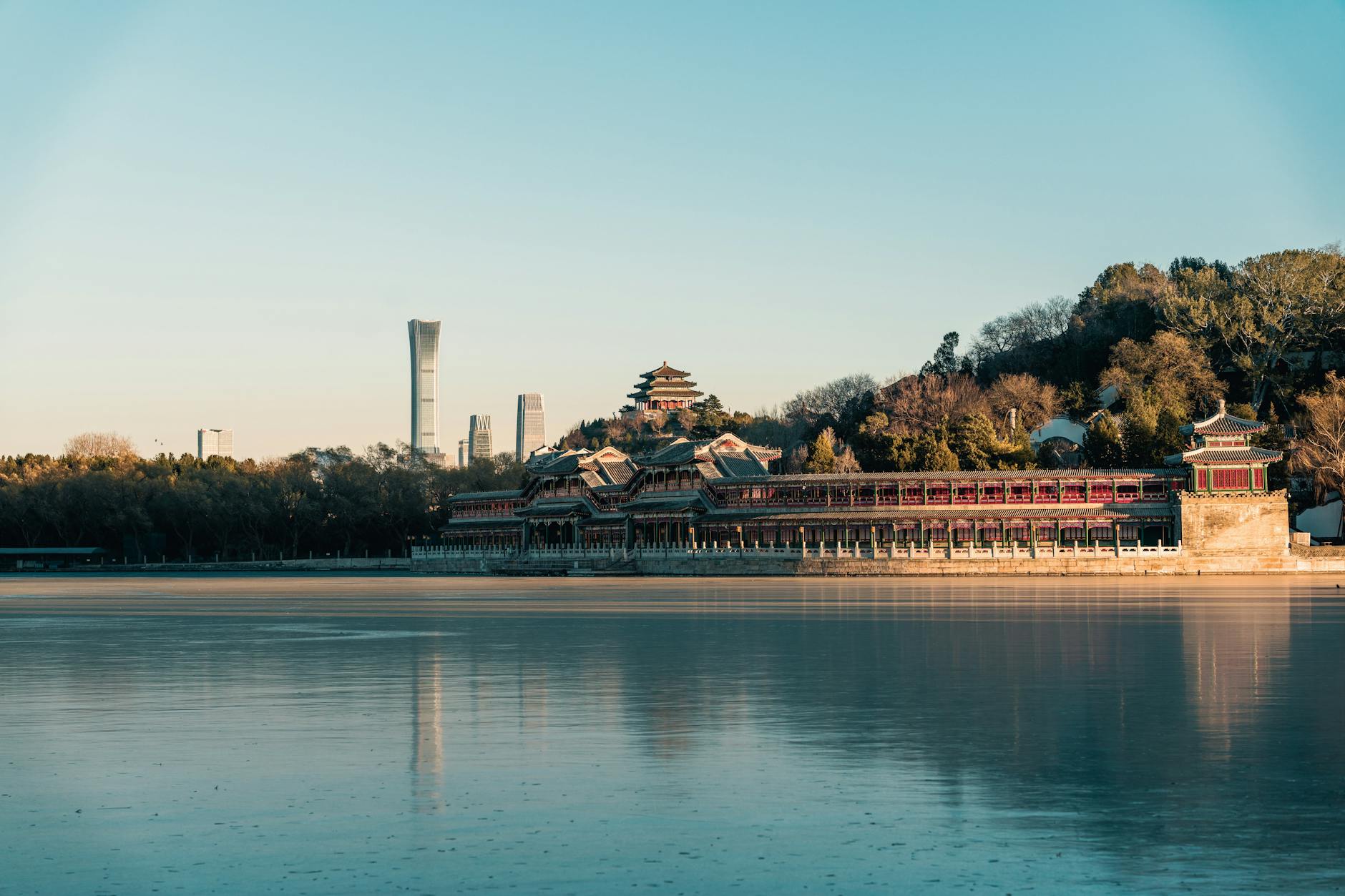
Food and Drink
China is one of the world's great food countries because food is regional, daily, and deeply social. The worst way to eat in China is to treat it as one cuisine. The second-worst way is to eat only in restaurants near major landmarks.
Food Identity by Region
| Region | What to look for |
|---|---|
| Beijing and North China | Peking duck, jianbing, dumplings, zhajiangmian, hotpot, lamb, wheat-based noodles and breads. |
| Shaanxi/Xi'an | Biangbiang noodles, roujiamo, yangrou paomo, liangpi, cumin lamb, Muslim/Hui food traditions. |
| Sichuan/Chongqing | Mapo tofu, hotpot, dan dan noodles, dry pot, rabbit, cold chicken, pickles, peppercorn numbing heat, teahouses. |
| Shanghai/Jiangnan | Xiaolongbao, shengjianbao, braised dishes, freshwater fish/crab when seasonal, delicate pastries, Hangzhou/Suzhou cuisine. |
| Guangdong/Cantonese | Dim sum, roast goose/duck/pork, congee, wonton noodles, seafood, Shunde cuisine, herbal soups. |
| Yunnan | Crossing-the-bridge noodles, mushrooms, rice noodles, Dai flavors, ham, tea, herbs, minority cuisines. |
| Hunan | Chili-forward stir-fries, smoked meats, sour/spicy flavors, bold dishes. |
| Xinjiang/Northwest | Lamb skewers, hand-pulled noodles, polo/pilaf, naan, yogurt, melons, Central Asian influences. |
| Fujian | Seafood, soups, tea, Minnan flavors, Fuzhou/Xiamen specialties, Wuyi rock tea. |
| Northeast | Dumplings, stews, pickles, hearty portions, Korean-Chinese food, winter comfort dishes. |
What to Eat
| Dish or experience | What it is | Where it belongs |
|---|---|---|
| Peking duck | Roast duck with pancakes, scallions, sauce, and ritualized carving. | Beijing. Book a reputable place; avoid generic tourist versions. |
| Hotpot | Communal cooking in broth, with dipping sauces and meats/vegetables. | Chongqing and Sichuan are icons, but many regional styles exist. |
| Dumplings | Filled dough, boiled/steamed/fried. | North China especially, but nationwide. |
| Xiaolongbao | Soup dumplings. | Shanghai/Jiangnan. Eat carefully; they are hot. |
| Biangbiang noodles | Wide, hand-pulled Shaanxi noodles. | Xi'an/Shaanxi. |
| Dim sum | Cantonese small dishes served with tea. | Guangzhou, Shunde, Hong Kong/Macao add-ons. |
| Crossing-the-bridge noodles | Yunnan rice-noodle dish assembled with hot broth. | Yunnan. |
| Lanzhou beef noodles | Hand-pulled noodles in clear beef broth. | Lanzhou and nationwide shops. |
| Jianbing | Savory breakfast crepe. | Beijing/northern cities and street breakfast culture. |
| Tea | Green, oolong, pu'er, jasmine, black/red teas, regional tea houses. | Hangzhou, Fujian, Yunnan, Sichuan, Guangdong, nationwide. |
| Street breakfast | Soy milk, youtiao, baozi, congee, pancakes, noodles, rice rolls depending region. | Everywhere, best early. |
Where to Eat by Situation
| Situation | Best approach |
|---|---|
| First dinner after arrival | Eat near the hotel. Choose noodles, dumplings, hotpot if energetic, hotel-recommended local restaurant, or mall food floor. Do not hunt for a viral place after a long-haul flight. |
| Solo dining | Noodles, dumplings, rice bowls, wontons, hotpot mini-pots, casual chains, food courts, breakfast stalls. |
| Group meal | Hotpot, Cantonese dim sum, Sichuan restaurant, family-style regional restaurant, Peking duck. |
| Family meal | Mall restaurants, dumplings, noodles, hotel restaurants, dim sum, casual chains, food courts. |
| Food splurge | Peking duck in Beijing, Sichuan tasting meal, Cantonese banquet/dim sum, Jiangnan fine dining, regional specialist, tea experience. |
| Rainy day | Mall food floors, teahouses, hotpot, museums plus nearby restaurants, covered markets. |
| Vegetarian/vegan | Plan carefully. Buddhist vegetarian restaurants exist; otherwise hidden meat broth, lard, oyster sauce, fish sauce, and stock are common. Carry Chinese-language cards. |
| Halal | Hui and Uyghur food can be excellent in Xi'an, Lanzhou, Beijing, Xinjiang, Ningxia, and many cities. Look for 清真 (qingzhen). |
| Allergies | Carry detailed Chinese allergy cards. Kitchen cross-contact and hidden ingredients can be hard to manage. |
Food Etiquette and Practicalities
- Meals are often shared; dishes arrive when ready.
- Tea or hot water may be served automatically.
- Tipping is not standard in ordinary restaurants.
- QR-code menus are common; translation apps help.
- Some restaurants expect mobile payment; cash can be accepted but may be inconvenient.
- Do not stick chopsticks upright in rice.
- Toasting culture can be intense in business/social contexts; ordinary tourists can politely decline alcohol.
- At busy breakfast stalls, observe how locals order before stepping in.
- Food courts and malls can be very good in China; do not dismiss them.
The Move
Build every itinerary around regional breakfast and one intentional dinner. If lunch is near a tourist site, keep it simple; save your energy for neighborhoods where locals actually eat.
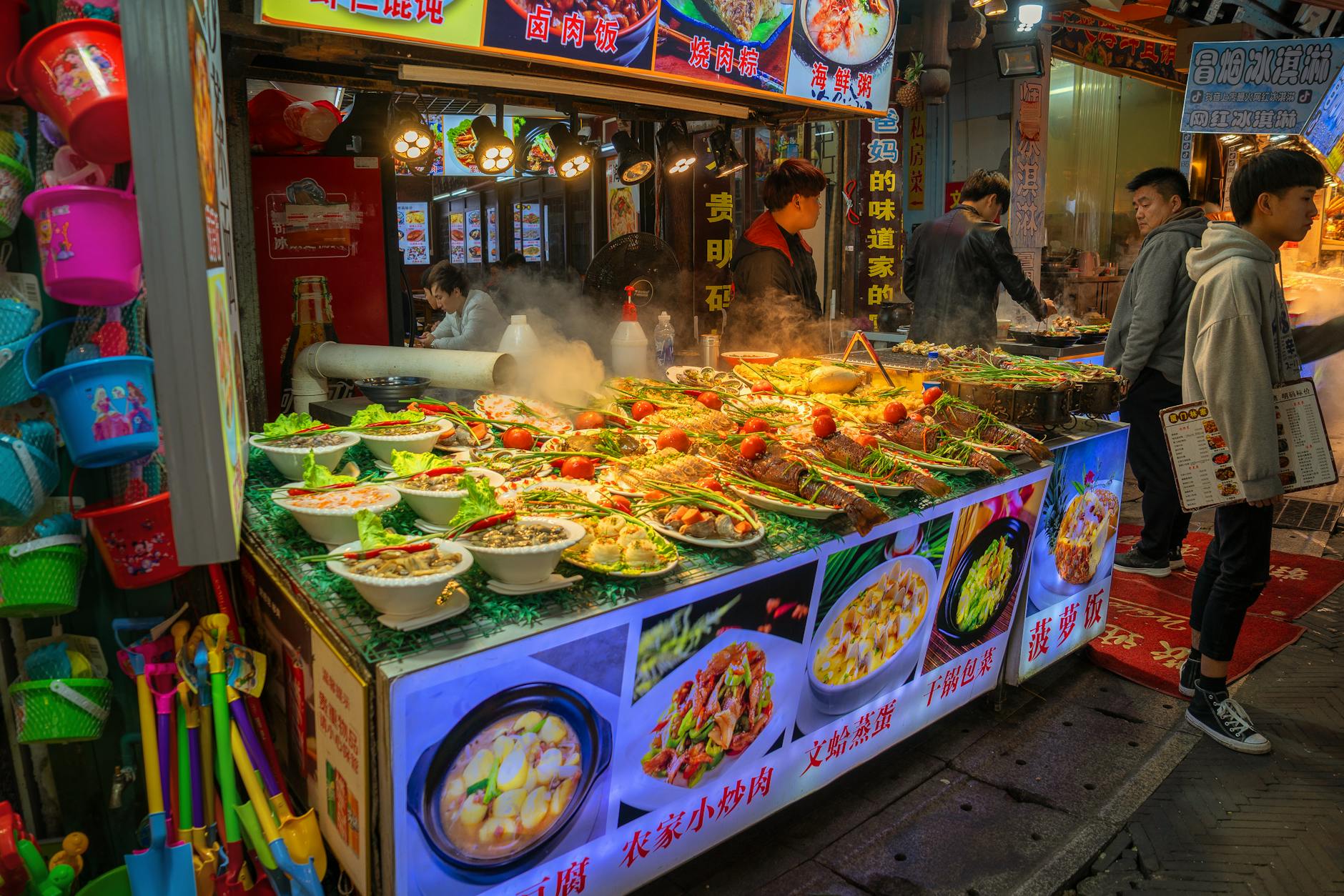
Getting Around China
The Core Rule
Use trains for corridors, flights for distance, metros for cities, taxis/ride-hailing for awkward last-mile moves, and guided/private transport for remote or permit-heavy regions.
High-Speed Rail
China's high-speed rail is one of the great advantages of travel in the country. It is often faster, calmer, and more predictable than flying for medium distances once airport transfers are counted.
Great rail routes:
- Beijing-Xi'an.
- Beijing-Shanghai.
- Shanghai-Suzhou-Hangzhou-Nanjing.
- Chengdu-Chongqing.
- Guangzhou-Shenzhen.
- Shanghai-Huangshan.
- Kunming-Dali-Lijiang where applicable.
- Xi'an-Luoyang-Zhengzhou.
How to book: Use 12306 official channels or reputable intermediaries. 12306 is the official China Railway site, and its English site accepts foreign passports according to its FAQ.[5][6]
Station reality: Many high-speed rail stations are enormous and far from city centers. Arrive early, bring your passport, expect security screening, and check the exact station name. “Beijing South” is not “Beijing Railway Station.” “Shanghai Hongqiao” is not “Shanghai Railway Station.”
Domestic Flights
Flights are best for long jumps: Beijing/Shanghai to Yunnan, Xinjiang, Tibet, Hainan, Harbin, or remote western routes. China has a large domestic airline network, but weather, air traffic control, and airport distance can affect schedules.
The move: For a tight international departure, return to your exit city the day before. Do not count on a remote domestic flight connecting flawlessly to your long-haul departure.
City Metros
Major Chinese cities have excellent metro systems. Beijing, Shanghai, Guangzhou, Shenzhen, Chengdu, Xi'an, Hangzhou, Chongqing, Nanjing, Wuhan, Qingdao, Kunming, and many others are metro-friendly.
Practical notes:
- Security bag scans are common.
- Stations can be huge.
- English signage is usually decent in major cities.
- Mobile payment/app QR codes may be easiest, but single tickets and transit cards are also common.
- Rush hour is intense.
Taxis and Ride-Hailing
Taxis and ride-hailing are useful for late arrivals, families, luggage, attractions outside metro reach, and food neighborhoods. Have your destination written in Chinese. Hotel business cards or screenshots help.
Watch out: Some foreign visitors struggle with ride-hailing apps without Chinese-language setup or payment compatibility. Hotels can often help call cars.
Buses, Private Drivers, and Tours
Buses are important for scenic regions, villages, and remote attractions, but they can be more language-heavy. Private drivers or guided day trips can be worth the money for Great Wall sections, Longji terraces, rural Yunnan, Fujian tulou, Guizhou villages, or multi-stop scenic days.
Rental Cars
Most short-term foreign visitors should not rent cars in mainland China. Driving requires Chinese licensing arrangements, local road norms are different, navigation can be language-heavy, and trains/taxis/private transfers usually make more sense.
Border and Cross-Border Travel
Hong Kong, Macao, and Taiwan are not handled like normal domestic city hops for entry purposes. A route such as Guangzhou-Shenzhen-Hong Kong or Zhuhai-Macao can be easy in practice, but it still involves immigration, possible visa implications, and separate payment/transport systems.
Luggage
China is easier with manageable luggage. High-speed rail stations involve walking, stairs/escalators, queues, and security checks. Hotels can often hold bags. Some rail stations have lockers or luggage storage, but do not rely on them blindly.
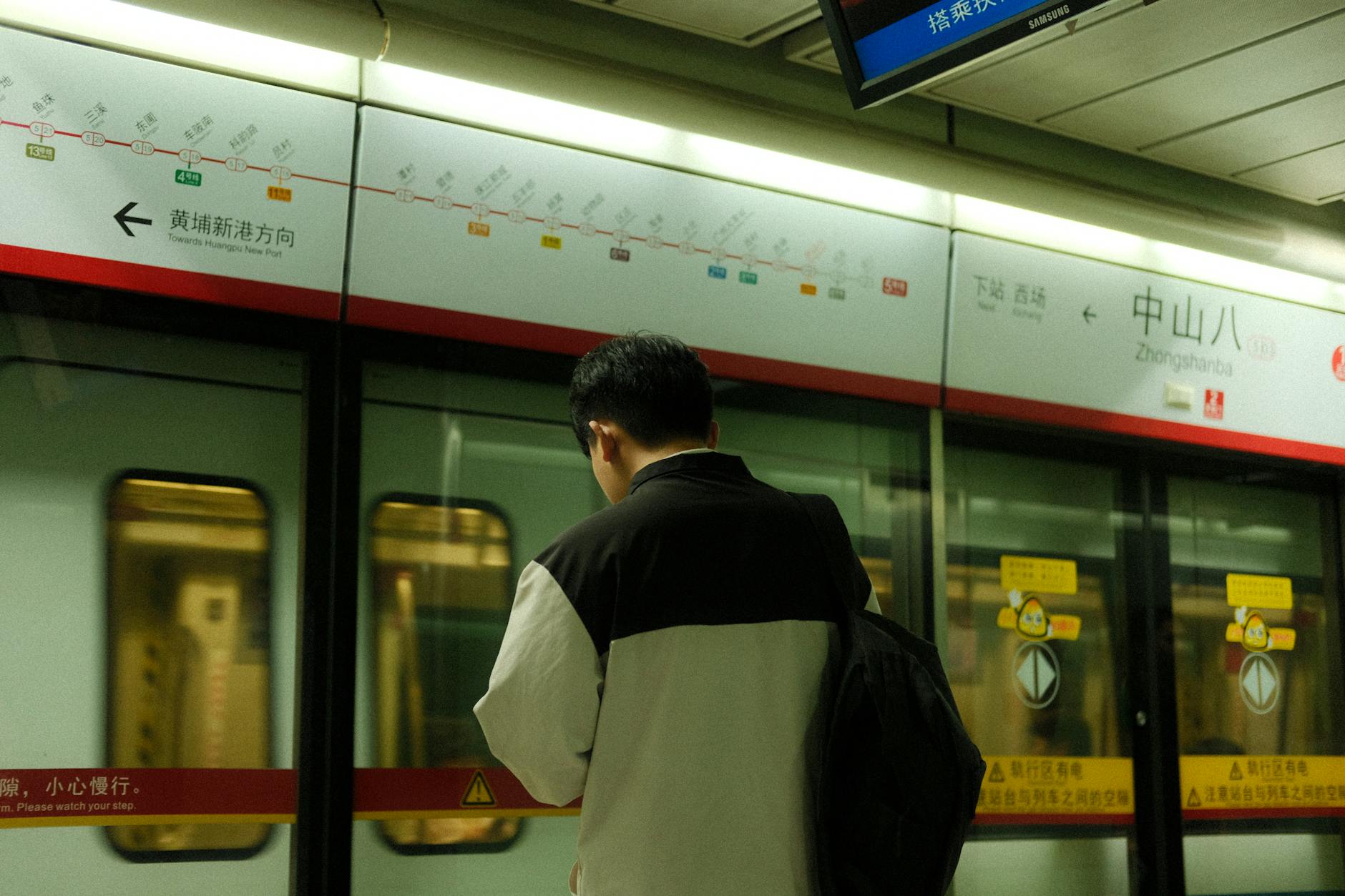
Where to Stay
The Short Answer
For a first China trip, stay near transit, not just near a landmark. In major cities, a well-located hotel near a useful metro line, train station, or food neighborhood is worth more than a slightly larger room in an inconvenient district.
Hotel Strategy by City Type
| City type | Best location logic |
|---|---|
| Beijing | Choose based on attraction access and metro. Areas near Wangfujing/Dongcheng are useful for first-timers; Sanlitun is better for nightlife/restaurants; Qianmen/hutong areas can be atmospheric but less convenient with luggage. |
| Shanghai | Stay near the Bund/Nanjing Road for classic first-timer convenience, Jing'an/French Concession for lifestyle and dining, or Hongqiao for rail/airport logistics. |
| Xi'an | Inside or near the city wall works well; Bell/Drum Tower area is convenient but touristy. |
| Chengdu | Stay near Tianfu Square/Chunxi Road/Taikoo Li for convenience, or a quieter neighborhood if food/teahouse focused. |
| Chongqing | Jiefangbei/Hongya Cave area is scenic and central but crowded; choose carefully based on transit and noise. |
| Guilin/Yangshuo | Consider sleeping in Yangshuo/countryside for scenery; Guilin is convenient for transport but less atmospheric. |
| Yunnan old towns | Stay close enough to walk, but not in the loudest tourist core if you want sleep. |
| Small towns/scenic areas | Confirm foreigner registration ability, passport check-in, location, heating/AC, and transport pickup. |
Lodging Types
- International hotels: Easiest for first nights, English help, payments, registration, breakfast, luggage, taxis.
- Domestic business hotels: Often good value but English varies.
- Boutique hotels: Excellent in places like Dali, Lijiang, Suzhou, Hangzhou, Yangshuo, and Shanghai; check registration and access.
- Guesthouses/inns: Atmospheric in old towns and rural areas; confirm ability to host foreigners.
- Hostels: Good for budget travelers, but post-pandemic/inbound-travel changes mean quality and foreigner support vary.
- Apartment rentals: Can complicate accommodation registration; avoid for a first trip unless you know the system.
- Luxury hotels: Strong in Shanghai, Beijing, Chengdu, Hangzhou, Sanya, Shenzhen, and major scenic gateways.
Common Booking Mistakes
- Booking a hotel that cannot or will not register foreign guests.
- Staying far from a useful metro station to save a small amount.
- Ignoring whether the hotel name/address appears in Chinese.
- Booking near the wrong train station.
- Choosing old-town lodging without checking whether cars can reach it.
- Underestimating noise in nightlife/tourist streets.
- Assuming every room has the bed size, heating, air conditioning, elevator, or bathroom setup you expect.
- Booking during Golden Week without realizing prices and crowds can surge.
The Move
For your first night in China, book a reliable hotel with 24-hour reception, easy airport/train transfer, foreigner registration experience, and clear Chinese address. Save charming guesthouses for later in the trip.
Budget and Costs
China can be good value for food, public transport, and many hotels, but costs vary widely by city, season, and comfort level. Shanghai, Beijing, Sanya, high-end scenic resorts, and international luxury hotels can be expensive. Local food, metro rides, and high-speed rail can feel comparatively affordable.
Daily Budget Ranges
| Traveler type | Daily estimate, excluding major intercity transport | What it means |
|---|---|---|
| Shoestring | ¥250-¥500 | Hostel/budget room, simple local meals, metro, free/low-cost sights, minimal taxis. Easier for experienced China travelers. |
| Budget comfort | ¥500-¥900 | Budget-to-mid hotel, casual restaurants, metro/taxis, several paid attractions. |
| Mid-range | ¥900-¥1,600 | Good hotels, high-speed rail, taxis when useful, strong meals, museums, day trips. |
| Comfortable | ¥1,600-¥3,000 | Better hotels, private transfers for some days, guided experiences, higher-end restaurants. |
| Luxury | ¥3,000+ | Top hotels, private guides, premium transport, fine dining, scenic-area luxury stays. |
What Is Surprisingly Affordable
- Metro rides.
- Street breakfast and casual noodles/dumplings.
- Many local restaurants.
- Some high-speed rail routes compared with flights.
- Museums and parks in many cities.
- Tea, snacks, and everyday convenience stores.
What Can Become Expensive
- Last-minute flights during holidays.
- Scenic-area hotels during peak seasons.
- International luxury hotels in Shanghai/Beijing/Sanya.
- Private guides and drivers for remote areas.
- High-demand attractions if booked through resellers.
- Poorly planned taxi transfers across huge cities.
- Tibet or specialized routes requiring permits/guides.
Best Value Moves
- Use high-speed rail where it makes sense.
- Stay near transit rather than in the most famous hotel district.
- Eat local breakfasts and regional casual meals.
- Book domestic transport early around holidays.
- Use private guides selectively: Great Wall, rural regions, food walks, heritage sites where context matters.
- Choose one major scenic add-on instead of three rushed ones.
Splurge-Worthy
- A good hotel for your first and last night.
- A private or small-group Great Wall day at a less crowded section.
- A real food guide in Chengdu, Guangzhou, Xi'an, Shanghai, or Beijing.
- A high-quality guide for complex historical sites.
- Better lodging in scenic regions where location changes the whole experience.
- Tibet/high-altitude support if traveling there.
Usually Not Worth It
- Generic “China in one day” city tours that rush landmarks.
- Eating every meal inside tourist attractions.
- Last-minute holiday transport.
- Car rental for normal first-time routes.
- Overpaying for a “view restaurant” with mediocre food.
- Adding a distant city just to tick a box.
Safety, Health, Law, and Digital Reality
General Safety
Many visitors experience China as physically safe day to day. Violent crime against tourists is not a common concern in major travel areas, and public transport can feel orderly. The more likely problems are petty theft in crowded places, scams, traffic issues, payment/app failures, food and stomach trouble, weather disruptions, altitude, and legal/digital misunderstandings.
Legal and Political Caution
The U.S. travel advisory warns that China arbitrarily enforces local laws, including exit bans, and that travelers may be detained or prevented from leaving without transparent process.[9] Other governments also advise caution around national-security laws, data, and sensitive activity.
Practical guidance:
- Carry your passport and valid visa/entry basis.
- Do not overstay.
- Register accommodation.
- Avoid drugs entirely; penalties can be severe.
- Do not photograph military, police, checkpoints, security infrastructure, border facilities, or sensitive sites.
- Avoid protests, political demonstrations, or activism.
- Do not conduct journalism, research, work, or religious activity on a tourist entry basis if it requires authorization.
- Be careful with drones. Rules are strict and location-dependent.
- If you have business disputes, legal issues, government affiliation, dual-nationality complications, or family/custody disputes connected to China, get professional advice before travel.
Internet and Devices
China's internet environment is different. Some foreign sites/services may not work. Do not assume Google, Gmail, Google Maps, WhatsApp, Instagram, Facebook, X/Twitter, YouTube, or certain news sites will be accessible normally. Canada warns travelers not to expect internet privacy in China and notes that communications may be monitored.[10]
Practical guidance:
- Set up payment, translation, maps, and connectivity before arrival.
- Download offline documents and hotel addresses.
- Back up important authentication methods; do not depend solely on SMS to a blocked app.
- Keep work devices and sensitive data in mind.
- Follow Chinese law regarding VPNs and online activity.
Health
CDC traveler-health guidance for China emphasizes routine vaccinations and behaviors that reduce risk because vaccines cannot protect against all diseases travelers may encounter.[14] Consult a travel-health professional for your itinerary, especially if visiting rural areas, high altitudes, tropical regions, or traveling long term.
Key health issues:
- Food and water: Use bottled/boiled/filtered water. Eat at busy places with turnover.
- Air quality: Monitor air-quality apps if sensitive. Carry medication and masks if needed.
- Heat: Summer heat/humidity can be serious.
- Altitude: Tibet, Qinghai, western Sichuan, Shangri-La, and high passes require acclimatization.
- Mosquitoes: Relevant in warmer/tropical/rural regions.
- Medical care: Major cities have strong hospitals, including international clinics; rural areas vary.
- Medication: Check legality of prescription and OTC medicine before travel; carry prescriptions and original packaging.
Scams and Tourist Traps
Common issues include:
- Tea-house/art-student scams in tourist areas.
- Taxi overcharging or unmetered rides.
- Fake guides or unofficial ticket sellers.
- Attraction ticket markups.
- Counterfeit goods.
- Bar/KTV overcharging.
- Pickpocketing in dense crowds.
- “Closed today” lies near attractions redirecting you to shops or tours.
The move: Use official or reputable booking channels, choose restaurants/bars yourself, avoid unsolicited invitations, and have your hotel help with transport when uncertain.
Nature and Weather Safety
- Check forecasts before mountains, gorges, and river trips.
- Take typhoon warnings seriously on the coast.
- Be careful around cliffs, glass bridges, wet stone paths, and crowded scenic walkways.
- Do not assume rail/flight schedules are immune to weather.
- In deserts and highlands, sun exposure and temperature swings matter.
Accessibility and Mobility
China is mixed for accessibility. New airports, high-speed rail stations, metros, malls, and major museums can be modern and equipped with elevators. Older neighborhoods, temples, historic sites, scenic mountains, old towns, small guesthouses, and rural attractions can be difficult.
What Helps
- Major-city metros often have elevators, signage, and step-free routes, though routes can be indirect.
- High-speed rail stations are modern, with staff assistance possible.
- Large hotels and malls usually offer better accessibility.
- Taxis/private cars can reduce transfer difficulty.
- Major museums and newer attractions may have accessible facilities.
What Is Hard
- Huge station distances.
- Crowds and rush hour.
- Hutongs, old towns, uneven paving, steps, and lack of curb cuts.
- Scenic areas with stairs, cable cars, buses, wet paths, and queues.
- Squat toilets in some public/rest-stop locations.
- Small restaurants without elevators.
- Language barriers when requesting assistance.
Lower-Walking Strategy
Choose fewer bases, stay beside useful metro stops, use taxis for last-mile moves, hire guides/drivers for rural or scenic days, avoid peak crowd periods, and call hotels in advance about elevators and room access. For Beijing and Shanghai, pick hotels that reduce daily transit rather than simply looking central on a map.
Families, Solo Travelers, LGBTQ+ Travelers, and Special Considerations
Families With Children
China can be excellent for families: trains, pandas, parks, dumplings, river rides, walls, museums, high-speed rail, and dramatic landscapes can all work well. The challenge is pacing.
Best family routes: Beijing-Xi'an-Shanghai; Shanghai-Suzhou-Hangzhou; Chengdu with pandas; Guilin/Yangshuo; Guangzhou/Shenzhen/Hong Kong if handling border rules; Harbin winter for cold-confident families.
Family tips:
- Keep transfer days simple.
- Use hotels with breakfast and easy transit.
- Avoid peak domestic holidays if possible.
- Carry snacks and water.
- Build in parks and mall breaks.
- Use private drivers for Great Wall/scenic days.
- Keep passports accessible for tickets/check-ins.
Solo Travelers
Solo travel is workable and often rewarding, especially in major cities. Counter-style noodle shops, cafés, hostels, food courts, metros, museums, and trains make independence possible. Language and payment preparation matter more when alone.
Solo tips:
- Set up payment and maps before arrival.
- Carry hotel addresses in Chinese.
- Join food walks or day tours for social contact.
- Keep late-night transport simple.
- Avoid isolated rural hikes without local knowledge.
Women Traveling Solo
Many women report feeling physically safe in Chinese cities, but normal caution still applies. Choose well-located hotels, avoid unclear nightlife invitations, watch drinks, use official taxis/ride-hailing, and be cautious in isolated scenic areas or late-night streets.
LGBTQ+ Travelers
Major cities have LGBTQ+ communities and venues, but public visibility and legal/social recognition differ from many Western countries. Discretion may be preferred in some contexts. International hotels in major cities are usually straightforward, but social norms can be conservative, especially outside large cities.
Older Travelers
China can be excellent for older travelers if paced well. Use trains over flights where corridors are easy, choose better hotels, hire guides for big sites, avoid excessive stair-heavy scenic areas unless prepared, and build rest days into Beijing/Xi'an/Shanghai routes.
Travelers of Chinese Heritage, Dual Nationals, and Family-Connection Travelers
Travelers with Chinese heritage, prior Chinese nationality, family ties, business connections, or dual-nationality issues should pay close attention to legal and consular guidance. The U.S. advisory warns that China may not recognize dual nationality in some circumstances and that Chinese heritage can affect how authorities view a traveler.[9]
Business Travelers Adding Tourism
Separate business from tourism entry rules. Do not work, report, teach, conduct research, or carry controlled data/materials on the wrong visa category. Build leisure days after business obligations in the same city or a nearby region rather than adding an impractical long-distance trip.
Culture, History, and Etiquette
Short History for Travelers
China is one of the world's longest continuous civilizations, but no visitor can understand it through a simple dynasty list. For travel planning, a few anchors matter.
The early imperial state, especially Qin and Han, explains Xi'an, the Terracotta Warriors, imperial tombs, standardized rule, and the idea of centralized authority. Tang China explains cosmopolitan Chang'an, Buddhist routes, Silk Road connections, poetry, and cultural confidence. Song China helps explain Hangzhou, urban sophistication, painting, printing, commerce, and refined aesthetics. Yuan, Ming, and Qing layers shape Beijing, the Forbidden City, Great Wall sections, imperial gardens, Manchu history, and frontier rule. The treaty-port and Republican periods explain Shanghai, Tianjin, Guangzhou, Qingdao, Xiamen, and many foreign-influenced urban forms. The twentieth century explains revolution, civil war, the founding of the People's Republic, campaigns, reform and opening, migration, urbanization, and the transformation of cities.
This history is visible in travel routes: Beijing is political space; Xi'an is ancient capital and Silk Road memory; Shanghai is treaty-port modernity and contemporary finance; Chengdu is regional culture and inland urbanism; Guangzhou is maritime trade and Cantonese food; Yunnan and Xinjiang are borderland diversity; Tibet is religion, altitude, and contested governance; Hangzhou and Suzhou are literati landscapes; Dunhuang is Buddhist and Silk Road art.
Cultural Norms That Matter
- Use both hands or a respectful gesture when giving or receiving important items.
- Queueing exists but can feel different in crowded settings; hold your place calmly.
- Avoid public confrontation. Keep disputes calm and practical.
- Do not photograph people closely without permission.
- Avoid photographing police, military, security, or sensitive infrastructure.
- Dress modestly at temples, mosques, monasteries, and religious sites.
- Speak softly in temples and museums.
- Learn basic words: ni hao (hello), xie xie (thank you), bu yao (don't want), duoshao qian (how much), cesuo (toilet).
- Respect local ethnic and religious practices; do not treat minority culture as costume.
- In parks, watch everyday life: tai chi, dancing, cards, singing, chess, calligraphy, exercise. Observe before joining.
Books, Films, and Cultural Preparation
A guide should include a curated, balanced preparation section, not just famous titles. Useful categories:
- Short Chinese history overview.
- A book on modern China and reform.
- A food guide by region.
- A film pairing for Beijing/Shanghai/Yunnan or northeast.
- A short primer on tea, Buddhism, Daoism, Confucianism, Islam in China, and regional minorities.
- A map-based guide to dynastic capitals and trade routes.
Shopping and Souvenirs
China can be excellent for shopping if you buy with knowledge rather than impulse.
Good Souvenirs
- Tea: Longjing, oolong, pu'er, jasmine, black/red teas, regional teas.
- Ceramics: Jingdezhen porcelain, local pottery, teaware.
- Paper, brushes, ink, calligraphy supplies.
- Silk and textiles, especially in Suzhou/Hangzhou if quality is verified.
- Spices, chili oils, Sichuan peppercorns, packaged snacks where customs allows.
- Books, art prints, museum reproductions.
- Fans, paper cuts, shadow puppets, traditional crafts.
- Modern design items from Shanghai, Beijing, Shenzhen, Hangzhou.
- Regional food gifts with sealed packaging.
What to Avoid or Buy Carefully
- Counterfeit luxury goods. The U.S. advisory warns counterfeit and pirated goods may be illegal and can pose risks.[9]
- Antiques without documentation.
- Wildlife products, ivory, shells, coral, rare woods, or protected species.
- Medicine or supplements with unclear ingredients.
- Tea or jade sold through high-pressure tourist stops.
- Cultural or religious items from sensitive contexts.
Tax Refunds and Payment
China's official tourism site includes information for visitors on departure tax refunds, currency exchange, tax-free shopping, and rail services.[7] Procedures can change and may be airport/store-specific.
The move: For serious tea, ceramics, silk, or antiques, buy from reputable shops, not from a stop your random taxi driver insists is “best.”
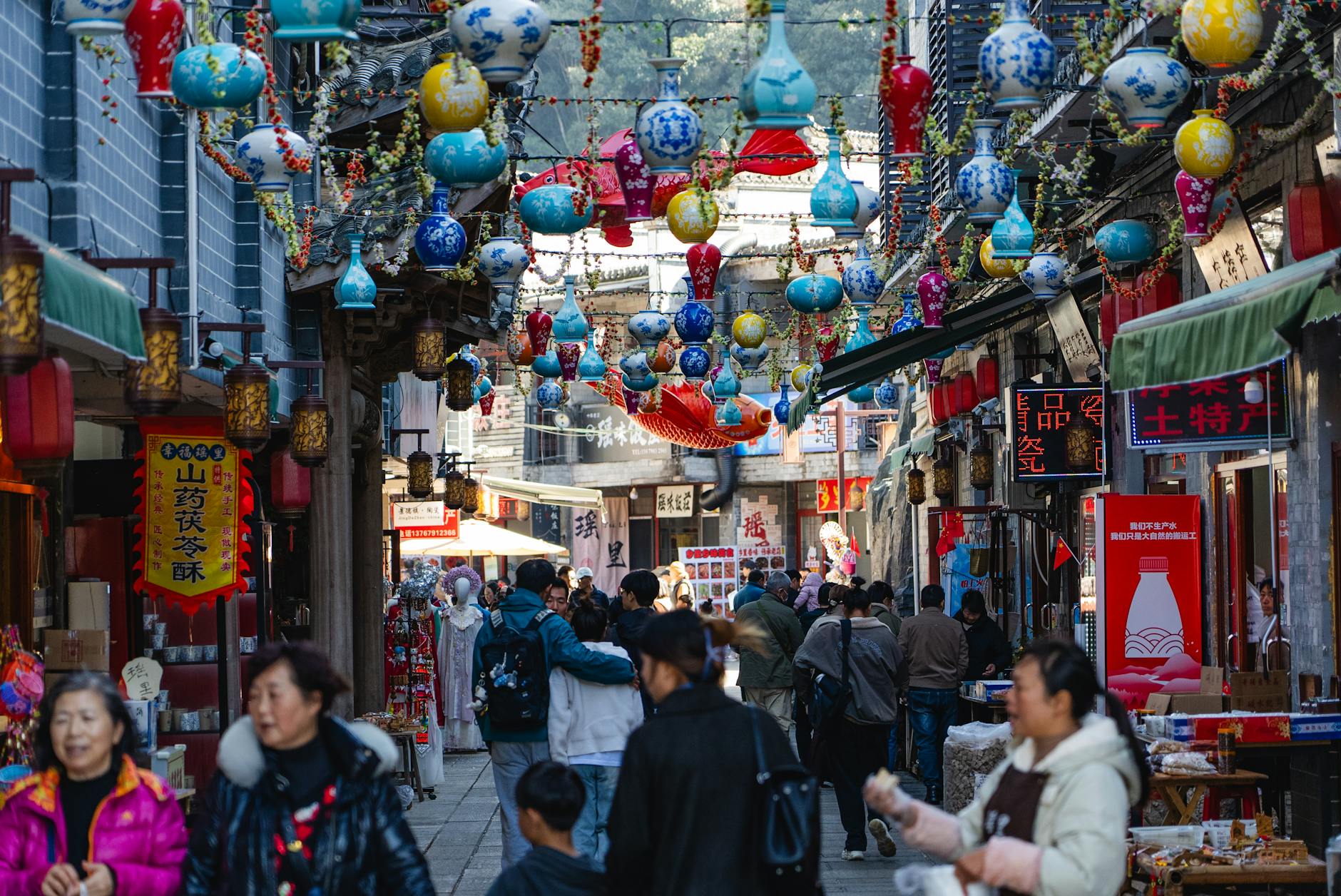
Responsible and Respectful Travel
Do
- Learn basic Mandarin courtesy phrases.
- Use legal accommodation and complete registration.
- Support local restaurants and craftspeople directly.
- Respect religious sites and minority communities.
- Follow scenic-area rules: stay on paths, do not litter, avoid dangerous photo behavior.
- Use trains and transit where practical.
- Avoid peak crowd pressure by visiting early or off-season.
- Be careful with geotagging fragile or small communities.
- Ask before photographing people.
- Carry your trash until you find a bin.
Do Not
- Treat political or religious sensitivity as a joke.
- Photograph checkpoints, police, military, border sites, or security infrastructure.
- Buy wildlife products or questionable antiques.
- Touch, climb, or deface heritage structures.
- Use drones without clear permission.
- Assume every temple, mosque, monastery, village, or minority region is a performance space.
- Overpack itineraries so that local life becomes invisible.
Local Logic
China's most famous places can handle huge numbers, but that does not mean visitors should behave carelessly. The best China travel is attentive: to rules, to crowd flow, to food rituals, to the difference between public spectacle and private life, and to the fact that “interesting to visitors” does not mean “available for visitors.”
Packing List
Essentials
- Passport with required validity and visa/visa-free documentation.
- Printed and digital copies of itinerary, hotels, onward tickets, and insurance.
- Payment apps set up before arrival, plus backup cards and RMB cash.
- Phone with roaming/eSIM/local SIM plan.
- Translation app with offline Chinese downloaded.
- Offline map backups and hotel addresses in Chinese.
- Portable battery pack.
- Universal adapter.
- Comfortable walking shoes.
- Medication in original packaging with prescriptions.
- Small packet of tissues and hand sanitizer.
- Reusable water bottle if you can refill with safe water.
- Weather-appropriate layers.
- Mask for air quality, crowds, or personal health preference.
Seasonal Additions
| Season/region | Pack |
|---|---|
| Northern winter | Heavy coat, thermal layers, gloves, hat, scarf, warm socks, serious footwear. |
| Summer cities/south | Breathable clothing, sun hat, sunscreen, umbrella, electrolyte packets, extra shirts. |
| Yunnan/highlands | Layers, sun protection, light jacket, altitude-aware medication if prescribed. |
| Tibet/Qinghai/western Sichuan | Warm layers, sun protection, sunglasses, altitude plan, lip balm, conservative clothing for monasteries. |
| Rainy/typhoon season coast | Compact umbrella, rain jacket, waterproof bag, flexible plans. |
| Scenic mountain regions | Grippy shoes, layers, rain protection, daypack, snacks. |
What Not to Pack
- Drones unless you understand and comply with all rules.
- Firearms, ammunition, or weapon-like items; penalties can be severe.
- Politically sensitive materials you do not need.
- Too many heavy bags for rail travel.
- Large quantities of medicine without documentation.
- Assumptions that you can buy every foreign brand easily in a small city.
What to Skip
Skip: A National Checklist Trip
Beijing, Shanghai, Xi'an, Chengdu, Guilin, Zhangjiajie, Lhasa, Kashgar, Hong Kong, and Yunnan are not a two-week plan.
Better alternative: Pick one first-timer route and one optional extension.
Skip: Visiting Only Megacities
Beijing and Shanghai are essential, but China is not just skyline and palace.
Better alternative: Add Xi'an, Suzhou/Hangzhou, Chengdu, Guilin/Yangshuo, or a regional town.
Skip: Treating Guilin, Zhangjiajie, Huangshan, and Jiuzhaigou as Interchangeable
They are all scenic, but they are in different regions with different logistics and weather.
Better alternative: Choose the landscape that fits your route.
Skip: Booking Every Meal From Viral Lists
China's everyday food culture is too rich for restaurant-chasing alone.
Better alternative: Book one or two special meals, then follow neighborhoods, breakfast stalls, local recommendations, and food walks.
Skip: Assuming Hong Kong/Macao/Taiwan Are Domestic Add-Ons
They can pair well with mainland routes, but border, currency, transport, and entry rules are separate.
Better alternative: Treat them as cross-border extensions and check visa-free/transit implications.
Skip: Tibet as a Casual Add-On
Tibet involves permits, organized travel, altitude, and access uncertainty.
Better alternative: Plan it as a dedicated trip or use Tibetan cultural areas elsewhere only with current advice and sensitivity.
Skip: Peak Domestic Holidays Unless You Mean It
Spring Festival, May Day, and National Day can be fascinating, but transport and attractions can become extremely crowded.
Better alternative: Stay in one city, book early, or travel just before/after.
Common Mistakes
- Not setting up payments before arrival. This is the top avoidable friction point.
- Depending on blocked or unreliable foreign apps. Prepare alternatives.
- Booking the wrong train station. Many cities have multiple stations.
- Underestimating security and boarding time. Trains and attractions involve checks.
- Forgetting passport requirements. Hotels, trains, and major tickets often require it.
- Not registering accommodation when outside hotels. This is a legal requirement.
- Trying to travel during Golden Week without early bookings. This is a self-inflicted problem.
- Adding too many distant regions. China is not small.
- Eating only near landmarks. Food quality improves when you leave tourist choke points.
- Treating all spicy food as Sichuan. Regional food varies enormously.
- Expecting English everywhere. Prepare translation tools.
- Ignoring altitude in Tibet/Qinghai/western Sichuan/Yunnan highlands. Altitude can derail a trip.
- Photographing sensitive sites. Do not do it.
- Using tourist visas for work, journalism, teaching, or research. Entry category matters.
- Skipping weather buffers. Rain, typhoons, fog, heat, snow, and air quality can affect plans.
- Assuming smaller hotels can host foreigners smoothly. Verify.
- Overlooking Chinese domestic tourism. Domestic travelers are the main crowd force at many sites.
- Relying on one bank card. Payment redundancy matters.
- Forgetting that cash change may be awkward. Mobile payment dominates small transactions.
- Treating China as either “easy” or “impossible.” It is neither. It is system-dependent.
FAQ
Is China worth visiting for a first trip to Asia?
Yes, if you prepare properly and choose a coherent route. China is not the easiest first Asian country for totally unplanned travel, but it is one of the richest for history, food, rail, cities, and landscapes.
How many days should I spend in China?
Ten to fourteen days is the best first-visit range. Seven days works for one corridor. Three weeks lets you combine two regions well.
What is the best first-time China route?
Beijing, Xi'an, and Shanghai, with Suzhou/Hangzhou or Chengdu added if time allows. This route gives a clear introduction without excessive complexity.
Do I need a visa for China?
It depends on your passport, purpose, itinerary, and travel dates. Some ordinary passport holders qualify for 30-day unilateral visa-free entry; some travelers can use 240-hour transit without visa; others need visas. Check official NIA/embassy guidance before booking.
Is the 240-hour transit-without-visa policy enough for a real trip?
It can be. Ten days is enough for Beijing + Xi'an, Shanghai + Yangtze Delta, Chengdu/Chongqing, or Guangzhou/Shenzhen if your routing qualifies. But the onward-country/region requirement and permitted areas matter.
Is China safe?
Day-to-day street safety is often good in major visitor areas, but travelers should take legal, political, digital, traffic, weather, and health issues seriously. Foreign-government advisories warn about arbitrary enforcement and exit bans.
Can I travel China without speaking Chinese?
Yes, especially on classic routes, but not casually. Use translation apps, Chinese hotel addresses, prepared payment tools, and simple itineraries. English is uneven outside international settings.
Can I use credit cards in China?
Sometimes, especially in hotels, malls, and upscale restaurants, but daily life often runs through mobile payment. Set up Alipay and/or WeChat Pay and carry backup cash/cards.
Can I use Google, WhatsApp, Instagram, or Gmail in China?
Do not assume they will work normally. Many foreign websites and services may be blocked or unreliable in mainland China. Prepare legal connectivity and alternatives before arrival.
Should I use trains or flights?
Use high-speed rail for strong corridors and flights for long-distance jumps. Train stations can be huge, but rail is often the best China travel experience.
Is Tibet possible?
Yes for many travelers, but not as normal independent travel. It requires permits, organized arrangements, altitude planning, and current access checks.
Is China good with kids?
Yes, if paced well. Pandas, trains, city walls, parks, dumplings, river landscapes, and museums can work beautifully. Avoid excessive transfers and holiday crowds.
What should I book ahead?
Hotels during holidays, major train tickets, Forbidden City/Palace Museum, high-demand attractions, domestic flights for long jumps, pandas/food tours/guides, Huangshan/Zhangjiajie scenic lodging, and Tibet arrangements.
What is the biggest mistake first-timers make?
They plan China like a list of attractions instead of a system. Choose the route, set up the apps, respect distances, and leave space for food and daily life.
Source Notes
This sample uses official or high-reliability sources for date-sensitive logistics. A China guide should re-check every rule, fare, ticketing procedure, and advisory immediately before publication.
- 1. National Immigration Administration, “List of Countries Covered by Unilateral Visa Exemption,” compiled according to MFA information as of February 17, 2026. https://en.nia.gov.cn/n147418/n147463/c183390/content.html
- 2. National Immigration Administration, “Visa-Free Transit Policies,” July 4, 2025. https://en.nia.gov.cn/n147418/n147463/c183412/content.html
- 3. National Immigration Administration, “Announcement on Implementing 10 New Measures to Support the Expansion of Opening-up and Serve High-quality Development,” November 3, 2025. https://en.nia.gov.cn/n147413/c187308/content.html
- 4. State Council of the People's Republic of China, “Payment service guide for overseas visitors to China,” April 11, 2024. https://english.www.gov.cn/news/202404/11/content_WS6617c858c6d0868f4e8e5f4d.html
- 5. China Railway 12306 English website. https://www.12306.cn/en/
- 6. China Railway 12306 FAQ, ticketing and foreign passport information. https://www.12306.cn/en/faq.html
- 7. Travel China / Nihao China, official tourism website of the People's Republic of China, Ministry of Culture and Tourism. https://www.travelchina.org.cn/en
- 8. UNESCO World Heritage Centre, China state party listing. https://whc.unesco.org/en/statesparties/cn
- 9. U.S. Department of State, China Travel Advisory and country information page. https://travel.state.gov/en/international-travel/travel-advisories/china.html
- 10. Government of Canada, Travel advice and advisories for China, including internet censorship and cyber security. https://travel.gc.ca/destinations/china
- 11. UK Foreign, Commonwealth & Development Office, China safety and security guidance, including cybersecurity/VPN note. https://www.gov.uk/foreign-travel-advice/china/safety-and-security
- 12. UK Foreign, Commonwealth & Development Office, China regional risks guidance, Tibet and TAR travel permits. https://www.gov.uk/foreign-travel-advice/china/regional-risks
- 13. UK Foreign, Commonwealth & Development Office, China travel advice, typhoon season. https://www.gov.uk/foreign-travel-advice/china
- 14. CDC Travelers' Health, China traveler view. https://wwwnc.cdc.gov/travel/destinations/traveler/none/china
- 15. National Immigration Administration, “Regulations on Filing Accommodation Registration by Foreigners Who Reside or Stay in Domiciles Other Than Hotels.” https://en.nia.gov.cn/n147423/n147478/n147715/c158241/content.html
- 16. State Council / NIA policy interpretation, online accommodation registration pilot for foreigners staying in non-hotel dwellings, March 21, 2026. https://english.www.gov.cn/services/visitchina/202603/21/content_WS69ce124cc6d00ca5f9a0a368.html
- 17. State Council of the People's Republic of China, “China's public holidays for 2026,” November 4, 2025. https://english.www.gov.cn/policies/featured/202511/04/content_WS6909c915c6d00ca5f9a074f7.html
- 18. The Palace Museum, official visitor/ticketing information. https://intl.dpm.org.cn/index.html?l=en
- 19. Emperor Qinshihuang's Mausoleum Site Museum, official ticketing guidance. https://www.bmy.com.cn/jingtai/bmyweb/ticketing.html
- 20. Mutianyu Great Wall official website, hours and ticketing. https://en.mutianyugreatwall.com/