Victoria is one of the easiest cities in North America to make too delicate.
Start Here
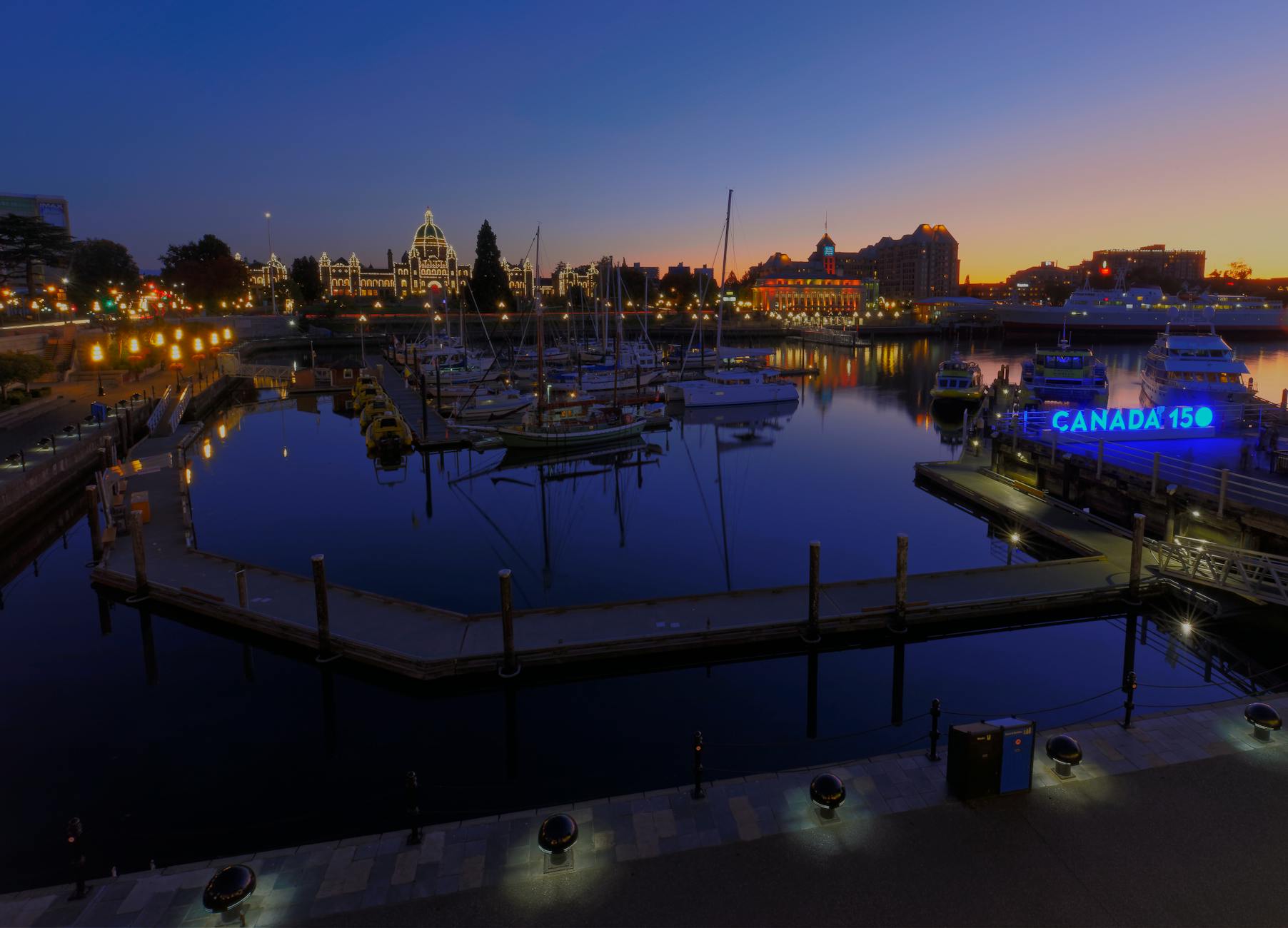
That happens because the city presents itself so attractively. The Inner Harbour is handsome almost to the point of self-parody. The Parliament Buildings and the Empress establish a postcard frame so quickly that visitors start imagining the whole city as a kind of finished image. Then come the familiar labels: gardens, tea, harbor, flowers, floatplanes, old-world charm, island pace. None of these are wrong. The problem is that taken together they can flatten Victoria into a soft-focus heritage resort with unusually good landscaping.
The real city is better than that. Victoria is not dramatic in a big-city sense, and it is not trying to be. Its strength is composure. It is a provincial capital with a harbor front, a city small enough to feel nearly residential in places but layered enough to support a real stay. It has English-colonial visual residue, Pacific weather, strong Indigenous territorial reality, government energy, local neighborhood texture, and a marine setting that keeps movement and light central to the experience. It rewards travelers who know how to use elegance without letting elegance become passivity.
That is why Victoria works best when it is not treated as a decorative stop. The weak trip does the harbour, maybe afternoon tea, maybe Butchart, maybe one scenic meal, and leaves with the sense that the city was pleasant but slightly insubstantial. The stronger trip understands that Victoria needs a little more shape than that. The harbor matters, but so do James Bay, Old Town, the Legislature, the Royal BC Museum, the ferry and floatplane atmosphere, a good waterfront walk, one or two neighborhood extensions, and enough time for the city’s island rhythm to become persuasive rather than merely cute.
Scale is deceptive here. Victoria is compact, which tempts people into vague planning. Yet the city’s quality depends heavily on sequencing. The wrong hotel can make the whole place feel too far from the water or too generic. The wrong day structure can leave Victoria looking like a place of pretty surfaces and expensive pause buttons. The right structure makes it feel like a complete urban retreat: civilized, marine, walkable, historically layered, and very good at reducing internal noise.
The other mistake is treating Victoria as if it were only old-fashioned. It absolutely trades on gentility, gardens, and harbor polish, but there is more going on underneath. This is an island capital with a functioning harbor, public institutions, ferry and floatplane movement, a museum of real depth, active local neighborhoods, and a food scene that gets more convincing the moment you stop judging it by pastry-shop stereotypes. Victoria is not only about prettiness. It is about refinement with enough structure behind it to hold.
The city in one sentence: Victoria is a harbor-facing provincial capital whose best first trip comes from combining Inner Harbour beauty, institutional depth, island tempo, and neighborhood texture instead of settling for a floral version of urban tourism.
Basic data
| Population | About 92,000 in the city; metro about 400,000 |
|---|---|
| Area | 19 km2 |
| Major religions | Christian heritage, Buddhism, Sikhism, and a large secular population |
| Political system | Mayor-council city government inside a federal parliamentary constitutional monarchy |
| Economic system | Advanced mixed economy led by government, tourism, education, services, and technology |
Quick Verdict
Best for: couples, solo travelers, first-time Vancouver Island trips, museum travelers, slower luxury weekends, harbor lovers, garden devotees, and anyone who likes small cities with real civic poise.
Not ideal for: travelers who need giant-city energy, extreme nightlife, or a destination whose pleasures are mostly accidental rather than carefully composed.
Ideal first visit: 2 to 3 full days.
Minimum worthwhile stay: 2 full days.
Best overall months: May, June, September, and early October.
Best winter case: a softer, slower city break centered on hotels, museum time, waterfront walks between showers, and the visual pleasure of a Pacific capital under grey light.
Biggest planning mistake: letting the harbor postcard become the whole trip.
One thing to prioritize: the base. Staying close enough to the Inner Harbour to walk it repeatedly changes everything.
One thing to leave flexible: your scenic or garden-heavy half-day, because weather and crowding can change the emotional return dramatically.
The blunt version: Victoria is more substantial than it looks, but only if you stop treating prettiness as its main argument.
Who Will Love Victoria?
Victoria is strongest for travelers who enjoy cities that calm the system without becoming boring. There are places that relax you because they are empty, and places that excite you because they are overfilled. Victoria does something narrower and more valuable: it offers enough civic life, beauty, and movement to hold your attention, but not so much that the trip becomes noisy.
Couples tend to do very well here because the city supports one of the cleanest weekend patterns in Canada: good central hotel, harbor walks at multiple times of day, one substantial museum or government-history stop, one garden or neighborhood extension, one good meal, and enough unscripted waterfront time to let the city work on you. Victoria can be romantic, but its romance comes from calm confidence rather than theatrical spectacle.
Solo travelers also do well. The city is walkable, visually rewarding, and easy to inhabit without requiring constant company or booking-heavy strategy. You can spend a morning moving between Wharf Street, the harbor, and the museum; an afternoon at the Legislature or in James Bay; and an evening by the water, and none of it feels thin or awkward alone.
It also suits travelers who like institutions. The Royal BC Museum and the Legislature are not secondary supports here. They are part of what keeps Victoria from becoming only a harbor image. A visitor who wants a small city with actual public seriousness will find that here.
The city is less ideal for travelers who insist on either relentless novelty or budget looseness. Victoria can be expensive in the polished parts, and it does not throw attractions at you in nonstop sequence. It asks you to appreciate steadiness, proportion, and recurring beauty.
Victoria at a Glance
| Question | Practical Answer |
|---|---|
| Main airport | Victoria International Airport (YYJ) |
| Main local transport system | BC Transit |
| Simple airport transit logic | Airport bus to McTavish connections, then onward to downtown |
| Best first-time base | Inner Harbour / downtown Victoria / James Bay edge |
| Signature civic anchor | The Legislature and the harbour front together |
| Signature museum | Royal BC Museum |
| Signature classic excursion | Butchart Gardens |
| Signature harbor movement | Inner Harbour walking plus harbor ferry or water taxi perspective |
| Best slower extension | Fisherman’s Wharf or James Bay |
| Car needed? | No, not for a normal first stay |
| Emergency number | 911 |
| Tap water | Safe to drink |
| Currency | Canadian dollar |
| Power plugs | Type A and B |
2026 Visitor Notes
YYJ Is Connected Well Enough That You Should At Least Consider Transit
YYJ’s official ground transportation page notes BC Transit service to and from the airport via the McTavish Transit Exchange, with onward connections to Swartz Bay, the Saanich Peninsula, and downtown Victoria.[1][2] For a central stay, this is not always the fastest possible arrival, but it is legitimate and often good enough.
Victoria Transit Is Simple Once You Understand The Fare Pattern
BC Transit’s Victoria fare pages make clear that the regional DayPASS and contactless/Umo logic are straightforward, with the day pass automatically applied after a second digital payment in many cases.[3][4][5] That means most visitors can keep transit simple and avoid fare-system anxiety.
The Inner Harbour Is Beautiful, But It Is Also A Working Arrival Space
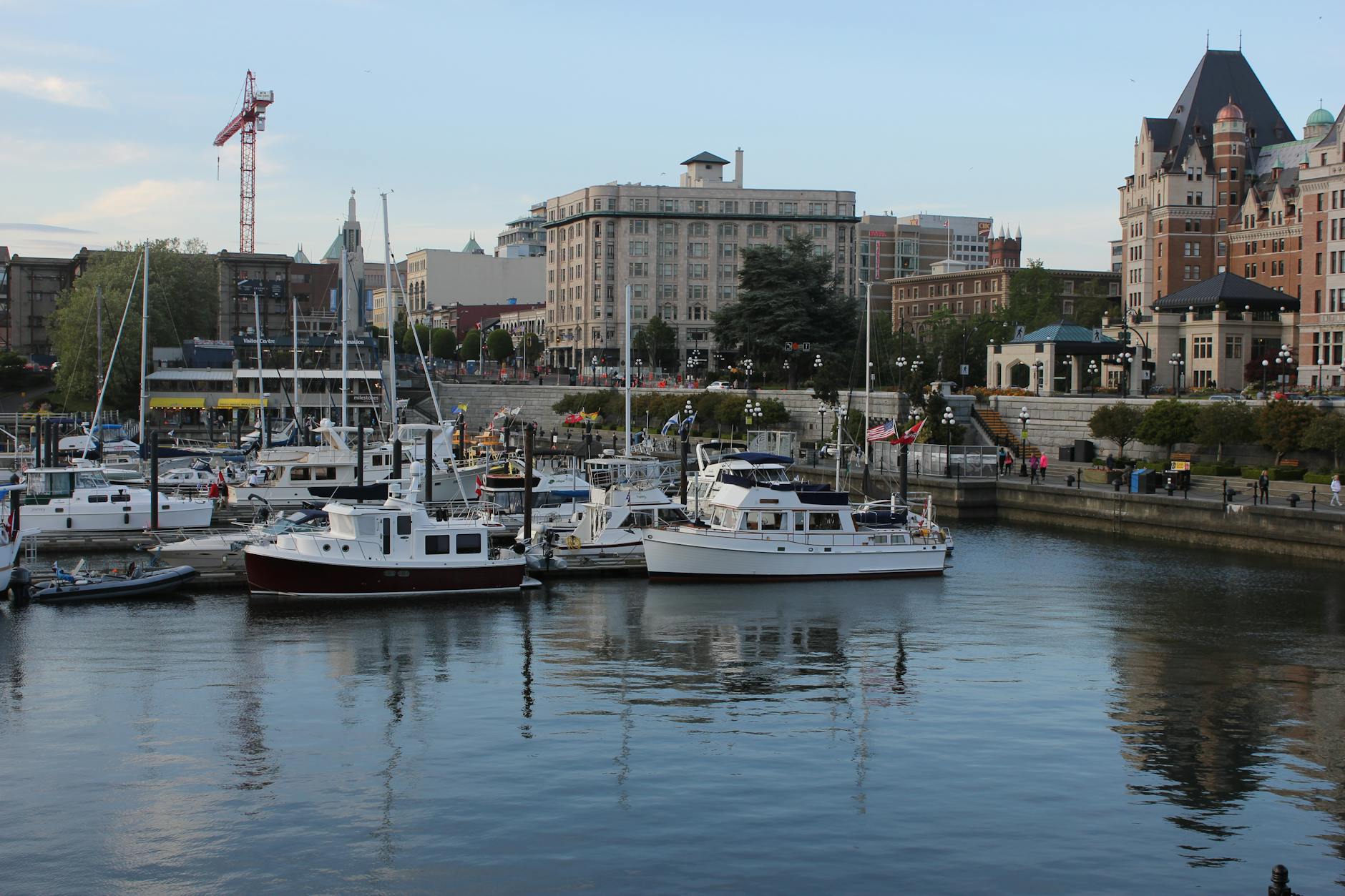
Destination Greater Victoria describes the Inner Harbour not just as pretty but as a live harbor space tied to floatplanes, ferries, tours, and the historic urban core.[6] That is the right way to read it: as infrastructure and identity at once.
The Legislature Is A Real Visit, Not Just A Facade
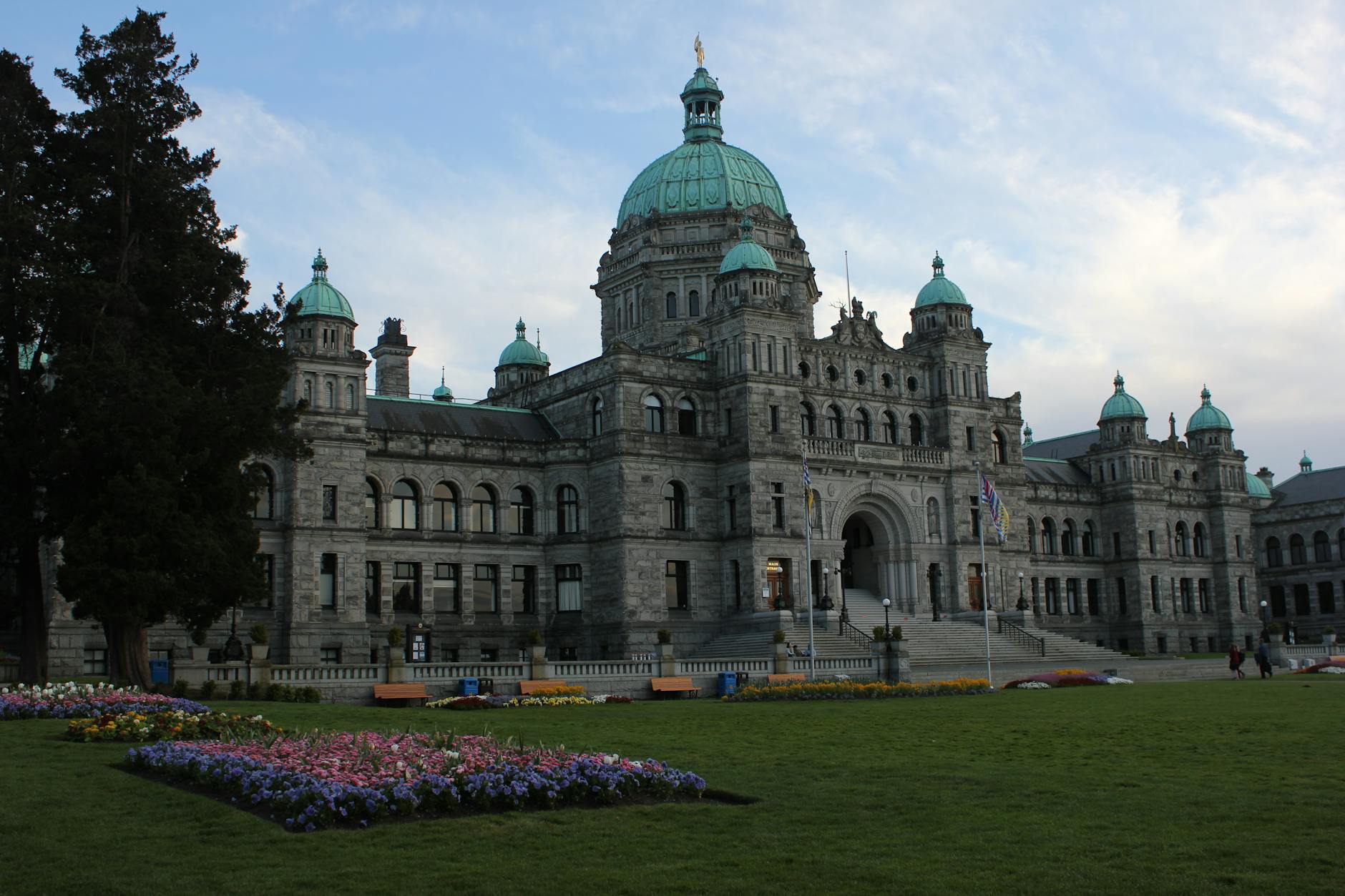
The Legislative Assembly of British Columbia welcomes visitors for free guided or self-guided tours during weekday operating hours.[7] This matters because too many visitors admire the building from outside and never let it deepen the city.
The Royal BC Museum Is One Of Victoria’s Strongest Arguments
The Royal BC Museum remains one of the city’s clearest reasons to give Victoria genuine time, with regular hours and enough interpretive depth to keep the destination from becoming only a harbor-and-gardens stay.[8][9]
Butchart Still Requires Real Planning
The Butchart Gardens’ official site is explicit about hours, rates, and seasonal programming, and the garden remains one of the area’s defining draws.[10] The right move is to decide whether it deserves a whole excursion rhythm rather than pretending it is a trivial add-on.
Harbor Ferries Are More Than Novelty
Victoria Harbour Ferry has been connecting waterfront points for decades and still offers one of the best ways to feel the city from the water instead of only looking at it.[11][12] In a city this harbor-defined, that matters.
Fisherman’s Wharf Is Best Used Lightly
Tourism Victoria’s own description of Fisherman’s Wharf captures what it is: a working harbor-adjacent marine destination with shops, food kiosks, and activity.[13] It can be fun, but it should support the trip rather than dominate it.
How to Understand Victoria
Victoria works through five forces.
The first is the harbor. Water, floatplanes, ferries, and harbor-facing architecture shape the city’s public face more than any single landmark.
The second is capital-city composure. Government, museums, ceremonial buildings, and public order give Victoria more seriousness than its floral branding implies.
The third is island rhythm. Victoria moves differently from larger mainland cities. It is slower, more marine, and more willing to let atmosphere do some of the work.
The fourth is managed elegance. Gardens, hotels, heritage facades, and waterfront polish are part of the appeal, but they are strongest when balanced by actual city life.
The fifth is neighborhood intimacy. James Bay, Old Town, and nearby districts keep Victoria from dissolving into a tourist postcard.
The Five Victorias A First-Time Visitor Actually Meets
Harbour Victoria: the Inner Harbour, floatplanes, causeway walks, water taxis, and the city at its most iconic.
Capital Victoria: Legislature, museum, formal public spaces, and the version of the city that feels most institutional.
Garden Victoria: Butchart, seasonal planting, hotel gardens, and the gentler image the city sells most aggressively.
Neighborhood Victoria: James Bay, Old Town, quieter side streets, and the part of the city that feels most genuinely lived.
Island Victoria: marine air, ferry logic, harbor ferries, Fisherman’s Wharf, and the broader feeling that the city belongs to an island network rather than to a generic urban mainland.
The Main Mental Shift
Do not ask, “What are the top things to do in Victoria?” Ask, “Which Victoria am I using today?” Harbor Victoria, capital Victoria, garden Victoria, neighborhood Victoria, island Victoria. That question produces much better routes.
What Victoria Does Better Than People Think
Victoria is better than people think at short-stay completeness. A lot of smaller scenic cities are wonderful for three hours and then start to repeat themselves. Victoria can hold two or three days very well if you include the museum, the Legislature, one harbor-water perspective, and one extension beyond the obvious center.
It is also better than people think at calm luxury. The city understands how to make hotel life, waterfront walking, and structured leisure feel worth your time rather than like filler between attractions.
Another underrated strength is public atmosphere. The harbor, legislature precinct, and waterfront causeways create a civic stage that feels elegant without being overprogrammed.
The city is also good at weather-softened travel. Mist, cloud, and showers do not ruin Victoria in the way travelers sometimes assume. They often intensify its harbor and garden character instead.
Finally, Victoria is better than people think at being more than flowers and tea. The museum, the harbor infrastructure, and the neighborhood fabric give it real depth if you bother to use them.
Best Time to Visit Victoria
Victoria is highly usable year-round, but not emotionally identical in every season.
Best Overall Months
May, June, September, and early October are the broadest recommendations. These months tend to give a strong combination of flowers, harbor use, and walkable ease without maximum summer crowding.
Summer
Summer is the easiest first Victoria. Long days, clear harbor light, garden strength, and strong ferry-and-water activity all help. The tradeoff is obvious: more visitors and more pressure on the most photogenic parts of the city.
Shoulder Season
Shoulder season is often the smartest choice because Victoria becomes more elegant when it feels slightly less handled. The city’s natural composure shows better then.
Winter
Winter Victoria suits travelers who understand that a Pacific capital can be beautiful in grey light. Harbor walks, hotel time, the museum, and the Legislature all rise in value. The city becomes more interior but not necessarily less appealing.
Spring
Spring is excellent for garden-minded visitors and anyone who likes the city still slightly in emergence rather than at full tourist sheen.
Month-by-Month Guidance
January: calm, grey, atmospheric, and hotel-led. February: similar, though often slightly brighter in mood. March: transitional and appealing if you do not need perfect weather. April: increasingly strong and garden-friendly. May: one of the best months to go. June: excellent overall. July: peak easy-Victoria season. August: still very strong, sometimes a little overhandled in the obvious zones. September: one of the smartest choices. October: elegant early, softer and wetter later. November: subdued and very Pacific. December: festive in the harbor core and good for slower urban travel.
How Many Days You Need
One Day
Enough for the harbor, one institution, and one meal. Not enough to understand the city properly.
Two Days
The minimum respectable first visit. One day should be harbor-and-capital based; the second should include either Butchart or a deeper neighborhood-and-water structure.
Three Days
Ideal for most first-timers. This gives Victoria enough room for one slower day and at least one extension beyond the postcard core.
Four Days
Excellent if you want Victoria to be the point rather than just a neat island-capital sample.
Where to Stay in Victoria
Where you stay matters because Victoria’s pleasures depend on repetition. You want to be able to revisit the harbor easily, not consume it once.
Fast Answer
For most first-time visitors, stay in Inner Harbour / downtown Victoria / James Bay edge. These areas let you walk the harbour repeatedly and keep the city’s central grace intact.
Neighborhood Decision Table
| Traveler Type | Best Area |
|---|---|
| First-time visitor | Inner Harbour or downtown core |
| Couple weekend | Harbour-facing central stay or James Bay edge |
| Museum-and-civic trip | Downtown near Belleville / museum precinct |
| Slower repeat visit | James Bay or downtown-adjacent neighborhood base |
| Car-light trip | Central downtown with easy walking reach |
Inner Harbour / Downtown Core
Best for: first-timers, short stays, and elegant harbor repetition. Why it works: the harbor, museum, legislature, and central dining all connect naturally. Tradeoff: some blocks feel more visitor-oriented than lived-in. Best use: the smartest default base.
James Bay Edge
Best for: travelers who want a quieter residential feel without losing core access. Why it works: you stay close to the harbor but gain softness and neighborhood calm. Tradeoff: slightly less immediate access to every central restaurant choice. Best use: couples and slower stays.
Wider Downtown
Best for: practical hotel choice, transit ease, and a more ordinary urban read. Why it works: it keeps the stay functional and central. Tradeoff: not every block carries Victoria’s prettiest harbor mood. Best use: efficient first visits.
Area Profiles
Inner Harbour: best for beauty, repetition, and first orientation. Downtown core: best for practicality and central city movement. James Bay: best for calm and residential grace. Old Town / Wharf side: best for atmospheric wandering and some of the city’s older grain. Fisherman’s Wharf area: best as an excursion layer, not the whole base.
Neighborhood Guide: Where to Explore, Not Just Sleep
The Inner Harbour is the city’s center of gravity and deserves to be walked more than once, in different light and at different tempos.[6] It is not a one-pass attraction.
The Legislature matters because it gives Victoria a public seriousness that the tourist version of the city often understates. Free tours are a gift here, and visitors should use them.[7]
The Royal BC Museum is one of the city’s strongest depth engines. If Victoria risks seeming too polished or too tranquil, the museum corrects that immediately.[8][9]
James Bay is useful because it softens the tourist face of the city without becoming bland. It is one of the clearest places to feel Victoria as a place people actually inhabit.
Old Town and the Wharf Street side of the center provide some of the rougher grain the harbor postcard can obscure. They help the city feel older, less manicured, and more materially urban.
Fisherman’s Wharf is worth seeing lightly, especially when paired with a harbor ferry or water-taxi move, but it should not absorb too much of a short first visit.[13][11]
The Best Things to Do in Victoria
- Walk the Inner Harbour repeatedly instead of only once.[6]
- Visit the Royal BC Museum and give it enough time to change the city’s depth.[8][9]
- Tour or self-tour the Legislature if weekday timing allows.[7]
- Use a harbor ferry or water taxi to feel Victoria from the water.[11][12]
- Decide consciously whether Butchart deserves a substantial excursion slot in your trip.[10]
- Spend at least some time in James Bay or another nearby neighborhood.
- Use Fisherman’s Wharf as a supporting note rather than a main argument.[13]
Itineraries
If You Have Two Days
Use day one for the Inner Harbour, Legislature, museum, and a proper harbor dinner or evening walk. Use day two for either Butchart Gardens or a more local structure built around James Bay, harbor ferry movement, and a slower neighborhood rhythm.
If You Have Three Days
This is the best first-time pattern. Keep the two-day structure, then add a third day for one more extension: Butchart if you skipped it, or a deeper city day that gives Old Town, Fisherman’s Wharf, and a longer waterfront route proper time.
If You Have Four Days
Use the extra day to slow down rather than to overstuff. Victoria’s real luxury is not attraction count. It is the ability to let beauty recur without rushing past it.
Itineraries By Traveler Type
For Couples
Stay near the harbor, use one good museum or civic anchor, take the harbor ferry if the weather is decent, and let the evenings do a lot of work. Victoria becomes more persuasive after daytime pressure drops.
For Solo Travelers
Rely on walking, use transit sparingly but confidently, and give yourself at least one unstructured waterfront stretch. The city suits solitary travel extremely well.
For Garden-First Travelers
Butchart deserves a real half-day or more, not a squeezed add-on. Pair it with an otherwise lighter city day.
For Institution-First Travelers
The Legislature and Royal BC Museum are the backbone. Let the harbor and James Bay provide atmosphere around them.
Food and Drink
Victoria’s food story is often overshadowed by its tea-image branding, which is unfair. Yes, the city can deliver the polished, heritage-hotel, harbor-facing version of itself. But it also works very well as a place of seafood, Pacific produce, bakeries, cafés, and quieter neighborhood meals. The key is not to let the most photogenic option become the only option.
A good Victoria food strategy usually includes one scenic harbor-adjacent meal and one more grounded city meal. That balance keeps the trip from turning into pure ambiance consumption. Like much else here, the city is strongest when elegance is supported by substance.
Getting Around
Victoria is fundamentally a walking city for first-time visitors staying centrally. Transit is useful for longer moves and airport or suburban connections, and BC Transit’s fare logic is easy enough once you know the basics.[3][4][5]
The more interesting transport layer, though, is water. Even a short harbor-ferry move can improve your understanding of the city because Victoria’s relationship to water is not decorative. It is structural.[11]
What To Skip
Skip assuming afternoon tea explains Victoria. Skip treating Butchart as automatic if your trip is short and city-centered. Skip doing the harbor once and moving on forever. Skip letting the city’s prettiness convince you it has nothing else underneath it.
Common Mistakes
- Staying too far from the harbor to feel the city repeat properly.
- Giving all your time to the postcard core and none to institutions or neighborhoods.
- Treating Butchart as compulsory even when the central city still has not made its case.
- Underestimating the Legislature and the museum.
- Letting elegance turn into passivity.
My Blunt Advice
Use Victoria as a real small capital, not a floral intermission. Stay central. Walk the harbor more than once. Visit the museum. See the Legislature from inside if you can. Decide carefully how much of the trip should belong to Butchart. Take one water-based perspective seriously. Let the city be calm without becoming shallow.
If you do that, Victoria stops feeling merely lovely and starts feeling complete.
Where Victoria Fits in a Canada Trip
Victoria fills a very useful role in a Canadian itinerary, though it is often misunderstood as either a quaint island side note or a polished harbor stop best consumed in one afternoon. In reality, it works best as a small-capital city where calm, public institutions, gardens, marine movement, and hotel comfort create a highly shaped short stay.
For many travelers, Victoria is strongest in one of three roles.
The first is as a Vancouver Island anchor. If you are coming to the island at all, Victoria often provides the most graceful arrival point: manageable, walkable, harbor-defined, and civilized enough to settle the rhythm of the whole trip before you move elsewhere.
The second is as a counterweight to Vancouver. After Vancouver's broader metropolitan scale, Victoria can feel more intimate, more ornamental, and more legible. The contrast between the two cities is useful. Vancouver gives urban breadth. Victoria gives composed small-capital focus.
The third is as a stand-alone long weekend. This is where Victoria may be at its best. Two or three full days give enough time for harbor repetition, one or two institutional anchors, a garden or water extension, and the slow accumulation of a city whose pleasures work best through recurrence rather than volume.
Victoria is slightly weaker only if your trip needs high-intensity urban stimulus. That is not what the city is for. It is for travelers who like refinement, managed beauty, and a capital scaled small enough that mood still matters.
Victoria Versus Vancouver, Seattle, and Quebec City
Victoria becomes easier to appreciate once it is compared correctly.
Against Vancouver, Victoria is smaller, gentler, and less multiple. Vancouver offers several strong urban registers at once: downtown, seawall, neighborhoods, mountains, markets, modern Pacific city life. Victoria is more singular. Its power lies not in breadth but in concentration of harbor-facing calm, institutions, and a provincial-capital composure that Vancouver does not really try to provide.
Against Seattle, Victoria is less rough-edged, less dense in mood, and much more explicitly shaped around presentation. Seattle can feel more layered, more topographically intense, and more musically or culturally charged in a restless way. Victoria feels more curated and more polished, though not necessarily shallower. It simply distributes its value differently.
Against Quebec City, Victoria is less fortified, less overtly old-world, and less dramatic as a historic set piece. Quebec often announces itself through concentrated heritage force. Victoria works through elegance, marine light, gardens, and institutional balance. It is a smaller-voiced city, but not a negligible one.
The right question is not which city is "better." It is what kind of Canadian urban experience you want. If you want a maritime small capital where repetition, hotel quality, harbor life, and civic polish matter more than spectacle, Victoria is a very strong answer.
First-Time Visitors Versus Repeat Visitors
Victoria is immediately likable on a first trip and often more convincing on a second one.
First-time visitors naturally begin with the postcard core: the Inner Harbour, the Legislature, the museum, perhaps Butchart, perhaps afternoon tea, perhaps Fisherman's Wharf. That is not wrong. Those are genuine pillars of the destination.
What first-timers often miss is how much the city improves when the harbor is not treated as a single event but as a repeating presence. The same applies to neighborhoods. James Bay, Old Town, and the quieter edges of downtown rarely dominate first itineraries, yet they often determine whether Victoria feels complete or merely lovely.
Repeat visitors typically know this. They use the harbor at different times of day, choose a stronger hotel, reduce their dependence on symbolic excursions, and allow the city to operate more as a lived place than a sequence of scenic proofs. That makes Victoria feel deeper, because its depth was never loud to begin with.
For first-timers, the right question is: what is the clearest way to meet the city's main arguments? For return visitors, the better question becomes: which Victoria do I want this time? Garden Victoria, museum Victoria, James Bay Victoria, hotel-and-harbor Victoria, rain-softened Victoria. The second visit often works better because the city no longer needs to prove its prettiness. It can simply start being itself.
Summer Victoria Versus Shoulder-Season and Winter Victoria
Victoria is unusually usable across the year, but the city does not feel the same in every season.
Shoulder-season Victoria is often the smartest first-time choice. In May, June, September, and early October, the city keeps most of its floral and waterfront appeal while feeling slightly calmer and more elegant than at absolute peak summer. Harbor repetition gets easier. Hotels sometimes feel less processed. The city has room to breathe.
Summer Victoria is beautiful and obvious. The light is long, harbor activity is strong, gardens are a clear draw, and the city becomes exceptionally easy to use. The risk is that its most photogenic version can also become its most overhandled one. Travelers who only use the most famous spaces at the busiest hours may come away with a thinner impression than the city deserves.
Winter Victoria is a different product and often a very good one. This is when the harbor goes grey, hotels matter more, the museum deepens in importance, and the city becomes less about floral polish and more about Pacific atmosphere. If you like calm, rain-softened urban breaks, Victoria can be excellent in winter.
The main seasonal mistake is to assume the city is only a sunshine-and-gardens destination. It is not. Those are one version of it. Victoria also does very well as a moody, institutional, harbor-facing city where weather becomes part of the elegance rather than a problem to defeat.
Why the Base Matters More Than It First Seems
Victoria is small enough that some visitors think hotel choice barely matters. It matters a great deal.
This is because the city's best experiences depend on repetition and easy return. If you stay too far from the harbor, the thing that should rhythmically anchor the trip becomes an errand. If you stay in a blandly functional zone, the city can start feeling more ordinary than it actually is. If you stay in the right place, Victoria becomes a city you keep re-encountering rather than merely passing through.
That is why Inner Harbour, downtown core, and the James Bay edge are such strong first-time answers. They keep the city central to itself. You can walk the harbor multiple times, return easily, and let mood rather than logistics decide part of the day. James Bay adds softness. The downtown core adds pure convenience. Inner Harbour adds image and recurrence.
The wrong test is "is it technically central?" The right test is: will this hotel make it easy to use Victoria's strongest recurring spaces at multiple times of day? If yes, the base is probably right.
Why One Proper Victoria Day Matters
Victoria is often reduced by fragmentation. Travelers arrive from Vancouver or Seattle, walk the harbor, take tea, maybe see one institution, and leave with the sense that the city was undeniably attractive but somehow slight. What they usually lacked was one proper day in which Victoria itself, rather than one activity, held the center.
One proper Victoria day changes that. By "proper," I mean a day where harbor, institution, neighborhood, and evening all belong to the same urban rhythm. You begin with the harbor before it fills. You let the museum or Legislature deepen the city. You allow James Bay, Old Town, or a water-based move to widen it. You finish with an evening where the harbor returns in another light.
This kind of continuity is what turns Victoria from a postcard into a city. The destination is not at its best as isolated scenic moments. It is best when the same refined atmosphere repeats through different parts of the day and starts feeling structural rather than cosmetic.
If you only have one full day, make it coherent. If you have two or three, make sure at least one day belongs more to Victoria as a city than to one famous excursion.
Day Victoria Versus Evening Victoria
Victoria changes meaningfully between day and evening, though more quietly than larger cities do.
Day Victoria is explanatory. This is when the harbor's working life reads clearly, when the Legislature and museum make the city's seriousness visible, and when gardens, ferries, and neighborhood walks feel like parts of one coherent provincial-capital system.
Evening Victoria is persuasive. That is when the harbor becomes reflective instead of merely scenic, hotel bars and dinners rise in value, and the city starts feeling less like a destination of managed prettiness and more like a place that knows how to be calm. Victoria does not need nightlife pressure to justify itself. It needs one evening where its quiet competence gets to work.
This matters because weak itineraries spend the day checking off pretty things and then treat the evening as a simple descent into rest. But Victoria often improves after the daytime proving is over. The city becomes more emotionally legible once there is nothing left to "do" except be there.
Why Butchart Should Not Own the Whole Trip
Butchart Gardens is a legitimate attraction and, for some travelers, an essential reason to come. It should absolutely own one chapter of the stay if that chapter matters to you. It should not define your entire understanding of Victoria.
Because the gardens are so famous and so easy to market, visitors sometimes let them stand in for the whole destination. They visit Butchart, walk the harbor, and assume Victoria has been adequately understood. What they have really met is one strong excursion plus the postcard core.
The city itself still needs the museum, the Legislature, the harbor as infrastructure, and at least one neighborhood or water perspective if it is going to feel complete. Otherwise Victoria risks becoming a decorative extension of the gardens instead of what it actually is: a marine provincial capital with its own civic identity.
The best use of Butchart is to let it deepen the trip, not replace the city.
Why Victoria Often Improves on the Second Visit
Victoria often gets better on a second trip because the first visit is spent deciding whether the city has enough underneath its surface charm. The second visit begins after that question has already been answered.
Once you know the harbor is lovely, you stop demanding that it justify itself. Once you know Butchart is beautiful, you become more selective about whether it belongs this time. Once you know the city is easy, you start noticing where it is actually subtle: hotel placement, harbor timing, weather mood, the museum's seriousness, James Bay's quietness, and the usefulness of seeing the city from the water.
This is when Victoria becomes more than merely nice. The second visit usually strips away the need for scenic proof and replaces it with better pacing. In a city whose pleasures depend on recurrence, that usually makes all the difference.
How Victoria Changes Over the Course of a Stay
On arrival, Victoria often feels instantly pleasant. The harbor image works. The center is manageable. The city seems tidy, civilized, and easy to use. That first impression is accurate, but not yet full.
By the second day, if the stay is going well, the city begins differentiating. The harbor becomes more than "the pretty part." James Bay or Old Town become real counterweights. The museum or Legislature give the city weight. Repetition turns from redundancy into deepening.
By the third day, Victoria often settles into its best form. You know whether you want one more harbor walk or one more institution. You know how much of the trip should belong to gardens and how much to the city itself. The city stops feeling merely refined and starts feeling complete.
That is why two days are the minimum respectable stay and three are often ideal. The first day gives the image. The second gives the structure. The third, if you have it, gives the city.
Source Notes
- 1. Victoria Airport Authority, official ground transportation page: [https://yyj.ca/en/parking-transportation/ground-transportation/](https://yyj.ca/en/parking-transportation/ground-transportation/)
- 2. BC Transit, official Route 72 Swartz Bay / Downtown overview: [https://www.bctransit.com/victoria/schedules-and-maps/route-overview?route=72&schedule=1529725207538](https://www.bctransit.com/victoria/schedules-and-maps/route-overview?route=72&schedule=1529725207538)
- 3. BC Transit, official Victoria fares page: [https://www.bctransit.com/victoria/fares/](https://www.bctransit.com/victoria/fares/)
- 4. BC Transit, official Victoria DayPASS page: [https://www.bctransit.com/victoria/fares/daypass/](https://www.bctransit.com/victoria/fares/daypass/)
- 5. BC Transit, official Victoria contactless-payment page: [https://www.bctransit.com/victoria/fares/how-fares-work/contactless-payment/](https://www.bctransit.com/victoria/fares/how-fares-work/contactless-payment/)
- 6. Destination Greater Victoria, official Inner Harbour page: [https://www.tourismvictoria.com/see-do/activities-attractions/attractions/inner-harbour](https://www.tourismvictoria.com/see-do/activities-attractions/attractions/inner-harbour)
- 7. Legislative Assembly of British Columbia, official visiting-the-legislature page: [https://www.leg.bc.ca/index.php/visit](https://www.leg.bc.ca/index.php/visit)
- 8. Royal BC Museum, official hours page: [https://www.royalbcmuseum.bc.ca/visit/plan-your-visit/hours](https://www.royalbcmuseum.bc.ca/visit/plan-your-visit/hours)
- 9. Royal BC Museum, official visiting-us page: [https://www.royalbcmuseum.bc.ca/visit/plan-your-visit/visiting-us](https://www.royalbcmuseum.bc.ca/visit/plan-your-visit/visiting-us)
- 10. The Butchart Gardens, official site and hours/rates access point: [https://butchartgardens.com/](https://butchartgardens.com/)
- 11. Victoria Harbour Ferry, official about-us page: [https://victoriaharbourferry.com/home/about-us/](https://victoriaharbourferry.com/home/about-us/)
- 12. Victoria Harbour Ferry, official harbour-tour page: [https://victoriaharbourferry.com/victoria-harbour-tour/](https://victoriaharbourferry.com/victoria-harbour-tour/)
- 13. Destination Greater Victoria, official Fisherman’s Wharf page: [https://www.tourismvictoria.com/things-to-do/attractions/fishermans-wharf](https://www.tourismvictoria.com/things-to-do/attractions/fishermans-wharf)