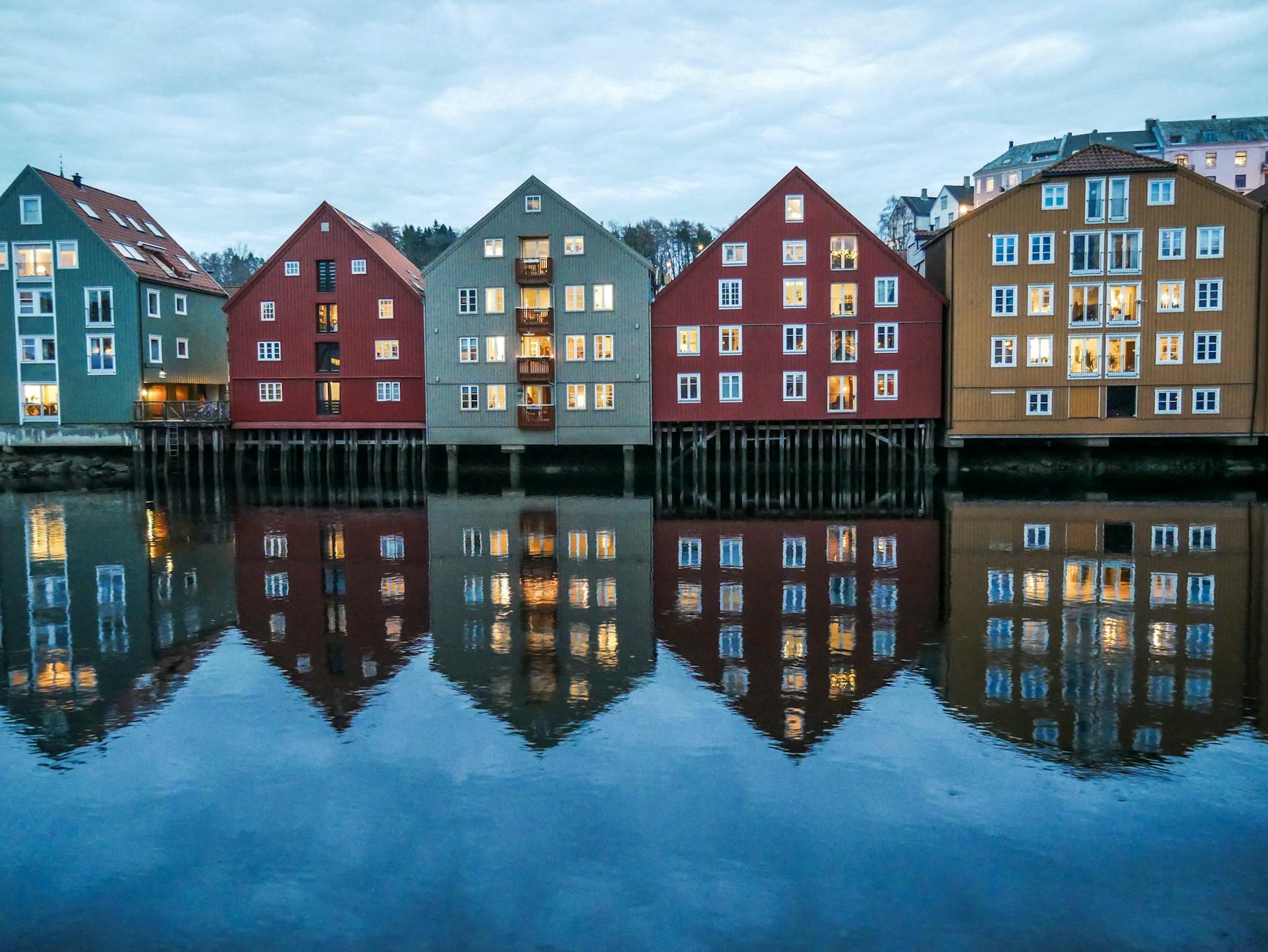
Trondheim is one of the most consistently underimagined cities in Northern Europe.
Start Here
Part of the problem is national hierarchy. Norway’s outside image is dominated by Oslo, Bergen, the fjords, the Lofoten-style visual dream, and a handful of iconic scenic routes. Trondheim tends to fall behind them in the visitor imagination even though it has one of the country’s most balanced urban personalities: a river, a cathedral of national importance, a former-capital gravity, a large student and university presence, colorful wooden city fabric, a strong food scene by northern standards, and a scale that makes the place unusually easy to use well.
Another problem is that Trondheim does not oversell itself. It is not trying to stun the visitor with one overwhelming skyline or one single monumental district that explains everything instantly. The city comes together through proportion. The Nidelva river gives it flow. Nidaros Cathedral gives it symbolic depth. Bakklandet gives it charm without kitsch. The university and student presence keep it alive in the present tense. The result is not loud, but it is very complete.
That is exactly why the city gets used badly.
The weak Trondheim trip is easy to recognize. Someone arrives for a night, sees the cathedral, crosses Gamle Bybro once, has one acceptable meal, and then mentally files the city under “pleasant” before moving on. That version of the trip misses the point. Trondheim is not a minor name on a Norwegian route. It is one of the places in the country where historical depth and daily livability sit closest together. The city only really starts working when you let the river, the neighborhoods, the student rhythm, and the old-capital feeling connect into one argument.
It also matters that Trondheim is not merely historical. Yes, the cathedral and the St. Olav pilgrimage layer are essential. But the city is also modern, technical, youthful, and inhabitable. It can feel serious without stiffness. It can feel pretty without becoming decorative. It is large enough to hold your attention for several days and small enough that a well-chosen hotel makes the whole visit move almost effortlessly.
This is why Trondheim rewards a slower first stay than many visitors initially give it. You should let the city be itself: walkable, river-led, cathedral-centered, academically alive, and more substantial than its modest international hype suggests.
The city in one sentence: Trondheim is a river-and-cathedral city whose best first trip comes from combining old-capital history, Bakklandet charm, university energy, and everyday Norwegian city life instead of treating the place as a secondary stop between bigger names.
Basic data
| Population | About 215,000 in the municipality |
|---|---|
| Area | 322 km2 |
| Major religions | Christian heritage with a strongly secular contemporary public culture |
| Political system | Municipality inside a parliamentary constitutional monarchy |
| Economic system | High-income mixed economy led by education, technology, services, culture, and regional trade |
Quick Verdict
Best for: couples, solo travelers, first-time Norway trips that want a real city, history travelers, readers, walkers, food-minded travelers, and anyone who likes places where civic depth matters more than spectacle.
Not ideal for: travelers who need capital-level scale every hour, people who want Norway to behave only as scenic wilderness, or anyone who will refuse to give the city more than a rushed overnight.
Ideal first visit: 2 to 3 full days.
Minimum worthwhile stay: 2 nights.
Best overall months: May, June, September, and early October.
Best summer case: if you want long light, good walking weather, active riverfront life, and the city at its most open and socially easy.
Biggest planning mistake: seeing the cathedral, taking the bridge photo, and then assuming Trondheim has finished explaining itself.
One thing to prioritize: the base. A central hotel that keeps the cathedral, river, Bakklandet, and station area easy to use will improve the entire stay.
One thing to leave flexible: river and neighborhood walking time. Trondheim often becomes more persuasive in the unscheduled parts of the day.
The blunt version: Trondheim is one of Norway’s best actual city breaks if you let it be a city and not merely a historical landmark with a station attached.
Who Will Love Trondheim?
Trondheim works especially well for travelers who like cities with a strong inner logic. This is not a city where you need ten dramatic districts competing for attention. It is a city where river, cathedral, bridge, neighborhood, and university fit together cleanly. For some travelers that can sound modest. In practice it is often what makes the place feel so satisfying.
Couples tend to do very well here because Trondheim gives you atmosphere without the strain that some more famous cities impose. A good day can include breakfast in a central hotel, cathedral time, a walk along the Nidelva, lunch in Bakklandet, a museum, and dinner in the center, all without tactical exhaustion. The romance is not showy. It is built from proportion and calm.
Solo travelers also do well because Trondheim is socially easy to inhabit alone. The center is legible, public life is comfortable, and the mix of history, student presence, coffee, river walks, and museums creates enough variety that a solitary rhythm never feels thin.
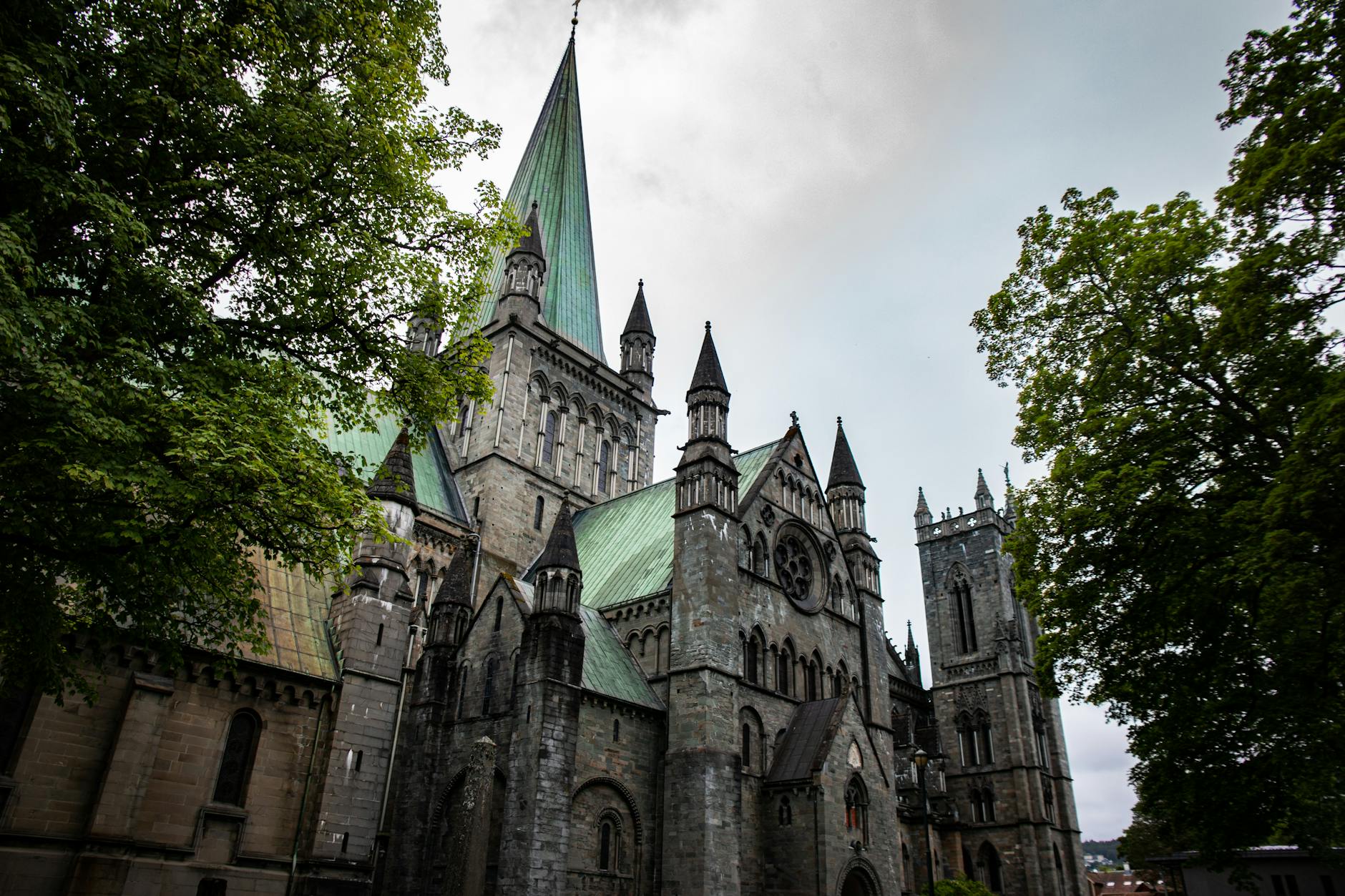
History travelers will obviously find a lot here. Nidaros Cathedral is not a token stop but one of the key ecclesiastical buildings in the Nordic world, and Trondheim’s identity as the old city of Nidaros still matters.[5][6] But the city also works for travelers who are not explicit history people, because the historical weight is embedded in a lived urban frame rather than sealed off from it.
It is less ideal for anyone who evaluates a place only by headline spectacle. Trondheim can be impressive, but it is not trying to overpower you. It expects some attention and patience back.
Trondheim at a Glance
| Question | Practical Answer |
|---|---|
| Main airport | Trondheim Airport Værnes |
| Easiest airport move | Airport bus or other public transport connection from the airport |
| Best first-time base | Central core near the river and cathedral side, or center-to-Bakklandet balance |
| Signature landmark | Nidaros Cathedral |
| Signature neighborhood | Bakklandet |
| Signature urban feature | The Nidelva river |
| Best contemporary museum anchor | Rockheim |
| Main public transport operator | AtB |
| Car needed? | No |
| Emergency number | 112 |
| Tap water | Safe to drink |
| Currency | Norwegian krone |
| Power plugs | Type C and F |
2026 Visitor Notes
Airport Access Is Straightforward, But You Should Know Which Ticketing System You Are Using
Avinor’s current airport information highlights the Værnes Express airport bus with centrally located hotel stops, while AtB also publishes airport bus guidance for its own network into the Trondheim area.[1][2] For visitors, the practical lesson is simple: airport access is easy, but you should not assume every bus is covered by the same ticket product.
AtB Ticketing Is Clear Once You Notice One Important Limitation
AtB’s current ticket guidance makes two things clear: buy before boarding, and remember that standard AtB tickets are not valid on the commercial airport bus routes.[3][4] This is exactly the kind of small logistics point that can make the arrival feel either clean or faintly irritating.
Trondheim Is Compact Enough To Walk Properly
Visit Trondheim’s own getting-around guidance stresses that Trondheim is compact and easy to navigate.[8] That is right, and it is the basis of most good first visits. This is a walking city first and a transit city second.
Nidaros Cathedral Still Organizes The Visit
Nidaros Cathedral’s official current visitor information confirms both its daily role and a practical warning: opening hours vary because it is an active church and event venue.[5] That matters because the cathedral is not just the city’s top sight. It is one of the city’s structural facts.
Bakklandet Needs Time, Not Just One Photo
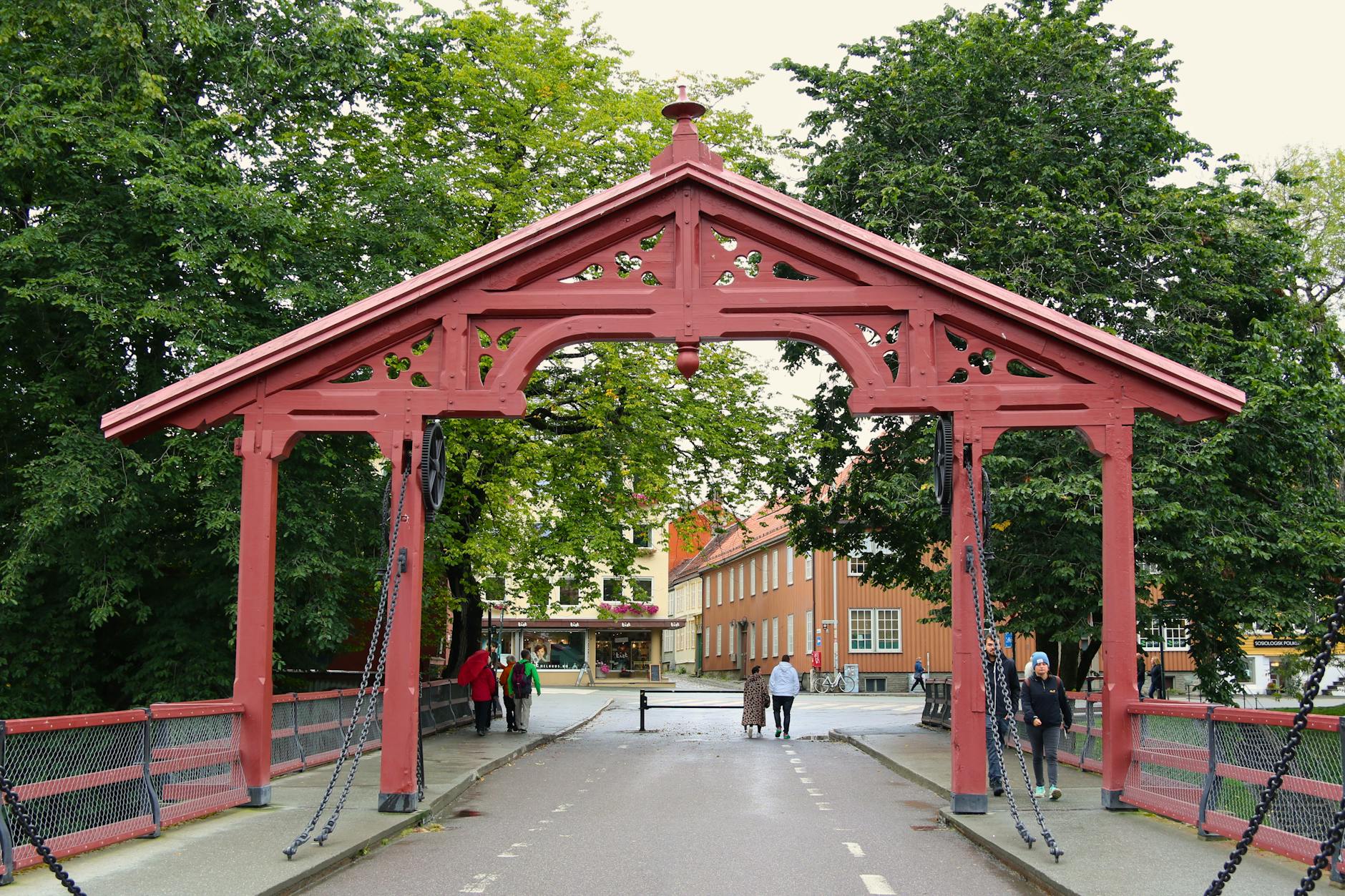
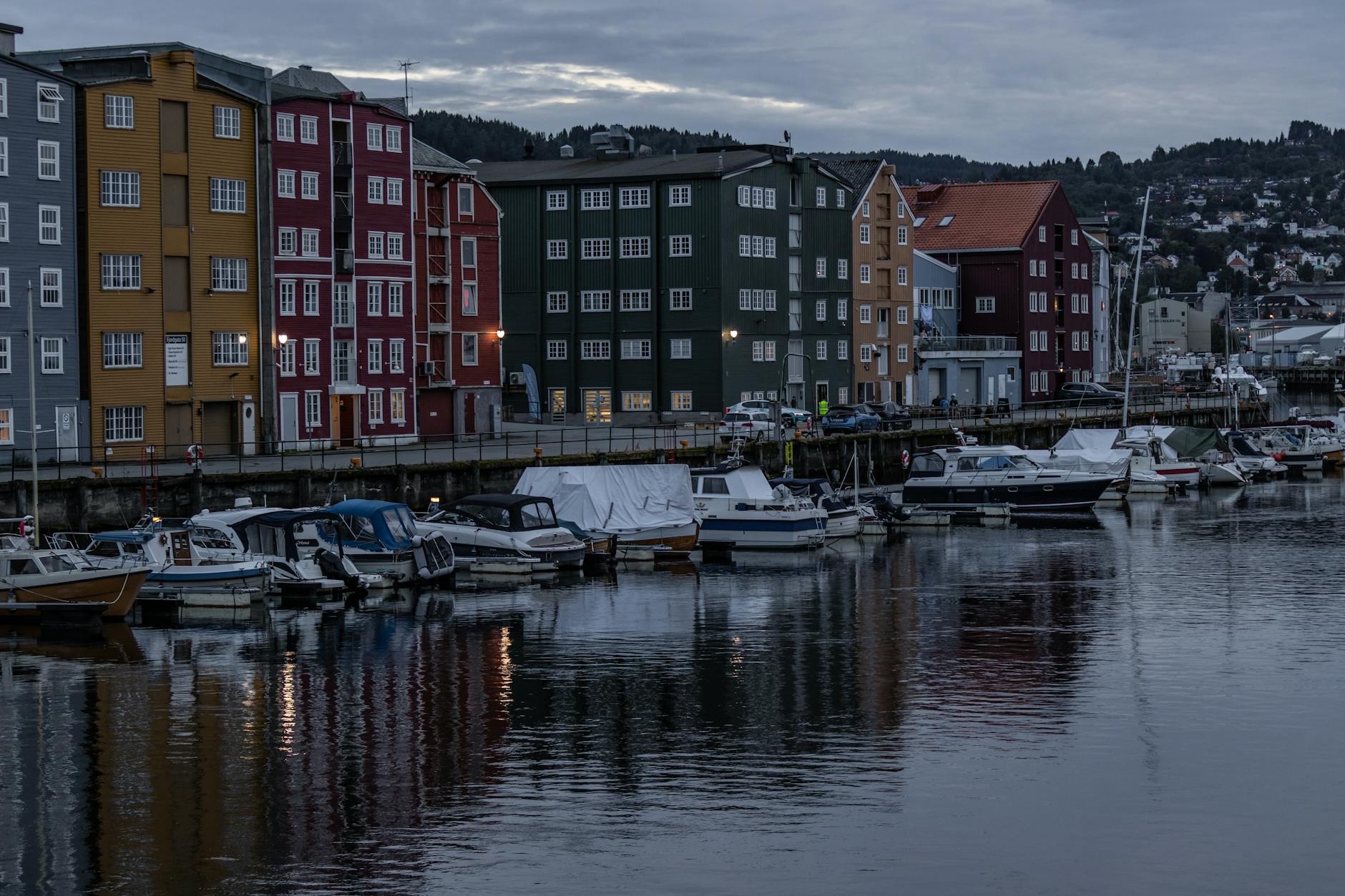
Visit Trondheim’s Bakklandet material still presents the district as historical, colorful, and central to the city’s charm.[7] That is correct, but it also risks oversimplification. Bakklandet should be walked and used, not merely glanced at from the Old Town Bridge.
Rockheim Adds Needed Modern Texture
Rockheim’s official 2026 opening-hours page makes it a strong all-weather stop with enough substance to keep Trondheim from becoming only medieval and picturesque in the visitor imagination.[9] This matters more than first-timers often expect.
How to Understand Trondheim
Trondheim works through five forces.
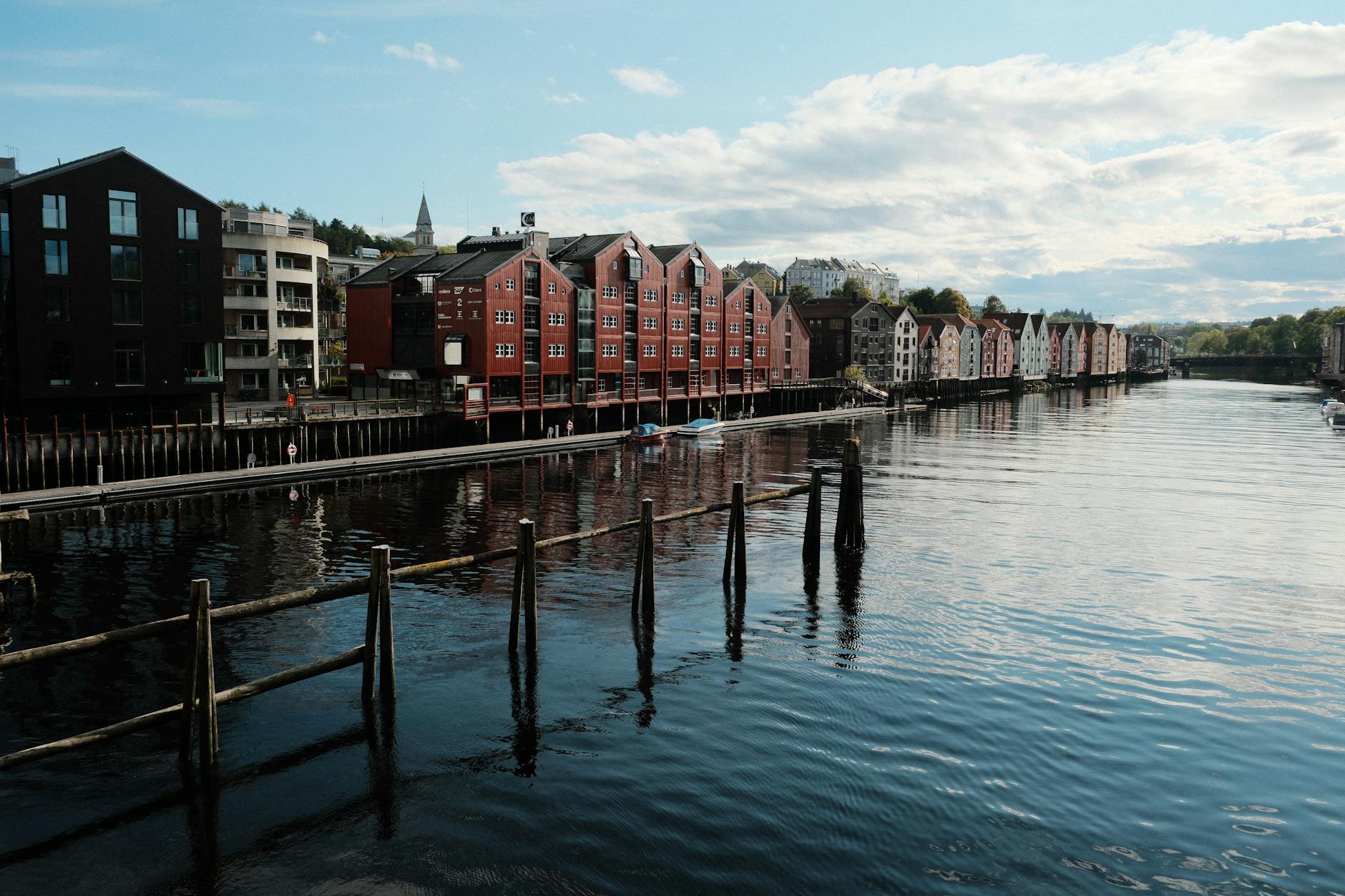
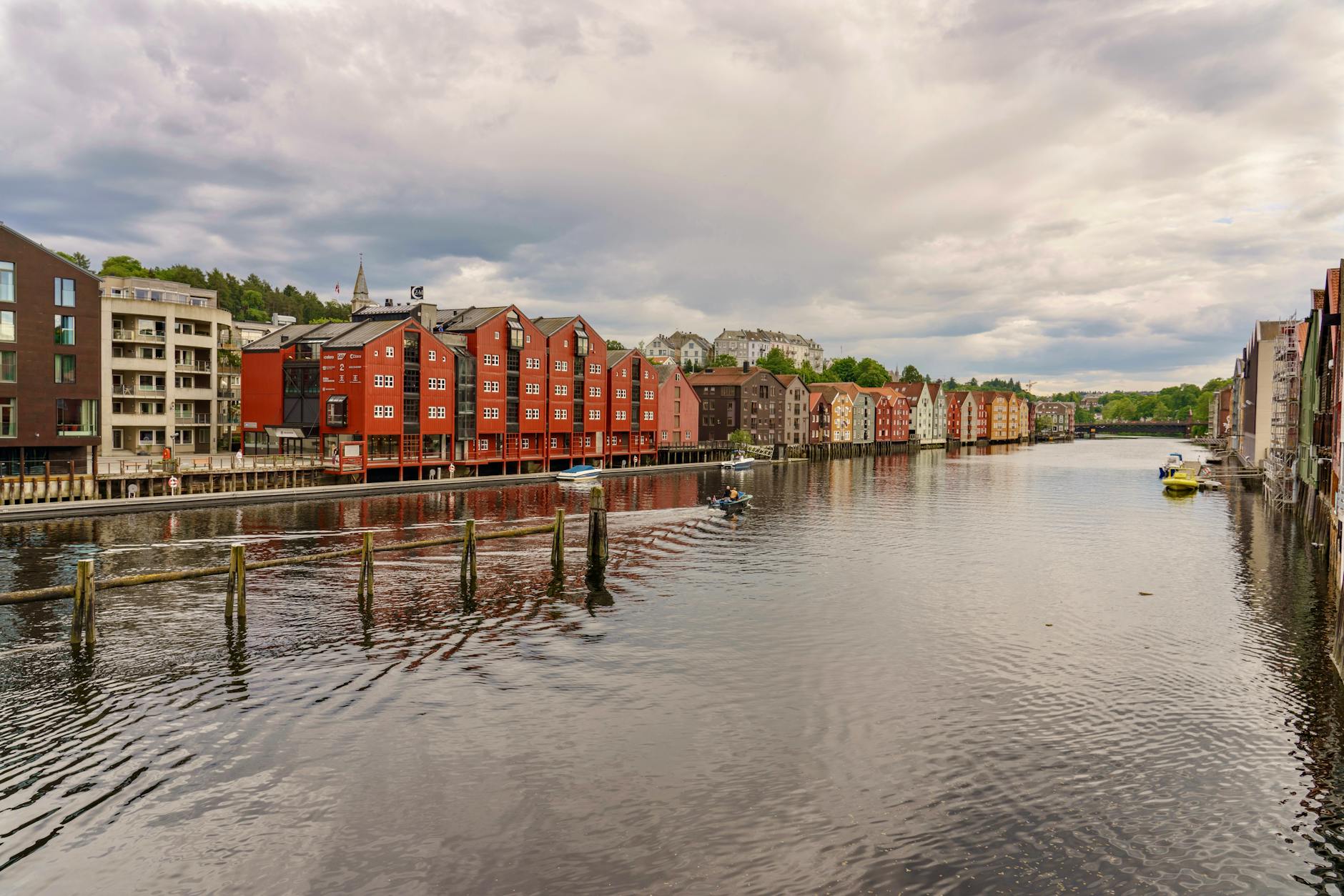
The first is the river. The Nidelva is not a decorative water feature. It structures the city’s center, its walks, and some of its most memorable transitions.
The second is Nidaros. The old-capital and pilgrimage identity still gives Trondheim a seriousness that many cities of similar size do not possess.
The third is the university presence. Trondheim is not a museum city sealed off from youth or invention. Students and research life keep the place contemporary.
The fourth is human scale. Distances remain workable. The city feels large enough to matter and small enough to read coherently.
The fifth is wooden urban texture. Bakklandet, riverfront warehouses, and the city’s historic fabric soften the more formal monumental core.
The Five Trondheims A Visitor Actually Meets
Cathedral Trondheim: Nidaros, the Archbishop’s Palace side, and the city at its most historically charged.
River Trondheim: bridges, warehouses, waterside walks, and the route logic that holds the center together.
Bakklandet Trondheim: cobbled charm, wooden houses, cafes, and one of the city’s most beloved small-scale districts.
University Trondheim: students, libraries, intellectual life, and the sense that the city remains active rather than preserved.
Modern-Cultural Trondheim: Rockheim, food, design confidence, and the version of the city that stops it from becoming purely retrospective.
The Main Mental Shift
Do not ask, “What are the sights in Trondheim?” Ask, “How do river, cathedral, and student life make this city feel complete?” That question gets you much closer to the right trip.
What Trondheim Does Better Than People Think
Trondheim is better than people think at combining gravity and ease. The city has real historical importance, yet it rarely feels ponderous.
It is also better than people think at short-stay completeness. Many smaller cities need a heavy itinerary around them to justify two or three days. Trondheim usually does not.
The city is stronger than some visitors expect at balancing old and lived-in. Nidaros Cathedral is one of the great historical anchors in the country, but the city around it does not feel fossilized.
Trondheim is also better than people think at being quietly beautiful. It does not always win through one grand reveal. It wins by repeated walks: the river curve, the bridge, the cathedral tower, the painted warehouses, the Bakklandet streets, the evening light.
Finally, it is excellent at remaining usable. The center is small enough, the atmosphere generous enough, and the public-life rhythm steady enough that the city rarely turns into work.
Where Trondheim Fits in a Norway Trip
Trondheim fits a Norway trip best as the city that proves historical gravity and daily livability can sit comfortably together.
That matters because many Norway itineraries still force a split between scenic destinations and urban ones, as if the country’s cities can only ever be practical pauses between more visually famous places. Trondheim is one of the clearest counterarguments to that habit. It is historically serious, aesthetically satisfying, and still very easy to use.
Used properly, Trondheim works in four especially strong ways.
The first is as a standalone city break. The river, cathedral, wooden neighborhoods, and student-city life are enough to hold two or three days without strain.
The second is as a first real urban stop in Norway. It gives visitors a strong sense of lived Norwegian city life without asking them to master a capital first.
The third is as a history-and-river city. The Nidaros layer matters, but it works best because it is embedded in a functioning city rather than isolated as a monument.
The fourth is as a repeat-Norway city. Once you stop asking every stop to justify itself through dramatic landscape alone, Trondheim becomes easier to appreciate.
What it is not is merely the city attached to a cathedral or the quieter place after Oslo and Bergen.
Trondheim Versus Bergen
This comparison matters because both cities can appeal to travelers who want a walkable Norwegian city with clear historical identity and a strong relationship to water.
Bergen is more theatrical. The harbor image is more globally recognizable, the landscape frame is more visually dramatic, and the city announces itself faster.
Trondheim is more inwardly coherent. It is calmer, more linear in how it reveals itself, and often easier to inhabit without being crowded by its own fame. The river gives it a different kind of movement from Bergen’s harbor geometry, and the student-city presence makes it feel younger in the present tense.
If you want the louder and more scenic urban encounter, Bergen often wins. If you want the more balanced and quietly intelligent city break, Trondheim may be better.
First-Time Visitors Versus Repeat Visitors
First-time visitors often spend too much of their Trondheim stay deciding whether the city is “enough.” That question weakens the city immediately.
Repeat visitors usually do better because they stop waiting for Trondheim to behave like a more famous place. They know the river has to be walked more than once. They know Bakklandet is a district, not a photo stop. They understand that Nidaros Cathedral should anchor the trip but not monopolize it. They let the city’s proportion do the work.
This is one reason Trondheim often improves on a second visit. The first may still be evaluating. The second begins to use.
Best Time to Visit Trondheim
Trondheim is a year-round city, but the balance between walking, river life, and indoor cultural strength changes with the season.
Best Overall Months
May, June, September, and early October are the strongest broad recommendations. These months usually give the best mix of daylight, city movement, and weather suitable for walking.
Summer
Summer is the easiest season in which to like Trondheim quickly. Long light, river walks, outdoor dining, and the full visual calm of the city all help. The danger is only that visitors may mistake ease for simplicity and fail to dig deeper.
Early Autumn
Early autumn may be the smartest time for many travelers. The city can feel sharper, slightly less diluted by casual summer movement, and especially good for walking and eating.
Winter
Winter Trondheim should be chosen on purpose. If you want dark-season atmosphere, church interiors, museums, and a composed Norwegian urban mood, it can be excellent. If you are looking for long easy days outside, it is the wrong version of the city.
Spring
Spring is transitional but often very good. The city reopens outward, the river becomes more inviting again, and the compactness of the center keeps the season workable.
Warm-Weather Trondheim Versus Cold-Weather Trondheim
Warm-weather Trondheim is easier to like quickly. The river feels more active, outdoor dining improves, and the city’s bridges and neighborhood walks become more generous. It is the version that most visibly rewards unstructured time.
Cold-weather Trondheim is still worthwhile, but it becomes more interior and more exact. The city relies more on cathedral time, museums, strong hotel use, and the simple pleasure of a compact Norwegian center in harsher conditions. The trip can still work very well, but it has to be chosen deliberately.
How Many Days You Need
One Day
Enough for a first impression, not enough to understand the city properly.
Two Days
The minimum respectable stay. One day should be centered on cathedral, river, and Bakklandet. The second should widen the argument with a museum, more neighborhood time, and a slower pace.
Three Days
Ideal for most first-timers. This gives room for repetition, one stronger museum block, and a city rhythm that feels lived rather than sampled.
Four Days
Very good if Trondheim is anchoring a wider Trøndelag route or if you simply want a slower Norway city break.
Why One Proper City Day Matters
Travelers sometimes assume Trondheim is so manageable that it will explain itself almost automatically. That is not quite true.
One proper city day means a day where Trondheim itself carries the argument. The cathedral gets real time. The river is walked more than once. Bakklandet becomes a neighborhood rather than a viewpoint. One meal belongs properly to the route. Without that day, Trondheim can remain merely pleasant. With it, the city begins to feel substantial.
Where to Stay in Trondheim
Where you stay matters because Trondheim’s great strength is coherence. A central hotel lets that strength work immediately.
Fast Answer
For most first-time visitors, stay in the central core with easy access to the river and cathedral, or on a center-to-Bakklandet balance that keeps the city’s most attractive walking logic intact.
Neighborhood Decision Table
| Traveler Type | Best Area |
|---|---|
| First-time visitor | Central core near river and cathedral |
| Couple weekend | Bakklandet edge or refined central stay |
| Practical short stay | Center with easy station access |
| Food-and-walk trip | Center-to-Bakklandet balance |
| Museum-and-history trip | Cathedral side or central core |
Central Core
Best for: most first-timers. Why it works: clean access to cathedral, river, restaurants, and the city’s main walking routes. Tradeoff: slightly less old-wood charm out the door than Bakklandet itself. Best use: the all-around correct answer.
Bakklandet Edge
Best for: couples and atmosphere-first stays. Why it works: wooden houses, river character, and immediate charm. Tradeoff: fewer hotel choices and a small risk of over-romanticizing the district at the expense of the wider city. Best use: travelers who want Trondheim to feel distinctive right away.
Why The Base Matters More Than Visitors Expect
Trondheim is compact enough that visitors often assume any central hotel will do. In practice, the base still changes the trip a great deal.
A central-core hotel keeps cathedral, river, and practical movement in constant relation. A Bakklandet-edge base increases charm but can tempt you to read the city too narrowly. A weaker outer location undermines one of Trondheim’s best qualities, which is how coherently the center works on foot.
This is why the base matters. In Trondheim, centrality is not just convenience. It is part of the city’s argument.
Area Profiles
Cathedral side: best for historical gravity and centrality.
River core: best for balanced walking and clean orientation.
Bakklandet edge: best for atmosphere and charming city texture.
Neighborhood Guide: Where to Explore, Not Just Sleep
The central river-and-cathedral core is where Trondheim makes its clearest first case. Here the city feels historical, civic, and legible all at once. You understand quickly why Trondheim matters in Norwegian history and why the city still feels more substantial than its international profile suggests.
Bakklandet should be treated as a real neighborhood, not a set piece.[7] Yes, it is charming. Yes, the wooden houses and the bridge approach are among the city’s most memorable visual sequences. But what makes Bakklandet work is that it still feels integrated into everyday Trondheim rather than staged for visitors.
The Nidelva matters because it keeps the city moving. Walks along and across the river do more explanatory work than many headline attractions elsewhere. The city’s mood lives in these transitions.
The Brattøra and Rockheim side add a more contemporary note.[9] This is useful because it stops Trondheim from becoming only cathedral-plus-wooden-charm in your mind.
Day Trondheim Versus Evening Trondheim
Daytime Trondheim is where the city’s logic is easiest to read. You see how the cathedral, river, bridges, and neighborhoods cooperate. The city feels clean, civic, and highly usable.
Evening Trondheim is often when the river starts doing more emotional work. The center softens, Bakklandet becomes more persuasive, and a good meal or slower walk can make the city feel much more complete. This is one reason weak trips underperform: they understand Trondheim in sightseeing mode but not in lived mode.
Why The Cathedral Should Not Own The Whole Trip
Nidaros Cathedral is central to Trondheim, but it becomes weaker when it is asked to explain the whole city.
If every plan begins and ends with the cathedral, the city shrinks into symbolism. A better trip lets the cathedral anchor the stay while the river, neighborhoods, and university-city life complete it. Trondheim is stronger as a whole city than as a single sacred landmark with support material.
The Best Things to Do in Trondheim
- Give Nidaros Cathedral real time rather than treating it as a quick exterior photo.[5][6]
- Walk Bakklandet slowly enough that it becomes a district and not just a postcard.[7]
- Use the river and its bridges as part of the day’s structure instead of merely crossing them.
- Visit Rockheim if you want one major contemporary-cultural counterweight to the city’s medieval seriousness.[9]
- Leave one block of time mostly open for walking, coffee, and observation. Trondheim often improves when not over-managed.
Itineraries
If You Have Two Days
Use day one for cathedral, river, and Bakklandet, with one strong dinner in the center. Use day two for Rockheim or another museum-led block plus slower neighborhood walking and one return to the river in a different light.
If You Have Three Days
This is the best first-time structure. Keep the two-day plan, then use the third day for a slower city read: more food, more student-city texture, and one longer museum or historical extension.
If You Have Four Days
Use the extra day to deepen rather than to rush outward. Trondheim is one of those cities where a little repetition usually improves the trip.
Itineraries By Traveler Type
For Couples
Stay central or near Bakklandet, prioritize one atmospheric dinner, and let the city’s river-and-cathedral sequence do most of the work. Trondheim does not need theatrical overplanning.
For Solo Travelers
Walk a lot, use AtB only when it materially improves the route, and allow yourself enough time to sit, read, and observe. The city supports that rhythm unusually well.
For History Travelers
Make the cathedral central, but do not let it monopolize the visit. Trondheim’s historical power is stronger when seen inside the wider city.
For Norway First-Timers
Use Trondheim as proof that Norway is not only scenic routes and capital-city contrasts. This is one of the country’s strongest lived urban places.
Food and Drink
Trondheim’s food scene is not gigantic, but it is stronger than many visitors assume. The city is not a place where you need a long list of famous dishes. It is a place where one good lunch, one serious dinner, and one or two well-judged cafe stops can make the whole trip feel much more grounded.
The right approach is to eat as part of the city’s rhythm rather than as a parallel hobby. Lunch in Bakklandet or near the center should help the day flow. Dinner should feel deliberate enough to register but not so overbuilt that it detaches from the city. Trondheim rewards meals that feel placed rather than merely booked.
Why Food Is Structural, Not Decorative
In Trondheim, meals are not simply breaks between walking routes. They help determine whether the city feels inhabited or merely sampled.
One lunch placed well can make the river or Bakklandet part of the day rather than a corridor. One dinner that belongs to the center can make the evening feel deliberate. Poorly placed meals flatten the stay into errands. Well-placed ones reinforce the city’s proportion.
Getting Around
Trondheim is primarily a walking city for first-timers. AtB exists to support the trip, not define it.[3][8] The center is compact enough that walking usually beats overthinking.
When you do use transit, AtB’s ticket guidance is clear: buy before boarding, and note that commercial airport bus services are outside standard AtB validity.[3] That is the only recurring logistics point worth keeping clearly in mind.
Why Trondheim Often Works Better Than It Sounds
If you describe Trondheim lazily, it can sound like a pleasant Norwegian city with a famous cathedral, a picturesque neighborhood, and not much pressure. That summary misses why the place is so satisfying.
Trondheim works because the components reinforce one another. The river gives movement. The cathedral gives depth. Bakklandet gives warmth. Rockheim and the student-city layer keep it present-tense. The whole center is walkable enough that the city’s structure becomes obvious quickly. It is a city of proportion, and proportion rarely sounds exciting on paper. In person, it can be deeply convincing.
Why Trondheim Often Improves On The Second Visit
On a first visit, many travelers are still deciding whether Trondheim is mainly historical, mainly atmospheric, or mainly just a cleaner Norwegian city than expected. That uncertainty can keep the stay provisional.
On a second visit, the city often gets better quickly. You know which base suits you. You know the river needs repetition. You stop treating Bakklandet as a single image. You begin trusting the city’s modesty as a strength rather than reading it as lack.
How Trondheim Changes Over The Course Of A Stay
On arrival, Trondheim can seem almost too easy. The center is compact, the cathedral is obvious, and the river gives the whole city immediate coherence. Some travelers conclude too quickly that the city has already finished introducing itself.
By the second day, if the trip is shaped well, Trondheim begins to separate into more meaningful registers. The cathedral becomes more than a landmark. Bakklandet becomes more than charm. The river becomes a route rather than a view. The student and modern-cultural layers begin to matter.
By the third day, Trondheim often feels stronger precisely because it no longer needs to prove itself through first impressions. Its value lies in how calmly and completely it holds together.
Why Movement Changes The Meaning Of Trondheim
In Trondheim, movement is not just logistics. It is one of the main reasons the city feels so coherent. Crossing the river, looping back toward the cathedral, then entering Bakklandet again from a different angle changes the whole emotional reading of the place. The city reveals itself through repeated transitions rather than through one overwhelming urban set piece.
That is why Trondheim rewards walking more than rushing. If every move is reduced to efficiency alone, the city can seem smaller than it is. If movement is allowed to reveal river, bridge, slope, and neighborhood shifts, the city deepens quickly.
Why Trondheim Should Not Be Overprogrammed
Because Trondheim is compact, travelers can be tempted to load it with one more museum, one more excursion, one more neighborhood, one more meal, one more historical stop. On paper, all of it looks harmless.
In practice, overprogramming weakens one of the city’s key virtues, which is proportion. Trondheim becomes stronger when one part of the day is left open enough for a second river walk, another coffee, a slower museum visit, or simply sitting with the city’s mood. The better trip is edited, not maximal.
Why Trondheim Rewards A Chosen Lane
Trondheim does not require every traveler to want the same city. In fact, it becomes stronger once you admit that different visits should privilege different versions of it.
A history-first traveler may want cathedral, museum depth, and the old-capital reading to dominate. A couple’s trip may care more about Bakklandet, river walks, and one or two well-placed meals. A repeat Norway traveler may care less about “must-sees” and more about how Trondheim’s calm, student life, and compactness work together. A short urban break may want the city to remain fully itself without any pressure to force bigger regional scenery into the plan.
The point is not to build the perfectly balanced Trondheim. The point is to choose your lane and let the city support it. Once that happens, Trondheim stops feeling like a modest Norwegian city and starts feeling like one of the country’s most complete urban stays.
What To Skip
Skip treating the cathedral as the whole city. Skip walking into Bakklandet, taking one bridge photo, and leaving immediately. Skip staying too far out in a city whose central coherence is one of its greatest strengths. Skip assuming Trondheim is just the smaller, less exciting Norwegian city after Oslo and Bergen. It is doing something else.
Common Mistakes
- Using Trondheim as a one-night technical stop.
- Underestimating how much the river defines the city’s feel.
- Reducing Bakklandet to one image.
- Missing the student and university dimension entirely.
- Treating the city’s calm as a lack of substance instead of one of its main virtues.
My Blunt Advice
Use Trondheim as a whole city, not a cathedral with supporting material. Stay central. Walk the river more than once. Let Bakklandet become a real neighborhood in your mind. Give Nidaros Cathedral enough time to matter. Add one contemporary-cultural stop so the city stays in the present tense. Eat well, but without turning the trip into a reservation chase.
If you do that, Trondheim becomes what it actually is: one of Norway’s most complete city experiences, with real historical authority, a generous human scale, and enough daily-life texture to keep the visit from becoming a heritage performance.
That is the correct first Trondheim. Not a stopover. A stay.
Source Notes
- 1. Avinor, official public transportation page for Trondheim Airport: [https://www.avinor.no/en/airport/trondheim/info/public-transportation/](https://www.avinor.no/en/airport/trondheim/info/public-transportation/)
- 2. AtB, official Trondheim airport page: [https://www.atb.no/en/trondheim-airport/](https://www.atb.no/en/trondheim-airport/)
- 3. AtB, official how-to-buy-a-ticket page: [https://www.atb.no/en/ticket/](https://www.atb.no/en/ticket/)
- 4. AtB, official fares page: [https://www.atb.no/en/fares/](https://www.atb.no/en/fares/)
- 5. Nidaros Cathedral, official English visitor page with opening hours and tickets: [https://www.nidarosdomen.no/en/?print=1](https://www.nidarosdomen.no/en/?print=1)
- 6. Visit Trondheim, official Nidaros Cathedral page: [https://visittrondheim.no/en/activities-attractions/sightseeing/nidaros-cathedral/](https://visittrondheim.no/en/activities-attractions/sightseeing/nidaros-cathedral/)
- 7. Visit Trondheim, official Bakklandet neighborhood page: [https://visittrondheim.no/en/activities-attractions/neighbourhoods/bakklandet/](https://visittrondheim.no/en/activities-attractions/neighbourhoods/bakklandet/)
- 8. Visit Trondheim, official getting-around page: [https://visittrondheim.no/en/getting-around-in-trondheim/](https://visittrondheim.no/en/getting-around-in-trondheim/)
- 9. Rockheim, official opening hours and admission page: [https://rockheim.no/en/opening-hours](https://rockheim.no/en/opening-hours)