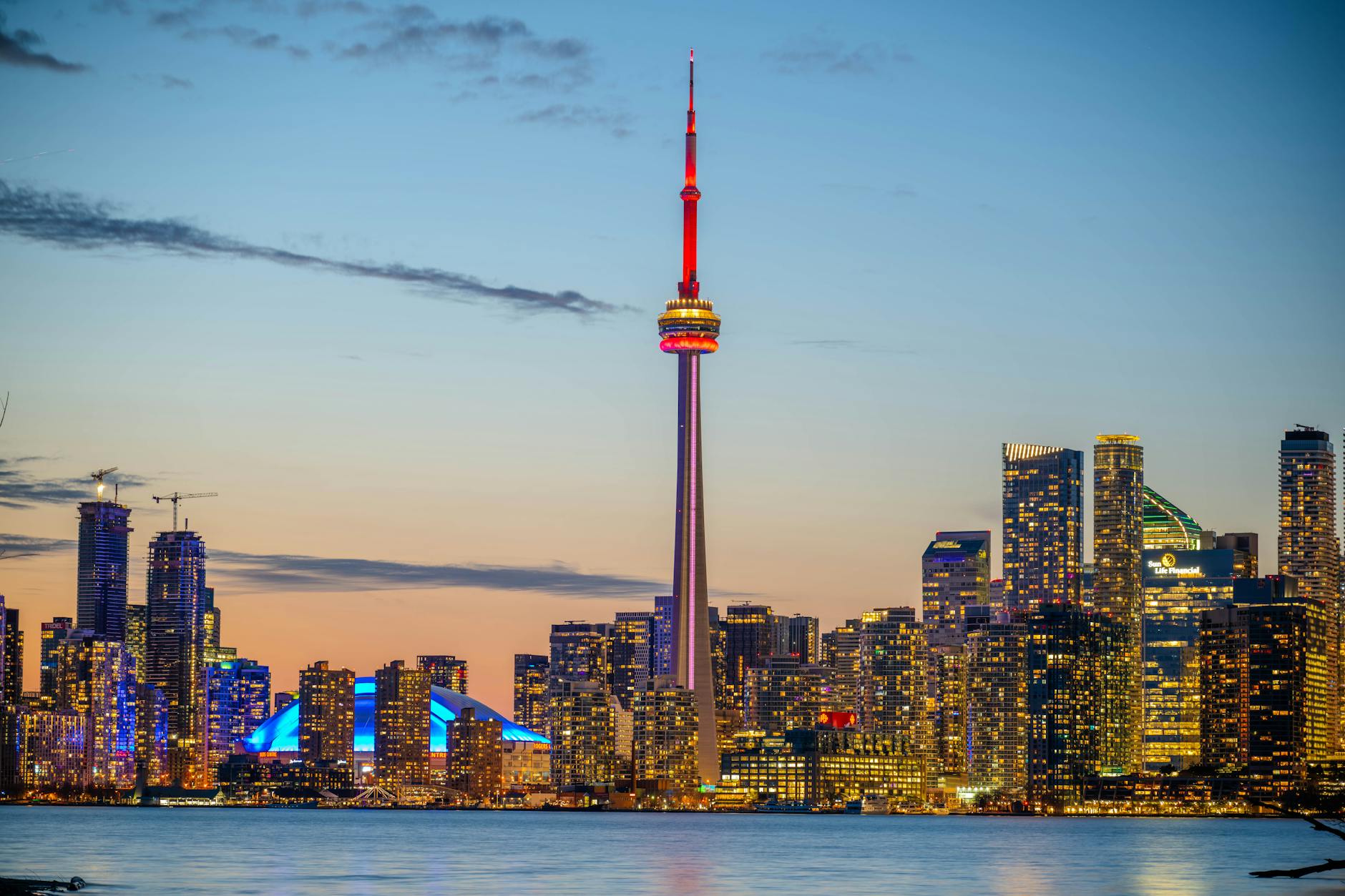
Toronto is a city that often undersells itself because it does not behave like the grand old capitals people imagine when they plan a “city trip.” It does not have one ancient center, one postcard square, or one monument that explains everything. Its best argument is bigger and more contemporary: a lakefront skyline, ravines running through the urban fabric, neighborhoods built by successive waves of migration, serious museums, major sports, film culture, music, patios, winter grit, summer festivals, and one of the most rewarding food scenes in North America.
Start Here
That also means Toronto can disappoint travelers who treat it like a checklist. If you spend the trip bouncing between the CN Tower, a mall, a chain restaurant, and a day trip to Niagara Falls, you will see the city but not understand it. Toronto gets good when you give its neighborhoods time: Kensington Market in the afternoon, Ossington at dinner, the Islands on a clear morning, St. Lawrence Market before the lunch rush, a streetcar ride down Queen, a baseball game with the roof open, a walk through the University of Toronto and Yorkville, or a long summer evening that starts by the lake and ends in a tiny restaurant serving food from somewhere you have wanted to visit for years.
This guide is designed for travelers who want more than “top things to do.” It explains how Toronto works, where to stay, how to use transit, what to book ahead, what is worth the hype, how to eat well, how to avoid spending the whole trip in traffic, and how to build an itinerary that respects the city’s real geography.
Toronto in one sentence: Toronto is a lakefront city of neighborhoods, where the main attraction is not one landmark but the daily collision of global food, local sports, immigrant energy, ravines, towers, and water.
Basic data
| Population | About 3 million in the city; metro about 7 million |
|---|---|
| Area | 630 km2 |
| Major religions | Christianity, Islam, Hinduism, Sikhism, Buddhism, Judaism, and a large secular population |
| Political system | Mayor-council city government inside a federal parliamentary constitutional monarchy |
| Economic system | Advanced mixed market economy led by finance, technology, media, services, and trade |
Quick Verdict
| Question | Answer |
|---|---|
| Best for | Food, neighborhoods, museums, sports, film, summer festivals, city walks, multicultural travel, waterfront time, day trips to Niagara Falls, and travelers who like big cities that reward wandering. |
| Not ideal for | Travelers looking for an old European-style center, bargain hotel prices, dramatic mountain scenery, guaranteed warm weather, or a compact city where every attraction is walkable. |
| Ideal first visit | 3 full days for the city itself; 4 days if you want Niagara Falls; 5–6 days if you want museums, food neighborhoods, the Islands, a sports event, and a slower pace. |
| Best months | Late May, June, September, and early October. Summer is lively but expensive and busy; winter can be rewarding if you plan around indoor culture and cold weather. |
| Best first-timer base | Downtown/Entertainment District for convenience, Waterfront/South Core for lake and Union Station logistics, Yorkville/Annex for museums and calmer streets, or Queen West/Ossington if food and nightlife matter more than maximum sightseeing efficiency. |
| Biggest planning mistake | Underestimating distance, traffic, and sprawl. Toronto is not hard, but it is wide. Do not plan a day that jumps from the Islands to Scarborough Bluffs to Yorkville to Ossington to a 7 p.m. dinner reservation. |
| One thing to book ahead | A good dinner reservation, CN Tower timed tickets if you care about the view, Toronto Island ferry tickets on peak summer weekends, TIFF screenings in September, and hotels during major festivals or FIFA World Cup 2026 dates. |
| One thing to leave unscheduled | A neighborhood wander, a park or ravine walk, a market meal, a patio stop, or an evening along the waterfront. Toronto’s best moments are often not ticketed. |
| Current planning wrinkle | Toronto hosts six FIFA World Cup 2026 matches and the FIFA Fan Festival between June 11 and July 19, 2026; hotel demand and prices are likely to be intense around match dates.[16] |
The Move
Treat Toronto as a neighborhood-and-transit city, not a monument city. Build each day around one zone: downtown and waterfront, west-end food neighborhoods, museums and Yorkville, east-end markets and lakefront, or a dedicated Niagara day. Toronto rewards clustering and punishes zigzagging.
Who Will Love Toronto?
You will probably love Toronto if you want:
- A city where you can eat exceptionally well without restricting yourself to one “local cuisine.”
- Big-city energy without the constant pressure of New York or London.
- A destination that combines museums, neighborhoods, sports, theater, lakefront walks, parks, and day trips.
- A summer city with patios, festivals, baseball, the Islands, and long evenings outside.
- A culturally layered city where Chinatown, Kensington, Little Portugal, Greektown, Little India, Koreatown, Little Italy, Scarborough, Thorncliffe Park, Parkdale, and North York all tell different stories.
- A Canada trip that can pair naturally with Niagara Falls, Ottawa, Montreal, or the Great Lakes region.
You may struggle with Toronto if you want:
- A compact old town.
- A low-cost hotel market in peak season.
- A city where the main sights are all clustered into a single walkable historic district.
- Mild winter weather.
- Effortless driving and parking.
- A trip where you never need to think about transit timing.
Toronto is worth visiting because it is not trying to be a frozen-in-time museum city. Its interest is contemporary, lived-in, and cumulative. You understand it through meals, streets, transit rides, water, crowds, accents, sports jerseys, condo towers, old brick warehouses, ravines, and neighborhoods that change tone every few blocks.
Toronto at a Glance
| Practical | Detail |
|---|---|
| Country | Canada |
| Province | Ontario |
| City role | Toronto is Canada’s largest city and a major center for business, technology, entertainment, culture, media, finance, sports, and immigration.[1] |
| Language | English is the main visitor language; many other languages are widely heard across the city. |
| Currency | Canadian dollar, written as CAD or C$. |
| Cards vs cash | Cards and mobile wallets are widely accepted. Keep a small amount of cash for small food vendors, tips, parking machines, older shops, and emergencies. |
| Main airport | Toronto Pearson International Airport, or YYZ, west of the city. |
| Secondary airport | Billy Bishop Toronto City Airport, or YTZ, on the waterfront, very convenient for some Canadian and U.S. routes. |
| Main rail hub | Union Station, the hub for VIA Rail, GO Transit, UP Express, TTC subway/streetcar connections, and much of downtown Toronto. |
| Best airport train | UP Express from Pearson to Union Station; Pearson’s official page lists the trip at 28 minutes and an adult one-way fare of C$12.35, or C$9.25 with PRESTO.[5] |
| Cheapest Pearson-to-city option | TTC bus plus subway, especially the 900 Airport Express between Pearson and Kipling Station, using the regular TTC fare.[6] |
| Transit payment | PRESTO card, PRESTO in mobile wallet, debit/credit card, or exact cash. TTC lists a C$3.30 adult pay-as-you-go fare by PRESTO/contactless, with a two-hour transfer window.[7] |
| Emergency number | 911 for police, fire, or medical emergencies.[24] |
| Tap water | Safe to drink directly from the tap.[23] |
| Hotel tax note | Toronto’s Municipal Accommodation Tax is temporarily increased from 6% to 8.5% from June 1, 2025 to July 31, 2026.[15] |
| Entry basics | U.S. citizens do not need a visa or eTA with a valid U.S. passport; many visa-exempt air travelers need an eTA; other visitors may need a visa. Check nationality-specific rules before booking.[3] |
| Best planning apps | Google Maps, Citymapper, Transit, PRESTO, UP Express, TTC, GO Transit, OpenTable/Resy, and weather/radar apps in winter and summer storm season. |
First-Timer Mistake
Thinking “Toronto” means only downtown. The downtown core is useful, but the city’s food, culture, parks, and personality are spread across west-end, east-end, midtown, and suburban neighborhoods. Staying downtown can be smart. Spending the entire trip downtown can be thin.
How to Understand Toronto
Toronto is easiest to understand through five ideas: the lake, the grid, the neighborhoods, the ravines, and the region.
1. The Lake Is the Southern Edge
Lake Ontario defines Toronto’s south side. The city faces the water, but not always gracefully. Rail corridors, expressways, condo towers, construction, and old industrial land have long complicated the relationship between downtown and the lake. Still, the waterfront matters: Harbourfront, the Islands, ferry docks, Billy Bishop Airport, Sugar Beach, Queens Quay, the Music Garden, Ontario Place, Exhibition Place, and the Martin Goodman Trail all sit along or near this edge.
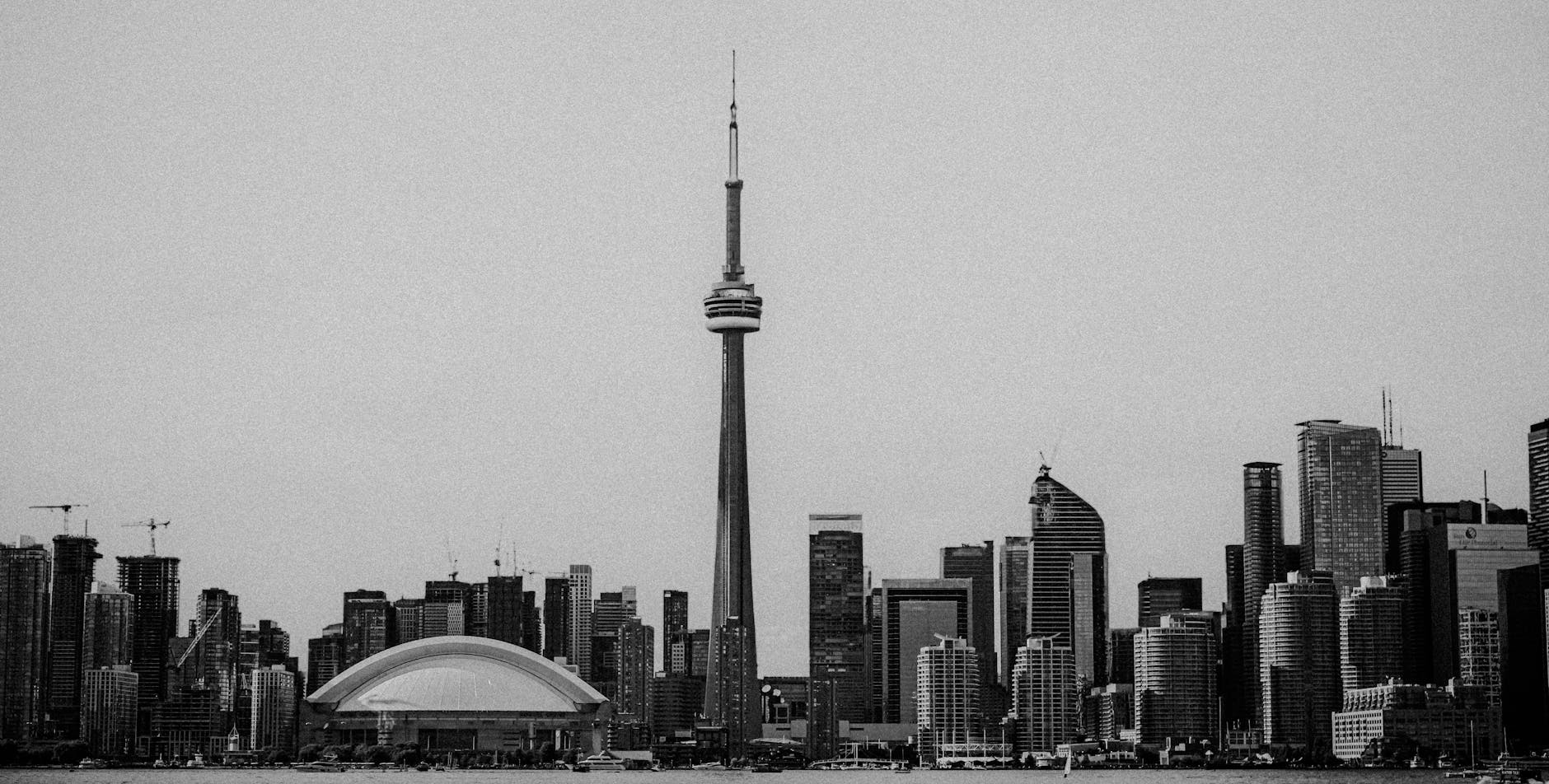
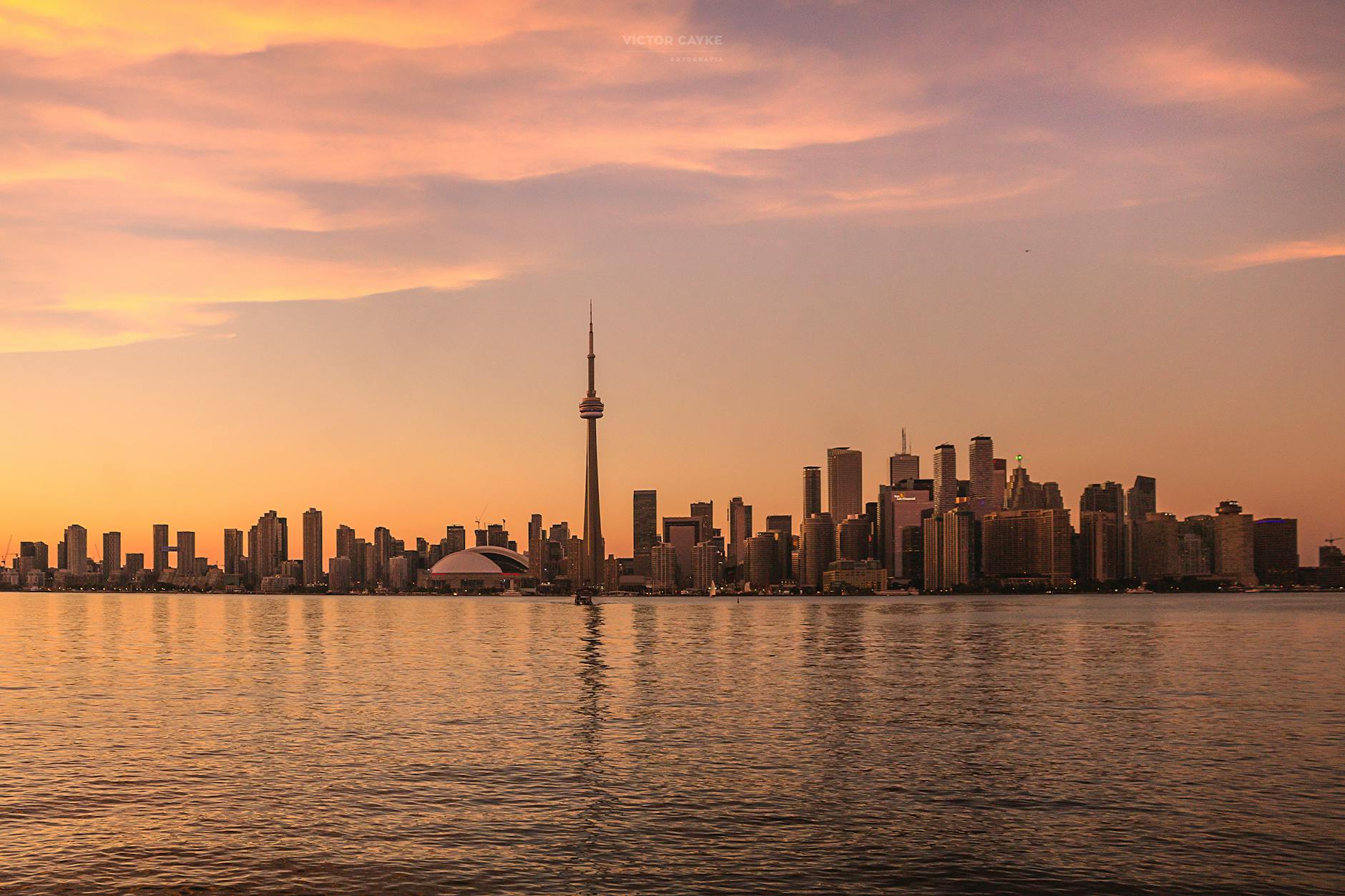
Local logic: Toronto’s skyline looks best from the water or the Islands. If you want the classic view, do not only go up the CN Tower. Go out onto the lake, take the ferry, or walk the island shoreline.
2. Yonge Street Is the Psychological Spine, But Not the Whole Story
Yonge Street runs north-south and still carries symbolic weight. Many first-time visitors orient around Yonge, Bay, University, Spadina, Queen, King, Bloor, and Dundas. But the city’s best traveler days often happen away from the most obvious downtown corridors: Ossington, Dundas West, College, Roncesvalles, Queen East, Danforth, Geary, Gerrard East, St. Clair West, Eglinton, and neighborhood strips far beyond the hotel core.
The move: Use the subway for north-south or longer east-west moves, then use streetcars, buses, walking, or rideshare for neighborhood-level exploration.
3. Toronto Is a Neighborhood City
Toronto’s appeal is cumulative. Kensington Market, Chinatown, Queen West, Ossington, Little Portugal, Parkdale, Roncesvalles, the Junction, Yorkville, the Annex, St. Lawrence, the Distillery District, Leslieville, Riverside, the Beaches, Danforth, Scarborough, North York, and Etobicoke are not interchangeable. Each gives you a different trip.
The city does not always shout. Some of the best blocks are not visually grand. A strip plaza in Scarborough may give you a better meal than a view restaurant beside a landmark. A low-key bar on Dundas West may feel more like Toronto than a glossy lounge with a skyline backdrop.
4. The Ravines Are Toronto’s Secret Geography
Visitors often notice the skyline first, but Toronto’s ravine system is one of the city’s defining natural features. The Don Valley, Humber Valley, and smaller ravines create green corridors that cut through the urban grid. They are not all simple tourist attractions, but they shape how Torontonians exercise, commute, escape, and think about the city.
Worth knowing: If you have extra time, a ravine walk or High Park visit can balance the hard surfaces of downtown. Toronto is more outdoorsy than it first appears.
5. Toronto Is Also a Region
The Greater Toronto Area is enormous. Pearson Airport is in Mississauga, many excellent food neighborhoods are in Scarborough, Markham, Mississauga, Brampton, and North York, and day trips quickly involve GO Transit, highways, or car rentals. This matters because a restaurant, hotel, or attraction that looks “near Toronto” can be logistically awkward.
First-timer rule: Stay in the city unless you have a specific reason not to. Saving money by booking far outside the core can cost you hours.
Best Time to Visit Toronto
Toronto is a four-season city, but it is not equally easy in every season. The city is most generous from late spring through early fall, with September as the great all-around month.
Best Overall: Late May, June, September, and Early October
These months usually give the best balance of weather, activity, and comfort. Late May and June bring green parks, patios, long days, and festival build-up without the deepest summer humidity. September brings TIFF, warm afternoons, cooler nights, and a city that feels energized after summer.
Best for: first-timers, food travelers, couples, walkers, museum-and-neighborhood trips, and anyone who wants Toronto without full peak-summer intensity.
Summer: July and August
Summer is when Toronto feels most alive. Patios fill, baseball is in full swing, beaches and pools matter, festivals stack up, the Islands become a real destination, and the waterfront earns its keep. It is also when hotel rates can spike, humidity can be heavy, and popular attractions require more patience.
Major summer events include Pride season, Toronto Caribbean Carnival, outdoor concerts, waterfront events, and the Canadian National Exhibition in late August into Labour Day. Toronto Caribbean Carnival’s 2026 Grand Parade is listed for August 1, 2026.[27] The CNE lists its 2026 dates as August 21 to September 7.[28]
Best for: festival travelers, nightlife, families, patios, sports, and travelers who want maximum outdoor energy.
Watch out for: heat, thunderstorms, hotel prices, ferry lines, construction, and traffic around events.
Fall: September and October
Early fall is excellent. TIFF runs September 10–20 in 2026, according to TIFF’s official festival information.[29] September can feel like Toronto at its most international: film crowds, restaurant reservations, warm weather, and big-city buzz. October brings cooler air, fall color, and a more local rhythm after the major summer crush.
Best for: film, food, museums, couples, long walks, and travelers who like city trips with a crisp edge.
Winter: November Through March
Toronto winter is not a reason to avoid the city if you like museums, restaurants, hockey, theater, cozy bars, skating, and urban winter atmosphere. It is a reason to plan differently. Cold snaps, snow, wind, slush, icy sidewalks, and grey days are real.
Winter is good for lower hotel rates outside holiday periods, indoor culture, restaurant-focused trips, and travelers who do not mind bundling up. It is less ideal for first-timers who want parks, waterfront time, or the Islands as major trip components.
The move: Stay central, prioritize museums and food, use the PATH strategically but do not expect it to replace walking everywhere, and pack boots with real traction.
Spring: April and Early May
Spring is variable. April can be raw, wet, and windy, but it can also bring the first real outdoor days. May is better, especially later in the month. Cherry blossoms, baseball, patio openings, and longer days help the city wake up.
Best for: value travelers, repeat visitors, and people who can handle weather swings.
2026 Special Note: FIFA World Cup
Toronto will be unusually busy around FIFA World Cup 2026. The City of Toronto says the city will host six matches and the FIFA Fan Festival from June 11 to July 19, with Toronto matches beginning June 12 and ending with a Round of 32 match on July 2.[16] If you are not coming for the tournament, think carefully before booking those dates. If you are coming for the tournament, book lodging and restaurants early and expect crowd pressure near Exhibition Place, downtown, transit corridors, and fan zones.
How Many Days You Need
One Day
One day is enough for a taste, not enough for the city. Focus on downtown and the waterfront: St. Lawrence Market, the CN Tower area, a Harbourfront walk, the Islands if the weather is good, or Kensington/Queen West if food and neighborhoods matter more than views.
Do not try to include Niagara Falls in a one-day Toronto visit unless Toronto itself is not the point.
Two Days
Two days works for a focused first trip:
- Day 1: Downtown, waterfront, CN Tower, St. Lawrence, Distillery, or the Islands.
- Day 2: ROM/AGO plus Kensington, Chinatown, Queen West, Ossington, or Yorkville.
This is enough to understand that Toronto is not just a skyline, but you will still leave a lot untouched.
Three Days
Three full days is the best minimum for a first city-focused trip. You can do one classic downtown day, one museums/neighborhoods day, and one west-end/east-end/Islands day. You will have room for good meals, one night out, and a sports or performance event.
Four Days
Four days lets you add Niagara Falls without gutting the Toronto portion of the trip. Use three days for Toronto and one full day for Niagara. This is probably the best structure for many international first-timers.
Five to Six Days
This is ideal if you want a richer trip: multiple food neighborhoods, the Islands, museums, sports, ravines, Scarborough Bluffs, a theater or concert night, and Niagara or another side trip.
One Week
A week allows Toronto to breathe. You can spend time in neighborhoods that rarely make first-timer lists, take more ambitious food detours, add a wine-country day, visit Stratford in season, or build a Toronto-plus-Niagara-plus-Ontario route.
Where to Stay in Toronto
Toronto hotel choice matters because the city is wide, traffic can be slow, and transit access is uneven outside the core. A cheap hotel far from subway or streetcar service can be a bad deal.
The Short Answer
For a first visit, stay downtown if you want convenience. Choose Yorkville/Annex if you want museums, restaurants, and a calmer upscale base. Choose Queen West/Ossington if you prioritize food, bars, boutiques, and a more local-feeling trip. Choose the Waterfront/South Core if you want Union Station, sports venues, lake access, and easy airport-train logistics.
Neighborhood Decision Tree
| Traveler Type | Best Area |
|---|---|
| First-time visitor, no car | Downtown/Entertainment District, Financial District, South Core, or Yorkville |
| Food and nightlife | Queen West, Ossington, Dundas West, King West, Kensington/Chinatown edges |
| Museums and polished restaurants | Yorkville, Annex, Bloor-Yorkville, University of Toronto area |
| Sports and concerts | South Core, Entertainment District, Waterfront, King West |
| Families | Waterfront/South Core, Yorkville/Annex, St. Lawrence, or a well-located suite hotel downtown |
| Luxury | Yorkville, Financial District, King West, select Waterfront/South Core hotels |
| Budget | Hostels or simple hotels around Chinatown/Kensington, east downtown, or transit-connected outer areas; compare commute carefully |
| Quiet but still useful | Annex, Yorkville side streets, St. Lawrence, parts of Midtown near subway |
| Airport layover | Pearson airport hotel area, not downtown unless you have a long layover |
| Car-based Ontario road trip | Airport area, Etobicoke, or suburban hotel only if Toronto sightseeing is not the main event |
Downtown / Entertainment District / Financial District
Best for: first-timers, business travelers, theater, sports, CN Tower, Union Station, short stays.
This is the easiest base for a classic trip. You can walk to the CN Tower, Rogers Centre, Scotiabank Arena, Union Station, the waterfront, theaters, restaurants, and major transit. The Financial District is quieter on weekends; the Entertainment District is livelier and noisier.
Why stay here: convenience, transit, walkability, airport-train access, major attractions.
Why not: expensive, generic in parts, busy, construction-heavy, and not the city’s most charming food-neighborhood experience.
The move: Stay here if you have two or three nights and want logistics to be painless. Then use transit or rideshare to eat and explore outside the hotel zone.
Waterfront / South Core
Best for: sports fans, families, Union Station logistics, lake walks, Island ferry access, convention travelers.
The South Core and waterfront are practical, especially if you are arriving by UP Express, going to games, taking ferries, or using Union Station. The area can feel condo-heavy and corporate, but it gives easy access to the lake, Harbourfront, Scotiabank Arena, Rogers Centre, and trains.
Why stay here: easy airport train, sports venues, ferries, lakefront paths, modern hotels.
Why not: restaurants can be hit-or-miss near tourist corridors; some blocks feel sterile after office hours.
Yorkville / Bloor / Annex
Best for: museums, luxury, shopping, restaurants, couples, older travelers, calmer nights.
Yorkville is polished, expensive, and close to the ROM, University of Toronto, the Bata Shoe Museum, Bloor Street shopping, and the Annex. The Annex is more student-intellectual, bookstore-and-café oriented. Together they make a strong base for visitors who want culture and convenience without sleeping in the loudest downtown blocks.
Why stay here: subway access, museums, dining, upscale hotels, walkable side streets.
Why not: pricey; less convenient for waterfront, sports, and west-end nightlife.
Queen West / Ossington / Trinity Bellwoods / Little Portugal
Best for: food, bars, boutiques, galleries, younger travelers, repeat visitors, design-minded travelers.
This is one of Toronto’s best areas for feeling the city at street level. Queen West, Ossington, Dundas West, and Little Portugal give you restaurants, cafés, small bars, shops, parks, and a lively evening scene.
Why stay here: atmosphere, food, nightlife, boutiques, local energy.
Why not: fewer conventional hotels, more reliance on streetcars/rideshare, nighttime noise, and weaker airport-train convenience.
King West
Best for: nightlife, restaurants, sports, groups, party-oriented weekends.
King West is sleek, lively, and convenient to downtown attractions. It is also one of the noisier and more “scene” parts of the city. Great if you want that; less great if you need calm.
Why stay here: restaurants, bars, entertainment, walkability to major venues.
Why not: noise, weekend crowds, traffic, and sometimes more style than substance.
St. Lawrence / Old Town / Distillery Edges
Best for: market lovers, families, history, quieter downtown stays.
St. Lawrence is practical and underrated. You are near St. Lawrence Market, the Distillery District, the waterfront, Union Station, and downtown without being in the loudest entertainment blocks.
Why stay here: market, walkability, calmer evenings, good access to east and downtown.
Why not: fewer hotel choices than the core; not the best base for west-end nightlife.
Midtown / Yonge-Eglinton / St. Clair / Rosedale Edges
Best for: repeat visitors, longer stays, family visits, quieter neighborhoods near subway.
Midtown can work if you have a specific reason: visiting friends, lower rates, quieter streets, or access to northern neighborhoods. For a short first visit, it is usually less convenient than downtown, Yorkville, or the west end.
Airport Area
Best for: overnight layovers, early flights, business near Pearson, car-based regional travel.
Do not book an airport hotel to save money if your main goal is Toronto sightseeing. Pearson is not downtown. UP Express makes the trip easy, but commuting in and out every day can dull the trip.
Neighborhood Guide
Toronto’s neighborhoods deserve more than a list. Below are the zones most relevant to visitors.
Downtown, Financial District, and Entertainment District
Identity: the practical core: towers, theaters, sports, Union Station, the CN Tower, and major hotels.
Downtown Toronto is useful rather than uniformly beautiful. It gives you the skyline, the big venues, the airport train, the lake, and many obvious first-timer activities. It is the right starting point, but not the whole city.
Best things to do: CN Tower, Rogers Centre, Scotiabank Arena, Roy Thomson Hall, Princess of Wales Theatre, Royal Alexandra Theatre, Harbourfront, Union Station, PATH exploring in winter.
Best time: weekday lunch for the Financial District, evenings for theater/sports, early morning for photos around the CN Tower and waterfront.
Skip if: you want cozy neighborhood Toronto. Use downtown; do not confuse it with the city’s whole personality.
St. Lawrence, Old Town, and Distillery District
Identity: market Toronto, brick Toronto, and the city’s most accessible historic atmosphere.
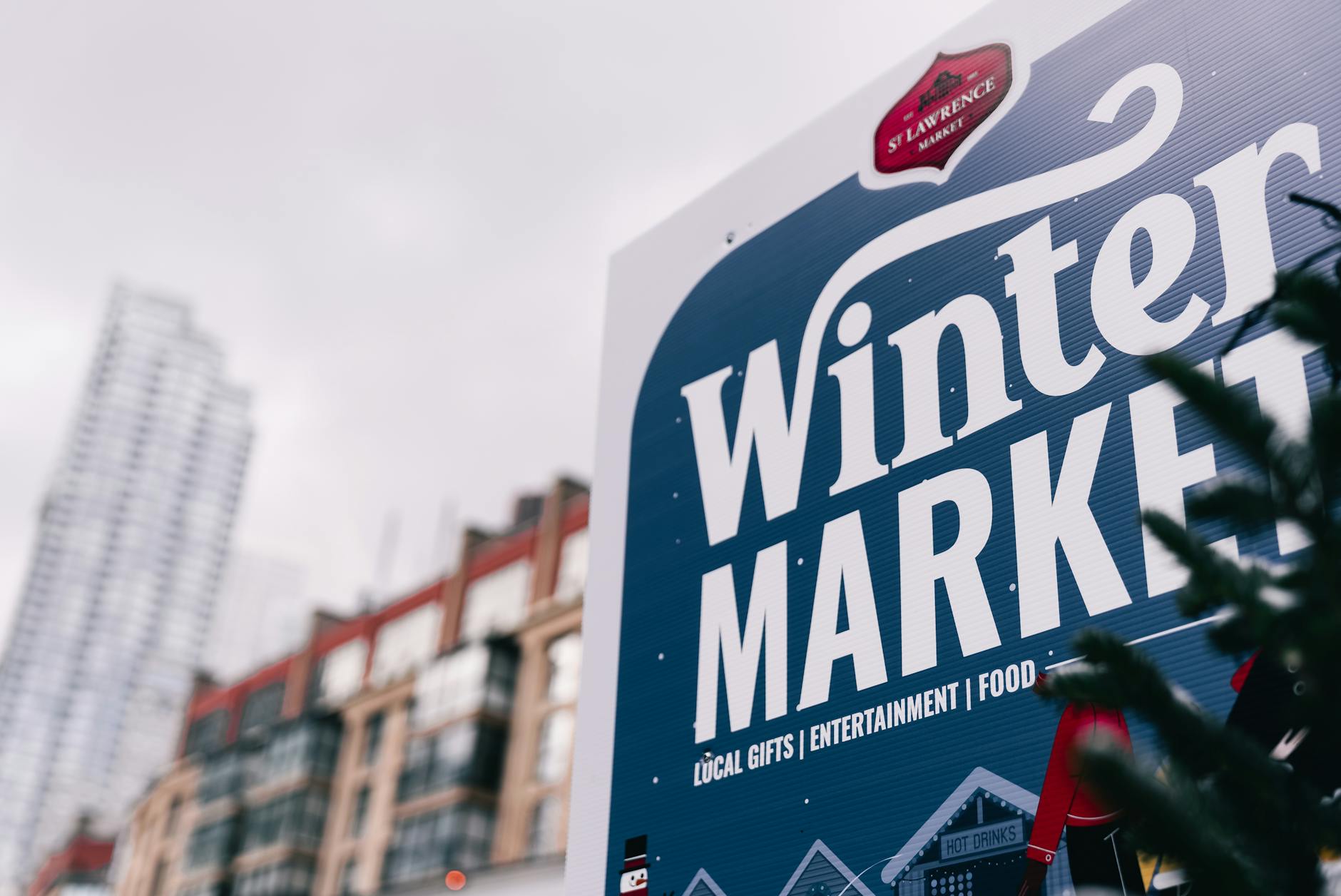
St. Lawrence Market is one of the best first-timer stops because it immediately connects food, history, and everyday city life. The Distillery District, with its preserved Victorian industrial buildings, is more curated and tourist-facing, but it is still visually strong and useful for a short visit.
The move: Go to St. Lawrence Market in the morning, walk east through Old Town, then continue to the Distillery District. In winter or at Christmas-market time, expect heavier crowds.
Best for: markets, architecture, families, first-timers, photographers, low-stress wandering.
Kensington Market and Chinatown
Identity: scrappy, colorful, food-dense, politically expressive, imperfect, and essential.
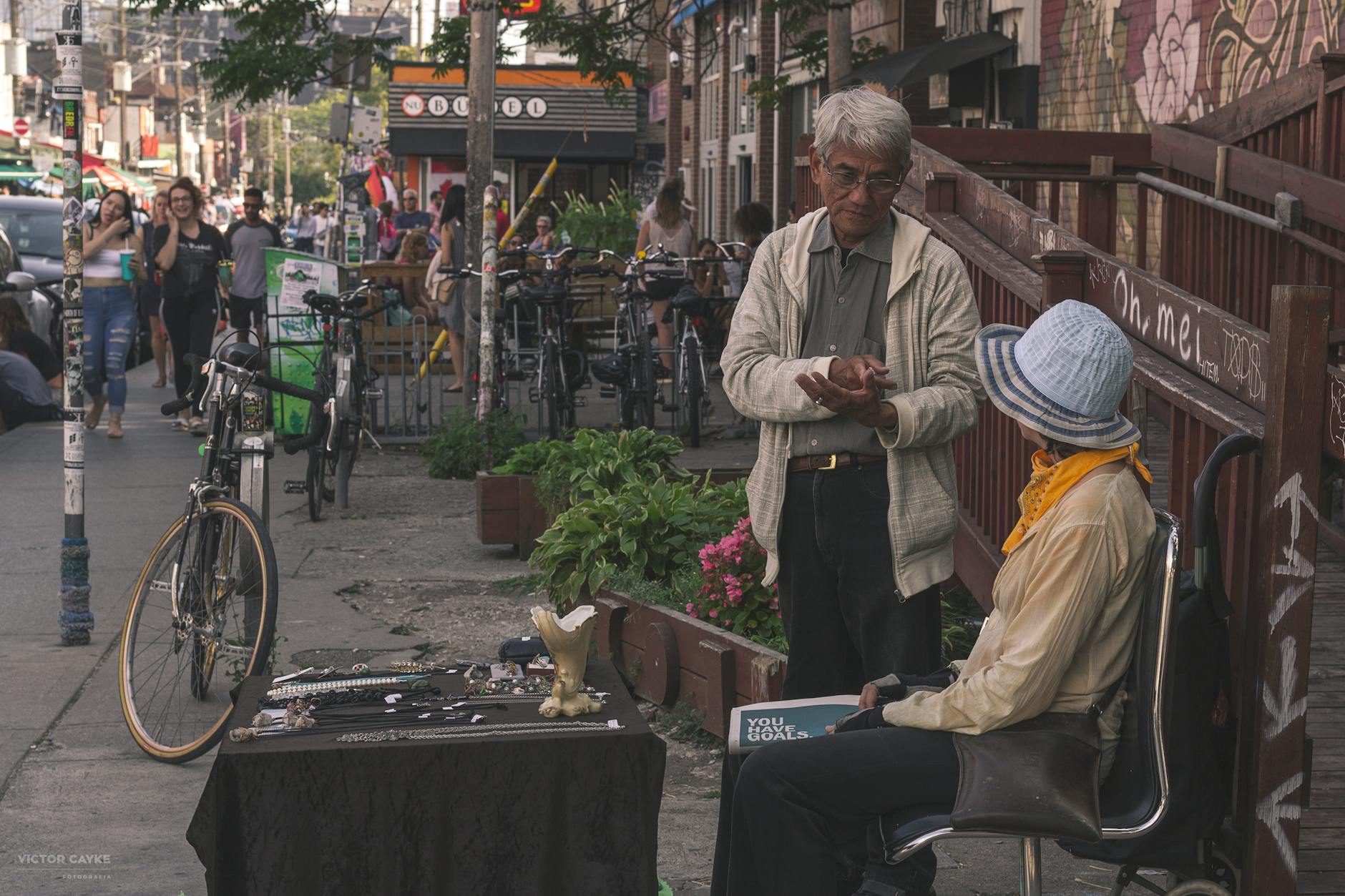
Kensington is one of Toronto’s classic visitor neighborhoods. It is not polished, and that is the point. Vintage shops, produce stands, bakeries, cafés, taco spots, Caribbean food, small bars, and street art create a dense urban texture. Chinatown along Spadina adds restaurants, bakeries, groceries, and visual energy.
The move: Do not rush. This is not a monument stop. Come hungry, wander, snack, browse, then continue to AGO or Queen West.
Best for: food grazing, vintage shopping, casual photos, street life.
Watch out for: weekend crowds, uneven sidewalks, and touristy food choices mixed among better ones.
Queen West, Ossington, Trinity Bellwoods, and Little Portugal
Identity: restaurants, bars, boutiques, design shops, patios, and west-end cool.
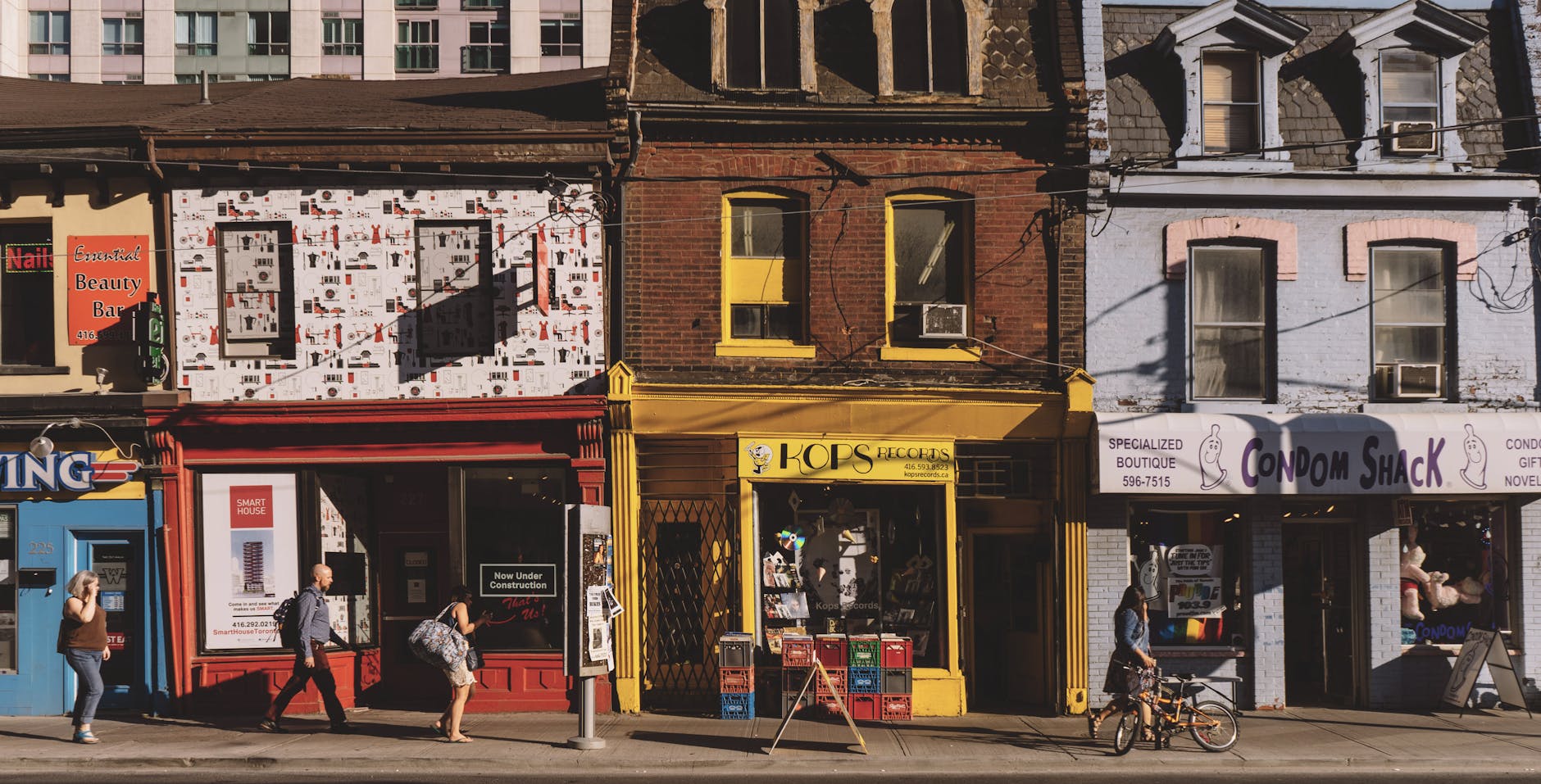
This area is a core Toronto experience for food and nightlife travelers. Queen West brings shopping and galleries; Ossington is restaurant-and-bar dense; Dundas West and Little Portugal add bakeries, cafés, Portuguese roots, new restaurants, and a more lived-in evening rhythm. Trinity Bellwoods Park becomes a social stage in warm weather.
The move: Start late afternoon, browse Queen West, sit in Trinity Bellwoods if the weather is good, then eat on Ossington or Dundas West.
Best for: food, drinks, boutiques, repeat visitors, couples, friend trips.
Skip if: you only have one day and need to prioritize icons; otherwise, make time.
Yorkville, the Annex, and University of Toronto
Identity: museums, leafy streets, old campus architecture, luxury shopping, cafés, and a slightly more intellectual pace.
Yorkville has high-end boutiques, hotels, restaurants, and galleries. The Annex has bookstores, pubs, students, Victorian houses, and access to the University of Toronto. The ROM anchors the area, and the Bata Shoe Museum adds a niche but worthwhile cultural stop.
The move: Visit the ROM, walk through the University of Toronto campus, browse Bloor/Annex side streets, then choose Yorkville for a polished dinner or the Annex for something more casual.
Best for: museums, shopping, architecture, couples, older travelers, rainy days.
Harbourfront and the Waterfront
Identity: lake air, ferries, boats, condos, trails, event spaces, and skyline views.
The waterfront is uneven but important. Some stretches are lovely; others are interrupted by construction, traffic, or generic condo retail. Still, Harbourfront, the Music Garden, ferry access, boat cruises, and the Martin Goodman Trail make this a key part of a first visit.
The move: Walk from Union Station through the SkyWalk toward the CN Tower and waterfront, then continue along Queens Quay. If the weather is clear, consider the Islands or a short harbour cruise.
Toronto Islands
Identity: the city’s best skyline view and a quick escape from downtown intensity.
The Islands can be magical on a clear day: beaches, bike paths, lawns, cottages, skyline views, and a feeling that downtown has suddenly been muted. The ferry departs from Jack Layton Ferry Terminal, and the City recommends buying tickets in advance; it also warns that peak wait times can exceed 30 to 60 minutes on busy weekends and holidays.[13]
Best for: families, couples, cyclists, skyline photos, summer picnics, low-cost outdoor time.
Avoid: midday peak ferry times on beautiful summer weekends if you hate lines.
Leslieville, Riverside, and Queen East
Identity: east-end cafés, independent shops, brunch, bakeries, and neighborhood restaurants.
Leslieville and Riverside give a softer, more local-feeling Toronto than the downtown core. It is a good area for repeat visitors, brunch, coffee, and casual wandering. It also pairs well with the Distillery District or the Beaches.
Best for: slow mornings, coffee, brunch, local boutiques, east-end evenings.
The Beaches
Identity: lakefront neighborhood, boardwalk, casual restaurants, and summer weekends.
The Beaches feels distinct from downtown: residential, lake-oriented, and slower. It is not where you go for the city’s best architecture or nightlife, but it can be a wonderful sunny-day break.
The move: Walk the boardwalk, grab food on Queen East, and combine it with Leslieville or a longer east-end day.
Danforth / Greektown
Identity: Greek roots, casual restaurants, pubs, subway convenience, and a neighborhood high street.
The Danforth is not only Greek anymore, but its Greektown identity remains part of Toronto’s cultural map. It is an easy, low-stress area for a dinner walk and can pair with the east end.
High Park, Roncesvalles, and the Junction
Identity: big park, Polish-Canadian roots, independent businesses, families, cafés, and west-end residential life.
High Park is Toronto’s major west-end park, famous in spring for cherry blossoms and useful year-round for walking. Roncesvalles has cafés, bakeries, small restaurants, and neighborhood charm. The Junction offers design shops, breweries, and a more local-feeling west-end strip.
Best for: families, park time, repeat visitors, long-stay travelers.
Scarborough and the Bluffs
Identity: dramatic lake cliffs, suburban food brilliance, and a reminder that Toronto’s culture extends far beyond downtown.
Scarborough Bluffs are one of the most visually striking natural sights in the city, but they require more planning than a downtown walk. Scarborough also has some of the region’s best eating, especially if you are willing to travel for Sri Lankan, Caribbean, Chinese, Hakka, Filipino, Tamil, Middle Eastern, and other cuisines.
The move: Do not tack Scarborough casually onto a downtown day. Make it a focused half-day or day with a food plan.
North York, Don Mills, and Aga Khan Museum Area
Identity: suburban Toronto, transit nodes, malls, diverse food, mid-century growth, and one of the city’s most elegant museums.
North York and Don Mills are not typical first-timer bases, but the Aga Khan Museum is worth considering for architecture, Islamic art, and a calmer cultural experience. North York also offers serious Korean, Chinese, Persian, and other food scenes.
Best Things to Do
1. Get the Skyline From the CN Tower — But Choose Your Moment
The CN Tower is Toronto’s obvious icon. It is worth doing if you like observation decks, engineering, or first-timer landmarks. CN Tower’s official hours page listed observation levels from 9:30 a.m. to 11 p.m., with last entry at 9 p.m., at the time of this guide’s source check; always verify because hours and closures change.[17]
Worth it? Yes for first-timers who want the view; skippable if visibility is poor, lines are long, or you prefer seeing the skyline from the Islands.
The move: Go close to sunset on a clear day, or go early for fewer crowds. Do not pay for height if clouds erase the view.
Pair it with: Ripley’s Aquarium, Rogers Centre, Harbourfront, or a waterfront walk.
2. Take the Ferry to the Toronto Islands
The Islands are one of the best ways to understand Toronto as a lake city. The ferry ride itself is part of the experience, and the skyline view from across the water is better than almost any view inside the city.
Worth it? Absolutely in good weather. Less compelling in cold rain or if ferry lines are extreme.
Time needed: 2–4 hours for a simple visit; half a day if biking, picnicking, or beaching.
First-timer mistake: Going at peak weekend times without tickets or patience. The City notes that peak travel is typically 10 a.m.–3 p.m. to the islands and 5–9 p.m. back, with waits sometimes exceeding 30–60 minutes.[13]
3. Eat Your Way Through Kensington Market and Chinatown
Kensington and Chinatown are essential because they show Toronto’s density, messiness, and food energy. This is a grazing neighborhood: bakeries, dumplings, tacos, Caribbean snacks, cheese shops, vintage stores, produce, coffee, and small bars.
Worth it? Yes, especially if you like neighborhoods more than polished attractions.
Time needed: 2–3 hours.
Pair it with: AGO, Queen West, University of Toronto, or a walk along Spadina.
4. Visit the Royal Ontario Museum
The ROM is Toronto’s major museum of natural history, world cultures, art, and archaeology. It is especially useful for families, rainy days, and travelers staying around Yorkville or the Annex. ROM uses a ticketing calendar with “Plan Ahead Pricing,” encouraging visitors to choose dates by schedule and budget.[18]
Worth it? Yes if you like encyclopedic museums, dinosaurs, design, minerals, global collections, or family-friendly culture.
Time needed: 2–4 hours.
Local tip: ROM’s Third Tuesday Nights Free program offers free evening access to most galleries on the third Tuesday of each month, with special exhibitions excluded.[19]
5. Spend Time at the Art Gallery of Ontario
The AGO is one of the city’s best indoor stops and pairs naturally with Kensington, Chinatown, and Queen West. Its building, collections, Canadian art, contemporary work, and special exhibitions make it more than a backup rain plan. AGO lists free general admission on the first Wednesday night of each month, with advance online booking recommended.[20]
Worth it? Yes for art travelers and rainy days; still worthwhile for casual visitors if you pair it with nearby neighborhoods.
Time needed: 90 minutes to 3 hours.
6. Start a Morning at St. Lawrence Market
St. Lawrence Market gives visitors a clear, satisfying first taste of Toronto. Go for breakfast, lunch, snacks, specialty foods, and a sense of the city’s market culture.
Worth it? Yes. This is one of the easiest recommendations in the city.
Time needed: 45 minutes to 90 minutes.
The move: Go earlier, eat lightly, then walk east to the Distillery District or west toward downtown.
7. Walk the Distillery District
The Distillery District is attractive, pedestrian-friendly, and easy to understand. It is also curated, commercial, and more visitor-facing than local. That is fine. Use it for brick architecture, galleries, shops, cafés, and a low-effort stroll.
Worth it? Yes for first-timers, photographers, families, and Christmas-season visitors; skippable if you strongly dislike polished tourist districts.
Time needed: 60–90 minutes.
8. Explore Queen West, Ossington, and Dundas West
This is Toronto at street level: restaurants, bars, boutiques, park life, side streets, and people-watching. It is less about one attraction than an evening mood.
Worth it? Essential for food and nightlife travelers.
Time needed: late afternoon through dinner; longer if bar-hopping.
The move: Reserve dinner, but leave room before and after for wandering.
9. See a Game
Toronto is one of North America’s great sports cities. Depending on the season, you might catch the Blue Jays, Raptors, Maple Leafs, Toronto FC, Argonauts, Marlies, Sceptres, or Tempo. Even if you are not a hardcore fan, a baseball game under an open roof, a hockey night, or a soccer crowd can reveal a social side of the city.
Worth it? Yes if dates align. Sports are part of Toronto’s public language.
Planning note: Prices vary wildly by team, opponent, date, and playoff relevance.
10. Visit Casa Loma If You Like Castles, Families, or Theatrical History
Casa Loma is a Gothic Revival mansion and one of Toronto’s more unusual attractions. Its official visitor page lists daily touring hours of 9:30 a.m. to 5 p.m., with last admission at 4:30 p.m., at the time of this guide’s source check.[21]
Worth it? Good for families, architecture curiosity, film-location fans, and travelers who like eccentric mansions. Skippable for short trips if you prefer neighborhoods, food, or major museums.
11. Walk, Bike, or Sit Along the Waterfront
Toronto’s waterfront is not perfect, but it is essential. Harbourfront, the Music Garden, Queens Quay, Sugar Beach, the ferry terminal, boat cruises, and the Martin Goodman Trail all offer a different feeling from downtown’s towers.
Worth it? Yes in good weather.
The move: Do not expect one continuous postcard promenade. Treat it as a series of segments.
12. Go East to Leslieville, Riverside, or the Beaches
This is the move for travelers who want a softer, more local day. Brunch, coffee, boutiques, Queen East, and lakefront time can make a good counterpoint to downtown.
Worth it? Yes for repeat visitors or anyone with 4+ days.
13. Make a Food Pilgrimage Outside the Core
Some of the best eating in Toronto is not within a short walk of the CN Tower. Scarborough, North York, Etobicoke, Mississauga, and Markham can reward serious food travelers, though they require transit patience, rideshare, or a car.
Worth it? Absolutely if food is a major reason for your trip.
Common mistake: Thinking all the best restaurants are downtown because that is where hotels are.
14. Use CityPASS Selectively
Toronto CityPASS can be a good deal if you genuinely plan to do multiple major attractions. Destination Toronto describes it as including CN Tower and Ripley’s Aquarium, plus a choice of three attractions from options including ROM, City Cruises Toronto, Casa Loma, Toronto Zoo, and AGO, at a nearly 38% discount.[22]
Worth it? Yes for families and classic sightseeing trips. Less useful if your Toronto plan is food, neighborhoods, and one museum.
Toronto Itineraries
One Perfect First Day in Toronto
Morning: Start at St. Lawrence Market for breakfast or snacks. Walk through Old Town toward the Distillery District.
Lunch: Eat around St. Lawrence, the Distillery, or downtown. Keep it casual.
Afternoon: Walk or transit to the CN Tower/Harbourfront area. If the weather is clear and you care about views, go up the CN Tower. Otherwise, walk the waterfront.
Late afternoon: Take the ferry to the Islands if weather and timing are favorable. If not, continue along the waterfront or head to Queen West.
Dinner: Eat on Ossington, Queen West, Dundas West, or in Chinatown/Kensington depending on mood.
Evening: Add a game, theater, cocktail bar, live music, or a slow streetcar ride back.
Rain plan: ROM or AGO instead of the Islands and extended waterfront walking.
Two Days in Toronto
Day 1: Classic City and Lake
- St. Lawrence Market
- Distillery District
- CN Tower or Ripley’s Aquarium
- Waterfront walk
- Toronto Islands or harbour cruise
- Dinner west of downtown
Day 2: Museums and Neighborhoods
- ROM or AGO
- University of Toronto / Yorkville / Annex walk
- Kensington Market and Chinatown
- Queen West / Ossington dinner and drinks
The move: Do not over-schedule both museums. Pick one major museum and then let the neighborhoods do the rest.
Three Days in Toronto
Day 1: Downtown, Market, Waterfront
Use the one-day itinerary but leave time for a proper dinner.
Day 2: Museums, Campus, Kensington, West End
ROM or AGO, then Kensington/Chinatown, then Queen West/Ossington.
Day 3: East or West Local Day
Choose one:
- East day: Distillery if not already done, Riverside, Leslieville, Beaches.
- West day: High Park, Roncesvalles, Junction, Dundas West.
- Food day: Scarborough/North York/Markham/Mississauga with a clear restaurant plan.
- Family day: Islands, aquarium, playgrounds, and a low-key dinner.
Four Days With Niagara Falls
Day 1: Downtown and Waterfront
St. Lawrence, CN Tower, Harbourfront, Islands if weather cooperates.
Day 2: Museums and West-End Food
ROM or AGO, Kensington/Chinatown, Queen West/Ossington.
Day 3: Niagara Falls
Take GO/WEGO if the schedule works or book a well-reviewed tour. Niagara Parks promotes packages that combine round-trip GO travel from Toronto with WEGO bus access around Niagara Parks locations.[26]
Day 4: Local Toronto
Choose east end, High Park/Roncesvalles, Scarborough Bluffs, or a sports/theater-centered day.
Five-Day Toronto Itinerary
Day 1: Downtown, St. Lawrence, Distillery, CN Tower, waterfront.
Day 2: ROM, U of T, Yorkville, Annex, Kensington.
Day 3: Queen West, Ossington, Trinity Bellwoods, Dundas West, Little Portugal.
Day 4: Niagara Falls or Niagara-on-the-Lake.
Day 5: Islands, High Park, Leslieville/Beaches, Scarborough Bluffs, or a food neighborhood outside the core.
Food Lover’s Toronto
Day 1: St. Lawrence Market, Kensington/Chinatown, Ossington dinner.
Day 2: Scarborough food crawl or North York Korean/Persian/Chinese-focused day.
Day 3: Brunch in Leslieville, bakeries in Little Italy/Little Portugal/Roncesvalles, dinner at a reservation-worthy restaurant.
Rule: Do not build the entire food trip around “best restaurants” lists downtown. Toronto’s food strength is distributed.
Family Toronto
Day 1: Ripley’s Aquarium, CN Tower area, waterfront, easy dinner.
Day 2: ROM, Queen’s Park/U of T walk, Kensington snacks.
Day 3: Toronto Islands in good weather or Ontario Science Centre alternatives if reopened/relocated planning changes; otherwise AGO, Casa Loma, or a sports game.
Day 4: Niagara Falls if the children can handle a long day.
Winter Toronto
Day 1: St. Lawrence Market, Distillery, AGO, dinner downtown.
Day 2: ROM, Yorkville/Annex, cozy bar or theater.
Day 3: Hockey/basketball, indoor shopping, PATH exploring, strong dinner reservation.
Winter rule: Keep plans flexible. Slush, wind, and cold can make a “short walk” feel longer than expected.
FIFA World Cup / Sports-Focused Toronto
Base: Downtown, Waterfront/South Core, King West, or transit-connected Midtown/Yorkville. Avoid distant hotels unless you understand the commute.
Game day: Give yourself more time than normal around Exhibition Place, Union Station, streetcars, and fan zones.
Non-game day: Use Toronto like a food city: St. Lawrence, Kensington, Ossington, Queen West, Scarborough, or Danforth.
Booking rule: Hotels, restaurants, attractions, and airport transfers should be treated as peak-demand during match periods.
Food and Drink
Toronto’s food identity is not one dish. It is a city where migration has created depth across many cuisines. The mistake is asking, “What is Toronto food?” as if there is a single answer. The better question is, “Which Toronto food world do I want to enter today?”
What Toronto Eats Well
Toronto is especially strong for:
- Chinese regional cuisines, dim sum, bakeries, noodles, hot pot, and Cantonese classics.
- Caribbean food, including Jamaican patties, jerk, roti, doubles, and Trinidadian/Tobagonian influences.
- South Asian and Tamil food, especially if you travel beyond the downtown core.
- Korean food in Koreatown and North York.
- Japanese ramen, sushi, izakaya, and dessert culture.
- Vietnamese, Thai, Filipino, Malaysian, Indonesian, and broader Southeast Asian food.
- Ethiopian and Eritrean restaurants.
- Greek food on the Danforth.
- Italian, Portuguese, and Latin American neighborhoods and bakeries.
- Jewish delis, bagels, smoked meat, and old-school bakeries.
- Contemporary Canadian restaurants that draw from the city’s global pantry.
- Coffee, bakeries, wine bars, cocktail bars, craft beer, and brunch.
Foods and Experiences to Seek Out
Peameal Bacon Sandwich
Often associated with St. Lawrence Market, the peameal bacon sandwich is one of the few foods visitors often hear described as “Toronto.” Try it if you are curious, but do not make it the whole culinary thesis of the city.
Jamaican Patty
A good patty is a Toronto staple: portable, affordable, and tied to the city’s Caribbean communities. You can find them in bakeries, convenience shops, subway stations, and restaurants.
Roti and Doubles
Caribbean roti and doubles are essential to understanding Toronto’s casual food culture. They are filling, affordable, and best found by following neighborhood and community recommendations rather than generic tourist lists.
Dim Sum and Chinese Bakeries
Downtown Chinatown is convenient, but the region’s deepest Chinese food scenes extend into Scarborough, Markham, and Richmond Hill. First-timers can still enjoy Spadina; serious food travelers should consider going farther.
Korean Food
Bloor Koreatown is easy to reach; North York has deeper and more varied options. For a visitor, Korean barbecue, stews, fried chicken, and cafés are all easy wins.
Ethiopian/Eritrean Food
Toronto has excellent East African dining. This is one of the best ways to avoid the obvious visitor circuit and eat something memorable.
Greek on the Danforth
The Danforth is changing, but Greek food remains part of its identity. It is a pleasant subway-accessible dinner district.
Where to Eat by Situation
| Situation | Best Areas |
|---|---|
| First casual meal | St. Lawrence Market, Kensington, Chinatown, Queen West |
| Best dinner energy | Ossington, Dundas West, Queen West, King West, Yorkville |
| Food crawl | Kensington/Chinatown, Scarborough, North York, Little India/Gerrard East, Koreatown |
| Romantic dinner | Yorkville, Ossington, Queen West, Financial District, west-end wine bars |
| Family-friendly | St. Lawrence, waterfront, Danforth, Yorkville/Annex, casual Chinatown/Kensington spots |
| Late-night food | Chinatown, King West, Queen West, Koreatown, selected downtown strips |
| Brunch | Leslieville, West Queen West, Ossington, Roncesvalles, Annex |
| Splurge meal | Yorkville, Queen West/Ossington, Financial District, destination restaurants around the core |
| Market meal | St. Lawrence Market first; Kensington for grazing |
Restaurant Practicalities
- Reservations matter. For popular restaurants, book ahead, especially Thursday through Saturday and during TIFF, World Cup, Pride, and other major events.
- Dinner times are North American. Prime dinner is often 7–9 p.m., though many kitchens close earlier than in southern Europe.
- Tipping is expected. Many diners tip around 15–20% before or after tax depending on habit and service. Check for included service charges at some restaurants and large-group bookings.
- HST is added. Prices usually do not include the 13% Harmonized Sales Tax until the bill.
- Alcohol is not cheap. Cocktails, wine, and beer can add up quickly.
- Vegetarian/vegan eating is easy. Toronto is generally strong for plant-forward dining, though availability varies by cuisine and neighborhood.
- Allergy communication is standard. Restaurants are used to dietary questions, but small spots may have cross-contamination limits.
Drinks and Nightlife
Toronto’s drinking scene is spread out. You will find cocktail bars, breweries, wine bars, neighborhood pubs, hotel bars, clubs, sports bars, live-music rooms, and patios. The best area depends on your mood.
- Cocktails: Queen West, Ossington, Dundas West, Yorkville, King West, downtown hotels.
- Beer: Junction, east end, west end, brewery clusters, sports bars.
- Wine bars: West end, Yorkville, downtown, Little Portugal, Dundas West.
- Clubs: King West, Entertainment District, selected west-end/east-end spaces.
- Live music: Queen West, Dundas West, Danforth, and scattered venues across the city.
Nightlife safety rule: Toronto is generally manageable, but treat the Entertainment District and King West late at night like any big-city nightlife zone: stay aware, keep your phone secure, and plan your ride home.
Getting Around
Toronto is not hard to navigate, but it is easy to waste time. The right answer is usually a mix of walking, TTC, UP Express, GO Transit for regional trips, occasional rideshare/taxi, and no rental car unless you are leaving the city.
Arriving at Toronto Pearson International Airport (YYZ)
Best default: UP Express
UP Express connects Pearson Airport and Union Station downtown. Pearson’s official airport page lists the trip at 28 minutes, with adult one-way fare from Pearson to Union at C$12.35 or C$9.25 with PRESTO.[5]
Use it if: you are staying near Union, downtown, the waterfront, Financial District, Entertainment District, or can easily connect onward by subway, streetcar, or taxi.
Avoid it if: your hotel is far from Union and a direct taxi/rideshare is more sensible for a family or heavy luggage.
Cheapest option: TTC 900 Airport Express + subway
The TTC’s 900 Airport Express provides accessible express bus service between Pearson and Kipling Station on Line 2 Bloor-Danforth.[6] From there, you can connect by subway. This can be significantly cheaper than UP Express, but it takes longer and is less comfortable with luggage.
Use it if: you are budget-conscious, have manageable bags, and are staying near the subway.
Taxi and limo
Pearson’s official taxi/limo page says licensed taxis and limos use flat rates to Toronto destinations, accept major credit cards, and should be hired from designated arrivals-level pickup areas, not inside terminals or parking garages.[9]
Use it if: you have luggage, kids, mobility needs, a late arrival, or a hotel not convenient to Union.
First-timer mistake: Accepting rides from people soliciting inside the terminal. Use official taxi/limo queues, rideshare pickup zones, or prearranged transport.
Arriving at Billy Bishop Toronto City Airport (YTZ)
Billy Bishop is unusually convenient because it is on the waterfront near downtown. Passengers can reach the mainland by pedestrian tunnel or ferry; the airport notes that the pedestrian tunnel connects to downtown in less than six minutes.[10] The airport also offers a shuttle drop-off by the Fairmont Royal York, across from Union Station.[11] Public transit from the mainland terminal includes the 509 Harbourfront streetcar to Union Station in under 15 minutes.[12]
Use YTZ if: flight routes and pricing work and you want fast downtown access.
Watch out for: limited route networks compared with Pearson and weather/operational disruptions.
TTC Basics
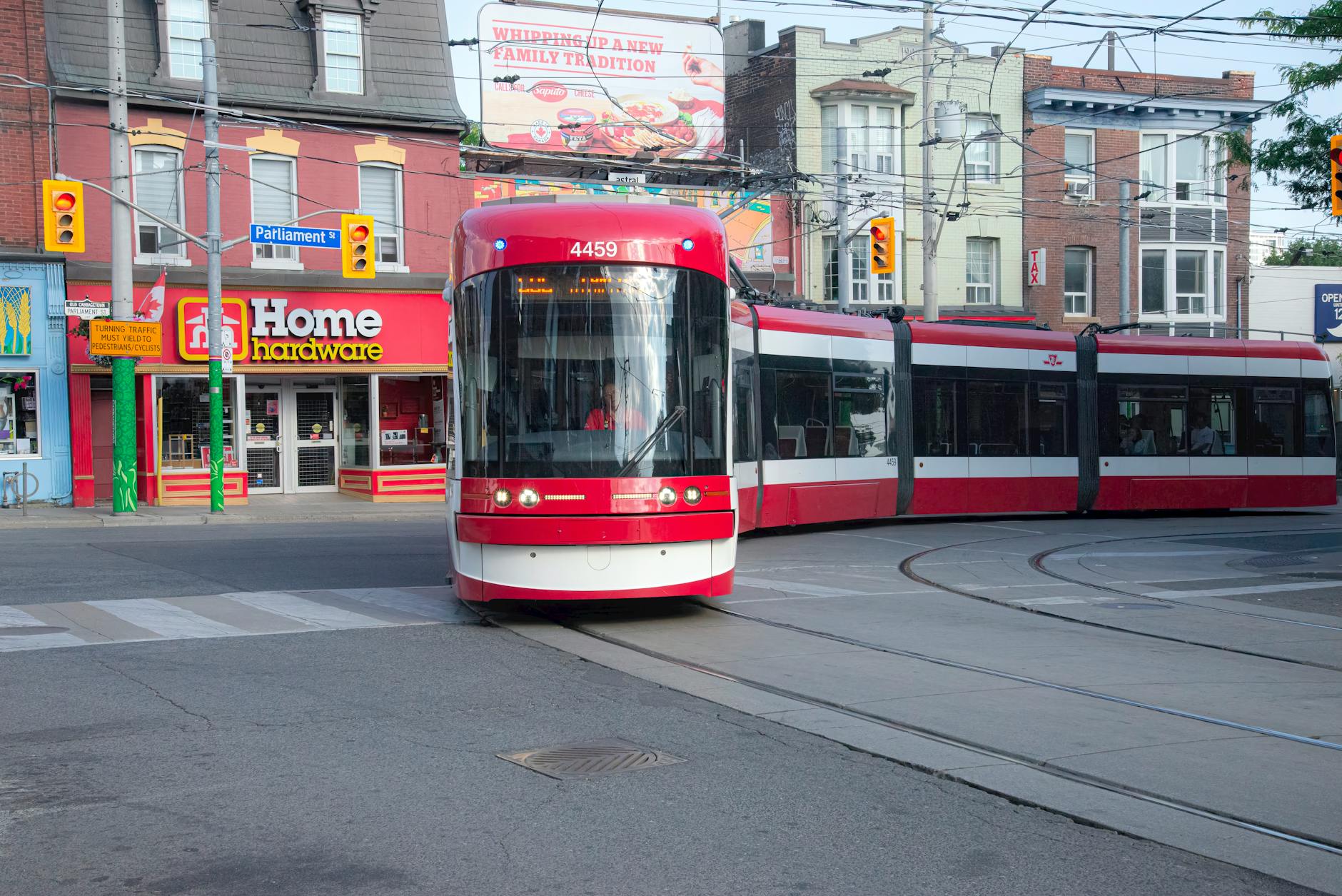
The TTC includes subway, streetcars, buses, and Wheel-Trans. For most visitors, the subway handles longer moves, while streetcars and buses handle neighborhood trips.
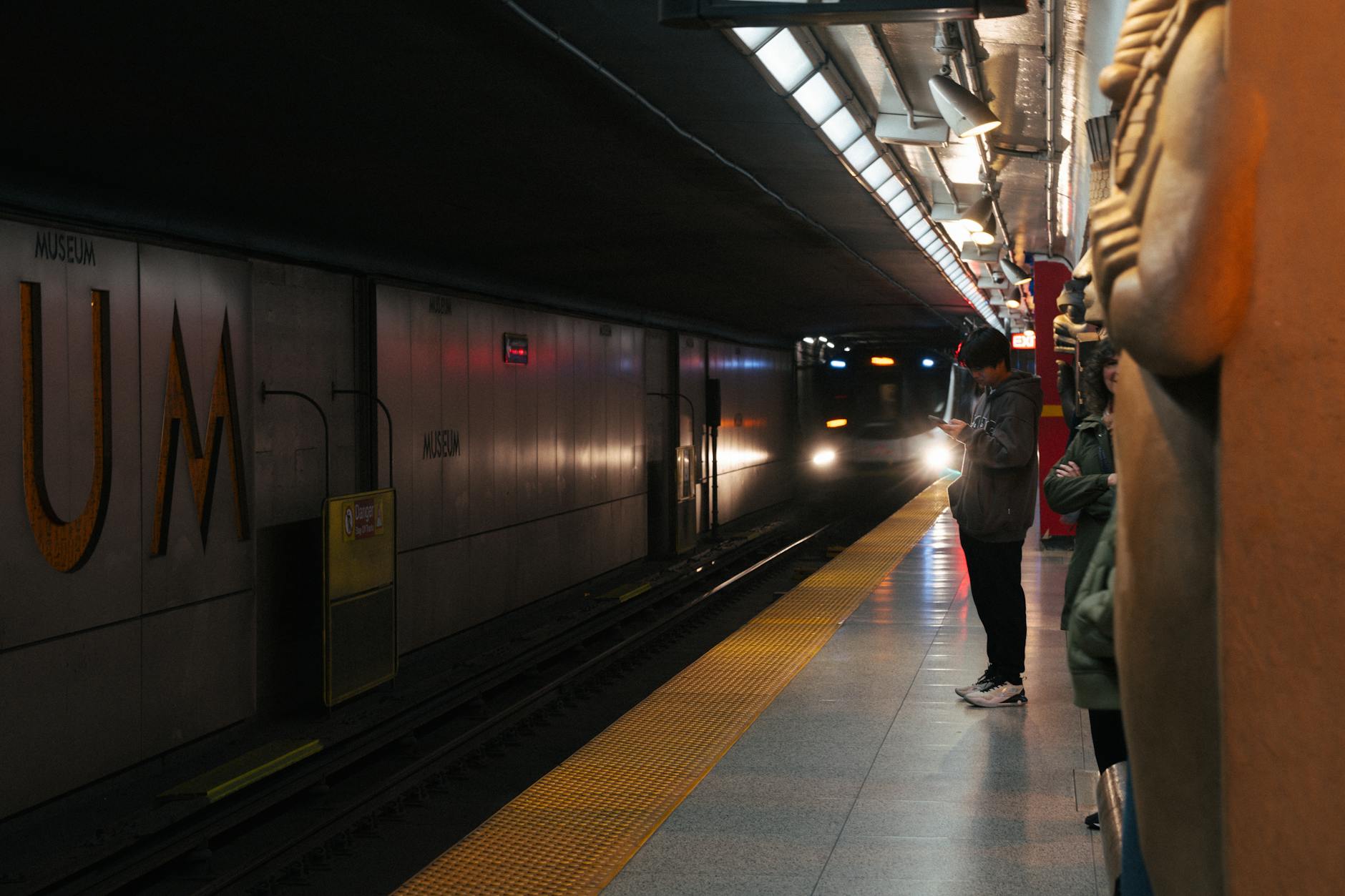
Payment: TTC lists the adult pay-as-you-go fare by debit/credit or PRESTO at C$3.30, with tapping every time you board a surface vehicle or enter a station.[7] Customers using PRESTO, PRESTO Ticket, debit, or credit get a two-hour transfer window from the first tap.[7]
Practical tips:
- Tap the same card/device throughout a transfer window.
- Streetcars are useful but can be slow in traffic.
- Subway closures and service changes happen; check before cross-city plans.
- In winter, leave buffer time.
- Some stations are not fully accessible; check elevator status if needed.
PRESTO, Contactless, and One Fare
You can use contactless credit/debit cards, mobile wallets, or PRESTO for TTC. PRESTO can also be useful across regional systems. Ontario’s One Fare Program allows riders to pay only once when connecting between TTC and GO Transit and participating local systems including Brampton Transit, Durham Region Transit, MiWay, and York Region Transit.[8]
Visitor rule: For a simple city stay, contactless payment is easiest. Use PRESTO if you need concession fares, regional transfers, or prefer a transit card.
Walking
Toronto is walkable by neighborhood, not always as a whole. Downtown, the waterfront, Yorkville/Annex, Kensington/Chinatown, Queen West/Ossington, St. Lawrence/Distillery, and Leslieville are good walking areas. Crossing the city on foot is often unrealistic.
Footwear matters: sidewalks can be icy in winter, slushy in shoulder season, hot in summer, and rough in older neighborhoods.
Cycling and Bike Share
Bike Share Toronto and waterfront trails can be useful, especially in fair weather. The Martin Goodman Trail is one of the best visitor-friendly cycling corridors. Use caution on mixed-traffic streets, streetcar tracks, and construction zones.
Rule: Never cross streetcar tracks at a shallow angle on a bike. Wheels can catch.
Driving
A rental car is usually a mistake inside Toronto. Traffic, parking, one-way streets, streetcars, construction, event closures, and expensive garages make driving frustrating. Rent a car only for regional travel where train/bus options are weak.
Use a car for: Niagara-on-the-Lake wineries, rural Ontario, cottage-country extensions, some food trips outside the TTC/GO network, or multi-stop regional itineraries.
Do not use a car for: downtown sightseeing.
Budget and Costs
Toronto is not a cheap city, especially for lodging. It is not as expensive as New York or London at the top end, but hotel prices, restaurant bills, taxes, and drinks can surprise visitors.
Daily Budget Ranges
These are rough planning ranges in CAD, excluding flights.
| Style | Daily Estimate | What It Looks Like |
|---|---|---|
| Shoestring | C$80–150 | Hostel or shared lodging, TTC, market meals, free/low-cost sights. Harder in peak season. |
| Budget | C$150–250 | Simple hotel/guest room split between two, TTC, casual food, one paid attraction. |
| Mid-range | C$250–450 | Good hotel split between two, restaurants, transit/rideshare mix, museums/attractions. |
| Comfortable | C$450–750 | Better hotel, reservation restaurants, drinks, taxis/rideshare, multiple paid attractions. |
| Luxury | C$750+ | Yorkville/luxury hotel, fine dining, private transfers, premium tickets, spa/shopping. |
What Costs More Than Visitors Expect
- Hotels, especially summer, TIFF, World Cup, convention periods, and major sports weekends.
- Cocktails and wine.
- Taxes on meals and lodging.
- Airport taxis/rideshare at peak times.
- Parking.
- Major attraction bundles if you buy without using them fully.
- Last-minute dinner reservations at high-demand restaurants.
Hotel Tax Note
Toronto’s Municipal Accommodation Tax is temporarily 8.5% from June 1, 2025 to July 31, 2026, up from 6%, according to the City of Toronto.[15] This is on top of other applicable taxes and fees. It matters when comparing hotel rates.
Best Value Moves
- Use UP Express if you are staying near Union; use TTC airport service if budget matters and bags are light.
- Use contactless TTC fares rather than taxis for most city movement.
- Eat casual lunches in food neighborhoods and reserve one or two special dinners.
- Use the Islands, parks, waterfront, Kensington, Queen West, and ravines as low-cost experiences.
- Buy CityPASS only if you will actually visit enough included attractions.
- Avoid renting a car for city days.
- Visit museums during free evenings where practical, but reserve ahead if required.
Worth the Splurge
- A well-located hotel for short trips.
- A reservation-worthy dinner.
- A sports game or concert if it aligns with your interests.
- A clear-weather CN Tower visit if you love observation decks.
- A Niagara day that is logistically smooth rather than cheap but exhausting.
Usually Not Worth It
- Staying far outside the city to save a modest amount.
- Paying for a view attraction in bad visibility.
- Driving downtown.
- Eating at generic restaurants beside major attractions.
- Booking a rushed Niagara tour that leaves no time to breathe.
Safety, Health, and Scams
Toronto is generally safe for visitors, but it is still a large city. The U.S. State Department describes Canada as generally safe for travelers and advises normal caution.[25] The right approach is neither fear nor naivety.
General Safety
Most tourist areas are fine with normal big-city awareness. Use common sense around nightlife zones late at night, transit platforms, quiet side streets after dark, parks after closing, and areas where people appear intoxicated or agitated.
Practical rules:
- Keep your phone secure near crowded streets, transit, and bars.
- Do not leave bags unattended in cafés, restaurants, or cars.
- Use licensed taxis/rideshare pickup points at airports.
- Plan transit home after late events.
- In winter, watch for ice more than crime.
- In summer, take heat and sun seriously.
Areas Requiring Extra Awareness
This guide will not label whole neighborhoods as unsafe. Conditions change block by block and time of day. Visitors should be more alert around some late-night entertainment areas, isolated transit stops, and places where visible drug use or mental-health crises are present. Most issues can be avoided by staying aware and moving on calmly.
Common Scams and Annoyances
Toronto is not a high-scam city compared with many global destinations, but watch for:
- Unofficial airport rides.
- Overpriced event tickets from unreliable resale sources.
- Fake rental listings.
- Aggressive panhandling in some areas.
- Overpriced parking.
- Restaurant bills where service charges or fees need checking.
- Tourist-trap menus near major attractions.
Health Practicalities
- Tap water is safe to drink.[23]
- Pharmacies are easy to find, but hours vary.
- Emergency care is high quality but can be expensive for non-residents; travel insurance is sensible.
- Cannabis is legal in Canada but regulated; do not assume you can use it anywhere, drive after using, or cross borders with it.
- Alcohol rules are stricter than some visitors expect; public drinking is limited by local rules and enforcement.
- Winter cold, summer heat, and air quality from wildfire smoke can all affect plans.
Emergency Numbers
Call 911 for police, fire, or medical emergencies.[24] For non-emergency city services, Toronto uses 311. For non-emergency police matters, use official Toronto Police channels.
Accessibility and Mobility
Toronto is mixed for accessibility. Many newer attractions, hotels, and streetcars are accessible, but older buildings, subway stations without elevators, winter sidewalks, construction zones, steep ravine paths, and narrow restaurants can create barriers.
Transit Accessibility
The TTC has accessible vehicles on many routes, but not every subway station is fully step-free. Elevator outages matter. Travelers with mobility needs should check station accessibility before booking a hotel or planning a day.
Sidewalks and Streets
Downtown sidewalks are generally usable but can be crowded, uneven, or blocked by construction. Winter adds snowbanks, slush, ice, and curb challenges. Older neighborhoods may have narrow storefronts, steps, and small washrooms.
Toronto Islands Accessibility
The City says the Jack Layton Ferry Terminal, ferries, terminal washrooms, and waiting shelters are accessible to passengers using wheelchairs or mobility-assisted devices.[13] Once on the Islands, surface conditions, distances, and weather still matter.
Best Areas for Easier Mobility
- Waterfront/South Core near Union, if your hotel and routes are step-free.
- Yorkville/Bloor near accessible subway stations and museums.
- Downtown hotels connected to major venues, if elevators and PATH routes align.
- St. Lawrence for relatively compact movement, though sidewalks and market crowds vary.
More Difficult Areas
- Kensington Market, because of crowds, uneven surfaces, and small shops.
- Older west-end restaurants with steps or tight interiors.
- Ravine trails after rain, snow, or freeze-thaw cycles.
- The Islands on peak days if waiting and crowding are issues.
Accessibility rule: In Toronto, “near transit” is not enough. Confirm whether the specific station, stop, hotel entrance, restaurant, and route are accessible.
Families, Solo Travelers, and Special Considerations
Families With Kids
Toronto works well for families if you pace it correctly. Good family anchors include Ripley’s Aquarium, ROM, the Islands, High Park, the waterfront, Casa Loma, sports games, libraries, playgrounds, and ferry rides.
Family tips:
- Stay near transit and avoid car-dependent plans.
- Use the Islands early in the day during summer.
- Build in playgrounds or park time.
- Do not overdo museums back-to-back.
- Choose casual food neighborhoods over formal dining every night.
- Check stroller access for older restaurants and transit stations.
Teens
Teens may enjoy Queen West, Kensington, Chinatown, sports, concerts, vintage shopping, bubble tea, sneaker shops, food halls, the Islands, and skyline views. Give them neighborhood time, not just museums.
Solo Travelers
Toronto is good for solo travelers because it is easy to eat casually, use transit, visit museums, attend shows, and wander neighborhoods. Solo dining is normal in cafés, bars, ramen shops, markets, and casual restaurants.
Solo rule: Plan late-night returns in advance, especially after concerts, bars, or games.
LGBTQ+ Travelers
Toronto has one of North America’s most visible LGBTQ+ communities, centered historically around Church-Wellesley Village, with Pride season as a major city event. As always, comfort and safety can vary by setting, but Toronto is generally a strong city for LGBTQ+ travelers.
Travelers of Color
Toronto is deeply multicultural, with more than half of its population born overseas according to the City’s visitor page.[1] That does not mean discrimination never happens, but many travelers of color find Toronto more visibly diverse than most North American cities.
Older Travelers
Toronto can work very well for older travelers if you choose a central hotel, minimize transfers, avoid winter sidewalk problems, and plan one major outing per day. Yorkville, St. Lawrence, Waterfront/South Core, and downtown hotels near Union can be practical.
Remote Workers and Long Stays
Toronto is workable for remote work, but lodging costs can be high. Choose neighborhoods with subway/streetcar access, groceries, cafés, parks, and reliable Wi-Fi. The Annex, Roncesvalles, Leslieville, Midtown, Liberty Village, and parts of the west end can be better long-stay neighborhoods than the tourist core.
Shopping and Souvenirs
Toronto shopping is strongest when you avoid only buying generic maple-leaf souvenirs. The city is good for design, food gifts, books, vintage, streetwear, independent boutiques, and neighborhood-specific finds.
Best Shopping Areas
| Area | Best For |
|---|---|
| Queen West | Fashion, boutiques, design, streetwear, galleries |
| Ossington/Dundas West | Small shops, home goods, food gifts, local brands |
| Yorkville/Bloor | Luxury, designer shopping, polished galleries |
| Kensington Market | Vintage, quirky gifts, casual food, small shops |
| Chinatown | Groceries, tea, kitchen goods, snacks, bakeries |
| St. Lawrence Market | Food gifts, Canadian products, market snacks |
| Distillery District | Visitor-friendly gifts, galleries, design objects |
| Eaton Centre | Mainstream retail, weather-proof shopping |
| Roncesvalles/Junction | Neighborhood boutiques, gifts, books, home goods |
Good Souvenirs
- Local coffee beans.
- Canadian maple products, ideally from quality producers rather than airport shelves.
- Toronto sports gear.
- Books by Toronto or Canadian authors.
- Indigenous art or crafts purchased from reputable Indigenous-owned or ethically sourced shops.
- Food-market gifts that can legally travel.
- Design objects from local makers.
- Vintage clothing from Kensington or Queen West.
What Not to Buy
- Generic mass-produced “Canada” souvenirs that could be from anywhere.
- Unverified Indigenous-style items with no clear artist or source.
- Food items you cannot legally bring home.
- Expensive airport gifts you could have bought better in the city.
Arts, Culture, History, and Context
Toronto’s history is not always visible in the way it is in older capitals, but it is everywhere once you know how to look.
Indigenous Land and Colonial City
Toronto sits on lands with long Indigenous histories, including connections to the Mississaugas of the Credit, Anishinaabe, Haudenosaunee, Huron-Wendat, and other peoples. Visitors should not treat Indigenous history as a preface that ends when the modern city begins. It remains part of Toronto’s civic, cultural, and political life.
From Town to Metropolis
Toronto grew from a colonial town called York into a provincial capital, industrial city, financial center, immigration hub, and sprawling metropolitan region. Older traces appear in Fort York, St. Lawrence, Victorian houses, churches, warehouses, and street grids. Later waves appear in postwar suburbs, apartment towers, shopping plazas, subway expansion, universities, and immigrant business districts.
Immigration as the City’s Core Story
More than half of Toronto’s population was born overseas, according to the City of Toronto’s visitor page.[1] This is not a slogan; it is the organizing fact behind the city’s food, languages, religious life, neighborhoods, suburbs, politics, schools, and cultural identity.
Condo Boom and Urban Pressure
Modern Toronto is also a city of cranes, condos, housing stress, transit debates, and rapid change. Visitors will notice construction everywhere. Some of it is exciting; some of it is exhausting. The city is growing fast, and not always gracefully.
Museums and Cultural Institutions
Key cultural institutions include:
- Royal Ontario Museum.
- Art Gallery of Ontario.
- Aga Khan Museum.
- Gardiner Museum.
- Bata Shoe Museum.
- Textile Museum of Canada.
- Museum of Contemporary Art Toronto.
- TIFF Lightbox.
- Massey Hall.
- Roy Thomson Hall.
- Four Seasons Centre for the Performing Arts.
- Harbourfront Centre.
- Koerner Hall.
- History, Danforth Music Hall, and other live venues.
Books, Film, and Music
Toronto’s cultural footprint is bigger than many visitors realize. Read or watch around the city through writers such as Margaret Atwood, Michael Ondaatje, Dionne Brand, Rohinton Mistry, Austin Clarke, and more. Musically, Toronto spans hip-hop, indie rock, R&B, electronic music, jazz, Caribbean scenes, and global diasporic sounds. Film travelers should pay attention to TIFF and the city’s role as a production hub that often doubles for other cities on screen.
Seasonal and Month-by-Month Guide
January
Cold, dark, and quieter after the holidays. Good for museums, restaurants, theater, hockey, basketball, and lower hotel rates. Pack serious winter layers and boots.
Verdict: Good for value and indoor culture; poor for first-timers wanting outdoor energy.
February
Still winter. Restaurant events, skating, museums, and cozy bars help. Weather can be harsh.
Verdict: Good for food and culture travelers; not ideal for casual sightseeing.
March
Variable and often slushy. Spring has not fully arrived. Good for value and indoor plans.
Verdict: Better late than early, but still shoulder season.
April
Unpredictable. You may get cold rain or beautiful spring days. Baseball returns, parks start waking up, and hotel rates may be more reasonable before summer.
Verdict: Fine for flexible travelers.
May
One of the better months, especially late May. Patios open, parks green up, and festival season starts building.
Verdict: Strong choice.
June
Excellent weather, long days, Pride season, patios, sports, and outdoor events. In 2026, World Cup crowds and prices become a major factor.
Verdict: Great but book early, especially in 2026.
July
Hot, lively, festival-heavy, and busy. Great for the Islands, waterfront, patios, beaches, and outdoor music.
Verdict: High-energy Toronto, with heat and hotel-price caveats.
August
Summer continues with Caribbean Carnival, CNE, beaches, parks, and peak outdoor life. Humidity and crowds remain possible.
Verdict: Excellent for festival travelers and families, less ideal for bargain hunters.
September
One of Toronto’s best months. TIFF, warm weather, cooler evenings, restaurants, and cultural energy make the city feel important.
Verdict: Excellent, but book early for TIFF dates.
October
Cooler, often beautiful, good for fall color, museums, restaurants, and long walks.
Verdict: Excellent shoulder-season choice.
November
Grey, colder, and quieter. Good for food, museums, shopping, and lower hotel rates outside event periods.
Verdict: Useful for value travelers, not atmospheric in a classic way.
December
Holiday lights, shopping, winter events, skating, and festive dinners. Also cold, busy around holidays, and weather-dependent.
Verdict: Good for holiday mood; plan around cold and crowds.
Major Annual Events
- Pride Toronto: Major June event season, with festival weekend typically late June; verify annual dates.
- FIFA World Cup 2026: Six Toronto matches plus Fan Festival from June 11 to July 19, 2026.[16]
- Toronto Caribbean Carnival: Major summer Caribbean festival; 2026 Grand Parade listed for August 1.[27]
- Canadian National Exhibition: Late August to Labour Day; 2026 dates listed as August 21–September 7.[28]
- TIFF: 2026 festival dates listed as September 10–20.[29]
- Nuit Blanche: Fall overnight art event; verify annual date.
- Winterlicious/Summerlicious: Restaurant events; dates vary.
- Sports seasons: Blue Jays in spring/summer, Leafs/Raptors in fall/winter/spring, Toronto FC/Argos in warmer seasons, plus women’s sports and special events.
Day Trips from Toronto
Niagara Falls
Best for: first-timers, families, international visitors, natural spectacle.
Niagara Falls is the classic day trip. It is touristy, powerful, and absolutely worth seeing if you have never been. The key is logistics. Niagara Parks promotes GO Train + WEGO packages that combine round-trip travel from Toronto with WEGO bus access around Niagara Parks locations.[26]
Time needed: full day.
Best transport: GO/WEGO if the schedule works; organized tour for low-stress logistics; car if combining with Niagara-on-the-Lake and wineries.
Common mistake: Treating Niagara as a quick half-day. It is possible but rushed.
Niagara-on-the-Lake and Wine Country
Best for: couples, wine, theater, pretty streets, slower travel.
Niagara-on-the-Lake is better as a car or tour day. Pairing it with the Falls can work, but only if you accept a long day.
Time needed: full day; overnight if you want romance or wine without rushing.
Stratford
Best for: theater lovers.
Stratford is famous for theater and makes a strong seasonal trip. It is better with advance planning and ideally an overnight if you want a relaxed experience.
Hamilton Waterfalls and Dundas/Ancaster
Best for: nature, hikes, industrial-city contrast, repeat visitors.
Hamilton’s waterfall areas and escarpment walks can be excellent, but transit logistics are not as simple as central Toronto. A car helps.
Prince Edward County
Best for: wine, beaches, rural food, design inns, summer weekends.
This is better as an overnight or weekend. It is too far and too spread out for a casual day unless you love driving.
Canada’s Wonderland
Best for: families and amusement-park fans.
North of the city in Vaughan. Good if you want rides, less relevant if your Toronto time is limited.
Rouge National Urban Park
Best for: nature within the city/region.
A good option for outdoorsy travelers who want something wilder than downtown parks. Requires planning around transit/trails/weather.
Scarborough Bluffs
This is technically in Toronto, not a classic day trip, but treat it like a half-day outing. The lake cliffs are dramatic, and the trip pairs well with Scarborough food.
What to Skip
Skipping well is part of good travel. These are not universal dismissals; they are filters.
Skip the CN Tower If Visibility Is Bad
The CN Tower is not cheap enough to ignore weather. If clouds, fog, smoke, or heavy rain block the view, save your money or wait.
Skip a Car for Downtown Sightseeing
Driving downtown is rarely worth it. Use transit, walking, taxis, rideshare, and regional rail.
Skip Chain Restaurants Beside Major Attractions
Toronto is too good a food city for generic meals near the CN Tower, mall corridors, or tourist-heavy blocks. Walk, transit, or reserve better.
Skip the Toronto Zoo on a Short First Trip
The zoo is large and well-known, but it is far from the core. It can be great for families with time; it is usually not a top priority for a three-day city trip.
Skip the Islands at Peak Times If You Hate Lines
The Islands are wonderful, but peak ferry lines can sour the experience. Go earlier, later, or on weekdays when possible.
Skip a Rushed Niagara Add-On If You Only Have Two Days
Niagara Falls is worth seeing, but not if it consumes half of your only Toronto trip by accident. Choose deliberately.
Skip “Best Restaurant” Lists Without Neighborhood Context
Many lists over-index on downtown or hype. Toronto food is strongest when you match cuisine, neighborhood, and logistics.
Common Mistakes
- Staying too far from transit. A hotel can look close on a map and still be inconvenient.
- Underestimating traffic. Rush hour can wreck plans.
- Trying to see Toronto and Niagara in two rushed days. Possible, not ideal.
- Treating downtown as the whole city. Toronto’s best food and neighborhoods spread outward.
- Not booking restaurants. Popular places fill up.
- Going to the Islands at peak time without a plan. Buy tickets, go off-peak, and bring patience.
- Renting a car for city days. Usually a mistake.
- Ignoring winter footwear. Cold is manageable; wet, icy feet are misery.
- Assuming all subway stations are accessible. Check if mobility matters.
- Eating only near attractions. The city’s food scene deserves effort.
- Not checking event calendars. TIFF, Pride, World Cup, CNE, concerts, conventions, and sports can change hotel rates and transit crowding.
- Forgetting taxes and tips. Budget for HST, hotel taxes, and gratuities.
- Planning Scarborough, the Islands, and Yorkville in one casual day. That is not a plan; that is a logistics problem.
Responsible Travel
Toronto is a lived-in city under real pressure: housing costs, homelessness, transit crowding, construction, climate stress, and neighborhood change. Visitors can help by spending thoughtfully and behaving like temporary residents rather than consumers of a backdrop.
Practical Ways to Visit Well
- Use public transit when practical.
- Support independent restaurants, cafés, markets, bookstores, and shops.
- Respect residential streets when exploring neighborhoods.
- Tip service workers fairly.
- Avoid blocking sidewalks for photos.
- Buy Indigenous art and cultural items only from reputable sources.
- Do not treat visible poverty or mental-health crises as spectacle.
- Use refillable water bottles; Toronto tap water is safe.[23]
- Follow park, beach, ferry, and waste rules.
- Be patient with construction and transit delays; locals are living with them too.
Packing List
Year-Round
- Comfortable walking shoes.
- Layers.
- Small umbrella or rain jacket.
- Portable phone charger.
- Reusable water bottle.
- Day bag with secure pockets.
- Contactless payment card.
- Travel insurance documents.
- Any prescriptions with proper documentation.
- Adapter if your devices do not use North American plugs.
Summer
- Light clothing.
- Sunglasses and sunscreen.
- Hat.
- Swimsuit if planning beaches, hotel pools, or Islands.
- Light jacket for lake breezes.
- Bug spray for parks/ravines if sensitive.
- Patience for heat, humidity, and festival crowds.
Winter
- Warm coat.
- Hat, gloves, scarf.
- Waterproof boots with traction.
- Thermal socks.
- Base layers if walking a lot.
- Lip balm and moisturizer.
- A plan for indoor breaks.
Spring and Fall
- Rain jacket.
- Sweater or fleece.
- Shoes that handle puddles.
- Flexible layers for temperature swings.
What Not to Pack
- Formal clothing unless you have a specific fine-dining, event, or business need.
- A heavy car-based itinerary for downtown.
- Too many bulky winter items if your hotel has easy laundry and you can layer intelligently.
- Assumptions that summer evenings are always warm by the lake.
FAQ
Is Toronto worth visiting?
Yes, if you like food, neighborhoods, museums, sports, festivals, and big-city energy. It is less satisfying if you want a compact old town or a trip built around ancient monuments.
How many days do you need in Toronto?
Three full days is the best minimum for the city. Add a fourth day for Niagara Falls. Five or six days lets you explore neighborhoods more seriously.
What is the best area to stay in Toronto for a first visit?
Downtown/Entertainment District, Financial District, Waterfront/South Core, and Yorkville/Annex are the safest first-timer choices. Queen West/Ossington is better if food and nightlife matter more than classic sightseeing convenience.
Do you need a car in Toronto?
No. A car is usually a liability for city sightseeing. Use TTC, walking, UP Express, GO Transit, and occasional taxis/rideshare. Rent a car only for regional travel.
Is Toronto safe?
Toronto is generally safe for visitors using normal big-city caution. Stay aware late at night, secure valuables, use official airport transport, and plan your way home after nightlife or events.
Is the CN Tower worth it?
It is worth it on a clear day if you like views or first-timer icons. It is skippable in poor visibility or if you prefer skyline views from the Islands.
Are the Toronto Islands worth it?
Yes, especially in good weather. Go early or off-peak on summer weekends, buy tickets in advance, and allow enough time.
Should I visit Niagara Falls from Toronto?
Yes if you have at least four days or if Niagara is a major reason for the trip. It is a full-day outing, not a casual two-hour detour.
What is Toronto’s best food neighborhood?
There is no single best. Kensington/Chinatown is great for first-timers, Ossington/Queen West for restaurant energy, Scarborough and North York for deeper regional food, and St. Lawrence for an easy market experience.
Is Toronto expensive?
It can be, especially for hotels and drinks. Transit and casual food can be reasonable, but lodging, taxes, tips, and restaurant bills add up.
Can you drink tap water in Toronto?
Yes. The City says Toronto tap water is safe to drink from the tap.[23]
What should I book ahead?
Hotels during peak periods, good restaurants, CN Tower timed tickets if important, Island ferry tickets on busy summer days, TIFF screenings, major sports/concert tickets, and World Cup-related travel in 2026.
Source Notes
This guide was drafted with current logistics checked against official or primary sources where possible. Always verify directly before publication.
- 1. City of Toronto, “Welcome to Toronto”: https://www.toronto.ca/explore-enjoy/visitor-toronto/
- 2. Destination Toronto official visitor site: https://www.destinationtoronto.com/
- 3. Government of Canada, “What you need to enter Canada”: https://www.canada.ca/en/immigration-refugees-citizenship/services/visit-canada/entry-requirements-country.html
- 4. Government of Canada, “Electronic travel authorization (eTA): How to apply”: https://www.canada.ca/en/immigration-refugees-citizenship/services/visit-canada/eta/apply.html
- 5. Toronto Pearson, “Train to city (UP Express)”: https://www.torontopearson.com/en/transportation-and-parking/up-express
- 6. TTC, “Toronto Pearson International Airport”: https://www.ttc.ca/riding-the-ttc/Service-to-the-airport/Toronto-Pearson-International-Airport
- 7. TTC, “Information about TTC fares and passes”: https://www.ttc.ca/Fares-and-passes
- 8. Metrolinx, “Ontario’s One Fare Program”: https://www.metrolinx.com/en/projects-and-programs/fare-integration/one-fare-program
- 9. Toronto Pearson, “Taxis and limos”: https://www.torontopearson.com/en/transportation-and-parking/taxis-and-limos
- 10. Billy Bishop Toronto City Airport, “To & From”: https://www.billybishopairport.com/to-from/
- 11. Billy Bishop Toronto City Airport, “Shuttle”: https://www.billybishopairport.com/to-from/shuttle/
- 12. Billy Bishop Toronto City Airport, “Public Transit”: https://www.billybishopairport.com/to-from/public-transit/
- 13. City of Toronto, “Ferry Ticket & Passenger Information”: https://www.toronto.ca/explore-enjoy/toronto-island-ferries/ferry-ticket-passenger-information/
- 14. City of Toronto, “Ferry Routes & Schedules”: https://www.toronto.ca/explore-enjoy/toronto-island-ferries/ferry-routes-schedules/
- 15. City of Toronto, “Municipal Accommodation Tax”: https://www.toronto.ca/services-payments/property-taxes-utilities/municipal-accommodation-tax/
- 16. City of Toronto, “FIFA World Cup 2026™ Toronto”: https://www.toronto.ca/explore-enjoy/festivals-events/fifa-world-cup-26/
- 17. CN Tower, “Tickets and hours”: https://www.cntower.ca/plan-your-visit/tickets-and-hours/hours
- 18. Royal Ontario Museum, “Visitor Information”: https://www.rom.on.ca/visit/visitor-information
- 19. Royal Ontario Museum, “Third Tuesday Nights Free”: https://www.rom.on.ca/whats-on/special-programs/third-tuesday-nights-free
- 20. Art Gallery of Ontario, “Location, Hours and Admission”: https://ago.ca/visit/location-hours-admission
- 21. Casa Loma, “Plan Your Visit”: https://casaloma.ca/plan-your-visit-2/
- 22. Destination Toronto, “The Complete Toronto CityPASS Guide”: https://www.destinationtoronto.com/things-to-do/special-offers/toronto-citypass/
- 23. City of Toronto, “Tap Water in Toronto”: https://www.toronto.ca/services-payments/water-environment/tap-water-in-toronto/
- 24. City of Toronto, “Who to Call in an Emergency”: https://www.toronto.ca/community-people/public-safety-alerts/who-to-call-in-an-emergency/
- 25. U.S. State Department, “Canada Travel Advisory”: https://travel.state.gov/en/international-travel/travel-advisories/canada.html
- 26. Niagara Parks, “Toronto to Niagara Falls Train - GO Transit & WEGO”: https://www.niagaraparks.com/visit-niagara-parks/plan-your-visit/deals-toronto/
- 27. Caribana Toronto, “Grand Parade 2026”: https://www.caribanatoronto.com/events/parade
- 28. Canadian National Exhibition, “Schedule 2026”: https://www.theex.com/schedule/
- 29. TIFF, “About the Festival”: https://tiff.net/about-the-festival