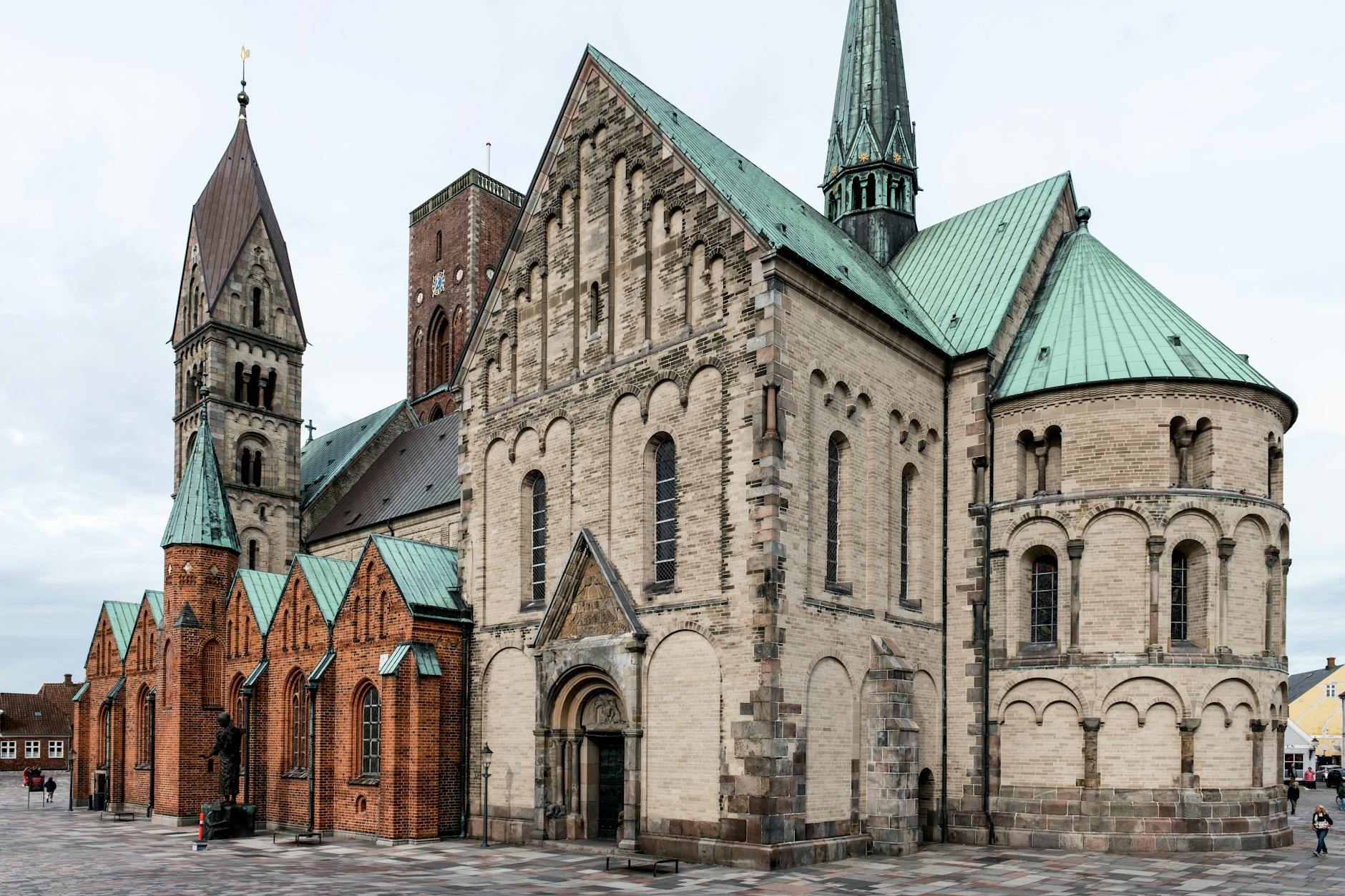
Roskilde is one of the easiest cities in Denmark to underestimate because Copenhagen sits so close to it.
Start Here
The usual mistake begins before arrival. Travelers hear "25 minutes by train," see the cathedral and the Viking Ship Museum on a shortlist, and mentally file Roskilde as a day trip with two major sights and perhaps one heritage lunch. That framing is understandable. It is also the main reason people miss what the city actually is.
Roskilde is not just a container for famous institutions. It is a fjord city with unusual depth for its size: royal burial church, Viking maritime memory, medieval urban residue, music culture, a young and contemporary edge at Musicon, and a physical setting that keeps the town tied to water even when the visitor is moving through churches, squares, and museum rooms. The city feels calmer than Copenhagen, less polished than a pure showcase town, and more substantial than the average "historic stop."
What makes Roskilde strong is not that it overwhelms. It does the opposite. It gives you enough history, enough atmosphere, enough walkability, and enough range that the place starts to feel whole very quickly. A cathedral city can sometimes become too solemn. A small Nordic city can sometimes become too mild. A museum city can sometimes become too dependent on ticketed attractions. Roskilde escapes those traps because the fjord, harbor, streets, and modern cultural layers keep the trip from hardening into one mood.
This matters because Roskilde gets flattened in two different ways. One version reduces it to monarchy and Vikings. Another reduces it to festival branding and assumes the city is mainly interesting once a year. Both versions are incomplete. Roskilde is better understood as a Danish city where power, religion, shipping, landscape, and music culture all remain legible in a compact frame.
The strongest first trip is therefore not rushed. Stay overnight if possible. Walk between the station, cathedral, historic center, harbor, and Viking Ship Museum instead of breaking the city into disconnected errands. If you have a second day, add Musicon and RAGNAROCK, or give the fjord and harbor more breathing room. Roskilde does not ask for a huge amount of time. It asks for enough time to stop behaving like a commuter satellite.
The city in one sentence: Roskilde is a compact Danish fjord city where royal history, Viking maritime identity, and contemporary music culture come together best when you stay long enough to connect the cathedral, harbor, museums, and daily town rhythm into one experience.
Basic data
| Population | About 53,000 in the city |
|---|---|
| Area | Compact fjord city |
| Major religions | Christian heritage with a strongly secular contemporary public culture |
| Political system | Municipal government inside a parliamentary constitutional monarchy |
| Economic system | High-income mixed economy led by education, services, culture, and regional trade |
Quick Verdict
Best for: first-time Denmark itineraries, couples, solo travelers, history travelers, museum travelers, rail-based trips, and anyone who likes smaller cities that feel coherent fast.
Not ideal for: travelers who need nonstop big-city energy, people who only want shopping and nightlife, or visitors who refuse to take smaller cities seriously unless they behave like capitals.
Ideal first visit: 2 full days.
Minimum worthwhile stay: 1 full day and 1 night.
Best overall months: May, June, September, and early October.
Best summer case: if you want fjord light, outdoor walking, harbor time, and a chance to understand why Roskilde is more than its museum pair.
Biggest planning mistake: treating Roskilde as only a cathedral-and-Viking errand from Copenhagen.
One thing to prioritize: a central base that keeps the station, cathedral, and harbor in easy walking sequence.
One thing to leave flexible: your harbor and fjord time. Roskilde improves when the weather invites slower outdoor movement.
The blunt version: Roskilde is one of Denmark's strongest smaller-city stays, but only if you stop apologizing for being there instead of in Copenhagen.
Who Will Love Roskilde?
Roskilde works very well for travelers who like cities with a clear historical backbone but do not want the whole trip to feel embalmed. The cathedral is serious. The Viking Ship Museum is serious. The city itself, however, is not frozen behind them. That is part of the appeal.
Couples tend to do well here because Roskilde offers an easy, atmospheric rhythm without too much friction. The distances are manageable, the main sights belong to the town rather than floating at opposite edges of it, and the fjord gives the place a calm that supports slower travel. A very good day here can involve a strong museum, a long walk, a cathedral visit, a late lunch, and an evening by the harbor without anyone feeling over-scheduled.
Solo travelers also do well because Roskilde is legible quickly. The train arrival is simple, the center is walkable, and the city provides enough cultural and visual texture that wandering does not collapse into filler. Roskilde is especially good for people who like moving alone through compact historical cities where there is a real argument behind the streets.
It is also excellent for travelers building a broader Denmark trip who want a city that reveals something capital-adjacent but not capital-dependent. Roskilde shows a different register of Denmark: older, more ecclesiastical, more fjord-shaped, and less curated around metropolitan pace.
It is less ideal for travelers who think every worthwhile urban stop must deliver big-night energy. Roskilde has bars, restaurants, music culture, and occasional intensity, but it is not trying to fill every hour with stimulus. Its strength is proportion.
Roskilde at a Glance
| Question | Practical Answer |
|---|---|
| Main airport gateway | Copenhagen Airport |
| Best arrival from Copenhagen | Direct train to Roskilde |
| Typical rail impression | very easy |
| Best first-time base | central Roskilde between station and cathedral, or center toward the harbor |
| Main historical anchor | Roskilde Cathedral |
| Main maritime anchor | Viking Ship Museum |
| Main contemporary culture anchor | Musicon / RAGNAROCK |
| Best way to understand the city | walking |
| Best outdoor logic | center down to harbor and fjord |
| Car needed? | No |
| Main rail operator | DSB |
| Emergency number | 112 |
| Tap water | Safe to drink |
| Currency | Danish krone |
| Power plugs | Type C, E, F, and K compatibility is common |
2026 Visitor Notes
The Copenhagen-Roskilde Relationship Is A Strength, Not A Warning Sign
Roskilde Cathedral's official English visitor material still describes the site as just 25 minutes by train from Copenhagen Central Station.[1] DSB also continues to position Roskilde as a very fast rail hop from Copenhagen.[8] That convenience is useful, but it is also the main reason people instinctively under-allocate time.
The Viking Ship Museum Is Not A Background Attraction
The Viking Ship Museum remains open daily year-round, with longer summer hours and boat-trip options in season.[2] That matters because the museum is not simply a room of relics. It is one of the places where Roskilde's relationship to the fjord becomes active and visible.
The Cathedral Still Carries The City's Main Historical Weight
Official Roskilde Cathedral material continues to frame the site as a royal journey through 800 years of history and emphasizes its UNESCO status and royal burial role.[1] That is not marketing exaggeration. The cathedral is the city's central historical force.
Roskilde's Story Is Wider Than Cathedral Plus Vikings
Visit Fjordlandet's current Roskilde materials present the city through world heritage, Viking culture, and modern music life rather than through one monument alone.[4][5] That is the right way to understand it.
Musicon And RAGNAROCK Give The City A Needed Modern Layer
RAGNAROCK's official visitor page still places the museum in Musicon, near the Roskilde Festival grounds, with regular opening hours and straightforward public-transport access.[6] If you have time for a second cultural layer, this is the one that keeps Roskilde from becoming over-medievalized in your memory.
Festival Season Changes The City's Mood
Roskilde Festival's official 2026 facts confirm the dates as June 27 to July 4, 2026, with more than 130,000 participants.[9] That does not make Roskilde impossible then. It does mean you should book earlier and decide whether you want festival-adjacent energy or not.
How to Understand Roskilde
Roskilde works through five forces.
The first is royal and ecclesiastical gravity. The cathedral is not just a major sight. It tells you why Roskilde mattered at a level beyond ordinary town history.
The second is fjord orientation. Roskilde is not a pure harbor city like some coastal places, but the fjord is still part of its emotional and visual logic. The town reads differently once you walk down toward the water.
The third is Viking maritime identity. The Viking Ship Museum is not decorative branding. It is central to how Roskilde relates to the broader Danish story.
The fourth is compactness. The city is small enough that the main layers can actually be experienced in relation to one another instead of as separate expeditions.
The fifth is modern cultural continuity. Musicon, RAGNAROCK, and the festival shadow keep Roskilde from collapsing into a historical diorama.
The Five Roskildes A Visitor Actually Meets
Cathedral Roskilde: kings, queens, chapels, brick Gothic scale, and the city's longest timeline.
Fjord Roskilde: harbor air, water light, slower walking, and the sense that the town belongs to a landscape and not just a rail line.
Viking Roskilde: ships, seafaring, craft, and the museum's unusually direct relationship to place.
Town-Center Roskilde: streets, squares, cafés, daily Danish life, and the compactness that makes the city usable.
Music-City Roskilde: Musicon, RAGNAROCK, festival spillover, and the reminder that this city still produces contemporary cultural meaning.
The Main Mental Shift
Do not ask, "Can Roskilde fill a day?" Ask, "What version of Denmark does Roskilde show better than Copenhagen does?" That question produces a better trip. The answer usually involves scale, history, water, and cultural continuity.
What Roskilde Does Better Than People Think
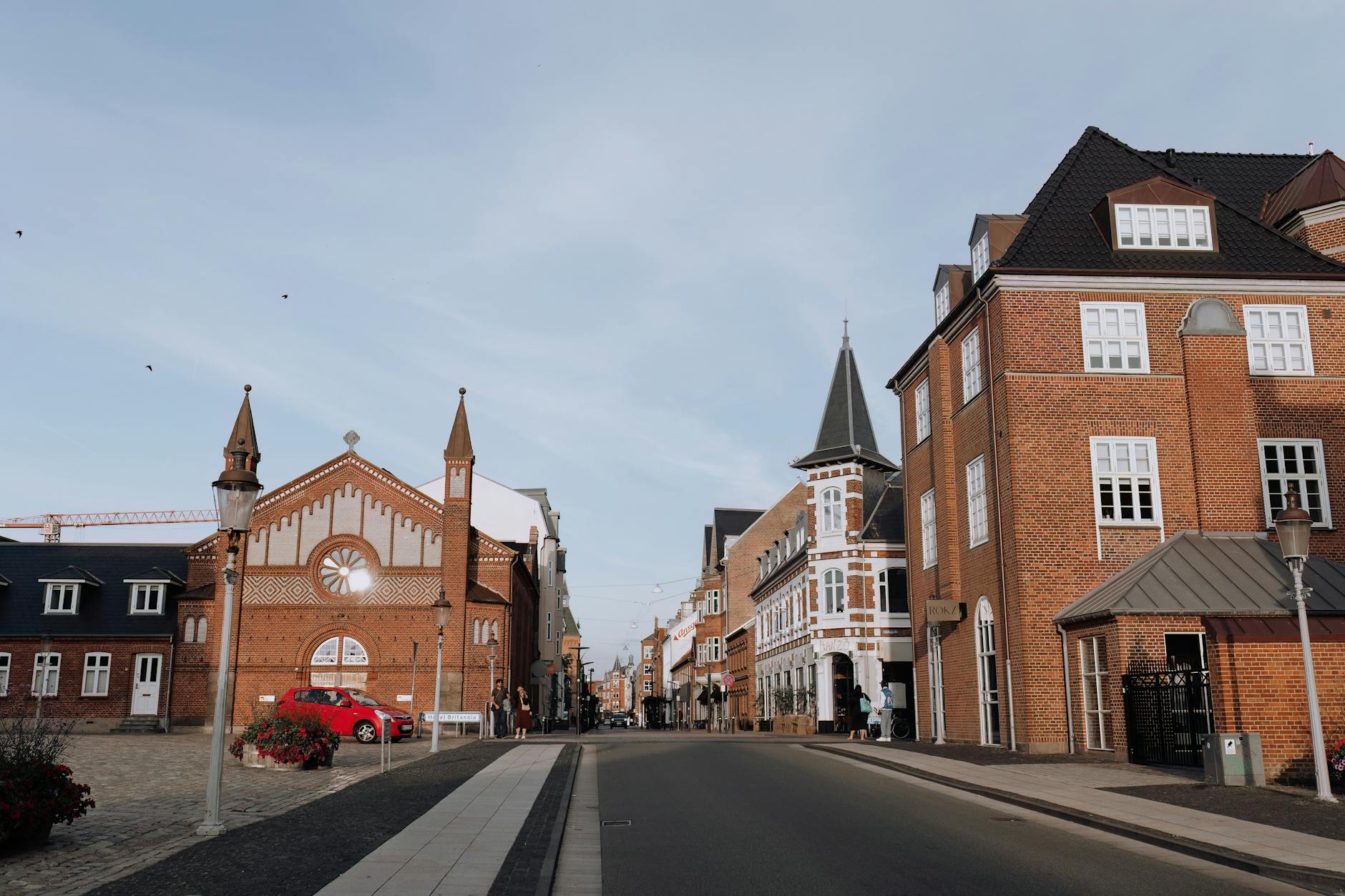
Roskilde is better than people think at urban completeness. It is small, but it rarely feels thin if you use it correctly. The city center, cathedral, harbor, and museums all sit in a relationship that makes sense on foot.
It is also better than people think at balancing grandeur and calm. The cathedral is genuinely weighty. The fjord and town rhythm are genuinely quieting. Many destinations manage one or the other. Roskilde manages both.
Another underrated strength is historical range. Royal burial church, Viking maritime archaeology, medieval ruins, and modern music culture are not random pieces here. They form a surprisingly coherent sequence about how Denmark imagines itself.
Roskilde is stronger than people think at short-break usefulness. If you only have one or two nights outside Copenhagen, this is one of the most rational and rewarding choices in the country.
Finally, Roskilde is better than people think at giving you room to breathe. It does not demand a frantic pace to justify its place in an itinerary.
Best Time to Visit Roskilde
Roskilde is a year-round city, but the balance between cathedral-and-museum time and fjord-and-harbor time changes quite a lot with the season.
Best Overall Months
May, June, September, and early October are the safest recommendations for most first-time visitors. You typically get good walking conditions, useful daylight, and enough outdoor comfort to let the harbor and fjord matter.
Summer
Summer is the easiest season in which to see Roskilde at full breadth. The fjord is more active, the museum harbor makes intuitive sense, and the city's outdoor spaces become part of the trip instead of just the route between indoor stops. The tradeoff is that festival season can alter pricing and mood.
Early Autumn
Early autumn is perhaps the smartest choice for travelers who want Roskilde without maximum summer pressure. The city often feels crisp, readable, and more composed.
Winter
Winter Roskilde is more cathedral-and-museum-led, but it can still work well if you like northern small-city quiet. The city becomes more interior and less harbor-driven, which is a real shift, not merely a weather adjustment.
Spring
Spring is strong because the town begins opening outward again. A first-time spring visit can feel fresher and less crowded than high summer while still giving you enough usable daylight.
How Many Days You Need
Half a Day
Enough to confirm that Roskilde exists. Not enough to understand why it matters.
One Full Day
Good for a respectable first impression if you move efficiently: cathedral, historic center, harbor, and Viking Ship Museum.
Two Full Days
Ideal for most first-timers. This allows one day for the cathedral-center-harbor-Viking line and another for Musicon, slower fjord time, or a less hurried museum pace.
Three Days
Very good if you want Roskilde to function as a genuine stay rather than an efficient stop. This is enough time to add a slower fjord walk or a modest regional extension without degrading the city itself.
Where to Stay in Roskilde
Hotel choice matters here because the city is compact enough that a weak base can make Roskilde feel smaller than it is, while a good base makes the place feel coherent almost immediately.
Fast Answer
For most first-time visitors, stay centrally between the station and the cathedral, or in the center with easy access toward the harbor. Roskilde is strongest when you can walk everything that matters without negotiating long edges of town.
Neighborhood Decision Table
| Traveler Type | Best Area |
|---|---|
| First-time visitor | station-to-cathedral center |
| Couple weekend | center with an easy walk to harbor |
| Rail-based short stay | near station, but still clearly central |
| History-heavy trip | cathedral-center zone |
| Calm longer stay | central edge toward fjord side |
Station-To-Cathedral Center
Best for: first-timers, rail travelers, short stays, and anyone who wants easy structure. Why it works: you keep arrival simple and the city's main historical core close. Tradeoff: slightly less immediate fjord atmosphere. Best use: the default practical answer.
Center Toward The Harbor
Best for: travelers who want Roskilde to feel a little less functional and a little more scenic. Why it works: you stay connected to the town while letting the water matter more naturally. Tradeoff: slightly longer walk back from the station depending on the exact property. Best use: one- or two-night stays where atmosphere matters.
Area Profiles
Historic center: best for cathedral access, short-stay efficiency, and café breaks between core sights.
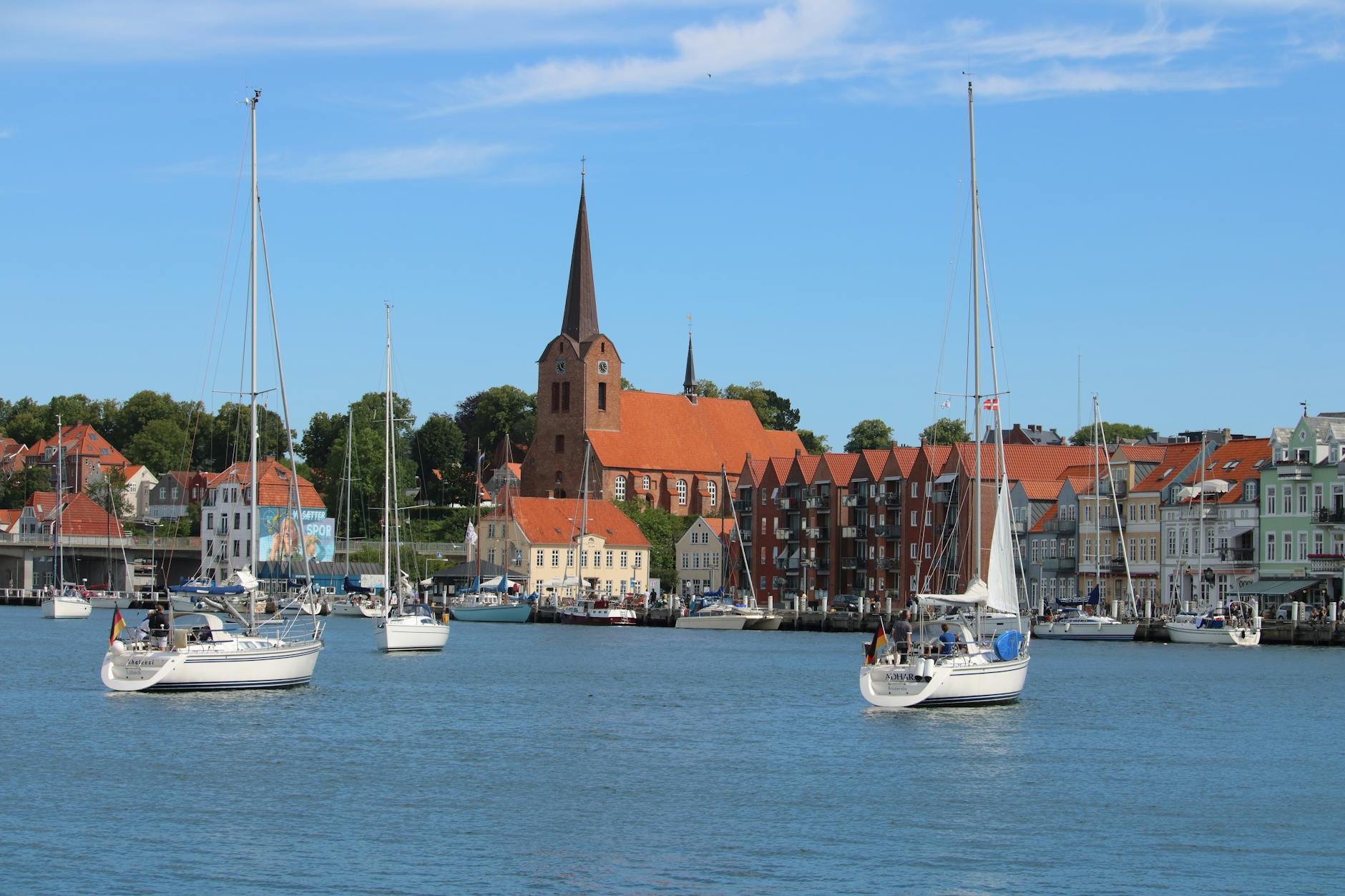
Harbor side: best for softer evenings, fjord atmosphere, and making the city feel less inland than first impressions suggest.
Musicon side: best only if you specifically care about RAGNAROCK, concerts, or that district's modern development logic.
Neighborhood Guide: Where to Explore, Not Just Sleep
The historic center is where Roskilde makes its main civic argument. The cathedral is the obvious anchor, but the surrounding streets matter because they show how the city actually wears its history: not as a single monumental precinct, but as part of ordinary urban life.
The walk down toward the harbor is essential. Without it, Roskilde can seem too dominated by church and museum logic. With it, the city relaxes and becomes more dimensional. The shift in pace is part of the trip.
The Viking Ship Museum side is one of the places where Roskilde stops being abstractly important and becomes physically persuasive. The fjord setting and maritime emphasis explain why the city belonged to larger stories of movement and power.[3]
Musicon is worth seeing if you have a second day because it gives Roskilde modern contrast. The district and RAGNAROCK remind you that this is not just a city that peaked centuries ago.[6]
The Best Things to Do in Roskilde
- Visit Roskilde Cathedral early enough that it still feels like the city's center and not just a ticketed stop.[1]
- Walk from the center down to the harbor so the fjord becomes part of your understanding of the city.
- Spend meaningful time at the Viking Ship Museum rather than treating it as a quick companion sight.[2]
- Use at least one meal or coffee break to stay in town rather than immediately bouncing back to Copenhagen.
- If you have a second day, go to Musicon and RAGNAROCK.[6]
- If timing aligns, remember that festival season changes Roskilde's whole emotional temperature.[9]
Itineraries
If You Have One Full Day
Do the cathedral in the morning, keep the center and lunch nearby, walk to the harbor, then give the Viking Ship Museum the afternoon. This is the cleanest first-time route because it allows Roskilde to unfold from royal and ecclesiastical gravity toward water and maritime culture.
If You Have Two Full Days
Keep day one for the classic city logic: cathedral, center, harbor, museum. Use day two for Musicon and RAGNAROCK, plus slower harbor or town time. This is the point at which Roskilde starts feeling like a real stay instead of a very good stop.
If You Have Three Days
Use the third day to slow down rather than to over-expand. Roskilde benefits from repeated walks and a little looseness. Add a longer fjord-side block or a regional extension only after the city itself feels complete.
Itineraries By Traveler Type
History-first traveler: cathedral, Sankt Laurentius-related old-town material, Roskilde Museum if desired, then Viking Ship Museum.
Couple weekend: one serious sight in the morning, a long lunch, harbor walking, one second museum or design-your-own café block, and a relaxed evening in town.
Rail-based Denmark itinerary: arrive early, drop bags centrally, do the cathedral first, museum later, and stay the night so Roskilde has an evening and morning rather than only a middle.
Culture traveler: build the trip around cathedral, Viking Ship Museum, and RAGNAROCK so Roskilde reads across centuries rather than as a single-period city.
Food and Drink
Roskilde is not a destination where you come primarily to chase restaurants, but it is absolutely a city where meals help complete the stay. The right approach is simple: eat in town, not in a hurry, and let the city keep its shape around the meal.
The center works best for first-time visitors because it keeps the cathedral and old streets emotionally close. Harbor-side coffee or drinks can be stronger later in the day because the fjord does some of the work. Roskilde is also the kind of place where a bakery stop, café pause, or modest Danish lunch can belong to the trip as much as a dinner reservation.
The real mistake is to skip this layer entirely and let Roskilde become only a sequence of institutional visits. Smaller cities need moments of inhabiting, not just consuming.
Getting Around
Roskilde is primarily a walking city for visitors. That is one of its strongest qualities.
Arrival by train is simple, and the station is a real advantage rather than a peripheral inconvenience.[7][8] From there, most first-time visitors can do everything central on foot. Buses help if you are shaping a specific outer move, but most good Roskilde trips should feel almost self-propelled.
If you are arriving from Copenhagen Airport, the key point is still simplicity: Roskilde is not hard to reach, and that ease is one of its main assets. Do not overcomplicate it into a transfer puzzle.
What To Skip
Skip the instinct to reduce Roskilde to only its most famous two sights and then leave immediately.
Skip over-programming the wider region before you have let the city itself land. Roskilde does not need to prove itself through constant motion.
Skip judging the place by whether it offers Copenhagen-level nightlife or shopping. That is the wrong question.
Common Mistakes
The first mistake is staying zero nights.
The second is never walking down to the fjord.
The third is allowing the cathedral to dominate your memory so completely that the maritime and modern-cultural sides disappear.
The fourth is coming during festival season without realizing the scale of Roskilde Festival's effect on logistics and mood.[9]
The fifth is treating Roskilde as a lesser Copenhagen instead of as a different and more compact Danish city with its own logic.
My Blunt Advice
If you only have time for a day trip, Roskilde is still worth doing. But if you have enough control over your itinerary to stay one night, do that instead.
This city becomes much more persuasive once it has an evening and a morning. The cathedral stops feeling like a detached monument. The harbor stops feeling like an add-on. The Viking Ship Museum stops feeling like a side attraction. Roskilde starts feeling like a complete small city with unusually rich historical range and unusually good proportions.
Do not arrive defensive about giving time to a city so close to Copenhagen. That defensiveness is exactly how people miss one of Denmark's most satisfying smaller urban stays.
Where Roskilde Fits in a Denmark Trip
Roskilde matters in a Denmark itinerary because it gives you a version of the country that Copenhagen cannot. The capital gives scale, polish, design fluency, and metropolitan confidence. Roskilde gives compression, older gravity, fjord orientation, and a clearer sense of how religion, kingship, maritime power, and later music culture can all sit inside one smaller urban frame.
That makes Roskilde especially strong as a correcting city. If your trip risks becoming too capital-heavy, Roskilde reminds you that Danish identity was not built only in contemporary Copenhagen terms. If your route leans too heavily toward picturesque small towns, Roskilde restores urban seriousness without requiring another major-city commitment. If you want one smaller city in Denmark that is genuinely worth sleeping in, Roskilde is one of the cleanest answers.
It is also useful because it delivers historical weight without isolating that weight from daily life. You can arrive by ordinary train, walk to a UNESCO royal burial cathedral, continue through a working center, reach the fjord, and end up in a Viking maritime museum or a contemporary music district without ever needing the city to perform like a theme park. That is rare.
In a wider Denmark trip, Roskilde usually works best as either one dedicated overnight stay or two days attached to a rail route. It is less useful when crammed defensively into an itinerary only because the train is short and someone feels they "should" go. Roskilde rewards conviction more than obligation.
Roskilde Versus Aarhus
The comparison many travelers need is Roskilde versus Aarhus, not because the cities are interchangeable, but because they answer similar itinerary questions in very different ways. Both can serve travelers who want something beyond Copenhagen. Both offer strong culture. Both have a relationship to water. But their scale, rhythm, and function are not alike.
Aarhus is a second city. It has broader neighborhoods, a larger cultural field, stronger shopping and restaurant variety, and more independent urban momentum. Roskilde is smaller, tighter, and more concentrated around a handful of structural ideas: cathedral, fjord, maritime archaeology, and music culture. Aarhus asks for more city time. Roskilde often asks for better city attention.
This matters because travelers who want another proper Danish city beyond Copenhagen may be happier with Aarhus if they have several extra days. Travelers who want a shorter, denser, more legible stay with unusually high historical weight often do better in Roskilde. Aarhus expands a Denmark trip. Roskilde deepens it.
The distinction also protects Roskilde from an unfair test. It should not be judged by whether it can provide second-city amplitude. Its value lies in how much meaning it can hold without needing that amplitude.
First-Time Visitors Versus Repeat Visitors
Roskilde is friendly to first-time visitors because it is so easy to read. The train works. The cathedral is obvious. The center connects quickly. The harbor route is understandable. You can arrive and feel like you know what kind of place you are in almost immediately.
That is a genuine strength, but it can also lead first-time travelers into a shallow version of the city. Because Roskilde seems so legible, some people assume that seeing the cathedral, doing the Viking Ship Museum, and walking back to the station means they have essentially understood it. They have understood only the outline.
Repeat visitors tend to discover that Roskilde improves once you stop treating it like a checklist stop and start treating it like a compact urban stay. You notice the quality of the walk between center and water. You care more about where you sleep. You give more time to Musicon or simply allow the harbor to matter in weather and light. You begin to understand that the city’s real achievement is not the existence of individual sights, but the way those sights form an unusually coherent town.
The best first-time travelers can borrow this repeat-visitor posture. Give Roskilde a night. Accept repetition. Let the city be slightly more than efficient. It usually gets better exactly there.
Cooler-Season Roskilde Versus Summer Roskilde
Summer makes Roskilde easier to visualize and, in some ways, easier to oversimplify. The harbor is active, the fjord feels immediately relevant, the Viking Ship Museum’s outdoor and boat-related energy becomes more intuitive, and the city reads quickly as a calm historical summer stop. All of that is real.
But cooler-season Roskilde often clarifies something equally important: the city is not dependent on fair-weather harbor charm. In autumn or winter, the cathedral carries more of the emotional load, the center can feel more inward and more Danish in rhythm, and museum time becomes more structural instead of feeling like shelter from better outdoor plans.
This seasonal shift matters because it reveals what kind of place Roskilde really is. A weak destination becomes thin outside its most flattering weather. Roskilde usually does not. It simply tilts. In summer, the fjord and harbor help the city breathe outward. In cooler months, the ecclesiastical and civic layers become more pronounced.
Shoulder season is still the cleanest recommendation for most first-timers because it preserves Roskilde’s outdoor coherence without putting too much pressure on festival-adjacent logistics or peak-weather expectations. But the city should not be mistaken for a summer-only success.
Why One Proper Roskilde Day Matters
Roskilde is compact enough that many travelers assume it can be absorbed quickly. That assumption creates the classic weak version of the city: a train in, cathedral, Viking Ship Museum, perhaps a coffee, then departure. The traveler has "done" Roskilde, but they have not really let the city form.
One proper Roskilde day changes the entire experience. A real city day means the cathedral is not just a ticketed monument. It means the center gets time to bridge history and daily life. It means the walk to the harbor can function as transition rather than commute. It means the museum and the fjord are not background proof that you came all this way.
This matters because Roskilde’s value is relational. The cathedral is stronger once the rest of the town has given it civic context. The Viking Ship Museum becomes stronger once the fjord has emotional presence. The modern cultural layer matters more when you have already established the older one. Roskilde works when its pieces speak to each other.
That does not require a huge amount of time. It does require refusing to turn the city into an errand.
Why the Base Matters More Than Visitors Expect
Because Roskilde is small, it is tempting to think the exact base barely matters. In practice, the base changes the city’s tone much more than people expect. A room placed well between station, center, cathedral, and harbor lets Roskilde feel easy, complete, and worth lingering in. A room chosen only for mechanical convenience can make the city feel thinner and more provisional than it is.
The right base in Roskilde does three things. It makes arrival calm. It keeps your main historical and civic anchor close. And it lets you return from the harbor or an evening out without turning the city back into a transport exercise. Those are not luxuries in a smaller city. They are the difference between inhabiting the place and simply passing through it.
There is also a psychological effect. Travelers often decide whether a smaller city “justifies” itself partly through how frictionless the stay feels. Roskilde benefits disproportionately from a base that reinforces its coherence. The city can seem richer simply because you are not wasting energy negotiating it poorly.
Day Roskilde Versus Evening Roskilde
By day, Roskilde can feel almost archetypal in its logic: station, center, cathedral, walk to water, museum, return. The structure is clear. The town explains itself efficiently. Many visitors stop there.
Evening Roskilde is what often persuades people that the city deserves an overnight. Once the day-trippers thin out, the center relaxes, the harbor can feel calmer, and the cathedral stops being only a major sight and starts feeling like part of a lived place. Dinner, a slow walk, and a quiet return can do a surprising amount of work here.
This is one of the reasons zero-night Roskilde trips leave so much value on the table. The city is not a nightlife destination in the big-city sense, but it does have an evening identity, and that identity helps the place stop reading as a heritage module on a rail line.
Morning matters too. A city that gives you a good evening and a good next morning tends to feel much more complete in memory. Roskilde benefits enormously from that simple fact.
Why Copenhagen Should Not Own the Whole Trip
Copenhagen is close enough that it exerts constant gravitational pull on Roskilde planning. Travelers keep measuring time spent in Roskilde against time that could be spent in the capital, and that comparison weakens their choices before the trip even starts.
The better approach is not to deny Copenhagen’s importance. It is to stop letting Copenhagen own Roskilde’s meaning. Roskilde is not useful only because it sits near somewhere bigger. It is useful because it gives a different national register: more compact, more ecclesiastical, more fjord-shaped, less metropolitan, and more historically concentrated.
If every Roskilde choice is judged by what you are missing in Copenhagen, Roskilde will always seem secondary. If Roskilde is judged by what it does that Copenhagen does not, it becomes much stronger very quickly. That is the mental shift that makes an overnight feel obvious instead of indulgent.
Why Food Is Structural, Not Decorative
Roskilde is not a city that markets itself primarily through food, which makes it easy for travelers to forget that meals matter to the success of the stay. They do. In a smaller city especially, eating in the right place at the right time helps the town become inhabited rather than merely visited.
A good lunch in the center, a coffee that interrupts museum momentum, a harbor-side pause, or a dinner that belongs to Roskilde rather than to convenience all help complete the city’s shape. Without those moments, the day risks becoming a sequence of institutions connected by walking.
This is also a place where moderation works well. You do not need a parade of destination restaurants. You need enough calm and enough local rhythm that the city can keep its tone around the meal. Roskilde improves when it feels like somewhere you spent time, not somewhere you processed content.
Why Roskilde Often Works Better Than It Sounds
Smaller European cities often suffer from one of two reputation problems: they are either oversold as hidden gems or undersold as worthy but unnecessary. Roskilde more often suffers from the second. Because Copenhagen is close and the famous attractions are easy to summarize, the city can sound thinner than it is.
Then people arrive and discover that Roskilde works better than the summary because the city’s pieces are unusually well related. The cathedral is not isolated from the center. The fjord is not conceptually separate from the Viking story. The modern music layer is not absurdly disconnected from the older town. The whole place feels less like a list and more like a compact civic argument.
This is why Roskilde often surprises experienced travelers who thought they were simply slotting in an efficient heritage stop. They realize the city has enough shape, enough atmosphere, and enough cultural range to deserve more confidence than that.
Why Roskilde Often Improves on the Second Visit
The first visit to Roskilde is often driven by the obvious major institutions, which makes sense. The cathedral and the Viking Ship Museum deserve that gravity. But once those anchors are established, the second visit can often feel more relaxed and more complete because you stop demanding that each hour prove the city’s importance.
That is when the fjord, the evening rhythm, the center as center, and Musicon as contrast tend to matter more. You may spend longer simply walking, return to the harbor on purpose, or finally give RAGNAROCK the place it deserves in the story of the city. You no longer need Roskilde to justify itself through its most famous evidence alone.
Not every traveler will make a second visit, of course. But understanding that Roskilde belongs to the class of places that improves with familiarity helps first-time travelers plan more intelligently. It tells you not to force completeness on day one.
How Roskilde Changes Over the Course of a Stay
On arrival, Roskilde often feels manageable to the point of danger. The train works, the station is easy, the center is close, the cathedral is obvious, and the city appears small enough to master immediately. That impression is not wrong, but it is incomplete.
During the first major walk, the city usually confirms its historical seriousness but may still seem a bit too efficiently understood. Then the harbor and fjord begin to widen the experience. The Viking Ship Museum adds a different register. The center becomes less transitional and more inhabitable. If you stay into the evening, the whole place gains softness and proportion.
By the next morning, Roskilde often feels much more like a complete city than it did on arrival. You know how the parts fit. You no longer think only in terms of the two major institutions. You remember the water, the streets, and the ease. That is the real arc of Roskilde: from efficient heritage stop to whole small city, provided you give it enough time to make that change.
Source Notes
- 1. Roskilde Cathedral, official English visitor page: [https://roskildedomkirke.dk/english/](https://roskildedomkirke.dk/english/)
- 2. Viking Ship Museum, official opening hours and admission page: [https://www.vikingeskibsmuseet.dk/en/visit-the-museum/opening-hours-and-admission?L=3](https://www.vikingeskibsmuseet.dk/en/visit-the-museum/opening-hours-and-admission?L=3)
- 3. Viking Ship Museum, official visitor overview: [https://www.vikingeskibsmuseet.dk/en/visit-the-museum/](https://www.vikingeskibsmuseet.dk/en/visit-the-museum/)
- 4. Visit Fjordlandet, official Roskilde overview: [https://www.visitfjordlandet.dk/en/](https://www.visitfjordlandet.dk/en/)
- 5. Visit Fjordlandet, official "48 hours in Roskilde" guide: [https://www.visitfjordlandet.com/fjordlandet/towns-places/roskilde/roskilde-guide](https://www.visitfjordlandet.com/fjordlandet/towns-places/roskilde/roskilde-guide)
- 6. RAGNAROCK, official visitor page: [https://museumragnarock.dk/besoeg-os/](https://museumragnarock.dk/besoeg-os/)
- 7. DSB, official Roskilde Station page: [https://www.dsb.dk/trafikinformation/stationer/roskilde/](https://www.dsb.dk/trafikinformation/stationer/roskilde/)
- 8. DSB, official Copenhagen travel page noting Copenhagen and Copenhagen Airport rail links to other Danish cities: [https://www.dsb.dk/en/travelling-in-the-cities/copenhagen/](https://www.dsb.dk/en/travelling-in-the-cities/copenhagen/)
- 9. Roskilde Festival, official 2026 facts page: [https://www.roskilde-festival.dk/en/press/press-kit/facts-about-roskilde-festival](https://www.roskilde-festival.dk/en/press/press-kit/facts-about-roskilde-festival)