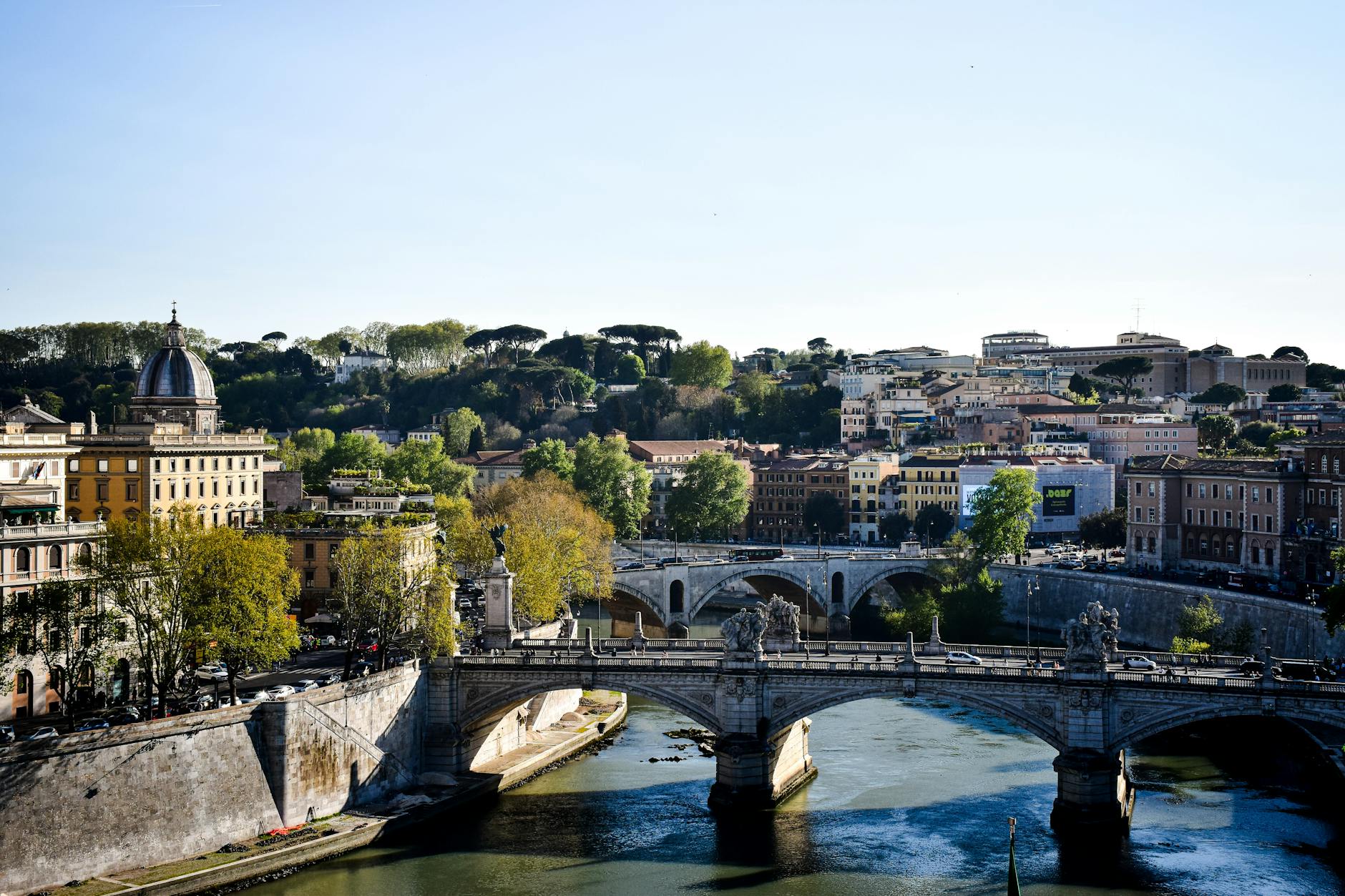
Rome is not a city you finish. It is a city you enter.
Start Here
You arrive with a list: the Colosseum, the Vatican, the Trevi Fountain, the Pantheon, pasta, gelato. Rome gives you those things, often magnificently. But the real trip starts when the checklist loosens. It starts when you learn that a perfect Roman morning might be just one church, one coffee, one ancient street, and one long walk through stone that has outlived almost every empire, fashion, and bad idea thrown at it.
Rome rewards patience. It punishes overplanning. The city is dense, famous, crowded, uneven underfoot, occasionally maddening, and still one of the most emotionally powerful places a traveler can visit. It is not a polished museum city. It is a living capital built directly on top of its own past: pagan temples become churches, imperial ruins sit beside traffic, Renaissance palaces hide apartments, and a normal errand might pass a Bernini fountain, a medieval tower, and a restaurant serving a recipe older than some countries.
This guide is designed for travelers who want more than “top 10 things to do in Rome.” It explains where to stay, how to pace your days, what to book ahead, which famous sights are worth the pressure, how to eat Roman food without falling into tourist traps, how to move through the city without wasting energy, and how to experience Rome as a layered place rather than a set of monuments.
Rome in one sentence: Rome is a living argument between eternity and everyday life, best understood on foot, slowly, and with fewer plans than you think you need.
Basic data
| Population | About 2.8 million |
|---|---|
| Area | 1,285 km2 |
| Major religions | Roman Catholic heritage with a largely secular modern urban culture |
| Political system | Mayor-council city government inside a parliamentary republic |
| Economic system | Advanced services economy driven by government, tourism, media, and business services |
Quick Verdict
| Question | Answer |
|---|---|
| Best for | Ancient history, churches, art, architecture, food, romance, Catholic pilgrimage, archaeology, piazza life, walking, first trips to Italy, museum-heavy travel, long lunches, and city wandering |
| Not ideal for | Travelers who want spotless order, quiet streets, easy driving, perfect transit, low crowds, smooth sidewalks, or a relaxed beach-style city break |
| Ideal first visit | 4 full days. Three days works for the essentials; 5–6 days lets the city breathe; a week is excellent if you want day trips, deeper neighborhoods, and slower mornings. |
| Best months | April, May, late September, and October are the classic sweet spots. March and November can be excellent value months. July and August are hot, crowded, and more tiring. |
| Best first-timer base | Pantheon/Piazza Navona/Campo de’ Fiori for atmosphere and walkability; Monti for Colosseum access and a younger neighborhood feel; Prati for Vatican logistics and calmer streets; Spanish Steps/Trevi for polished central convenience. |
| Biggest planning mistake | Trying to do the Colosseum, Roman Forum, Vatican Museums, St. Peter’s, Trevi Fountain, Pantheon, Spanish Steps, Trastevere, and a long dinner in one day. Rome is old, dense, crowded, and slower than your map suggests. |
| One thing to book ahead | Colosseum timed entry, Vatican Museums, Borghese Gallery, popular restaurants, underground/arena tours, and any special-access archaeological site. |
| One thing to leave unscheduled | A late-afternoon wander: Pantheon to Piazza Navona, Jewish Ghetto to Trastevere, Monti to the Colosseum at dusk, or Aventine to Testaccio. |
| Best free pleasure | Church-hopping, piazza-sitting, evening walks, fountain routes, hilltop views, and the way golden light hits ordinary walls. |
| Most important warning | Rome is not hard, but it is physical. Cobblestones, stairs, heat, long museum corridors, and packed buses add up. Build in pauses. |
The Move
Plan Rome by zones and moods, not by landmark distance. On a map, everything in the historic center looks close. In real life, you are navigating cobblestones, crowds, crossings, security lines, church hours, midday heat, and the gravitational pull of every beautiful side street. A strong Rome day has one anchor, one neighborhood, one good meal, and one unplanned walk.
Who Will Love Rome?
You will probably love Rome if you want:
- A city where ancient, medieval, Renaissance, Baroque, Fascist-era, and contemporary Italy all occupy the same streets.
- A trip built around walking, food, art, churches, piazzas, archaeology, and long dinners.
- A place where famous sights still feel powerful, even when crowded.
- A city that can be deeply romantic without needing curated romance.
- A first Italian city that gives you the whole argument: grandeur, chaos, beauty, bureaucracy, genius, decay, faith, ego, appetite, memory.
You may struggle with Rome if you need:
- A calm city with smooth logistics.
- A destination where public transportation always behaves predictably.
- Low crowds at major landmarks.
- Easy access for mobility-limited travelers without careful planning.
- A food scene that is forgiving of total spontaneity in the most tourist-heavy zones.
Rome is worth visiting because it still has the rare power to make history feel present. Not “interesting.” Present.
Rome at a Glance
| Practical | Detail |
|---|---|
| Country | Italy |
| Region | Lazio |
| Capital note | Rome is the capital of Italy and the historic seat of the ancient Roman Republic and Empire; Vatican City is an independent state enclosed within the city. |
| Language | Italian. English is common in hotels, major attractions, many restaurants, and tourist-facing businesses, but a few Italian phrases help. |
| Currency | Euro, written as € or EUR |
| Cards vs cash | Cards are widely accepted, especially in hotels, restaurants, museums, and shops. Keep some cash for small cafés, markets, tips, public restrooms, and places with minimum card amounts. |
| Main airports | Fiumicino “Leonardo da Vinci” Airport (FCO) and Ciampino Airport (CIA) |
| Main rail station | Roma Termini, with Tiburtina and Ostiense also useful depending on route and neighborhood |
| Best arrival default | From Fiumicino, Leonardo Express to Termini is the simple train choice; taxi is best for late arrivals, families, heavy luggage, or hotels not near rail/metro. From Ciampino, taxi or airport bus is usually easiest. |
| Public transit | Metro, buses, trams, regional rail, and urban rail. Useful but not as frictionless as Paris, London, or Tokyo. Walking remains central to a good Rome trip. |
| Transit payment | ATAC supports paper/digital tickets, contactless Tap & Go, and passes. Current common fares include the €1.50 100-minute BIT, €8.50 24-hour ticket, €15 48-hour ticket, €22 72-hour ticket, and €29 weekly CIS.[1] |
| Taxi airport fixed fares | Official fixed taxi fares inside the Aurelian Walls are €55 from/to Fiumicino and €40 from/to Ciampino, inclusive of supplements, according to Roma Mobilità.[3] |
| Emergency number | 112 is the single emergency number in Italy.[14] |
| Tap water | Safe to drink. Rome’s public drinking fountains, called nasoni, are one of the city’s underrated gifts. |
| Tipping | Not like the United States. Round up, leave a few euros for good service, or add around 5–10% for a very good restaurant meal if service is not already included. |
| Tourist tax | Rome charges an accommodation contribution for non-residents staying overnight; rates vary by accommodation type/class and are calculated per person based on the applicable rules.[5] |
| Entry rules | Italy is in the Schengen Area. Many visa-exempt travelers can visit for short stays, but rules depend on nationality. The EU Entry/Exit System is now part of external border procedures, and ETIAS is expected to start in the last quarter of 2026.[6][7] |
First-Timer Mistake
Thinking Rome is “small enough to wing it” and “famous enough that any restaurant will be fine.” Rome is walkable, yes. It is also tiring. And in the most heavily touristed lanes, lazy food choices can punish you.
How to Understand Rome
Rome is best understood as layers.
There is ancient Rome, visible in the Colosseum, Forum, Palatine Hill, Pantheon, Baths of Caracalla, Appian Way, and scattered columns embedded in later buildings.
There is Christian Rome, a city of basilicas, relics, pilgrimage routes, papal patronage, saints, martyrs, rituals, processions, and the enormous gravitational field of St. Peter’s and the Vatican.
There is Baroque Rome, the city of theatrical fountains, piazzas, church facades, Bernini, Borromini, and the art of overwhelming you at just the right angle.
There is capital Rome, the Rome of ministries, traffic, demonstrations, commuters, apartment blocks, political institutions, and everyday Italian life.
And then there is your Rome, which will probably be made of morning coffee, a hotel street, a favorite gelato stop, a church you entered only to escape heat, and one walk you did not plan.
Rome’s Basic Layout
For visitors, Rome is less confusing if you divide it into practical zones:
| Zone | What it means for visitors |
|---|---|
| Centro Storico | The historic center around the Pantheon, Piazza Navona, Campo de’ Fiori, Trevi Fountain, Spanish Steps, and Jewish Ghetto. Best for first-time atmosphere and walking. |
| Ancient Rome / Colosseum / Forum / Palatine | The archaeological heart. Powerful, exposed, crowded, and best with a plan. Monti and Celio are useful bases nearby. |
| Vatican / Prati / Borgo | Best for Vatican Museums, St. Peter’s, Castel Sant’Angelo, and calmer, grid-like streets. More residential and orderly than the historic center. |
| Trastevere / Gianicolo | Romantic, lively, photogenic, and restaurant-heavy. Better for evenings than for hitting all major sights quickly. |
| Testaccio / Ostiense | Food, markets, Roman working-class history, nightlife edges, street art, and better value. Excellent for repeat visitors and serious eaters. |
| Termini / Esquilino / San Giovanni | Transit convenience, value hotels, immigrant food, major basilicas, and mixed urban texture. Practical, not postcard-perfect. |
| Villa Borghese / Pinciano / Parioli | Museums, parks, embassies, quieter upscale streets, and a softer landing for travelers who want less chaos. |
| Appian Way / South Rome | Ancient roads, catacombs, aqueducts, bike rides, and the sense of Rome opening into countryside. Best as a half-day escape. |
The City’s Rhythm
Rome wakes slowly but gets crowded early where visitors concentrate. The best rhythm is:
- Early morning: best for Trevi, Spanish Steps, exterior photos, market visits, and quiet piazzas.
- Mid-morning: best for booked museums, churches, archaeological sites, and serious sightseeing.
- Lunch: do not waste it. Rome is a lunch city if you let it be.
- Mid-afternoon: good for a rest, a church, a shaded museum, or a hotel pause. Summer afternoons can be punishing.
- Late afternoon: Rome’s magic hour. Walk.
- Evening: dinner, piazzas, Trastevere, Monti, wine bars, and monuments lit from below.
Many churches close for part of the afternoon. Some restaurants close between lunch and dinner. Museums and archaeological sites have specific weekly closure rules. The correct move is to check opening hours before you build the day, not after.
Rome’s Central Contrasts
Rome is gripping because it never resolves itself neatly.
- Sacred vs sensual: Pilgrimage basilicas and long lunches coexist naturally.
- Empire vs apartment life: Ruins are not isolated; they are part of traffic patterns.
- Tourist Rome vs Roman Rome: Some famous places are still essential; some ordinary neighborhoods are more revealing.
- Grandeur vs decay: Rome is beautiful partly because it does not look freshly painted for your arrival.
- Planning vs surrender: You need timed tickets, but the best memories often happen between them.
Local Logic
Rome is not designed for maximum visitor efficiency. It is designed by time, power, terrain, faith, and habit. Treat inefficiency as part of the operating system, not a personal insult.
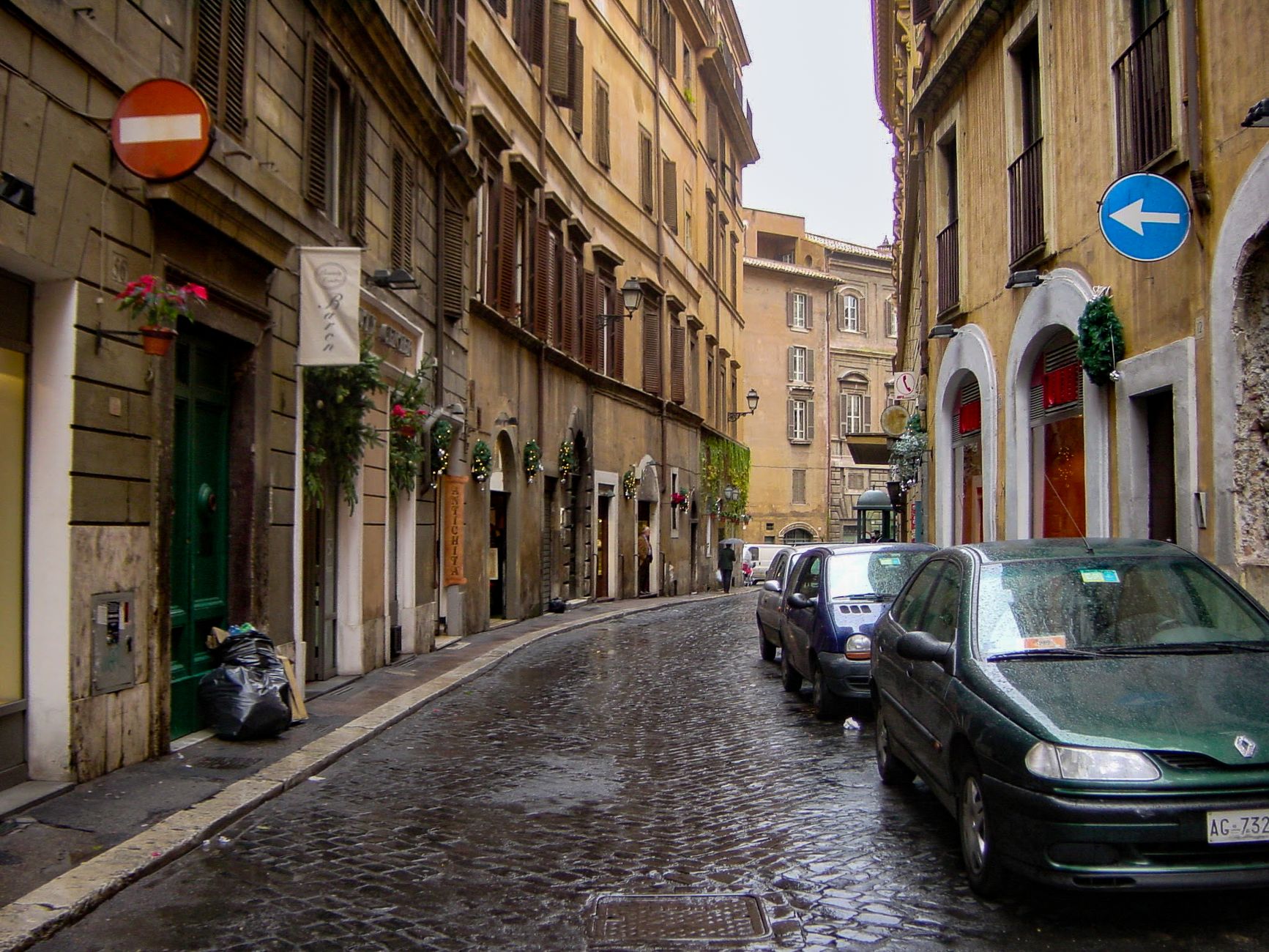
Best Time to Visit Rome
Rome is a year-round city, but your experience changes dramatically by season. The main variables are heat, crowds, hotel prices, religious calendars, school holidays, and whether you want outdoor wandering or museum-heavy days.
The Short Answer
| Traveler type | Best time |
|---|---|
| Best overall first visit | April, May, late September, October |
| Best value | January, February, March, November, early December outside major holidays |
| Best for outdoor walking | March–May and October–early November |
| Best for museums and churches | Winter and shoulder season |
| Best for long evenings | May, June, September |
| Best to avoid heat | November–March |
| Worst for heat-sensitive travelers | July and August |
| Most spiritually significant for Catholic travelers | Holy Week/Easter, Christmas, major Vatican events — but these periods require planning and patience |
Season by Season
Spring: March to May
Spring is Rome at its most persuasive: flowers, longer days, full restaurant terraces, and enough warmth to make wandering feel natural. It is also increasingly crowded. Easter and spring holidays can spike demand around the Vatican and major sights.
Best for: first-timers, walkers, couples, outdoor meals, photography, families before summer heat.
Watch out for: sold-out Vatican/Colosseum slots, higher hotel prices, occasional rain, Easter crowds.
Summer: June to August
Summer gives you long days and lively nights, but it is also hot, crowded, and physically draining. July and August can make archaeological sites feel exposed and punishing. Some smaller local restaurants may close for holidays in August, though central tourist areas remain active.
Best for: travelers tied to school holidays, nightlife, long evenings, people comfortable with heat.
Watch out for: midday heat, dehydration, crowded buses, hotel rooms without strong air-conditioning, overpacked itineraries.
Fall: September to November
September still feels summery; October is one of the best months in Rome; November can be softer, rainier, and more affordable. Fall is excellent for food, walking, and a more adult-paced trip.
Best for: serious food travelers, couples, first-timers, museum-and-walk combinations.
Watch out for: October popularity, rain in November, shorter days later in the season.
Winter: December to February
Winter Rome is underrated. It is not empty, but it is more breathable outside Christmas, New Year, and major religious dates. Light can be beautiful, meals feel deeper, and museums are easier to handle.
Best for: lower prices, museums, churches, food, repeat visitors, travelers who dislike heat.
Watch out for: shorter days, rain, chilly apartments/hotel rooms, holiday closures, Christmas/Vatican crowd spikes.
Month-by-Month Guide
| Month | Verdict | What to know |
|---|---|---|
| January | Good value | Quietest after New Year. Great for museums and churches; bring layers. |
| February | Good value | Cool, manageable, useful for lower hotel rates. Carnival may add local color. |
| March | Strong shoulder month | Spring begins, crowds rise, weather varies. Excellent walking month. |
| April | Excellent but busy | One of the best months, especially outside Easter peaks. Book ahead. |
| May | Excellent but popular | Long days, warm weather, high demand. One of Rome’s most beautiful months. |
| June | Good but hot | Long evenings and strong energy; heat and crowds increase. |
| July | Harder | Hot, expensive, crowded. Start early, rest midday, book air-conditioning. |
| August | Difficult for some | Very hot; some local closures; still busy around major sights. Best if you accept a slower rhythm. |
| September | Very good | Still warm, lively, and popular. Great evenings. |
| October | Excellent | Possibly the best month overall, but not a secret. Hotels can be pricey. |
| November | Underrated | Rain risk, lower pressure, strong food-and-museum month. |
| December | Atmospheric | Beautiful around Christmas, busier near holidays and Vatican events. Early December is often better value. |
The Move
In warm months, treat 7:30 a.m. to noon and 5 p.m. to 10 p.m. as your prime sightseeing windows. The middle of the day is for lunch, shade, museums, hotel rest, or one carefully chosen indoor stop.
How Many Days You Need
Rome can fill a lifetime, but most visitors need to make choices.
| Trip length | What you can do |
|---|---|
| 1 day | A taste: one major anchor, a historic-center walk, one good meal. Do not attempt both Vatican and Colosseum deeply. |
| 2 days | Colosseum/Forum zone, historic center, and either Vatican or Borghese. Fast but possible. |
| 3 days | Strong first-timer minimum: ancient Rome, Vatican, historic center, one neighborhood evening. |
| 4 days | Ideal first visit: adds breathing room, Trastevere/Testaccio, Borghese or Appian Way, better meals. |
| 5 days | Best for travelers who want both icons and depth. Allows one day trip or slow neighborhood day. |
| 1 week | Excellent if you love art, food, churches, day trips, and slower mornings. You will still not “finish” Rome. |
Best First Visit Length
Four full days is the sweet spot. With four days, you can do:
- Historic center and Trevi/Pantheon/Navona.
- Colosseum, Forum, Palatine, and Monti.
- Vatican Museums, St. Peter’s, Prati, and Castel Sant’Angelo.
- Borghese, Trastevere, Testaccio, Appian Way, or a flexible Roman day.
Skip This Mentality
Do not treat Rome like a cruise-port scavenger hunt. The city becomes less impressive when you move too fast. The monuments need context; the food needs time; the streets need wandering.
Where to Stay in Rome
Where you stay changes your Rome. A hotel near the Pantheon gives you late-night piazza walks. Monti gives you ancient Rome and neighborhood energy. Prati gives you Vatican convenience and calmer sleep. Trastevere gives you atmosphere and nightlife but less transit convenience. Termini gives you value and movement, not romance.
The Short Answer
For a first visit, stay in Pantheon/Piazza Navona/Campo de’ Fiori if you want maximum atmosphere and walkability. Stay in Monti if you want Colosseum access and a slightly younger, village-like base. Stay in Prati if the Vatican is central to your trip or you want calmer streets. Stay near Spanish Steps/Trevi if you want polished central convenience and do not mind crowds.
Neighborhood Decision Matrix
| You want... | Stay here |
|---|---|
| Best all-around first-timer base | Pantheon / Piazza Navona / Campo de’ Fiori |
| Most romantic central base | Pantheon, Navona, Spanish Steps, or a quiet lane near Campo de’ Fiori |
| Best Colosseum access | Monti, Celio, or Colosseum-adjacent hotels |
| Best Vatican access | Prati or Borgo |
| Best nightlife atmosphere | Trastevere or Monti |
| Best food-focused base | Testaccio, Monti, Trastevere, or near the Jewish Ghetto |
| Best value with transit | Termini, Esquilino, San Giovanni, Prati, Ostiense |
| Best for families | Prati, Pantheon/Navona if budget allows, South/Central areas near parks, or apartments in quieter streets |
| Best for luxury | Spanish Steps, Via Veneto, Villa Borghese/Pinciano, select historic-center properties |
| Best for repeat visitors | Testaccio, Aventine, Ostiense, San Giovanni, Garbatella, Prati |
| Best if arriving late by train | Termini, but choose carefully and prioritize immediate-station convenience over romance |
| Best with mobility concerns | Prati or flatter central areas; avoid steep, cobbled, stair-heavy bases unless the hotel is carefully vetted |
Centro Storico: Pantheon, Piazza Navona, Campo de’ Fiori
Best for: first-timers, couples, walkers, short stays, atmosphere seekers.
This is the Rome people imagine: narrow lanes, ochre walls, fountains, churches, piazzas, gelato stops, and the ability to walk to a shocking number of major sights. The Pantheon/Navona area is probably the best all-around base for a first visit if your budget allows.
Why stay here: You can step outside at night and already be in Rome. Trevi, the Jewish Ghetto, Campo de’ Fiori, Piazza Navona, the Pantheon, and the river are all practical on foot.
Why not: Expensive, crowded, tourist restaurants everywhere, older buildings with small elevators or no elevators, taxi access can be awkward on tiny lanes.
Perfect day from here: Early Pantheon exterior, coffee, Piazza Navona before crowds, side-street church, lunch near the Ghetto, hotel rest, Trevi at dusk, dinner away from the most obvious lanes.
Spanish Steps, Trevi, and Via del Corso
Best for: central convenience, shopping, luxury hotels, first-timers who want iconic Rome nearby.
This area is polished, busy, and undeniably convenient. Spanish Steps and Trevi are famous for a reason, but the crowds can be relentless. It works best for travelers who want to be central and are willing to pay for a strong hotel.
Why stay here: Walkability, shopping, easy access to many classic sights, luxury hotel density, lively evenings.
Why not: Heavy crowds, tourist menus, expensive rooms, and the risk that your “Roman street” feels like a constant visitor corridor.
Local logic: Stay on a quieter side street, not directly on the main tourist artery.
Monti
Best for: Colosseum access, couples, younger travelers, boutiques, wine bars, a neighborhood feel near major sights.
Monti is one of the best bases for visitors who want centrality without living directly inside the Pantheon/Trevi crush. It has good restaurants, small shops, bars, and easy access to the Colosseum, Forum, Santa Maria Maggiore, and Termini.
Why stay here: Atmospheric but useful; close to ancient Rome; better neighborhood texture than many central tourist zones.
Why not: Hilly in parts, not as close to Vatican/Prati, and some streets get loud at night.
Perfect day from here: Colosseum timed entry, Forum/Palatine, late lunch, hotel rest, Monti aperitivo, night view of the Colosseum.
Prati and Borgo
Best for: Vatican visitors, calmer streets, families, older travelers, shoppers, travelers who want order.
Prati is across the river from the historic center and near the Vatican. It is more residential and grid-like, with broad streets, shops, cafés, and a calmer nighttime feel. Borgo, closer to St. Peter’s, can be very atmospheric but more pilgrimage/tourist-facing.
Why stay here: Excellent for Vatican Museums and St. Peter’s; quieter than central lanes; good transit; more modern buildings.
Why not: Less “ancient Rome outside your door”; some areas feel more practical than romantic; you will cross the river often.
The move: Stay here if Vatican access matters, but do not spend every evening here. Walk back via Castel Sant’Angelo and the river at least once.
Trastevere
Best for: nightlife, atmosphere, couples, repeat visitors, evening energy.
Trastevere is beautiful and lively: ivy, lanes, warm light, church squares, restaurants, bars, and postcard Roman texture. It is also heavily visited, especially at night. It can be a wonderful base if you want evening atmosphere and do not mind being less central for morning sightseeing.
Why stay here: Romantic streets, strong nightlife, good access to Janiculum Hill, Jewish Ghetto, and Testaccio by foot or short ride.
Why not: Can be noisy, crowded, and inconvenient for early Vatican/Colosseum starts compared with more central bases.
Perfect day from here: Morning in the historic center, lunch near the Ghetto, rest, Santa Maria in Trastevere, aperitivo, dinner, late lane-wander.
Testaccio and Ostiense
Best for: food lovers, repeat visitors, value seekers, nightlife edges, travelers who want a more local base.
Testaccio is one of Rome’s great food neighborhoods, with market culture, Roman cooking history, and easy access to Ostiense’s street art and nightlife. It is not the classic first-timer postcard base, but it can produce a better food trip.
Why stay here: Food, value, local life, good links, excellent for people who have already done the big icons.
Why not: Less instantly romantic; more transit/taxi reliance for major sights; fewer luxury options.
The move: Come here even if you do not stay here. A Rome trip without Testaccio is still good, but a food-focused Rome trip without Testaccio is incomplete.
Termini and Esquilino
Best for: budget, train logistics, late arrivals, early departures, access to Santa Maria Maggiore, multi-city Italy trips.
Termini is practical. It is not Rome at its most charming. Around the station, streets vary quickly: some are fine, some feel scruffy, some are busy with commuters and budget hotels. Esquilino adds immigrant restaurants, markets, and major basilicas.
Why stay here: Better prices, transit, train convenience, easy airport links.
Why not: Less romantic, uneven street feel, more need to choose the exact block carefully.
First-timer advice: Termini can be smart for budget travelers, but do not choose it blindly. Read recent hotel reviews about the immediate street, soundproofing, and walking route at night.
Aventine, Celio, and San Giovanni
Best for: quieter stays, repeat visitors, church lovers, longer trips.
These areas sit southeast/south of the main historic center and offer a more residential rhythm, major churches, and some lovely walks. Celio is useful for the Colosseum; Aventine is elegant and green; San Giovanni has basilica grandeur and more everyday Roman life.
Why stay here: Calm, character, churches, park access, better prices in places.
Why not: Not as central for every sight; some hills; fewer “step out into the postcard” hotel locations.
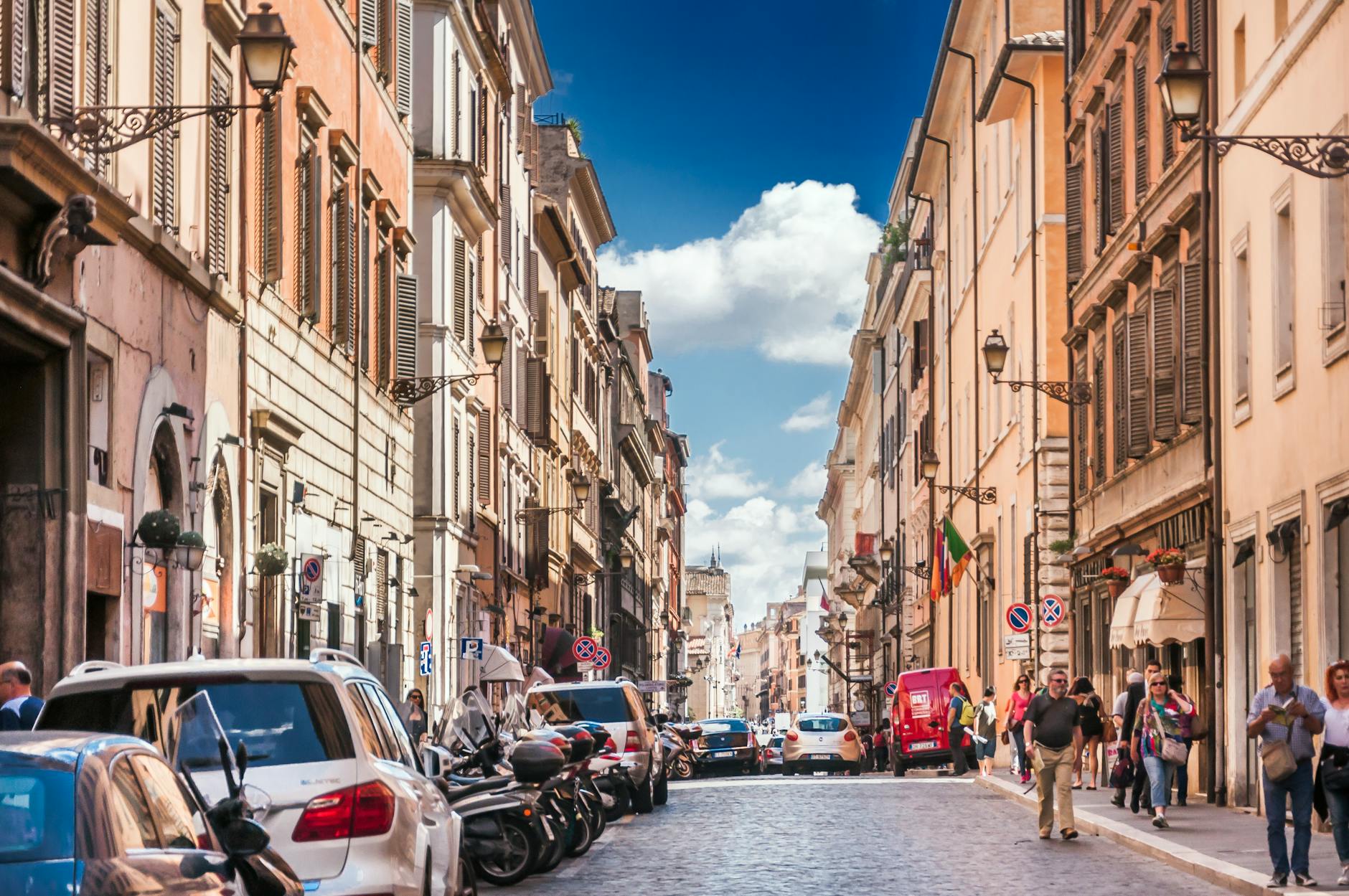
Neighborhood Guide
Rome neighborhoods are not only places to sleep. They are how the city becomes legible.
Pantheon and Piazza Navona
Identity: Rome’s most atmospheric central zone, dense with churches, fountains, palaces, and lanes.
Best time: Early morning for quiet, late afternoon for glow, evening for atmosphere.
Do: Pantheon, Piazza Navona, Sant’Ivo alla Sapienza exterior, Sant’Agostino, San Luigi dei Francesi, coffee, side-street wandering.
Skip: Eating directly on the most obvious piazza frontage unless you know exactly why you are there.
One perfect walk: Start at the Pantheon, step into Santa Maria sopra Minerva, loop to Piazza Navona, detour to San Luigi dei Francesi, then drift toward Campo de’ Fiori or the Jewish Ghetto for lunch.
Trevi and Spanish Steps
Identity: Iconic, crowded, polished, shop-heavy Rome.
Best time: Very early or late. The Trevi Fountain’s closest basin area now has a €2 access ticket for tourists/non-residents during posted daytime/evening hours, while broader viewing from the piazza remains the easier low-effort option.[13]
Do: Trevi Fountain, Spanish Steps, Keats-Shelley House if interested, Via Margutta, Piazza del Popolo, Pincio viewpoint.
Skip: Any restaurant whose main argument is its view of a major tourist choke point.
One perfect walk: Trevi before 8 a.m., espresso, Spanish Steps, Via Margutta, Piazza del Popolo, then climb to the Pincio for a view across Rome.
Ancient Rome: Colosseum, Forum, Palatine, Capitoline
Identity: The archaeological core of Rome and one of the most important urban landscapes in the world.
Best time: Opening time or late afternoon, especially outside peak heat.
Do: Colosseum, Forum, Palatine Hill, Capitoline Museums, Campidoglio, Trajan’s Market, Via dei Fori Imperiali at dusk.
Book ahead: Colosseum timed entry through the official ticketing channel; special access such as arena/underground tickets can sell out quickly.[8]
One perfect walk: Colosseum timed entry, Forum, Palatine, Capitoline overlook, then Monti for lunch or aperitivo.
Monti
Identity: A central village with ancient edges, boutiques, bars, restaurants, and useful transit.
Best time: Late afternoon and evening.
Do: Santa Maria Maggiore, San Pietro in Vincoli, boutiques, wine bars, Via Urbana, Monti aperitivo, Colosseum night view.
Skip: Assuming every cute place is good. Monti is popular; quality varies.
One perfect walk: Start at Santa Maria Maggiore, drop through Monti, visit San Pietro in Vincoli, continue to the Colosseum exterior at golden hour, then dinner nearby.
Jewish Ghetto and Campo de’ Fiori
Identity: A compact, historically rich zone of food, memory, markets, and river proximity.
Best time: Late morning through dinner.
Do: Portico d’Ottavia, Great Synagogue exterior/museum if interested, Largo di Torre Argentina, Campo de’ Fiori, Roman-Jewish food, Tiber Island.
Eat: Artichokes in season, Jewish-Roman specialties, bakeries, traditional trattorias.
One perfect walk: Campo de’ Fiori market, Largo di Torre Argentina, Jewish Ghetto, Tiber Island, cross to Trastevere before sunset.
Trastevere
Identity: Lanes, nightlife, churches, restaurants, and warm Roman evening atmosphere.
Best time: Early morning for quiet; evening for energy.
Do: Santa Maria in Trastevere, Santa Cecilia, Villa Farnesina, Janiculum Hill, restaurants, bars.
Skip: Thinking Trastevere is “hidden.” It is famous. Go anyway, but choose carefully.
One perfect walk: Cross from the Jewish Ghetto to Tiber Island, enter Trastevere, visit Santa Maria in Trastevere, wander to Santa Cecilia, then climb or taxi to the Janiculum for sunset.
Prati, Borgo, and the Vatican Edge
Identity: More orderly Rome near the Vatican, with broad streets, shops, restaurants, and pilgrimage logistics.
Best time: Early for St. Peter’s, booked time for Vatican Museums, evening for Castel Sant’Angelo and river views.
Do: Vatican Museums, Sistine Chapel, St. Peter’s Basilica, Castel Sant’Angelo, Via Cola di Rienzo, riverside walks.
One perfect walk: Vatican Museums in the morning, lunch in Prati, St. Peter’s later if feasible, Castel Sant’Angelo at golden hour, walk across Ponte Sant’Angelo into the historic center.
Testaccio and Ostiense
Identity: Food, markets, working-class Roman history, street art, nightlife, and less polished texture.
Best time: Morning market, lunch, late evening for Ostiense nightlife.
Do: Testaccio Market, Monte Testaccio exterior, Non-Catholic Cemetery, Pyramid of Cestius, Centrale Montemartini, street art, Roman trattorias.
One perfect walk: Testaccio Market breakfast/lunch, Non-Catholic Cemetery, Pyramid, Centrale Montemartini, then dinner in Testaccio or drinks in Ostiense.
Appian Way and Aqueduct Park
Identity: Ancient road, catacombs, countryside atmosphere, Roman engineering, and breathing room.
Best time: Morning or late afternoon, especially outside high heat.
Do: Via Appia Antica, catacombs, bike ride, Parco degli Acquedotti, picnic, long views.
Skip: Doing this in the hottest part of a July day unless you enjoy punishment.
One perfect half-day: Taxi or bus to Appia Antica, rent bikes or walk a section, visit one catacomb, then continue to Aqueduct Park or return for lunch.
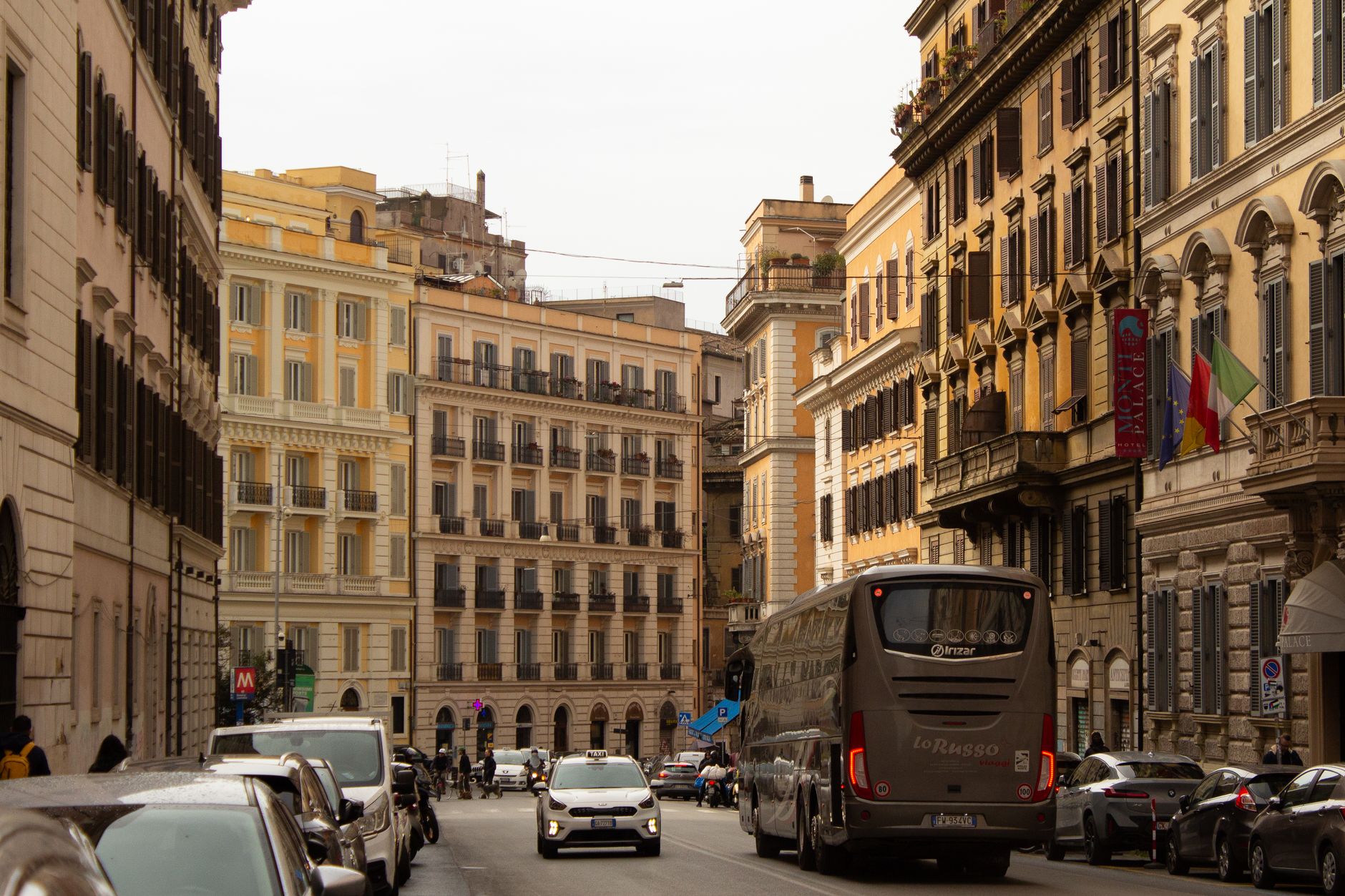
Best Things to Do
Rome’s famous sights are not interchangeable. Some need tickets. Some need context. Some are better from the outside. Some are free and stunning. The right question is not “what are the top sights?” It is “which Rome am I trying to experience?”
The Essential Rome Shortlist
If you only do ten things, make them these:
- Walk through the historic center from Pantheon to Piazza Navona to Campo de’ Fiori.
- Visit the Colosseum, Roman Forum, and Palatine Hill with timed entry.
- See the Vatican Museums and Sistine Chapel, ideally with a strategy.
- Enter St. Peter’s Basilica or at least experience the square and approach.
- Visit the Pantheon.
- See the Trevi Fountain early, late, or with realistic expectations.
- Spend an evening in Trastevere or Monti.
- Eat Roman food seriously: carbonara, cacio e pepe, artichokes, supplì, gelato, and espresso.
- Visit the Borghese Gallery if you love sculpture and painting.
- Take one slower walk: Jewish Ghetto to Tiber Island to Trastevere, Aventine to Testaccio, or Appian Way.
Colosseum, Roman Forum, and Palatine Hill
What it is: Rome’s ancient core: amphitheater, civic ruins, imperial memory, and the hill associated with Rome’s origins and imperial palaces.
Why it matters: This is not just a famous ruin. It is the physical center of Rome’s ancient political and symbolic universe.
Who will love it: History lovers, first-timers, archaeology travelers, families with older kids, photographers, anyone who wants the Rome of empire.
Who can skip it: Almost no first-timer should skip it entirely, but travelers with limited mobility, severe heat sensitivity, or no interest in ruins may prefer a shorter guided visit.
Time needed: 3–4 hours for Colosseum + Forum/Palatine; longer if you are serious.
Book ahead: Yes. Buy from the official Colosseum ticketing site or clearly reputable official partners.[8]
Common mistake: Booking the Colosseum and Vatican Museums on the same day. It can be done. It should usually not be done.
Worth it? Yes, but better with a guide or a strong audio guide. Without context, the Forum can become a pile of stones in the sun.
Vatican Museums and Sistine Chapel
What it is: One of the world’s great museum complexes, ending for most visitors with the Sistine Chapel.
Why it matters: The Vatican Museums are not only about Michelangelo. They are a papal collection of ancient sculpture, maps, tapestries, Raphael rooms, religious art, and accumulated power.
Time needed: 2.5–4 hours for most visitors. Serious art travelers can spend far longer.
Book ahead: Yes. Official Vatican pricing includes a full entry ticket and a separate online “Skip the Line” booking fee when booked through the official site.[11]
Opening pattern: The Museums are generally open Monday to Saturday with long hours, plus certain last Sundays of the month with free entry and shorter hours; always check current closures before planning.[10]
Common mistake: Thinking “Vatican” is one thing. Vatican Museums, Sistine Chapel, St. Peter’s Basilica, St. Peter’s Dome, Vatican Gardens, and the square are separate experiences with different logistics.
Worth it? Yes, but only with crowd strategy. Go early, late, or with a high-quality guide. Avoid free-entry days unless you are highly crowd-tolerant.
St. Peter’s Basilica and Square
What it is: The most important church in Catholicism and one of the great architectural and spiritual spaces in Europe.
Why it matters: Even for non-religious travelers, the scale, art, and ritual power are extraordinary.
Time needed: 1–2 hours for basilica; more if climbing the dome or attending a service/event.
Best time: Early morning. Security lines can be long.
Dress: Shoulders and knees covered. This is not just a tourist attraction.
Common mistake: Scheduling St. Peter’s immediately after Vatican Museums and assuming the transition will be simple. It depends on access rules, lines, and route.
Pantheon
What it is: An ancient Roman temple transformed into a church, with one of the most astonishing interiors in Rome.
Why it matters: The Pantheon makes ancient engineering feel immediate. The dome and oculus still do their work: they stop people mid-sentence.
Time needed: 20–45 minutes.
Book ahead: It is a ticketed site. Official ticketing is through the Italian museum system; the official Pantheon page warns against unauthorized resellers.[9]
Best time: Early morning, late afternoon, or rainy weather if you want to see the oculus in action.
Worth it? Absolutely. It is one of the rare famous places that remains more powerful than its image.
Trevi Fountain
What it is: Rome’s most famous fountain and a Baroque stage set compressed into a tiny piazza.
Why it matters: The spectacle is real. So are the crowds.
Current access note: Since February 2026, Rome has required a €2 ticket for tourists and non-residents to enter the closest basin area during posted hours; residents, young children, and certain categories are exempt, while general viewing from the piazza remains possible.[13]
Best time: Very early, late, or when you are already nearby. Do not cross the whole city at peak time only to be annoyed.
Worth it? Yes, but manage expectations. The fountain is magnificent; the crowd is part of the modern experience.
Borghese Gallery
What it is: A controlled-entry art museum in Villa Borghese with Bernini, Caravaggio, Raphael, Titian, Canova, and one of the best sculpture experiences in Europe.
Why it matters: The Borghese is intense, curated, and human-scaled compared with the Vatican Museums.
Book ahead: Yes. Use official channels and be wary of unauthorized resellers.[12]
Time needed: Usually 2 hours inside, plus time in the gardens.
Worth it? Essential for art lovers. If you have only two days and no special interest in art, prioritize Colosseum/Vatican/historic center first.
Capitoline Museums
What it is: A major museum complex on the Capitoline Hill, with ancient sculpture, city history, and one of Rome’s best Forum views.
Why it matters: This is the museum that helps connect the ruins outside with the city’s political and symbolic history.
Time needed: 1.5–3 hours.
Best pairing: Forum/Colosseum day, Campidoglio, Jewish Ghetto, or Monti.
Worth it? Very. Especially for visitors who want ancient Rome without only ruins under the sun.
Appian Way, Catacombs, and Aqueduct Park
What it is: Ancient road, underground burial networks, Roman countryside, and aqueduct landscapes.
Why it matters: It gets you out of the dense historic center and into a Rome that feels older, wider, and quieter.
Time needed: Half day.
Best for: Repeat visitors, families with active kids, cyclists, history lovers, photographers.
Worth it? Excellent if you have 4+ days or need a break from crowds.
Trastevere Evening
What it is: Rome’s classic lane-and-piazza evening neighborhood.
Why it matters: It gives many visitors the Rome they imagined: warm light, restaurants, church squares, small bars, and wandering.
Best time: After 5 p.m. or very early for quiet photos.
Common mistake: Eating anywhere that looks charming without checking quality. Trastevere has excellent food and plenty of mediocre food.
Worth it? Yes, but it is not a secret. Treat it as atmosphere, not discovery.
Churches Beyond the Big Names
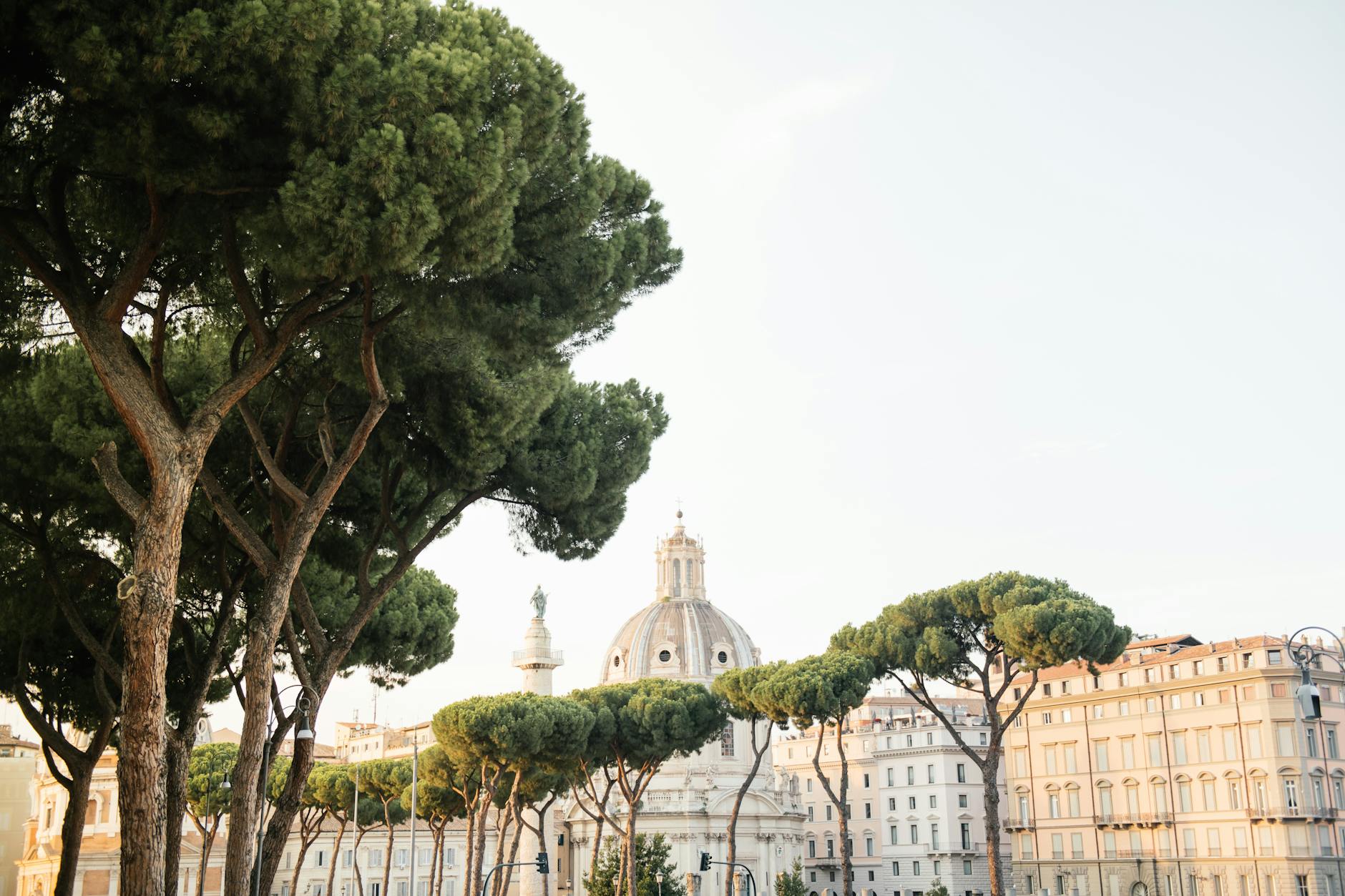
Rome’s churches are not filler. They are one of the best free art experiences on Earth.
Prioritize a few based on your route:
- San Luigi dei Francesi for Caravaggio.
- Sant’Agostino for Caravaggio and neighborhood context.
- Santa Maria del Popolo for Caravaggio and art near Piazza del Popolo.
- San Pietro in Vincoli for Michelangelo’s Moses.
- Santa Maria Maggiore for basilica scale and mosaics.
- San Clemente for layers of history underground.
- Santa Prassede for mosaics.
- Santa Maria in Trastevere for evening beauty.
- Santa Cecilia in Trastevere for quiet atmosphere.
The move: Keep shoulders covered or carry a light layer. Church-hopping is one of Rome’s best low-cost pleasures.
Rome Itineraries
These itineraries are realistic on purpose. They leave space for food, heat, lines, and the fact that Rome will distract you.
One Perfect Day in Rome
Best for: first-timers with brutal time limits.
Morning: Start early at the Trevi Fountain, walk to the Pantheon, then Piazza Navona. Coffee and pastry nearby.
Late morning: Walk through Campo de’ Fiori and the Jewish Ghetto.
Lunch: Eat near the Ghetto or Campo, avoiding the most obvious tourist menus.
Afternoon: Choose one: Colosseum exterior + Forum overlook, or St. Peter’s exterior + Castel Sant’Angelo. Do not attempt both deeply.
Evening: Trastevere or Monti for dinner and a slow walk.
What to cut if tired: Spanish Steps. You can see them quickly, but they rarely justify derailing the day.
Two Days in Rome
Day 1: Historic Center and Ancient Rome
- Early Trevi or Pantheon.
- Pantheon/Piazza Navona/Campo walk.
- Lunch near the Jewish Ghetto or Monti.
- Timed Colosseum entry, Forum, Palatine.
- Monti dinner or Colosseum night walk.
Day 2: Vatican and Trastevere
- Vatican Museums timed entry.
- Lunch in Prati.
- St. Peter’s Basilica if lines and energy allow.
- Castel Sant’Angelo exterior/golden hour.
- Cross the river toward Piazza Navona or Trastevere.
- Dinner in Trastevere, Prati, or the historic center.
Better alternative: If Vatican Museums are not important to you, replace them with Borghese Gallery + Villa Borghese + a slower historic-center afternoon.
Three Days in Rome
Day 1: Historic Center Orientation
Trevi, Spanish Steps, Pantheon, Piazza Navona, Campo de’ Fiori, Jewish Ghetto, aperitivo, dinner.
Day 2: Ancient Rome
Colosseum, Forum, Palatine, Capitoline viewpoint or Museums, Monti evening.
Day 3: Vatican and Trastevere
Vatican Museums, St. Peter’s, Prati lunch, Castel Sant’Angelo, Trastevere evening.
Rain plan: Move Borghese Gallery, Capitoline Museums, churches, or Vatican Museums into the wettest block.
Four Days in Rome
Add a slower fourth day:
Option A: Art day — Borghese Gallery, Villa Borghese, Piazza del Popolo, Santa Maria del Popolo, Via Margutta, Spanish Steps.
Option B: Food day — Testaccio Market, Non-Catholic Cemetery, Pyramid, Centrale Montemartini, Testaccio dinner.
Option C: Ancient road day — Appian Way, catacombs, Aqueduct Park, relaxed evening.
Option D: Church-layer day — San Clemente, San Giovanni in Laterano, Santa Prassede, Santa Maria Maggiore, Monti dinner.
Five Days in Rome
With five days, stop performing efficiency and start enjoying the city:
- Historic center.
- Ancient Rome.
- Vatican/Prati.
- Borghese + Villa Borghese + northern center.
- Testaccio/Appian Way/day trip/flexible Roman day.
Food-Lover Itinerary
Morning: Coffee standing at the bar, then Testaccio Market.
Lunch: Traditional Roman trattoria — reserve.
Afternoon: Gelato and a walk through the Ghetto or Monti.
Aperitivo: Wine bar, not a giant buffet.
Dinner: Roman classics or modern Roman cooking.
Late: Amaro, grappa, or a final walk instead of another dessert you do not actually want.
Family-Friendly Itinerary
- Do Colosseum early with a kid-friendly guide.
- Use Villa Borghese for breathing room, bikes, and playground-style decompression.
- Keep Vatican Museums realistic; they are long and crowded.
- Add Appian Way or Aqueduct Park for movement.
- Choose apartments or hotels with family rooms near Prati, Pantheon/Navona, Monti, or quieter central streets.
Rainy-Day Itinerary
- Pantheon.
- Churches with art: San Luigi dei Francesi, Sant’Agostino, Santa Maria sopra Minerva.
- Capitoline Museums or Borghese Gallery.
- Long lunch.
- Covered shopping streets or hotel pause.
- Dinner reservation.
Heat-Wave Itinerary
- Start at 7:30 a.m.
- Outdoor sight before 10:30 a.m.
- Long indoor lunch.
- Hotel rest or museum from 2–5 p.m.
- Walk again after 6 p.m.
- Carry water and use nasoni.
Food and Drink
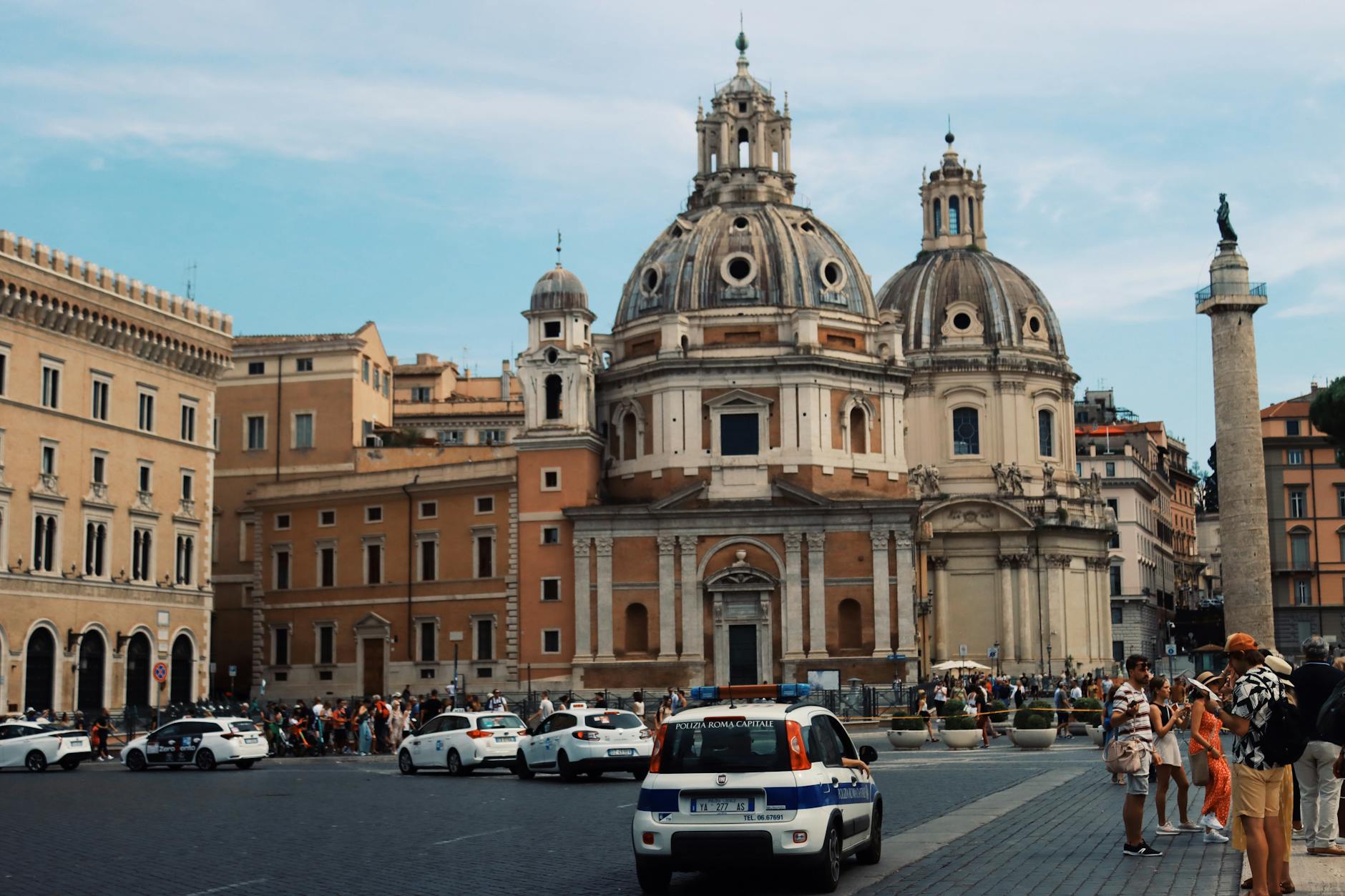
Rome is a food city, but not always an effortless one for visitors. The classics are simple, precise, and easy to ruin. The most tourist-heavy streets can serve bad versions of famous dishes to people who will never return. The best move is to understand how Rome eats, then choose by neighborhood and situation.
Rome’s Food Identity
Roman food is direct, gutsy, and built from pasta, pecorino, guanciale, artichokes, offal, seasonal vegetables, fried snacks, pizza by the slice, Jewish-Roman traditions, market cooking, and the confidence to do a few things very well.
It is not delicate in the way some northern Italian cooking can be. It is not tomato-and-basil simplicity alone. It is pepper, fat, salt, sharp cheese, crisp fried edges, bitter greens, and deep tradition.
What to Eat in Rome
| Dish | What it is | Best context |
|---|---|---|
| Carbonara | Pasta with egg, pecorino, guanciale, black pepper. No cream. | Classic trattoria lunch or dinner. |
| Cacio e pepe | Pasta with pecorino and black pepper. Simple, unforgiving, excellent when done well. | A Roman benchmark dish. |
| Amatriciana | Pasta with tomato, guanciale, pecorino, often bucatini or rigatoni. | Comforting, salty, rich. |
| Gricia | Like amatriciana without tomato: guanciale, pecorino, pepper. | For people who already love Roman pasta. |
| Supplì | Fried rice croquette, often with tomato and mozzarella. | Snack, street food, pizza stop. |
| Pizza al taglio | Pizza by the slice, sold by weight. | Lunch, snack, casual meal. |
| Roman-style pizza | Thin, crisp round pizza. | Casual dinner. |
| Carciofi alla giudia | Jewish-style fried artichokes. | In season; Jewish Ghetto. |
| Carciofi alla romana | Braised Roman artichokes with herbs. | Spring/seasonal menus. |
| Coda alla vaccinara | Oxtail stew associated with Testaccio traditions. | Traditional trattoria. |
| Trippa alla romana | Roman-style tripe. | For adventurous traditional eaters. |
| Maritozzo | Sweet bun often filled with whipped cream. | Breakfast or pastry break. |
| Gelato | Choose carefully; avoid neon colors and giant fluffy piles. | Afternoon or post-dinner walk. |
| Espresso / cappuccino | Espresso anytime; cappuccino usually morning. | Standing at the bar is normal and cheaper. |
Where to Eat by Situation
| Situation | Best areas |
|---|---|
| First Roman dinner | Monti, historic center side streets, Prati, Testaccio |
| Classic trattoria | Testaccio, Trastevere, Monteverde, parts of Monti and Prati |
| Food market | Testaccio Market, Campo de’ Fiori for atmosphere, Trionfale near Vatican for scale/local use |
| Pizza by the slice | Prati, Testaccio, Monti, near major transit areas if researched |
| Roman-Jewish food | Jewish Ghetto |
| Late-night energy | Trastevere, Monti, Campo de’ Fiori, San Lorenzo, Ostiense |
| Less touristy food base | Testaccio, Ostiense, San Giovanni, Pigneto, Monteverde |
| Convenient after Vatican | Prati, not necessarily right beside the Vatican exit |
| Convenient after Colosseum | Monti or Celio, not the worst places facing the monument |
How to Avoid Bad Meals
- Do not eat at a place where the menu has photos of every dish and someone is aggressively pulling you in.
- Be careful on direct approaches to major monuments.
- Reserve for dinner at popular places, especially Thursday through Saturday.
- Choose restaurants that specialize rather than restaurants offering every Italian dish from every region.
- Be suspicious of “carbonara with cream” in Rome.
- Good gelato is usually not neon, not piled in huge whipped mountains, and often has metal lids or modest presentation.
Coffee Rules That Help
- A bar in Italy is often a café.
- Standing at the counter is normal.
- Cappuccino is a morning drink to many Italians, though no one will arrest you for ordering it later.
- “Latte” means milk. Ask for caffè latte if that is what you mean.
- A standard caffè is an espresso.
Wine, Aperitivo, and Nightlife
Rome is strong for wine bars, casual aperitivo, cocktails, and late-night piazza energy. It is not Milan in aperitivo culture, but pre-dinner drinks are still part of a good evening.
Best drinking areas: Monti, Trastevere, Pigneto, San Lorenzo, Prati, Campo de’ Fiori, Ostiense.
Local logic: Do not turn aperitivo into dinner unless the place is clearly built for it. In Rome, the better move is often a glass of wine, a small snack, and then a real meal.
Getting Around
Rome is walkable but not effortless. Public transit is useful but imperfect. Taxis are valuable in specific moments. Renting a car for Rome itself is almost always a mistake.
Arriving by Air
From Fiumicino Airport (FCO)
Leonardo Express: The straightforward train from Fiumicino Airport to Roma Termini takes about 32 minutes and currently costs €14 according to Trenitalia.[4]
FL1 regional train: Useful if you are staying near Trastevere, Ostiense, Tiburtina, or other non-Termini rail stops. Slower but often more convenient by neighborhood.
Taxi: Official fixed fare to destinations inside the Aurelian Walls is €55 per vehicle, inclusive of supplements.[3]
Best for most first-timers: Leonardo Express if staying near Termini or easy metro/taxi from Termini; taxi if staying in a hard-to-reach historic-center lane with luggage or arriving late.
From Ciampino Airport (CIA)
Ciampino is smaller and often used by low-cost carriers. Options include airport buses, taxi, and bus/metro combinations.
Taxi: Official fixed fare to destinations inside the Aurelian Walls is €40 per vehicle, inclusive of supplements.[3]
Best for most first-timers: Taxi if two or more people with luggage; airport bus if budget matters and you are comfortable arriving at Termini.
Public Transportation
Rome’s public transport is run primarily through ATAC for city buses, trams, metro, and related urban services.
Common ticket options include:
| Ticket | Current price | Useful for |
|---|---|---|
| BIT 100-minute ticket | €1.50 | Occasional rides; valid 100 minutes with limits on metro re-entry. |
| ROMA 24H | €8.50 | Heavy transit day. |
| ROMA 48H | €15 | Two-day transit-heavy visit. |
| ROMA 72H | €22 | Three-day transit-heavy visit. |
| CIS weekly | €29 | Seven-day stays with frequent transit. |
ATAC’s Tap & Go lets travelers use a contactless card or NFC device on metro and surface transit; the same device/card should be used consistently, and each traveler needs their own payment device/card.[2]
Metro
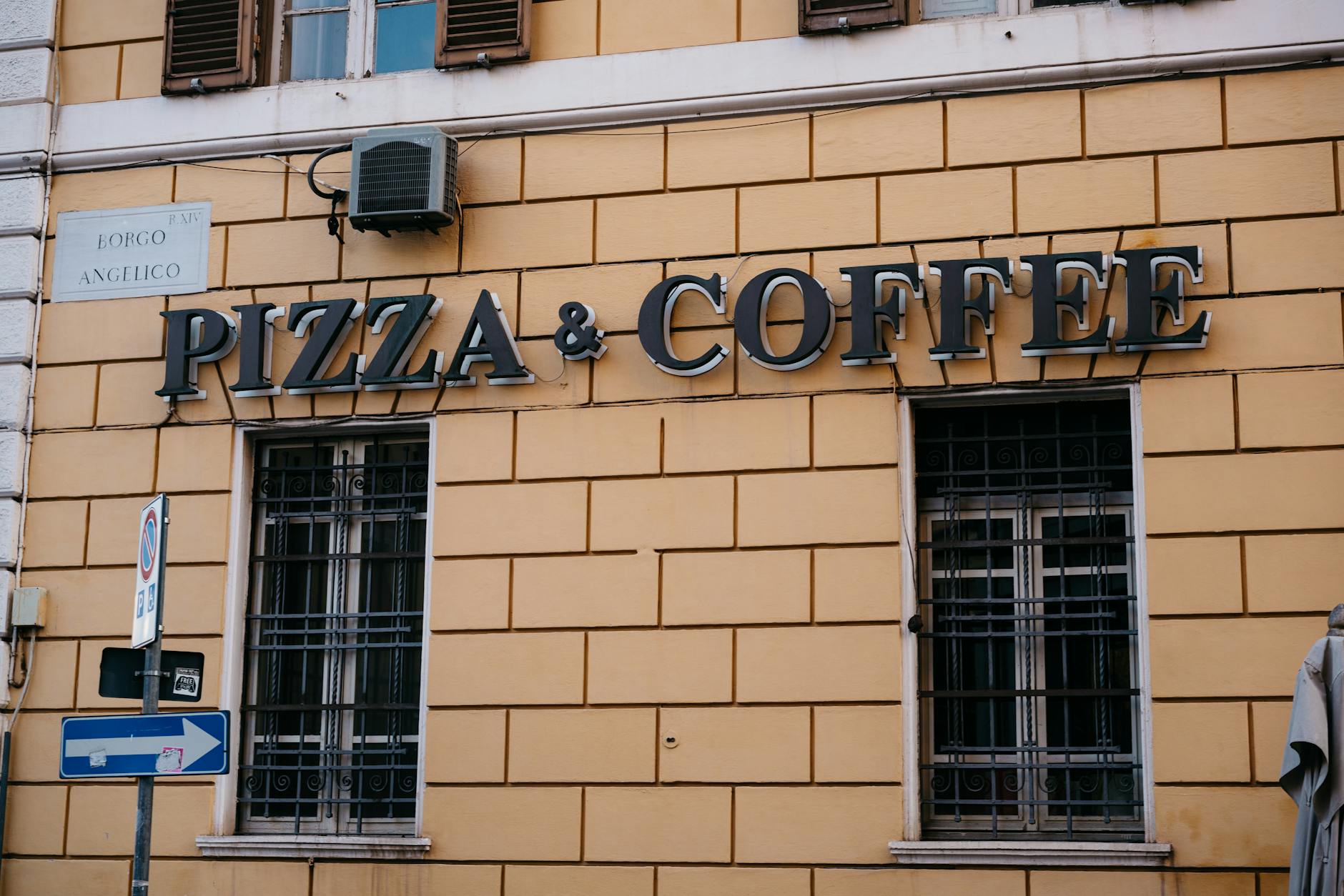
Rome’s metro is helpful but limited compared with the size and history of the city. Lines A and B are most useful for visitors; Line C matters more for specific routes. The metro is good for Prati/Vatican, Spanish Steps, Termini, Colosseum, San Giovanni, and some outer connections.
Good for: longer cross-city jumps.
Not good for: many historic-center door-to-door trips.
Buses and Trams
Buses reach places the metro does not, but traffic and waiting times can be frustrating. Use official apps or real-time tools, but keep expectations realistic.
The move: For short central distances, walking is often faster and more pleasant than waiting for a bus.
Taxis and Ride-Hailing
Official taxis are white and use taxi stands, phone dispatch, or apps. Free-floating street hails are less reliable than in some cities. Rideshare exists differently than in the U.S.; do not assume cheap UberX-style rides will be the default.
Use taxis for: late nights, luggage, heat, mobility limitations, Vatican-to-hotel fatigue, airport transfers, Appian Way logistics.
Avoid taxi problems by: using official taxi stands/apps, confirming fixed airport fares when applicable, and making sure the meter is used for metered rides.
Walking
Walking is the core Roman transport mode.
But Rome walking includes: cobblestones, uneven sidewalks, surprise stairs, heat, narrow lanes, traffic crossings, and “just ten more minutes” becoming forty.
Shoes matter. This is not the city for brand-new sandals or elegant shoes you have not tested.
Renting a Car
Do not rent a car for Rome itself. Restricted traffic zones, parking, scooters, narrow streets, and stress make it a poor choice.
A car can make sense for:
- Rural Lazio.
- Certain countryside/wine itineraries.
- Multi-day regional routes where trains are weak.
It does not make sense for:
- Colosseum.
- Vatican.
- Historic center.
- “Saving time” inside the city.
Budget and Costs
Rome can be done moderately, but it is not the bargain fantasy some travelers expect. Hotels in good areas can be expensive, attraction costs add up, and poor planning leads to overpriced meals.
Daily Budget Ranges
| Traveler style | Daily estimate, excluding long-haul flights | What it looks like |
|---|---|---|
| Shoestring | €70–€120 | Hostel/cheap room, pizza al taglio, free churches, limited paid sights, transit/walking. |
| Budget comfort | €120–€220 | Simple hotel/B&B, casual meals, a few major tickets, careful neighborhood choices. |
| Mid-range | €220–€400 | Good central or semi-central hotel, trattoria meals, several booked sights, occasional taxi. |
| Comfortable | €400–€700 | Better hotel, guided tours, strong restaurants, taxis when useful, flexible pacing. |
| Luxury | €700+ | Five-star hotel, private guides, high-end meals, transfers, premium experiences. |
What Is Worth Paying For
- A better-located hotel for a short first visit.
- A good guide for the Forum/Palatine or Vatican Museums.
- Borghese Gallery tickets if you care about art.
- A taxi when heat, luggage, or exhaustion would damage the day.
- One excellent Roman meal instead of three mediocre “view” meals.
What Is Often Not Worth It
- Hop-on hop-off buses as your main transport strategy.
- Restaurants directly beside the most crowded monuments.
- Cheap hotels so far out that you lose hours daily.
- City passes bought without calculating your actual itinerary.
- “Skip-the-line” products from unclear resellers when official timed tickets exist.
Value Moves
- Stay in Prati, Monti, San Giovanni, Testaccio, or carefully chosen Termini/Esquilino if the historic center is too expensive.
- Eat your main meal at lunch.
- Use churches as free art stops.
- Use Tap & Go or BIT tickets unless you will ride enough to justify passes.
- Book major sights early to avoid paying inflated reseller prices later.
- Buy water once, then refill at nasoni.
Safety, Health, and Scams
Rome is generally safe for visitors, but petty theft is real in crowded areas. The main risks are pickpocketing, bag snatching, traffic carelessness, heat, scams, and overexertion.
The UK FCDO describes crime levels in Italy as generally low but notes higher levels of petty crime, including pickpocketing and bag-snatching, in city centers and major tourist areas.[15] Canada’s travel advice similarly warns that petty crime frequently targets tourists.[16]
Common Pickpocket Zones
- Termini station and surrounding transit areas.
- Crowded buses and metro lines.
- Colosseum/Forum approaches.
- Trevi Fountain and Spanish Steps.
- Vatican Museum approaches and St. Peter’s lines.
- Busy markets and nightlife zones.
Common Scams and Annoyances
| Scam/issue | What it looks like | What to do |
|---|---|---|
| Bracelet/“gift” scam | Someone ties or hands you something, then demands money. | Do not accept; keep walking. |
| Fake petition/distraction | Clipboard, “charity,” crowding, or conversation used to distract. | Step away and secure valuables. |
| Taxi overcharging | Unofficial driver, no meter, inflated airport fare. | Use official taxis/stands; know fixed fares. |
| Restaurant traps | Vague prices, aggressive hosts, tourist menus with photos. | Check menu and reviews; leave if uncomfortable. |
| Ticket resellers | High-pressure “official” skip-line claims near sights. | Buy through official channels or reputable vetted operators. |
| ATM issues | High fees, bad exchange rates, exposed machines. | Use bank ATMs; decline dynamic currency conversion. |
Health Practicalities
- Tap water is safe; use public fountains.
- Pharmacies are marked by a green cross.
- Heat is a serious planning factor from June through September.
- Travel insurance is smart, especially for older travelers, families, and multi-country trips.
- In emergencies, call 112.[14]
Night Safety
Rome is not a city where most visitors need to be afraid at night, but be practical:
- Avoid empty, poorly lit streets when alone.
- Watch alcohol intake in nightlife zones.
- Use taxis late if your route feels awkward.
- Keep your phone and wallet secure in crowds.
- Be more cautious around major stations late at night.
Accessibility and Mobility
Rome can be difficult for travelers with mobility limitations. This is not a failure of imagination; it is a practical reality of cobblestones, ancient streets, uneven sidewalks, hills, stairs, old buildings, and crowded transit.
Main Challenges
- Cobblestones and uneven pavement.
- Stairs in hotels, churches, metro stations, and historic buildings.
- Limited elevators in older accommodations.
- Crowded buses and metro platforms.
- Long distances inside museums.
- Exposed archaeological areas with uneven ground.
- Heat, which amplifies every mobility issue.
Better Areas to Stay
- Prati: flatter, wider streets, calmer, good Vatican access.
- Some parts of Pantheon/Navona: central but inspect hotel entrance/elevator carefully.
- Modern hotels near major roads/transit: less romantic but easier.
- Villa Borghese/Pinciano edge: calmer, but check hills and exact location.
Harder Areas
- Trastevere lanes if cobblestones/stairs are an issue.
- Hillier parts of Monti.
- Tiny historic-center lanes with no taxi access.
- Budget hotels in old buildings without elevators.
Accessibility Moves
- Email hotels directly about step-free access, elevator dimensions, bathroom setup, and taxi drop-off.
- Use taxis more than you think you “should.”
- Pick one major sight per day.
- Avoid Forum/Palatine during heat or without a realistic route.
- Choose private guides who understand mobility constraints.
- Build rest stops into the itinerary, not as emergency corrections.
Strollers
Rome with a stroller is possible but uneven. A lightweight folding stroller is better than a heavy one. Baby carriers help in churches, ruins, small restaurants, and transit.
Families, Solo Travelers, and Special Considerations
Families with Kids
Rome can be great with children if you do not try to force an adult museum marathon.
Best family moves:
- Colosseum with a kid-focused guide.
- Villa Borghese for park time.
- Gelato breaks as pacing tools.
- Appian Way or Aqueduct Park for movement.
- Apartments in Prati, Monti, or central-but-quiet streets.
- One major sight per day.
Avoid:
- Vatican Museums at peak crowds with young kids unless the family is highly museum-tolerant.
- Long Forum walks in July heat.
- Late dinners every night if children need routine.
Solo Travelers
Rome is strong for solo travelers who enjoy walking, food, churches, and museums. Solo dining is normal enough, especially at casual places, wine bars, counters, and trattorias if you reserve or go early.
Solo tips:
- Stay central enough that evening walks feel easy.
- Use food tours or small-group tours if you want social contact.
- Keep extra caution around Termini and nightlife zones late.
- Bring a book or journal for cafés and solo meals.
Women Traveling Solo
Many solo women visit Rome successfully. The main issues are ordinary city awareness: unwanted attention, crowded transit, nightlife safety, and securing belongings.
Useful moves:
- Choose a well-reviewed, central hotel or apartment with easy nighttime access.
- Use taxis late if the route is deserted or complicated.
- Avoid engaging with persistent street attention.
- Keep valuables zipped and close in crowds.
LGBTQ+ Travelers
Rome is a major European capital with LGBTQ+ life, especially around nightlife and events, but public attitudes can vary by context and generation. Same-sex couples are visible in central areas, though very demonstrative affection may draw more attention in conservative settings than in some northern European capitals.
Best approach: Enjoy the city, research current LGBTQ+ venues/events, and use normal urban awareness at night.
Religious Travelers and Pilgrims
Rome is one of the world’s great pilgrimage cities. Catholic travelers may want to structure the trip around St. Peter’s, major basilicas, papal audiences, saint sites, relics, and liturgical calendars.
Planning note: Pilgrimage Rome needs different pacing from secular sightseeing Rome. Give yourself time for prayer, services, security lines, and moving between basilicas.
Shopping and Souvenirs
Rome is good for leather, paper goods, religious objects, food gifts, jewelry, vintage, design, books, and ceramics, but the center is also full of generic souvenir shops.
Good Souvenirs
- Quality olive oil or vinegar, if you can pack it legally and safely.
- Dried pasta from a good shop.
- Italian chocolate, biscuits, or coffee.
- Stationery, prints, or paper goods.
- Religious medals, rosaries, or icons if meaningful.
- Leather goods from reputable makers.
- Books from independent or museum bookshops.
- Roman football scarf if you actually want one.
Be Careful With
- “Murano glass” sold cheaply everywhere.
- Fake designer goods.
- Mass-produced magnets and plastic Colosseums.
- Food items you cannot legally bring home.
- Religious items bought thoughtlessly as kitsch.
Best Shopping Areas
| Area | Best for |
|---|---|
| Via del Corso / Spanish Steps | Mainstream shopping, luxury nearby, fashion. |
| Monti | Boutiques, vintage, design, small shops. |
| Prati | More local shopping, clothing, practical goods. |
| Campo / Navona side streets | Paper goods, gifts, small specialty shops. |
| Testaccio Market | Food, casual goods, neighborhood feel. |
| Museum shops | Better books and design objects than generic souvenir stores. |
Arts, Culture, History, and Context
Rome is too large historically to summarize neatly, but a visitor needs a working narrative.
A Short History for Travelers
Rome begins in myth and settlement, grows into a republic, becomes an empire, absorbs and projects power across the Mediterranean, then transforms through Christianity, papal authority, medieval fragmentation, Renaissance patronage, Baroque theater, national unification, Fascist urban interventions, postwar expansion, and modern capital life.
That is why Rome feels discontinuous. You can stand in one place and see ancient columns, a medieval church, a Renaissance palace, a Baroque fountain, a 19th-century monument, Fascist-era road planning, and a modern bus. The city is not arranged chronologically for your convenience.
The Three Histories Every Visitor Should Know
Ancient Rome
The Colosseum, Forum, Palatine, Pantheon, Appian Way, aqueducts, and baths are not isolated ruins. They are fragments of a system: spectacle, law, religion, engineering, military power, trade, citizenship, slavery, and public life.
Papal and Christian Rome
After antiquity, Rome’s power shifted but did not disappear. Churches, basilicas, pilgrim routes, relics, monasteries, papal families, and Vatican patronage reshaped the city. Much of the art visitors come to see exists because religious power paid for it.
Modern Rome
Rome became capital of unified Italy in the 19th century, then expanded as a national capital. Modern Rome includes ministries, apartment districts, traffic, football, universities, immigrant communities, political protests, and ordinary residents living inside a global tourism machine.
Books, Films, and Cultural Preparation
Useful pre-trip ideas:
- Read a compact history of ancient Rome if you plan to visit the Forum.
- Watch films set in Rome for atmosphere, but do not confuse cinematic Rome with current logistics.
- Learn basic church etiquette before visiting religious sites.
- Read about Roman food before arrival; it will improve your meals.
- Look at a map of the seven hills, Tiber River, Vatican, and ancient core.
Etiquette and Cultural Norms
- Cover shoulders and knees in major churches.
- Do not sit on monuments or fountains.
- Do not enter fountains, even as a joke. Fines and bans are real.
- Keep voices lower in churches.
- Greet shopkeepers with buongiorno or buonasera.
- Do not expect dinner at 6 p.m. in serious local restaurants.
- Ask before photographing people directly.
- Stand aside if you are stopping in a narrow lane to take a photo.
- Validate or tap transit properly; “I am a tourist” is not a fare system.
Seasonal and Month-by-Month Guide
Rome has events all year, but the most important visitor patterns are religious calendars, school holidays, weather, and crowd waves.
Major Seasonal Factors
| Period | Impact |
|---|---|
| Holy Week and Easter | Major Vatican and church crowds; powerful for pilgrims; book far ahead. |
| Spring holidays | High hotel demand and busy sights. |
| Summer school holidays | Heat, crowds, families, long evenings. |
| August | Hot; some local closures; tourist core remains active. |
| September/October | Excellent but popular; book ahead. |
| Christmas/New Year | Atmospheric, religiously significant, and busy around holidays. |
| First Sundays/free days | Some museums/sites may be free or have special rules; crowds can be intense. |
Best Seasonal Activities
| Season | Best activities |
|---|---|
| Spring | Historic-center walks, Appian Way, gardens, outdoor lunches, churches, ancient sites. |
| Summer | Early sights, late dinners, evening walks, shaded museums, fountains, rooftop drinks. |
| Fall | Food, long walks, museums, Testaccio, day trips, photography. |
| Winter | Churches, museums, hearty Roman food, lower-pressure sightseeing, Christmas atmosphere. |
Day Trips from Rome
Rome can easily fill your whole trip, but day trips are excellent once you have at least four or five days.
Day Trip Ranking
| Day trip | Best for | Travel logic |
|---|---|---|
| Tivoli | Villas, gardens, ruins | Great first day trip: Villa d’Este and Hadrian’s Villa. Easier with tour/car/taxi combination, possible by transit. |
| Ostia Antica | Ancient ruins without Pompeii distance | Easy by train; excellent if you want archaeology and fewer crowds. |
| Orvieto | Hill town, cathedral, slower Italy | Train-friendly and rewarding. Good contrast to Rome. |
| Frascati / Castelli Romani | Wine, hills, lunch | Good for food/wine and a softer day. |
| Naples | Intense city, pizza, archaeology museum | Possible by fast train, but deserves more than a day if you can spare it. |
| Pompeii | Archaeology bucket list | Possible but long. Better as Naples/Sorrento extension if you have time. |
| Florence | Renaissance art | Technically possible by fast train, but it is a separate major city. Overnight is better. |
| Assisi | Pilgrimage, hill town, St. Francis | Long but meaningful for religious/cultural travelers. |
Best Overall First Day Trip: Tivoli
Tivoli gives you two very different experiences: the ancient imperial scale of Hadrian’s Villa and the Renaissance water-theater of Villa d’Este. It is one of the best day trips because it extends the Rome story rather than merely escaping it.
Best Easy Archaeology Trip: Ostia Antica
Ostia Antica is the ancient port city of Rome. It is less famous than Pompeii, but much easier from Rome and deeply rewarding. Go if you like ruins, urban history, and quieter archaeological wandering.
Best Hill-Town Day: Orvieto
Orvieto gives you a cliff-top Umbrian town, a spectacular cathedral, wine, caves, and a break from Roman intensity. It is one of the best “Italy beyond Rome” day trips by train.
When Not to Day Trip
If you have only three days in Rome, think hard before leaving the city. Most first-timers have enough inside Rome itself. Day trips become more compelling on day four or five.
What to Skip
A trustworthy Rome guide has to tell you what not to prioritize.
Skip or Deprioritize If Time Is Short
- Mouth of Truth: Fun if nearby, not worth a long line or cross-city detour.
- Spanish Steps as a major event: See them, but do not build a day around them.
- Trevi at peak time: The fountain is worth seeing; the worst crowd window is optional.
- Generic hop-on hop-off bus as transport: It can help some travelers orient, but it is not an efficient way to experience Rome deeply.
- Restaurants facing major monuments: Some exceptions exist, but most are selling location over food.
- Pompeii as a rushed day trip if you have only 3 Rome days: Save it for a Naples/Sorrento extension or a longer Italy itinerary.
- Every church on a list: Better to understand five than sprint through fifteen.
Better Alternatives
| Instead of... | Try... |
|---|---|
| Peak Trevi crowd | Trevi very early, late, or as part of a nearby walk. |
| Spanish Steps as centerpiece | Pincio viewpoint + Via Margutta + Piazza del Popolo. |
| Tourist-menu dinner near Navona | Side-street trattoria or wine bar with researched reviews. |
| Overstuffed Vatican + Colosseum day | Split them across two days. |
| A rushed Pompeii day | Ostia Antica, or stay overnight in Naples. |
| Shopping only on Via del Corso | Monti boutiques, museum shops, Prati, local markets. |
Common Mistakes
Rome is not difficult because it is obscure. It is difficult because everyone thinks the famousness makes it easy.
1. Booking Too Much
Two timed mega-sights in one day can turn Rome into airport logistics. Leave space.
2. Ignoring Heat
Summer Rome is not just “warm.” Ancient sites are exposed, buses can be packed, and cobblestones radiate heat. Start early and rest midday.
3. Staying Too Far Out
Saving money on a distant hotel can cost you time, taxis, and energy. A less fancy room in a better area often beats a nicer room far away.
4. Eating by Accident
Rome has world-class simple food and terrible tourist food. Research a short list before arrival.
5. Wearing the Wrong Shoes
Cobblestones are undefeated.
6. Not Booking Key Tickets
Colosseum, Vatican Museums, Borghese Gallery, and special tours need advance planning.
7. Treating Churches as Secondary
Some of Rome’s best art is inside churches you can enter for free or cheaply.
8. Assuming Transit Will Save Every Day
Sometimes the bus works. Sometimes walking or a taxi is smarter.
9. Forgetting That Vatican City Is Not Just Another Neighborhood
Security, dress codes, religious events, museum rules, and crowds change the logistics.
10. Trying to “Do Rome” in Two Days
You can see highlights. You cannot absorb the city. Accept that and the trip improves.
Responsible Travel
Rome is not a theme park. It is a living city under intense pressure from tourism, traffic, housing demand, monument maintenance, and crowd behavior.
Do This
- Use official ticket channels where possible.
- Respect church dress codes and silence.
- Do not enter fountains or climb monuments.
- Refill water bottles instead of buying endless plastic bottles.
- Eat at locally run places beyond the most obvious tourist corridors.
- Stay in legal accommodations.
- Use public transit, walking, or taxis rather than driving in the center.
- Be patient with service workers dealing with nonstop visitor volume.
- Learn a few Italian greetings.
Do Not Do This
- Sit, eat, or carve anything on monuments.
- Treat sacred spaces like photo studios.
- Block narrow streets for social media shots.
- Buy counterfeit goods.
- Assume all Romans benefit from tourism equally.
- Complain that Rome does not operate like your home city.
Local Logic
The best visitor behavior in Rome is simple: move slower, spend thoughtfully, respect sacred and historic places, and remember that people live inside the postcard.
Packing List
Year-Round Essentials
- Excellent walking shoes, already broken in.
- Small day bag with secure zipper.
- Refillable water bottle.
- Light scarf or layer for churches.
- Portable charger.
- European plug adapter.
- Sunscreen and sunglasses.
- Copy of passport and travel insurance.
- Small amount of cash.
- Medication and basic blister care.
Spring
- Layers.
- Light rain jacket or umbrella.
- Comfortable shoes for wet cobblestones.
- Sunglasses.
Summer
- Breathable clothing.
- Strong sunscreen.
- Hat.
- Electrolytes if heat-sensitive.
- Extra shirt for midday change.
- Sandals only if they are serious walking sandals.
- Air-conditioning standards for hotels checked before booking.
Fall
- Layers.
- Light jacket.
- Umbrella.
- Shoes that handle rain.
Winter
- Warm jacket.
- Sweater layers.
- Scarf.
- Rain protection.
- Shoes with grip.
What Not to Pack
- New shoes.
- Heavy rolling luggage if your accommodation is on cobblestones or stairs.
- Overly dressy footwear as your main evening shoe.
- Too many museum outfits and not enough practical layers.
FAQ
Is Rome worth visiting?
Yes. Rome is one of the world’s essential cities. It is crowded and imperfect, but the depth of history, art, food, and street life is extraordinary.
How many days do I need in Rome?
Three full days is the minimum satisfying first visit. Four days is better. Five or more lets you add Borghese, Appian Way, Testaccio, or a day trip without rushing.
What is the best area to stay in Rome for a first visit?
Pantheon/Piazza Navona/Campo de’ Fiori is the best all-around first-timer base if budget allows. Monti, Prati, and Spanish Steps/Trevi are also strong depending on priorities.
Is Rome safe?
Rome is generally safe for visitors, but petty theft is common in tourist crowds and transit areas. Secure your valuables, use official taxis, and be extra alert around Termini, Trevi, the Colosseum, Vatican approaches, and crowded buses/metro.
Do I need a car in Rome?
No. A car is a liability inside Rome. Walk, use transit, and take taxis strategically.
Is the Vatican a separate country?
Yes. Vatican City is an independent state within Rome. For visitors, it functions as a major Rome sightseeing zone with its own security lines, dress expectations, events, and museum logistics.
Should I visit the Colosseum or Vatican if I only have one day?
Choose one, not both deeply. Pick Colosseum/Forum if ancient Rome is your priority. Pick Vatican Museums/St. Peter’s if art, Catholic history, or the Sistine Chapel is your priority.
Is the Trevi Fountain free?
General viewing from the piazza is still possible, but since February 2026 tourists and non-residents pay €2 to enter the closest basin area during posted hours, with exemptions for residents, young children, and certain accessibility categories.[13]
What foods is Rome known for?
Carbonara, cacio e pepe, amatriciana, gricia, supplì, pizza al taglio, Roman-style pizza, artichokes, oxtail, tripe, maritozzi, gelato, espresso, and Roman-Jewish specialties.
Is Rome good with kids?
Yes, if you slow down. Colosseum tours, Villa Borghese, gelato stops, Appian Way, and shorter museum visits work well. Vatican Museums and long ruin walks can be hard for younger kids.
Is Rome accessible?
Rome can be challenging for wheelchair users and travelers with mobility limitations because of cobblestones, stairs, hills, old buildings, and uneven archaeological sites. It is possible with planning, careful hotel selection, taxis, and realistic pacing.
What should I book ahead?
Colosseum timed entry, Vatican Museums, Borghese Gallery, popular restaurants, special access tours, and any high-demand seasonal event.
What is the biggest Rome mistake?
Trying to see everything. Rome is best when you choose fewer things and give them more time.
Final Planning Shortcuts
Best First-Timer Plan
Stay near Pantheon/Navona, Monti, Prati, or Spanish Steps. Spend four days: historic center, ancient Rome, Vatican, and one flexible day for Borghese/Testaccio/Appian Way.
Best Food Plan
Stay in or near Testaccio, Monti, Prati, Trastevere, or the Ghetto. Research restaurants before arrival. Eat one serious lunch, one traditional dinner, one pizza al taglio stop, one market meal, and one gelato per day if your conscience allows.
Best Romantic Plan
Stay in the historic center or Trastevere-adjacent central lanes. Avoid overbooking. Prioritize late walks, one art museum, one long lunch, one sunset viewpoint, and dinners on quieter streets.
Best Family Plan
Stay in Prati, Monti, or a central apartment with space. Do Colosseum with a guide, use Villa Borghese as decompression, and keep Vatican ambitions realistic.
Best Budget Plan
Stay carefully near Termini/Esquilino, San Giovanni, Prati, or Testaccio. Walk heavily, use BIT/Tap & Go, eat pizza al taglio and market lunches, and use churches as free art stops.
Best Repeat-Visitor Plan
Skip the greatest-hits pressure. Stay in Testaccio, Prati, San Giovanni, Aventine, or Monti. Build the trip around churches, markets, Appian Way, Centrale Montemartini, day trips, neighborhood restaurants, and long walks.
Source Notes
This guide uses a mix of general editorial judgment and current planning details checked against official or high-reliability sources where details are time-sensitive.
- 1. ATAC, “Tickets and passes,” including BIT, ROMA 24H/48H/72H, and CIS fare information: https://www.atac.roma.it/en/tickets-and-passes
- 2. ATAC, “tap&go,” contactless payment rules, validity, and best-fare information: https://www.atac.roma.it/en/tickets-and-passes/tap-go
- 3. Roma Mobilità, official taxi fares, including fixed fares from Fiumicino and Ciampino airports: https://romamobilita.it/muoversi-a-roma/taxi/
- 4. Trenitalia, “Leonardo express,” including 32-minute airport rail connection and ticket price: https://www.trenitalia.com/en/services/leonardo-express.html
- 5. Roma Capitale, “Contributo di soggiorno,” official accommodation contribution rules: https://www.comune.roma.it/web/it/scheda-servizi.page?contentId=INF41430
- 6. European Union, Entry/Exit System information and FAQ: https://travel-europe.europa.eu/en/ees and https://travel-europe.europa.eu/en/ees/faq
- 7. European Union, ETIAS information and start timing: https://travel-europe.europa.eu/en/etias
- 8. Parco Archeologico del Colosseo official visitor/ticketing pages: https://colosseo.it/en/area/the-colosseum/ and https://ticketing.colosseo.it/en/
- 9. Direzione Musei Statali della città di Roma, Pantheon ticketing notice and official purchase guidance: https://direzionemuseiroma.cultura.gov.it/en/pantheon/
- 10. Vatican Museums, official opening days and hours: https://www.museivaticani.va/content/museivaticani/en/info/orari-musei-vaticani.html
- 11. Vatican Museums, official prices and tickets: https://www.museivaticani.va/content/museivaticani/en/organizza-visita/tariffe-e-biglietti.html
- 12. Galleria Borghese official website and ticketing guidance: https://galleriaborghese.cultura.gov.it/en/
- 13. Turismo Roma, official Trevi Fountain access-fee information beginning February 2026: https://www.turismoroma.it/en/places/trevi-fountain and https://www.turismoroma.it/en/news/trevi-fountain-new-entry-fee-one-romes-symbols
- 14. Italia.it, emergency number information for Italy: https://www.italia.it/en/italy/practical-information/emergency-and-assistance
- 15. UK Foreign, Commonwealth & Development Office, Italy safety and security travel advice: https://www.gov.uk/foreign-travel-advice/italy/safety-and-security
- 16. Government of Canada, Italy travel advice and advisories, petty crime guidance: https://travel.gc.ca/destinations/italy