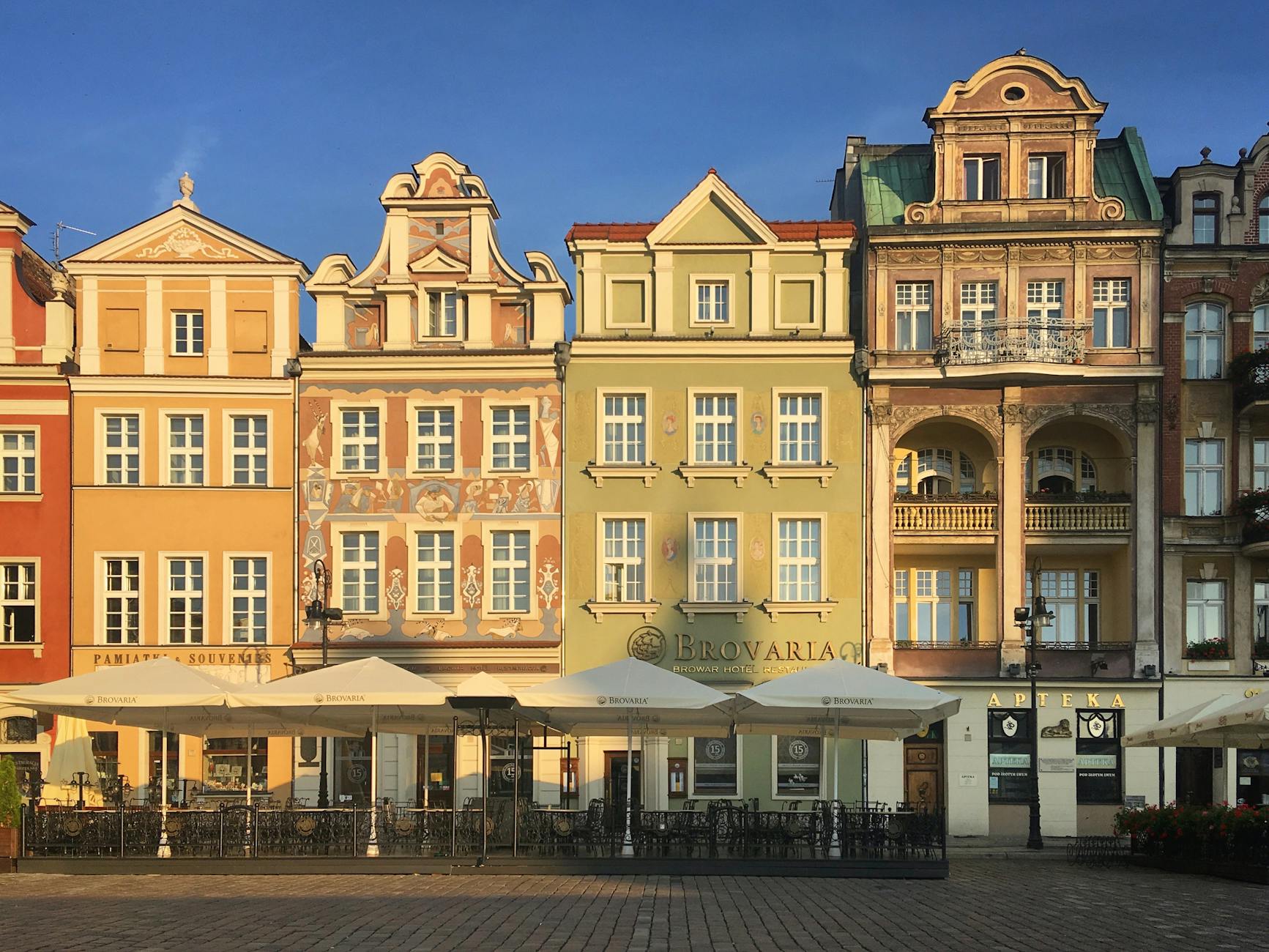
Poznan is one of those cities that suffers from being too sensible in other people’s imaginations. It is spoken about as orderly, practical, efficient, prosperous, and maybe pleasant, which sounds faint until you realize how many city breaks fail exactly on those terms. Poznan does not need drama to justify itself. It needs better reading.
Start Here
This is one of Poland’s strongest medium-sized city stays because it combines a very good urban center with real daily-life credibility. The Old Market Square is excellent. The streets around it are usable rather than purely decorative. The city has history without feeling frozen, strong food without constant self-display, and enough neighborhood variation to prevent the whole experience from collapsing into one postcard. It is a city that works, which turns out to be a bigger virtue than many travelers admit.
The first mistake is to treat Poznan as a rail stop between louder names. The second is to assume that because the city is well-run and relatively calm, it must therefore be thin. In reality, Poznan is one of those places where coherence becomes a kind of luxury. You can stay centrally, move easily, eat well, walk a lot, and understand the city in a lived way rather than simply collecting a list of attractions. That is a serious travel quality.
The strongest Poznan trips come from accepting what the city is actually good at: a very strong center, a rewarding relationship between old city and neighboring districts, enough historical weight to matter, enough youth and business energy to keep it alive, and a rhythm that suits people who like urban life without constant overload. Poznan is not trying to win the competition for Polish grandeur. It is trying to be deeply habitable. That is exactly why it can be so satisfying.
The city in one sentence: Poznan is a coherent, confident Polish city where the best trip comes from combining the Old Market core, Cathedral Island, food, neighborhoods, and urban ease rather than treating the city as a merely practical stop between bigger names.
Basic data
| Population | About 540,000 |
|---|---|
| Area | 262 km2 |
| Major religions | Roman Catholic heritage with growing secular and minority-faith communities |
| Political system | City government inside a parliamentary republic |
| Economic system | High-income mixed economy led by trade, services, education, technology, and manufacturing |
Quick Verdict
Best for: couples, first-time Poland itineraries, food travelers, short European city breaks, travelers who like order and ease, and anyone who values a city that feels lived rather than theatrically touristic.
Not ideal for: travelers who need nonstop monument drama, people who only respect cities with enormous international hype, or anyone who thinks efficient means emotionally flat.
Ideal first visit: 2 to 3 full days.
Minimum worthwhile stay: 2 full days, if one is centered on Poznan itself rather than immediately given away to rail convenience.
Best overall months: May, June, September, and early October.
Best winter case: December for festive center-city atmosphere, or late winter if you want a lower-pressure urban stay with more museum and dining emphasis.
Biggest planning mistake: sleeping somewhere purely functional and then using the trip to confirm the false idea that Poznan is mostly functional.
One thing to prioritize: a central base near the Old Market or the best inner-city corridor linking center, station, and surrounding districts.
One thing to leave flexible: your evening. Poznan often reads better after the day softens and the city relaxes into food, bars, and public-space life.
The blunt version: Poznan is not Poland’s loudest city, but it is one of its best-constructed and most satisfying short stays.
Who Will Love Poznan?
Poznan suits travelers who like cities for the quality of being there, not just for the list of sights. It is very good for people who enjoy walking between breakfast, museums, parks, cafés, and dinner without feeling as if they are hauling themselves through a giant urban obstacle course. It is also very good for travelers who want Central Europe without constant theatricality. Poznan has style, but it is not over-performed.
It works especially well for couples because the city offers a lot of what makes an urban weekend good: a handsome core, strong hotel logic, plenty of good dining, enough history to add depth, and neighborhoods that support a day of drift rather than a day of conquest. The city is not trying to overwhelm you. It is trying to hold together beautifully.
Poznan is also excellent for solo travelers. The center is easy to understand, public transport is straightforward, the city feels safe and socially usable, and there is enough variation to avoid the sense that you have “done it” after the first afternoon. A solo traveler can have a very full Poznan trip through coffee, walking, old-town structure, Cathedral Island, Jeżyce, museums, and food without ever needing spectacle to fill the gaps.
The city is less ideal for travelers whose idea of a successful trip depends on constant high-intensity tourism. Poznan often reveals itself more gradually. That is not a weakness. It is a filtering mechanism. People who appreciate cities as places rather than trophies often leave with a higher opinion of Poznan than they expected.
Poznan at a Glance
| Question | Practical Answer |
|---|---|
| Main airport | Poznań-Ławica Airport (POZ) |
| Distance from center | Roughly 7 to 8 km |
| Best airport transfer | Taxi/rideshare or public bus, depending on arrival time and luggage |
| Main public transport operator | ZTM Poznań |
| Main transport card/system | PEKA and standard time-based tickets |
| Best first-time base | Old Market / central core / center-station balance |
| Best food-and-neighborhood district | Center and Jeżyce |
| Best major historical axis | Old Market Square to Cathedral Island |
| Best softer green-city escape | Park Wilsona and the Palm House side |
| Best way to understand the city | Walking first, trams second |
| Signature city note | One of Poland’s most coherent and livable historic cores |
| Emergency number | 112 |
| Tap water | Safe to drink |
| Currency | Polish zloty |
| Power plugs | Type C and E |
| Car needed? | No |
2026 Visitor Notes
Airport Access Is Straightforward, Not Glamorous
Poznan-Lawica is close to the city and easy enough to use well, but it is not one of those airports where a rail link turns arrival into a cinematic event. Poznan's strength is that the transfer is simple rather than romantic. For many travelers, that means a taxi or rideshare is the lowest-friction choice. Official city guidance also confirms that airport buses connect the terminal to the city, which is useful if you are arriving lightly and staying centrally.[1]
Tickets Reward Basic Attention
Poznan's public transport works well, but visitors should actually look at the system rather than assume every Polish city operates identically. ZTM's current tourist-oriented fares make the basic logic clear: time-based tickets remain simple to use, with examples such as 15-minute, 45-minute, and 90-minute tickets.[2] This is a city where getting the transport right is easy if you respect it for five minutes.
The Old Market Is Still The Heart
Official Poznan tourism language is right to emphasize the Old Market Square as the living heart of the city. That does not mean the city ends there. It does mean that a first-time trip should be built from there outward rather than around some abstract hunt for hidden gems.
The Goats Are Fun, Not The Whole Point
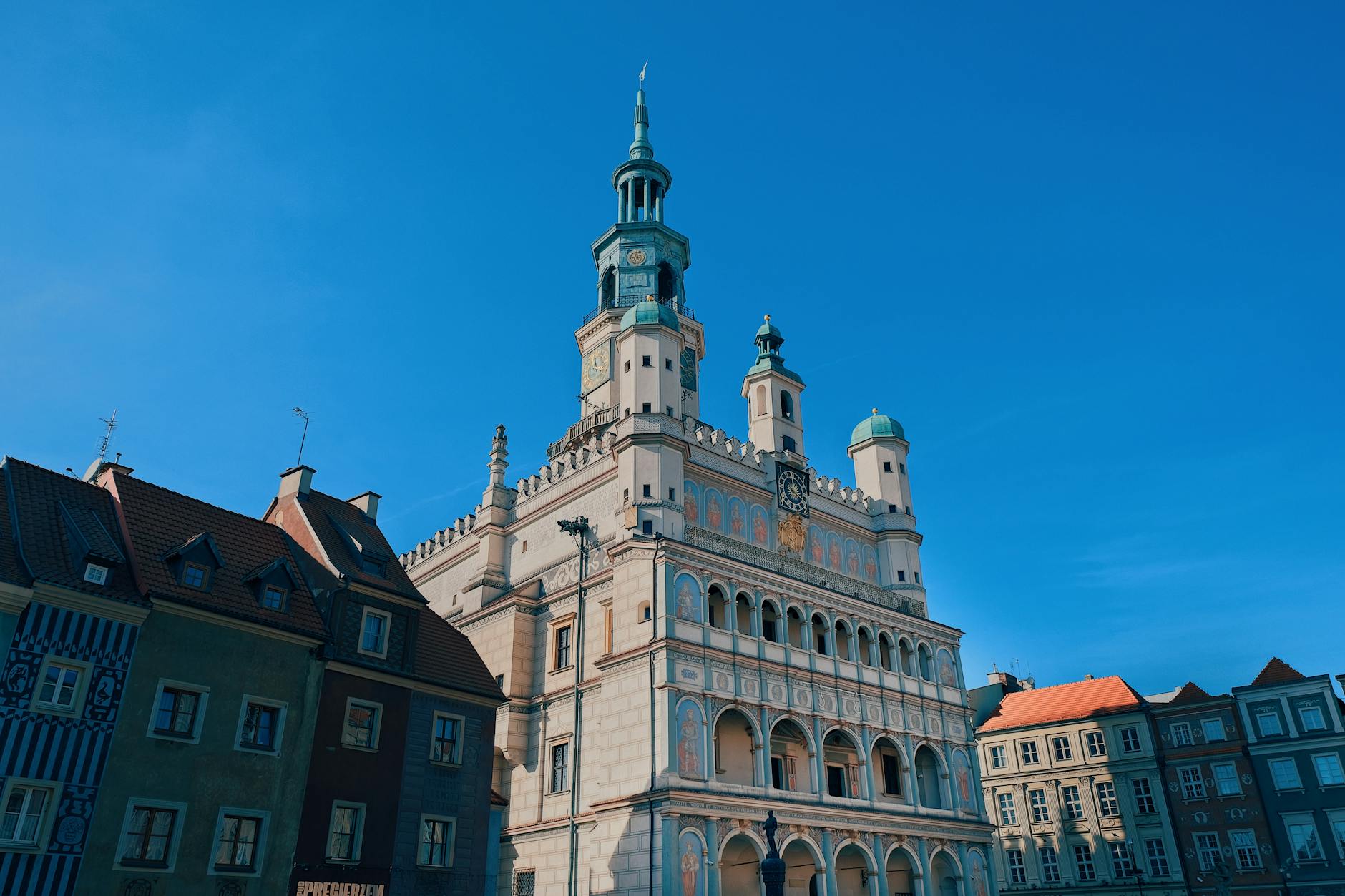
Yes, the mechanical goats on the Town Hall are famous and still appear at noon and 3 pm. No, they are not the reason to come to Poznan. They are part of the city’s character, not the whole character.
Cathedral Island Deserves More Than Leftover Time
Brama Poznania and Ostrow Tumski are essential if you want Poznan to feel historically rooted rather than simply neat and enjoyable.[3] This is where the city gains depth.
Jeżyce Matters
A lot of first-time visitors stay too tightly inside the obvious center and leave with an incomplete idea of Poznan. Jezyce and other strong inner districts help explain why the city feels so lived rather than merely arranged for visitors, and the Palm House side gives the city a softer counterweight.[4]
Poznan Can Support A Full Weekend Easily
The city is often underplanned because it appears manageable. That is true, but misleading. Manageable is not the same thing as thin.
How to Understand Poznan
Poznan works through five forces.
The first is the center. The old core is strong enough to anchor the city emotionally and practically.
The second is coherence. Poznan has a rare urban quality: it often feels as though the parts belong to each other.
The third is historical depth. This is one of Poland’s foundational historical cities, and that matters once you move beyond pure weekend-city framing.
The fourth is daily usability. Poznan is not just impressive at a glance. It is easy to inhabit.
The fifth is district variation. The center, Cathedral Island, Jeżyce, and greener areas all shift the tone of the stay.
The Five Poznans A Visitor Actually Meets
Market-Square Poznan: the Old Market, Town Hall, façades, cafés, restaurants, and the city’s most immediately legible face.
Historic Poznan: Ostrów Tumski, Brama Poznania, early Polish state history, and the part of the city that gives it deeper meaning.
Practical Poznan: station, tram routes, business energy, shopping streets, and the cleaner modern-operational side of town.
Neighborhood Poznan: Jeżyce, side streets, bakeries, bars, and the daily-use version of the city.
Green Poznan: Park Wilsona, the Palm House, lake and park zones, and the softer edges that keep the city from feeling too tightly composed.
The Main Mental Shift
Do not ask, "What are Poznan’s major sights?" Ask, "How does Poznan work as a city?" That is the better question. The answer is that it works through center-city strength, easy movement, food, neighborhood life, and enough history to keep the whole thing from becoming merely comfortable.
What Poznan Does Better Than People Think
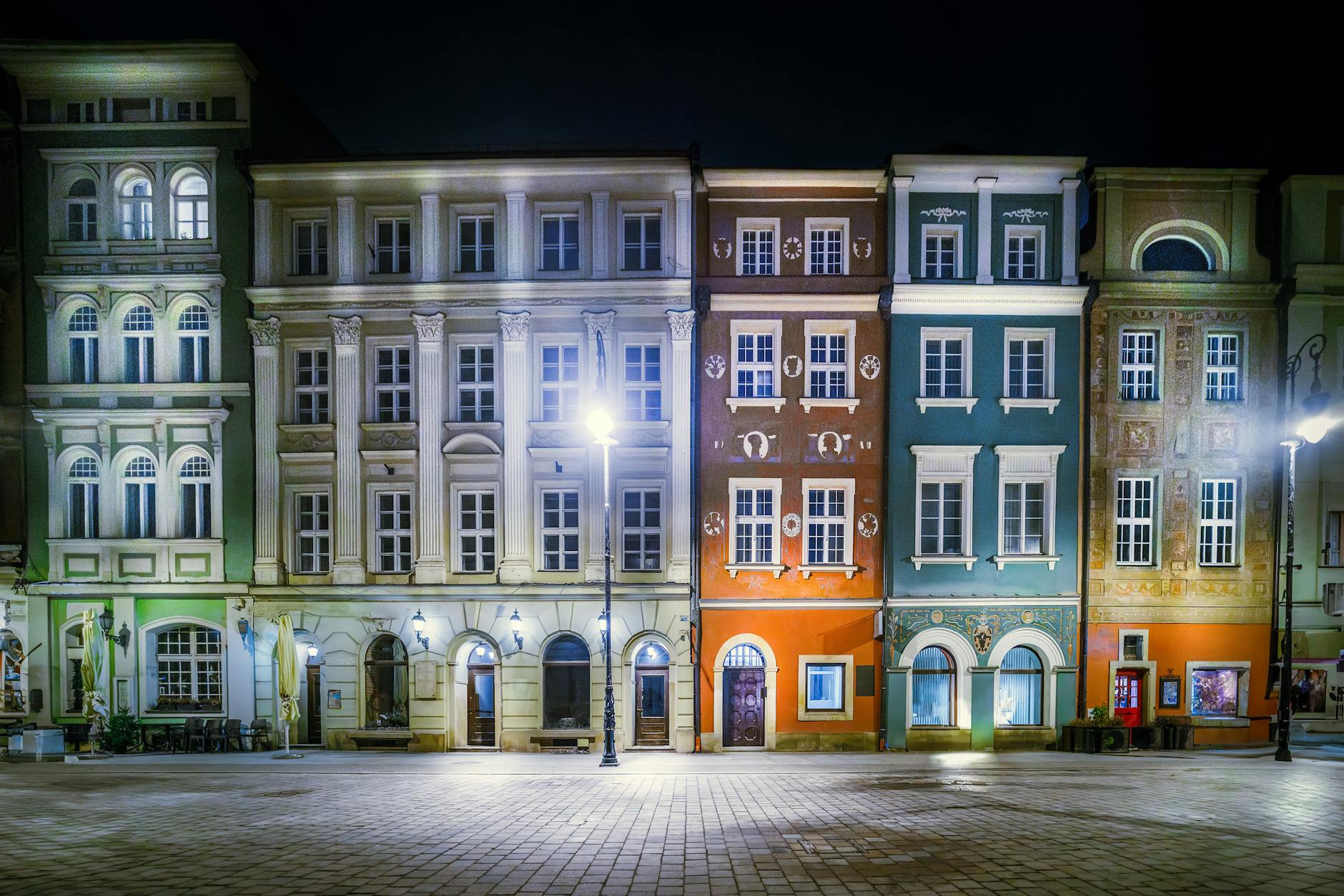
Poznan is unusually good at coherence. Many city breaks give you fragments that never fully lock together. Poznan often does the opposite. The center, surrounding neighborhoods, history, and daily life all feel related.
It is also better than many first-time visitors expect at quality without strain. Good coffee, good breakfasts, solid hotels, useful transport, attractive public space, and strong food all appear here without the sense that the city is theatrically selling itself.
Another underrated strength is balance. Poznan can be historical without becoming museum-like, lively without becoming messy, youthful without becoming shallow, and affordable without feeling compromised. That balance is hard to achieve.
Poznan is also strong at low-friction pleasure. A lot of city enjoyment comes from how little unnecessary difficulty exists between you and a good day. Poznan is excellent by that standard.
Finally, the city is very good at being better in person than in reputation. That is not a consolation prize. It is one of the reasons trips here tend to overperform expectations.
Best Time to Visit Poznan
Poznan is a year-round destination, but the city’s squares, terraces, and walking logic do change with the weather.
Best Overall Months
May, June, September, and early October are the strongest broad-appeal windows. The center is active, the weather is often cooperative, and the city feels open without becoming overworked.
Summer
Summer makes the city immediately persuasive. The Old Market has energy, evenings stretch well, and neighborhood life flows outdoors more easily. The tradeoff is that central areas can skew more visitor-facing if your route never expands beyond the obvious.
Autumn
Early autumn is one of the smartest times to visit. Poznan keeps its usability and much of its social life while becoming slightly calmer and often more elegant.
Winter
Winter can work very well, especially around the holiday period, if you like central-European old-town atmosphere and are happy to shift more of the day toward food, museums, and cafés.
Spring
Spring suits Poznan because the city’s outdoor logic begins to work again without the possible saturation of high summer.
Month-by-Month Guidance
January: cold, quieter, but manageable for urban winter travelers. February: similar, with slightly improving mood as daylight returns. March: transitional and often useful for lower-cost stays. April: increasingly pleasant, especially for walking. May: one of the strongest first-time months. June: excellent all-round. July: lively and warm, very good if you want outdoor city life. August: still strong, though central visitor density rises. September: one of the best-balanced months. October: rewarding, especially early in the month. November: grayer and more interior-led. December: festive and strong for old-town atmosphere.
How Many Days You Need
One Day
Enough for the center and a shallow impression, not enough to understand why Poznan works so well.
Two Days
The minimum respectable stay. One day should go beyond the Old Market into the city’s deeper structure.
Three Days
Ideal for a first visit. This gives enough time for center, Cathedral Island, neighborhoods, and one softer green or museum block.
Four To Five Days
Very good if you want to slow down, add more neighborhood depth, or take a modest regional extension without hollowing out the city.
One Week
More than enough for the city itself, but useful if Poznan is anchoring a broader Greater Poland route.
Where to Stay in Poznan
Base choice matters because Poznan’s main virtue is ease. The wrong hotel can make a city designed for smooth days feel oddly flat.
Fast Answer
For most first-time visitors, stay near the Old Market, the central core, or a center-station balance zone that still feels like the city rather than only transport infrastructure. Stay in Jeżyce if you want a more neighborhood-led trip and are comfortable tramming or walking into the center. Stay near the station only if rail logistics materially matter to you.
Neighborhood Decision Table
| Traveler Type | Best Area |
|---|---|
| First-time visitor | Old Market / central core |
| Couple weekend | Central core or stylish central-neighborhood edge |
| Practical short stay | Center-station balance |
| Food-and-neighborhood trip | Jeżyce |
| Family | Central with easy tram access |
| Rail-heavy traveler | Station-adjacent only if chosen carefully |
Old Market / Central Core
Best for: first-timers, short stays, and anyone who wants immediate access to the city’s strongest public-space life.
Why it works: walkability, dining, architecture, orientation, and easy access to the broader center.
Tradeoff: some places overcharge for location while underdelivering on quality.
Center-Station Balance
Best for: travelers who want practicality without giving up too much city feel.
Why it works: this is often the smartest choice for a first trip that includes train movement.
Tradeoff: block-to-block variation matters.
Jeżyce
Best for: repeat visitors, neighborhood travelers, and anyone who wants Poznan to feel more lived and less purely central.
Why it works: food, cafés, local texture, and a fuller sense of the city’s daily life.
Tradeoff: not the most obvious first-time one-night base.
Station Zone
Best for: pure logistics.
Why it works: rail convenience.
Tradeoff: too much station energy can flatten the city if you are not deliberate about where you stay.
Area Profiles
The Old Market and Historic Core
This is Poznan’s front room and still its strongest organizing space. The city should begin here, but not end here.
Cathedral Island Side
Essential for depth. This is where Poznan stops being merely pleasant and becomes historically serious.
Jeżyce
One of the clearest proofs that Poznan is a real city of neighborhoods, not just a polished center.
Station and Commercial Center
Useful and practical, but best understood as support infrastructure rather than the soul of the trip.
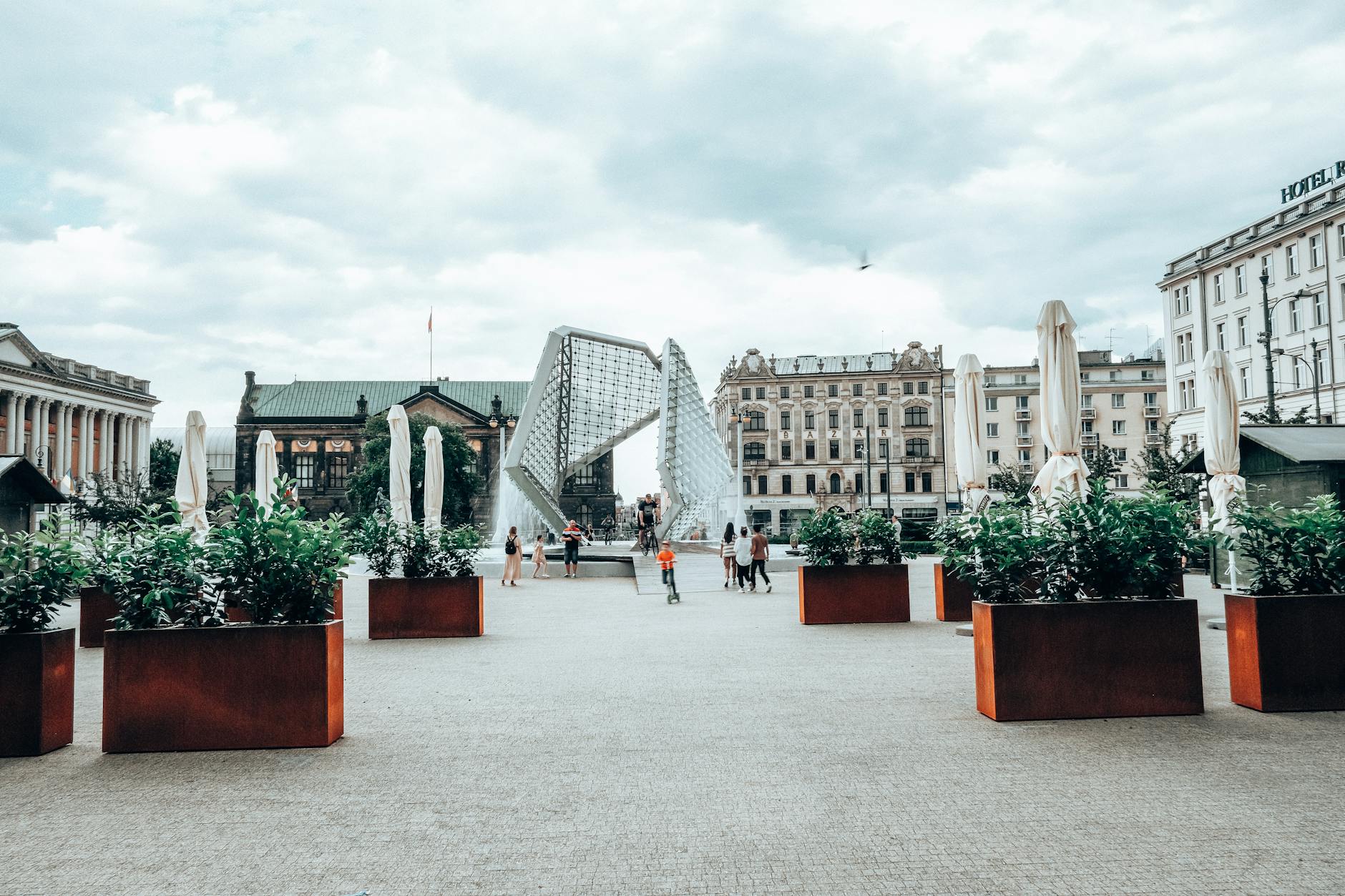
Wilson Park / Palm House Side
A softer urban register that broadens the stay nicely.
Neighborhood Guide: Where to Explore, Not Just Sleep
The Old Market
Use it at several times of day. Poznan’s core shifts meaningfully between morning, noon, and evening.
Streets Just Beyond The Main Square
Often more useful for eating and lingering than the most obvious central frontage.
Ostrów Tumski
This is one of the city’s most important resets in tone and time depth.
Jeżyce
Worth a real walk, not just a passing mention. This is where many visitors finally understand why Poznan feels so complete.
Wilson Park And The Palm House Side
Good for travelers who want one greener, slower city block without leaving the urban structure behind.
The Best Things to Do in Poznan
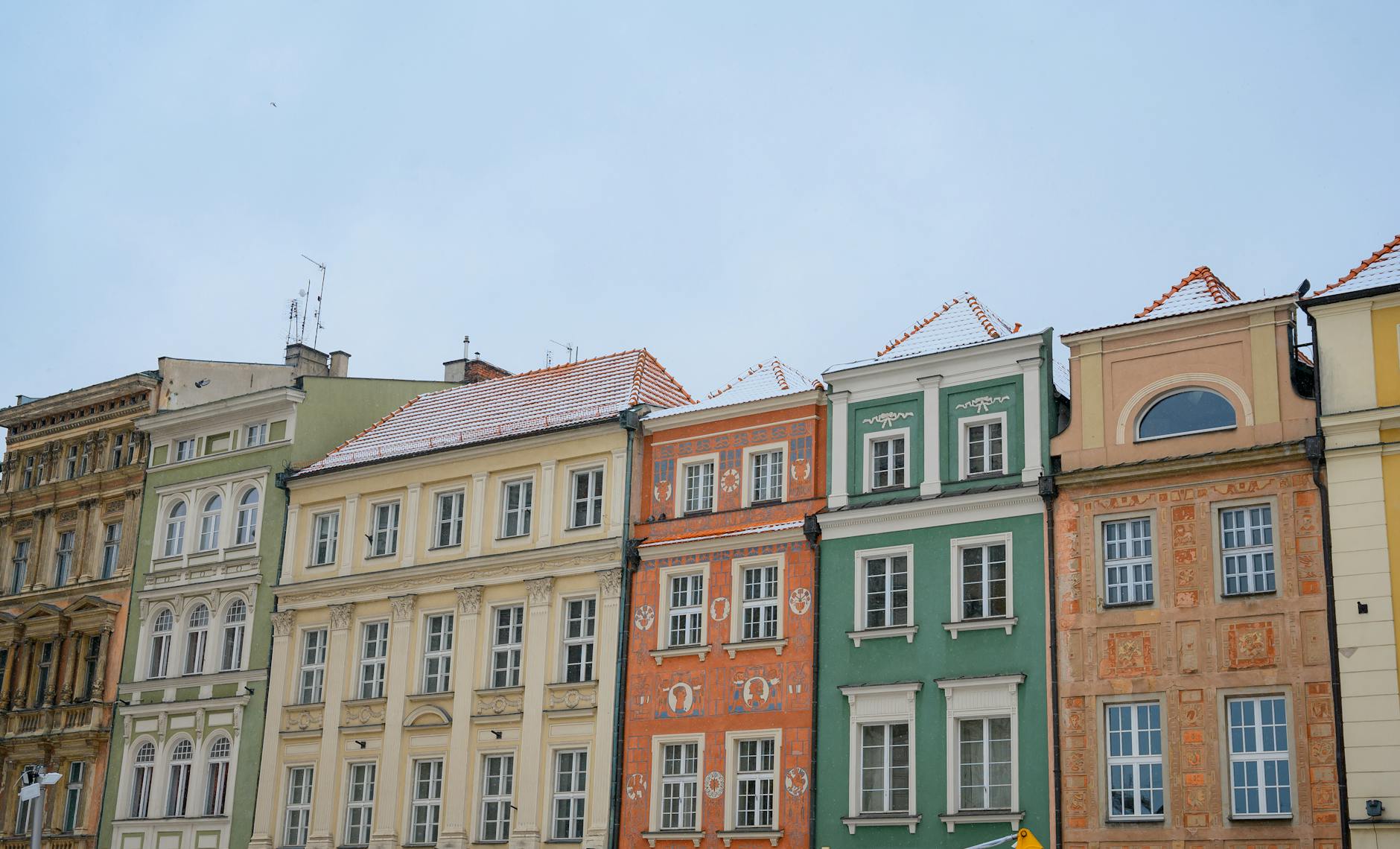
1. Walk The Old Market Properly
Not as a checkbox, but as the city’s operational center.
2. See The Goats, Then Move On Intelligently
Enjoy the ritual, but do not confuse it with having understood the city.
3. Give Cathedral Island Real Time
This is one of the clearest ways to feel Poznan’s historical depth.
4. Use Brama Poznania If History Matters To You
It helps connect the city’s early Polish roots to the present urban fabric.
5. Explore Jeżyce
This is one of the best correctives to a too-tight old-town itinerary.
6. Spend Time In The Palm House Or Nearby Green Zone
Poznan benefits from at least one softer, greener urban moment.
7. Let One Day Be Mostly About Food And City Rhythm
Poznan is very good at this kind of day.
8. Use Trams When They Clearly Help
This is a city where strategic public transport improves the trip rather than diluting it.
9. Stay Out Into The Evening
Poznan often becomes more persuasive after dark.
10. Let The City Be Calm
Not every strong city needs to perform excitement every minute.
Itineraries
One Excellent Day In Poznan
Start in the Old Market, move through surrounding central streets, cross into Cathedral Island and Brama Poznania territory, then finish with dinner and evening center-city life.
Two Days
Day 1: old core, central streets, and evening market-square logic. Day 2: Cathedral Island, Brama Poznania, and either Jeżyce or the Palm House side.
Three Days
Day 1: core Poznan. Day 2: history and river-side city structure. Day 3: neighborhoods, food, and a softer green or museum block.
Four To Five Days
Add more neighborhood depth or a short regional extension, but keep Poznan as the actual center of gravity.
One Week
Useful if Poznan anchors a wider route, but the city itself does not need that much time unless you actively want to live in it slowly.
Itineraries By Traveler Type
First-Timer
Stay central, use the Old Market as the anchor, and make sure one day goes materially beyond it.
Couple Weekend
Good central hotel, one excellent dinner, a slower neighborhood walk, and enough time for evening city life.
Solo Traveler
Excellent fit: easy, legible, sociable, and full enough to reward independent movement.
Food Traveler
Center plus Jeżyce, with stronger attention to breakfast and lunch than many short-break travelers give.
Rail Traveler
If you are arriving by train, resist the temptation to let that convenience reduce the city to a stopover.
Food and Drink
Poznan is a strong eating city when approached with some discipline. The city benefits from Polish culinary energy, student and business demand, and a center that supports both convenience and quality without the total tourism distortion of some more overexposed places.
What To Prioritize
Prioritize places that feel rooted in district life rather than the most obvious square frontage. Prioritize one or two well-chosen meals over endless generic convenience eating.
Best Food Zones
Old Market periphery and nearby streets: often stronger than the square itself. Jeżyce: one of the best answers for a more local, current food mood. Central city corridors: useful for polished but not overblown dining. Around parks and softer residential stretches: good for slower daytime cafés.
Restaurant Strategy
Book if a meal truly matters, particularly on weekends. Poznan is easier than many cities, but the better places still get used properly.
Drinks
Poznan is good at bars, beer, wine, and easy evening sociability rather than extravagant scene performance.
Coffee and Morning Logic
This is a city where mornings can be excellent. Start well and the whole trip often feels stronger.
Getting Around Poznan
Airport To City
Public transport works, especially if you arrive lightly and stay centrally. Taxi or rideshare often makes sense for short stays, late arrivals, or luggage-heavy itineraries.
Walking
Walking is the best way to understand the core city and should do most of the work on a first trip.
Trams and Buses
Very useful for Jeżyce, the Palm House side, and practical expansion beyond the immediate center.
Taxis and Rideshare
Useful when weather, luggage, or time pressure make the elegant answer the direct answer.
Car Hire
Not needed for a city stay and usually not helpful.
Budget and Costs
Poznan remains one of the more appealing value propositions among strong European city breaks, especially when measured against actual comfort and quality.
What Costs Less Than Western Europe
Hotels, many restaurant meals, drinks, and general city spending are often easier than in comparable Western European destinations.
What Feels Worth It
A better central room, one or two strong meals, and paying for location quality if it materially improves the trip.
What Feels Like Better Value
Walking, public space, neighborhood cafés, and the city’s ability to deliver a lot without forcing heavy-ticket sightseeing.
Worth The Splurge
A genuinely strong central hotel, a polished dinner, or a well-located room that lets the city flow naturally.
Usually Not Worth It
Paying premium prices at the weakest obvious tourist spots simply because they are directly on the square.
Safety, Weather, and Practical Reality
Poznan is broadly easy for visitors, but good trip quality still depends on using the city well.
The Main Risk Is Shallow Planning
Most visitors will find the city straightforward. The greater danger is reducing it to center convenience and leaving before its structure has had time to work.
Weather Changes The Center
The city’s appeal rises with good walking weather, but it still works beyond peak conditions if you shift toward cafés, museums, and stronger interiors.
General Urban Safety
Standard awareness is enough for most travelers. Poznan is not a city that tends to menace the attentive visitor.
Accessibility
Poznan can be rewarding for travelers with accessibility needs, though old-center surfaces and some historical areas still require planning.
Easier Areas
Large central spaces, modern hotels, public transport, and newer institutional buildings.
Harder Areas
Some older streets, cobbles, and heritage routes, especially on Cathedral Island side.
Practical Moves
Choose location carefully, use trams early, and do not turn the trip into a cobblestone endurance exercise.
Families, Solo Travelers, and Special Considerations
Families
Poznan works well for families because it combines open squares, parks, public transport, and attractions that are easy to fit into a short stay.
Solo Travelers
Very strong fit. The city is calm enough to feel comfortable and lively enough to feel rewarding.
Couples
One of Poznan’s best use cases. The city supports romantic ease without needing to be theatrically romantic.
Winter Travelers
Winter can still work if the trip is built around center-city life, food, and urban atmosphere rather than pure outdoor roaming.
Shopping and Souvenirs
Poznan is not a city for luxury-shopping mythology. Shop for character, food, books, ceramics, and Polish design rather than generic travel clutter.
What To Buy
Polish design goods, books, local food items, ceramics, and gifts that feel tied to place.
Best Shopping Zones
Central streets off the Old Market and selected neighborhood independents.
What To Avoid
Treating goat-themed novelty as the city’s entire souvenir language.
Culture, History, and Local Context
Poznan matters historically in a way that should not be hidden behind the ease of its modern city-break appeal. This is one of the oldest and most important cities in the history of Poland, closely tied to the formation of the Polish state and to the early religious and civic development of the country.
That historical seriousness coexists with a much more contemporary identity built around trade, business, universities, fairs, entrepreneurship, and an urban culture that often feels practical in the best possible way. Poznan is not overburdened by its own image. That gives it freedom.
Cathedral Island and Brama Poznania are particularly important because they connect the city’s easy modern center to its deeper historical foundation. Without them, Poznan can seem merely well-run. With them, it becomes more complete.
Day Trips and Side Trips
The Main Advice
On a first short visit, do not default to leaving. Poznan is too often sacrificed to rail convenience.
Regional Extensions
Possible, of course, but rarely necessary on a first proper stay. The city itself deserves the time.
Green Or Softer City Extensions
The Palm House and surrounding park areas are often more useful to the trip than a forced out-of-town mission.
What To Skip, or Treat Carefully
Skip Treating Poznan As Merely Efficient
That is how you miss the point.
Skip Reducing The Trip To The Old Market Alone
The center is strong, but the city is broader than that.
Skip Sleeping Somewhere Generic Just Because It Is Convenient
Poznan’s whole value is in how smoothly a good base lets the city work.
Skip Leaving Too Soon
The city often reads better on the second day than on the first.
Skip Using Train Convenience As An Excuse
Just because Poznan is easy to pass through does not mean you should pass through it.
Common First-Timer Mistakes
- Staying only one rushed night.
- Treating the Old Market as the whole city.
- Ignoring Cathedral Island.
- Not using Jeżyce or another neighborhood to broaden the trip.
- Choosing the most obvious tourist-facing meals repeatedly.
- Confusing calm with dullness.
- Underestimating how much a good hotel location matters.
- Overvaluing rail convenience and undervaluing city quality.
- Failing to stay into the evening.
- Assuming Poznan is “nice” rather than seriously good.
Responsible and Respectful Travel
Use Poznan thoughtfully. Respect residential calm outside the busiest central strips, and remember that the city’s apparently easy present sits on deep historical foundations. Support local cafés, museums, neighborhood businesses, and places that reflect actual city life rather than only the most obvious tourist image.
Let Poznan remain a city, not just a successful itinerary component.
Why Poznan Feels More Complete Than It Sounds
One of Poznan’s quiet strengths is that it rarely feels like it is missing something. A lot of medium-sized cities force the traveler into an awkward compromise: they have a good square but weak neighborhoods, or good food but no real history, or strong museums but no easy daily rhythm. Poznan is unusually balanced. The center is strong. The historical layer matters. The neighborhoods broaden the picture. The food scene is good enough to support a real stay. Transport works. The city can carry a weekend without needing excuses.
That completeness is why the city is easy to underrate from afar. It is not shouting a single signature. Instead, it is doing many things cleanly at once. The result is that time here often feels better than the reputation suggested it would. Travelers leave not because one attraction overwhelmed them, but because the whole place made sense.
This is also why Poznan is stronger than the “business city” or “trade-fair city” label. Those descriptions explain part of its modern economy, but not the quality of the urban experience. The city is too historically grounded, too socially functional, and too pleasant in motion to be reduced to that.
The Old Market Versus The Rest Of The City
Poznan’s Old Market is good enough to dominate a short stay if you let it. That is a compliment and a warning. It is one of Poland’s strongest central squares, and it absolutely deserves serious time. But the city becomes thinner the moment the traveler starts behaving as though the market square and a few adjacent streets are the whole thing.
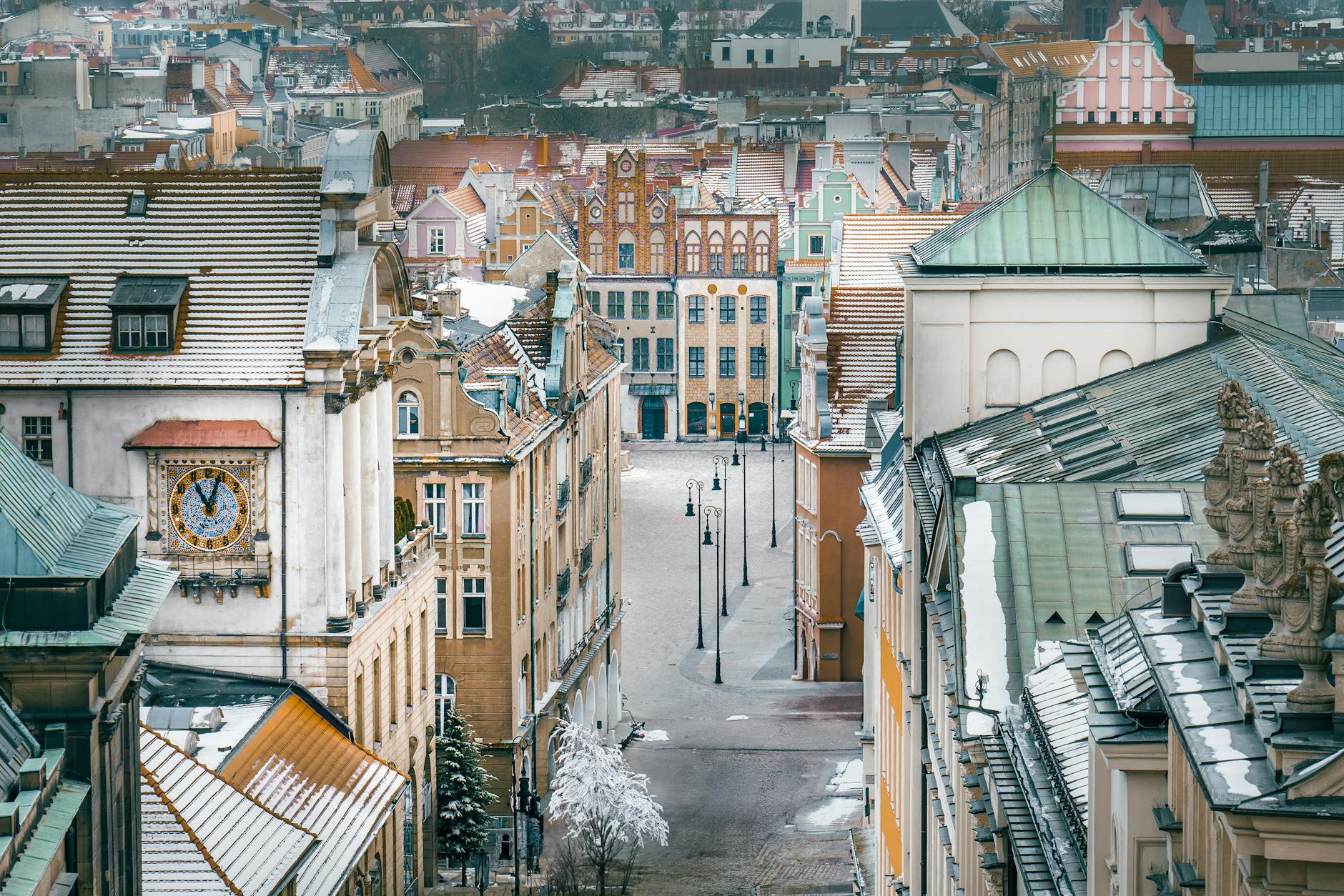
The correction is not to avoid the center. It is to use the center as a launching point. Cathedral Island deepens the city historically and emotionally. Jeżyce broadens it socially and gastronomically. The Palm House and greener zones soften it. Even the practical streets between the station and the core matter because they show Poznan as a functioning city rather than a preserved set piece.
The strongest Poznan route is therefore centrifugal. Start at the obvious heart, then keep moving outward just enough to understand what the heart is pumping life into. Once you do that, the city stops feeling merely nice and starts feeling complete.
FAQ
Is Poznan worth visiting on its own?
Yes, absolutely.
How many days should I spend in Poznan?
Three days is ideal for a first proper stay. Two is the minimum that still respects the city.
Is Poznan walkable?
Yes, especially in the core city, with trams making the extensions easy.
Do I need a car?
No.
Is Poznan cheap?
It can be very good value, but the point is that it is good, not merely cheap.
What is the best area to stay?
Old Market or a strong central-core location for most first-timers.
Is Cathedral Island worth it?
Yes. It is one of the clearest ways to deepen the trip.
When is the best time to go?
May, June, September, and early October are the best broad-appeal windows.
Final Planning Shortcuts
Best First-Timer Plan
Stay central, build one day around the Old Market and surrounding core, one day around Cathedral Island and deeper history, and one day around neighborhoods, food, and a softer city block.
Best Couple Plan
Good hotel, one long evening, one excellent dinner, one neighborhood walk, and enough time to let the city feel easy.
Best Short-Stay Plan
Do not turn the trip into a rail stop. Give Poznan at least one day that moves meaningfully beyond the square.
Best Value Plan
Use the city’s price advantage to improve your hotel and meals, not to lower the quality of the stay.
Best Rail-Traveler Plan
If you arrive by train, keep the convenience but do not let it shrink the trip into a station-and-center corridor only.
Source Notes
- 1. Poznan Travel, "How to Get to Poznan." https://poznan.travel/en/c/how-to-get-to-poznan
- 2. ZTM Poznan, "Ticket Tariff." https://www.ztm.poznan.pl/en/taryfa-biletowa/
- 3. Brama Poznania, "Plan Your Visit." https://bramapoznania.pl/zaplanuj-wizyte
- 4. Poznan Palm House. https://palmiarnia.poznan.pl/en/