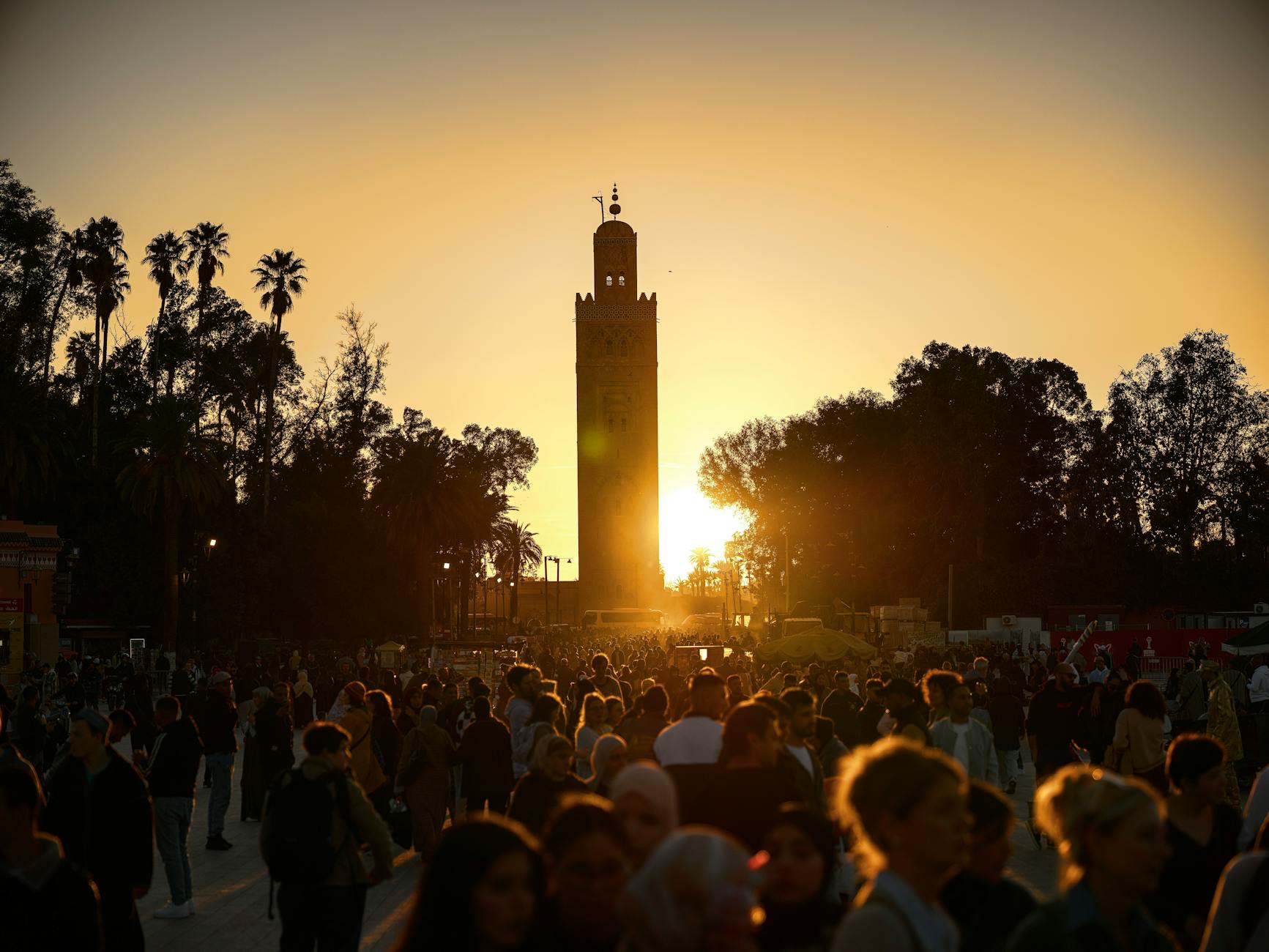
Marrakech is one of those cities that gets hurt by its own image.
Start Here
People arrive expecting enchantment, and enchantment is absolutely available. The first call to prayer over rooftops, the filtered courtyard light inside a good riad, the red walls, the tile, the smoke and spice, the rhythm change when late afternoon finally cools the city down: all of that is real. But the fantasy version of Marrakech leaves out friction, and friction is what separates the weak trip from the strong one.
This is not a city that rewards indiscriminate wandering from morning to night. It rewards pacing, contrast, and intelligent retreat. A great Marrakech day usually has a strong morning anchor, a defined midday slowdown, and a second life in the late afternoon and evening. A weak Marrakech day tries to "do the medina" as if it were a museum district and ends up overheated, over-shopped, and oddly detached from the city by dinner.
What makes Marrakech special is not just the medina itself. It is the constant movement between intensity and relief. Street to courtyard. Souk noise to garden quiet. Monumentality to rooftop leisure. Historic city to modern district. When those contrasts are used properly, Marrakech feels layered and rich instead of performative.
The other common mistake is treating the city as if every famous place deserves equal weight. It does not. Some parts of Marrakech are about architecture and historical depth. Some are about mood. Some are about hotel quality and recovery. Some are about shopping without losing your mind. Some are about understanding that Gueliz and Hivernage are not betrayals of "authenticity" but part of how a grown-up trip here actually works.
If you want the first Marrakech trip to feel elegant rather than frantic, the right question is not "What are the top things to do?" The right question is "How much medina do I actually want, and what kind of calm do I need around it?"
The city in one sentence: Marrakech is a city of beautifully managed contrast where the best first trip comes from balancing medina immersion with real recovery, rather than treating intensity itself as the goal.
Quick Verdict
Best for: couples, design-minded travelers, hotel travelers, first-time Morocco trips, shoppers with discipline, food-and-atmosphere travelers, and anyone who likes cities that feel theatrical but still reward structure.
Not ideal for: travelers who want frictionless movement, people who hate haggling or sensory density, or anyone who assumes they can walk all day in any season without consequences.
Ideal first visit: 3 full days.
Minimum worthwhile stay: 2 full days.
Best overall months: March, April, May, October, and November.
Best hot-weather logic: early mornings, a stronger hotel, more shade, fewer monuments, and longer midday retreat.
Biggest planning mistake: booking atmosphere without operational comfort.
One thing to prioritize: the base.
One thing to leave flexible: how much of the late afternoon belongs to shopping, hammam, rooftop time, or gardens.
The blunt version: Marrakech is not hard, but it is not self-solving. If you do not impose rhythm, the city will impose fatigue.
Who Will Love Marrakech?
Marrakech works especially well for travelers who like mood but still want a trip to have shape. If you want every day to deliver a precise emotional register, this city can do that unusually well. Breakfast in a quiet courtyard, a focused morning in the medina, a monument or museum with real weight, a tactical lunch, a hotel reset, a garden or hammam, then dinner and rooftops after dark: that sequence suits Marrakech perfectly.
It is particularly strong for couples because the city understands privacy and reveal. Riads, garden hotels, hammams, terraces, and candlelit interiors are not decorative here. They are part of the city's operating system. Marrakech constantly lets you disappear and reappear.
It is also very good for travelers who care about design and interiors. Few cities make surface, craft, proportion, color, and texture feel as central to everyday experience. Even people who are only casually interested in architecture often find themselves paying much closer attention here.
The city is less ideal for travelers who insist on spontaneity as a principle. Marrakech does allow improvisation, but the trip improves dramatically when a few things are decided in advance: the right base, whether the stay is riad-led or hotel-led, which major monuments actually matter, and whether Gueliz or Hivernage belongs in the stay as relief rather than as an afterthought.
Marrakech at a Glance
| Question | Practical Answer |
|---|---|
| Main airport | Marrakech Menara Airport |
| Simplest first-time arrival logic | prearranged transfer or official airport taxi |
| Best first-time base | medina-edge riad, Hivernage hotel, or carefully chosen Gueliz stay |
| Main historic anchor | the medina |
| Main symbolic landmark | Koutoubia Mosque |
| Best monument pair | Bahia Palace and Ben Youssef Madrasa |
| Best designed quiet counterpoint | Jardin Majorelle and the YSL museum side |
| Main practical challenge | heat, route friction, and overexposure to the medina |
| Public transport backbone | walking, taxis, selective bus use |
| Car needed? | No |
| Currency | Moroccan dirham |
| Emergency number | 112 |
| Tap water | Better to ask your hotel and err on the side of bottled or filtered water |
| Power plugs | Type C and E |
2026 Visitor Notes
Airport Taxi Organization Is Better Than Many People Expect
ONDA's official Marrakech Menara airport services page says taxi and bus services are provided from the airport, with taxi fares displayed at the taxi parking area and a shuttle bus linking airport and city.[1] ONDA also says the airport has a single "kech.cab" taxi pre-order and prepayment desk after baggage claim, with upfront destination-based pricing and payment by card or cash.[2] That matters because arrival friction used to be one of Marrakech's most annoying first-hour problems.
The Official Tourism Site Still Frames Buses As Cheap And Useful, Not Magical
Visit Marrakech's official transportation page still describes the ALSA bus network as affordable and gives a 4-dirham single fare, while also making clear that taxis remain one of the main practical tools for visitors.[3] That is exactly the right hierarchy: buses can help, but most first-time travelers should think in terms of walking plus selective taxis.
The Medina Is Not A Decorative Backdrop
UNESCO continues to present the Medina of Marrakesh as a living historic city with lanes, houses, souks, fondouks, artisanal activity, and traditional trades, not just a scenic quarter.[4] That is the right mindset. The medina is the city, not a themed zone you drift through casually.
Bahia Palace And Ben Youssef Are Not Interchangeable
The official Visit Marrakech listings make clear that Bahia Palace is about grand late-nineteenth-century domestic ambition, while Ben Youssef Madrasa is one of the great historic educational monuments of the city.[5][6] If you only do one, choose based on whether you want palace atmosphere or carved-stucco scholastic monumentality.
Jardin Majorelle Requires Real Ticket Discipline
The official Jardin Majorelle site says tickets can only be purchased online through its official ticketing platform, and it publishes fixed opening hours and last-entry times.[8] That means you should not treat it as a spontaneous filler stop.
The YSL Museum Has A Different Rhythm From The Garden
The official Musee Yves Saint Laurent Marrakech site states that the museum is open every day except Wednesday, with its own later-morning opening time.[9] If you are pairing it with Majorelle, you should think about order and stamina rather than assuming the whole compound works like a single quick visit.
Gueliz Is Not A Failure Of Authenticity
Visit Marrakech's official Gueliz page explicitly describes the district as the city's modern and progressive face, and as a cultural and commercial counterweight to the medina.[10] That is why so many first-time travelers end up liking it more than they expected.
How to Understand Marrakech
Marrakech works through five forces.
The first is medina intensity. This is the city's primary draw, but also its main source of fatigue when used badly.
The second is private relief. Riads, courtyards, hotel gardens, hammams, and terraces are not luxury extras. They are what make the city sustainable.
The third is district contrast. The medina, Gueliz, Hivernage, and the Kasbah/Mellah side all change the texture of the stay.
The fourth is timing. Light, heat, and crowd pressure change the city more than many first-time visitors realize.
The fifth is selection. Marrakech gets better when you do fewer things with conviction rather than touching every famous name.
The Five Marrakechs A First-Time Visitor Actually Meets
Medina Marrakech: souks, riads, old religious and commercial geometry, and the city's deepest atmospheric charge.[4]
Monument Marrakech: Bahia Palace, Ben Youssef Madrasa, Koutoubia, and the Saadian tomb complex.[5][6][7][12]
Garden-and-museum Marrakech: Jardin Majorelle, the YSL museum, and the calmer design-minded side of the city.[8][9]
Gueliz-and-Hivernage Marrakech: broader streets, easier car access, stronger hotel options, and a more contemporary urban feel.[10][11]
Evening Marrakech: rooftops, courtyards, dinners, and the hours when the city often becomes least strained and most persuasive.
The Main Mental Shift
Do not ask, "How much of Marrakech can I cover?" Ask, "Which Marrakech is this part of the day for?" Monument Marrakech, medina Marrakech, garden Marrakech, hotel Marrakech, or evening Marrakech. Once you divide the city this way, it becomes much easier to plan a trip that feels rich instead of overcooked.
What Marrakech Does Better Than People Think
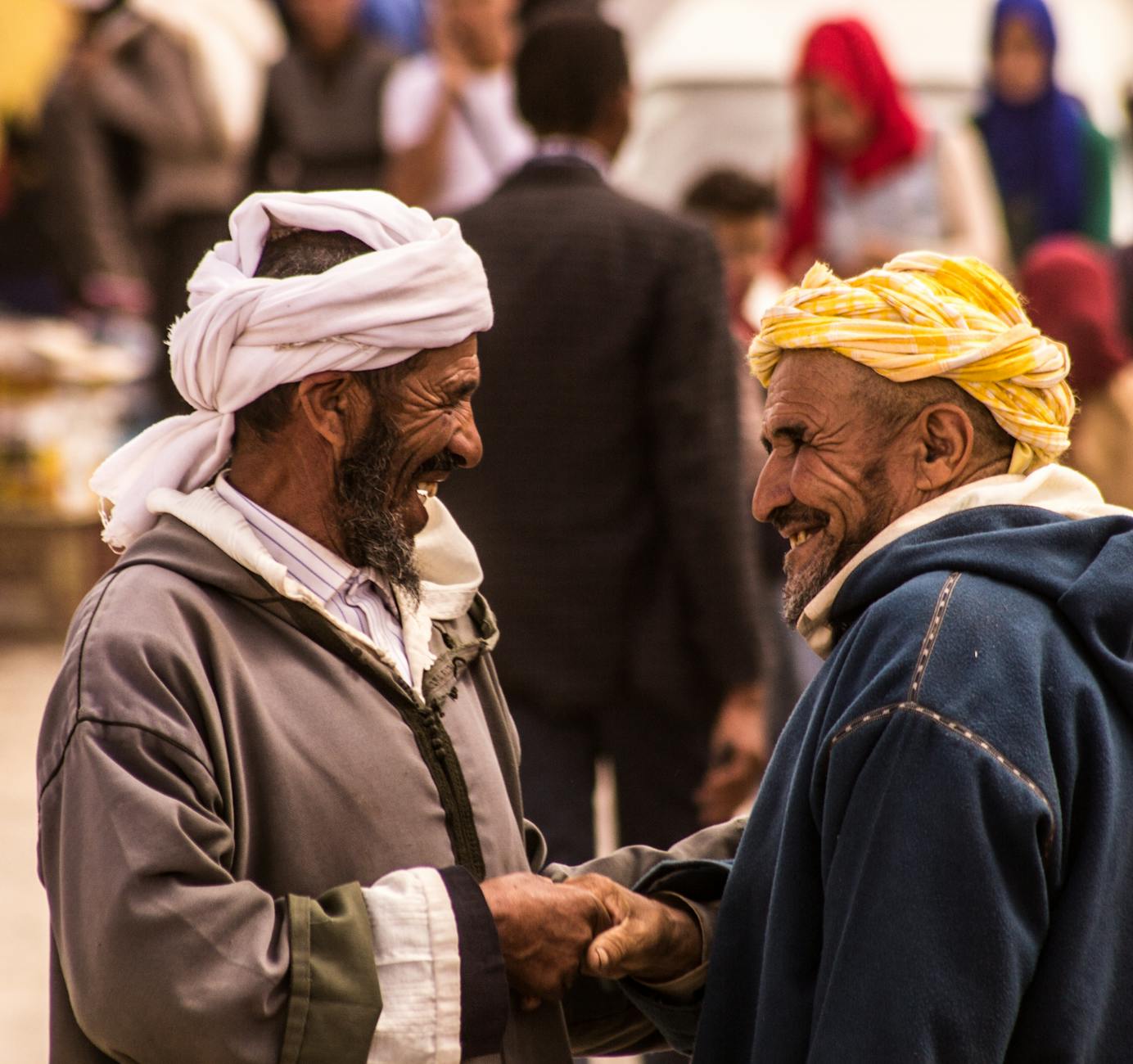
Marrakech is better than many people expect at designing relief into the trip. Some cities are great only when you are out in them. Marrakech can be great because of what happens when you step back from them.
It is also better than people think at supporting hotel-led travel without making that shallow. In some destinations, a strong hotel can feel like an escape from the city. In Marrakech, the strong hotel often becomes part of understanding the city.
Another underrated strength is district counterpoint. The traveler who moves intelligently between medina, Gueliz, Hivernage, and the garden side gets a much fuller picture than the traveler who tries to force a single "authentic" version.
The city is also better than people think at late-day beauty. Many destinations promise romance after dark. Marrakech often actually delivers it.
Finally, Marrakech is better than people think at being edited. It is not a city that gets less authentic when you choose carefully. It gets better.
Best Time to Visit Marrakech
Best Overall Months
March, April, May, October, and November are the easiest answers for a first trip. They allow real walking, real rooftop time, and enough flexibility that the city can have multiple registers in one day.
Summer
Summer is still workable, but only if you accept that the city becomes more hotel-led. Mornings matter much more, afternoons narrow dramatically, and the value of deep shade, a pool, or a serious hammam rises.
Winter
Winter can be excellent. Light is often beautiful, days are more manageable, and the city feels sharper and less punishing underfoot. The mistake is packing only for fantasy warmth.
Ramadan And Holiday Sensitivity
Marrakech remains open and usable during religious and holiday periods, but the city's rhythm can shift. Restaurant hours, museum timings, and evening energy may not behave exactly as they do in standard tourist-season assumptions. Check key bookings directly.
How Many Days You Need
One Full Day
Enough for an impression, not enough for a relationship.
Two Full Days
The minimum strong version. One day should belong mainly to the medina and one major monument cluster. The second should introduce either garden-and-museum Marrakech or a more hotel-and-neighborhood version of the city.
Three Full Days
Ideal for most first-time travelers. This allows one medina-heavy day, one monument-and-shopping day, and one calmer counterpoint day without the city turning into a sensory marathon.
Four Days Or More
Very good if you want a luxury-paced stay, a more deliberate shopping plan, a hammam afternoon, or a day beyond the city without sacrificing Marrakech itself.
Where to Stay in Marrakech
The base matters here more than people expect.
Fast Answer
For many first-time visitors, the best answer is either a well-run medina-edge riad or a strong Hivernage hotel. Gueliz works better than some travelers assume, especially for repeat visitors or anyone who wants more contemporary city life. A deep-medina riad can be magical, but only if you truly want that degree of immersion and your property handles arrivals, navigation, and service confidently.
Neighborhood Decision Table
| Traveler Type | Best Area |
|---|---|
| First-time couple | medina edge or Hivernage |
| Maximum atmosphere traveler | medina riad with very strong operations |
| Hotel-and-recovery traveler | Hivernage |
| Design-and-garden traveler | Gueliz / Majorelle side |
| Repeat visitor | Gueliz or a more specific medina pocket |
Medina Edge
Best for: first-time visitors who want a real riad stay without maximum navigational friction. Why it works: you can enter the medina quickly but escape it cleanly. Tradeoff: quality varies sharply by property. Best use: the most romantic first-time answer when operations are strong.
Deep Medina
Best for: travelers who want total immersion and genuinely enjoy density. Why it works: no district feels more specifically Marrakech. Tradeoff: harder arrivals, more walking friction, and greater sensitivity to service quality. Best use: travelers who know they want atmosphere first and are not pretending otherwise.
Hivernage
Best for: stronger hotels, easier car access, better recovery, and a more polished resort-city edge. Why it works: Visit Marrakech describes Hivernage as a luxury hotel and nightlife district, and that is essentially how many travelers use it best.[11] Tradeoff: less immediate old-city atmosphere. Best use: hot-weather trips, comfort-led stays, and travelers who want the medina in measured doses.
Gueliz
Best for: contemporary dining, easier movement, wider streets, and a more urban-modern counterweight. Why it works: Gueliz gives Marrakech a second face, and a useful one.[10] Tradeoff: less cinematic than a riad stay. Best use: travelers who want to understand that Marrakech is not only a heritage theater set.
Area Profiles
The Medina: best for atmosphere, riads, souks, and first-contact Marrakech.
The Kasbah and Mellah side: best for Bahia Palace, Saadian Tombs, and a more historically layered southern medina experience.
Gueliz: best for Majorelle/YSL access, broader streets, and modern urban life.
Hivernage: best for large hotels, pools, and reset value.
Palmeraie: best only if the trip is intentionally resort-led and you accept being operationally outside the city.
Neighborhood Guide: Where to Explore, Not Just Sleep
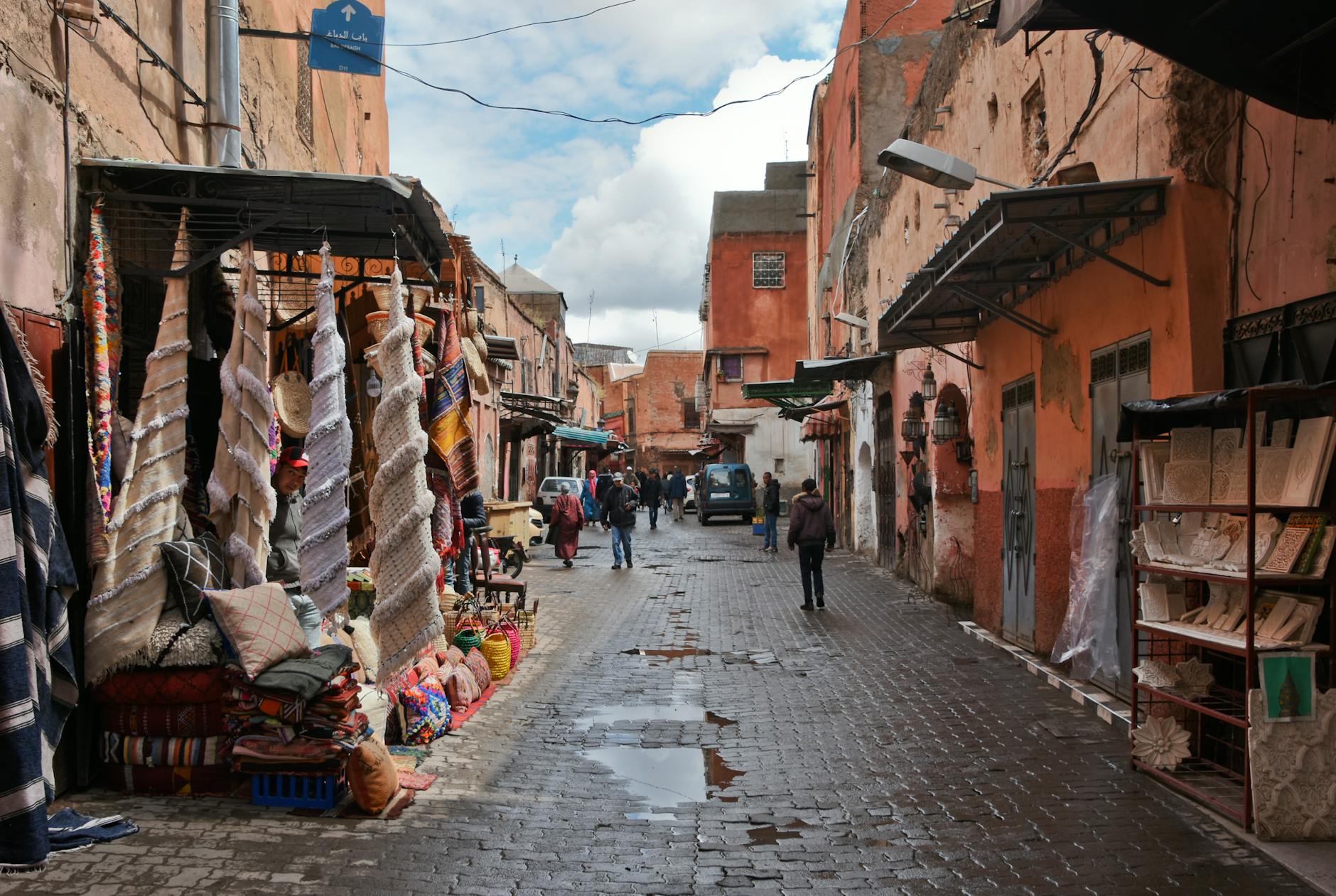
The medina should never be treated as a single undifferentiated zone. Around Jemaa el-Fna, things can feel loud, performative, and relentless. Around Ben Youssef and the northern souk side, the mood can feel more craft- and monument-led. Around the Kasbah and Mellah, the city becomes more historical, more residential in tone, and often slightly less claustrophobic than the central square-driven core.
Jemaa el-Fna matters, but it is not where the whole trip should live. The square is best used as a pulse-check rather than as your only idea of the city. See it, feel it, return to it in the evening if you want, but do not confuse its spectacle with the whole meaning of Marrakech.[13]
The Kasbah side rewards travelers who want a more anchored heritage experience. Bahia Palace, the Saadian tombs, and nearby old-city movement give that part of Marrakech more gravitas and less pure performance.
Gueliz is where the city gets air. Cafes, galleries, modern retail, and better spacing matter here, and the district is especially useful after one or two medina-heavy days.[10]
Hivernage is not really about sightseeing. It is about how the trip feels in your body. Stronger rooms, pools, spa infrastructure, and cleaner arrivals all change Marrakech more than some travelers like to admit.[11]
Riad or Hotel?
This is the central Marrakech accommodation decision.
A great riad gives you the strongest emotional version of the city: filtered light, interior stillness, architecture that feels inseparable from place, and a repeated sense of retreat after street pressure. But a merely decent riad can be a logistical nuisance wrapped in Instagram lighting.
A great hotel, especially in Hivernage or on the calmer side of Gueliz, gives you more space, easier transfers, better service redundancy, and a trip with more operational grace. The tradeoff is that you sometimes need to go toward Marrakech rather than already feeling inside it.
The right answer depends on your appetite for friction. If you romanticize arrival complexity, alleys, and medina immersion, pick the riad carefully. If you care about how the trip will feel on your third afternoon, do not underrate the hotel.
The Best Things to Do in Marrakech
The right first list is surprisingly short.
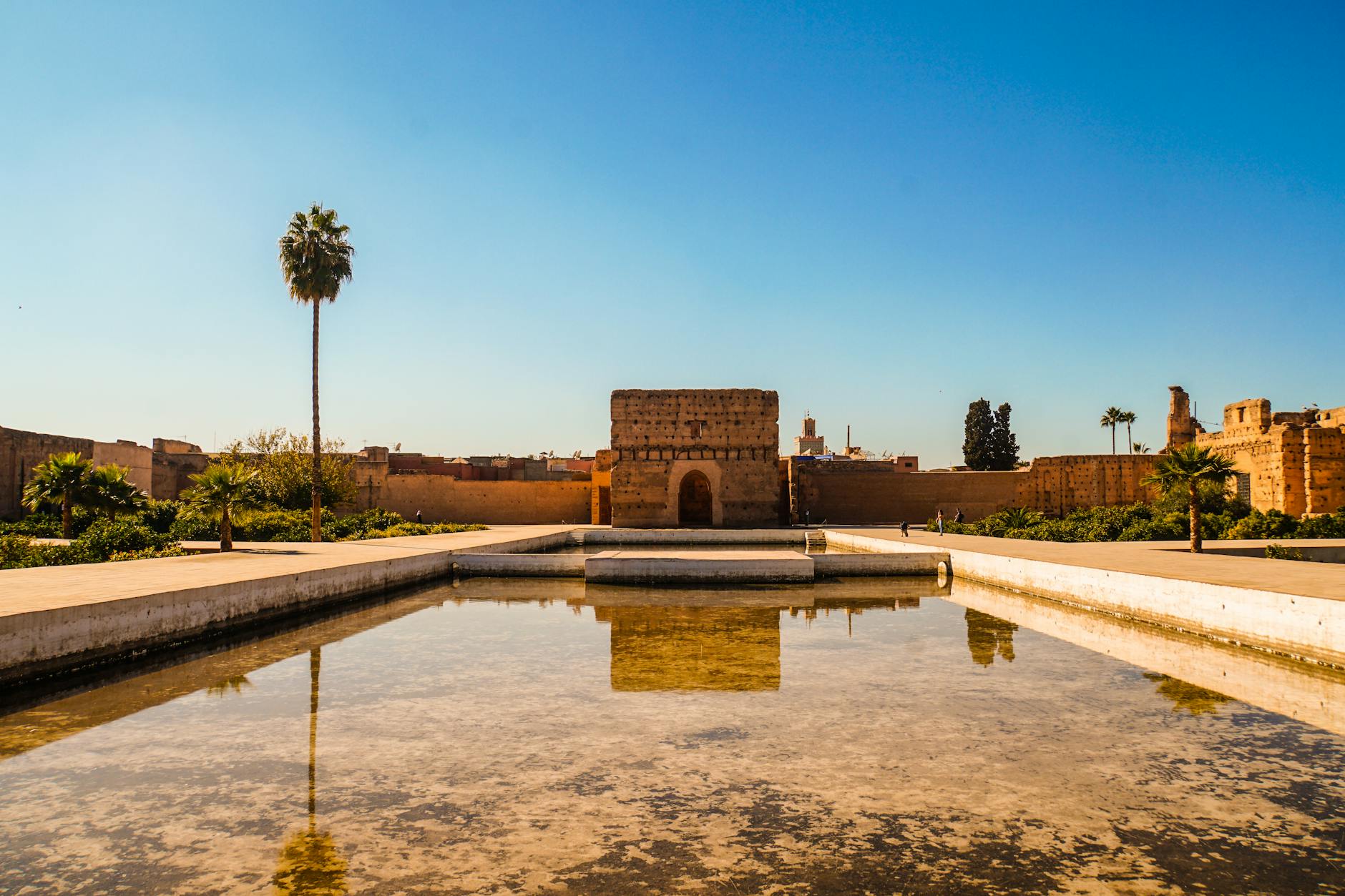
Start with Bahia Palace if you want decorative grandeur and a stronger sense of elite domestic Marrakech.[5]
Do Ben Youssef Madrasa if you want one of the city's clearest expressions of carved, geometric, scholarly beauty.[6]
See Koutoubia as an urban anchor rather than a ticketed attraction. It is one of the main ways the city organizes itself visually.[7]
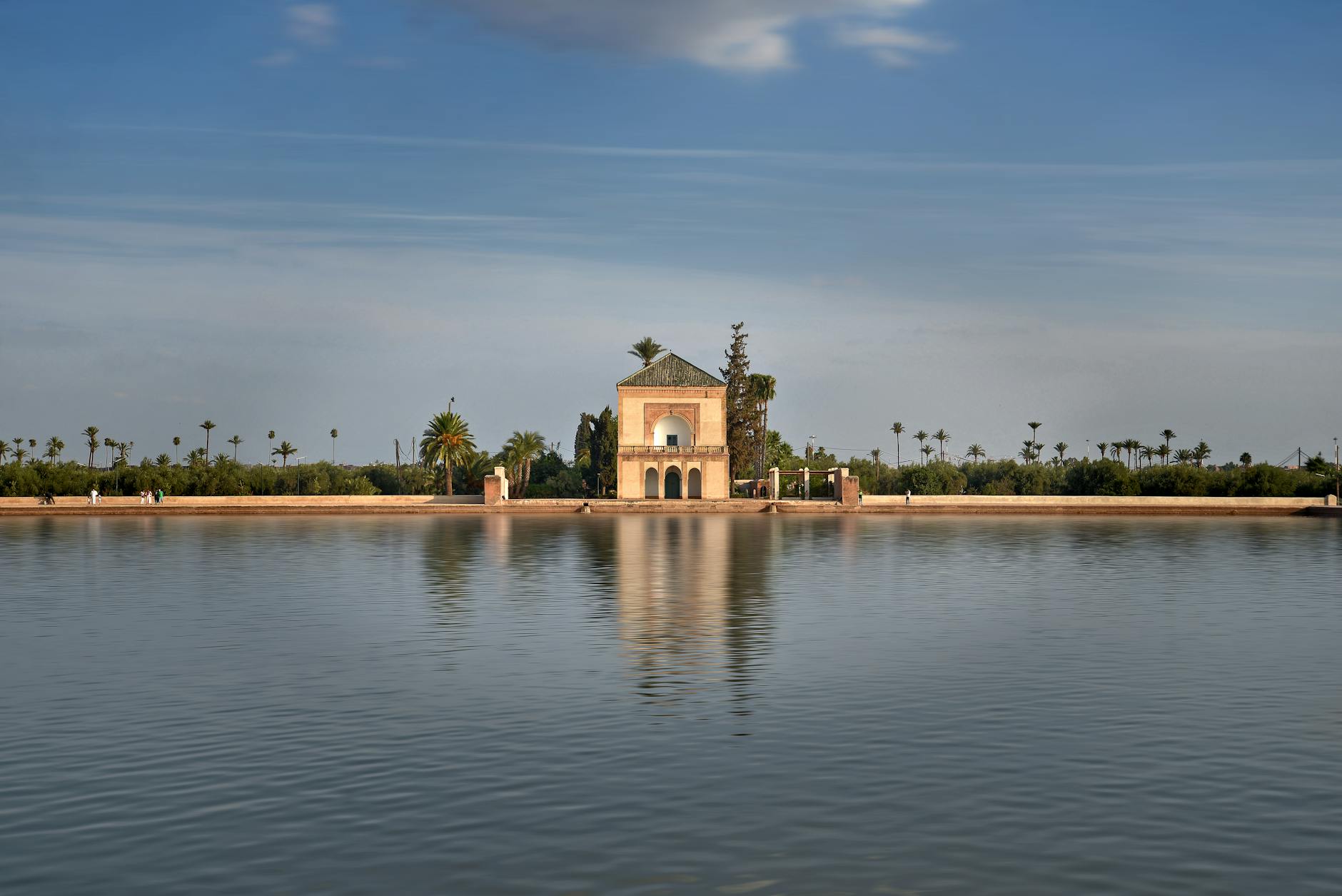
Give Jardin Majorelle proper planning, not leftover time. It is one of the best ways to understand the city through curated color, planting, and controlled quiet.[8]
Pair it, if you care, with the Musee Yves Saint Laurent Marrakech, which gives the garden side more cultural depth and changes the district from pretty stop into real half-day material.[9]
If you want another historical anchor, the Saadian Tombs are worth it, especially when combined with the Kasbah side rather than treated as a separate dart on the map.[12]
And yes, spend time in the souks. Just do not make the mistake of pretending that all souk time is automatically high quality. One purposeful pass is often better than three vague ones.
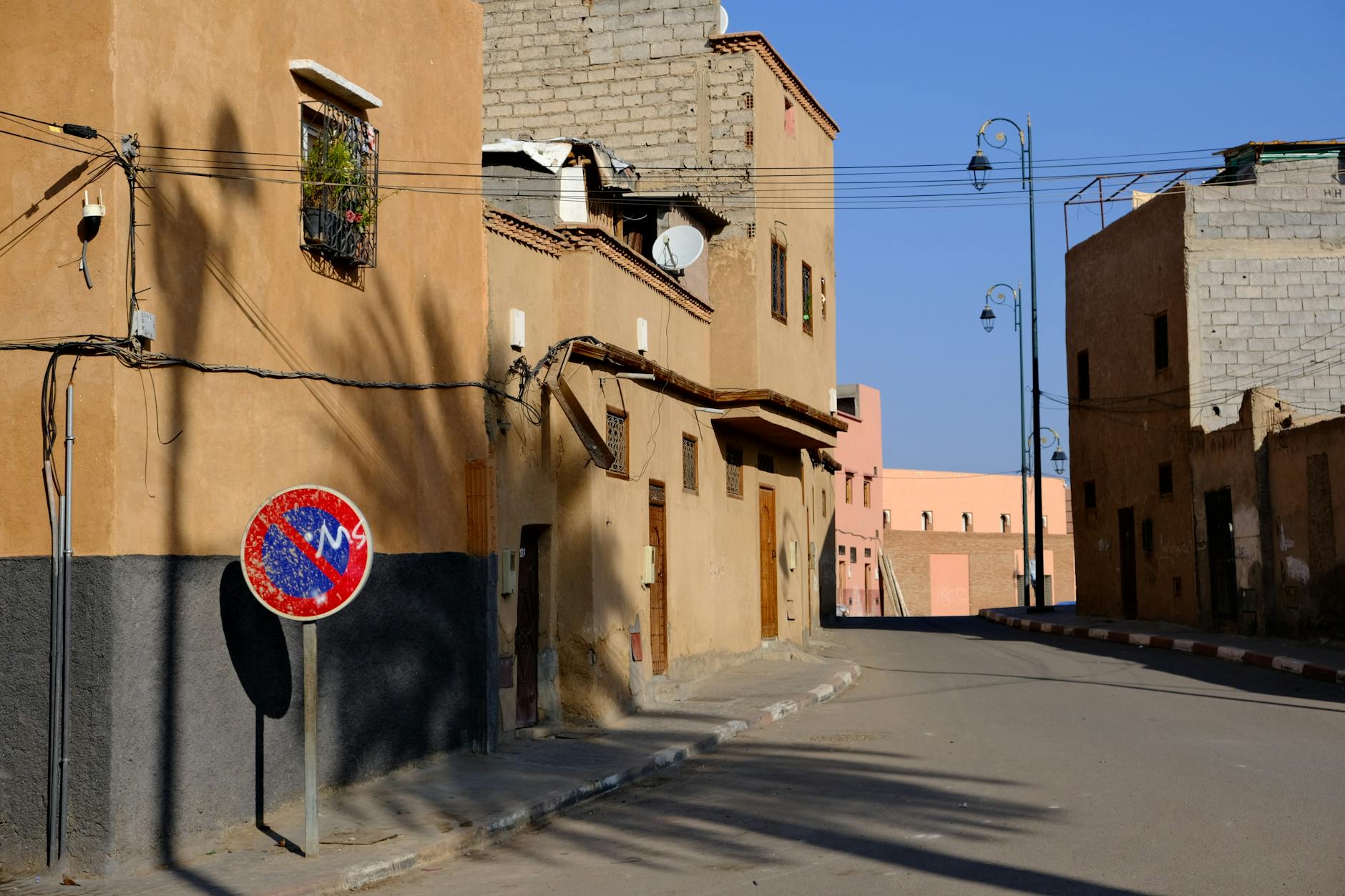
What a Great First Marrakech Trip Actually Looks Like
On a two-day first trip, one day should be mostly medina, one strong monument, lunch, reset, then evening. The other should use either the garden-and-museum side or the Kasbah/Bahia side and leave room for a real hammam or hotel afternoon.
On a three-day first trip, the cleanest structure is:
Day one: arrival, gentle medina entry, one defined area, then an early evening. Day two: main monument day plus selective souk time. Day three: Majorelle/YSL or calmer district counterpoint, then a slower final evening.
The point is not maximal coverage. The point is to let the city keep changing registers before it turns repetitive.
Food and Drink
Marrakech is at its best when food is used as part of rhythm rather than simply as reward after sightseeing.
Breakfast matters because many riads and hotels do it beautifully, and because the city is much easier to love when you begin the day slowly. Lunch matters because it can function as tactical shade and rehydration. Dinner matters because the city becomes more flattering to itself after dark.
The main mistake is eating only for view or only for convenience. Rooftops are lovely, but not every rooftop meal is interesting. The strongest meals often come from places where design, service, and pacing are all being taken seriously, whether in the medina, Gueliz, or inside a major hotel.
This is also a city where sweets, tea, and pauses matter. Marrakech is not only about the "best restaurant." It is also about whether you let the day breathe.
Shopping and Craft
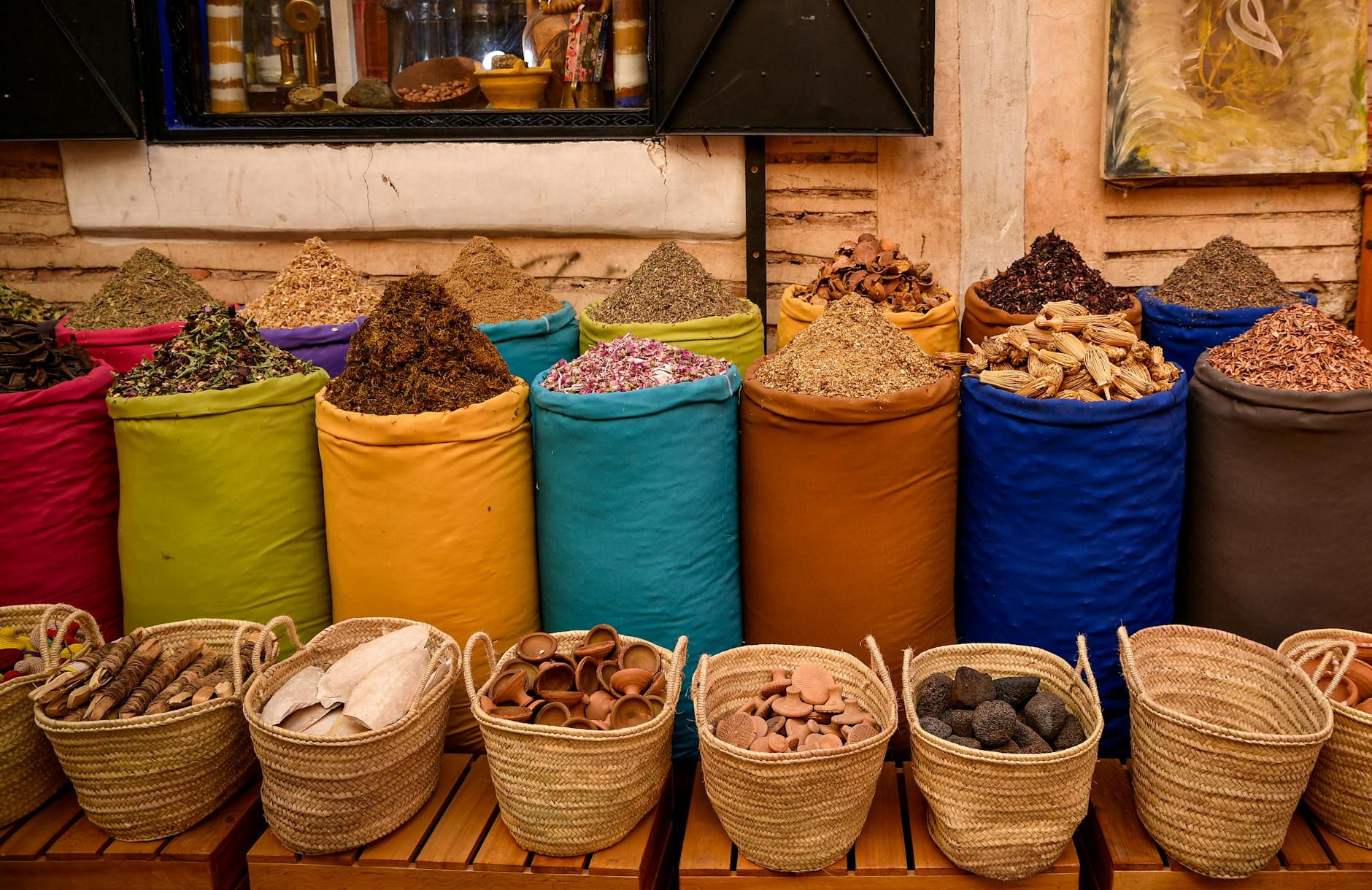
Marrakech can be one of the great shopping cities, but only if you decide what kind of shopping you are actually doing.
If the answer is textiles, ceramics, lighting, leather, baskets, fragrance, or home objects, then Marrakech can be wonderfully rewarding. If the answer is "whatever catches my eye for six straight hours in the medina," the day usually degrades quickly.
Set a category. Set a time limit. Decide whether you are browsing, buying, or researching. Then stop when your attention starts to flatten.
The city is full of beautiful things, but beauty in Marrakech is not scarce. You do not need to panic-buy the first adequate object that proves you were here.
Getting Around
For most first-time visitors, the practical formula is simple: walk selectively, use taxis tactically, and treat buses as occasional support rather than as the spine of the trip.[3][1]
Inside the medina, walking is unavoidable and often rewarding. The key is not to confuse unavoidable with limitless. Outside the medina, especially in heat, short taxi rides can preserve the quality of the day.
If you arrive through Marrakech Menara, either organize a hotel pickup, use an official airport taxi, or at minimum understand your arrival before wheels-down. Marrakech is not the place to improvise your very first transfer and hope atmosphere will compensate.
What To Skip
Skip the fantasy that every meal needs a panoramic rooftop.
Skip the idea that more souk hours equal deeper cultural experience.
Skip booking the cheapest photogenic riad if its access and service structure are weak.
Skip heroic midday walking in hot months.
Skip treating Gueliz or Hivernage as somehow lesser because they are easier. Ease is often part of quality here.
Common Mistakes
The first mistake is choosing a base for image instead of for how you actually travel.
The second is trying to keep the same pace in Marrakech from 10 a.m. to 5 p.m.
The third is overvaluing the square and undervaluing the quieter parts of the medina.
The fourth is never leaving the old city and then concluding Marrakech lacks range.
The fifth is shopping without criteria.
The sixth is underestimating how much one strong hotel or riad can improve everything else.
My Blunt Advice
If this is your first Marrakech trip, do not try to prove you can handle the city. Let the city work on you at the right dosage.
Choose a base that gives you either controlled medina access or real recovery. Do fewer monuments, but do the right ones. Let Gueliz or Hivernage play a supporting role if that helps the trip breathe. Use Jardin Majorelle deliberately, not casually. Keep shopping purposeful. And remember that the strongest Marrakech usually arrives after you stop trying to wring every drop of intensity out of it.
Marrakech is not a city that rewards endurance. It rewards taste.
Where Marrakech Fits in a Morocco Trip
Marrakech works best in Morocco itineraries when you let it serve as a city of form, mood, and controlled exposure rather than as a total summary of the country. It is not Fes's density of scholarship and craft memory, not Casablanca's contemporary urban reality, not Essaouira's sea-air looseness, and not the desert's cinematic emptiness. Marrakech is more stage-like than some Moroccan cities, but also more structurally manageable if you understand how to edit it.
For first-time Morocco visitors, Marrakech is often the cleanest opening or closing city because it teaches several essential things quickly: the value of the riad, the difference between medina intensity and modern-district recovery, the importance of hotel quality, and the fact that atmosphere alone cannot carry every hour. It gives newcomers a way to meet Moroccan urban life through a city that is highly legible even when it is demanding.
For repeat visitors, Marrakech often becomes more appealing once the pressure to "cover" it disappears. Then the city can be used for what it is excellent at: a few right monuments, one very good hammam, one very good garden or museum sequence, serious hotel time, and evenings built around food, courtyards, and controlled returns to the medina.
The wrong use of Marrakech is as a sensory obstacle course you conquer before moving on. The right use is as a city that depends on proportion and gives back heavily when you stop forcing every moment to be intense.
Marrakech Versus Fes, Seville, And Dubai-Fantasy Expectations
Marrakech versus Fes is probably the most useful internal Morocco comparison. Fes often feels denser, more scholastic, and less openly edited for short-stay comfort. Marrakech is usually easier to shape into a good first trip because the contrast between medina, hotel, garden, and modern district is clearer and more usable. Fes can feel deeper historically and more immersive in a totalizing way. Marrakech more often wins on trip design.
Marrakech versus Seville is useful because some travelers approach both as warm-weather courtyard cities of color, tiles, and historic atmosphere. But Seville is more plaza-based, more outwardly social in its public form, and easier to traverse cleanly. Marrakech is more interior, more contrast-dependent, and more demanding in how it handles fatigue and heat. If Seville is a city that wants you out in it for long hours, Marrakech often wants you to alternate exposure with retreat.
The most damaging comparison, though, is not to another real city but to a fantasy: the idea that Marrakech is supposed to provide uninterrupted enchantment. That expectation usually produces the worst itineraries. Marrakech is not a cinematic overlay that removes heat, negotiation, noise, and bodily limits. It is strong precisely because beauty and friction coexist.
That is the practical conclusion. Marrakech is one of the strongest first Morocco stays when you accept that elegance here comes from editing rather than surrender.
First-Time Visitors Versus Repeat Visitors
First-time visitors often experience Marrakech in broad symbolic blocks: riad, souk, square, palace, garden, rooftop, hammam. That can already make an excellent stay, but first-timers often still overexpose themselves to the medina because they assume more intensity equals more authenticity.
Repeat visitors usually become more selective and therefore happier. They know which monument actually matters to them, which hours of the medina are worth paying for physically, how much hotel time improves the city instead of weakening it, and why one strong dinner can matter more than one more souk loop. They also tend to understand that Gueliz or Hivernage is not "less Marrakech" so much as part of the mechanism that makes Marrakech sustainable.
This is why the city improves on return. Once the need to prove stamina falls away, taste can take over.
Why the Base Matters More Than It First Seems
In many cities, the hotel merely supports the trip. In Marrakech, the hotel or riad is part of the trip's argument. A weak base can make the whole destination feel overexposed, noisy, and logistically brittle. A strong base can make the city feel exact, protective, and almost improbably well-composed.
The key is not only aesthetics. It is how the property handles arrival, heat, sound, service, transfer help, and recovery. A deeply atmospheric riad that is operationally clumsy can sour an otherwise strong stay. A major hotel with weaker personality but better execution can produce a much better actual trip, especially in hotter months or for travelers doing Morocco for the first time.
This is why medina-edge riads, Hivernage hotels, and carefully chosen Gueliz properties often outperform more romantic-looking but badly considered choices. The traveler needs somewhere that lets the body reset. In Marrakech, reset is not a luxury extra. It is structure.
Why One Proper Marrakech Day Matters
Marrakech is easy to sample and easy to mangle. A few hours can give you enough spectacle to feel satisfied, but not enough rhythm to understand why the city works. Without one properly shaped day, many first-time visitors leave with fragments instead of a coherent experience.
A proper Marrakech day usually needs three acts. Morning belongs to the medina or to a major monument while your attention and temperature tolerance are strongest. Midday belongs to retreat: lunch, shade, hotel, pool, hammam, or a low-stimulation district. Late afternoon and evening belong to the city's second life, when shopping, rooftops, gardens, and dinner can feel seductive rather than punishing.
Without that full arc, Marrakech often feels louder than it needs to. With it, the city becomes controlled and memorable.
Day Marrakech Versus Evening Marrakech
Daytime Marrakech can be glorious and abrasive in the same hour. Light is strong, color is strong, the medina is active, and every impulse seems to point toward movement. This is often when first-time visitors burn too much energy too early and mistake overstimulation for depth.
Evening Marrakech often carries the city's most persuasive register. Temperatures ease. Courtyards become useful again. Rooftops feel earned. The medina's edges can feel more atmospheric and less extractive. Dinner finally has room to matter as an event instead of just a refueling stop.
That means at least one evening should be protected from overprogramming. Marrakech needs one stretch of time when you are not still trying to complete the city. It wants one period when you are simply inhabiting the right room in the right light.
Why the Medina Should Not Own the Whole Trip
The medina is central to Marrakech, and there is no value in pretending otherwise. But letting the medina own every decision is one of the fastest ways to flatten the stay. The city needs counterweights. Without them, the medina can become repetitive, fatiguing, and oddly less magical over time.
What makes medina Marrakech powerful is its contrast with the courtyards, hotels, gardens, modern districts, and quieter historical pockets around it. Gueliz and Hivernage prevent the trip from becoming all pressure. Majorelle and the YSL museum prevent it from becoming all souk logic. A hammam or pool afternoon prevents the city from turning into endurance theatre.
So yes, give the medina real time. But do not make it the answer to every hour. Marrakech improves when the city gets to breathe against itself.
Why Marrakech Often Improves on the Second Visit
Marrakech improves on return because it does not depend on surprise alone. The first trip proves that the famous image is real: the riads, the courtyards, the red walls, the souks, the gardens, the rooftops. The second trip often proves that the city is much better when every decision is not being made under the pressure of first contact.
Repeat visitors usually know what to exclude. They may shop less and better, do fewer monuments with more conviction, rely more heavily on a good hotel, and accept that part of loving Marrakech is protecting themselves from its least elegant tendencies. This makes the whole destination feel calmer and more exact.
That is the real second-visit reward. Marrakech turns from "intense and beautiful" into "beautiful because it can be shaped."
How Marrakech Changes Over the Course of a Stay
On arrival, Marrakech often feels immediately atmospheric but not yet fully trustworthy. The first alley, courtyard, or rooftop may confirm the fantasy, but the city has not yet shown whether it can sustain a traveler beyond that first impact. During the first serious morning, especially in the medina, the answer starts to emerge.
By the first afternoon, most visitors understand whether their base is helping or hurting. This is one of the fastest cities in the world at exposing a weak lodging decision. By the first evening, if the base is strong and the day has been edited correctly, Marrakech usually becomes far more seductive. The city that felt effortful at noon can feel almost impossibly graceful after dark.
By the second day, the different Marrakechs start linking: medina Marrakech, monument Marrakech, garden Marrakech, modern-district Marrakech, hotel Marrakech. This is the stage where the city becomes richer than its own cliché.
By the third day, if you stay that long, Marrakech often feels less like a sensory trial and more like a designed sequence. You know what to skip, when to retreat, when to re-enter, and which version of the city you want more of. That is usually the point at which admiration becomes genuine attachment.
Source Notes
- 1. ONDA, official Marrakech Menara airport services page: [https://www.onda.ma/Nos-A%C3%A9roports/A%C3%A9roport-Marrakech-M%C3%A9nara/Services](https://www.onda.ma/Nos-A%C3%A9roports/A%C3%A9roport-Marrakech-M%C3%A9nara/Services)
- 2. ONDA, official announcement on the Marrakech Menara "kech.cab" taxi pre-order and prepayment desk: [https://www.onda.ma/mobile/Je-d%C3%A9couvre-ONDA/Actualit%C3%A9s/A%C3%A9roport-Marrakech-Menara-Mise-en-service-du-Guichet-unique-%C2%AB-kech.cab-%C2%BB-pour-la-pr%C3%A9commande-et-la-r%C3%A9servation-des-taxis](https://www.onda.ma/mobile/Je-d%C3%A9couvre-ONDA/Actualit%C3%A9s/A%C3%A9roport-Marrakech-Menara-Mise-en-service-du-Guichet-unique-%C2%AB-kech.cab-%C2%BB-pour-la-pr%C3%A9commande-et-la-r%C3%A9servation-des-taxis)
- 3. Visit Marrakech, official transportation page: [https://www.visitmarrakech.com/en/planning/Transportation/](https://www.visitmarrakech.com/en/planning/Transportation/)
- 4. UNESCO World Heritage Centre, Medina of Marrakesh: [https://whc.unesco.org/en/list/331](https://whc.unesco.org/en/list/331)
- 5. Visit Marrakech, official Bahia Palace page: [https://visitmarrakech.com/en/listing/palais-bahia/](https://visitmarrakech.com/en/listing/palais-bahia/)
- 6. Visit Marrakech, official Ben Youssef Madrasa page: [https://visitmarrakech.com/en/listing/Ben-Youssef-Madrasa/](https://visitmarrakech.com/en/listing/Ben-Youssef-Madrasa/)
- 7. Visit Marrakech, official Koutoubia Mosque page: [https://visitmarrakech.com/en/listing/mosquee-koutoubia/](https://visitmarrakech.com/en/listing/mosquee-koutoubia/)
- 8. Jardin Majorelle, official site and ticketing guidance: [https://www.jardinmajorelle.com/en/](https://www.jardinmajorelle.com/en/)
- 9. Musee Yves Saint Laurent Marrakech, official site: [https://www.museeyslmarrakech.com/en/](https://www.museeyslmarrakech.com/en/)
- 10. Visit Marrakech, official Gueliz district page: [https://visitmarrakech.com/en/listing/gueliz/](https://visitmarrakech.com/en/listing/gueliz/)
- 11. Visit Marrakech, official Hivernage district page: [https://www.visitmarrakech.com/en/listing/wintering/](https://www.visitmarrakech.com/en/listing/wintering/)
- 12. Visit Marrakech, official Saadian Tombs page: [https://visitmarrakech.com/en/listing/Saadian-tombs/](https://visitmarrakech.com/en/listing/Saadian-tombs/)
- 13. MICE in Marrakech, official CRT-managed Jemaa el-Fna Square page: [https://mice.visitmarrakech.com/en/listing/la-place-jemaa-el-fna/](https://mice.visitmarrakech.com/en/listing/la-place-jemaa-el-fna/)