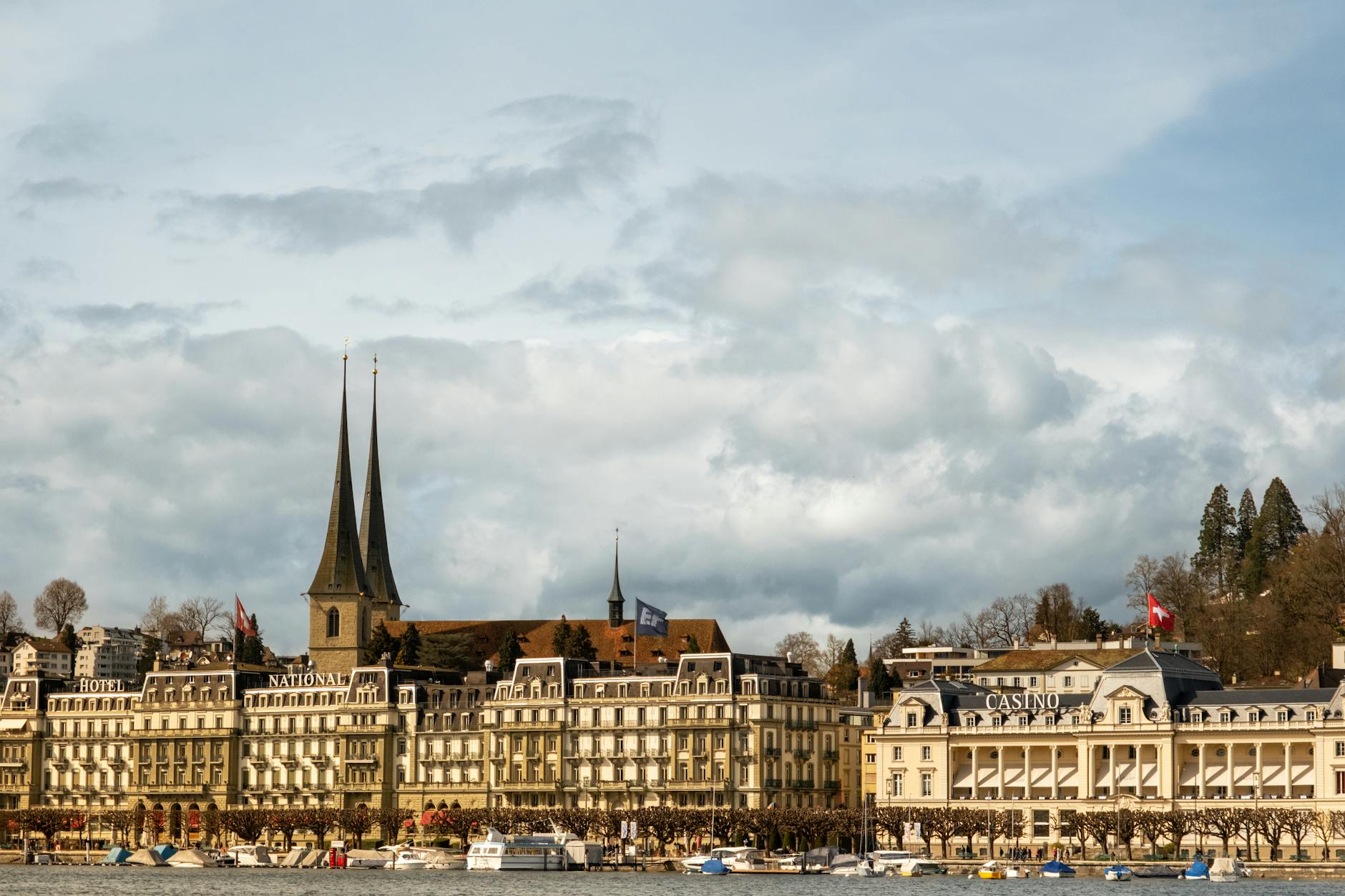
Lucerne is one of Europe's easiest cities to underestimate.
Start Here
It looks too perfect. The lake, the river, the covered bridges, the painted facades, the church towers, the mountains rising almost indecently close behind the city: the whole thing appears so complete at first glance that many travelers decide, consciously or not, that they have already understood it. Then they give it four hours, walk the Chapel Bridge, take a few photos, maybe board a train or a boat, and move on.
That is the standard Lucerne mistake.
The city is certainly compact, but compactness is not the same as shallowness. Lucerne works best when the traveler understands that its beauty is not one static view but a system. The station matters because arrival is unusually clean. The river matters because the city is constantly crossing itself. The lake matters because it changes the emotional scale of the place. The old town matters because it keeps Lucerne from becoming merely scenic. The nearby mountains matter because they are part of the city's identity, but they should not be allowed to erase the city itself.
This is why Lucerne is stronger as an overnight city than many first-time visitors expect. The day-trip version gives you image. The stayed-in version gives you rhythm. Morning on the Reuss. The old town before the busiest hours. The market or museum layer. A lake boat or a carefully chosen mountain excursion. A return to the city in the evening, when the facades, river, and hotel life start to make sense together. Lucerne becomes more persuasive with time not because it hides its beauty, but because it reveals how usable that beauty is.
The other problem is that Lucerne is often flattened into Swiss-symbol tourism. Chapel Bridge, lake, mountain, done. But the city is not just a Swiss greatest-hits composition. It has urban dignity. It has a real center. It has neighborhoods beyond the postcard core. It has a hotel culture shaped by long tourism history. It has a relationship to the lake that is quieter and more lived than the Instagram version suggests. And it has enough cultural and architectural weight that one good museum, one old-town walk, or one slower evening can change the whole trip from pretty to memorable.
If you want the first Lucerne trip to feel complete, the goal is not to pile mountain experiences on top of a lake view. The goal is to decide how much of the trip belongs to the city, how much belongs to the lake, and whether any mountain excursion actually improves Lucerne rather than replacing it.
The city in one sentence: Lucerne is a highly composed lake-and-mountain city whose best first trip comes from letting the city itself carry real authority instead of treating it like a beautiful transfer point.
Basic data
| Population | About 83,000 in the city |
|---|---|
| Area | 29 km2 |
| Major religions | Christian heritage with a strongly secular contemporary public culture |
| Political system | Municipal government inside a federal republic |
| Economic system | High-income mixed economy led by tourism, services, education, and regional business activity |
Quick Verdict
Best for: couples, first-time Switzerland trips, walkers, hotel travelers, rail travelers, landscape-minded urban travelers, and anyone who likes small cities with unusually strong setting.
Not ideal for: travelers who want nonstop urban intensity, people determined to reduce every stop to a checklist, or visitors who think one bridge plus one mountain equals understanding Lucerne.
Ideal first visit: 2 to 3 full days.
Minimum worthwhile stay: 1 night and 1 full day.
Best overall months: May, June, September, and early October.
Best summer logic: earlier lake walks, careful mountain selection, and some awareness that Lucerne's loveliness attracts large numbers of day visitors.
Biggest planning mistake: giving the mountain all the power and the city almost none.
One thing to prioritize: the base.
One thing to leave flexible: whether you take a mountain excursion at all.
The blunt version: Lucerne becomes much better the moment you stop asking how fast you can "cover" it.
Who Will Love Lucerne?
Lucerne is excellent for travelers who value composition. If you like cities where arrival is clean, walking is easy, scenery is built into daily movement, and a hotel can materially improve the trip, Lucerne does very well indeed.
It is especially strong for couples because it creates a lot of value with relatively little strain. The old town is compact without feeling trivial. The lake adds a sense of openness. The river and bridges keep the center moving visually. And if the hotel is good, the whole place can feel like one of the most civilized short stays in Europe.
It is also strong for first-time Switzerland visitors because it allows several Swiss ideas to coexist without total fragmentation: urban order, lake beauty, mountain proximity, transport competence, and a tourism culture that is polished rather than chaotic.
The city is less ideal for travelers who only measure destinations by size or intensity. Lucerne is not here to overwhelm you. It is here to be used well. That can look modest on paper, but in practice it often produces a more satisfying stay than louder cities do.
Lucerne at a Glance
| Question | Practical Answer |
|---|---|
| Main gateway | Lucerne railway station |
| Simplest first-time arrival | direct SBB train into the station |
| Best first-time base | old-town edge, lakefront central, or station-adjacent quality hotel |
| Main landmark | Chapel Bridge |
| Main old-town anchor | the car-free historic core north of the Reuss |
| Main lake anchor | the lakefront and SGV boat network |
| Main practical challenge | overcommitting to mountains and underusing the city |
| Local transport backbone | walking plus buses and trains in Zone 10 |
| Car needed? | No |
| Currency | Swiss franc |
| Emergency number | 112 |
| Tap water | Safe to drink |
| Power plugs | Type J |
2026 Visitor Notes
Lucerne Station Is Part Of The City's Strength
SBB's official Lucerne station page describes the station as sitting on the shores of Lake Lucerne, with long opening hours and a wide range of services in a very central location.[1] That may sound mundane, but it matters: Lucerne's unusually clean arrival makes short stays far more effective than in many other scenic cities.
Overnight Guests Get A Real Urban Advantage
Luzern.com's official Visitor Card page says overnight guests in city hotels can use buses and trains within Zone 10 free of charge and receive discounts on selected museums, mountain railways, and excursions.[2] That makes hotel choice matter even more.
Local Ticketing Is Simpler Than It First Appears
SBB's official Passepartout page explains that the Lucerne region uses a zone-based fare network and that one ticket can cover the paid zones across different public-transport modes.[3] For visitors, that means local movement is usually straightforward once you know whether your hotel gives you the visitor card.
The Tourist Office Sells More Than Information
The official Luzern.com tourist information page states that the station-based office sells cruise tickets, mountain-railway tickets, and public-transport tickets in addition to giving advice.[4] That is useful because Lucerne rewards choosing excursions selectively and with intent.
Lake Boats Are Real Transport As Well As Scenery
The official Lake Lucerne Navigation timetable page is the reminder that the lake is not only decorative; it is an operating excursion and transport system with real schedules and ticketing.[5] This is one reason Lucerne feels broader than its compact center suggests.
Pilatus Is Not A Casual Afterthought
Pilatus's official timetable pages make clear that operations are seasonal and route-dependent, and that the Lucerne-Alpnachstad boat leg is not a constant all-year assumption.[6] That is exactly why mountain plans in Lucerne should be deliberate rather than automatic.
How to Understand Lucerne
Lucerne works through five forces.
The first is arrival ease. The station is central, the city is legible, and the first hour tends to go unusually well.
The second is the water system. Lake and river are not scenery on opposite sides of the city; they shape the whole experience of movement.
The third is old-town density. Lucerne's historic core is compact but not superficial.
The fourth is mountain temptation. Pilatus, Rigi, and the wider region are real assets, but they can easily overpower the city in a poorly designed itinerary.
The fifth is hotel and evening quality. Lucerne gets stronger when you stay in it, not merely pass through it.
The Five Lucernes A First-Time Visitor Actually Meets
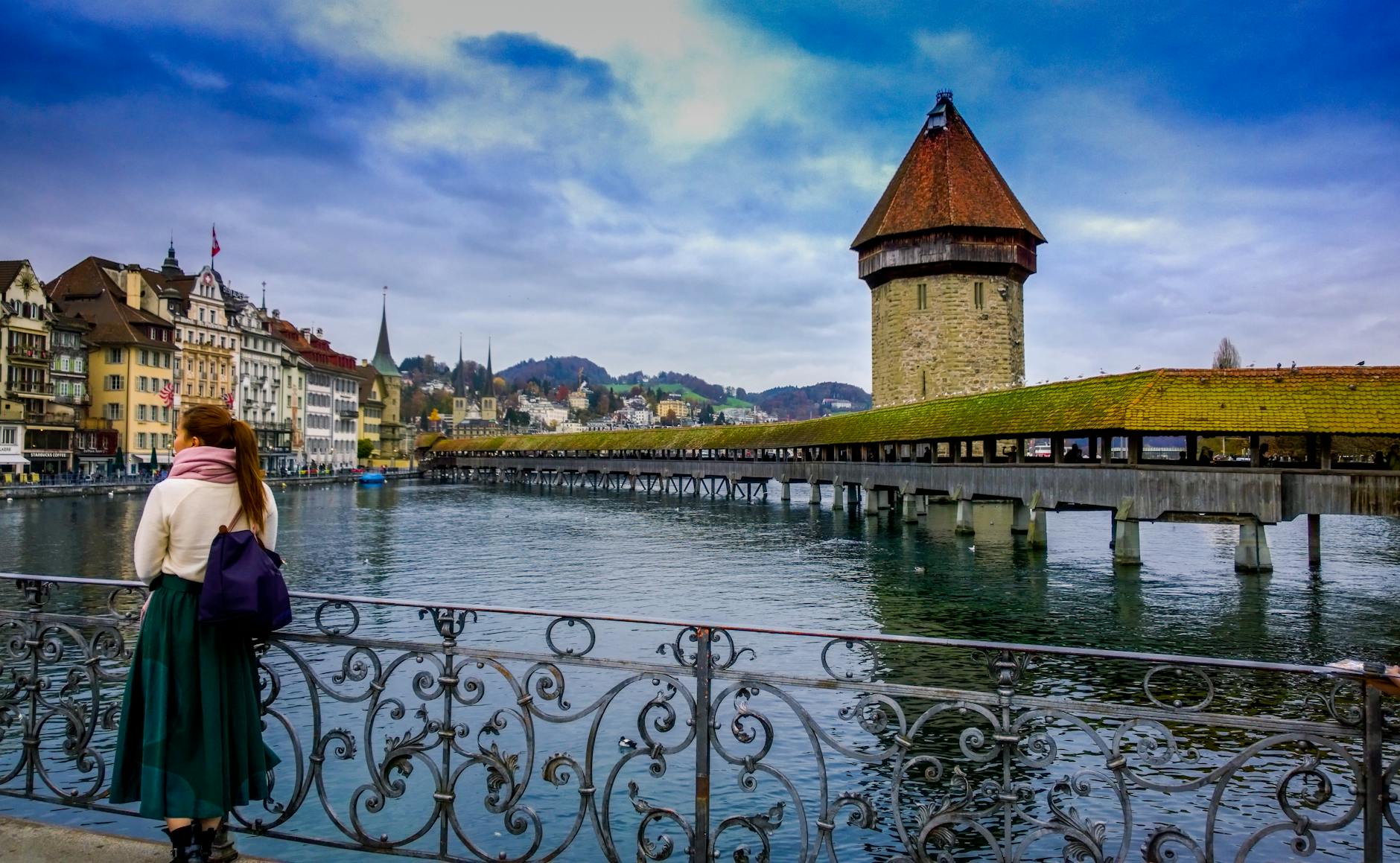
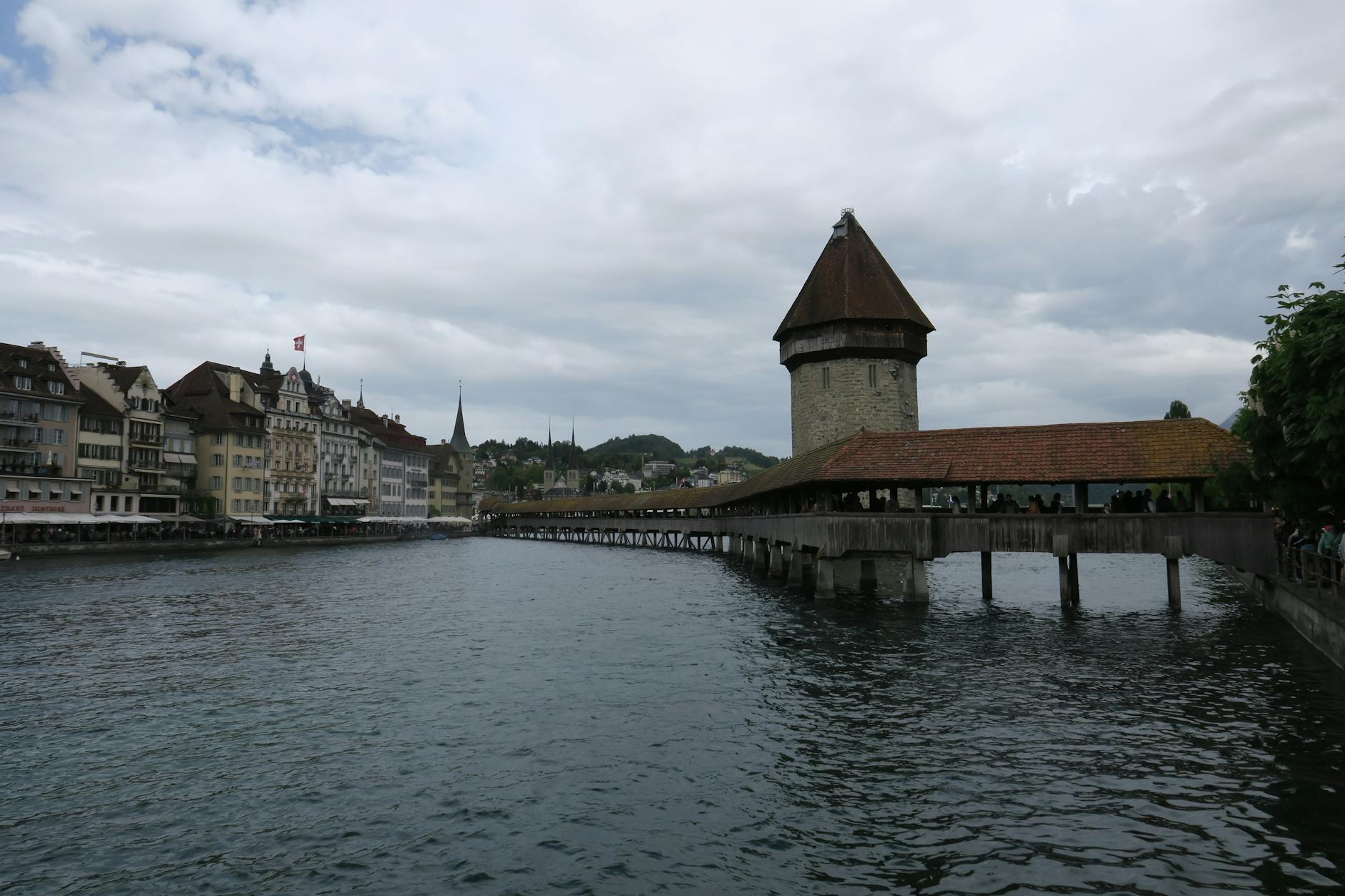
Bridge Lucerne: Chapel Bridge, river crossings, and the city's most iconic visual identity.[7]
Old Town Lucerne: frescoed houses, market squares, guild history, and car-free walking.[8][9]
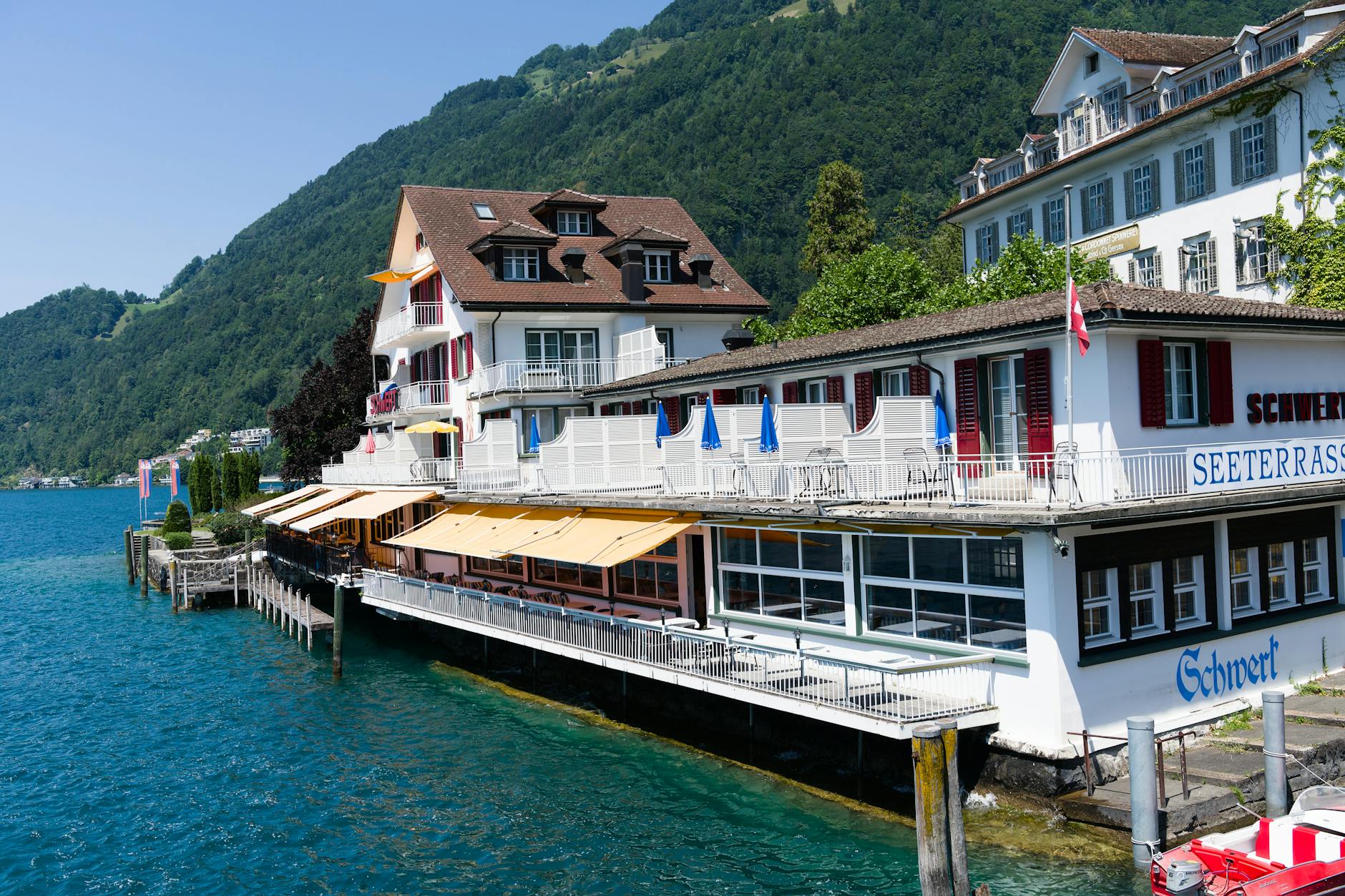
Lake Lucerne: boat movement, waterfront calm, and the change in scale that the open water creates.[5]
Hotel Lucerne: a tourism city in the best sense, where a good room and good location affect the entire mood of the stay.
Excursion Lucerne: mountain railways, regional boats, and day trips that can either enrich Lucerne or hollow it out.
The Main Mental Shift
Do not ask, "Which mountain should I add to Lucerne?" Ask, "How much of this stay belongs to Lucerne itself?" Once you answer that honestly, the right excursion usually becomes obvious, and sometimes the right answer is none.
What Lucerne Does Better Than People Think
Lucerne is better than many first-time visitors expect at being a real city. Because the scenery is so strong, people often miss that the city itself carries texture, history, and daily life very comfortably.
It is also better than people think at evening value. Many scenic Swiss stops flatten after day-tour hours. Lucerne does not become wild, but it remains dignified and rewarding at night in a way that justifies sleeping there.
Another underrated strength is trip-shaping efficiency. The station, the old town, the lake, and many hotels sit close enough together that very little time is wasted.
The city is also better than people think at supporting restraint. A Lucerne stay with one museum, one market morning, one boat, and one slow evening can feel richer than a more crowded agenda in larger places.
Where Lucerne Fits in a Switzerland Trip
Lucerne fits a Switzerland trip best as the city that proves scenic Switzerland can also function as a genuine urban stay.
That matters because many first-time itineraries still reduce Switzerland into one binary: cities for logistics, mountains for beauty. Lucerne is one of the places that breaks that pattern most elegantly. It gives you lake and mountain atmosphere without requiring you to abandon the pleasures of a real center, good hotels, clean arrival, evening walks, and actual civic shape.
Used properly, Lucerne works in four especially strong roles.
The first is as a first Swiss base. It introduces rail efficiency, lake scenery, mountain temptation, and urban polish all at once, which makes it one of the easiest places in the country from which to learn how Switzerland actually works.
The second is as a couples’ city break. Few Swiss cities create so much emotional return from such a compact footprint.
The third is as a restorative stop inside a bigger itinerary. If you have already done faster transfer days, higher-altitude bases, or longer urban runs elsewhere, Lucerne can feel like the place where the whole trip starts breathing again.
The fourth is as a repeat-Switzerland city. Once you no longer need every stop to justify itself through maximum altitude or maximum drama, Lucerne becomes one of the country’s most satisfying places to simply stay in.
What it is not is merely the platform from which you rush toward the “real” Switzerland. The city itself is one of the real things.
Lucerne Versus Interlaken
This comparison matters because both places are often proposed to first-time travelers who want mountain access, scenic surroundings, and relatively easy rail logic.
Interlaken is stronger as infrastructure. It is the more obvious launching point for a larger menu of Bernese Oberland excursions, and it suits travelers who want the base to serve the mountains first and themselves second.
Lucerne is stronger as a city. The center is more beautiful, the lake relationship is more graceful, the hotel life is better integrated into the experience, and the old-town and river system give the place a completeness Interlaken does not usually attempt.
If your priority is maximum excursion range, Interlaken often wins. If your priority is a place that remains satisfying even when you do not leave it, Lucerne is usually better. That distinction matters more than most first-time itineraries admit.
First-Time Visitors Versus Repeat Visitors
First-time visitors often arrive in Lucerne with too much visual certainty. They have already seen the bridge, the lake, and the mountain backdrop in photographs, so they assume the task is simply to stand in the right places and confirm the image.
Repeat visitors usually do better because they stop asking the city to behave like a perfect postcard and start using it as a real place. They choose a better hotel. They give the old town more than one pass. They know that a quieter lake walk may matter as much as the major excursion. They understand that Lucerne’s force comes less from novelty than from composition.
This is one reason Lucerne often improves on a second stay. The first visit may still be testing whether the city is “worth” more than a day trip. The second generally assumes that it is and begins to enjoy how the place actually works.
Best Time to Visit Lucerne
Best Overall Months
May, June, September, and early October usually give the cleanest balance of lake use, walking comfort, and mountain accessibility.
Summer
Summer can be beautiful, but it is also when Lucerne's day-trip popularity is most visible. That does not ruin the city. It simply means that mornings, evenings, and hotel quality matter more.
Winter
Winter can be elegant if you want a calmer Swiss city stay with lake atmosphere and seasonal hotel appeal, but it changes the excursion logic considerably. The city itself can still work well; the itinerary just needs to contract.
Shoulder Season
Shoulder season is often ideal because Lucerne keeps its visual drama while regaining some space.
Warm-Weather Lucerne Versus Cold-Weather Lucerne
Warm-weather Lucerne is generous. Boats feel easy, lakefront pauses grow longer, hotel terraces and waterfront benches become part of the daily structure, and the city’s beauty appears almost too eager to help you.
Cold-weather Lucerne is quieter, more interior, and in some ways more serious. The city starts leaning more on hotels, museums, church towers, old-town walks, and the pleasure of moving between river, square, café, and room without needing to prove itself through huge weather. That can be elegant, but only if you do not insist on building a summer itinerary in winter conditions.
How Many Days You Need
One Full Day
Enough for an impression, not enough for Lucerne to separate itself from postcard expectations.
Two Full Days
The minimum strong version. One day should belong mainly to the city and lakefront. The second can go either deeper into Lucerne or toward one carefully chosen excursion.
Three Full Days
Ideal for many first-time visitors. This lets Lucerne be both destination and regional base without the city itself disappearing.
Why One Proper City Day Matters
Travelers often assume Lucerne is so compact that it does not need a whole day of its own. That is exactly how the city gets misused.
One proper city day means a day where Lucerne itself carries the argument. The old town gets time. The river crossings get repeated. The lake is not only glanced at between other obligations. One museum, market, or quarter beyond the postcard loop helps the place feel inhabited. Evening arrives before you leave. Without that day, Lucerne can remain pretty but thin. With it, the city becomes complete.
Where to Stay in Lucerne
The hotel decision matters because Lucerne is compact enough that small differences in location translate quickly into real differences in tone.
Fast Answer
For most first-time visitors, stay on the old-town edge, near the lakefront but central, or in a quality station-adjacent hotel. Lucerne is not large enough to demand obsessive micromanagement, but it is polished enough that good positioning pays back immediately.
Neighborhood Decision Table
| Traveler Type | Best Area |
|---|---|
| First-time couple | central lakefront or old-town edge |
| Rail-first traveler | station-adjacent quality hotel |
| Maximum atmosphere traveler | old-town edge rather than the tightest interior |
| Hotel-led traveler | central lakefront |
| Cleanest all-round answer | old-town edge / central |
Old-Town Edge
Best for: atmosphere, easy walking, and immediate access to Lucerne's historic core. Why it works: you get the city quickly without always sleeping inside its busiest lanes. Tradeoff: room stock can be more variable than in larger chain-heavy districts. Best use: short stays that want beauty and city texture first.
Central Lakefront
Best for: classic Lucerne scenery, stronger hotel payoff, and a more spacious emotional tone. Why it works: the lake becomes part of the daily ritual rather than just a view. Tradeoff: you can pay heavily for position. Best use: travelers who care about the total feeling of the stay.
Station-Adjacent Central
Best for: clean arrivals, efficient departures, and sensible regional movement. Why it works: the station is highly central here, not a remote transport zone.[1] Tradeoff: less romance directly outside the door in some spots. Best use: visitors with one major excursion plan.
Why The Base Matters More Than Visitors Expect
Lucerne is small enough that travelers often assume any central hotel will do. In practice, the base still changes the trip quite a lot.
An old-town-edge hotel makes the city feel historical and textured from the moment you step out. A lakefront hotel makes the stay feel more spacious and ceremonious. A station-adjacent hotel makes movement almost frictionless and can be exactly right if one carefully chosen excursion is central to the plan.
The key point is that Lucerne’s hotel life is not incidental. Because the city is so composed, your room, your immediate street, and the first and last ten minutes of each day affect the entire mood. A better hotel in a better position can buy you a better Lucerne very quickly.
Area Profiles
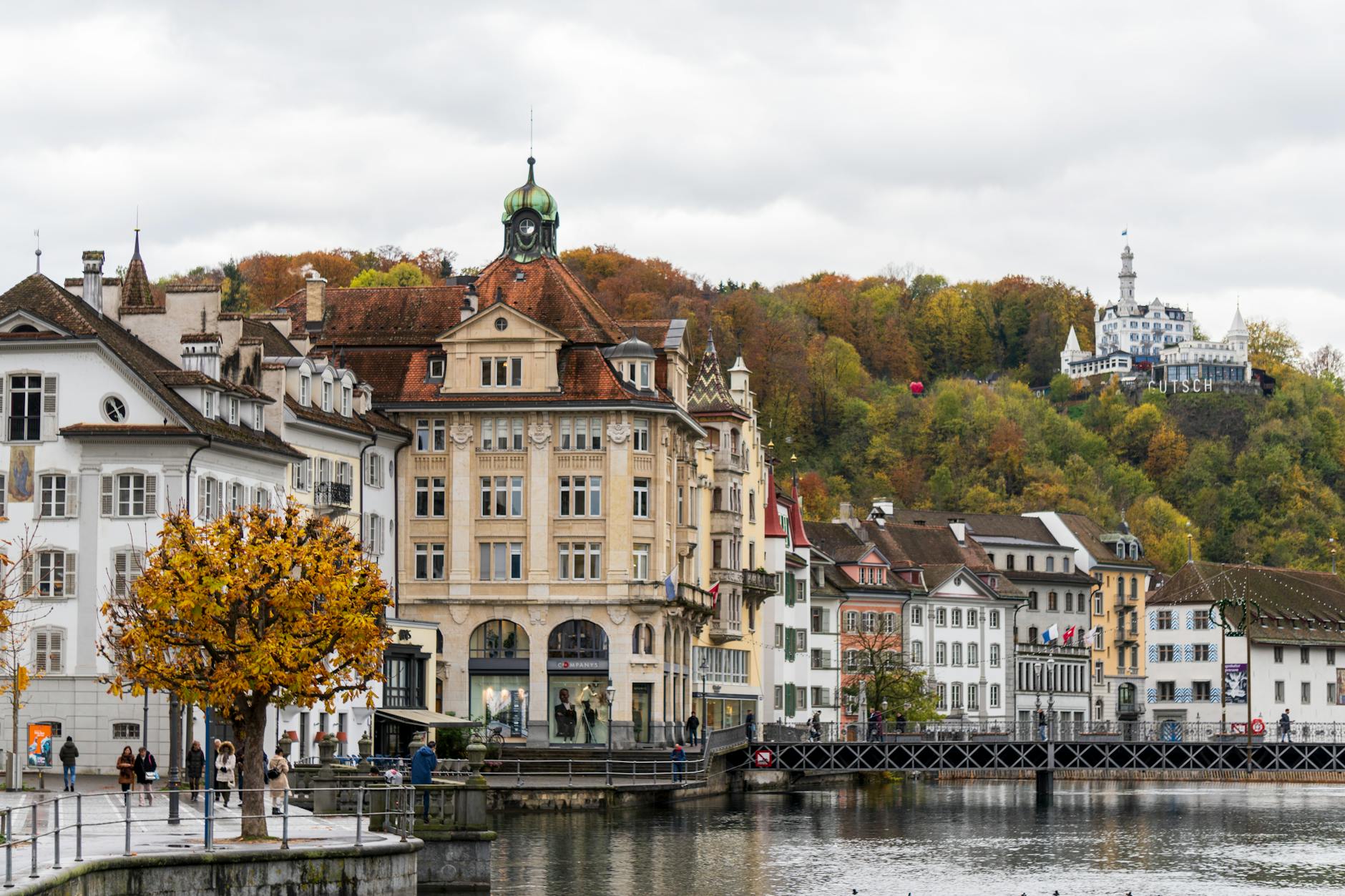
Historic core north of the Reuss: best for facades, squares, and compact city beauty.
River and bridge zone: best for first-contact Lucerne and repeated walking.
Lakefront central: best for hotels, views, and the broader scale of the city.
Neustadt / Hirschmatt side: best for seeing that Lucerne is not only a preserved old core.[11]
Neighborhood Guide: Where to Explore, Not Just Sleep
Lucerne's old town deserves better than a loop around the Chapel Bridge. The painted facades, the squares, and the small changes in river perspective are part of the city's real substance, not decorative filler.[8][9]
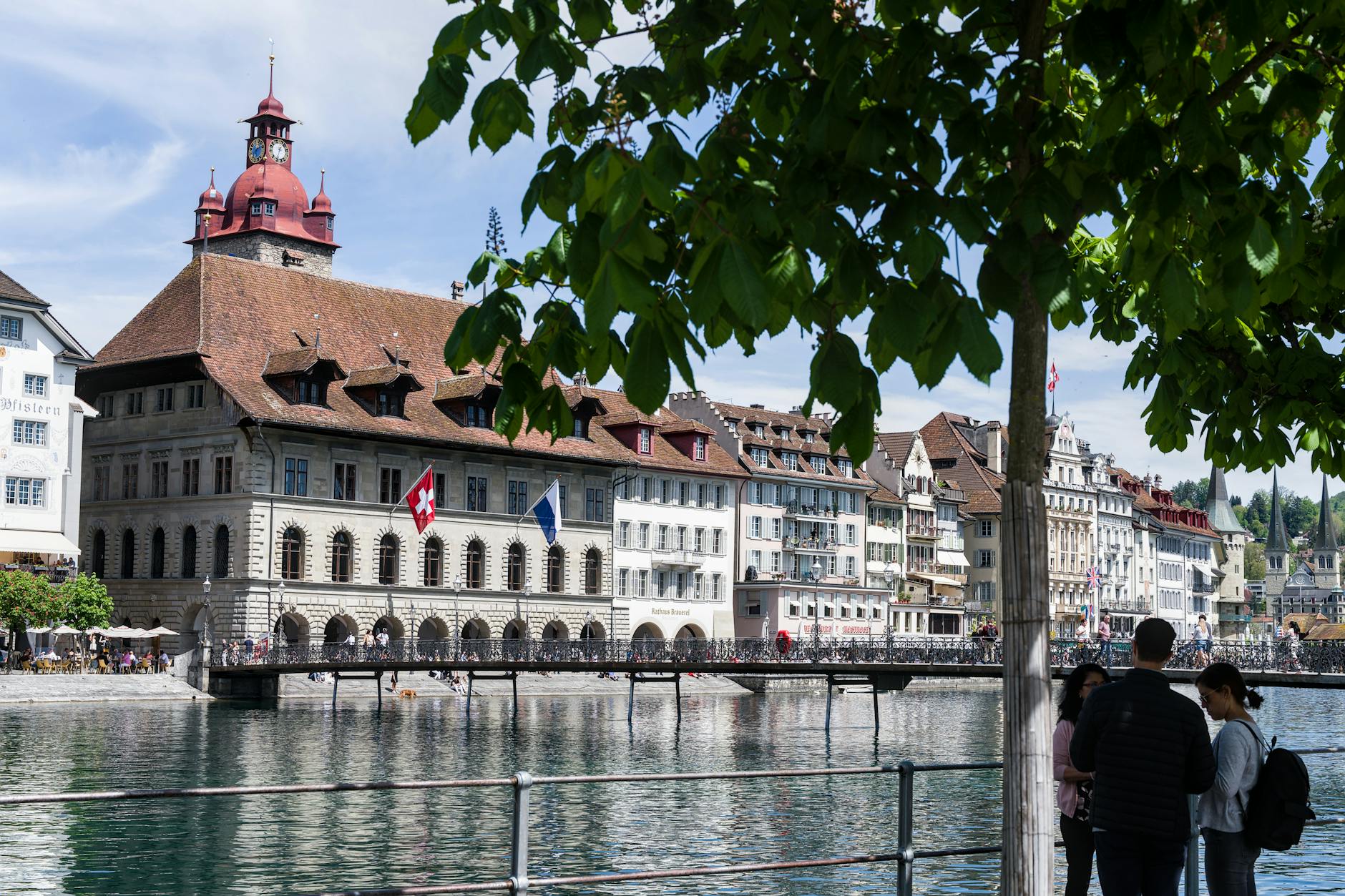
Rathausquai and the Town Hall side are especially useful because they remind you that Lucerne is not only heritage but urban life. Luzern.com's Town Hall page notes the weekly market on Tuesdays and Saturdays along Rathausquai and nearby streets, which is exactly the sort of detail that makes the city feel inhabited instead of staged.[10]
The Neustadt and Hirschmatt side matters more than many visitors realize. Luzern.com's own audio-tour page highlights it as Lucerne's liveliest neighborhood with shops, restaurants, bars, cinemas, and a different urban character from the postcard center.[11] If you only walk bridge-old town-lake-bridge, you miss that second Lucerne.
Day Lucerne Versus Evening Lucerne
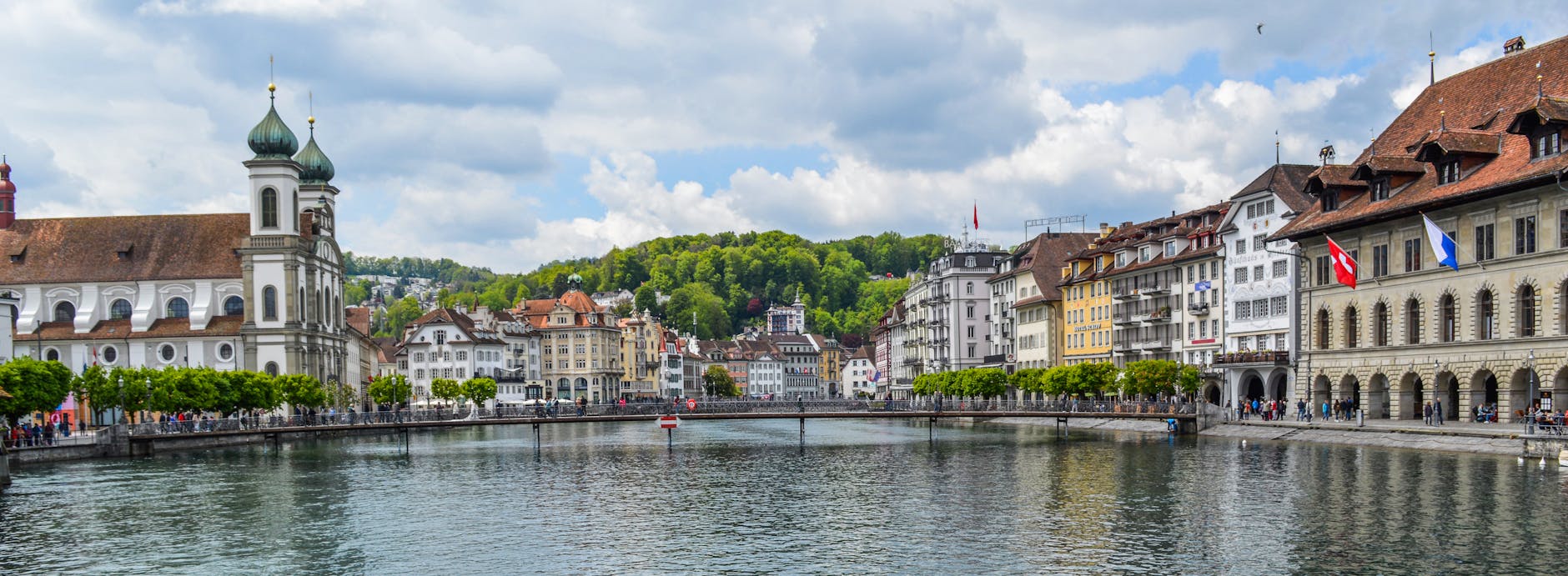
Daytime Lucerne is crisp and highly legible. You see the façades, the bridges, the tower lines, the market textures, and the choreography of boats, walkers, and trains. It is the city at its most obviously perfect.
Evening Lucerne is often where the place stops being only perfect and starts becoming personal. The river reflections matter more. The hotel matters more. The old town quiets slightly. The lakefront widens emotionally. A good dinner and one more walk can do more for Lucerne than an extra attraction. This is one reason overnight stays are so much stronger than rushed day trips.
Why Lucerne's Beauty Needs Friction
Lucerne can look so easy that travelers begin smoothing away the very things that give it substance. They rush the old town because the view appears obvious. They skip Neustadt because the center already seemed complete. They leave before evening because the city looked “done” in daylight.
But Lucerne needs a little friction to become memorable. Another bridge crossing. A slower square. A museum hour. A return from the lake back into town. A decision not to take the most predictable excursion. Those slight resistances stop the city from becoming merely decorative.
The Best Things to Do in Lucerne
Walk the Chapel Bridge more than once and think of it as connective tissue, not an isolated sight.[7]
Give the old town real time, especially the squares and riverbank stretches north of the Reuss.[8][9]
Use the lake as a real part of the day, whether through a boat journey or simply through longer waterfront time.[5]
Find one good counterpoint to the postcard core, whether that is a museum, Neustadt, or a single mountain move that does not eat the entire trip.
If you want a mountain, pick one carefully. Lucerne is not improved by turning every stay into a competition between Pilatus and Rigi. One strong choice is enough.
Mountain Discipline
The mountain question is where many Lucerne trips go off course.
Pilatus is excellent, but it is not mandatory. Its official timetable and pricing material make clear that operations, routes, and combinations vary seasonally.[6] That means you should choose it because it genuinely fits the trip, not because every Lucerne article tells you to add a peak.
The same logic applies more broadly. Mountains should amplify Lucerne, not consume it. If the entire stay becomes logistics for one panorama, the city loses its authority.
For many first-time visitors, the best answer is one mountain or lake excursion total, not one per day.
Why Mountain Discipline Improves The Whole Trip
Lucerne is one of those places where restraint is a form of intelligence. The city offers enough beauty that travelers can start behaving defensively, as if they must consume every available viewpoint before leaving.
That usually weakens the stay. One mountain can be glorious. Two mountains in a short visit often turn Lucerne into logistics. A boat plus a city day can be stronger than a rack railway plus another rack railway. The city becomes better once you stop trying to prove that you reached enough altitude.
Food and Drink
Lucerne is not a city where you need to eat theatrically for the stay to feel right. It is a city of well-placed pauses.
Old-town and river-edge eating matters because it folds the city back into the day. A market morning, a lakefront coffee, a proper lunch, an early-evening aperitif, a composed dinner near the river or in a good hotel: Lucerne excels when food supports rhythm rather than becoming a separate performance.
The mistake is to treat the city as too small to have a dining life worth respecting. It does.
Why Food Is Structural, Not Decorative
Lucerne is not a foodie city in the performative sense, but meals still shape the success of the stay. Breakfast decides whether the morning belongs to the old town or the lake. Lunch determines whether an excursion enhances the day or interrupts it. Dinner decides whether the city gets a proper evening or only a return to the room.
That is why food matters here structurally. It supports rhythm. In a city this composed, badly placed meals can make the day feel oddly thin, while a well-timed café, lunch, or dinner can make the whole place feel more lived.
Getting Around
For most first-time visitors, the answer is simple: walk a lot, use Zone 10 public transport when needed, and let the station and tourist office do more work for you than they would in a less efficient city.[2][3][4]
Lucerne's scale means that friction usually comes not from local movement but from overambitious excursions. Inside the city, things are refreshingly easy.
Why Lucerne Often Works Better Than It Sounds
If you describe Lucerne badly, it can sound almost too simple: bridge, old town, lake, mountain, station, done. That summary leaves out the quality that makes the city work.
Lucerne succeeds because each part reinforces the others. The station improves the stay. The lake expands the city emotionally. The old town prevents the place from becoming only scenic. The hotel culture turns compactness into comfort. The possible excursions make the city feel open without forcing departure. It is not dramatic in the way some Alpine bases are. It is integrated.
Why Lucerne Often Improves On The Second Visit
On a first visit, many travelers are still wrestling with whether to spend their time “in” Lucerne or “using” Lucerne. That uncertainty can flatten the stay.
On a second visit, the answer is usually clearer. You know whether you want a lakefront hotel. You know whether Pilatus actually belongs to this trip. You know how much of the city can be enjoyed simply by returning to the same river or square at a different hour. Once the pressure to extract every iconic view drops, Lucerne gets better quickly.
How Lucerne Changes Over The Course Of A Stay
On arrival, Lucerne can seem almost too complete. The station is efficient, the bridge is obvious, the lake is beautiful, and the center appears immediately usable. That creates the illusion that the city will not deepen very much.
By the second day, if you have stayed overnight and allowed the city some room, the place starts separating into more distinct pieces. The old town feels more than decorative. Neustadt becomes legible. The hotel begins to matter as part of the experience rather than only as shelter. The lake starts functioning not just as a view but as a different emotional scale for the city.
By the third day, Lucerne often feels stronger precisely because it is no longer being asked to surprise. Its success comes from rhythm, return, and repeated beauty used well.
Why Movement Changes The Meaning Of Lucerne
In Lucerne, movement is not just a technical matter. It is one of the reasons the city feels so satisfying. Crossing the Reuss again, changing from the old town to the lakefront, moving from the station side into Neustadt, or boarding a boat at the right moment all alter the emotional scale of the day. The city teaches itself through transitions.
That is why Lucerne does not reward treating every transfer as a rush. Walk when walking lets the city accumulate. Use buses or trains when they save energy for something better. Use the lake deliberately, not only as a photograph. The city’s compactness is not there to make everything fast; it is there to make movement meaningful.
Why Lucerne Should Not Be Overprogrammed
Lucerne is one of those places that tempt visitors into overdesigning the stay precisely because it looks so manageable. One mountain, one boat, one museum, one old-town walk, one more church, one more square, one more regional train. On paper it can all seem possible.
In practice, overprogramming makes Lucerne feel smaller and thinner. The city works best when at least one part of the day remains open enough for repetition, weather changes, or simple pleasure. A second walk along the river may be more valuable than an extra attraction. A slower hour on the lakefront may do more than another ambitious transfer. Lucerne improves when you let some beauty remain unforced.
What To Skip
Skip treating the city as a half-day between train segments.
Skip assuming the most famous mountain is automatically the right excursion.
Skip letting the bridge be the whole story.
Skip underestimating the value of one good central hotel.
Skip leaving before evening if you want to understand why Lucerne works.
Common Mistakes
The first mistake is not sleeping in Lucerne at all.
The second is giving every scenic urge more authority than the city itself.
The third is doing one bridge, one photo, one train, and calling that knowledge.
The fourth is booking a weak base because the city looks small on the map.
The fifth is assuming compactness means sameness.
My Blunt Advice
If this is your first Lucerne trip, give the city one whole day that belongs almost entirely to Lucerne.
Walk the old town properly. Cross the river more than once. Spend time on or beside the lake. Use the station and tourist office as tools, not just background infrastructure. Add a mountain only if it sharpens the stay rather than dominating it. And choose a hotel that makes the place feel like a destination, because in Lucerne that decision pays back immediately.
Lucerne is not wasted on people who move slowly. It is wasted on people who move through it too quickly.
Source Notes
- 1. SBB, official Lucerne station page: [https://www.sbb.ch/en/travel-information/stations/find-station/luzern-station.html](https://www.sbb.ch/en/travel-information/stations/find-station/luzern-station.html)
- 2. Luzern.com, official Visitor Card Lucerne page: [https://www.luzern.com/en/information/useful-information/visitor-card-lucerne/All](https://www.luzern.com/en/information/useful-information/visitor-card-lucerne/All)
- 3. SBB, official Passepartout fare-network page: [https://www.sbb.ch/en/tickets-offers/travelcards/point-to-point-modular-regional-travelcards/fare-networks/passepartout.html](https://www.sbb.ch/en/tickets-offers/travelcards/point-to-point-modular-regional-travelcards/fare-networks/passepartout.html)
- 4. Luzern.com, official Tourist Information Lucerne page: [https://www.luzern.com/en/information/on-site/tourist-information](https://www.luzern.com/en/information/on-site/tourist-information)
- 5. Lake Lucerne Navigation Company (SGV), official timetable page: [https://www.lakelucerne.ch/en/information/timetable/](https://www.lakelucerne.ch/en/information/timetable/)
- 6. Pilatus Bahnen, official timetable page: [https://pilatus.ch/en/railway-cableways/timetable](https://pilatus.ch/en/railway-cableways/timetable)
- 7. Luzern.com, official Chapel Bridge page: [https://www.luzern.com/en/the-city/sights/top-sights/lucernes-landmarks-the-chapel-bridge-and-its-water-tower/All](https://www.luzern.com/en/the-city/sights/top-sights/lucernes-landmarks-the-chapel-bridge-and-its-water-tower/All)
- 8. Luzern.com, official Lucerne city overview: [https://www.luzern.com/en/the-city](https://www.luzern.com/en/the-city)
- 9. Luzern.com, official old-town squares page: [https://www.luzern.com/en/poi/picturesque-old-town-squares](https://www.luzern.com/en/poi/picturesque-old-town-squares)
- 10. Luzern.com, official Town Hall on Kornmarkt page: [https://www.luzern.com/en/poi/town-hall](https://www.luzern.com/en/poi/town-hall)
- 11. Luzern.com, official Audio Tour Lucerne page: [https://www.luzern.com/en/information/on-site/audio-tour-app](https://www.luzern.com/en/information/on-site/audio-tour-app)