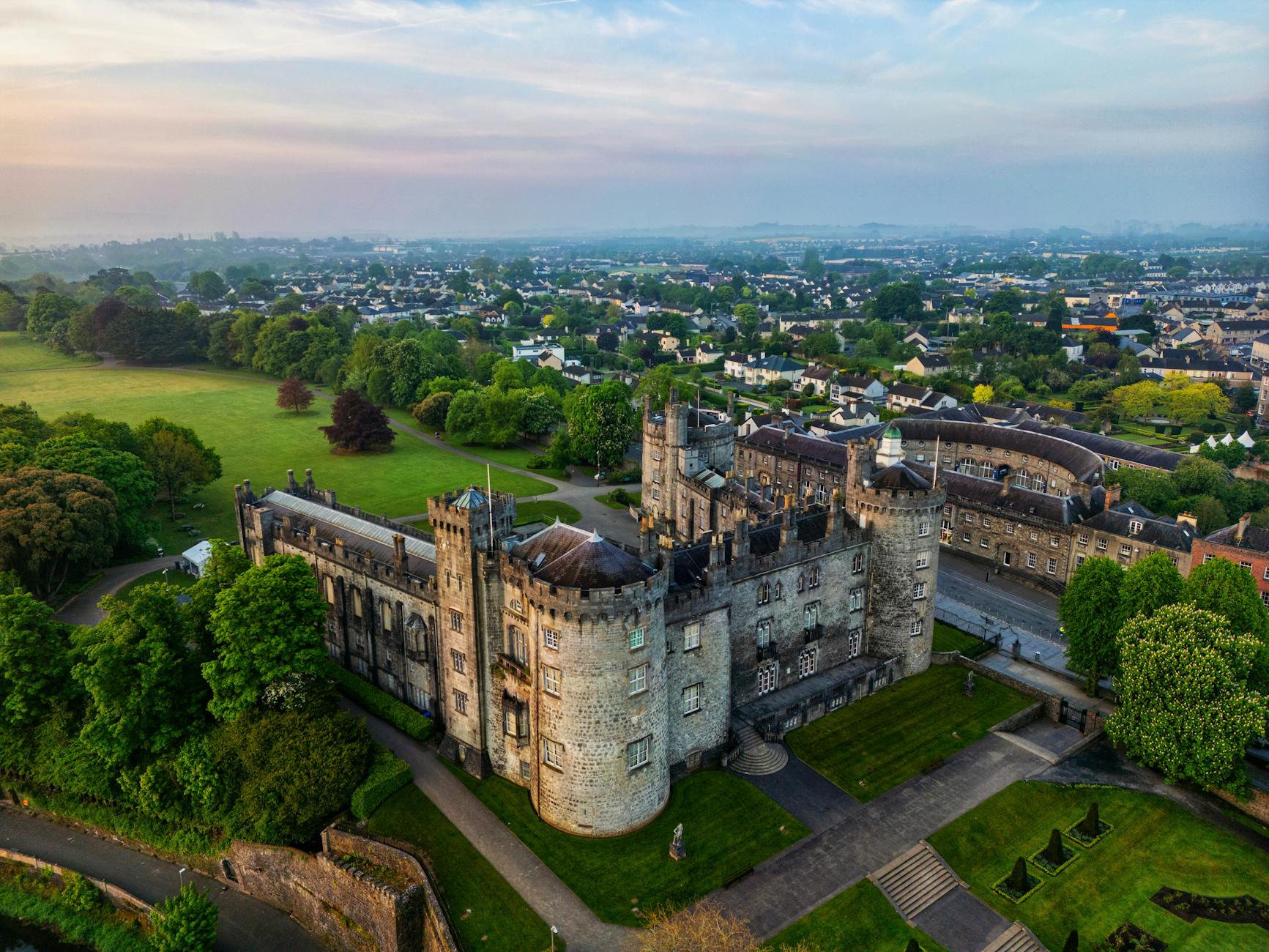
Kilkenny is the kind of place that can fool a good traveler very quickly.
Start Here
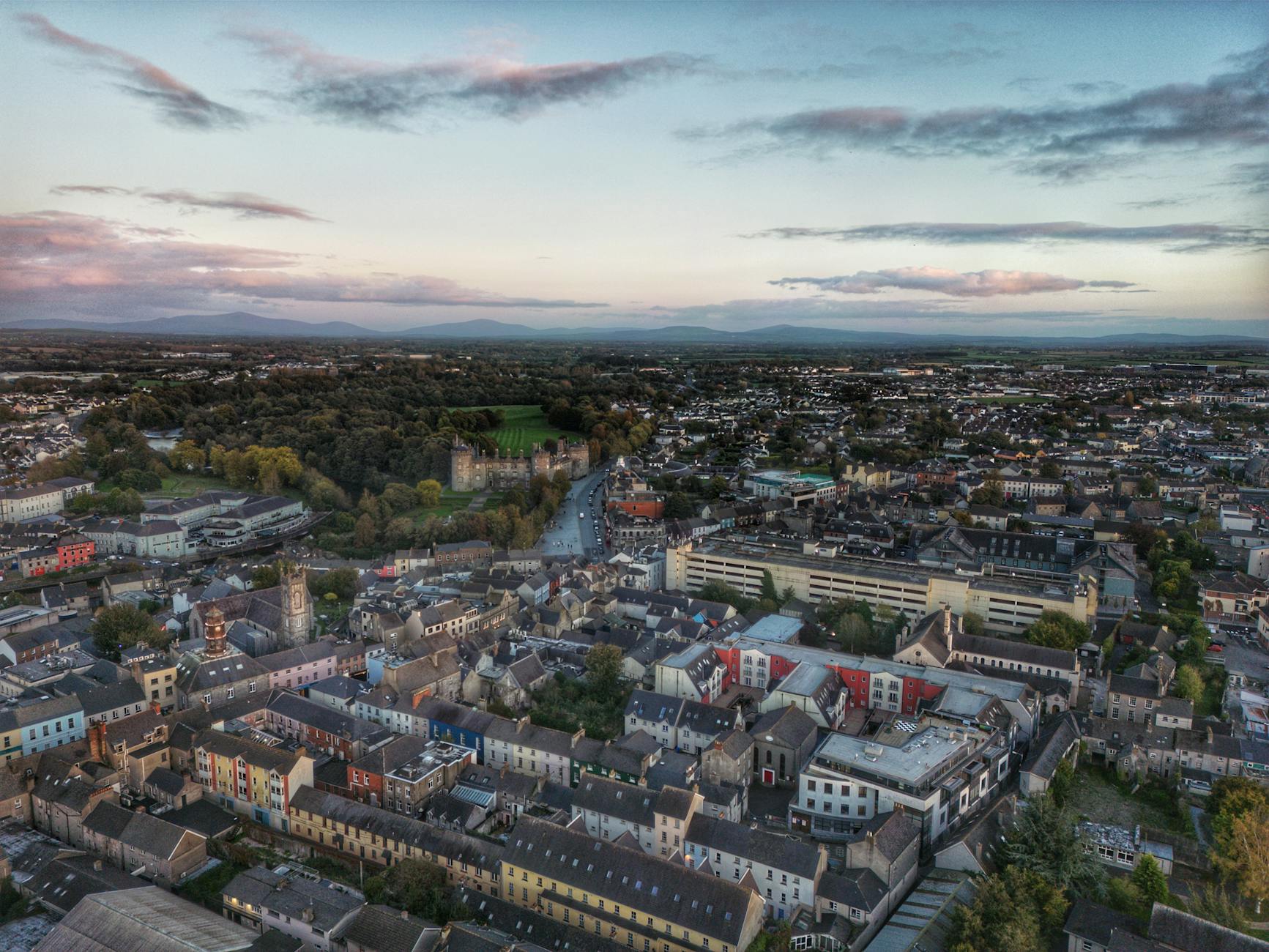
It is handsome almost immediately. The stone streets, the castle park, the shopfronts, the medieval-city branding, the cathedral line above the roofs, the pubs that seem to arrive exactly where you want them: all of this makes the city feel as though it has already explained itself within the first hour. That is why some visits end too soon in a more serious sense than the clock suggests. People see the prettiness, eat once, perhaps walk the main spine, and assume they have done Kilkenny.
They have not. Kilkenny is a small city, but it is not a thin one. Its strength lies in concentration. The distance between castle and cathedral is not just geographic. It is the shape of the city’s identity. The Medieval Mile matters because it gives Kilkenny a readable historical spine, but the place never works best as a heritage diagram alone. It needs food, evening atmosphere, one slower walk, and enough time for the center to stop feeling merely decorative. The city becomes much stronger once the day-trippers begin to thin and the streets become something more local, more social, and slightly less eager to impress.
The best first Kilkenny stay, then, is not a checklist of old buildings. It is a compact overnight city break with a historical argument running through it. Use the castle, use the museum, use the cathedral, and then let the city be a real city as night comes on.
Kilkenny in one sentence: it is one of Ireland’s most satisfying small heritage cities, but only when you let the Medieval Mile become a lived urban rhythm rather than a string of pretty stone stops.
Basic data
| Population | About 27,000 |
|---|---|
| Area | Compact heritage town |
| Major religions | Christian heritage with a strongly secular contemporary public life |
| Political system | Town within county local government inside a parliamentary republic |
| Economic system | Mixed local economy led by tourism, services, food, and regional retail |
Quick Verdict
Best for: first-time Ireland travelers, couples, food-and-history travelers, walkers, and anyone who values smaller cities that can be understood on foot.
Less ideal for: travelers who want large-museum-city scale, late-night urban intensity, or a place that keeps surprising through sheer size.
Ideal first stay: 1 to 2 nights.
Still worthwhile: as a day trip, but weaker.
Can justify more: yes, if Kilkenny anchors a slower southeast route.
Biggest planning mistake: treating Kilkenny as a fast medieval photo stop.
One thing to prioritize: the overnight rhythm.
One thing to keep simple: the walking plan.
The blunt version: Kilkenny improves dramatically once you stop rushing it.
Who Will Love Kilkenny?
Kilkenny works for travelers who enjoy cities where scale helps rather than hurts. If you like a place where you can move on foot, repeat a street without boredom, and understand the broad logic of the city in a single day while still feeling that it has more to give, Kilkenny is strong.
It is especially good for travelers who want Ireland to feel urban enough to be social but compact enough to be calm.
Kilkenny at a Glance
| Question | Practical Answer |
|---|---|
| Best way to use the center | On foot |
| Main historical spine | The Medieval Mile |
| Core anchor at the south end | Kilkenny Castle |
| Core anchor at the north end | St Canice’s Cathedral |
| Best supporting museum | Medieval Mile Museum |
| Main planning issue | leaving too early |
| Car required in the city center? | No |
| Best first stay length | 1 to 2 nights |
2026 Visitor Notes
The Medieval Mile Still Organises the City Properly
Visit Kilkenny’s current Medieval Mile material continues to frame the route as the discovery trail linking the `13th`-century St Canice’s Cathedral with the Anglo-Norman castle through the centre of the city.[2]
Getting to Kilkenny Remains Straightforward
Visit Kilkenny’s current transport guidance still presents Kilkenny as about `90` minutes from Dublin and reachable by rail, bus, and road through major national links.[1]
Kilkenny Castle Still Functions as the Main Southern Anchor
Heritage Ireland’s current Kilkenny Castle page continues to frame the castle as the principal seat of the Butler family for almost `600` years and one of the city’s core historic experiences.[3]
St Canice’s Still Gives the City Its Vertical and Spiritual Logic
St Canice’s Cathedral’s own current visitor pages continue to stress that the cathedral site gave Kilkenny its name and that the round tower remains climbable, offering views over the city and surrounding area.[6][7]
The Medieval Mile Museum Still Gives the City Its Best Historical Compression
The Medieval Mile Museum’s current visitor pages continue to present the museum as an `800`-year history experience in the heart of the city, with daily access and walking-trail links that reinforce the city’s compact historical structure.[4][5]
How to Understand Kilkenny
Kilkenny works through four forces.
The first is concentration. The city’s compactness is part of the pleasure.
The second is historical alignment. Castle, high street, museum, and cathedral all speak to one another.
The third is overnight value. Kilkenny is stronger once the center shifts from visitor showcase to evening city.
The fourth is walking logic. This is a place to move through deliberately, not aggressively.
The Main Mental Shift
Do not ask, “How fast can I cover Kilkenny?” Ask, “How do I give this small city enough time to stop feeling staged?” That one change improves the trip immediately.
What Makes Kilkenny Distinct
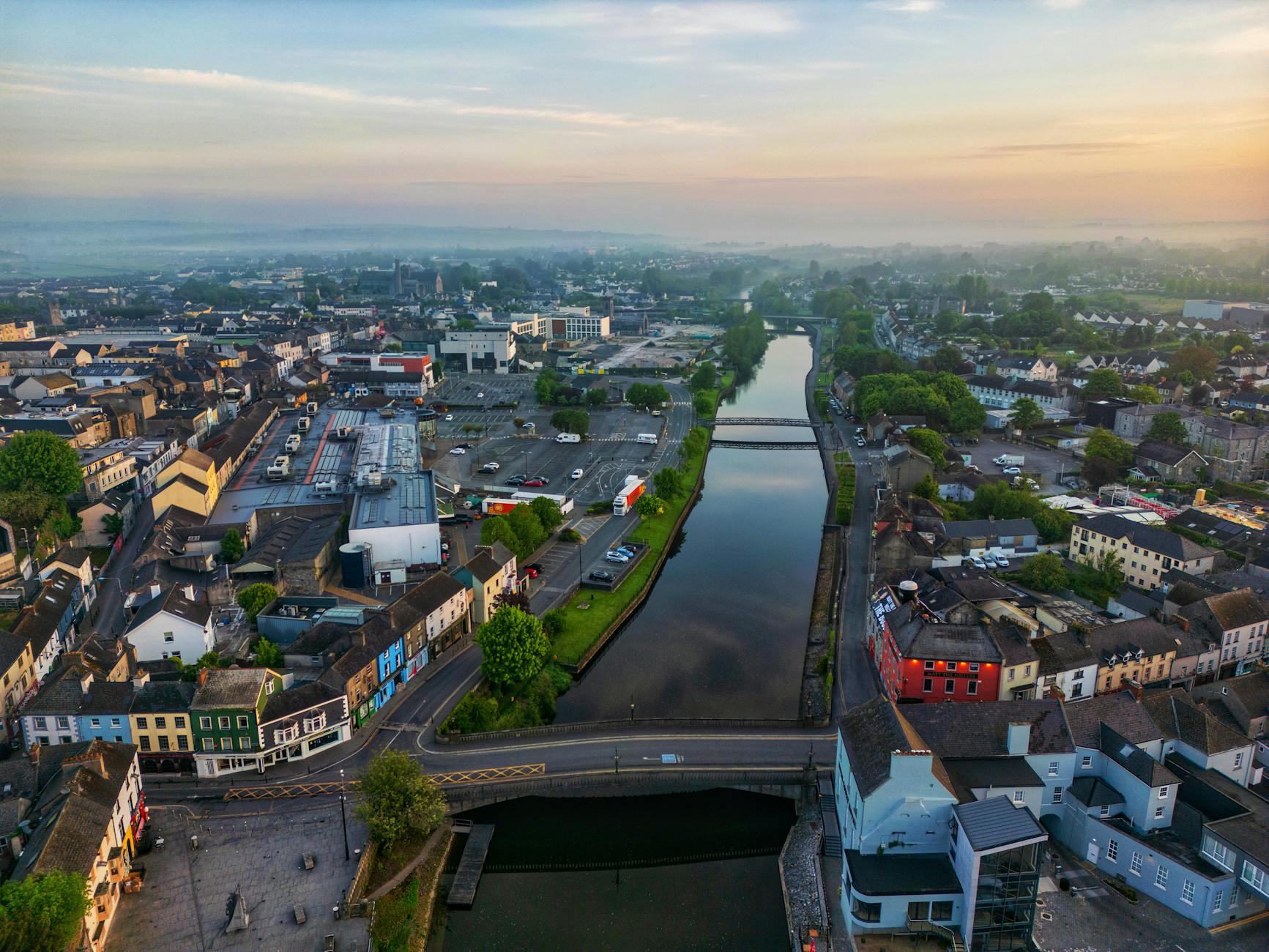
Kilkenny’s distinction is that it feels genuinely urban while staying human in scale.
Plenty of heritage towns are pretty. Fewer feel structurally complete. Kilkenny still has a real center, a civic-historical narrative, a strong evening culture, and enough institutions to keep the place from collapsing into pure atmosphere. The city is easy to like quickly, but its real quality is that it can also hold attention after the first impression.
Best Time to Visit
Kilkenny does not need perfect weather to work.
Brighter months suit castle grounds, longer evening wandering, and a more buoyant street life. Cooler or wetter periods can still suit the city well because so much of its value lies in compact walking, museum time, food, and pub atmosphere rather than outdoor scale alone.
The main rule is simple: Kilkenny is less about season-specific spectacle than about giving the center enough unhurried time.
How Many Days You Need
Half a Day
Enough to see the outline, but too little to feel the city properly.
One Night
The best first answer for many travelers. This gives the city both daylight legibility and evening atmosphere.
Two Nights
Excellent if you want a slower pace, one stronger meal, and time to let the city breathe.
Arrival Strategy
Arrive light and stay central if possible.
Visit Kilkenny’s current practical guidance makes clear that getting there is easy by national standards, and the center itself is best used on foot once you have arrived.[1] That means the most useful arrival decision is not heroic sightseeing ambition. It is getting into the center cleanly enough that the first walk can begin with calm.
Where to Stay
For most first-time visitors, the right answer is simple: stay near the historic center.
Central Stay Near the Medieval Mile
Best for: first-timers, walkers, evening use, and travelers who want the city to feel coherent without transport friction. Tradeoff: slightly more visitor energy during the day.
Edge-of-Center Stay
Best for: travelers wanting quieter nights or easier parking while keeping the core walkable. Tradeoff: weaker spontaneous return-to-hotel rhythm.
The Main Rule
Kilkenny is a place where location is not about status. It is about whether the city still feels easy after dinner.
The Kilkennys That Matter Most
Castle Kilkenny: the southern monumental anchor and the city’s grand-estate register.[3]
Medieval Mile Kilkenny: the main urban-historical spine through the center.[2]
Cathedral Kilkenny: the older ecclesiastical claim on the city’s identity and skyline.[6]
Evening Kilkenny: the point at which the place becomes less picturesque and more pleasurable.
Kilkenny Castle and the Civic Weight of the South End
Kilkenny Castle is not just “the castle in town.” It is one of the reasons the city still feels composed.
Heritage Ireland’s current material continues to emphasize both the Butler family’s long hold on the site and the extensive parkland and formal gardens around it.[3] That matters because the castle gives the city more than historical prestige. It gives it physical authority. The parkland, the approach, and the relationship to the River Nore all keep Kilkenny from feeling cramped or merely quaint.
The Medieval Mile and Why the Spine Matters
The Medieval Mile is not a branding trick. It is the correct way to understand the city.
Visit Kilkenny’s current description of the route as the line between the castle and St Canice’s is exactly right.[2] Kilkenny strengthens when you let that axis govern the visit. The city is not random beauty. It is organized historical density.
This is also why repeating the walk matters. The first pass explains the geography. The second makes it feel inhabited.
The Medieval Mile Museum and the Value of Compression
The Medieval Mile Museum is one of the best ways to keep Kilkenny from turning into pure exterior scenery.
Its current visitor pages present the museum as a deep historical stop in the heart of the city, with guided and self-guided options and links to the broader walking trail.[4][5] That makes it especially valuable for first-timers. The museum gives the city an inner life. It turns stone into narrative.
St Canice’s Cathedral, the Round Tower, and the Northern Lift
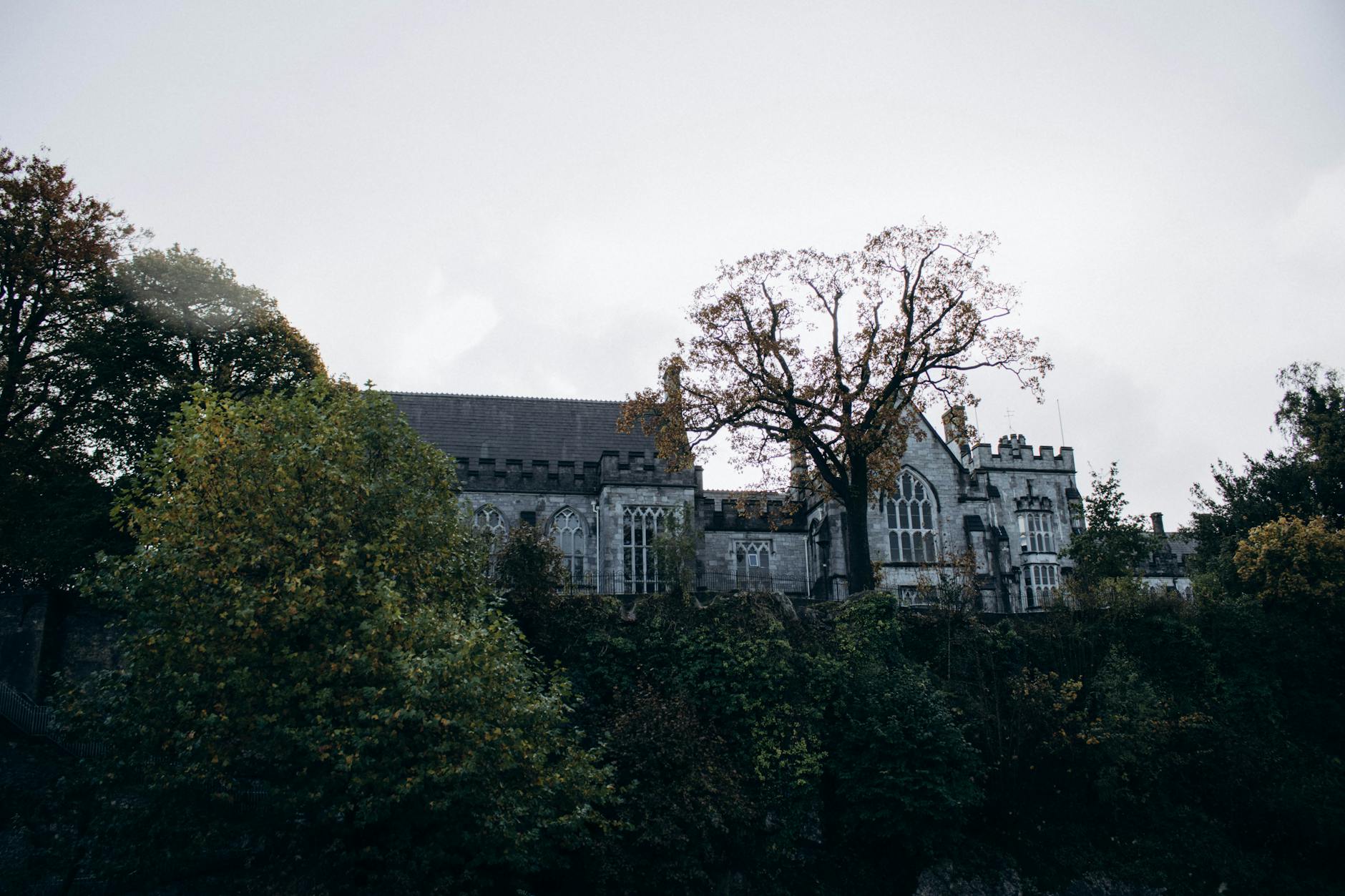
If the castle gives Kilkenny breadth, St Canice’s gives it lift.
The cathedral’s official pages continue to emphasize its roots in a site of worship dating back to the `6th` century and the fact that the round tower is climbable, with sweeping views over the city.[6][7] This is not just one more heritage stop. It is the place where the city’s age, name, and vertical perspective all come together.
Do it if you want the city to feel whole rather than simply pleasant.
Food, Pubs, and the Importance of Staying Late
One reason Kilkenny works so well as an overnight is that it changes register in the evening.
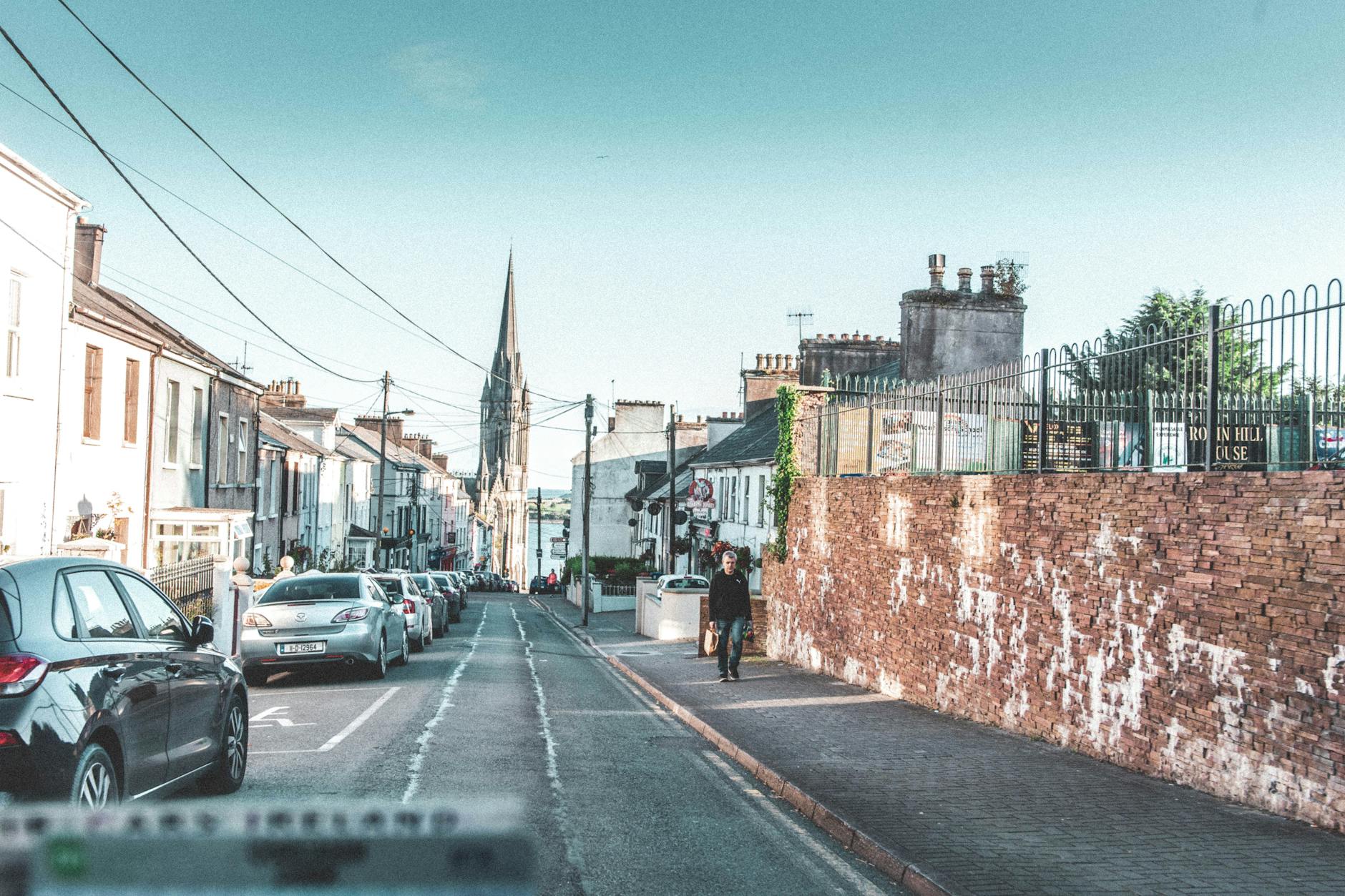
Daytime Kilkenny can be attractive and efficient. Evening Kilkenny becomes warmer, looser, and more social. This is when the city’s scale feels like an advantage rather than a limit. It becomes easy to settle in for a good meal, take one more short walk, and understand why the place has such a strong reputation among people who stay rather than merely pass through.
Where Kilkenny Fits in an Ireland Trip
Kilkenny often arrives in itineraries as a gap-filler and then turns out to be one of the more coherent stops on the route.
This happens because many Irish itineraries are built around bigger symbolic names: Dublin, Galway, Cork, the Ring of Kerry, the Cliffs of Moher, or one of the western scenic corridors. Kilkenny can then look modest by comparison. It is not coastal drama. It is not a capital. It is not an oversized museum city. It is simply itself: a compact, historically legible, socially usable small city.
That is exactly why it matters. Kilkenny works as a reset point inside an Ireland route. It gives you urban walkability without Dublin scale, heritage without sprawl, and food-and-pub atmosphere without requiring a huge city to sustain it. The place is strong not because it dominates a trip, but because it gives a trip proportion.
For that reason, Kilkenny is especially well placed after a longer driving segment or before a more scenic stretch where logistics may again take over. It gives structure back to the route. It reminds you what a city can do when it is compact enough to be grasped yet layered enough to be worth staying in.
Kilkenny as an Overnight Base Versus a Day Trip
Most visitors already understand that Kilkenny is day-trippable. The more important question is whether it should be day-tripped.
The answer, for first-time visitors at least, is usually no. A day trip can show you the city’s outline: the castle, the spine, the cathedral, perhaps a museum and a meal. But it usually cannot show you the change in texture that happens once the center shifts from visitor circulation to evening occupation. Kilkenny’s scale makes that change especially important. The city becomes less picturesque and more personal as the hours pass.
This is why the overnight matters. It is not only about “more time.” It is about using the right time. Small heritage cities often become generic when you only see them under maximum daylight and visitor density. Kilkenny does not fully reveal itself until you can take one second walk after dinner and feel the center settle.
If the route absolutely requires a day-trip use, keep the plan disciplined. But if you have the choice, give Kilkenny the night.
First-Time Visitors Versus Repeat Visitors
First-time visitors need Kilkenny to be legible. Repeat visitors often need it to be slower.
On a first trip, the city is best approached through its spine and anchors. You want to understand castle to cathedral, the role of the museum, and the relationship between daytime heritage and evening sociability. That is the basic grammar. Once you have it, the city makes sense.
Repeat visitors can relax into narrower pleasures. They may spend longer in the castle grounds, prioritize one stronger meal, or let a second and third walk through the center carry more emotional weight than another formal attraction. This often produces a better experience, because Kilkenny is exactly the kind of place that improves when you stop demanding constant explanation from it.
That pattern is one of the city’s strengths. Kilkenny is immediately attractive, but it is not instantly exhausted.
Daytime Kilkenny Versus Evening Kilkenny
This distinction matters more than it first appears.
Daytime Kilkenny is structural. You see the alignment of castle, high street, museum, and cathedral clearly. The city’s historical argument is easy to read. This is the time for orientation, institution visits, and understanding why the Medieval Mile is such a useful framework.[2]
Evening Kilkenny is social. The city’s scale begins to work in a different register. It becomes less about visual explanation and more about use. Streets that seemed purely photogenic in the afternoon feel lived after dinner. Pubs become part of the urban texture rather than part of the heritage display. The city’s warmth becomes more convincing.
The strongest first stay includes both. Day gives Kilkenny meaning. Evening gives it attachment.
Why the Medieval Mile Is Better Walked More Than Once
Many visitors correctly grasp that the Medieval Mile is the city’s core walking logic and then still use it too mechanically.
The first walk along the spine is usually informational. It tells you where the anchors sit, where the center thickens, and how the city compresses time and architecture into a short walk. That is valuable. But Kilkenny is not best when treated as a solved line on a map. It gets stronger when you repeat the spine at a different hour and with different knowledge in your head.
After the museum, the route means more. After the castle, the city’s southern weight makes more sense. After the cathedral, the northward pull changes the whole geometry. And after dinner, the same blocks can feel less curated and more inhabited.
This is why Kilkenny should not be consumed in one perfect pass. Repetition is part of the experience, not evidence that the city is too small.
Castle Weight, Cathedral Lift
Kilkenny is one of those cities where two anchors do very different kinds of work.
The castle gives the city breadth, authority, and estate-scale confidence.[3] It tells you that Kilkenny was not merely a provincial town with a few old stones, but a place with aristocratic and civic weight. The grounds matter because they stop the city from feeling cramped.
St Canice’s, by contrast, gives the city lift and age.[6][7] It reminds you that Kilkenny’s identity is not only Norman or grand-estate but also ecclesiastical and older in spiritual memory. The round tower, in particular, changes how the city feels by giving you a visible sense of hierarchy and spread.
Together, castle and cathedral stop Kilkenny from flattening into “pleasant center.” They give it tension and orientation.
Weather and the Right Pace
Kilkenny is more weather-tolerant than many scenic Irish stops because so much of its value lies in scale and sequence rather than in distant views.
This does not mean weather is irrelevant. Rain changes appetite, reduces the pleasure of loitering in open spaces, and can compress the day toward museums, cafés, and pubs. But unlike a scenic route whose entire meaning depends on visibility, Kilkenny still works when conditions are ordinary. The old city fabric, the museum layer, and the evening culture all help preserve the trip.
The right response is not to power through bad weather as if it were a moral contest. It is to adjust the order: museum earlier, lunch a little longer, castle grounds if conditions allow, and a later second walk when the city becomes more atmospheric than polished.
Kilkenny rewards that kind of pragmatic softness.
Food Strategy in Kilkenny
Kilkenny eats well enough that visitors can make the mistake of turning the city into a string of meals with heritage intermissions.
That is not the worst mistake in the world, but it can still distort the stay. The strongest food strategy here is to let one lunch or one dinner matter, not to spend the whole day chasing optimization. Kilkenny’s scale helps because it allows meals to sit within the city rather than dominate it. You can eat well, walk again, and continue the narrative of the place without resetting the day completely.
This is especially true in the evening. A good dinner in Kilkenny is not merely refueling after sightseeing. It is part of the reason to stay the night. The meal belongs to the city’s second register, where historical prettiness gives way to civic warmth.
The most common error is arriving too hungry and too undecided. In a compact city, indecision can consume a surprising amount of time. Know roughly what role the meal is supposed to play.
Kilkenny With Family or Low-Energy Travelers
Kilkenny works unusually well for travelers who want a manageable city with real content.
Families benefit from the compact center, the castle grounds, and the fact that the city is walkable without demanding urban toughness. Low-energy travelers often do well here because the core can be understood in segments rather than through long punishing days. It is possible to have a meaningful Kilkenny day without forcing constant motion.
The main caution is that people often underestimate how much standing and slow walking heritage cities involve. The answer is not to avoid Kilkenny. It is to build pauses naturally: castle grounds, a museum visit, one café stop, and a proper evening return.
The city is kind to mixed-energy groups precisely because it does not require heroics to be satisfying.
Rainy-Day Kilkenny
Rain does not ruin Kilkenny. It simply shifts the balance from open charm to enclosed depth.
This is where the Medieval Mile Museum becomes especially valuable.[4][5] On a wet day, the city can still make complete sense if you let culture and food take more of the weight. The cathedral and castle may be approached a little more selectively. The spine may be walked in shorter sections. The evening may become the emotional center sooner.
In some ways, rainy-day Kilkenny can improve the city by making it feel less like a postcard and more like a functioning place. You stop asking the streets to photograph perfectly and begin noticing how well the city absorbs weather into its ordinary life.
That resilience is one reason Kilkenny deserves more respect than its “pretty stop” reputation suggests.
Why Some People Leave Underwhelmed
When people say Kilkenny was nice but not especially memorable, the cause is usually one of three things.
Either they came only for a few hours, they mistook visual attractiveness for full understanding, or they left before the city had a chance to shift into evening use. In each case, the problem is less that Kilkenny lacks content and more that the visitor used the city at its thinnest hour.
Kilkenny does not overwhelm by scale, and some travelers misread that as weakness. In reality, it is a city of accumulation. Castle, spine, museum, cathedral, meal, second walk: the pieces need each other. Remove too many and the city can feel slight. Let them align and it becomes one of the more convincing small-city stays in Ireland.
Why Kilkenny Often Improves on Revisit
Kilkenny tends to grow in esteem once you no longer need it to astonish you.
On a return visit, you already understand the spine and the anchors. That frees you to enjoy the city more slowly. You may choose a better meal, spend longer in the castle grounds, climb the tower with less hurry, or let the center carry more of the day without formal sightseeing pressure. This is often when the city becomes not just admired but liked.
That is a sign of real urban strength. Decorative places peak immediately. Strong places continue to function once novelty falls away.
A Good Kilkenny Day Versus a Bad One
A good Kilkenny day has shape and repetition.
You begin with one clear anchor, move along the Medieval Mile with intention, give either the museum or one major monument real time, and then return to the same streets later with different light and less urgency. The city feels coherent. Its small scale becomes an advantage.
A bad Kilkenny day is all first impressions and no return. You photograph the castle, walk the spine once, maybe look into a church or shop, eat hurriedly, and leave feeling that the city was pleasant but somehow minor. That version exists, but it is mostly a product of misuse.
Kilkenny does not need a huge itinerary. It needs enough room for a second thought.
How the City Changes Over the Course of a Stay
Kilkenny is often better the morning after than it was on arrival.
On first contact, the city can seem almost too obviously charming. The appeal is immediate, which makes it easy to assume there is not much more beneath it. After one night, that impression changes. The center feels less presented and more possessed. Streets make more sense. The relation between castle and cathedral feels less like tourism marketing and more like urban structure. Even breakfast can alter the scale of the city by making it feel inhabited instead of merely admired.
That change is one of the strongest arguments for staying over. Kilkenny is not only attractive. It is cumulative. It improves when allowed to settle.
Kilkenny and the Southeast Ireland Problem
One reason Kilkenny gets underestimated is that many Ireland itineraries do not know what to do with the southeast as a whole.
The west of Ireland has an easy narrative: coast, cliffs, scenic drama, and famous driving routes. Dublin has capital-city gravity. Kilkenny sits in a region that many visitors treat as connective tissue rather than destination space. That makes the city vulnerable to being framed as a stop en route to somewhere supposedly larger, wilder, or more essential.
This is a mistake, because Kilkenny is one of the best arguments that the southeast does not need scenic exaggeration to matter. The city offers a different Irish register: inland, historical, walkable, social, and civic rather than panoramic. For travelers whose itineraries risk becoming all driving and viewpoint, Kilkenny restores a healthier urban proportion.
In other words, the city is not trying to compete with Atlantic drama. It is solving a different problem. It gives the trip density without heaviness and history without sprawl. That role becomes more valuable the more scenic mileage a route already contains.
The Value of Walking Without Mileage
Kilkenny is one of the clearest examples in Ireland of a place where walking should be measured in repetitions rather than in distance.
Many travelers still arrive with the strange instinct that a city must justify itself through volume. They want to “cover” it, which often means pushing through all the major sights in one long sweep and then wondering why the result feels flatter than expected. Kilkenny is a poor city for mileage and an excellent city for return.
The right walking logic is compact. Castle grounds, spine, museum, pause. Cathedral, tower, pause. Dinner, then one more short pass. The city becomes stronger every time the route folds back into itself. That is not redundancy. It is how the scale works.
This also makes Kilkenny unusually forgiving. If you get slightly lost, stop for a drink, or change your mind about what comes next, the city is rarely damaged by it. The center is small enough that the route can be corrected without stress. That is a meaningful travel luxury.
Parking, Cars, and the Emotional Importance of Leaving the Car Alone
Visitors who are driving around Ireland often bring the car mentally into every part of the route, even after they have parked it.
Kilkenny is improved enormously by setting the car aside once you arrive. Visit Kilkenny’s current practical information makes clear that the city is easy to access and straightforward enough to use on foot once you are in the center.[1] The psychological shift matters more than people think. A driver who keeps thinking like a driver often treats the city as a sequence of tasks between parking decisions. A walker treats it as a place.
That is one reason edge-of-center accommodation can work well if it still allows a clean foot-based transition into town. The moment the visit becomes parking-sensitive again, the city loses part of its softness. Kilkenny is best when you let it detach from the road.
Kilkenny as a Social City, Not Just a Historic One
It is easy to over-historicize Kilkenny in planning and under-socialize it in use.
The city’s public story is understandably medieval. The spine, the castle, the cathedral, and the museum all justify that emphasis. But if that is all you plan for, the city can feel like a beautifully maintained historical argument with no contemporary life attached to it. The evening, the pubs, the café pauses, and the mild but real sociability of the center are what keep Kilkenny from becoming static.
This matters because heritage cities can become strangely unsatisfying when they are used only for heritage. Their buildings remain impressive, but the trip lacks warmth. Kilkenny avoids that problem when you let a meal, a pub, or a simple night walk contribute as much as an admission ticket.
The result is a city that feels inhabited rather than interpreted.
Why Kilkenny Is Stronger Than Many Similar Small Cities
There are plenty of pretty small cities in Europe and the British Isles that do not justify much more than a few pleasant hours.
Kilkenny is stronger because it has unusually good internal alignment. The city’s principal sights are not scattered. The spine is real. The castle is consequential rather than decorative. The cathedral is not just “another old church” but a genuine upper anchor. The museum explains the city instead of merely adding more objects to the day. And the social center is close enough to all of that to keep the city from fragmenting.
That level of alignment is rare. It means Kilkenny can absorb many different traveler types without losing coherence. History-first travelers, food-first travelers, short-break travelers, and people on longer road routes can all use it well, because the city’s scale keeps their priorities in conversation rather than competition.
The Best Memory to Aim For
If you use Kilkenny properly, the memory you keep is usually not just one building.
It is a sequence: the shift from castle grounds into the spine, the museum making the stones more legible, the pull north toward St Canice’s, a meal that slows the day down instead of interrupting it, and a later walk when the center feels like it belongs to itself again. The city’s pleasure comes from this continuity.
That is why Kilkenny tends to linger better in memory than some visually grander places. The pieces fit. Nothing needs to be inflated. The city simply has to be given enough time to remain connected.
Common Mistakes
Treating Kilkenny as a Fast Day-Trip Trophy
This is the main error.
Skipping the Overnight
The city’s evening rhythm is part of its value.
Doing the Spine Only Once
Kilkenny is a repeat-walk city.
Letting Pretty Surfaces Replace Historical Substance
Castle, museum, and cathedral all matter together.
Overcomplicating the Plan
This is a city that rewards a simpler day.
My Blunt Advice
Stay the night if you can.
Walk from castle to cathedral and then do it again later.
Use the museum so the city stops being all exterior charm.
Let one meal and one evening carry real weight.
Do not try to inflate Kilkenny into a larger city than it is, and do not diminish it into a decorative stop.
It is one of Ireland’s best small cities precisely because it knows its scale and uses it well.
Source Notes
- 1. Visit Kilkenny, “Getting to Kilkenny & Getting Around.” Used for current access context from Dublin and other Irish cities, plus the practical framing of rail, bus, and road arrival. https://visitkilkenny.ie/parking/
- 2. Visit Kilkenny, “Ireland’s Medieval Mile.” Used for the current official framing of the route linking Kilkenny Castle and St Canice’s Cathedral through the city centre. https://visitkilkenny.ie/category/explore/irelands-medieval-mile/
- 3. Heritage Ireland, “Kilkenny Castle.” Used for current castle history, opening-times framework, parkland context, and present-day visitor framing. https://heritageireland.ie/places-to-visit/kilkenny-castle/
- 4. Medieval Mile Museum homepage. Used for current museum positioning in the heart of Kilkenny’s Medieval Mile and for the museum’s role in presenting the city’s long history. https://www.medievalmilemuseum.ie/
- 5. Medieval Mile Museum, “Plan Your Visit” and “Getting Here.” Used for current opening-hours and tour structure, plus the museum’s central-city access context. https://www.medievalmilemuseum.ie/plan-your-visit/ and https://www.medievalmilemuseum.ie/getting-here/
- 6. St Canice’s Cathedral, “About Us.” Used for the current official history of the site, its role in Kilkenny’s identity, and its long continuity as a place of worship. https://www.stcanicescathedral.ie/about-us/
- 7. St Canice’s Cathedral, “Visit Us” and admission pages. Used for current opening-times structure, address, and round-tower / cathedral visiting details. https://www.stcanicescathedral.ie/visit-us-st-canices-cathedral-in-kilkenny/ and https://www.stcanicescathedral.ie/tours/cathedral-admission/