Jaipur is one of the easiest cities in India to admire too quickly.
Start Here
That sounds unfair because the city is so visibly generous. It gives you forts on hills, pink façades, palace interiors, astronomical instruments the size of buildings, gemstone shops that seem to hum with concentrated temptation, bazaars that look theatrical even when they are functioning normally, and heritage hotels built to make you feel that you have entered Rajasthan through the right door. The problem is not that Jaipur lacks substance. The problem is that its beauty is so efficient that it persuades many travelers they can understand the city through accumulation. One more monument. One more market lane. One more carved archway. One more rooftop. One more textile stop. One more “famous” photo.
That approach produces the worst version of Jaipur: a city experienced as decorative exhaustion.
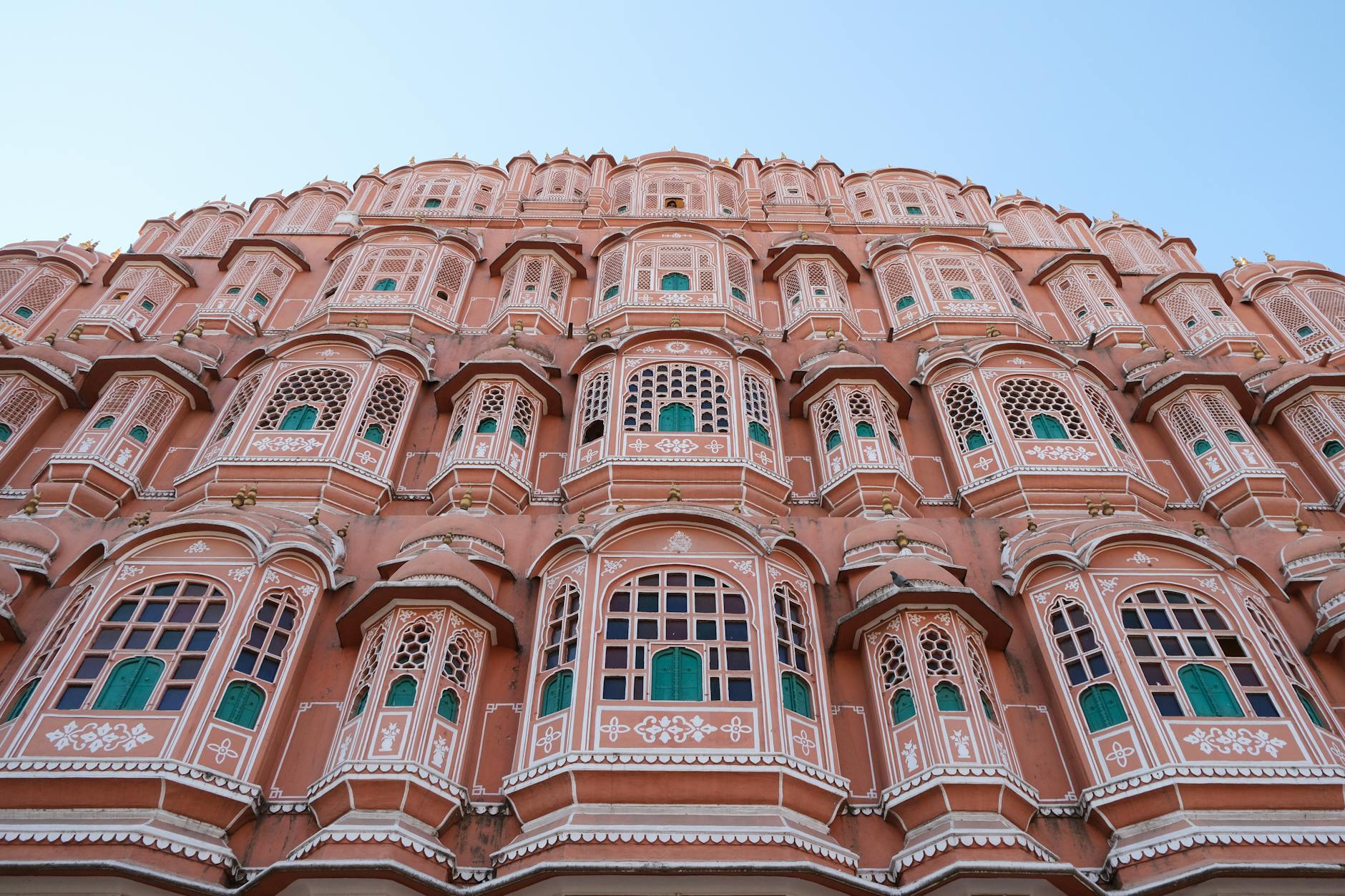
Jaipur should not be used that way. It is not shallow, but it is easy to flatten. Its real strength comes from structure, hierarchy, and contrast. The walled city should feel urban before it feels photogenic. Hawa Mahal should make sense as street architecture before it becomes a symbol. Amer should feel like the memory of a different capital rather than just the day’s biggest fort. Jantar Mantar should change the temperature of the trip by reminding you that Jaipur was also a city of measurement, geometry, planning, and intellectual ambition. Even the hotel matters differently here than it does in many cities, because Jaipur often works best when spectacle and recovery alternate.
Rajasthan Tourism still frames Jaipur as the capital of Rajasthan, a planned city founded in `1727`, and a major tourism center within the Golden Triangle.[2] That official framing is not boilerplate. It tells you how the city should be read. Jaipur is not merely picturesque. It is organized. It was imagined. It was projected. Even its most photographed surfaces belong to a larger urban idea.
The city in one sentence: Jaipur is a high-impact heritage capital whose best first trip balances planned-city logic, monument power, hotel relief, craft temptation, and daily sequencing instead of turning Rajasthan into a costume drama.
Quick Verdict
Best for: first-time India travelers, Golden Triangle itineraries, heritage-hotel travelers, architecture lovers, textile and craft shoppers, and anyone who likes highly atmospheric cities that still have enough visitor infrastructure to remain usable.
Less ideal for: travelers who hate heat, dislike bargaining, want a city that can be wandered without much thought, or assume every attraction in a heritage city can be stacked into one big day.
Ideal first stay: 3 nights.
Still workable: 2 nights, if the trip is tightly structured.
Worth longer? Yes, especially if you want slower hotel time, deeper shopping, or a less compressed relationship with the old city.
Main planning mistake: treating every beautiful-looking stop as equally necessary.
One thing to prioritize: daily sequencing.
One thing to keep under control: shopping sprawl and midday heat.
The blunt version: Jaipur improves the moment you stop trying to consume all of it.
Who Will Love Jaipur?
Jaipur works for travelers who enjoy cities that announce themselves strongly and then reward a little more intelligence than their surface initially seems to require. If you like places where architecture, urban planning, craft culture, and hospitality all matter at once, Jaipur is a strong fit. If you enjoy heritage hotels when they are genuinely part of the experience rather than a decorative add-on, Jaipur is especially good. If you want India to feel vivid and historically layered without immediately confronting the full density and friction of the country’s largest metros, Jaipur is one of the clearest answers.
It is also very good for travelers who like the idea of a city being legible in themes. Jaipur has old-city days, fort days, shopping days, hotel-pool-and-late-dinner days, palace days, observatory days. That thematic clarity can make the trip feel rich rather than scattered.
The city is less ideal for people who hate commercial energy. Jaipur is not pure pressure, but it is a city of goods, surfaces, textiles, stones, and sales. Even if you do not shop much, you should be prepared for the city’s commercial current.
Jaipur at a Glance
| Question | Practical Answer |
|---|---|
| Main gateway | Jaipur International Airport |
| Best first-time stay | 2 to 3 nights |
| Main urban frame | Walled Pink City plus monument belt beyond it |
| Biggest excursion anchor | Amer / Amber side |
| Core city lesson | Jaipur is a planned capital, not just a scenic old town |
| Main physical challenge | heat and overstretched days |
| Main emotional risk | turning the city into a decorative blur |
| Best practical splurge | a better hotel or fewer better purchases |
2026 Visitor Notes
Jaipur Is Still Officially Framed as a Planned Capital and Tourism Hub
Rajasthan Tourism continues to present Jaipur as the state capital, a planned city founded in `1727`, and a major destination in the Golden Triangle.[2] That remains the most useful official framing because it reminds visitors that Jaipur is not simply a walled relic but a city built with intention.
Hawa Mahal Still Makes the Most Sense as Street Architecture
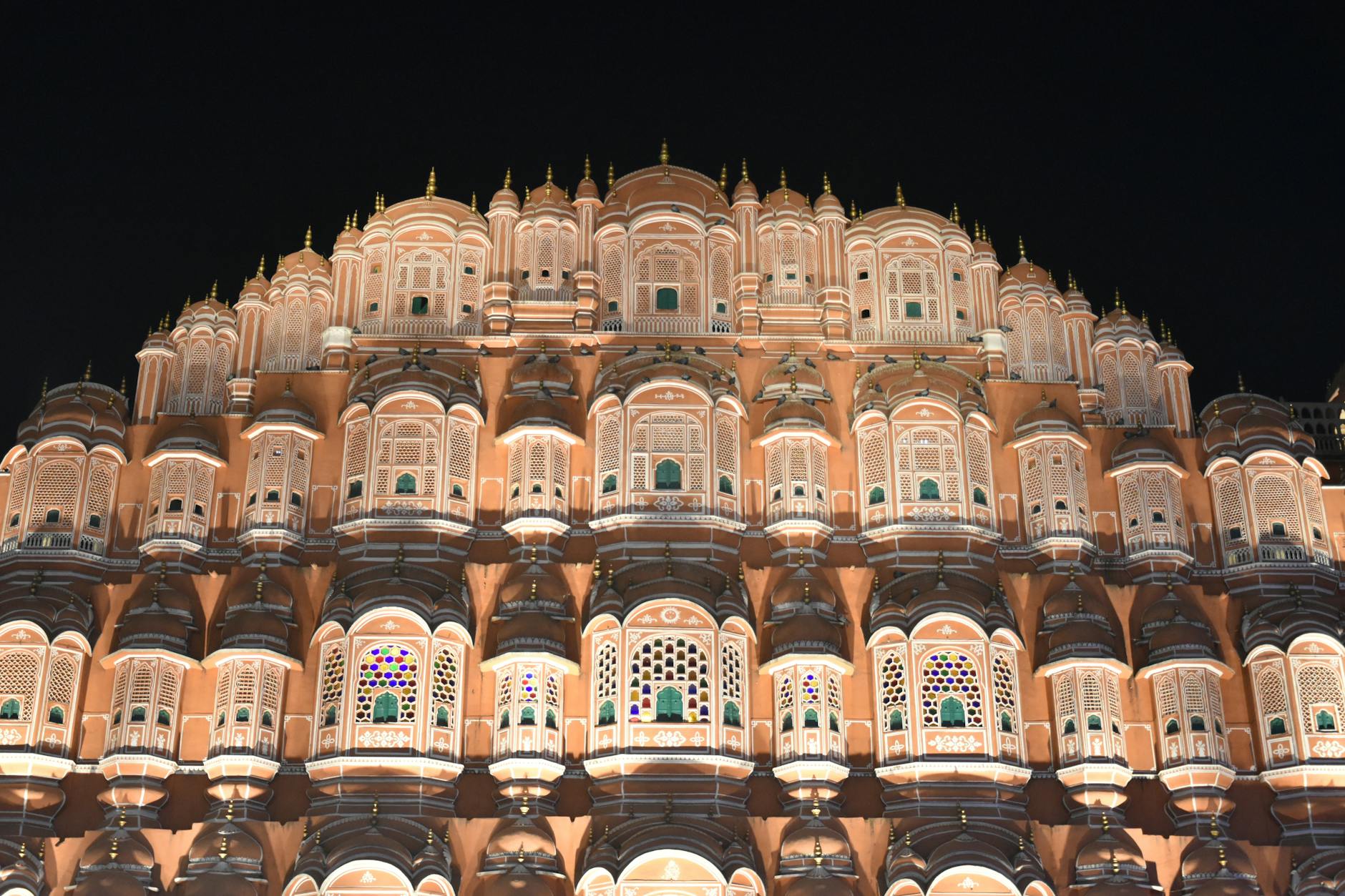
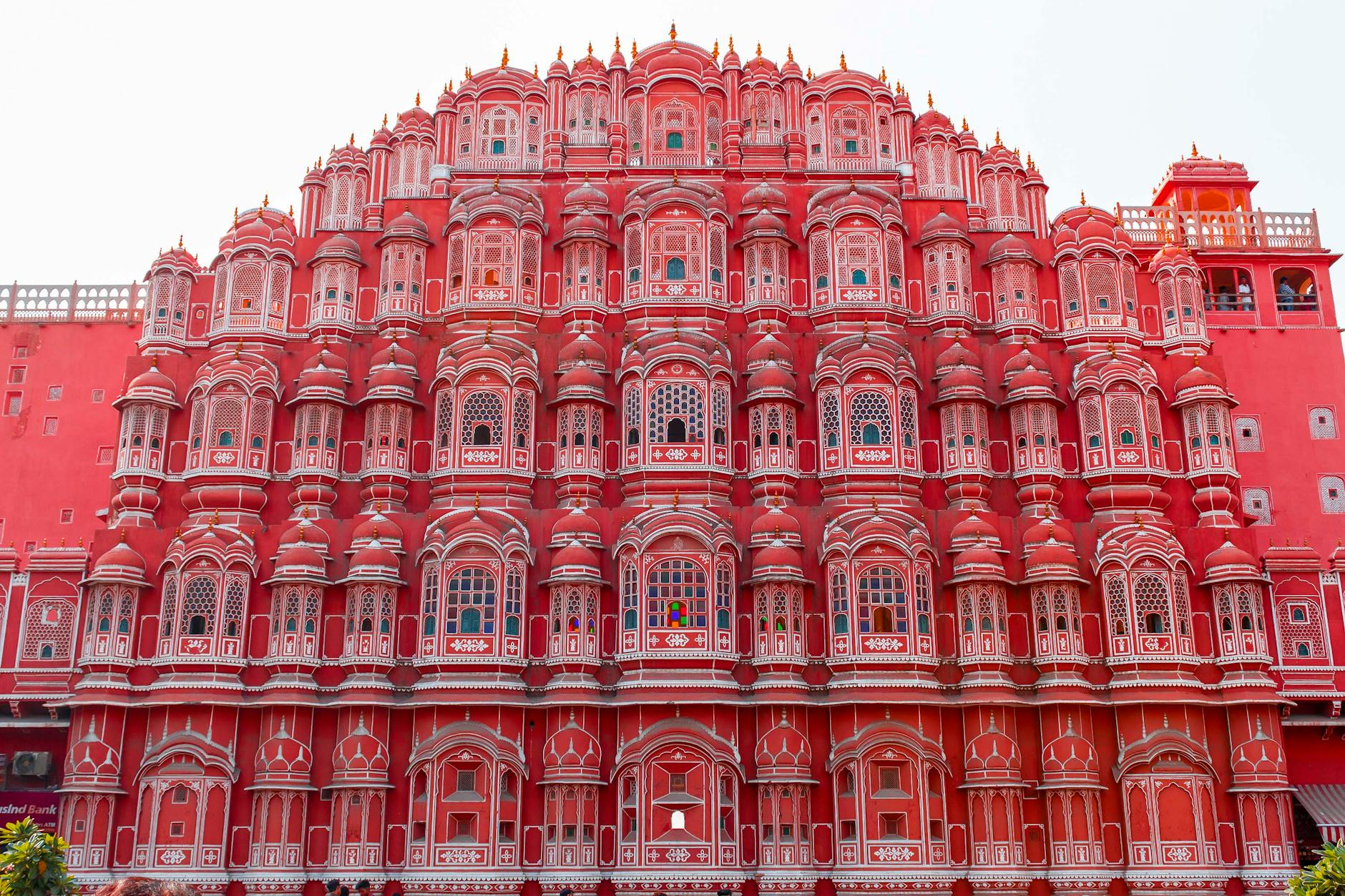
The official Rajasthan Tourism page still emphasizes Hawa Mahal’s façade, jharokha logic, and its relationship to Johari Bazaar, where royal women could observe street life unseen.[3] That is critical context because the site is commonly overinflated into something it is not.
Jantar Mantar Still Raises the Whole Intellectual Register of the Trip
UNESCO continues to describe Jantar Mantar as the most significant and best-preserved set of monumental fixed astronomical instruments built in India in the early eighteenth century.[4] This remains one of the best reasons not to reduce Jaipur to façades and palace fantasy.
Jaipur’s Airport Is Usually Manageable Enough That City Strategy Matters More
Airports Authority of India remains the main official reference for current Jaipur airport passenger information.[1] For most travelers, the more useful insight is that arrival logistics are usually manageable enough that the real challenge is what you do with your first and last partial days.
How to Understand Jaipur
Jaipur works through five forces.
The first is planned-city logic. Jaipur was not merely inherited. It was designed, organized, and projected as a capital.
The second is monument hierarchy. Not every fort, palace, façade, and museum should receive equal attention.
The third is heat and stamina. Physical energy changes the quality of the city more than many first-time visitors expect.
The fourth is hotel and shopping temptation. Both are real assets. Both can also disorganize the trip if used lazily.
The fifth is contrast. Jaipur is best when old city, hill fort, observatory, market, and hotel do not blur into one long ornamental sentence.
The Main Mental Shift
Do not ask, “How many famous things can I fit in today?” Ask, “What is today’s Jaipur argument?” If the answer is Amer, let the day belong mainly to Amer. If the answer is the walled city, let the city streets, Hawa Mahal, and Jantar Mantar form the spine. Jaipur gets stronger when each day has a clear center of gravity.
What Makes Jaipur Distinct
Jaipur’s distinction lies in how performance and planning coexist.
The city is undeniably theatrical. The pink façades, lattice windows, courtyards, mirrored interiors, painted gateways, gemstone shops, palace hotels, and broad avenues all help build a strong immediate image. But underneath that performance is a city with a different kind of seriousness. Jaipur was imagined as a capital. Its famous surfaces belong to civic design, not just decorative luck.
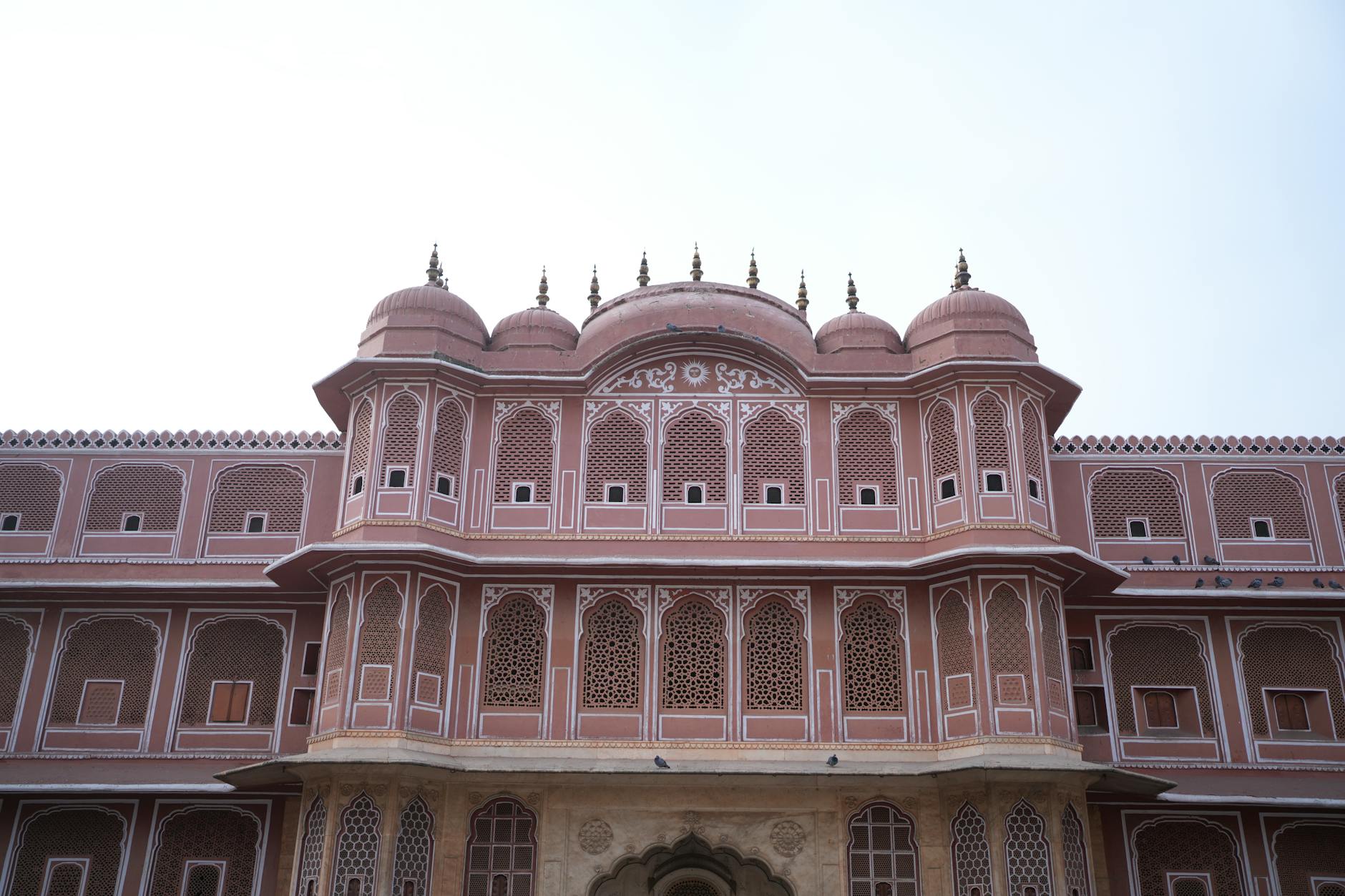
That is why Hawa Mahal matters differently from an isolated European palace façade. It belongs to a bazaar-facing street condition.[3] That is why Jantar Mantar matters differently from a nice museum object. It belongs to a ruler’s vision of order, time, sky, and knowledge.[4] That is why the old city should still be felt as traffic, commerce, gates, and blocks, not as an empty cinematic set.
If you read Jaipur only as pageantry, you will enjoy it but misunderstand it. If you read it as a planned capital that happens to be stunning, the city becomes much more interesting.
Where Jaipur Fits in an India Trip
Jaipur is often slotted into the Golden Triangle, which is a useful but slightly flattening frame. In that route, Delhi tends to carry the weight of imperial scale and urban force, Agra carries the Taj’s singular pull, and Jaipur is expected to deliver the colorful, regal, “Rajasthan” chapter.
That framing is not wrong, but it can make Jaipur seem easier than it is. Jaipur is not just the soft or pretty section of the Triangle. It is often the city where travelers confront the question of how much atmosphere they can handle before it turns into overconsumption. Because the city is so photogenic and so commercially alive, it requires more editing than many people think.
Outside the Golden Triangle, Jaipur works very well as a first Rajasthan city because it has enough infrastructure, hotel range, and monument clarity to introduce the region without immediately overwhelming the traveler. It can also function as a slower luxury stop, especially if the trip is partly about hotels, dining, and crafts.
In other words: Jaipur can be an itinerary obligation, but it is better when it becomes a chosen rhythm.
First-Time Visitors Versus Repeat Visitors
First-time visitors often overbuild Jaipur. They feel that because the city is rich in icons, every icon must be touched. That urge is understandable, especially when guidebooks and social feeds suggest that the city is a string of mandatory visuals.
Repeat visitors almost always use Jaipur more selectively. They stop trying to prove they were there. They choose one fort, one old-city stretch, one market, one major civic or historical site, one good hotel meal, one carefully chosen shopping lane. As a result, the city becomes clearer.
This is a good sign. Some places peak on shock and novelty. Jaipur usually improves with discernment. On a return trip, many travelers find that they enjoy the planned streets, the hotel life, the slower market observation, and the second-order details more than the major box-checking.
Jaipur’s great secret is that it often becomes more elegant after the pressure to “do Jaipur properly” disappears.
Best Time to Visit
Rajasthan Tourism still points visitors toward the city’s main season from roughly October through March.[2] That remains the cleanest answer. Cooler weather does not only make sightseeing more comfortable; it makes the city more legible. You can walk longer, observe more, and move between districts without spending so much energy on survival.
Heat matters in Jaipur more than many people admit. This is a city of exposed stone, reflective streets, courtyards, market lanes, fort approaches, and rooftop temptation. In warmer months, the city becomes more hotel-led, more early-start-led, and more dependent on breaks. None of that ruins the trip. It just changes its geometry.
The critical planning mistake is pretending climate does not exist. Bad Jaipur days are often not caused by bad attractions but by bad timing. A strong morning followed by a slower midday and a restored evening is usually better than trying to drive the city at one unbroken pace.
How Many Days You Need
One Night
Possible, but thin. You will probably see Jaipur rather than use it. The city can still make an impression, but you are unlikely to understand how its parts relate.
Two Nights
The shortest strong first answer. One day can belong largely to Amer and related hill-capital logic. Another can belong to the walled city, Hawa Mahal, Jantar Mantar, and selected shopping or hotel time.
Three Nights
The best first-time balance. This gives Jaipur room. One day can be grand and historical. One can be urban and street-based. One can be slower, more selective, or more luxurious, with time for deeper shopping, recovery, or secondary sites.
Longer
Worth it if you genuinely care about heritage hotels, textiles, or slower Rajasthan pacing. Less necessary if your interest is mainly monument-first and you are not particularly drawn to hotel or craft culture.
Arrival Strategy
Jaipur is usually easier on arrival than Delhi, but that should not make you careless.
The airport is functional enough that the more serious question becomes what kind of first half-day you are setting up.[1] A first afternoon in Jaipur is rarely the moment for aggressive monument clearing unless your flight and energy are unusually favorable. Better first uses include a soft old-city orientation, a single market-facing drive or walk, a relaxed heritage-hotel check-in and dinner, or one contained site that does not pretend to summarize the city.
Jaipur improves when anticipation survives the first day. If you arrive and immediately burn your attention at full intensity, the city can start to feel repetitive too early. If you arrive and merely orient yourself, the next morning usually opens the city much better.
Where to Stay
Where you sleep matters in Jaipur more than in many cities because the hotel is part of the city’s rhythm, not just a storage unit for luggage.
Heritage Hotel / Palace-Hotel Logic
Best for: first-time visitors who genuinely want the hotel to participate in the Jaipur experience. Tradeoff: some properties lean hard on atmosphere while weakening routing and practicality.
This is a real argument here, not a gimmick. In the right property, Jaipur’s heritage-hotel culture deepens the stay. But romance has to be operationally sound. A beautiful hotel that leaves you stranded in traffic or far from your intended daily geography can quietly damage the trip.
Old-City-Adjacent or Central Base
Best for: travelers who want easier access to the walled city, Hawa Mahal, Jantar Mantar, and street-level Jaipur. Tradeoff: less resort-like calm.
This often suits shorter, more city-focused trips. If your interest is primarily urban and historical rather than hotel-led, a more central base can keep the city intellectually coherent.
Outer or Resort-Style Jaipur
Best for: travelers prioritizing property life, space, and calm. Tradeoff: weaker spontaneous access to the city’s core.
This can work very well on a slower or more luxurious trip, but it should be chosen knowingly. If you only have two nights and spend both commuting between fantasy and city reality, Jaipur can begin to feel split.
The Main Rule
Do not choose a hotel only because it looks “Rajasthan enough.” Choose the one that makes your likely days feel elegant instead of heavy.
The Jaipurs That Matter Most
Walled Jaipur: bazaars, gates, façades, Hawa Mahal, City Palace adjacency, Jantar Mantar, street order, and the actual Pink City argument.[2][3][4]
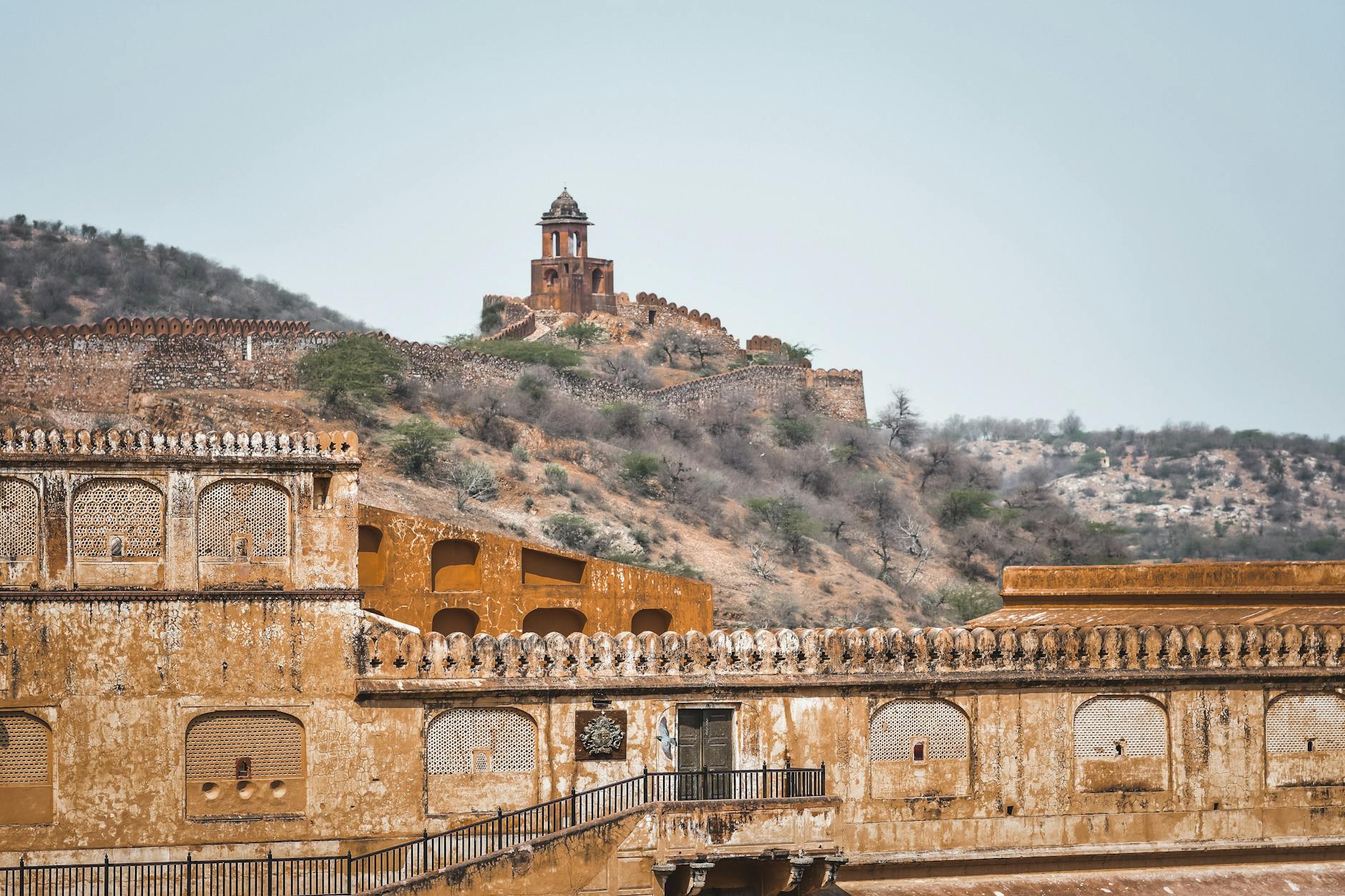
Amer Jaipur: hill-capital logic, fort power, older political geography, and the memory of another center of gravity before modern Jaipur took shape.[2]
Hotel Jaipur: courtyards, shade, service, pools, and the recovery architecture that keeps the city pleasurable rather than merely impressive.
Craft Jaipur: gemstones, jewelry, block prints, blue pottery, textiles, decor, and the whole commercial energy that has to be curated rather than inhaled.
Evening Jaipur: terraces, dining rooms, lit façades, and the quieter side of a city that can otherwise feel visually loud by day.
The Walled City and Why It Has to Feel Urban
Jaipur’s old city is easiest to misuse when it becomes only a backdrop.
Rajasthan Tourism’s own framing still emphasizes Jaipur as a planned city with a strong historical core.[2] That means the walled city should register as a lived urban system: roads, shops, gates, market pressures, layered commerce, and streets that are still asked to function. You should feel some friction there. Not chaos for its own sake, but use. If the old city feels too polished, you are probably in the wrong mental register.
This matters especially around Hawa Mahal. Its importance lies not just in its silhouette but in its bazaar-facing role.[3] The building belongs to the city’s street logic. It is stronger when you experience it with traffic, noise, commerce, and surrounding life still visible.
That is one of Jaipur’s larger lessons: beauty here does not require separation from urban reality. In fact, separation usually weakens it.
Amer and the Hill-Capital Argument
Amer deserves more seriousness than the common “fort outside town” label gives it.
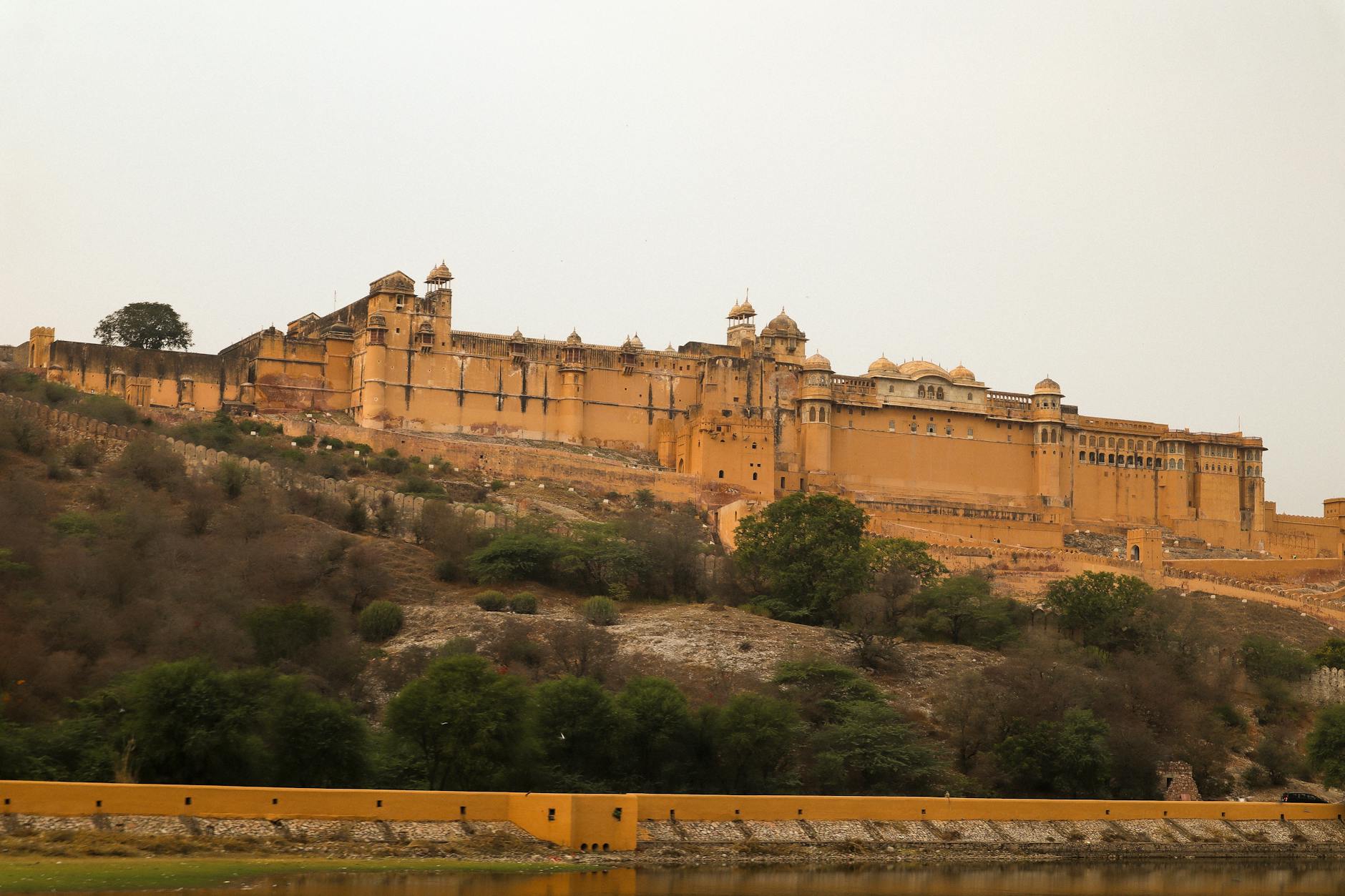
Rajasthan Tourism continues to identify Amer as Jaipur’s earlier capital and places it roughly `11 kilometers` from the modern city.[2] That is close enough to make the excursion easy and far enough to justify giving it its own energy. Amer should not be squeezed thoughtlessly into a day already overloaded with city monuments unless your goal is pure surface collection.
What makes Amer powerful is not just scale. It is the sense of another political center, another altitude, another logic of defense and display. It should feel like a prior capital argument, not like a bonus stop on the way back to lunch.
If you give Amer room, it clarifies Jaipur. You understand better what the later planned city was and was not.
Hawa Mahal and the Art of Restraint
Hawa Mahal is one of Rajasthan’s most over-photographed sites, which means it is also one of the easiest to cheapen.
The official Rajasthan Tourism page continues to explain the windowed façade, its relationship to royal women observing processions and bazaar life, and its street-facing logic.[3] The practical lesson is simple: Hawa Mahal is strong, but it is not a self-contained palace fantasy. It is urban architecture. It belongs to the city’s façade system and visual theater.
That means your job is not to turn it into a whole day. Your job is to put it in the right scale. Give it attention. Read it from the street. Understand its relation to Johari Bazaar and the surrounding core. Then move on before symbolism overwhelms proportion.
Jaipur often gets better whenever you practice this kind of restraint.
Jantar Mantar and the City’s Intelligence
Jantar Mantar is one of the best corrective devices in the whole Jaipur trip.
UNESCO’s description still matters because it changes the city’s meaning.[4] Suddenly Jaipur is not just royal façades, lattice windows, and craft display. It is also an eighteenth-century capital concerned with astronomy, measurement, time, celestial observation, and monumental scientific ambition.
This shift matters more than many travelers realize. A city can become too visually rich for its own good. After enough pink streets and palace textures, the eye tires. Jantar Mantar rescues Jaipur from decorative overload by introducing a different kind of attention. You start thinking again, not just looking.
If Jaipur is beginning to feel a little too performative, Jantar Mantar usually restores balance.
City Palace, Adjacency, and Not Overexplaining the Core
The core around City Palace, Hawa Mahal, and Jantar Mantar should feel concentrated rather than endlessly expandable.
This is one of the most important discipline points in Jaipur. The central cluster is rich, but richness is not a command to keep adding things until you are numb. What usually works best is to accept that this part of the city is a dense civic and historical zone, not a challenge course. Move slowly enough to notice relationships between sites and streets. Let one or two places do real work for the day instead of forcing the whole cluster to compete at once.
Jaipur’s center becomes thinner, not richer, when everything is given equal emphasis.
Shopping, Crafts, and How Not to Lose the Plot
Jaipur is one of India’s great shopping cities, and that is both real and dangerous.
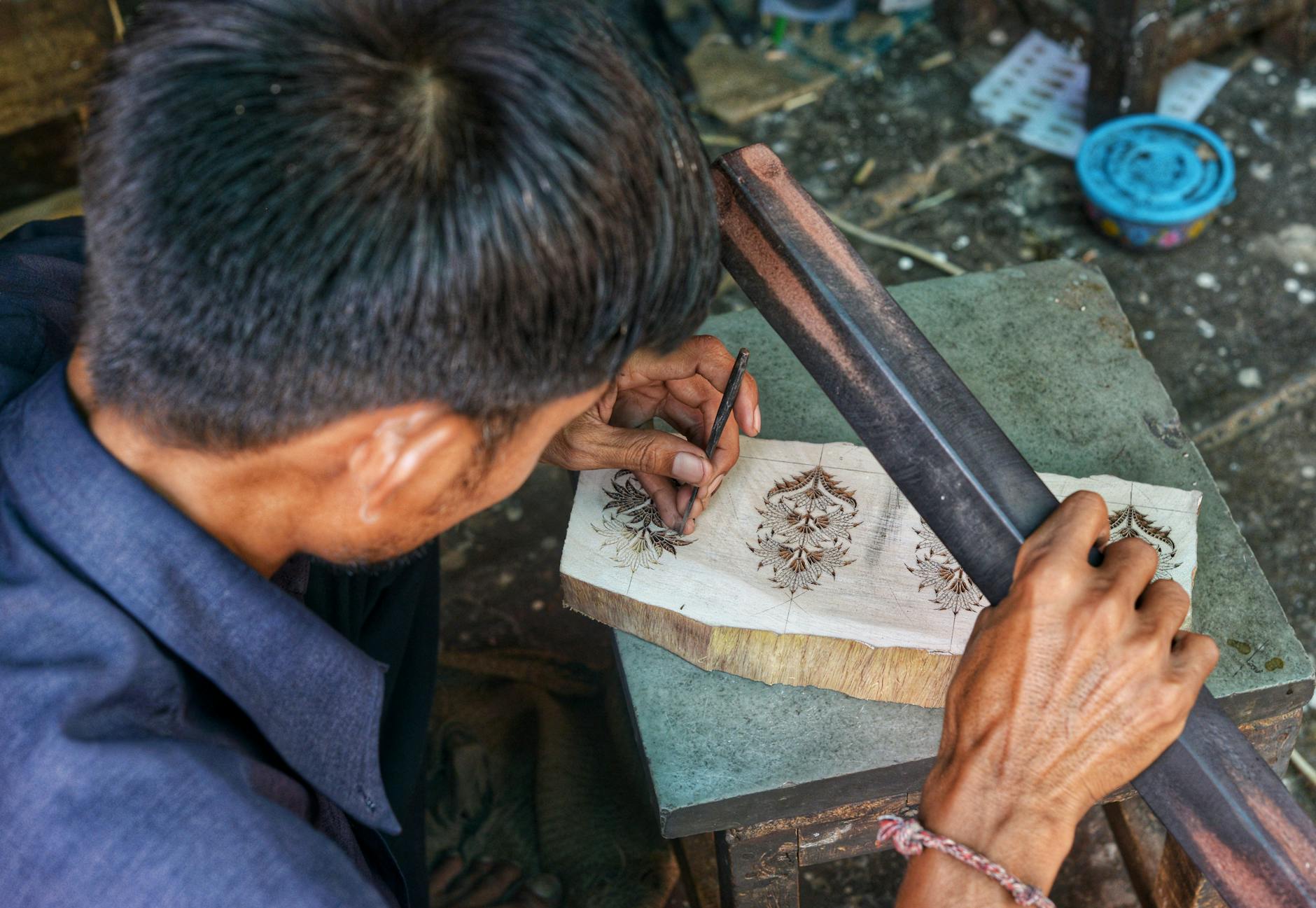
Rajasthan Tourism still highlights the city’s fame for gems, jewelry, and craft traditions.[2] The danger is that shopping in Jaipur can metastasize into the trip’s entire operating system. One store becomes five. A textile stop becomes a half-day. A gemstone curiosity becomes an exhausting string of showcases.
The solution is not to refuse shopping. It is to narrow it. Choose one or two categories you genuinely care about: block prints, jewelry, textiles, blue pottery, decor, or something similarly specific. Decide whether you want browsing, buying, or learning. If you know the answer, the city stays coherent.
Bad Jaipur shopping is draining because it turns every district into a transaction. Good Jaipur shopping connects what you buy to where you are and leaves the day’s shape intact.
Bargaining, Taste, and Emotional Energy
Shopping fatigue in Jaipur is not only financial. It is emotional.
The city constantly asks: do you want this? Do you really want this? Are you sure you do not want the slightly larger, brighter, finer, more “authentic” version? That ongoing solicitation is not unique to Jaipur, but here it can attach itself to very attractive objects and settings. The result is that even visually literate travelers can get worn down.
This is why taste needs a plan. It is better to buy one thing you intended to care about than six things acquired under atmospheric pressure. Jaipur tends to reward smaller, more deliberate desire.
It also helps to recognize that the city’s beauty is doing commercial work. Once you see that clearly, you can enjoy it without being entirely guided by it.
Heat, Hotels, and Energy Management
Jaipur is one of the clearest examples in India of why a hotel can be part of the logic of the city rather than a mere afterthought.
When the day has included Amer climbs or courtyards, recovery matters. When the sun is high, recovery matters. When markets and surfaces have begun to overload the eye, recovery matters. Jaipur becomes more elegant the moment you accept that the trip should breathe.
That is why a good hotel is so valuable here. It is not just a luxury posture. It is a structural asset. Shade, service, quiet, water, and dignified rest all sharpen the second half of the day.
Bad Jaipur itineraries often come from people trying to prove endurance. Good Jaipur itineraries come from people protecting attention.
Food and Evenings
Jaipur is better when evenings are not over-programmed.
This is not the right city for forcing three nightlife concepts into one night. It is better for one strong dinner, one terrace, one dining room, one softer local meal, or one hotel evening after an ambitious day. The city is rich enough by daylight that the evening does not need to become another race.
A good Jaipur evening often functions as release. The day’s heat subsides, the surfaces soften, and the city becomes more generous. If the day has been dense with history or shopping, the evening should edit rather than intensify.
As with so much in Jaipur, restraint usually improves quality.
Daytime Jaipur Versus Evening Jaipur
Morning Jaipur is strategic. This is when forts, major urban walking, and historical sites make the most sense. Attention is still fresh. Heat is still containable. The city feels more available to serious use.
Midday Jaipur is usually when planning errors become visible. If the day was overloaded to begin with, this is where it starts to collapse. Heat, traffic, buying pressure, and architectural sameness can all begin to blur.
Evening Jaipur is often the city’s answer to its own excess. Colors deepen, hotels recover their value, dinner finally feels earned, and the monumental city becomes less extractive and more atmospheric.
If you only know Jaipur by noon fatigue, you may misjudge it badly. If you allow it to resolve into evening, the city usually regains its elegance.
Family, Luxury, and Mixed-Energy Travel
Jaipur works well for travelers who are not all seeking the same kind of trip.
Families often benefit because the city can be structured in segments: a fort morning, a rest, a pool, a shorter evening outing. Luxury travelers benefit because the hotel culture is genuinely part of the destination and can support slower pacing. Mixed-energy groups benefit because one person can care about monuments, another about shopping, another about the hotel, and another about food, and Jaipur can absorb those different priorities without collapsing.
That makes the city especially useful in real-world travel, where not everyone wants to treat every hour as a historical exam.
The danger comes when the group tries to satisfy every desire in every day. Jaipur supports diversity of interest, but not endless accumulation.
Morning Jaipur Versus Late Jaipur
Morning is when Jaipur feels most capable of being understood. The air is still workable, the old city has not yet become tiring, and major historical sites can still be approached with concentration instead of mere endurance. If you want to feel that Jaipur is a planned capital with real civic and historical structure, mornings are when that argument is easiest to grasp.
Late morning into afternoon is when the city starts testing whether the itinerary has been intelligently built. Heat rises, markets get more draining, and “one more stop” begins to cost more than it seems. This is the part of the day when Jaipur punishes vanity planning. If the schedule was assembled for bragging rights rather than for actual use, this is where it frays.
Evening, by contrast, is when Jaipur regains some softness. Hotels start mattering again. Dinner becomes a real event rather than a task at the end of survival. Lights, terraces, and slower movement restore some proportion. A city that felt overfull at 2 p.m. can feel composed again at 8 p.m.
This is why the right Jaipur day often has a strong morning, a respectful middle, and a controlled evening instead of one long heroic push.
A Good Jaipur Day Versus a Bad One
A Good Day
It has one dominant argument. Amer is the day, or the walled city is the day, or hotel-and-shopping-with-one-serious-site is the day. The morning is used for the hardest or most important material. Midday acknowledges weather and fatigue. Buying is selective. The evening is restorative.
A Bad Day
It mistakes abundance for obligation. It begins too late, stacks Amer with half the old city, treats Hawa Mahal as a stand-alone palace experience, adds shopping without limits, ignores the sun, skips recovery, and ends in a hotel room where the whole city has become one long pink blur.
Jaipur is not punishing by default. It becomes punishing when the itinerary denies its internal logic.
Common Mistakes
Treating Every Monument as Equally Important
Jaipur is not a numbers game.
Shopping Without a Plan
This leads to fatigue, confusion, and usually worse decisions.
Underestimating Heat
The city gets flatter and more annoying when you stop respecting climate.
Choosing a Romantic Hotel That Breaks the Itinerary
Atmosphere is only useful if it supports the stay.
Using Hawa Mahal as a Symbol Instead of a Place
Its meaning comes from urban context, not just the famous façade.
Asking One Day to Carry Too Many Jaipurs
Amer, the Pink City, shopping, rooftop views, and hotel life should not all have equal claims on the same day.
Forgetting That Jaipur Is a Planned Capital
When you lose that frame, the city gets reduced to ornament.
Why Jaipur Improves on a Return Visit
Some cities peak on first theatrical exposure. Jaipur often deepens on return.
Why? Because first-time travelers are usually still trying to solve the city. They are sorting out hierarchy, wondering what counts as essential, and managing the emotional pressure of so much visible beauty and commercial invitation. By a second trip, the city’s manipulations are easier to see, and therefore easier to enjoy without being ruled by them.
Repeat visitors usually shop less and better. They give hotels more value. They stop forcing every monument into the same register. They notice planning, not just color. They allow parts of Jaipur to remain unseen and discover that this makes the seen parts stronger.
That is the sign of a city with real depth. Jaipur does not merely survive a second visit; it often becomes more sophisticated on one.
How the City Changes Over the Course of a Stay
On arrival, Jaipur can feel almost too immediately “Jaipur.” The pinkness, the façades, the palace-hotel atmosphere, the driver recommendations, the shopping language, the market energy, the visual saturation: all of it can seem to announce the city before you have actually entered it.
By the second day, if the trip is well built, the city starts to separate into intelligible layers. You understand where the walled city begins to matter. You understand why Amer should not be treated as an afterthought. You see why Jantar Mantar matters. You begin to recognize when the city is offering you experience and when it is offering you consumption.
By the third day, Jaipur usually becomes easier and calmer. The city’s pressures do not vanish, but they become readable. That is when the trip often improves. You stop chasing Jaipur and start using it.
This is one of the strongest arguments for not making the stay too short. Jaipur is not only a city of first impressions. It is a city whose second impression is often more accurate.
My Blunt Advice
Protect Amer as a main day.
Protect the walled city as a real city.
Let Hawa Mahal remain in proportion.
Let Jantar Mantar raise the trip’s intellectual level.
Shop less, better.
Respect heat before it humiliates the itinerary.
Spend more, if you spend more at all, either on a better hotel or on fewer, more deliberate purchases. Both are more valuable than one extra rushed monument.
Most importantly, stop treating Jaipur as a costume fitting for your India trip. It is a capital. It was planned. Its beauty is strongest when that fact remains visible.
Jaipur does not need more enthusiasm. It needs better editing.
Source Notes
- 1. Airports Authority of India. "Jaipur Passenger Information." Official airport passenger-information page for Jaipur International Airport and related terminal guidance. https://www.aai.aero/en/node/2496
- 2. Rajasthan Tourism official Jaipur destination page. Used for Jaipur’s founding date, planned-city framing, Golden Triangle role, and core city orientation. https://www.tourism.rajasthan.gov.in/jaipur.html
- 3. Rajasthan Tourism official Hawa Mahal page. Used for Hawa Mahal’s street-facing function, jharokha logic, and current official visitor framing. https://www.tourism.rajasthan.gov.in/hawa-mahal.html
- 4. UNESCO World Heritage Centre. "The Jantar Mantar, Jaipur." Used for the observatory’s world-heritage status and its significance as the best-preserved monumental astronomical complex of its kind in India. https://whc.unesco.org/en/list/1338/