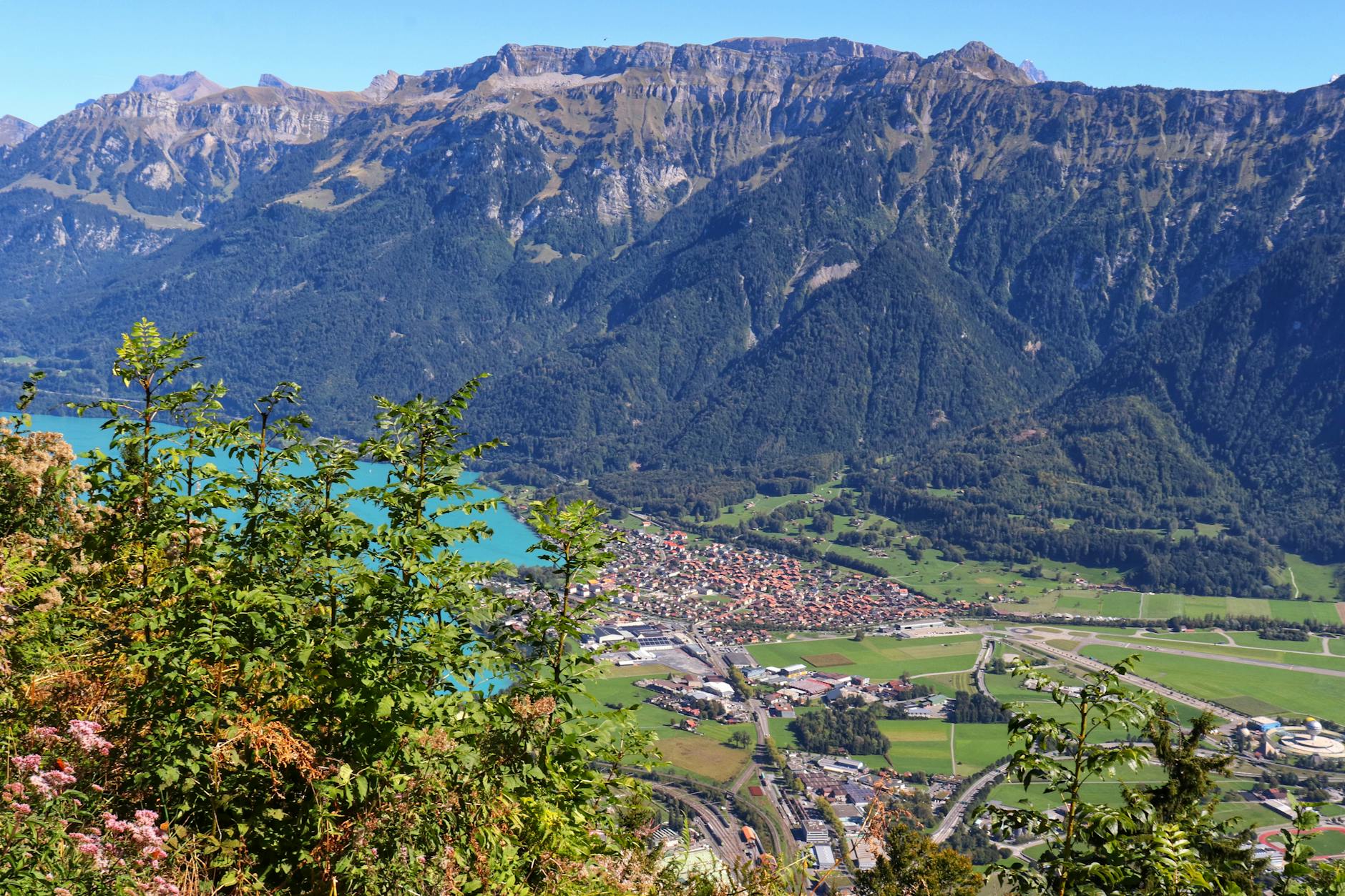
Interlaken is one of the easiest places in Europe to judge incorrectly.
Start Here
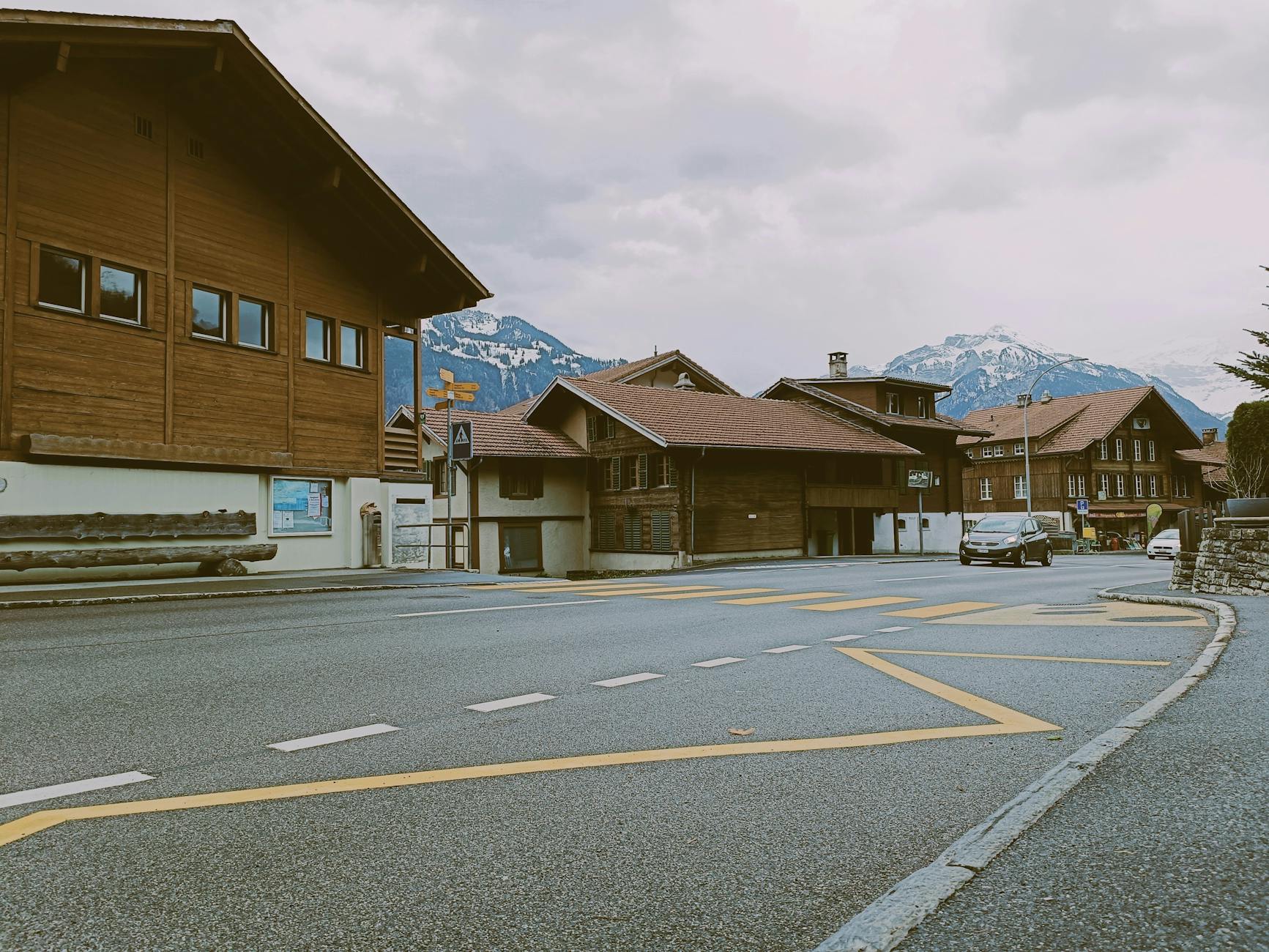
People arrive expecting a storybook Swiss village with one overwhelming central square, one postcard lakefront, and one clear set of mountains doing the work of romance around the edges. That is not really Interlaken. Interlaken is something more practical and, in the right hands, more useful. It is a long, slightly stretched alpine base between two lakes, with a strong rail logic, a real accommodation machine, good onward access, and an unusual ability to hold together a regional trip that would otherwise fragment into transfers, luggage, and overexertion.
The problem is that many first-time visitors resent it for not being a concentrated fantasy. They compare it to Lauterbrunnen, a mountain terrace, or a lakeside hamlet, and conclude that Interlaken itself is secondary. That is the wrong reading. Interlaken's job is not to be the single most picturesque place in the Bernese Oberland. Its job is to make the whole area usable. Once you judge it on that basis, the town becomes much more impressive. The lakes matter. Harder Kulm matters. The station split matters. The guest card matters. The town's broad hotel range matters. Most of all, the fact that you can return here in the evening after a major mountain day and still have a functioning base matters.
The best first Interlaken trip accepts that the town is a strategic pleasure rather than a theatrical one. Use it well and the region opens. Use it lazily and the trip turns into scenic consumption with too much transit and not enough coherence.
Interlaken in one sentence: it is one of Europe's best alpine bases, but only if you let it be a base instead of demanding that it impersonate every mountain dream around it.
Basic data
| Population | About 6,000 |
|---|---|
| Area | Compact alpine hub between lakes |
| Major religions | Christian heritage with a strongly secular visitor culture |
| Political system | Municipal government inside a federal republic |
| Economic system | Tourism-led alpine economy centered on hospitality, transport, and mountain recreation |
Quick Verdict
Best for: first-time Bernese Oberland travelers, rail-first travelers, couples, multi-day alpine itineraries, and anyone who values scenery more when the logistics are clean.
Less ideal for: travelers who want a tiny car-free mountain village as their only Swiss experience, or anyone who will resent practicality no matter how useful it is.
Ideal first stay: 3 nights.
Still worthwhile: 2 nights if one major regional excursion is the center of the stay.
Can justify more: yes, especially in a weather-sensitive itinerary.
Biggest planning mistake: sleeping here while mentally trying to stay somewhere else.
One thing to prioritize: station and hotel placement.
One thing to keep flexible: which day gets the best mountain weather.
The blunt version: Interlaken becomes good the moment you stop trying to make it Lauterbrunnen.
Who Will Love Interlaken?
Interlaken suits travelers who understand that mountain travel is improved by infrastructure. If you like trains, morning optionality, proper hotel choice, and the ability to change the plan when cloud, rain, or fatigue shifts the day, Interlaken is strong.
It is also very good for people who want the Bernese Oberland without pretending that every night has to be spent in a narrow valley or on a scenic ledge. The place gives you breathing room.
Interlaken at a Glance
| Question | Practical Answer |
|---|---|
| Best arrival station for most regional movement | Interlaken Ost |
| More central-feeling traditional station area | Interlaken West |
| Nearest signature viewpoint | Harder Kulm |
| Main orientation | Between Lake Thun and Lake Brienz |
| Why stay here? | Rail access, hotel range, flexibility |
| City or village? | Town and transport hub |
| Car required? | No |
| Best first stay length | 3 nights |
2026 Visitor Notes
The Guest Card Still Matters
Interlaken Tourism's current guest-card pages continue to make a useful practical point: overnight guests paying the local visitor tax receive a card that provides free travel on local public transport within the area of validity and discounts on selected excursions.[2][1]
Harder Kulm Remains the Cleanest "Instant Interlaken" View
Both Jungfrau Railways and Interlaken Tourism continue to present Harder Kulm as the local mountain, reachable in roughly ten minutes by funicular and valued for the twin-lake and Jungfrau-massif view.[4][3]
Interlaken Ost Still Functions as the Main Regional Rail Hinge
SBB's current station page for Interlaken Ost confirms its role as a practical transport node with tickets and leisure-travel services tied into the broader Swiss rail system.[5]
The Town's Value Still Lies in Use, Not Illusion
Interlaken Tourism's own materials continue to present the town through transport, guest-card value, mountain access, and regional movement rather than by pretending the town alone is the whole product. That honesty is part of why Interlaken works.[1][3]
How to Understand Interlaken
Interlaken works through four forces.
The first is base logic. The town is a center of gravity, not a side detail.
The second is station geography. Ost and West are not interchangeable for every trip.
The third is weather leverage. Staying here gives you options when the mountains do not cooperate.
The fourth is regional humility. Interlaken belongs to a wider landscape, and the trip improves when you stop demanding that the town itself deliver every scenic climax.
The Main Mental Shift
Do not ask, "Is Interlaken the prettiest place around here?" Ask, "Is this the right place to make the whole region work?" For many first-time travelers, the answer is yes.
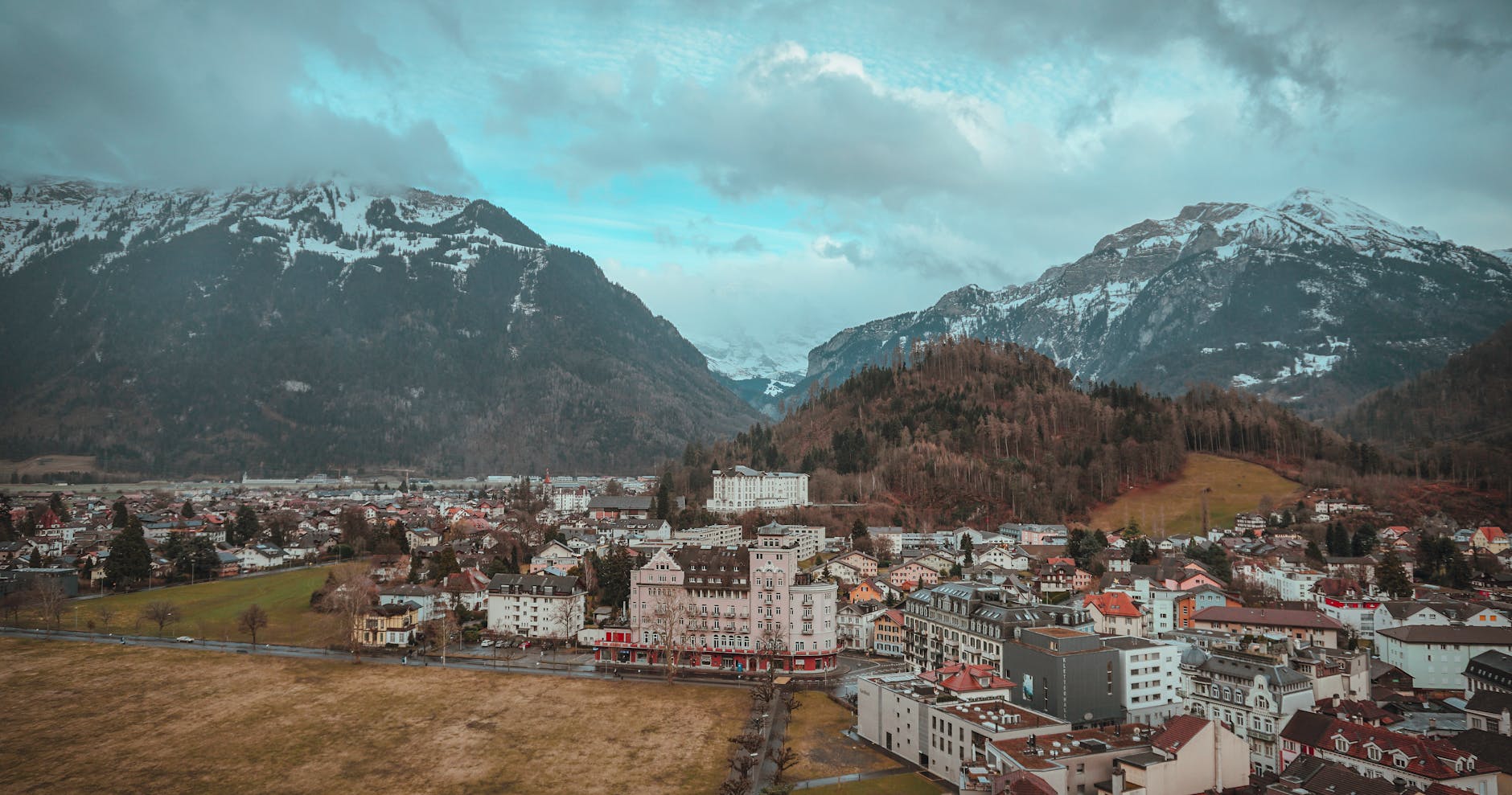
What Makes Interlaken Distinct
Interlaken's distinction is that it solves problems without feeling purely functional. That is rarer than it sounds.
There are prettier single viewpoints in the region. There are more theatrical villages. There are quieter corners. But few places combine lakes, mountain access, strong station logic, hotel depth, walking-scale convenience, and enough civic life to hold together several different kinds of alpine day. Interlaken is not an alpine stage set. It is a working platform for mountain travel, and that is exactly what makes it valuable.
Best Time to Visit
Interlaken should be timed according to what kind of mountain days you want.
Summer gives the fullest hiking and lake-day logic, but also the most pressure. Shoulder periods can be excellent for a calmer stay if you accept that some higher excursions may look different or require closer checking. Winter changes the town's function again: more snow-sports gateway, less broad green-season wandering town.
The main rule is simple: Interlaken is best when the weather leaves you choices, not when your whole stay depends on one perfect sky window.
How Many Days You Need
Two Nights
Enough to use the town well for one major regional outing and one local or lighter day.
Three Nights
The strongest first answer. This gives room for one big mountain or valley day, one town-and-local-view day, and one flexible lake, weather, or secondary-excursion day.
Four Nights or More
Very reasonable if the Bernese Oberland is the main point of the Swiss trip rather than one stop among many.
Arrival Strategy
The first Interlaken question is often not "What should we do?" but "Which station do we actually need?"
That matters because the town stretches more than some first-timers expect. If the trip is heavily oriented toward onward Jungfrau-region movement, Interlaken Ost often makes more sense. If the goal is a more central-feeling town stay with easy evening wandering, Interlaken West can matter more. The wrong hotel/station pairing is one of the most common small failures here.
Arrive, understand the map, and let the first afternoon stay local.
Where to Stay
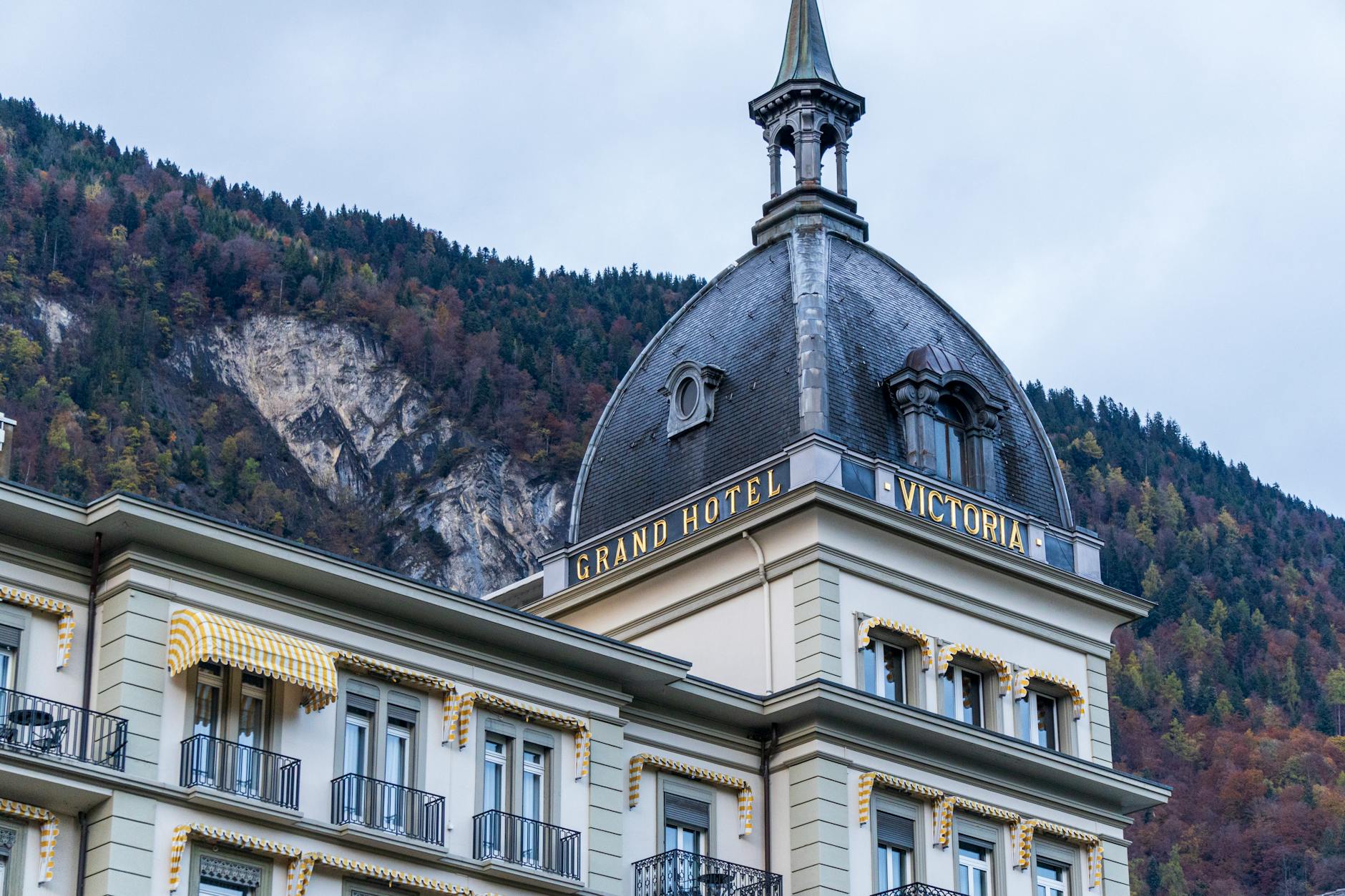
For most travelers, the real decision is not "Interlaken or not?" but which part of Interlaken.
Interlaken Ost Side
Best for: rail-forward itineraries, Jungfrau-region access, travelers with early departures, and anyone who wants station efficiency. Tradeoff: can feel more transport-led than romantic.
Central Spine Between Ost and West
Best for: balanced stays, walkability, and travelers who want both movement and evenings that still feel relaxed. Tradeoff: you need to choose the property carefully rather than assume every address performs the same way.
Interlaken West Side
Best for: a more town-first feel, easier evening wandering, and some travelers who prefer the urban texture over station proximity. Tradeoff: slightly weaker for some onward departures.
The Main Rule
Book the town you want to use at night, not just the station you think sounds efficient.
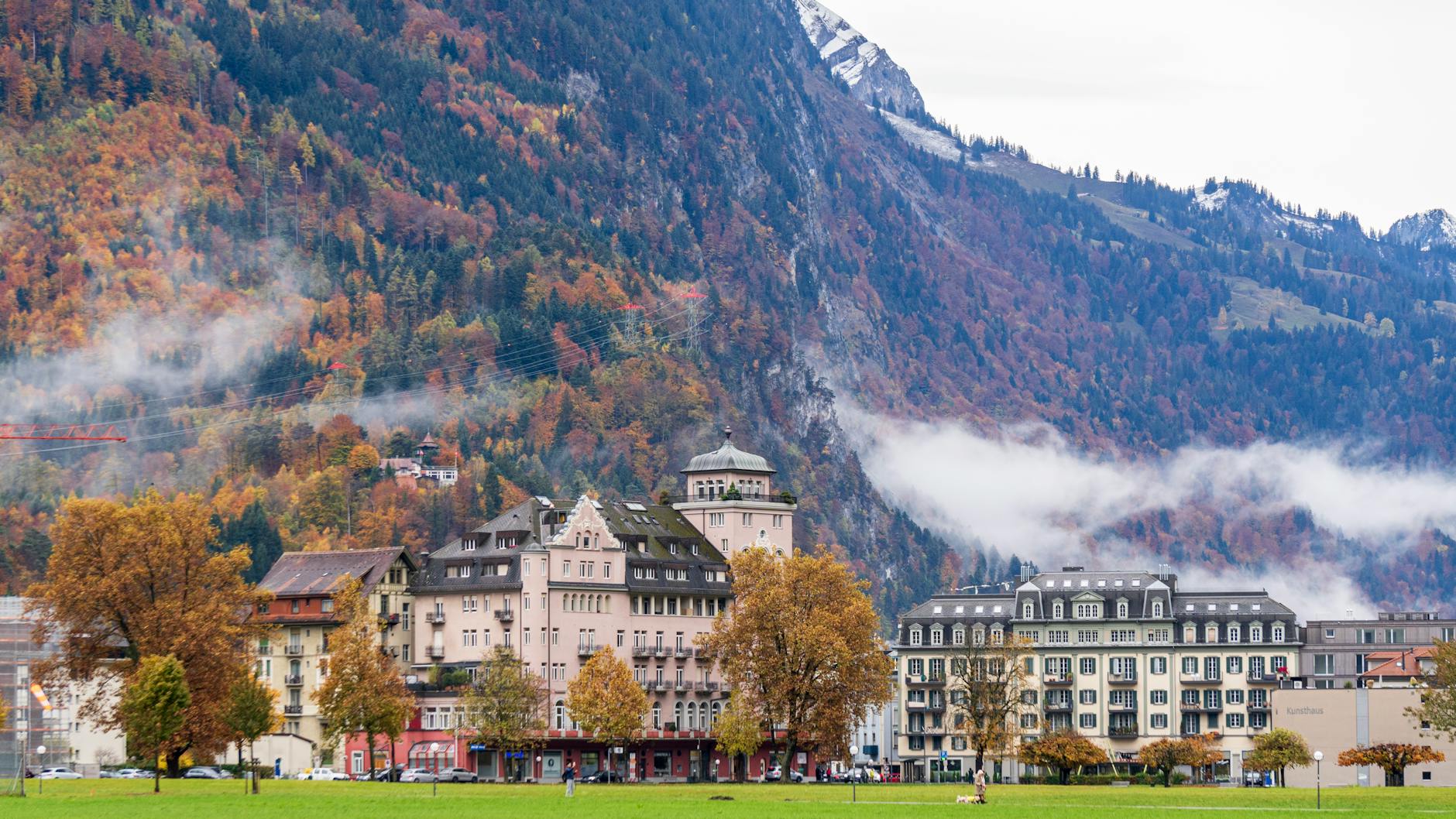
The Interlakens That Matter Most
Rail Interlaken: Ost, West, the guest card, and the reason the whole region becomes easier from here.[2][5]
Lake Interlaken: the psychological importance of sitting between Thun and Brienz, even when the town itself is not directly a lakefront fantasy.
Viewpoint Interlaken: Harder Kulm, which gives the place its clearest visual explanation.[4][3]
Recovery Interlaken: hotel breakfasts, normal evenings, and the part of the Alps that travelers often underestimate until they need it.
Interlaken Ost, West, and the Shape of the Stay
Interlaken becomes much more legible once you stop treating its stations as names and start treating them as trip-shaping tools.
Interlaken Ost is the stronger transport hinge. Interlaken West often feels better for a more town-led mood. Between them lies the long central strip where some visitors wrongly conclude that Interlaken is all just one generic hotel corridor. It is not. The walk, the convenience, and the balance between logistics and atmosphere change noticeably with placement.
This is why hotel choice matters more here than in many smaller destinations.
Harder Kulm and the Need to See the Whole System
Harder Kulm is one of the few attractions that explains Interlaken rather than distracting from it.
Jungfrau Railways and Interlaken Tourism both emphasize the same essential fact: the climb is quick, the location is close, and the reward is the two-lake plus Eiger-Mönch-Jungfrau perspective that lets the town finally make sense.[4][3]
That is why Harder Kulm belongs near the top of the list for many first-time visitors. It is not just a nice view. It is the map becoming emotional.
The Lakes and the Question of Expectations
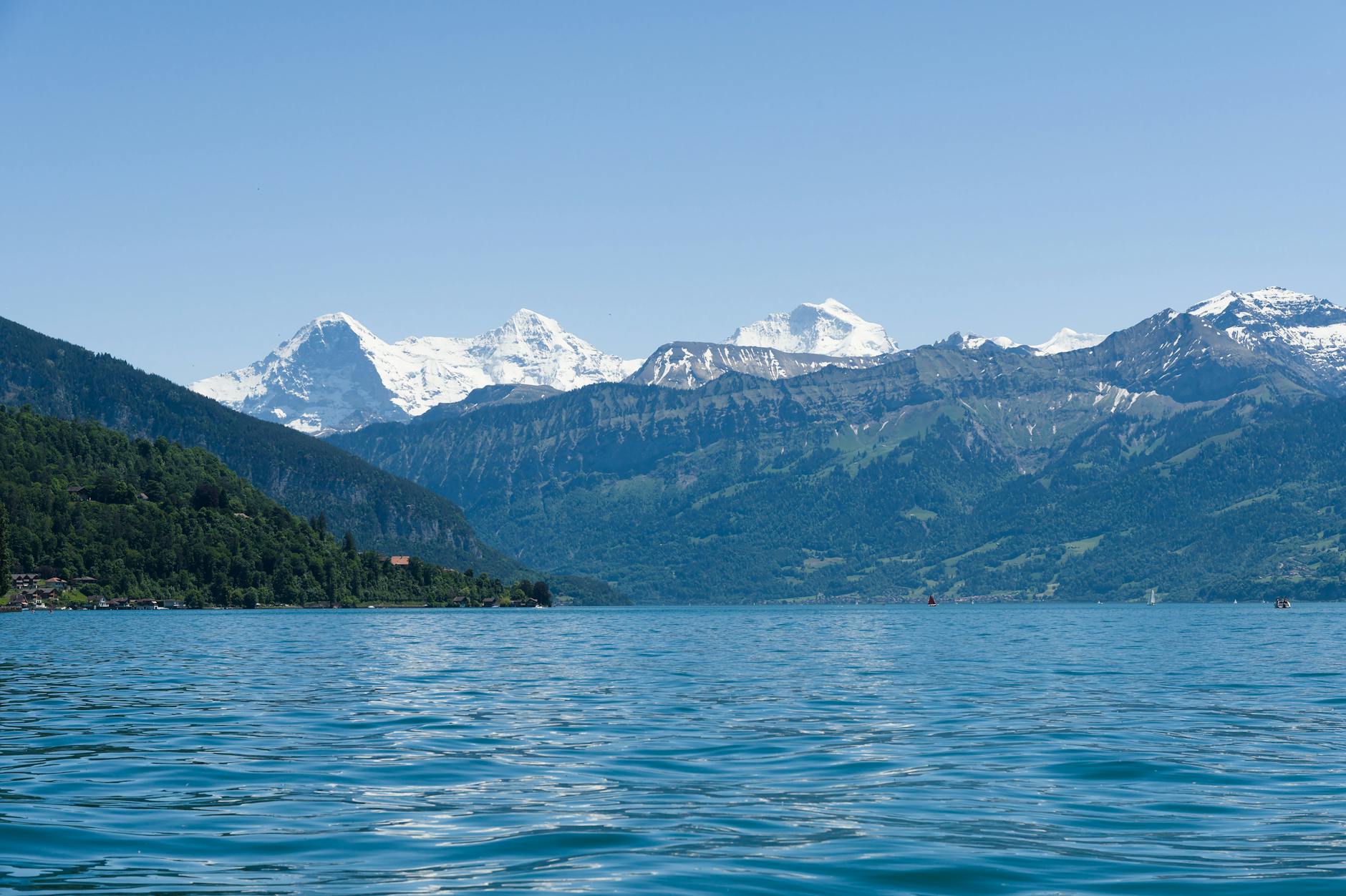
Interlaken sits between Lake Thun and Lake Brienz, and that fact matters even when visitors spend most of their time heading toward higher scenery.
The mistake is to expect an uninterrupted lakefront-town fantasy on the model of much smaller Swiss places. Interlaken's lake logic is broader and more structural. The lakes define its light, orientation, and regional possibilities. They are part of why the town feels so open, even when the best use of them may be a walk, a boat connection, a half-day outing, or simply the perspective they lend to the place.
Guest Card Value and Why It Changes the Mood
The Interlaken Guest Card is not glamorous, but it changes the stay in exactly the right way.
Interlaken Tourism's current material makes clear that the card provides free travel on local public transport within the area of validity and discounts on selected excursions for qualifying overnight guests.[2][1] That means Interlaken can feel looser and more forgiving than a comparable mountain base where every small move feels separately expensive or cumbersome.
Use the card. It is part of the destination doing its job.
Regional Excursions and the Danger of Greed
Interlaken is surrounded by temptation. That is its blessing and its risk.
From here, travelers start thinking they can take one huge peak, one valley, one lake trip, one ridge, one boat, and one sunset viewpoint and still have dinner as if nothing happened. This is how the region becomes thin. Interlaken is powerful precisely because it gives you options. The right response to options is editing, not accumulation.
One major outward day and one lighter or more local day usually beat two oversized scenic campaigns.
Food, Hotels, and the Underestimated Value of Return
One reason Interlaken works so well is that it gives the traveler somewhere to come back to.
This sounds obvious until you compare it with more fragile alpine itineraries where every day ends with another transfer or a narrower lodging base. Interlaken's hotel stock, restaurant range, and practical center mean that recovery is built into the town. That is not boring. It is why the scenery stays enjoyable instead of becoming work.
Where Interlaken Fits in a Switzerland Trip
Interlaken often gets trapped in an unfair comparison with places that are doing a completely different job.
Travelers compare it to Lauterbrunnen, Mürren, Wengen, Grindelwald, or one of the lake-edge villages and then conclude that Interlaken is less magical. In a narrow visual sense, that can be true. But the comparison usually misses the point. Those places are not solving the same problem. Interlaken is not trying to be the single most theatrical view in the region. It is trying to be the place from which a larger mountain trip becomes calm, organized, and resilient.
That role is valuable in a Switzerland itinerary because so many routes otherwise tip into scenic greed. Interlaken gives the trip an operational center. It allows luggage, weather, meals, rail connections, and recovery to stop fighting one another. The town may not be the most instantly mythic thing in the Bernese Oberland, but it is one of the easiest places from which the whole Oberland can become livable.
In other words, Interlaken is less the climax than the stabilizer. Trips often improve once that is accepted.
First-Time Visitors Versus Repeat Visitors
First-time visitors usually need Interlaken to explain the region. Repeat visitors often need it simply to make the region easy.
On a first trip, the town’s usefulness is interpretive. Harder Kulm gives the map emotional logic, the station split forces you to understand how movement actually works, and the guest card turns the local system into something generous rather than fiddly.[4][3][2][1] Interlaken teaches you how the wider area is arranged.
Repeat visitors often appreciate the base even more because they no longer need it to justify itself aesthetically. They already know where the prettier villages are. That frees them to value what Interlaken actually does well: a good breakfast before a mountain day, a simple return after a long excursion, the ability to change plans quickly, and the fact that the town’s scale remains easy even when the weather changes.
This is one of those places that can feel only useful on the first trip and quietly essential on the second.
Daytime Interlaken Versus Evening Interlaken
Interlaken changes more over the course of a stay than critics of the town often admit.
Daytime Interlaken is practical. People are moving out of it toward valleys, lakes, and mountains. The stations matter more. The town can feel transitional because, in a sense, it is. This is the part of the day when skeptics often decide the place is too stretched or too functional.
Evening Interlaken is where the argument improves. The rush to leave has ended. The mountains become a backdrop rather than an obligation. Restaurants and hotel terraces matter more. The fact that you can come back from a big day and still have a normal town to inhabit becomes one of the trip’s quiet pleasures.
This is why overnight value is so important. Interlaken does not always make its strongest case at 10:30 in the morning. It often makes it at 7:00 p.m., when your body suddenly understands what a good base feels like.
Why Harder Kulm Should Usually Come Early
Harder Kulm is not just a nice add-on. It is one of the best orientation tools in Swiss mountain travel.
When you go early in a stay, the whole region becomes clearer. The two lakes stop being abstract names. The town’s stretched shape between Ost and West starts making sense. The great mountain trio beyond becomes a visual north star for the rest of the itinerary.[4][3]
This matters because one of Interlaken’s main challenges is that it can initially look too ordinary for its surroundings. Harder Kulm corrects that immediately. It reveals that the town’s job is not to perform Alpine drama on every corner, but to sit in exactly the right place to distribute you toward it.
Once you have seen that, the rest of the stay often improves. The town stops seeming compromised and starts seeming intelligently positioned.
Lakes, Boats, and the Problem of Misplaced Expectation
Visitors often say Interlaken is between two lakes and then subconsciously expect it to behave like a perfect waterfront resort on both.
That expectation is what produces disappointment. Interlaken’s lake logic is not one of continuous shoreline romance. It is structural rather than theatrical. The town sits in the open field between two major bodies of water, and that position affects weather, light, openness, and route possibilities. The lakes are part of why the place feels expansive even when the center itself is straightforward.
This means lake time should be used intelligently. A boat trip, a lakeside outing, or simply the awareness that your base belongs to a two-lake system can be enough. What does not help is demanding that the town itself perform as if it were a single concentrated resort village directly on an idealized shore.
The more honestly you understand this, the more Interlaken begins to feel like a very good answer rather than a failed fantasy.
Excursion Discipline: The Oberland Is Bigger Than Your Energy
Interlaken’s strength is that it gives you many possible outward days. Its danger is that it makes too many of them look equally necessary.
The region offers major mountain transport, lake trips, valley excursions, ridge walks, trains, cable cars, and villages that all sound individually indispensable. Travelers then start thinking a short stay must somehow include all the signature elements. This is exactly how a beautiful trip becomes thin.
The truth is simpler: one major outward day per full day is often enough. A Harder Kulm evening after a large excursion may already be more than enough. A lighter lake or local day can add more value than a second oversized mountain campaign. Interlaken rewards editing because editing preserves energy, weather flexibility, and appreciation.
This is where the base really proves itself. It lets you choose less without feeling that the whole trip is shrinking.
Weather Flexibility Is Not a Bonus Here
In mountain regions, travelers often say they need flexibility. In Interlaken, flexibility is not a luxury feature. It is part of why you stay there.
The town is strong precisely because you can wake up, read the weather, and adjust. The wrong trip tries to assign the biggest mountain day to a fixed date and then forces the rest of the itinerary to orbit around that decision regardless of cloud, rain, or simple fatigue. The better trip lets the region speak back. Interlaken is one of the easiest places in the area from which to listen.
This is also why three nights often work so much better than two. You are not only buying another excursion slot. You are buying another chance for the mountain and lake days to fall into a more intelligent order.
Interlaken With Family or Low-Energy Travelers
Interlaken can be excellent for travelers who need the Alps to be manageable rather than heroic.
Families often benefit from the clear station logic, accessible accommodation range, and the fact that not every day needs to involve a huge transport experiment. Low-energy travelers do well because the town allows scenic ambition to be scaled up or down without the whole trip collapsing. You can have a meaningful day with a shorter outing, a lake segment, or a local viewpoint rather than a massive summit agenda.
This is where the practical nature of the town becomes a real virtue. More dramatic villages can sometimes feel emotionally compulsory, as though if you are there you must do the big thing. Interlaken is calmer about scale. It gives permission for both major days and modest ones.
That permission is worth a lot more than many first-time visitors realize.
Why Some People Leave Underwhelmed
When travelers leave Interlaken underwhelmed, it is often because they spent the whole stay comparing the base to a different product.
If you spend three days thinking, “This is not as pretty as X,” then the town will indeed seem lacking. But if you ask instead whether it made the region work, whether it let weather be flexible, whether it made returns easy, whether evenings stayed comfortable, and whether a larger mountain itinerary felt more coherent because of it, the answer is often yes.
This is the crucial shift. Interlaken is a town best judged by what it enables and by the quality of life it gives the mountains around it. That may sound less romantic than a single perfect viewpoint, but in lived travel it often produces the better trip.
Why Interlaken Often Improves on Revisit
Interlaken is one of the places that can become more appealing after you already know the region.
On the second visit, the town no longer has to win a beauty contest in your head. You already know what Lauterbrunnen or other nearby icons look like. That frees Interlaken to be used for what it is. Suddenly the station split looks helpful instead of inelegant. The broad hotel stock looks like choice instead of compromise. The easy evenings feel luxurious rather than ordinary.
Many travelers end up trusting Interlaken more on a return trip than they expected on the first. It becomes the place where the Bernese Oberland stops being a puzzle and starts being a rhythm.
A Good Interlaken Day Versus a Bad One
A good Interlaken day has one clear purpose and one clear return.
You know whether the day belongs to a mountain, a lake, a local orientation, or a lighter recovery pattern. You use the town’s infrastructure to support that purpose, not to clutter it. And at the end, you come back to a place that still feels easy enough to inhabit after the scenery is over.
A bad Interlaken day is a scenic relay race: one transport link after another, too many peaks or villages, too little weather humility, and an evening where the base feels like a corridor instead of a town. Interlaken did not cause that failure. It was merely asked to rescue it.
How the Town Changes Over the Course of a Stay
Interlaken is rarely most persuasive on the first walk out of the station.
At first, the spread-out shape and practical tone can feel almost disappointingly ordinary compared with the intensity of surrounding mountain marketing. Later, after one excursion and one return, the same qualities often begin to feel relieving. The town’s length becomes usable rather than disappointing. Its hotels begin to feel like support rather than compromise. The central strip becomes a place to land rather than a place to pass through.
This is why an overnight or multi-night stay matters so much. Interlaken is cumulative. It gets better when it has already helped you once.
Station Choice Is Emotional, Not Just Functional
Visitors often talk about Interlaken Ost and Interlaken West as though this were simply a question of transport mechanics. It is more than that.
Interlaken Ost gives many first-time travelers a feeling of readiness. It says: the mountains are within reach, the railway logic is clear, and the region is open to you from here.[5] Interlaken West, by contrast, can feel more like you are actually in a town rather than in a departure hall for one. Neither sensation is inherently better. What matters is knowing which one will make your trip feel more coherent.
This is why hotel selection should start from your emotional use of the town, not just its map. Are you the kind of traveler who wants to step out and feel immediately ready for trains and onward movement? Or do you want the evening return to feel a little less infrastructural and a little more local? Interlaken rewards this honesty because the answer shapes every day, not just one transfer.
Many mediocre stays are not caused by bad hotels. They are caused by correct hotels chosen for the wrong kind of traveler.
The Hotel Question Is Really About Evenings
People often think hotel choice in the Alps is mainly about views. In Interlaken it is more often about the psychology of return.
After a long day in the mountains, or even after a weather-changed day around the lakes and local viewpoints, what you want most is not necessarily the most picturesque property in theory. You want a place that makes the evening easy. You want the walk from station or bus stop to feel manageable. You want dinner options that do not require another expedition. You want the room to feel like a base, not a compromise.
This is why Interlaken’s broader hotel stock is such an advantage. A more theatrical village may win the postcard comparison, but Interlaken often wins the full-day lived comparison because it absorbs both big and small days gracefully. The best hotel choice here is the one that protects that grace.
Shoulder-Season Interlaken Can Be Excellent
Many travelers instinctively think of Interlaken as a peak-summer or winter-sports place. That misses one of the town’s more intelligent uses.
Shoulder seasons can be ideal because Interlaken’s core strengths are not dependent on one narrow visual fantasy. The town still works when some higher routes are less central, when the weather is mixed, or when a mountain plan has to be held more loosely. In fact, the town’s value as a flexible base can become even clearer then. When every outing is not guaranteed, you appreciate infrastructure more, not less.
This is one reason Interlaken often outperforms more theatrically scenic places under imperfect conditions. The town’s hotel, rail, and guest-card logic keep the stay meaningful even when the biggest mountains are temporarily less available.[2][1]
Interlaken in shoulder season may not give you maximum alpine theatre every day. It often gives you a smarter trip.
The Town Is Better When You Stop Apologizing for It
Some travelers spend their entire Interlaken stay half-apologizing for having chosen it. That is the surest way to flatten the destination.
They say things like, “Of course it’s convenient, but it isn’t really the prettiest,” or “We’re only here because it’s practical.” Those sentences turn practicality into a vice when in reality practicality is one of the reasons the holiday works. A base that lets you sleep better, move more cleanly, adapt to weather, and return without friction is not a failed version of the mountains. It is part of what makes the mountains emotionally available.
Interlaken becomes much stronger once you stop trying to defend it against places that were designed to do other work. It is not a consolation prize. It is a tool, and a surprisingly pleasant one, for building a mountain trip that still feels human by day three.
Why One Light Day Makes the Whole Stay Better
Interlaken’s great temptation is to make every full day into a major Alpine campaign. That is usually a mistake.
Because the region around it is so rich, travelers often feel guilty if they spend one lighter day in town, by the lakes, or on a small local outing rather than on a major branded excursion. But one light day often improves the entire stay more than one extra maximalist day. It lets the body recover, it gives weather flexibility actual room to work, and it lets the town itself do some of the lifting it was designed to do.
This is especially true on a three-night trip. If one day is big and one is moderate, the whole stay often feels stronger than if both days are oversized. Interlaken is one of the best places in the Alps for this kind of restraint because the base remains worthwhile even when the day is not epic.
That is a subtle strength, but it is a real one.
The Best Memory to Aim For
If Interlaken is used well, the memory you keep is not usually “Interlaken itself was the single prettiest place.” It is something more interesting.
You remember that the region felt coherent. You remember one or two big mountain days landing well because the base made them easy. You remember Harder Kulm suddenly explaining the map. You remember a return to town that felt comfortable rather than disappointing. You remember the sense that your Swiss mountain trip did not collapse into queues, luggage, and fatigue.
That may sound less glamorous than a single dramatic lookout, but in lived travel it is often more valuable. Interlaken’s job is not to outshine every place around it. Its job is to help those places shine without breaking the trip. When it succeeds, that success stays with you longer than many prettier but less useful stops.
Common Mistakes
Expecting Interlaken to Be a Fairy-Tale Village
It is not, and that is fine.
Booking the Wrong Side of Town
The station relationship changes the stay more than many first-timers expect.
Overscheduling the Region
Interlaken gives you options, not a license to overconsume them.
Ignoring the Guest Card
The small transport savings and ease matter.
Underestimating the Value of a Base
Mountain beauty lands better when the trip still has structure.
My Blunt Advice
Judge Interlaken for what it solves.
Stay where your actual movements make sense, not where the map looks neat.
Use Harder Kulm early so the whole geography becomes clear.
Let one day be big and another day be sane.
Use the guest card, use the trains, and use the town as a real place to recover.
And stop asking Interlaken to be every other place in the Bernese Oberland. It is much better when allowed to be itself.
Source Notes
- 1. Interlaken Tourism, "Guest cards & tickets in the Holiday Region Interlaken." Used for current guest-card framing, free local public transport guidance, and the broader ticket context for moving around the region. https://www.interlaken.ch/en/info-service/guest-cards
- 2. Interlaken Tourism, "Interlaken guest card." Used for the current area-of-validity and benefit framing for overnight guests paying the visitor tax. https://www.interlaken.ch/en/info-service/gaestekarten/interlaken-guest-card
- 3. Interlaken Tourism, "Harder Kulm – Interlaken's local mountain." Used for current local-tourism framing of Harder Kulm, including its role as the nearest mountain and the practical quick-access logic from town. https://www.interlaken.ch/en/experiences/mountains-panoramas/mountain-excursions/harder-kulm
- 4. Jungfrau Railways, "Harder Kulm – Top of Interlaken." Used for current official operator information on travel time, viewpoint identity, and ticketing context. https://www.jungfrau.ch/en-gb/harder-kulm/
- 5. SBB station page for Interlaken Ost. Used for current official station and Swiss-rail network context. https://www.sbb.ch/en/travel-information/stations/find-station/station.7492.interlaken-ost.html