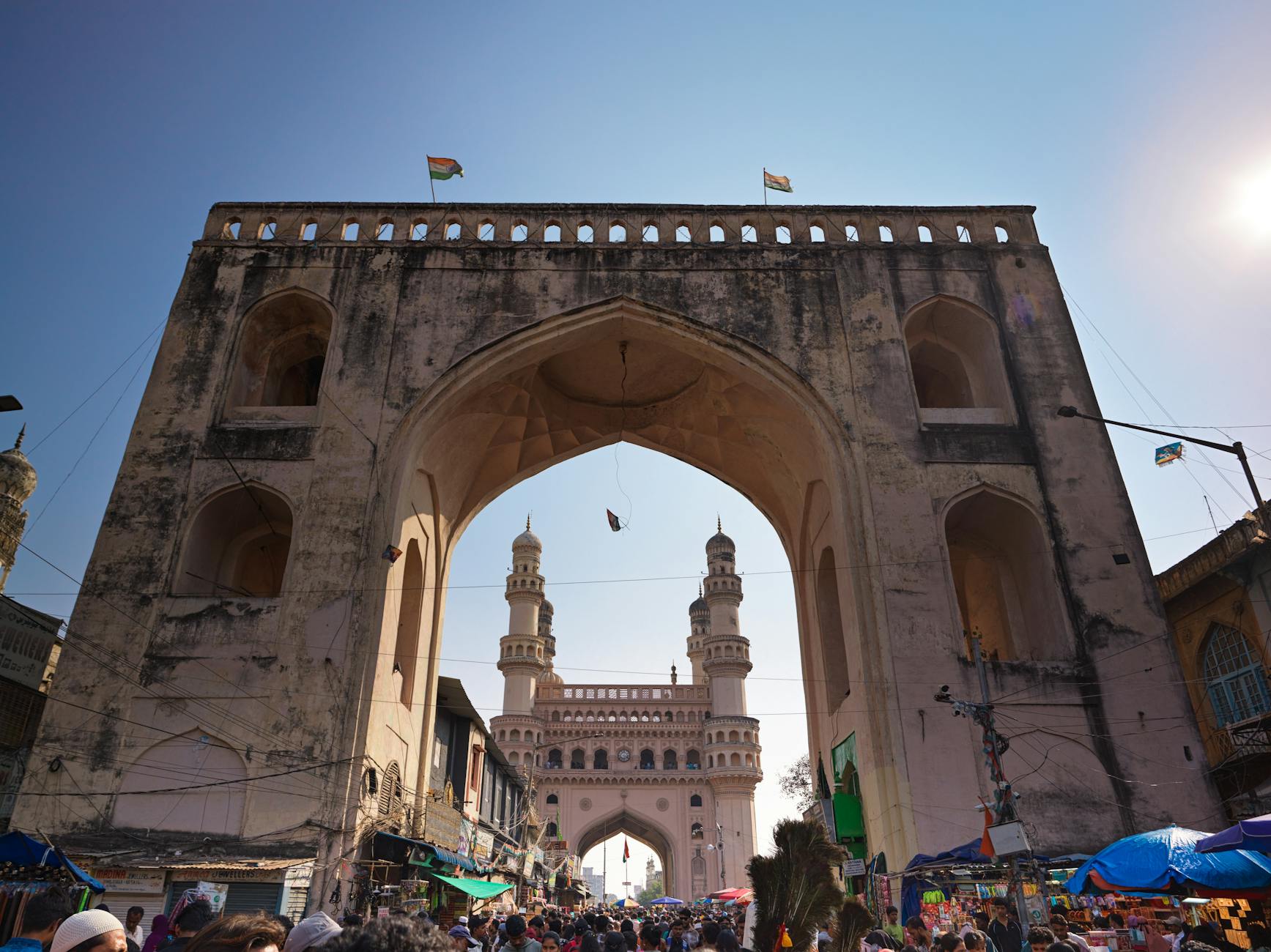
Hyderabad is one of India's clearest examples of a city that only makes sense once you stop forcing it into one identity.
Start Here
People often arrive with a split imagination. One side expects an old Islamic-Deccan city of Charminar, pearls, kebabs, mosque silhouettes, bazaars, and architectural romance. The other side expects a smooth technology-and-business city of glass towers, western hotels, global offices, and practical corporate movement. Both versions are real. Neither is enough by itself. Hyderabad becomes interesting precisely where those versions refuse to merge neatly.
This is why the city rewards honesty more than fantasy. Charminar is not around the corner from your Gachibowli office. Golconda is not a casual add-on to a HITEC City workday. The atmospheric Old City, the Nizam-era residue, the market and food circuits, the upscale central-west districts, and the corporate westward sprawl all sit on different practical maps. A good Hyderabad trip accepts those distances and plans around them.
That matters because the weak Hyderabad stay usually fails in one of two ways. Either it reduces the city to a quick old-city heritage loop followed by generic hotel comfort elsewhere, or it reduces the city to office geography and lets the Deccan historical layer disappear entirely. The stronger trip keeps both in play, but on separate terms. Old Hyderabad needs focus, patience, and a willingness to enter crowd and market density. Newer Hyderabad needs realistic commute logic and clear district discipline. Trying to blend them carelessly produces traffic, fatigue, and mediocre memories.
Hyderabad is also a city where food carries real explanatory power. Biryani is the obvious headline, but the city's deeper food identity comes from the broader Hyderabadi and Deccani mix: haleem in season, kebabs, bakeries, Irani chai, sweets, café rituals, and hotel dining that can range from genuinely excellent to merely overhyped. Like Kolkata, Hyderabad improves when meals are treated as part of the city's structure rather than as reward after sightseeing.
The climate matters too. Heat is not a side issue here. Even if Hyderabad can feel slightly easier than some humid coastal Indian cities, hotter months still punish sloppy route design. Old-city density, fort climbs, and west-side cross-city trips all demand more from the body than the map suggests. A Hyderabad itinerary should always be more edited than an optimistic first draft.
What makes the city unusually strong for first-time visitors is that it offers real historical payoff without being trapped in the past. Charminar, Golconda, and the Qutb Shahi complex still matter, but so do Banjara Hills, Jubilee Hills, Gachibowli, and the office-and-hotel geography that defines a huge part of contemporary Hyderabad. The point is not to choose between them. The point is to understand that their contrast is the city.
The city in one sentence: Hyderabad is a major Indian city where the best first trip comes from separating old-city heritage, Deccan history, and west-side business geography into deliberate days, while using food and district choice to connect them into one coherent stay.
Quick Verdict
Best for: mixed business-and-leisure trips, food travelers, first-time Deccan itineraries, travelers who like cities with both deep historical layers and modern corporate weight, and anyone willing to plan by geography rather than romance.
Not ideal for: travelers who expect one compact heritage district plus easy movement, people who want to improvise across the city in heavy traffic, or visitors who refuse to choose a base around purpose.
Ideal first visit: 3 full days.
Minimum worthwhile stay: 2 nights.
Best overall months: November through February.
Best shoulder-season logic: late October or early March if you can manage some warmth but want more room than peak holiday periods.
Biggest planning mistake: booking a hotel before deciding whether the trip is office-led, food-led, or heritage-led.
One thing to prioritize: geographic grouping.
One thing to leave flexible: outdoor-heavy heritage timing, because weather and stamina should control it.
The blunt version: Hyderabad is one of India's best dual-identity cities, but only if you admit that its best pieces are not casually adjacent.
Who Will Love Hyderabad?
Hyderabad suits travelers who like cities where one layer of history has not erased another. If you enjoy the tension between older dynastic and market worlds and newer office-and-infrastructure worlds, this city offers a lot.
It is especially strong for business travelers who do not want their India experience to collapse into business parks and international hotel interiors. Hyderabad makes it relatively easy to build one or two meaningful cultural or food blocks into a work trip if the base is chosen intelligently.
Food travelers also tend to do well here because the city's culinary identity has enough weight to justify real planning. Hyderabad is one of the places in India where travelers often come expecting one famous dish and leave realizing the city is stronger when approached as a broader eating culture.
History travelers will find plenty to care about, but Hyderabad rewards them most when they treat Charminar, Golconda, and the Qutb Shahi layer as parts of one Deccan argument rather than isolated monuments.
The city is less ideal for travelers who want every day to feel light and seamless. Hyderabad can be generous, but it is not naturally compact.
Hyderabad at a Glance
| Question | Practical Answer |
|---|---|
| Main airport | Rajiv Gandhi International Airport |
| Best first-time mixed-purpose base | Banjara Hills or Jubilee Hills |
| Best first-time business base | Gachibowli / Financial District / HITEC side if meetings dominate |
| Main old-city anchor | Charminar |
| Main fort anchor | Golconda Fort |
| Main tomb-complex anchor | Qutb Shahi Tombs |
| Main city logic | old east/central heritage versus west-side business geography |
| Metro usefulness | real, but partial |
| Main challenge | cross-city time loss |
| Car needed? | not strictly, but frequently helpful |
| Emergency number | 112 |
| Tap water | normal visitor caution applies |
| Currency | Indian rupee |
| Power plugs | Type C, D, and M are common |
2026 Visitor Notes
The Airport Is Modern, But Not Close To Everything You Need
Hyderabad Airport's official passenger guide still emphasizes app cabs, airport car services, and the Pushpak Airport Liner as key arrival tools.[1] That is useful because the airport is efficient, but your onward district may still be a significant ride depending on whether you are heading toward the old city, Banjara Hills, or Gachibowli.
Authorized Transport Still Matters
The airport's official FAQ and airport homepage both explicitly warn travelers to use authorized transport options and note that Ola and Uber availability can be uncertain at certain hours.[2][3] That is exactly the kind of detail that matters after a late arrival.
The Metro Is Helpful, But It Does Not Solve The Whole City
The official Hyderabad Metro route map and customer materials from L&T Metro Rail show a real working network with practical corridors through major parts of the city.[4] It is useful, especially on the right axis, but it does not erase the need to plan hotels around repeated obligations.
Charminar Still Carries The City's Symbolic Weight
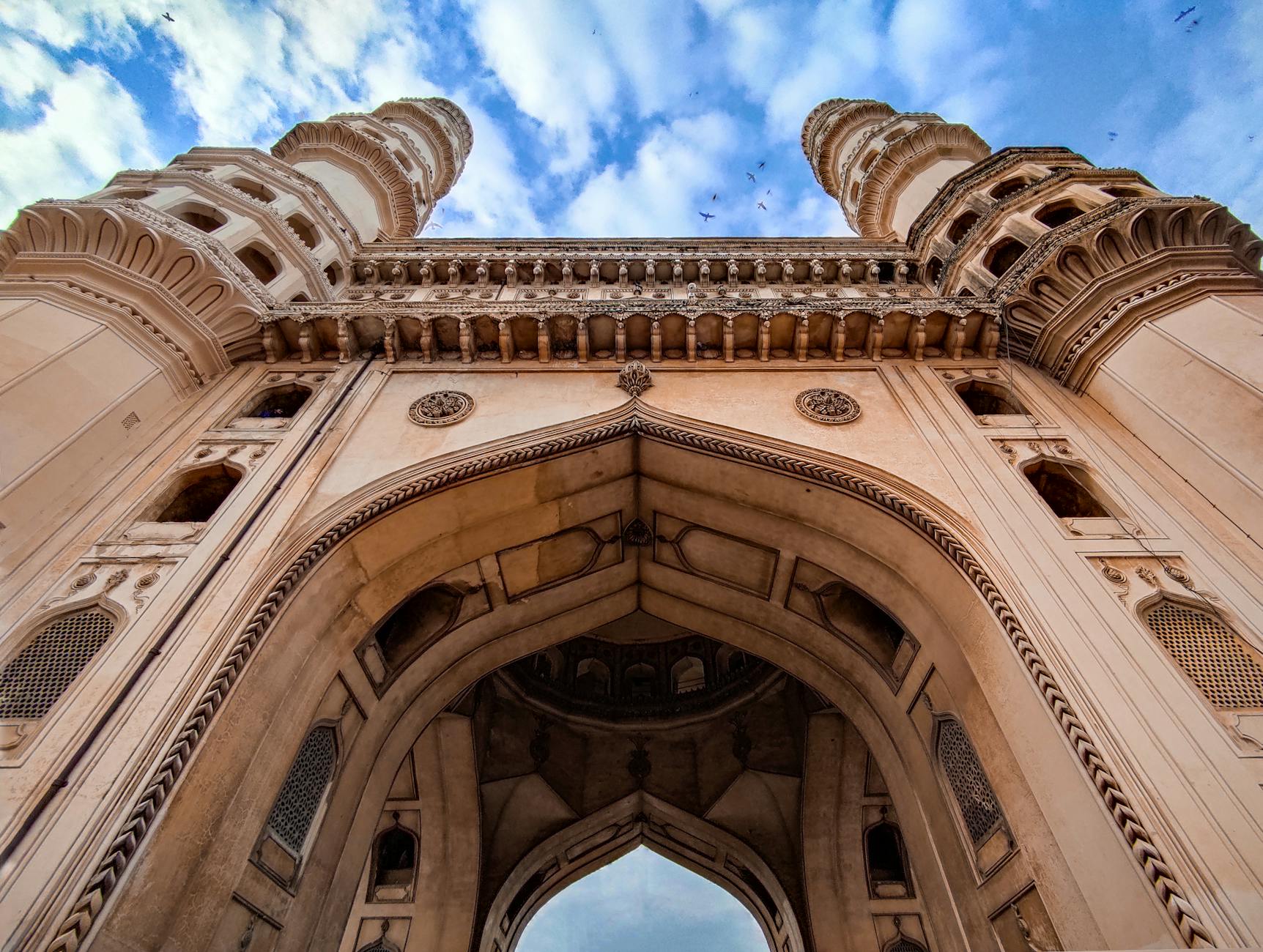
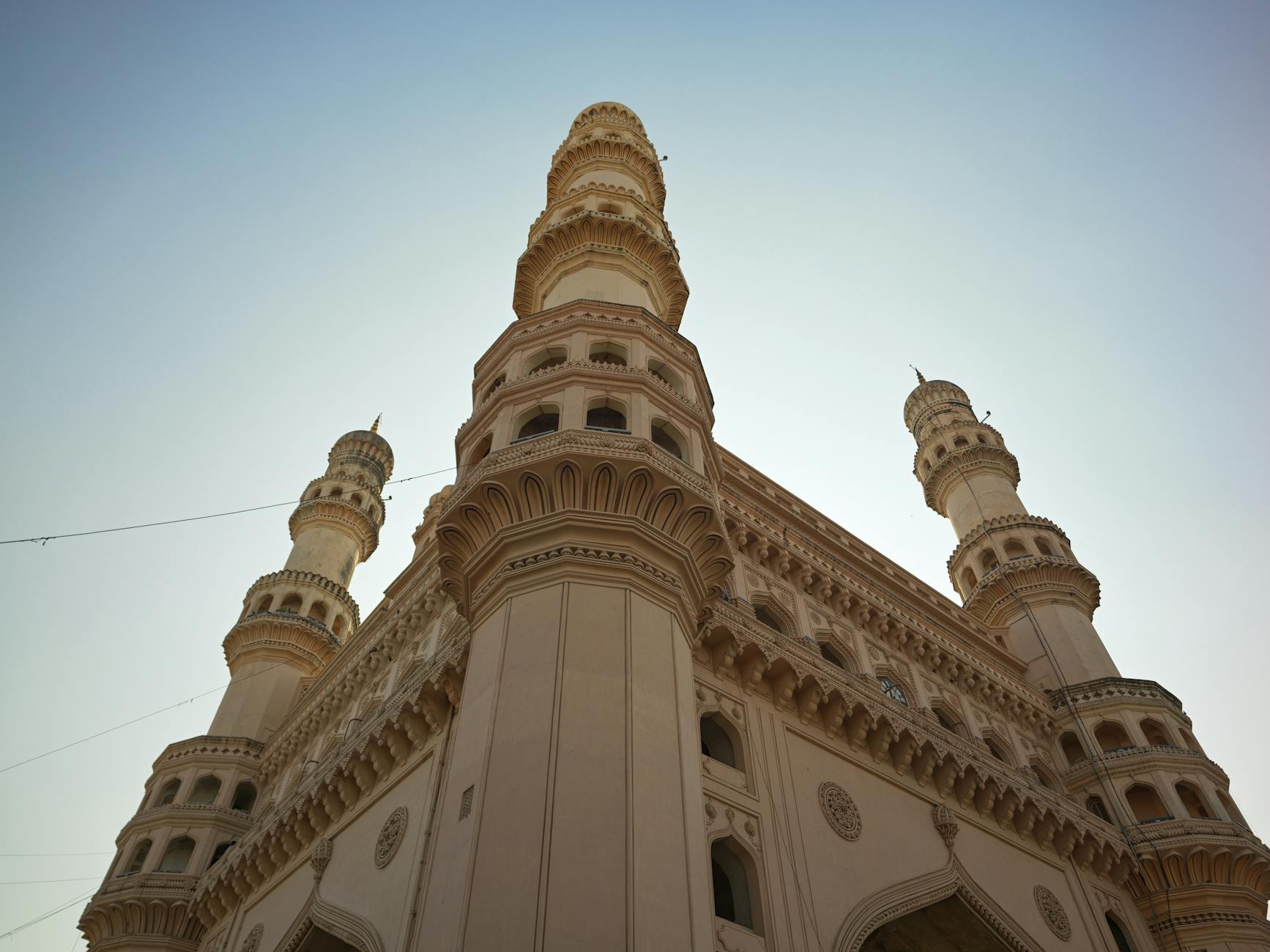
Telangana Tourism's official Charminar page continues to present it not only as a monument but as the symbolic and cultural marker of Hyderabad.[5] That is correct. Even travelers who are not especially monument-driven should understand that this is the city's historical emotional center.
Golconda And Qutb Shahi Sites Should Be Treated As One Heritage Orbit
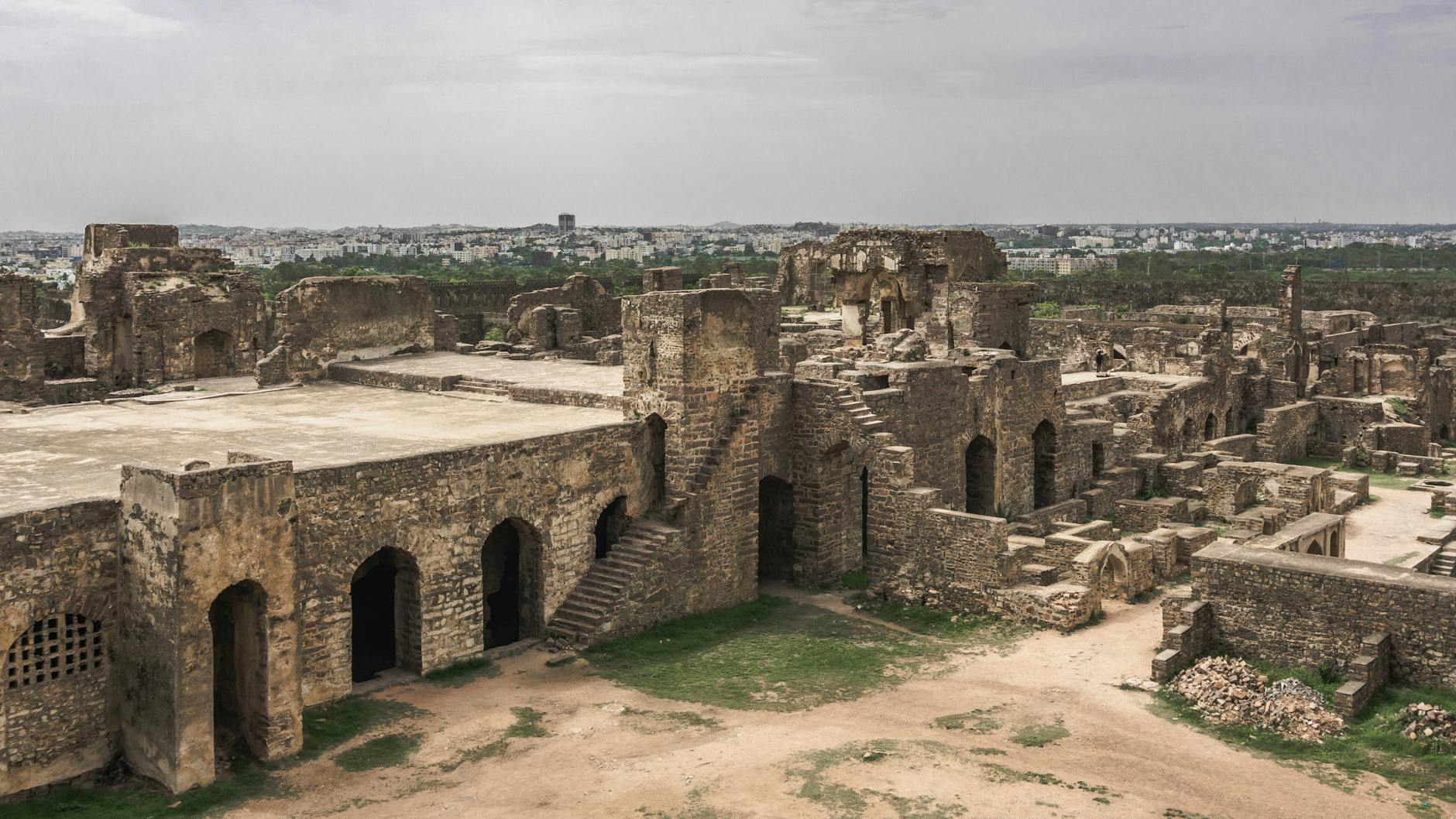
Telangana Tourism's official pages on Golconda Fort and Qutb Shahi Tombs continue to frame them as linked destinations in Hyderabad's historic circuit.[6][7] That is the right way to use them.
The Old City And The Business City Need Separate Time
This is the single most important practical note. The city is better when you let Old Hyderabad remain Old Hyderabad and west-side work Hyderabad remain its own thing.
How to Understand Hyderabad
Hyderabad works through five forces.
The first is Deccan historical weight. This is not a generic north Indian monument city. Its Islamic, Persianate, and Deccani layers matter specifically.
The second is district separation. Charminar, Golconda, Banjara Hills, Jubilee Hills, and HITEC City are not the same trip.
The third is food identity. Hyderabadi cuisine is one of the strongest explanatory tools the city has.
The fourth is business geography. Modern Hyderabad is not background. It is central to how the city now works.
The fifth is route realism. Traffic and heat mean that bad grouping gets punished quickly.
The Five Hyderabads A Visitor Actually Meets
Old City Hyderabad: Charminar, dense markets, mosque and bazaar atmosphere, old food circuits, and crowd-heavy sensory weight.
Fort-and-Tombs Hyderabad: Golconda, Qutb Shahi remains, and the broader historical landscape west of the old core.[6][7]
Central-Upscale Hyderabad: Banjara Hills and Jubilee Hills, where many mixed-purpose visitors actually live the city day to day.
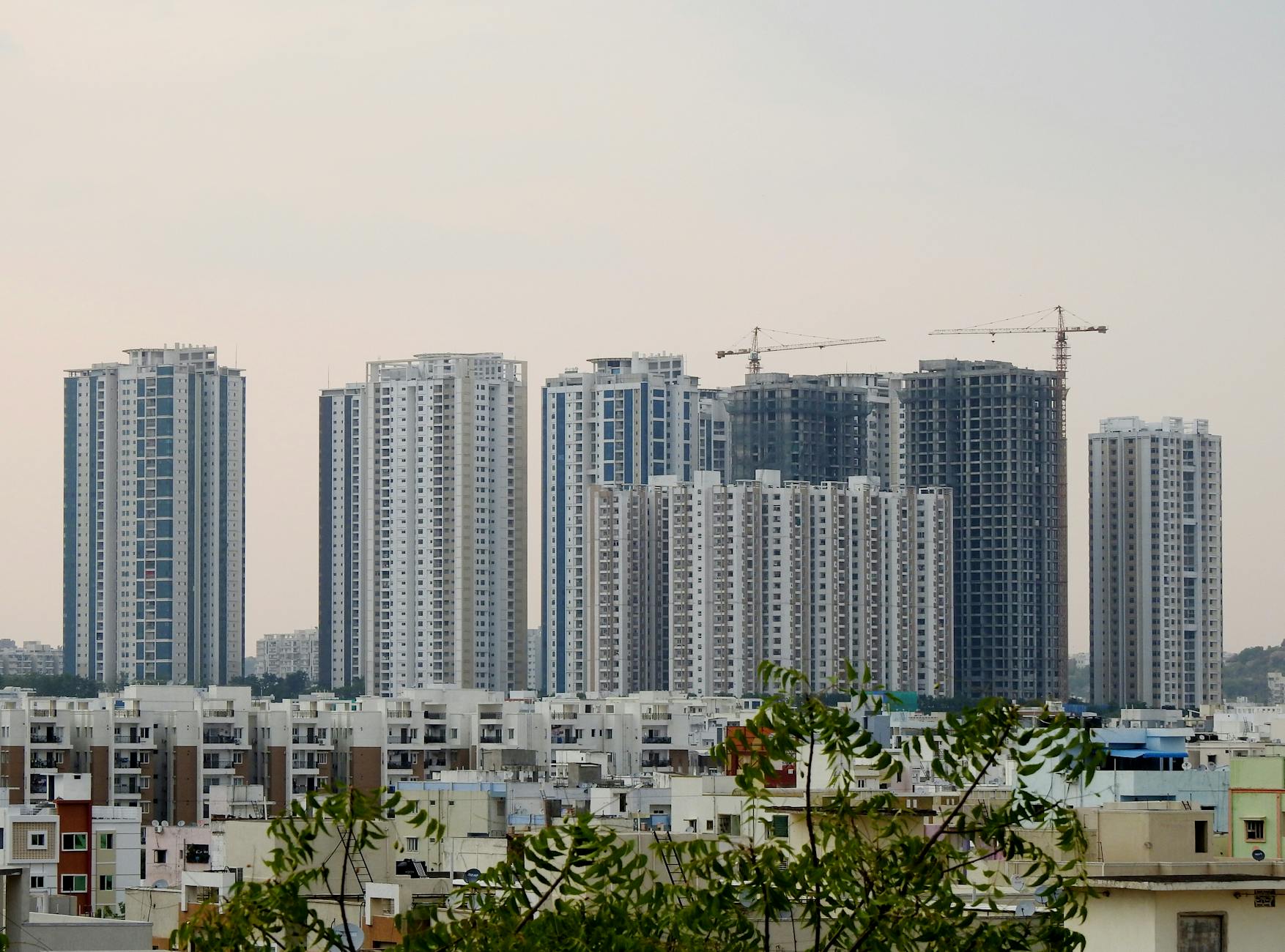
Business Hyderabad: Gachibowli, Financial District, and HITEC, where a huge share of contemporary travel purpose is concentrated.
Food Hyderabad: biryani, chai, bakeries, kebabs, and hotel dining that often explain the city better than brochures do.
The Main Mental Shift
Do not ask, "What are the top things to do in Hyderabad?" Ask, "Which Hyderabad is the point of this trip, and which other Hyderabad must still be honored?" That question leads to better hotels, better routing, and fewer ruined days.
What Hyderabad Does Better Than People Think
Hyderabad is better than people think at holding old and new together without making either fake. Many cities over-brand one side and apologize for the other. Hyderabad genuinely contains both.
It is also better than people think at food depth beyond signature dishes. The city is often reduced to biryani, but its eating life is broader and more layered.
Another underrated strength is business-trip salvage value. A work-heavy stay here can still become culturally interesting with relatively little extra planning if district logic is respected.
The city is stronger than people think at heritage sequencing. Charminar, Golconda, and the tombs form a clearer Deccan narrative than many first-time visitors realize.
Finally, Hyderabad is better than people think at high-low urban contrast. Market density and polished hotel culture coexist here more intelligibly than in many Indian metros.
Where Hyderabad Fits in an India Trip
Hyderabad fits an India trip best as the city that proves historical depth and contemporary business geography do not have to cancel each other out.
Many itineraries still treat Hyderabad as a partial city: either a work stop with some biryani and a glance at Charminar, or a heritage stop briefly slotted between more famous circuits. That underuses it. Hyderabad is stronger when approached as a real large city whose old and new halves both deserve intentional time.
Used properly, Hyderabad works in three especially strong ways.
The first is as a mixed business-and-leisure city. Few major Indian metros are this good at letting a work-heavy stay still produce one or two serious historical or food chapters if the base is chosen intelligently.
The second is as a Deccan heritage city with modern comfort. It offers a distinct historical language from North India and does so without requiring the visitor to live inside only older urban fabric.
The third is as a repeat-India city. Once you no longer need every stop to be either monumental or chaotic in a familiar way, Hyderabad becomes easier to appreciate for how deliberately its layers differ.
What it is not is a city you can understand through one heritage circuit and one famous meal. The split between old and new is the point, not a problem to be solved.
Hyderabad Versus Bengaluru
This comparison matters because both cities often attract mixed-purpose travelers and both can appear on itineraries shaped by work, migration, and newer urban India.
Bengaluru tends to win through livability, greenery in its better pockets, café and food rhythm, and the feeling that the city’s value lies in how well some districts fit daily life. Its pleasures are often distributed and contemporary.
Hyderabad is more historically legible and more sharply divided. The old city, the fort-and-tombs axis, and the west-side business geography create stronger contrasts than Bengaluru usually does. That means Hyderabad can feel more dramatic in structure, but it can also punish weak routing more quickly.
The right question is not which city is better. It is what kind of urban tension you want. If you want a city whose strengths are mostly contemporary and district-based, Bengaluru may fit better. If you want a city where Deccan history and corporate India still press against each other visibly, Hyderabad may be stronger.
First-Time Visitors Versus Repeat Visitors
First-time visitors usually arrive in Hyderabad with too little respect for the city’s internal distances.
They may know the monuments, the food, and the business districts by name, but they often assume they can be combined more casually than reality allows. That leads to overstuffed days, weak meals taken in the wrong district, and the false impression that the city is harder to love than it actually is.
Repeat visitors tend to do better because they stop asking the whole city to cohere every hour. They choose one Hyderabad for the morning and another for the evening. They accept that a work hotel may not belong to a heritage day. They understand which version of the city they want from this particular trip.
This is one reason Hyderabad often improves on a second stay. The first trip is frequently still learning the map. The second begins to use it.
Best Time to Visit Hyderabad
Hyderabad is usable year-round, but comfort changes sharply.
Best Overall Months
November through February are the easiest first-time months. This is when the city's forts, markets, and older districts are most physically manageable.
Winter
Winter is the clear first recommendation. Outdoor heritage time works better, evenings are easier, and even longer car days feel less punishing.
Pre-Summer
March remains workable, but heat discipline becomes more important. Travelers should shorten old-city and fort exposure accordingly.
Hot Season
April and May are difficult for many first-time leisure visitors. Hyderabad can still work, but mostly through shorter heritage windows, better transport, and stronger hotel recovery.
Monsoon
Rain can soften the city aesthetically, but it also complicates movement and reduces the pleasure of certain outdoor historical blocks.
Cooler-Season Hyderabad Versus Hot-Season Hyderabad
Cooler months are not merely more comfortable; they make the city more legible. Charminar, Golconda, and the Qutb Shahi sites ask for outdoor patience, and that patience is easier to maintain when the weather is not stripping it away. The food city also works better when the body has not been exhausted by every transfer.
Hot-season Hyderabad can still be worthwhile, but it demands shorter heritage windows, stronger hotels, more transport discipline, and a willingness to let some plans go soft. This is not a city where heat simply makes you sweat more. It changes the value of the route itself.
How Many Days You Need
One Night
Enough for a necessary business stop or transit, not enough for a meaningful first impression.
Two Nights
The minimum good version if one day is used cleanly for either heritage or work plus one cultural/food block.
Three Nights
Ideal for most first-time visitors. This allows one old-city day, one fort-and-tombs or food-and-neighborhood day, and some margin around business or airport logistics.
Four Days Or More
Useful if the trip mixes work and leisure, or if you want to explore food and history without compressing everything.
The Real Question
The real question is not how many nights Hyderabad “deserves” in the abstract. It is whether you are giving the city enough time for at least two different Hyderabads to appear clearly. If all you do is office geography or one old-city burst, the answer is no. If you also let the city’s food, fort, or central-west rhythm count, the answer improves quickly.
Where to Stay in Hyderabad
Hotel choice here is strategy, not decoration.
Fast Answer
For most mixed-purpose or leisure-first visitors, stay in Banjara Hills or Jubilee Hills. If your trip is driven by repeated meetings in Gachibowli, Financial District, or HITEC City, stay there instead. Do not stay near the old city unless your trip is unusually heritage-specific and you are comfortable with the tradeoffs.
Neighborhood Decision Table
| Traveler Type | Best Area |
|---|---|
| First-time mixed-purpose traveler | Banjara Hills / Jubilee Hills |
| Business traveler with west-side meetings | Gachibowli / Financial District / HITEC side |
| Food-and-city traveler | Banjara Hills / Jubilee Hills with selective old-city routing |
| Heritage-heavy traveler | central-west base plus dedicated old-city days |
| Airport-heavy short stay | airport-side or purpose-specific, depending on next-day obligations |
Banjara Hills / Jubilee Hills
Best for: most first-time travelers who want comfort without abandoning city character. Why it works: it balances hotel quality, dining, and access to multiple Hyderabads. Tradeoff: still not close to everything; traffic remains real. Best use: the strongest default mixed-purpose base.
Gachibowli / Financial District / HITEC Side
Best for: business-led stays and work-heavy itineraries. Why it works: it prevents the commute from eating the whole trip. Tradeoff: this is not the emotional Hyderabad many visitors imagine. Best use: office geography first.
Old City Proximity
Best for: highly specific heritage-focused travelers who know what they are doing. Why it works: it minimizes one kind of cultural distance. Tradeoff: it usually weakens comfort and practical balance for broader stays. Best use: specialist rather than general recommendation.
Why The Base Matters More Than Visitors Expect
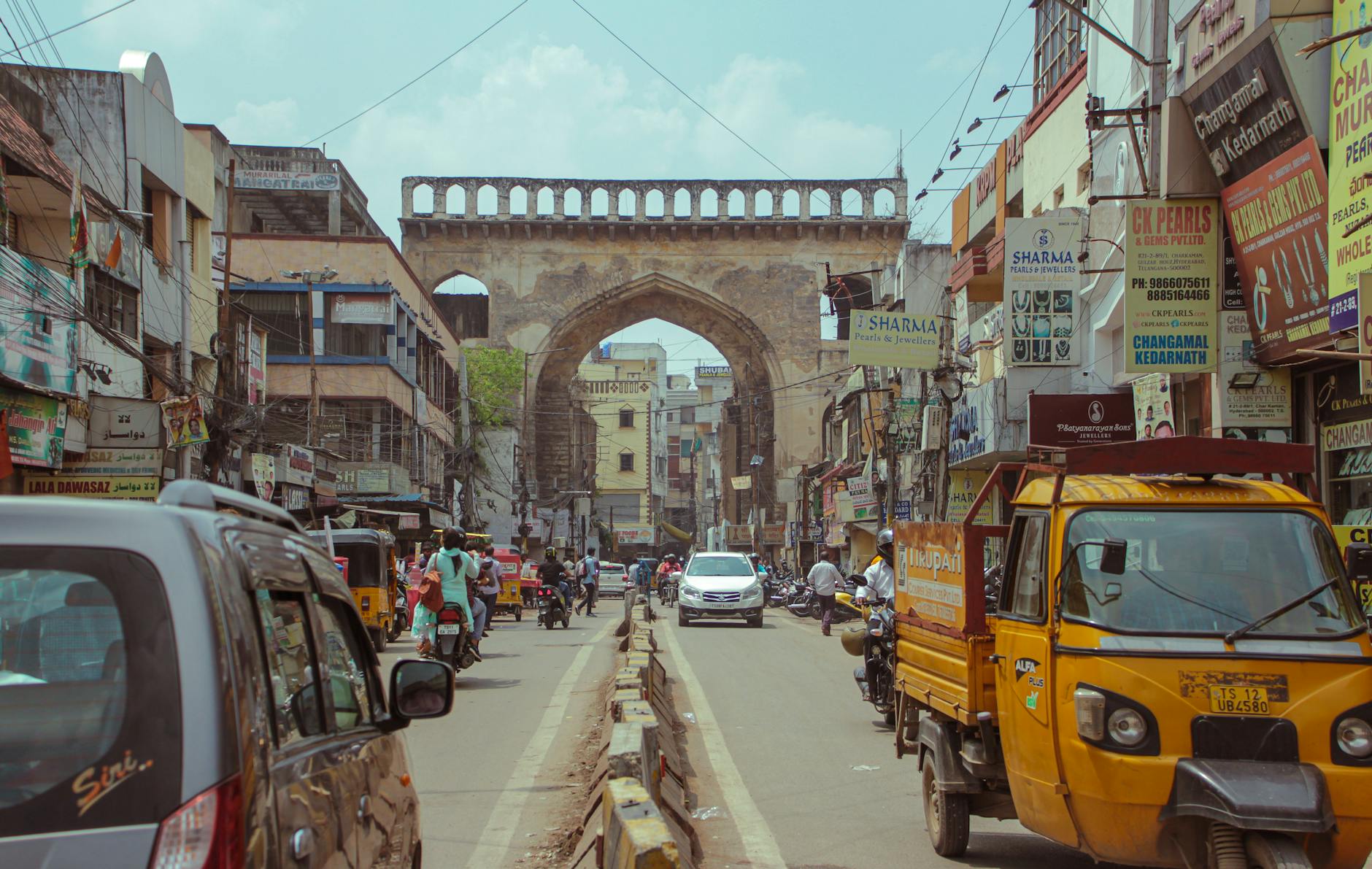
Hyderabad is one of those cities where the hotel decision is not just a comfort decision. It is a routing decision, an energy decision, and often the thing that determines whether the trip feels coherent at all.
A west-side business base can be exactly right for repeated meetings and exactly wrong for a heritage-led first impression. A Banjara or Jubilee Hills base can make mixed trips much easier because it prevents either side of the city from monopolizing the whole stay. An old-city-adjacent base may sound romantic on paper but can create unnecessary friction if the trip needs broader movement.
This is why Hyderabad rewards honesty more than romance. The best base is the one that matches the trip’s actual shape.
Area Profiles
Old City: best for Charminar, markets, and dense historical atmosphere.
Golconda/Qutb belt: best for fort-and-dynasty history.
Banjara/Jubilee: best for first-time mixed-use comfort.
Gachibowli/HITEC: best for work and corporate geography.
Why One Proper City Day Matters
Some travelers reduce Hyderabad to a heritage block plus one good dinner and then wonder why the city never cohered.
Hyderabad usually needs one proper city day that belongs mainly to the city itself rather than only to obligation. That means one carefully grouped old-city or fort chapter, one food chapter that supports the route, and enough room to feel how the city’s old and new halves differ. Without that day, Hyderabad can feel like disconnected assignments. With it, the city becomes structurally interesting.
Neighborhood Guide: Where to Explore, Not Just Sleep
The Old City should be treated as a focused district experience, not a casual background drive. Charminar, Laad Bazaar, and the surrounding market density make sense when entered with purpose.[5]
Golconda and the Qutb Shahi complex should usually be paired or at least mentally grouped together. They tell a more coherent story together than apart, and Telangana Tourism explicitly markets them as a linked circuit.[6][7]
Banjara Hills and Jubilee Hills are not "tourist" in the conventional sense, but they are often where travelers actually enjoy living the city: better hotels, restaurants, and some breathing room.
Gachibowli and HITEC matter because modern Hyderabad is not just a footnote. If you have meetings there, treat that geography with respect. A well-located work hotel can save more of the trip than a grander hotel in the wrong district.

Day Hyderabad Versus Evening Hyderabad
Daytime Hyderabad is where the city’s geography can feel most punishing. Traffic, heat, long cross-city hops, and the sheer difference between old and new districts all become operational facts. This is when poor planning does the most damage.
Evening Hyderabad often feels more forgiving. Food takes over more of the logic. Distances may still be real, but the emotional pressure changes. A good dinner or café chapter in the right district can make the city feel composed rather than merely spread out. This is one reason weak Hyderabad trips are often all logistics and no evening life. They understand the city’s functions but never let it become socially legible.
The Best Things to Do in Hyderabad
- Build one real Old City block around Charminar and its surrounding market atmosphere.[5]
- Pair Golconda with the Qutb Shahi layer instead of treating each as isolated checklist heritage.[6][7]
- Use food seriously: biryani, chai, and at least one strong local meal beyond the most famous name.
- Stay where your repeated obligation actually is.
- Keep old-city and west-side business geography on separate days whenever possible.
- Let at least one evening be about the city rather than only recovery.
Why Charminar Needs The Rest Of The City
Charminar is powerful enough to dominate a short stay if you let it. That is understandable. But without the rest of Hyderabad, the monument risks becoming a symbolic image disconnected from the larger city that gives it context.
The food circuits, the fort-and-tombs axis, and the central-west hotel districts all help restore scale. They remind you that Charminar is part of a city with multiple modern and historical centers rather than a solitary emotional object. That broader frame makes the monument stronger, not weaker.
Itineraries
If You Have One Full Day
Choose one spine. Either do a focused Old City and food day, or do Golconda plus one more selective city block. Do not try to force Charminar, Golconda, HITEC City, and a long dinner into the same day.
If You Have Two Full Days
Use one day for Charminar and Old Hyderabad, and one for Golconda/Qutb or for a business plus food-and-neighborhood mix depending on the trip.
If You Have Three Full Days
This is the best first-time pattern. One old-city day, one fort-and-tombs day, and one mixed or slower day anchored by food, shopping, or the city side closest to your actual hotel life.
Itineraries By Energy Level
High-energy first trip: one full old-city block, one full fort-and-tombs block, and one more food or central-west day. This only works if you accept that cross-city efficiency has limits.
Balanced first trip: one major heritage chapter per day, a better base, and food used as structure rather than as a detached trophy hunt. This is the strongest first-time pattern for most travelers.
Business-heavy trip: protect one old-city or fort chapter properly instead of scattering heritage into fragments around meetings. Hyderabad rewards concentration.
Itineraries By Traveler Type
Heritage-first traveler: Old City, Charminar, Golconda, and Qutb Shahi sequencing.
Business traveler: stay west if meetings are west, then carve out one serious heritage block instead of several weak fragments.
Food-first traveler: central-west base, one selective Old City window, and district-aware meal planning across the stay.
Mixed first-time visitor: Banjara/Jubilee base with one old-city day and one fort/history day.
Why Hyderabad Often Works Better Than It Sounds
If you describe Hyderabad lazily, it can sound like an awkward compromise: one old city, one tech city, long distances, traffic, biryani, and a few famous monuments. None of that automatically sounds graceful. That is exactly why the city is easy to underestimate.
In practice, Hyderabad works through contrast. Old Hyderabad sharpens modern Hyderabad. Business Hyderabad makes the older city feel more specific. Food ties the whole place together. The right hotel and route keep the city from becoming merely fragmented.
That is why Hyderabad can feel much stronger than its summary. It is not trying to become one coherent visual identity. It is trying to make multiple identities live together.
Food and Drink
Hyderabad is one of the Indian cities where meals can justify the trip on their own, but only if approached with a little structure. Biryani matters, yes, but so do chai, kebabs, haleem in season, bakeries, sweets, and the distinction between high-comfort hotel dining and more intense older-city eating.
The key is not to chase every famous place. Match the meal to the district, the time of day, and your tolerance for crowds and movement. Hyderabad rewards appetite, but it punishes random routing.
Why Food Is Structural, Not Decorative
In Hyderabad, food is not just reward after sightseeing or meetings. It is one of the main ways the city becomes legible.
A biryani lunch in the wrong district at the wrong hour can ruin the route. A well-placed chai or café stop can rescue the afternoon. An evening meal in the right part of town can make modern Hyderabad feel alive instead of generic. This is why food planning here should follow geography rather than internet ranking lists alone.
Getting Around
Hyderabad is manageable, but only when treated honestly.
The airport is modern and well served by authorized cab and bus options, including the Pushpak Airport Liner.[1][3] The metro is useful on the routes it serves, but cars remain the practical answer for many mixed-purpose travelers.[4]
Use the metro where it clearly improves the route. Use cars where they save strain. Most importantly, group the city geographically rather than emotionally.
Why Hyderabad Often Improves On The Second Visit
On a first visit, many travelers are still negotiating the city’s split identity. They are deciding whether it is mainly about heritage, mainly about business, mainly about food, or simply too spread out to cohere. That uncertainty weakens the trip.
On a second visit, the city often becomes much easier. You already know which district you want as a base. You understand what kind of day Charminar asks for. You know when not to force Golconda. You can let one Hyderabad dominate the trip without feeling that the others have been betrayed.
This is one reason Hyderabad often wears better than travelers expect. Its value tends to increase once the map is internalized.
What To Skip
Skip trying to combine Old City density and west-side office life casually in the same day.
Skip choosing HITEC-side hotels for a heritage-first trip unless there is a compelling reason.
Skip reducing Hyderabad to biryani and Charminar.
Skip underestimating heat at Golconda or in market districts.
How Hyderabad Changes Over The Course Of A Stay
On arrival, Hyderabad can seem almost too divided to read clearly. The airport feels far, the west side can feel corporate, and the old city may still be only a name on the plan. Some travelers mistake this for incoherence.
By the second day, if the trip is grouped properly, the city begins to separate into more meaningful parts. Old Hyderabad becomes an actual spatial and historical experience. The fort-and-tombs circuit begins to explain the Deccan frame. The central-west hotel districts start to feel like a useful base rather than a betrayal of the “real” city.
By the third day, Hyderabad often becomes more persuasive precisely because it no longer needs to unify itself completely. You understand that the split is the point. That is when the city starts to feel intentional rather than awkward.
Why Traffic Changes The Meaning Of The Trip
In some cities, traffic is an annoyance layered on top of an otherwise stable route. In Hyderabad, traffic often changes the meaning of the route itself. A plan that looks generous on a static map can become exhausting once each transfer begins to consume real patience, hydration, and appetite.
This is why Hyderabad punishes decorative itineraries. If an attraction, lunch, meeting, and evening plan all live on different mental maps, the day starts serving the car rather than the city. A stronger trip keeps movement purposeful and lets longer transfers buy something substantial on the other end.
Why Old And New Hyderabad Need Different Kinds Of Time
Old Hyderabad asks for immersion time. You cannot understand Charminar and the surrounding market logic through a hurried in-and-out stop, because density is part of the point. The value comes from letting the atmosphere accumulate.
Newer Hyderabad asks for functional time. Banjara Hills, Jubilee Hills, and Gachibowli are not usually about surrendering to one great historic scene. They are about using comfort, meals, meetings, cafés, and evening rhythm intelligently. Treating both halves of the city as if they need the same pace usually weakens both.
Common Mistakes
The first mistake is hotel mismatch.
The second is treating traffic as a detail instead of a structural part of the city.
The third is under-planning the old city.
The fourth is seeing the business city and the heritage city as unrelated instead of as two halves of the same modern Hyderabad.
The fifth is trying to do too much in one long, cross-city day.
The sixth is letting famous food names override route quality.
My Blunt Advice
If this is your first Hyderabad trip, decide whether the city is mainly about work, heritage, or food, and let that determine the base. Then deliberately give time to one of the other sides so the trip does not flatten.
Hyderabad is not elegant when planned lazily. It is excellent when planned geographically. Respect the split between old and new, and the city becomes far more rewarding than the sum of its famous monuments and corporate towers.
Source Notes
- 1. Hyderabad Airport, official passenger guide page: [https://betaone.hyderabad.aero/passenger-guide.aspx](https://betaone.hyderabad.aero/passenger-guide.aspx)
- 2. Hyderabad Airport, official FAQ page: [https://hailprod4.hyderabad.aero/travellers/faqs](https://hailprod4.hyderabad.aero/travellers/faqs)
- 3. Hyderabad Airport, official homepage: [https://betaone.hyderabad.aero/](https://betaone.hyderabad.aero/)
- 4. L&T Metro Rail Hyderabad, official route map page: [https://www.ltmetro.in/media/45686/lt-metro-routemap-27th-july-2021.pdf](https://www.ltmetro.in/media/45686/lt-metro-routemap-27th-july-2021.pdf)
- 5. Telangana Tourism, official Charminar page: [https://www.tourism.telangana.gov.in/attractions/charminar](https://www.tourism.telangana.gov.in/attractions/charminar)
- 6. Telangana Tourism, official Golconda Fort page: [https://www.tourism.telangana.gov.in/attractions/golconda-fort](https://www.tourism.telangana.gov.in/attractions/golconda-fort)
- 7. Telangana Tourism, official Qutb Shahi Tombs page: [https://www.tourism.telangana.gov.in/attractions/qutub-shahi-tombs](https://www.tourism.telangana.gov.in/attractions/qutub-shahi-tombs)