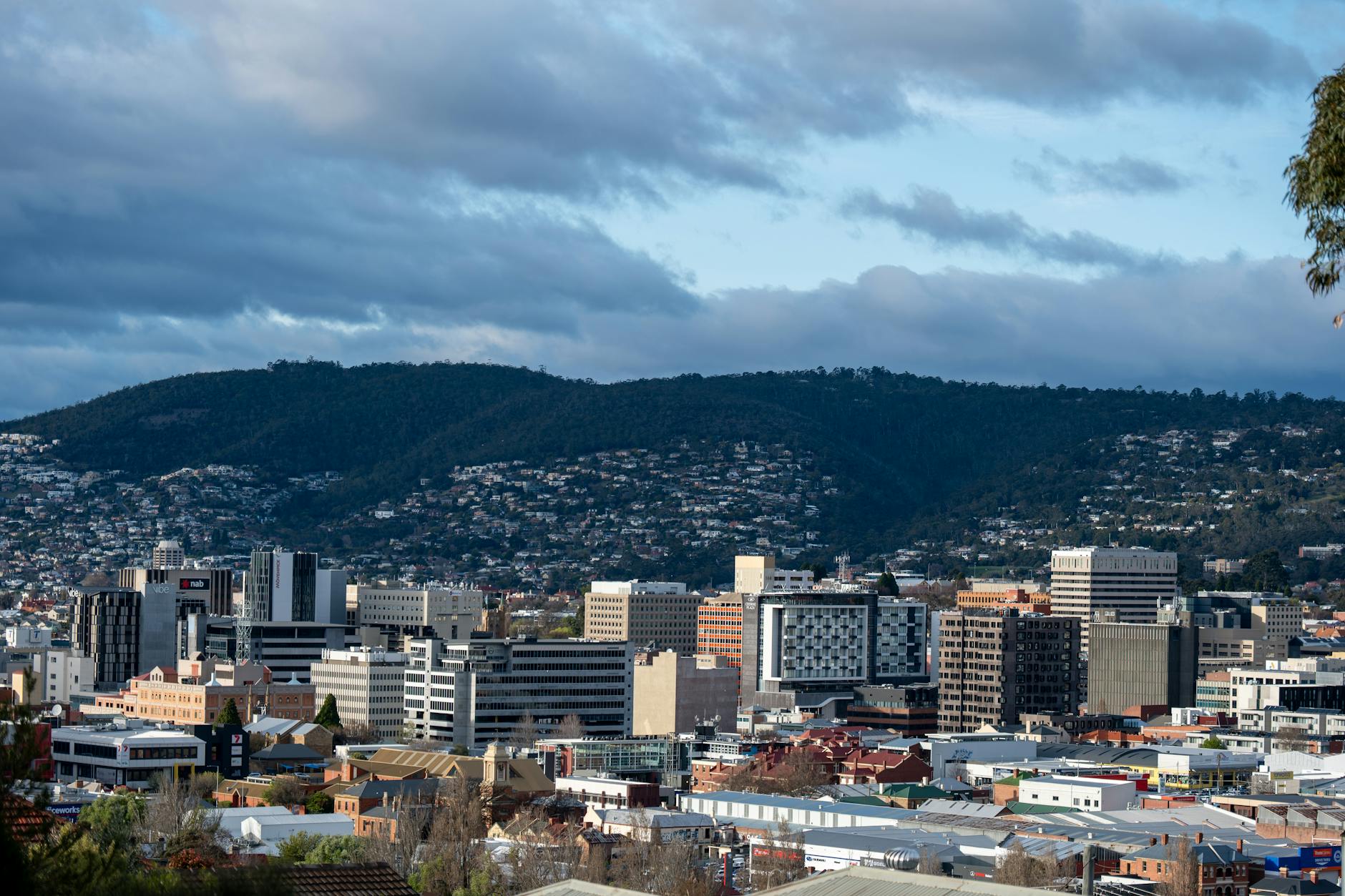
Hobart gets flattened by two bad kinds of praise. The first is that it is charming. The second is that it is convenient. Both are true, and both are inadequate. Charm makes the city sound decorative. Convenience makes it sound like a stopover. Hobart deserves more seriousness than that.
Start Here
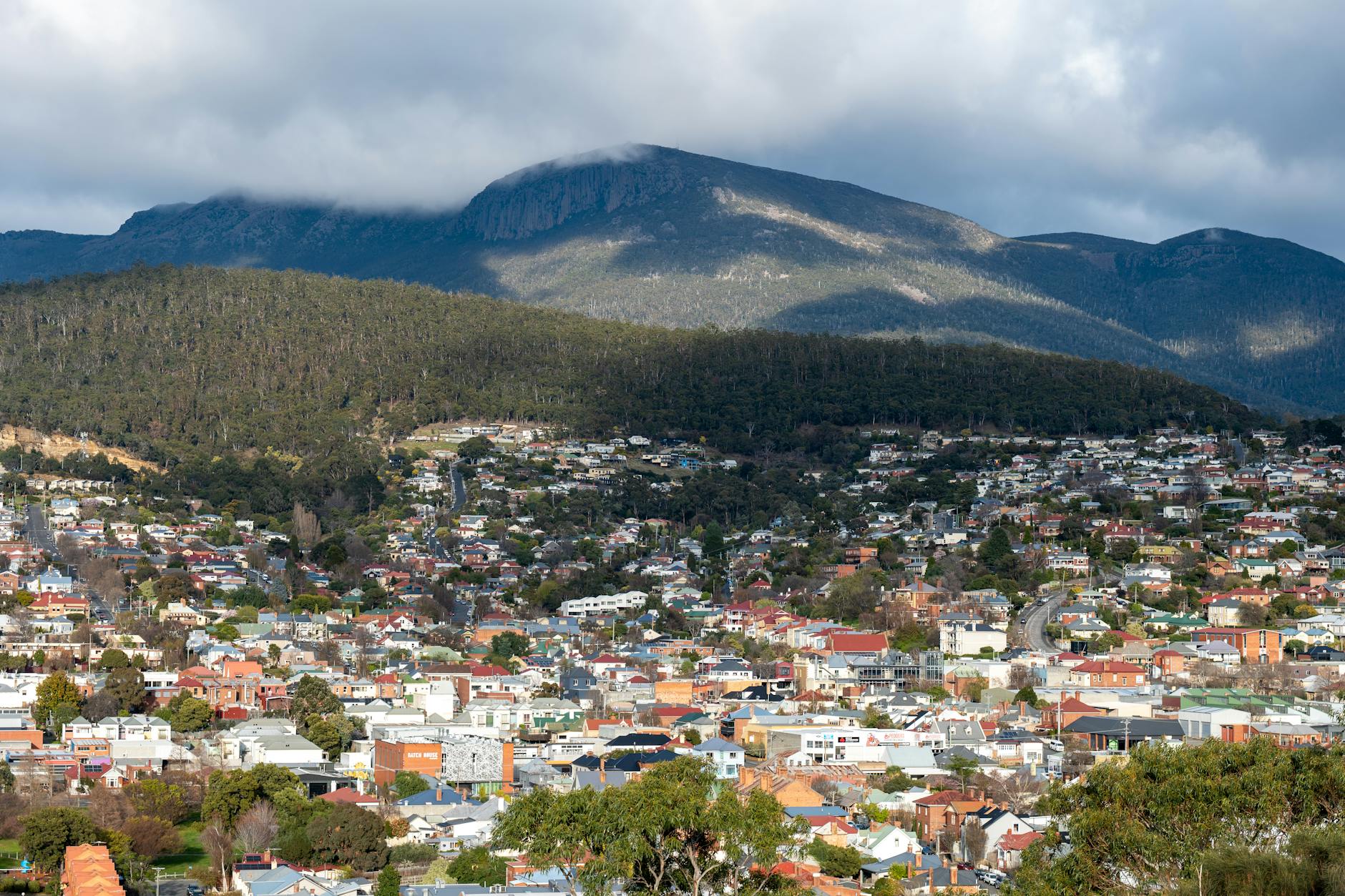
This is a harbor city under a mountain, but that phrase is still too neat. Hobart is really a city of weather fronts, old sandstone, working water, long lunches, convict history, dark winter culture, polished hotel rooms, rough sea light, and Tasmania’s agricultural wealth moving quietly into restaurants, bars, bakeries, and cellar doors. It can feel intimate without being small-minded, beautiful without being glossy, and regional without being sleepy.
The first mistake is to use Hobart as a postcard. Salamanca, Battery Point, boats, stone warehouses, a mountain silhouette, done. The second mistake is to use it as a sleeping base for elsewhere: Bruny Island tomorrow, Port Arthur the next day, winery detour after that, maybe Mona if there is time. Both approaches leave the city under-read.
Hobart is best when treated as a real stay. It needs enough time for weather to change, for a meal to run long, for the waterfront to feel different in morning and late afternoon, for the mountain to appear and disappear, for Battery Point to read as history rather than as stage dressing, and for at least one day to be shaped around art, food, and harbor rhythm instead of pure itinerary efficiency.
It is not a city that rewards frantic checklist travel. It rewards composition. A strong room. The right district. A realistic relationship to wind and rain. A sense of when to walk, when to drive, when to take the ferry to Mona, when to stay by the fire, when to give the mountain a clear-weather slot, and when to stop assuming every good Tasmanian experience has to happen outside the city.
The city in one sentence: Hobart is a cold-water harbor city with unusually high atmospheric return, where the best trip comes from respecting weather, food, history, and the city's scale instead of treating it as quaint scenery between day trips.
Basic data
| Population | About 250,000 in Greater Hobart |
|---|---|
| Area | 1,695 km2 in the local government and surrounding urban region |
| Major religions | Christianity, Buddhism, Hinduism, and a large secular population |
| Political system | State capital city inside a federal parliamentary constitutional monarchy |
| Economic system | High-income mixed economy led by services, tourism, government, culture, and regional trade |
Quick Verdict
Best for: couples, food travelers, long weekends, art-and-history travelers, cool-climate city breaks, winter escapes for people who like mood rather than sun, Tasmania first-timers, and anyone who prefers texture over sheer urban scale.
Not ideal for: travelers who want nonstop metropolitan energy, luxury shoppers looking for a major retail city, people who need warm-weather urban confidence every day, or anyone who thinks small city automatically means no planning is required.
Ideal first visit: 3 full days.
Minimum worthwhile stay: 2 full days, if one of them is mostly in the city itself and not handed away immediately to a tour.
Best overall months: March, April, November, and the stronger shoulder-season parts of summer.
Best winter case: June through August if you actively want cold-air atmosphere, dark-season culture, and richer indoor food-and-bar time.
Biggest planning mistake: assuming Hobart is so small and simple that hotel choice, weather timing, and district logic barely matter.
One thing to prioritize: the right base, especially for a short stay.
One thing to leave flexible: mountain timing. Trying to force kunanyi / Mount Wellington in bad weather is one of the cleanest ways to waste some of Hobart’s value.
The blunt version: Hobart is one of Australia’s highest-return short city stays if you use it well, and one of its easiest cities to underrate if you do not.
Who Will Love Hobart?
Hobart suits travelers who enjoy cities where mood matters as much as monument count. It is very good for people who like old ports, compact walking districts, serious food, maritime light, and the sense that the landscape still has authority over the city. It is very good for couples who want a weekend with strong meals, bars, weather, and one or two deeply atmospheric excursions rather than a parade of obvious big-ticket attractions.
It is also an excellent first Tasmanian city because it introduces many of the island’s central themes at once: cool-climate produce, layered colonial history, Aboriginal history that should not be treated as an afterthought, offshore and harbor identity, old industrial edges reworked into contemporary culture, and a regional confidence that does not need to mimic mainland Australia.
Hobart works for food travelers because the raw material around it is so strong. It works for museum and gallery travelers because Mona genuinely matters and because the city’s older institutions and historic sites can be threaded into a stay without exhausting transit. It works for history travelers because the convict-era and maritime layers are still legible in the streetscape. It works for travelers who want a city break that can also become the elegant front end of a larger Tasmania trip.
It is less ideal for the traveler who expects every city to perform extroversion. Hobart can be social, but it is not loud by default. It is not trying to outscale Sydney, outstyle Melbourne, or out-sun the Gold Coast. It is more inward, more weathered, more culinary, and more dependent on the traveler understanding what kind of city they are actually in.
Hobart at a Glance
| Question | Practical Answer |
|---|---|
| Main airport | Hobart Airport (HBA) |
| Distance from city | About 17 km from central Hobart |
| Fastest simple airport move | SkyBus Hobart Express or taxi/rideshare, depending on party size and timing |
| Average airport shuttle time | Around 30 minutes in normal conditions |
| Best first-time base | Waterfront / Salamanca / CBD edge |
| Best food-and-bar base | Salamanca / waterfront, North Hobart, or a well-placed city hotel with easy access to both |
| Best scenic base | Waterfront or Battery Point edge if budget allows |
| Car needed? | Not for Hobart itself; often useful if your trip is really southern Tasmania by car |
| Public transport operator | Metro Tasmania |
| Current public transport note | Metro services across Tasmania are currently fare-free until June 2027 |
| Best way to understand the city | Walking plus selective taxis/rideshares and one or two deliberate transport moves |
| Major weekly market | Salamanca Market on Saturdays |
| Signature major museum excursion | Mona |
| Emergency number | 000 |
| Tap water | Safe to drink |
| Currency | Australian dollar |
| Power plugs | Type I |
2026 Visitor Notes
Airport Access Is Straightforward, But Not Abstractly "Urban"
Hobart Airport is not attached to the city by a suburban rail system. The simplest public transfer for many visitors is the Hobart Express service run by SkyBus, which serves several central stops and averages roughly 30 minutes under normal conditions.[1] It is easy when your hotel fits the route. It becomes less elegant when your lodging is just far enough off the route to create a final awkward move with bags in bad weather.
Metro Is Useful, But Hobart Is Not A Rail City
Public transport in and around Hobart is bus-based. Metro Tasmania currently operates fare-free public bus travel across the state through June 2027, which is genuinely useful,[2] but visitors should still think pragmatically. Fare-free is not the same thing as perfect route design for every visitor need. For some trips, especially in rain or with uphill terrain, a taxi or rideshare remains the saner call.
Salamanca Market Is A Real Weekly Event, Not Background Decoration
Salamanca Market runs each Saturday along Salamanca Place and changes the shape, feel, and crowding of the district.[3] That can be a plus or a minus depending on your temperament. Some travelers should build around it; others should route around it.
Mona Requires Deliberate Planning
Mona is not the kind of museum you should leave to tired, leftover time. It is open Thursday to Monday and bookings are recommended.[4] The ferry is the best arrival.[5] A weak Mona day usually happens when someone tries to sandwich it between too many other plans or arrives without the right mental space.
The Mountain Is Weather-Led, Not Wish-Led
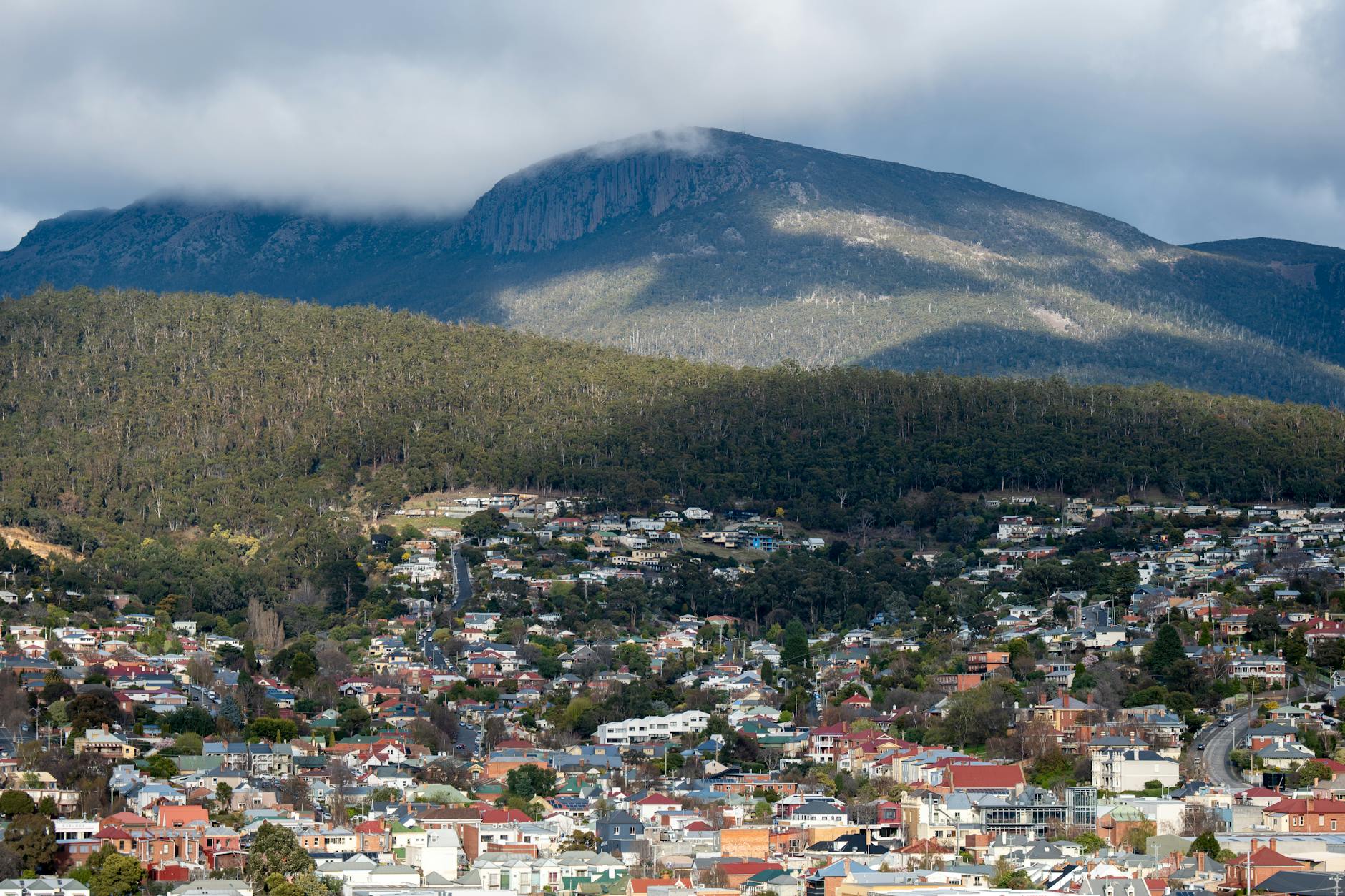
Kunanyi / Mount Wellington can define a Hobart trip, but the mountain does not care what your schedule says. Weather can change abruptly, and the Pinnacle road can close in snow or ice. Treat the mountain as a live decision.
Hobart Is Walkable, But Only In The Correct Sense
The CBD, waterfront, Salamanca, and Battery Point are very walkable as a connected first-time district. That does not mean every Hobart movement is pleasant on foot. Hills, cold wind, damp days, and the distance between some outer-interest areas can turn optimistic walking plans into drag.
The City Can Fill Fast In Event Periods
Dark-season cultural windows, long weekends, and strong summer tourism periods can tighten the hotel market quickly. Hobart is not a city where you should always count on a great last-minute room in the district you actually want.
How to Understand Hobart
Hobart works through five forces.
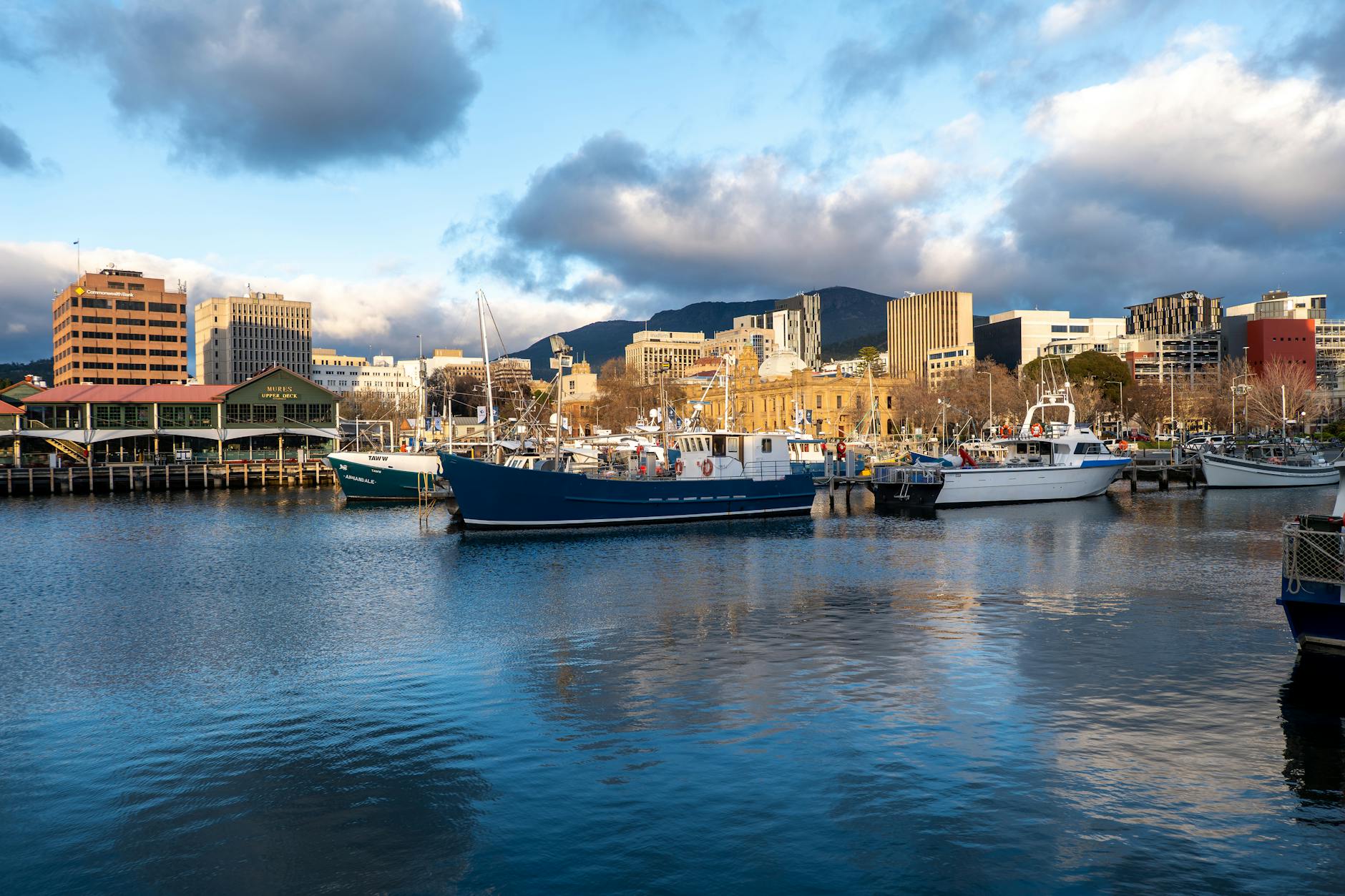
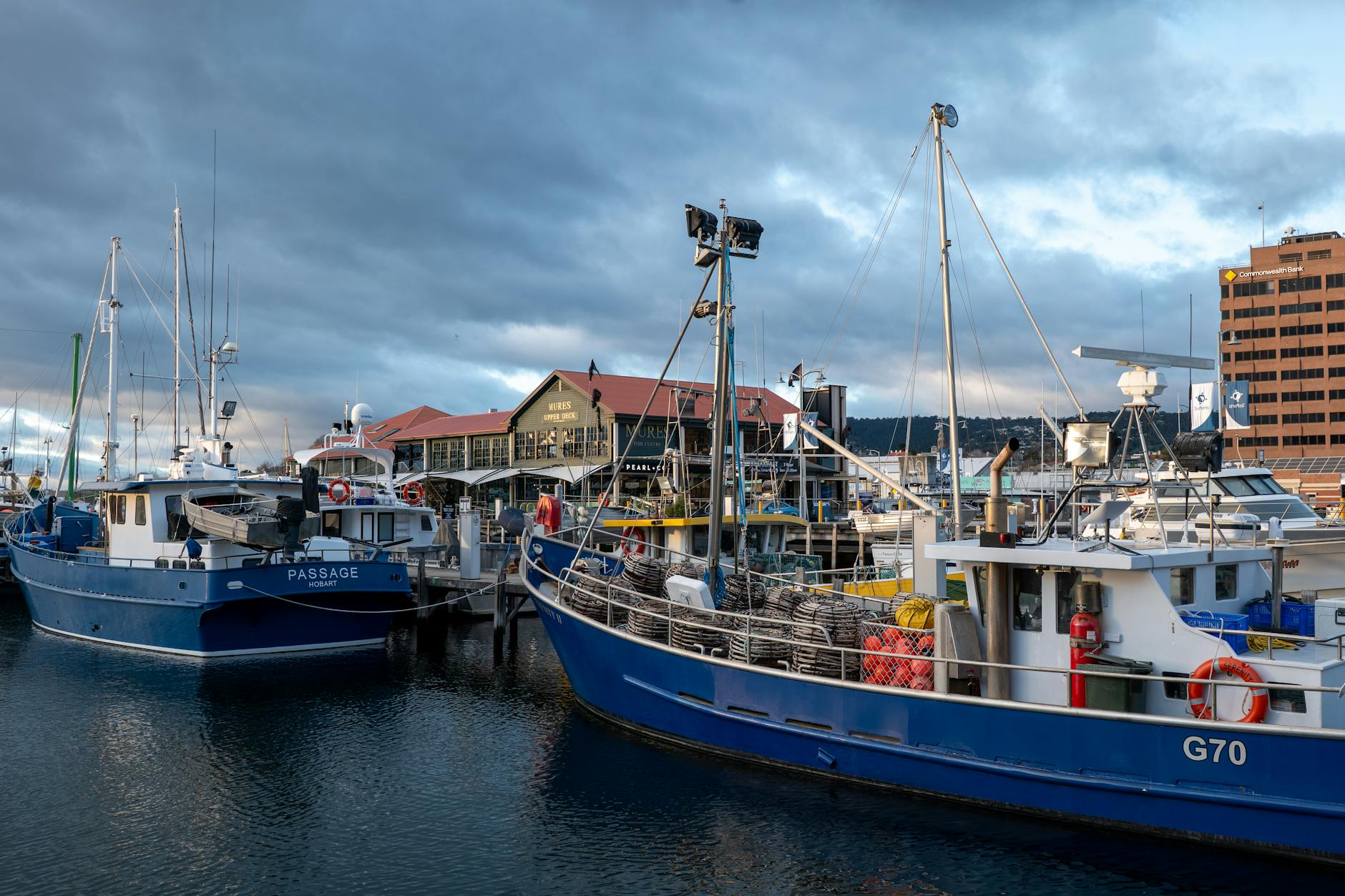
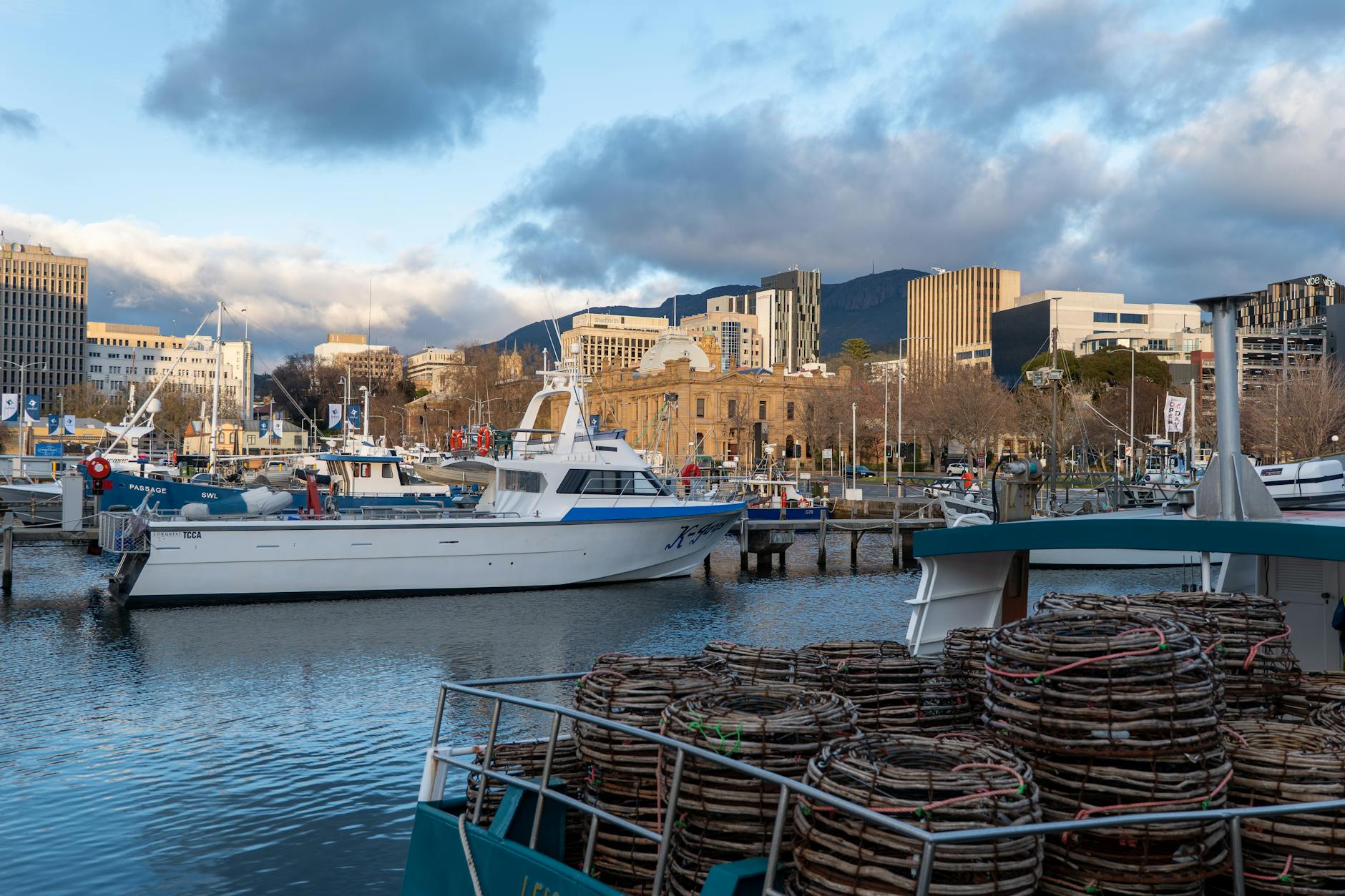
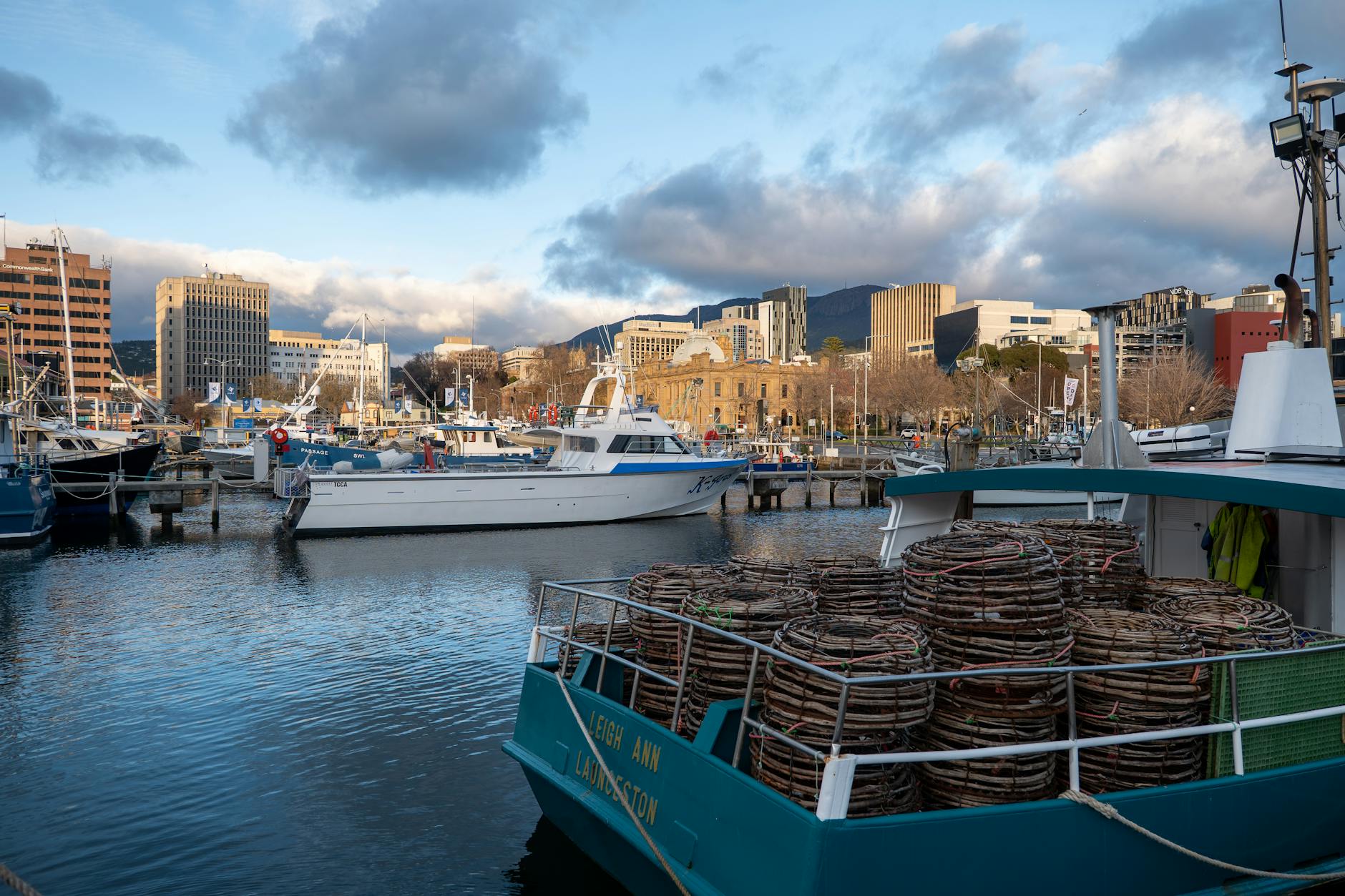
The first is the harbor. The waterfront is not just scenic frontage; it is part of the city’s operating identity. You feel the city through wharves, ferries, fishing context, weather, maritime views, and the shape of Sullivan’s Cove.
The second is the mountain. Kunanyi / Mount Wellington is not optional scenery. It changes light, weather, and scale. It is why the city feels held rather than merely spread.
The third is the colonial and convict layer. Hobart’s old buildings, wharf zones, and historic sites are not superficial heritage styling. They are the visible surface of harder, more complex histories that should be read with more seriousness than “cute old town” language allows.
The fourth is the Tasmania factor. Hobart is both a city and the front room of a larger island story. Food, wine, whisky, cool-climate produce, regional day trips, and southern wilderness all pull on it. The city’s strength comes partly from how well it concentrates access to those things.
The fifth is weather. Hobart is not difficult because it is huge. It is difficult because wind, cold, rain, and sudden shifts matter. That means your route quality, hotel quality, and timing quality matter more than in a soft-weather city where you can improvise badly and still get away with it.
The Four Hobarts A Visitor Actually Meets
Waterfront Hobart: docks, ferry movement, harbor air, seafood, hotels, bars, and the image most first-time visitors arrive with.
Historic Hobart: Salamanca Place, Battery Point, older streets, sandstone, maritime and colonial residue, and much of the city’s easiest atmospheric return.
Cultural Hobart: Mona, TMAG, galleries, museums, the Female Factory, festivals, and the city’s habit of punching above its size in art and ideas.
Local Hobart: North Hobart, South Hobart, neighborhood cafés, pubs, bakeries, suburban slopes, and the version of the city that feels inhabited rather than only admired.
The Main Mental Shift
Do not ask, “How do I cover Hobart quickly?” Ask, “What gives Hobart its atmosphere, and how do I stay inside that atmosphere rather than constantly leaving it?” That is the right question.
What Hobart Does Better Than People Think
Hobart is unusually good at high-density atmosphere. The city gives you more mood per square kilometer than many larger Australian cities. A waterfront hotel, one cold morning, one serious breakfast, one long museum day, one walk through Battery Point, and one dinner in bad weather can create a stronger sense of place than a much busier weekend elsewhere.
It is also better than many travelers expect at small-scale urban variety. Within a short radius you can move between wharves, museum infrastructure, historic terrace streets, hill views, bakery culture, serious restaurants, bars, and old-public-building gravitas without feeling as though the city is trying too hard to entertain you.
Hobart also excels at seasonal honesty. In some cities bad weather feels like a failure. In Hobart it often feels like part of the text. Wind, drizzle, cold light, and low cloud can make the city stronger, not weaker, as long as your clothing and routing are not foolish.
Another underrated strength is food concentration. Hobart benefits from access to Tasmanian produce and from a city scale that makes it easier to build a food-focused weekend without wasting energy crossing vast distances. A traveler can actually have a coherent culinary trip here rather than a purely aspirational one.
Finally, Hobart is good at being a base without losing itself. Many small capitals disappear behind their regional excursions. Hobart can hold its identity even when you use it as the front end to southern Tasmania, because the city itself still has enough weight.
Best Time to Visit Hobart
Hobart is a year-round city, but not a season-neutral city. The tone of the trip changes meaningfully.
Best Overall Months
March, April, and November are excellent first-visit windows. You often get enough daylight and relative weather stability for walking and scenic use, but without the full compression of peak-summer demand.
Summer
Summer is the easiest sell. Longer days, stronger market and waterfront energy, and better conditions for touring wider Tasmania all help. The risk is not that summer is bad; it is that travelers assume the city therefore requires no planning. Good hotels book, event periods crowd the center, and the city can feel more expensive and thinner if you arrive casually.
Autumn
Autumn is one of Hobart’s best seasons. Cooler air sharpens the city, food feels right, walking works well, and the harbor often looks excellent. For many travelers, this is the smartest balance between atmosphere and ease.
Winter
Winter is for people who actively want Hobart to be Hobart. Dark Mofo season, cold air, coats, bars, long dinners, firelight, and an increased appetite for museums and serious indoor time all make sense here. If you hate wind and damp, winter is not your season. If you like moody southern-port texture, it may be the best.
Spring
Spring can be lovely but remains volatile. This is a good season for travelers who accept that some days will feel almost generous and others will remind them they are still in southern Tasmania.
Month-by-Month Guidance
December: lively, summery, stronger for first-timers doing broader Tasmania. January: holiday energy, good long days, expensive and busy. February: still strong for summer travelers, often easier than January. March: one of the best all-round months. April: excellent for food, walking, atmosphere, and city use. May: cooling down, often good for a lower-key city break. June: winter mood arrives; ideal for the right kind of traveler. July: dark-season Hobart at full strength for people who want that. August: still wintery, but culturally rewarding if your expectations are aligned. September: transitional, variable, can be excellent or stubbornly cold. October: increasingly workable, but still weather-alert. November: one of the smartest shoulder-season choices.
How Many Days You Need
One Day
Enough to see the waterfront, Salamanca, Battery Point, and perhaps one museum. Not enough to understand the city properly.
Two Days
The minimum respectable stay. One day should be city-led. The other can be Mona, the mountain, or a local-history-and-food day.
Three Days
Ideal for a first visit. This gives Hobart enough room to be more than a market-and-view town and lets one day remain weather-adaptive.
Four To Five Days
Very good if Hobart is the beginning of a southern Tasmania trip or if you want one or two day trips without hollowing out the city itself.
One Week
Excellent if you want to combine Hobart with Bruny, Port Arthur, Richmond, the Huon Valley, or other southern loops while still having a real city break.
Where to Stay in Hobart
For a short first trip, base choice matters a lot. Hobart is compact enough that a good location can make everything feel elegant. It is also awkward enough that the wrong location can make the city feel colder, hillier, and more inconvenient than it really is.
Fast Answer
For first-timers, stay near the waterfront, Salamanca, or the CBD edge closest to those precincts. Choose Battery Point if charm and atmosphere matter and you are comfortable with a more boutique-residential feel. Choose North Hobart if food matters more than harbor views. Choose Sandy Bay only if you know why you want it.
Neighborhood Decision Table
| Traveler Type | Best Area |
|---|---|
| First-time visitor | Waterfront / Salamanca / CBD edge |
| Couple weekend | Salamanca, Battery Point, or a strong waterfront hotel |
| Food-led trip | North Hobart with easy city access, or central Hobart with planned meals |
| History-and-atmosphere trip | Battery Point or Salamanca side |
| Family | CBD edge, waterfront, or apartment-style lodging with easy car access |
| Car-heavy Tasmania trip | CBD fringe or practical parking-friendly location, as long as you still have city access |
| Without a car | Waterfront / Salamanca / CBD edge |
Waterfront and Salamanca
Best for: first-timers, couples, scenic stays, short breaks, and anyone who wants Hobart to feel immediately like Hobart. Why it works: wharf views, easy access to Salamanca Place, Battery Point, bars, harbor movement, and the city’s strongest atmosphere. Tradeoff: higher prices, event pressure, and some weekend crowding. Best use: the classic first-time Hobart stay.
Battery Point
Best for: atmosphere, heritage streets, romantic weekends, travelers who care more about feel than pure efficiency. Why it works: one of the city’s most character-rich precincts, with easy walking access to Salamanca and the waterfront. Tradeoff: not every property here is equally practical for luggage, mobility, or wet weather. Best use: travelers who want Hobart to feel intimate and historic.
CBD Edge
Best for: practicality, value, bus access, mixed city routing. Why it works: easier on budget, still close to the key first-time districts, more functional for broader logistics. Tradeoff: less atmospheric than staying right on the harbor or near Salamanca. Best use: travelers who want competence first and atmosphere second.
North Hobart
Best for: dining, local life, less tourist-heavy evenings. Why it works: one of the better food corridors and a more lived-in read on the city. Tradeoff: not the ideal first-time scenic base if you want harbor-at-the-door energy. Best use: repeat visitors, food travelers, and travelers with a car.
Sandy Bay
Best for: specific hotel choices, residential calm, some university and water access logic. Why it works: can be comfortable and attractive in the right property. Tradeoff: easier to misread as a good generic base than it is to use brilliantly as a first-timer. Best use: longer stays or travelers with a specific property in mind.
Area Profiles
Salamanca Place
This is one of the city’s signature zones for a reason. Sandstone warehouses, bars, restaurants, market energy, and direct connection to the harbor make it high-return. It can lean touristy, but that does not cancel its value.
Battery Point
Battery Point is the city’s atmospheric overachiever: old cottages, pubs, sea-adjacent history, and one of the clearest “you are in Hobart, not just any harbor city” feelings in town. Use it on foot, slowly.
Sullivan’s Cove and the Waterfront
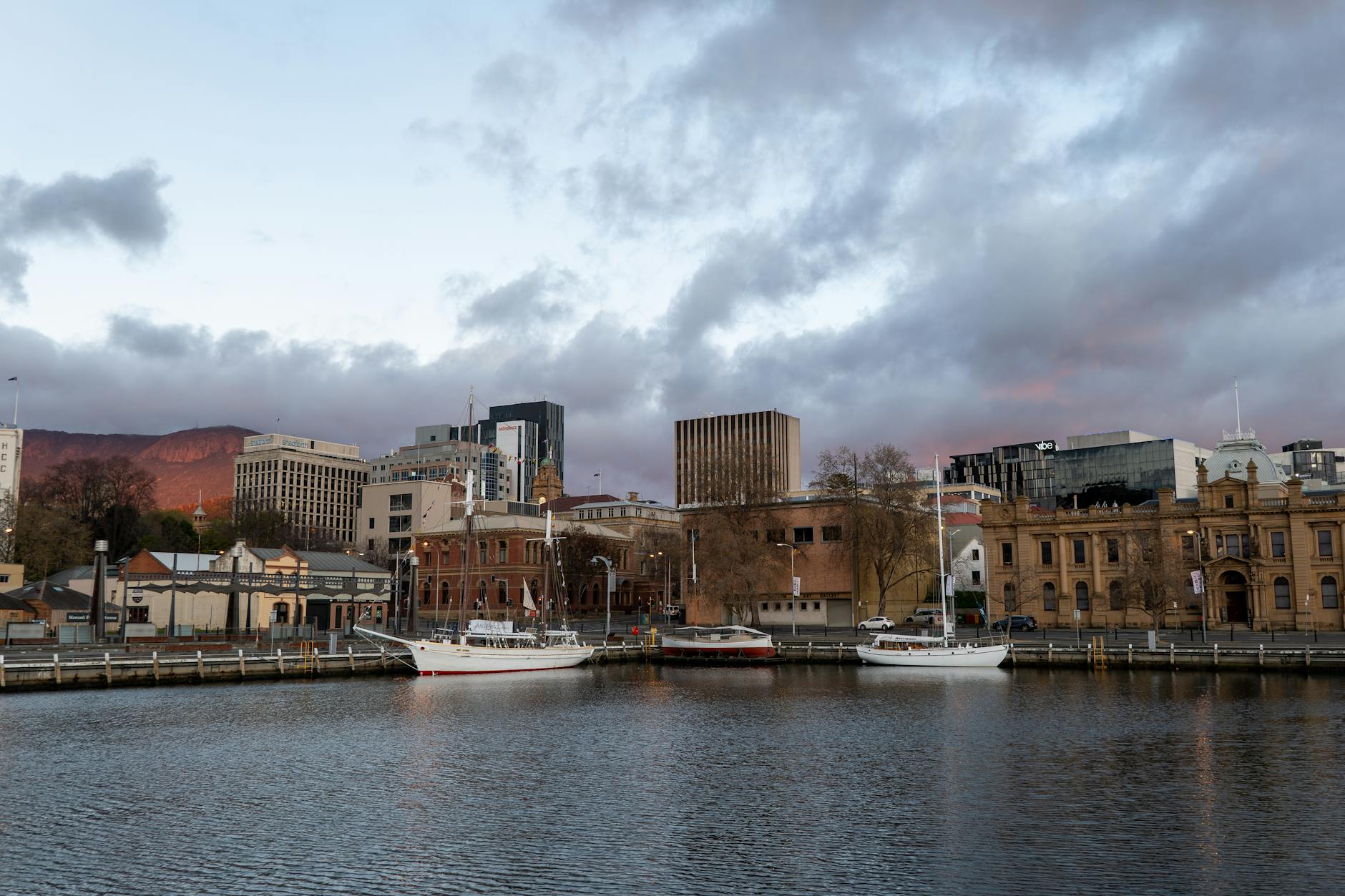
The civic-port front room of Hobart. Ferries, harbor movement, museums nearby, and enough visual authority to justify central lodging.
North Hobart
Less scenic than the waterfront, more useful for certain kinds of evenings. Good for food and a more local city texture.
South Hobart
Interesting if you want to connect the city more directly to kunanyi, the Cascades side, and a slightly more residential edge. Better as part of a wider Hobart read than as the automatic first-time base.
Neighborhood Guide: Where to Explore, Not Just Sleep
Salamanca and The Wharf
Do not just photograph it and leave. This area is worth using at multiple times of day, especially morning after weather, late afternoon light, and evening when the bars and restaurants take over from day visitors.
Battery Point
Walk it without rushing. Hobart’s historic atmosphere improves when you stop turning every old street into a five-minute transfer route.
TMAG and The Historic Core
The Tasmanian Museum and Art Gallery area, older civic buildings, and the harbor edge are a good way to understand the city’s institutional and maritime layers together.
North Hobart
Worth a deliberate food or bar session rather than a random pass-through. Better for dinner than for daytime sightseeing.
South Hobart and Cascades Side
Useful if you want to connect history, greener urban edges, and the mountain relationship.
Brooke Street Pier and Ferry Logic
Not just a departure point. This whole part of the harbor helps explain how the city sees itself now: contemporary, maritime, visitor-facing, but still genuinely working.
The Best Things to Do in Hobart
1. Take The Mona Ferry
This is one of the smartest museum arrivals in Australia. The ferry does orientation work and mood work at the same time.
2. Give Mona Real Time
Mona should be a major block, not a rushed add-on. The museum is strong enough to shape a day on its own.
3. Walk Salamanca and Battery Point Properly
This is the city’s historic-atmospheric core, and it deserves more than quick-content treatment.
4. Build One Day Around Harbor Rhythm
Coffee, waterfront walking, museum time, lunch, weather check, another harbor pass, then dinner. Hobart is excellent at this structure.
5. Go Up Kunanyi / Mount Wellington In The Right Conditions
Done at the right time, this explains the city. Done in stubbornly bad weather, it becomes a waste.
6. Visit The Cascades Female Factory
One of the most important places for anyone who wants Tasmania’s convict history in a fuller, less male-centered frame.
7. Spend A Serious Evening Eating And Drinking
Hobart is too food-rich for throwaway dinners. This city earns good reservations.
8. Use TMAG As More Than A Rain Backup
It is not just “the museum you do if the weather goes wrong.” It is part of the city’s intellectual structure.
9. Walk The Waterfront In Cold Air
Hobart often gets better when it is a little uncomfortable.
10. Do One View, One History, And One Food Day
That three-part structure usually gives first-timers the best read.
11. Let The Market Be A Choice, Not An Obligation
Salamanca Market is important, but not every traveler needs it to be the centerpiece of the trip.
12. Stay Long Enough For One Loose Afternoon
Hobart rewards drift more than many Australian cities.
Itineraries
One Excellent Day In Hobart
Start at the waterfront, move through Salamanca and Battery Point, have a serious lunch, visit TMAG or a historic site depending on weather, then finish with harbor light and dinner.
Two Days
Day 1: Waterfront, Salamanca, Battery Point, and one museum or history block. Day 2: Mona, or kunanyi plus a slower city evening if conditions are excellent.
Three Days
Day 1: Historic Hobart and harbor rhythm. Day 2: Mona with no apology. Day 3: Mountain or Female Factory plus North Hobart or South Hobart food logic.
Four To Five Days
Add one southern Tasmania day trip, but keep at least three meaningful city blocks inside Hobart itself.
One Week
Use Hobart as anchor city plus Bruny Island, Port Arthur / Tasman Peninsula, or the Huon Valley, but keep the city weighted enough that it still feels like part of the trip rather than just accommodation.
Itineraries By Traveler Type
First-Timer
Stay near the harbor. Give one day to the city core, one to Mona, and one to either weather-led scenery or deeper history.
Couple Weekend
Good hotel, one slow breakfast, one strong lunch, one long dinner, one museum day, and one walk in weather that feels genuinely southern.
Food Traveler
North Hobart, Salamanca, specialty bakeries, bars, and one or two produce-forward meals planned in advance.
History Traveler
Battery Point, TMAG, Cascades Female Factory, the older waterfront, and time spent reading the city’s built form rather than just its views.
Tasmania Road-Trip Starter
Use Hobart for arrival, reset, one full city day, one key excursion, then branch outward.
Food and Drink
Hobart is one of those cities where product quality changes the whole dining experience. The produce is strong, the seafood context is real, the cool-climate wine and spirits logic matters, and the city is small enough that one good meal can significantly shape your memory of the stay.
What To Prioritize
Prioritize places that feel grounded in Tasmania rather than simply scenic. Prioritize lunches and dinners that respect the season. Prioritize one or two strong reservations over a scattergun approach.
Best Food Zones
Salamanca / Waterfront: easy for visitors, atmospheric, but uneven. Choose carefully. North Hobart: stronger for concentrated dining and local evening life. City center pockets: useful for bakeries, bars, coffee, and smart casual meals. Mona day overlap: a good place to build one complete food-and-art day if your booking structure allows it.
Restaurant Strategy
Book anchor meals, especially on weekends and in stronger tourism periods. Hobart is not gigantic, and the number of genuinely memorable tables is not infinite. Do not assume a spontaneous 8 pm decision will always land well.
Drinks
Wine, whisky, and bar culture matter here. Hobart is good at cold-weather drinking in a civilized way. A proper bar stop can improve the whole trip, especially when the weather turns.
Coffee and Morning Strategy
This is not a city where you should accept weak coffee because you are “in a small place.” Hobart’s café standards are good enough that mornings deserve care.
Getting Around Hobart
Airport To City
SkyBus Hobart Express is often the cleanest simple move into town, especially for central hotels. Taxi and rideshare make increasing sense with bags, bad weather, or more than one traveler.
Walking
Within the CBD-waterfront-Salamanca-Battery Point zone, walking is excellent. Beyond that, topography and weather start to matter much more.
Metro Buses
Metro Tasmania is useful, especially while services remain fare-free, but visitors should still think in terms of fit rather than ideology. Use the bus when it clearly helps. Do not force every movement through it.
Taxis And Rideshare
Very useful in Hobart when hills, rain, or dispersed meal plans start reducing the romance of “it’s a small city.”
Car Hire
Not necessary for a city-only stay, often useful for a wider Tasmania trip. The mistake is picking one mode emotionally instead of situationally.
Budget and Costs
Hobart can be expensive for its size, especially when hotel supply tightens. That does not make it poor value. It means value has to be judged by experience quality, not by raw sticker shock.
What Costs More Than Some First-Timers Expect
Good central accommodation, event-period pricing, and some scenic dining.
What Feels Worth It
A strong central room, one excellent meal, Mona done properly, and not wasting time and money correcting a bad base.
What Feels Like Better Value
Walking districts, harbor time, museum use, and the city’s ability to deliver a lot of atmosphere without charging you every hour for it.
Worth The Splurge
Waterfront lodging, a room with real harbor character, one serious meal, one complete Mona day, and a weather-flexible itinerary.
Usually Not Worth It
Cheap lodging in the wrong place, performative fine dining chosen only for view, and rushed day trips that delete the city’s own value.
Safety, Weather, and Practical Reality
Hobart is broadly easy and broadly safe, but the conditions that shape the trip are environmental more than urban-crime driven.
Wind And Cold Matter
This is the main practical note. Travelers under-pack for Hobart constantly. A stylish city weekend can become irritating fast if you do not respect layers, waterproofing, and evening cold.
Wet-Weather Routing Matters
Distances that look charming on a map can feel longer in rain and wind. Build your day with indoor anchors.
Mountain Conditions Can Change Fast
Do not bluff this. If the road is closed or conditions are poor, move on and use the day differently.
General Urban Safety
Standard city awareness is enough for most travelers. Hobart’s friction is more likely to come from weather and transport assumptions than from serious city menace.
Accessibility
Hobart can be rewarding for travelers with accessibility needs, but district choice matters.
Easier Areas
The flatter parts of the waterfront, Salamanca side approaches, some CBD hotels, and major museum/institutional sites can work relatively well.
Harder Areas
Battery Point’s historic texture, steeper gradients, weather exposure, and some older accommodation stock can complicate mobility.
Practical Moves
Choose your base very carefully. Respect slopes. Use taxis/rideshares without guilt. Do not let the city’s small scale fool you into assuming effortless access everywhere.
Families, Solo Travelers, and Special Considerations
Families
Hobart can work very well for families who enjoy museums, boats, markets, parks, and manageable city scale, but it is not a cartoon-energy family city. It is better for curious families than for children who need nonstop high-volume stimulation.
Solo Travelers
Excellent fit. Compact, walkable in the right areas, easy to dine and drink in alone, and strong for reflective city time.
Couples
One of Hobart’s strongest categories. Weather, wine, bars, mountain views, and the harbor all combine well for a romantic long weekend.
Winter Travelers
Come prepared and come intentionally. Done properly, winter Hobart can be more memorable than summer.
Shopping and Souvenirs
Hobart is not a major shopping city, which is fine. Shop for local character, not for scale.
What To Buy
Books, local design objects, ceramics, wool, food products, wine, spirits, and things that actually make sense in a Tasmanian context.
Best Shopping Zones
Salamanca precinct, selected city-center shops, and quality-specific stores rather than generic mall logic.
What To Avoid
Tourist filler bought because the city’s atmosphere tempted you into forgetting whether you actually want the object.
Culture, History, and Local Context
Hobart sits on Country of the Muwinina people of the South-East Nation and is now known by many Aboriginal and non-Aboriginal people as nipaluna. Any serious reading of the city should start there rather than at the colonial waterfront.
The colonial city that followed was shaped by convict labor, maritime trade, military logic, extraction, class division, and the harshness of distance. Some of the city’s most beautiful built fabric sits on top of hard histories. Battery Point, the old warehouses, the wharf front, and the major historic institutions should be read with that in mind.
Hobart is also one of Australia’s unusual small capitals because it combines old-port gravity with contemporary cultural ambition. Its role as an Antarctic gateway, its university and research presence, its art scene, and its festival culture all push against the simplistic idea that it is only a heritage-and-food city.
That tension is part of why Hobart is interesting. It is not just preserved. It is still arguing with itself.
Day Trips and Side Trips
Mona As A Half-Day Or Full-Day Excursion
Technically in the metro orbit, but important enough to treat as its own trip architecture.
Richmond
Easy historic extension if you want a softer heritage outing and you have transport.
Port Arthur And The Tasman Peninsula
A major history excursion and worth doing if you have the appetite for a heavier, more committed day.
Bruny Island
Excellent but should not be used as a reflexive “must-do” if it erases your city time.
Huon Valley
Good for scenery, produce, and a broader southern Tasmania read.
Mount Field Or Broader Nature Days
Worth it for travelers building a larger Tasmania structure rather than a pure city break.
What To Skip, or Treat Carefully
Skip Treating Hobart As Only Cute
It makes the city smaller than it is.
Skip Giving Every Good Day To Excursions
If Hobart itself gets only dinner scraps, the trip is misbuilt.
Skip A Bad Hotel In The Name Of Value
In a weather-shaped city, poor accommodation multiplies.
Skip Using The Mountain On A Bad Day Just Because It Is “The Thing”
The right non-mountain day is better than the wrong mountain day.
Skip Assuming Salamanca Market Automatically Equals Best Hobart Experience
For some travelers it will. For others it is simply one crowded Saturday block among better, quieter pleasures.
Skip Dressing For An Abstract Australian Holiday
Hobart is where travelers discover that “Australia” is not one weather concept.
Common First-Timer Mistakes
- Staying too short and then calling the city slight.
- Spending more time planning day trips than understanding Hobart.
- Underestimating weather.
- Choosing a weak hotel because the city looks small on a map.
- Using Mona as leftover time.
- Treating Battery Point and Salamanca as one quick photo pass.
- Confusing market popularity with market necessity.
- Assuming every meal near the water is a good meal.
- Forgetting that hills and wind affect walkability.
- Thinking “Tasmania trip” and “Hobart trip” are automatically the same thing.
Responsible and Respectful Travel
Respect Country, weather, and working-city reality. Do not treat historic districts as theme sets. Learn enough about nipaluna and the Muwinina people to understand that the city has deeper names and older meanings than its colonial facades suggest.
Travel gently in fragile weather and landscape conditions. Follow mountain and park guidance. Support local producers and institutions thoughtfully instead of only chasing the most photographed stops.
How Hobart Changes Through The Day
One of the easiest ways to misread Hobart is to encounter it only in one mood. The city is too weather-led and light-led for that. Early morning Hobart often feels maritime, practical, and a little bare. The air can be sharp. The waterfront can look more working than romantic. That is part of why the city is interesting. It is not decorative all the time.
Late morning and lunchtime are when Salamanca, the waterfront, and the central city begin to align more obviously with the visitor’s idea of Hobart. This is when bakery culture, coffee, markets, short historic walks, and a more polished city texture become easiest to understand. It is also the time when some visitors make the mistake of assuming they have already “got” the city because it has presented its easiest face.
Late afternoon is one of Hobart’s best windows. The harbor light often improves. Battery Point feels more emotionally legible. A serious lunch can stretch into a serious drink. The mountain may emerge or disappear. This is often the point in the day when Hobart stops feeling like a regional capital with nice views and starts feeling like a city with real atmosphere.
Night matters too. In winter especially, Hobart gets stronger once darkness falls and the city turns toward bars, long dinners, and interior warmth. The weak version of a Hobart trip is all daylight logistics. The strong version includes one or two evenings where the city is allowed to feel cold, southern, and slightly self-contained.
Hobart As A Tasmania Trip Anchor
A lot of travelers arrive in Hobart already thinking beyond Hobart. That instinct is understandable because southern Tasmania is full of easy temptations: Bruny Island, Port Arthur, the Huon Valley, wineries, roadside produce, and all the imagery of water, forest, and coast that makes Tasmania feel bigger than it is. But there is a real difference between using Hobart as an anchor and using Hobart as a hotel parking lot.
Using Hobart well means letting the city establish the trip’s tone. It is a very good place to land, reset, have the first serious meal, understand the weather, and move from abstract Tasmania to lived Tasmania. It is also one of the best places to end a broader southern route because the city is good at refinement after driving, ferries, and regional wandering. A final night or two here can make a wider trip feel composed rather than merely completed.
The key is sequence. If you arrive and immediately hand your first full day to a long excursion, Hobart never gets the chance to become legible. If instead you give the city one real day up front, then branch outward, both the city and the island make more sense. The same rule applies in reverse at the end of the trip. Hobart is good at closure: one proper room, one proper dinner, one final harbor walk, and one last view of the mountain if it cooperates.
That is why Hobart is stronger than many cities of its size. It is not just a base. It is a place that shapes the emotional architecture of a Tasmania trip when the traveler lets it.
FAQ
Is Hobart worth visiting on its own?
Yes. Very much so, especially for 3 days done properly.
How many days should I spend in Hobart?
Three full days is a strong first stay. Two is the minimum that still respects the city.
Is Hobart walkable?
Yes in the main first-time core; no if you lazily assume the whole wider city behaves that way.
Do I need a car?
Not for a city-focused short stay. Often yes if your real trip is wider Tasmania.
Is Hobart expensive?
It can be, especially for good accommodation, but the right spend often returns very well.
Is Mona worth it?
Yes, but only if you give it enough time and arrive with some intention.
What is the best area to stay?
Waterfront, Salamanca, or the CBD edge closest to them for most first-timers.
Is Salamanca Market a must?
Important and worthwhile for many travelers, but not the sole reason to be in Hobart.
When is the best time to go?
March, April, and November for broad appeal; winter for people who actively want Hobart’s dark-season mood.
Final Planning Shortcuts
Best First-Timer Plan
Stay near the harbor. Give one day to the city core, one to Mona, and one to weather-led scenic or historical depth.
Best Couple Plan
Good room, one long lunch, one serious dinner, one museum day, one mountain-weather decision, and one unhurried walk through the old city fabric.
Best Tasmania Starter Plan
Land, settle, give Hobart two real city days, then expand outward.
Best Food Plan
Stay central, book key meals, use North Hobart and the Salamanca/waterfront orbit intelligently, and do not allow every lunch to become incidental.
Best Winter Plan
Lean into it: good coat, strong hotel, Mona, bars, long meals, mountain only if conditions are right, and no fantasy that winter Hobart should behave like summer Australia.
Source Notes
- 1. Hobart Airport, "Buses." https://hobartairport.com.au/travellers/transport-and-parking/buses/
- 2. Metro Tasmania, "Free bus travel across Tasmania until June 2027." https://www.metrotas.com.au/communication/blog/2026/free-bus-travel-2026/
- 3. City of Hobart, "Salamanca Market." https://www.hobartcity.com.au/Business/Business-support/Salamanca-Market
- 4. Mona, "Opening Hours." https://mona.net.au/visit/opening-hours
- 5. Mona, "Getting Here." https://mona.net.au/visit/getting-here