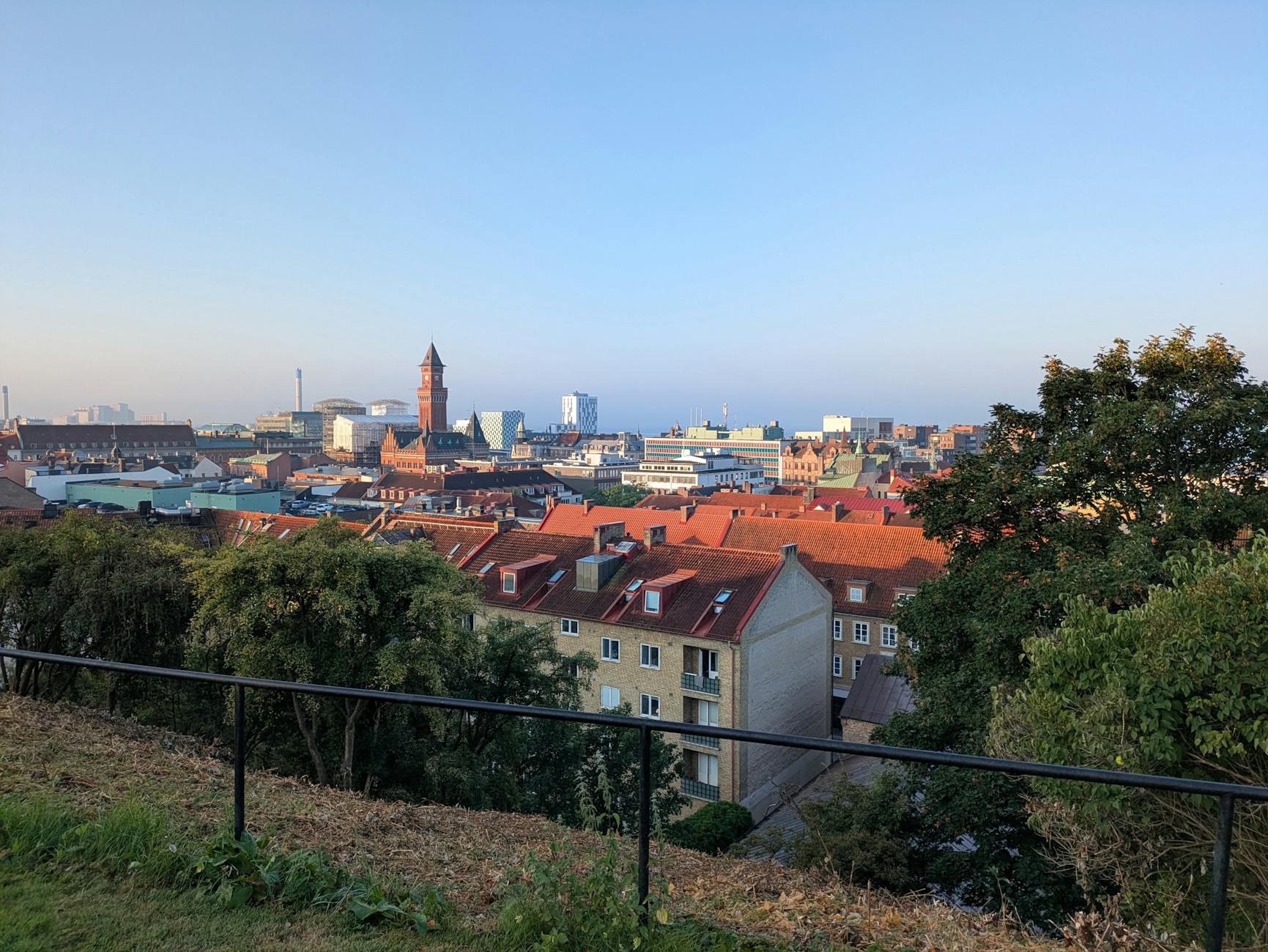
Helsingborg is one of those cities that hides behind convenience.
Start Here
From the outside, the place looks almost too easy to matter. It sits opposite Helsingør, has constant ferries, a central station that behaves like a hinge, a waterfront that seems instantly readable, and a scale that suggests the whole city can be understood in one quick pass. Many travelers therefore reduce it before they arrive. Helsingborg becomes “that crossing city in Skåne,” or perhaps “a clean little Swedish coastal stop if you have time.”
That is the weak version of the city.
The stronger version starts by noticing that Helsingborg is not interesting only because it connects elsewhere. It is interesting because it has turned that position into an identity. This is a ferry city, a slope city, a sea-air city, a city of views across the strait, and a city with just enough urban density to feel complete without ever becoming burdensome. The crossing to Denmark matters, but so do Kärnan, the harbor, the waterfront promenades, the compact center, the old civic layers above the water, and the nearby elegance of Sofiero. Helsingborg is not dramatic in the way big capitals are dramatic. It is convincing in the way well-composed coastal cities are convincing.
That composure is one of its main virtues. The city has a useful steadiness to it. You can arrive by train or ferry, settle into a central hotel, walk the waterfront, climb to the old tower, eat well, move through the center without friction, and take in enough sea and horizon to feel that the place has done real work on you by the end of the day. This is not trivial. Many small coastal cities are attractive for an hour and vague after that. Helsingborg usually holds together longer because its parts cooperate.
It also helps that the city has more topography and more historical residue than outsiders often expect. The lower waterfront and station zone feel practical and connected. Above them, Kärnan and the higher center remind you that this was once a strategic and fortified place, not merely a pleasant contemporary port. To the north, Sofiero pulls the city toward garden and estate culture. To the west, the strait keeps the whole place outward-looking. That mix gives Helsingborg more range than its modest size initially suggests.
This is why hotel choice, route shape, and the relationship between city time and ferry time matter. If you only touch Helsingborg in transit, the city stays flat. If you use it as a real short stay, one or two days can feel impressively complete.
The city in one sentence: Helsingborg is a compact ferry-and-waterfront city whose best first trip comes from balancing the harbor, Kärnan, Old Helsingborg texture, Sofiero, and the Danish crossing logic instead of treating the place as mere transit between countries.
Basic data
| Population | About 115,000 in the city |
|---|---|
| Area | 38 km2 in the urban core |
| Major religions | Christian heritage with growing secular and minority-faith communities |
| Political system | Municipal government inside a parliamentary constitutional monarchy |
| Economic system | High-income mixed economy led by logistics, services, trade, tourism, and regional industry |
Quick Verdict
Best for: couples, solo travelers, first-time southern Sweden routes, coastal-city travelers, short Nordic breaks, and anyone who likes urban trips built from water, walkability, and light historical structure.
Not ideal for: travelers who need huge museum density, people who want a capital-city volume of sights, or anyone who plans to reduce the city to a station-and-ferry interchange.
Ideal first visit: 2 full days.
Minimum worthwhile stay: 1 full day and 1 night.
Best overall months: May, June, September, and early October.
Best summer case: if you want sea air, easy walks, ferry flexibility, promenade life, and a city that feels cleanly open to the water.
Biggest planning mistake: using Helsingborg only as a crossing point to Denmark or as a practical night stop before somewhere else.
One thing to prioritize: the base. A central hotel near Helsingborg C and the waterfront keeps the city’s whole logic intact.
One thing to leave flexible: ferry and waterfront time. Helsingborg often improves when you allow the strait and changing light to shape part of the day.
The blunt version: Helsingborg is one of Scandinavia’s most agreeable smaller coastal stays if you let it be a stay and not just a hinge.
Who Will Love Helsingborg?
Helsingborg works especially well for travelers who like cities that are coherent rather than overwhelming. It is very good for people who do not need a destination to be huge in order to feel worthwhile. The city gives you water, ferries, old fortification memory, gardens, and a clean urban center in a form that is genuinely easy to use.
Couples tend to do well here because Helsingborg offers the ingredients for a calm, polished short break: a station-side arrival that feels civilized, a strong waterfront, one meaningful climb or viewpoint, one garden or cultural extension, and one or two meals where the city’s coastal ease becomes the point. It is romantic in a moderate northern way rather than in a theatrical one.
Solo travelers also do well because the city is simple without being empty. The center is legible, the sea keeps the place visually open, and the ferry logic gives the city a sense of movement even when you stay on the Swedish side. Walking alone here usually feels comfortable rather than exposed.
Helsingborg is also good for travelers who enjoy border or crossing cities. The presence of Denmark across the water is not a novelty trick. It is part of the atmosphere. It changes the city’s psychology. Helsingborg feels outward, connected, and slightly sharpened by the strait.
It is less ideal for travelers who insist on constant cultural accumulation. Helsingborg has enough, but it is not trying to overwhelm you. The point is quality and proportion.
Helsingborg at a Glance
| Question | Practical Answer |
|---|---|
| Main arrival node | Helsingborg C / Knutpunkten |
| Main public transport operator | Skånetrafiken |
| Signature international link | Helsingborg-Helsingør ferry |
| Best first-time base | Central waterfront near Helsingborg C |
| Signature historical landmark | Kärnan |
| Best elegant extension | Sofiero |
| Best way to understand the city | Walking plus one or two strategic local rides |
| Car needed? | No |
| Emergency number | 112 |
| Tap water | Safe to drink |
| Currency | Swedish krona |
| Power plugs | Type C and F |
2026 Visitor Notes
The Ferry Is Still The City’s Defining Rhythm
ORESUNDSLINJEN’s current timetable and ticket guidance keep the core fact obvious: the Helsingør-Helsingborg crossing takes about 20 minutes and runs with high frequency.[1][2] That matters because the ferry is not only transport. It is part of the city’s daily character.
Helsingborg C Makes The City Unusually Easy To Use
Skånetrafiken’s current Helsingborg and ticketing pages confirm how central the station-and-bus nexus remains for local and regional movement.[3][4] The practical result is that a central base solves most first-time logistics almost automatically.
Local Ticketing Is Straightforward Enough For Visitors
Skånetrafiken’s guidance remains clear: the app is the easiest method, but in Helsingborg you can also use contactless payment on the green city buses for a standard city-zone fare.[4] In a city of this scale, that is exactly the kind of low-friction transport system you want.
Kärnan Is Not Just The Viewpoint Photo
Visit Helsingborg’s current Kärnan page still presents the tower correctly as a nearly 700-year-old medieval watchtower with four floors and a roof terrace.[6] The larger point is that Kärnan explains why Helsingborg is a city of levels and not just a flat waterfront.
Old Helsingborg Needs Respectful Use
Visit Norway’s current Old Stavanger-style description of Old Helsingborg’s preserved qualities is less relevant here than the local and regional emphasis on historic housing and lived districts. But the same rule applies: pretty old areas are stronger when treated as places people inhabit, not as open-air scenery.
Sofiero Gives The City More Range Than Many Small Coastal Stops Have
Sofiero’s current official opening-hours and ticket pages show that the estate remains an unusually strong nearby cultural-garden extension, with long seasonal hours and a clear annual program.[7][8] This matters because it prevents Helsingborg from narrowing into only waterfront and ferry mood.
How to Understand Helsingborg
Helsingborg works through five forces.
The first is the strait. Denmark is not theoretical here. The city faces it constantly.
The second is the crossing. Ferries, station movement, and the whole practical hinge between countries help shape the city’s energy.
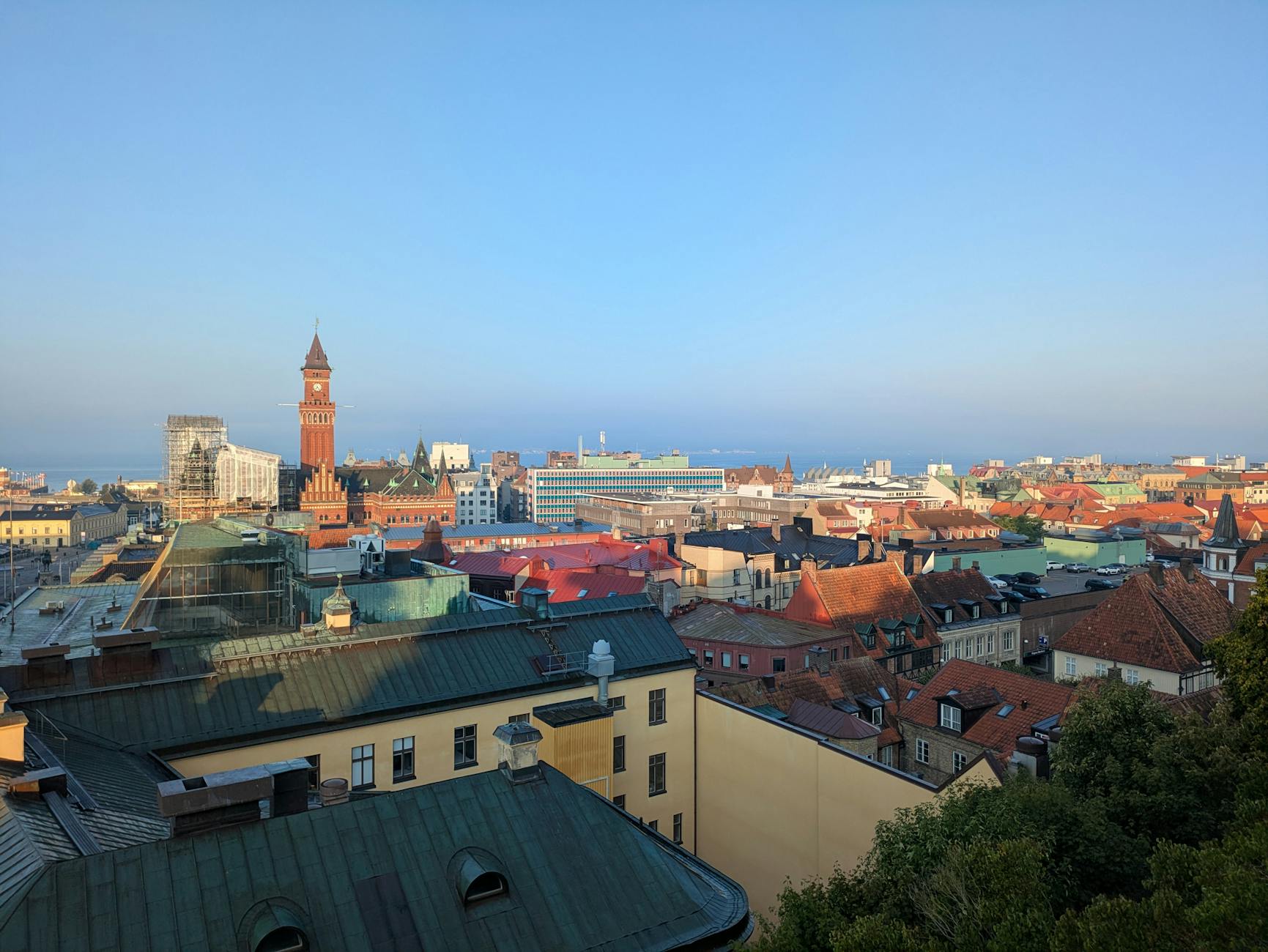
The third is elevation. Kärnan and the upper city matter because they give the town more drama and structure than a purely flat waterfront city would have.
The fourth is coastal urban ease. Helsingborg is simple to inhabit, and that usability is one of its strengths.
The fifth is moderation. The city does not do excess. It does enough, and usually in the right proportion.
The Five Helsingborgs A Visitor Actually Meets
Ferry Helsingborg: the terminal, crossings, sea movement, and the whole urban hinge toward Denmark.
Waterfront Helsingborg: promenades, harbor light, and the most outward-looking version of the city.
Historic Helsingborg: Kärnan, the upper city, and the memory of fortification and medieval depth.
Garden Helsingborg: Sofiero and the more composed, cultivated side of the city.
Everyday Helsingborg: the center, cafés, shops, buses, and the urban normality that keeps the place from becoming only scenic.
The Main Mental Shift
Do not ask, “What do I do before the ferry?” Ask, “How does this city use the ferry, the slope, and the sea to become itself?” That question leads to a much better visit.
What Helsingborg Does Better Than People Think
Helsingborg is better than people think at being complete in small scale. You can have a proper urban break here without needing a vast checklist.
It is also stronger than many travelers expect at combining beauty and practicality. The city’s usefulness is not a flaw. It is one of the reasons the stay feels so light.
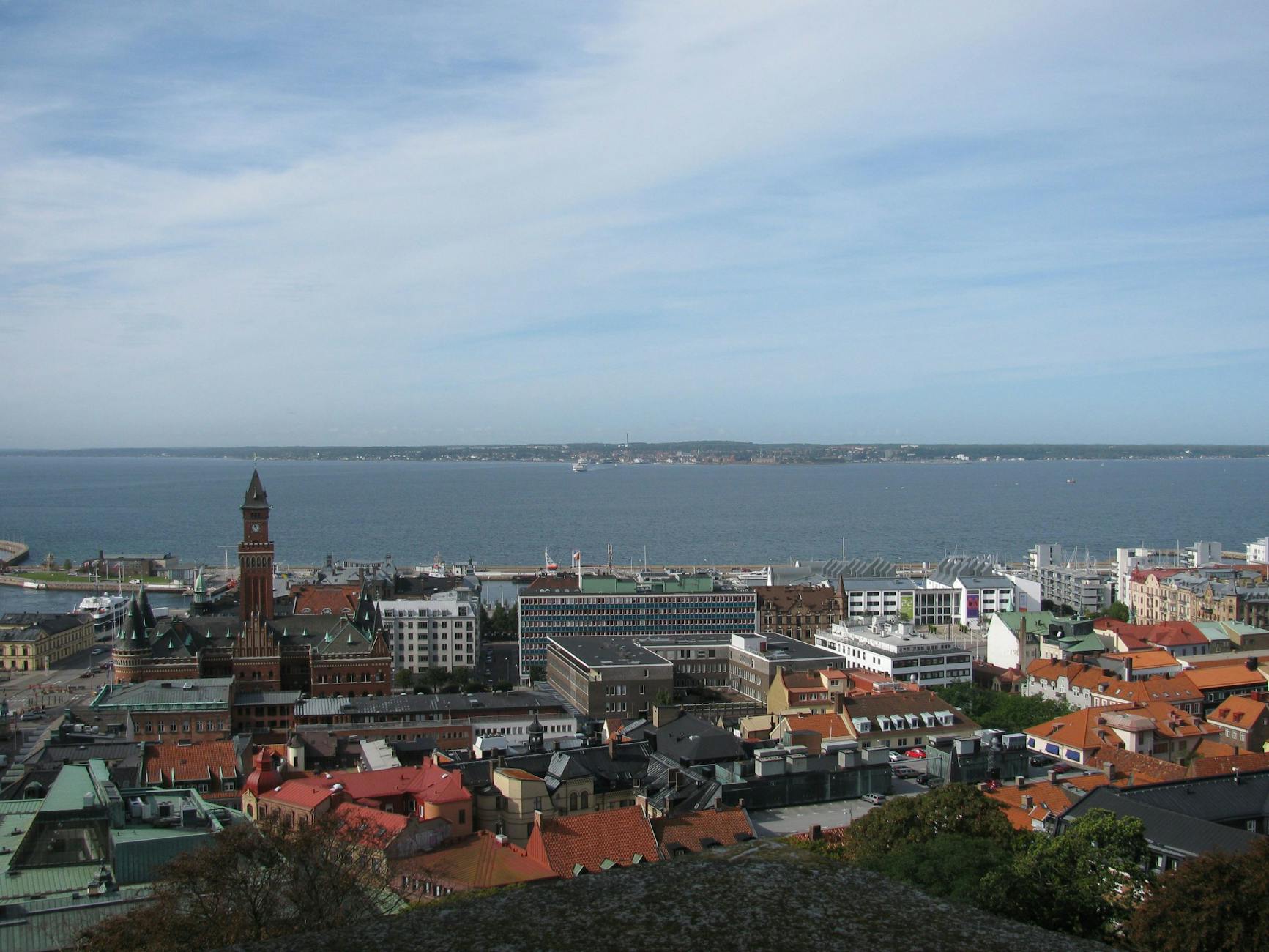
Another underrated strength is view logic. The rise from waterfront to Kärnan and the upper center means Helsingborg has more spatial tension than some comparable coastal cities.
The city is also better than people think at supporting mixed moods. One part of the day can be ferry-facing and active; another can be calm, garden-led, and almost stately.
Finally, Helsingborg is very good at not exhausting the traveler. That matters. You leave with energy rather than depletion, which is one of the great advantages of a short stay here.
Helsingborg Versus Malmö
This comparison matters because both cities can appear in southern Sweden itineraries and both live in the shadow of better-known cross-border narratives.
Malmö is more metropolitan, more socially and culturally layered in obvious ways, and stronger if you want multiple distinct urban districts, bigger-city food and nightlife options, or a more ambitious urban agenda.
Helsingborg is more composed. It is easier to absorb, more immediately sea-facing, and often more satisfying as a calm short stay. Where Malmö argues through urban variety, Helsingborg argues through proportion.
If you want the broader and more complex city, Malmö usually wins. If you want the cleaner, lighter, and more distilled coastal stay, Helsingborg may be better. They are not substitutes so much as different scales of southern-Swedish city life.
First-Time Visitors Versus Repeat Visitors
First-time visitors often underuse Helsingborg because they assume they already understand it. The station is central, the ferry is obvious, the water is right there, and Kärnan announces itself clearly enough. That can create the illusion that the city has no deeper rhythm to uncover.
Repeat visitors tend to do better because they stop asking the city for proof. They already know the crossing works. They know the view from above matters. They know the waterfront has to be walked more than once. They know Sofiero can shift the emotional range of the trip. They begin to use the city instead of merely testing it.
This is one reason Helsingborg often improves on a second stay. The first is still deciding whether the city is “enough.” The second usually starts by accepting that it is.
Best Time to Visit Helsingborg
Helsingborg is usable throughout the year, but the balance between ferry pleasure, promenade time, and garden value changes meaningfully.
Best Overall Months
May, June, September, and early October are the strongest recommendations. These months usually give the best mix of workable weather, sea-air atmosphere, and enough city life without heavy summer dilution.
Summer
Summer is the easiest season in which to like Helsingborg quickly. The waterfront is active, ferries feel like pleasure rather than function, and Sofiero is at its most obviously rewarding. The risk is only that the city can be consumed too lightly.
Early Autumn
Early autumn often suits Helsingborg very well. The city remains open to the sea, but the pace becomes slightly more controlled and the light often gains in quality.
Winter
Winter Helsingborg is more about clean sea air, compact city walks, and subdued coastal atmosphere. It can still be attractive, but it is not the season that shows the city’s full range.
Spring
Spring is very good here because the coastal openness returns quickly and Sofiero begins mattering again.
Warm-Weather Helsingborg Versus Cold-Weather Helsingborg
Warm-weather Helsingborg is easy to like quickly. The waterfront lengthens, ferries feel partly recreational even when practical, Sofiero becomes a more obvious reason to stay longer, and the whole city opens outward.
Cold-weather Helsingborg is more severe but not without value. In cooler months, the crossing logic feels sharper, the strait feels more elemental, and the compact center becomes the main argument. The city can still work well, but it asks for stronger hotel use, shorter walks, and less dependence on promenade pleasure alone.
How Many Days You Need
Half A Day
Enough for a first impression, not enough for the city to settle into memory properly.
One Full Day
Enough for waterfront, Kärnan, and one slower district or Sofiero move.
Two Full Days
Ideal for most first-timers. One day should belong mainly to Helsingborg itself. The second can combine Sofiero, more harbor time, or a carefully chosen Denmark crossing.
Three Days
Very good if you want to make the city part of a wider Skåne route while still respecting its own logic.
Why One Proper City Day Matters
Travelers often assume that because Helsingborg is compact, the city can be understood between ferry departures or folded casually into another route. That is exactly how it gets flattened.
One proper city day lets Helsingborg build its own argument. The waterfront gets more than one pass. Kärnan becomes more than a viewpoint. The upper and lower city begin to relate to one another. One slower meal or coffee break starts making the city feel inhabited rather than merely efficient. Without that day, Helsingborg can feel like a crisp impression. With it, the city becomes real.
Where to Stay in Helsingborg
Where you stay matters because Helsingborg’s greatest gift is ease. A central base allows the city’s whole structure to work almost immediately.
Fast Answer
For most first-time visitors, stay by Helsingborg C and the waterfront, or very close to the central harbor core.
Neighborhood Decision Table
| Traveler Type | Best Area |
|---|---|
| First-time visitor | Helsingborg C / waterfront core |
| Couple weekend | Waterfront or upper-center edge with sea access |
| Ferry-and-city trip | Directly central, near the terminal |
| Sofiero-and-city mix | Central base, not Sofiero-adjacent lodging |
| Practical short stay | Station-waterfront balance |
Waterfront Core
Best for: most travelers. Why it works: immediate sea orientation, ferry access, clean transport, and the easiest city logic. Tradeoff: some areas can feel more functional than atmospheric late at night. Best use: the default right answer.
Upper Center / Kärnan Side
Best for: travelers who want a little more city texture and elevation in the daily route. Why it works: stronger historical feel and a little more separation from pure transit flow. Tradeoff: slightly less direct terminal convenience. Best use: second-time visitors or first-timers who still want to stay distinctly central.
Why The Base Matters More Than Visitors Expect
Helsingborg is compact enough that many visitors assume any central hotel will do. In practice, the base still changes the trip.
A waterfront or Helsingborg C hotel makes the city feel frictionless, which is often exactly right for a first stay. An upper-center base changes the daily rhythm by giving more texture and a little more separation from pure ferry flow. A hotel too far from the core weakens one of Helsingborg’s main strengths, which is how cleanly the center, sea, and transport can all cooperate.
This is why the base matters. In a city whose great advantage is ease, even modest positional mistakes have a disproportionate effect.
Area Profiles
Waterfront: best for orientation and all-purpose use.
Helsingborg C side: best for smooth arrivals and departures.
Upper center: best for historical texture and slightly stronger city feeling.
Neighborhood Guide: Where to Explore, Not Just Sleep
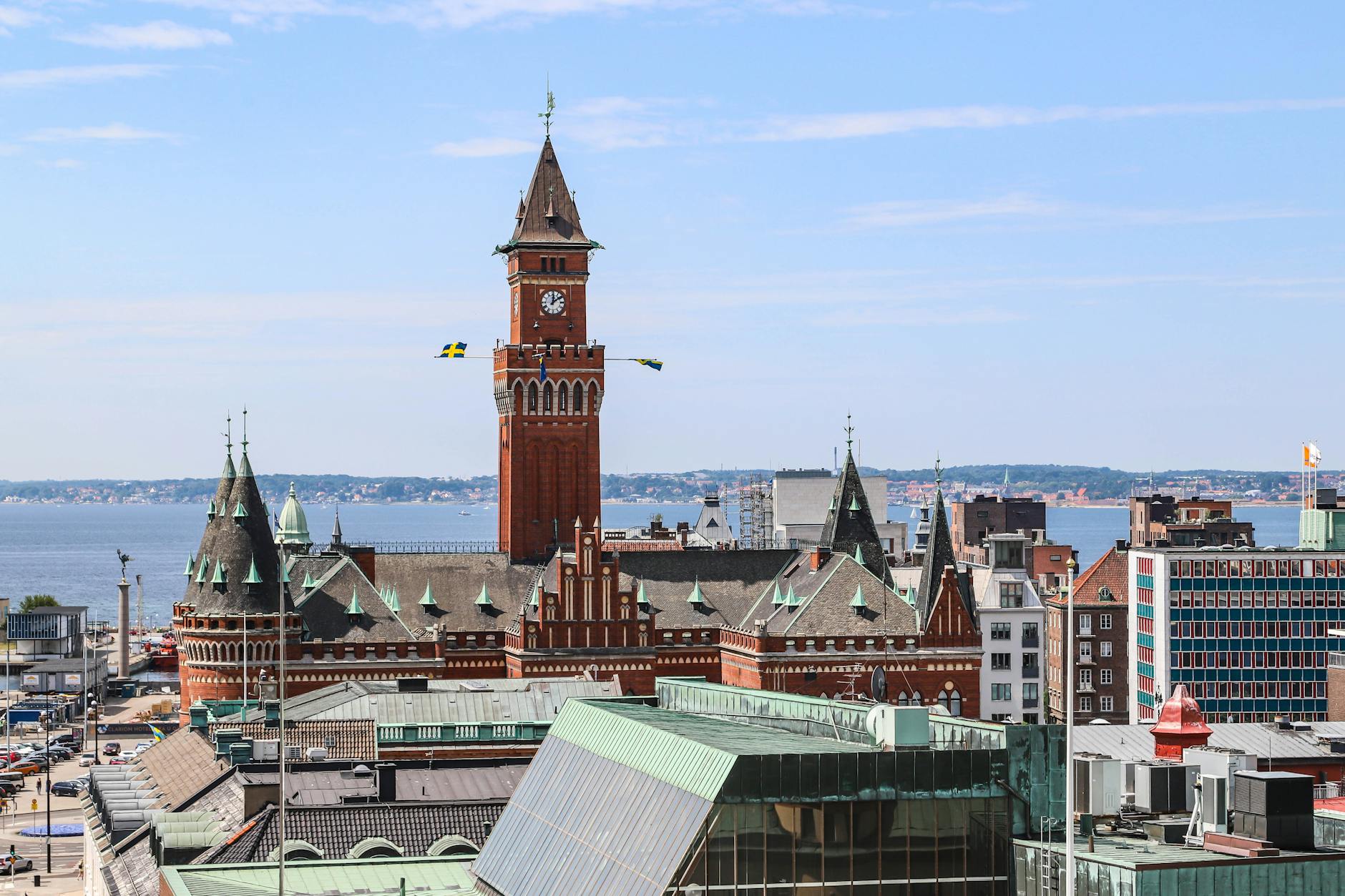
The waterfront and terminal area are where Helsingborg makes its first case. The ferries, broad sea view, and movement across the strait give the city immediate life. This is not just infrastructure. It is one of the city’s emotional engines.
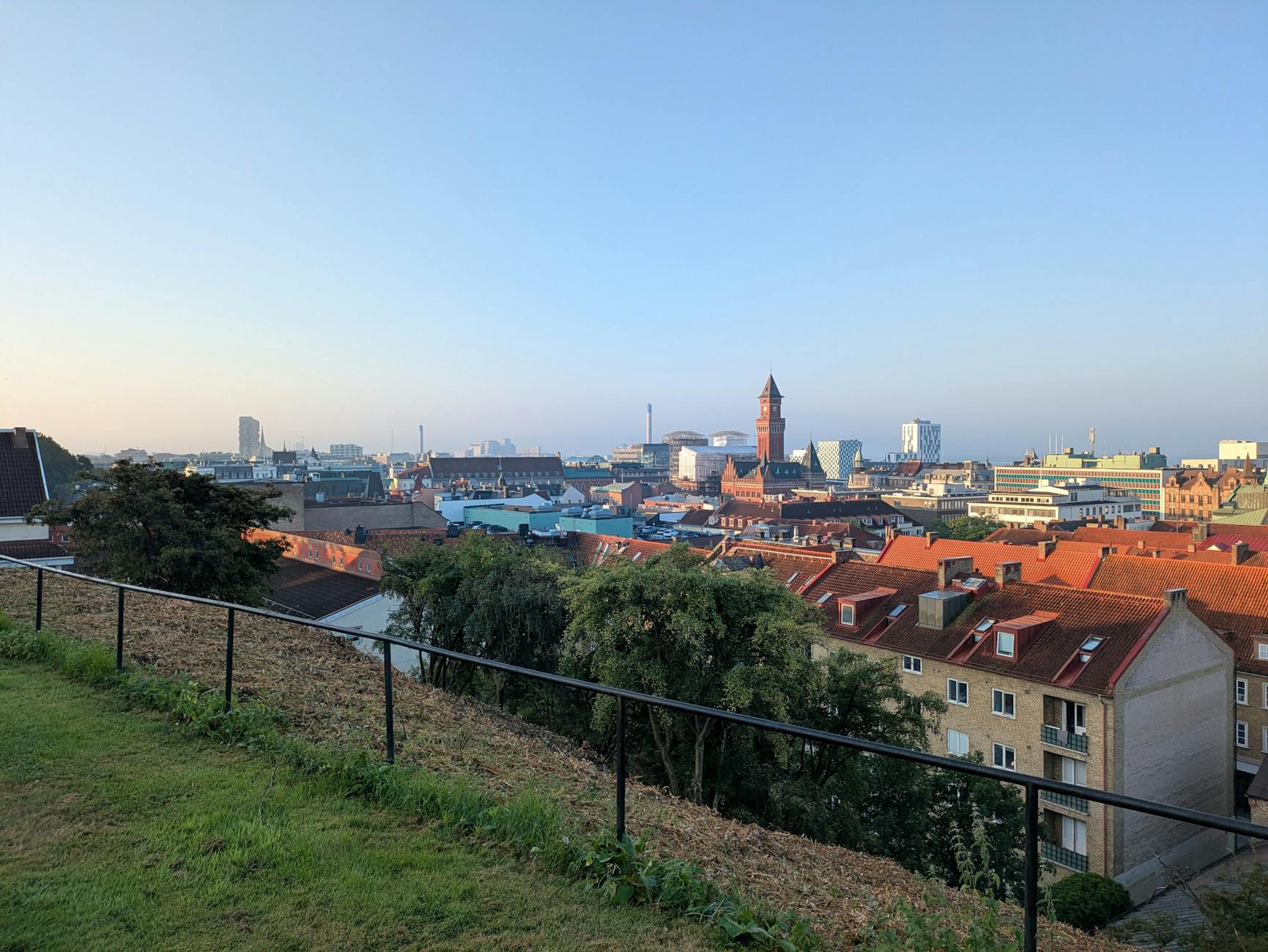
The climb toward Kärnan matters because it changes the city from a practical port into a place with memory and shape.[6] From above, the whole relationship between upper town, lower town, sea, and Denmark becomes easier to understand.
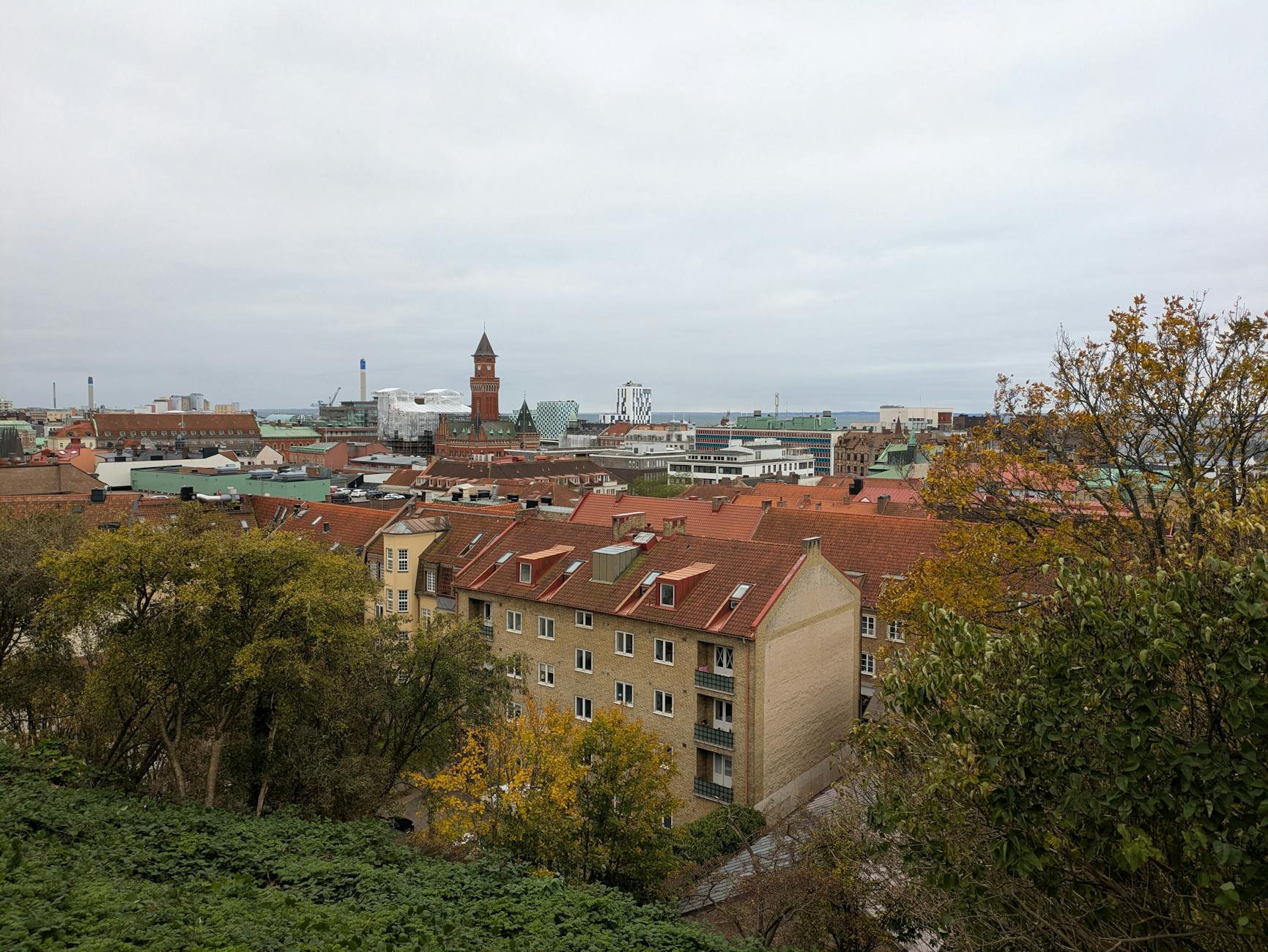
Old Helsingborg and the preserved streets matter because they soften the more efficient modern center.[5] The city needs this layer. Without it, Helsingborg could feel only clean and useful.
Sofiero should be treated as a real extension, not as a random add-on.[7][8] It broadens the city’s emotional range in a way many small coastal destinations do not manage.
Day Helsingborg Versus Evening Helsingborg
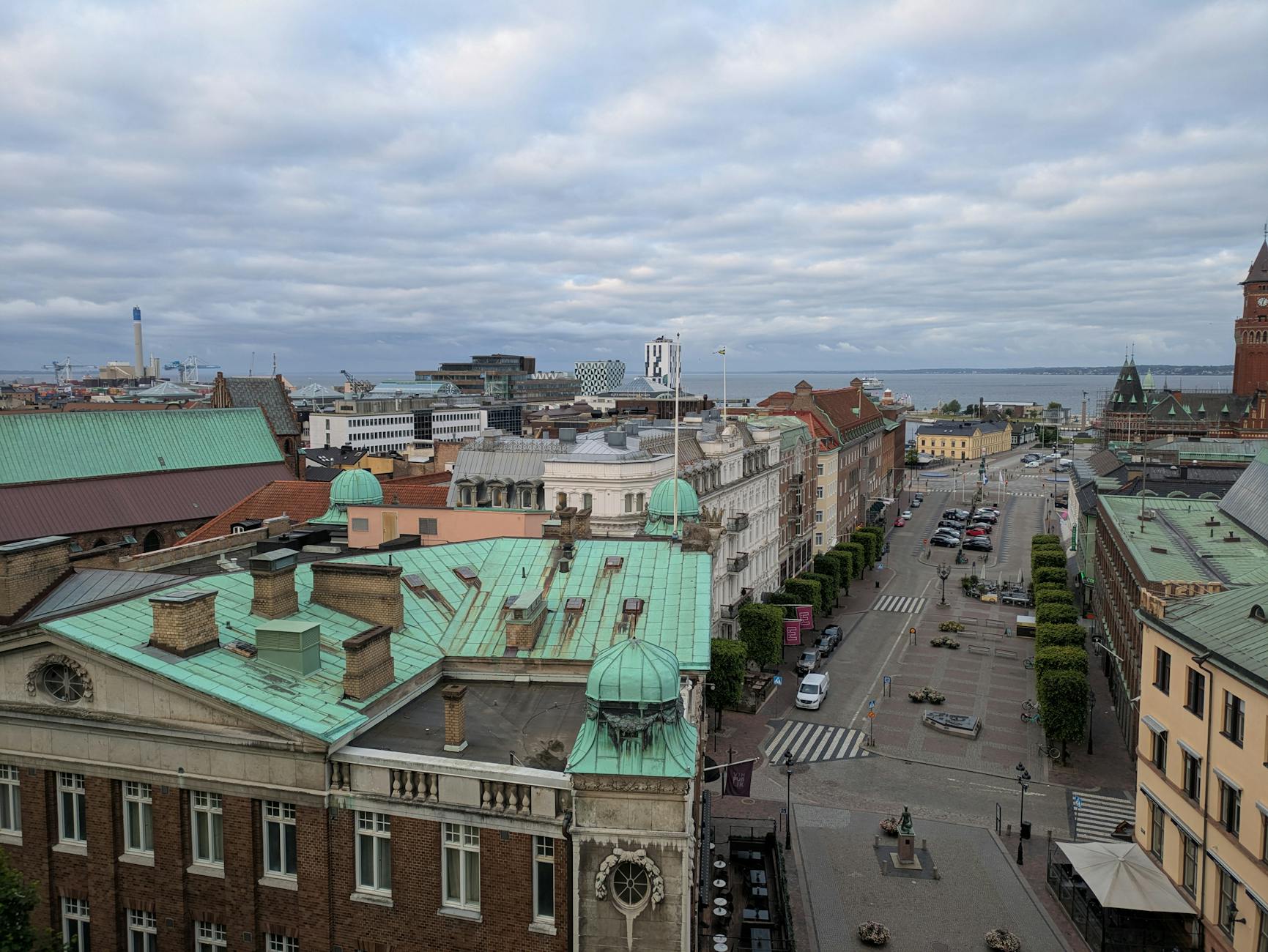
Daytime Helsingborg is about structure. You see how the ferry, the waterfront, the upper city, and the center fit together. The city feels useful, legible, and outward-facing.
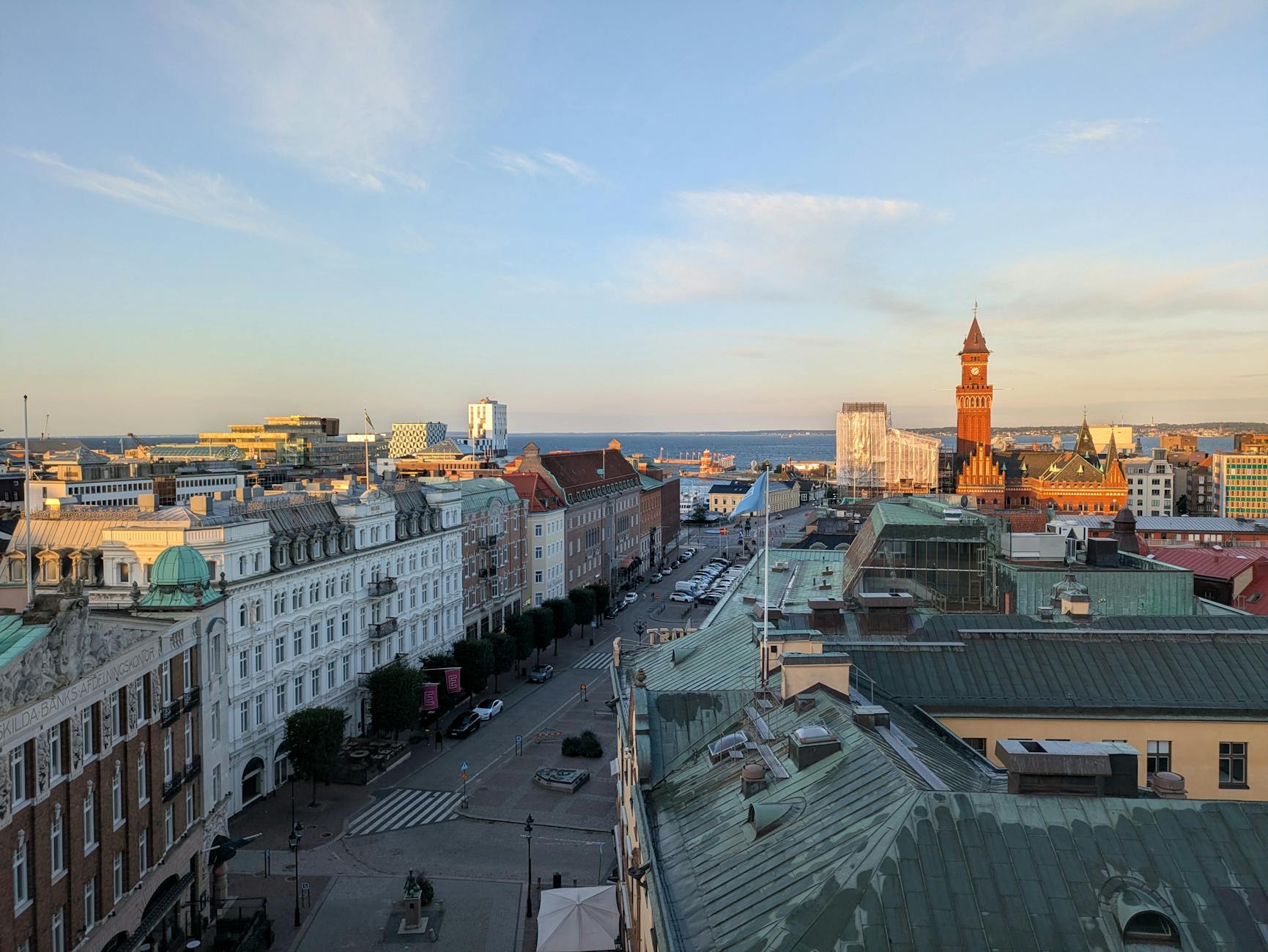
Evening Helsingborg is more about atmosphere. The sea begins doing more of the work. Lights across the strait matter more. The waterfront and upper-center pauses start feeling less functional and more chosen. This is one reason weak Helsingborg trips underperform: they understand the crossing, but they never let the city become evening-coastal in a meaningful way.
Why The Crossing Should Not Own The Whole Trip
The ferry is one of Helsingborg’s defining strengths, but it becomes weaker when it is asked to explain the entire city.
If every thought is about departure, return, timetable, and the novelty of crossing countries in twenty minutes, then Helsingborg shrinks into infrastructure. A stronger stay allows the crossing to be part of the city’s atmosphere and practicality while still giving real time to the Swedish side as a place with its own waterfront, slope, gardens, and historical memory.
The Best Things to Do in Helsingborg
- Walk the waterfront more than once, ideally in different light.
- Go up to Kärnan so the city’s structure becomes visible rather than merely sensed.[6]
- Use the ferry either as transport or as atmosphere, but in either case take it seriously.[1][2]
- Visit Sofiero if you want the city to feel more complete and less terminal-focused.[7]
- Let one meal and one slower coffee or bar stop happen near the water or the old center, not just in transit mode.
Itineraries
If You Have One Full Day
Use the morning for waterfront and upper-center Helsingborg, including Kärnan. Use the afternoon for Sofiero or a slower center-and-ferry rhythm. Return to the sea in the evening.
If You Have Two Full Days
This is the best first-time pattern. Keep one day almost fully city-led. Use the second for Sofiero and/or a carefully judged Helsingør crossing while making sure Helsingborg still feels like the anchor.
If You Have Three Days
Add more regional or Denmark-side movement only after the city has already become real on its own terms.
Itineraries By Traveler Type
For Couples
Stay by the water, use Sofiero if the season suits it, and let the city’s clean sea-facing calm do most of the work. Helsingborg does not need embellishment.
For Solo Travelers
Use the station-side ease intelligently, walk a lot, and allow one day to remain loose enough for ferry, promenade, and cafe rhythm.
For Sweden First-Timers
Do not treat Helsingborg as a leftover city. It is one of the better examples of how a medium-small Swedish city can feel both useful and graceful.
For Ferry-Curious Travelers
Use the crossing, but do not let it erase the Swedish side. Helsingborg is stronger when it remains the point of departure and return, not merely the waiting room.
Food and Drink
Helsingborg is not about building a celebrity dining itinerary. It is about letting the sea, the city’s scale, and your route shape the right meals. The city’s best food logic is moderate and coastal: one good lunch, one dinner placed well, one slower stop for coffee, wine, or something light while watching the city move.
The mistake would be to eat only in functional transit mode because the city is so easy. Ease should not make the day generic. It should make the good decisions simpler.
Why Food Is Structural, Not Decorative
Helsingborg is not a city that demands culinary obsession, but meals still shape how the place feels. A lunch by the water changes the day differently from a purely functional station-side meal. A slower coffee in the upper center helps the city become more than movement. One well-placed dinner can make the strait and harbor feel like the point rather than the backdrop.
That is why food matters structurally here. In a city this composed, badly placed meals flatten the stay into logistics. Well-placed ones reinforce the city’s calm.
Getting Around
Helsingborg is mainly a walking city for first-timers. Skånetrafiken supports the visit when needed, especially for Sofiero or broader local movement, but most of the center wants to be used on foot.[3][4]
The ferry is part of that movement system as well as part of the city’s atmosphere.[1] The practical rule is simple: walk the city, ride only when it meaningfully improves the structure of the day.
Why Helsingborg Often Works Better Than It Sounds
If you describe Helsingborg lazily, it can sound like a small Swedish crossing city with one tower, one waterfront, one garden, and one frequent ferry. That summary misses what makes the stay worthwhile.
Helsingborg works because the elements reinforce one another. The ferry gives the city energy. The slope gives it structure. Kärnan gives it memory. The waterfront gives it openness. Sofiero gives it elegance. The center keeps the whole thing lived rather than merely scenic. It is a city of proportion, and proportion rarely sounds impressive on paper. In person, it can be deeply convincing.
Why Helsingborg Often Improves On The Second Visit
On a first visit, many travelers are still deciding whether Helsingborg is mainly a crossing, mainly a pleasant small city, or mainly a practical base. That uncertainty can make the stay too provisional.
On a second visit, the city often gets better quickly. You know which base suits you. You know whether Sofiero belongs this time. You know how much Denmark you actually want to use. You begin repeating the waterfront and upper-town moves because repetition is part of the city’s value, not a failure of planning.
How Helsingborg Changes Over The Course Of A Stay
On arrival, Helsingborg can seem almost too orderly. The station is central, the ferry is obvious, the waterfront is clean, and the whole city appears immediately legible. Some travelers conclude too quickly that the experience will therefore remain light.
By the second day, if the visit is built well, the city begins separating into clearer emotional zones. The waterfront becomes more than a promenade. Kärnan begins to organize the topography. The upper center adds historical texture. Sofiero or a slower coastal stretch broadens the city’s register. The ferry becomes part of the identity rather than the only story.
By the third day, Helsingborg often feels more persuasive precisely because it has stopped needing to impress through novelty. Its strengths are repetition, light, sea air, and proportion used well.
Why Movement Changes The Meaning Of Helsingborg
In Helsingborg, movement is not just about getting from station to hotel to ferry. It is one of the ways the city explains itself. Walking from the lower waterfront up toward Kärnan changes the city from efficient crossing point to historical coastal settlement. Returning downhill toward the harbor changes it again. Even the short ride or walk toward Sofiero broadens the city’s emotional register from practical center to composed garden edge.
That is why the city rewards walking and repeated passes. If every move is reduced to the quickest possible transit action, Helsingborg can stay too abstract. If movement is allowed to reveal slope, sea, and changing perspective, the city becomes much more memorable.
Why Helsingborg Should Not Be Overprogrammed
Because Helsingborg is manageable, travelers can be tempted to overload it. One ferry there, one ferry back, Sofiero, Kärnan, old town, lunch, another crossing, one more museum somewhere else. On paper it all sounds efficient.
In practice, overprogramming weakens one of the city’s main strengths, which is composure. Helsingborg works when there is room for repetition: another walk along the water, a slower coffee in the upper center, a return to the harbor at a different hour, or a dinner that belongs clearly to the city rather than to the timetable. The stronger stay is edited, not maximized.
Why Helsingborg Rewards A Chosen Lane
Helsingborg does not require every traveler to want the same city. In fact, it becomes stronger once you admit that different short stays should privilege different versions of it.
A couple may want the waterfront, one elegant hotel, one Sofiero excursion, and long sea-facing walks. A ferry-curious traveler may want to use the crossing while still making sure the Swedish side remains the emotional anchor. A repeat Scandinavia traveler may care less about covering sights and more about light, coffee, slope, and the recurring pleasure of moving between harbor and upper town. A regional traveler passing through Skåne may mainly need the city to feel clean, calm, and complete in limited time.
The point is not to build the perfectly balanced Helsingborg. The point is to choose your lane and let the city support it. Once that happens, Helsingborg stops feeling like a pleasant connector and starts feeling like one of the Nordic region’s most intelligently scaled coastal stays.
What To Skip
Skip reducing Helsingborg to ferry logistics. Skip touching Kärnan only from below. Skip staying too far out in a city where centrality pays off so clearly. Skip assuming the city is thin because it is pleasant. Skip treating Sofiero as optional fluff when it may be the thing that makes the visit feel complete.
Common Mistakes
- Using Helsingborg only as connective tissue.
- Overvaluing convenience while underusing the city itself.
- Treating the ferry as the whole story.
- Missing the upper-town logic and historical layer.
- Forgetting that moderate cities can still produce memorable stays.
My Blunt Advice
Use Helsingborg as a coastal city with its own dignity, not just as an efficient crossing point. Stay central. Walk the water. Climb to Kärnan. Give Sofiero a real chance if the season is right. Let the ferry become part of the city’s meaning instead of a substitute for it. Eat and rest in places that make you feel the sea and the city’s composure.
If you do that, Helsingborg becomes what it actually is: one of the most quietly successful small urban stays in the Nordic region, a place where water, light, slope, and movement across the strait produce a city that feels larger in meaning than in scale.
That is the right first Helsingborg. Not just a crossing. A stay.
Source Notes
- 1. ORESUNDSLINJEN, official Helsingør-Helsingborg timetable page: [https://www.oresundslinjen.com/timetable](https://www.oresundslinjen.com/timetable)
- 2. ORESUNDSLINJEN, official foot-passenger page for Helsingborg-Helsingør: [https://www.oresundslinjen.com/prices/walking](https://www.oresundslinjen.com/prices/walking)
- 3. Skånetrafiken, official Helsingborg page: [https://www.skanetrafiken.se/helsingborg](https://www.skanetrafiken.se/helsingborg)
- 4. Skånetrafiken, official ticket-purchase guidance page: [https://www.skanetrafiken.se/biljetter/kopbiljett/](https://www.skanetrafiken.se/biljetter/kopbiljett/)
- 5. Visit Helsingborg, city-center inspiration page: [https://visithelsingborg.com/restaurang/sommarmedguldkant/](https://visithelsingborg.com/restaurang/sommarmedguldkant/)
- 6. Visit Helsingborg, official Kärnan page: [https://visithelsingborg.com/plats/karnan/](https://visithelsingborg.com/plats/karnan/)
- 7. Sofiero, official opening-hours page: [https://sofiero.se/planera-besok/oppettider/](https://sofiero.se/planera-besok/oppettider/)
- 8. Sofiero, official prices-and-tickets page: [https://www.sofiero.se/planera-besok/priser-biljetter/](https://www.sofiero.se/planera-besok/priser-biljetter/)