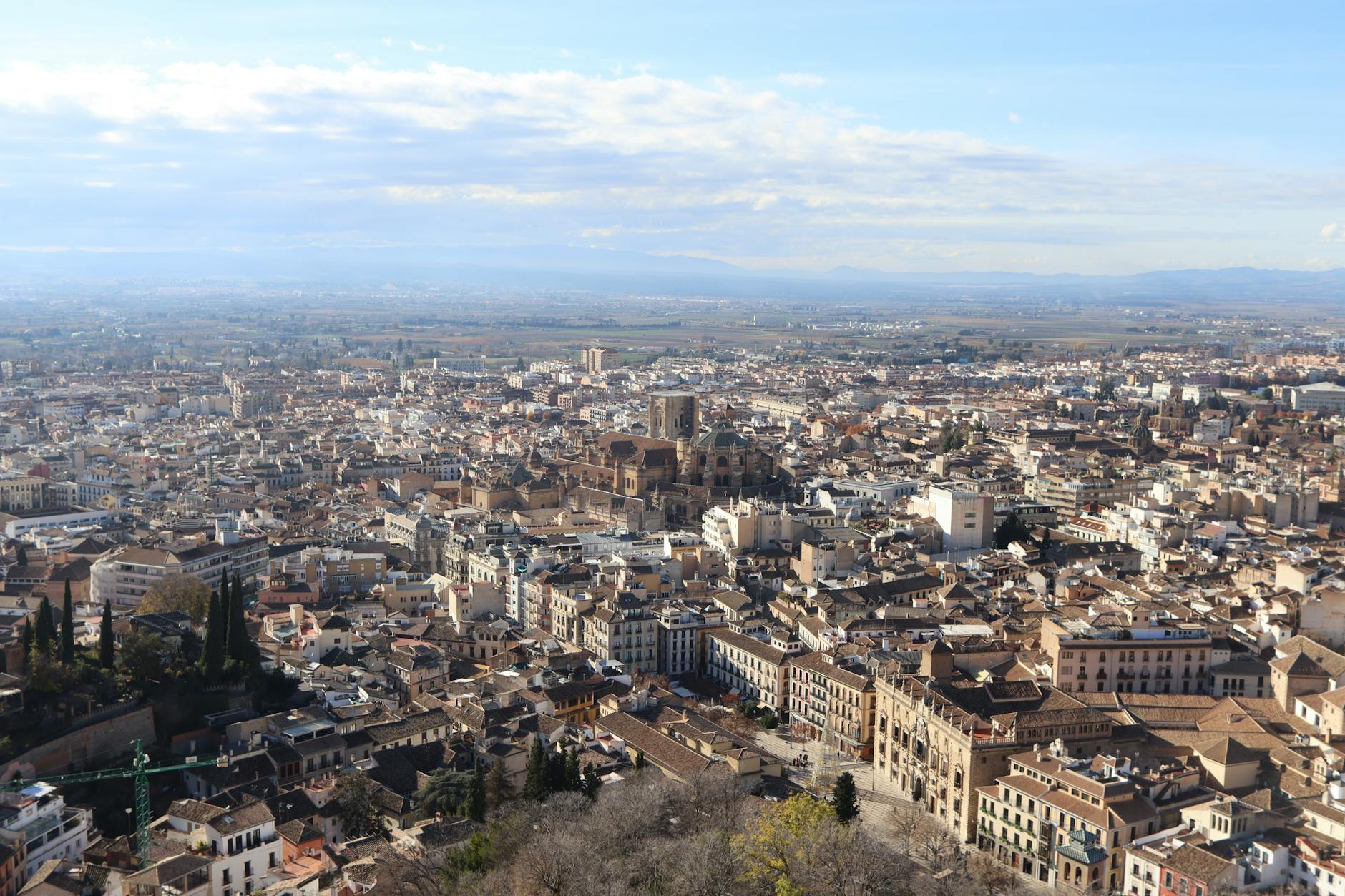
Granada is one of the most easily romanticized cities in Spain, which is precisely why it gets used so badly. The first-time visitor arrives expecting one perfect sequence: the Alhambra on its hill, the Albaicín opposite it, white walls, cypress silhouettes, glowing stone, a few plates of tapas, perhaps a flamenco cave, and then satisfaction. Some version of that does exist. The problem is that the city is more demanding, more layered, and more physically selective than that fantasy allows.
Start Here
Granada is not just a monument with neighborhoods attached. It is a city of slope, heat, memory, and sequencing. The Alhambra is the obvious center of gravity, but it is not the whole point. The Albaicín matters for urban texture and Moorish afterlife. Sacromonte matters for topography, atmosphere, and flamenco identity. The cathedral-and-Royal-Chapel core matters because Granada is not only an Islamic palimpsest but also a city of Christian imperial assertion after conquest. The streets around the center matter because Granada still functions as a living Andalusian city and not merely as a historic set piece.
That is what weak trips miss. They use the Alhambra too heavily and the city too lightly. They stay somewhere chosen for romance rather than route logic. They underestimate the hills. They overestimate how much atmosphere survives once they are hot, late, hungry, and halfway through a second climb they did not need to make. They confuse scenic difficulty with meaningful travel. Granada is too good a city for that sort of self-inflicted friction.
The better Granada trip is edited harder. It understands that the city has multiple emotional temperatures. There is monumental Granada: Alhambra, Generalife, cathedral, chapel, empire, dynastic weight, and one of the strongest historical overlays in Spain. There is hillside Granada: Albaicín, miradores, stairways, whitewashed turns, and the city as topographic drama. There is lived Granada: the center, the bars, the tapas rhythm, the student-city energy, and the practical flat streets that make the rest of the trip possible. There is also evening Granada, which may be the most important corrective of all. Once the sun softens, the city becomes less punishing and more persuasive.
Granada is one of Spain's highest-return short city breaks because the layers are so close together. But it only works at full strength when the visitor stops trying to extract everything at once. The right hotel, one or two serious monuments, one hill per day, one evening with real appetite, and enough slack to let the city breathe: that is the version that stays with people.
The city in one sentence: Granada is a compact but topographically demanding Andalusian city where the best first trip comes from balancing the Alhambra, the Albaicín and Sacromonte, heat and hills, and a sharply edited route instead of treating the place like one long romantic climb.
Quick Verdict
Best for: couples, solo travelers, first-time Andalusia trips, architecture travelers, history travelers, tapas-led city breaks, and anyone who likes cities where landscape and urban form keep colliding.
Not ideal for: travelers with serious mobility limits who want a fully walking-based trip, people who hate crowds and queues but insist on peak-season midday monument timing, or anyone who thinks a compact map means an easy city.
Ideal first visit: 2 to 3 full days.
Minimum worthwhile stay: 2 full days.
Best overall months: April, May, late September, and October.
Best summer case: only if you accept stronger hotel value, tighter route discipline, and long midday pauses.
Biggest planning mistake: building the trip around scenic impulse instead of route logic.
One thing to prioritize: Alhambra ticket timing.
One thing to leave flexible: your hill time. Energy, weather, and light matter too much here to overfreeze every movement.
The blunt version: Granada is one of Spain's most rewarding short city breaks if you edit for topography and attention, and one of the easiest places to make exhausting if you confuse atmosphere with unlimited climb tolerance.
Who Will Love Granada?
Granada suits travelers who like cities with an argument. This is not simply a beautiful place. It is a place where conquest, continuity, memory, and topography are all still visible. If you want a city whose main monument explains everything else, Granada can be extraordinary. If you want a city whose monument is the entire point, it will feel thinner than it should.
It works especially well for couples because the city offers a rare mixture of spectacle and intimacy. You can spend a morning in one of Europe's great palace complexes, an afternoon in white lanes and miradores, and an evening eating and drinking in a city center that still feels social rather than over-scripted. Done correctly, Granada can feel highly romantic without becoming soft or empty.
Solo travelers also do well here. The city is legible, energetic, and compact enough that solo movement feels natural, but it is never totally casual. Granada gives a solo traveler a lot to think with: Islamic and Christian layers, view lines, hill logic, and neighborhood distinction. You can spend a day here alone and come away feeling stimulated rather than simply occupied.
It is particularly strong for travelers interested in how monuments alter entire urban systems. The Alhambra is not just a site on a hill. It reorganizes the whole city psychologically. The Albaicín exists partly as its mirror. The center exists partly in relation to what followed after 1492. Granada's layout is not a neutral map. It is a historical arrangement.
The city is less ideal for travelers who want every day to stay easy and low-friction. Granada asks something from the body. Heat, stairs, and slope matter. That is not a flaw. It is part of the city’s language. But it means the trip improves a lot when the traveler is honest about pace.
Granada at a Glance
| Question | Practical Answer |
|---|---|
| Main airport | Federico García Lorca Granada-Jaén Airport |
| Simplest airport transfer | Airport bus into central Granada |
| Best first-time base | Historic center / Cathedral side or lower Albaicín edge |
| Best all-purpose walking zone | Historic centre and central flat grid |
| District that gives Granada its soul | Albaicín |
| District that gives Granada its most theatrical atmosphere | Sacromonte |
| Monument that must be booked deliberately | Alhambra |
| Best way to understand the city | One hill at a time |
| Public transport backbone | Walking plus minibuses and selective taxis |
| Biggest practical variable | Slope and heat |
| Car needed? | No |
| Emergency number | 112 |
| Tap water | Safe to drink |
| Currency | Euro |
| Power plugs | Type C and F |
2026 Visitor Notes
The Airport Bus Is The Right Default Move
Aena's official airport transport page and Granada Tourism's airport-arrival guidance both make clear that the Granada-Airport bus line connects the airport with central city stops including Gran Vía de Colón, with the full trip taking around 45 minutes.[1][2] For many first-time visitors that is the cleanest arrival logic.
Granada's Urban Bus System Matters More Than The Map Suggests
Granada Tourism's own bus page remains one of the clearest practical references for visitors: the city bus operator is Transportes Rober, single tickets are €1.60, and they include 60 minutes of free multiple transfers between lines.[3] In a hill city, that matters. Saving your legs can improve the whole day.
The Alhambra Needs To Be Treated Like The Trip’s Structural Anchor
Official Alhambra guidance stresses timed palace entry, nominative tickets, and the need to check the Nasrid Palaces admission time on your ticket.[5] This is not a monument you “fit in.” It often dictates the shape of the day.
The Alhambra Is Bigger And More Demanding Than Many First-Timers Assume
The official Alhambra schedule and tariff pages show a substantial monument complex with defined opening windows and ticket-office logistics, which is exactly why trying to pair it carelessly with every other major hill district on the same day is usually a mistake.[6][7]
The Cathedral-And-Royal-Chapel Core Is Not Just Filler Around The Alhambra
Granada Tourism's own pages on the Cathedral and Royal Chapel frame them as central to understanding the post-conquest city and the monumental Christian heart of Granada.[8][9] If you skip this layer, you skip half the city's argument.
Albaicín And Sacromonte Need To Be Used Differently
Official Granada Tourism material distinguishes the Albaicín as the preserved, UNESCO-listed hillside quarter and Sacromonte as the cave-house, flamenco-associated district with its own mood and rhythm.[10][11] That means they should not be treated as interchangeable “lookout neighborhoods.”
Small Buses Up The Hills Are Part Of The City’s Real Logic
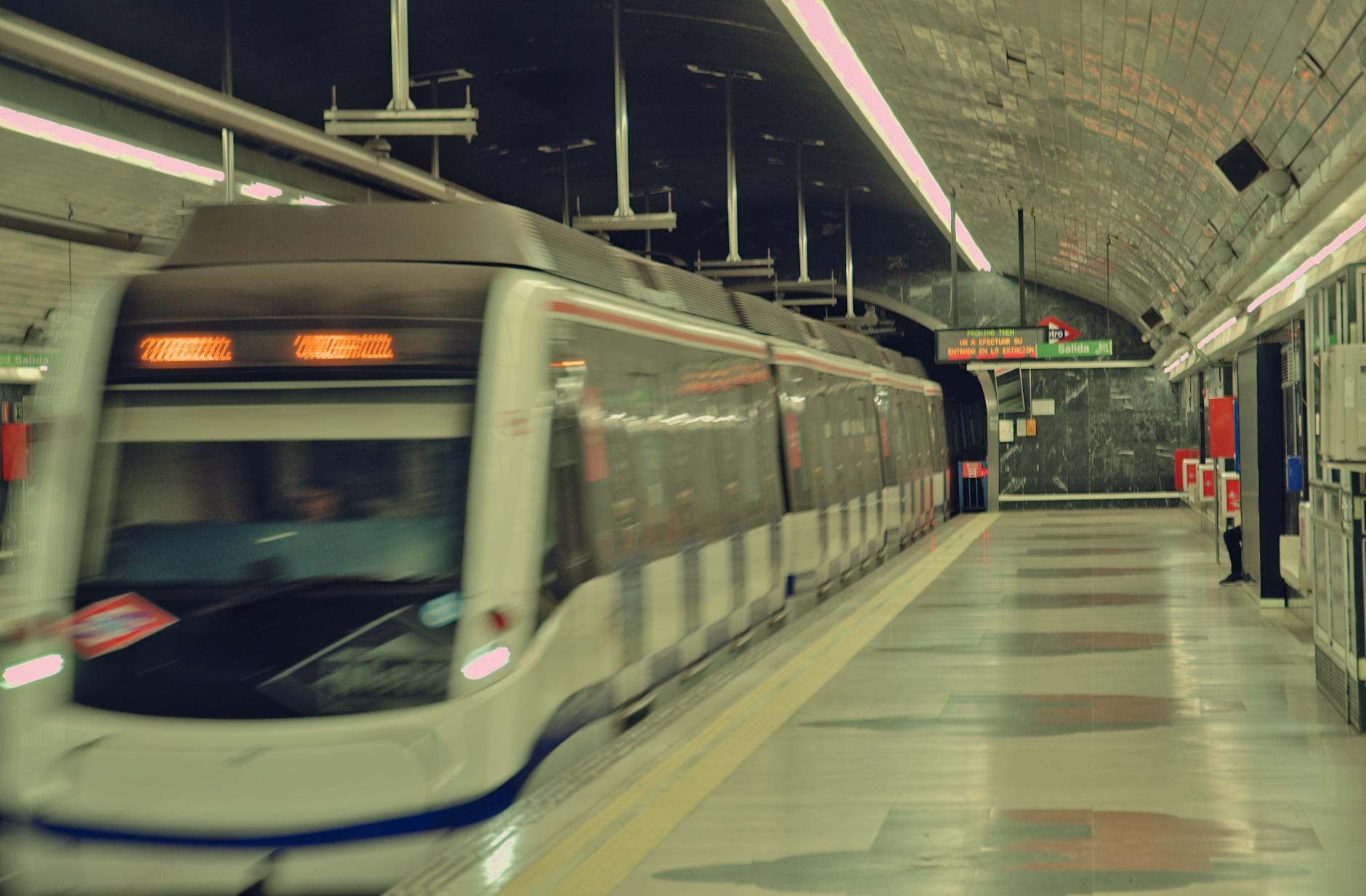
Granada Tourism's transport page notes that the minibuses serving the Alhambra, Albaicín, and Sacromonte are core tools for getting up and down the city’s steeper sectors.[4] Using them is often intelligence, not weakness.
How to Understand Granada
Granada works through five forces.
The first is the hill-and-counterhill structure. The Alhambra hill and the Albaicín/Sacromonte heights face and frame one another. Much of the city’s emotional charge comes from that visual conversation.
The second is 1492 and after. Granada is one of the clearest urban examples in Europe of what happens when one civilizational order is conquered and another makes itself monumental in response.
The third is heat and effort. This is not a side issue. Granada’s beauty is physical. You feel the city in your legs.
The fourth is the living center. The city center matters because it is the flat, practical, socially sustaining part of Granada that prevents the whole trip from becoming a staircase performance.
The fifth is view discipline. Granada is full of views. Not all views are worth building the day around. The city improves when you choose them selectively.
The Five Granadas A Visitor Actually Meets
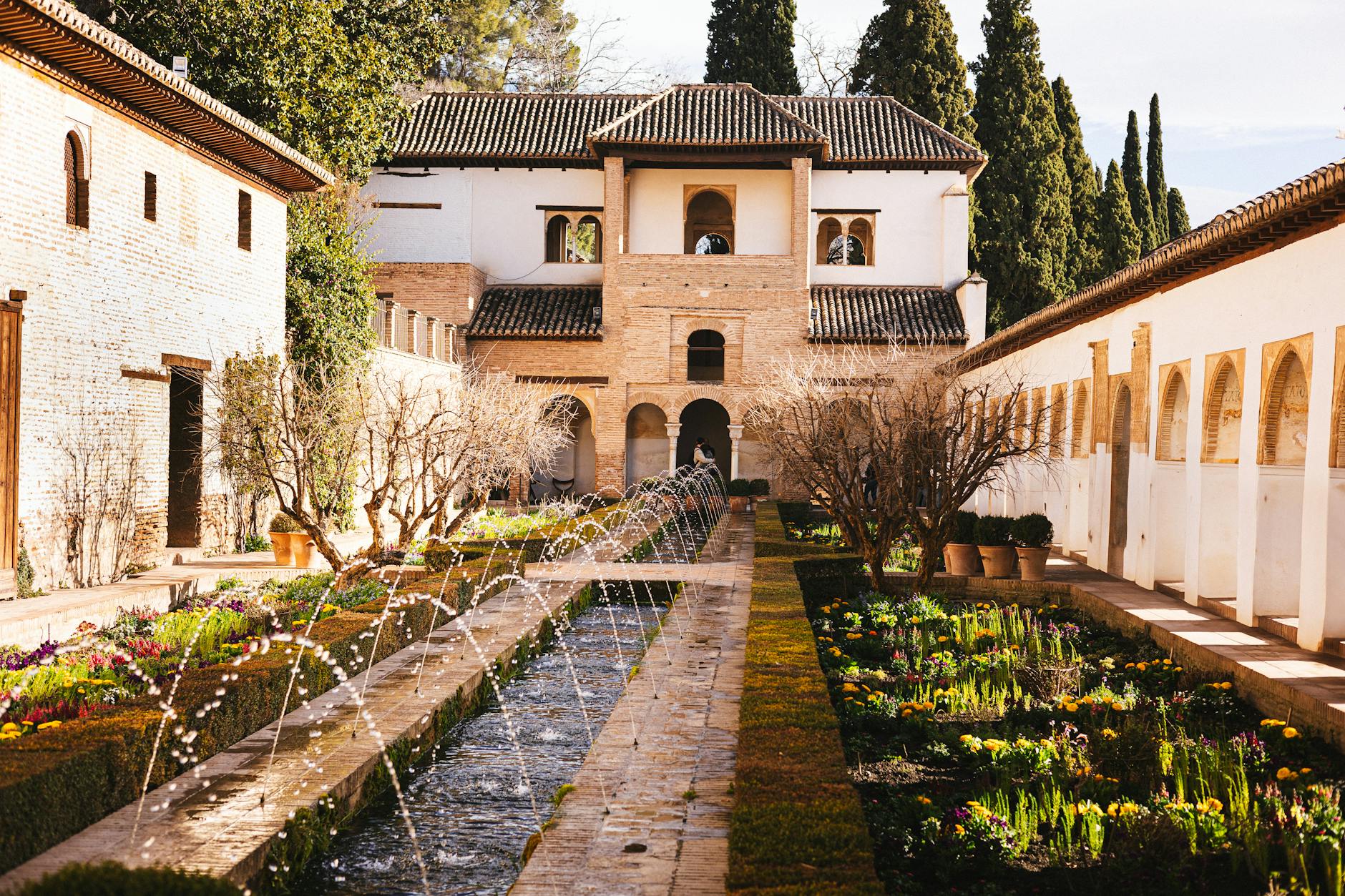
Monument Granada: Alhambra, Generalife, dynastic and imperial symbolism.
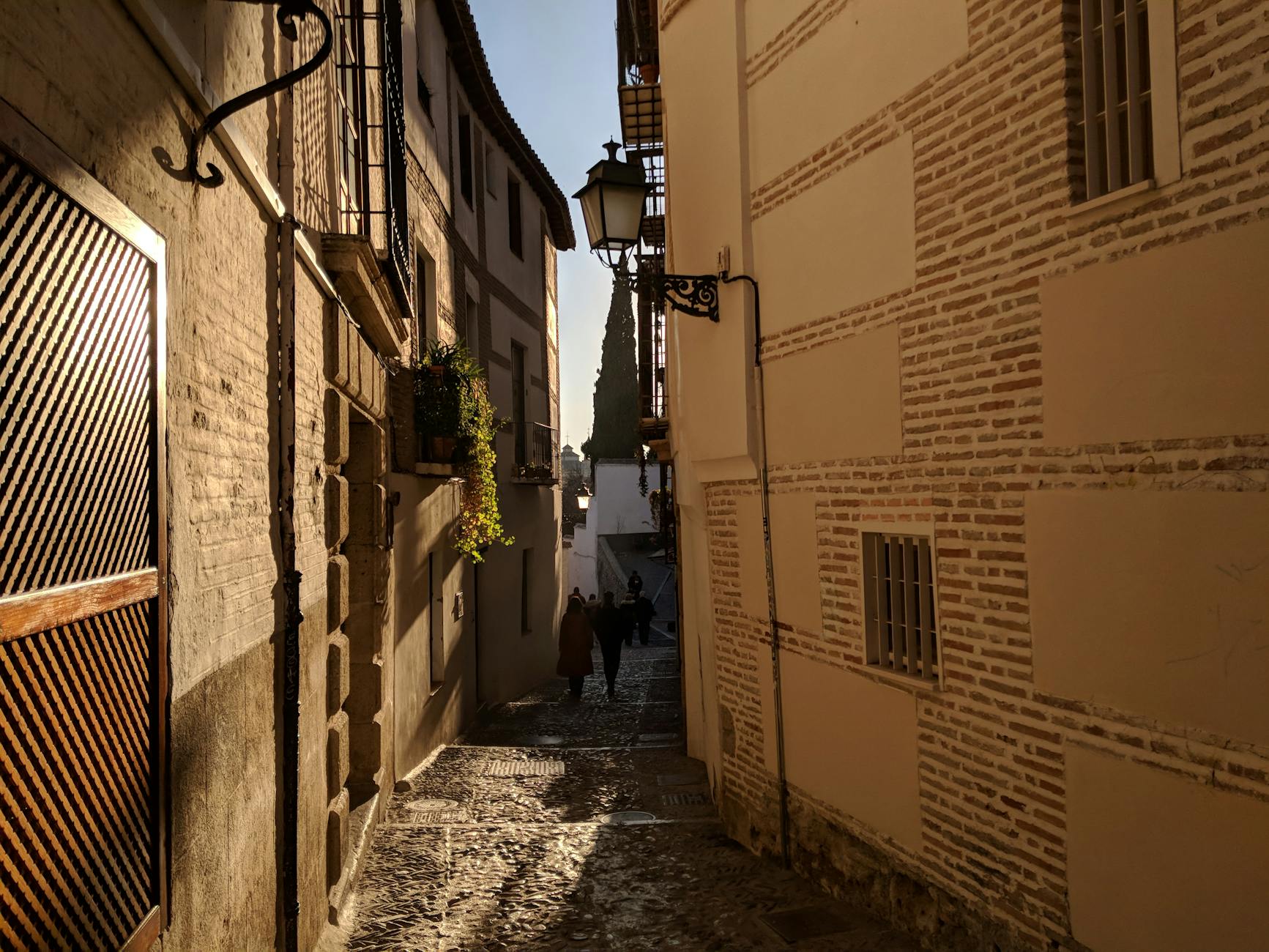
Moorish-memory Granada: Albaicín, white lanes, cármenes, and the surviving urban mood of Islamic Granada.
Flamenco-and-edge Granada: Sacromonte, cave culture, steeper drama, and the more theatrical hillside city.
Christian-imperial Granada: Cathedral, Royal Chapel, and the central city redefined after conquest.
Tapas-and-student Granada: the flatter center, bars, daily life, and the version of the city that actually restores you between climbs.
The Main Mental Shift
Do not ask, “What are the top sights?” Ask, “Which Granada am I in today?” Monument Granada, Albaicín Granada, Sacromonte Granada, center Granada. The trip improves the moment those versions are separated.
What Granada Does Better Than People Think
Granada is unusually good at monument-city integration. A lot of cities have a great site plus some supporting streets. Granada’s greatest site changes the meaning of the whole city around it.
It is also better than many visitors expect at evening atmosphere. Once the day softens, Granada often feels more coherent, more social, and more seductive than it did under direct afternoon sun.
Another underrated strength is small-scale intensity. The city is not huge, but the emotional range is large: palace gardens, religious monumentality, caves, miradores, tapas, and student life all exist within a short radius.
The city is also very strong at showing history spatially. You do not need a long museum text to understand that conquest, memory, and urban identity matter here. The hills and monuments do that work for you.
Finally, Granada does topographic drama without total urban dysfunction better than many cities of similar beauty. It demands effort, but it still gives you enough practical routes to use it intelligently.
Best Time to Visit Granada
Granada is a year-round city, but never a season-neutral one. Heat changes the terms of the trip more than many first-timers realize.
Best Overall Months
April, May, late September, and October are often the strongest first-visit windows. The city is still lively, the walking is more manageable, and the hills feel dramatic rather than punitive.
Spring
Spring is the easiest season in which to understand why Granada is so beloved. The light is generous, the views hold, and the city’s walking burden is still mostly a pleasure.
Summer
Summer can still work, but only with stricter route design. The city becomes much more hotel-dependent and break-dependent once the heat rises. Granada in July or August is not the place for romantic overcommitment.
Autumn
Early autumn suits Granada very well. The city often feels slightly calmer, the evening rhythm stays strong, and the physical toll eases compared with summer.
Winter
Winter gives Granada a sharper, clearer seriousness. The Alhambra remains strong, the center feels more breathable, and the city’s monumental layers can become easier to read without summer crowd pressure.
Month-by-Month Guidance
January: cool, cleaner, good for serious city travelers. February: still wintry, but very workable. March: transitional and increasingly attractive. April: one of the best overall months. May: excellent for a first visit. June: strong, but already more demanding. July: beautiful and physically taxing. August: workable only with discipline. September: one of the smartest times to go. October: often ideal. November: quieter, lower-pressure, more reflective. December: atmospheric and good for monument-focused city travel.
How Many Days You Need
One Day
Enough to see the Alhambra or the city, not enough to understand Granada.
Two Days
The minimum respectable stay. One day should belong mostly to the Alhambra. The other should divide between center Granada and one hill district.
Three Days
Ideal for a first visit. This gives you one Alhambra day, one Albaicín-centered day, and one slower center-plus-Sacromonte or tapas-led day.
Four Days
Very good if you want to move more slowly or include more monument interiors without rushing the city’s route logic.
Where to Stay in Granada
Where you stay matters enormously because Granada is a city where scenic and practical are often in direct tension.
Fast Answer
For most first-time visitors, stay in the historic center / Cathedral side or on the lower edge of the Albaicín if the property truly solves the hill problem. Stay deeper uphill only if you knowingly want atmosphere over ease.
Neighborhood Decision Table
| Traveler Type | Best Area |
|---|---|
| First-time visitor | Historic centre / Cathedral / Gran Vía side |
| Couple weekend | center edge or lower Albaicín |
| Atmosphere-first traveler | carefully chosen lower Albaicín |
| Practical short stay | flatter center near Gran Vía / Cathedral |
| Night-and-food traveler | central flat grid, not deep uphill |
Historic Center / Cathedral Side
Best for: first-timers, walkers, and anyone who wants Granada to stay manageable. Why it works: flatter movement, strong access to bars and monuments, and easier daily resets. Tradeoff: less instant romance than a hill district. Best use: the strongest first stay.
Lower Albaicín
Best for: atmosphere, mirador access, and travelers who want Granada to feel distinctive from the moment they step outside. Why it works: you stay close to the city’s most emotionally charged quarter. Tradeoff: route difficulty matters a lot more than the listing photos suggest. Best use: couples and repeat Spain travelers who know what they are choosing.
Deep Albaicín / Sacromonte-Adjacent Stays
Best for: very specific atmosphere-led trips. Why it works: visual payoff and nighttime character can be powerful. Tradeoff: luggage, taxis, heat, and repeated climbs can quietly tax every day. Best use: only when you understand the cost.
Area Profiles
Historic centre: best for first-time ease and monument access. Cathedral/Royal Chapel zone: best for Christian-imperial Granada and practical movement. Albaicín: best for Moorish-memory Granada and viewpoint logic. Sacromonte: best for cave-district atmosphere and flamenco associations. Gran Vía / flatter central grid: best for recovery, bars, and route control.
Neighborhood Guide: Where to Explore, Not Just Sleep
Start in the center because it stabilizes the whole city. Granada’s flatter central grid is not the emotional climax of the destination, but it is the operational heart. This is where you restore your legs, eat well, and move between layers without constantly paying a scenic tax.
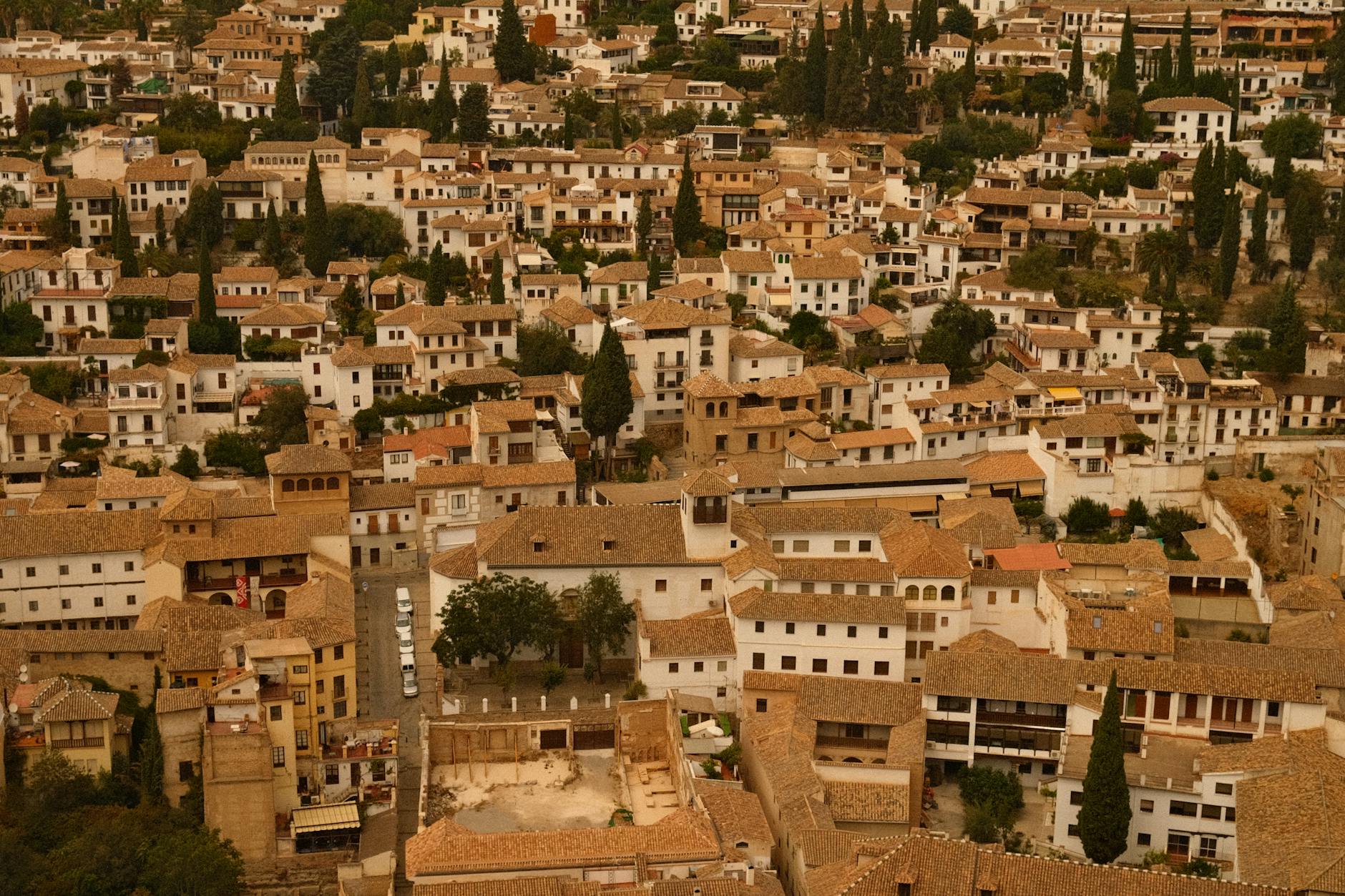
The Albaicín is where Granada becomes unmistakably itself. Granada Tourism’s own description emphasizes the neighborhood’s narrow streets, cármenes, steep lanes, and miradores, and that is exactly right.[10] The Albaicín is not simply pretty; it is the city’s memory field. But it works best when entered with time and patience rather than as a rushed climb wedged between reservations.
Sacromonte should be used more selectively. Granada Tourism’s own material frames it through cave houses, views, and flamenco roots.[11] That gives it enormous atmosphere, but it also means it is best approached when you actively want that atmosphere, not because you feel obliged to “complete” Granada.
The Alhambra sits above all of this as both site and organizing principle. Even when you are not inside it, you are often moving in relation to it. That is why Granada’s best routes feel shaped by sightlines as much as by distance.
The Best Things to Do in Granada
- Visit the Alhambra and Generalife with a properly timed ticket.[5][6]
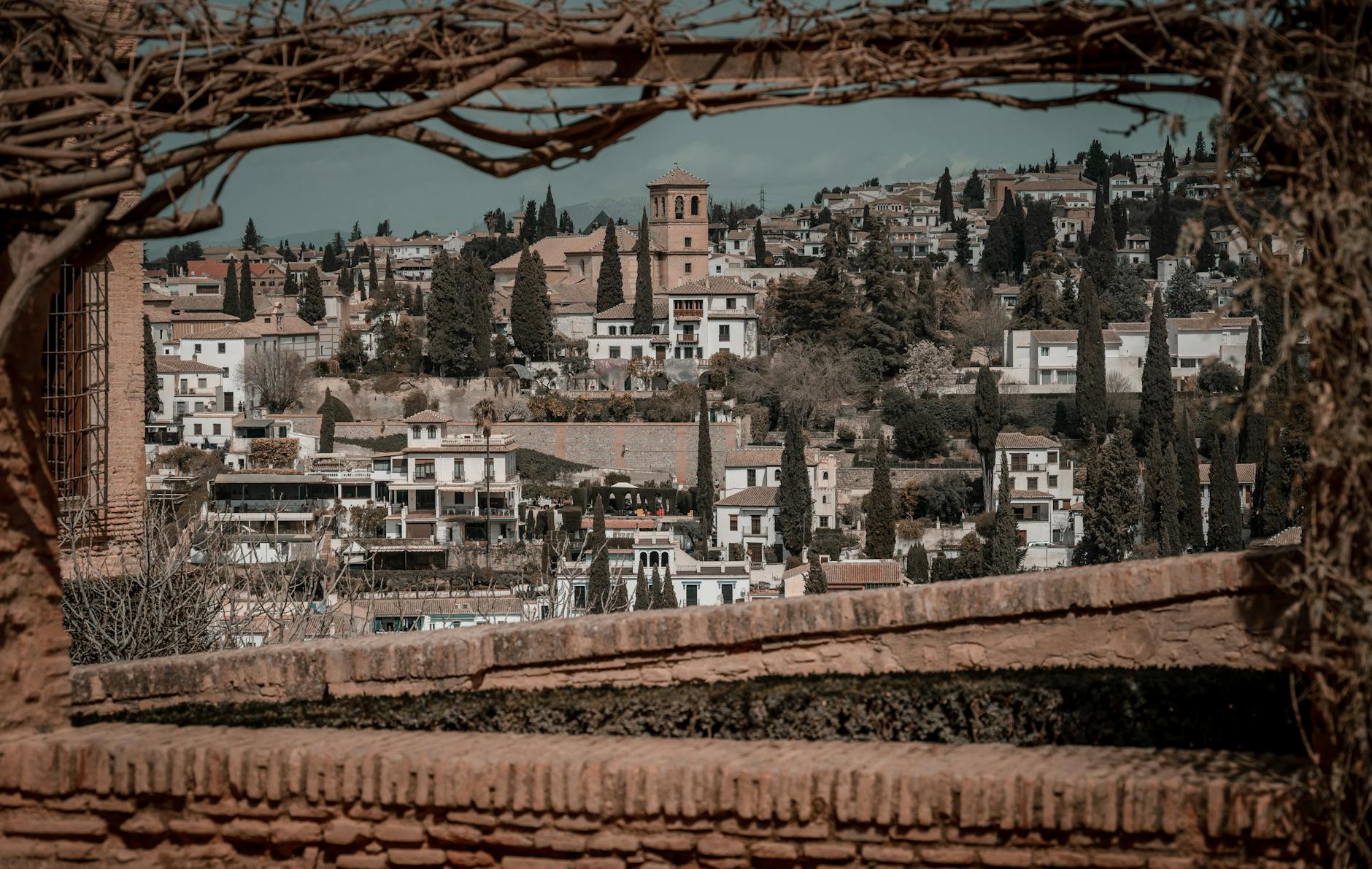
- Walk the Albaicín with enough time to let the district breathe.[10]
- See the Cathedral and Royal Chapel to understand post-1492 Granada.[8][9]
- Use a minibus strategically for one of the steeper hill moves.[4][3]
- Visit Sacromonte when you want its views and cave-district atmosphere, not merely because it is famous.[11]
- Give Granada one full evening in the center for tapas and slower city rhythm.
Itineraries
If You Have Two Days
Use day one for the Alhambra and a calm evening in the center. Use day two for the Cathedral/Royal Chapel core plus the Albaicín, ending with one carefully chosen mirador or Sacromonte extension if energy allows.
If You Have Three Days
Keep the first two days as above and use day three for a slower Granada: center streets, another monument, tapas, and a more selective Sacromonte chapter.
If You Have Four Days
Add looseness, not just more attractions. Granada improves when one day is allowed to feel slightly underfilled.
Itineraries By Traveler Type
For Couples
Stay central or lower Albaicín, protect one evening, and do not force both major hill districts at full intensity on the same day.
For Solo Travelers
Walk the center hard first, then use buses or taxis to preserve attention for the hills. Granada rewards solo travelers who stay disciplined about energy.
For History Travelers
Do not let the Alhambra dominate so completely that the Cathedral-and-Royal-Chapel layer disappears. Granada’s significance lies in the clash and succession of worlds.
For Food-First Travelers
Keep your base practical. Granada’s best food days are ruined surprisingly easily by one unnecessary uphill detour in the wrong heat.
Food and Drink
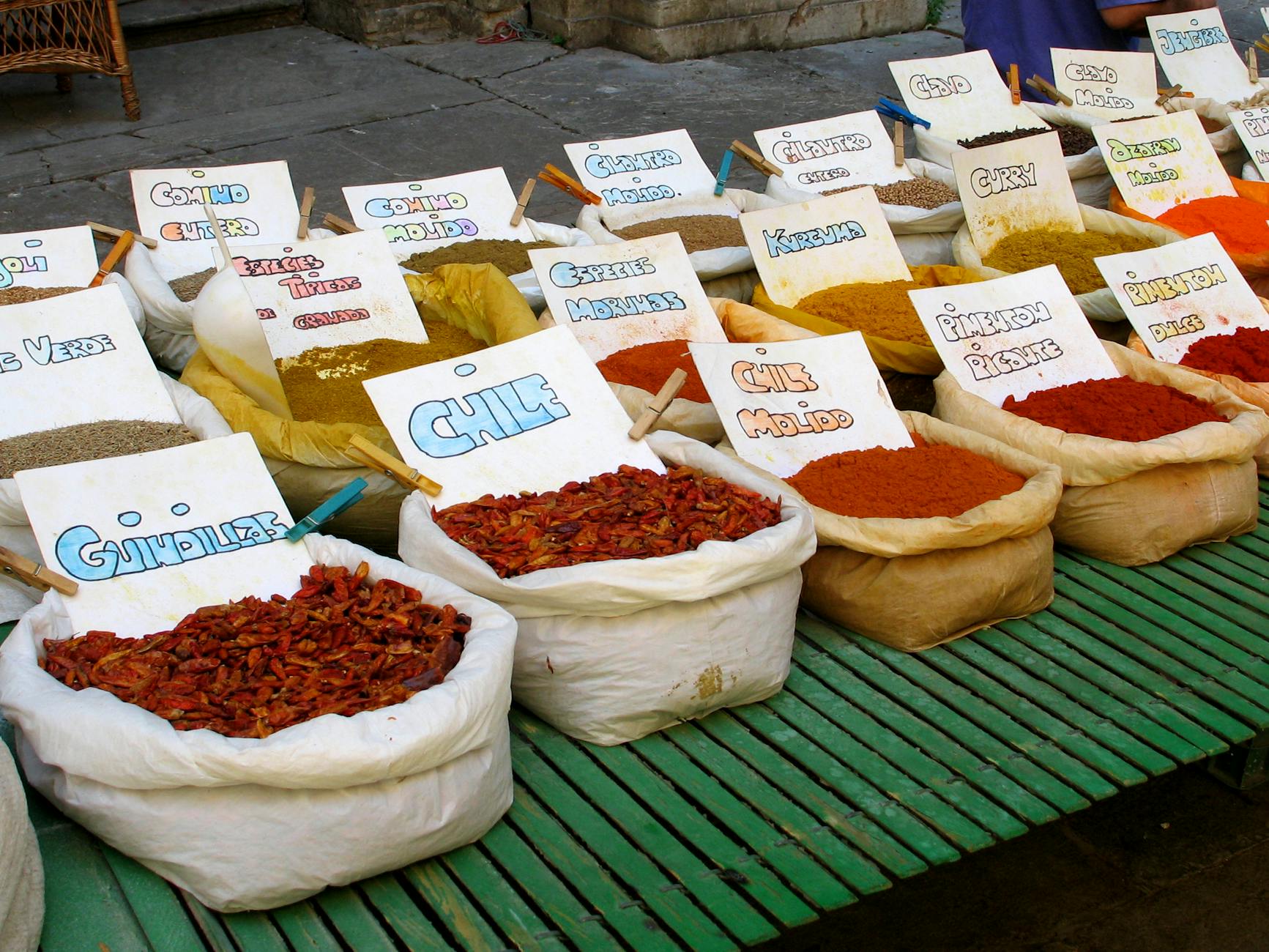
Granada is one of Spain’s more naturally enjoyable food cities because the social rhythm is so embedded in the city’s scale. Tapas culture matters here not as a cliché but as a structural part of the day. The city is well suited to travelers who like evenings that unfold through several stops rather than one overcommitted reservation.
The best move is restraint. One properly chosen lunch or dinner, one or two tapas rounds, and a base that lets you return easily. Granada is too physical to waste appetite planning.
Getting Around
Walk where the walking makes sense and stop pretending that every scenic climb is morally superior. Granada’s own tourism transport guidance makes clear that the city’s minibuses to the Alhambra, Albaicín, and Sacromonte are part of normal use, not a compromise.[4]
For ordinary urban buses, Granada Tourism’s practical bus page remains the key visitor reference: €1.60 single tickets, free transfers for 60 minutes, and card payment for single tickets since September 2024.[3]
For airport arrival, the airport bus remains the cleanest default for many central stays.[1][2]
What To Skip
Skip treating the Alhambra and both major hill districts as one giant same-day victory lap. Skip staying too high up only because it sounds romantic. Skip using all your energy before evening. Skip any itinerary that turns center Granada into nothing but a corridor.
Common Mistakes
- Underestimating the hills.
- Building the whole trip around the Alhambra and nothing else.
- Choosing lodging for photos rather than route logic.
- Using scenic pain as proof of authenticity.
- Arriving without a clear monument plan.
My Blunt Advice
Granada is not hard, but it is unforgiving of weak sequencing. Book the Alhambra properly. Stay where the city remains usable. Give the center real value. Do Albaicín and Sacromonte as different experiences, not as a single romantic blur. Use the minibuses when they improve the day. Protect the evening.
If you do that, Granada becomes one of Spain’s most distinctive short city breaks. If you do not, it becomes a beautiful place where you spent too much of your time proving you could climb.
Where Granada Fits in an Andalusia Trip
Granada occupies a very specific position in Andalusia, and understanding that position is the difference between a strong stay and a merely decorative one. It is not the broadest Andalusian city, nor the easiest, nor the most obviously "fun" in a casual sense. What it offers instead is concentrated historical intensity. Granada is where a regional itinerary gains altitude, both literally and emotionally.
If Seville often represents Andalusian grandeur and sociability, and Córdoba offers one of Spain's clearest one-monument-plus-center experiences, Granada operates like a tightening of focus. The city feels more compressed, more vertical, more haunted by succession and loss. This is not abstract. You feel it in the hills, in the repeated sightlines to the Alhambra, in the Christian monuments that insist on what came after conquest, and in the way the city keeps forcing you to think spatially as well as historically.
That makes Granada strongest in one of three roles.
The first is as an apex city inside a larger Andalusia circuit. You come to Granada not to relax the trip, but to deepen it. It is the place where the historical argument grows sharper and the physical city becomes more demanding.
The second is as a short stand-alone city break. This works because the urban radius is compact enough that two or three full days can feel complete, provided the trip is structured properly.
The third is as a counterweight to flatter cities. After Seville, Málaga, or even Valencia, Granada changes the bodily and visual terms of travel. It reminds you that city experience is not only about monuments or neighborhoods, but about terrain and attention.
Granada is a weaker fit only if your trip needs ease above all things. It is not impossible for low-energy travelers, but it is rarely accidental. The city rewards anyone who wants a place with pressure, memory, and topographic intelligence. It does less for people who want a soft generic Andalusian atmosphere without needing to choose much.
Granada Versus Seville, Córdoba, and Toledo
Granada gets flattened when people compare it too lazily to other beautiful Spanish historical cities.
Against Seville, Granada is smaller, steeper, and more concentrated. Seville spreads out into boulevards, riverfront, gardens, and a wider social ease. Granada is more compressed around its defining monument and opposing hill districts. If Seville often feels expansive and performative, Granada feels interior and exacting. It tends to leave a deeper impression in fewer square miles, but it also asks more from route design and physical energy.
Against Córdoba, Granada is less singular and more demanding. Córdoba is built around one of Europe's great monuments and a center that can be grasped relatively quickly. Granada has the Alhambra, yes, but the city only really resolves when the Alhambra, Albaicín, Sacromonte, and central Christian-imperial layer are read together. Córdoba can be clearer on a short visit. Granada can be richer once given enough time to sequence properly.
Against Toledo, Granada shares some of the same topographic and historical drama, but the emotional register is different. Toledo often feels like a cliff-set city of stern accumulation, a place where Christian, Jewish, and Muslim pasts remain tightly interlaced inside one commanding form. Granada feels more divided in the best way: monument hill, opposing Moorish-memory hill, and the central city below. The urban argument is more externalized. You do not just read it in buildings; you read it in how districts face one another.
The correct comparison question is not "which city is prettier?" but "what historical and physical experience do I want right now?" If you want Andalusian breadth and social ease, Seville may win. If you want fast clarity, Córdoba may win. If you want a shorter, steeper, more emotionally charged city where landscape and historical memory keep reinforcing one another, Granada is often the stronger answer.
First-Time Visitors Versus Repeat Visitors
Granada can be magnificent on a first visit, but it often becomes more intelligent on the second.
First-time visitors naturally build around the big obvious skeleton: Alhambra, Albaicín, perhaps Sacromonte, the cathedral, tapas, and a few miradores. That is not only acceptable, it is the right first outline. Granada's main drama deserves to be met directly. The mistake comes only when the first-timer treats all of those pieces as one same-day field of conquest.
Repeat visitors usually stop doing that. They already know that the city will not reward indiscriminate scenic ambition. They begin selecting harder. One return trip may lean center-plus-Alhambra with almost no Sacromonte. Another may make the Albaicín the emotional center and let the grand monument recede slightly. Another may focus on winter Granada, when the hills are easier and the city feels less consumed by its own image.
For first-timers, the key question is: what is the most coherent way to meet Granada's main arguments? For repeat visitors, the better question becomes: which Granada do I want to inhabit this time?
That distinction matters because Granada is not only a city of sights. It is a city of energy management, light, and mood. On a return trip, you stop proving things and start using the city with more precision. The result is often a calmer, sharper experience.
This is one reason Granada leaves such durable memories. The first visit gives the obvious beauty. The second often supplies the better judgment that explains why the beauty felt so charged in the first place.
Summer Granada Versus Shoulder-Season Granada
Granada is one of the Spanish cities most altered by heat because the climate affects not just comfort, but route viability.
Shoulder-season Granada is the city in its strongest public form. In April, May, late September, and October, the climbs remain real but more manageable, the miradores stay meaningful longer into the day, and the Alhambra can be approached as a historical and spatial experience rather than as a survival test. This is when Granada's layers talk to one another most clearly.
Summer Granada is still beautiful, but much more edited. The city does not become bad; it becomes selective. Midday flattens ambition. Hill districts start charging energy at a different rate. A hotel with air conditioning and real restorative value becomes part of the trip's architecture. Lunch and pause planning begin to matter as much as monument planning.
The classic summer mistake is to assume that because Granada is compact, it can absorb a full sightseeing day in the same way flatter cities can. It cannot. What looks like a short hop on a map may become a punishing transfer in direct heat. What seems like a charming extra mirador may quietly break the evening.
In summer, the best days usually have one dominant hill or monument chapter, a real middle pause, and an evening that begins after the city has softened. In shoulder season, Granada is more forgiving and more likely to reward longer connected walking. If your dates are flexible, shoulder season is the better answer for most first-time visitors.
Why the Base Matters More Than It Looks
Granada may be compact, but the wrong hotel base can still distort the entire trip.
This happens because scenic logic and practical logic do not always align. The photos that sell deep-Albaicín or Sacromonte-adjacent properties are real. So is the cost in luggage drag, repeated climbs, taxi complication, and late-day fatigue. The more romantic the listing, the more carefully the route reality should be checked.
That is why the historic center and Cathedral side work so well for first-time visitors. These zones give you flat resets, easy access to food and daily life, and a cleaner return path after major hill or monument time. They make Granada feel usable between its dramatic chapters.
The lower Albaicín can be excellent for atmosphere-first travelers because it reduces the distance between you and the city's most emotionally distinct district. But it only works when the property truly solves enough of the topographic problem rather than simply photographing it beautifully.
The wrong test is "will this hotel look amazing?" The right test is: will this hotel make the city better at 2 p.m. and 10 p.m., not just at check-in? If the answer is yes, the base is probably strong. If the answer depends entirely on romance and not on route, the city may become harder than it needed to be.
Why One Proper Granada Day Matters
Granada is a city that suffers when broken into fragments. Many weak itineraries treat it as a sequence of symbolic touches: arrive, glimpse the cathedral, do the Alhambra, run uphill to the Albaicín for sunset, collapse, leave. That can produce photos, but not much actual understanding.
One proper Granada day changes that. By "proper," I mean a day where the city itself is the point from morning through evening, not just the background to one famous site. That might be an Alhambra day with a calmer center-based evening. It might be a center-plus-Albaicín day that does not try to annex Sacromonte by force. It might be a Christian-imperial Granada day in the center followed by a strategic hill chapter later.
What matters is continuity. Granada becomes legible when the city is allowed to sustain one clear register long enough to teach you something. Fragmented half-days keep the city in postcard mode. A proper day lets it become a system of relationships: monument to district, district to slope, slope to hunger, hunger to evening.
If you only have one full day, you still need to choose. If you have two or three, the reward is that each day can belong more clearly to one Granada rather than all of them at once.
Day Granada Versus Evening Granada
Granada changes noticeably after the day cools, which is why evening is not merely an add-on here.
Day Granada is explanatory. This is when you understand how the hills oppose each other, how the Alhambra dominates the city, how center Granada functions as support rather than ornament, and how physical the destination really is. Daylight lets the map make sense.
Evening Granada is persuasive. Once the heat drops and the climbs are behind you, the city often becomes more social, more forgiving, and more emotionally coherent. Tapas life matters more. The center stops feeling like recovery territory and becomes a destination in its own right. Even the memory of the hills becomes easier to appreciate once you are no longer inside the hardest part of them.
This is why so many underplanned trips go wrong: they spend their best energy hours inefficiently and arrive at evening depleted. But evening is often when Granada finally begins making its most durable case. The city becomes less about proving endurance and more about reward.
A good first trip should therefore protect at least one real evening in the center or in a deliberately chosen district. Not just a hurried meal after too much climbing, but a sequence with appetite left in it. Granada improves when the night belongs to it, not only to the monument you finished earlier.
Why the Alhambra Should Not Own the Whole Trip
The Alhambra is one of Europe's greatest monuments. It should dominate part of the trip. It should not dominate your entire understanding of Granada.
Because it is so famous and so deservedly powerful, travelers often let it monopolize planning. Everything becomes "before Alhambra" or "after Alhambra." The rest of the city is reduced to supportive texture. That is the fastest way to turn Granada into a one-note experience.
The problem is not that the Alhambra overshadows everything aesthetically. Of course it does. The problem is that Granada's other layers only become legible if they are allowed their own time. The cathedral and Royal Chapel are not just postscript monuments. The center is not only a service zone. The Albaicín is not just the viewpoint facing the Alhambra. Sacromonte is not just a scenic extension of the Albaicín. Each of these has its own logic.
The best use of the Alhambra is to let it be a structural anchor rather than a total explanation. Give it the respect of real time, then give the rest of the city enough independence to answer back. Once Granada can answer the Alhambra instead of merely orbiting it, the trip becomes much stronger.
Why Granada Often Improves on the Second Visit
Granada often leaves first-time visitors impressed and slightly taxed at the same time. That combination is not a flaw. It is the beginning of understanding the city properly.
On a second visit, the Alhambra no longer has to carry the same burden of proof. You already know its force. That means the city around it can rise more fully into view. The center becomes more than recovery space. The Albaicín becomes more than the hill with the famous viewpoint. You know where the scenic effort is worth it and where it is only picturesque overkill.
This is also when Granada's scale starts to make more sense. What seemed compact but chaotic on the first visit becomes compact but exact. You stop moving as though the city were obligated to give you everything at once. You start using buses or taxis without guilt when they improve the day. You realize that one less climb can equal one better evening.
In that sense, Granada is a city that rewards humility. The second visit often works better because the traveler no longer mistakes intensity for totality. You do less, but you understand more.
How Granada Changes Over the Course of a Stay
On arrival, Granada often feels immediately promising. The center is dense and active, the hills are visible, and the city's main visual argument is already legible. It is easy to think the whole destination has revealed itself quickly.
By the second day, Granada usually becomes more demanding and more interesting. You begin to feel the physical terms of the city, not just admire them. You understand that the center is not merely less scenic but more necessary. You see how the Christian and Islamic layers are not just sequential but confrontational in the urban fabric.
By the third day, if the stay is going well, Granada stops feeling like a challenge to be solved and starts behaving like a place with chosen rhythms. You know when to stay low, when to climb, when to ride, when to eat, and when to let evening do the work. The trip stops being about extraction and becomes about proportion.
That is why Granada often needs at least two full days and benefits noticeably from three. The first day reveals the image. The second reveals the structure. The third, if you have it, reveals the city.
Source Notes
- 1. Aena, official airport bus page for F.G.L. Granada-Jaén Airport: [https://www.aena.es/en/f.g.l.-granada-jaen/how-to-get-there/bus.html](https://www.aena.es/en/f.g.l.-granada-jaen/how-to-get-there/bus.html)
- 2. Granada Tourism, how to arrive to Granada from the airport: [https://turismo.granada.org/en/how-arrive-granada-airport](https://turismo.granada.org/en/how-arrive-granada-airport)
- 3. Granada Tourism, urban bus information and fares: [https://turismo.granada.org/en/bus-urbano](https://turismo.granada.org/en/bus-urbano)
- 4. Granada Tourism, transport and accessibility overview: [https://turismo.granada.org/en/transport](https://turismo.granada.org/en/transport)
- 5. Granada Tourism, how to purchase tickets to the Alhambra: [https://turismo.granada.org/en/how-purchase-tickets-alhambra](https://turismo.granada.org/en/how-purchase-tickets-alhambra)
- 6. Patronato de la Alhambra y Generalife, official opening hours and schedule: [https://www.alhambra.org/en/alhambra-openning-time.html](https://www.alhambra.org/en/alhambra-openning-time.html)
- 7. Patronato de la Alhambra y Generalife, official hours and fares page: [https://www.alhambra-patronato.es/visitar/horarios-y-tarifas](https://www.alhambra-patronato.es/visitar/horarios-y-tarifas)
- 8. Granada Tourism, official Cathedral page: [https://turismo.granada.org/en/cathedral](https://turismo.granada.org/en/cathedral)
- 9. Granada Tourism, official Royal Chapel page: [https://turismo.granada.org/en/royal-chapel](https://turismo.granada.org/en/royal-chapel)
- 10. Granada Tourism, official Albaicín page: [https://turismo.granada.org/en/barrio-turistico/albaicin](https://turismo.granada.org/en/barrio-turistico/albaicin)
- 11. Granada Tourism, official Sacromonte page: [https://turismo.granada.org/en/barrio-turistico/sacromonte](https://turismo.granada.org/en/barrio-turistico/sacromonte)