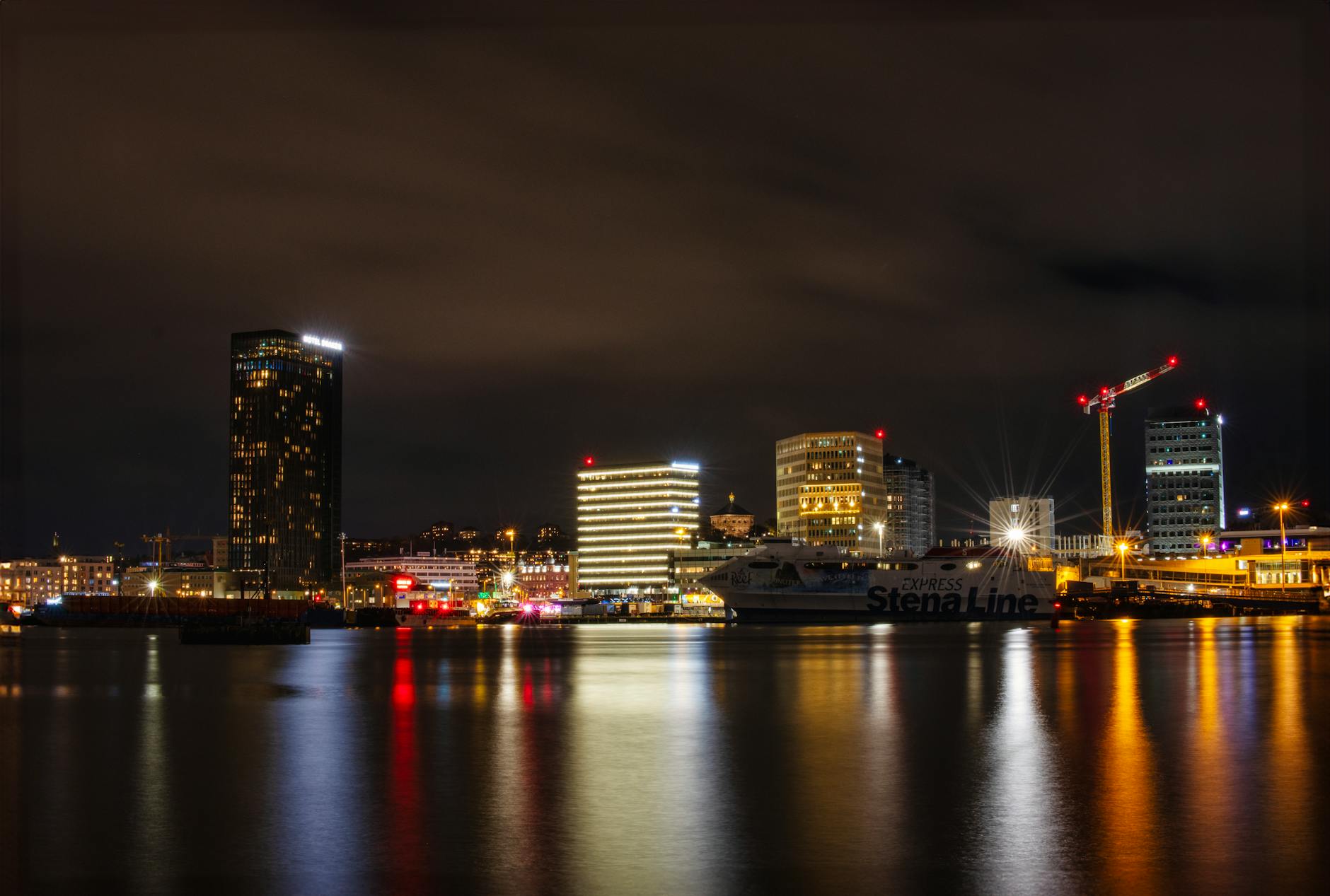
Gothenburg is one of those cities that suffers from being praised in the wrong language. People call it friendly, manageable, relaxed, laid-back, easy to like. All of that is true. None of it is sufficient. The words make the city sound like a pleasant fallback, when in fact Gothenburg can be one of northern Europe's most satisfying urban short breaks when approached with the right expectations.
Start Here
This is not Stockholm with lower stakes. It is not Copenhagen without the mythology. It is not a capital at all, which is part of the point. Gothenburg is a west-coast port city with a working memory of trade, shipbuilding, sea air, practical modernity, and a civic temperament that feels less ceremonial than Sweden's capital and less self-consciously curated than some of its Nordic peers. It is a city of trams, seafood, canals, broad avenues, old workers' districts, university energy, design restraint, and neighborhoods that reveal themselves gradually rather than all at once.
The first mistake is to treat Gothenburg as a stop between bigger names. The second is to confuse ease with triviality. Because the city is straightforward to move through, some travelers conclude too quickly that there must not be much there. That is the wrong lesson. Gothenburg works because its parts cooperate. The center is walkable. The tram system makes sense. Major museums sit close enough to real neighborhoods to feel integrated into life rather than marooned in cultural compounds. The harbor and river give shape to the city. The archipelago sits near enough to influence the mood even when you never board a boat. And the food scene, especially if you like seafood and understated quality, is stronger than many first-time visitors expect.
The best Gothenburg trip does not try to turn the city into a checklist of famous landmarks. It lets the place behave like itself. One strong hotel. One day where the city is mostly walked. One museum given actual time. One evening built around dinner instead of defaulting to convenience. One weather-aware harbor move. Maybe one archipelago extension, but only after the city has been allowed to become real first.
The city in one sentence: Gothenburg is a west-coast port city where the best trip comes from combining trams, neighborhoods, seafood, culture, and river-and-harbor rhythm rather than comparing it against larger Nordic capitals.
Basic data
| Population | About 600,000 in the city; metro about 1 million |
|---|---|
| Area | 447 km2 |
| Major religions | Christian heritage with growing secular and minority-faith communities |
| Political system | Municipal government inside a parliamentary constitutional monarchy |
| Economic system | High-income mixed economy led by port trade, automotive industry, technology, services, and education |
Quick Verdict
Best for: couples, solo travelers, food travelers, short Nordic routes, museum travelers, design-minded city breakers, first-time Sweden visitors who prefer human scale, and anyone who likes a city that feels lived in rather than overcomposed.
Not ideal for: travelers who need capital-city monument density, people looking for a hyper-glamorous Nordic fantasy, or anyone who wants a city to perform self-importance every hour.
Ideal first visit: 2 to 3 full days.
Minimum worthwhile stay: 2 full days, if one of them is centered on Gothenburg itself rather than immediately handed away to an excursion.
Best overall months: May, June, September, and the earlier part of October.
Best winter case: December for lights, restaurants, and compact urban mood, or late winter for museum-and-café city travel.
Biggest planning mistake: arriving with a "pleasant second city" mindset and therefore giving the city too little attention, too little evening life, and too little neighborhood time.
One thing to prioritize: a central base that lets you move easily between the old center, the tram network, and your evening food zones.
One thing to leave flexible: harbor and water time. Gothenburg improves when you can respond to light, weather, and energy rather than treating the waterfront like a fixed appointment.
The blunt version: Gothenburg is one of Europe's best compact city breaks for people who like quality over grandeur, and one of the easiest places to under-plan if they mistake its ease for thinness.
Who Will Love Gothenburg?
Gothenburg suits travelers who want a city that is both civilized and characterful. It is very good for people who like urban trips where good things happen without requiring constant effort. That sounds simple, but it is rare. Plenty of cities have culture and food. Fewer have them in a form that allows for calm, well-proportioned days rather than perpetual itinerary management.
It is especially strong for couples because it supports a very specific kind of trip extremely well: hotel, walking, one museum, one neighborhood, one very good meal, perhaps a ferry or harbor outing, and enough room for the day to breathe. The city is also unusually well suited to people who care about tone. Gothenburg is more about how a day feels than about how many icons you can stack into it.
Solo travelers also tend to do well here. The city is legible, safe-feeling, and socially easy. Cafés, trams, bookstores, museum spaces, and waterfront walks all feel natural alone. A lot of smaller cities can feel either too sleepy or too coupled-up for solo travel. Gothenburg usually avoids both problems.
It is also good for travelers who like reading cities through their working past. Gothenburg still makes sense as a port. Even when you are eating well in a polished restaurant or riding a clean tram through a well-run central district, the city still feels shaped by labor, shipping, river movement, and practical commerce. That gives it a seriousness that prevents it from becoming merely pretty.
The city is less ideal for someone who needs a city break to be dramatic in an obvious way. Gothenburg does not usually dazzle by force. It convinces by accumulation. If you need fireworks all day, you may find it understated. If you like confidence without theater, it can be excellent.
Gothenburg at a Glance
| Question | Practical Answer |
|---|---|
| Main airport | Göteborg Landvetter Airport (GOT) |
| Simplest airport transfer for most visitors | Airport coach to central Gothenburg |
| Typical airport-coach timing | About 40 minutes to Gothenburg C |
| Best first-time base | Central Gothenburg near the tram network and walkable core |
| Best atmospheric base | Center-west toward Haga/Linné or a strong central hotel with easy tram access |
| Best food-and-evening zones | Linné, Magasinsgatan, central streets around the canals, and select harbor-side districts |
| Best way to understand the city | Walking plus trams |
| Public transport operator | Västtrafik |
| Signature easy extension | Southern or northern archipelago |
| Best all-weather cultural anchor | Gothenburg Museum of Art or another major museum day |
| Car needed? | No |
| Emergency number | 112 |
| Tap water | Safe to drink |
| Currency | Swedish krona |
| Power plugs | Type C and F |
2026 Visitor Notes
Airport Access Is Clean If You Keep It Simple
For many first-time visitors, the airport coach is the right answer. Official Gothenburg visitor guidance points most arrivals toward the direct airport shuttle between Landvetter and central Gothenburg, with a journey time of roughly half an hour under normal conditions.[1] That is a very good airport transfer for a city of this scale. It makes a central hotel even more valuable, because the whole arrival can stay friction-light from terminal to check-in.
Gothenburg Public Transport Is Friendly, But It Still Has Rules
Västtrafik's network is one of Gothenburg's strengths, and it covers trams, buses, boats, and regional trains.[2] In zone A, you can also tap a payment card directly for travel, which is helpful for visitors who want to keep things simple.[3] The city is easy to use, but not because it reads your mind. A little ticket awareness pays off.
The Archipelago Is Not A Major Expedition
One of Gothenburg's quiet advantages is how close the archipelago feels to city life. Official tourism guidance makes clear that there are straightforward ways to reach it by public transport and boat, including routes from the city and onward via ferry points such as Lilla Varholmen.[4] That does not mean every visitor must go. It means the sea is part of Gothenburg's practical geography, not just its romantic backdrop.
The Museum Of Art Is A Real Anchor
The Gothenburg Museum of Art is one of the best reasons to give the city real indoor cultural time, with one of northern Europe's stronger art collections and a very practical central position at Götaplatsen.[5] If the weather turns or if you simply want the city to feel more substantial, this is one of the best places to let it do so.
Haga Is Pleasant, But It Is Not The Entire Point
Haga remains one of the city's most appealing first-time districts, with preserved buildings, cafés, and independent shops.[6] But it is not the entire case for Gothenburg. Use it as one piece of the city, not as the city reduced to a cinnamon-bun district.
The Trams Are Part Of The City's Personality
Plenty of places have trams. In Gothenburg, trams are not only transport. They are part of how the city feels. When a traveler actually uses them rather than defaulting to ride-hail convenience, Gothenburg starts making emotional sense much faster.
Seafood Matters, But Not As A Cliche
Yes, the city's west-coast seafood identity is real. No, that does not mean every visible fish-themed dining room near water is equally worth your time. Gothenburg rewards discernment more than sheer thematic enthusiasm.
How to Understand Gothenburg
Gothenburg works through five forces.
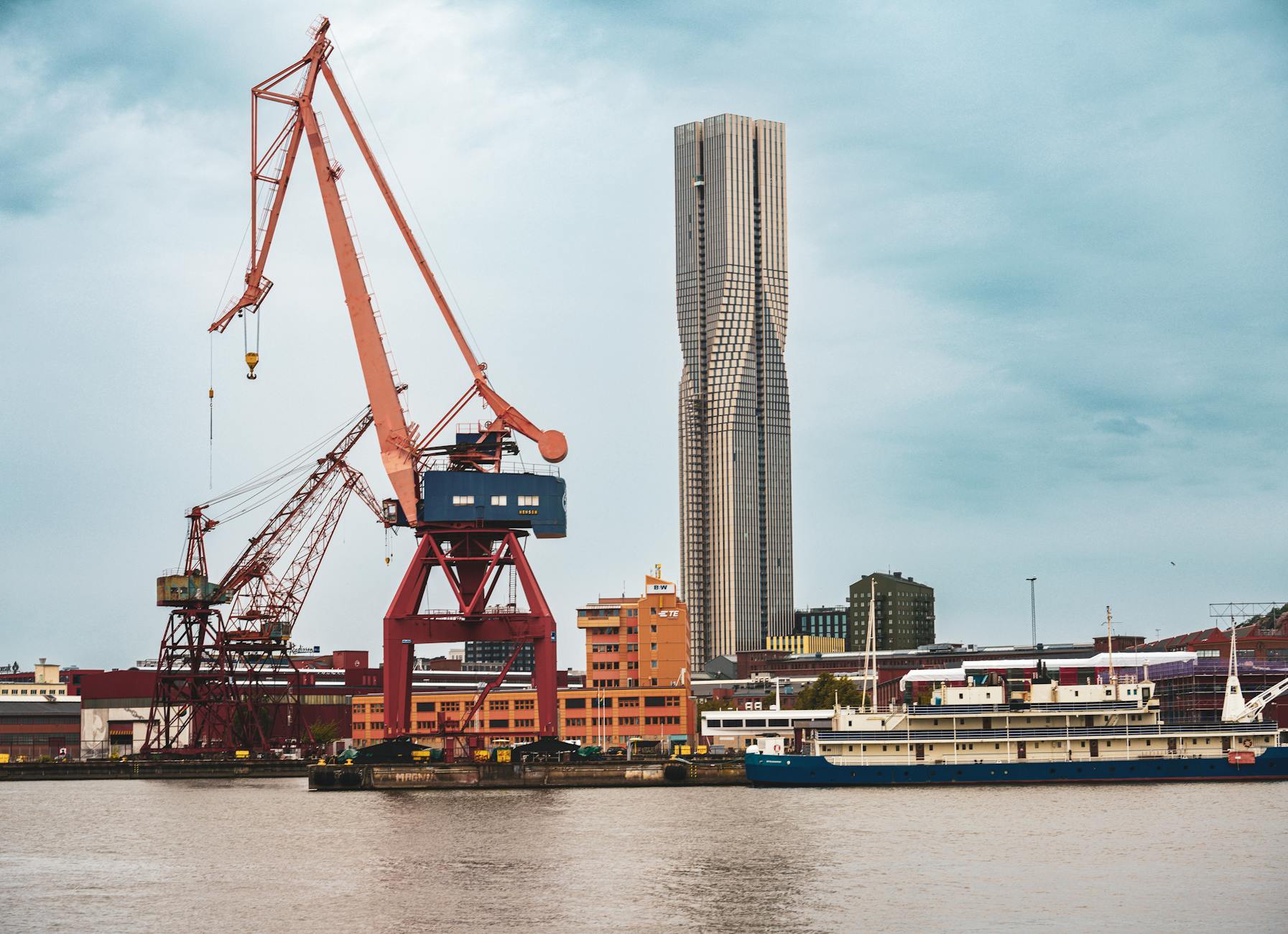
The first is the port and river. Even if the city looks tidy and contemporary in parts, the port logic still matters. Trade, shipbuilding, quays, ferries, water crossings, and the relationship between center and river give Gothenburg much of its shape.
The second is the tram city. Gothenburg is one of those places where public transport is not just useful. It is part of the civic identity. The trams help the city remain human-sized without becoming too small.
The third is the west coast. Seafood, weather, light, and the nearby islands all contribute to a city that feels maritime in a lived rather than decorative way.
The fourth is understated modernity. Gothenburg has design, new architecture, polished restaurants, and redeveloped districts, but they usually sit inside a practical Swedish frame rather than screaming for attention.
The fifth is non-capital freedom. This matters more than guidebooks admit. Gothenburg gets to be culturally serious and economically real without having to carry the symbolic performance burden of a capital.
The Five Gothenburgs A Visitor Actually Meets
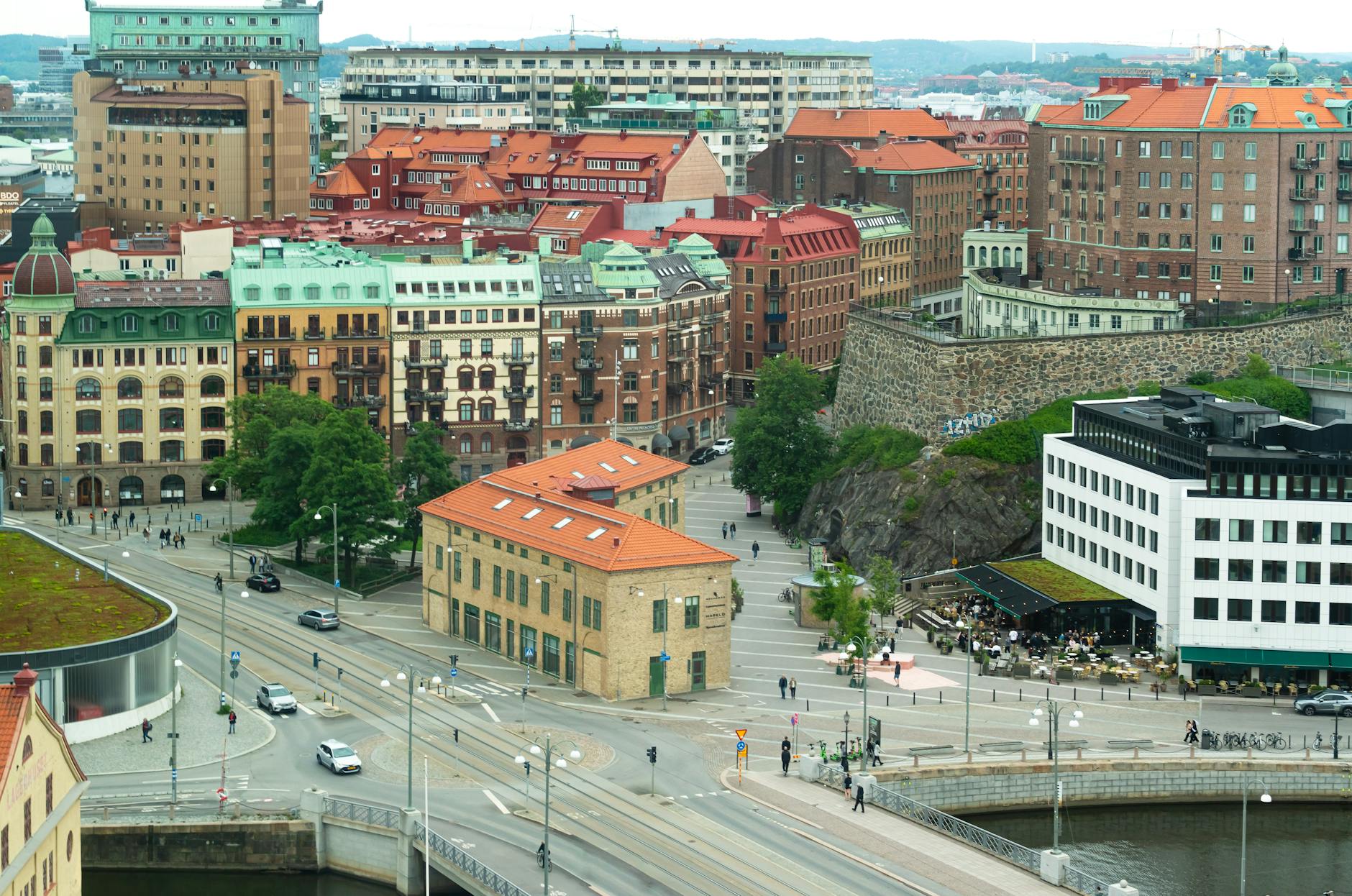
Central Gothenburg: canals, trams, broad boulevards, shopping streets, and the easiest first reading of the city.
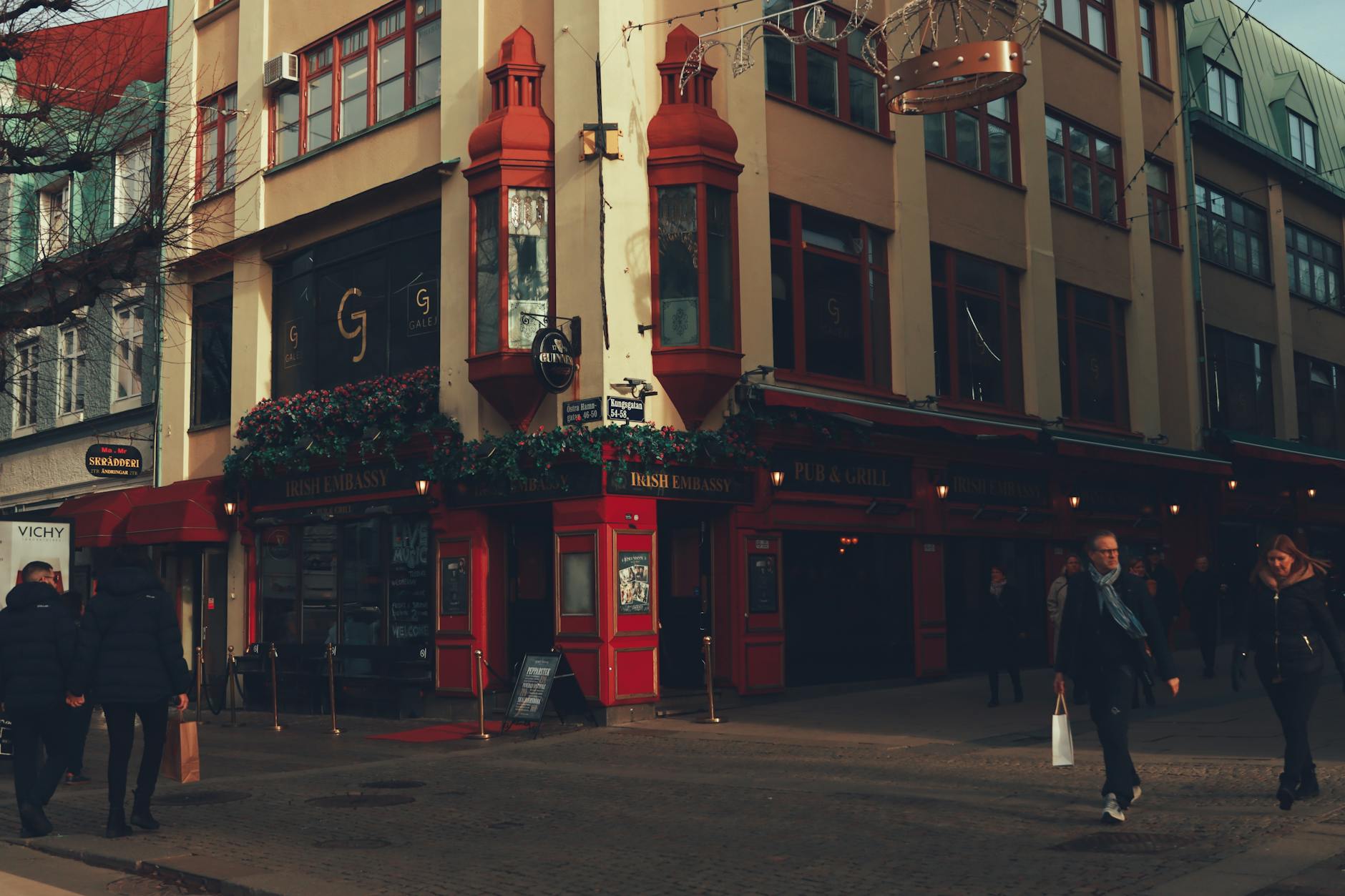
Old-Neighborhood Gothenburg: Haga, Linné, and adjacent districts that give the city warmth, street life, and the strongest café-and-evening texture.
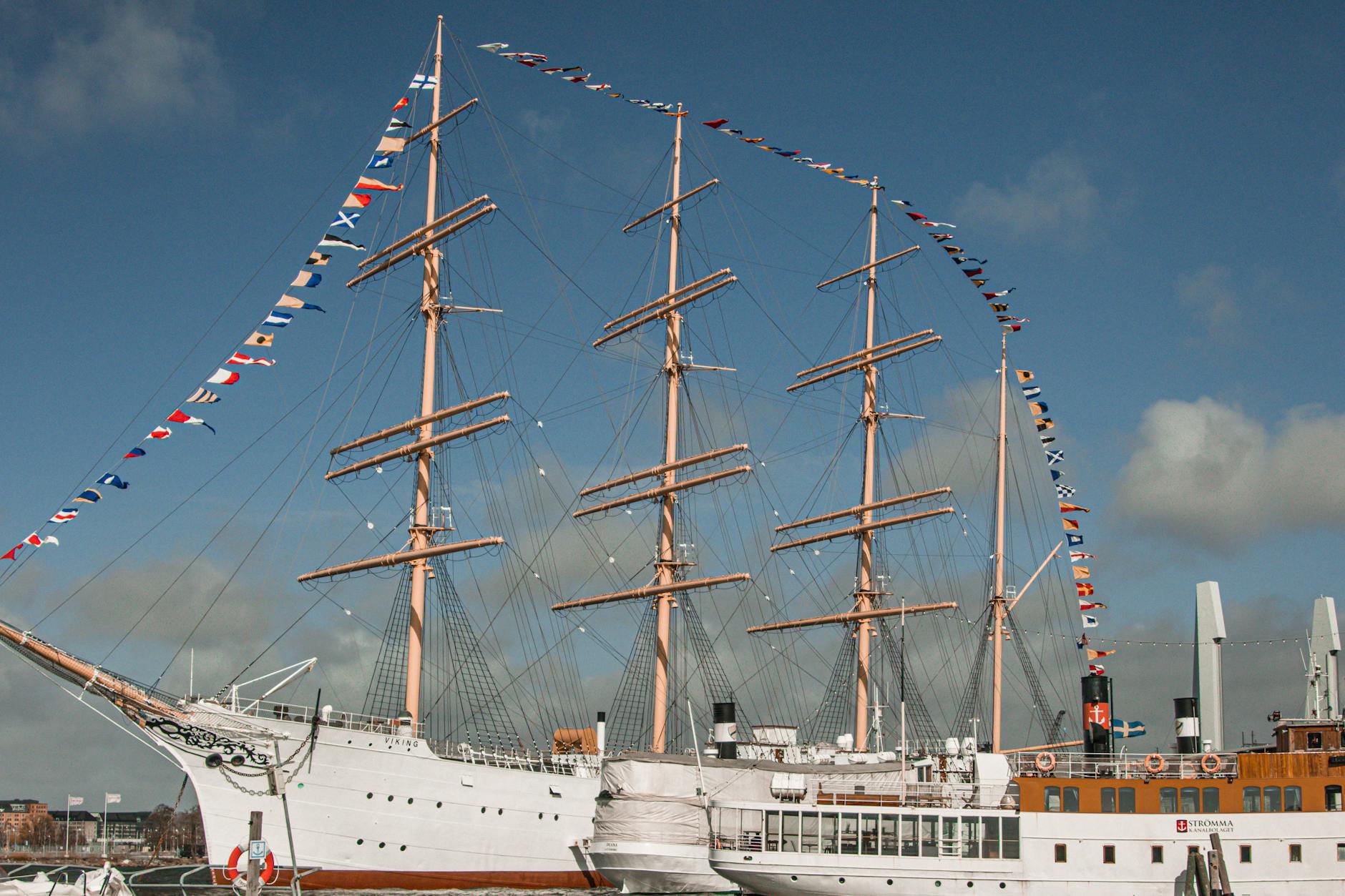
Harbor Gothenburg: quays, water edges, ferries, old shipbuilding memory, and the sense that the city still belongs to the sea.
Cultural Gothenburg: Götaplatsen, the Museum of Art, performing arts, design spaces, and the city's quieter intellectual seriousness.
Archipelago Gothenburg: the island-facing version of the city, where coastal imagination and practical access live very close together.
The Main Mental Shift
Do not ask, "What are the famous things?" Ask, "How do people actually use this city?" The answer includes trams, good walking, neighborhoods, meals, museums, and water. Once you understand that, Gothenburg gets better fast.
What Gothenburg Does Better Than People Think
Gothenburg is unusually good at complete short breaks. Plenty of smaller cities can fill two days. Fewer can make those days feel balanced, easy, and fully worthwhile. Gothenburg often can. The city has enough food, enough culture, enough neighborhood variation, and enough movement quality that a short stay still feels rounded.
It is also stronger than many first-time visitors expect at food with actual place behind it. Some cities have good restaurants that feel transferable. Gothenburg's best food experience still feels tied to coast, season, and the city's practical identity. That matters, especially for travelers who are tired of interchangeable Scandinavian chic.
Another underrated strength is museum depth relative to scale. The Museum of Art alone helps, but the broader cultural offering means Gothenburg can support an interior, weather-proof, art-and-ideas day without strain.
The city is also very good at being urban without crowding the visitor emotionally. It is one of the reasons people leave having enjoyed it more than they expected. The days rarely feel like battles. You can still have rhythm, pauses, and room for appetite.
Finally, Gothenburg does water-adjacent city life very well. Not as postcard waterfront theater, but as something more integrated. Water here affects movement, weather, light, food, and how the city thinks about itself.
Best Time to Visit Gothenburg
Gothenburg is a year-round city, but not a season-proof one. Light, wind, rain, terrace life, and harbor use all matter.
Best Overall Months
May, June, and September are especially strong first-visit windows. The city is active, daylight is generous, and you can still use both neighborhoods and water sensibly without peak-summer compression.
Summer
Summer is the easiest season in which to fall for Gothenburg quickly. Long days, better harbor conditions, outdoor dining, and easier archipelago moves all help. The risk is not that summer is bad. The risk is that the weather encourages travelers to confuse pleasant conditions with automatic good planning.
Autumn
Early autumn often suits the city beautifully. Gothenburg can feel more local, less externally presented, and more textured. Food travelers often do well in this season.
Winter
Winter narrows the city into restaurants, cafés, museums, trams, and shorter walking days. That can work very well if you actively want a compact Nordic city break. It is not the season for pretending you are on a bright maritime summer itinerary with a coat.
Spring
Spring is attractive because the city begins opening outward again. Water starts mattering more socially, not only visually, and the neighborhood life regains some looseness.
Month-by-Month Guidance
January: calm, museum-friendly, compact city mood. February: still wintery, often a good off-peak city-break month. March: transitional and variable. April: improving light, but still weather-aware. May: one of the best overall choices. June: excellent for a first visit. July: bright and lively, strongest if you want outdoor city rhythm. August: still very usable, but with slightly different energy as the city resets. September: one of the smartest months to go. October: atmospheric, cooler, often very good for food-and-museum travel. November: subdued and best for travelers who like the city at a quieter volume. December: lights, markets, indoor comfort, and compact winter city life.
How Many Days You Need
One Day
Enough for a strong first impression. Not enough for a real reading of the neighborhoods and water logic.
Two Days
The minimum respectable stay. One day should be central-and-neighborhood Gothenburg. The other should be cultural, harbor-led, or water-facing.
Three Days
Ideal for a first visit. This gives you room for one museum, one neighborhood day, one harbor or archipelago-facing block, and enough flexibility to let weather improve the trip instead of controlling it.
Four To Five Days
Very good if you want both Gothenburg proper and one or two extensions without turning the city into a mere base.
One Week
Excellent for a west-coast route anchored by Gothenburg, provided the city itself still gets multiple real urban days.
Where to Stay in Gothenburg
Where you stay matters because Gothenburg is easy to use well and equally easy to flatten into generic convenience.
Fast Answer
For most first-time visitors, stay in central Gothenburg with easy tram access and walking access to the core. Choose Haga or Linné-adjacent areas if you want more neighborhood warmth. Choose a central harbor-side or avenue-adjacent hotel if you want a more polished all-purpose base.
Neighborhood Decision Table
| Traveler Type | Best Area |
|---|---|
| First-time visitor | Central Gothenburg near the tram network |
| Couple weekend | Center-west toward Haga/Linné or a refined central stay |
| Food-led trip | Linné, Magasinsgatan side, or central with easy evening access |
| Museum-first trip | Götaplatsen-adjacent or central tram-friendly base |
| Rail traveler | Near Central Station, but still walkable into the city |
| Quiet-but-central stay | Edge of the center rather than pure shopping core |
Central Core
Best for: first-timers, short stays, and all-purpose use. Why it works: walkability, transport simplicity, and access to both old and modern parts of the city. Tradeoff: some stretches can feel more efficient than atmospheric. Best use: a clean first Gothenburg stay.
Haga / Linné Side
Best for: atmosphere, cafés, slower mornings, and better evening texture. Why it works: neighborhood life, old buildings, walkable food options, and a warmer city feel. Tradeoff: some properties feel more charming than practical depending on luggage and transport needs. Best use: couples, repeat visitors, and travelers who want Gothenburg to feel personal.
Avenue / Götaplatsen Side
Best for: museum access, a polished city break, and easy access to culture and nightlife. Why it works: cultural anchors, trams, and one of the city's clearest ceremonial spines. Tradeoff: parts of Avenyn can feel more extroverted than the city at its best. Best use: a neat culture-and-dinner weekend.
Harbor-Adjacent Contemporary Areas
Best for: modern-city travelers and people curious about the redeveloped river-facing Gothenburg. Why it works: broader views, cleaner lines, and a sense of where the city is heading. Tradeoff: some newer stretches are more visually resolved than socially rich. Best use: travelers who like contemporary urbanism and do not need older streets outside the door.
Area Profiles
Haga
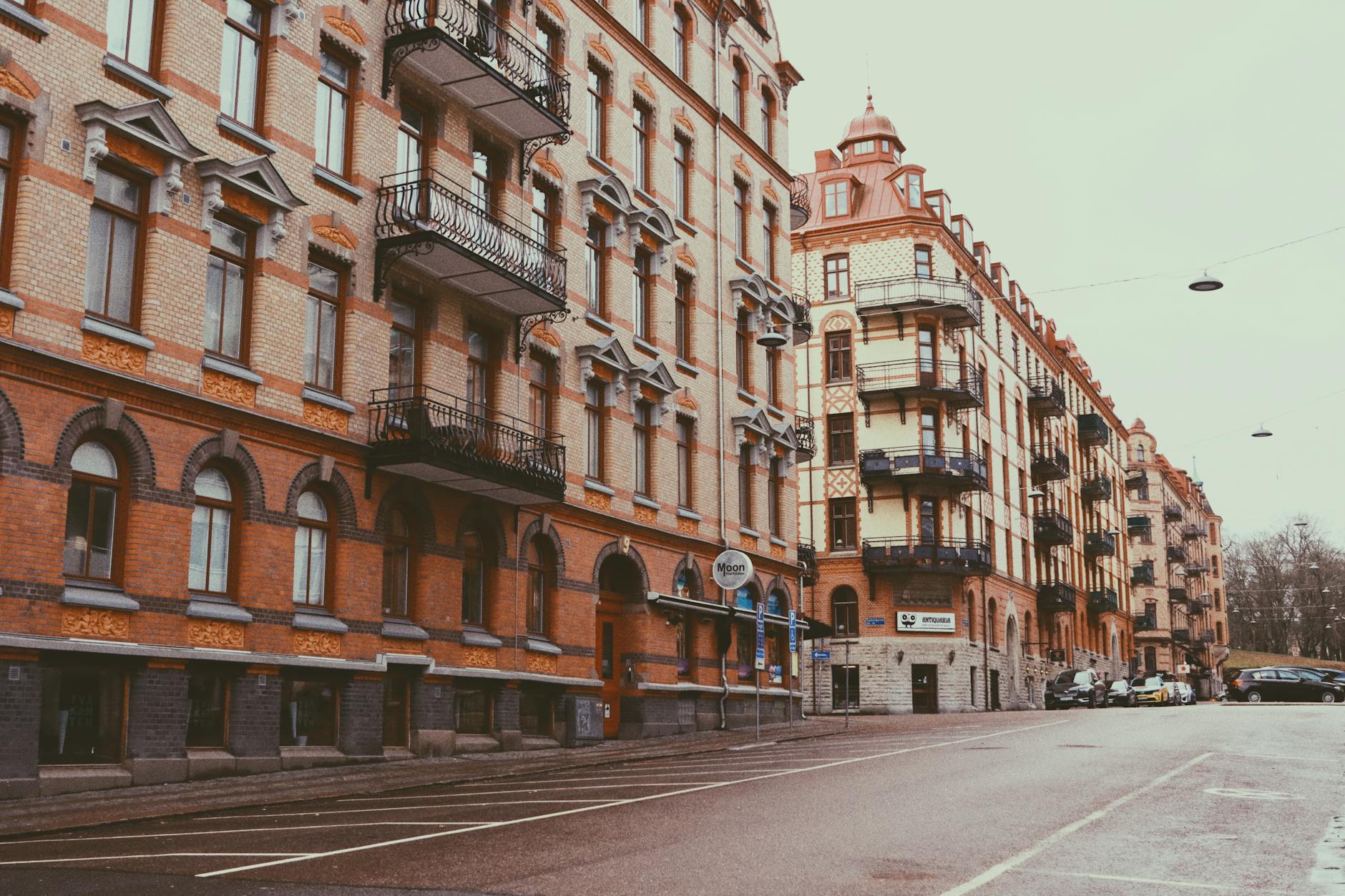
Haga is one of the city's easiest districts to like quickly, but it should not be reduced to a caricature of Swedish coziness. It works because it still has scale, street life, and enough rough edges to avoid becoming only decorative.
Linné
Linné gives Gothenburg evening energy, food options, and a more local social life. It is one of the parts of the city that proves Gothenburg is not only a tidy daytime destination.
Magasinsgatan
This is where design-minded, contemporary, café-and-shopping Gothenburg often feels most concentrated. Useful, but best when treated as one texture among several.
Avenyn And Götaplatsen
This is the city in a more ceremonial register: boulevard, culture, institutions, and event energy. Strong, but not the whole character of Gothenburg.
The Harbor And River Edge
This is where the city reads as a port and as a place still being remade by its relationship to the water.
Neighborhood Guide: Where to Explore, Not Just Sleep
Haga Proper
Walk it, yes, but do not only stop for the most obvious bakery shot. Look at how the district sits against the rest of the city and how it balances preservation with use.
Linnégatan And Side Streets
This is one of the most useful places to understand social Gothenburg. Food, bars, and ordinary urban life matter here.
Magasinsgatan
Good for seeing contemporary style without having to commit your whole day to retail behavior.
Around Götaplatsen
This is where cultural Gothenburg becomes clearest. Use it when you want the city to feel weightier.
Stenpiren And Water Edges
These spaces matter if you want the harbor city rather than just the shopping city.
Eriksberg Or Lindholmen Direction
If you have time and curiosity, these redeveloped river districts show another Gothenburg entirely: post-industrial, contemporary, and still distinctly tied to the working water.
The Best Things to Do in Gothenburg
1. Give One Museum Half A Day
Whether you choose the Museum of Art or another major institution, Gothenburg gets much better when at least one museum is treated seriously.
2. Walk Haga, But Do Not Stop There
Use Haga as an entry point, not the final explanation of the city.
3. Build One Day Around Trams And Neighborhoods
This is one of the cities where ordinary movement can become part of the pleasure rather than merely the way you get to pleasure.
4. Use The Harbor To Read The City
Waterfront walking and selected ferry or river-facing moves help Gothenburg make emotional sense.
5. Eat West-Coast Food With Judgment
A thoughtful seafood meal in Gothenburg can define the trip. A generic one can make the city seem more interchangeable than it is.
6. Let Evening Matter
The city often comes into focus after late afternoon, when neighborhoods warm up and restaurants take over from sightseeing.
7. Consider The Archipelago As Relationship, Not Obligation
Going can be great. Not going does not mean failure. The point is to understand that Gothenburg lives near it, thinks with it, and is shaped by it.
8. Use One Broad Avenue And One Smaller Street
Seeing both Avenyn and the more intimate districts helps balance the civic and human scales of the city.
9. Spend Time In A District That Is Not Only Tourist-Certified
Gothenburg improves once you leave the pure first-timer lanes and spend at least one hour where the city feels ordinary and current.
10. Resist Capital-City Anxiety
The city gets better the moment you stop asking whether you should have gone somewhere larger.
Itineraries
One Excellent Day In Gothenburg
Start in the center and orient yourself by foot and tram. Use Haga or a similar district in the morning, before it feels overhandled. Spend midday at a major museum. Have lunch or an afternoon coffee somewhere with neighborhood texture rather than generic convenience. Use the harbor or river edge later in the day. Finish with a serious dinner and a slow evening walk or tram back through the city.
Two Days
Day 1: central Gothenburg, one museum, and one neighborhood-led evening. Day 2: Haga/Linné, harbor and water logic, and either a second cultural stop or a more coastal-facing outing.
Three Days
Day 1: core city and culture. Day 2: neighborhoods, food, and social Gothenburg. Day 3: harbor and archipelago-facing Gothenburg, whether you leave the city proper or simply let the water shape the day.
Four To Five Days
This is the length at which Gothenburg can support one archipelago move or river-district exploration without sacrificing its own center.
One Week
A week works well if Gothenburg anchors a broader west-coast trip, but the city should still keep multiple real city days.
Itineraries By Traveler Type
First-Timer
Prioritize one museum, one neighborhood, one evening that feels intentionally chosen, and one water-facing move.
Couple Weekend
Spend more on the room, walk often, let dinner and wine or cocktails matter, and do not overbook the city into exhaustion.
Food Traveler
Treat Gothenburg as a serious dining city with a maritime base, not merely as a place where you should automatically eat fish by visible water.
Culture Traveler
Use the Museum of Art, Götaplatsen, and the broader museum layer to understand that Gothenburg is not only nice to be in; it is also worth thinking in.
West-Coast Starter
Use Gothenburg first as a city. Then let the coast widen the trip. In that order.
Food and Drink
What To Prioritize
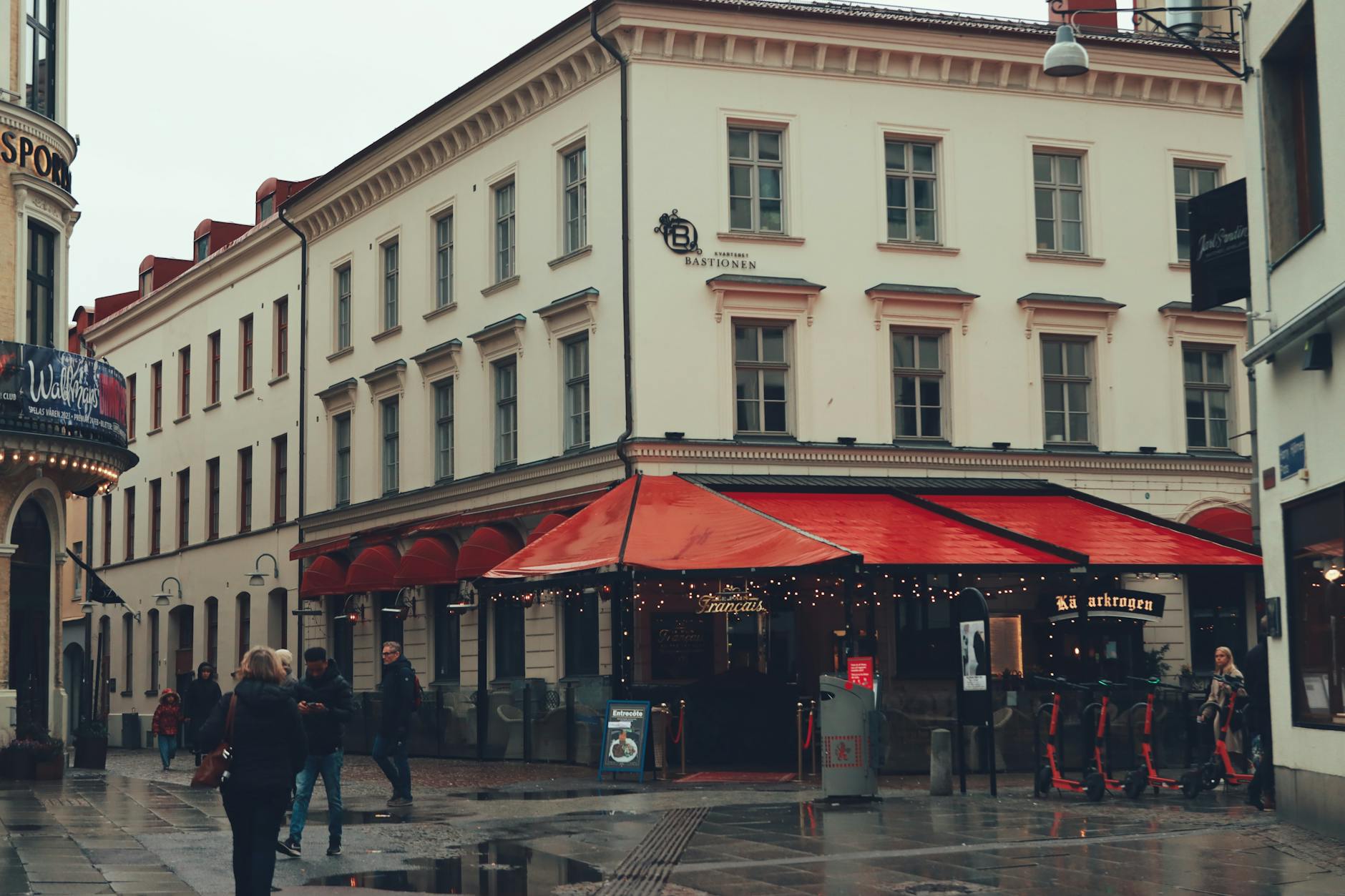
Prioritize seafood, yes, but prioritize selection more than seafood itself. Gothenburg is good because the city can do both polished and relaxed dining well when chosen carefully.
The Real Food Logic
The strongest food trip here usually includes one excellent west-coast meal, one more everyday but high-quality café or lunch stop, and one evening that uses neighborhood life rather than only the most obvious tourist center.
What Gothenburg Does Well
The city does maritime ingredients, quiet confidence, and restaurants that feel serious without pomp. That combination is one of its biggest strengths.
Fika And Evening Rhythm
Fika matters here because Gothenburg is a city where daytime pausing still feels integrated into urban life. Evening matters because the city often reveals its best social texture after workday energy softens.
Getting Around
The Core Rule
Walk first. Tram second. Taxi only when the day actually improves because of it.
Trams
The tram network is one of the main reasons Gothenburg is so usable. If you ignore it entirely, you miss part of the city's character.
Tickets
Västtrafik makes the system fairly visitor-friendly, but use the official ticket logic rather than assumptions borrowed from another country.[2][3]
Boats And Ferries
Water transport is not merely decorative in Gothenburg's wider geography. That is part of what makes the city feel properly maritime.
Stockholm Comparisons, And Why To Stop Making Them
The Wrong Frame
Gothenburg is not interesting because it can imitate Stockholm at a smaller scale. That is the wrong frame and produces the wrong trip.
The Better Frame
It is interesting because it offers another version of Swedish urban life: less formal, more west-coast, more port-defined, and often easier to inhabit over a short stay.
What Gothenburg Gets To Be
It gets to be cultural without ceremonial weight, stylish without capital-city performance, and coastal without becoming only a summer postcard.
Where Gothenburg Fits In A Sweden Trip
Gothenburg is one of the best balancing cities in Sweden because it interrupts the idea that the country is only Stockholm plus countryside. Stockholm is indispensable for scale, institutions, islands, and political-historical gravity. Gothenburg matters because it shows another urban Sweden: port-based, west-facing, less ceremonially national, and often easier to inhabit over a short stay. If a Sweden trip includes both cities, the country usually becomes more legible.
That role is especially valuable in routes that want one compact but serious city outside the capital. Gothenburg gives food, museums, public transport, water, and distinct neighborhoods without demanding endless planning energy. It is the city that can make a Sweden itinerary feel more lived and less official.
It also works extremely well in broader Scandinavian trips because it offers quality without forcing a capital-city pace every day. Travelers who move through Copenhagen, Oslo, and Stockholm sometimes need one city where the trip can quiet down without losing urban standards. Gothenburg is very good at being that city.
Gothenburg Versus Stockholm, Copenhagen, And Malmö
Compared with Stockholm, Gothenburg feels less ceremonially impressive and more socially immediate. Stockholm wins on visual drama, institutional scale, and capital authority. Gothenburg wins on proportional ease, neighborhood warmth, and a kind of port-city calm that can be more relaxing over a long weekend. It is not smaller Stockholm. It is a different argument about what a Swedish city can be.
Compared with Copenhagen, Gothenburg is less mythologized and usually less self-consciously stylish. Copenhagen often presents itself with enormous confidence, and rightly. Gothenburg can feel less polished in the first hour, but often more breathable by the second day. It asks for less performance from the visitor.
Compared with Malmö, Gothenburg is the more complete stand-alone city break for most first-time travelers. Malmö is rewarding and often underestimated, but Gothenburg has more cultural weight, stronger museum logic, and a fuller sense of itself as a destination rather than an adjunct to something larger.
This is why Gothenburg is so useful. It gives Scandinavian quality without requiring Scandinavian theater.
First-Time Visitors Versus Repeat Visitors
First-time visitors usually arrive wanting the city to prove itself quickly. Because Gothenburg is so easy to move through, that proof can seem subtle at first. The first useful correction is to stop waiting for one giant defining landmark and instead notice how the city organizes good days: trams, a museum, a district, a harbor edge, dinner, another district. Once that pattern is accepted, Gothenburg tends to rise very fast.
Repeat visitors often do better because they stop trying to compare the city upward. They stop asking what it lacks relative to Stockholm or Copenhagen and start using what it has with more confidence. One return trip may be almost entirely food and neighborhoods. Another may lean into harbor weather and museums. Another may use Gothenburg as a west-coast anchor with just enough city time to re-establish urban rhythm.
This is one reason Gothenburg rewards return more than some flashier cities do. It does not depend on a single postcard moment. It depends on the quality of use, and quality of use often gets clearer over time.
Why One Proper Gothenburg Day Matters
A rushed Gothenburg stop can be pleasant without ever becoming persuasive. You see Haga, perhaps ride a tram, maybe eat well, perhaps glance at the harbor, and leave thinking the city was nice but slight. Usually that judgment says more about the shape of the day than about the city itself.
One proper Gothenburg day changes the reading. It gives the center time to make sense on foot. It creates room for one museum or cultural block that adds seriousness. It allows one district to become more than a photograph and one meal to become more than convenience. It also lets the harbor participate in the day without being reduced to a token waterside pass.
Most importantly, a full day allows Gothenburg's proportion to become visible. The city is not trying to overwhelm you. It is trying to hold together. That difference is exactly why a short but well-designed day can be so satisfying here.
Why Haga Should Not Own The Whole Trip
Haga is useful and often charming, but it can distort a first visit if it becomes the city's whole story. Travelers who stay too obediently within its cozy register can come away with a version of Gothenburg that is softer, smaller, and more decorative than the real place.
This matters because Gothenburg has other necessary selves. Linné gives a stronger sense of evening and social life. The harbor gives the city scale and working memory. Götaplatsen gives it cultural confidence. Newer river districts show where the city is heading. Even the more ordinary central streets matter because they prove Gothenburg is not simply a preserved lifestyle quarter with trams.
Haga should be part of the trip, not the final answer. It is the welcome, not the whole conversation.
How Gothenburg Changes Over The Course Of A Stay
On arrival, Gothenburg can feel almost disarmingly easy. The center is readable, the transport is calm, and the city does not pressure you with grandeur. By the second day, that ease starts becoming something more specific. You notice that the tram system is part of the city's personality, not just a convenience. You see how food districts, water edges, and cultural institutions are all sitting within one coherent frame.
By the third day, many travelers start trusting the city enough to slow down. They choose one neighborhood and stay longer. They stop trying to compare every impression to a capital. They notice the river, weather, and evening more carefully. That is usually when Gothenburg becomes most convincing.
The city often leaves a stronger last impression than first impression for exactly this reason. It does not spend its force too early. It accumulates it.
Common Mistakes
- Treating Gothenburg as a placeholder before somewhere "more important."
- Using Haga as the whole explanation of the city.
- Ignoring the tram network and then concluding the city feels spread out.
- Eating too obviously near water just because the water is there.
- Letting the archipelago overshadow the city before the city has even started.
- Comparing every district mentally to Stockholm or Copenhagen instead of reading what is actually there.
- Underestimating how much evening improves the trip.
My Blunt Advice
Stay central. Ride the trams. Give one museum proper time. Use Haga, but do not stop at Haga. Eat well, but not lazily. Let the harbor explain the city. Let one evening belong entirely to Gothenburg rather than to the abstract idea of Scandinavian urbanism. And stop asking whether the city is second to somewhere else.
Gothenburg is not trying to win on grandeur. It wins on proportion, atmosphere, and quality of use. That is enough. In a short trip, it is often more than enough.
Source Notes
- 1. Gothenburg's Official Visitor's Guide, "Travel to Gothenburg." https://www.goteborg.com/en/guides/getting-to-gothenburg
- 2. Västtrafik, "Cards, tickets and prices." https://www.vasttrafik.se/en/tickets/
- 3. Västtrafik, "Tap and travel in zone A." https://www.vasttrafik.se/en/Tickets/more-about-tickets/Tap-payment/
- 4. Gothenburg's Official Visitor's Guide, "Getting to the Gothenburg archipelago." https://www.goteborg.com/en/guides/getting-to-the-archipelago
- 5. Gothenburg's Official Visitor's Guide, "Gothenburg Museum of Art." https://www.goteborg.com/en/places/gothenburg-museum-of-art
- 6. Gothenburg's Official Visitor's Guide, "Haga - cosy cafes and unique shops." https://www.goteborg.com/en/guides/haga