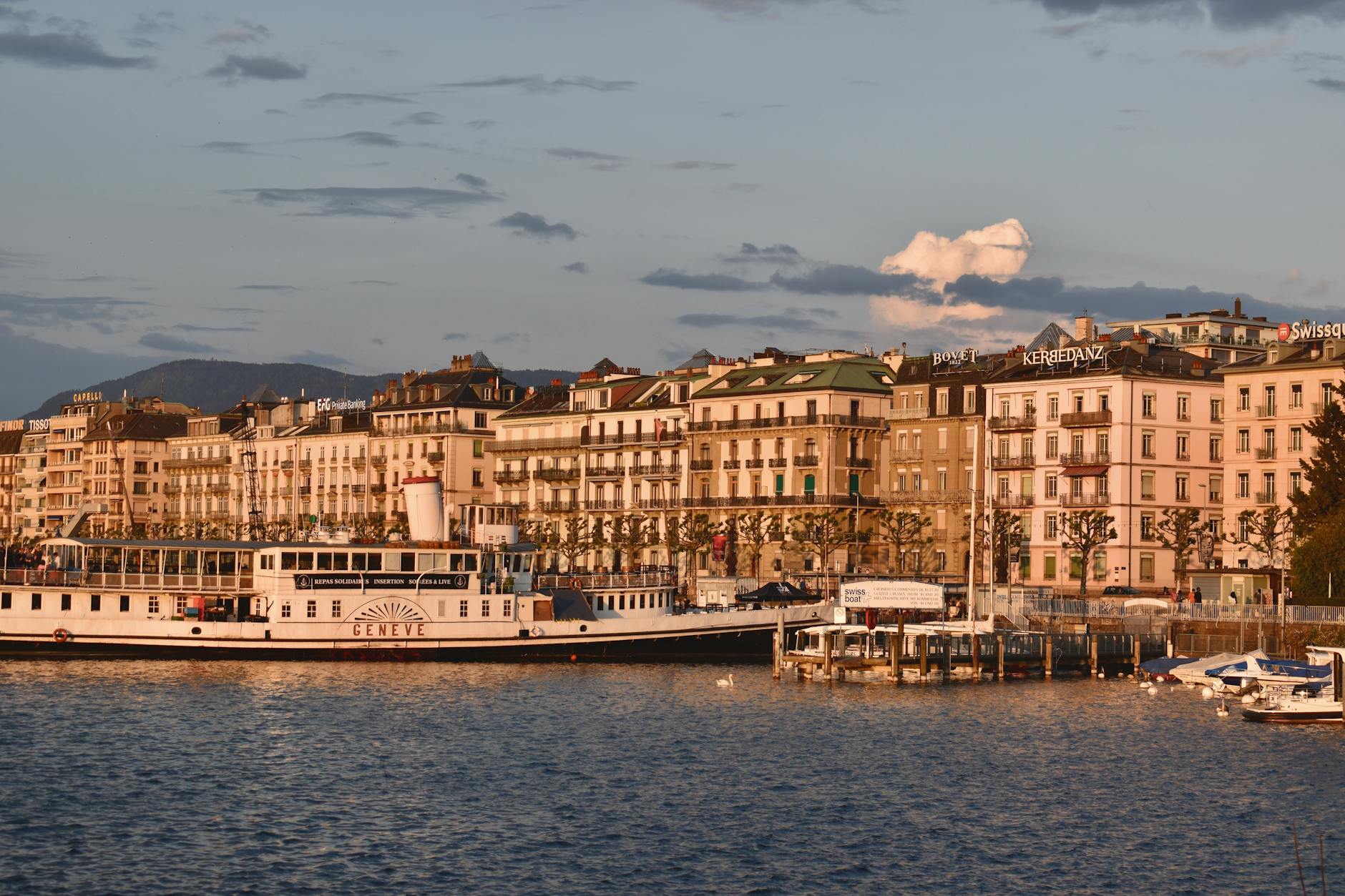
Geneva is one of Europe’s easiest cities to underestimate. The first mistake is to think of it only as a place of institutions: diplomacy, NGOs, banking, watchmaking, conference hotels, expense-account restaurants, and polished restraint. The second mistake is to decide that all of those things must add up to a city that is admirable but unloved. Both readings miss what actually makes Geneva worth staying in.
Start Here
This is a lake city with unusual composure. It is a city of water, parks, promenades, trams, good bread, precise service, old-town slopes, neighborhood markets, low-key internationalism, and one of the more refined urban settings in Europe. It is not a city that bludgeons the visitor with emotional spectacle. It is a city that asks to be read carefully. When you give it that attention, Geneva becomes far more rewarding than the lazy shorthand suggests.
The strongest Geneva trips come from understanding that the city is built around calibration. Too much haste and it feels cold. Too little curiosity and it feels expensive without justification. The right rhythm is different: a very good base, lots of walking, strategic tram use, at least one proper lake session, a serious look at the old town, a clear choice about whether you want museums or institutions or science, and enough time to feel the difference between the right bank, the left bank, Carouge, and the old city rather than reducing everything to the Jet d’Eau and hotel lobbies.
Geneva also improves when you stop asking it to be Paris or Zurich or Lucerne. It is not any of those places. It is a frontier city, a lake city, and a diplomatic city, but it is also simply a very good place to spend a few days if you care about urban cleanliness, ease, scale, food, and the quieter forms of pleasure. The city does not perform itself loudly. That is part of the point.
The city in one sentence: Geneva is a polished lake city where the best trip comes from combining water, neighborhoods, old-town texture, good transit, and a realistic relationship to cost rather than treating the city as a sterile backdrop for institutions.
Basic data
| Population | About 205,000 in the city; metro much larger |
|---|---|
| Area | 16 km2 in the city proper |
| Major religions | Christian heritage, Islam, Hinduism, Buddhism, Judaism, and a large secular population |
| Political system | Municipal government inside a federal republic |
| Economic system | High-income mixed economy led by diplomacy, finance, trade, services, and technology |
Quick Verdict
Best for: couples, refined city breaks, first-time Switzerland itineraries, solo travelers who like walking and order, lake-and-park urbanism, short luxury stays, conference extensions, and travelers who prefer composure to chaos.
Not ideal for: travelers looking for cheap spontaneity, constant nightlife theater, maximal monument density, or a city that explains itself without effort.
Ideal first visit: 2 to 3 full days.
Minimum worthwhile stay: 2 full days, if one is mostly city-led and not handed away to a long day trip.
Best overall months: May, June, September, and early October.
Best winter case: December for lights and polished cold-weather city time, or the quieter parts of late winter if you want museums, restaurants, and lake atmosphere without crowd pressure.
Biggest planning mistake: choosing a purely practical hotel near the station or airport without thinking about what kind of Geneva experience you actually want.
One thing to prioritize: a base that lets you walk to the lake and use the city on foot.
One thing to leave flexible: lake and outdoor timing. Geneva’s value rises fast when the weather is good, and it is worth adapting your days to that.
The blunt version: Geneva is much better than its reputation if you treat it as a lake city with elegant daily life rather than as a duty stop full of institutions.
Who Will Love Geneva?
Geneva suits travelers who like cities that are disciplined without being dead. It is very good for people who appreciate proportion, public order, strong transport, polished hotels, beautiful water, and days that do not need to be overloaded to feel worthwhile. It works very well for couples because so much of the city’s pleasure is atmospheric: promenades, parks, good breakfasts, elegant lunches, evening light on the lake, quiet wine bars, and the sense that the city has been calibrated for civilized living rather than maximal stimulation.
It is also strong for solo travelers who want a place that feels manageable, safe, international, and intelligible. Geneva does not require constant tactical thinking. It is easy to understand geographically. Once you recognize the lake, the old town rise, Cornavin, the right-bank and left-bank difference, and the path out toward Carouge or the international district, the whole city becomes usable.
Geneva is especially good for travelers who like Switzerland but do not need every city to be picturesque in the same way. This is not alpine fantasy Switzerland. It is urban, cross-border, multilingual, and sometimes almost understated to a fault. That is precisely why it can be interesting. It shows a different Swiss register: worldly, bureaucratic, elegant, expensive, but also beautifully livable.
It is less ideal for travelers who need cities to overwhelm them with personality on first contact. Geneva often lands as calm before it lands as lovable. People who stay one rushed night and leave early tend to report the city as sterile. People who actually stay near the lake, walk widely, eat well, and let the place reveal its pacing usually leave with a much higher opinion.
Geneva at a Glance
| Question | Practical Answer |
|---|---|
| Main airport | Geneva Airport (GVA) |
| Distance from city center | Very close; Geneva-Cornavin is about 7 minutes by train |
| Best airport transfer | Train to Cornavin for most travelers |
| Airport rail note | Airport station sits directly beneath the terminal |
| Standard local ticket note | A unireso zone 10 ticket covers the airport-to-center journey if you do not have a hotel transport card |
| Best first-time base | Lakeside central Geneva, Old Town edge, or the best parts of the center near the lake |
| Best practical base | Cornavin / right bank if convenience matters most |
| Best stylish residential extension | Eaux-Vives or Carouge |
| Best way to understand the city | Walking plus trams and the Mouettes genevoises |
| Free hotel-guest perk | Geneva Transport Card for approved accommodation guests |
| Public transport network | UNIRESO / TPG / CFF / Mouettes genevoises |
| Emergency number | 112 or 117/144 depending on service |
| Tap water | Safe to drink |
| Currency | Swiss franc |
| Power plugs | Type J and European-compatible variants |
| Car needed? | No |
2026 Visitor Notes
Airport Access Is Almost Comically Easy
Geneva is one of Europe's simplest airport-to-city transfers when your hotel is central. The airport rail station is directly below the terminal, and the train to Geneve-Cornavin takes about 7 minutes.[1] That level of ease changes the mood of the whole trip. Geneva starts cleanly.
Many Hotel Guests Ride Free
Geneva Tourism's current system remains very useful: anyone staying in approved accommodation is entitled to a free digital Geneva Transport Card for the duration of the stay.[2] It covers the Geneva UNIRESO network, including TPG buses and trams, CFF trains within the relevant local scope, and the Mouettes genevoises lake shuttles.[3] Crucially, the digital card can be sent before arrival and used from the airport to your accommodation.
Without The Card, The Airport Still Isn’t Hard
If you do not have the transport card, the airport-to-center train ride is still straightforward. Geneva Airport's official guidance notes that a unireso zone 10 ticket for CHF 3 covers the trip into the city center.[4]
The Mouettes genevoises Are Transport, Not Decoration
The little yellow lake boats are one of the city’s best low-effort pleasures. They are useful for crossing the lake and excellent for understanding the city’s two-bank logic. Treat them as part of the transport network, not just as a cute extra.
CERN Is More Structured Than Many Visitors Assume
CERN's Science Gateway is free to visit, but registration is required and recommended for families and individual visitors.[5] Guided tours and lab workshops are much more constrained and, for individual visitors, are handled on site on the day of visit rather than through simple advance booking. If CERN matters to you, give it real planning space.
Geneva Rewards Actual Lake Time
A surprising number of people come to Geneva, look at the lake, and spend the rest of the stay inside conference rooms, shops, or day-trip trains. That is how you end up with a thin understanding of the city. Geneva’s lakefront is not decorative frontage. It is part of the city’s operating identity.
The City Is Expensive, But Not Randomly So
Costs are high, but the city usually gives something real back for them: cleanliness, reliability, elegance, safety, and ease. Geneva feels worst when you spend a lot while using it badly. It feels much better when you understand what you are paying for.
How to Understand Geneva
Geneva works through five forces.
The first is the lake. Not just physically, but emotionally. The lake changes the light, the scale, the public life, the walking logic, and the city’s entire sense of composure. Without the lake, Geneva would read far more bureaucratically.
The second is the international layer. The institutions matter, but not only because of their buildings or politics. They shape the city’s population, restaurants, hotel stock, multilingual habits, and sense of worldly normalcy.
The third is precision. Geneva is orderly in ways many cities only pretend to be. Transport works, streets are legible, public space is maintained, and service tends toward understatement rather than theater.
The fourth is the neighborhood gradient. The city is small enough to seem singular until you pay attention. The old town, Pâquis, the right-bank hotel districts, Eaux-Vives, Carouge, and the international district do not feel the same. That variation matters.
The fifth is cost discipline. Geneva becomes much better once the traveler accepts that they cannot approach it lazily. Hotel choice, dining strategy, and day structure all matter more when almost every mistake is expensive.
The Five Genevas A Visitor Actually Meets
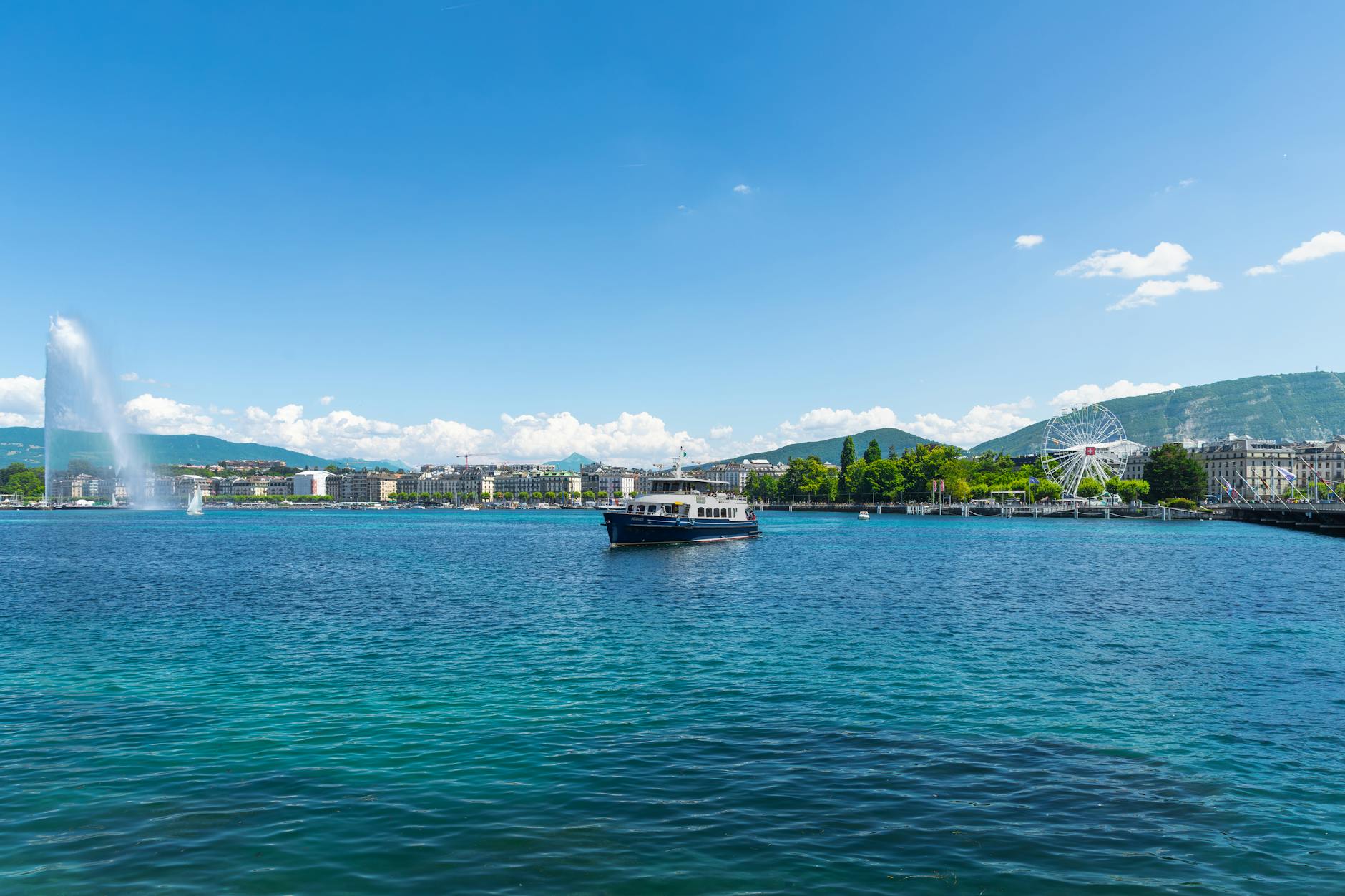
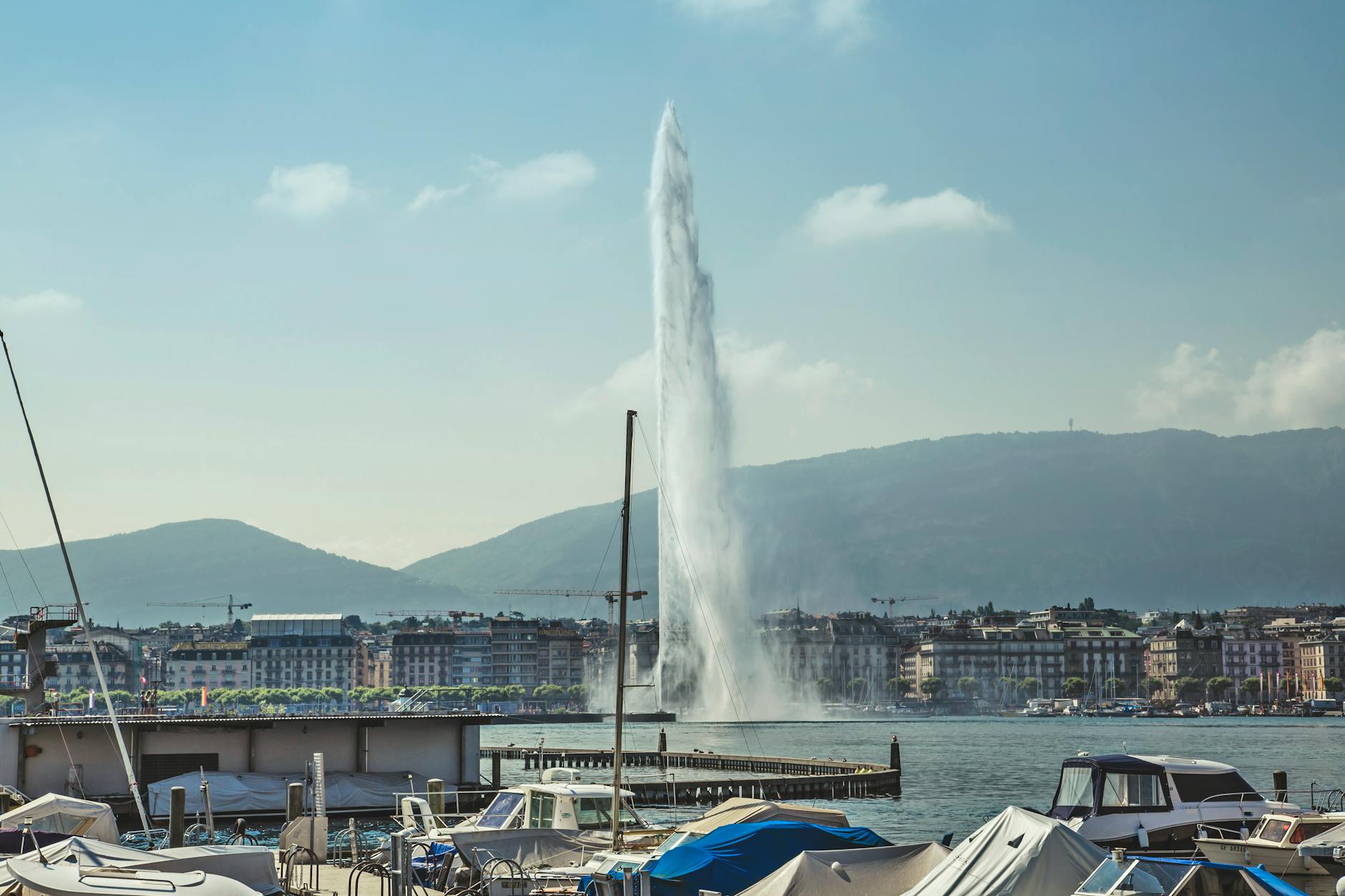
Lakeside Geneva: promenades, quay views, the Jet d’Eau, hotels, boats, and the city’s most obviously graceful face.
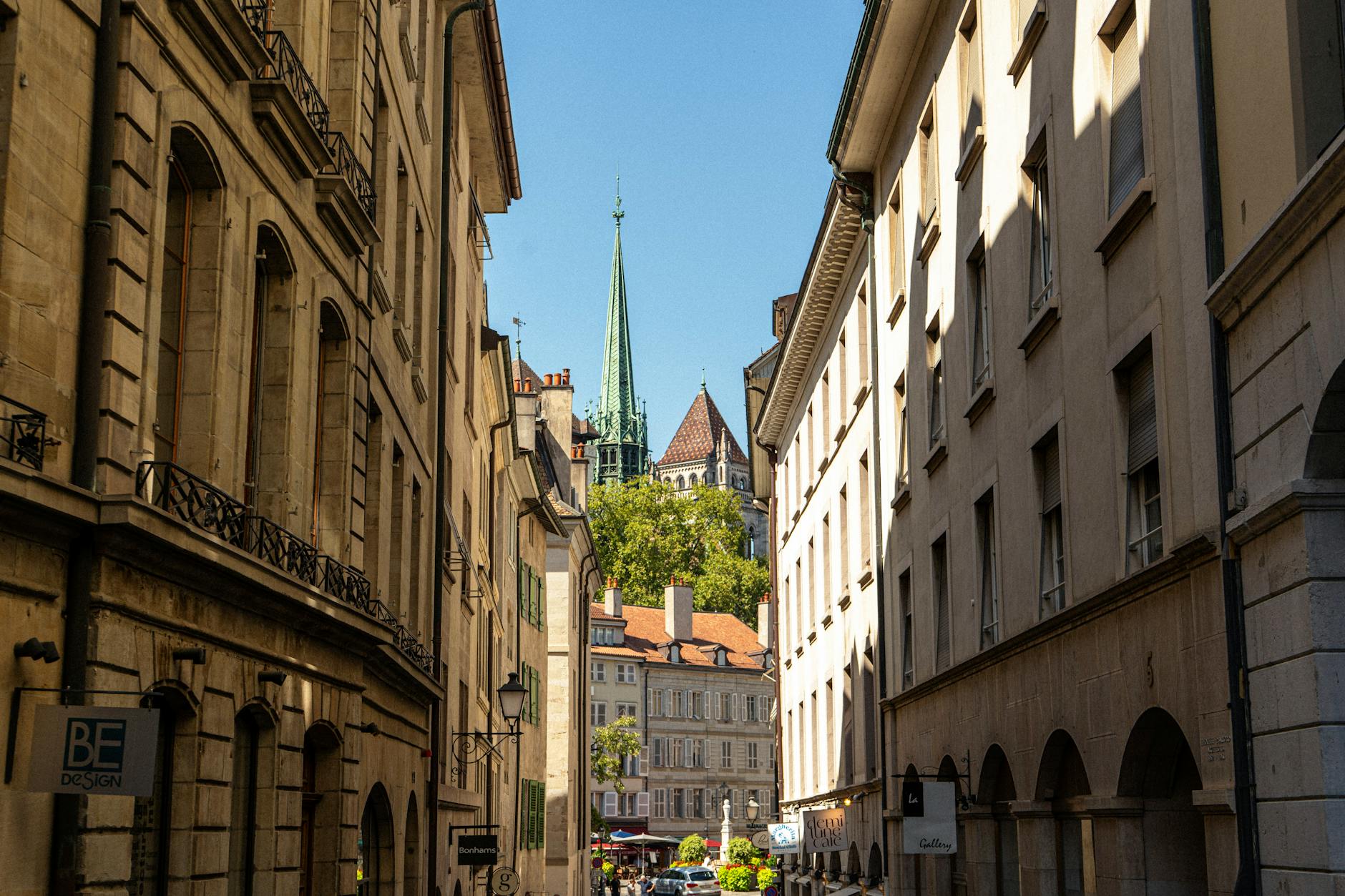
Old Geneva: the Vieille Ville, cathedral heights, narrow lanes, and the historical layer that keeps the city from becoming too sleek.
International Geneva: the UN side, NGOs, diplomacy, broad avenues, and the global-administrative identity that outsiders often reduce the whole city to.
Local Geneva: neighborhood cafés, markets, parks, trams, bakeries, and the less ceremonial city of daily use.
Alternative Geneva: Carouge, arts spaces, less polished edges, and the parts of the city that push back against the fully formal image.
The Main Mental Shift
Do not ask, "What are Geneva’s big sights?" Ask, "How does Geneva want to be lived for two or three days?" That is the better question. The answer usually includes walking, pausing, eating well, riding public transport because it is convenient rather than because it is cheap, and treating the lake as a constant rather than a backdrop.
What Geneva Does Better Than People Think
Geneva is very good at civilized urban ease. Not glamorous ease, not Mediterranean looseness, but a cleaner, more deliberate kind. Arrivals are simple. Public transport is trustworthy. The city is readable. You can have a highly ordered day without feeling trapped inside systems.
It is also better than many travelers expect at soft beauty. Geneva is not trying to shock you with beauty. It accumulates it through water, mountain glimpses, carefully framed streets, chestnut and plane trees, the old town rise, and the way the city handles space around the lake. It rewards attention rather than rush.
Another underrated strength is compact cosmopolitanism. Geneva is deeply international without feeling like an anonymous global city. You can sense the world in the population, language mix, restaurants, and institutions, but you can still understand the city physically within a short stay.
Geneva is also strong at precision without deadness. Many business-heavy cities feel overmanaged. Geneva often avoids that because the lake, the parks, and the old-town fabric keep softening the harder edges.
Finally, Geneva is good at quality control. Even when the city is expensive, it often feels coherent. Things are clean. Hotels are usually what they claim to be. The transport does what it should. The city’s standards are part of the product.
Best Time to Visit Geneva
Geneva is a year-round city, but the balance of lake, terraces, and walking changes a lot with the season.
Best Overall Months
May, June, September, and early October are the strongest first-time windows for many travelers. The city is attractive outdoors, the lake is active, and the temperature burden is usually manageable.
Summer
Summer is when Geneva’s lake identity becomes easiest to understand. Waterfront life expands, boats feel essential rather than optional, and the city can become surprisingly light-footed. The tradeoff is that some areas feel more expensive and more obviously visitor-facing, and the polished city can start to verge on smug if your hotel or dining choices are weak.
Autumn
Early autumn is excellent. The city often remains beautiful, the lake still matters, and the crowds soften. This is one of the best times for travelers who want Geneva to feel elegant rather than merely active.
Winter
Winter strips the city down to its harder lines, but that can work well if you like polished hotel time, museums, restaurants, and cold-weather lake atmosphere. Geneva is not cozy in a chalet way. It is wintery in a refined urban way.
Spring
Spring is strong because the parks and quays begin to animate again and the city starts behaving like a lake city instead of just an orderly one.
Month-by-Month Guidance
January: quiet, cold, and best for city minimalists or business travelers adding leisure time. February: similar, but often slightly easier psychologically as the city starts leaning toward spring. March: transitional and often attractive if you do not expect summer energy. April: increasingly pleasant, with stronger outdoor payoff. May: one of the best months for first-timers. June: excellent, lively, and highly legible as a lake city. July: beautiful, active, and expensive; strongest if you use the water properly. August: still strong, especially for lake life and relaxed city breaks. September: one of the smartest months to visit. October: often elegant and rewarding, especially early in the month. November: grayer and more interior-facing, best if you know why you are coming. December: polished, festive, and good for winter city travelers.
How Many Days You Need
One Day
Enough for the lake, old town, and a meal. Not enough to understand why the city works.
Two Days
The minimum respectable stay. One day for lake and old city, one for neighborhoods, museums, or the international or science side.
Three Days
Ideal for a first visit. This allows Geneva to feel like a city rather than a transit node.
Four To Five Days
Very good if you want one day trip without hollowing out Geneva itself, or if you want a slower, more luxurious pace.
One Week
Excellent for a Swiss route built around Geneva plus nearby destinations, but only if the city still gets several real urban blocks of time.
Where to Stay in Geneva
Base choice changes the whole trip. Geneva is small, but the emotional difference between the right hotel near Cornavin, the wrong hotel near Cornavin, and a well-chosen lake or old-town-edge room is enormous.
Fast Answer
For most first-time visitors, stay near the lake, the Old Town edge, or the best central stretches between Cornavin and the waterfront. Stay in Pâquis if practicality and lake access matter more than romance. Stay in Eaux-Vives if you want a polished residential feel. Stay in Carouge if you want a slightly different, more atmospheric neighborhood experience and do not mind a short tram link.
Neighborhood Decision Table
| Traveler Type | Best Area |
|---|---|
| First-time visitor | Central lakeside or Old Town edge |
| Couple weekend | Lakefront, Eaux-Vives, or a strong boutique stay near the old city |
| Practical short stay | Cornavin/right bank with easy lake access |
| Food-and-neighborhood trip | Carouge or Eaux-Vives |
| Business plus leisure | Lakeside center or international district with clear tram links |
| Without fuss | Central right bank near Cornavin but not in the weakest station blocks |
Central Lakeside
Best for: first-timers, couples, polished short stays, and travelers who want Geneva to look and feel like Geneva from the start.
Why it works: immediate lake access, elegant walks, easy orientation, hotel quality, and useful connections to the rest of the city.
Tradeoff: cost.
Old Town Edge
Best for: atmosphere, history, and travelers who want a more textured stay.
Why it works: beauty, slope, old-city access, and a stronger sense of inherited Geneva.
Tradeoff: some properties are less convenient with luggage and some streets feel less practical late at night than the big hotels by the lake.
Pâquis / Right Bank Center
Best for: convenience, train access, mixed dining, and travelers who want to use the lake without paying for every meter of prestige.
Why it works: close to Cornavin, close to the water, and full of real city life rather than purely ceremonial elegance.
Tradeoff: some blocks are more workmanlike than beautiful, and the atmosphere is more mixed.
Eaux-Vives
Best for: residential polish, lake proximity, and travelers who want Geneva to feel lived-in rather than purely formal.
Why it works: calm, attractive, and well-placed for the left bank.
Tradeoff: slightly less direct for some station-based logistics.
Carouge
Best for: repeat visitors, neighborhood travelers, and people who want a slightly more relaxed, less glossy version of Geneva.
Why it works: character, food, trams, and a distinct identity.
Tradeoff: not the simplest one-night Geneva base.
Area Profiles
Cornavin and the Right Bank Core
This is the practical Geneva of rail arrivals, hotels, mixed commerce, and fast access. It is not the city’s prettiest face, but it can be a very smart base if chosen carefully.
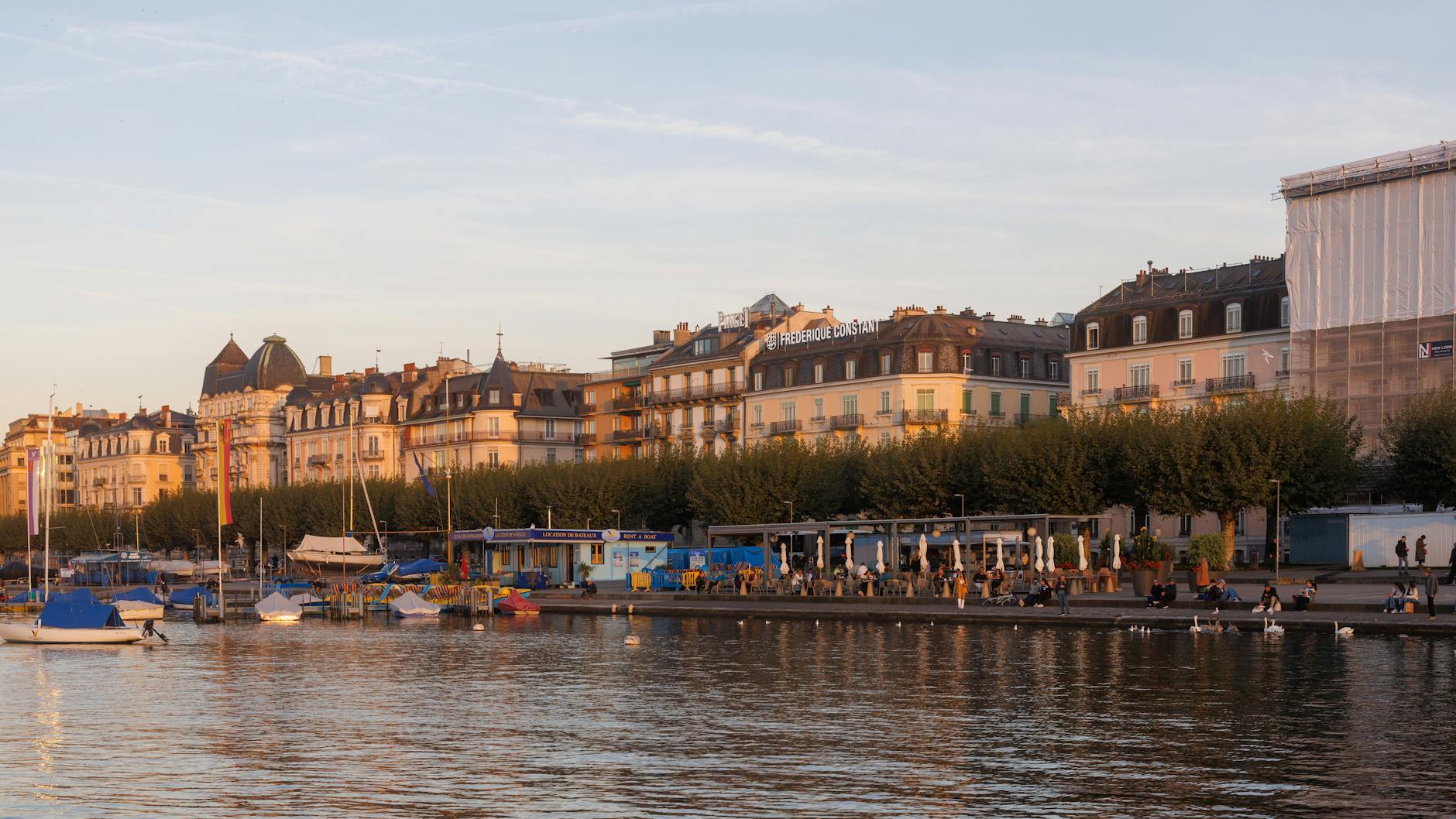
Quai du Mont-Blanc and the Lakefront
The visitor-facing front room of Geneva. This is where the city’s elegance is easiest to understand.
Vieille Ville
The old town gives Geneva historical and architectural depth. Use it slowly and with patience for the slopes.
Eaux-Vives
A useful reminder that Geneva is not only institutional or touristic. There is real residential poise here.
Carouge
A counterpoint to Geneva’s formality. Slightly warmer, more neighborhood-led, and often a good place to eat.
International District
Worth understanding as part of the city’s identity, but not necessarily the best place to center a leisure trip.
Neighborhood Guide: Where to Explore, Not Just Sleep
The Lakefront and Jardin Anglais Side
Do not just photograph the Jet d’Eau and move on. This whole zone is where Geneva explains its own calm.
The Old Town
Climb it, wander it, and let it reset the city’s balance away from pure modern polish.
Pâquis
This is where Geneva can feel more mixed, more lived-in, and less ceremonially expensive. Very useful for understanding the city beyond surface elegance.
Eaux-Vives
Good for a polished local read on the left bank and for walking stretches that feel less businesslike.
Carouge
Worth a real detour, especially for food and a slower, more neighborhood-oriented afternoon or evening.
International Geneva
Interesting if the city’s institutional identity actually matters to you. Less useful if you are there only to prove you saw the UN side.
The Best Things to Do in Geneva
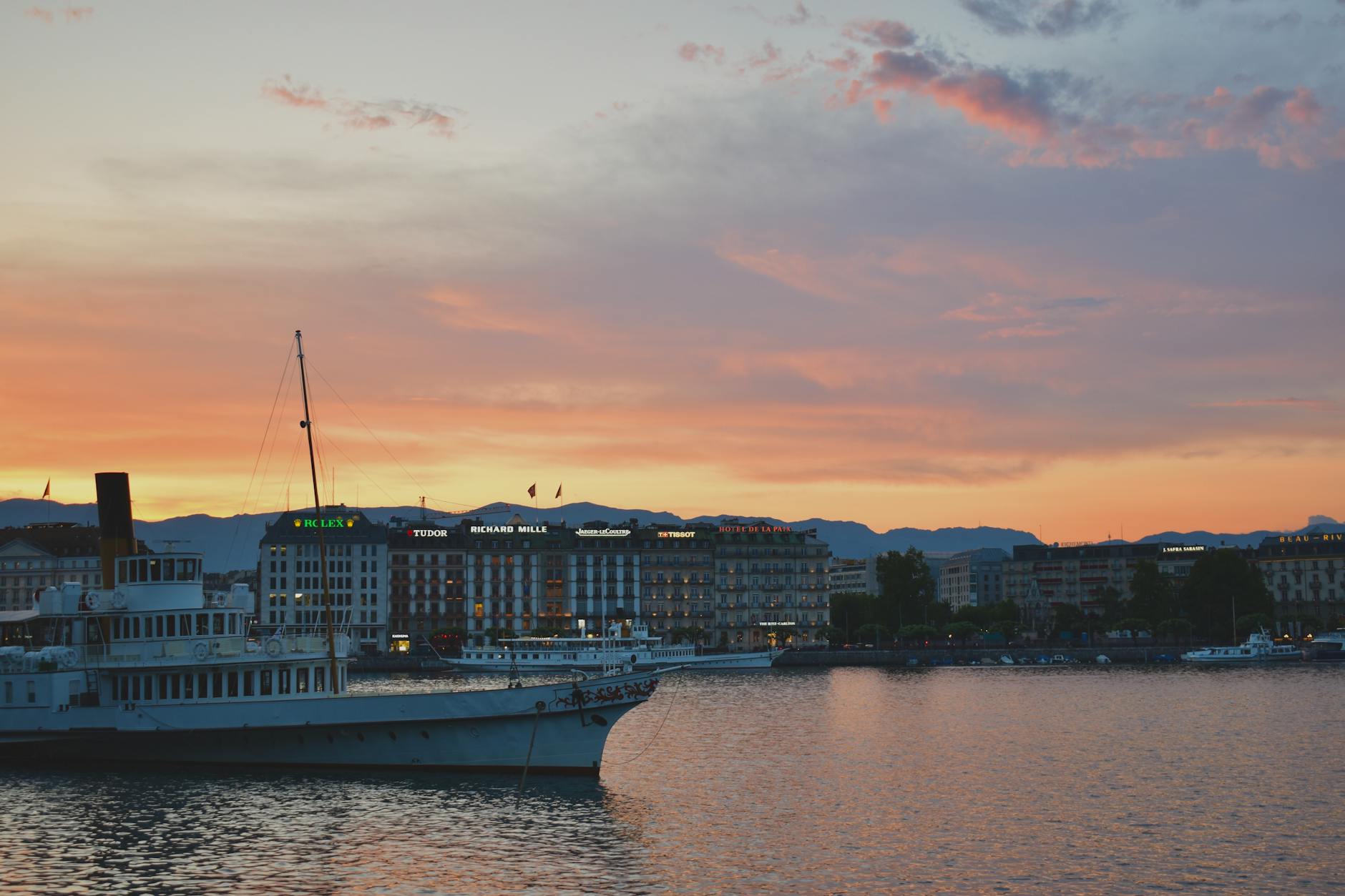
1. Walk The Lake Properly
This is not optional. Geneva without lake walking is a poorer version of itself.
2. Use The Mouettes genevoises
The little lake boats are one of the quickest ways to feel the city’s logic rather than just seeing it.
3. Give The Old Town Real Time
The Vieille Ville is what stops Geneva from becoming all hotels and conference rooms.
4. Visit Bains des Pâquis In The Right Spirit
Less as a box-tick and more as a Geneva habit. This is where the city’s refined image softens into something more human.
5. Do One Museum Or Institution Day Thoughtfully
Pick your lane: art, history, science, diplomacy, or humanitarian history. Do not try to consume Geneva’s serious side as random filler.
6. Treat CERN As A Real Excursion If It Matters
CERN is worth doing for the right traveler, but it is not a casual 45-minute add-on.
7. Have One Proper Long Lunch Or Dinner
Geneva can be expensive, but a genuinely good meal in the right context helps justify the city to itself.
8. Spend One Afternoon In Carouge Or Eaux-Vives
This gives the city human scale beyond its official image.
9. Let A Day Stay Light
Geneva is one of those cities where less often returns more.
10. Use The Free Transport Card If You Have It
It makes the city cleaner, easier, and more enjoyable immediately.
Itineraries
One Excellent Day In Geneva
Start by the lake, use the old town late morning, have a serious lunch, cross by boat or tram, take in one museum or neighborhood stretch, and finish with lake light.
Two Days
Day 1: lakefront, old town, and central Geneva. Day 2: Carouge, museums, international Geneva, or CERN depending on your interests.
Three Days
Day 1: lake and old-city Geneva. Day 2: neighborhoods and food. Day 3: one deeper cultural or science day, or a short regional extension if the city already feels understood.
Four To Five Days
Add Lausanne, Montreux, Annecy, or a more indulgent hotel-and-lake day, but keep at least three serious city blocks inside Geneva itself.
One Week
Use Geneva as a polished anchor for western Switzerland, but do not let it collapse into a sleep-and-train base.
Itineraries By Traveler Type
First-Timer
Stay by the lake, walk heavily, use trams lightly, and give the city two full days before giving away time to elsewhere.
Couple Weekend
Good hotel, one strong lunch, one excellent dinner, lake walks, old town, and one neighborhood outside the obvious core.
Food Traveler
Blend central Geneva with Carouge or Pâquis and treat breakfast and lunch with as much seriousness as dinner.
Solo Traveler
Excellent fit: safe, walkable, easy to understand, and good for calm but not boring solo days.
Business Traveler Adding Leisure
Stay central, do not spend your free time only in the international district, and prioritize the lake plus old town immediately.
Food and Drink
Geneva is not a cheap city, but it is a good city for eating if you understand that quality, precision, and international range are the point. The city is less about performative trend-hunting and more about confident restaurants, well-run cafés, bakeries, chocolate, wine bars, and terrace culture when the weather allows.
What To Prioritize
Prioritize meals that actually feel Genevan or at least distinctly Swiss-international, rather than generic luxury dining that could be anywhere. Prioritize lake or neighborhood context, not just formal price points.
Best Food Zones
Pâquis: mixed, practical, and often more alive than visitors expect. Old Town and central Geneva: polished and often scenic. Carouge: one of the best answers for travelers who want atmosphere with their meal. Eaux-Vives: quieter, attractive, and strong for a more residential dining mood.
Restaurant Strategy
Book the meals that matter. Geneva is too expensive to drift into bad convenience food twice a day and then complain that the city lacks warmth.
Drinks
Geneva is stronger at civilized drinks than at wild nightlife performance. Wine bars, hotel bars, and lake-adjacent aperitif logic make more sense here than club-chasing.
Coffee and Morning Life
The city rewards slow starts. Breakfast by the lake or in the right neighborhood is part of how Geneva opens up.
Getting Around Geneva
Airport To City
For most travelers, the train from the airport to Cornavin is the default best move. Seven minutes, direct, easy.
Walking
Geneva is very walkable in the central lake-and-old-town logic, though slopes matter in the old city.
Trams and Buses
The tram network is efficient and easy to use. This is how you cleanly extend yourself to Carouge, the international district, or other outer-central areas without friction.
Mouettes genevoises
One of the most charming and useful pieces of the transport system. Use them.
Trains
Excellent for airport transfer and for day trips, but remember that "easy day trip" can become "Geneva got no time" if you are not disciplined.
Car Hire
Usually unnecessary and often actively unhelpful for a Geneva city stay.
Budget and Costs
Geneva is expensive. That part is true. What matters is whether the traveler understands how to spend in a city where almost every category is costly.
What Costs More Than Many Visitors Expect
Hotels, restaurant dining, casual drinks, and many everyday convenience purchases.
What Feels Worth It
A strong central base, one or two memorable meals, the right transport strategy, and not trying to save money by staying somewhere that ruins the city’s calm.
What Feels Like Better Value
Walking, lake time, public transport through the hotel card, parks, neighborhood wandering, and any itinerary that avoids constant paid corrections.
Worth The Splurge
Lake-adjacent accommodation, one seriously good dinner, a refined hotel breakfast, and a room that makes Geneva feel elegant rather than merely functional.
Usually Not Worth It
Cut-rate hotel logic in the wrong place, luxury shopping pursued because "it’s Geneva," or day trips so long that Geneva itself gets reduced to luggage storage.
Safety, Weather, and Practical Reality
Geneva is broadly one of Europe’s easier cities for visitors, but that should not be confused with total effortlessness.
The Main Friction Is Cost, Not Disorder
The city is orderly. Your mistakes are more likely to be budgetary or structural than safety-driven.
Weather Changes The Mood Fast
Geneva is dramatically more seductive when the lake is working for you. Gray wet days make base quality and museum choices matter much more.
Station-Area Judgment Helps
Cornavin is useful, but not every nearby block has the same atmosphere. Choose intelligently.
General Urban Safety
Standard awareness is enough for most travelers. Geneva’s stress is usually financial or logistical, not threatening.
Accessibility
Geneva can work reasonably well for travelers with accessibility needs, particularly in modern central areas and through strong transit, though old-town slopes and some older streets require planning.
Easier Areas
The lakeside, many central hotels, trams, newer public facilities, and major stations.
Harder Areas
Vieille Ville slopes, some older paving, and certain lake access points or heritage interiors.
Practical Moves
Pick location carefully, rely on transit rather than hero walking, and treat the old town as a selective rather than exhaustive exercise if mobility is an issue.
Families, Solo Travelers, and Special Considerations
Families
Geneva works well for families who like water, parks, museums, and easy transit, but it is not a cheap family city.
Solo Travelers
Very strong. Safe-feeling, easy to navigate, and good for independent days that do not need constant entertainment.
Couples
One of Geneva’s best use cases. The city is built for composed, elegant, water-led couple travel.
Conference Travelers
Geneva can improve dramatically if you add even half a day of intentional walking and dining rather than only seeing the inside of hotels and conference centers.
Shopping and Souvenirs
Geneva can tempt visitors into confusing expensive with meaningful. Resist that.
What To Buy
Chocolate, books, food products, carefully chosen Swiss design objects, quality stationery, and only the watches or luxury goods you genuinely want.
Best Shopping Zones
Central Geneva, the old town, and select specialist shops rather than pure prestige-window browsing.
What To Avoid
Buying Geneva clichés because the city’s polished surfaces made them seem inevitable.
Culture, History, and Local Context
Geneva is often presented internationally through diplomacy first, but its history is older and more layered than that. This is a city shaped by Protestant history, republican tradition, commerce, reform, exile, refuge, banking, and cross-border exchange. It is not just the place where international organizations happen to sit.
The old city, cathedral, and civic history matter because they show Geneva before the conference-center reputation. The international institutions matter because they explain the city’s current global role. The lake matters because it softens the city’s harder, more formal dimensions. Carouge matters because it reminds you that Geneva is not a single-tone place.
French language dominates, but Geneva is deeply international in daily life. You hear the world here. That can make the city feel less classically Swiss in the narrow tourist sense, but it also makes it intellectually and socially richer than the postcard version of Switzerland.
Day Trips and Side Trips
Lausanne
An easy and intelligent extension if you want another lakeside Swiss city without exhausting yourself.
Montreux
Longer, more scenic, and best if you want a more obviously picturesque Lake Geneva experience.
Annecy
A tempting cross-border excursion that many visitors enjoy, but it should not automatically take priority over Geneva itself.
Nyon
A lighter regional option if you want a smaller outing without devoting the whole day.
CERN
Not a day trip in the classic sense, but a separate directional choice that should be planned as such.
What To Skip, or Treat Carefully
Skip Treating Geneva As Only A Business City
That is the cleanest way to miss it.
Skip Sleeping Too Far Out To Save Money
Geneva’s whole value proposition depends on ease.
Skip Giving The City No Lake Time
That turns Geneva into a much thinner experience than it should be.
Skip Over-Day-Tripping
Geneva is a victim of its own rail convenience. Just because you can leave constantly does not mean you should.
Skip Shopping As A Substitute For Understanding The City
Luxury retail is not an adequate Geneva itinerary.
Skip Expecting Cheap Casual Recovery Options Everywhere
Build your days and budget on purpose.
Common First-Timer Mistakes
- Staying one rushed night and deciding Geneva is sterile.
- Choosing a purely practical hotel that kills the city’s atmosphere.
- Treating the lake as a photo stop rather than part of the trip.
- Spending too much of the visit on trains elsewhere.
- Doing the international district without understanding the old city.
- Complaining about expense after making weak dining and hotel choices.
- Ignoring Carouge or the neighborhood dimension completely.
- Forgetting how useful the free transport card is.
- Trying to make Geneva behave like a much larger entertainment city.
- Mistaking calm for emptiness.
Responsible and Respectful Travel
Use Geneva thoughtfully. This is a city of real daily life, not only polished surfaces. Respect public order, quiet residential areas, and the fact that the city’s international institutions, religious history, and humanitarian presence are not aesthetic props.
Travel lightly around the lake and in parks. Support local food businesses, good museums, and cultural institutions that reflect the city’s real identity rather than treating Geneva purely as a luxury-shopping platform.
Right Bank Versus Left Bank
A lot of Geneva’s personality becomes easier to understand once you stop seeing the city as one smooth polished whole and start noticing the different emotional languages of the two lake-and-river sides. The right bank is often the more practical, mixed, and internationally transient side for visitors. It carries more of the station logic, more hotel turnover, more business movement, and more of the city’s “arrive, connect, continue” energy. That does not make it weak. In fact, it can be the smartest base. But it is not always the prettiest version of Geneva at first glance.
The left bank, by contrast, often feels more composed and more leisurely. This is where Geneva’s old-town weight, some of its more residential polish, and much of its slower lakeside elegance become easier to read. If you want the city to feel immediately graceful, the left-bank logic usually helps. If you want practical efficiency and the ability to move fast between train, hotel, and lake, the right bank often wins.
The useful conclusion is not that one side is better. It is that the side you sleep on will subtly shape what kind of Geneva you think you visited. The strongest first trip often uses both: the practicality of one, the atmosphere of the other, and the Mouettes genevoises or simple bridge crossings to keep the city feeling whole.
Geneva’s Borderland Identity
Another thing that makes Geneva different from the stereotype is that it is not only a Swiss city in an abstract national sense. It is a borderland city with France sitting close beside it and with cross-border movement built into daily life. That proximity changes the city’s labor patterns, restaurant life, housing pressures, and sense of scale. Geneva can seem very self-contained on the surface, but it is actually shaped by a much wider basin.
This matters to travelers because it helps explain why Geneva can feel both compact and strangely global. The city is small in street mileage, but large in the number of systems running through it: diplomatic, financial, humanitarian, rail, road, airport, and cross-border commuter life. That complexity gives Geneva a certain tension under the polished surface. It is not just a neat lake city for conferences. It is a place where national, international, and regional realities keep colliding productively.
It also helps explain why Geneva can feel more worldly than some more obviously picturesque Swiss cities. The city’s beauty is not only scenic. It is structural. You are in a place where Swiss order, French linguistic and culinary influence, global institutions, and everyday urban life all overlap. Once you notice that overlap, Geneva stops feeling merely expensive and starts feeling unusually specific.
FAQ
Is Geneva worth visiting on its own?
Yes, especially for 2 to 3 days done with care.
How many days should I spend in Geneva?
Three days is ideal for a first proper stay. Two is the minimum that still respects the city.
Is Geneva walkable?
Yes, very much so in the core city, with trams making the extensions easy.
Do I need a car?
No.
Is Geneva expensive?
Yes, but usually coherently so.
Is Geneva boring?
Not if you understand that its pleasures are calibrated rather than loud.
What is the best area to stay?
Central lakeside or old-town edge for most first-timers.
Is the Geneva Transport Card worth caring about?
Absolutely. It materially improves the trip.
Is CERN worth it?
Yes for the right traveler, but only if you plan it deliberately.
Final Planning Shortcuts
Best First-Timer Plan
Stay near the lake, walk heavily, and give one full day to Geneva itself before leaving the city.
Best Couple Plan
Good hotel, one long lakeside walk, one excellent meal, old town, and one quieter neighborhood beyond the obvious core.
Best Short-Stay Plan
Do not spend your only full day on a train to somewhere else. Let Geneva actually be Geneva.
Best Business-Leisure Plan
Use the transport card, reclaim the lake, and spend your free hours in the old city or a neighborhood, not only around conference infrastructure.
Best Budget-Conscious Plan
Sleep smart but central, use the transport card, walk constantly, and spend your money on one or two things that make the city feel worth it.
Source Notes
- 1. Geneva Airport, "Train." https://www.gva.ch/en/Site/Passagers/Acces-Transports/Transports-publics/Train
- 2. Geneva Tourism, "Geneva Transport Card." https://www.geneve.com/en/plan-a-trip/transportation/geneva-transport-card
- 3. Geneva Tourism, "Public Transports." https://www.geneve.com/en/plan-a-trip/transportation/public-transports
- 4. Geneva Airport, "Train." https://www.gva.ch/en/Site/Passagers/Acces-Transports/Transports-publics/Train
- 5. CERN, "Science Gateway." https://visit.cern/science-gateway