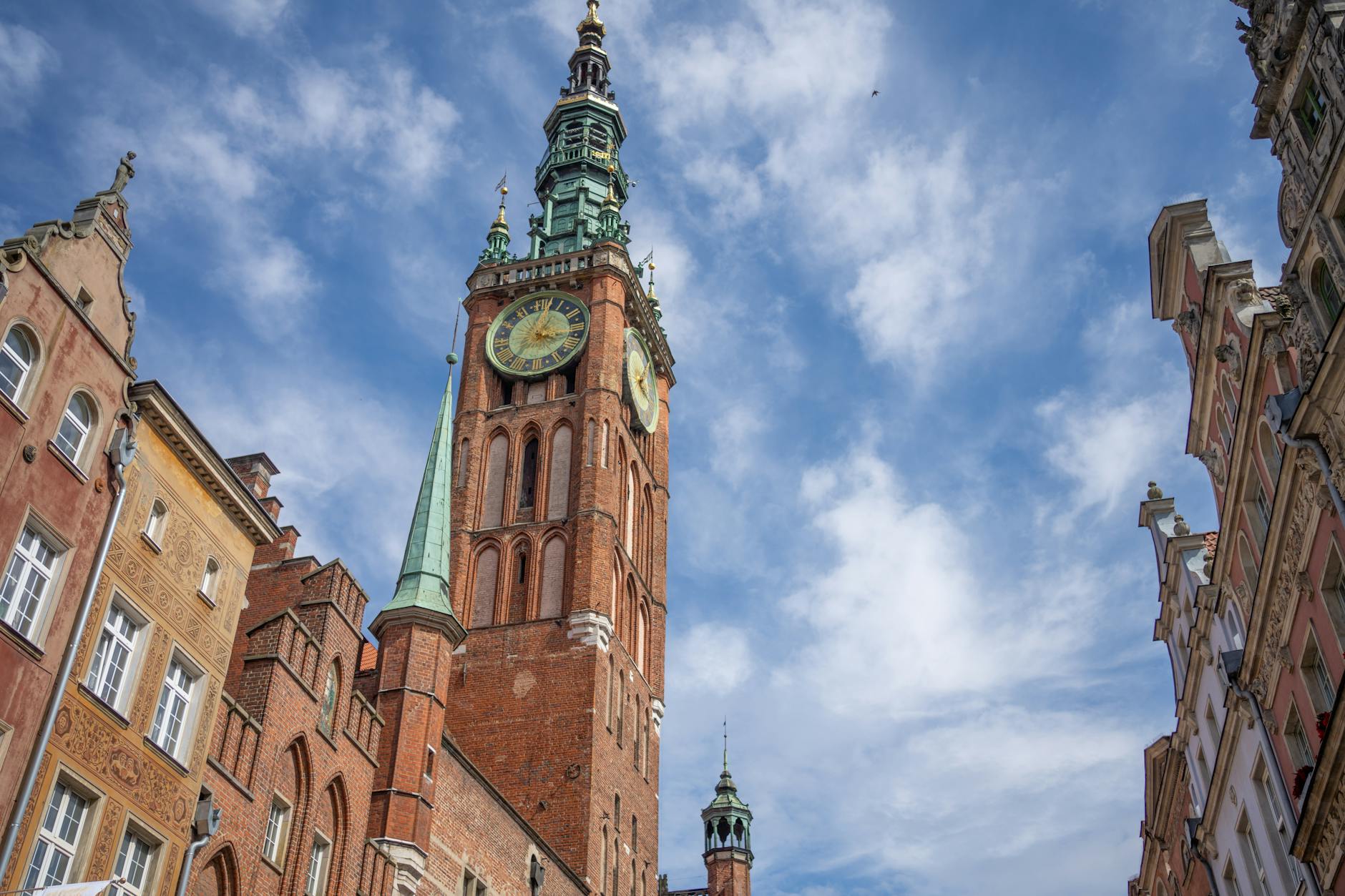
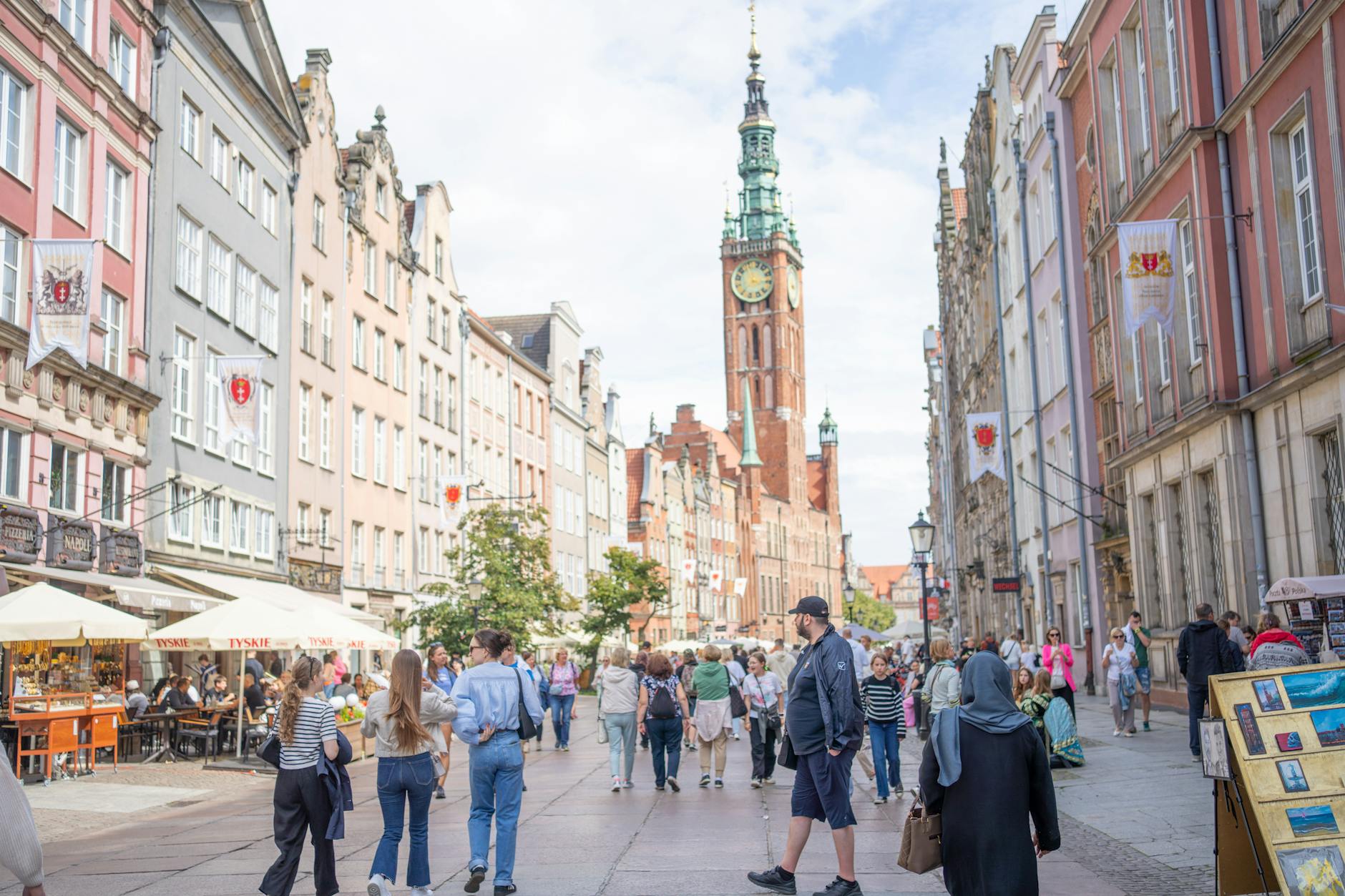
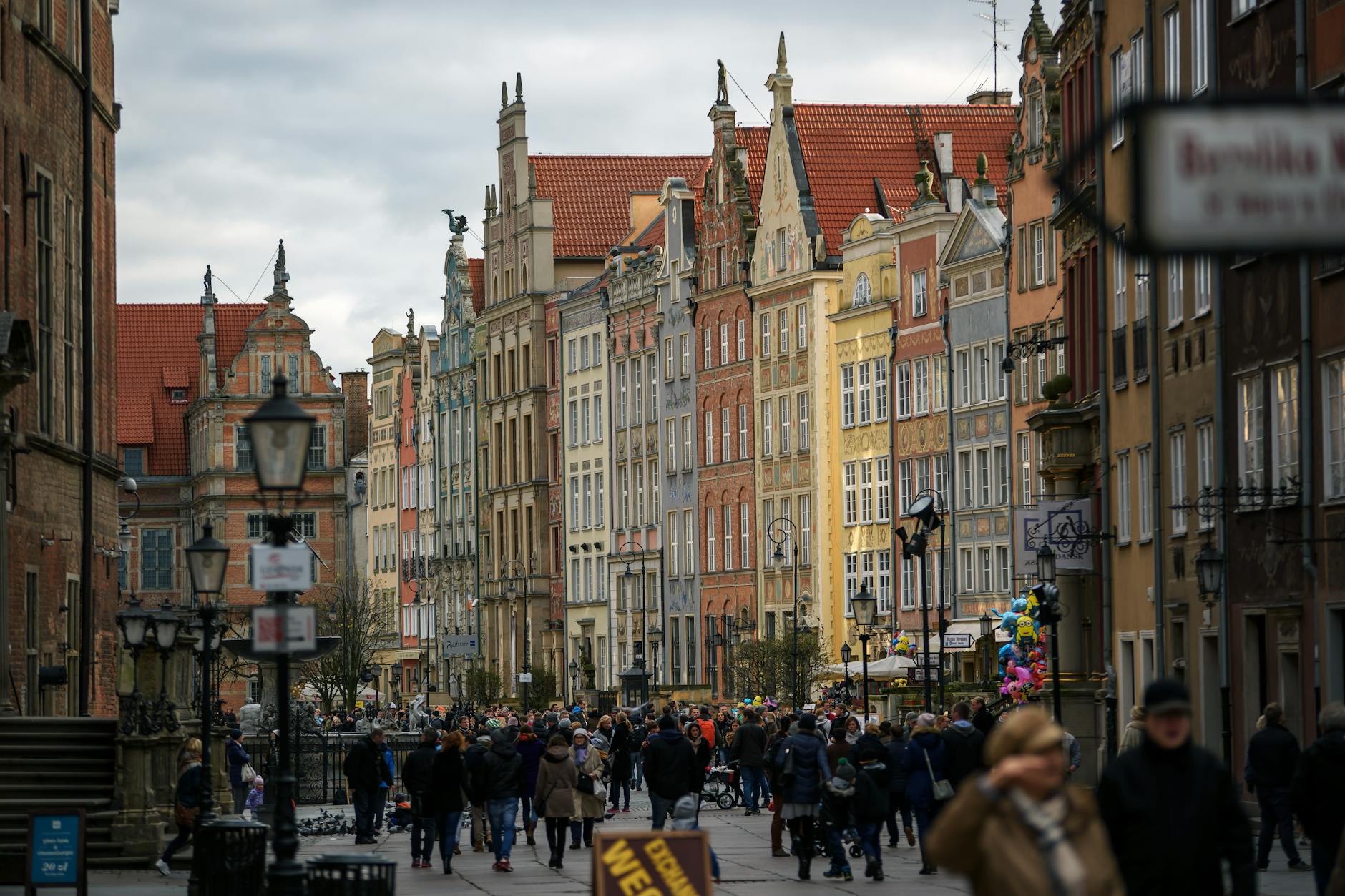
Gdansk is one of the most deceptive first-time cities in Europe because it looks simpler than it is. The first visual read is so clean that many visitors stop there. They see Long Market, the colorful facades, the river, the gates, the amber shops, and the photogenic old merchant city and assume the place has already explained itself. It has not.
Start Here
Gdansk is not just a beautiful old Baltic corridor with very good light. It is a port city, a border city, a rebuilt city, a shipyard city, and one of the places where 20th-century Europe cracked open visibly enough to change the rest of the continent. That history matters, but not as a museum footnote. It changes the emotional register of the city. Gdansk is prettier than many serious cities and more serious than many pretty ones.
That combination is the whole point. If you treat Gdansk only as architecture, you miss the shipyards, the labor history, the role of the waterfront, and the fact that its beauty was not preserved in one unbroken line but recovered, reconstructed, and reasserted. If you treat it only as history, you miss how good the city is at being lived in now. The riverfront, restaurants, hotels, ferries, neighborhood extensions, and evening rhythm all matter. Gdansk is one of those places where you need both lenses at once.
The weak Gdansk trip is easy to recognize. Someone arrives, walks Long Market once, takes the standard Motlawa photos, maybe does a quick museum or a rushed Sopot side trip, and leaves pleased but shallowly informed. The stronger trip understands the city as a port-shaped argument. It gives the old core its due, but also crosses toward the shipyard story, the European Solidarity Centre, the Museum of the Second World War, and the broader waterfront logic that makes Gdansk feel like more than an attractive facade set.
This is also why Gdansk is better than some first-time visitors expect. The city is not huge, but it is not thin. It has enough historical depth, enough urban texture, enough food, and enough contrast between ceremonial center and working memory that a two- or three-day stay can feel complete. The real skill is resisting the urge to flatten it into one polished image.
The city in one sentence: Gdansk is a Baltic port city where the best first trip comes from combining rebuilt merchant beauty, riverfront rhythm, shipyard and Solidarity history, and disciplined district reading instead of treating the city as one scenic old-town axis.
Basic data
| Population | About 490,000 in the city; the Tri-City metro is much larger |
|---|---|
| Area | 683 km2 |
| Major religions | Roman Catholic heritage with growing secular and minority-faith communities |
| Political system | City government inside a parliamentary republic |
| Economic system | High-income mixed economy led by port trade, logistics, tourism, services, and ship-related industry |
Quick Verdict
Best for: couples, solo travelers, first-time Poland visitors, architecture travelers, history travelers, Baltic-city lovers, and anyone who likes beautiful cities with real political and maritime weight.
Not ideal for: travelers who only want lightweight prettiness, people who insist every historical city should behave like an intact medieval fantasy, or anyone who plans to give the city only a few hours between flights and beach plans.
Ideal first visit: 2 to 3 full days.
Minimum worthwhile stay: 2 full days.
Best overall months: May, June, September, and early October.
Best winter case: December for atmosphere and museums, or late winter for a quieter city break with more emotional focus.
Biggest planning mistake: treating Gdansk as a pretty center plus day trip instead of a serious port city with its own urban gravity.
One thing to prioritize: one major modern-history site, chosen and timed properly.
One thing to leave flexible: your waterfront walking. Light and weather change the city's best routes.
The blunt version: Gdansk is one of northern Europe's best-value short city breaks if you understand it as a rebuilt port city with memory, and one of the easiest places to use lazily if you stop at the postcard layer.
Who Will Love Gdansk?
Gdansk suits travelers who like cities with visible beauty but do not want beauty to be the entire story. This is a city where a handsome facade can lead directly into questions about trade, war, reconstruction, labor, nationalism, and European change. If that sounds like the right kind of density, Gdansk is excellent.
It works especially well for couples because the city supports a polished short break without becoming too obvious. The old center is walkable, the waterfront is atmospheric, the hotels can be strong, and the evenings usually feel easy rather than overengineered. A good day in Gdansk might include one major museum, a long river walk, a slower meal, and a second pass through the old core once it has softened in the evening.
Solo travelers also do well. Gdansk is legible enough that moving alone feels natural, but layered enough that the city does not collapse after the first few hours. Museums, bridges, riverside streets, church interiors, and the shipyard story all give a solo traveler reasons to keep looking.
It is particularly strong for travelers interested in how cities remember catastrophe. Gdansk's charm is real, but it is not innocent. The city was heavily destroyed, rebuilt, and recast. The beauty you see now sits very close to the memory of what was erased and remade. That makes the city more interesting than many of its most flattering photographs suggest.
It is less ideal for people who want one seamless old-town fantasy from morning to night. Gdansk is too maritime, too historical, and too reconstructed for that kind of myth to hold cleanly. That is one of its strengths.
Gdansk at a Glance
| Question | Practical Answer |
|---|---|
| Main airport | Gdansk Lech Walesa Airport |
| Simplest airport public transfer | Train to Gdansk Glowny or Gdansk Srodmiescie |
| Best first-time base | Old Town/Granary Island edge or central riverfront |
| Best way to understand the city | Walking plus selective tram/train use |
| Public transport backbone | Trams, buses, regional rail, and walking |
| Signature historical-modern anchor | European Solidarity Centre |
| Signature war-history anchor | Museum of the Second World War |
| Signature old-port symbol | The Crane |
| Best short extension logic | Sopot or wider Tri-City, only after giving Gdansk itself enough time |
| Car needed? | No |
| Emergency number | 112 |
| Tap water | Safe to drink |
| Currency | Polish zloty |
| Power plugs | Type C and E |
2026 Visitor Notes
The Airport Train Is The Right Default Arrival
Gdansk Airport's official transport guidance confirms direct train connections from the airport to Gdansk Glowny and Gdansk Srodmiescie.[1] For most first-time visitors, that makes rail the cleanest arrival rather than an immediate taxi habit.
Gdansk Transport Is Simple Once You Stop Overthinking It
ZTM Gdansk's official fare page remains the core reference for local bus and tram ticket prices.[2] This matters because the city is easy enough on foot that many visitors only need selective tram use, but the network is useful enough that having the fare logic straight improves the trip quickly.
The European Solidarity Centre Should Not Be Treated As An Optional Extra
The ECS is not just a good museum in a city full of history. It is one of the central interpretive keys to Gdansk itself, and its own visitor material makes clear that it is a substantial institutional visit, not a corridor exhibit.[3][4]
The Museum Of The Second World War Needs Real Time
The Museum of the Second World War publishes dedicated opening-hours guidance for visitors, which is exactly what you would expect of a site that can easily occupy much more than a casual hour.[5] This is not somewhere to rush if you want the city to make sense.
The Crane Is More Important Than A Photo Suggests
The National Maritime Museum's own description of the Crane stresses both its symbolic status and its original dual role as city gate and port crane.[6] That tells you something essential: in Gdansk, the port function and the image function were never really separable.
St. Mary's Basilica Helps Rebalance The City
Visit Gdansk's own material on St. Mary's Basilica is a useful reminder that the city is not just facades and river views.[7] Church space, verticality, and interior scale still matter here.
Tri-City Temptation Can Weaken A Short Stay
Yes, Sopot and the wider Tricity are easy additions. No, that does not mean they should automatically take over the trip. Gdansk is better when it is allowed to hold your attention first.
How to Understand Gdansk
Gdansk works through five forces.
The first is the port. This is not just background. Water, quays, cranes, river movement, and maritime trade explain much of the city's shape and psychology.
The second is reconstruction. Gdansk's beauty carries a specific postwar charge because the city you admire was not simply left untouched. It had to be remade.
The third is Solidarity and the shipyards. This is one of the few cities where late-20th-century labor and political history can still be read as part of the urban experience, not only as archived memory.
The fourth is Baltic mood. Light, wind, cloud, and the slightly northern reserve of the city all matter. Gdansk can feel warm, but it rarely feels Mediterranean in temperament.
The fifth is Tri-City context. Gdansk is part of a wider urban strip, but it has a more serious and symbolically loaded identity than its neighbors. That distinction matters.
The Five Gdansks A Visitor Actually Meets
Postcard Gdansk: Long Market, facades, gates, riverfront, and the city most people think they are coming for.
Port Gdansk: cranes, river edges, warehouses, bridges, and the maritime infrastructure that keeps the city grounded.
Solidarity Gdansk: shipyard gates, the ECS, labor memory, and the political significance that reaches far beyond Poland.
War-and-memory Gdansk: the Museum of the Second World War, reconstruction, and the knowledge that beauty here is historically interrupted.
Contemporary Gdansk: restaurants, hotels, modern riverfront development, and the version of the city that is living comfortably alongside all that history.
The Main Mental Shift
Do not ask, "What are the old-town highlights?" Ask, "What kind of port city am I in, and how does the pretty center connect to work, war, and solidarity?" That question produces a much stronger Gdansk.
What Gdansk Does Better Than People Think
Gdansk is unusually good at combining scenic beauty with political seriousness. Plenty of cities can do one or the other. Gdansk does both in a way that still feels urban rather than purely commemorative.
It is also better than many first-time visitors expect at short-break completeness. The city has enough architecture, enough museums, enough riverfront atmosphere, and enough contrast that a two- or three-day stay can feel satisfying without outside help.
Another underrated strength is maritime texture without total industrial bleakness. The port logic is visible, but the city remains beautiful and walkable enough that the maritime identity is an asset rather than a burden.
The city is also very strong at evening atmosphere. Gdansk becomes better after the day-visitor surge softens. The riverfront, old core, and restaurant districts regain proportion.
Finally, Gdansk does historical layering extremely well. The old Hanseatic image, wartime destruction, socialist shipyard story, and polished contemporary center all remain visible enough to make the city feel thicker than it first appears.
Best Time to Visit Gdansk
Gdansk is a year-round city, but not a season-neutral one. Baltic weather changes the emotional texture of the trip.
Best Overall Months
May, June, September, and early October are often the strongest first-visit windows. The city is walkable, the riverfront works, and the air is usually kinder to long outdoor stretches.
Summer
Summer makes Gdansk easiest to like quickly. Outdoor dining, river walks, and longer evenings all help. The risk is not the season itself but the temptation to treat the city too casually because it feels so friendly.
Autumn
Early autumn suits Gdansk particularly well. The city often feels more composed, the light is still useful, and the maritime seriousness starts pushing back against any residual summer flimsiness.
Winter
Winter gives Gdansk a colder, more historical register. Museums matter more, the river becomes moodier, and the city can feel less decorative and more northern. This can be excellent if that is what you want.
Spring
Spring is appealing because the city starts turning outward again. Riverfront walking becomes more enjoyable and the rebuilt center regains softness.
Month-by-Month Guidance
January: cold, museum-led, good for serious city travelers. February: still wintry, but manageable for a short break. March: transitional and weather-sensitive. April: improving, though still mixed. May: one of the best overall choices. June: excellent for a first visit. July: easy, bright, and lively. August: still strong, though more visitor-heavy. September: one of the smartest months to go. October: often atmospheric and rewarding. November: subdued, more reflective, and good for museums. December: festive enough in parts, but best for travelers who like darker Baltic city mood.
How Many Days You Need
One Day
Enough for the old core and a glimpse of the river, not enough for Gdansk itself.
Two Days
The minimum respectable stay. One day should belong to the old core and waterfront. The other should belong to one major museum and the shipyard/modern-history dimension.
Three Days
Ideal for a first visit. This gives you one city-beauty day, one serious museum day, and one looser day for the Crane, church space, or a careful Tri-City extension.
Four To Five Days
Very good if you want Gdansk plus Sopot or a slower coastal rhythm without hollowing out the city.
Where to Stay in Gdansk
Where you stay matters because Gdansk's center is compact but varied. The wrong base can make the city feel too commercial or too detached from its best evening rhythm.
Fast Answer
For most first-time visitors, stay near the Old Town and riverfront edge, or on the Granary Island/central waterfront seam where you can move easily between the old core, bridges, and the broader city.
Neighborhood Decision Table
| Traveler Type | Best Area |
|---|---|
| First-time visitor | Old Town edge / riverfront |
| Couple weekend | calm central waterfront or Granary Island edge |
| Museum-first trip | central with easy shipyard/river access |
| Food-and-evening traveler | central old core with a short walk home |
| Quiet-but-connected stay | slightly off the hottest riverfront strip |
Old Town Edge
Best for: first-timers, walkers, and anyone who wants Gdansk to feel immediate. Why it works: you are close to the main visual language of the city without necessarily sleeping inside the noisiest corridor. Tradeoff: parts can feel heavily visitor-shaped in peak hours. Best use: the standard first stay.
Riverfront / Granary Island Seam
Best for: couples, short breaks, and travelers who want evening atmosphere with modern hotel comfort. Why it works: it keeps you close to bridges, water, restaurants, and the softened nighttime version of Gdansk. Tradeoff: some stretches are more polished than soulful. Best use: comfort-led first visits.
Wider Central Stay
Best for: travelers who want a little relief from the densest visitor streets. Why it works: you keep easy access while allowing the city to feel more lived in. Tradeoff: not every central-adjacent block has the same charm. Best use: repeat visitors or anyone prioritizing sleep and proportion.
Area Profiles
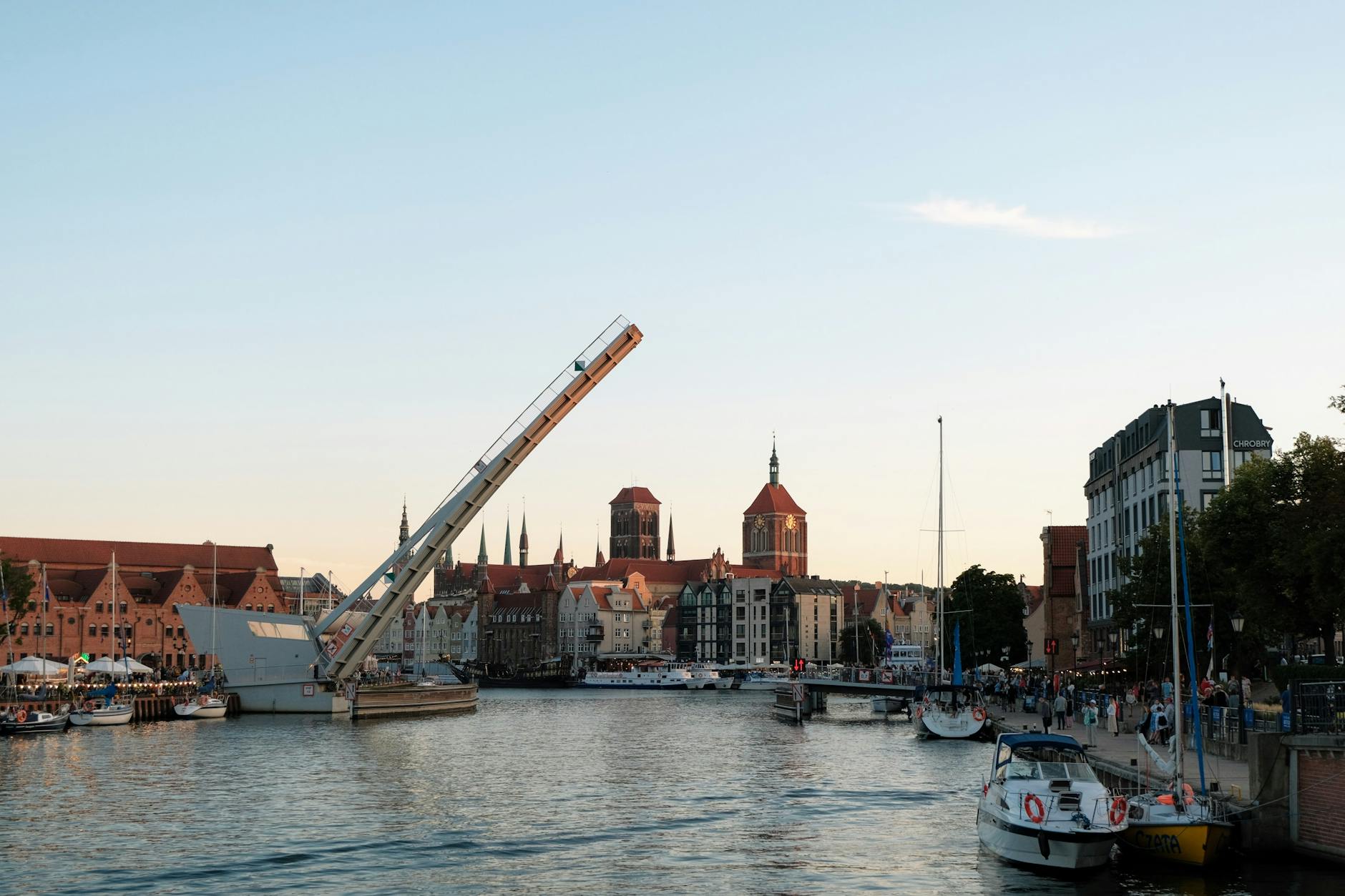
Long Market / old core: best for first orientation and ceremonial beauty. Motlawa riverfront: best for evening walking and understanding the port-city surface. Shipyard / ECS zone: best for political and labor history. Crane and medieval port edge: best for maritime identity. Granary Island: best for polished contemporary stay logic.
Neighborhood Guide: Where to Explore, Not Just Sleep
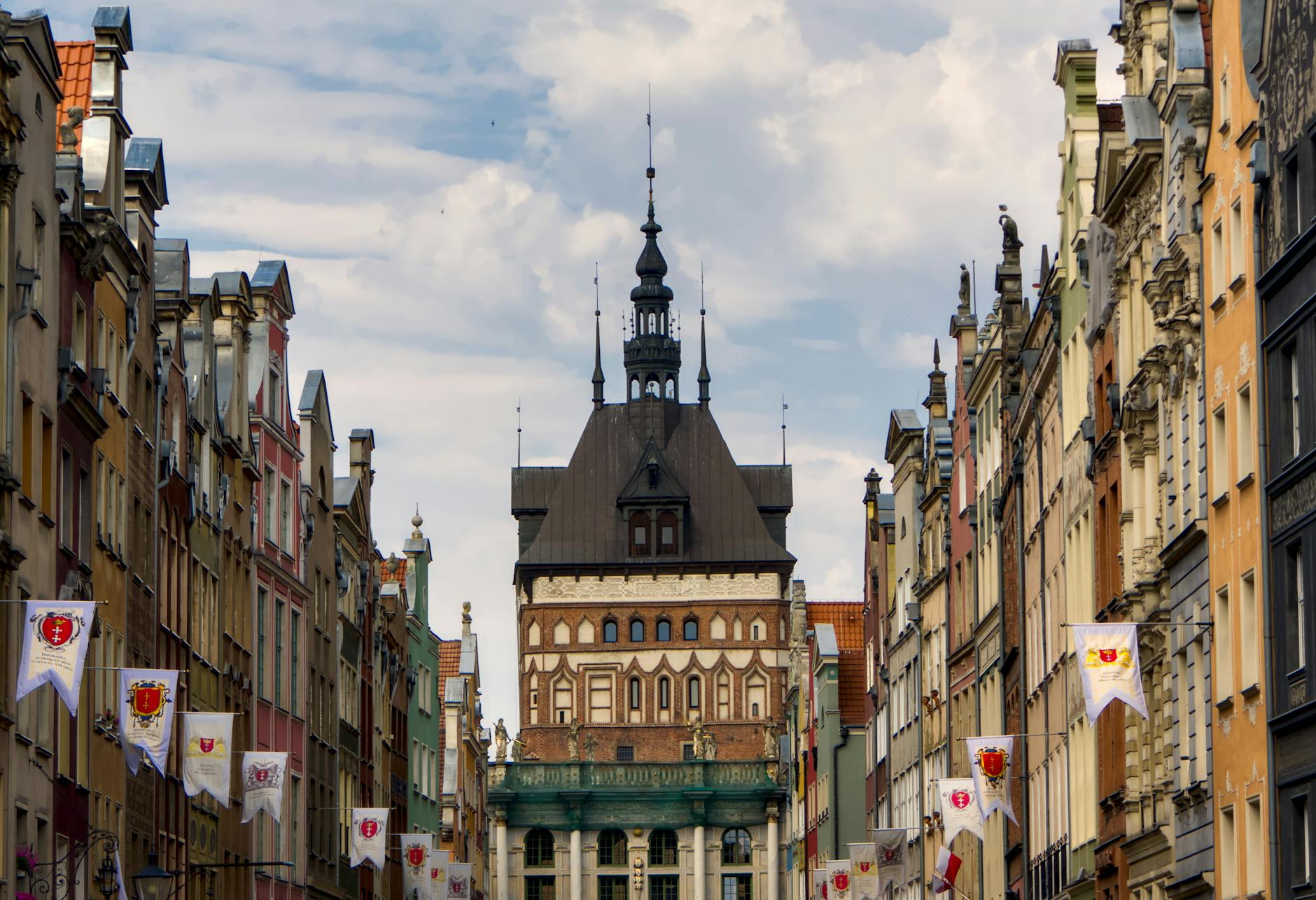
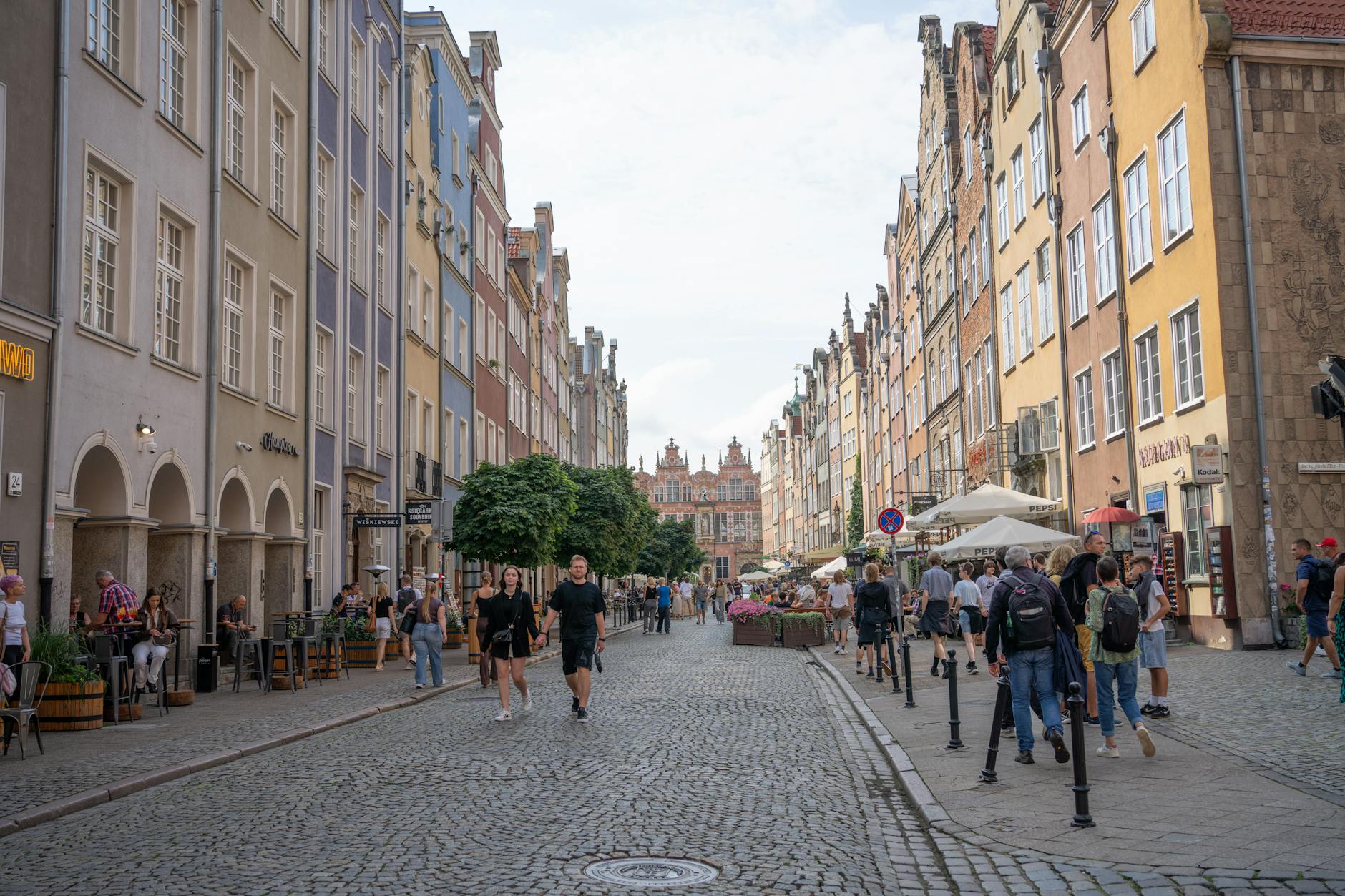
Start with the old core because Gdansk needs to show you its most polished language first. Long Market, the gates, the facades, and the civic sequence matter. But the key is to understand this zone as the city's front room, not the whole house.
The riverfront gives the front room context. Walking along the Motlawa, crossing bridges, and seeing the relation between facades and water turns the old center into a port city again. This is also where the Crane matters most, because it interrupts any fantasy that Gdansk was purely ornamental.[6]
Then move toward the shipyard and ECS zone. This is where the city stops being merely elegant and starts feeling historically consequential in a modern sense. The ECS in particular helps bind labor history, political change, and the identity of Gdansk into something more than a museum visit.[3][4]
The city gets stronger still when you allow one or two returns rather than one total sweep. Gdansk improves on the second pass, especially once you stop asking it to be only one thing.
The Best Things to Do in Gdansk
- Walk the old core and riverfront as one continuous first reading.
- Visit the European Solidarity Centre and let the city become politically legible.[3][4]
- Give the Museum of the Second World War proper time.[5]
- Visit the Crane as a symbol of port Gdansk, not just a photo stop.[6]
- Spend time in St. Mary's Basilica to rebalance the city away from pure facades.[7]
- Rewalk the riverfront in the evening when the city feels less processed.
Itineraries
If You Have Two Days
Use day one for the old core, riverfront, and evening Gdansk. Use day two for the ECS or Museum of the Second World War, then the broader shipyard/waterfront logic. That is the cleanest first-time pattern.
If You Have Three Days
Keep the first two days as above and use the third for the Crane, church interiors, a slower meal-led day, or a carefully controlled side move to Sopot only if Gdansk already feels complete.
If You Have Four Days
Add a Tri-City extension or a slower architecture-and-neighborhood day, but not at the cost of turning Gdansk itself into a check-in platform.
Itineraries By Traveler Type
For Couples
Stay central, protect one evening, choose one serious museum, and let the city move from formal daytime beauty into softer waterfront calm.
For Solo Travelers
Walk hard on day one, then use a major museum on day two to deepen the city. Gdansk is generous to solo travelers who like to think while they move.
For History Travelers
Do not stack every heavy site into one compressed emotional block. The city works better when ECS and the Museum of the Second World War are allowed to breathe.
For Baltic Route Travelers
Gdansk can anchor a wider coastal route, but it deserves at least two direct city days before you start exporting your attention to the rest of the coast.
Food and Drink
Gdansk's food scene is not the most aggressive in Poland, but it does not need to be. What suits the city best is a combination of riverside atmosphere, strong Polish and Baltic references, and a few rooms that understand how well Gdansk handles evening.
The city rewards one or two carefully chosen meals much more than frantic list-chasing. Waterfront dining can be pleasant, but the best move is still discernment rather than blind scenic loyalty.
Getting Around
Walk first. Gdansk's center is legible and compact enough that walking remains the best primary tool. Use trams or selective local transport when weather, fatigue, or wider-distance museum jumps justify it.[2]
For airport arrival and departure, the official airport train remains the cleanest default for many stays, especially if you are based centrally.[1]
The larger rule is simple: Gdansk should feel paced, not optimized to death.
What To Skip
Skip the idea that one pass down Long Market is "doing Gdansk." Skip overcommitting Sopot before Gdansk has had real time. Skip using only the most scenic waterfront restaurants as your understanding of the city's food life. Skip any itinerary that ignores the shipyard story entirely.
Common Mistakes
- Treating the city as prettier than it is serious.
- Giving the old core all the time and the modern-history layer almost none.
- Assuming reconstruction makes the city somehow less real.
- Leaving after one museum and one river photo.
- Exporting attention to Sopot too quickly.
My Blunt Advice
Gdansk deserves to be treated as a port city with memory, not a decorative break in your Poland itinerary. Stay central. Walk the old core properly, but then make yourself cross into the city's harder, more consequential stories. Give one major museum real time. Return to the river in the evening. Let the Crane, the shipyard, and the reconstructed beauty all coexist in your understanding.
If you do that, Gdansk becomes one of the most satisfying short city breaks in northern Europe. If you do not, it remains merely pretty, which is the least interesting thing about it.
Where Gdansk Fits in a Poland Trip
Gdansk matters in a Poland itinerary because it gives you a version of the country that Warsaw and Krakow cannot. Warsaw gives reconstruction on capital scale, political weight, and national-modern rhythm. Krakow gives dynastic continuity, Catholic monumentality, and one of Europe’s most complete historic cores. Gdansk gives port identity, Baltic atmosphere, Hanseatic memory, reconstruction with maritime purpose, and one of the clearest urban links between beauty and political struggle.
That makes Gdansk especially useful when a Poland trip needs a different edge. It is not simply “the pretty northern city.” It is the place where trade, sea access, labor history, and the 20th century all remain unusually legible inside a compact and walkable frame. If the rest of your route is interior or landlocked, Gdansk changes the national picture immediately.
It also works particularly well later in a trip, when travelers have already consumed some number of churches, squares, and old cores elsewhere. Gdansk can restore freshness because its old-town beauty does not float free of harder meanings. The port, shipyards, and postwar rebuilding give the city a tensile quality that distinguishes it from prettier but thinner alternatives.
As a result, Gdansk is strongest when treated as a city stop with real claims of its own, not only as a base for Baltic coast movement. It can connect to Sopot and the wider Tri-City, yes, but it should not be diminished into a rail or beach platform. The city is the main event first.
Gdansk Versus Krakow
This comparison matters because many first-time Poland itineraries are effectively choosing how to distribute time between the country’s most internationally visible city experiences. Gdansk and Krakow are both beautiful, historical, and deeply associated with national story. But they create meaning differently.
Krakow feels denser, older in an unbroken way, and more ceremonial in how it presents Polish history. Gdansk feels more interrupted, more maritime, and more visibly reconstructed. Krakow’s beauty often reads as continuity. Gdansk’s beauty often reads as achievement after rupture.
That distinction is not just academic. It changes how you move. In Krakow, the monumental center can dominate the stay naturally. In Gdansk, the center is only the first statement. If you never leave the most photogenic core, you will misread the city more badly than you would in Krakow.
Travelers who respond strongly to layered, beautiful, but slightly harder-edged urban experiences often find Gdansk more affecting than they expected. Travelers who want Poland’s most intact historic atmosphere may still prefer Krakow. But those are different desires, and Gdansk should not be judged against the wrong one.
First-Time Visitors Versus Repeat Visitors
Gdansk is kind to first-time visitors because its opening visual language is so successful. The first walk works. The water works. The facades work. The gates, bridges, and street rhythm all make sense quickly. That is a strength, especially for a short trip.
But it also creates the city’s main trap. First-time visitors often assume that because Gdansk is immediately attractive, it is also immediately complete. They give too much authority to the first beautiful axis they encounter and not enough time to the city’s deeper structure.
Repeat visitors tend to correct this naturally. They understand that the old core is only the front room. They become more interested in how the city was remade. They linger more along the waterfront. They allocate more patience to ECS or the Museum of the Second World War. They notice where the polished contemporary city meets industrial memory.
That means the best first-time travelers should borrow the repeat-visitor mindset immediately: do not ask the city to explain itself in one scenic sweep. Ask what is missing from your first impression, then go there on purpose.
Cooler-Season Gdansk Versus Summer Gdansk
Summer makes Gdansk easy to love. The water brightens the city, the facades become more playful, outdoor dining expands, and the rebuilt core can feel almost improbably inviting. This is why so many first impressions are favorable.
But cooler-season Gdansk often improves the city’s seriousness. Without as much warm-weather ease, the waterfront becomes moodier, the museums become more central, and the city’s northern-Baltic temperament comes forward more clearly. The place feels less like a scenic old port and more like a reconstructed historical city with harder weather and harder memory.
Autumn can be especially strong because Gdansk’s colors and light often keep enough softness while letting the city’s gravitas surface more cleanly. Winter can work very well for travelers who like museum time and lower visitor pressure, though it demands that you actually want the historical dimension and not only visual charm.
Shoulder season remains the cleanest recommendation because it protects both sides of the city. But Gdansk is not a city that collapses outside summer. It simply becomes sterner, which often suits it.
Why One Proper Gdansk Day Matters
Gdansk is vulnerable to the same mistake as many famous smaller cities: people assume that because the main center is beautiful and compact, the city can be understood in fragments. A half-day on arrival, a museum squeezed in tomorrow, maybe a waterfront dinner after Sopot. That structure is exactly how Gdansk gets flattened.
One proper Gdansk day means the city itself, not the wider Tri-City, holds the itinerary. It means the old core has time to settle. It means the riverfront can function as a real urban edge rather than a scenic passage. It means the transition from postcard beauty to political and maritime history happens within one coherent frame.
This matters because Gdansk’s whole point is combination. The rebuilt facades mean more once you understand reconstruction. The Crane means more once you understand port identity. ECS means more once the old city has already given you the city’s earlier self-image. A proper day lets these pieces accumulate into argument.
Without that day, Gdansk risks becoming a place you admired without really meeting.
Why the Base Matters More Than Visitors Expect
Gdansk is not enormous, but the exact base strongly shapes the emotional register of the trip. A hotel in the right part of the center lets the city feel atmospheric, walkable, and more complete after dark. A hotel chosen only for value or technical centrality can make the city feel oddly commercial or disconnected from its best rhythms.
The best first-time base gives you easy access to both the ceremonial center and the water. It should make a second evening walk simple. It should make returns after a museum visit easy rather than draining. And ideally it should let you feel the city softening at night instead of forcing a long practical reset.
This is why the old-core edge and central riverfront seam work so often. They keep you close to what matters while leaving enough flexibility to move out toward the shipyard story. They also preserve the chance that Gdansk will become more than a daytime attraction.
Poor base logic usually means one of three things here: staying in a place that feels too generic and modern for the city’s tone, staying in the absolute busiest visitor corridor without enough quality to justify it, or staying too far from the river-and-core relationship that makes Gdansk legible. The right base solves all three at once.
Day Gdansk Versus Evening Gdansk
By day, Gdansk often feels highly legible and almost too photographable. The facades line up, the water gives reflection, and the center’s visual logic is so strong that it can make the city seem simpler than it really is. That is why morning-to-afternoon Gdansk often produces rapid confidence.
Evening Gdansk is where scale and proportion improve. The old core becomes less processed, the riverfront feels less like a route and more like a place, and restaurants and bars help the city shed some of its daytime showcase quality. The beauty remains, but it becomes more lived.
This is important because a lot of visitors give the city its brightest hours and then leave or collapse into logistics elsewhere. That wastes one of Gdansk’s strengths. It is not a city where nightlife overwhelms the day. It is a city where evening corrects the day’s overtidiness.
The ideal evening here is not necessarily elaborate. A waterfront return, a good meal, another look at the center, perhaps a bridge crossing in softer light. That is often enough to make Gdansk feel whole.
Why the Tri-City Should Not Own the Whole Trip
The wider Tri-City region is a real benefit. Sopot is easy, Gdynia is there, the coast invites movement, and it can all seem tempting once travelers realize how well the rail and local links function. But convenience is not the same thing as good trip design.
If every second thought in Gdansk points outward, the city stops accumulating. It becomes a sleeping base and photo stop. That is the exact misuse this guide is trying to prevent. Gdansk does not become better by constantly proving that you could be elsewhere in half an hour.
The stronger approach is simple: let Gdansk claim at least two direct city days before exporting your attention. Then, if you have extra time, choose a side move carefully and return with enough energy for Gdansk to matter again that evening. This keeps the city primary and the region additive.
Why Food Is Structural, Not Decorative
Food in Gdansk works best when it reinforces the city’s rhythm instead of competing with it. The point is not to turn every meal into an event. The point is to let meals hold the day together.
That means lunch can help mark the shift between old-core walking and a heavier museum visit. It means a good dinner can turn the waterfront from scenery into evening experience. It means a pastry, café, or bar stop can keep the city from becoming only a sequence of heritage statements.
This is especially important in a city with strong visual content. Travelers can accidentally make Gdansk too image-driven and forget to inhabit it. Food is part of the correction. A city where you actually stopped, sat, and returned is much harder to reduce to a postcard.
Why Gdansk Often Works Better Than It Sounds
Gdansk sometimes suffers from a misleading combination of reputations. To some travelers it sounds merely picturesque, a neat northern old town with pleasant river views. To others it sounds worthy and heavy, a place of shipyards and political history that may be more admirable than enjoyable. Both summaries are incomplete.
What makes Gdansk work better than it sounds is that it manages both registers at once. It is genuinely enjoyable, visually generous, and easy to use. It is also genuinely serious. The city does not require you to choose between pleasant short break and historically charged place. The pleasure and the gravity reinforce each other.
That blend is rarer than people think. Many cities can do one side. Gdansk does both with unusual conviction.
Why Gdansk Often Improves on the Second Visit
The first visit to Gdansk is often dominated by the obvious sequence: old core, riverfront, one major museum, maybe one extension. That usually works. But because the city’s first layer is so visually persuasive, the second visit can often be even stronger. You are no longer distracted by the need to confirm the postcard.
On a return, travelers often move more intelligently. They give the shipyard side more room. They understand the waterfront better. They choose stronger restaurants. They become more interested in where reconstruction ends and newer urban development begins. The city starts to feel less like a single scenic argument and more like an inhabited Baltic organism.
Not every traveler will come back, of course. But even knowing that Gdansk belongs to the category of cities that improve with familiarity helps you plan the first trip better. It encourages selection instead of forced totality.
How Gdansk Changes Over the Course of a Stay
On arrival, Gdansk often seems almost too immediately successful. The train or transfer is manageable, the central route is clear, and the city’s first visual message lands at once. Beautiful, watery, historic, northern. It is tempting to think the work is done.
Then the city begins to deepen. The reconstructed quality of the center becomes more noticeable. The river starts reading as working memory rather than decorative edge. The shipyard story complicates the beauty. ECS or the Museum of the Second World War introduces a harder register that changes how the facades look afterward.[3][5]
By the second day, Gdansk often feels both prettier and more serious than it did on day one. That is its distinctive achievement. It does not abandon charm when the history arrives. It clarifies it. The best stays allow exactly enough time for that clarification.
Source Notes
- 1. Gdansk Airport, official train information page: [https://www.airport.gdansk.pl/passenger-area/transportation/train-p98.html](https://www.airport.gdansk.pl/passenger-area/transportation/train-p98.html)
- 2. ZTM Gdansk, official ticket-prices page: [https://ztm.gda.pl/link/3017/ceny-biletow](https://ztm.gda.pl/link/3017/ceny-biletow)
- 3. European Solidarity Centre, plan your visit: [https://ecs.gda.pl/en/lokalizacja/ecs/](https://ecs.gda.pl/en/lokalizacja/ecs/)
- 4. European Solidarity Centre, permanent exhibition page: [https://ecs.gda.pl/en/permanent-exhibition/](https://ecs.gda.pl/en/permanent-exhibition/)
- 5. Museum of the Second World War in Gdansk, official opening-hours page: [https://muzeum1939.pl/en/visit-and-tickets/wwii-museum-visit/opening-hours](https://muzeum1939.pl/en/visit-and-tickets/wwii-museum-visit/opening-hours)
- 6. National Maritime Museum in Gdansk, official Crane page: [https://nmm.pl/en/crane/](https://nmm.pl/en/crane/)
- 7. Visit Gdansk, St. Mary's Basilica visitor page PDF: [https://visitgdansk.com/cmsImages/Bazylika%20Mariacka_wizytowka_EN1.pdf](https://visitgdansk.com/cmsImages/Bazylika%20Mariacka_wizytowka_EN1.pdf)