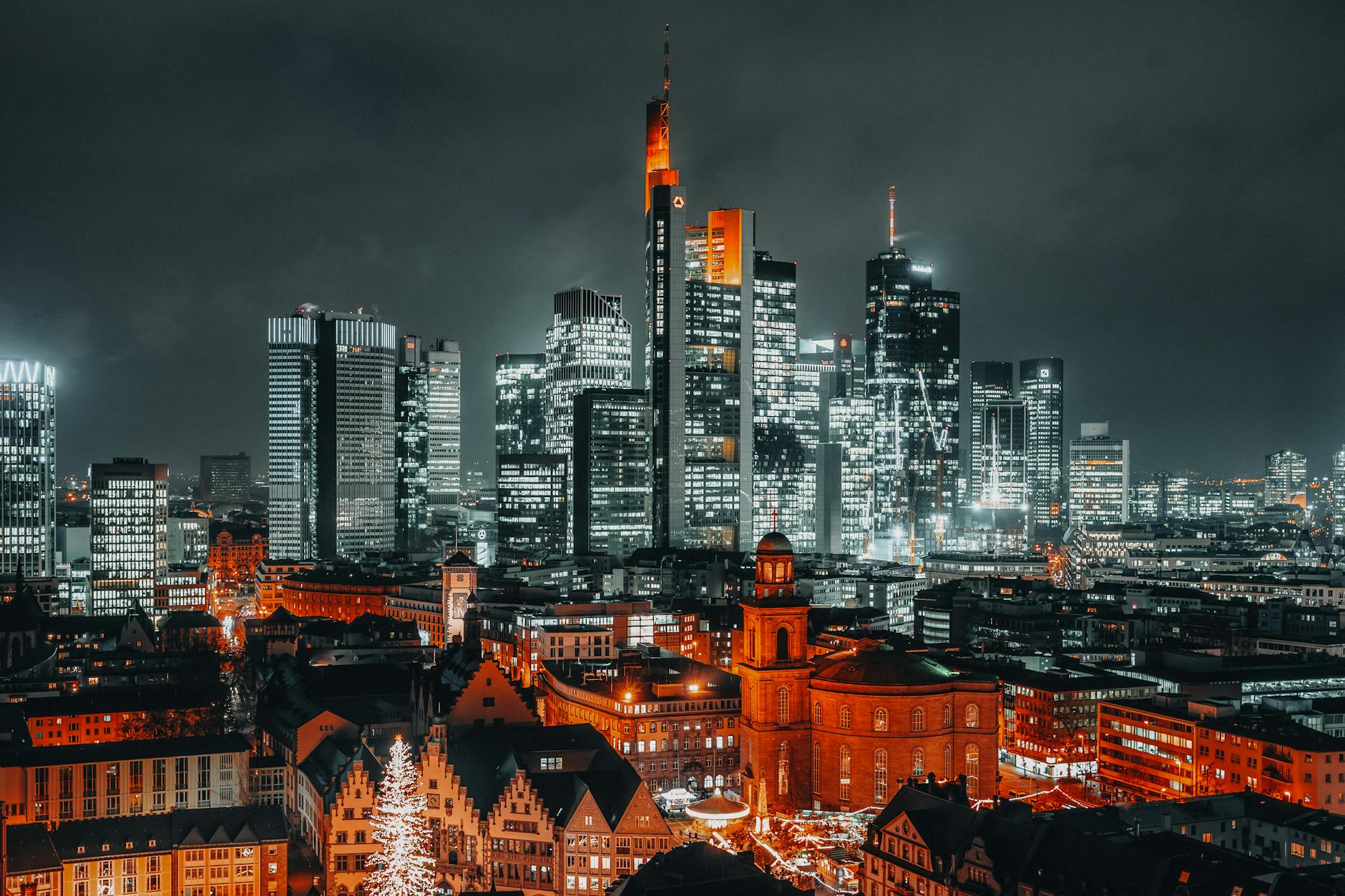
Frankfurt is one of Europe’s most consistently underestimated city stays.
Start Here
That is partly the city’s fault. The skyline looks corporate. The airport is one of the most famous in Europe. The central station district has enough rough edges to let careless visitors think they have already understood the place. And because Frankfurt performs so well as a node, people often assume its highest function is to get them somewhere else.
That reading is lazy.
Frankfurt is not a romantic old European city in the conventional sense, and it does not try to be. It is a city of edited contrasts: glass towers and medieval memory, river calm and business precision, museums and markets, apple wine taverns and finance towers, direct airport logic and a center that still rewards choosing the right district. It does not charm indiscriminately. It convinces by structure.
This is why Frankfurt works so well for a short stay when the traveler stops asking the wrong questions. The wrong question is, “Is Frankfurt worth more than a layover?” The right question is, “Which Frankfurt belongs to this trip?” A skyline-and-museum city? A food-and-river city? A clean executive base with genuine culture? A weekend that uses the old core, the Main, and Sachsenhausen without pretending the city is something it is not?
Frankfurt rewards clarity. If you pick the right base, understand the station district honestly, and treat the Museumsufer and the river as part of the city’s real backbone rather than as side attractions, the trip becomes much stronger very quickly. The city is not trying to bury you in sights. It is trying to deliver a compact urban stay with high functional quality and enough cultural substance to make that quality meaningful.
The city in one sentence: Frankfurt is a sharply edited river-and-skyline city where the best first trip comes from combining airport ease, central district discipline, museums, markets, and Sachsenhausen rather than reducing the place to finance or flight connections.
Quick Verdict
Best for: short urban breaks, business travelers extending a stay, solo travelers, couples, repeat Europe travelers, and anyone who likes efficient cities with real cultural weight.
Not ideal for: travelers who need obvious postcard romance at every turn, people who refuse to choose the right district, or anyone who expects Frankfurt to flatter a vague itinerary.
Ideal first stay: 2 nights.
Better stay: 3 nights if you want museums, markets, nightlife, and one wider-city rhythm without rushing.
Minimum worthwhile stay: 1 night if the hotel is well chosen.
Best overall months: April to June and September to October.
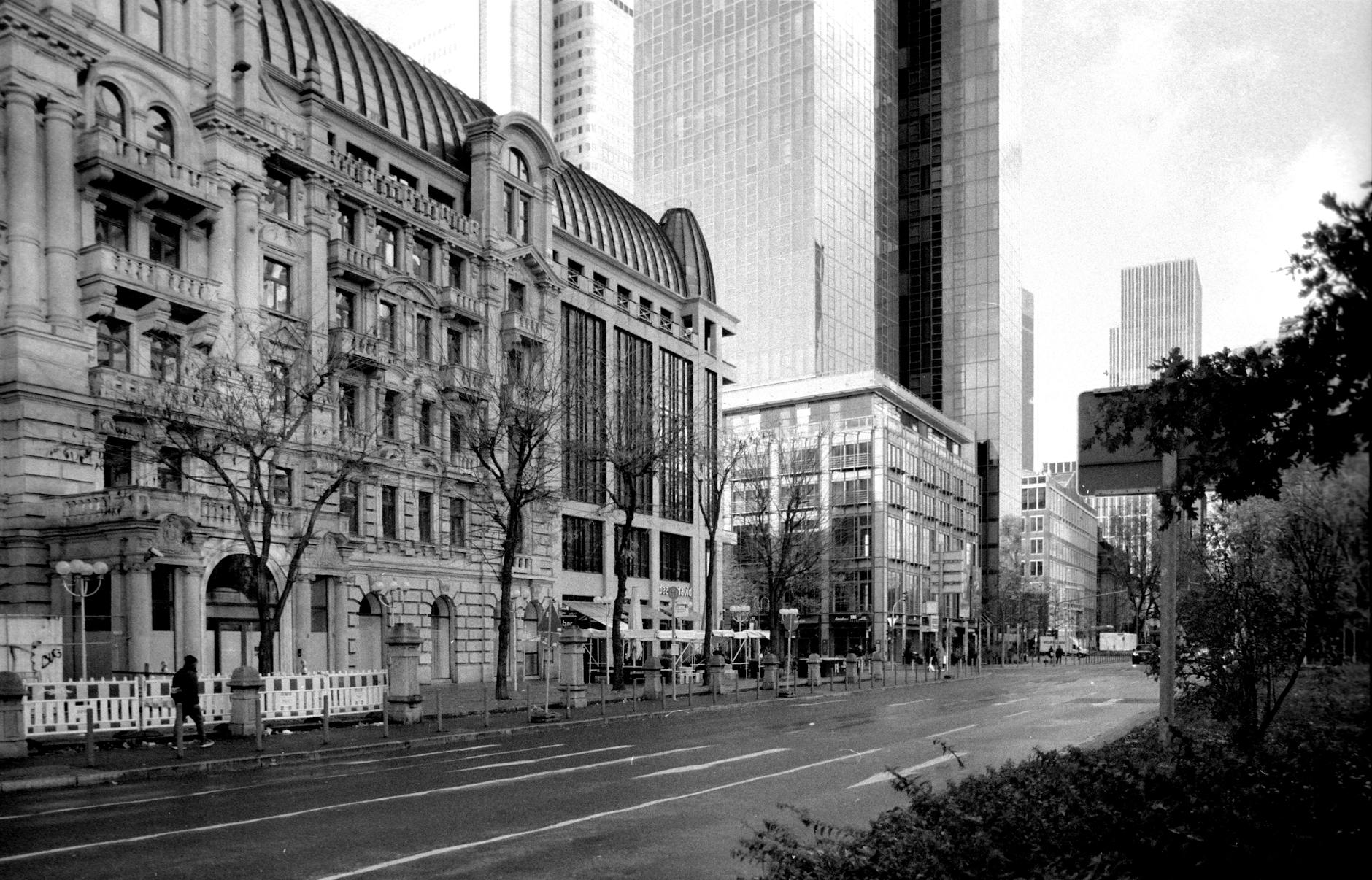
Biggest planning mistake: treating the station district and the city center as interchangeable.
One thing to prioritize: the hotel area.
One thing to keep flexible: the museum count, because Frankfurt is better when you leave room for river walks and food.
The blunt version: Frankfurt is not a city for dreamy improvisers, but it is excellent for people who appreciate clean urban composition.
Who Will Love Frankfurt?
Frankfurt works especially well for travelers who like cities that make practical sense quickly. Arrival from the airport is unusually easy, movement within the center is clear enough, and the main experiences can be built into compact clusters. That makes it ideal for people who want a city to feel usable from the first hour rather than mysterious for the sake of atmosphere.
It is also very good for travelers who appreciate contrast without chaos. Frankfurt gives you old-square history at Römerberg, museum density along the river, skyscraper views, food-market energy, and regional drinking culture in Sachsenhausen, all inside a relatively short urban radius.
Business travelers can do particularly well here if they stop sleeping in purely functional anonymity and instead choose a base that lets the city become more than conference infrastructure.
The city is less ideal for anyone who wants every district to feel picturesque. Frankfurt’s appeal is more exact than that.
Frankfurt at a Glance
| Question | Practical Answer |
|---|---|
| Main gateway | Frankfurt Airport |
| Simplest airport-city link | S-Bahn / regional train |
| Best first-time central base | Innenstadt / around Taunusanlage, Römer side, or strong central-business hotel |
| Main culture spine | Museumsufer |
| Main historic anchor | Römerberg |
| Main regional-drink district | Sachsenhausen |
| Main food-market stop | Kleinmarkthalle |
| Main planning danger | mistaking station convenience for the best visitor base |
| Car needed? | No |
| Best trip length | 2 to 3 days |
2026 Visitor Notes
Airport Access Really Is One Of The City’s Great Advantages
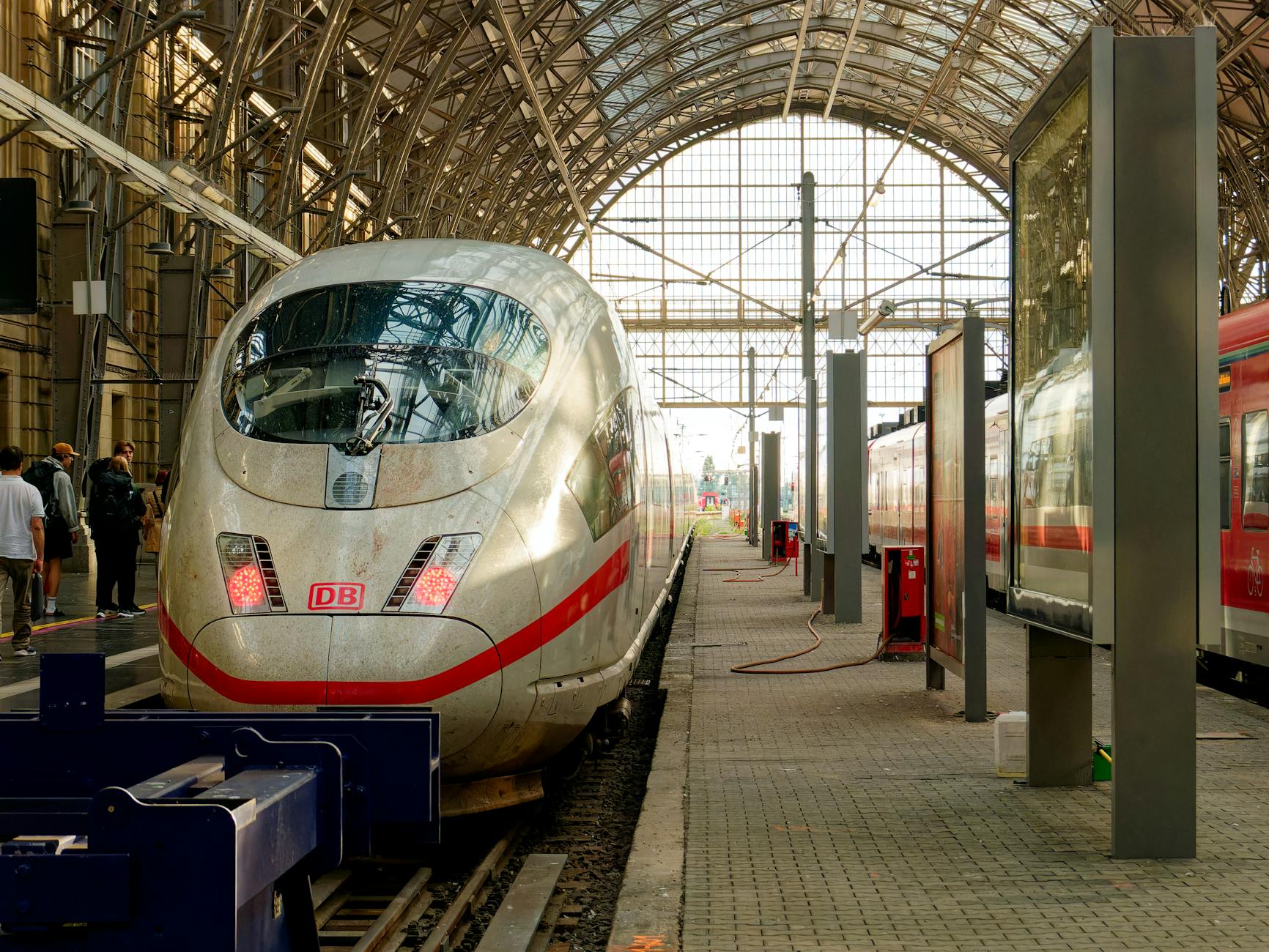
The official Frankfurt Airport train page says the regional station connects directly with Frankfurt and the surrounding region, with S-Bahn lines S8 and S9 and several regional trains, and that the station is under Terminal 1 on Level 0.[1] This is one of the city’s real luxuries.
The Airport Is Not Just “Close”; It Is Integrated
The official #visitfrankfurt arrival page says the airport is only a short distance from the city center and reachable in just a few minutes by taxi or S-Bahn.[2] That matters because Frankfurt’s clean arrival should shape how you plan the stay.
Museumsufer Is Not A Marketing Label
The City of Frankfurt’s official museum-embankment page describes the Museumsufer as one of the most important museum locations in Germany and Europe, with major institutions on both sides of the Main.[4] This is not a city where “maybe one museum” is always the right answer.
Römerberg Still Carries The Historical Weight
The official city page on Römerberg notes the site’s centuries of markets, imperial elections, and coronations, and the city government’s long residence at the Römer.[3] Frankfurt’s old core is not huge, but it is not decorative either.
Sachsenhausen Is More Than “Go Drink Cider”
The official #visitfrankfurt page on Alt-Sachsenhausen treats the district as a center of Frankfurt’s apple-wine culture and explicitly names the food and drink forms that belong there: Ebbelwei, Handkäs, ribs with sauerkraut, and green sauce.[5] That is useful because many visitors reduce the district to nightlife alone.
Kleinmarkthalle Is Operating Through Renovation
The official Kleinmarkthalle site says renovation began in 2025 while the hall remains open, and that it continues to function as a food and gastronomy hub in the center of Frankfurt.[7] That is exactly the kind of live operational detail visitors need.
How to Understand Frankfurt
Frankfurt works through five forces.
The first is arrival efficiency. Few major European cities begin this cleanly.
The second is river logic. The Main is not scenery alone; it helps organize the stay.
The third is edited density. Frankfurt gives you enough, not everything.
The fourth is business-city seriousness. That sounds dry, but it is part of why the city functions so well.
The fifth is district honesty. Frankfurt improves dramatically when you stop pretending all central areas offer the same experience.
The Main Mental Shift
Do not ask, “What are the top sights in Frankfurt?” Ask, “Which Frankfurt should this day belong to?” Historic Frankfurt, museum Frankfurt, skyline Frankfurt, market Frankfurt, or Sachsenhausen Frankfurt. Once you divide the city that way, the stay becomes much clearer.
What Frankfurt Does Better Than People Think
Frankfurt is better than many people expect at feeling complete in a short time. You can arrive fast, settle quickly, build a day around one or two museums, the river, the old square, and a good dinner, and still feel like you used the city rather than skimmed it.
It is also better than people think at balancing seriousness and pleasure. Museumsufer is strong. The old core has weight. The skyline is legible and genuinely distinctive. But the city also knows how to feed people, stage a market, and turn a riverbank into part of the social day.
And Frankfurt is better than people think at being itself. If you stop wanting it to impersonate Berlin, Munich, or Cologne, it becomes much more persuasive.
Where Frankfurt Fits in a Germany Trip
Frankfurt fits a Germany trip best as the city that proves efficiency and culture do not have to fight each other.
Many visitors encounter Frankfurt first as infrastructure. They land at the airport, see the banking skyline from a train or taxi, pass the station district, and conclude that the city’s main function is transition. That impression is understandable, but it is incomplete to the point of being misleading. Frankfurt works best not when it is treated as the city between better-known places, but when it is chosen as a short, cleanly edited urban stop in its own right.
Used properly, the city can play at least three strong roles in a broader trip.
The first is as a high-functioning two-night city break in the middle of a larger German route. Because arrival is so easy and the center is relatively compact, Frankfurt wastes very little of the traveler’s energy.
The second is as a business-and-leisure hybrid stay. Few major European cities are this good at letting a work trip turn into a real cultural and food city with minimal friction.
The third is as a repeat-traveler Germany city. Once you are no longer demanding that every stop look like a preserved historical dream, Frankfurt becomes much easier to admire for what it is: a serious, compact, structurally intelligent city.
The city is weak only when you refuse to give it any form beyond convenience. If that is how you use it, it will feel like convenience. If you shape it, it can feel exact and memorable.
Frankfurt Versus Cologne
This comparison appears constantly, usually because the two cities sit close enough together that travelers feel forced to choose.
Cologne makes itself legible quickly. The cathedral dominates the imagination, the city’s personality is louder, and the emotional tone is easier to grasp on a first visit. Even travelers who are not especially moved by Cologne can usually describe what the city is trying to be.
Frankfurt is different. Its identity depends less on a single overriding symbol than on the relationship between several urban systems: airport ease, skyline form, river structure, museums, market life, and the regional drinking culture south of the Main. It is less immediately lovable to people who equate clarity with monumentality. But it can be more satisfying to travelers who value a city that works hard in small, intelligent ways.
That means the better question is not which city is “better.” It is which city you want right now. Cologne is stronger for overt monumentality and a louder civic personality. Frankfurt is stronger for a compact, efficient, adult urban stay built on precision rather than emotional display.
The wrong move is asking Frankfurt to justify itself in Cologne’s language. It never intended to.
First-Time Visitors Versus Repeat Visitors
First-time visitors usually need Frankfurt to prove that it is more than two clichés at once: airport city and banking city.
That is why a first visit needs some deliberate balance. The skyline alone is not enough. Römerberg alone is not enough. Sachsenhausen alone is not enough. A strong first stay has to let at least two or three Frankfurts interact: river and museum, market and old center, skyline and local register. Without that balance, the city can feel like a set of partially connected truths.
Repeat visitors are freer. Once you already know that Frankfurt’s station area is not the whole city, that the river matters structurally, and that Sachsenhausen is better with purpose than with vagueness, you can use the city more loosely. A repeat stay can lean into museums, food, business comfort, or even simple efficiency without reducing the place unfairly.
This is one reason Frankfurt often improves on a second visit. The first visit is often still adjudicating the stereotypes. The second can finally use the city.
Best Time to Visit Frankfurt
Late spring and early autumn are the cleanest seasons for most travelers. The riverbank becomes more socially useful, the city reads better on foot, and terraces and skyline views improve the mood of the whole stay.
Summer still works well, especially for a museum-plus-river version of Frankfurt, but hotel quality matters more because the city’s harder edges show more when you are tired and hot.
Winter can be excellent for people who want museums, bars, and sharper urban structure rather than long outdoor meandering.
Summer Frankfurt Versus Cooler-Season Frankfurt
Frankfurt in summer can be very good, but it asks more of the traveler. The river stays useful, terraces help, and longer daylight supports the skyline-and-museum version of the city. But the hotter it gets, the more the city’s businesslike surfaces can start to feel slightly hard. This is when the quality of your hotel, your district, and your pacing begin to matter more than they do in softer weather.
Cooler seasons often suit Frankfurt better. The river remains useful, but the city’s sharper lines become an advantage rather than a threat. Museums gain weight. Market stops feel more anchoring. Sachsenhausen becomes more appealing as a real evening district rather than just a stop on a warm-weather stroll. Frankfurt’s seriousness starts to look like character.
This is one reason the city can outperform more obviously romantic destinations in shoulder season. It does not need perfect weather to make sense.
How Many Days You Need
One Night
Enough for a competent first impression, especially if you arrive early or stay late and choose the hotel well.
Two Nights
The best first answer for many visitors. One day can hold Römerberg, Kleinmarkthalle, the river, and Sachsenhausen. Another can belong to Museumsufer, skyline views, and more deliberate neighborhoods.
Three Nights
This lets Frankfurt feel like a real city rather than a smart stopover. It also gives you more room to use museums without turning the trip into pure indoor culture.
Four Nights or More
Four nights is more than most first-time visitors need, but it can work very well for travelers who want one city that keeps life simple. At that length, Frankfurt stops behaving like a sharply edited city break and starts behaving like a routine: one museum, one market stop, one businesslike morning, one long river walk, one dinner in Sachsenhausen, repeat.
That is when some of the city’s strengths become clearest. You stop asking whether there is “enough” and start noticing how much easier the city is to use than many more dramatic places.
The Real Question
The real question is not how many nights Frankfurt “deserves” on a map. It is whether you are giving the city enough time to express more than one version of itself. If all you experience is the station, the airport, and one dinner, the answer is no. If you also experience the old core, the river, a museum or two, and the local register south of the Main, the answer is usually yes.
Where to Stay
Frankfurt hotel choice is really about tone, not just geography.
Fast Answer
For most first-time visitors, stay in a strong central area that gives easy access to the river, old center, and transport without forcing you to live your whole trip through the station district. Taunusanlage, central Innenstadt, or a polished old-center/river-facing option usually works better than a purely “near Hauptbahnhof” choice unless your trip is heavily rail-dependent.
Near the Main Station
Best for: early departures, rail-heavy itineraries, and travelers who value raw convenience above all else. Tradeoff: this is the district most likely to distort a first-time visitor’s reading of Frankfurt. Best use: short functional stays, not dreamy first impressions.
Innenstadt / Taunusanlage / Financial Core Edge
Best for: strong all-round first stays, skyline access, restaurants, river reach, and polished hotel options. Why it works: you get Frankfurt’s central efficiency without making the station district your whole urban lens. Tradeoff: can feel more businesslike than cozy. Best use: the smartest default for many adults.
Römer / Old Center / River Edge
Best for: travelers who want the city’s historical and cultural logic close at hand. Tradeoff: fewer hotel choices at every price point than broader central business areas. Best use: short breaks that want an immediately legible city core.
Sachsenhausen
Best for: evenings, local-drink culture, and a more neighborhood-feeling version of Frankfurt. Tradeoff: depends heavily on exact location; some stays are charming, others noisier than they first appear. Best use: food-forward and nightlife-friendly stays.
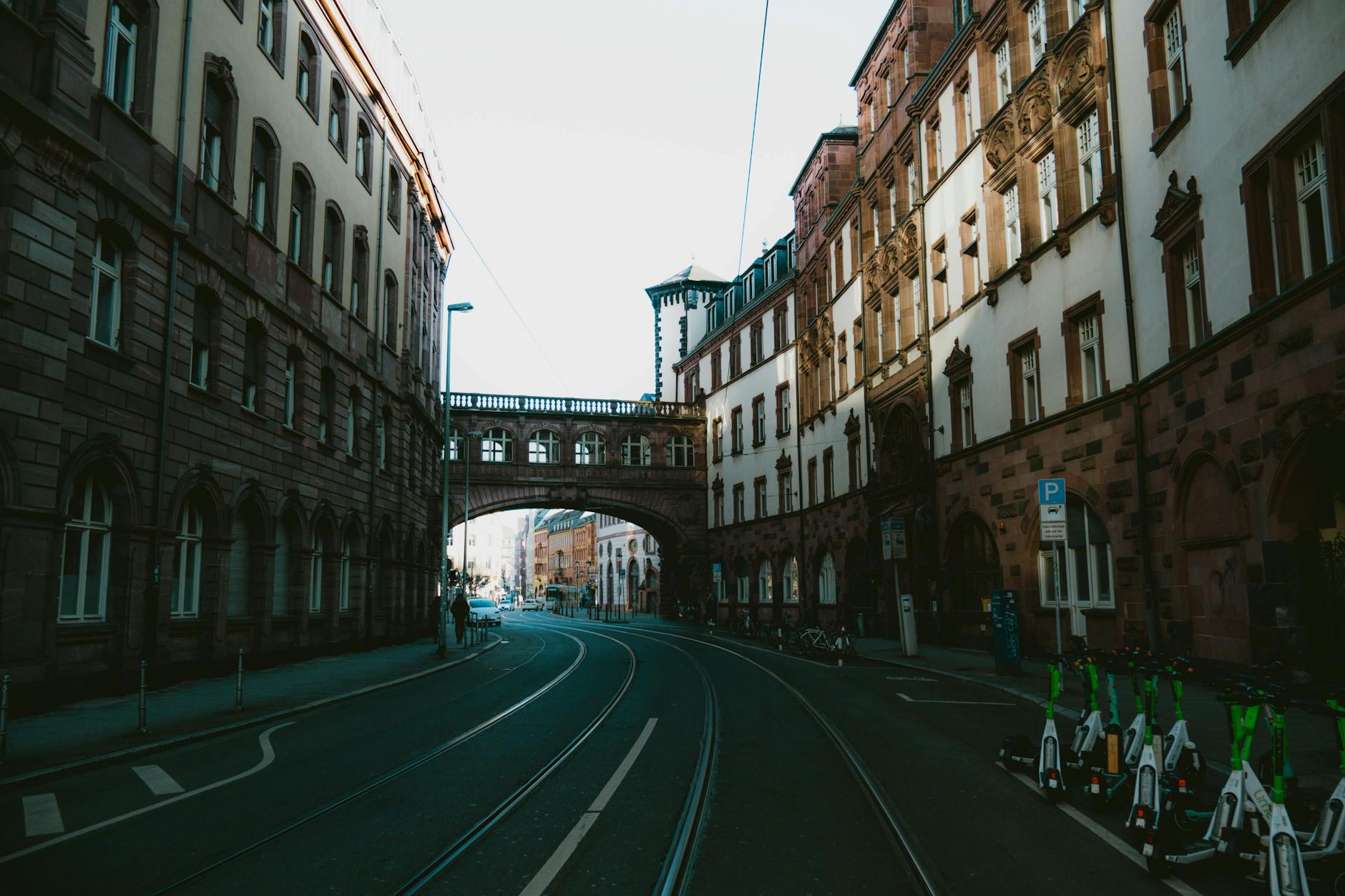
Why The Hotel Area Matters More Than Visitors Expect
Frankfurt is one of those cities where a merely competent hotel decision can silently diminish the whole stay.
That is because the city’s value lies so much in how efficiently and clearly the different parts of it connect. A hotel near the wrong block of the station district can make the whole city feel seedier and more anonymous than it is. A hotel in the right central-business or old-center edge can make the city feel polished, manageable, and unexpectedly high quality. The same attractions may technically remain available either way, but the emotional reading changes.
This is especially important for short stays. In a city where arrival is fast and the main sights cluster well, the hotel becomes one of the strongest determinants of whether the city feels like a real place or a transit platform with museums attached.
The Frankfurts That Matter Most
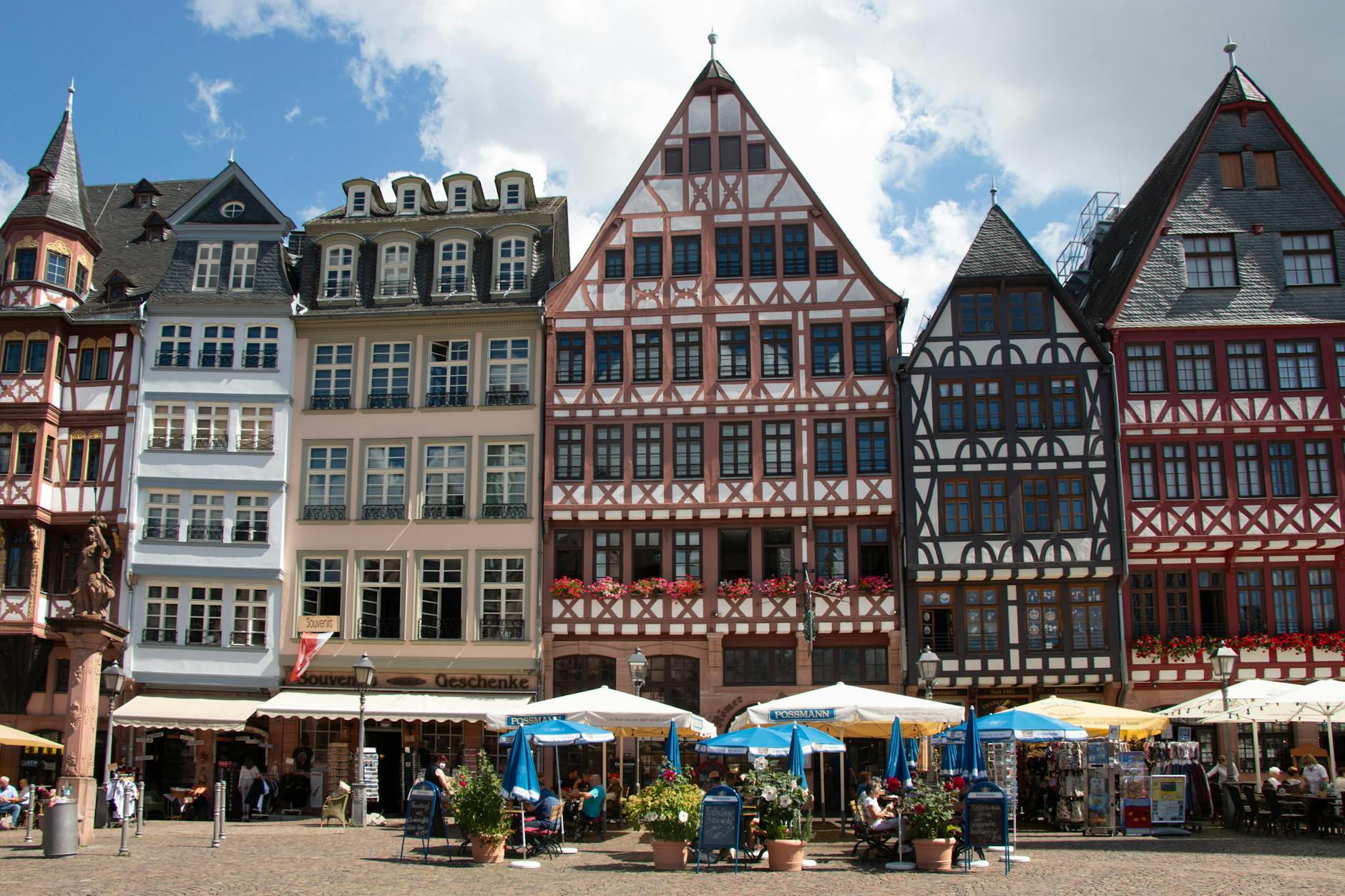
Historic Frankfurt: Römerberg, the old civic center, and the city’s memory.[3]
Museum Frankfurt: Museumsufer and the riverbank cultural spine.[4]
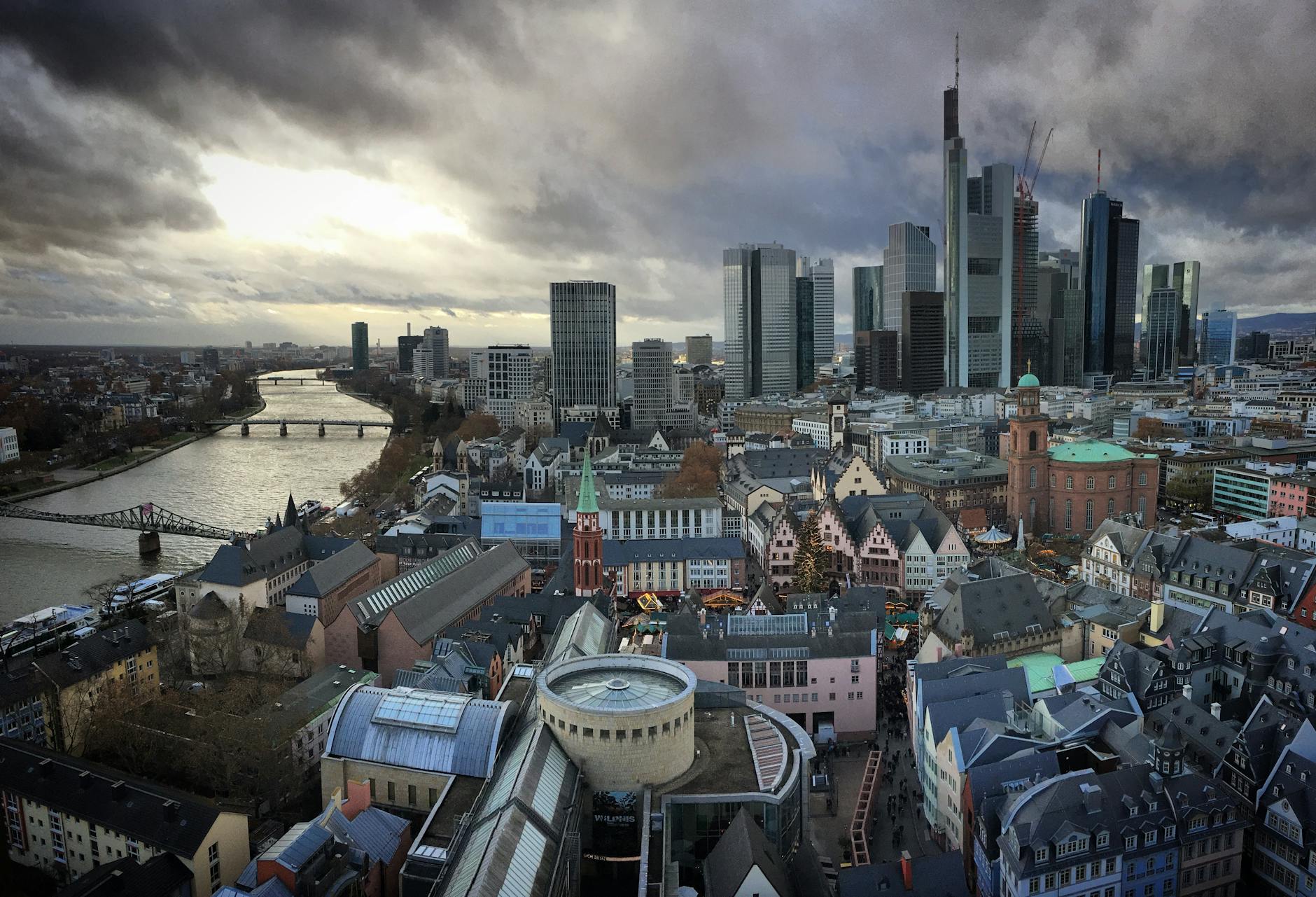
Skyline Frankfurt: Main Tower and the business-city silhouette.[6]
Market Frankfurt: Kleinmarkthalle and the city’s urban appetite.[7]
Sachsenhausen Frankfurt: cider, taverns, and a more regionally rooted identity south of the river.[5]
Why One Proper City Day Matters
Some travelers reduce Frankfurt to a museum visit, a skyline look, and perhaps one old-square walk. That is enough to confirm the city exists, but not enough to understand it.
Frankfurt usually needs one proper city day that belongs to the city itself, not just to one attraction. That means allowing the old center, the market, the river, and either a museum or Sachsenhausen to interact as parts of the same urban system. Once that happens, the city starts to feel joined up rather than compartmentalized.
This matters because Frankfurt’s great virtue is not isolated monumentality. It is composition. One proper day is what allows that composition to become visible.
Römerberg, Museumsufer, and the River
These are the places that stop Frankfurt from being reduced to transit and towers.
Römerberg matters because it gives the city historical gravity. The official city page makes clear that this was not just a nice square but a site of markets, fairs, imperial elections, and coronations.[3] A traveler who skips it entirely risks never understanding how deep Frankfurt’s civic history actually runs.
Museumsufer matters because it gives Frankfurt cultural scale. The city’s official page describes a museum landscape extending on both sides of the Main, with major institutions collected into a dense cultural ribbon.[4] This is not just “there are some museums there.” It is one of the city’s defining systems.
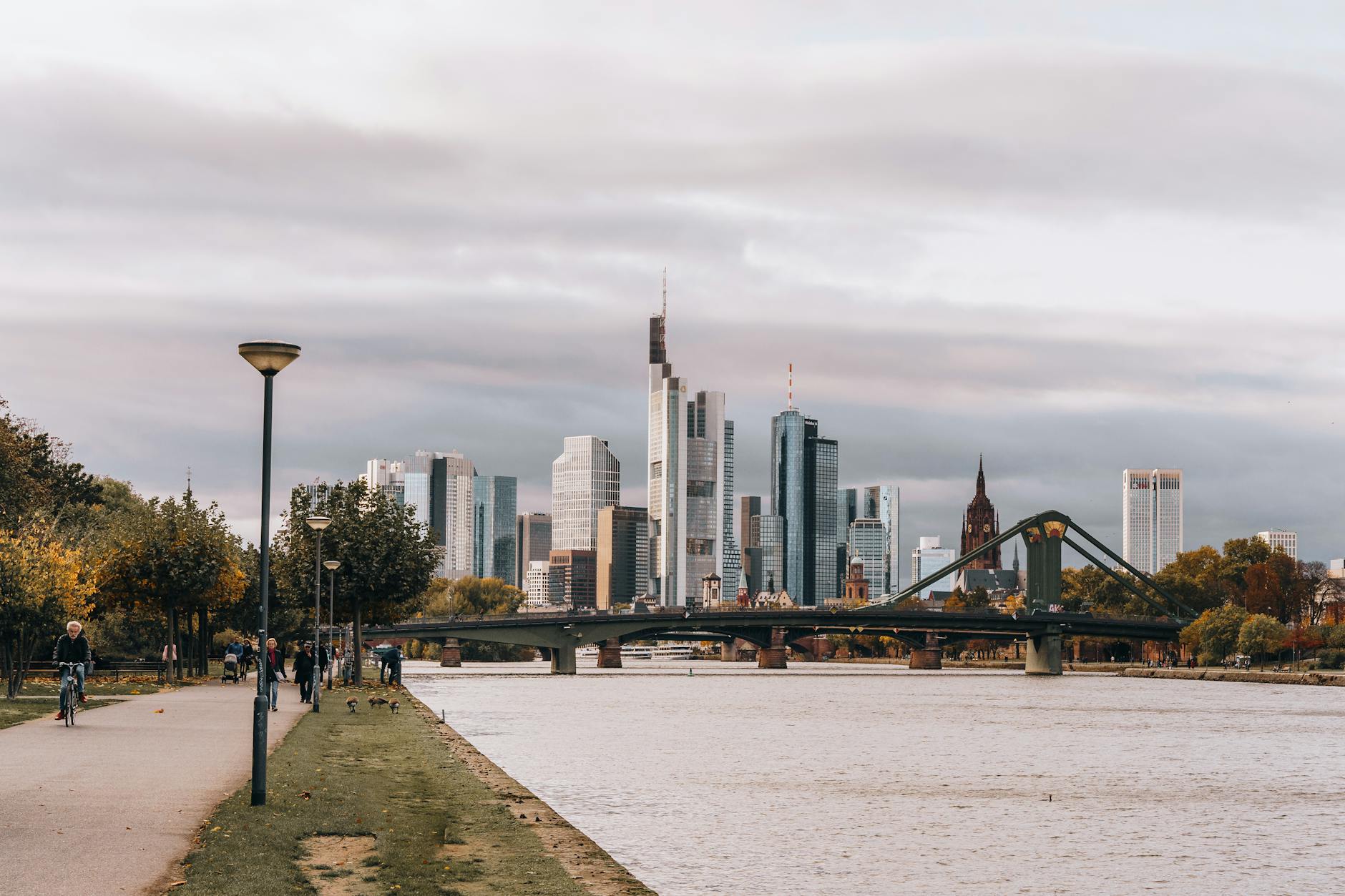
The river matters because it binds the two. It is where Frankfurt’s harder lines soften. It is how a museum day transitions into an evening. It is how the skyline gets perspective.
Day Frankfurt Versus Evening Frankfurt
Daytime Frankfurt is clean, legible, and often more serious than travelers expect. It is when the skyline reads most clearly, the old center feels most civic, and the museum-and-market systems explain themselves. If the trip is badly structured, this can make the city feel a little too efficient, as if it were only a sequence of very well-managed tasks.
Evening changes that. The river softens. Sachsenhausen becomes more persuasive. Dinner and drinks begin to give the city a warmer register. Even the business core starts to feel less abstract once it is no longer the entire emotional frame of the day.
This is why a weak Frankfurt trip is often all daytime function and no night. The city needs an evening to stop looking like a well-equipped machine and start looking like a place people genuinely inhabit.
Main Tower and the Skyline Question
Frankfurt’s skyline is part of the city’s identity, but it should be used carefully.
If you want one deliberate skyline experience, Main Tower is a strong answer. The official #visitfrankfurt listing notes the public observation terrace at 187 meters, seasonal opening hours, and the Frankfurt Card discount, while also making clear that the tower is a functioning office skyscraper rather than a pure monument.[6]
That is exactly how to think about Frankfurt’s skyline. It is not there to give you generic “big city views.” It is there to remind you that Frankfurt’s financial seriousness is one of the ingredients that makes the city specific.
Why The Skyline Needs The River And The Old Center
The skyline is one of Frankfurt’s obvious distinctions, but it is not self-sufficient.
If you use it alone, the city risks becoming a European business-card cliché. The towers matter because they exist in tension with the river, with Römerberg, and with the food and tavern culture that keeps the city from becoming all abstraction. The skyline’s function is not to dominate the trip. It is to sharpen contrast.
That is why the most convincing Frankfurt trips almost never belong solely to the towers. They belong to the relationship between the towers and everything that humanizes them.
Kleinmarkthalle and Food
Kleinmarkthalle is one of the simplest ways to understand Frankfurt as a living city.
The official market site describes it as a long-running central meeting point with more than 60 traders, fresh food, and a gastronomy culture that encourages eating and lingering as much as shopping.[7] That is important because Frankfurt can otherwise feel overly polished or office-led. The market restores appetite and scale.
Food in Frankfurt should not be treated as a checklist of one or two regional dishes. Yes, apple wine matters. Yes, green sauce matters. Yes, sausages and Handkäs belong. But Frankfurt is also a market city, a trade city, and a city with real appetite for multiplicity. Kleinmarkthalle makes that visible.
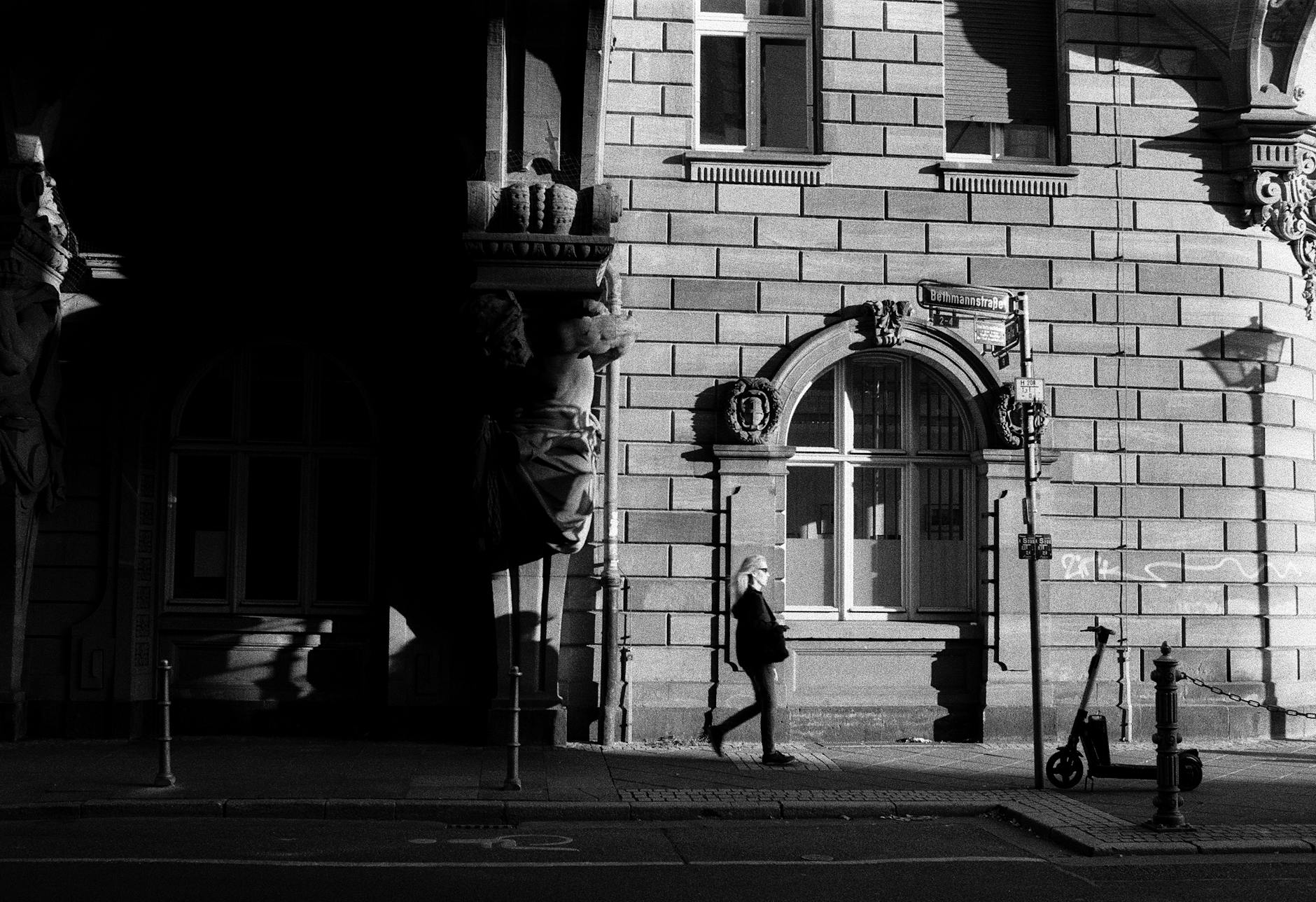
Why The Market Matters More Than Visitors Expect
Kleinmarkthalle is not just a useful lunch stop. It corrects the city.
Without the market, Frankfurt can lean too hard toward finance, transport, and external seriousness. With it, the city becomes more grounded, more edible, and more social in the middle of the day. It gives the urban core a necessary register of ordinary appetite.
This is particularly important in short stays. A market meal or even a market-led detour can do more to make Frankfurt feel alive than another item of abstract sightseeing.
Sachsenhausen and the Local Register
Sachsenhausen gives Frankfurt its most obvious regional voice.
The official #visitfrankfurt page is refreshingly specific here: apple wine, Bembel jugs, ribbed glasses, Handkäs, ribs with sauerkraut, and green sauce are all part of the district’s identity.[5] That specificity is useful because it keeps visitors from treating Sachsenhausen as just another nightlife quarter.
The best use of the district is usually not a bar crawl built on vagueness. It is a meal, a proper cider stop, a walk, and enough time to notice that the river changes the city’s tone on this side.
Why Sachsenhausen Is The Essential Counterweight
Sachsenhausen matters because it stops Frankfurt from becoming too professional.
The district brings in regional drink, older tavern culture, a different pace, and a more textured sense of ordinary urban life. This does not mean it is the “real” Frankfurt in some sentimental sense. It means it is one of the parts of the city that prevents the rest from becoming too purely abstract or business-coded.
For first-time visitors, this is why crossing the river matters. It is not only about seeing another district. It is about letting the city change register.
Getting Around
For most visitors, Frankfurt is a rail-and-walking city first, taxis second, and occasional trams or U-Bahn as needed.
Arrival from the airport is so good that it should influence your whole mental model. The airport’s official train page makes clear how directly the regional station plugs into the RMV network and the S-Bahn system.[1] That means a first-time traveler can afford to think more about the quality of the stay and less about transfer stress.
If you expect to move a lot and use attractions, the Frankfurt Card can be worthwhile. The official #visitfrankfurt and Main Tower material describe it as a day or two-day combined ticket for travel in Frankfurt including the airport, plus discounts on attractions and museums.[6][2]
Why The Station District Needs More Honesty
The station district is not unusable. It is simply too powerful a first impression to be left uninterpreted.
If you stay there because your trip is rail-heavy, your budget is tight, or your hotel is unusually strong, it can make sense. But if you stay there by default and then behave as if it were representative of the whole city, the trip can go wrong quickly. The area is functional, mixed, and sometimes difficult. Frankfurt deserves a more deliberate lens than that.
This is not an argument for fear. It is an argument for precision. A city this edited asks for a little edited thinking in return.
What To Skip
Skip the idea that “near the main station” is always the smartest answer.
Skip trying to consume Frankfurt as if it were a romantic old town. It is much better than that and much less sentimental.
Skip packing in too many museums if it leaves no room for the river or the market.
Skip thinking the skyline is enough by itself.
Why Frankfurt Often Works Better Than It Sounds
If you describe Frankfurt lazily, it can sound almost anti-romantic: airport access, finance towers, museums, a market, a river, some cider taverns. None of that sounds especially transporting. And that is precisely why the city is so easy to underrate.
In practice, Frankfurt works through balance. The airport makes the trip simpler. The old center gives it memory. The museums give it weight. The river gives it breath. The skyline gives it specificity. Sachsenhausen gives it local voice. The market gives it appetite. Each piece corrects the others.
That is why the city can feel much stronger than its summary. It is not trying to overwhelm. It is trying to assemble itself cleanly.
Common Mistakes
Choosing the Wrong Base
Frankfurt’s district logic is not optional. It shapes the whole trip.
Letting the Station District Define the City
This is the easiest first-time error.
Underusing the River
The Main is one of Frankfurt’s clearest organizing lines.
Treating Frankfurt as Pure Infrastructure
If you do this, the city will confirm your prejudice.
Overloading One Day
Römerberg, Museumsufer, Main Tower, the market, and Sachsenhausen can fit into a trip. They should not always fit into one rush.
Why Frankfurt Often Improves On A Second Visit
On a first visit, many travelers are still testing the stereotypes. Is this just an airport city? Is it only finance? Is the station district the real city? Are the museums enough? That evaluative mindset flattens the trip because it keeps the traveler in judgment mode.
On a second visit, the city often becomes easier. You already know which districts suit you. You no longer need the skyline to prove anything. You can use the market or the river without needing each stop to justify the entire destination. That is when Frankfurt often begins to feel less like infrastructure with culture attached and more like a precise city in its own right.
How Frankfurt Changes Over The Course Of A Stay
On arrival, Frankfurt can seem almost too efficient. The airport access is fast, the center is manageable, and the skyline tells you immediately what kind of city you are in. Some travelers mistake that clarity for thinness.
By the second day, if the trip is built well, the city starts to separate into distinct registers. Historic Frankfurt, museum Frankfurt, and Sachsenhausen Frankfurt no longer feel like fragments. The river begins to matter as the line that binds them. Even the skyline starts to read more intelligently because it is no longer the only available story.
By the third day, Frankfurt often becomes more persuasive precisely because it no longer needs to explain itself. It is simply the city you are in now: museum, market, river, skyline, cider, repeat. That is when its precision starts to feel like personality.
My Blunt Advice
Stay somewhere central but not lazily central.
Give Römerberg enough time to register as history, not just as a photo square.
Use one or two museums properly rather than half-learning six.
Eat at Kleinmarkthalle or at least let it shape the day.
Cross the river and drink something regional in Sachsenhausen.
And stop asking whether Frankfurt is charming enough. The better question is whether you know how to use a city whose virtues are precision, structure, and adult confidence.
Source Notes
- 1. Frankfurt Airport. "Travel by train." Official airport access page detailing the regional station under Terminal 1, S8 and S9 connections, and direct regional access from the airport. https://www.frankfurt-airport.com/en/transport-and-parking/to-from-the-airport/travel-by-train.suffix.html/d20260403lh3464.html
- 2. #visitfrankfurt. "Arrival." Official tourism arrival page noting that Frankfurt Airport is only a short distance from the city center and reachable quickly by taxi or S-Bahn. https://www.visitfrankfurt.travel/en/services/arrival
- 3. City of Frankfurt am Main. "Römerberg." Official city page describing the square’s role in markets, fairs, imperial elections, and coronations and its long civic importance. https://frankfurt.de/english/discover-and-experience/sightseeing/historical-buildings/roemerberg
- 4. City of Frankfurt am Main. "Museum embankment." Official city page describing the Museumsufer as one of Germany and Europe’s most important museum locations. https://frankfurt.de/english/discover-and-experience/sightseeing/historical-buildings/museum-embankment
- 5. #visitfrankfurt. "Alt-Sachsenhausen." Official tourism page describing the district’s apple-wine culture, Ebbelwei traditions, and typical local dishes. https://www.visitfrankfurt.travel/en/poi/old-sachsenhausen
- 6. #visitfrankfurt. "Main Tower with viewing platform." Official tourism page with current opening hours, prices, public transport stop, and Frankfurt Card discount information. https://www.visitfrankfurt.travel/en/poi/main-tower
- 7. Kleinmarkthalle Frankfurt. Official market site noting that renovation began in 2025 while the hall remains open and describing the hall’s traders, gastronomy, and central role. https://www.kleinmarkthalle.de/