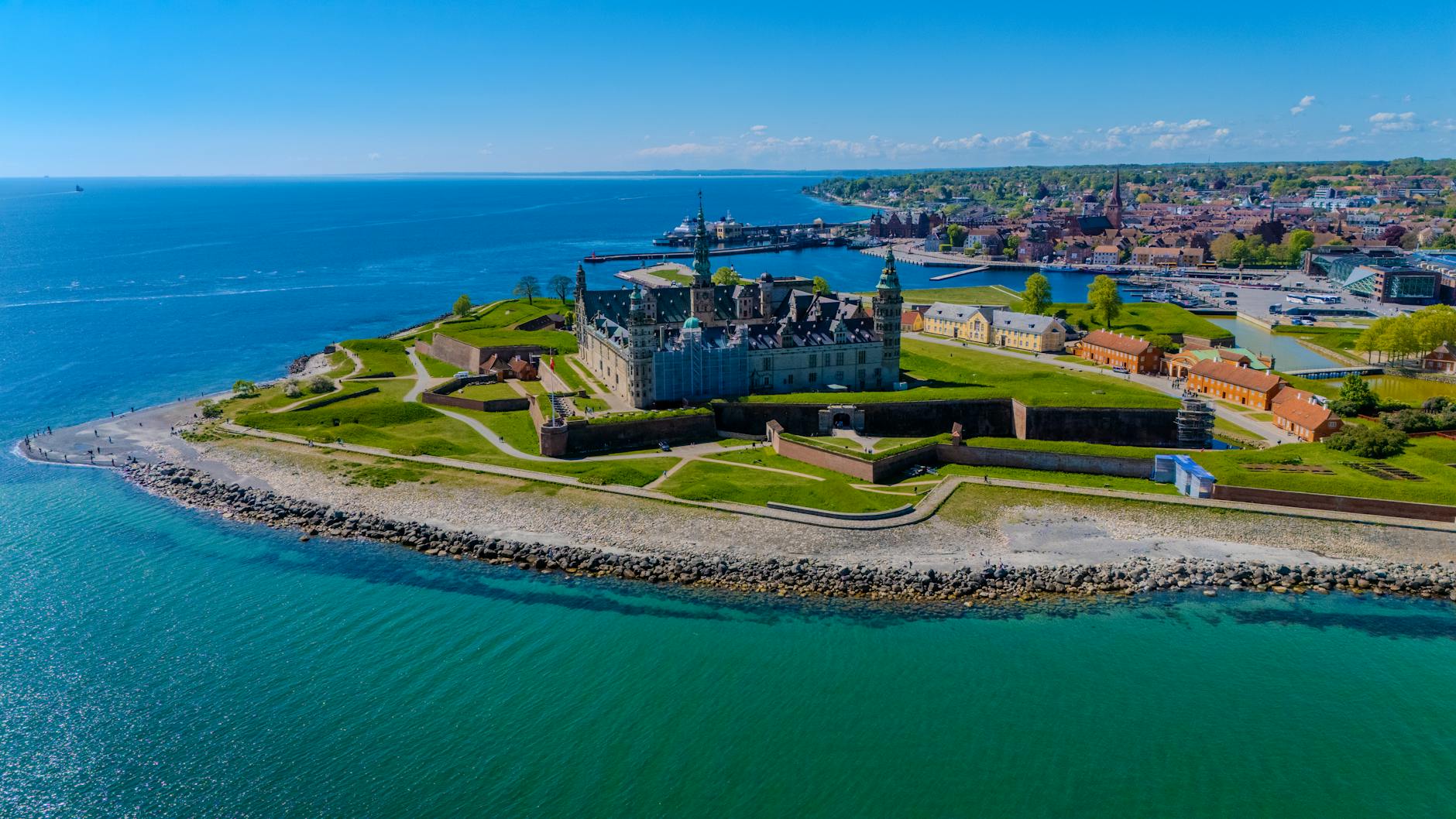
Elsinore is one of those towns that suffers from being too easy to summarize.
Start Here
People hear Hamlet, Kronborg, Denmark, Sweden just across the water, perhaps a day trip from Copenhagen, and they assume the whole place is already understood. That is exactly how visitors end up underusing it. Elsinore is stronger than its shorthand. The strait matters. The ferry terminal matters. The walk from the station to Kronborg matters. The old center matters. The maritime feeling matters. The town’s value lies not just in one famous castle but in the way fortification, harbor, rail, and sea pressure still organize the place.
That is what makes Elsinore interesting. It is not a decorative old town with one literary association attached. It is a threshold town. Denmark is narrowing here, Sweden is staring back across the water, and the whole place still feels as though movement and defense once mattered intensely. The best first stay understands that geography and lets the town’s practical coastal life support the historical symbolism rather than get erased by it.
The right Elsinore trip is therefore modest but attentive. One good castle visit, one real walk through town, some time at the maritime edge, perhaps one ferry crossing or at least the sight of one, and enough evening air to understand the place after the day-trippers have softened.
Elsinore in one sentence: it is one of Denmark’s most atmospheric small coastal cities, but only when you let the sea, the station, and the strait do as much interpretive work as Hamlet does.
Basic data
| Population | About 47,000 in the city |
|---|---|
| Area | Compact coastal city |
| Major religions | Christian heritage with a strongly secular contemporary public culture |
| Political system | Municipal government inside a parliamentary constitutional monarchy |
| Economic system | High-income mixed economy led by services, tourism, transport, and regional trade |
Quick Verdict
Best for: Copenhagen side trips that turn into overnights, coastal-city travelers, castle-and-history travelers, and anyone who enjoys places where geography still feels decisive.
Less ideal for: travelers who want nonstop urban activity, or anyone determined to reduce the town to one castle and leave immediately.
Ideal first stay: 1 night.
Still worthwhile: as a day trip, but thinner.
Can justify more: yes, if part of a North Zealand coastal route.
Biggest planning mistake: treating Kronborg as the whole town.
One thing to prioritize: the station-harbor-castle axis.
One thing to keep simple: the sightseeing plan.
The blunt version: Elsinore becomes good the moment you stop rushing back to Copenhagen.
Who Will Love Elsinore?
Elsinore works for travelers who like small cities with real edges. If you enjoy places where ferries are part of the atmosphere, where one castle can still shape the whole townscape, and where an hour spent watching a narrow strait can feel meaningful, Elsinore is strong.
It is especially good for visitors who prefer layered coastal history to generic “cute town” charm.
Elsinore at a Glance
| Question | Practical Answer |
|---|---|
| Main historic anchor | Kronborg Castle |
| Main arrival point | Helsingør Station |
| Walk station to castle | About 10 minutes |
| Main cross-strait link | Helsingør–Helsingborg ferry |
| Main secondary museum | M/S Maritime Museum of Denmark |
| Why stay here? | Strait atmosphere plus real town texture |
| Best first stay length | 1 night |
2026 Visitor Notes
Kronborg Still Structures the Visit Properly
Kronborg’s current official visitor material continues to make clear that the castle is not only a monument but a working museum site with regular opening hours, tours, and a very easy walk from Helsingør Station.[1][2]
Helsingør Station Still Makes Car-Light Elsinore Obvious
DSB’s current station page continues to show Helsingør Station as a well-equipped rail hub with direct links down the coast toward Copenhagen and immediate access to the ferry terminal.[4]
The Ferry Still Gives the Town Its Borderline Energy
ØRESUNDSLINJEN’s current timetable and route pages continue to present the Helsingør–Helsingborg crossing as a `20`-minute trip, which is central to the town’s feel whether or not you actually take it.[5][6]
The Maritime Museum Still Strengthens the Non-Hamlet Side of Town
M/S Museet for Søfart continues to present itself as the place to experience Denmark’s maritime history in Helsingør, and its presence matters because it keeps Elsinore from flattening into pure Shakespeare branding.[7]
How to Understand Elsinore
Elsinore works through four forces.
The first is strait geography. The water is not background; it is the town’s argument.
The second is castle gravity. Kronborg gives the place form, but not all of its meaning.
The third is arrival coherence. Station, ferry, harbor, and castle line up unusually well.
The fourth is symbol versus place. The town improves when the literal town is allowed to matter as much as its fame.
The Main Mental Shift
Do not ask, “How fast can I do Kronborg?” Ask, “How does this coastal threshold town actually work?” That question makes Elsinore much stronger.
What Makes Elsinore Distinct
Elsinore’s distinction is that it still feels geographically tense in the best way.
Few small European coastal cities are so clearly shaped by a narrow strip of water and a historic need to watch it. The short distance to Sweden, the ferry pulse, the castle, and the harbor edge all keep the town from becoming merely picturesque. Elsinore feels purposeful. That is why it survives familiarity so well.
Best Time to Visit
Elsinore does not need perfect weather to work.
Clearer, brighter months make the coast and castle walks easier, but overcast weather often suits the place just as well because the strait, the stone, and the maritime edge gain atmosphere from mixed light. The town’s appeal is not based on sunshine alone.
The real seasonal advantage is simply having enough day and enough air to let the coastal mood settle in.
How Many Days You Need
Half a Day
Enough to see the outline, but not enough to feel the town.
One Night
The best first answer for many travelers. This gives you the castle, the town, and the evening strait mood.
Longer
Reasonable if Elsinore is part of a coastal route or paired with more of North Zealand.
Arrival Strategy
Arrive by rail if you can.
Kronborg’s own visitor material notes the direct train connection from Copenhagen about every 20 minutes and the roughly 10-minute walk from Helsingør Station to the castle.[2] DSB’s station page reinforces the same point from the rail side.[4] That is exactly the kind of clean arrival Elsinore deserves: station, harbor air, town scale, castle on the horizon.
Where to Stay
For most first-time visitors, staying close to the center and station is the cleanest answer.
Station / Center / Harbor Band
Best for: first-timers, rail users, easy castle access, and evenings where the ferry and waterfront still feel close. Tradeoff: less of a secluded coastal feel.
Slightly Outer Stay
Best for: travelers wanting quieter lodging or a more residential tone. Tradeoff: weaker immediacy to the station-castle-harbor logic that makes the town easy.
The Main Rule
Elsinore is strongest when the walk back from dinner still feels like part of the place.
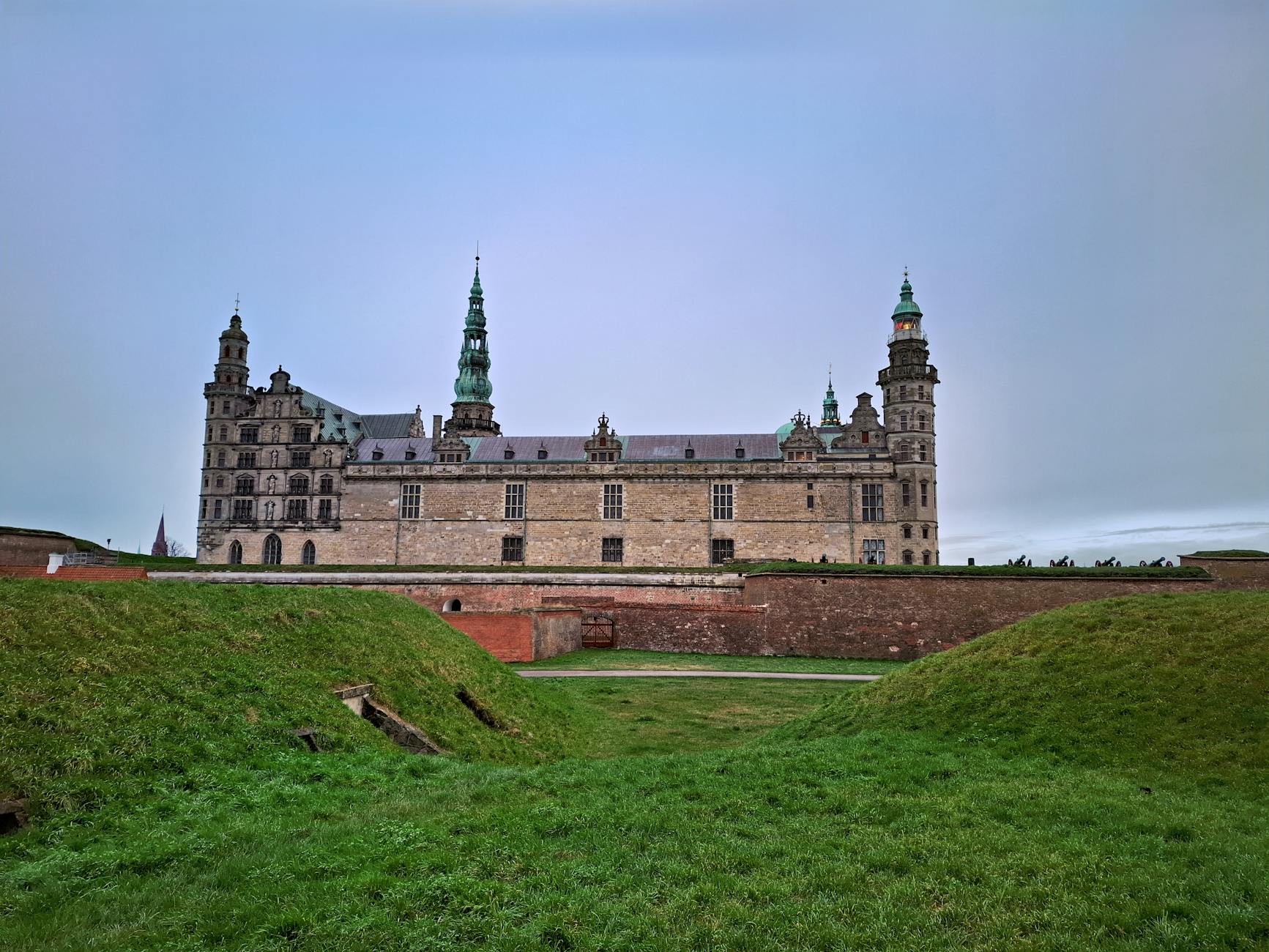
The Elsinore That Matters Most
Kronborg Elsinore: the symbolic and historical core.[1][2]
Harbor Elsinore: ferries, sea air, and the practical waterfront town.
Rail Elsinore: the station-to-castle alignment that makes the place unusually easy to use.[4]
Maritime Elsinore: the museum and the older story of tolls, shipping, and the strait beyond Shakespeare.[7]
Kronborg and the Usefulness of a Famous Castle
Kronborg is famous, and in this case the fame is useful.
Its official materials continue to present it through opening hours, tours, and practical planning, but what matters more is how physically commanding it still is.[1][2] The castle does not sit politely inside the town. It holds the strait. That gives Elsinore a seriousness many small coastal towns do not have.
Hamlet, Symbolism, and the Need to Move Beyond Shorthand
Kronborg’s own site continues to lean into Hamlet, and fairly so.[3] The problem is not that visitors know the reference. The problem is when they stop there.
Elsinore is better once Hamlet becomes one interpretive layer rather than the whole place. You do not need to reject the symbolism. You just need to let the actual town breathe around it.
The Ferry Strait and Why Sweden Matters Even If You Never Cross
ØRESUNDSLINJEN’s official route material makes the practical point simple: Helsingborg is only a short crossing away, about 20 minutes.[6] But the real value of that fact is atmospheric. Sweden is not an abstraction from Elsinore. It is visibly there. The ferry movement keeps the strait active and gives the town the sense of being at an edge, not just by the sea.
That feeling is central to the destination.
The Maritime Museum and the Town Beyond the Castle
The M/S Maritime Museum of Denmark is important because it broadens Elsinore without diluting it.
Its official site positions the museum squarely within Helsingør and Danish maritime history.[7] That matters. Elsinore needs one major cultural stop that speaks not only to kings and drama, but to sea routes, trade, labor, and Denmark’s relationship with the water. The museum helps the town feel complete.
The Old Center and the Value of Staying Grounded
One of Elsinore's quieter strengths is that the center does not need performance to stay appealing.
After Kronborg, the right move is not to hunt frantically for a second blockbuster. It is to let the smaller town scale do its work. Streets, squares, and shopfronts matter here because they keep the destination from turning into a castle compound with a transport interchange attached. Elsinore should feel inhabited. That is part of the point.
This is also where staying overnight starts to make practical sense. Once the day visitors thin, the center stops being a route between landmarks and starts reading as a real Danish coastal town. That shift is modest, but it is exactly the shift that upgrades Elsinore from competent excursion to memorable stay.
Day Trip or Overnight?
The honest answer is that both can work, but they are not equal experiences.
A day trip is efficient. You can arrive by train, walk to Kronborg, see the maritime museum, pass through the center, and return to Copenhagen without difficulty.[2][4] If your broader itinerary is tight, that remains a reasonable use of the place.
But an overnight stay is what lets Elsinore separate itself from checklist travel. You get the late-day harbor light, the ferry rhythm without timetable anxiety, and the useful feeling that the castle belongs to a town rather than to your schedule. This is one of those destinations where an extra evening creates more value than an extra attraction.

If You Have More Time
Do not respond to extra time by stuffing the day.
A better approach is to widen the town rather than intensify it. Walk farther along the water. Sit with the Sweden view longer than seems necessary. Revisit the harbor after the museum rather than assuming one pass was enough. If you do take the ferry, do it because the crossing completes the strait logic, not because you feel obliged to add another flag to the itinerary.[6]
Elsinore rewards travelers who allow one place to stay central. The temptation, especially in Denmark, is always to keep moving. Here, restraint produces the stronger trip.
Where Elsinore Fits in a Denmark Trip
Elsinore often appears in itineraries as a satellite to Copenhagen. That is understandable, but it can also be limiting.
Copenhagen tends to dominate Danish trip planning so completely that nearby smaller cities are reduced to “easy day trips.” Elsinore absolutely is an easy day trip. The rail connection is clean, the castle is famous, and the strait gives the town instant visual interest.[2][4] But ease of access can hide a more important truth: Elsinore is one of the better places near Copenhagen to feel Denmark becoming coastal, defensive, and border-aware rather than merely capital-adjacent.
That makes the town especially useful if your route needs a change of register. After Copenhagen’s polish, scale, and metropolitan confidence, Elsinore brings in fortification, ferry rhythm, and a narrower geography. It adds edge without adding stress. It also works well before or after a broader North Zealand stretch because it provides a clear urban anchor within that coastal landscape.
In other words, Elsinore is not only “Copenhagen, but with a castle.” It is one of the clearest ways to feel how the northeastern coast organizes Danish history and movement.
Elsinore as a Day Trip Versus a Base
Most visitors do not need Elsinore to become a long base. They do need to decide whether they are using it merely as an excursion or allowing it to become a stay.
As a day trip, the town offers efficiency. Arrive by rail, use the station-to-castle axis, see Kronborg, perhaps add the maritime museum, take a harbor walk, and return.[2][4][7] This is a legitimate itinerary. The problem is that it can make Elsinore feel a little too neat, as if the town existed solely to support one monument and one railway schedule.
As an overnight, even a brief one, the place rebalances. The harbor becomes more than transit scenery. The old center has time to feel lived rather than merely traversed. The ferry rhythm begins to matter. The distance to Sweden is no longer an interesting fact but part of the evening atmosphere. That change is exactly why the town tends to outperform its summary once you stay.
Elsinore does not need many nights. It just needs enough time to stop performing its shorthand.
First-Time Visitors Versus Repeat Visitors
First-time visitors usually need Elsinore to justify itself beyond Kronborg. Repeat visitors often already know that it can.
On a first visit, the essential task is to see that the castle is the anchor, not the whole ship. You want the station approach, the strait, the harbor, the old center, and at least one non-Hamlet cultural layer to help interpret the town. Otherwise Elsinore risks feeling too singular.
Repeat visitors often enjoy the town more because they stop asking it for spectacle. They may spend longer on the harbor, use the ferry more casually, revisit the castle grounds without the same urgency, or simply let the center and waterfront carry more of the day. That usually produces a stronger experience, because Elsinore is one of those places that improves once you are no longer trying to solve it immediately.
This is a good sign. It means the town has enough structure to survive after the headline attraction has already been understood.
Daytime Elsinore Versus Evening Elsinore
This distinction is central to whether Elsinore feels like an excursion or a place.
Daytime Elsinore is clear and explanatory. You understand the castle’s position, the station alignment, the maritime museum’s role, and the relationship between town and strait. This is when the destination teaches you how it works.
Evening Elsinore is subtler and often more persuasive. The harbor light changes. The ferry motion feels less like transit information and more like coastal rhythm. The old center becomes less tied to visitor circulation and more tied to actual local use. The castle recedes slightly, which is helpful. It gives the rest of the town a chance to speak.
The strongest first trip includes both. Day gives you logic. Evening gives you attachment.
Why the Station-to-Castle Walk Matters So Much
Many towns have a convenient arrival walk. Elsinore has an interpretive one.
The route from Helsingør Station toward Kronborg is short enough to feel effortless, but it is also one of the cleanest examples in northern Europe of transport geography reinforcing historic geography.[2][4] You are not taking a transfer bus from practical arrival to cultural site. You are walking through the actual logic of the town: station, harbor, strait, fortification.
That matters because it keeps Elsinore from becoming fragmented. The visitor understands almost immediately how the place hangs together. This is one reason rail arrival is so much more satisfying than driving in, parking, and trying to reconstruct the spatial argument afterward.
It is also why I would resist overcomplicating the first arrival. Let the geography do its own work.
The Strait as Subject, Not Background
Many visitors notice the water. Fewer allow it to become the actual subject of the trip.
But the strait is what gives Elsinore its stakes. Without the narrow water, Kronborg is only a famous castle. With the narrow water, Kronborg becomes a response to pressure. Without Sweden visibly present, the ferry is simply a transport link. With Sweden visible, the crossing becomes a constant reminder that this town sits at a threshold.
That is why one of the best things to do in Elsinore is also one of the least “productive”: stand by the water longer than seems necessary. Let the ferries move. Let the horizon settle into scale. The town’s meaning grows in that pause.
This is not empty contemplation. It is the core of the place.
Kronborg Without Overbuilding the Visit
Kronborg deserves real time, but not total domination.
Its official materials make clear that it can support a full museum-style visit, tours, programming, and longer historical engagement.[1][2][3] That is a strength. But visitors can still make the mistake of allowing the castle to consume all the day’s emotional oxygen. Once that happens, the town risks becoming a supporting lobby to the monument.
The better approach is to let Kronborg do what it is uniquely good at: orient the whole destination, supply historical gravity, and create the feeling of a town facing a narrow contested waterway. Then go back into Elsinore and test whether the rest of the place can uphold that mood. Usually it can.
This is one of the reasons the maritime museum matters so much. It provides a second institutional register, which keeps the town from reading as mono-historical.
The Maritime Museum as Corrective
Elsinore’s maritime museum is not simply a second attraction to fill time after Kronborg. It is a corrective to the most common narrow reading of the town.
The M/S Maritime Museum of Denmark keeps the visitor from confusing royal-symbolic history with total history.[7] It reminds you that shipping, labor, trade, naval movement, and practical sea life are just as essential to understanding this strait town as literature and monarchy. Without that counterweight, Elsinore can feel over-literary. With it, the destination regains balance.
This also helps the visitor move from castle tourism to town understanding. The museum broadens the town’s self-explanation without scattering it.
The Old Center and the Need for Grounded Time
Elsinore’s old center is not the kind of historic district that overwhelms you on contact. That is one of its strengths.
It works through groundedness. The scale is manageable. The streets provide relief from the castle’s symbolic pressure. Shops, cafés, and ordinary town life give the destination a more human register. If you rush through this part, the whole visit can feel slightly theatrical. If you slow down here, the town reenters the frame.
This is why I keep insisting on some unstructured time. Elsinore is not large enough to justify constant programming. It becomes more convincing when one part of the day is simply for being there, not for harvesting named things.
Weather, Light, and Why Gray Can Help
Elsinore is one of those places that does not suffer badly from imperfect weather.
Bright conditions obviously help with longer coastal walking and clearer Sweden views. But gray light can actually strengthen the town’s mood. The castle becomes sterner. The water seems narrower and more serious. The ferry traffic looks more functional and less postcard-ready. The old center feels less polished and more northern.
That is useful because it means the town is not dependent on beauty alone. It has enough atmospheric and structural integrity to work under mixed conditions. The right response to weather here is not disappointment. It is recalibration: more museum depth, a slightly shorter waterside walk, maybe a longer pause indoors, and then a return to the harbor when the light has shifted again.
Elsinore With Family or Low-Energy Travelers
Elsinore can work very well for mixed-energy groups because the core logic is so compact.
The station is close to the action. The castle is close to the station. The harbor and ferry edge are close to both. This reduces the amount of transport administration a day requires, which is a real advantage. Families can benefit from the clear route design and the existence of a big symbolic anchor. Low-energy travelers can still have a meaningful day without needing to cover large distances.
The main caution is that castle-focused days can involve more standing, reading, and slow walking than some people expect. The solution is not to avoid Elsinore, but to divide the day: one institutional block, one harbor block, one food block, and one slower center block.
The town rewards that segmentation because it never asks you to travel far to reset the mood.
Why Some People Leave Underwhelmed
When travelers say Elsinore was “nice but basically just the castle,” they have usually made a design error rather than discovered a limit of the town.
Either they arrived and left too quickly, they treated the ferry and strait as scenery rather than substance, or they never let the old center and maritime layer contribute enough weight. In each case, the problem is not that Elsinore lacks depth. It is that the visit was too symbol-heavy and not place-heavy enough.
This is common in famous small towns. A single shorthand absorbs the whole story. Elsinore is stronger than that. But the traveler has to give it enough time and attention to prove it.
Why Elsinore Often Improves on Revisit
Elsinore tends to grow in quality once you stop asking it to surprise you.
On a return visit, you are less concerned with proving that you “did Kronborg.” You can use the town more intelligently. You may linger on the harbor, use the museum better, cross the strait because it genuinely fits the logic of the day, or simply allow the center to hold more of the experience. The pressure to convert everything into a major moment falls away.
That is often when the destination becomes more memorable. It stops being a literary and architectural citation and becomes a coastal town with rhythm.
A Good Elsinore Day Versus a Bad One
A good Elsinore day moves from clarity into atmosphere.
You arrive cleanly, let the station-to-castle route orient you, give Kronborg real but bounded time, use the harbor and the strait deliberately, and let either the museum or the old center keep the town from narrowing too much. If you stay late or overnight, the place softens and the whole argument feels complete.
A bad Elsinore day is castle extraction plus immediate departure. You arrive, consume the headline, perhaps photograph the water, and leave before the town has any chance to resist its own shorthand. That version is still competent. It is just much less interesting than the destination actually is.
How the Town Changes Over the Course of a Stay
Elsinore is often more convincing after several hours than it is in the first twenty minutes.
On arrival, the town can seem almost too tidy: station, harbor, castle, ferry, old center, all so available that the place risks appearing simplified. Later, that tidiness begins to look like strength rather than thinness. The alignments prove useful, the harbor proves atmospheric, and the old center gains weight because it sits in such clear relation to everything else.
This is why even a short overnight can transform the town. Repetition changes it. The second harbor glance is better than the first. The later walk through the center feels less like support material. The whole destination stops being summary and starts being place.
Should You Cross to Sweden?
This is one of the most seductive questions in Elsinore, and it deserves a disciplined answer.
Because the ØRESUNDSLINJEN crossing is so short, the temptation is obvious. Twenty minutes to Helsingborg sounds like almost-free extra value.[6] And in one sense it is. The crossing itself is part of the strait logic, and if your wider trip includes southern Sweden or if you genuinely want the bilateral perspective, then taking the ferry can complete the town’s border atmosphere beautifully.
But many visitors ask the wrong question. They ask whether they can add Sweden, not whether Sweden belongs in the shape of this particular day. If the answer is yes only because it is possible, then it probably does not belong. Elsinore is a town that already has enough internal meaning. It does not need another country attached to it in order to feel substantial.
The strongest use of the ferry is therefore intentional rather than acquisitive. Cross because the strait is the subject and you want to feel it physically. Cross because your route truly continues that way. Do not cross because you are anxious that one small Danish coastal town cannot justify its own time. That anxiety is exactly what weakens good visits.
Elsinore Inside a North Zealand Route
Elsinore makes particularly good sense when treated as one strong node within a broader North Zealand rhythm.
That does not mean you need a packed “castle coast” itinerary. In fact, too much thematic stacking can flatten the town just as easily as too little time can. What matters is that Elsinore has enough civic and geographic weight to serve as a focal point. If you are moving through the northern coast, the town can supply the most complete urban logic in the area: rail arrival, major monument, ferry harbor, museum depth, and a center worth using after the main attraction closes.
This is why Elsinore often benefits from being a staying place rather than merely a passing one. In a coastal sequence, it can absorb the night and make the route feel less like a chain of lookouts and more like a region with centers and edges. The town’s compactness helps here. You do not need much time to feel oriented; you only need enough time not to abandon orientation immediately.
Seen this way, Elsinore is not just an appendix to Copenhagen or a compulsory stop for Kronborg. It is one of the few nearby towns that can actually hold a route together.
The Best Way to Use the Harbor
Harbors are easy to misuse because people tend to convert them into pure viewpoint space.
Elsinore’s harbor is better when it is used as working atmosphere rather than only scenery. Walk it with purpose once. Stand still once. Revisit it after another part of the day has changed your understanding of the town. The ferries, the Swedish horizon, and the edge of Kronborg all mean different things depending on what you have already done.
This is another reason why the harbor should not be reduced to “nice views after the castle.” It is one of the few places in town where all of Elsinore’s themes overlap at once: movement, defense, commerce, weather, and proximity. If you use it only as a photo strip, you lose most of that.
The harbor is strongest late enough in the day that you are no longer hurrying through it. That is when the town begins to feel less like a solved excursion and more like a place that still has work, traffic, and weather of its own.
Staying Late Without Overplanning
One of Elsinore’s main virtues is that it does not demand a large night program in order to justify the overnight.
This is important because some travelers hear “stay the night” and then feel compelled to build an evening as if they were in a much larger city. That is unnecessary. Elsinore usually wins through light evening occupation rather than through entertainment abundance. A meal, a walk, a second harbor look, and the sense that the ferries are still moving can be enough.
The value is not in packing the evening. The value is in letting the town retain you for a few more hours than a day trip would. That small extension often supplies the missing depth. It gives the center a calmer register and lets the coastal threshold quality settle in. Elsinore does not need nightlife bravado. It needs time.
Why Elsinore’s Modesty Is Part of Its Strength
Not every destination needs to escalate itself to deserve serious travel.
Elsinore is modest in exactly the right ways. Outside Kronborg, the town does not bombard you with major sights. The center is usable rather than overwhelming. The harbor is atmospheric without pretending to be endlessly eventful. The ferry crossing is short rather than epic. All of that might sound minor, but together it produces something rare: a place that can be understood deeply without being overprogrammed.
That is one reason the town survives repeated visits. Travelers who enjoy places that leave room for interpretation often end up liking Elsinore more than travelers who want a string of obvious payoffs. The town’s scale, structure, and restraint are not deficits. They are what make it trustworthy.
Common Mistakes
Treating Elsinore as Only Kronborg
This is the main interpretive failure.
Leaving Too Quickly
The town gains meaning after the castle.
Ignoring the Ferry Atmosphere
Even if you do not cross, the strait is the destination.
Staying Only in Symbolism
Hamlet is a layer, not the whole town.
Overcomplicating the Visit
Elsinore works best as one coherent coastal day and night.
My Blunt Advice
Come by train if possible.
Walk from the station toward the castle rather than trying to outsmart the geography.
Use Kronborg properly, but do not let it monopolize the day.
Give the harbor and ferry edge some unstructured time.
And if you can, stay overnight, because Elsinore gets much better once the shorthand falls away and the strait begins to feel like real life instead of literary scenery.
Source Notes
- 1. Kronborg Castle official opening-hours page. Used for current 2026 opening structure, ticket context, and the official presentation of the site. https://kronborg.dk/en/page/kronborg-castle-opening-hours
- 2. Kronborg Castle “Plan your visit” page. Used for current public-transport access, 10-minute walk from station, and practical visitor-planning details. https://kronborg.dk/en/plan-your-visit
- 3. Kronborg Castle homepage. Used for current official Hamlet framing and live tour/programming context. https://kronborg.dk/en
- 4. DSB Helsingør Station page. Used for current station facilities, address, and its direct connection to both rail services and the ferry terminal. https://www.dsb.dk/trafikinformation/stationer/helsingor/
- 5. ØRESUNDSLINJEN ferries and ports page. Used for current harbor-terminal orientation in Helsingør and general route context. https://www.oresundslinjen.com/about-us/ferries-and-ports
- 6. ØRESUNDSLINJEN timetable page. Used for the current official statement that Helsingør–Helsingborg crossings take about 20 minutes. https://www.oresundslinjen.com/timetable
- 7. M/S Museet for Søfart official site. Used for the museum’s current official positioning as Helsingør’s major maritime-history institution. https://mfs.dk/en