Calgary is one of North America's most misused good cities.
Start Here
The misuse is easy to understand. People land, pick up a car, glance at the skyline, maybe book a steak dinner out of duty, and then hurry west toward Banff as if Calgary were only the administrative preface to the real trip. On the return, they do the same thing in reverse, often a little more tired, a little less curious, and even more likely to treat the city as pure logistics. This is a bad habit, because Calgary is much better than a lot of travelers allow it to be.
What makes Calgary worth time is not that it competes with the Rockies for grandeur. That would be the wrong contest and the wrong expectation. Calgary works because it offers a different kind of western-Canada clarity: open light, river geography, a downtown that is easier to use than many people assume, a western-business confidence that can feel oddly restorative, and neighborhoods that become more convincing the moment you stop asking the city to imitate somewhere more picturesque. Calgary is not there to be scenic in a postcard way every second. It is there to be composed, useful, and more interesting than its reputation.
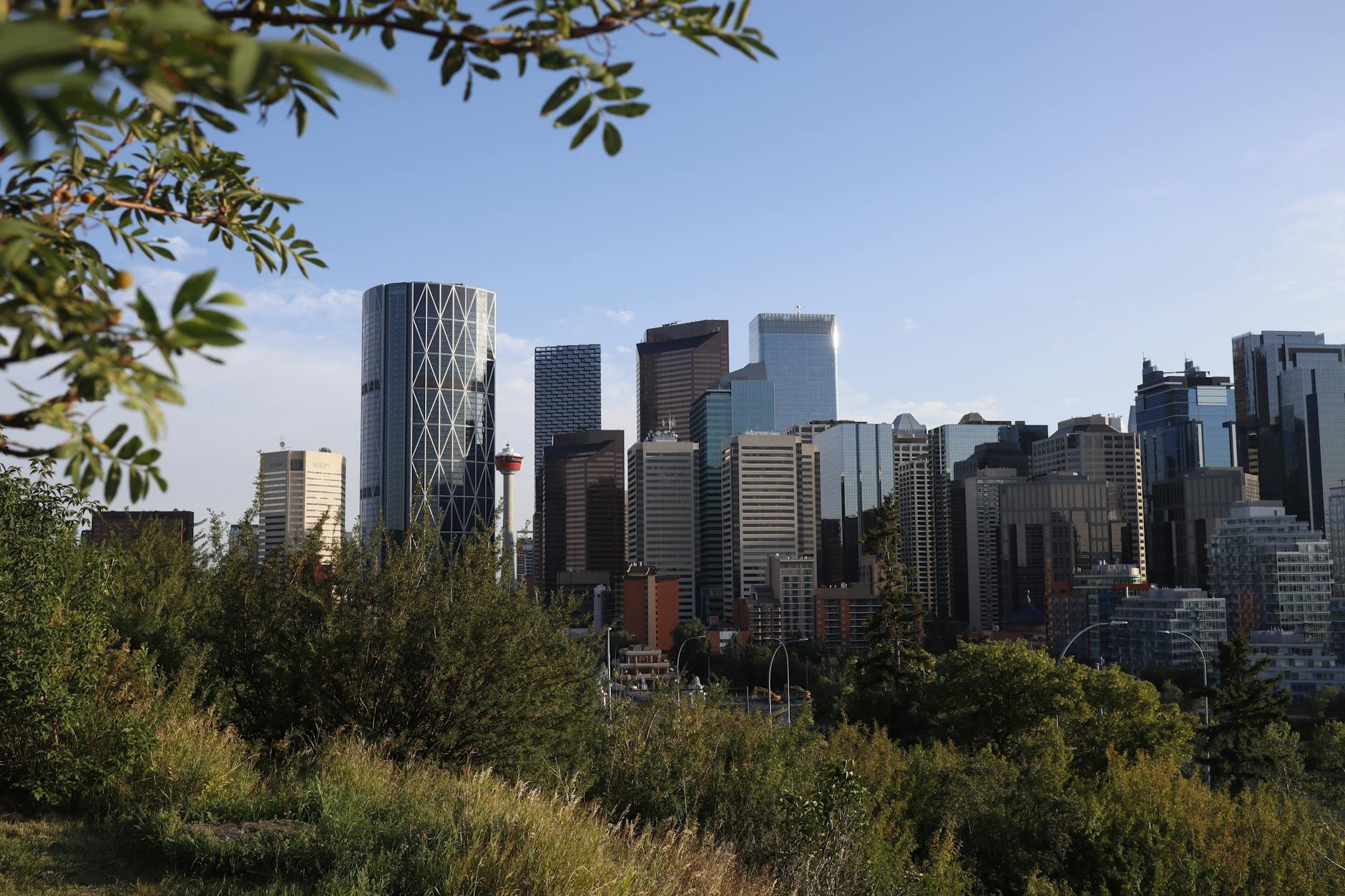
The stronger Calgary trip begins by rejecting two weak mental models. The first is that Calgary is only a gateway city. The second is that Calgary is a kind of western corporate machine with nothing human underneath it. In reality, the city lives somewhere more interesting than either cliché. It has a river-and-pathway structure that gives daily movement real grace. It has downtown towers, yes, but also Stephen Avenue, East Village, Inglewood, Kensington, and other zones that make the place feel inhabited rather than merely efficient. It has beef and steakhouses, but also a broader dining culture than lazy prairie stereotypes imply. It has the Calgary Tower and Stampede mythology, but also a quieter civic confidence rooted in parks, pathways, music, and everyday urban order.
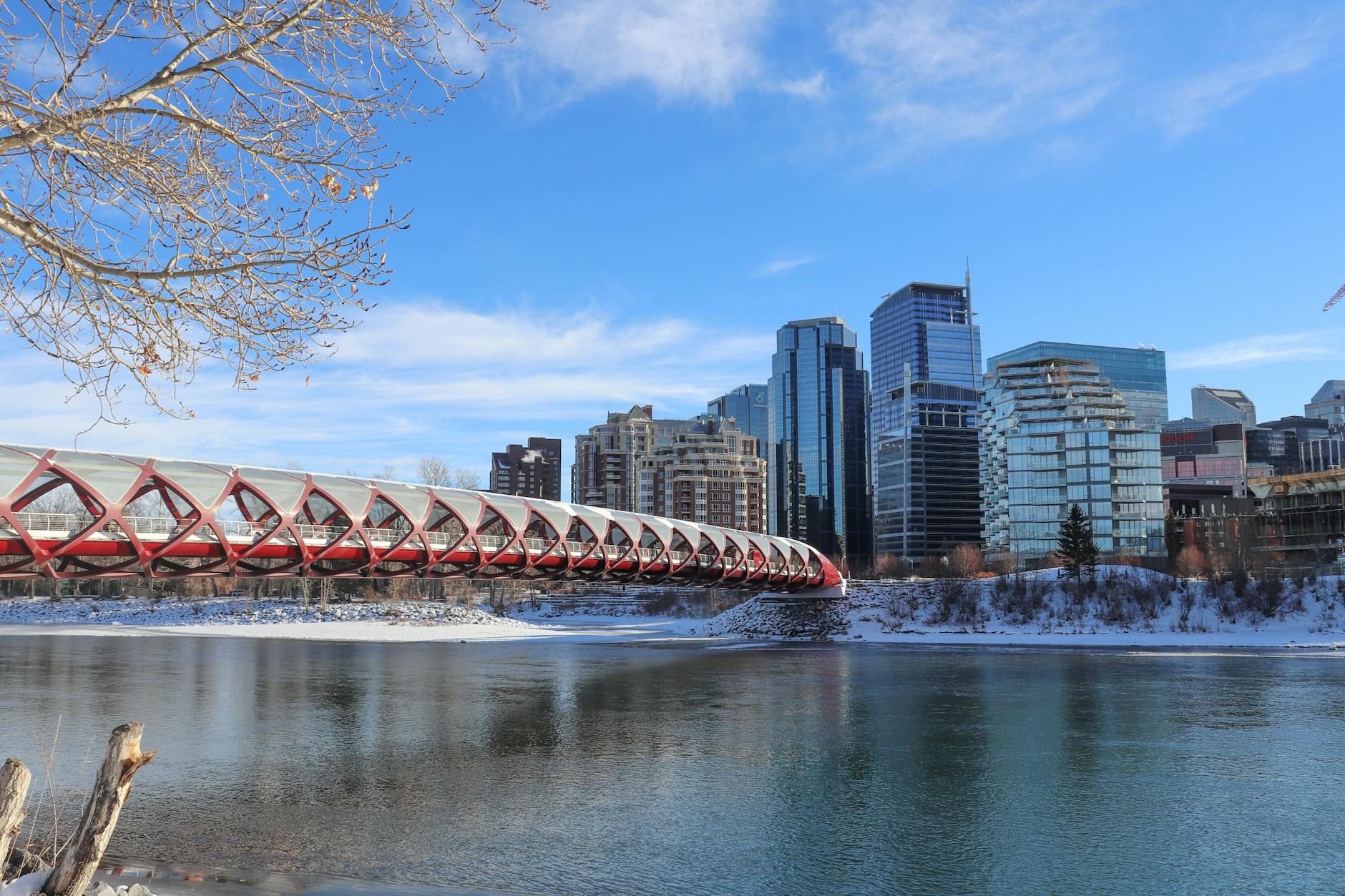
That order matters. Calgary is one of those cities whose strengths reveal themselves through competence. The airport connection is workable. The downtown is legible. The free-fare CTrain zone simplifies the core. The Bow River pathway system gives the city a clean physical spine. Prince's Island Park and the Peace Bridge help the center feel more breathable. East Village and Studio Bell show how recent Calgary has tried to sharpen its urban self-understanding. Heritage Park reminds you that the city still tells its western story with more appetite than irony. None of this is flashy in isolation. Together, it makes Calgary unusually good at resetting the rhythm of a larger trip.
The real question for a first-time visitor is not whether Calgary can replace mountain time. It cannot, and should not try. The better question is whether Calgary can justify two or three days as a city in its own right before, after, or even instead of a Rockies route. The answer is yes, if the trip is designed well. Stay centrally. Give the river real time. Use the tower as orientation, not as your entire sightseeing imagination. Explore at least one neighborhood beyond the pure business core. Let the city be western without constantly forcing cowboy costume onto it.
The city in one sentence: Calgary is a clear, river-led prairie metropolis whose best first trip comes from balancing downtown order, Bow River movement, neighborhood texture, and western identity without treating the city as disposable Banff administration.
Basic data
| Population | About 1.3 million |
|---|---|
| Area | 825 km2 |
| Major religions | Christianity, Islam, Hinduism, Sikhism, Buddhism, and a large secular population |
| Political system | Mayor-council city government inside a federal parliamentary constitutional monarchy |
| Economic system | Advanced mixed economy led by energy, finance, logistics, technology, and services |
Quick Verdict
Best for: couples, solo travelers, western Canada routes, first-time Alberta visitors, short urban resets before or after mountain travel, food travelers, and anyone who likes cities with strong physical order.
Not ideal for: travelers who need an old historic core, nonstop nightlife intensity, or a destination that explains itself through one overwhelming landmark district.
Ideal first visit: 2 to 3 full days.
Minimum worthwhile stay: 2 full days.
Best overall months: June, July, September, and early October.
Best winter case: if you want a hotel-and-dining city break, winter sport adjacency, and crisp blue-sky urban days rather than soft urban strolling weather.
Biggest planning mistake: using Calgary only as a place to sleep before the mountains.
One thing to prioritize: your base. Calgary improves sharply when you stay somewhere that lets you walk to the river, downtown core, and one or two strong districts.
One thing to leave flexible: outdoor time along the river. Calgary weather can pivot fast, and the mood of the city pivots with it.
The blunt version: Calgary is more convincing than many bigger-name gateway cities, but only when the visitor lets the city be urban, western, and river-shaped rather than expecting mountain drama on demand.
Who Will Love Calgary?
Calgary works especially well for travelers who appreciate cities that know what they are. It does not suffer from much existential confusion. This is a western city with money, space, sunlight, weather, and self-command. It does not need to perform heritage every minute to justify itself, and it does not need to cosplay ruggedness either. That steadiness is appealing if you are tired of places that market themselves too loudly.
Couples tend to do well here because Calgary supports a clean, composed trip structure: an easy arrival, a strong downtown hotel, one or two good dinners, a river walk, one viewpoint, one museum or cultural anchor, and enough practical ease that the trip never becomes administratively exhausting. Calgary is more romantic in a low-pressure urban way than many people expect. The appeal is not candlelit fantasy. It is competence, skyline light, and a city that gives you room to breathe.
Solo travelers also do well. Calgary is legible, relatively easy to navigate, and structurally generous if you like walking and transit combinations. The river pathways, downtown grid, free-fare-zone logic, and neighborhood edges all help the city feel usable without requiring constant tactical decision-making.
Travelers interested in western identity will find more here than they expect if they look beyond clichés. Calgary does not only express itself through Stampede imagery. The western story also lives in the city’s relationship to prairie openness, ranching and beef culture, the foothills threshold, infrastructure ambition, and the sense that the city still sees itself as a place of movement, risk, and reinvention.
Calgary is less ideal for travelers who need historical density block after block. It has history, but not in the old-city-European sense. It is also less suited to people who want a nonstop pedestrian carnival. Calgary’s pleasures are more spacious and more calibrated than that.
Calgary at a Glance
| Question | Practical Answer |
|---|---|
| Main airport | YYC Calgary International Airport |
| Simplest public airport move | Route 300 BRT toward the downtown core |
| Main city transport system | Calgary Transit |
| Useful downtown transit quirk | Free CTrain zone along 7 Avenue downtown |
| Best first-time base | Downtown core, Eau Claire edge, or downtown-adjacent stay with easy river access |
| Signature urban park | Prince's Island Park |
| Signature orientation point | Calgary Tower |
| Best river logic | Bow River pathways and the Peace Bridge |
| Best cultural anchor outside old stereotypes | Studio Bell / National Music Centre |
| Best western-history attraction | Heritage Park |
| Car needed? | No, not for a normal first city stay |
| Emergency number | 911 |
| Tap water | Safe to drink |
| Currency | Canadian dollar |
| Power plugs | Type A and B |
2026 Visitor Notes
YYC Public Transit Is Real Enough To Matter
YYC’s official public transit page confirms that Calgary Transit serves the airport with Route 100 and Route 300, with Route 300 traveling between the airport and the downtown core.[1][2] That means first-time visitors staying centrally do not need to begin with automatic taxi logic.
Calgary Transit Is Straightforward Once You Understand The Fare Logic
Calgary Transit publishes both current fares and the My Fare mobile-ticketing workflow, including validation rules for buses and CTrain platforms.[3][4] For most visitors, that means the system is easiest when you keep it simple: day pass or single fare, validated properly, then use walking for the last mile.
The Free Fare Zone Is Useful, But Only In Proportion
Calgary Transit’s Free Fare Zone materials make clear that the downtown 7 Avenue CTrain section remains fare-free inside that limited corridor.[5] This is genuinely useful for short central hops, but not a substitute for understanding the larger city.
Prince's Island Park Is Structural, Not Decorative
The City of Calgary describes Prince’s Island Park as a major urban oasis with pathways, event space, gardens, and wetland features.[6] That is why the park matters to a first-timer. It is part of how Calgary keeps downtown from becoming purely vertical and transactional.
The Peace Bridge Is Not Just A Photo Stop
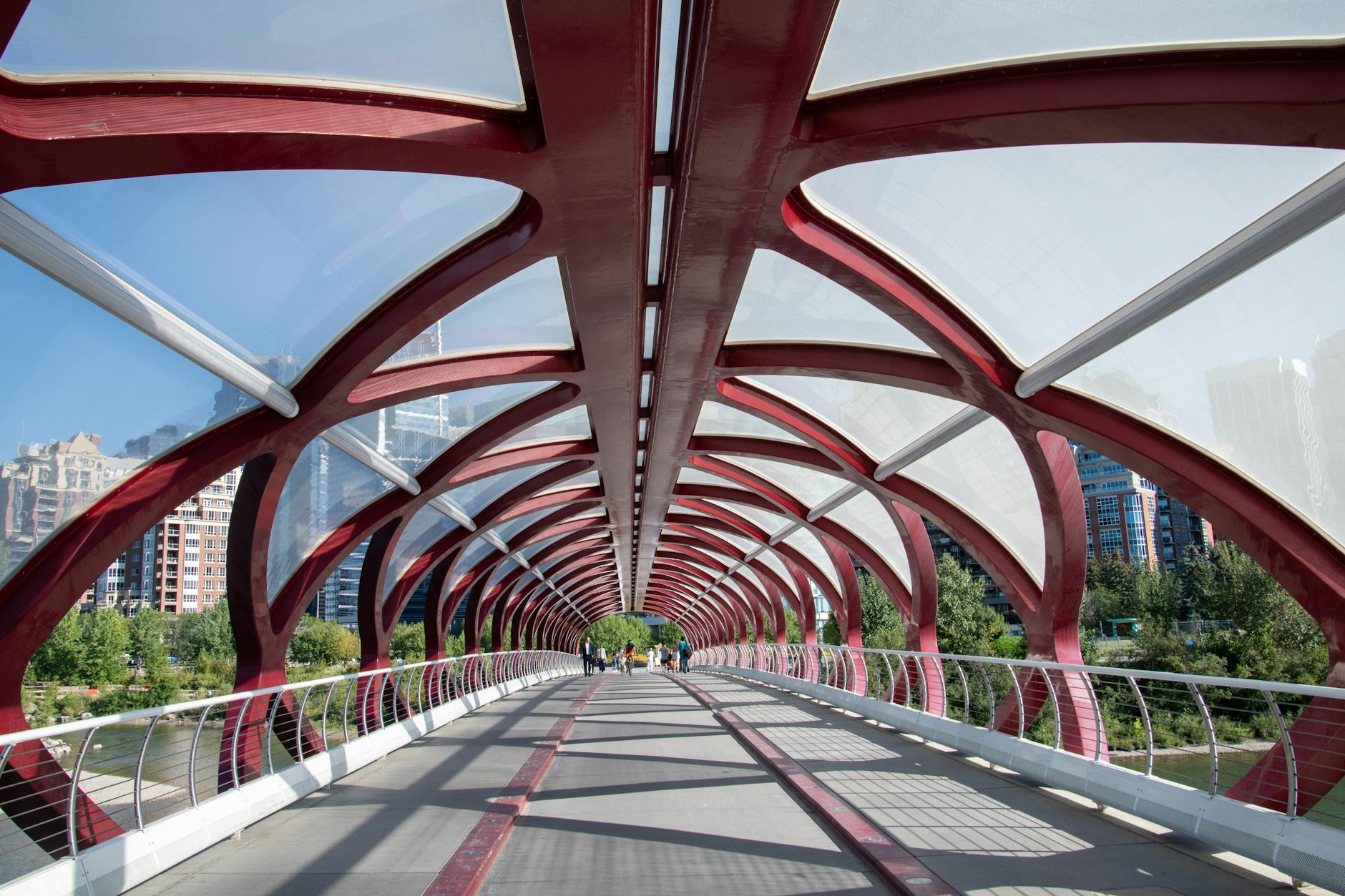
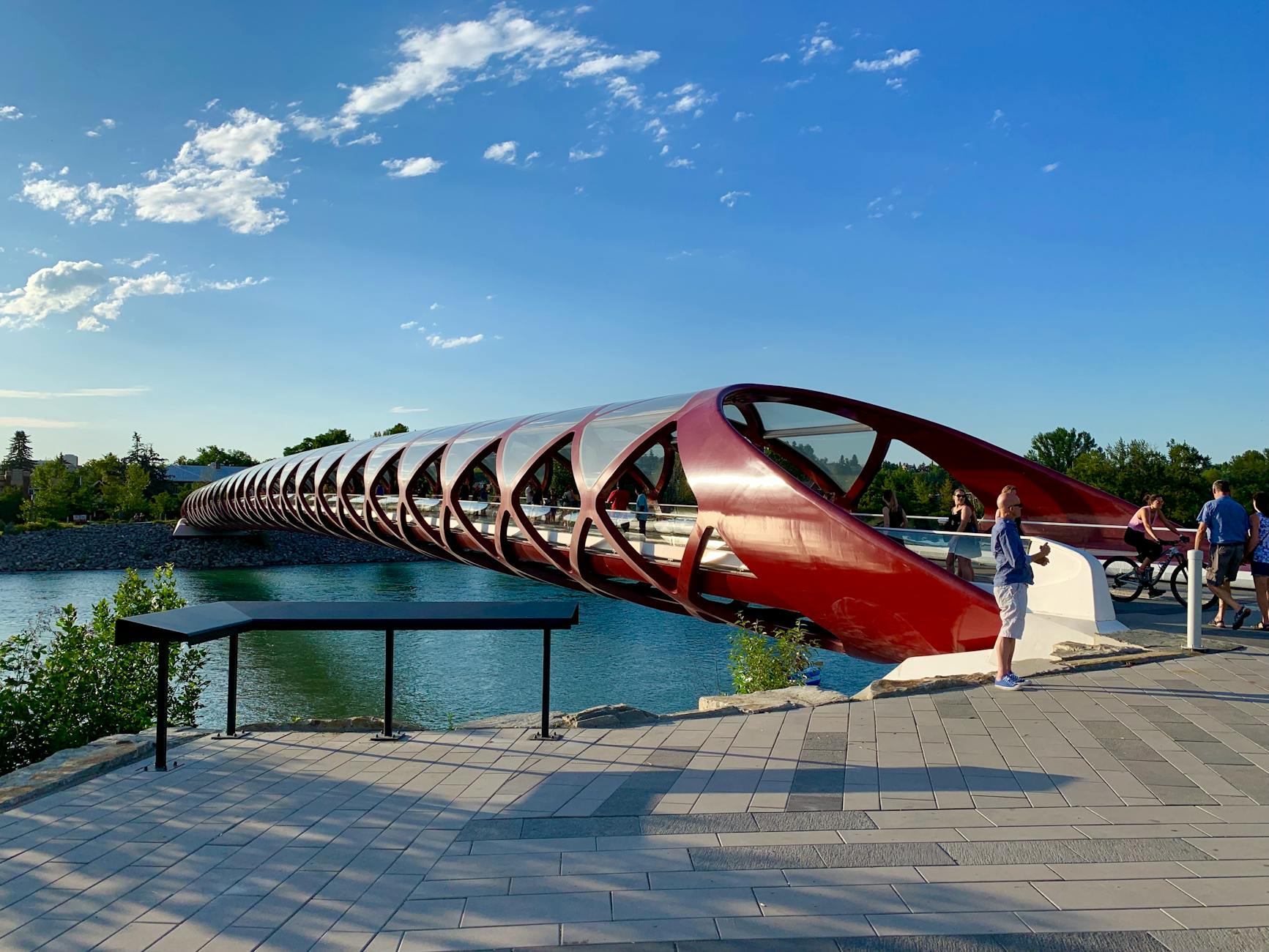
City materials describe the Peace Bridge as both a beloved gathering space and a major gateway feature of the downtown skyline.[7] Use it that way. It is not only visual branding; it helps explain how Calgary stitches river pathways and neighborhoods together.
The Calgary Tower Still Works Best As Orientation
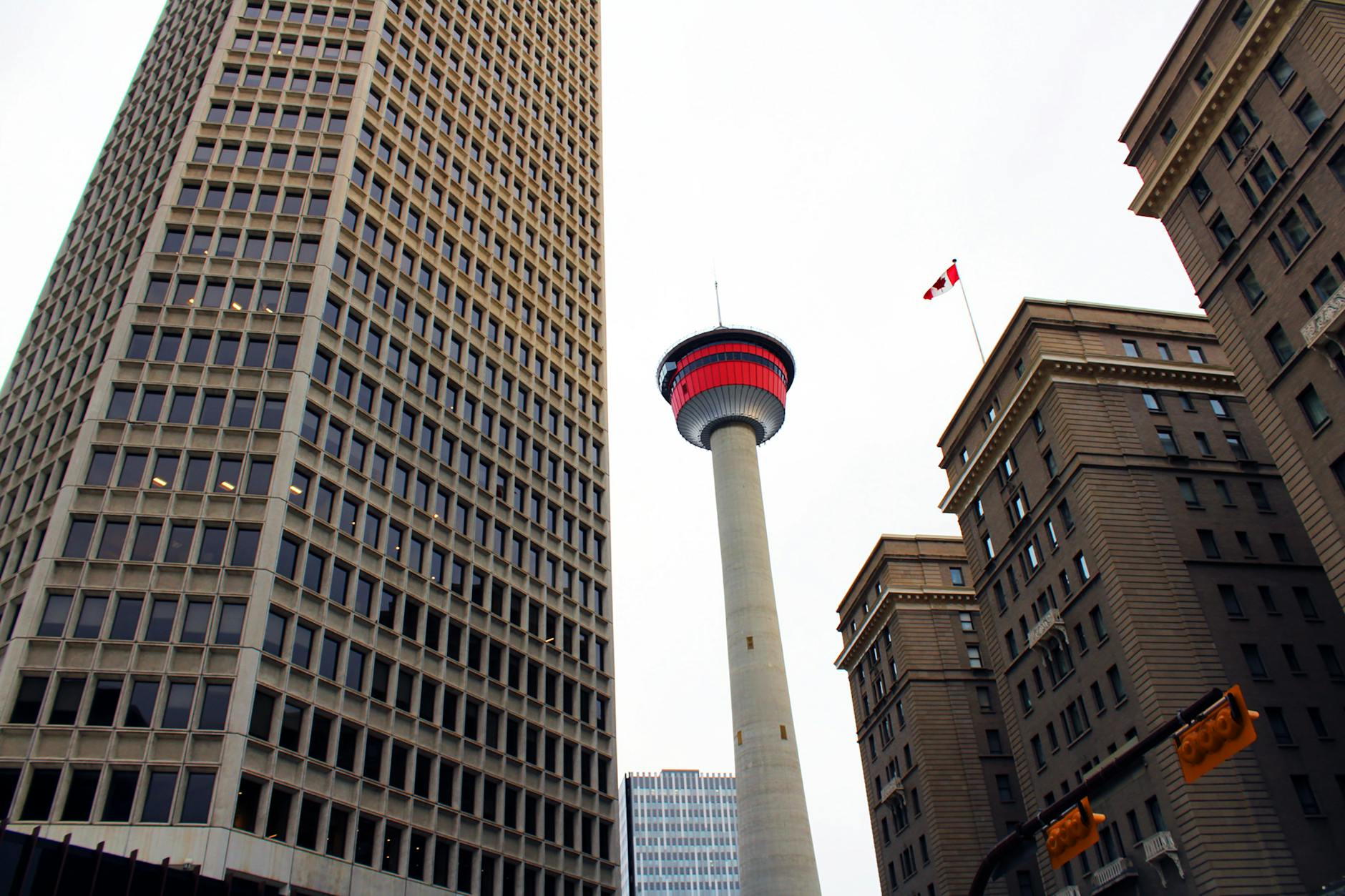
The official Calgary Tower site continues to frame it as the city’s iconic view, and that is still the right use for it.[8] Do it early if visibility is good. The tower helps the whole city make sense.
Studio Bell Gives Calgary A Better Cultural Story Than Visitors Expect
Studio Bell’s official visitor information highlights daily access, substantial hours, and its role as home of the National Music Centre.[9] It is one of the easiest ways to deepen a Calgary trip beyond ranch-and-mountain assumptions.
Heritage Park Is Worth It If You Want The Western Story Told Properly
Heritage Park remains one of the strongest ways to understand Western Canadian settlement narratives, public history, and Calgary’s appetite for staging its own past.[10] It is not mandatory for every short trip, but it is much better than dismissive visitors often assume.
How to Understand Calgary
Calgary works through five forces.
The first is light and openness. Prairie light, distance, and sky matter here. Even downtown, Calgary often feels more aerated than many cities of comparable size.
The second is the river system. The Bow River and its pathways help give the city a strong physical logic. Without them, Calgary would feel much more hard-edged.
The third is downtown clarity. The central core is legible, and that clarity is one of the city’s biggest strengths for short stays.
The fourth is threshold identity. Calgary sits between prairie, foothills, and mountain itineraries. This threshold quality is part of its importance, but it should sharpen the city rather than erase it.
The fifth is western modernity. Calgary is neither pure frontier nostalgia nor generic glass-box urbanism. It is a modern city that still understands itself through western vocabulary.
The Five Calgaries A First-Time Visitor Actually Meets
Downtown Calgary: office towers, hotels, Stephen Avenue, the CTrain, and the city at its most immediately legible.
River Calgary: Prince’s Island Park, Bow River pathways, Peace Bridge, Eau Claire, and the version of the city that feels most breathable.
East Village Calgary: Studio Bell, newer development, riverfront movement, and the city trying to articulate a more contemporary urban self.
Neighborhood Calgary: Inglewood, Kensington, and other districts where the city becomes less purely functional and more lived.
Western Calgary: Heritage Park, beef, Stampede shadows, and the part of the city that still prefers western self-definition to eastern Canadian neutrality.
The Main Mental Shift
Do not ask, “What are the top things to do in Calgary?” Ask, “Which Calgary am I using today?” River Calgary, downtown Calgary, East Village Calgary, neighborhood Calgary, western-history Calgary. Once you do that, the city stops looking like a gateway and starts looking like a system.
What Calgary Does Better Than People Think
Calgary is better than people think at trip reset value. After a long-haul flight, before a Rockies drive, or after several days of mountain weather and logistics, Calgary can feel exceptionally civilized. Good hotels, direct streets, strong meals, and river walks carry a lot of restorative power.
It is also better than people think at combining urban competence with real airiness. Many cities that are easy to use feel dull. Calgary often avoids that because the skyline, river corridors, parkland, and open sky keep the place from feeling overcompressed.
Another underrated strength is western identity without constant self-parody. Yes, there are obvious cowboy and Stampede associations. But much of Calgary’s western character is expressed more subtly through hospitality, beef culture, straightforwardness, and its relationship to Alberta’s wider geography.
The city is also good at being more walkable than expected, at least when the trip is centered properly. Downtown plus river plus one or two adjacent districts can make for a strong pedestrian stay.
Finally, Calgary is better than people think at one or two-night precision. It does not always need a week. It just needs respect.
Best Time to Visit Calgary
Calgary is usable all year, but not neutral across the seasons. Temperature swings, light, wind, and the role of the Rockies all change how the city feels.
Best Overall Months
June, July, September, and early October are the broadest recommendations. These months give you good river-pathway conditions, easy urban movement, and clean integration with wider Alberta travel.
Summer
Summer is the easiest first-time season. The parks, pathways, patios, and longer days all help. The tradeoff is that summer can tempt travelers into treating Calgary only as part of a mountain circuit rather than a city with its own case to make.
Shoulder Season
September is often one of the smartest months because the city feels crisp, open, and a little less overcommitted to peak-season movement.
Winter
Winter Calgary is for travelers who are honest about cold. The city can be excellent under bright blue skies, and its hotel-and-dining strengths rise in value, but the trip should be designed around winter conditions rather than around denial.
Spring
Spring is transitional and can be excellent or erratic depending on timing. It suits travelers who can remain flexible and do not need perfect outdoor conditions every day.
Month-by-Month Guidance
January: cold, clear, often better than expected for short city breaks. February: still winter, but workable with the right mindset. March: transitional and inconsistent. April: improving but not settled. May: greener and more usable. June: one of the best months to go. July: easiest all-around first-time month. August: still strong, though often tied to bigger Alberta travel patterns. September: one of the smartest choices. October: attractive early, sharper later. November: more interior and hotel-led. December: festive in parts, best if you enjoy cold-city mood.
How Many Days You Need
One Day
Enough for a river walk, downtown orientation, one meal, and perhaps the tower. Not enough to understand Calgary properly.
Two Days
The minimum respectable stay. One day should be river-and-downtown based. The other should include either East Village and Studio Bell or a neighborhood-plus-history pattern.
Three Days
Ideal for most first-timers. This lets the city feel complete without padding it.
Four Days Or More
Useful if Calgary is the anchor of a wider Alberta route or if you want to slow down and include a place like Heritage Park without rushing.
Where to Stay in Calgary
Where you stay matters because Calgary’s strengths depend on ease. A central base that connects you to the river and downtown on foot makes the city feel intentional. A remote bargain hotel makes it feel like infrastructure.
Fast Answer
For most first-time visitors, stay in downtown Calgary, the Eau Claire edge, or another central property with easy Bow River access and a clean connection to Stephen Avenue or 7 Avenue transit.
Neighborhood Decision Table
| Traveler Type | Best Area |
|---|---|
| First-time visitor | Downtown core or Eau Claire edge |
| Couple weekend | Central downtown with river access |
| Food-and-neighborhood trip | Downtown with easy access to Kensington or Inglewood |
| Practical short stay | Near 7 Avenue / downtown transit links |
| Return visitor | Central stay with more neighborhood bias |
Downtown Core
Best for: first-timers, short stays, easy logistics. Why it works: hotels, transit, Stephen Avenue, and the river are all within reach. Tradeoff: parts of the core can feel more businesslike than atmospheric. Best use: the smartest default.
Eau Claire / River Edge
Best for: visitors who want the river to be part of the trip every day. Why it works: pathways, Prince’s Island Park, and skyline views all line up well. Tradeoff: slightly less restaurant density at your doorstep than some central corridors. Best use: couples and scenic-urban stays.
Downtown-Adjacent Neighborhood Edge
Best for: travelers who want more local grain without losing central access. Why it works: you get a less corporate feel while remaining connected to the city’s core structure. Tradeoff: can introduce a bit more transport friction. Best use: slightly slower stays or return visitors.
Area Profiles
Downtown core: best for convenience and first orientation. Eau Claire / river edge: best for pathways and open-air Calgary. East Village: best for contemporary cultural Calgary. Kensington: best for café-and-neighborhood texture. Inglewood: best for older grain and a more lived-in district feel.
Neighborhood Guide: Where to Explore, Not Just Sleep
The river should be treated as one of Calgary’s main explanations, not as a scenic bonus. Prince’s Island Park and the surrounding pathway system help the city feel much softer and more public-spirited than visitors often expect from its business reputation.[6]
Downtown matters, but mostly because it is cleanly legible. Calgary’s central core is strongest when used as a base layer rather than as the whole argument. Stephen Avenue, 7 Avenue, and the surrounding grid are useful because they make the city easy to inhabit.
The Peace Bridge is worth using rather than merely photographing. It physically and psychologically links central Calgary to a broader river-centered city.[7]
East Village matters because it complicates the old stereotype that Calgary is all corporate towers and mountain-transfer hotels. Studio Bell is the clearest reason to go, but the wider district also helps the city feel newer, more self-aware, and more interested in urban life as such.[9]
Kensington and Inglewood are the kinds of places that stop Calgary from feeling too abstract. One or both should appear in a well-designed first trip, because they give the city more human scale.
Heritage Park is the optional outlier that can be very rewarding if you want to understand how Calgary narrates Western Canada to itself and to visitors.[10]
The Best Things to Do in Calgary
- Walk meaningful stretches of the Bow River pathways and use Prince’s Island Park properly.[6]
- Use the Calgary Tower early as orientation rather than saving it as a filler attraction.[8]
- Cross the Peace Bridge and let the river explain the city.[7]
- Spend time in East Village and Studio Bell if you want Calgary to feel contemporary rather than generic.[9]
- Explore at least one neighborhood beyond the pure downtown core.
- Build one dinner around Calgary’s beef culture, but do not let that become the city’s whole culinary story.
- Consider Heritage Park if western-history framing genuinely interests you.[10]
Itineraries
If You Have Two Days
Use day one for downtown, the river, Prince’s Island Park, Peace Bridge, and one strong dinner. Use day two for East Village and Studio Bell, plus one neighborhood such as Kensington or Inglewood.
If You Have Three Days
This is the best first-time pattern. Keep the two-day structure, then add either Heritage Park, a more extensive neighborhood circuit, or a slower day centered on food and river movement.
If You Have Four Days
Use the extra time to slow the pace rather than forcing artificial box-checking. Calgary improves when it is used with confidence rather than anxiety.
Itineraries By Traveler Type
For Couples
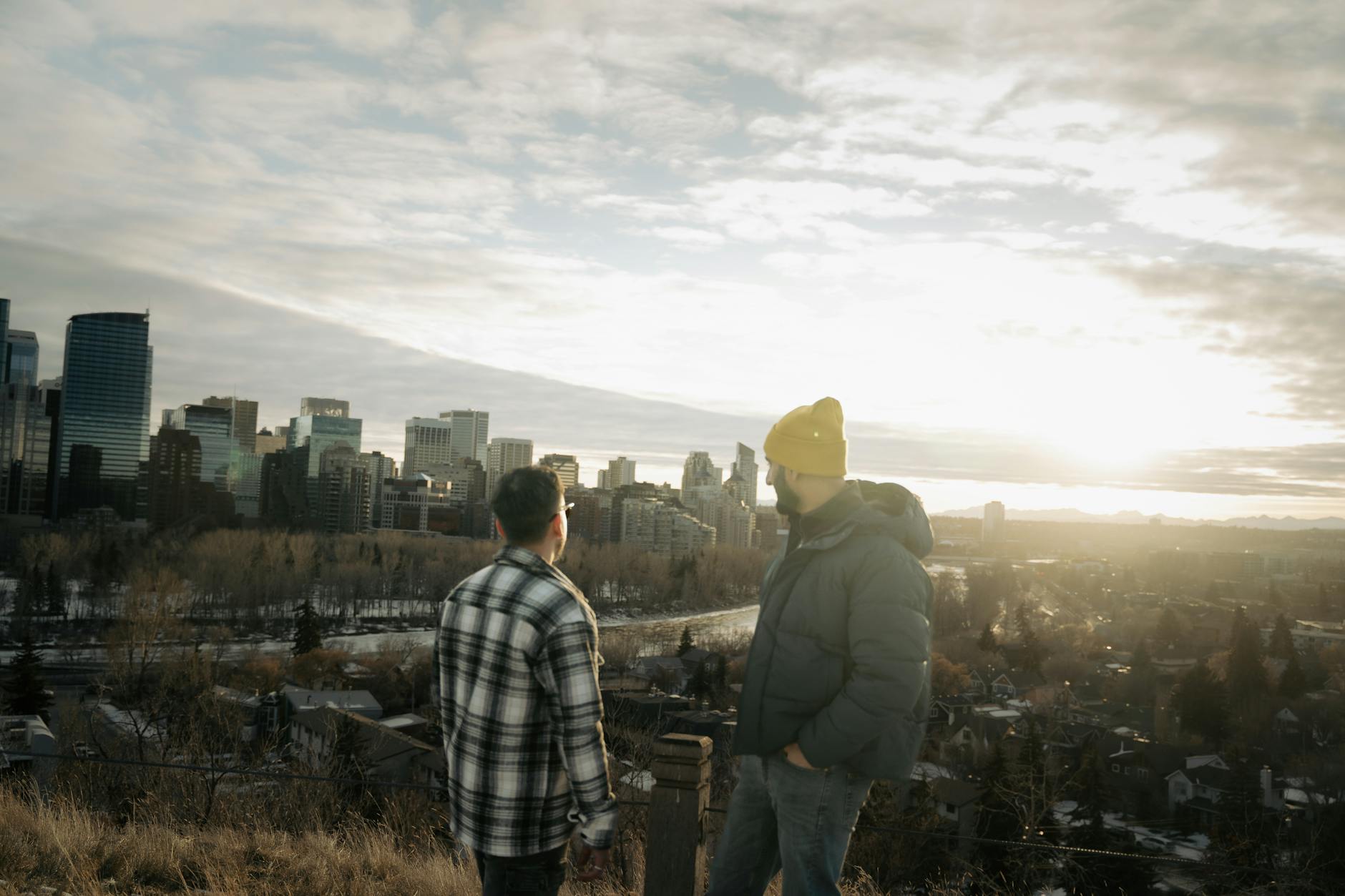
Stay centrally, walk the river at least once in good light, use the tower or a skyline view early, and shape the trip around one or two strong meals rather than nonstop attraction consumption.
For Solo Travelers
Use Calgary Transit where it helps, rely on walking for the center, and treat the river and neighborhoods as the real backbone. Calgary is easy to use alone.
For Food-First Travelers
Do the obvious beef meal once, then move into neighborhood dining. Calgary is much more convincing when one iconic dinner is balanced by more grounded eating.
For Gateway Travelers
If Calgary begins or ends a mountain trip, protect at least one full city day from being eaten by rental-car admin and itinerary drift. The city earns it.
Food and Drink
Calgary’s food identity begins with beef, but it should not end there. The city is strongest when you treat its steakhouse confidence as one strand of a wider dining story rather than as a mandatory costume. Yes, a serious Alberta beef meal belongs easily in a first-time trip. But Calgary also supports neighborhood cafés, polished downtown dining, good casual rooms, and a broader urban appetite than stereotypes imply.
What matters is that meals in Calgary often help define the rhythm of the visit. The city likes clear decisions: lunch after the river, a drink before dinner, one properly chosen western classic, one more local and lower-key meal. That structure suits Calgary very well.
Getting Around
Calgary is easier than many people expect if you stay central. YYC has a real transit connection, the downtown CTrain free-fare section is genuinely useful, and the center plus river are highly walkable in the right weather.[1][3][5]
The mistake is assuming you either need a car for everything or that transit will perform like a giant old metro network. Calgary works best in the middle: central hotel, a few targeted transit moves, lots of walking.
What To Skip
Skip using Calgary only as an arrival and departure machine. Skip reducing the city to the tower and one steakhouse. Skip expecting Banff-style scenery inside the city itself. Skip booking too far out from the core just because the price looks better on paper.
Common Mistakes
- Treating the city as pure pre-Rockies admin.
- Staying somewhere that kills the river-and-downtown walking logic.
- Ignoring East Village and the river pathways.
- Mistaking downtown business order for lack of personality.
- Letting one western cliché stand in for the whole city.
My Blunt Advice
Use Calgary as a city with its own case to make. Stay central. Walk the Bow. Cross the bridge. Look out from the tower. Give East Village or one real neighborhood some time. Eat well, but not stereotypically. Let the place be modern, western, and a little harder-edged than its polite tourism pitch.
If you do that, Calgary will probably exceed the role you assigned to it.
Where Calgary Fits in a Canada Trip
Calgary works best in Canada itineraries when you let it represent a version of the country that is western, modern, open-sky, and river-structured rather than historically dense or conventionally picturesque. It is not Vancouver's ocean-and-mountain beauty, not Toronto's metropolitan spread, not Montreal's old-world tension, and not Banff's scenic spectacle. Calgary is a city of clarity, logistics, light, and western self-command.
For first-time Canada visitors, Calgary is often strongest as the city that changes pace. If Vancouver gives you landscape intimacy and Montreal gives you linguistic and historical layering, Calgary gives you room, air, order, and a more direct line into western identity. It can anchor a Rockies trip, but it can also justify itself before or after one by offering a cleaner, less romanticized urban counterpoint.
For repeat visitors, Calgary often becomes more interesting because it stops being judged for what it is not. Once you stop waiting for old-stone grandeur or mountain views inside the city grid, Calgary's real strengths become easier to value: river movement, neighborhood competence, dining, winter clarity, and one of the better gateway-city resets in North America.
The wrong use of Calgary is as nothing more than rental-car administration with a skyline attached. The right use is as a city that can make a wider western Canada route feel more deliberate, more breathable, and more adult.
Calgary Versus Vancouver, Edmonton, And Denver
Calgary versus Vancouver is mainly a question of setting versus structure. Vancouver has one of the world's easiest natural settings to sell, and it would be foolish to pretend Calgary competes with that on the same terms. Calgary usually wins when the traveler wants a city that feels more direct, more internally legible, and less dependent on its immediate scenery for persuasion. Vancouver dazzles through surrounding beauty. Calgary often satisfies through usability and order.
Calgary versus Edmonton is the internal Alberta comparison many visitors never think to make. Edmonton can feel more governmental, more distributed, and in some ways more institution-heavy. Calgary generally wins on first-impact clarity, airport-to-city logic, and the strength of its river-downtown-neighborhood composition. If Edmonton sometimes asks for more patience, Calgary usually explains itself faster.
Calgary versus Denver is useful because both are often imagined as modern western cities near mountains. Denver is larger, more culturally diffuse, and more metropolitan in its spread. Calgary is cleaner in shape, more compact in first-use logic, and often less interested in performing coolness. If Denver can feel more scene-driven, Calgary often feels more decisive.
That is the useful takeaway. Calgary is one of the best short western city breaks in Canada when you want practical grace instead of spectacle for its own sake.
First-Time Visitors Versus Repeat Visitors
First-time visitors often experience Calgary through the skyline, the river, the tower, one neighborhood, one steak dinner, and whatever mountain-route context brought them there. That can already make a decent stay, but first-timers often still use the city too narrowly. They are checking whether Calgary is "better than expected," not yet asking which version of the city suits them best.
Repeat visitors tend to become much more precise. They choose hotels with better river access, use neighborhoods more deliberately, stop overrelying on the tower for orientation, and understand that Calgary often works through sequences rather than singular sights. A second trip may include better food, more time on pathways, and more confidence about letting the city be low-drama.
This matters because Calgary rarely overwhelms. It accumulates. The better you know how to use it, the more persuasive it becomes.
Why the Base Matters More Than It First Seems
Calgary can look straightforward enough on the map that visitors assume any downtown hotel will do. That is only partly true. Because so much of the city's value lies in how easily you move between downtown, the river, and one or two good districts, the exact base shapes whether Calgary feels elegant or merely efficient.
The best base is not just about being "central." It is about being central to the right things: the Bow River pathway, the core transit corridor, one evening zone, and at least one easy escape into a district with more local grain. A remote airport hotel or an overcheap outer property can save money on paper while quietly degrading the entire trip.
This matters especially for short stays. Calgary is strongest when it feels light to use. A good central base preserves that lightness.
Why One Proper Calgary Day Matters
Calgary is vulnerable to being reduced to a good first impression and a useful dinner city. The skyline is clean, the river is pleasant, and the city can seem easy enough that travelers assume a few hours will explain it. They usually will not.
A proper Calgary day needs three chapters. Morning should belong to river and downtown logic while the city still feels crisp and legible. Midday and afternoon should widen the story with East Village, Studio Bell, Heritage Park, or a neighborhood chapter. Evening should belong to Calgary as a living city rather than as a stopover: a real meal, one bar or café corridor, and the sense that the place supports adult urban life beyond logistics.
Without that arc, Calgary can remain competent but emotionally thin. With it, the city begins to show why so many people revise their opinion upward once they stay long enough to let it settle.
Day Calgary Versus Evening Calgary
Daytime Calgary often feels extremely clear. The light is hard-edged, the streets make sense, the pathways read well, and the city's infrastructure is one of the things persuading you. This is often when first-time visitors decide Calgary is "pleasant" or "surprisingly nice," but not yet memorable.
Evening Calgary is where some of that reserve breaks. Dinners, bars, neighborhood streets, and skyline light help the city feel more intentional and less purely functional. The urban experience gets warmer as the administrative face of the city recedes.
That is why at least one evening should be handled with care. Calgary does not demand nightlife maximalism, but it does benefit from one stretch of time when you are not simply recovering before an early mountain departure.
Why the Rockies Should Not Own the Whole Trip
The Rockies are one of the world's easiest neighboring landscapes to fetishize, and there is no point pretending otherwise. But letting them own every decision connected to Calgary weakens both places. It reduces the city to a waiting room and turns the wider trip into one long act of deferral.
What makes Calgary valuable is precisely that it is not the mountains. It offers a different physical scale, a different weather logic, a different appetite, and a more urban form of western identity. The rivers, the parks, the pathways, the neighborhoods, and the skyline all give the traveler something the Rockies do not: an orderly, inhabitable city that can restore the body and reorganize the mind.
So yes, use Calgary before or after Banff if that is your route. But do not let mountain worship erase the city. Calgary is much stronger when it gets first claim on at least one real day.
Why Calgary Often Improves on the Second Visit
Calgary improves on return because it is not a city of single-reveal drama. The first trip often proves it is cleaner, more usable, and more pleasant than expected. The second trip often reveals where its real value lies: better neighborhoods, more confident food choices, a deeper appreciation of the Bow River, and a stronger grasp of how downtown and the river soften each other.
Repeat visitors also tend to stop grading Calgary against more scenic or older cities. Once the comparison pressure fades, the city becomes easier to like as itself. What looked slightly corporate on first contact may start to read as simply composed. What looked sparse may start to read as breathable.
That is the second-visit reward. Calgary turns from a good surprise into a city you can actually imagine using again.
How Calgary Changes Over the Course of a Stay
On arrival, Calgary often feels almost too easy. The airport logic is clear, the downtown grid is readable, and the skyline gives the city a competent first impression before any real emotional impression has formed. During the first substantial river walk, though, the place starts to widen. The Bow, the pathways, the bridges, and the parks add softness and make the city feel more lived than the business core alone suggests.
By the first evening, especially if you have chosen the right base and one good dinner, Calgary usually becomes more convincing. The city that seemed merely orderly starts to feel calm and deliberate.
By the second day, the different Calgaries begin to link: downtown Calgary, river Calgary, East Village Calgary, neighborhood Calgary, western Calgary. This is where the city often stops being "better than expected" and starts being simply good.
By the third day, if you stay that long, Calgary can feel strikingly usable. You know which part of the river you want more of, which district suits your mood, and how the city would fit into a wider Alberta route next time. That is usually the point at which appreciation turns into loyalty.
Source Notes
- 1. YYC Calgary International Airport, official public transit page: [https://www.yyc.com/en-us/public-transit](https://www.yyc.com/en-us/public-transit)
- 2. Calgary Transit, official service-updates page referencing Route 300 BRT Airport/City Centre: [https://www.calgarytransit.com/content/transit/en/home/service-updates.html](https://www.calgarytransit.com/content/transit/en/home/service-updates.html)
- 3. Calgary Transit, official fares and passes page: [https://www.calgarytransit.com/fares---passes.html?redirect=%2Ffares](https://www.calgarytransit.com/fares---passes.html?redirect=%2Ffares)
- 4. Calgary Transit, official My Fare page: [https://www.calgarytransit.com/content/transit/en/home/fares---passes/my-fare.html](https://www.calgarytransit.com/content/transit/en/home/fares---passes/my-fare.html)
- 5. Calgary Transit, official Free Fare Zone overview: [https://www.calgarytransit.com/plans---projects/long-term-strategic-plans/funding-our-future/fare-revenue-review/free-fare-zone-survey.html](https://www.calgarytransit.com/plans---projects/long-term-strategic-plans/funding-our-future/fare-revenue-review/free-fare-zone-survey.html)
- 6. City of Calgary, official Prince's Island Park page: [https://www.calgary.ca/parks/princes-island-park.html](https://www.calgary.ca/parks/princes-island-park.html)
- 7. City of Calgary Newsroom, official Peace Bridge update describing its gateway and gathering-space role: [https://newsroom.calgary.ca/the-peace-bridge-railings-have-been-repaired/](https://newsroom.calgary.ca/the-peace-bridge-railings-have-been-repaired/)
- 8. Calgary Tower, official site: [https://www.calgarytower.com/](https://www.calgarytower.com/)
- 9. Studio Bell, official visitor information page: [https://www.studiobell.ca/](https://www.studiobell.ca/)
- 10. Heritage Park, official site: [https://heritagepark.ca/](https://heritagepark.ca/)