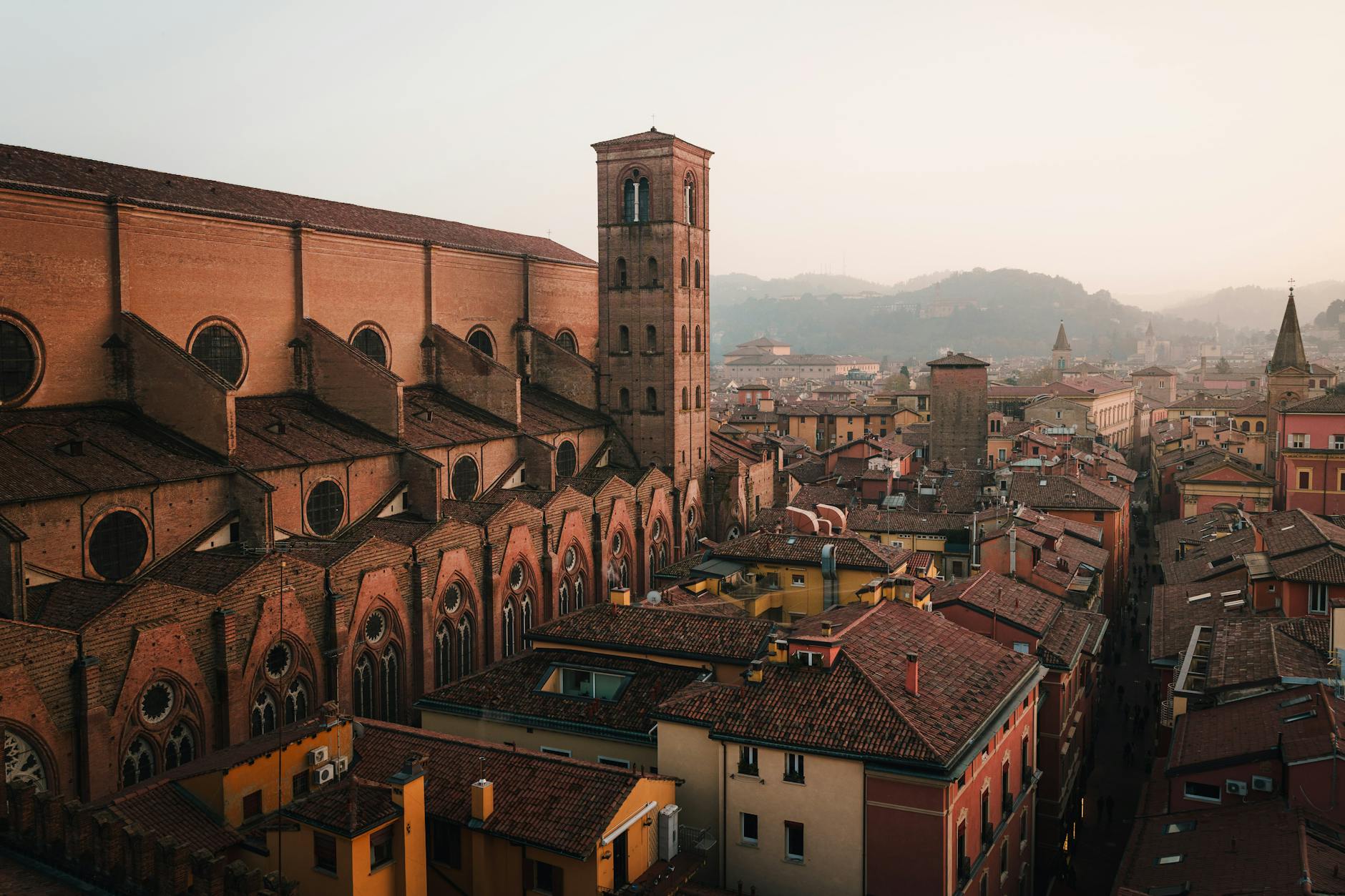
Bologna is one of the most consistently underused excellent cities in Europe. People praise it almost automatically. They mention food, porticoes, students, red roofs, and quality of life. Then they give it one night, maybe two, and keep behaving as if the real trip happens somewhere else. That gap between reputation and actual treatment is the first thing to correct.
Start Here
Bologna is not a filler city. It is not just where you pause between Florence and Venice, or where you sleep before a train north. It is one of the rare Italian cities whose pleasures are woven into ordinary movement rather than isolated in special zones. You do not go from landmark to landmark here in the same way you do elsewhere. You move under porticoes, through markets, across piazzas, into coffee bars, past students, under brick arches, toward a tower or church you did not know you cared about ten minutes earlier. The city works by continuity.
That continuity is the point. Bologna is not trying to dazzle you into submission. It wants to be inhabited. The covered walkways are not just pretty or historically interesting. They make the city behave differently. Heat, rain, crowds, errands, meals, detours, and evening strolls all happen under a form of architectural shelter that turns movement itself into part of the experience. That is why Bologna can feel richer than cities with more obvious grand monuments. The whole surface of the city is usable.
The second thing to understand is that Bologna is not only about food, even though food matters hugely. The city has a dangerous effect on first-time visitors: they arrive having heard so much about eating that they start treating every meal like a test. That can flatten the trip. Bologna is stronger when appetite is integrated into the day rather than isolated from it. A market lane, a long lunch, a late-afternoon coffee, a simple aperitivo, one more deliberate dinner. The city is culinary, yes, but also scholarly, social, slightly rough-edged, and intensely local in how it carries that reputation.
It is also one of Italy's most convincing lived-in historic centers. Many Italian cities can feel staged for admiration. Bologna often feels built for use. The university presence matters. The scale matters. The brick matters. The towers still puncture the skyline, but the city beneath them remains practical and inhabited. Even the most beautiful stretches tend not to become museum corridors in quite the same way as elsewhere.
That makes Bologna unusually good for travelers who like cities with strong internal logic. Choose the base well, keep the days dense rather than frantic, give the porticoes and markets time to do their work, and let San Luca, the towers, the old university city, and the food culture form one experience instead of four separate tasks. On those terms, Bologna becomes exactly what it should be: one of Italy's most satisfying short urban stays.
The city in one sentence: Bologna is a porticoed, food-literate, student-shaped brick city where the best first trip comes from combining covered walking, market rhythm, tower-and-church atmosphere, and real urban life rather than treating it as a rail stop between louder Italian names.
Quick Verdict
Best for: couples, solo travelers, repeat Italy visitors, food travelers, walkers, short urban breaks, and anyone who likes cities that feel historically rich but genuinely lived in.
Not ideal for: travelers who need nonstop postcard spectacle, people who want a low-appetite destination, or anyone who insists on comparing every Italian city to Florence.
Ideal first visit: 2 to 3 full days.
Minimum worthwhile stay: 2 full days, if Bologna itself is the destination rather than just the evening around an arrival.
Best overall months: April, May, September, and October.
Best winter case: late autumn through winter for denser eating, better pacing, and a city that feels even more intimate under the porticoes.
Biggest planning mistake: treating Bologna as if it were primarily useful because it is well connected.
One thing to prioritize: the base. Bologna is compact, but the exact position of the hotel still changes the tone of the whole stay.
One thing to leave flexible: food timing. Bologna improves when you stop forcing every meal into an overplanned masterpiece slot.
The blunt version: Bologna is one of Italy's best short city trips if you let it be covered, hungry, and lived-in, and one of the easiest places to waste if you keep acting like the real destination is somewhere else.
Who Will Love Bologna?
Bologna suits travelers who like cities that feel coherent. The physical and social fabric here works unusually well together. The porticoes make walking natural. The center is dense enough to stay interesting and small enough not to exhaust. The food culture is serious without needing constant ceremony. The student presence stops the city from becoming stately or dead.
Couples tend to do especially well because Bologna supports a very satisfying kind of short break: strong walking, long lunches, an easy aperitivo rhythm, one or two more deliberate dinners, and a city center that remains atmospheric well into the evening. You can do very little badly here if your basic instincts are sound.
Solo travelers also do well because the city is so navigable. There is very little friction in having a day alone in Bologna. Coffee, market wandering, church interiors, a museum or tower, a plate of something local, an uphill walk or bus to San Luca, then wine and dinner. The city is sociable without demanding performance.
It is also ideal for travelers who like everyday urban beauty more than singular monumental showpieces. Bologna does have symbols, of course, especially the towers and San Luca, but the deeper reward lies in texture: brick walls, worn stone, covered sidewalks, half-hidden courtyards, shopfronts, arcades, students, markets, and the rhythm of ordinary movement.
The city is less ideal for someone who wants Italy only at its most polished or theatrical. Bologna is handsome, but not always polished. It is rich, but not preening. That is one of its strengths.
Bologna at a Glance
| Question | Practical Answer |
|---|---|
| Main airport | Bologna Guglielmo Marconi Airport |
| Best airport public move | Marconi Express |
| Airport-to-centre timing | direct airport-to-station link, generally the fastest route[1] |
| Best first-time base | historic center or its immediate edge |
| Best atmospheric first-time base | central porticoed zone south or east of Piazza Maggiore |
| Best public-transport use case | airport move or San Luca strategy rather than daily city dependence |
| Signature architectural system | the UNESCO porticoes |
| Signature symbols | the Two Towers and San Luca |
| Public transport backbone | walking first, buses second |
| Best city card worth knowing | Bologna Welcome Card |
| Biggest practical variable | whether you are treating Bologna as destination or transit city |
| Car needed? | No |
| Currency | Euro |
| Emergency number | 112 |
| Tap water | Safe to drink |
| Power plugs | Type C, F, and L |
2026 Visitor Notes
The Airport Link Is Fast And Extremely Easy To Use
Marconi Express describes itself as the fastest connection between the airport, the central train station, and the center of Bologna, running from early morning until midnight with up to eight departures per hour in peak periods.[1] That means the arrival is simple enough that there is little excuse for a weakly chosen base.
Bologna’s Bus Tickets Are Straightforward Once You Know The Basic Logic
TPER's fares page states that the standard Bologna urban ticket is €2.30 and valid for 75 minutes from validation, including line changes within the urban area.[2] That is easy enough to use intelligently when walking stops being the right answer.
Multi-Ride Logic Exists, But Most First-Timers Will Walk More Than They Expect
TPER's own FAQ explains that later validations of a Citypass within the 75-minute validity window do not consume extra rides.[3] Useful, but the larger truth is that many first-time visitors end up needing less transit within the center than they first imagine.
The Bologna Welcome Card Is Real, Not Just Decorative
Bologna Welcome's official card page lays out a clear split between the `Easy` and `Plus` versions, with museums, a guided walking tour, the Clock Tower, and bike rental on both, plus additional items like the San Luca Express on `Plus`.[4] That makes the card worth considering if you know you will actually use included features.
The Porticoes Are Not Just Pretty; They Are The City’s Core Technology
Bologna Welcome's UNESCO porticoes page says the city has over 62 km of arcades and that the porticoes were inscribed on the UNESCO World Heritage List in 2021.[5] This is not a side attraction. It is the defining system of the city.
San Luca Is A Real Pilgrimage And A Real Urban Experience
Bologna Welcome's San Luca guidance explains that the route from the center under the portico runs for about 3.5 km and is marked by 666 arches.[6] This matters because San Luca is best understood as a movement experience, not just a photo objective.
How to Understand Bologna
Bologna works through five forces.
The first is covered continuity. The porticoes turn walking into the central civic experience.
The second is student energy. Bologna remains a university city in a real and useful way. This keeps the center active, conversational, and less embalmed than many comparable historic cores.
The third is appetite as structure. Food does not sit outside the urban experience here. It organizes it.
The fourth is brick intimacy. Bologna is visually strong without relying on gleaming grandeur. Red walls, towers, arcades, and worn interiors create a city that feels warmer and more tactile than many better-photographed places.
The fifth is destination insecurity on the visitor side. Too many travelers still think Bologna needs to justify itself. Once you stop asking that question, the city gets much better.
The Five Bolognas A Visitor Actually Meets
Portico Bologna: the city as shelter, promenade, and architectural habit.[5]
Market Bologna: Quadrilatero, food shops, bars, lunch rhythm, and appetite in motion.
Tower Bologna: the symbolic medieval city of Asinelli, Garisenda, and vertical memory.[7]
University Bologna: students, bookstores, graffiti, energy, and the sense that the center still belongs to current life.
San Luca Bologna: the city of pilgrimage, exercise, views, and the long covered climb outward and upward.[6]
The Main Mental Shift
Do not ask, "What are the top sights in Bologna?" Ask, "How does Bologna want to be walked today?" Market Bologna, portico Bologna, university Bologna, San Luca Bologna. That is the question that turns the city from a stop into a stay.
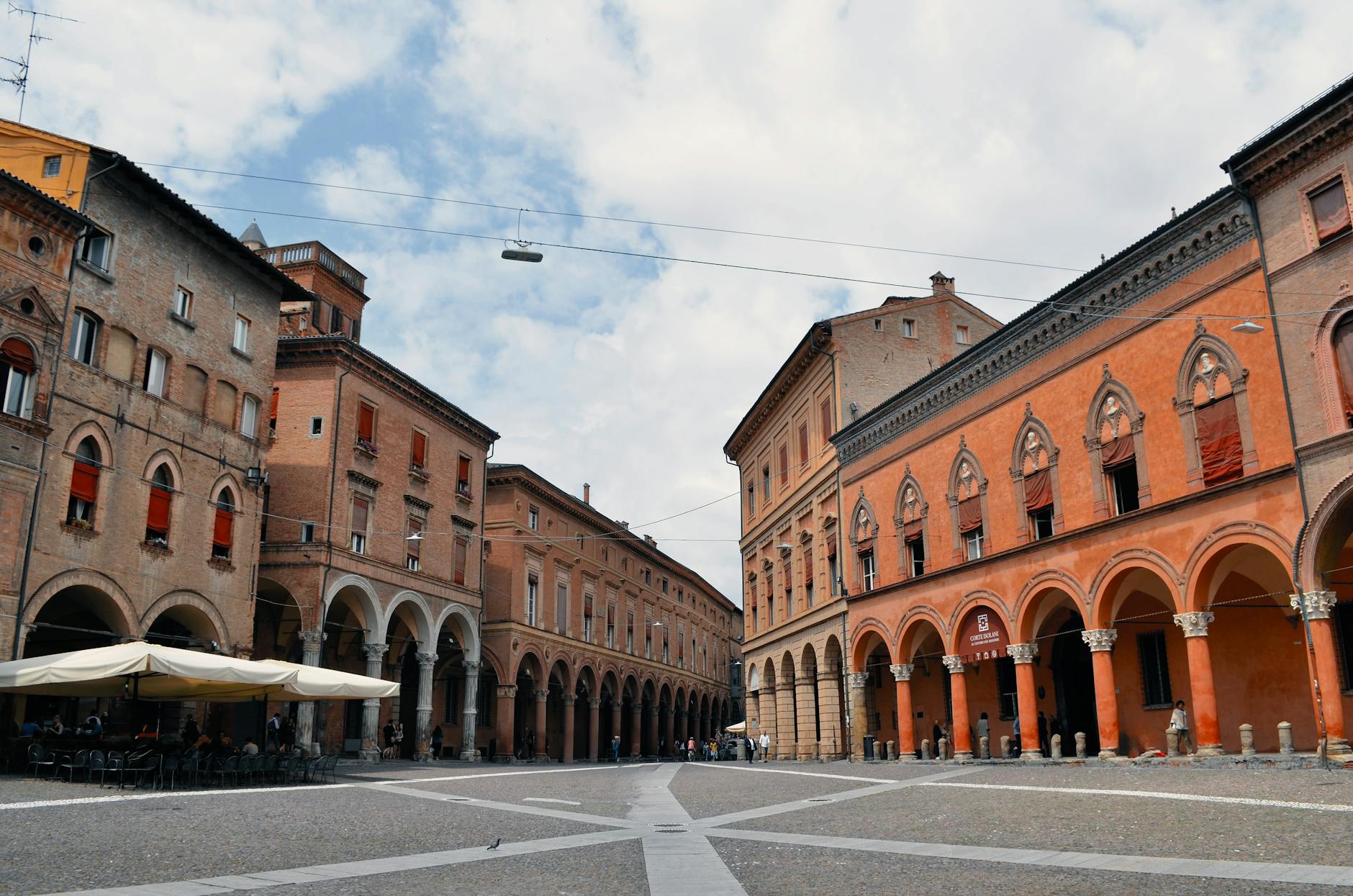
What Bologna Does Better Than People Think
Bologna is better than many visitors expect at making ordinary movement pleasurable. In weaker cities, walking between attractions is dead time. Here, it is part of the point.
It is also stronger than people think at staying local under heavy praise. Plenty of highly praised food cities get flattened into visitor performance. Bologna still feels like itself.
Another underrated strength is how complete two days can feel. The city has enough architecture, appetite, churches, towers, and atmosphere that even a short visit can feel whole rather than introductory.
Bologna is also very good at weather resilience. The porticoes make rain and heat less disruptive, which changes how confidently you can build a day.
Finally, Bologna does urban appetite without pretension better than almost anywhere. It takes food seriously, but not anxiously.
Best Time to Visit Bologna
Bologna is a year-round city, but not a season-neutral one. Heat changes the pace, and cooler weather shifts the city toward denser indoor pleasures.
Best Overall Months
April, May, September, and October are the strongest first-visit windows. The city is still energetic, highly walkable, and easier to eat through without fatigue.
Summer
Summer can still be very good, but Bologna's heat punishes overeager itineraries. You need shade, stronger hotel recovery, and less ambition per hour.
Autumn
Autumn suits Bologna beautifully. Food gains even more natural weight, walking becomes easier, and the city feels especially comfortable in itself.
Winter
Winter Bologna can be excellent for travelers who like restaurants, bars, arcades, and lower-pressure daytime wandering. The city becomes denser rather than poorer.
Spring
Spring is perhaps the easiest time to understand why Bologna works so well. The streets are active, the covered walks stay pleasant, and the whole city feels naturally balanced.
Month-by-Month Guidance
January: compact, atmospheric, and food-forward. February: still wintry, but often very pleasant under the porticoes. March: transitional and increasingly lively. April: one of the best overall choices. May: excellent. June: strong, though heat starts mattering more. July: enjoyable only if paced intelligently. August: workable, but more dependent on heat tolerance and hotel quality. September: one of the smartest months to go. October: often ideal. November: moodier and very good for slower city use. December: festive and surprisingly intimate.
How Many Days You Need
One Day
Enough to understand the center, markets, and general rhythm. Not enough to grasp why Bologna is a destination in its own right.
Two Days
The minimum respectable stay. One day should belong to the central portico-and-market city. The other should include either San Luca or a broader district-and-church chapter.
Three Days
Ideal for a first visit. This gives you room for real meal spacing, one more deliberate architectural or museum chapter, and enough time for the city to stop feeling compact and start feeling complete.
Four To Five Days
Very good if you want a slower pace, deeper food exploration, or one measured day trip without reducing Bologna itself.
One Week
More than most first-timers need, but still worthwhile for people who genuinely like cities and want Bologna as a regional base without betraying it.
Where to Stay in Bologna
Where you stay matters because Bologna’s center is compact enough to tempt lazy decision-making and distinct enough that those lazy decisions still matter.
Fast Answer
For most first-time visitors, stay in the historic center or on its immediate edge with easy porticoed access inward. Stay near the station only if the exact property is strong enough to offset the fact that the emotional center of Bologna lies deeper in.
Neighborhood Decision Table
| Traveler Type | Best Area |
|---|---|
| First-time couple | center or elegant center edge |
| Food-led traveler | central market-walk zone |
| Rail-dependent traveler | better-positioned station-edge stay |
| Repeat visitor | university side or a quieter residential edge |
| Atmosphere-first traveler | central porticoed streets south or east of Piazza Maggiore |
| Lower-friction short break | center with direct walking logic everywhere |
Historic Core
Usually the right answer. Bologna’s center is one of those rare places where staying central genuinely improves the whole trip.
Station Edge
Potentially useful, but not automatically charming. Choose it for a specific hotel, not for map-level convenience alone.
University Side
More energetic, sometimes rougher, and often excellent for travelers who want the city to feel younger and less curated.
Quieter Center Edge
Often the best compromise for people who want atmosphere by day and better sleep by night.
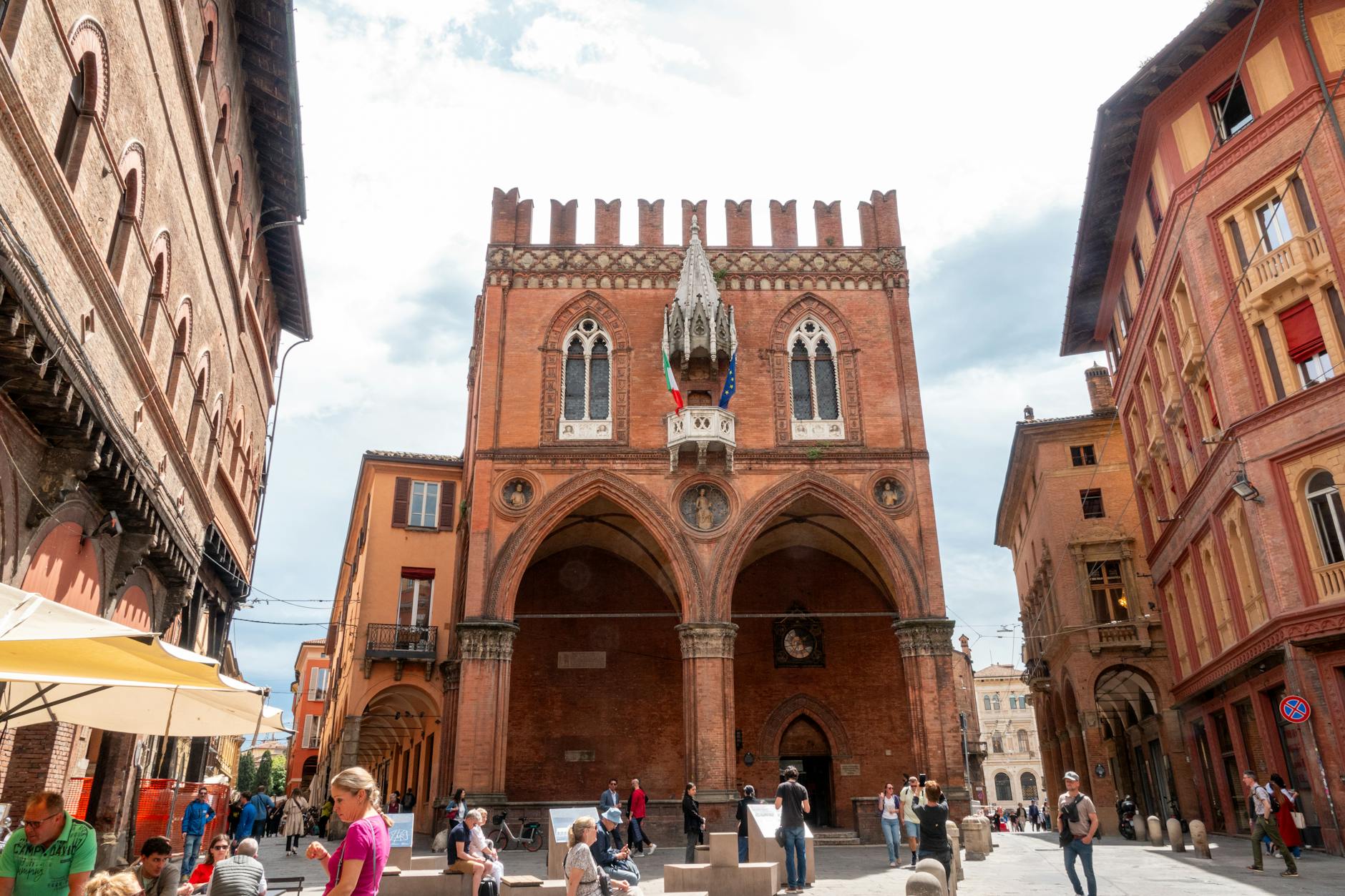
Area Profiles
Piazza Maggiore Core
The civic heart and still the best first anchor, though not the whole explanation of Bologna.
Quadrilatero
Food-first Bologna, where appetite and tourism overlap but do not fully consume each other.
Strada Maggiore And Tower Bologna
A denser medieval register with some of the city’s strongest symbolic texture.[7]
Via Zamboni And The University Side
The Bologna that stays intellectually and socially alive because students still genuinely use it.
Porta Saragozza To San Luca
The long movement corridor that explains why Bologna’s porticoes are not decorative but infrastructural.[6]
Neighborhood Guide: Where to Explore, Not Just Sleep
Piazza Maggiore and the civic center: the natural start, but better as a launch point than as the entire day.
Quadrilatero: one of the city’s strongest appetite corridors, best used by drifting rather than over-scripting.
Strada Maggiore: towers, old fabric, and some of the clearest medieval Bologna atmosphere.
University side: bookshops, students, bars, and the city’s everyday intellectual pulse.
Saragozza side: the route outward toward San Luca and one of the best demonstrations of Bologna’s covered urban logic.
The Best Things to Do in Bologna
- Walk under the UNESCO porticoes long enough to understand that they are the city, not an accessory.[5]
- Spend real time in the market-and-food center without turning it into a checklist.
- Use the Two Towers area as a symbolic anchor for medieval Bologna.[7]
- Go out to San Luca, ideally on foot under the portico if your energy suits it.[6]
- Let one chapter of the trip belong to the university side rather than only the postcard core.
- Consider the Bologna Welcome Card only if you will genuinely use its included features.[4]
- Let at least one day be shaped more by appetite and arcades than by formal sightseeing.
- Sit in Piazza Maggiore long enough for Bologna’s ordinary civic life to explain itself.
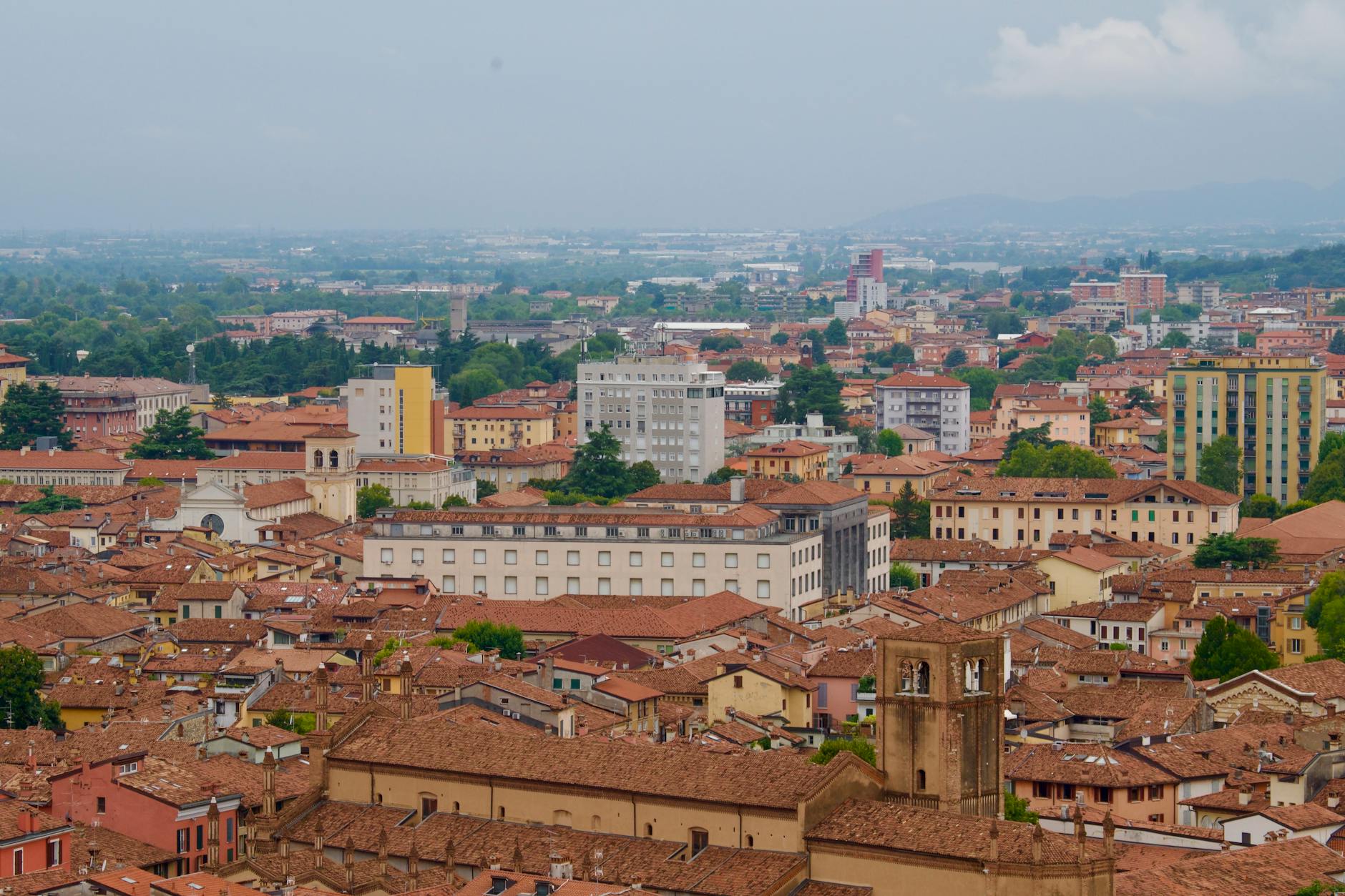
Itineraries
One Excellent Day
Start in the civic core, move through the market lanes, loop toward the tower-and-university side, build in a long lunch, then either head partway toward San Luca or finish with a slower aperitivo-and-dinner rhythm under the porticoes.
Two Days
Day one should be central Bologna: Piazza Maggiore, Quadrilatero, porticoes, tower district, and evening food. Day two should either belong to San Luca and a slower return through Saragozza or to the university side and one more cultural layer.
Three Days
Use the extra day to let Bologna breathe: longer meals, one museum or church-heavy chapter, one quieter neighborhood drift, and less pressure to prove you are using every hour efficiently.
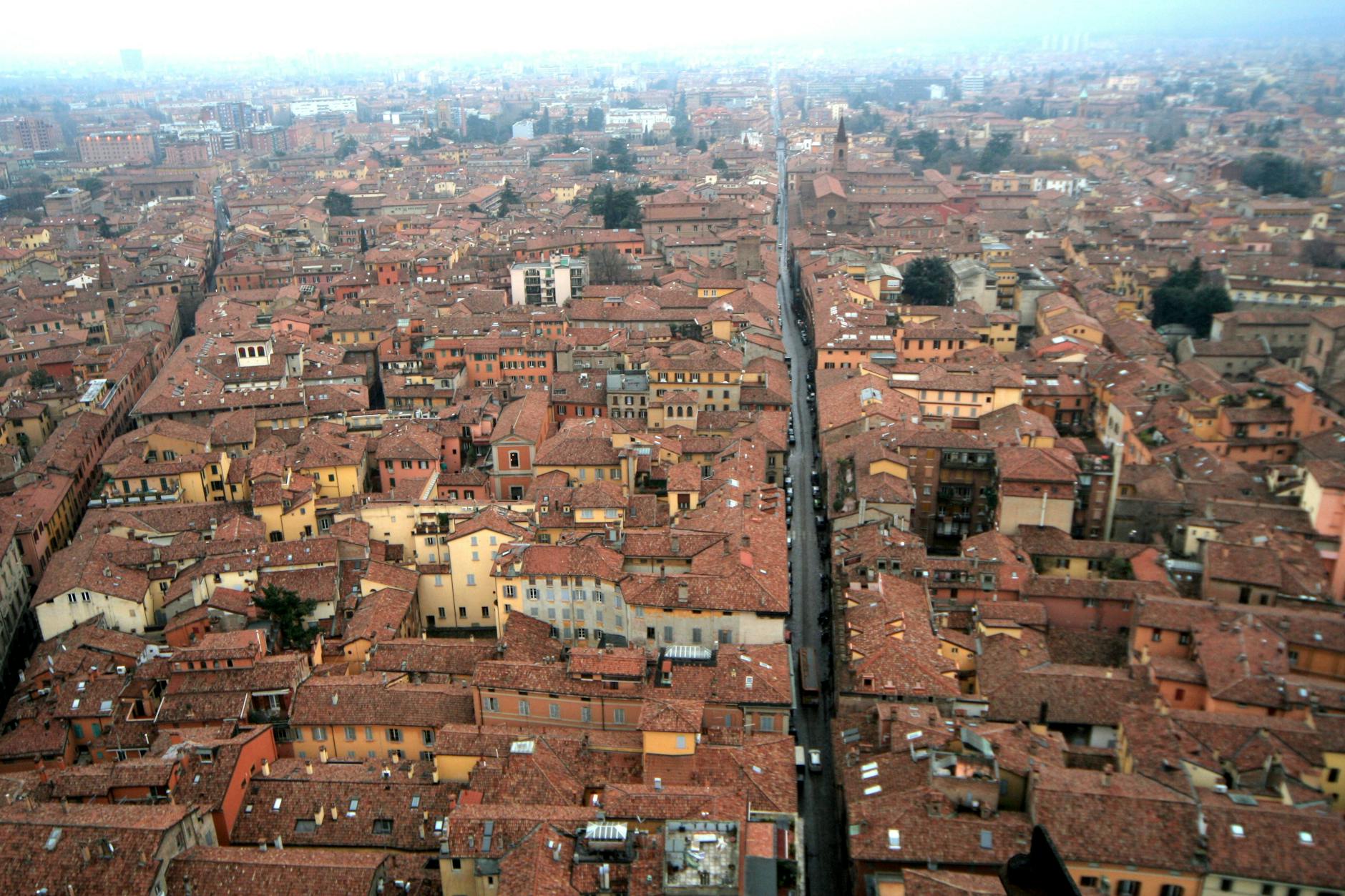
Itineraries By Traveler Type
For The Food Traveler
Treat Bologna as a city where appetite structures the day, not a place where every meal needs to be a trophy.
For The First-Time Italy Visitor
Use Bologna as proof that Italian urban pleasure is not only about the biggest-name cities. Let it feel practical, warm, and serious at once.
For The Couple Weekend
Prioritize a strong central base, one long lunch, one slower evening, and one San Luca or tower chapter.
For The Repeat Europe Traveler
Lean harder into the university side, the lesser-known arcades, and the city’s everyday continuity rather than chasing only canonical stops.
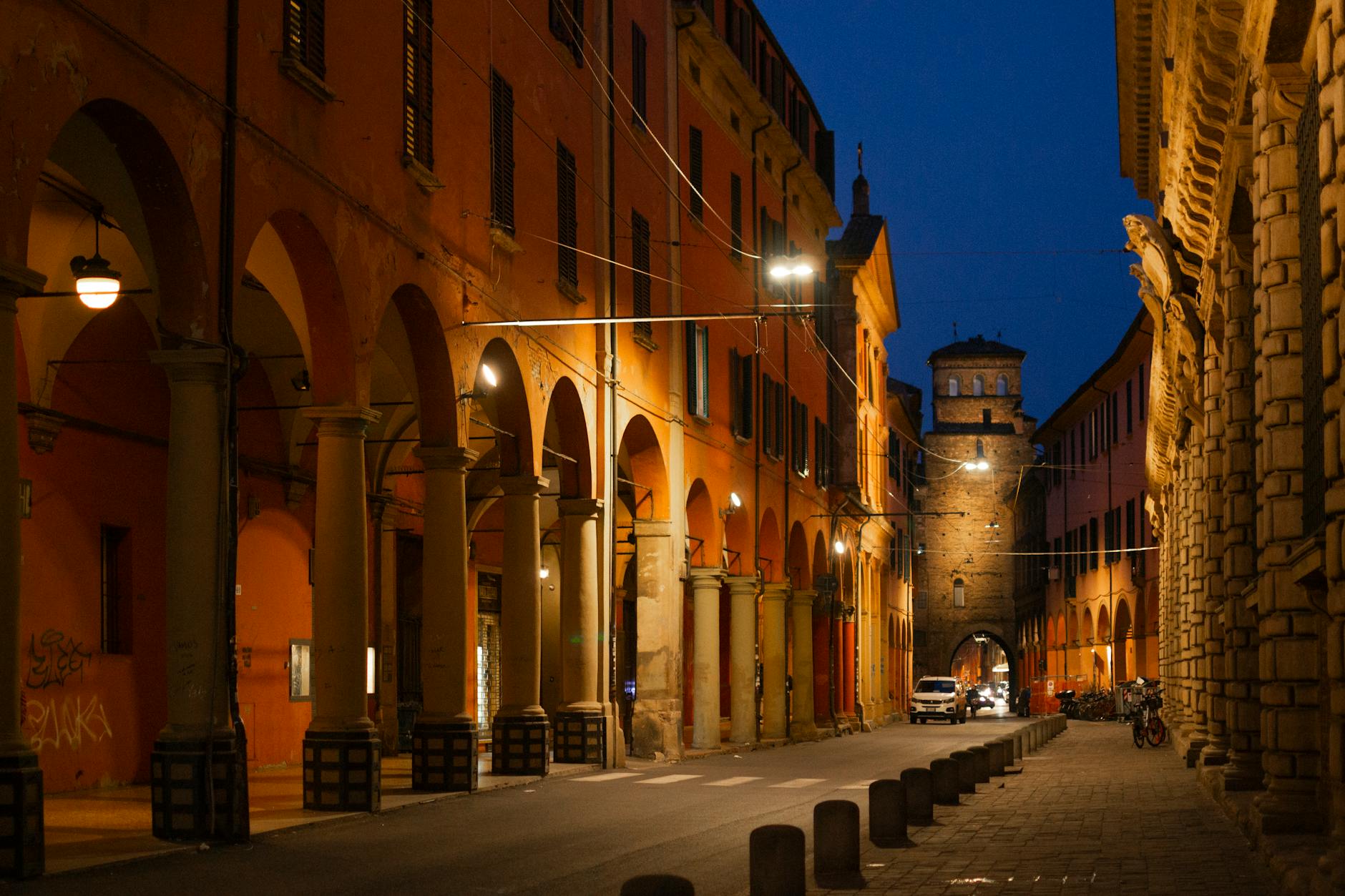
Food and Drink
Bologna’s food reputation is deserved, but a first-time visitor can still misuse it. The city is not asking you to turn every meal into a pilgrimage. It is asking you to understand that appetite belongs inside the urban fabric here. Markets, pasta, cured meats, wine, quick bars, slower tables, and everyday eating all matter.
The most common mistake is overtension. Travelers arrive determined to have important meals and forget that some of Bologna’s pleasure lies in ease. A better strategy is one or two more deliberate meals and the rest governed by the day’s movement and energy.
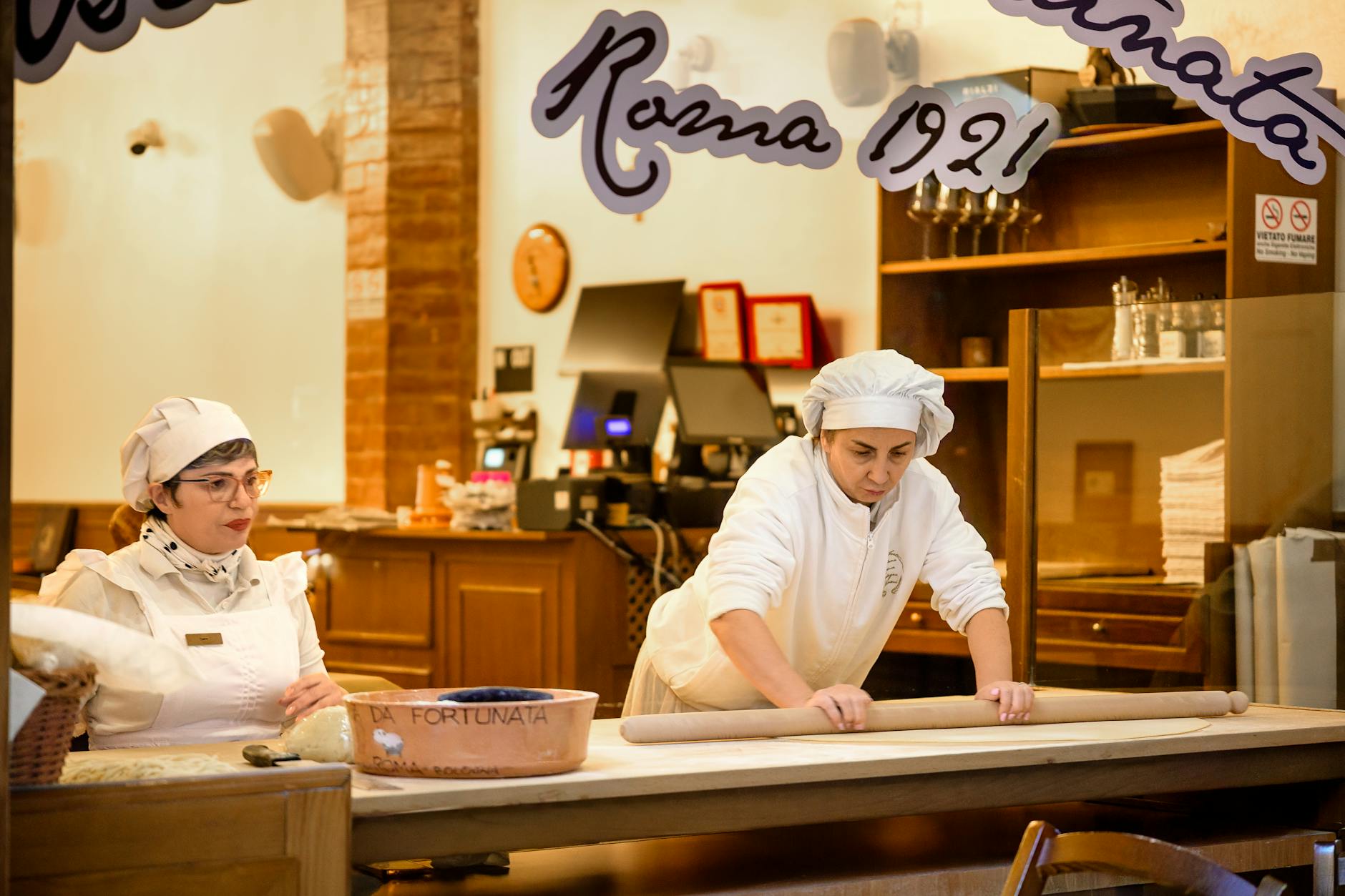
Getting Around
Bologna is primarily a walking city once you are in the center. The Marconi Express solves the airport move cleanly.[1] TPER ticket logic is simple enough for bus use when needed, with a 75-minute ordinary urban ticket and broader fare structures available.[2][3] Most first-time visitors should think of buses as support rather than backbone.
Porticoes, Appetite, Students, And Why Bologna Feels More Alive Than It “Should”
Some historic centers feel emptier the more admired they become. Bologna has resisted that better than most. The porticoes keep the streets usable. The university keeps the city young enough to argue with itself. The food culture keeps the center from becoming merely ceremonial. And the architectural language of brick, towers, and covered edges makes beauty feel inhabitable rather than untouchable.
This is why Bologna so often exceeds expectations once travelers stop treating it like a backup option. The city is not trying to overpower you. It is trying to stay alive around you. That is a harder achievement and, for many people, a better one.
Common Mistakes
- Giving Bologna one night because the trains made that easy.
- Staying too close to the station for convenience alone.
- Treating the porticoes as scenery rather than function.
- Overpressurizing the food part of the trip.
- Ignoring the university side and deciding the city lacked energy.
- Skipping San Luca because it looked like “just one more church.”
- Mistaking compactness for permission to overpack the day.
My Blunt Advice
Stay central. Walk more than you think you need to, but not as a competitive sport. Let the porticoes do their work. Eat well without turning the trip into an examination of culinary seriousness. Give Bologna one full day when you are not mentally somewhere else already. If you have the energy, go to San Luca under the arcades at least one way.
Bologna rarely needs to shout to win people over. It just needs enough time to stop being treated like a stopover. Once that happens, it usually lands very hard.
Where Bologna Fits in an Italy Trip
Bologna is one of the most useful corrective cities in Italy. If a route has become too dominated by spectacle, queues, and symbolic landmarks, Bologna restores the idea that a city can be deeply satisfying without constantly announcing its greatness. That is not a downgrade. It is often an upgrade in actual travel quality.
In a broader Italy itinerary, Bologna works best either as a central hinge or as a deliberate counterweight. Between Florence and Venice, it can rescue the trip from becoming only a string of monumental trophies. Between Milan and the south, it can provide warmth, appetite, and historical density without the exhaustion of another overexposed giant. On its own, it can carry a short break with unusual confidence.
It is also one of the few Italian cities whose transport convenience should be treated as an accidental advantage rather than as its main purpose. Yes, Bologna is superbly connected. Yes, the station makes wider movement simple. But the city becomes stronger the moment you stop planning around what else you could easily reach from it.
This is why Bologna often works especially well for repeat Italy visitors. First-timers are more likely to feel pulled toward the canonical circuit. People who already know Italy’s louder names are often the ones who recognize just how rare Bologna’s particular balance is: food without performance, history without overmuseumification, and daily urban life still fully visible inside the old center.
Bologna Versus Florence
This is the comparison that damages Bologna most when it is handled lazily. Travelers set up an unspoken contest between Florence and Bologna, then judge Bologna by whether it can overwhelm them with the same density of iconography. It cannot, and it does not intend to.
Florence is a city of masterpiece pressure. Its greatness is obvious, cumulative, and almost unavoidable. Bologna is a city of inhabited coherence. Its pleasures are more continuous than climactic. Where Florence often asks to be admired, Bologna asks to be used.
That does not make Bologna lesser. It makes it different in a way that many experienced travelers eventually prefer. You can walk through Bologna without feeling that every block is converting itself into a historical exam. You can eat without feeling that every meal must justify the city’s reputation. You can spend a day here and feel you were in a city, not a sequence of obligations.
Travelers who arrive expecting Florence without masterpieces often leave unimpressed. Travelers who arrive ready for a serious Italian city built around porticoes, appetite, students, and deep usability often leave wondering why Bologna was ever treated as secondary.
First-Time Visitors Versus Repeat Visitors
Bologna is immediately likable on a first visit because the city gives you pleasure very fast. The porticoes make movement easy. The center is compact. The market lanes feel active. The brick and towers create instant atmosphere. Many first impressions are strong within an hour of arrival.
But first-time visitors still tend to underread the city. Because Bologna is so easy to enter, people assume it has revealed itself fully. Then they move on too fast or use it too lightly. They leave satisfied but not changed.
Repeat visitors usually experience a more serious Bologna. They choose better streets to stay on. They walk less anxiously. They stop expecting every meal to be famous. They understand the university side better. They appreciate how much the porticoes shape not just the look of the city but its behavior under weather, crowds, and time of day.
That is why Bologna is one of those cities that benefits from a repeat-visitor mindset even on trip one. Do not ask only what you can see. Ask how the city wants to be lived for the two or three days you are there.
Cooler-Season Bologna Versus Summer Bologna
Summer makes Bologna easier to romanticize and harder to pace. The city can still be excellent, but heat punishes overambitious walkers and turns weak hotel choices into real problems. Long lunches and shaded movement become less optional and more structural.
Cooler-season Bologna often feels closer to its ideal form. Autumn especially suits it. Appetite rises naturally, walking becomes easier, the porticoes regain their full practical charm, and the city’s darker brick beauty becomes more persuasive. Winter works well too, particularly for travelers who like urban intimacy, indoor appetite, and lower-pressure sightseeing.
This matters because Bologna is not a city whose identity depends on clear skies and outdoor spectacle. It works in rain. It works in cold. In some ways it becomes more itself under them, because the porticoes stop being charming details and resume their original civic function.
Shoulder season remains the easiest recommendation, but travelers who can only go later in the year should not feel they are settling. Bologna is one of the better Italian cities for imperfect weather because its whole urban system was built to absorb daily life under changing conditions.
Why One Proper Bologna Day Matters
Bologna suffers from being too easy to partially use. Arrive for dinner, leave after lunch, and you may still have had a pleasant 18 hours. That is precisely the problem. The city can feel agreeable without ever being granted the time it needs to become convincing.
One proper Bologna day means the city is not being squeezed around rail convenience. It means you are not spending the afternoon thinking about tomorrow’s departure. It means you can let the porticoes dictate the route instead of only connecting points on a list.
This matters because Bologna’s strength lies in accumulation. The city gains authority through repeated covered walking, repeated appetite, repeated glimpses of towers and brick and students and market life. One proper day gives those repetitions time to click into meaning.
Without it, Bologna risks becoming “nice” instead of essential. With it, the city often lands much harder than travelers expected.
Why the Base Matters More Than Visitors Expect
Bologna is compact, but not in a way that makes every central address equally good. A hotel can be within easy reach of the center and still make the city feel too functional, too loud, or too detached from the rhythm you actually came for.
The right base in Bologna gives you three things: direct portico access into the core, a satisfying return path at night, and enough distance from the noisiest concentrations that the city still feels liveable rather than constantly performed. That is why the exact street matters more here than visitors often assume.
Staying too close to the station for convenience alone is the most common error. The station is useful. But the emotional center of the city lies deeper in, and if your hotel keeps reminding you of transit rather than of arcades, markets, and brick, Bologna starts feeling like what lazy itineraries say it is: a stopover.
On the other hand, a well-chosen base in the historic center or on its immediate calmer edge can make Bologna feel astonishingly complete. The city is the kind that improves dramatically when the hotel supports its tone instead of merely its logistics.
Day Bologna Versus Evening Bologna
By day, Bologna feels practical, social, and deeply walkable. The porticoes absorb movement, the food lanes stay active, and the center’s civic and market structure is visible without strain. This is when the city teaches you its logic.
By evening, the same city becomes more atmospheric and more intimate. The brick darkens, the porticoes frame light differently, the restaurants feel more structural, and Piazza Maggiore or the surrounding lanes can suddenly seem much more emotionally persuasive than they did in daylight.
This is one reason one-night Bologna stays are so unsatisfying: they often give the city either the evening or the day, but not enough of both for the two readings to reinforce each other. Bologna is not split dramatically between day and night, but it does deepen noticeably once you have experienced both sides in sequence.
The strongest evenings here are not necessarily elaborate. They are often built on repetition: one more walk, one better drink, one slower dinner, one final pass under the arcades. The city works by returning.
Why Rail Convenience Should Not Own the Whole Trip
Bologna may be Italy’s most dangerous city for over-rational itinerary design because the station is so good and the connections are so obvious. Florence is close. Venice is reachable. Milan is possible. Modena, Parma, and Ravenna all tempt. This encourages travelers to treat Bologna as a launchpad rather than a destination.
That is almost always a mistake on a first trip. The more you think about where Bologna can send you, the less likely you are to give Bologna its own full authority. The city becomes a strategic decision instead of a lived experience.
The better use of Bologna is the opposite. Let the convenience remove anxiety, not attention. Knowing the city is well connected should make it easier to stay, not easier to leave. Once Bologna itself feels complete, then wider Emilia-Romagna or north Italy logic can return to the conversation.
Why Food Is Structural, Not Decorative
Every guide says food matters in Bologna. That is true, but it is still too weak a statement. Food here is not only something the city is famous for. It is one of the main ways the city organizes time and social life.
This is why overpressurizing meals is such a common mistake. Travelers mistake structural importance for theatrical importance. They act as though every meal must be definitive, instead of letting appetite move with the city. The result is often tension where Bologna intended ease.
A stronger approach is simpler. Let breakfast be functional. Let lunch matter. Let market detours interrupt the route naturally. Let one dinner be more deliberate and another more instinctive. Bologna’s food culture works best when it remains woven into covered walking and ordinary urban use.
When food is treated structurally, the city becomes more coherent. When it is treated as a string of tests, the trip becomes smaller than Bologna deserves.
Why Bologna Often Works Better Than It Sounds
Bologna has a peculiar reputation problem. Almost everyone says it is good, but many people say it in a way that makes it sound secondary. The praise becomes so routine that it flattens the city into a generality: good food, nice arcades, smart base, pleasant life. All true. None sufficient.
What travelers often discover on arrival is that Bologna works better than that summary because the whole city participates in the experience. The architecture is useful, not only beautiful. The student presence is active, not decorative. The food is daily, not performative. The center still feels inhabited. The covered movement changes everything.
That is why Bologna so often becomes a favorite after the fact. It rarely shouts for your loyalty at the start. It simply keeps working.
Why Bologna Often Improves on the Second Visit
The first visit to Bologna is often dominated by relief and discovery. Relief that the city is as good as people said. Discovery that it is more than a food slogan. But that still leaves a lot of value for a return.
On the second visit, travelers usually stop behaving like they need to prove they are “doing Bologna correctly.” They walk more slowly. They choose a better neighborhood edge. They care more about the university side and less about only the canonical market core. They understand that the city’s virtue is not merely what is famous, but how all its ordinary parts keep the standard high.
This means Bologna belongs to the category of cities that become more personal rather than less surprising on return. It is not exhausted by first contact. It actually becomes more convincing once some of the first-trip urgency is gone.
How Bologna Changes Over the Course of a Stay
On arrival, Bologna often feels immediately comfortable but not yet fully impressive. The city can seem almost too easy. You get in from the airport smoothly, the porticoes make sense at once, the center feels manageable, and the first meal is good. Many visitors like Bologna immediately without yet understanding why.
Then the city starts accumulating force. The porticoes stop being a novelty and become the actual rhythm of the day. The market area becomes less of a food zone and more of a social one. The university side complicates the polished image. San Luca or a longer covered route reveals how deeply movement itself defines the place.
By the second full day, Bologna often feels much larger in meaning than it first appeared. Not bigger physically, but more sufficient. You are no longer using it as a gap between somewhere else. You are inside it. That is usually the moment people realize the city was never a stopover at all.
Source Notes
- 1. Marconi Express, "How the service works." https://www.marconiexpress.it/en/information/the-service/
- 2. TPER, "Tariffe / Bologna urban tickets." https://www.tper.it/tariffe
- 3. TPER FAQ, "Se valido il Citypass..." https://www.tper.it/faq/se-valido-il-citypass-o-un-tesserino-metropolitano-ogni-cambio-mezzo-consumo-pi%C3%B9-corse
- 4. Bologna Welcome, "Bologna Welcome Card." https://www.bolognawelcome.com/en/home/card
- 5. Bologna Welcome, "UNESCO Porticoes Home." https://www.bolognawelcome.com/en/information/unesco-porticoes-home
- 6. Bologna Welcome, "The paths to San Luca." https://www.bolognawelcome.com/en/blog/san-luca-eng
- 7. Bologna Welcome, "The two towers: Garisenda and Asinelli." https://www.bolognawelcome.com/en/places/towers-historic-buildings/the-two-towers-garisenda-and-degli-asinelli-eng
- 8. Bologna Welcome, "City of Bologna." https://www.bolognawelcome.com/en/information/bologna