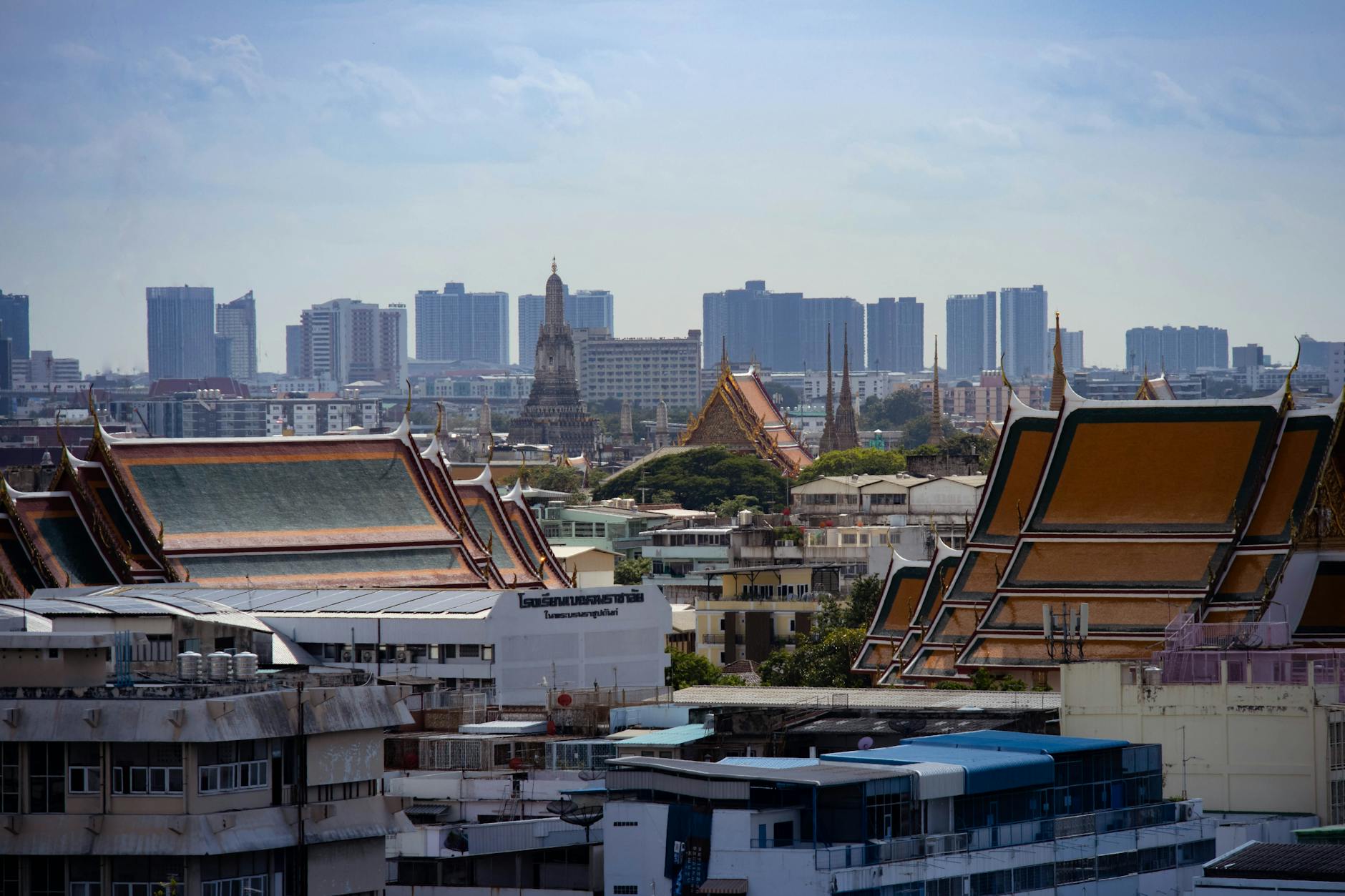
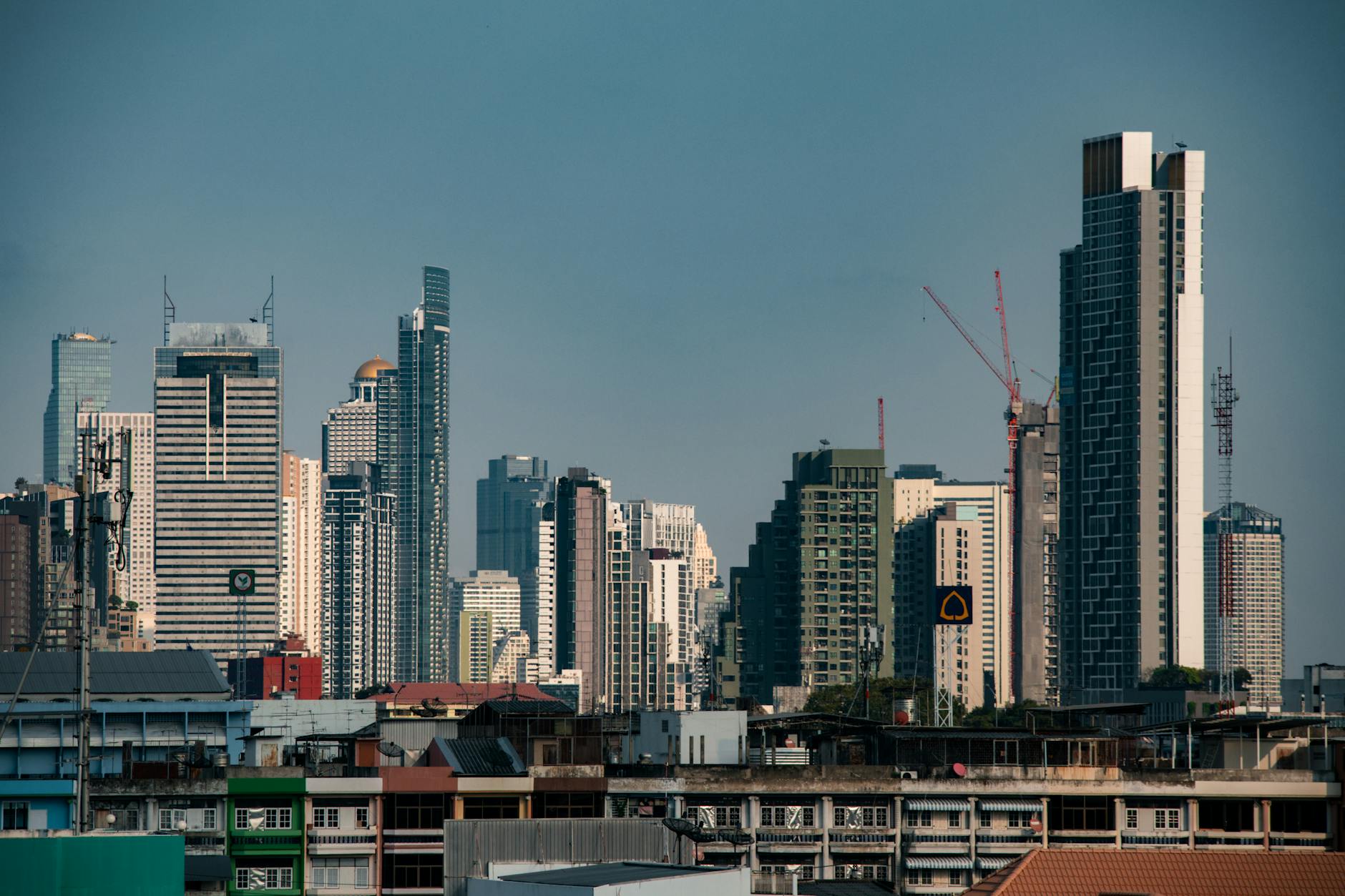
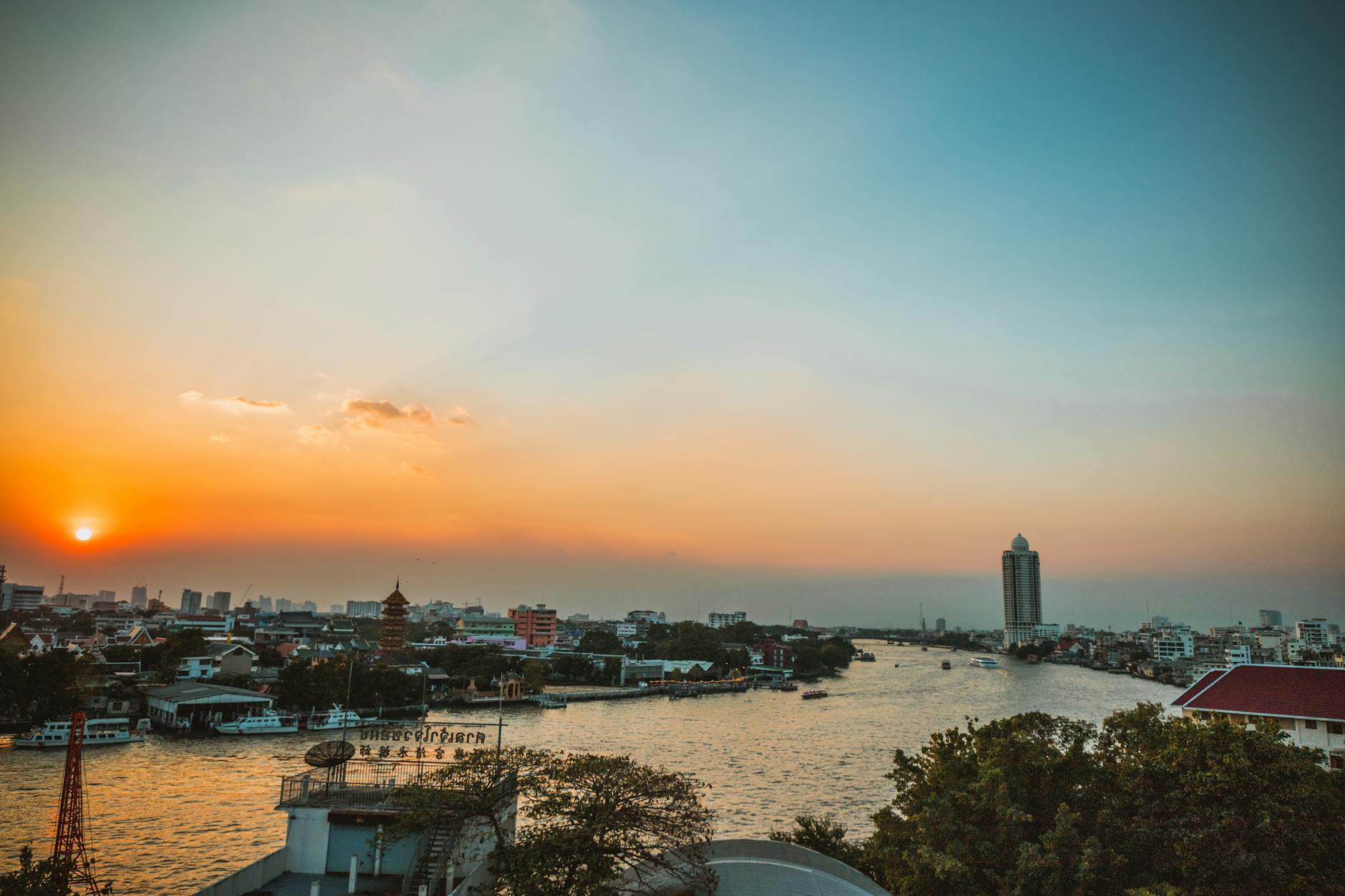
Bangkok is not a city you solve on the first visit. It is too layered for that. One hour you are barefoot on cool temple tiles beside the Emerald Buddha; the next you are in an air-conditioned mall that feels like a small vertical city; then you are eating noodles under fluorescent street lights in Chinatown, watching ferries push across the Chao Phraya, or sitting in traffic beside a shrine, a motorcycle taxi stand, a luxury hotel, a spirit house, a mango cart, and a billboard for a condominium with an English name.
Start Here
That collision is the point. Bangkok is ceremonial and improvised, ancient and futuristic, devout and commercial, deeply local and relentlessly global. It is not a compact “old town plus attractions” capital. It is a delta metropolis of river neighborhoods, markets, canals, temples, malls, elevated trains, expressways, side streets, office towers, food courts, alleys, rooftops, and heat. Visitors who treat it like a checklist often end up exhausted: Grand Palace, Wat Pho, Wat Arun, Chatuchak, Chinatown, rooftop bar, floating market, repeat. Visitors who understand its rhythm do better. They go early to temples, hide from the midday heat, use boats and trains intelligently, leave space for food, and accept that a good Bangkok day usually needs one strong anchor, not five distant targets.
Bangkok rewards curiosity more than purity. The city is not less “authentic” because it has glittering malls; those malls are part of how Bangkok lives. It is not only street food; it is also royal cuisine, regional Thai cooking, Japanese restaurants, coffee bars, hotel buffets, Michelin-starred tasting menus, night markets, food courts, and neighborhood noodle shops that have fed the same regulars for decades. It is not only temples; it is also design, galleries, spas, muay Thai, river life, queer nightlife, craft cocktails, Buddhist merit-making, and the daily choreography of vendors, commuters, monks, students, office workers, and tourists all negotiating the same humid streets.
This guide is designed for travelers who want more than “things to do in Bangkok.” It explains where to stay, how the city is laid out, when to visit, how many days you need, how to approach the Old City without being trapped by traffic, how to use the river, what to book ahead, where to eat, what to skip, how to avoid common scams, and how to experience Bangkok with more patience, appetite, and intelligence.
Bangkok in one sentence: Bangkok is a hot, generous, intense river-and-rail metropolis where temples, food, markets, malls, traffic, hospitality, and street life reward travelers who plan the hard logistics but leave room for the city’s improvisational magic.
Basic data
| Population | About 5.5 million in the city; much larger in the metro region |
|---|---|
| Area | 1,569 km2 |
| Major religions | Theravada Buddhism, Islam, Christianity, and Hindu communities |
| Political system | Special administrative area inside a constitutional monarchy |
| Economic system | Upper-middle-income market economy led by services, logistics, retail, and tourism |
Quick Verdict
| Question | Answer |
|---|---|
| Best for | Food, temples, markets, shopping, river life, affordable luxury, spas, nightlife, photography, design, urban energy, Southeast Asia first-timers, repeat travelers, families who can handle heat, and anyone who likes a city with sensory abundance. |
| Not ideal for | Travelers who want quiet, mild weather, clean sidewalks, easy walking everywhere, predictable traffic, low humidity, or a compact historic center where all major sights are close together. |
| Ideal first visit | 4 full days. Three days gives you the essentials; 5–6 days lets you add markets, a canal trip, Ayutthaya, more food neighborhoods, and downtime. Bangkok is a bad city to rush. |
| Best months | November through February for the most comfortable weather. March to May is very hot. May to October is rainy and humid, but not automatically a bad time if you plan around showers and use indoor breaks. |
| Best first-timer base | Riverside/Charoen Krung for atmosphere and access to boats; Siam/Pathum Wan for shopping and transit; Sukhumvit for restaurants, hotels, nightlife, and BTS convenience; Silom/Sathorn for a balanced central base; Old City/Banglamphu for temples and backpacker energy, but weaker rail access. |
| Biggest planning mistake | Staying in a romantic-looking area without understanding traffic and transit. Bangkok’s map lies. Two places can look close and still take 45 minutes. Cluster your days by river, rail line, or neighborhood. |
| One thing to book ahead | Popular restaurants, cooking classes, high-end spas, rooftop bars, muay Thai seats, Ayutthaya/floating-market tours, and luxury hotels during peak season. For the Grand Palace and major temples, verify official opening hours and dress rules before you go. |
| One thing to leave unscheduled | Chinatown grazing, a river ride, a massage, an afternoon mall break, a neighborhood café, or an evening food crawl that follows your appetite instead of an itinerary. |
| Best free or low-cost pleasures | Riding ordinary river boats, walking Talat Noi, wandering Pak Khlong Talat flower market, exploring Lumpini and Benjakitti parks, eating in mall food courts, visiting shrines respectfully, and watching the city shift at sunset from a bridge, pier, or riverside terrace. |
| Most important warning | Bangkok’s heat, traffic, sidewalks, scams, and air quality can wear down even seasoned travelers. Go early, hydrate, use rail and boats, protect your valuables, check air quality in dry season, and avoid pretending you can walk the city like Paris or Madrid. |
The Move
Build your first Bangkok trip around one Old City temple-and-river day, one modern Bangkok transit-and-shopping day, one market-and-neighborhood day, and one flexible food/spa/day-trip day. You will see more, spend less time in traffic, and enjoy the city instead of fighting it.
Who Will Love Bangkok?
You will probably love Bangkok if you want:
- A world-class eating city where great meals can happen at a market stall, a family-run shophouse, a mall food court, a hotel, or a destination restaurant.
- Grand temples and palaces, but also everyday shrines, neighborhood monasteries, flower markets, and river rituals.
- A city that feels alive at nearly every hour.
- Excellent hotels for the money, from affordable boutique stays to serious luxury.
- Shopping at every level: malls, markets, vintage, design, beauty, electronics, tailoring, and food gifts.
- Massages, spas, rooftop drinks, late dinners, and nights that can be as calm or as chaotic as you choose.
- A gateway to Ayutthaya, Kanchanaburi, beach flights, northern Thailand, and onward Southeast Asia.
You may struggle with Bangkok if you want:
- A gentle city break with mild weather and quiet streets.
- Clean, continuous sidewalks and easy stroller/wheelchair movement everywhere.
- A short list of “must-sees” that can be completed on foot.
- A nightlife scene without touts, traffic, or sensory overload.
- A city where taxis are always easy and traffic is predictable.
- A trip where you never have to think about heat, humidity, air quality, or rain.
Bangkok is worth visiting because few cities deliver so much density of experience: sacred architecture, food, hospitality, shopping, transport drama, river views, markets, spas, design, nightlife, and local life in one place. But the city does not flatter bad planning. The difference between a great Bangkok trip and a miserable one is often whether you respected time, heat, distance, and appetite.
Bangkok at a Glance
| Practical | Detail |
|---|---|
| Country | Thailand |
| Official local name | Krung Thep Maha Nakhon, commonly shortened by Thais to Krung Thep. “Bangkok” is the international name. |
| Language | Thai. English is common in hotels, malls, tourist restaurants, airports, major attractions, and central nightlife areas, but less reliable in markets, taxis, and residential neighborhoods. |
| Currency | Thai baht, written as ฿ or THB. |
| Cards vs cash | Hotels, malls, higher-end restaurants, and many cafés accept cards. Street food, markets, small shops, boats, older restaurants, and some taxis may require cash. Local QR payments are widespread but not always usable by foreign visitors. Carry small bills. |
| Main airports | Suvarnabhumi Airport (BKK) for most long-haul international flights; Don Mueang Airport (DMK) for many low-cost and regional flights. |
| Best airport default from BKK | Airport Rail Link if you are light on luggage and staying near Phaya Thai, Makkasan, Sukhumvit, Silom, or rail connections; official taxis or app cars if arriving late, traveling with family, or staying riverside/Old City. Airport Rail Link fares are typically low, with the full BKK–Phaya Thai ride commonly listed at 45 baht.[17] |
| Airport taxi rule | Official Suvarnabhumi public taxis add a 50-baht airport surcharge, and passengers pay tolls if tollways are used.[15] Don Mueang taxi guidance also notes meter fares plus a 50-baht airport surcharge and tolls where applicable.[16] |
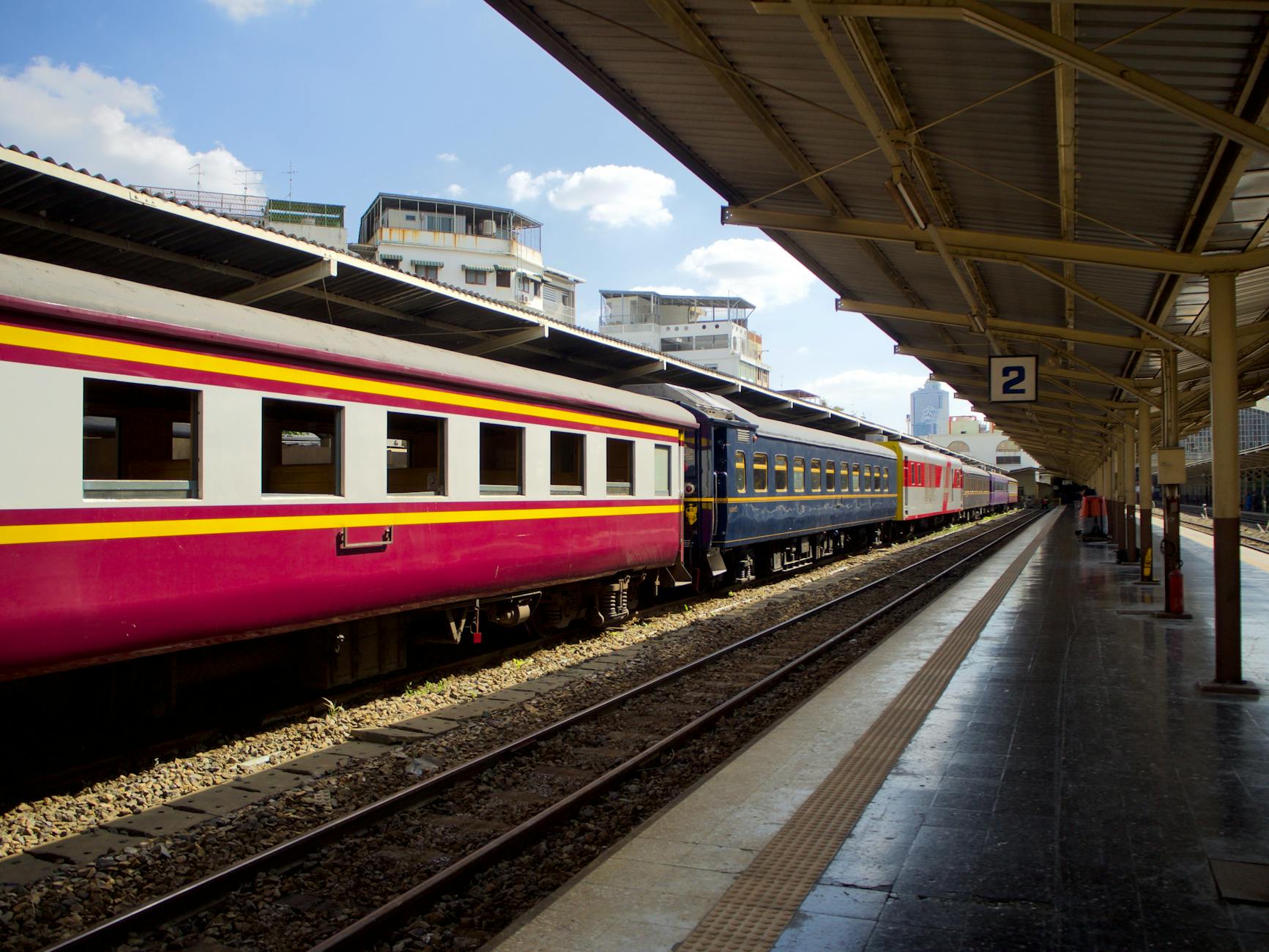
| Main train station | Krung Thep Aphiwat Central Terminal, often called Bang Sue Grand Station/Bang Sue by travelers and older sources. Hua Lamphong remains useful for some local/regional services and for Chinatown/Old Town access. |
| Main transit systems | BTS Skytrain, MRT metro/monorail lines, Airport Rail Link, SRT Red Line, Chao Phraya boats, buses, taxis, app cars, tuk-tuks, motorcycle taxis, and canal boats. They do not function as one seamless system for tourists. |
| Best transit app mix | Google Maps for routing, BTS/MRT official sites or station maps for confirmation, ViaBus for buses/boats in some contexts, Grab/Bolt where available for cars, and offline maps for walking. |
| Tap water | Do not rely on drinking tap water. Bottled water is cheap and widely available; many hotels provide filtered water or refill stations. Ice in established restaurants and cafés is usually commercially produced, but use judgment at very rough stalls. |
| Electricity | Thailand uses 230V. Common socket types include A, B, C, F, and O. A universal adapter is easiest. |
| Tipping | Not mandatory in most casual places. Round up for taxis, leave small change at casual restaurants, and tip more for good service, spa treatments, guides, or hotel porters. Some restaurants add service charge. |
| Emergency numbers | Tourist Police: 1155. Police/general emergency: 191. Ambulance/medical emergency: 1669. Fire: 199. TAT and UK government travel advice both list these common emergency numbers.[18][19] |
| Entry rules | Thailand’s entry rules are changing. As of this update, all non-Thai nationals are required to complete the Thailand Digital Arrival Card online before entry, within the required pre-arrival window.[3] Visa exemption rules were also under revision after a May 2026 cabinet approval; check the latest Royal Thai Embassy, Ministry of Foreign Affairs, and immigration guidance before travel.[4][5] |
First-Timer Mistake
Many first-timers choose between “staying near temples” and “staying near nightlife” without realizing that Bangkok’s most efficient trip often uses two different transport logics: the river for the Old City and the BTS/MRT for modern Bangkok. If your trip is short, do not stay somewhere that is bad for both.
2026 Visitor Notes
Entry Rules Are in Flux
Thailand’s entry rules have changed more than once in recent years. For a guide drafted in 2026, the cleanest editorial stance is: do not promise readers a specific visa-free stay without telling them to verify by nationality.
As of this update, Thailand’s cabinet had approved revisions to visa exemption and Visa on Arrival rules, including revoking the broad 60-day visa exemption scheme for 93 countries/territories and moving to revised categories, pending publication in the Royal Gazette.[4][5] That means a guide should link readers to official Thai consular sources and avoid stale statements copied from older travel blogs.
Separately, the Thailand Digital Arrival Card is now part of arrival logistics. The official TDAC guidance says all non-Thai nationals entering Thailand must complete the online form before entry and that foreigners are required to submit the arrival card information three days in advance of arrival.[3]
The move: Fill out TDAC only through the official Immigration Bureau site, keep the QR/document on your phone, and check your visa/entry category directly with Thai consular sources before buying a long-stay itinerary.
Temples and Royal Sites Require Respectful Clothing
The Grand Palace official visitor guidance lists a strict dress code and a 500-baht foreign visitor ticket that includes access to Wat Phra Kaew and the Queen Sirikit Museum of Textiles.[6] Wat Pho lists a 300-baht admission fee and asks tourists to dress politely, with shorts above the knees prohibited for women.[7] Wat Arun is listed by Tourism Thailand as open daily with a 200-baht entrance fee.[8]
For visitors, the practical rule is simple: cover shoulders and knees for major temples and royal sites. Avoid sheer clothing, tiny shorts, sleeveless tops, ripped clothing, tight bike shorts, and anything that looks like beachwear.
The River Is Not Optional
You can visit Bangkok without using the Chao Phraya, but you will understand the city less. The river is not just scenic transport; it is the historical spine of Bangkok. It links Sathorn/Saphan Taksin, ICONSIAM, Talat Noi, Chinatown, Pak Khlong Talat, Wat Arun, Wat Pho, the Grand Palace area, Banglamphu, and parts of Thonburi. Ordinary express boats are cheap and local; tourist boats are easier for first-timers, with the official tourist boat listing a single-journey ticket and an all-day river pass.[14]
Air Quality Can Matter
Bangkok is hot and humid most of the year, but the cooler dry season can also bring haze and PM2.5 episodes. In January 2026, Thai public-relations reporting noted BMA measures responding to elevated PM2.5 levels tied to stagnant weather and limited ventilation.[20] A polished Bangkok guide should tell readers to check air quality as casually as they check the weather, especially with children, asthma, respiratory conditions, or lots of outdoor sightseeing.
How to Understand Bangkok
Bangkok is easier when you stop asking, “What is the city center?” and start asking, “Which Bangkok am I visiting today?”
There are at least five Bangkoks a visitor will feel:
- The royal and sacred city around Rattanakosin, the Grand Palace, Wat Phra Kaew, Wat Pho, Sanam Luang, Wat Saket, and old government axes.
- The river city along the Chao Phraya, with ferries, piers, old trading neighborhoods, luxury hotels, temples, warehouses, galleries, ICONSIAM, and Thonburi.
- The rail-and-mall city around Siam, Pathum Wan, Sukhumvit, Silom, Sathorn, Asok, Phrom Phong, and Thonglor.
- The market and shophouse city in Chinatown, Talat Noi, Bang Rak, Khlong Toei, Chatuchak, Or Tor Kor, Nang Loeng, and countless neighborhood food pockets.
- The canal and suburban city beyond most tourist itineraries: khlongs, old wooden houses, floating markets, local temples, vast residential districts, and commuter life.
Trying to cover all five in two days is how people leave Bangkok saying it was too much. It was not too much. The plan was too thin.
Bangkok’s Basic Layout
For first-time visitors, think in clusters:
| Zone | What it means for visitors |
|---|---|
| Rattanakosin / Old City | Grand Palace, Wat Phra Kaew, Wat Pho, Wat Saket, Sanam Luang, museums, historic Bangkok, nearby Banglamphu and Khao San. Essential, atmospheric, but weaker for BTS access. |
| Thonburi | West side of the Chao Phraya: Wat Arun, canals, quieter river neighborhoods, local markets, Artist’s House, residential Bangkok, and some atmospheric boutique stays. |
| Riverside / Charoen Krung / Bang Rak | Historic hotels, river views, piers, galleries, old shophouses, street food, Talat Noi, Chinatown access, ICONSIAM across the river, and good first-timer atmosphere. |
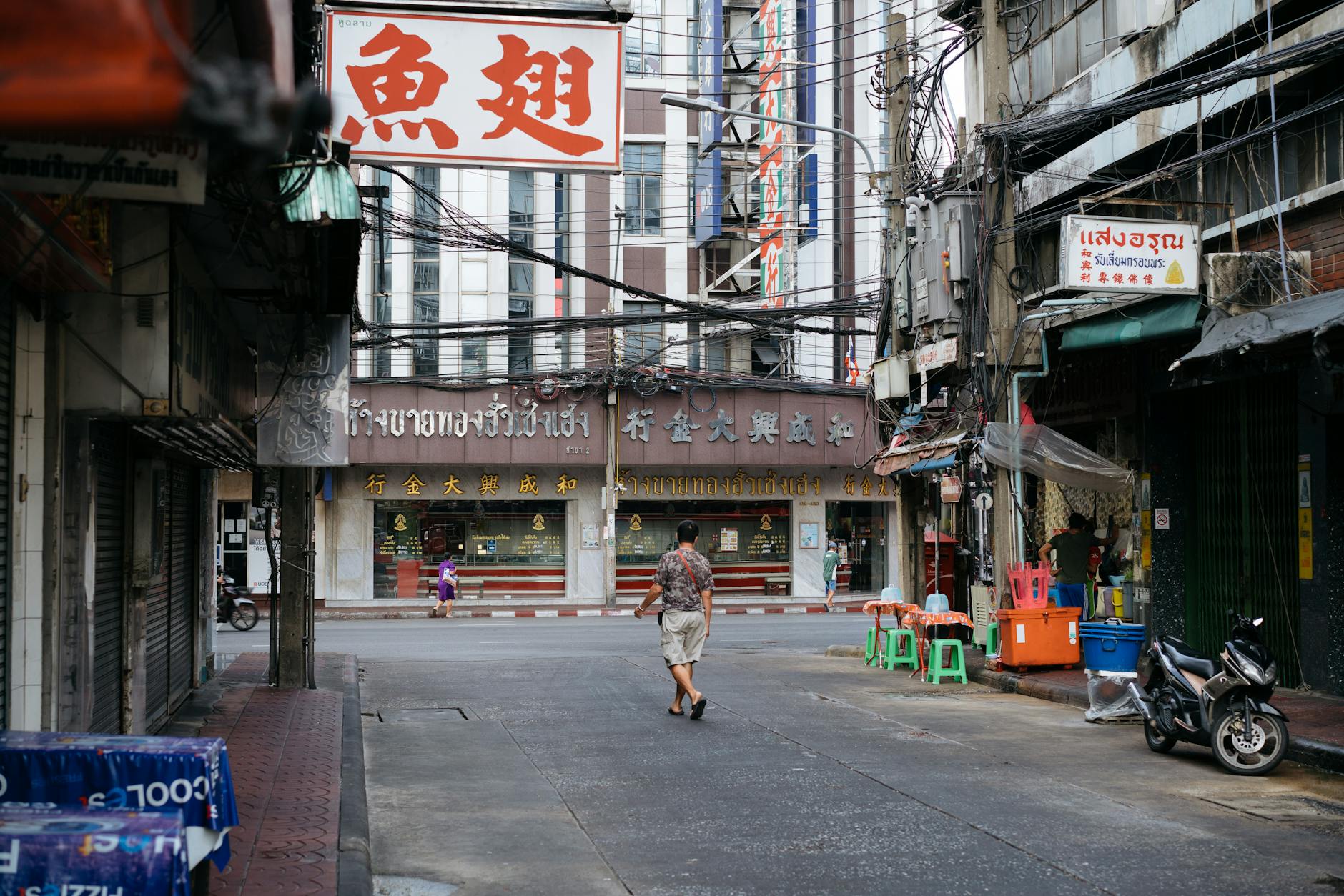
| Chinatown / Yaowarat / Talat Noi | Night food, gold shops, old temples, alleys, cafés, street photography, shophouse architecture, and some of Bangkok’s best wandering. Busy, hot, and crowded. |
| Siam / Pathum Wan | The modern shopping and transit heart: Siam Paragon, CentralWorld, MBK, BACC, Jim Thompson House nearby, BTS interchange, easy mall breaks, good for first-timers who want convenience. |
| Sukhumvit | Long east-west corridor with hotels, restaurants, bars, clubs, malls, spas, offices, expat life, Japanese and Korean food pockets, and BTS convenience. Choose the right station. |
| Silom / Sathorn | Business district, Lumpini Park, excellent hotels, river access at Saphan Taksin, nightlife pockets, embassies, restaurants, and strong transit. A balanced base. |
| Ari | Cafés, residential streets, local restaurants, leafy lanes, and a gentler version of modern Bangkok. Good for repeat visitors or longer stays. |
| Chatuchak / Lat Phrao | Weekend market, parks, northern rail/bus connections, malls, residential life. Useful if your plan revolves around Chatuchak or onward transport, less ideal for first-timers who want evenings central. |
| Khao San / Banglamphu | Backpacker history, budget lodging, bars, massage shops, street food, easy Old City access, and river/Banglamphu atmosphere. Fun for some, irritating for others. |
Bangkok’s Rhythm
Bangkok is not a city for all-day outdoor sightseeing. The heat dictates the day.
A smart day often looks like this:
- Early morning: Temples, markets, parks, river rides, photography.
- Late morning: One major sight, museum, cooking class, or neighborhood walk.
- Midday: Air-conditioning, mall food court, hotel pool, massage, nap, café, museum, or long lunch.
- Late afternoon: River, park, gallery, shopping, spa, or a second neighborhood.
- Evening: Food crawl, rooftop, night market, muay Thai, Chinatown, cocktails, or street-side dinner.
- Late night: Bars, clubs, supper, or simply getting back to your hotel without underestimating distance.
Local Logic
Bangkok works by micro-decisions. Take the train two stops. Switch to a motorcycle taxi for the last kilometer. Eat in the mall because the heat is brutal. Use the river instead of the road. Cancel one sight because the traffic is ugly. Drink more water. Pay the extra money for a better-located hotel. Leave early. Stay longer at dinner. The city rewards travelers who are decisive but flexible.
Bangkok’s Central Contrasts
Bangkok is compelling because contradictions are not hidden:
- Sacred vs commercial: Buddhist temples sit beside gold shops, tourist stalls, office towers, and delivery riders.
- River vs rail: The historic city grew around water; the modern visitor often navigates by elevated train.
- Luxury vs street life: Five-star hotels and 60-baht noodle bowls can exist on the same day without feeling contradictory.
- Heat vs hospitality: The climate can be punishing, but the service culture is often generous.
- Order vs improvisation: Malls, trains, and hotels can feel polished; sidewalks, traffic, and markets can feel chaotic.
- Global vs local: Bangkok is international without becoming generic. Even the malls are Bangkok malls, not copied-and-pasted shopping boxes.
Best Time to Visit Bangkok
The Short Answer
| Traveler type | Best time |
|---|---|
| Best overall first visit | November through February |
| Best weather | December and January, though these can also be peak-price and air-quality-sensitive months |
| Best value | Rainy-season months, especially if you are comfortable with humidity and flexible afternoons |
| Best for food | Year-round; Bangkok is an eating city in every season |
| Best for shopping and spas | Year-round; malls, food courts, hotels, and spas make Bangkok weather-resilient |
| Best for Songkran | Mid-April, if you actively want Thai New Year water-festival energy and closures/disruptions |
| Hardest for heat | March, April, and May |
| Rainiest planning period | Roughly May to October, with heavy showers and occasional flooding possible |
Thailand’s official tourism weather guidance describes the country as having a wet season, a winter with dry cooling breezes, and a summer heat period, with average temperatures ranging broadly from 18°C to 38°C.[2] Bangkok is warm to hot year-round, so “cool season” means “less punishing,” not cold.
November to February: Best Overall
This is the easiest first-timer window. The humidity is lower, the sky is often clearer, and walking between sights is less draining. Hotels are busier and more expensive, popular restaurants book faster, and major sights attract more visitors.
Best for: first visits, families, temple days, outdoor markets, river rides, rooftop bars, parks, and travelers who struggle with heat.
Watch for: peak hotel prices, holiday crowds, and air-quality episodes.
March to May: Hot Season
Bangkok in hot season can be physically hard. It is still visitable, but you need a different plan: early starts, shorter outdoor blocks, more AC, more water, lighter clothing, and fewer heroic walking routes.
April brings Songkran, the Thai New Year water festival. It can be joyful, chaotic, wet, and disruptive. Some shops and restaurants close; traffic and party zones shift; hotel demand changes; and anyone walking through celebration areas should expect to get soaked.
Best for: travelers who tolerate heat, Songkran visitors, pool-and-spa trips, shoppers, repeat visitors, and people who will not overpack sightseeing days.
Watch for: heat exhaustion, temple dress discomfort, dehydration, and unrealistic walking plans.
May to October: Rainy Season
Rainy season is not constant rain. Many days have a bright morning, heavy afternoon or evening showers, and then steamy calm. Bangkok can still be excellent if you accept the pattern. The upside is lower prices, greener parks, dramatic skies, and plenty of indoor options.
Best for: value travelers, food trips, shopping trips, spa trips, repeat visitors, flexible itineraries, and photographers who like moody light.
Watch for: flooding, traffic delays, wet shoes, canceled outdoor plans, and longer airport transfers during storms.
Month-by-Month Snapshot
| Month | What to expect | Verdict |
|---|---|---|
| January | Comfortable by Bangkok standards, busy, often excellent for first-timers; monitor PM2.5. | Excellent, but book ahead. |
| February | Still good weather, slightly hotter; good for food, temples, and parks. | Excellent. |
| March | Heat builds; outdoor days get harder. | Good if you plan around heat. |
| April | Very hot; Songkran dominates mid-month. | Great for Songkran, hard for classic sightseeing. |
| May | Hot and increasingly wet. | Manageable with flexible plans. |
| June | Humid, showers, lower prices. | Good value. |
| July | Rainy-season rhythm; malls and food trips work well. | Good if flexible. |
| August | Similar to July; outdoor trips need backup plans. | Good for repeat visitors. |
| September | Often wetter; flooding/traffic delays more likely. | Not ideal, but still workable. |
| October | Wet season easing; still humid. | Improving by late month. |
| November | Transition to better weather; strong first-visit month. | Excellent. |
| December | Peak weather, peak demand, festive season. | Excellent, expensive. |
Rain Plan
Every Bangkok itinerary should have rain substitutes:
- Swap a market walk for Jim Thompson House, BACC, Museum Siam, Bangkok National Museum, or a mall food-court crawl.
- Swap a rooftop bar for a hotel bar with covered seating.
- Swap a canal trip for a massage or spa.
- Move Chinatown grazing later if storms hit early evening.
- Keep one flexible afternoon rather than prepaying every hour.
How Many Days You Need
The Short Answer
| Trip length | What it allows |
|---|---|
| 1 day | A strong taste: Grand Palace/Wat Pho/Wat Arun plus river and Chinatown, or a modern Bangkok shopping/food day. Not enough to understand the city. |
| 2 days | One Old City/river day and one modern Bangkok/market day. Fast but satisfying. |
| 3 days | The minimum good first visit: temples, river, Chinatown, shopping, parks, markets, and one strong food/nightlife evening. |
| 4 days | Ideal first-timer length. Adds a canal trip, Chatuchak if weekend, Thonburi, spa time, or a relaxed food day. |
| 5–6 days | Excellent if you want Ayutthaya, floating markets, deeper food neighborhoods, galleries, muay Thai, and downtime. |
| 1 week | Best for slow travelers, families, remote workers, food obsessives, and people using Bangkok as a base for regional day trips. |
Minimum Worthwhile Stay
Two nights is the minimum for travelers passing through. One night near the airport can work for transit, but it is not really a Bangkok visit. If this is your first Thailand trip, give Bangkok at least three full days before deciding whether you “like” it. Many visitors dislike their first jet-lagged, overheated, traffic-heavy day and then fall for the city once they slow down.
When to Add Extra Days
Add time if you want:
- Ayutthaya without sacrificing Bangkok.
- Chatuchak Weekend Market.
- More than one serious food neighborhood.
- A spa or hotel-pool day.
- Muay Thai, cooking class, or a guided historical walk.
- A canal or Thonburi day.
- Kid-friendly pacing.
- A buffer for rain, heat, or jet lag.
When Not to Overstay
If your Thailand trip includes beaches, Chiang Mai, islands, national parks, or multiple regions, do not spend your entire first trip in Bangkok unless you love huge cities. Bangkok is a brilliant gateway and a deep destination, but Thailand’s range is part of the point.
Where to Stay in Bangkok
The Short Answer
For a first visit, stay in Riverside/Charoen Krung if you want atmosphere, river access, and a sense of place; Siam/Pathum Wan if you want convenience, shopping, and transit; Sukhumvit if you want restaurants, nightlife, spas, and BTS access; Silom/Sathorn if you want a balanced central base; and Old City/Banglamphu if temples, backpacker energy, and historic Bangkok matter more than rail convenience.
Neighborhood Decision Tree
| You want... | Stay in... |
|---|---|
| Classic first-timer atmosphere | Riverside, Charoen Krung, or Bang Rak |
| Best shopping convenience | Siam, Pathum Wan, Chit Lom, Phloen Chit |
| Restaurants and nightlife with easy BTS | Sukhumvit, especially Asok, Phrom Phong, Thonglor, or Ekkamai |
| Balanced access to parks, business, river, and nightlife | Silom or Sathorn |
| Temples and Old City walks | Rattanakosin, Banglamphu, or Khao San/Ram Buttri area |
| Luxury river hotels | Riverside between Saphan Taksin and the Old City, or Thonburi riverside |
| Backpacker scene | Khao San, Rambuttri, Banglamphu |
| Cafés and local residential feel | Ari |
| Weekend market focus | Ari, Saphan Khwai, Chatuchak, or Lat Phrao, but only if that location suits the rest of the trip |
| Family convenience | Riverside luxury hotels, Siam, Phrom Phong, Silom/Sathorn, or serviced apartments near BTS/MRT |
| Mobility concerns | Choose a hotel very close to BTS/MRT or a riverside hotel with reliable boat/shuttle service; avoid assuming sidewalks will be easy. |
Riverside / Charoen Krung / Bang Rak
Best for: first-timers who want Bangkok to feel like Bangkok; river views; food; historic hotels; romantic trips; families who want a comfortable base; travelers who will use boats.
Vibe: old trading streets, shophouses, luxury hotels, galleries, temple glimpses, river piers, street food, design, and evening light on the Chao Phraya.
Why stay here: It gives the city texture. You can ride boats, reach the Old City by river, eat well, explore Talat Noi and Chinatown, and still connect to BTS at Saphan Taksin depending on your exact location.
Why not: Some hotels are less convenient for BTS/MRT than they look. Traffic can be heavy. River shuttles are charming but not as flexible as a train station outside your door.
Perfect day: Morning boat to the Grand Palace/Wat Pho, lunch near Tha Tien, cross to Wat Arun, afternoon rest, sunset river drink, dinner in Bang Rak or Chinatown.
Siam / Pathum Wan / Chit Lom / Phloen Chit
Best for: first-timers who want convenience, shopping, families, rainy-season trips, short stays, and travelers who value easy BTS transfers.
Vibe: malls, skywalks, food courts, hotels, youth culture, fashion, cinemas, art, shrines, department stores, and constant movement.
Why stay here: It is practical. You can reach many modern-city districts by BTS, hide from heat in malls, eat easily, and use Siam as a transit hub.
Why not: It can feel like you came to Bangkok and stayed inside a shopping complex. Old City sights require taxi/boat/MRT combinations and patience.
Perfect day: Jim Thompson House, BACC, mall lunch, Erawan Shrine, Lumphini/Benjakitti late afternoon, Sukhumvit dinner.
Sukhumvit
Best for: restaurants, bars, spas, shopping, nightlife, business travel, return visitors, and first-timers who want BTS convenience.
Vibe: long, international, hotel-heavy, mall-heavy, restaurant-rich, nightlife-adjacent, and different from station to station.
Why stay here: You get BTS access, endless food, good hotels, massage shops, rooftop bars, Japanese restaurants, Korean pockets, cocktail bars, and late-night options.
Why not: It can feel disconnected from historic Bangkok. Traffic on Sukhumvit Road is notorious. Some sois are nightlife-heavy; others are quiet and residential. Location matters.
Station logic:
- Asok/Nana: most central for nightlife and MRT/BTS interchange, but noisy and chaotic in places.
- Phrom Phong: malls, restaurants, family-friendly hotels, Benchasiri Park, excellent convenience.
- Thonglor/Ekkamai: dining, bars, Japanese food, nightlife, more local/expat than pure tourist.
- On Nut: better value, farther out, good for longer stays if you are near BTS.
Silom / Sathorn
Best for: balanced first visits, business travelers, park access, LGBTQ+ nightlife, river access, strong hotels, and people who want centrality without living inside Sukhumvit.
Vibe: offices, embassies, hotels, restaurants, old nightlife, Lumpini Park, Sathorn towers, Silom Road, and strong transport connections.
Why stay here: You can reach the river via Saphan Taksin, use BTS/MRT, visit Lumpini, get to Sukhumvit/Siam, and still feel connected to older Bangkok.
Why not: Some streets are businesslike rather than atmospheric. Nightlife areas can be gritty. Hotels labeled “Sathorn” may be farther from rail than expected.
Old City / Rattanakosin / Banglamphu / Khao San
Best for: temples, backpackers, budget travelers, history, walkers who can handle heat, and visitors who want to wake near the Grand Palace area.
Vibe: historic, lower-rise, temple-rich, guesthouse-heavy in Banglamphu, chaotic around Khao San, quieter near some boutique hotels, atmospheric at night.
Why stay here: You can reach Grand Palace, Wat Pho, Wat Saket, museums, Banglamphu, and river piers more easily than from the modern city.
Why not: BTS access is poor. Taxis can get stuck. Nightlife around Khao San is not for everyone. Old buildings may have weaker soundproofing and fewer elevators.
The move: Stay near Rambuttri/Banglamphu for atmosphere, not on the loudest strip of Khao San unless you actively want party noise.
Chinatown / Yaowarat / Talat Noi
Best for: food lovers, photographers, repeat visitors, design travelers, and people who want nighttime energy.
Vibe: gold shops, neon, street food, shophouses, temples, alleys, warehouses, old families, new cafés, and dense sensory life.
Why stay here: It is one of Bangkok’s most atmospheric districts, especially in the evening. MRT access at Wat Mangkon improved its practicality.
Why not: It is crowded, hot, noisy, and not restful. Food streets can be overwhelming. Lodging options are improving but still uneven.
Ari
Best for: repeat visitors, longer stays, café lovers, remote workers, and travelers who want a calmer local base near BTS.
Vibe: leafy lanes, cafés, office workers, condos, neighborhood restaurants, small bars, and a gentler pace.
Why stay here: It feels livable. You get BTS access and good food without constant tourist intensity.
Why not: It is not the best base for a short first visit focused on temples and river sights.
Common Booking Mistakes
- Booking a cheap hotel far from rail and spending the savings on taxis and frustration.
- Staying near Khao San because it is famous, then discovering you wanted BTS convenience.
- Staying in Sukhumvit without checking the specific station and walking distance.
- Choosing a riverside hotel with beautiful photos but weak transport.
- Ignoring construction, traffic, and soundproofing.
- Booking a hotel without a pool during hot season when you would actually use one.
- Assuming every “central Bangkok” hotel is central for your itinerary.
Neighborhood Guide
Rattanakosin and the Grand Palace Area
One-sentence identity: The ceremonial and historic core of Bangkok, where royal, Buddhist, and state architecture define the visitor’s classic first impression.
What to do: Grand Palace, Wat Phra Kaew, Wat Pho, Bangkok National Museum, Sanam Luang, City Pillar Shrine, river piers, nearby Tha Maharaj, and walks toward Wat Saket or Pak Khlong Talat.
Best time: Early morning. Heat and crowds build quickly.
How long: Half day for Grand Palace/Wat Pho; full day if adding Wat Arun, museums, lunch, and river time.
Pair it with: Wat Arun across the river, Pak Khlong Talat flower market, Banglamphu, or Chinatown dinner.
Skip if: You dislike crowds, strict dress rules, and heat. But for most first-timers, this area is essential.
One perfect walk: Start at Sanam Chai MRT or Tha Chang/Tha Tien pier, visit Grand Palace/Wat Phra Kaew, walk to Wat Pho, lunch nearby, cross to Wat Arun, then return by boat for sunset.
Thonburi
One-sentence identity: The west-bank Bangkok of temples, canals, old houses, local markets, and river views.
What to do: Wat Arun, canal tours, Artist’s House, local temples, Wang Lang Market, Khlong San, riverside cafés, and quieter neighborhoods beyond the obvious.
Best time: Morning for canals; late afternoon for Wat Arun light.
How long: Half day for Wat Arun plus a canal taste; full day for deeper wandering.
Pair it with: Riverside hotels, Old City, ICONSIAM, or Chinatown.
Local logic: Thonburi is best with a guide, boat, or very patient self-navigation. It is not as plug-and-play as Sukhumvit.
Charoen Krung and Bang Rak
One-sentence identity: Bangkok’s old commercial river corridor turned food, hotel, gallery, and design district.
What to do: Street food, old shophouses, Assumption Cathedral exterior, galleries, Warehouse 30, river piers, Talat Noi, historic hotels, and Bang Rak restaurants.
Best time: Late afternoon into evening.
How long: Half day to a full day.
Pair it with: Talat Noi, Chinatown, ICONSIAM, river boats, or a rooftop/river drink.
The move: Use this district as a soft landing into Bangkok. It has atmosphere without the Old City’s transit isolation.
Chinatown / Yaowarat / Talat Noi
One-sentence identity: Bangkok’s densest food-and-shophouse theater, where heritage, commerce, neon, and appetite collide.
What to do: Yaowarat Road food crawl, Wat Mangkon, Sampeng Lane, gold shops, Talat Noi alleys, street photography, cafés, shrines, seafood, noodles, and desserts.
Best time: Chinatown food is strongest at night; Talat Noi is better by day or late afternoon.
How long: 3–5 hours, or longer if you love food and photography.
Pair it with: Charoen Krung, river ride, Pak Khlong Talat, or Old City.
First-timer mistake: Arriving starving at peak dinner without a plan. Chinatown is better when you have three or four target dishes and permission to improvise.
Siam / Pathum Wan
One-sentence identity: The modern retail and transit heart of Bangkok.
What to do: Siam Paragon, Siam Center, MBK, CentralWorld, BACC, Jim Thompson House, Erawan Shrine, cinemas, food courts, beauty shopping, and skywalks.
Best time: Midday or rainy afternoons, when air-conditioning becomes a strategy.
How long: Half day, or full day if shopping seriously.
Pair it with: Jim Thompson House, Lumpini/Benjakitti, Sukhumvit, or Ratchaprasong shrine walk.
Local logic: Do not sneer at malls in Bangkok. Malls are public living rooms, food hubs, cooling stations, date spots, and practical infrastructure.
Sukhumvit
One-sentence identity: Bangkok’s long international spine of hotels, restaurants, bars, spas, malls, and BTS stations.
What to do: Eat, drink, shop, spa, café-hop, visit EmQuartier/Emporium/EmSphere, explore Thonglor/Ekkamai, use Asok for MRT/BTS, and go out late if that is your trip.
Best time: Evening and night; midday for malls and spas.
How long: One evening to several days depending on your base.
Pair it with: Siam, Benjakitti Park, Silom, or a massage/spa afternoon.
Warning: Sukhumvit is not one neighborhood. Staying “on Sukhumvit” can mean wildly different experiences.
Silom, Sathorn, and Lumpini
One-sentence identity: Business Bangkok with parks, hotels, restaurants, nightlife, and some of the city’s best transport logic.
What to do: Lumpini Park, Silom restaurants, Sri Maha Mariamman Temple, bars, LGBTQ+ nightlife, Sathorn hotels, Saphan Taksin river access, and nearby Charoen Krung.
Best time: Morning for Lumpini; evening for food and nightlife.
How long: Half day plus evening.
Pair it with: Charoen Krung, Riverside, Siam, or Sukhumvit.
Ari and Saphan Khwai
One-sentence identity: A residential-café-food pocket north of the core, ideal for slower travelers.
What to do: Cafés, casual restaurants, local bars, street food, leafy lanes, and connections toward Chatuchak.
Best time: Brunch through evening.
How long: Half day for repeat visitors.
Pair it with: Chatuchak Weekend Market, Or Tor Kor Market, or a lower-key evening.
Chatuchak
One-sentence identity: Bangkok’s huge market district, best known for the weekend market but also useful for parks and northern transit.
What to do: Chatuchak Weekend Market, Or Tor Kor Market, Chatuchak Park, Queen Sirikit Park, and JJ Mall.
Best time: Weekend mornings. Go early, hydrate, and leave before the heat crushes you.
How long: 3–5 hours for the market; longer if you shop seriously.
Pair it with: Ari, Or Tor Kor lunch, or a massage afterward.
Banglamphu and Khao San
One-sentence identity: Backpacker Bangkok, old neighborhood Bangkok, and party Bangkok overlapping uneasily.
What to do: Khao San Road, Rambuttri, Phra Athit, riverside walks, Santichaiprakarn Park, street food, bars, massage, and access to Old City sights.
Best time: Evening for atmosphere; morning for quieter streets.
How long: A few hours unless you are staying nearby.
Skip if: You dislike backpacker party zones, touts, cheap cocktails, and tourist-heavy streets.
Better alternative: Stay near quieter Banglamphu/Rambuttri/Phra Athit rather than directly on Khao San.
Best Things to Do
1. Visit the Grand Palace and Wat Phra Kaew
What it is: Bangkok’s most famous royal and religious complex, home to Wat Phra Kaew, the Temple of the Emerald Buddha.
Why it matters: This is the ceremonial heart of Bangkok’s visitor circuit and one of Thailand’s most important sacred/royal sites.
Who will love it: First-timers, architecture lovers, history travelers, photographers, and anyone who wants to understand why Bangkok’s royal-Buddhist visual language is so powerful.
Who can skip it: Travelers with severe crowd aversion or very limited temple interest. Even then, consider seeing the area from outside and prioritizing Wat Pho/Wat Arun.
Time needed: 2–3 hours, more with nearby sights.
Best time: At opening. Dress correctly before you arrive.
Need to know: The official site lists 500-baht admission for foreigners, inclusive of Wat Phra Kaew and the Queen Sirikit Museum of Textiles, and strict clothing rules.[6]
First-timer mistake: Believing anyone outside who says the palace is closed and offers an alternative tour. Check official hours and go to the official entrance.
2. See Wat Pho and the Reclining Buddha
What it is: One of Bangkok’s great temples, famous for the Reclining Buddha, traditional massage heritage, courtyards, stupas, and quieter corners.
Why it matters: Wat Pho is often more emotionally accessible than the Grand Palace: still monumental, but easier to wander.
Time needed: 1.5–2.5 hours.
Best time: Early morning or late afternoon.
Need to know: Wat Pho lists operating hours of 08:00–19:30 and a 300-baht admission fee, with free entry for children under 120 cm.[7]
Pair it with: Grand Palace, Wat Arun, Pak Khlong Talat, or lunch near Tha Tien.
3. Cross the River to Wat Arun
What it is: The Temple of Dawn, Bangkok’s iconic riverside temple on the Thonburi side.
Why it matters: Wat Arun is one of the city’s defining silhouettes. Its central prang, porcelain decoration, river setting, and sunset views make it essential.
Time needed: 60–90 minutes.
Best time: Early morning for fewer crowds; late afternoon for light. For the classic sunset view, photograph it from the opposite side of the river.
Need to know: Tourism Thailand lists Wat Arun as open daily 08:00–18:00 with a 200-baht entrance fee.[8]
The move: Visit Wat Pho first, then cross by ferry. Later, view Wat Arun from across the river as the sky changes.
4. Ride the Chao Phraya River
What it is: Bangkok’s historic water highway and one of the most enjoyable ways to move through the city.
Why it matters: The river gives you Bangkok’s geography in motion: temples, piers, hotels, warehouses, ferries, barges, bridges, and skyline.
Options:
- Ordinary Chao Phraya Express Boats for cheap local transport.
- Chao Phraya Tourist Boat for easier hop-on/hop-off sightseeing.
- Hotel shuttles if staying riverside.
- Private longtail/canal tours for Thonburi exploration.
Need to know: Chao Phraya Express Boat publishes routes and fares for multiple flag lines; the tourist boat site lists single-journey and all-day river pass options.[13][14]
Better alternative: If you do not want a dinner cruise, simply ride a boat near sunset and eat on land. It is cheaper and often more atmospheric.
5. Eat Your Way Through Chinatown
What it is: Bangkok’s neon-lit, food-heavy Chinese-Thai district centered around Yaowarat Road and surrounding alleys.
Why it matters: Chinatown is one of Bangkok’s great evening experiences, but it rewards strategy.
What to eat: Noodles, seafood, roasted duck, dim sum, Thai-Chinese desserts, grilled items, herbal drinks, doughnuts, rice dishes, and whatever catches your eye from a busy stall.
Best time: Evening, except Monday when some street-food vendors may be closed or reduced.
Time needed: 3 hours minimum.
First-timer mistake: Eating at the first crowded place without knowing what it serves. Better: choose a few target dishes, share portions, and keep moving.
6. Spend a Weekend Morning at Chatuchak
What it is: A massive weekend market selling clothing, homewares, antiques, plants, art, accessories, souvenirs, food, and things you did not know existed.
Why it matters: It is overwhelming, hot, and touristy in parts — but still a Bangkok institution.
Best time: Saturday or Sunday morning. Go early.
Time needed: 3–5 hours.
Pair it with: Or Tor Kor Market for cleaner, excellent food; Ari cafés afterward; or a hotel pool.
Skip if: You hate crowds, heat, and shopping. Bangkok has enough other markets.
7. Visit Jim Thompson House
What it is: A museum complex of traditional Thai-style teak houses associated with Jim Thompson, the American silk entrepreneur and collector.
Why it matters: It is beautiful, compact, central, rain-friendly, and a useful counterpoint to temples and malls.
Time needed: 1.5–2 hours.
Need to know: The official site lists opening hours of 10:00–17:00, adult admission of 250 baht, and guided access to the main house.[9]
Pair it with: BACC, Siam malls, MBK, or a Pathum Wan shopping day.
8. Use Bangkok’s Malls Properly
What it is: More than shopping: Bangkok malls are food, air-conditioning, cinema, beauty, design, supermarket, café, and social infrastructure.
Best malls for visitors: Siam Paragon, CentralWorld, MBK, Siam Center, ICONSIAM, EmQuartier, Emporium, EmSphere, Central Embassy, Terminal 21.
Why it matters: In Bangkok, a mall break can save a day. It is not a failure of authenticity; it is local logic.
The move: Use food courts and supermarket food halls. They are clean, varied, affordable, and excellent for travelers nervous about street food.
9. Walk Talat Noi and Charoen Krung
What it is: Old shophouse Bangkok, warehouse galleries, cafés, shrines, mechanics, murals, alleys, and river-adjacent texture.
Why it matters: It shows Bangkok’s creative reuse and old commercial life without requiring a huge attraction.
Best time: Late afternoon.
Pair it with: Chinatown dinner, River City, Warehouse 30, Bang Rak food, or a river boat.
10. Visit Pak Khlong Talat Flower Market
What it is: Bangkok’s famous flower market, busiest late night and early morning but still interesting at other times.
Why it matters: It is color, labor, ritual, commerce, and scent in one place.
Best time: Very early morning for peak market action; evening for a gentler visit.
Pair it with: Old City, Memorial Bridge, Chinatown, or Wat Pho.
11. Take a Thai Massage or Spa Break
What it is: Bangkok’s most reliable reset button.
Options: simple foot massage, traditional Thai massage, hotel spa, herbal compress, aromatherapy, luxury wellness treatment.
Why it matters: The city is physically tiring. Massage is not an indulgence; it is itinerary maintenance.
Tip: Book reputable spas ahead, especially weekends and evenings. Tell the therapist if you want softer pressure.
12. Watch Muay Thai
What it is: Thailand’s national combat sport and a powerful live atmosphere.
Where: Rajadamnern Stadium is the classic central option; Lumpinee Stadium is farther from the tourist core.
Best for: sports fans, culture travelers, evening plans, and people who want something beyond temples and food.
Tip: Buy official tickets and understand seating/transport before committing.
13. See Bangkok from Above
Options: rooftop bars, hotel terraces, Mahanakhon SkyWalk, river-view restaurants, elevated BTS rides, or bridges.
Worth it? Yes, but choose carefully. Some rooftops are overpriced and dress-coded; others deliver a genuinely memorable view.
The move: Time your rooftop for blue hour, not full darkness. Bangkok’s light is best as day turns to neon.
14. Explore Lumpini and Benjakitti Parks
What it is: Green space in the modern core.
Why it matters: Bangkok needs breathing room. These parks offer morning walks, monitor lizards, skyline views, jogging paths, and a softer city rhythm.
Best time: Morning or late afternoon.
Pair it with: Silom/Sathorn, Asok, Phrom Phong, or a mall/spa day.
15. Take a Canal or Thonburi Tour
What it is: A boat-based look at older waterway life west of the river.
Why it matters: Bangkok was shaped by canals, not just roads and trains.
Worth it? Yes with a good operator or guide. Random pier offers can vary in price and quality.
Tip: Clarify route, duration, price, and whether stops are included before boarding.
Bangkok Itineraries
One Perfect Day in Bangkok
Morning: Grand Palace and Wat Phra Kaew at opening. Dress properly, bring water, and ignore “closed today” approaches.
Late morning: Walk or take a short ride to Wat Pho. See the Reclining Buddha and temple courtyards.
Lunch: Eat near Tha Tien or along the river. Keep it light; the day is hot.
Afternoon: Cross to Wat Arun. Spend an hour, then use the river to return downstream.
Late afternoon: Rest at your hotel, get a massage, or stop at a mall/covered café if overheated.
Evening: Chinatown food crawl. Start before peak hunger, share dishes, and finish with dessert or a drink.
What to cut if tired: Grand Palace interior time or Chinatown range. Do not cut hydration or rest.
Two Days in Bangkok
Day 1: Old City, River, Chinatown
- Grand Palace / Wat Phra Kaew
- Wat Pho
- Wat Arun
- River ride
- Pak Khlong Talat or hotel rest
- Chinatown dinner
Day 2: Modern Bangkok and Neighborhood Texture
- Jim Thompson House
- BACC and Siam malls
- Lunch in a food court or Thai restaurant
- Benjakitti or Lumpini Park late afternoon
- Sukhumvit/Silom dinner and rooftop or massage
Alternative Day 2: Chatuchak Weekend Market + Or Tor Kor + Ari cafés if it is Saturday/Sunday.
Three Days in Bangkok
Day 1: Temples and River
Do the classic Grand Palace, Wat Pho, Wat Arun, river, and Chinatown sequence.
Day 2: Siam, Jim Thompson, Parks, Sukhumvit
Use BTS/MRT, mall breaks, and a modern-city evening.
Day 3: Markets and Old Commercial Bangkok
Morning at Chatuchak/Or Tor Kor if weekend, or Khlong Toei/flower market with a guide if not. Afternoon in Talat Noi/Charoen Krung. Evening river drink or Thai massage.
Four Days in Bangkok
Add one of these:
- Ayutthaya day trip: temples, ruins, history, and a break from Bangkok density.
- Thonburi canal day: longtail tour, local temples, Artist’s House, Wat Arun sunset.
- Food day: guided food tour, cooking class, Chinatown, Bang Rak, and mall food court comparison.
- Family day: aquarium/mall, park, pool, gentle dinner.
- Wellness day: spa, cafés, hotel pool, light shopping, early dinner.
Five Days in Bangkok
A strong five-day structure:
- Old City and river.
- Siam, Jim Thompson, parks, Sukhumvit.
- Chinatown, Talat Noi, Charoen Krung, Bang Rak.
- Ayutthaya or floating/canal market day.
- Chatuchak/Or Tor Kor if weekend, or Thonburi canals + spa if weekday.
One Week in Bangkok
A week lets Bangkok stop being a project. Add:
- Muay Thai night.
- A serious spa treatment.
- A cooking class.
- A residential neighborhood like Ari or Phrom Phong.
- More regional food: Isan, southern Thai, Thai-Chinese, boat noodles, royal Thai, seafood.
- A second day trip, such as Kanchanaburi or a less-rushed Ayutthaya overnight.
- Slow mornings and hotel downtime.
Itinerary by Traveler Type
| Traveler type | Best structure |
|---|---|
| First-timer | Old City + river, Siam/Sukhumvit, Chinatown/Talat Noi, market or day trip. |
| Food lover | Chinatown, Bang Rak, Ari, Or Tor Kor, street-food tour, mall food court, one destination restaurant. |
| Family | Riverside or Siam base, early temple visits, mall breaks, parks, aquarium/indoor options, pool time. |
| Couple | Riverside hotel, temples early, spa, sunset drinks, Chinatown grazing, fine-dining or river dinner. |
| Solo traveler | BTS/MRT base, food tours, cafés, museums, group cooking class, guided nightlife/food evenings. |
| Budget traveler | Banglamphu or rail-adjacent Sukhumvit/On Nut, street food, ordinary boats, buses/trains, markets. |
| Luxury traveler | Riverside or Sathorn hotel, private guide, spa, destination dining, tailored river/temple day. |
| Rainy-season traveler | Malls, museums, food courts, spas, flexible river windows, covered markets, cooking class. |
Food and Drink
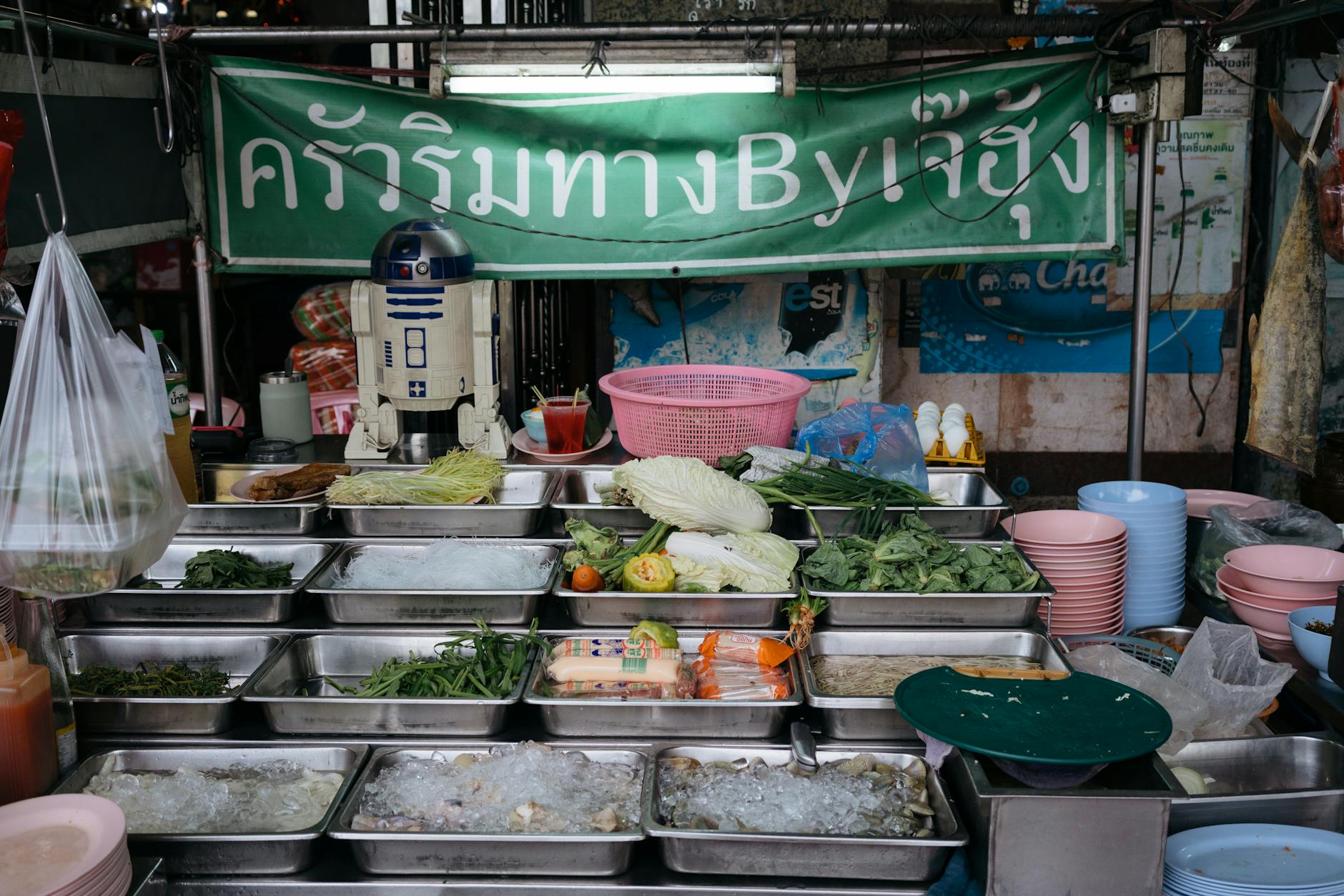
Bangkok is one of the world’s great eating cities because food is not segregated into special occasions. It is daily infrastructure. People eat on sidewalks, in markets, at office canteens, in mall food courts, in family restaurants, in hotel dining rooms, and in late-night districts with equal seriousness.
What Bangkok Food Is Really About
Bangkok food is not one cuisine. It is a national capital absorbing regional Thai cooking, Thai-Chinese traditions, royal and palace-influenced dishes, Muslim Thai food, Isan food, southern Thai spice, Japanese expat food, Indian communities, global restaurants, and modern chef-led experimentation.
A good eating trip should include:
- One street-food or shophouse meal.
- One mall food-court meal.
- One market breakfast or lunch.
- One regional Thai meal beyond pad thai.
- One Chinatown crawl.
- One nicer restaurant or hotel meal if your budget allows.
- One dessert stop.
- One slow coffee or tea break.
What to Eat
| Dish / category | What it is | Where to try it |
|---|---|---|
| Boat noodles | Small bowls of rich, aromatic noodle soup traditionally associated with canal/boat vendors. | Victory Monument area, malls, neighborhood noodle shops. |
| Pad kra pao | Stir-fried holy basil with meat/seafood/tofu, usually over rice with fried egg. | Casual restaurants, food courts, street stalls. |
| Khao man gai | Thai-style Hainanese chicken rice with broth and sauce. | Pratunam, food courts, neighborhood shops. |
| Som tam | Green papaya salad, often Isan-style. | Isan restaurants, street stalls, markets. |
| Larb / nam tok | Spicy minced or sliced meat salads with herbs, lime, chili, toasted rice. | Isan restaurants. |
| Tom yum goong | Hot-sour shrimp soup. | Thai restaurants from casual to upscale. |
| Khao soi | Northern curry noodle soup; more associated with northern Thailand but common in Bangkok. | Northern Thai restaurants. |
| Kuay teow | Noodle soups in countless forms. | Everywhere. Follow crowds. |
| Pad thai | Stir-fried noodles; famous globally but not the whole story. | Old City, casual restaurants, some legendary shops. |
| Khao kha moo | Braised pork leg over rice. | Food courts, street stalls, markets. |
| Moo ping | Grilled pork skewers, often breakfast/snack food. | Morning stalls and markets. |
| Hoy tod / or suan | Crispy or soft oyster/seafood omelet. | Chinatown, Thai-Chinese restaurants. |
| Mango sticky rice | Coconut sticky rice with mango. | Dessert shops, markets, seasonal stalls. |
| Thai tea / Thai coffee | Sweet, strong, iced drinks. | Street stalls, cafés, food courts. |
Best Food Areas
| Area | Best for |
|---|---|
| Chinatown / Yaowarat | Thai-Chinese food, seafood, noodles, desserts, neon-night grazing. |
| Bang Rak / Charoen Krung | Old restaurants, Muslim/Thai/Chinese influences, roast duck, sweets, street food. |
| Sukhumvit | Japanese, Korean, Thai, cafés, bars, international restaurants, late dining. |
| Ari | Cafés, modern casual food, local restaurants, dessert, relaxed evenings. |
| Old City / Banglamphu | Classic Thai shops, pad thai, old-school desserts, casual eating. |
| Or Tor Kor Market | Cleaner market experience, fruit, prepared foods, snacks, gifts. |
| Khlong Toei Market | Intense fresh market, best with a guide unless you are experienced. |
| Siam / malls | Excellent food courts, easy variety, rain/heat fallback. |
| Talat Noi / Charoen Krung | Cafés, galleries, old shophouse snacks, Chinatown-adjacent dining. |
How to Eat Well Without Getting Overwhelmed
- Eat small portions and share. Bangkok rewards grazing.
- Follow busy stalls, but distinguish a queue for one famous dish from a general crowd.
- Do not judge a stall only by appearance; judge turnover, heat, cleanliness, and crowd.
- Carry cash and small bills.
- Learn a few phrases or use translation apps.
- If spice worries you, ask for less chili — but expect some dishes to remain spicy.
- Use food courts when you need comfort, hygiene, air-conditioning, and variety.
- Book destination restaurants; do not assume walk-in access.
- Do not make every meal a mission. Some of Bangkok’s best food moments are unplanned.
Restaurant Categories That Matter
| Situation | Best approach |
|---|---|
| First dinner | Stay near your hotel and eat well without crossing the city after a long flight. |
| Best casual meal | Noodle shop, khao man gai, Isan restaurant, or mall food court. |
| Best splurge | Thai fine dining, hotel Thai restaurant, omakase, river-view dinner, or chef-led tasting menu. |
| Best lunch | Market or food court; save the ambitious crawl for evening. |
| Best late-night food | Chinatown, Sukhumvit, Silom, and selected street-food streets. |
| Best solo dining | Food courts, noodle shops, casual Japanese/Thai restaurants, cafés, markets. |
| Best family dining | Malls, hotel restaurants, casual Thai restaurants with AC, riverside restaurants with reservations. |
Drinks and Nightlife
Bangkok nightlife ranges from gentle to chaotic:
- Rooftop bars with dress codes and views.
- Cocktail bars in Sukhumvit, Silom, Chinatown, and Charoen Krung.
- Beer bars and live music.
- LGBTQ+ nightlife around Silom and beyond.
- Clubs and late-night venues.
- Night markets and riverside evening zones.
- Hotel bars for lower-effort evenings.
Warning: Bangkok has nightlife areas built around adult entertainment, touts, and inflated bills. Do not follow random street approaches into upstairs venues. Confirm menus, prices, and cover charges before ordering.
Food Safety
Bangkok is generally manageable for careful eaters, but stomach issues happen.
- Eat at busy places with high turnover.
- Be cautious with raw shellfish or food sitting at lukewarm temperatures.
- Drink bottled or filtered water.
- Wash or sanitize hands before eating.
- Use hotel breakfast or mall food courts if your stomach needs a reset.
- Carry oral rehydration salts, especially in hot season.
Getting Around
Bangkok transportation is not one system. It is a toolkit. A smart visitor uses different tools for different jobs.
The Basic Rule
Use BTS/MRT for modern Bangkok, boats for river/Old City routes, taxis/app cars for awkward point-to-point trips outside rush hour, motorcycle taxis only for short local hops if you accept the risk, and walking only in carefully chosen areas.
Arriving from Suvarnabhumi Airport (BKK)
| Option | Best for | Notes |
|---|---|---|
| Airport Rail Link | Solo travelers, light luggage, rail-connected hotels | Fast and cheap to Phaya Thai/Makkasan; then connect to BTS/MRT/taxi. Full-route fares are commonly listed at 45 baht.[17] |
| Official taxi | Families, luggage, late arrivals, riverside/Old City hotels | Use official taxi system; 50-baht airport surcharge and tolls are normal.[15] |
| App car / hotel transfer | Comfort, late-night simplicity, premium hotels | Costs more but removes arrival friction. |
| Bus/van | Budget travelers with patience | Useful for some routes, less intuitive for first-timers. |
Arriving from Don Mueang Airport (DMK)
| Option | Best for | Notes |
|---|---|---|
| Taxi/app car | Most first-timers | Meter plus airport surcharge/tolls is standard for official taxis.[16] |
| SRT Red Line | Rail-confident travelers going near Bang Sue/Krung Thep Aphiwat or connecting onward | Good if your route aligns. |
| Airport buses | Budget travelers heading toward specific areas | Can be useful, but check current routes and traffic. |
BTS Skytrain
Best for: Siam, Sukhumvit, Silom, Sathorn, Chatuchak, Ari, Saphan Taksin, malls, hotels, and avoiding road traffic.
Payment: Single tickets, Rabbit Card, and a BTS One-Day Pass. BTS officially lists the One-Day Pass at 150 baht, valid for unlimited rides on the date of issue/registration, with conditions.[10]
Important: BTS and MRT are separate for most tourist purposes. Do not assume one card works everywhere.
MRT
Best for: Chinatown/Wat Mangkon, Sanam Chai for Old City access, Sukhumvit/Asok interchange, Silom/Lumpini, Chatuchak, Bang Sue/Krung Thep Aphiwat, and newer lines depending on route.
Payment: Tokens/cards/contactless options vary by line and policy. Check official station guidance. MRTA publishes fare information and line details.[12]
The move: MRT Sanam Chai is a major improvement for Old City access. It does not eliminate walking/heat, but it changes the logistics.
Boats
Best for: Riverside, Old City, Chinatown, Wat Arun, ICONSIAM, Banglamphu, and scenic movement.
Types:
- Chao Phraya Express Boat flag lines.
- Chao Phraya Tourist Boat.
- Cross-river ferries.
- Hotel boats.
- Canal boats.
- Private longtail tours.
Tip: Keep boat plans flexible. Piers can be confusing, boat flags matter, and schedules change.
Taxis and App Cars
Taxis are useful, but traffic can make them miserable. Use them strategically:
- Good for late night, rain, door-to-door luggage, and awkward routes.
- Bad for peak-hour cross-city trips.
- Ask for the meter in regular taxis; if refused, choose another taxi or use an app.
- Carry your destination in Thai or with a map pin.
- Tolls are usually paid by the passenger.
Tuk-Tuks
Tuk-tuks are fun once, not a transit strategy. Agree on price before riding. Avoid “cheap tour” offers, especially around temples.
Motorcycle Taxis
Fast for short hops, risky by nature. Use only if you are comfortable with traffic risk. Wear the helmet if offered. Not recommended for children, nervous riders, or luggage.
Walking
Bangkok is walkable in pockets, not across the city.
Good walking areas:
- Old City clusters, early morning.
- Talat Noi and Charoen Krung.
- Chinatown side streets.
- Around Siam skywalks.
- Ari lanes.
- Parks.
- Short walks from rail stations.
Hard walking areas:
- Long Sukhumvit stretches in heat.
- Roads with broken sidewalks.
- Canal-adjacent areas without shade.
- Anywhere during heavy rain.
- Large intersections without convenient crossings.
Driving and Car Rental
Do not rent a car for Bangkok. Traffic, parking, road rules, motorbikes, and navigation make it a bad visitor choice. Rent a car only for specific regional travel after leaving the city, and even then consider a driver.
Budget and Costs
Bangkok can be cheap, expensive, or both in the same day. You can eat well for very little, then spend heavily on a rooftop, spa, or luxury hotel.
Daily Budget Ranges
| Travel style | Daily spend, excluding long-haul flights | What it looks like |
|---|---|---|
| Shoestring | 1,200–2,000 baht | Hostel/guesthouse, street food, buses/boats/trains, few paid attractions. |
| Budget comfort | 2,000–3,500 baht | Simple hotel, casual restaurants, BTS/MRT, occasional taxi, temples/markets. |
| Mid-range | 4,000–7,000 baht | Good hotel, restaurants, taxis/apps when useful, paid sights, massage, rooftop or tour. |
| Comfortable | 7,000–13,000 baht | Strong hotel, destination meals, spa, private airport transfer, guided day trip. |
| Luxury | 15,000+ baht | Five-star river/Sathorn/Sukhumvit hotel, private guide, fine dining, luxury spa, premium bars. |
Common Costs
| Item | Rough range |
|---|---|
| Street-food dish | 50–120 baht |
| Mall food-court meal | 80–250 baht |
| Casual sit-down Thai meal | 150–500 baht per person |
| Nicer restaurant dinner | 800–2,500+ baht per person |
| Coffee | 60–160 baht |
| Basic foot massage | 250–500 baht per hour depending on area/quality |
| Hotel spa treatment | 1,500–6,000+ baht |
| BTS/MRT ride | Usually tens of baht; fares depend on route/system |
| Taxi ride within central Bangkok | Often 100–300+ baht, more with traffic/tolls/distance |
| Grand Palace foreign ticket | 500 baht according to official guidance[6] |
| Wat Pho foreign ticket | 300 baht according to official guidance[7] |
| Wat Arun foreign ticket | 200 baht according to TAT listing[8] |
| Jim Thompson House adult ticket | 250 baht according to official visitor information[9] |
Best Value Moves
- Stay near a train station or useful pier.
- Eat in mall food courts when tired; the value is excellent.
- Use ordinary boats instead of taxis for river/Old City routes when feasible.
- Choose one splurge meal and keep other meals casual.
- Book a hotel with a pool in hot season.
- Use massage as a reset instead of overpaying for mediocre tourist activities.
- Avoid long cross-town taxi rides during rush hour.
- Carry cash to avoid being trapped into pricier card-only/tourist options.
Worth the Splurge
- A well-located hotel.
- A river-view room if Bangkok is a romantic or special-occasion trip.
- A private guide for the Old City/Thonburi canals if you care about context.
- A serious Thai restaurant or chef-led meal.
- A reputable spa.
- A good seat at muay Thai.
- A hotel transfer after a brutal long-haul flight.
Usually Not Worth It
- Random tuk-tuk “city tours.”
- Overpriced floating-market packages that spend most of the day in traffic.
- Rooftops where the view is the only good thing.
- Staying far away to save a small amount on lodging.
- Tourist-trap restaurants beside major sights.
- Cheap canal tours with unclear routes and surprise stops.
Safety, Health, and Scams
Bangkok is generally manageable for visitors, but it is not frictionless. The main risks are scams, traffic, heat, petty theft, nightlife problems, and health issues from exhaustion, dehydration, or food/stomach trouble.
General Safety
- Use normal big-city caution with phones, wallets, and bags.
- Keep valuables secure in markets, crowded trains, nightlife areas, and tourist sites.
- Be careful crossing streets; vehicles may not behave as you expect.
- Avoid confrontations. Losing your temper rarely helps in Thailand.
- Respect temples, monks, images of the Buddha, and the monarchy.
- Do not get involved with drugs. Penalties and consequences can be severe.
- Use official taxis, reputable apps, or hotel-arranged transport when tired or late.
Common Scams
| Scam | What it looks like | How to avoid it |
|---|---|---|
| “Temple is closed” | A friendly stranger near a major sight says it is closed and offers a tuk-tuk alternative. | Check official hours and go to the entrance. |
| Tuk-tuk shopping tour | Very cheap ride that detours to gem, tailor, or souvenir shops. | Agree to point-to-point rides only. |
| Taxi meter refusal | Driver quotes inflated fixed fare. | Ask for meter, use another taxi/app, or negotiate knowingly. |
| Gem/jewelry deals | “Special government sale” or investment pitch. | Do not buy gems as a tourist investment. |
| Nightlife bill padding | Upstairs bars/adult venues with unclear prices and aggressive bills. | Avoid touts; confirm prices before ordering; leave if pressured. |
| Jet ski/motorbike damage | Rental operator claims damage after use. | Avoid risky rentals or document thoroughly; use reputable providers. |
| Fake TDAC/help sites | Unofficial sites charging for arrival card help. | Use official Immigration Bureau TDAC site only.[3] |
Heat and Hydration
Bangkok heat is not cosmetic; it shapes the trip.
- Carry water.
- Use electrolytes if sweating heavily.
- Take AC breaks.
- Wear breathable clothing that still meets temple dress rules.
- Avoid long midday walks.
- Build hotel/pool/nap time into hot-season days.
- Watch children and older travelers carefully.
Air Quality
Check PM2.5/AQI in dry season and during haze alerts. If air quality is poor:
- Move outdoor walks to a better day.
- Use malls, museums, spas, and indoor dining.
- Consider a good mask if sensitive.
- Avoid strenuous outdoor exercise.
- Book hotels with good filtration/AC if respiratory issues matter.
Food and Stomach Health
- Eat where food turns over quickly.
- Be careful with raw/undercooked seafood.
- Do not overdo chili, alcohol, and heat on the same day.
- Carry basic stomach medicine and oral rehydration salts.
- Use reputable clinics/hospitals if symptoms are serious.
Emergency Help
Save these numbers:
- Tourist Police: 1155.
- Police/general emergency: 191.
- Ambulance/medical emergency: 1669.
- Fire: 199.
TAT lists Tourist Police 1155 and emergency numbers including ambulance 1669 and fire 199; UK travel advice similarly lists 191, 1669, 199, and Tourist Police 1155.[18][19]
Accessibility and Mobility
Bangkok is improving, but it is still a difficult city for travelers with mobility needs.
What Helps
- Many modern malls are accessible.
- Major hotels can be highly accessible if you book carefully.
- BTS/MRT stations often have elevators, though access routes can be inconvenient.
- Large parks like Benjakitti and Lumpini can be easier than sidewalks.
- Private guides/drivers can reduce friction.
- High-end restaurants and hotels usually handle access better than older shophouses.
What Makes Bangkok Hard
- Broken or blocked sidewalks.
- High curbs.
- Motorcycles using sidewalk space.
- Heat and humidity.
- Boat piers with steps or gaps.
- Old temples with uneven surfaces.
- Markets with crowds and narrow aisles.
- Limited accessible restrooms outside malls/hotels.
- Elevators that are not always obvious or conveniently placed.
Best Areas for Easier Mobility
- Siam/Pathum Wan, if staying close to BTS/malls.
- Phrom Phong/Asok, if staying very near station/mall access.
- Riverside luxury hotels, if using hotel boats/cars and not relying on sidewalks.
- Silom/Sathorn hotels close to BTS/MRT.
Areas to Treat Carefully
- Khao San and Banglamphu side streets.
- Chinatown at peak night hours.
- Old City temple clusters in midday heat.
- Chatuchak Weekend Market.
- Canal/longtail boat routes.
Accessibility Move
For a accessible Bangkok guide, build separate step-free itineraries and verify each station elevator, pier, temple entrance, restroom, and hotel entrance close to publication. Bangkok accessibility can be hyper-local; a hotel being “near transit” is not enough.
Families, Solo Travelers, LGBTQ+ Travelers, and Special Considerations
Families with Kids
Bangkok can be excellent with kids if you pace it honestly.
Best family bases: Riverside hotels with pools, Siam/Pathum Wan, Phrom Phong, Silom/Sathorn, and serviced apartments near BTS/MRT.
Best family activities:
- Early temple visit, then pool.
- Aquarium or mall day.
- Benjakitti or Lumpini Park.
- Boat ride on the river.
- Kid-friendly cooking class.
- Chatuchak in short doses.
- Dessert and fruit tastings.
- Hotel breakfast plus gentle sightseeing.
What to avoid:
- Long midday temple days.
- Too many markets in one day.
- Khao San party noise with young kids.
- Motorcycle taxis.
- Overambitious day trips with toddlers.
Solo Travelers
Bangkok is strong for solo travelers because food, transit, cafés, massage, tours, and hotels are easy to use alone.
Good solo bases: Sukhumvit near BTS, Silom/Sathorn, Ari, Siam, Riverside if budget allows.
Best solo moves:
- Join a food tour early in the trip.
- Use mall food courts when tired.
- Book cooking class or muay Thai night.
- Avoid isolated nightlife decisions while drunk.
- Use app cars late at night.
- Keep your hotel address saved in Thai.
LGBTQ+ Travelers
Bangkok is one of Asia’s more visible and welcoming cities for LGBTQ+ travelers, especially in central neighborhoods, nightlife, hospitality, and creative scenes. Thailand’s marriage equality law took effect in January 2025, a major regional milestone.[21]
That said, visibility and legal progress do not remove every practical concern. Use normal nightlife judgment, respect local contexts, and remember that rural or conservative settings outside Bangkok may feel different.
Women Travelers
Many women travel comfortably in Bangkok, including solo. Sensible precautions still matter:
- Use trusted transport late at night.
- Avoid isolated streets after drinking.
- Be cautious in nightlife zones with touts.
- Dress for temples and comfort, not unwanted attention.
- Keep a power bank and hotel address handy.
- Trust your instincts and leave situations early.
Older Travelers
Bangkok can be hard on knees, lungs, and energy.
- Stay in a better-located hotel.
- Use taxis/apps outside rush hour.
- Visit temples early.
- Build in AC breaks.
- Choose guided tours for complex areas.
- Avoid long market days unless mobility is strong.
- Check air quality in dry season.
Remote Workers and Long-Stay Visitors
Bangkok has excellent cafés, co-working, malls, delivery, gyms, and apartments. The challenge is choosing the right neighborhood and visa category. Do not confuse a good tourist base with a good long-stay base. Ari, Phrom Phong, Ekkamai, On Nut, Sathorn, and parts of Silom can work depending on budget and lifestyle.
Key warning: Verify visa/entry rules directly. Thailand’s visa framework has been changing, and long-stay assumptions age badly.
Shopping and Souvenirs
Bangkok is a superb shopping city because it offers nearly every format: luxury malls, chaotic markets, design shops, vintage, beauty, electronics, tailoring, homewares, food gifts, and temple-adjacent souvenirs.
Best Shopping Areas
| Area | Best for |
|---|---|
| Siam / CentralWorld / Chit Lom | Malls, fashion, food halls, beauty, international brands, Thai designers. |
| ICONSIAM | Riverside shopping, luxury, Thai-themed food zones, river views. |
| Chatuchak Weekend Market | Clothing, gifts, homewares, art, ceramics, accessories, vintage, plants. |
| MBK | Budget goods, phone accessories, souvenirs, practical shopping. |
| Sukhumvit malls | EmQuartier, Emporium, EmSphere, Terminal 21, Japanese/expat-oriented shopping and dining. |
| Chinatown / Sampeng | Wholesale accessories, fabrics, snacks, gold, chaotic small goods. |
| Talat Noi / Charoen Krung | Design shops, galleries, cafés, local creative retail. |
| Or Tor Kor Market | Fruit, snacks, food gifts, cleaner market shopping. |
Best Souvenirs
- Thai silk or silk accessories from reputable sellers.
- Ceramics and homewares.
- Thai tea, coffee, spices, curry pastes, dried fruit, snacks.
- Spa products and herbal balms.
- Contemporary Thai design goods.
- Handmade paper, stationery, textiles.
- Small art prints or photography books.
- Quality food gifts from supermarkets/food halls.
What Not to Buy
- Buddha images or religious objects without understanding export/legal/cultural restrictions.
- Wildlife products.
- Counterfeit luxury goods.
- “Investment” gems or jewelry from unsolicited recommendations.
- Elephant-related products that exploit animals.
- Food items that violate your home-country customs rules.
Shopping Tip
If you are buying gifts, Bangkok supermarket and food-hall shopping is underrated. You can find packaged snacks, teas, sauces, curry pastes, dried fruit, and sweets in cleaner, easier conditions than market chaos.
Arts, Culture, History, and Context
Short History for Travelers
Bangkok became the Thai capital in 1782, when King Rama I established the new capital on the east bank of the Chao Phraya after the fall of Ayutthaya and the short-lived Thonburi capital. The new royal city was built with palaces, temples, walls, canals, and ceremonial spaces that echoed older Thai royal models while adapting to a river-delta trading world.
Through the nineteenth and twentieth centuries, Bangkok grew as a royal capital, port, administrative center, and commercial hub. Canals structured daily life before roads and rail transformed the city. Chinese migration shaped commerce, food, and neighborhoods like Yaowarat. Modernization brought boulevards, ministries, schools, railways, department stores, hotels, expressways, high-rises, mass transit, and eventually megamalls.
Today Bangkok is the political, economic, cultural, and transportation center of Thailand. It is also a city under pressure: traffic, flooding, heat, air quality, inequality, tourism, heritage loss, condo development, and the tension between street economies and modern regulation all shape the visitor experience.
Cultural Norms
- Greet with a wai when appropriate, but do not overdo it in casual commercial settings.
- Remove shoes before entering temple buildings and some homes/shops.
- Dress modestly at temples and royal sites.
- Do not touch people’s heads.
- Avoid pointing feet at Buddha images or people.
- Be respectful toward monks; women should avoid direct physical contact with monks.
- Do not climb on Buddha images or use them as props.
- Show respect toward images of the monarchy.
- Keep your cool. Public anger is usually counterproductive.
Museums and Cultural Institutions
| Place | Best for | Notes |
|---|---|---|
| Bangkok National Museum | Thai history, art, royal objects | Best with a guide or audio/context. |
| Museum Siam | Thai identity and interactive exhibits | Good rainy-day option near Sanam Chai. |
| Jim Thompson House | Architecture, silk, art collection | Compact and guided.[9] |
| BACC | Contemporary art and central location | Easy with Siam/Pathum Wan day. |
| MOCA Bangkok | Contemporary Thai art | Farther out; better for art-focused travelers. |
| River City Bangkok | Galleries, auctions, design, river-adjacent art | Good with Charoen Krung/Talat Noi. |
| Queen Sirikit Museum of Textiles | Textiles and royal/cultural dress | Included in Grand Palace foreign ticket according to official palace guidance.[6] |
Books, Films, and Preparation
A great Bangkok guide should include a curated media section, but it should avoid flattening the city into exotic noir clichés. Good preparation topics include:
- History of Bangkok and the Chakri dynasty.
- Thai Buddhism and temple etiquette.
- Thai food by region.
- Chinese migration and Yaowarat.
- Contemporary Thai politics, handled carefully and respectfully.
- Thai cinema, design, and music.
- Flooding, climate, and urban planning in delta cities.
Etiquette at Temples
- Cover shoulders and knees.
- Remove shoes where required.
- Keep voices low.
- Do not point your feet at Buddha images.
- Do not touch monks.
- Ask before photographing people.
- Do not pose disrespectfully with religious images.
- Step aside for worshippers.
- Remember that these are active religious spaces, not sets.
Seasonal and Month-by-Month Guide
Seasons at a Glance
| Season | Months | What it means |
|---|---|---|
| Cool/dry season | Roughly November–February | Best overall weather, higher prices, peak tourism, possible PM2.5 episodes. |
| Hot season | Roughly March–May | Very hot, Songkran in April, more need for AC/pool/spa pacing. |
| Rainy season | Roughly May–October | Humid, showers/storms, lower prices, greener city, flooding/traffic risk. |
January
Comfortable by Bangkok standards, busy, and strong for first-timers. Book hotels and restaurants early. Monitor air quality.
February
Still a good weather month. Excellent for temple mornings, parks, river rides, and outdoor markets.
March
Heat intensifies. Shift sightseeing earlier and use indoor afternoons.
April
Hot and dominated by Songkran mid-month. Visit if you want water-festival energy; avoid if you hate heat, crowds, soaked streets, and holiday closures.
May
Hot, humid, and increasingly wet. Good hotel deals may appear. Carry rain gear.
June
Rainy-season rhythm settles in. Good for food, shopping, spas, and flexible travelers.
July
Humid with showers. Build backup plans and do not overpay for outdoor-only tours.
August
Similar to July. Good for repeat visitors and value travelers.
September
Often one of the wetter-feeling months. Traffic and flooding can be more disruptive.
October
Wet season begins easing. Late October can be a good transition period.
November
One of the best months. Weather improves, but demand rises. Loy Krathong often falls in November, depending on the lunar calendar.
December
Excellent weather and festive season. Hotels and flights can be expensive. Book ahead.
Day Trips from Bangkok
Best Overall: Ayutthaya
What it is: Former capital of Siam, with temple ruins, Buddha images, rivers, and history.
Why go: It adds historical depth and gives you a break from Bangkok’s density.
Travel time: Roughly 1–2+ hours each way depending on transport.
Best transport: Train, private driver, guided tour, or boat/train combinations. A private guide/driver is easiest if budget allows.
Time needed: Full day.
Common mistake: Trying to do Ayutthaya plus a full Bangkok evening with no rest. The heat at ruins can be brutal.
Damnoen Saduak / Amphawa / Maeklong Railway Market
What it is: Market day trips often combining floating market imagery with the Maeklong train market.
Worth it? It depends. Some tours are very touristy and involve a lot of driving. Amphawa can be better with timing and context, especially weekends, but still requires planning.
Best for: Photographers, market-curious travelers, families who want a structured outing, and visitors who understand it is partly a tourist experience.
Skip if: You hate staged-feeling tourism or long road transfers.
Kanchanaburi
What it is: River Kwai history, WWII sites, countryside, waterfalls, rail history.
Worth it? Better as an overnight than a rushed day trip, especially if including Erawan Falls.
Best for: History, nature, longer Thailand itineraries.
Nakhon Pathom
What it is: Nearby province with Phra Pathom Chedi and regional food.
Best for: Repeat visitors, food/history travelers, and people who want a less obvious day trip.
Ancient City / Erawan Museum
What it is: Large open-air heritage park and dramatic museum south/east of Bangkok.
Best for: Families, photographers, travelers who want a curated overview of Thai architecture and mythology.
Caveat: It is not a substitute for real historical sites, but it can be enjoyable.
Pattaya
What it is: Beach/resort/nightlife city southeast of Bangkok.
Worth it as a day trip? Usually not for a first Bangkok visit unless you have a specific reason. Thailand has better beach destinations if you can travel farther.
What to Skip
Skip Trying to Do Everything
Bangkok punishes overreach. A three-day trip should not include Grand Palace, Wat Pho, Wat Arun, Chatuchak, floating market, railway market, Ayutthaya, Mahanakhon, Jim Thompson, Siam malls, Chinatown, Khao San, muay Thai, three rooftops, two spas, and a cooking class. That is not a trip; it is heatstroke with receipts.
Skip Random Tuk-Tuk Tours
Take a tuk-tuk once for fun if you want. Do not let a driver or stranger design your day.
Skip Tourist Restaurants Beside Major Sights
Some are fine; many are mediocre. Walk a little farther, use a trusted map list, or eat later in a stronger food district.
Skip Floating Markets If You Only Want “Authentic”
Many floating market experiences near Bangkok are tourism-oriented. That does not make them worthless, but it does mean expectations matter.
Skip Rooftops with Bad Value
A view is not enough. Check dress code, minimum spend, weather, and whether the bar actually suits your night.
Skip Walking Long Distances at Midday
This is not weakness. It is competence.
Skip Staying Far Out Without a Reason
Bangkok hotel savings can disappear into time, taxis, and irritation.
Skip Disrespectful Temple Photography
Do not climb, pose foolishly, block worshippers, or treat sacred spaces like props.
Common Mistakes
- Underestimating heat. Bangkok heat changes what is possible.
- Ignoring traffic. Road distance is not travel time.
- Staying far from rail. Location matters more than a slightly cheaper room.
- Doing the Old City from Sukhumvit at the wrong time. Leave early or use MRT/river logic.
- Dressing wrong for temples. Cover shoulders and knees.
- Overplanning food. Leave room to graze.
- Eating only pad thai. Bangkok’s food scene is much deeper.
- Treating malls as inauthentic. They are part of Bangkok life.
- Falling for “closed temple” scams. Check official entrances.
- Taking taxis during peak traffic. Use rail when routes align.
- Skipping the river. You miss the city’s spine.
- Booking every night out. Bangkok is better with flexible evenings.
- Not carrying cash. Small vendors, boats, and markets may need it.
- Assuming all visa-free info online is current. Entry rules have been changing.
- Not checking air quality. PM2.5 can affect outdoor plans.
- Not saving hotel address in Thai. This helps taxis and emergency returns.
- Cramming day trips into a short stay. Bangkok itself deserves time.
- Trying street food when already overheated and dehydrated. Take care of your body first.
- Using motorcycle taxis casually. They are useful but risky.
- Expecting Bangkok to be relaxing by default. You have to design the relaxing parts.
Responsible Travel
Respect Sacred Sites
Bangkok’s temples are active religious spaces. Dress properly, speak quietly, remove shoes, avoid disrespectful poses, and remember that worshippers are not background characters.
Support Local Food and Small Businesses
Eat at family restaurants, markets, and neighborhood shops, but do not treat vendors like props. Ask before close-up photos. Pay fairly. Do not haggle aggressively over tiny amounts.
Be Thoughtful with Short-Term Rentals
Bangkok has housing pressures and condo rules. Choose legal, respectful accommodation, especially for longer stays.
Avoid Animal Exploitation
Do not support attractions that exploit wildlife. Be cautious with elephant experiences and choose legitimate sanctuaries only after research.
Reduce Waste
Carry a refillable bottle if your hotel offers filtered water, refuse unnecessary plastic bags, and dispose of trash properly. Bangkok’s convenience culture creates a lot of plastic by default.
Use Transit Where Practical
BTS, MRT, boats, and walking in appropriate zones reduce traffic pressure. Taxis are useful; they should not be the whole plan.
Learn Basic Courtesy
A few Thai words, patience, and a calm tone go a long way. Bangkok is easier when you are not constantly trying to win every interaction.
Packing List
Year-Round Essentials
- Lightweight, breathable clothing.
- Temple-appropriate outfit: shoulders and knees covered.
- Comfortable walking sandals or shoes.
- Compact umbrella or light rain shell.
- Refillable bottle if using hotel refill stations.
- Electrolytes or oral rehydration salts.
- Sunscreen.
- Hat and sunglasses.
- Insect repellent.
- Small bills and coins.
- Secure crossbody bag.
- Portable charger.
- Universal adapter.
- Hand sanitizer.
- Tissues/wet wipes.
- Basic stomach medicine.
- Offline map and hotel address in Thai.
- Light layer for cold malls, trains, and hotel AC.
Hot Season
- Extra breathable clothes.
- More electrolyte packets.
- Poolwear if hotel has a pool.
- Cooling towel or fan if you run hot.
- Minimal outdoor midday itinerary.
Rainy Season
- Quick-dry shoes or sandals.
- Small umbrella.
- Waterproof pouch for phone/passport copy.
- Backup socks.
- Flexible attitude.
Cool/Dry Season
- Light layer for evenings and strong AC.
- Air-quality mask if sensitive.
- Eye drops if pollution/dust bothers you.
What Not to Pack
- Only shorts and sleeveless tops.
- Heavy jeans for daytime sightseeing.
- Precious jewelry for crowded markets/nightlife.
- Huge luggage if changing hotels or using transit.
- A rigid itinerary that cannot survive rain or traffic.
- Assumptions about visa-free stay lengths copied from old blogs.
FAQ
Is Bangkok worth visiting?
Yes. Bangkok is one of Asia’s great cities for food, temples, markets, shopping, hotels, spas, nightlife, and river life. It is intense, hot, and logistically messy, but that is part of its character. Plan intelligently and it can be extraordinary.
How many days do I need in Bangkok?
Three full days is the minimum for a satisfying first visit. Four full days is ideal. Five or more lets you add Ayutthaya, markets, canals, spa time, and deeper food neighborhoods.
What is the best area to stay in Bangkok for a first visit?
Riverside/Charoen Krung for atmosphere, Siam for convenience, Sukhumvit for restaurants/nightlife/BTS access, and Silom/Sathorn for balance. Old City/Banglamphu is best if temples and backpacker energy matter more than rail convenience.
Is Bangkok safe?
Generally yes for visitors using normal big-city caution. The main problems are scams, traffic, heat, petty theft, nightlife overcharging, and occasional air-quality issues. Save Tourist Police 1155 and emergency numbers before you go.[18][19]
Do I need a car in Bangkok?
No. Do not rent a car for Bangkok. Use BTS, MRT, boats, taxis, apps, and walking in short targeted pockets.
Is Bangkok expensive?
It can be very affordable or very expensive. Street food, boats, markets, and casual restaurants are good value. Luxury hotels, destination restaurants, rooftop bars, spas, and private tours can raise costs quickly.
What should I book ahead?
Popular restaurants, high-end spas, rooftop bars, muay Thai seats, cooking classes, private guides, day trips, and peak-season hotels. Also verify major temple/royal-site opening hours before visiting.
Is the Grand Palace worth it?
Yes for most first-timers, if you go early, dress properly, and understand it will be crowded. If crowds overwhelm you, prioritize Wat Pho and Wat Arun, but the Grand Palace remains central to Bangkok’s visitor experience.
What is the best food area in Bangkok?
Chinatown is the most dramatic food district for visitors. Bang Rak, Charoen Krung, Ari, Sukhumvit, Or Tor Kor, and mall food courts are also excellent depending on what you want.
Can I drink tap water in Bangkok?
Do not rely on drinking tap water. Use bottled or filtered water. Hotels often provide bottled water or refill stations.
Is Bangkok good with kids?
Yes, if you pace it around heat. Choose a hotel with a pool, do temples early, use malls and parks, avoid long market days, and build in rest.
Is Bangkok accessible?
Partly, but it is challenging. Modern malls, hotels, and some transit stations are accessible, but sidewalks, markets, piers, old temples, heat, and crowds make mobility difficult. Verify every route.
What should I skip in Bangkok?
Skip random tuk-tuk tours, overstuffed itineraries, tourist restaurants beside major sights, bad-value rooftops, and day trips that steal too much time from a short visit. Skip nothing just because it is popular; skip things that do not fit your trip.
Source Notes
The following sources were checked while drafting this guide. Re-check all prices, schedules, closures, entry rules, TDAC procedures, transit fares, accessibility details, air-quality alerts, event dates, and restaurant information close to publication.
- 1. Tourism Authority of Thailand, Bangkok destination page: https://www.tourismthailand.org/Destinations/Provinces/Bangkok/219
- 2. Tourism Authority of Thailand, “Thailand Climate & Weather”: https://www.tourismthailand.org/Plan-Your-Trip/Weather
- 3. Thailand Digital Arrival Card, Immigration Bureau official guidance: https://tdac.immigration.go.th/manual/en/index.html
- 4. Department of Consular Affairs, Ministry of Foreign Affairs of Thailand, visa exemption/VoA revision notice: https://consular.mfa.go.th/th/content/20-5-69-0000?cate=5ddbe42115e39c4768007e1d
- 5. TAT News, “Thai Cabinet approves revision of 60-day visa exemption scheme, pending Royal Gazette publication”: https://www.tatnews.org/2026/05/thai-cabinet-approves-revision-of-60-day-visa-exemption-scheme-pending-royal-gazette-publication/
- 6. The Grand Palace, official practical information: https://www.royalgrandpalace.th/en/visit/practical-information
- 7. Wat Pho official visit plan: https://www.watpho.com/en/contact/plan
- 8. Tourism Authority of Thailand, Wat Arun Ratchawararam Ratchawaramahawihan: https://www.tourismthailand.org/Attraction/wat-arun-ratchawararam-ratchawaramahawihan
- 9. Jim Thompson House, official visitor information: https://jimthompsonhouse.org/visitor-information/
- 10. BTS Skytrain, One-Day Pass: https://www.bts.co.th/eng/tickets/ticket-daypass.html
- 11. BTS Skytrain, fare/package announcements and official ticket information: https://www.bts.co.th/eng/XtremeSavings/index.html
- 12. Mass Rapid Transit Authority of Thailand, fares: https://www.mrta.co.th/en/fares
- 13. Chao Phraya Express Boat service and fares: https://www.chaophrayaexpressboat.com/chaophrayaexpressboat?lang=en
- 14. Chao Phraya Tourist Boat ticket fares: https://chaophrayatouristboat.com/tourist_boat
- 15. Suvarnabhumi Airport, official public taxi information: https://suvarnabhumi.airportthai.co.th/service/transportation/detail/304
- 16. Don Mueang Airport transportation, metered taxi information: https://www.donmueangairport.com/transportation/
- 17. Bangkok Airport Rail Link fare information: https://www.bangkokairportonline.com/bangkok-airport-rail-link/
- 18. Tourism Authority of Thailand, useful calls/emergency numbers: https://www.tourismthailand.org/Plan-Your-Trip/Useful-Call
- 19. UK Foreign Travel Advice, Thailand getting help: https://www.gov.uk/foreign-travel-advice/thailand/getting-help
- 20. Thailand PRD, “Bangkok Rolls Out Five Measures to Curb PM2.5 Pollution”: https://thailand.prd.go.th/en/content/category/detail/id/52/iid/464683
- 21. UNDP Thailand, “Thailand’s Marriage Equality”: https://www.undp.org/thailand/blog/marriage-equality-law-journey