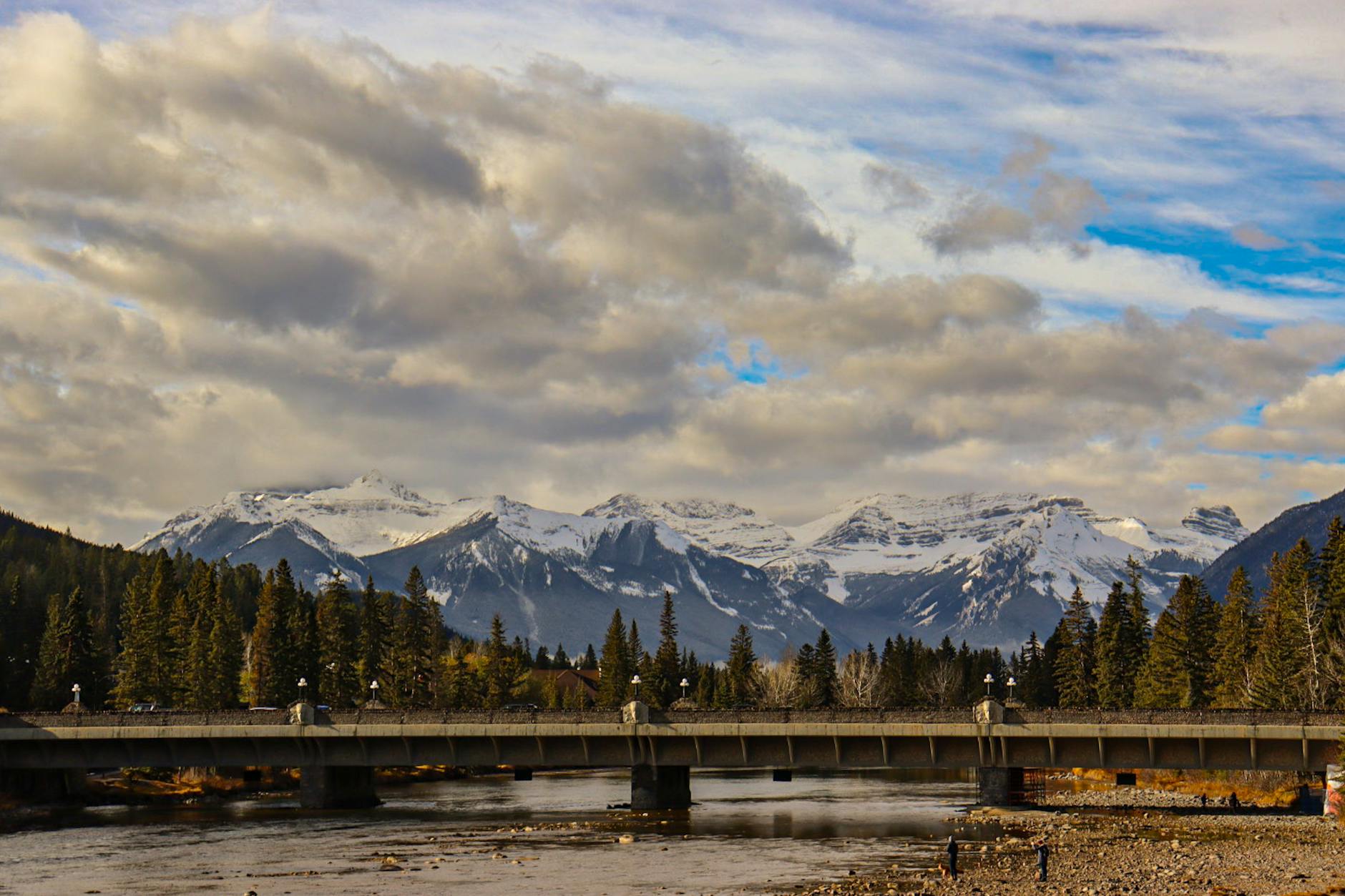
Banff is one of those places that people think they understand before they arrive.
Start Here
They have seen the lakes, the lodge photographs, the pine-dark slopes, the bright mineral water, the elk crossing signs, the wide avenues framed by peaks, and the whole mythology of the Canadian Rockies condensed into a few famous names. From a distance, Banff looks self-explanatory: stay somewhere nice, drive to beautiful places, and let the scenery do the rest.
That is exactly how a lot of mediocre Banff trips happen.
Banff is not just a beautiful place. It is a high-demand mountain system with a small town at its center, a few iconic lake corridors under intense pressure, real parking constraints, seasonal transit logic, and a surprisingly sharp difference between a composed trip and a frantic one. The traveler who keeps trying to "clear" Banff, Lake Louise, Moraine Lake, a gondola, a scenic drive, a long hike, wildlife viewing, and dinner reservations in two or three days usually ends up with the least satisfying version of the Rockies: all grandeur, no texture.
The better approach is narrower. Use Banff town as an actual base. Understand that Lake Louise and Moraine Lake are no longer casual drive-up errands. Accept that weather, smoke, and light matter. Let one day belong mostly to town and nearby mountain infrastructure, another to the lakes, another to one scenic corridor or one longer outing. The destination becomes richer the moment you stop trying to prove how much of it you can cover.
Banff in one sentence: it is one of the world's great mountain-town bases, but only when the trip is shaped around access, timing, and restraint rather than around the fantasy that every postcard belongs in the same day.
Basic data
| Population | About 8,000 permanent residents |
|---|---|
| Area | 4.8 km2 |
| Major religions | Christian heritage with a broadly secular visitor culture |
| Political system | Town government inside a federal parliamentary constitutional monarchy |
| Economic system | Tourism-led mountain economy centered on hospitality, recreation, and park services |
Quick Verdict
Best for: first-time Rockies travelers, couples, photographers, walkers, travelers who like mountain hotels, and anyone who can enjoy scenery without needing constant urban variety.
Less ideal for: travelers who hate reservations, people who insist on spontaneous car access to famous lakes in peak season, or anyone who gets restless in small mountain towns once evening sets in.
Ideal first stay: 3 nights.
Still worthwhile: 2 nights if the trip is tightly designed.
Can justify more: yes, especially if Banff anchors a wider Rockies route.
Biggest planning mistake: treating Lake Louise and Moraine Lake like simple add-ons.
One thing to prioritize: the base and the transport plan.
One thing to keep flexible: which day belongs to the lakes.
The blunt version: Banff gets worse when you keep adding.
Who Will Love Banff?
Banff works best for travelers who understand that landscape can be the main event and still want the trip to feel civilized. If you like mornings that begin with weather decisions, days that move between short scenic windows and longer pauses, and evenings that return to one compact base rather than one more transfer, Banff is strong.
It is especially good for people who enjoy the emotional side of mountain travel: the sense that conditions matter, that the same place can feel different in rain, sun, or smoke, and that a well-chosen viewpoint can do more than a badly planned marathon day.
Banff at a Glance
| Question | Practical Answer |
|---|---|
| Main gateway for most visitors | Calgary International Airport, then onward ground transfer |
| Best first-time base | The town of Banff |
| Main scenic-pressure zone | Lake Louise and Moraine Lake |
| Best approach to those lakes | Transit or reserved shuttle, not wishful driving |
| Main in-town transport system | Roam Transit |
| Main downtown annoyance | Parking pressure |
| Car required? | No, not necessarily |
| Best first stay length | 3 nights |
2026 Visitor Notes
Banff National Park Remains a Managed Scenic System, Not an Open-Access Free-for-All
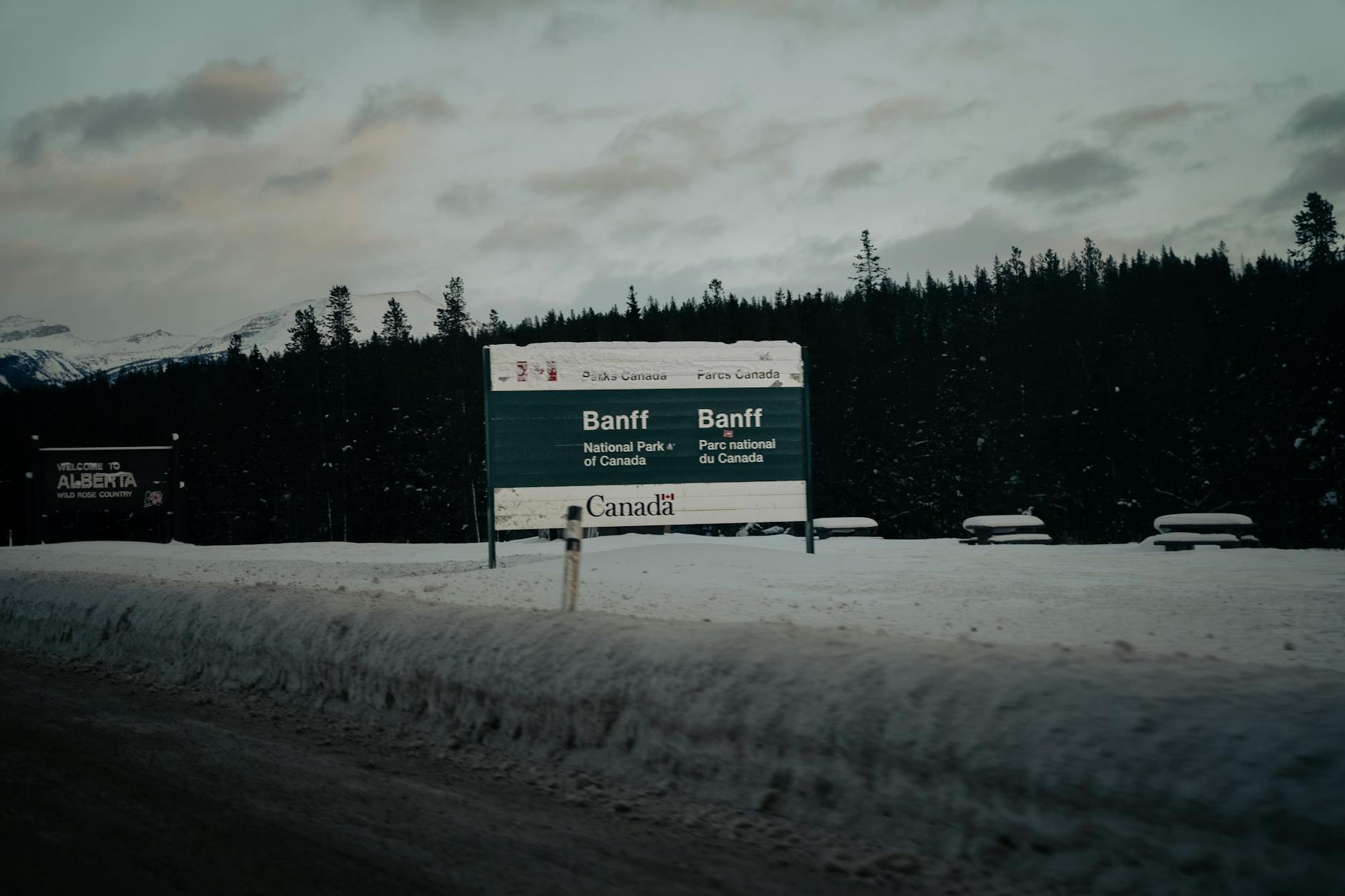
Parks Canada continues to frame Banff National Park as Canada's first national park and a flagship protected area, with visitor services, fees, regulations, and planning all tied to conservation as well as tourism.[1]
Lake Louise and Moraine Lake Still Require Real Planning
Parks Canada's current Lake Louise and Moraine Lake guidance makes the key point plainly: planning ahead is essential, reservations are required for Parks Canada shuttles, and Moraine Lake Road remains closed to personal vehicles year-round.[2]
Town Banff Still Rewards Leaving the Car Behind
Banff & Lake Louise Tourism's current transportation guidance continues to push the same practical lesson: parking is limited, peak demand is real, and the park is often easier to use by transit, shuttle, walking, or cycling.[3]
Downtown Parking Pressure Is Not Imaginary
The Town of Banff's current parking guidance says summer parking lots are usually full by 10 a.m. and strongly advises the Train Station lot for longer stays or for using transit onward.[5]
Roam Transit Still Matters More Than Many First-Timers Expect
Roam Transit continues to connect Banff with core town stops and key visitor zones including the gondola, Lake Minnewanka, Johnston Canyon, and Lake Louise routes.[4][6]
How to Understand Banff
Banff works through four forces.
The first is base logic. The town matters because it lets the trip recover between scenic pushes.
The second is access management. The famous places are not casually reachable in the old sense, and a traveler who refuses to plan around that will spend too much energy on friction.
The third is light and rhythm. Banff changes dramatically by hour, not just by season.
The fourth is editing. Not every famous name belongs in the same stay.
The Main Mental Shift
Do not ask, "How many iconic places can I fit into Banff?" Ask, "What version of mountain travel will let Banff still feel grand by the end of the trip?" That answer should guide your hotel, your transport plan, and your lake day.
What Makes Banff Distinct
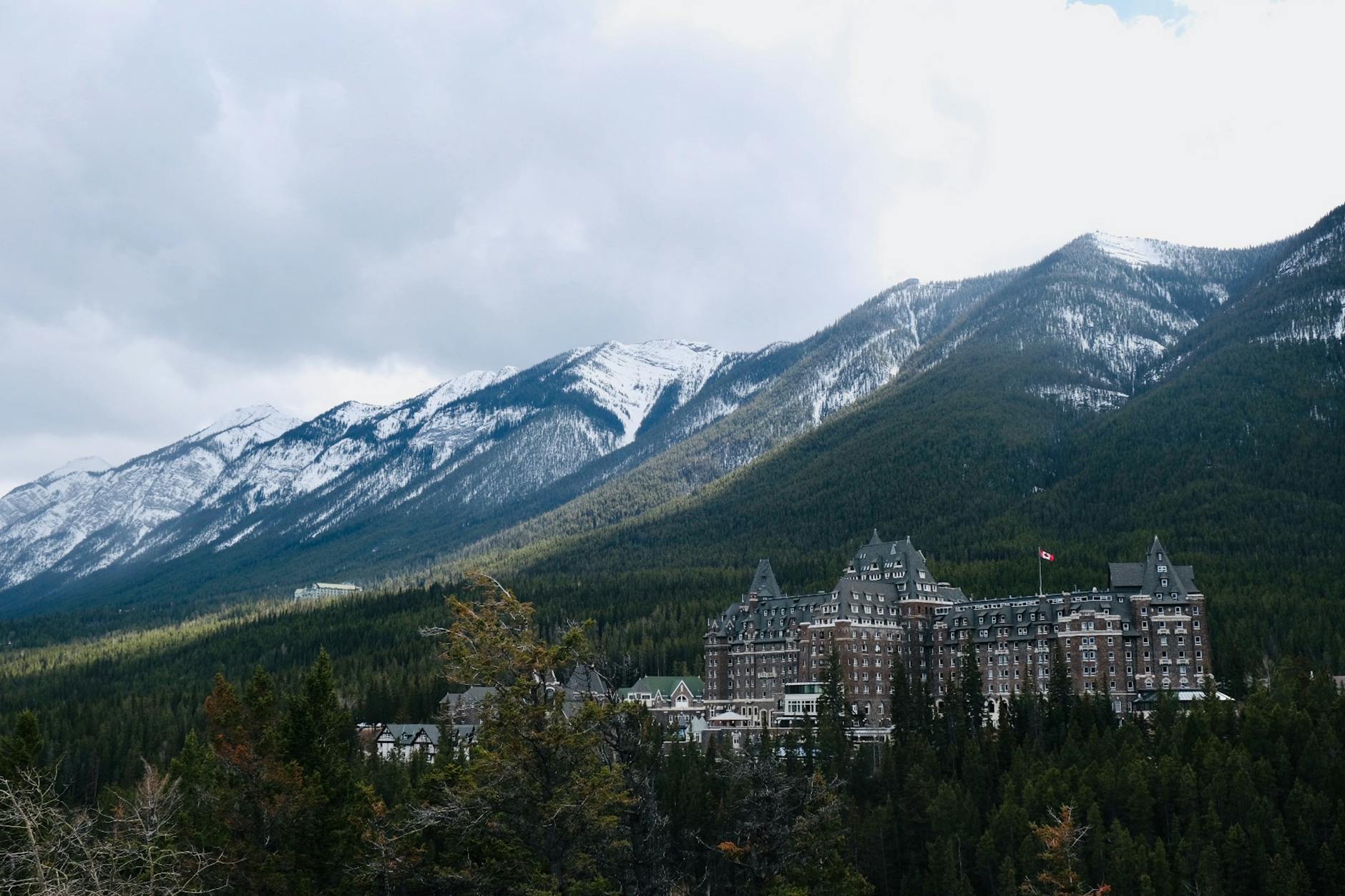
Banff is not the wildest place in the Rockies, nor the quietest, nor the most remote. Its distinction is that it gives a traveler one of the most usable combinations of dramatic landscape and practical mountain-town infrastructure anywhere in North America.
You can sleep well, eat well, walk a real town main street, take a transit bus to a viewpoint, spend one day on a heavily managed lake route, another on a ridge or road with more space, and come back each night to a place that still has some civic coherence. That balance is what makes Banff so seductive and also what makes it easy to misuse. People mistake usability for simplicity.
Where Banff Fits in a Rockies Trip
Banff fits a Rockies trip best as the place where grandeur becomes manageable.
Many first-time visitors plan the Canadian Rockies by collecting names: Banff, Lake Louise, Moraine Lake, Jasper, Icefields Parkway, maybe Yoho, maybe Canmore, maybe one or two gondolas and a famous hike. The result often looks rich on paper and feels strangely thin in practice. Too much of the trip becomes transfer, parking, timing, and self-surveillance. Banff is the place where this whole pattern can either stabilize or collapse.
Used properly, Banff works in three especially strong ways.
The first is as a base town for a short Rockies initiation. In this role, Banff is one of the easiest places in North America to let a first mountain trip become coherent. You have beds, food, transit, walks, nearby scenery, and enough structure to keep the place usable.
The second is as an emotional center of a broader Rockies route. Even if the larger itinerary includes Jasper or other areas, Banff is often where the traveler first understands what the trip will feel like if it is built well.
The third is as a weather-flexible scenic stay. Because the town itself is functional and the surrounding outings can be tiered by effort, Banff handles imperfect conditions better than travelers often expect.
What Banff is not is a place where you should test how much iconography you can survive. If you try to use it like a scenic conquest machine, it becomes one.
Banff Versus Jasper
This comparison matters because many Rockies itineraries implicitly ask the traveler to choose what kind of mountain experience they want.
Banff is more infrastructural, more pressured, more legible, and more immediately scenic in a way that often rewards first-time visitors. You can understand the trip quickly. The famous names are concentrated. The services are stronger. The destination is easier to use if you still need a lot from the base.
Jasper is broader, quieter in a different way, and less compressed by iconic short-stay expectation. It often feels more open and less socially pressured, but it can also ask more from the traveler in terms of pacing, distance, and comfort with a less staged experience.
That means Banff is usually the better answer for a first, shorter, more structured Rockies trip. Jasper can be better for travelers who already know that they like mountain travel and no longer need their trip to be organized around globally famous lake names.
The wrong move is expecting Banff to give you Jasper’s looseness while also delivering Banff’s concentration of icons. It cannot.
First-Time Visitors Versus Repeat Visitors
First-time visitors usually arrive in Banff wanting confirmation.
They want to know that the lakes are as blue as promised, that the mountains look the way they imagined, that the lodge-town setup really works, and that the trip they spent months picturing will hold together under real conditions. That is understandable. It is also why so many first Banff itineraries become overbuilt. The traveler is trying to validate the fantasy and the logistics at the same time.
Repeat visitors are freer. They know that one great day is better than three strained ones, that the famous lakes do not have to carry the whole destination, and that a quieter weather day can still be deeply worthwhile. They are more willing to trust the town, repeat a route, or leave a headline sight underused rather than forcing it into bad conditions.
This is one reason Banff often improves after the first trip. On the first visit, the traveler is still trying to confirm the mythology. On the second, they start using the place.
Best Time to Visit
Banff changes more by season than many travelers allow for.
Summer gives the fullest access to lakes, trails, shuttle systems, and the complete scenic imagination people come for. It also brings the most pressure. Shoulder seasons can be excellent if you are willing to let one or two marquee experiences go soft around the edges. Winter creates a different Banff entirely, more snow-town than lake-town, and should be treated as its own trip rather than a compromised version of summer.
The more important rule is this: in Banff, good weather does not just improve the day. It changes the value of entire outing categories.
Summer Banff Versus Shoulder-Season Banff
Summer is the fullest version of Banff, but also the most pressurized. Access systems are at their busiest, town is most crowded, parking becomes most punitive, and the lakes take on a kind of social intensity that can make even successful visits feel slightly procedural. For many first-time visitors, summer is still the correct answer because it aligns best with the iconic imagery they came for. But they should understand the cost of that alignment.
Shoulder season often gives a better emotional trip for travelers who can tolerate one or two uncertainties. The town breathes more. Some days feel less like reservation choreography. Smaller scenery can matter more. The tradeoff, of course, is that access and conditions can be less reliable or less complete.
This is why Banff planning should always begin with appetite rather than only calendar. The season changes not just what is possible, but what kind of trip the place becomes.
How Many Days You Need
Two Nights
Possible, but only if you are disciplined. One day for town and a nearby mountain or scenic route, one day for the lakes, and little else.
Three Nights
The strongest first answer. This allows one properly managed Lake Louise or Moraine day, one Banff-town-plus-nearby-scenery day, and one more flexible day for a drive, walk, gondola, or slower recovery.
Four Nights or More
Very defensible if Banff is the emotional center of a Rockies trip rather than just one stop on a larger loop.
The Real Question
The real question is not how many nights Banff “deserves” in theory. The real question is whether you are giving the destination enough time to absorb one high-demand day without making the rest of the trip feel like recovery from it. Once you frame it that way, three nights begins to look less indulgent and more sensible.
Arrival Strategy
Most visitors arrive through Calgary and continue by road into the park. The Town of Banff's directions page now explicitly encourages people to experience Banff out of the vehicle when possible and also points to regional bus options from Calgary.[6]
The practical lesson is not simply how to arrive. It is how to begin. Banff is usually better if the first afternoon is small: town walk, early dinner, maybe one short river or avenue stroll, and a look at the peaks. Save the high-pressure scenic ambition for the next morning.
Why The First Afternoon Should Stay Small
This is one of the simplest Banff rules and one of the most frequently ignored.
Travelers arrive in mountain destinations already overstimulated by anticipation. They want the trip to begin at full scenic volume immediately. But Banff usually improves when the first half-day is used to settle into altitude, logistics, weather, and place. A too-ambitious first afternoon often turns into the least elegant part of the stay: rushed check-in, parking noise, partial outing, tired dinner, early confusion about what the place actually requires.
A smaller first afternoon gives the whole trip more room. It also lets Banff town begin doing its real job, which is to become your operating base rather than just the place where you happened to sleep.
Where to Stay
For most first-time travelers, the town of Banff is the correct answer.
Central Banff Town Base
Best for: first-timers, car-light stays, easier dinners, easier Roam access, and the most coherent overall trip. Tradeoff: higher demand, more crowd energy, and less isolation.
Banff Edge or Resort-Style Stay
Best for: travelers who want more breathing room, stronger lodge feeling, or easier parking at the property. Tradeoff: less spontaneous evening use of town on foot.
Lake Louise Area Stay
Best for: travelers building the trip around that specific corridor rather than Banff town. Tradeoff: weaker first-time balance unless the whole route is organized around it.
The Main Rule
Stay where the nights make sense. Banff is not improved by sleeping somewhere that forces the entire trip into longer transfers just because the view sounds more dramatic on paper.
Why The Base Matters More Than Visitors Expect
In a destination where so much of the imagery lives outside town, people sometimes underestimate how much the base shapes the experience. That is a mistake.
A good Banff base does more than put you near restaurants. It determines whether a high-effort day can recover cleanly, whether you can use transit without friction, whether evening walks become part of the trip, and whether the whole destination feels mountain-town coherent instead of simply mountain-adjacent.
This is one reason Banff town is such a strong first answer. It is not the most remote or the most “special sounding” place to sleep. It is the place that makes the rest of the trip easiest to use well.
The Banffs That Matter Most
Town Banff: the actual base, where the trip becomes livable rather than merely scenic.[7]
Lake Banff: the Lake Louise and Moraine Lake axis, which now belongs to transit and shuttle planning as much as to scenery.[2]
Transit Banff: Roam and shuttle infrastructure, which shapes the trip more than many first-timers expect.[3][4]
Road Banff: the scenic corridors and lookouts that reward choosing one strong direction instead of all directions.
Evening Banff: hotel patios, mountain light, and the part of the trip that falls apart when every day has been overbuilt.
Why One Proper Town Day Matters
Some travelers treat Banff town as the recovery chamber between “real” outings. That is one of the easiest ways to make the destination feel thinner than it is.
Banff usually needs one proper town-and-nearby day. That does not mean staying indoors or avoiding scenery. It means allowing the town, a short local outing, a mountain lift or river path, and a real evening to count as the destination rather than as dead space between famous lakes. Without that day, the trip can become a chain of pressured transfers. With it, Banff becomes livable.
This matters because mountain travel is not only about icons. It is also about whether the trip still feels spacious inside the scenery.
Town Banff and Why It Matters
Banff town is easy to underrate because it can seem like pure support infrastructure for bigger scenery. That is the wrong reading.
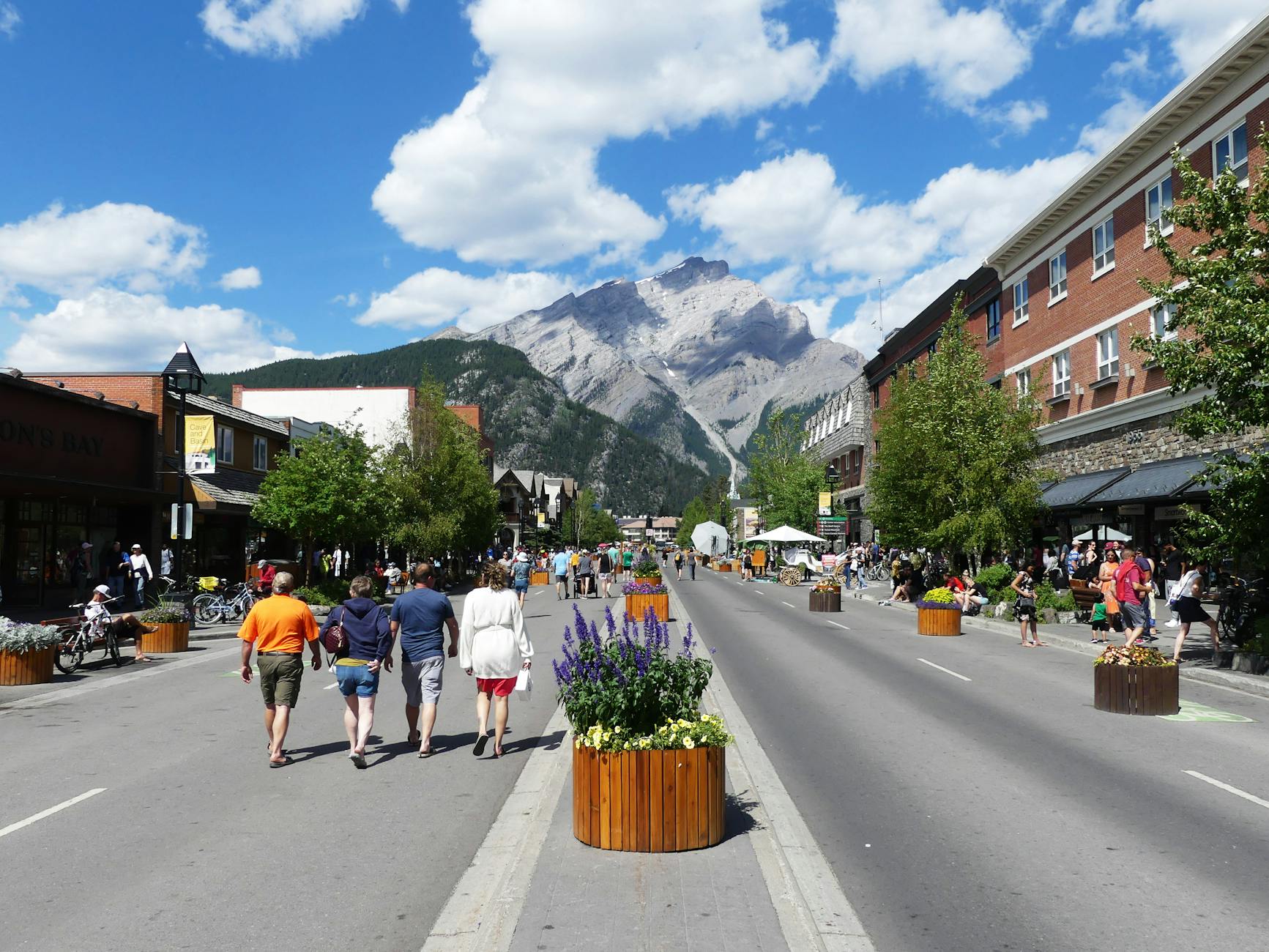
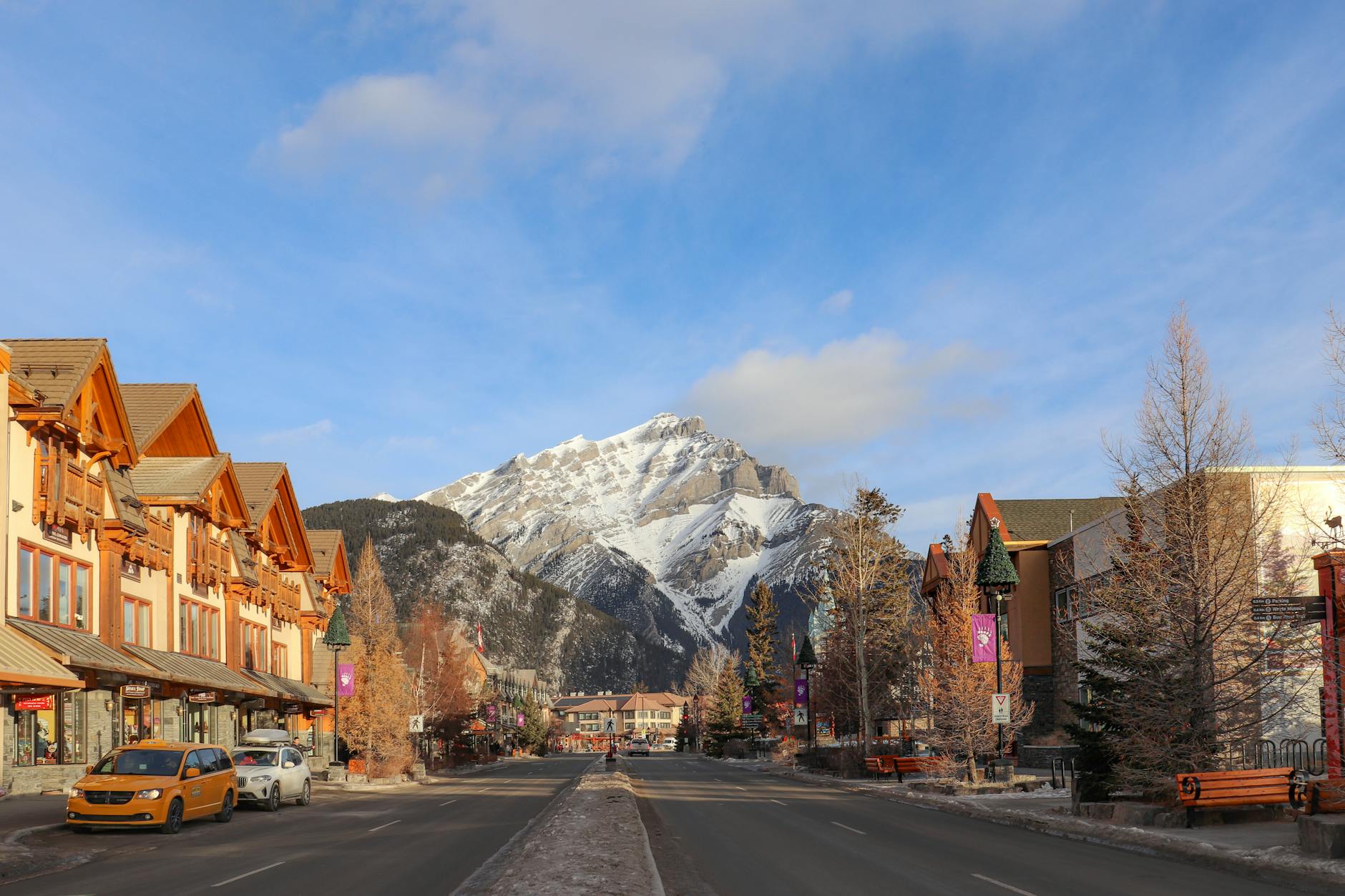
Banff & Lake Louise Tourism's current town-and-village page stresses that the Banff townsite is small, easy to navigate by walking or cycling, and supported by public transit.[7] That compactness is one of the destination's greatest strengths. It lets the trip breathe. You can have a real morning, a mid-afternoon reset, a normal dinner, and an evening walk without turning every need into one more drive.
If you use Banff only as a sleep-and-depart base, you lose much of what makes it satisfying.
Why Banff Town Is The Emotional Stabilizer
Banff town stabilizes the whole trip by giving the scenery a civic edge.
Without the town, the destination could feel like a parade of viewpoints, shuttles, parking lots, and transient awe. With it, the trip gains repetition, routine, and a place for appetite and evening calm. This does not make Banff urban in the usual sense. It makes it usable.
That usability is part of the destination’s global success. It is also what many travelers fail to appreciate until a badly designed day sends them back into town grateful for exactly the thing they had dismissed as secondary.
Lake Louise and Moraine Lake: The Core Discipline
This is where many Banff trips either become elegant or become exhausting.
Parks Canada's official guidance is unambiguous: these are very popular destinations, planning ahead is essential, a reservation is required for Parks Canada shuttles, and Moraine Lake Road is closed to personal vehicles year-round.[2] That means the old fantasy of casually deciding after breakfast to "pop up" to the lakes is no longer a serious plan in peak season.
The right approach is to build one real lake day. Start early if you have a reservation. Keep expectations focused. Decide whether the point is lakeshore atmosphere, one specific hike, or simply seeing both lakes efficiently. The worst version of this day is trying to combine it with too many unrelated ambitions afterward.
Why One Great Lake Day Beats Two Partial Ones
Travelers sometimes think that, because Banff is short on time and rich in icons, they should divide the pressure: a little Lake Louise today, a little Moraine tomorrow, maybe a return if the weather improves, maybe another pass if parking looks possible. In practice, this often creates more stress than value.
One properly planned lake day is usually better than multiple half-solutions. It lets you commit to the access system, the light, the weather, and the energy cost all at once. Then the rest of the trip can belong to other versions of Banff. The destination becomes more varied because you stopped diluting the same objective.
Roam, Shuttles, and Car-Light Banff
A lot of travelers still assume Banff is automatically a driving trip. It does not have to be.
Banff & Lake Louise Tourism's getting-around guidance and the Roam route network together make clear that transit is now part of the destination's normal visitor logic, not a niche workaround.[3][4] For the traveler who wants lower stress and more predictable access to certain high-demand places, that can be an advantage rather than a compromise.
Car-light Banff tends to work especially well for shorter stays, couples, solo travelers, and anyone happy to organize one or two core outings well instead of improvising five.
Why Transit Can Be More Luxurious Than Driving
This is one of Banff’s least intuitive truths.
In many destinations, driving is the premium version of freedom. In Banff’s most pressured corridors, it can become the premium version of anxiety. Parking, arrival windows, and road restrictions turn the supposed freedom into a sequence of tests. Transit and shuttle systems, by contrast, can let the traveler stop obsessing over access and return to paying attention to the landscape.
That is a form of luxury, even if it does not look like one at first.
Why Smaller Scenery Often Saves The Trip
Not every Banff success comes from the most famous places.
In fact, some of the strongest Banff memories come from secondary roads, short walks, river edges, weather windows, and unheroic viewpoints that would not justify a long-haul flight on their own but make perfect sense inside the wider trip. These smaller pieces are not consolation prizes. They are what keep the destination from becoming too icon-dependent.
If you refuse to let them matter, Banff becomes brittle. If you let them count, the whole place becomes more resilient.
Banff Without the Lakes Still Has Plenty to Say
One of the smartest Banff moves is to accept that not every good day has to be a Lake Louise or Moraine Lake day.
There is real value in a day built around town walks, a short scenic outing, one mountain lift or viewpoint, a river path, or one carefully chosen drive. Banff becomes more than a queue of famous bodies of water when the traveler allows secondary scenery to count.
This is also where many people discover they like the destination more than they expected. The trip starts feeling like a place rather than a checklist.
Why Banff Often Works Better Than It Sounds
If you describe Banff badly, it can sound like an expensive scenic machine: a small town, some huge views, one or two famous lakes, parking problems, shuttles, and weather stress. None of that sounds especially relaxing. And that is precisely why poorly planned Banff trips can disappoint.
In practice, Banff works through composition. The town softens the outings. The outings justify the town. Transit can reduce stress instead of adding it. Smaller scenery keeps the icons from carrying too much weight. Evenings restore the body after visual overload. The trip becomes better not because any one element is perfect, but because the elements support each other.
That is why Banff often feels much stronger than the logistics suggest it should.
Gondolas, Easy Elevation, and the Question of Effort
Banff does not require every view to be earned the hard way. That is part of its appeal.
The important question is not whether to use a gondola or other easy-access scenic infrastructure. It is whether that outing belongs to the shape of your day. If you have already spent hours on a shuttle and lakeside crowds, do not force another "must-do" elevation play in the same block. Banff is generous with views. You do not need to convert every one of them into an obligation.
Day Banff Versus Evening Banff
Daytime Banff is when the destination tests your planning. That is when parking, shuttles, weather, crowds, road logic, and lake pressure all become active variables. This is necessary and often exhilarating, but it is not the whole trip.
Evening Banff is where the destination regains proportion. The light drops, the town becomes more social, the mountains remain present without asking anything more of you, and the body finally gets to integrate what it saw earlier. This is one reason the destination weakens so badly when every day is pushed too hard. If the evenings become only collapse, Banff starts to feel extracted rather than lived.
Food, Hotels, and Mountain-Town Evenings
Banff is better at evenings than people sometimes admit.
This is not a late-night city, and that is fine. The point is not nightlife. The point is decompression. Good mountain towns give the traveler a way to come down from the visual intensity of the day, and Banff usually does that well through hotel lounges, patios, early dinners, and simply walking under the peaks once the day-trippers begin to thin.
That is another reason not to overbuild every daylight hour. Banff's evenings are part of the trip.
Why Banff Often Improves On A Second Visit
On a first visit, travelers are usually trying to confirm the imagery they already carry. That pushes them toward the same crowded objectives at the same pressured hours. It is understandable, but it can make the destination feel more procedural than profound.
On a second visit, the pressure often drops. You already know the mountains are real. You already know what the lakes look like. That frees you to let weather guide the day, to value town more, to use transit more intelligently, and to count secondary scenery as part of the trip rather than as fallback.
This is one reason Banff can improve dramatically after the first stay. The destination becomes less about confirmation and more about inhabitation.
How Banff Changes Over The Course Of A Stay
On arrival, Banff can seem almost too easy to misuse. Everything is beautiful, the town is compact, and the list of possible outings feels dangerously manageable. Some travelers mistake that feeling for freedom.
By the second day, if the trip is built properly, the destination begins to separate into clearer parts: town Banff, transit Banff, lake Banff, smaller-scenery Banff, and evening Banff. That separation is healthy. It turns the place from a blur of scenic ambition into an actual trip.
By the third day, Banff often becomes more persuasive precisely because it no longer needs to perform as a greatest-hits package. You know where breakfast is. You know what the weather means. You know which outing matters today and which can be left alone. That is when the place starts feeling truly generous.
Wildlife, Weather, and Basic Humility
Parks Canada continues to foreground trail conditions, wildlife rules, and changing conditions across the park.[1] Treat that as operational guidance, not boilerplate.
Mountain weather changes. Smoke can soften views. Trail conditions can move faster than your assumptions. Wildlife is not a roadside performance. The traveler who stays humble usually gets a better Banff than the traveler who treats the park like an amusement district with prettier backdrops.
Common Mistakes
Treating Banff Like a Scenic Shopping List
This is the main error.
Assuming the Car Solves Everything
In the most pressured parts of the destination, it often does not.
Overbuilding the Lake Day
If Lake Louise and Moraine Lake are the center of the day, let them be the center.
Sleeping in the Wrong Place for the Trip You Actually Want
A "nicer" location on paper can produce a worse stay in practice.
Refusing to Let Smaller Scenery Count
Banff improves when every beautiful thing does not have to be globally famous.
My Blunt Advice
Stay in Banff town unless you have a strong reason not to.
Plan the Lake Louise and Moraine Lake day properly or stop pretending you are planning it at all.
Do not confuse a rental car with freedom.
Give one day to the big names and another to the rest of the mountain system.
Leave space for weather, for parking reality, and for evenings that actually feel like the Rockies instead of like recovery from a logistics test.
And remember that Banff is not at its best when it proves how much beauty you can consume. It is at its best when the trip still feels spacious inside all that beauty.
Source Notes
- 1. Parks Canada, Banff National Park official site and visitor planning pages. Used for current park framing, visitor-fee context, regulations, trail-condition emphasis, and general 2026 visit guidance. https://parks.canada.ca/pn-np/ab/banff and https://parks.canada.ca/pn-np/ab/banff/visit
- 2. Parks Canada, "Visiting Lake Louise and Moraine Lake." Used for current 2026 shuttle-reservation timing, Moraine Lake Road vehicle restriction, and general access rules for the two most pressured lake destinations. https://parks.canada.ca/pn-np/ab/banff/visit/installations-facilities/louise and https://parks.canada.ca/pn-np/ab/banff/visit/parkbus/louise/faq
- 3. Banff & Lake Louise Tourism, "Getting Around" and related transit-planning article. Used for current destination-level visitor guidance on leaving the car behind, seasonal transit and shuttle use, and the practical case for a car-light Banff trip. https://www.banfflakelouise.com/getting-around and https://www.banfflakelouise.com/blog/plan-your-trip-how-to-get-around-banff-lake-louise
- 4. Roam Transit, "Schedules & Routes" and "Super Pass Reservations." Used for current route network context and the existence of day-valid pass products that support Banff-Lake Louise visitor movement. https://roamtransit.com/schedules-routes/ and https://roamtransit.com/fares/reservations/super-pass-reservations/
- 5. Town of Banff, parking guidance. Used for current downtown pay-parking rules, the warning that summer parking often fills by 10 a.m., and the Train Station lot recommendation for longer stays. https://banff.ca/parking and https://www.banff.ca/payparking
- 6. Town of Banff, "Getting to Banff." Used for current municipal arrival guidance, out-of-vehicle planning, and the town's current framing of access from Calgary and onward movement once in Banff. https://banff.ca/visiting-banff/maps-directions/banff-directions/
- 7. Banff & Lake Louise Tourism, "Banff Town & Lake Louise Village." Used for the current official framing of the Banff townsite as compact, walkable, cycle-friendly, and transit-supported. https://www.banfflakelouise.com/town-village