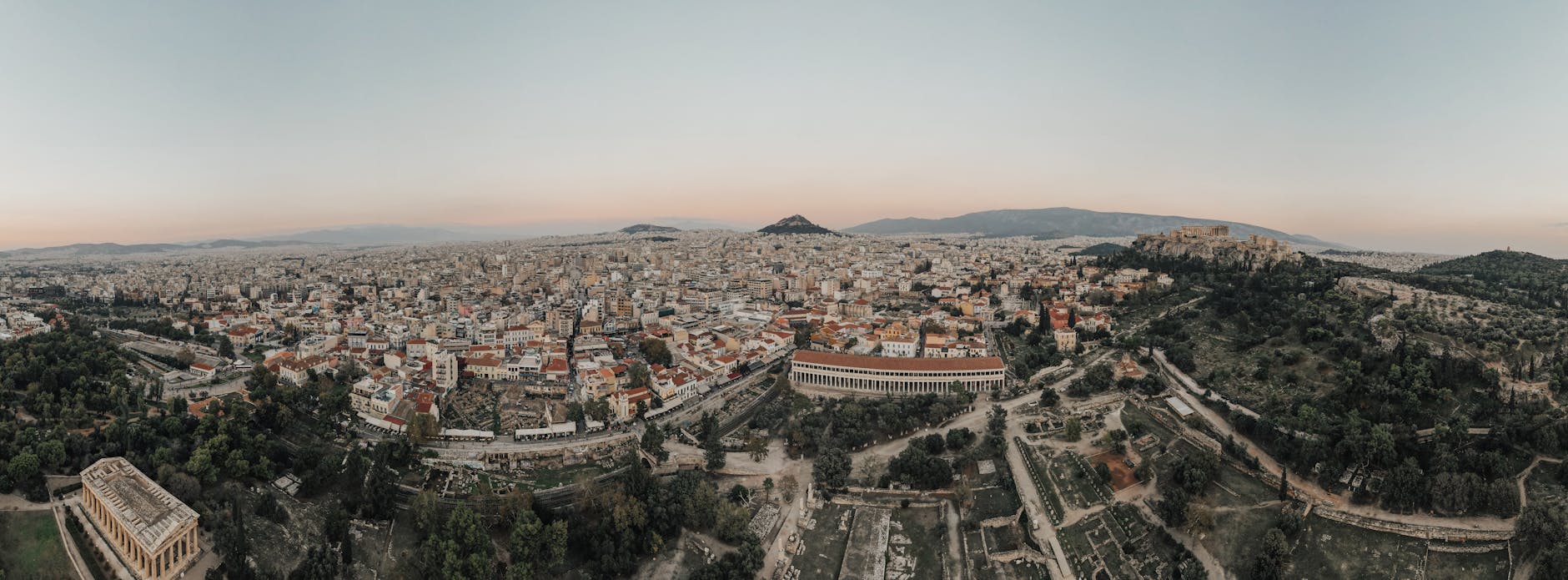
Athens is too often treated as a prelude. Travelers fly in, sleep near the Acropolis, tick off the Parthenon, eat one souvlaki, and hurry to a ferry. That version is understandable, but it is thin. Athens is not merely the gateway to the Greek islands. It is one of Europe’s great urban experiences: ancient and impatient, sun-bleached and graffitied, grand and scruffy, scholarly and deeply social, a city where marble ruins sit beside hardware stores, mezze tables spill onto sidewalks, and whole evenings disappear over one more carafe of wine.
Start Here
The Acropolis matters. It should matter. But Athens only becomes interesting when you stop treating the city as a museum campus. Its best travel moments happen in the overlap: a morning among the stones of the Ancient Agora; a late lunch under plane trees; a walk from Plaka’s lanes to the street art of Psyrri; a climb to a hill at sunset; a nightcap in a bar that would be famous in any cocktail capital; a ferry-era hotel in Piraeus; a swim on the Riviera; a neighborhood square in Pangrati, Kypseli, or Exarchia where Athenians are not performing “Greekness” for visitors. They are just living.
Athens rewards travelers who understand its rhythm. Visit the archaeological sites early. Hide indoors during the fiercest summer hours. Eat later than you probably do at home. Do not over-plan the old center. Do not assume every attractive old street is peaceful at night. Do not use Athens only as logistics between islands. Give it three or four days and it becomes less like a stopover and more like the key to the country.
This guide is designed for travelers who want more than “things to do in Athens.” It explains where to stay, how to structure your days around heat and hills, how to visit the Acropolis without souring the morning, which neighborhoods are atmospheric versus practical, where food culture actually lives, how to use the metro and airport routes, when a Riviera day makes sense, which side trips are worth the logistics, and how to experience Athens as a living city rather than a monument with hotels around it.
Athens in one sentence: Athens is an ancient Mediterranean capital with modern street energy, late-night social life, world-class archaeology, neighborhood food culture, and a heat-and-hill rhythm that rewards travelers who plan mornings carefully and let evenings breathe.
Quick Verdict
| Question | Answer |
|---|---|
| Best for | Ancient history, archaeology, museums, food, wine, cocktail bars, urban wandering, street life, hilltop views, island connections, short cultural breaks, and travelers who like cities with rough edges and real energy. |
| Not ideal for | Travelers who want polished streets everywhere, quiet old-town charm 24/7, flat sidewalks, mild summer afternoons, resort-style ease in the center, or a city where every famous sight can be enjoyed without tactical timing. |
| Ideal first visit | 3 full days. Two days covers the Acropolis, Acropolis Museum, historic center, and a neighborhood dinner. Four or five days lets you add the National Archaeological Museum, the Riviera, Piraeus, and one side trip without rushing. |
| Best months | April, May, early June, late September, October, and early November. March can be excellent for value. July and August are possible but hot, exposed, crowded around major sites, and better if you plan mornings and evenings carefully. |
| Best first-timer base | Koukaki/Makrygianni for Acropolis access and calmer evenings; Syntagma for transit and convenience; Plaka for charm if you accept crowds; Monastiraki/Psyrri for nightlife; Kolonaki for comfort and dining; Pangrati for a local-feeling stay. |
| Biggest planning mistake | Treating Athens as a one-night stopover or visiting the Acropolis in the hottest, most crowded part of the day. Athens is not hard, but it is punishing when you ignore heat, traffic, queues, and neighborhood logistics. |
| One thing to book ahead | Acropolis timed entry, Acropolis Museum if your timing is tight, Michelin-level/fine-dining restaurants, popular food tours, and any ferry or hotel tied to a fixed island connection. |
| One thing to leave unscheduled | A long evening in Psyrri, Pangrati, Exarchia, or Koukaki; sunset on Filopappou Hill; coffee that turns into drinks; or a slow walk where ruins keep appearing between ordinary streets. |
| Best free pleasure | Watching the Acropolis change color from Filopappou Hill, Areopagus, Anafiotika lanes, or a rooftop; browsing the Central Market area; strolling Dionysiou Areopagitou; and wandering the old center at blue hour. |
| Most important warning | Summer heat is not background weather. It shapes the trip. Build outdoor sightseeing into mornings and late afternoons, carry water, use shade, and check for site closures during heatwaves. |
The Move
Plan Athens in three daily layers: archaeology in the morning, shade/museum/lunch in the afternoon, neighborhood life after sunset. The city is at its worst when you force it into a midday sightseeing checklist and at its best when you respect the Mediterranean rhythm: early ruins, long lunch, late walk, late dinner.
Who Will Love Athens?
You will probably love Athens if you want:
- Ancient sites that are not sealed off from modern life.
- A food city that is casual, social, and better at long meals than precious small plates.
- Excellent museums without the institutional fatigue of some larger capitals.
- Big-city nightlife with real range: wine bars, cocktail bars, dive bars, rooftops, terraces, live music, and late-night eating.
- Neighborhoods that change quickly from polished to improvised.
- A city that makes a logical base before or after islands, the Peloponnese, Delphi, Meteora, or the Athenian Riviera.
- A place where history feels visible, but not embalmed.
You may struggle with Athens if you want:
- A spotless historic center.
- Quiet hotel streets in the middle of nightlife districts.
- Predictably smooth sidewalks and easy step-free movement everywhere.
- Mild summer sightseeing without careful timing.
- Restaurant dinners at 6 pm with atmosphere.
- A city that hides poverty, graffiti, noise, traffic, or political tension.
Athens is worth visiting because it gives travelers something rare: a city where the foundational myth of Western antiquity is present, but so is a raw, modern, creative capital that eats, argues, protests, drinks, smokes, paints walls, opens restaurants, builds museums, and stays awake late.
Athens at a Glance
| Practical | Detail |
|---|---|
| Country | Greece |
| Region | Attica |
| Language | Greek. English is widely spoken in hotels, museums, restaurants, bars, and tourist-facing businesses, but basic Greek greetings are appreciated. |
| Currency | Euro, written as € or EUR |
| Cards vs cash | Cards are widely accepted, but carry some cash for kiosks, market stalls, taxis, older tavernas, small bakeries, tips, and emergencies. |
| Main airport | Athens International Airport “Eleftherios Venizelos” (ATH), about 33 km southeast of central Athens according to the official Athens guide.[1] |
| Main rail station | Athens/Larissa Station for intercity rail. Rail is useful for some mainland trips, but many visitors use ferries, buses, tours, or rental cars for onward travel. |
| Main ports | Piraeus is the primary ferry port. Rafina is often useful for some Cyclades routes and is closer to the airport. Lavrio serves select island routes and Cape Sounion-area logistics. |
| Best airport default | Metro Line 3 to Syntagma/Monastiraki is usually the best balance of cost and convenience if you arrive during service hours and can handle luggage. The official Athens guide lists the airport–Syntagma journey at about 40 minutes, with trains every 30 minutes and a one-way airport metro ticket at €9.[1] |
| Cheapest airport default | Airport express buses. The official guide lists the 24-hour airport buses at €5.50 one-way, including X95 to Syntagma and X96 to Piraeus.[1] |
| Taxi from airport | The official Athens guide lists a flat rate from the airport to the city center of €40 from 5 am to midnight and €55 from midnight to 5 am, with the rate determined by arrival time at the destination and including applicable surcharges.[1] |
| Public transit | Metro, tram, buses, trolleybuses, suburban rail, taxis, ride-hailing/taxi apps, and ferries from the ports. The metro is the visitor workhorse. |
| Transit fare basics | As of the official Athens guide’s current fare page, a standard public transport ticket is €1.20 for 90 minutes, excluding airport services; Tap2Ride contactless payment works with Visa/Mastercard on metro, buses, trams, and trolleys; the daily fare cap is €4.10; a 5-day ticket is €8.10; and a 3-day tourist ticket is €20 with one round trip to/from the airport.[3] |
| Entry basics | Greece is in the Schengen Area. Visa-exempt travelers must follow Schengen short-stay rules, and EU border systems are changing with EES/ETIAS. Check official rules for your passport before travel.[8][9] |
| Tap water | Generally safe to drink in Athens. Carry water, especially from May to September. |
| Electricity | Greece uses European plug types C and F, 230V. |
| Tipping | Appreciated but not usually North American-style mandatory. Round up for casual service, leave small change at cafés, or add about 5–10% for good restaurant service. |
| Emergency number | 112 is the EU-wide emergency number. |
| Best transit app | Google Maps works reasonably well. Use official OASA/telematics resources where available for live transport updates. |
| Best city attitude | Do the big sites with discipline, then let the evenings run loose. Athens is better when you stop trying to optimize every hour. |
First-Timer Planning Snapshot
| Decision | Best default |
|---|---|
| Trip length | 3 full days |
| Arrival transfer | Metro Line 3 to Syntagma/Monastiraki unless late, exhausted, or traveling as a group |
| First activity | Sunset walk on Dionysiou Areopagitou or Filopappou Hill, not a forced museum sprint after a long flight |
| First full morning | Acropolis timed entry at opening or early morning |
| Best museum pairing | Acropolis first, Acropolis Museum after lunch or the next morning |
| Best neighborhood dinner | Koukaki, Pangrati, Psyrri, or Exarchia, depending on mood |
| Best extra day | National Archaeological Museum plus Lycabettus/Kolonaki, or a Riviera/Cape Sounion day |
| Best day trip | Delphi for history, Cape Sounion for a lighter sunset outing, or Hydra for island flavor if logistics fit |
How to Understand Athens
Athens is easier when you stop thinking of it as a single “old town.” The visitor city is a web of layers around the Acropolis: ancient Athens, neoclassical Athens, Ottoman-era lanes, 20th-century apartment blocks, post-crisis street culture, nightlife corridors, immigrant food neighborhoods, museum districts, and coastal extensions toward Piraeus and the Riviera.
The Mental Map
For a first visit, imagine Athens in six zones.
1. The Acropolis core: Acropolis, Acropolis Museum, Dionysiou Areopagitou, Areopagus, Filopappou Hill, and the slopes. This is the visual and symbolic center of the trip.
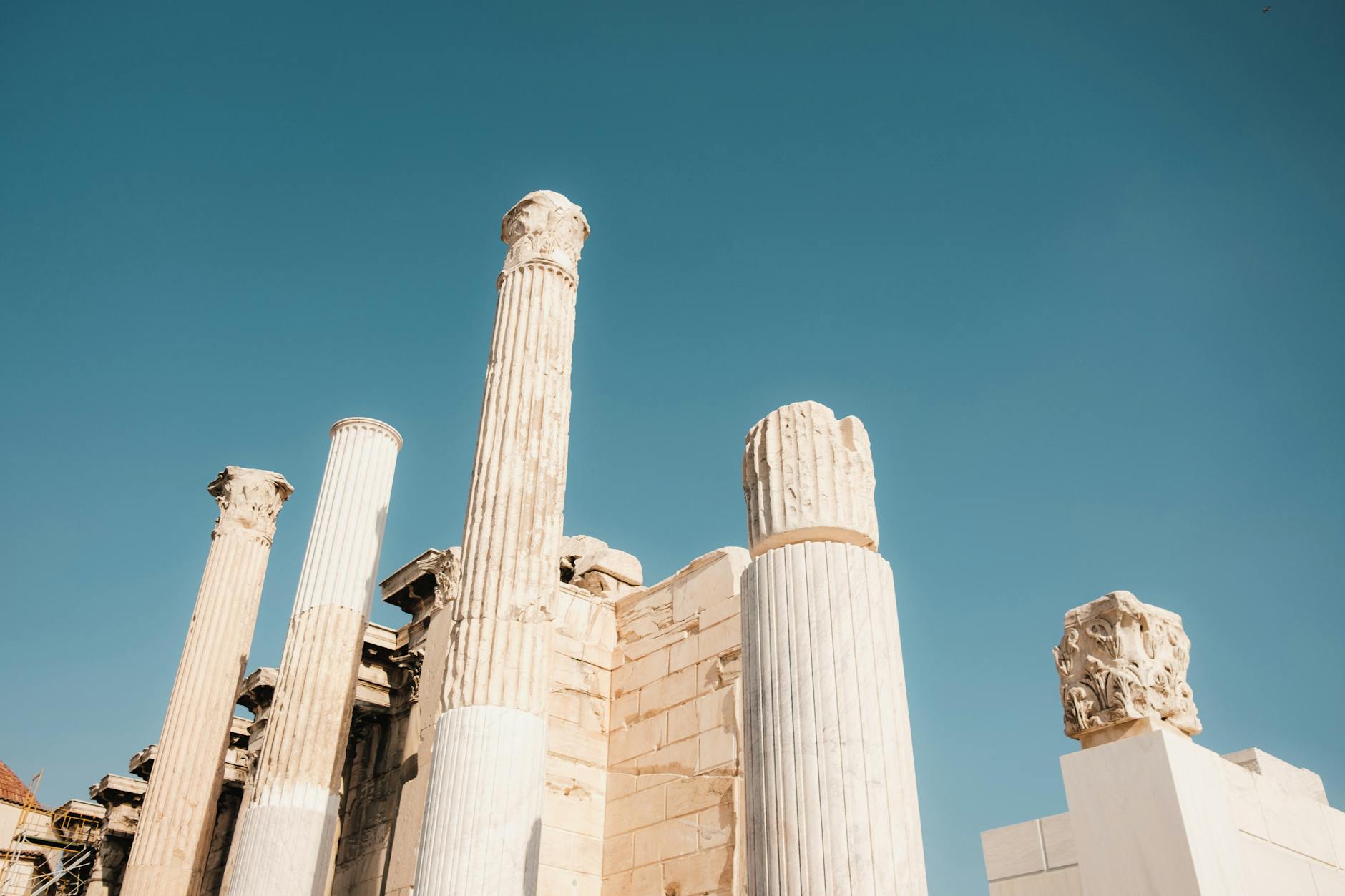
2. The historic visitor belt: Plaka, Anafiotika, Monastiraki, Ancient Agora, Roman Agora, Hadrian’s Library, Psyrri, and Thissio. This is where most first-timers spend the most time.
3. The civic center: Syntagma, Parliament, National Garden, Ermou, and the area toward Panepistimiou and Omonia. This is practical, transit-rich, busy, and sometimes politically active.
4. The comfortable central neighborhoods: Koukaki/Makrygianni, Kolonaki, Pangrati, Mets, and parts of Neos Kosmos. These are often better places to stay or eat than the most obvious tourist blocks.
5. The edgier urban neighborhoods: Exarchia, Kypseli, Kerameikos, Gazi, Metaxourgeio, and parts of Psyrri. These can be fascinating, creative, nightlife-heavy, and uneven block by block.
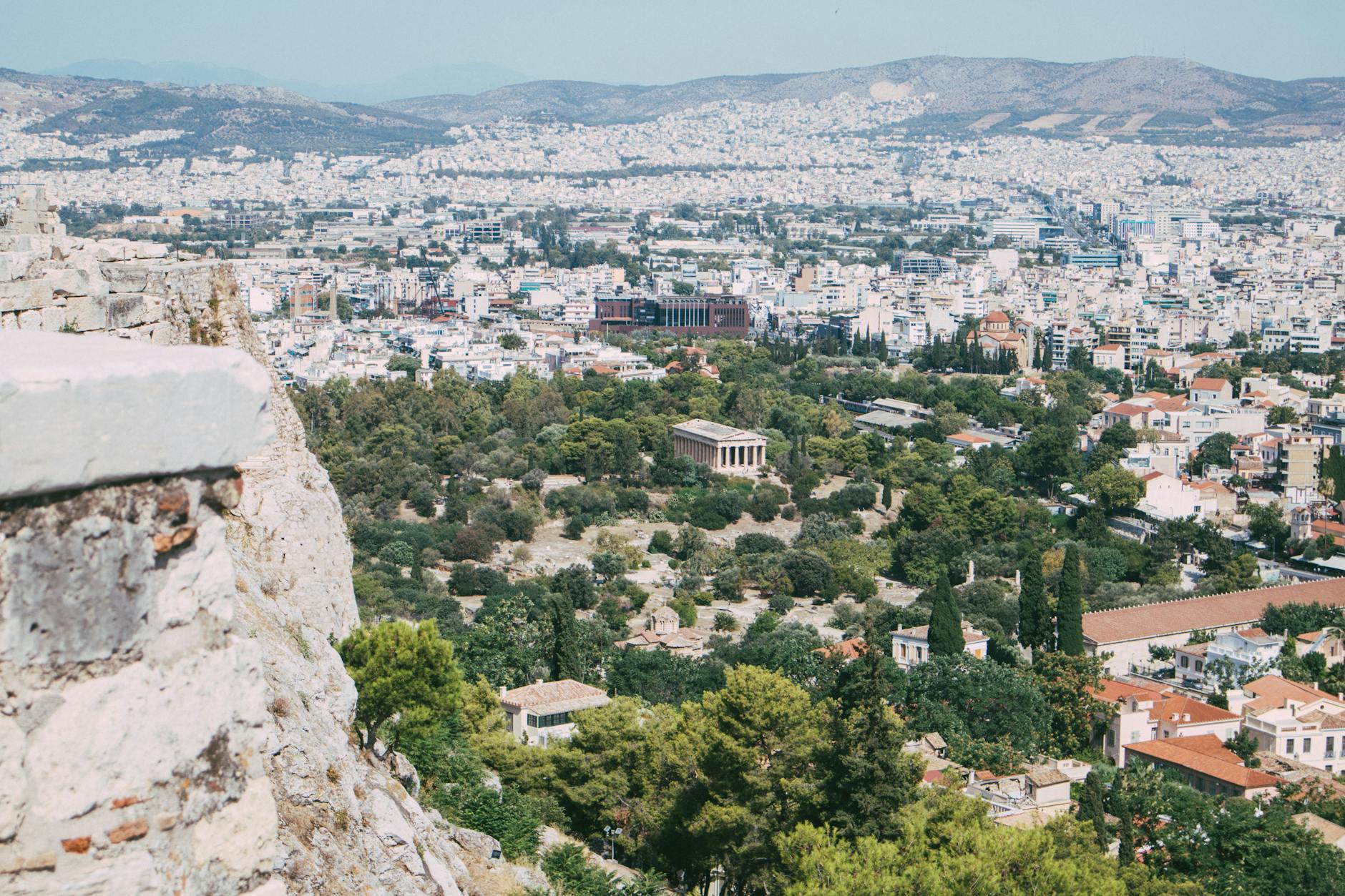
6. The port and coast: Piraeus, Mikrolimano, Stavros Niarchos Foundation Cultural Center, Glyfada, Vouliagmeni, and Cape Sounion. This is where Athens starts to feel less like a classical city and more like a sea-facing metropolis.
The City’s Central Tension
Athens is both an archaeological capital and a lived-in southern European city. That tension is the appeal. The ancient ruins are not isolated in a pristine park; they sit among apartment balconies, motorbikes, fruit sellers, protest posters, rooftop bars, cats, kiosks, churches, tavernas, and streets that can be messy by noon and magical by dusk.
That also means Athens asks for a different kind of attention than Rome or Paris. It is not always beautiful street by street. Some blocks are harsh, hot, tagged, or traffic-heavy. Then you turn a corner and find a Byzantine chapel below street level, the Parthenon hovering above laundry lines, a tiny bar in an arcade, or a square where everyone seems to know everyone else.
Local Logic
Athens is organized less by distance than by heat, slopes, transit lines, and nighttime energy. A place that looks close may be an unpleasant walk in July. A neighborhood that is perfect for drinks may be loud for sleeping. A hotel “near the Acropolis” may still require uphill cobblestones. A beach may look close on a map but take longer than expected by public transport.
The City’s Rhythm
Athens runs late, especially in warm months.
- Morning: Best for archaeological sites, markets, serious walking, and photos.
- Midday: Use for lunch, museums, shaded cafés, hotel breaks, or transit to the coast.
- Late afternoon: Best for neighborhood wandering once the glare softens.
- Sunset: Hilltops and rooftops matter. This is one of the city’s great daily rituals.
- Dinner: Atmosphere often improves later. Many restaurants are livelier around 9 pm than 7 pm.
- Night: Bars can start late and go very late, especially Thursday through Saturday.
First-Timer Mistake
Trying to “do ancient Athens” as a single ruin marathon. The Acropolis, Ancient Agora, Roman Agora, Hadrian’s Library, Temple of Olympian Zeus, Kerameikos, and Panathenaic Stadium are all interesting in context, but stringing them together under hard sun can turn awe into exhaustion. Prioritize the Acropolis, Acropolis Museum, and Ancient Agora first. Add others if you have a specific interest or extra time.
Best Time to Visit Athens
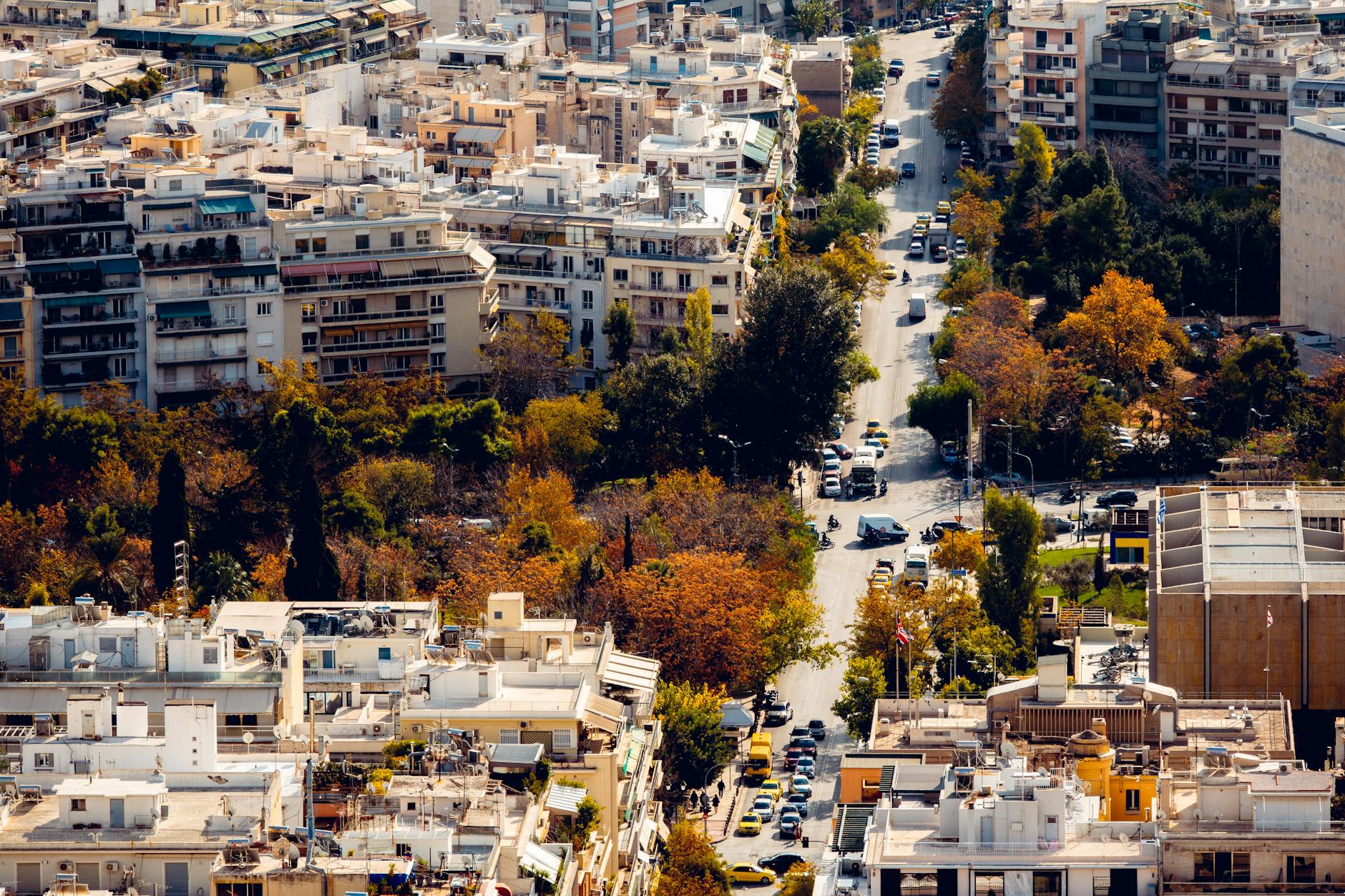
Athens is a year-round city, but it is not equally easy year-round. The main question is not simply “Will it rain?” It is “How much heat, crowding, and exposed stone do you want to manage?”
Best Overall Months
April, May, late September, October, and early November are the best months for most travelers. You get enough light, good outdoor dining, manageable sightseeing temperatures, and a city that feels active without the full summer crush.
Best for Lower Prices
January, February, March, and parts of November can offer better hotel value. Winter is not beach weather, but it is excellent for museums, food, bars, and archaeological sites without punishing heat.
Best for Island Pairings
Late May, June, September, and early October are often the sweet spot if Athens is paired with the Cyclades or other islands. July and August have the strongest beach mood but the most heat, crowds, and ferry/hotel demand.
Months to Approach Carefully
July and August are not impossible, but they require discipline. Start early, avoid exposed sites in the afternoon, build in hotel breaks, and accept that heat can change plans. In recent summers, extreme heat has caused temporary Acropolis closures during the hottest hours, so travelers should always check current notices during heatwaves.[11]
Season-by-Season
| Season | What it feels like | Best for | Watch-outs |
|---|---|---|---|
| Spring | Mild to warm, lively, blooming, increasingly busy | First visits, museums, walking, food, Delphi, Hydra, Sounion | Easter dates can affect openings and travel patterns; book popular hotels early. |
| Summer | Hot, bright, social, late-night, beach-friendly | Nightlife, island pairings, Riviera swims, long evenings | Midday heat, crowded Acropolis slots, higher hotel demand, ferry crowds, possible heat closures. |
| Autumn | Warm to mild, food-friendly, excellent light | Best overall travel, cultural trips, outdoor meals, day trips | September can still be hot; October is popular. |
| Winter | Cooler, quieter, more local, sometimes rainy | Museums, restaurants, budget, deep city trips | Shorter days, less beach appeal, occasional rain, some seasonal hours. |
Month-by-Month Guide
| Month | Verdict |
|---|---|
| January | Quiet, affordable, good for museums and food. Not the postcard version, but useful for travelers who dislike crowds. |
| February | Similar to January, with slightly longer days. Good value, not a beach trip. |
| March | A good shoulder month. Weather can swing, but the city wakes up and hotel prices may remain reasonable. |
| April | Excellent. Comfortable for walking, flowers and light, outdoor meals, and strong cultural sightseeing. Check Orthodox Easter timing. |
| May | One of the best months. Warm, bright, not yet peak-summer oppressive. Book ahead. |
| June | Great early, hotter later. Good for combining Athens with islands. Start sites early. |
| July | Hot, busy, nightlife-heavy. Worth it if you manage heat ruthlessly and use afternoons for museums, meals, or the coast. |
| August | Very hot. Some locals leave, but visitor zones remain active. Good for late nights and coast days; bad for midday ruin marathons. |
| September | Excellent but still warm. Great for islands and Athens combined. Very popular. |
| October | Perhaps the most balanced month: warm enough for terraces, easier walking, strong cultural energy. |
| November | Underrated. Cooler, more local, better value, still very usable for culture and food. |
| December | Festive, mild by northern standards, not beach-focused. Good for a city break if you want museums, cafés, and tavernas. |
The Move
In warm months, do Acropolis first, museum second, long lunch third, sunset fourth. That one sequence solves half the planning problems in Athens.
How Many Days You Need
Athens can be sampled in a day, but it is not understood in a day. The sweet spot for a first visit is three full days.
| Time | What you can realistically do |
|---|---|
| One day | Acropolis, Acropolis Museum or Ancient Agora, Plaka/Monastiraki walk, rooftop or hilltop sunset, one good dinner. It is a taste, not a full visit. |
| Two days | Acropolis, Acropolis Museum, Ancient Agora, Plaka/Anafiotika, Syntagma, Central Market area, Psyrri/Koukaki/Pangrati dinner, one hill view. Good for an island stopover. |
| Three days | Best first-timer length. Add National Archaeological Museum, Kolonaki or Exarchia, better food time, and a less rushed evening. |
| Four to five days | Lets you add the Riviera, Piraeus, Stavros Niarchos, Cape Sounion, or Delphi without sacrificing Athens itself. |
| One week | Best for deep travelers: museums, neighborhoods, beaches, multiple side trips, shopping, nightlife, and a slower food itinerary. |
Minimum Worthwhile Stay
If you are passing through before an island ferry, spend at least two nights if possible. One night is logistically fine, but emotionally weak. Athens often needs a first evening, a serious morning, and a second night to open up.
When to Add Extra Days
Add a day if you:
- Love archaeology.
- Want both the National Archaeological Museum and Acropolis Museum.
- Plan a food-focused trip.
- Need a buffer before a ferry or long-haul flight.
- Want Cape Sounion, Delphi, Hydra, or the Riviera.
- Are traveling in summer and need slower pacing.
When Not to Overstay
Do not add Athens days only because flights are cheaper if your real goal is islands, beaches, or mountain villages. Athens is excellent, but it is urban. If you want sleep, sea, and silence, shift extra time to an island, Peloponnese town, or coastal base.
Where to Stay in Athens
Athens hotel choice matters. The wrong area can make the city feel noisy, grimy, or exhausting. The right area turns the visit into a walkable, late-night, food-rich city break.
The Short Answer
For a first visit, stay in Koukaki/Makrygianni if you want the best mix of Acropolis access and livability; Syntagma if you want maximum transit convenience; Plaka if you want old-Athens atmosphere and can accept crowds; Monastiraki/Psyrri if you want nightlife and rooftops; Kolonaki if you want comfort, boutiques, and refined dining; and Pangrati/Mets if you want a more local base still close to the center.
Neighborhood Decision Tree
| You want... | Stay in... |
|---|---|
| Best first-timer balance | Koukaki/Makrygianni |
| Historic charm | Plaka or Anafiotika-adjacent streets |
| Maximum transit convenience | Syntagma |
| Nightlife and rooftops | Psyrri, Monastiraki, or Gazi if nightlife is the goal |
| A calmer central base | Koukaki, Mets, or Pangrati |
| Luxury hotels | Syntagma, Kolonaki, Vouliagmeni/Athens Riviera |
| Boutiques and polished dining | Kolonaki |
| Local cafés and food without feeling remote | Pangrati or Koukaki |
| Budget-ish central lodging | Psyrri, Omonia edges, Metaxourgeio, Kypseli, or Neos Kosmos, but choose block carefully |
| Ferry morning convenience | Piraeus, if you have an early ferry |
| Beach/resort feel | Vouliagmeni, Glyfada, or the Athens Riviera, not central Athens |
| Mobility concerns | Syntagma, Makrygianni near Acropoli metro, or flatter hotel streets; avoid steep Plaka/Anafiotika lanes and hill-heavy boutique stays. |
Best Areas to Stay: Detailed Profiles
Koukaki / Makrygianni
Best for: First-timers, couples, Acropolis access, quieter evenings, food, and walkability.
Koukaki and Makrygianni are often the smartest first-visit base. You are near the Acropolis Museum, Acropoli metro, pedestrian Dionysiou Areopagitou, Filopappou Hill, and the historic center, but you are not trapped in the most souvenir-heavy lanes of Plaka. Koukaki has cafés, bakeries, wine bars, casual restaurants, and a neighborhood feel that still works for visitors.
Why stay here: Excellent location without maximum chaos.
Why not: Prices have risen; some side streets are quieter than others; hotel inventory varies.
Perfect day from here: Early Acropolis, Acropolis Museum, lunch in Koukaki, hotel rest, sunset on Filopappou Hill, dinner on Drakou/Olympiou or nearby.
Plaka
Best for: Romance, first-night magic, old lanes, families who want a gentle tourist bubble.
Plaka is the Athens visitors imagine: neoclassical houses, souvenir shops, tavernas, steps, bougainvillea, churches, and Acropolis views. It is atmospheric, photogenic, and convenient. It is also touristy, sometimes overpriced, and not always peaceful.
Why stay here: You wake up in postcard Athens.
Why not: Restaurants can be hit-or-miss; day crowds are heavy; hotels in old buildings may have stairs, small rooms, and uneven access.
The move: Stay here if charm is the priority, but eat at least some meals outside Plaka.
Monastiraki / Psyrri
Best for: Nightlife, rooftop views, street energy, short trips, younger travelers, bar crawls.
Monastiraki is transit-rich and central. Psyrri is lively, graffitied, food-and-drink-heavy, and increasingly hotel-filled. This zone is fun if you want action and a mistake if you need quiet.
Why stay here: You are close to the metro, Ancient Agora, flea market, rooftops, bars, and late-night food.
Why not: Noise, crowds, nightlife spillover, and uneven block quality.
First-timer warning: Read hotel reviews specifically for nighttime noise, not just location.
Syntagma
Best for: Convenience, transit, airport metro, luxury hotels, business travelers, short stays.
Syntagma is not Athens’ most romantic base, but it is the easiest. You have airport metro access, central bus/tram links, Parliament, the National Garden, Ermou shopping street, and a straightforward walk to Plaka or Kolonaki.
Why stay here: Logistics are excellent.
Why not: It can feel busy and civic rather than cozy; protests can affect the square and roads.
Best for: Travelers who want Athens to be easy.
Kolonaki
Best for: Upscale stays, boutiques, museums, restaurants, older travelers, couples, Lycabettus views.
Kolonaki is polished by Athens standards: embassies, galleries, boutiques, cafés, wine bars, and uphill streets below Lycabettus Hill. It is convenient for the Benaki Museum, Museum of Cycladic Art, Byzantine and Christian Museum, and refined dining.
Why stay here: Comfortable, stylish, central, and less touristy than Plaka.
Why not: Hills, higher prices, and a less immediate “ancient Athens” feeling.
Pangrati / Mets
Best for: Local feeling, cafés, restaurants, solo travelers, repeat visitors, value near center.
Pangrati and Mets sit east/southeast of the old center, near the Panathenaic Stadium and National Garden. They are not hidden anymore, but they still feel more Athenian than the Acropolis corridor. Pangrati especially is excellent for food, coffee, bars, bakeries, and neighborhood squares.
Why stay here: You get a more lived-in Athens without being remote.
Why not: You may rely more on walking/taxis depending on exact location; not every hotel is equal.
Exarchia
Best for: Street art, cafés, politics, nightlife, students, alternative culture, repeat visitors.
Exarchia is famous for radical politics, bookstores, music, street art, and an anti-establishment identity. It is fascinating but not universally comfortable. Some blocks are lively and welcoming; others can feel rough, especially for visitors not used to urban grit.
Why stay here: Character, value, and cultural edge.
Why not: Not a soft first-timer choice; research exact streets carefully.
Kypseli
Best for: Long stays, food, multicultural Athens, lower prices, repeat visitors.
Kypseli is one of Athens’ most interesting neighborhoods: dense, residential, multicultural, and increasingly creative. Fokionos Negri is a major axis, and the area offers a different Athens from the monument belt.
Why stay here: Depth, value, and local life.
Why not: Farther from the ancient core; not the easiest first-visit base.
Piraeus
Best for: Early ferries, maritime atmosphere, seafood, short pre-island stays.
Piraeus is not central Athens; it is a port city in its own right. Stay here when ferry logistics matter or when you want a port/coastal angle. The metro connection to central Athens helps, but most first-time city visitors should not base here unless there is a ferry reason.
Athens Riviera / Vouliagmeni / Glyfada
Best for: Beach-resort travelers, luxury stays, summer relaxation, families who want pools and sea.
The Riviera is a different trip. It can be excellent if you want sea access, beach clubs, resort hotels, and a softer summer stay. It is not ideal if your main goal is early Acropolis mornings and central nightlife unless you accept transfers.
Common Booking Mistakes
- Booking “near Acropolis” without checking whether the street is steep, noisy, or hard for taxis.
- Staying in Psyrri and complaining about bar noise.
- Staying on the Riviera and expecting to casually pop into central Athens several times a day.
- Booking a cheap hotel near Omonia without reading recent block-level reviews.
- Ignoring air-conditioning quality in summer.
- Assuming old boutique buildings have elevators.
- Choosing Piraeus for price when you do not have ferry logistics.
- Renting a car for central Athens.
Neighborhood Guide
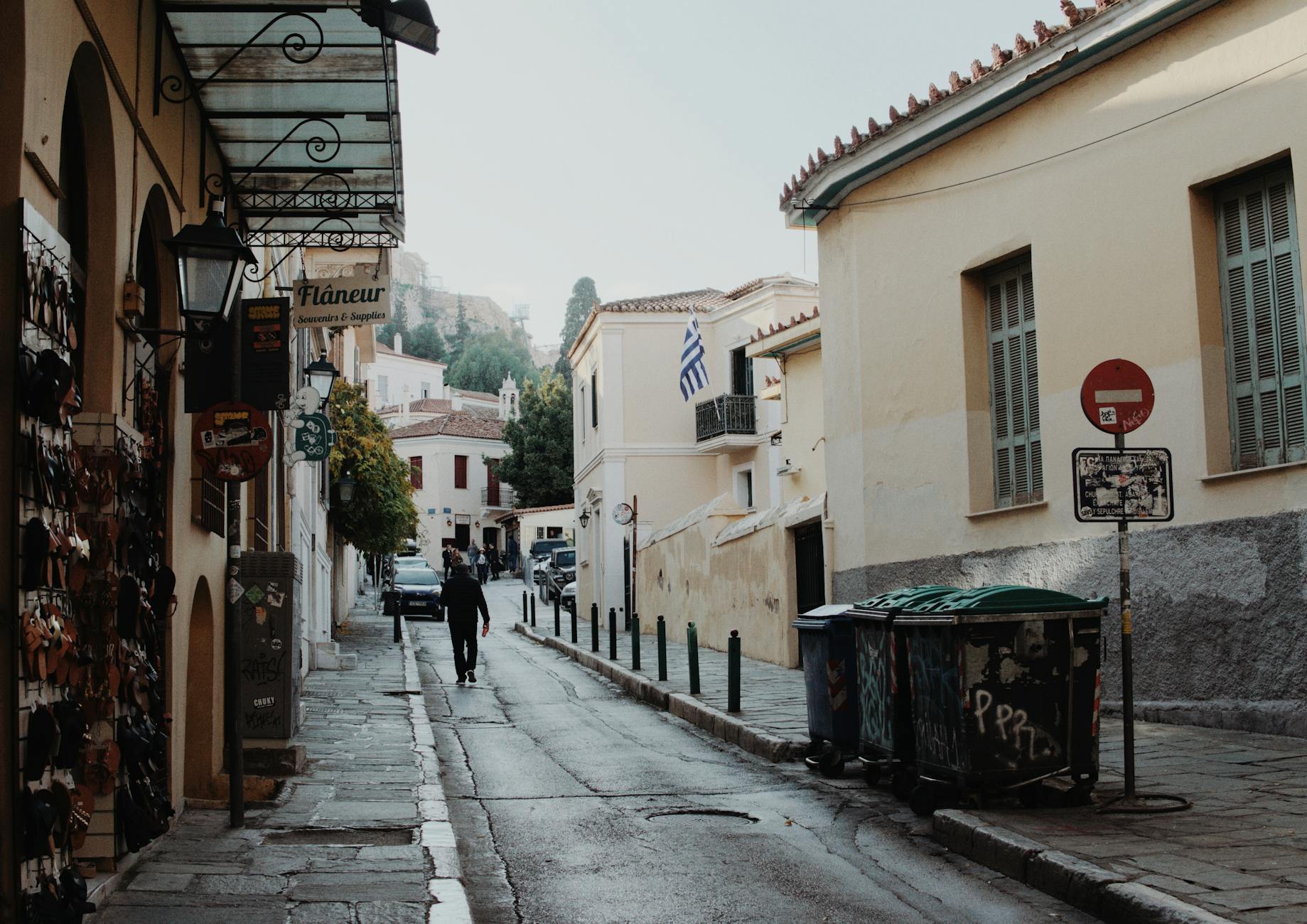
Athens neighborhoods are not just hotel zones. Some are better for sleeping, some for eating, some for walking, some for nightlife, and some for a single focused visit.
Plaka and Anafiotika
Identity: The most atmospheric old-Athens area, beautiful but heavily visited.
Plaka curls along the northeast slope of the Acropolis. Anafiotika, a tiny whitewashed cluster built by island craftsmen from Anafi, feels briefly Cycladic before you spill back into the city. Come early for quiet lanes or late for mood; avoid judging Athens by the most touristy restaurant strips.
Best time: Early morning or blue hour.
How long: 90 minutes to half a day.
Pair it with: Roman Agora, Hadrian’s Library, Syntagma, Acropolis Museum.
Skip if: You hate souvenir lanes and staged charm. Visit briefly anyway for the architecture.
One perfect walk: Start at Syntagma, pass the Metropolitan Cathedral, enter Plaka through smaller lanes, climb toward Anafiotika, pause for Acropolis views, descend toward Roman Agora, finish in Monastiraki.
Monastiraki and Thissio
Identity: The hinge between ancient ruins, flea-market energy, transit, and rooftops.
Monastiraki Square is chaotic in a useful way. It puts you near the Ancient Agora, Hadrian’s Library, Ermou, Psyrri, and metro connections. Thissio, especially along Apostolou Pavlou, offers gentler Acropolis views and evening strolls.
Best time: Late afternoon into evening.
Pair it with: Ancient Agora, Psyrri dinner, Filopappou sunset.
First-timer mistake: Eating only on the most obvious square-facing terraces because the view is there.
Psyrri
Identity: Street-art nightlife, tavernas, cocktail bars, boutique hotels, and energy.
Psyrri is fun, loud, and changing fast. It works especially well for visitors who want dinner and drinks within walking distance of the old center. It is less good for anyone seeking serenity.
Best time: Evening.
Pair it with: Monastiraki, Central Market, or a bar crawl.
Safety note: Busy streets feel lively; quiet side streets can feel different late. Use normal urban awareness.
Koukaki and Makrygianni
Identity: The best first-timer base for travelers who want the Acropolis nearby without sleeping inside maximum tourist density.
This area combines practical transit, the Acropolis Museum, the pedestrian promenade, Filopappou Hill, and a real restaurant/café scene. It is easy to like and hard to regret.
Best time: Morning for sites, evening for restaurants.
Pair it with: Acropolis Museum, Filopappou, National Museum of Contemporary Art, Neos Kosmos.
Syntagma and the National Garden
Identity: The civic and logistical center.
Syntagma is where Athens feels like a capital: Parliament, guards, protests, luxury hotels, metro lines, buses, shopping, and traffic. The National Garden behind Parliament is a useful green break.
Best time: Any time for transit; early or late for a quieter garden walk.
Pair it with: Plaka, Kolonaki museums, Panathenaic Stadium.
Local logic: Syntagma is not charming in the old-town sense, but it makes Athens work.
Kolonaki and Lycabettus
Identity: Polished Athens below the city’s most dramatic central hill.
Kolonaki has boutiques, galleries, cafés, and several major museums nearby. Lycabettus Hill gives one of the city’s best panoramic views, especially at sunset, though crowds and transport can be annoying at peak times.
Best time: Late afternoon, then dinner or drinks.
Pair it with: Benaki Museum, Museum of Cycladic Art, Byzantine and Christian Museum.
Pangrati and Mets
Identity: Local cafés, restaurants, apartment life, and central-but-not-touristy energy.
Pangrati is one of the best neighborhoods for travelers who want Athens beyond the Acropolis. It has excellent coffee, bakeries, tavernas, wine bars, and easy access to the Panathenaic Stadium and National Garden.
Best time: Lunch, dinner, or a slow café afternoon.
Pair it with: Panathenaic Stadium, Goulandris Museum of Contemporary Art, National Garden.
Exarchia
Identity: Alternative culture, politics, music, street art, bookstores, and grit.
Exarchia is polarizing. Some travelers love it immediately; others feel uneasy. It is not a polished tourist district. That is partly the point. Come during the day for cafés, bookshops, street art, and the route toward the National Archaeological Museum. For nightlife, know where you are going.
Best time: Daytime or intentional evening plans.
Pair it with: National Archaeological Museum.
Kypseli
Identity: Multicultural residential Athens with food depth and creative revival.
Kypseli is farther from the main sights but rich in daily life. It is best for repeat visitors, longer stays, and travelers interested in migrant food, old apartment blocks, neighborhood squares, and a different pace.
Best time: Late afternoon and evening.
Pair it with: Exarchia or National Archaeological Museum if you are making a north-central day.
Piraeus and Mikrolimano
Identity: Port city, ferries, seafood, yacht harbors, and maritime Greece.
Piraeus is practical if you have an early ferry, but it is also worth a food or harbor evening if you have extra time. Mikrolimano and parts of the waterfront offer a different feel from inland Athens.
Best time: Evening or ferry-buffer day.
Pair it with: Stavros Niarchos Foundation Cultural Center, if logistics align.
Best Things to Do
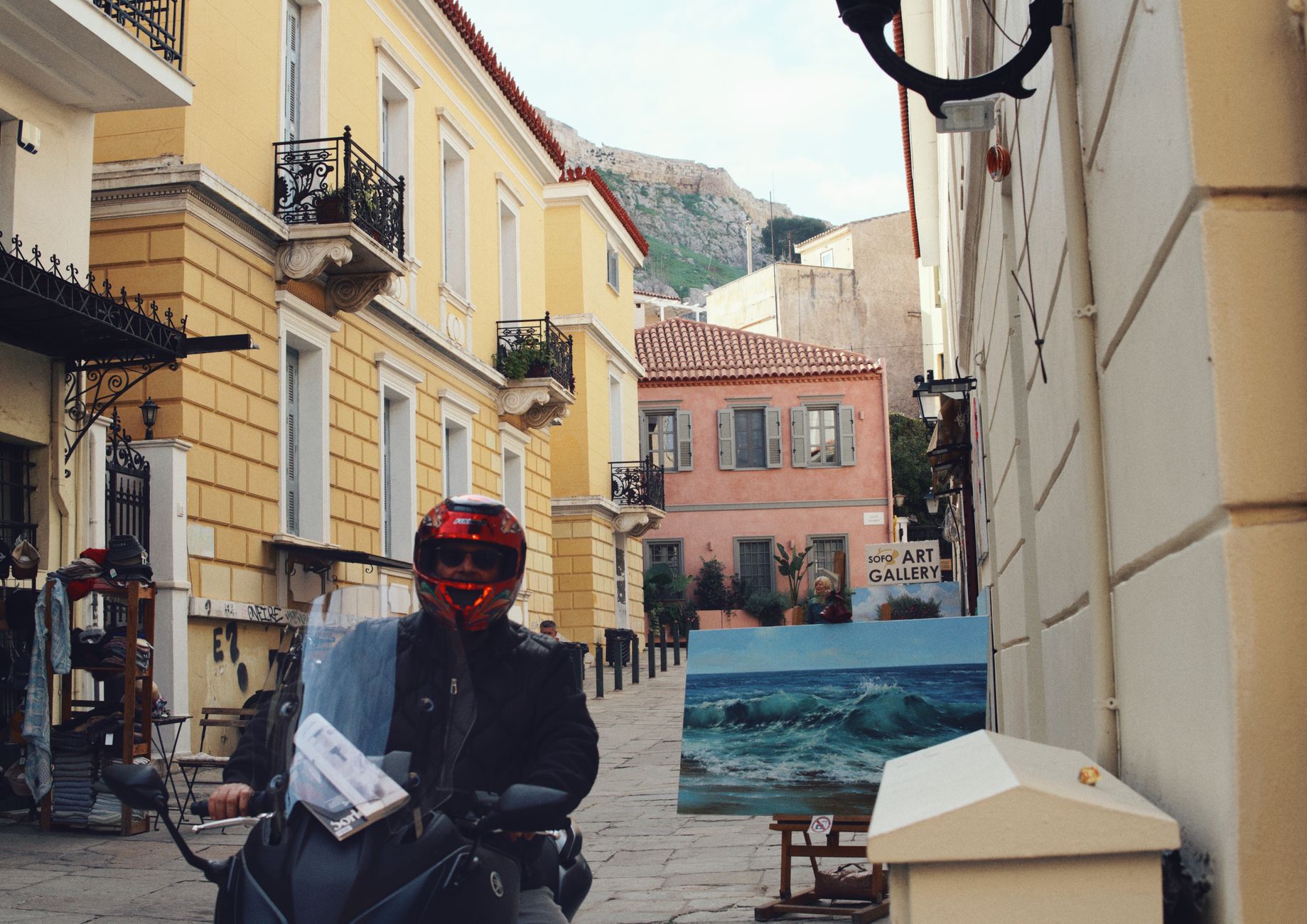
Athens has world-famous sights, but the order matters. Start with the essential archaeological spine, then build around museums, hills, food, neighborhoods, and the sea.
1. Visit the Acropolis Early and Slowly
What it is: Athens’ defining ancient citadel, home to the Parthenon, Erechtheion, Propylaea, Temple of Athena Nike, and south/north slopes.
Why it matters: The Acropolis is not just a symbol of Athens. It is one of the great surviving architectural and cultural ensembles of antiquity.
Time needed: 90 minutes for a focused visit; 2–3 hours if you linger on the slopes and views.
Best time: Opening time, especially spring through autumn. Late afternoon can be beautiful, but heat/crowds/light vary.
Book ahead: Yes. The official ODAP/Hellenic Heritage e-ticket platform is the official ticket channel for Greek archaeological sites, and Acropolis tickets use timed entry.[4][5]
Worth it? Absolutely. But do it well.
Common mistake: Arriving late morning in summer, underestimating heat and crowds, then rushing through the site without context.
2. Give the Acropolis Museum Its Own Time
What it is: A major modern museum displaying finds from the Acropolis slopes and monuments, including the Parthenon Gallery and the archaeological excavation beneath the building.
Why it matters: The Acropolis makes more sense after the museum. The museum makes more sense after seeing the hill. Ideally, do both within 24 hours.
Time needed: 2–3 hours.
Ticket note: The Acropolis Museum ticket is independent from the Acropolis site ticket. The museum’s official page lists general admission at €20 and reduced admission at €10, and states that tickets provide access to exhibition areas and the archaeological excavation.[6]
Best time: Afternoon after an early Acropolis visit, or Friday evening if hours and your schedule align.
Family note: Strong for families because the building is modern, air-conditioned, and easier than exposed ruins.
3. Walk the Ancient Agora
What it is: The civic heart of ancient Athens, below the Acropolis, with the remarkably preserved Temple of Hephaestus and the reconstructed Stoa of Attalos museum.
Why it matters: If the Acropolis is sacred and symbolic, the Agora is political, commercial, and social. It helps visitors imagine daily ancient Athens.
Time needed: 90 minutes to 2 hours.
Best time: Morning or late afternoon.
Pair it with: Monastiraki, Thissio, or Psyrri.
Worth it? Yes, especially if you care about democracy, philosophy, and everyday ancient life.
4. Visit the National Archaeological Museum
What it is: Greece’s major archaeological museum, with masterpieces from the Mycenaean, Cycladic, Classical, Hellenistic, and Roman worlds.
Why it matters: It expands the trip beyond Athens. The Acropolis is one chapter; this museum gives you the wider Greek story.
Time needed: 2–4 hours.
Best for: History lovers, museum people, rainy days, winter, repeat visitors, and anyone continuing to the Peloponnese or islands.
Common mistake: Trying to squeeze it after a full Acropolis morning when your brain is already done.
5. Walk Dionysiou Areopagitou and Filopappou Hill
What it is: The pedestrian promenade and hill southwest of the Acropolis, with one of the best free views in the city.
Why it matters: This is Athens at its most cinematic: marble, pines, street musicians, families, dogs, ruins, and the Parthenon from changing angles.
Time needed: 60–120 minutes.
Best time: Late afternoon into sunset.
The move: Do not overpay for every view. Some of Athens’ best views are public and free.
6. Watch the Guards at Syntagma and Walk the National Garden
What it is: The changing of the Evzones guard at the Tomb of the Unknown Soldier, beside Parliament, plus the National Garden nearby.
Why it matters: It gives you modern Greek state symbolism, not just ancient Greece.
Time needed: 20 minutes for the guards, 30–60 minutes for the garden.
Best pairing: Syntagma, Plaka, Kolonaki museums, or Panathenaic Stadium.
7. Climb or Ride Up Lycabettus Hill
What it is: The dramatic hill northeast of the center, with sweeping city views.
Why it matters: It reveals Athens as a huge basin between mountains and sea. The Acropolis suddenly becomes one part of a much larger metropolis.
Time needed: 1–2 hours.
Best time: Sunset if you can handle crowds; otherwise morning or late afternoon.
Skip if: You dislike crowded viewpoints or have already had a perfect Filopappou sunset.
8. Explore the Central Market and Food Streets
What it is: Varvakios Agora and the surrounding market streets for meat, fish, spices, olives, cheese, bakeries, tavernas, and old commercial Athens.
Why it matters: This is the city’s food infrastructure, not just restaurant culture.
Time needed: 60–90 minutes, longer if eating.
Best time: Morning to lunchtime.
Safety note: Keep normal pickpocket awareness in busy market streets.
9. See the Benaki, Cycladic, or Byzantine Museums
Athens has excellent mid-sized museums that are easier to digest than mega-museums.
- Benaki Museum: Broad Greek cultural history, excellent if you want continuity from antiquity to modern Greece.
- Museum of Cycladic Art: Beautifully presented ancient Cycladic works and broader antiquities.
- Byzantine and Christian Museum: Strong for the long Christian and Byzantine story often skipped by classical-focused visitors.
- Goulandris Museum of Contemporary Art: Useful for Pangrati/Mets itineraries.
- National Museum of Contemporary Art: Good if you want to balance ancient Athens with modern culture.
10. Swim or Sunset on the Athens Riviera
What it is: The coastal stretch south of the center toward Glyfada, Vouliagmeni, and beyond.
Why it matters: Athens is not just ruins and asphalt. The sea changes the trip.
Time needed: Half day to full day.
Best for: Summer, families, couples, luxury travelers, and anyone who wants water without flying to an island.
Common mistake: Treating the Riviera like a quick city-center attraction. Transport and beach choice matter.
11. Go to Cape Sounion for Sunset
What it is: The Temple of Poseidon on a headland southeast of Athens.
Why it matters: It gives you a mythic Greek sunset without needing a ferry.
Time needed: Half day, often afternoon/evening.
Best for: Travelers with 4+ days or those who want a lighter side trip than Delphi.
Worth it? Yes if you love sea views and can avoid a rushed, generic tour.
12. Spend an Evening in Psyrri, Pangrati, Exarchia, or Koukaki
The best Athens evenings often involve no landmark at all. Choose a neighborhood, book or identify dinner, then let the night continue.
Best for food and drinks: Pangrati, Koukaki, Psyrri.
Best for edge and music: Exarchia.
Best for rooftops and first-time atmosphere: Monastiraki/Psyrri.
Best for polished drinks: Kolonaki or the historic center’s cocktail bars.
Athens Itineraries
The best Athens itineraries avoid cross-city chaos. Group sights by area, give ruins morning priority, and make evenings neighborhood-based.
One Perfect Day in Athens
Morning: Acropolis timed entry as early as possible. Walk the site slowly, then descend toward the Acropolis Museum.
Lunch: Eat in Koukaki or Makrygianni, not necessarily at the most obvious museum-facing restaurant.
Afternoon: Acropolis Museum. If you are tired, cut the museum shorter and save energy.
Late afternoon: Walk Dionysiou Areopagitou toward Filopappou Hill or Areopagus for views.
Dinner: Psyrri, Koukaki, or Pangrati.
Evening: Rooftop drink with Acropolis view or a cocktail bar in the historic center.
Cut if tired: Lycabettus, Central Market, and extra ruins.
Two Days in Athens
Day 1: The Acropolis Spine
- Early Acropolis.
- Acropolis Museum.
- Lunch in Koukaki.
- Plaka and Anafiotika wander.
- Sunset from Filopappou or Areopagus.
- Dinner in Koukaki/Psyrri.
Day 2: Ancient Civic Athens and Modern Neighborhoods
- Ancient Agora in the morning.
- Monastiraki/Thissio walk.
- Central Market or Syntagma/National Garden.
- Panathenaic Stadium if interested.
- Dinner in Pangrati or Exarchia.
- Optional late drink.
Three Days in Athens
Day 1: Acropolis and the Classic Core
Do the Acropolis, Acropolis Museum, Plaka, and a hilltop sunset.
Day 2: Agora, Markets, and Neighborhood Athens
Ancient Agora, Monastiraki, Central Market, Psyrri, and Pangrati or Koukaki for dinner.
Day 3: Museums and the City Beyond the Postcard
Choose one museum track:
- Archaeology track: National Archaeological Museum, Exarchia café, Lycabettus sunset.
- Art/design track: Benaki + Cycladic + Kolonaki.
- Contemporary track: EMST + Koukaki/Neos Kosmos + Pangrati dinner.
- Sea track: Stavros Niarchos + Piraeus/Mikrolimano or Riviera.
Four to Five Days in Athens
Use the three-day itinerary, then add:
Day 4: Cape Sounion, Riviera, or Piraeus/Stavros Niarchos.
Day 5: Delphi day trip, Hydra day trip, or a deeper Athens day with Kypseli/Exarchia/Pangrati and extra museums.
One Week in Athens
A week works best if you treat Athens as a base, not a seven-day monument checklist.
- 3 days central Athens.
- 1 day Riviera/Cape Sounion.
- 1 day Delphi or Hydra.
- 1 day Piraeus/Stavros Niarchos/seafood.
- 1 day slow neighborhoods, shopping, food, and missed museums.
Food-Lover Itinerary
Morning: Central Market, koulouri, Greek coffee or freddo espresso.
Lunch: Traditional taverna, market-side restaurant, or meze.
Afternoon: Specialty coffee, bakery, nap.
Evening: Modern Greek restaurant in Pangrati/Koukaki/Psyrri or a fine-dining splurge.
Late: Cocktail bar, wine bar, or loukoumades.
Summer Heat Itinerary
7:30–11:00: Outdoor sightseeing.
11:00–14:00: Museum or shaded café.
14:00–17:00: Lunch, hotel break, pool, or indoor time.
17:00–20:30: Walk, hill, beach, or neighborhood.
21:00 onward: Dinner and drinks.
Rainy-Day Itinerary
Athens is better in rain than many expect. Use:
- Acropolis Museum.
- National Archaeological Museum.
- Benaki Museum.
- Museum of Cycladic Art.
- Coffee and bakeries.
- Long lunch.
- Wine bar or cocktail bar.
Skip exposed ruins until showers ease.
Food and Drink
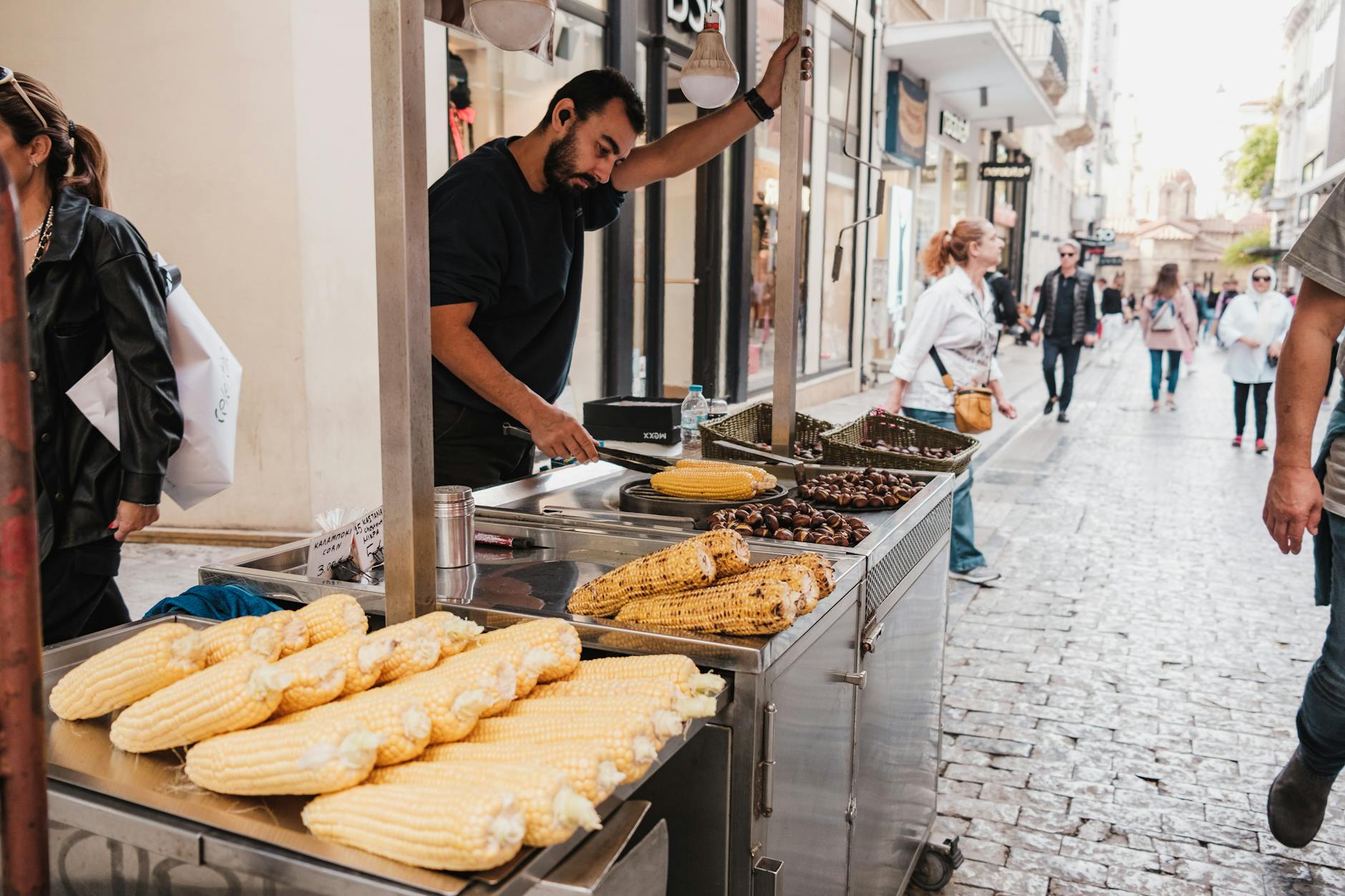
Athens is not just a Greek-food starter kit. It is a serious eating city with traditional tavernas, immigrant food, modern Greek restaurants, seafood, bakeries, street food, natural wine, specialty coffee, and one of Europe’s strongest cocktail scenes.
Athens Food Identity
Athenian eating is social, late, and shareable. The best meals often feel less like a formal sequence and more like a table slowly filling with small plates: dips, greens, cheese, grilled meat, seafood, salads, potatoes, pies, beans, wine, and conversation.
The city’s food culture is shaped by:
- Mainland Greek traditions.
- Island seafood and Aegean products.
- Asia Minor refugee cooking.
- Balkan, Middle Eastern, Caucasian, and newer migrant influences.
- Street food and bakeries.
- Contemporary chefs reworking Greek ingredients.
- A café culture built around long sitting, not takeaway efficiency.
What to Eat and Drink
| Item | What it is | How to approach it |
|---|---|---|
| Koulouri | Sesame bread ring sold from bakeries and street stands | Best as a morning snack with coffee. |
| Spanakopita / tiropita | Spinach pie / cheese pie | Look for bakeries with high turnover. |
| Souvlaki / gyros | Grilled skewers or shaved meat, often in pita | Great for a fast meal; do not confuse every famous central stand with the best in the city. |
| Horiatiki | Greek village salad with tomato, cucumber, onion, olives, feta | Best in tomato season; do not expect lettuce. |
| Tzatziki, taramasalata, fava, melitzanosalata | Classic dips | Order several with bread or pita. |
| Gemista | Stuffed tomatoes/peppers | Excellent in summer. |
| Dolmades | Stuffed vine leaves | Good as part of meze. |
| Moussaka | Layered eggplant/potato/minced meat/béchamel dish | Rich and filling; better at serious tavernas than tourist menus. |
| Grilled octopus / calamari / sardines | Seafood staples | Often better near the coast or at seafood-focused restaurants. |
| Horta | Boiled wild greens with lemon/olive oil | Simple, local, and underrated. |
| Loukoumades | Fried dough with honey or toppings | Best as a sweet stop, not a serious dessert course. |
| Greek yogurt with honey | Thick yogurt, often with nuts | Breakfast or dessert. |
| Freddo espresso / freddo cappuccino | Iced coffee culture | Essential in warm months. |
| Greek coffee | Strong, small, unfiltered coffee | Drink slowly; leave grounds at the bottom. |
| Ouzo / tsipouro | Anise spirit / grape pomace spirit | Better with meze than as shots. |
| Greek wine | Assyrtiko, Agiorgitiko, Xinomavro, Moschofilero, and more | Athens wine bars are a great way to learn. |
Where to Eat: By Situation
This is a editorial guide, so every restaurant mention should be checked before publication. Athens changes quickly. Treat these as reporting targets and examples, not a forever list.
| Situation | Good area | What to look for |
|---|---|---|
| First casual dinner | Koukaki, Pangrati, Psyrri | Modern Greek or relaxed taverna with strong recent reviews. |
| Traditional taverna night | Plaka backstreets, Exarchia, Pangrati, Koukaki | Seasonal dishes, cooked foods, locals, not laminated tourist menus. |
| Street-food lunch | Monastiraki, Syntagma side streets, Omonia/Agias Irinis | Souvlaki, pies, koulouri, falafel, quick grilled meats. |
| Market meal | Central Market area | Old-school cooked food, meat, seafood, soups, simple wine. |
| Seafood | Piraeus/Mikrolimano, Riviera, select central seafood tavernas | Freshness, simple grilling, seasonal fish, transparent pricing by weight. |
| Modern Greek | Pangrati, Koukaki, Kolonaki, Psyrri | Chefs using Greek products without turning dinner into a museum. |
| Fine dining | Syntagma/Kolonaki/Kallithea/Riviera | Book ahead. Athens has Michelin-recognized restaurants including Delta, Soil, The Zillers, Pelagos, and others listed by the official Athens guide/Michelin ecosystem.[12] |
| Cocktails | Historic center, Psyrri, Syntagma, Kolonaki, Kypseli | Athens is a top-tier bar city; Baba au Rum, for example, was listed No. 27 in The World’s 50 Best Bars 2025.[13] |
| Wine | Pangrati, Syntagma, Psyrri, Kolonaki | Greek wine by the glass, small plates, casual knowledgeable service. |
| Coffee | Everywhere, but Pangrati/Koukaki/Kypseli/Exarchia shine | Freddo espresso, specialty roasters, long sitting. |
Restaurants and Bars to Research Before Publication
For a final, live city guide, build a current, locally reported shortlist across these categories:
- Classic/taverna: To Kafeneio, Diporto, Avli, Ama Lachei, Oikeio, Karamanlidika, Seychelles, Cherchez la Femme.
- Street food/sweets: Kostas or other central souvlaki specialists, Lefteris o Politis, Lukumades, bakeries for pies and koulouri.
- Modern/fine dining: Soil, Delta, The Zillers, Spondi, Hytra, CTC, Pelagos, Nolan, Cookoovaya, Birdman, Pharaoh, Okra.
- Seafood/coast: Varoulko, Mikrolimano restaurants, Vouliagmeni/Riviera options.
- Bars: Baba au Rum, The Clumsies, Line, The Bar in Front of the Bar, Brettos, Au Revoir, Galaxy Bar, Wine is Fine, Epta Martyres.
Do not publish a restaurant list without checking closures, chef changes, booking rules, summer holiday closures, and whether the restaurant is still delivering value.
Food Practicalities
- Dinner is later than many visitors expect. A 9 pm dinner often feels more natural than 7 pm.
- Reservations matter for popular modern restaurants, weekends, rooftops, and fine dining.
- Smoking can still be part of outdoor dining/bar culture, even where indoor rules exist.
- Tap water is usually brought or available, but bottled water is also common.
- Bread may be charged automatically. This is normal.
- Fish pricing can be by weight. Ask before ordering whole fish.
- Vegetarians can eat well with pies, beans, salads, dips, greens, vegetables, cheese, and pasta/rice dishes, but check broths/meat additions.
- Vegan dining is possible but requires more planning outside explicitly vegan places. Greek fasting dishes can help.
- Allergies: Use written Greek translations for severe allergies; do not rely only on casual verbal explanations.
The Move
Eat one meal in the postcard center, then leave it. Athens food gets more interesting when you move to Koukaki, Pangrati, Exarchia, Kypseli, Piraeus, or the market streets.
Getting Around
Athens is easier to navigate than its reputation suggests, but only if you choose the right mode for the right job. The metro is clean, fast, and useful. Walking is excellent in the historic center but can be hot and uneven. Taxis are convenient for short hops, late nights, hills, and groups. Cars are a nuisance in the center.
Airport to Athens
Athens International Airport is well connected by metro, bus, suburban rail, and taxis. Official sources list these core options:[1][2]
| Mode | Best for | Approximate current info from official sources |
|---|---|---|
| Metro Line 3 | Most visitors arriving during service hours | Airport to Syntagma about 40 minutes; trains every 30 minutes; airport ticket €9 one way; airport line connects onward toward the city and Piraeus. |
| Airport express bus X95 | Budget travelers, late-night arrivals, Syntagma hotels | 24-hour bus to Syntagma; official guide lists €5.50 one way and about 60 minutes. |
| Airport express bus X96 | Piraeus/ferry travelers | 24-hour bus to Piraeus; official guide lists about 90 minutes. |
| Taxi | Families, groups, late arrivals, heavy luggage, door-to-door comfort | Official guide lists flat city-center fare €40 daytime / €55 midnight–5 am. |
| Suburban rail | Larissa Station/Piraeus or rail connections | Useful for specific routes; not always the simplest first-timer option. |
Public Transport in the City
Athens public transport includes metro, tram, buses, and trolleys. For visitors, the metro does most of the heavy lifting.
Key points:
- Standard ticket: €1.20 for 90 minutes, excluding airport services, according to the official Athens guide.[3]
- Tap2Ride: contactless Visa/Mastercard can be used on validators; use the same card/device for transfers.[3]
- Daily fare cap: €4.10 via Tap2Ride, according to the official guide.[3]
- 5-day ticket: €8.10 excluding airport services and X80, according to the official guide.[3]
- 3-day tourist ticket: €20, including unlimited travel and one airport round trip, according to the official guide.[3]
- Airport services require special fares.
Metro Lines for Visitors
- Line 3 / Blue: Airport, Syntagma, Monastiraki, Piraeus direction. Very useful.
- Line 2 / Red: Acropoli, Syntagma, Omonia, Panepistimio, Syngrou-Fix, Neos Kosmos. Useful for sights and central hotels.
- Line 1 / Green: Piraeus, Monastiraki, Omonia, Kifisia direction. Useful but older and can feel busier/rougher.
Walking
Athens is very walkable in the historic core, but not always comfortable.
Expect:
- Uneven pavements.
- Slippery marble or stone in some areas.
- Hills and stairs around Plaka, Anafiotika, Lycabettus, and Acropolis slopes.
- Heat radiating from stone and asphalt in summer.
- Motorbikes, café tables, and curb interruptions.
Best walking areas:
- Dionysiou Areopagitou.
- Plaka/Anafiotika, with caveats.
- Thissio and Apostolou Pavlou.
- National Garden to Panathenaic Stadium.
- Koukaki.
- Pangrati/Mets.
- Kolonaki, if you can handle slopes.
Taxis and Ride-Hailing
Taxis can be useful and relatively affordable compared with many Western European capitals. Use official taxis or reputable apps/services; confirm route expectations; ask for receipts if needed. Taxi apps can reduce language friction and pricing anxiety.
Best uses:
- Late-night returns.
- Hotel-to-restaurant hops in heat.
- Luggage transfers.
- Lycabettus or hill-heavy areas.
- Groups of three or four.
Bad uses:
- Crossing the center at rush hour if the metro is direct.
- Airport runs when the metro is easy and you are solo/light.
- Short trips from taxi stands in hyper-tourist zones without clarity.
Should You Rent a Car?
Usually no, not for central Athens. Rent a car only if:
- You are leaving the city for the Peloponnese, rural mainland, or multiple non-transit side trips.
- You are staying on the Riviera and planning coastal drives.
- You have parking arranged.
Do not rent a car for Plaka, Monastiraki, Koukaki, Syntagma, or museum sightseeing.
Ferry Logistics
Piraeus is large and confusing if you arrive late or cut timing close. Build buffers.
For ferries:
- Confirm the exact gate.
- Arrive earlier than you think, especially with luggage.
- Use X96, metro Line 3, suburban rail, taxi, or hotel transfer depending on timing.
- Consider sleeping in Piraeus before a very early ferry.
- Do not schedule a tight same-day connection from international flight to ferry unless you can absorb delays.

Budget and Costs
Athens can be good value for a European capital, but it is no longer universally cheap. Hotels near the Acropolis and high-demand restaurants have risen in price, especially during spring, fall, and peak travel periods.
Daily Budget Ranges
These are planning ranges, not guarantees.
| Traveler style | Daily estimate excluding flights | What it looks like |
|---|---|---|
| Shoestring | €45–€80 | Hostel bed or budget room, bakery/street food, limited paid sights, public transport. |
| Budget | €80–€140 | Simple hotel/guesthouse, casual meals, Acropolis plus one museum, metro/taxis sparingly. |
| Mid-range | €140–€260 | Good central hotel, Acropolis and museums, sit-down meals, drinks, some taxis. |
| Comfortable | €260–€450 | Boutique or 4-star hotel, better restaurants, tours, taxis, rooftop drinks. |
| Luxury | €450+ | 5-star hotel, fine dining, private guides, transfers, Riviera add-ons. |
Typical Costs to Research and Update
| Item | Planning note |
|---|---|
| Standard public transport ticket | Official Athens guide lists €1.20 for 90 minutes, excluding airport services.[3] |
| Airport metro | Official Athens guide lists €9 one-way, €16 return.[1] |
| Airport bus | Official Athens guide lists €5.50 one-way.[1] |
| Airport taxi to center | Official Athens guide lists €40 daytime / €55 midnight–5 am.[1] |
| Acropolis site | Ministry/official ticketing sources list current Acropolis tickets and timed-entry rules; update before publication.[5] |
| Acropolis Museum | Official museum page lists general admission €20 and reduced €10.[6] |
| Casual street meal | Often affordable, but central famous spots can cost more than neighborhood equivalents. |
| Taverna dinner | Varies widely; shared plates and house wine can be good value. |
| Cocktails | Athens top bars can be international-city priced. |
| Fine dining | Lower than some global capitals but still a major splurge. |
Best Value Moves
- Stay in Koukaki, Pangrati, or a well-reviewed central-adjacent area instead of paying only for Plaka charm.
- Use the metro from the airport if luggage and timing allow.
- Eat bakery breakfasts and splurge at dinner.
- Prioritize paid sights: Acropolis, Acropolis Museum, Ancient Agora, National Archaeological Museum.
- Use public hill views instead of paying for every rooftop.
- Book ferries and hotels early in peak island season.
- Choose lunch as a bigger meal where restaurants offer better value.
- Do one excellent guided archaeology tour rather than several mediocre packaged tours.
Worth the Splurge
- A licensed guide for the Acropolis/Agora if you care about history.
- A hotel with a genuinely good location and soundproofing.
- One excellent modern Greek dinner.
- A private or small-group Cape Sounion/Delphi trip if public logistics are awkward.
- Taxi at the right time: late-night, luggage, heat, or mobility needs.
Usually Not Worth It
- Generic tourist-menu restaurants with aggressive hosts in the most obvious lanes.
- A car rental for central sightseeing.
- Overpriced rooftop meals where you are paying for the view and getting mediocre food.
- Trying to “save” by staying far away if you lose hours and energy each day.
- Hop-on/hop-off bus as your main transit plan unless you specifically enjoy that format.
Safety, Health, and Scams
Athens is generally manageable for visitors, but it is still a large, busy city. The safety conversation should be specific, not alarmist.
General Safety
Most visitors experience Athens without serious problems. The main issues are pickpocketing, heat, traffic, nightlife judgment, protest disruption, and occasional block-by-block discomfort in less polished areas.
Use normal city awareness:
- Keep bags closed in crowded metro stations, markets, and squares.
- Be careful around Monastiraki, Omonia, Syntagma crowds, and packed transit.
- Avoid empty side streets late at night if you are unsure of the area.
- Use taxis/apps when tired or after drinking.
- Watch for traffic and motorbikes even when you think you have pedestrian priority.
Common Scams and Irritations
| Issue | What it looks like | What to do |
|---|---|---|
| Taxi confusion | Unclear pricing, route detours, cash-only pressure | Use apps when possible, confirm airport flat fare rules, ask for receipt. |
| Pickpocketing | Crowded metro, markets, squares, distraction tactics | Cross-body bag, phone away near doors, no wallet in back pocket. |
| Restaurant traps | Pushy hosts, vague prices, view-first menus | Check menu and reviews; avoid pressure. |
| Bar overcharging | Tourist-heavy bars, unclear drink prices | Check menu prices before ordering rounds. |
| Fake friendliness/sob stories | Stranger approaches in nightlife or tourist areas | Be polite but firm; keep moving. |
| Ticket resellers | Third-party markups or confusing “skip-line” claims | Use official sites where possible; understand what “skip line” actually skips. |
Heat Is a Safety Issue
Athens summer heat can be serious. Recent heatwaves have caused temporary Acropolis closures during the hottest hours.[11]
In hot months:
- Book early Acropolis slots.
- Carry water.
- Wear a hat and sunscreen.
- Use museums for the afternoon.
- Avoid alcohol-heavy lunches before exposed walks.
- Do not hike Lycabettus at midday.
- Watch children, older travelers, and anyone with medical conditions.
Health Practicalities
- Pharmacies are common and useful; look for the green cross.
- Bring prescriptions in original packaging and check medication rules.
- Tap water is generally safe in Athens.
- Air quality and wildfire smoke can occasionally affect summer travel; check local forecasts.
- Travel insurance is wise, especially if ferries, flights, or island connections are involved.
Protests and Strikes
Athens has an active protest culture, and strikes can affect transport, ferries, taxis, museums, and flights. This is not a reason to avoid Athens. It is a reason to build buffers, especially before ferries and flights.
Traveler-Specific Notes
- Solo travelers: Athens is good for solo travel if you choose lodging well and use normal nighttime caution.
- Solo women travelers: Many visit comfortably. Choose quieter hotel streets, use taxis late, and trust your instincts in nightlife areas.
- LGBTQ+ travelers: Central Athens has visible queer-friendly nightlife and cultural spaces, but public affection norms vary by area; use urban awareness.
- Families: Heat, uneven sidewalks, and late dinners are bigger issues than safety.
- Older travelers: Use taxis strategically and avoid midday summer sightseeing.
Accessibility and Mobility
Athens is uneven. It has made real accessibility improvements, especially in the metro and major museums, but the city’s hills, marble, broken sidewalks, curb issues, heat, and archaeological terrain can make travel challenging.
The Honest Summary
Athens can work for travelers with mobility needs, but it requires careful hotel selection, route planning, and backup plans. The modern metro and Acropolis Museum are much easier than Plaka’s lanes or the Acropolis hill itself.
What Helps
- Many metro stations have elevators and accessible infrastructure; the European AccessibleEU summary notes lifts and level/ramped access points at Athens Metro stations.[14]
- The Acropolis Museum is strongly accessible by comparison with outdoor sites: the museum’s official page lists ramps for wheelchair and stroller access, elevator access and accessible WCs on all floors, wheelchairs for loan, Braille guide availability, and guide-dog access.[6]
- Syntagma, Makrygianni, Koukaki, and flatter central hotel locations are often easier than steep old-town lanes.
- Taxis can solve some slope and heat issues.
What Is Hard
- Plaka and Anafiotika include steps, slopes, and uneven surfaces.
- The Acropolis involves exposed terrain, crowds, and uneven ground even where access exists.
- Sidewalks may be blocked by trees, scooters, café tables, cars, or broken paving.
- Summer heat magnifies every mobility challenge.
- Elevator outages can disrupt otherwise accessible metro plans.
Best Areas for Mobility-Conscious Stays
- Near Syntagma for transit and central access.
- Near Acropoli metro/Makrygianni for the Acropolis Museum and promenade.
- Parts of Koukaki on flatter streets.
- Select hotels in Kolonaki/Syntagma if taxis and hotel accessibility are strong.
Areas to Approach Carefully
- Anafiotika and upper Plaka.
- Lycabettus slopes.
- Steep boutique streets sold as “romantic.”
- Piraeus ferry gates if traveling with heavy luggage and limited mobility.
The Move
For accessible Athens, plan fewer zones per day. One museum plus one meal plus one short scenic route is better than heroic routing across old stone.
Families, Solo Travelers, and Special Considerations
Athens with Kids
Athens can be excellent with children if you manage heat and avoid museum overload.
Best family activities:
- Acropolis Museum.
- National Garden.
- Panathenaic Stadium.
- Filopappou Hill early or late.
- Stavros Niarchos Foundation Cultural Center.
- Riviera beach day.
- Short food tour.
- Ancient Agora if framed as “where ancient Athenians lived their public life.”
Family tips:
- Do the Acropolis early.
- Bring snacks and water.
- Use taxis more than you would solo.
- Choose hotels with elevator, air-conditioning, and breakfast.
- Avoid nightlife-heavy Psyrri stays with small kids.
- Plan dinners earlier than locals if needed, but expect less atmosphere.
Athens for Teens
Teens may like:
- Street art in Psyrri/Exarchia.
- Rooftop views.
- Food tours.
- Stadium and Olympic history.
- Beaches/Riviera.
- Contemporary art.
- Shopping around Ermou and local boutiques.
Solo Travelers
Athens is strong for solo travelers because cafés, bars, street food, museums, and walking routes work well alone. Choose central lodging, eat at casual tavernas or bar seats, and use group tours for archaeology or food if you want social structure.
Couples
Best romantic moves:
- Sunset from Filopappou.
- Dinner in Pangrati/Koukaki/Plaka backstreets.
- Cocktail with an Acropolis view.
- Riviera swim day.
- Cape Sounion sunset.
- Kolonaki museum-and-wine-bar afternoon.
Older Travelers
Athens works well when paced correctly. Book a comfortable, central hotel with elevators and strong air-conditioning. Use taxis for hills. Avoid July/August unless you are comfortable with heat management. Prioritize the Acropolis Museum, National Archaeological Museum, and guided early-morning Acropolis access.
Remote Workers and Longer Stays
Athens can be a good longer-stay city thanks to cafés, food, weather, and regional access. For longer stays, consider Pangrati, Koukaki, Kypseli, Neos Kosmos, or Kolonaki depending on budget and lifestyle. Check Wi-Fi, desk setup, air-conditioning, and noise before booking.
Shopping and Souvenirs
Athens has too many bad souvenirs and plenty of good ones. The goal is to avoid mass-produced “Greek” clutter and buy things connected to actual craft, food, design, books, or local producers.
What to Buy
- Greek olive oil from quality producers.
- Honey, especially thyme honey.
- Dried herbs: oregano, mountain tea, sage.
- Greek wine or spirits, subject to luggage/customs rules.
- Ceramics and contemporary Greek design.
- Jewelry inspired by ancient forms but made by real designers.
- Leather sandals from reputable makers.
- Books on Greek history, mythology, food, architecture, or modern culture.
- Museum reproductions from official museum shops.
- Natural cosmetics using Greek ingredients.
Where to Shop
| Area | Best for |
|---|---|
| Plaka | Souvenirs, sandals, tourist-friendly gifts; choose carefully. |
| Monastiraki | Flea-market energy, vintage, antiques, tourist goods, browsing. |
| Kolonaki | Boutiques, design, galleries, upscale gifts. |
| Syntagma/Ermou | Mainstream shopping. |
| Psyrri | Small makers, leather, street-style shops, mixed quality. |
| Museum shops | Reliable design, books, reproductions, gifts. |
What to Avoid
- Fake antiquities or anything that raises cultural-property questions.
- Cheap “Greek” souvenirs made nowhere near Greece.
- Olive oil with no clear producer or date information.
- Leather goods with suspiciously vague origin claims.
- Food items that may violate customs rules in your destination country.
The Move
Use museum shops for quality gifts when you are tired of bargaining or filtering. The Acropolis Museum, Benaki, Cycladic, and other major institutions can be better souvenir sources than random old-town shops.
Arts, Culture, History, and Context
Athens is not just ancient Greece. A world-class Athens guide has to explain continuity and rupture: classical city, Roman city, Byzantine city, Ottoman town, 19th-century capital, refugee city, postwar sprawl, crisis-era capital, and contemporary creative hub.
A Short History for Travelers
Ancient Athens: The city reached extraordinary political, artistic, and intellectual influence in the 5th century BCE, the age associated with democracy, Pericles, the Parthenon, drama, philosophy, and naval power.
Hellenistic and Roman Athens: Athens remained culturally prestigious even when political power shifted. Roman patrons left major monuments, and the city remained a center of learning.
Byzantine and Ottoman Athens: The city shrank in global importance but did not disappear. Churches, mosques, domestic architecture, and layered urban patterns are part of the story, though often overshadowed by the classical narrative.
Modern Greek capital: After Greek independence, Athens became the capital of the modern Greek state in the 19th century. Neoclassical buildings around Syntagma, Panepistimiou, and elsewhere reflect this era’s attempt to connect the new state to ancient heritage.
20th-century expansion: Refugee arrivals, war, occupation, civil conflict, migration, and rapid apartment-block construction reshaped Athens into a sprawling metropolis.
Contemporary Athens: The financial crisis, austerity, protest culture, tourism boom, creative industries, immigration, and short-term rentals all shaped the city visitors see now.
Museums by Interest
| Interest | Best museums/sites |
|---|---|
| Acropolis context | Acropolis Museum, Acropolis slopes, Ancient Agora. |
| Ancient Greece broadly | National Archaeological Museum, Museum of Cycladic Art, Ancient Agora Museum. |
| Greek cultural continuity | Benaki Museum. |
| Byzantine/Christian history | Byzantine and Christian Museum. |
| Contemporary art | National Museum of Contemporary Art, Goulandris Museum, galleries. |
| Modern Greek city life | Benaki branches, neighborhood walks, National Historical Museum. |
| Architecture | Neoclassical trilogy, Plaka houses, interwar apartments, modern cultural centers. |
Books, Films, and Listening Before You Go
For a final article, include a curated reading/listening box. Strong categories:
- A short accessible history of ancient Athens.
- A modern Greek history primer.
- Greek mythology retellings, clearly labeled as myth rather than history.
- Novels or memoirs set in modern Greece.
- A Greek music primer: rebetiko, laiko, contemporary artists.
- A food-focused resource on Greek regional cuisine.
Etiquette and Cultural Norms
- Greet people when entering small shops or cafés.
- Do not photograph people closely without permission.
- Dress respectfully in churches and monasteries.
- Avoid treating ruins as props. Do not climb, sit on, or touch restricted ancient stones.
- Expect slower restaurant pacing; do not rush servers as if tables must turn quickly.
- Smoking may be more visible than in some countries.
- Political conversations can be lively; listen more than you lecture.
- Learn a few words: kalimera (good morning), efcharisto (thank you), parakalo (please/you’re welcome).
Seasonal and Month-by-Month Guide
Athens changes more by heat, holidays, and visitor volume than by cold.
Spring
Best for: First-timers, walking, archaeology, museums, day trips, food.
Spring may be the best version of Athens. The city is bright but not yet punishing, evenings are lively, and outdoor dining becomes easy. Greek Orthodox Easter can be meaningful but affects schedules and travel patterns, so check dates.
Pack: Layers, comfortable shoes, light rain jacket, sunglasses.
Summer
Best for: Nightlife, Riviera, island pairings, long evenings.
Summer Athens is intense. The city glows, bars stay lively, and beaches are useful, but midday ruins can be brutal.
Strategy: Start early, eat long lunches, use museums and hotel breaks, go out late.
Pack: Hat, sunscreen, breathable clothes, refillable bottle, serious walking sandals/shoes.
Autumn
Best for: Nearly everything.
September and October are prime Athens months. The sea may still be usable, restaurants are active, and walking is easier than high summer.
Watch-outs: September can still feel hot; October is popular and not always cheap.
Winter
Best for: Museums, food, bars, budget, fewer crowds.
Winter Athens is not a beach fantasy, but it can be a great cultural city break. Archaeological sites are easier, hotels can be better value, and the city feels more local.
Watch-outs: Rain, shorter days, occasional chilly nights, seasonal hours.
Events to Build Around or Watch
- Orthodox Easter.
- Greek Independence Day, March 25.
- Ohi Day, October 28.
- Athens Epidaurus Festival season.
- Athens Marathon, usually in autumn.
- Major concerts and cultural events.
- Strikes, protests, and transport disruptions.
- Ferry peak periods around summer holidays.
Always verify event dates before publishing or booking.
Day Trips from Athens
Athens day trips vary wildly in payoff and logistics. Choose based on the kind of trip you want, not just name recognition.
Best Day Trips at a Glance
| Day trip | Best for | Time/effort | Verdict |
|---|---|---|---|
| Cape Sounion | Sunset, sea views, light archaeology | Half day | Best easy side trip. |
| Delphi | Ancient history, mountain setting | Long full day | Worth it if you love history; tiring but memorable. |
| Hydra | Island atmosphere without flights | Full day | Beautiful, but ferry timing matters. Better as overnight if you want depth. |
| Aegina | Easy island, pistachios, temple, beaches | Full day | Practical island day from Piraeus. |
| Nafplio / Epidaurus / Mycenae | Peloponnese history and towns | Long day or overnight | Better with overnight if possible. |
| Corinth Canal / Ancient Corinth | Biblical/ancient history, quick mainland trip | Half/full day | Good with a guide or as part of Peloponnese route. |
| Meteora | Monasteries and dramatic landscapes | Very long day | Better as overnight; day trip is possible but punishing. |
| Athens Riviera | Beaches, lake, relaxed summer day | Half/full day | Not really a day trip, but a useful city escape. |
Cape Sounion
Why go: Temple of Poseidon, sea cliffs, sunset.
Best for: Couples, photographers, mythology lovers, travelers who want a manageable side trip.
How to do it: Bus, rental car, private driver, or tour. A guided/driver option often makes sunset logistics easier.
Common mistake: Picking a rushed tour with little time at the site or no meal/sea pause.
Delphi
Why go: One of the ancient world’s great sacred sites, set on mountain slopes.
Best for: History lovers and travelers with at least four days in Athens.
How to do it: Long day by tour/private driver/bus, but overnight is better if you dislike rushed travel.
Common mistake: Doing Delphi the day after arrival or before an early ferry.
Hydra
Why go: Car-free island atmosphere, harbor beauty, galleries, walks, swimming rocks.
Best for: Travelers who want an island taste without committing to a full island stay.
How to do it: Ferry from Piraeus. Check schedules carefully and build port buffer.
Common mistake: Assuming one island day equals a relaxed island trip. It can be lovely, but ferries frame the whole day.
Aegina
Why go: Easy ferry, pistachios, Temple of Aphaia, seaside meals.
Best for: Practical island day, families, travelers wanting a lower-drama ferry outing.
How to do it: Ferry from Piraeus.
Nafplio, Mycenae, and Epidaurus
Why go: A beautiful Peloponnese town plus major ancient sites.
Best for: Travelers with a car/driver and interest in Greek history beyond Athens.
Verdict: Better as an overnight or two-night extension than a single day, though tours are common.
Meteora
Why go: Monasteries perched on rock pillars.
Verdict: Extraordinary, but not close. Do not casually tack it onto Athens unless you accept a very long day or, better, overnight logistics.
What to Skip
A trustworthy city guide tells readers what not to prioritize.
Skip or Deprioritize If Short on Time
- Every minor ruin after the Acropolis and Agora: Roman Agora, Hadrian’s Library, Kerameikos, and Olympieion are worthwhile for specific interests, but not all are essential for a two-day first visit.
- Overpriced rooftop meals: Go for a drink or view, but eat dinner where the food is the point.
- A one-day Meteora trip from Athens: Possible, but exhausting. Overnight is better.
- Staying on the Riviera for a central-Athens cultural trip: Nice, but inefficient.
- A car rental inside central Athens: It creates more problems than it solves.
- Plaka-only eating: Enjoy Plaka, but do not make it your entire food experience.
- Midday Acropolis in July/August: This is not heroic; it is poor planning.
- Ferry connections with no buffer: Greece logistics are good until weather, strikes, delays, or port confusion intervene.
Better Alternatives
| Instead of... | Try... |
|---|---|
| A mediocre Plaka tourist taverna | Dinner in Koukaki, Pangrati, Psyrri, or Exarchia |
| Paying for every Acropolis view | Filopappou Hill or Areopagus at sunset |
| A rushed day of seven ruins | Acropolis + Museum + Ancient Agora done well |
| Staying far away to save money | Central-adjacent Koukaki/Pangrati/Neos Kosmos with transit |
| Midday summer sightseeing | Early sites, afternoon museum, late dinner |
| Generic souvenir shops | Museum shops, local design boutiques, quality food products |
Common Mistakes
- Treating Athens as a stopover only. Two nights is better than one; three full days is better still.
- Visiting the Acropolis too late in the day. Heat and crowds can ruin the experience.
- Staying in the wrong neighborhood. Psyrri is fun until you need sleep; Plaka is charming until you want local food; Riviera is beautiful until you need central access.
- Ignoring ferry buffers. Piraeus is big; Athens traffic and transit delays happen.
- Trying to see every ancient site. Prioritize quality of attention.
- Eating only in tourist corridors. Athens food is better when you move outward.
- Underestimating heat. Especially dangerous for children, older travelers, and walkers.
- Wearing bad shoes. Marble, stone, slopes, and heat punish cute-but-useless footwear.
- Assuming taxis can enter every old lane. Some hotel approaches involve walking.
- Skipping modern Athens. The Acropolis is essential; it is not the whole city.
- Booking a hotel without checking noise. Athens can be loud late.
- Forgetting museum closure/holiday changes. Always verify hours.
- Using outdated ticket advice. Acropolis and archaeological site pricing/pass rules changed in recent years; check official pages.
- Leaving no room for spontaneous evenings. Athens is a city of lingering.
Responsible Travel
Athens is under pressure from tourism, housing changes, heat, and infrastructure strain. Responsible travel here is not complicated. It means spending money thoughtfully, respecting the city as a home, and not treating ancient sites as a personal photo set.
Do
- Use official ticketing and licensed guides.
- Support independent restaurants, bakeries, shops, and museums.
- Stay in legal, responsibly managed accommodation.
- Keep noise down in residential apartment buildings.
- Respect archaeological barriers and staff instructions.
- Carry water and reduce single-use plastic where possible.
- Use public transport, walking, and taxis intelligently rather than renting a car.
- Visit beyond the Acropolis corridor when you have time.
- Learn basic Greek greetings.
Do Not
- Climb on ruins or pose on restricted stones.
- Treat Anafiotika or Plaka homes like open-air photo studios.
- Assume every local wants to discuss politics or ancient history with tourists.
- Book exploitative “poverty” or “crisis” tours.
- Use short-term rentals in ways that displace residents without considering impact.
- Leave no buffer before flights/ferries and then pressure staff to fix unrealistic logistics.
Packing List
Year-Round Essentials
- Excellent walking shoes with grip.
- Light day bag that closes securely.
- Refillable water bottle.
- Sunglasses.
- Portable charger.
- European plug adapter.
- Light layer for evenings.
- Basic medication kit.
- Written allergy/medical notes if needed.
Spring and Autumn
- Layers.
- Light rain jacket.
- Comfortable trousers/dresses/skirts for variable temperatures.
- Sun protection.
Summer
- Hat with real shade.
- Sunscreen.
- Breathable linen/cotton clothing.
- Electrolytes if you are heat-sensitive.
- Swimsuit for Riviera/coast plans.
- Sandals that can handle stone, not flimsy beach-only shoes.
- Hotel with strong air-conditioning.
Winter
- Light-to-medium jacket.
- Sweater.
- Rain layer.
- Closed shoes.
- Scarf for cooler evenings.
What Not to Pack
- Formal clothing unless you have fine-dining or luxury nightlife plans.
- Uncomfortable heels for old stone streets.
- Too much luggage if your hotel is in a pedestrian or hilly area.
- Beach-only footwear for city sightseeing.
- The assumption that “Mediterranean” means no rain or chill.
FAQ
Is Athens worth visiting?
Yes. Athens is worth visiting for the Acropolis alone, but it becomes truly rewarding when you add neighborhoods, food, museums, hills, bars, and the coast. Treating it as a one-night gateway undersells it.
How many days do I need in Athens?
Three full days is the best first-visit length. Two days works for a tight island stopover. Four or five days lets you add deeper museums, the Riviera, Cape Sounion, Delphi, or an island day trip.
What is the best area to stay in Athens for first-timers?
Koukaki/Makrygianni is the best overall first-timer base for many visitors. Syntagma is best for transit convenience, Plaka for charm, Monastiraki/Psyrri for nightlife, Kolonaki for comfort, and Pangrati for local food and cafés.
Is Athens safe?
Athens is generally manageable for visitors, but use big-city awareness. Watch for pickpockets in crowded areas, be thoughtful late at night, avoid heat mistakes in summer, and leave buffers for strikes or protests.
Do I need a car in Athens?
No. A car is a liability in central Athens. Use the metro, walking, taxis, and tours. Rent a car only for onward mainland travel or specific coastal/regional plans.
What should I book ahead?
Book Acropolis timed entry, popular guides/tours, high-demand restaurants, ferry tickets in peak season, and central hotels for spring/fall. Fine-dining and popular rooftop/bar experiences may also require advance planning.
Is the Acropolis Museum included with the Acropolis ticket?
No. The Acropolis Museum states that its ticket is independent from the Acropolis site and other archaeological sites.[6]
Is Athens expensive?
Athens is cheaper than some Western European capitals but no longer a bargain everywhere. Hotels near the Acropolis, cocktail bars, rooftops, and popular restaurants can be expensive. Public transport and casual food remain good value.
Is Athens good with kids?
Yes, if you pace it well. The Acropolis Museum, National Garden, Panathenaic Stadium, Filopappou Hill, Stavros Niarchos, and Riviera beaches all work well. Summer heat is the main challenge.
When is the best time to visit Athens?
April, May, early June, late September, October, and early November are the best months for most travelers. July and August require heat strategy. Winter is underrated for museums, food, and lower crowds.
Should I visit Athens before or after the islands?
Both work. Visiting before the islands gives cultural context; visiting after the islands gives you a final city burst before flying home. For logistics, place Athens wherever it best protects your international flight and ferry timing.
Source Notes
These are the core sources checked for current logistics and factual claims in this sample. A production article should re-check all details close to publication.
- 1. The Official Athens Guide, “Coming from the Airport,” including Athens airport distance, metro Line 3 travel time/frequency/fares, express bus routes/fares, and airport taxi flat fare. https://www.thisisathens.org/getting-around/airport-transportation-metro-bus-taxi
- 2. Athens International Airport official public transportation page, including Metro Line 3 connection to Athens city center and Piraeus, suburban railway, OASA airport express buses, and Piraeus connection estimates. https://www.aia.gr/en/traveller/transportation-airport/public-transportation-airport
- 3. The Official Athens Guide, “Public Transport,” including Ath.ena tickets/cards, Tap2Ride, standard fare, daily cap, airport fare, 5-day ticket, and 3-day tourist ticket. https://www.thisisathens.org/getting-around/public-transportation-metro-bus-tram
- 4. ODAP, “Tickets,” describing Hellenic Heritage e-Ticket as the official platform for purchasing admission tickets to Greek museums, monuments, and archaeological sites. https://www.odap.gr/en/services/tickets/
- 5. Hellenic Ministry of Culture/Odysseus and Hellenic Heritage e-ticket pages for Acropolis ticketing, pricing, and timed entry. Ministry page: https://odysseus.culture.gr/h/3/eh355.jsp?obj_id=2384 and official ticketing platform: https://hhticket.gr/
- 6. Acropolis Museum official “Plan Your Visit” page, including ticket prices, independent ticketing from the Acropolis site, opening-hour patterns, free days, excavation access, and accessibility services. https://www.theacropolismuseum.gr/en/plan-your-visit
- 7. Hellenic Ministry of Culture free-admission page for state archaeological sites, monuments, and museums, including listed free-admission dates and eligibility categories. https://www.culture.gov.gr/en/service/SitePages/view.aspx?iID=2695
- 8. European Union Travel Europe ETIAS information, noting ETIAS as a travel authorisation for visa-exempt travelers to European countries and current operational timing. https://travel-europe.europa.eu/en/etias
- 9. European Union Travel Europe Entry/Exit System information for non-EU nationals visiting participating European countries. https://travel-europe.europa.eu/en/ees
- 10. U.S. Department of State Greece travel advisory page, checked for U.S.-citizen visa/passport and safety context. https://travel.state.gov/content/travel/en/international-travel/International-Travel-Country-Information-Pages/Greece.html
- 11. Reuters/AP/Al Jazeera and other current news sources have reported temporary Acropolis closures during severe heat events in recent summers; production guides should check Greek Ministry of Culture and site notices during heatwaves. Example: Reuters, July 2025, “Greece shuts Acropolis for part of day as heat soars.” https://www.reuters.com/business/environment/greece-shuts-acropolis-part-day-heat-soars-bans-outdoor-work-2025-07-08/
- 12. The Official Athens Guide, “Michelin-Starred Restaurants in Athens,” and Michelin Guide official Athens listings, checked for restaurant-recognition context. https://www.thisisathens.org/restaurants/fine-dining/michelin-star-restaurants and https://guide.michelin.com/us/en/attica/athens/restaurants
- 13. The World’s 50 Best Discovery page for Baba Au Rum, listing the bar’s 2025 ranking/accolades and location. https://www.theworlds50best.com/discovery/Establishments/Greece/Athens/Baba-Au-Rum.html
- 14. AccessibleEU, “The Athens Metro – Greece,” summarizing metro accessibility features including lifts and ramped/level access. https://accessible-eu-centre.ec.europa.eu/athens-metro-greece_en