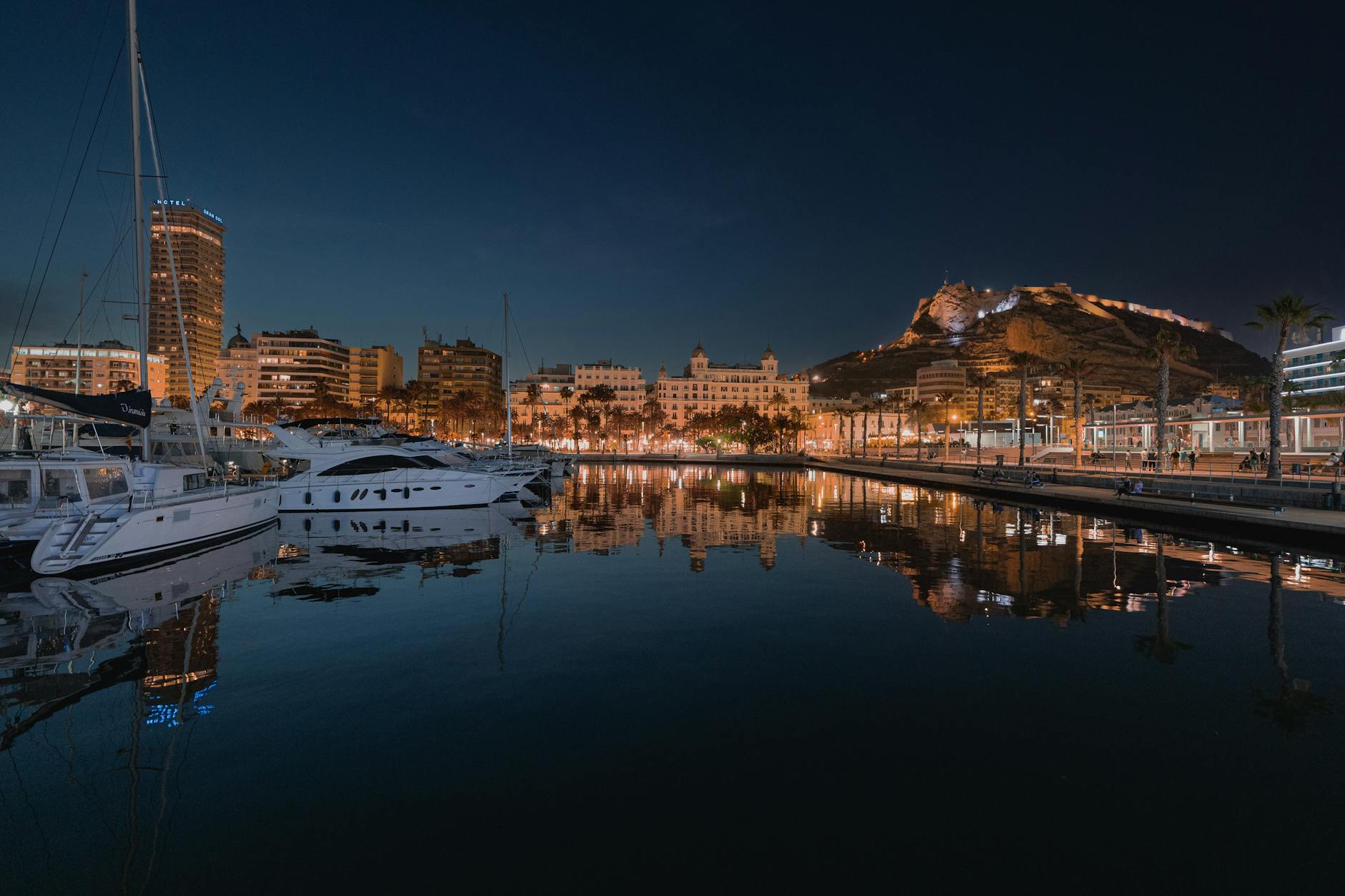
Alicante is one of those Mediterranean cities people ruin with the wrong compliment.
Start Here
They call it easy, sunny, relaxed, and convenient. None of that is false. But those are exactly the words people use when they have not yet decided whether a place deserves attention in its own right. Alicante suffers from being too pleasant too quickly. Visitors land, see palm trees and light, note the beach in the center, notice that everything feels manageable, and then start thinking like lazy coastal tourists instead of city travelers. The result is a trip that uses Alicante badly.
Alicante is not Spain’s most theatrical city. It is not trying to compete with Barcelona for urban grandeur or with Seville for drama. It is better understood as a fitted Mediterranean stay: a real city with a beach attached to the center, a castle that actually organizes the skyline, a market that keeps the city grounded, a promenade culture that works, and enough transport logic to make a short trip feel clean rather than improvised.
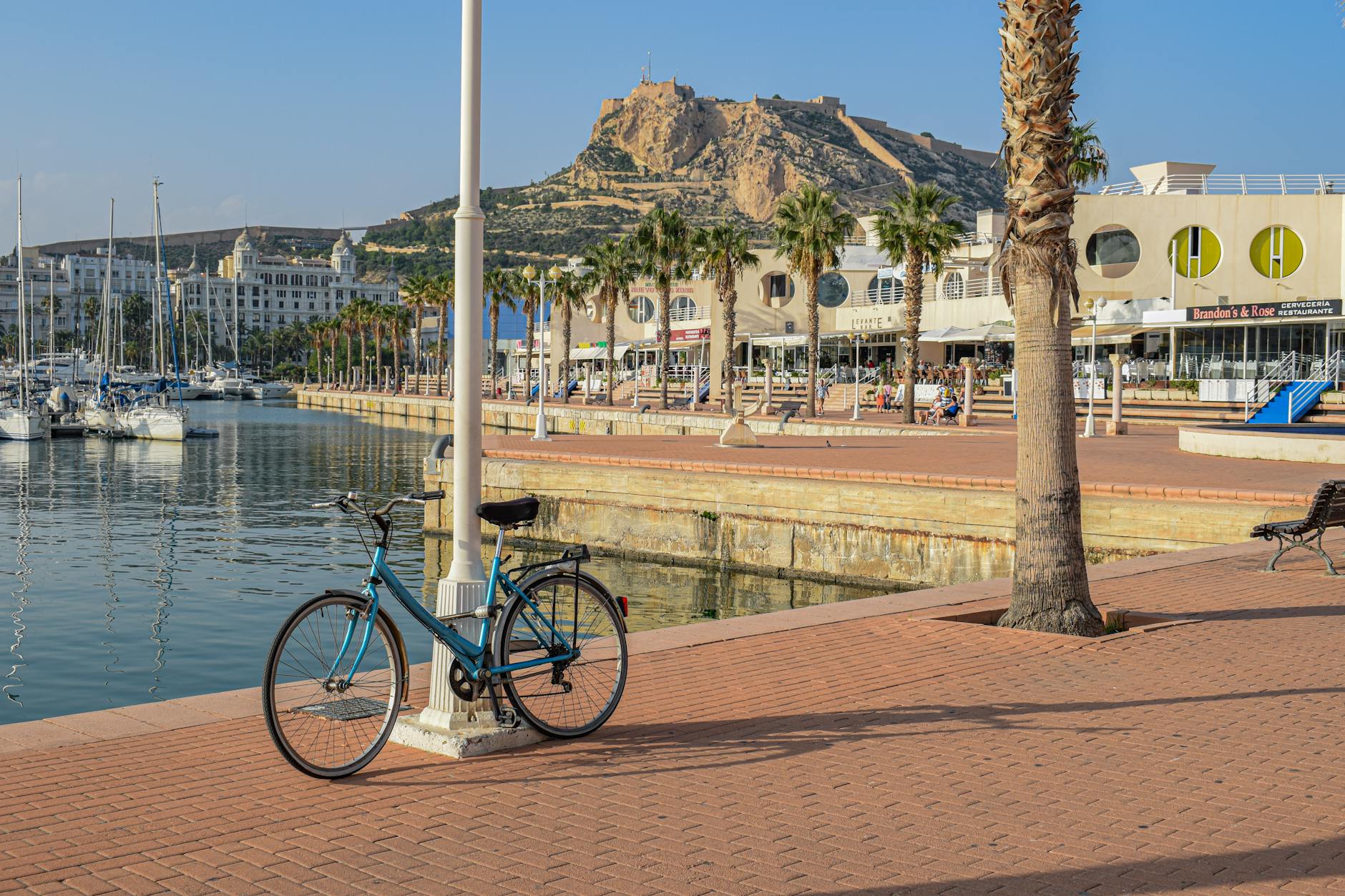
This is what makes Alicante more interesting than its “generic beach break” reputation. Postiguet is not some remote resort sand. It sits right in the city at the feet of Santa Bárbara, next to the Explanada side of town.[5] Mercado Central is not decoration; it gives the city appetite and morning structure.[6] The C6 airport bus makes arrival far easier than many first-time visitors expect.[1] And the TRAM network matters because Alicante is one of those places where a short urban stay can turn into a wider Costa Blanca temptation if you are not careful.[3]
The best first trip does not try to prove that Alicante can be everything. It uses the city for what it does best: sea light, short urban distances, late meals, one or two strong city anchors, and just enough discipline to keep nearby temptations from flattening the trip.
The city in one sentence: Alicante is a compact Mediterranean city whose best first stay comes from balancing center, castle, market, and beach, rather than treating it as anonymous sunshine on the way to somewhere else.
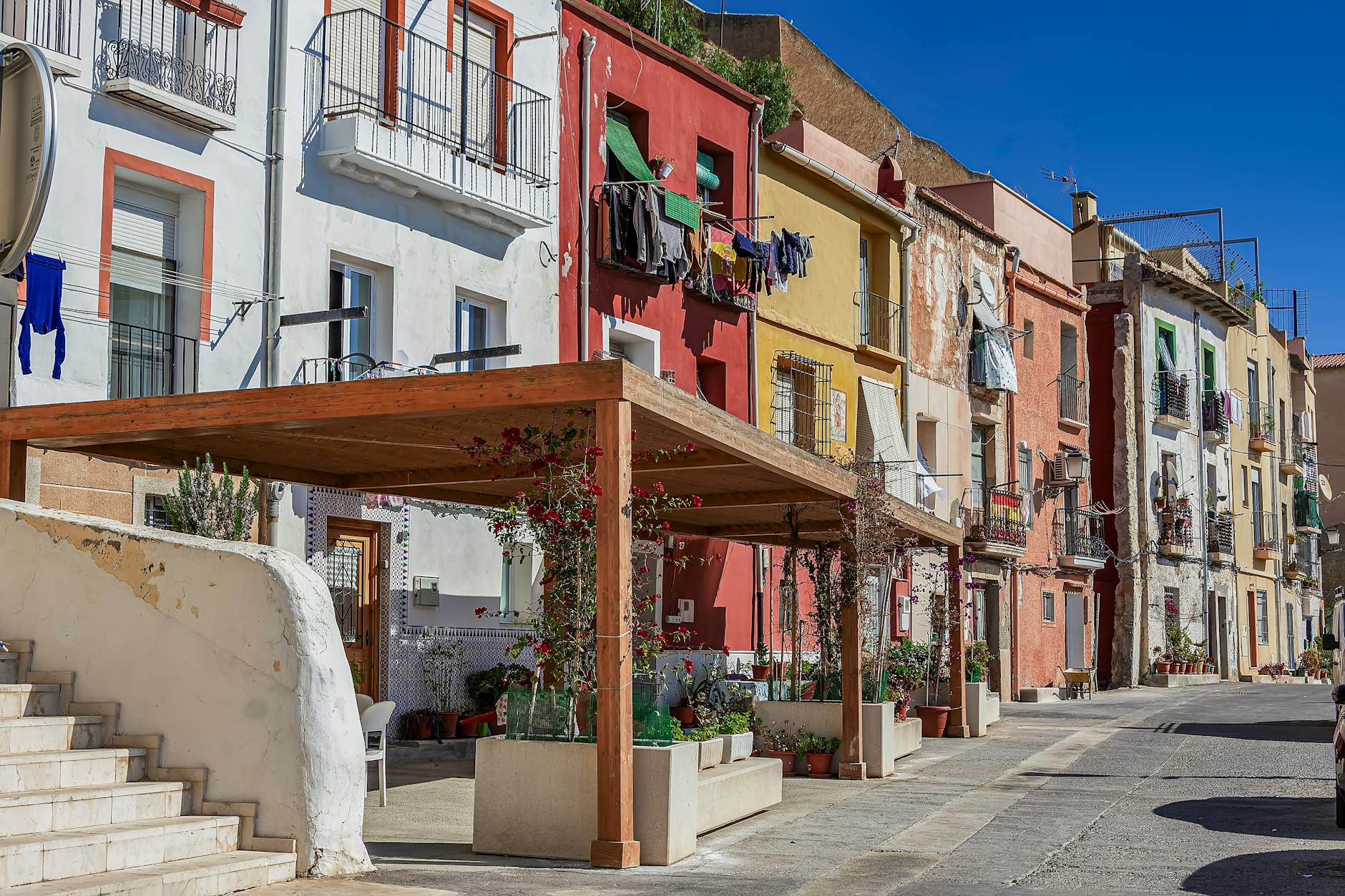
Quick Verdict
Best for: short Mediterranean breaks, couples, solo travelers, shoulder-season Spain trips, repeat Spain travelers, and anyone who wants coast without surrendering the city.
Not ideal for: travelers who want huge monument density, people who only care about resort-beach infrastructure, or anyone who expects Alicante to perform like a larger Spanish city.
Ideal first stay: 2 nights.
Better stay: 3 nights if you want one slower beach day or one wider TRAM excursion without weakening the city itself.
Minimum worthwhile stay: 1 night.
Best overall months: April to June and September to October.
Biggest planning mistake: treating Alicante as pure beach overflow.
One thing to prioritize: the hotel area.
One thing to keep flexible: whether the trip leans more city-first or sea-first after arrival.
The blunt version: Alicante is excellent when you stop trying to make it either a resort or a grand city and let it be a very clean version of both.
Who Will Love Alicante?
Alicante works especially well for travelers who want an easy coastal city without the full friction of larger Spanish destinations. If you like places where you can land, get into town quickly, walk to dinner, climb or ride to a viewpoint, use a real market in the morning, and still fit in beach time without turning the whole stay into logistics, Alicante is strong.
It is also good for travelers who prefer fit over drama. Alicante’s pleasures are cumulative: light on the waterfront, a better-than-expected central beach, the castle above everything, decent food, and a stay that can be shaped cleanly from the first hour.
The city is less ideal for people who need big-city cultural overload. Alicante is more edited than that. It persuades by balance.
Alicante at a Glance
| Question | Practical Answer |
|---|---|
| Main gateway | Alicante Airport |
| Simplest airport transfer | C6 direct airport bus |
| Best first-time base | central city / old center / seafront edge |
| Main visual anchor | Santa Bárbara Castle |
| Main urban beach | Postiguet |
| Main market stop | Mercado Central |
| Main wider-network transport | TRAM d’Alacant |
| Main planning danger | losing the city to generic beach thinking |
| Car needed? | No |
| Best trip length | 2 to 3 days |
2026 Visitor Notes
The Airport Bus Is Simple and Useful
The official C6 airport-bus leaflet says the line runs every day of the year, every 20 minutes, from the city to the airport, with the central alignment including Plaza Puerta del Mar, Luceros, the train station, hotels, port, and airport.[1] It also lists a fare of `3,85 €` and an approximate journey time of `30` to `40` minutes depending on stop.[1] That makes airport arrival one of Alicante’s quiet strengths.
The City Transport Setup Is Better Than Many Visitors Expect
The Alicante city TAM page explains the local Móbilis system, standard fares, and the temporary Alicante Tourist Card options for `24`, `48`, or `72` hours combining bus and tram travel with one Turybus trip.[2] This matters if you expect to move around more than a simple center-beach stay requires.
The TRAM Is Not Just For Daily Commuting
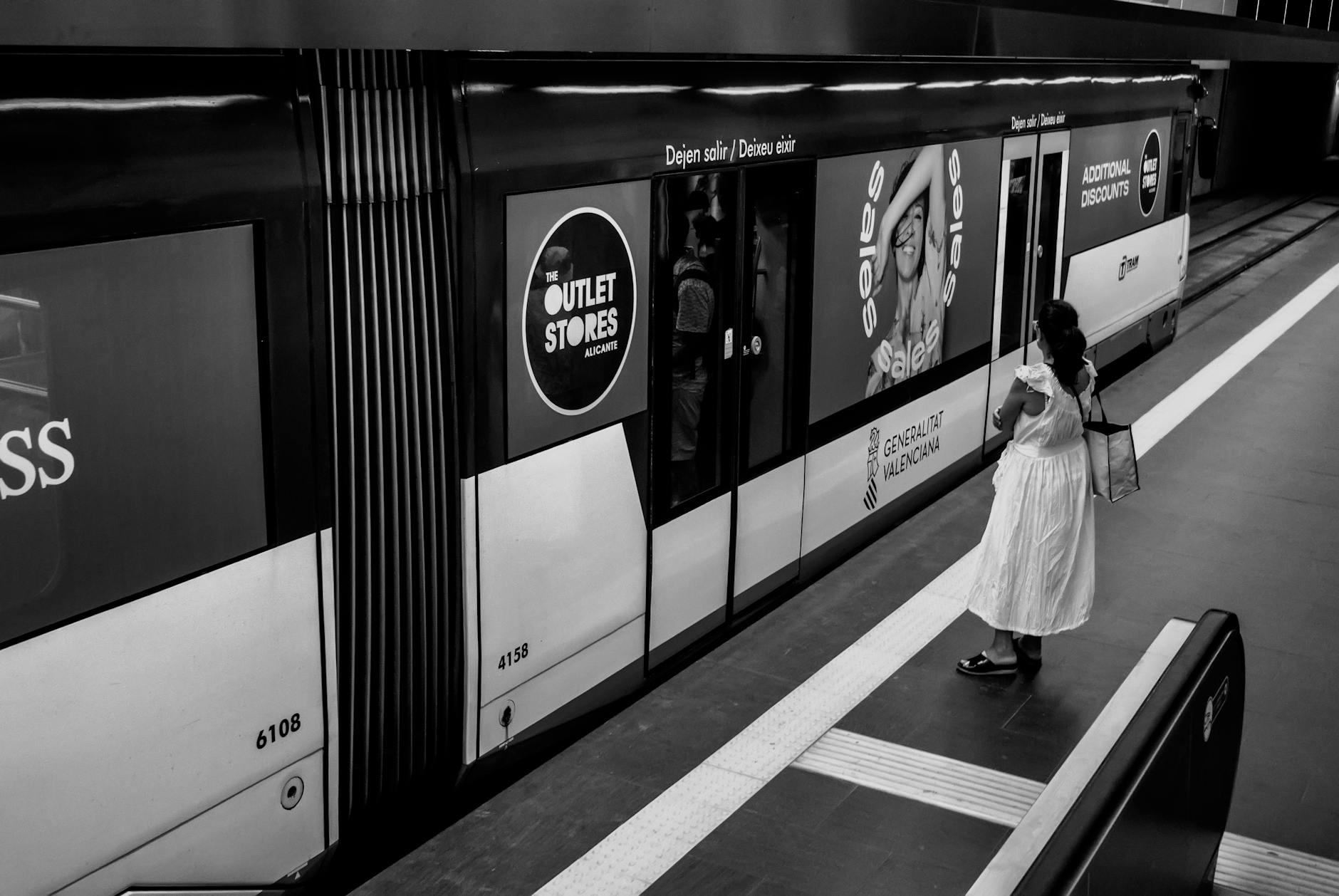
The official TRAM d’Alacant tourism page emphasizes that the system links Alicante with coastal towns all the way toward Dénia.[3] That makes the network useful, but it also creates one of Alicante’s main itinerary traps: overcommitting to day trips too early.
Santa Bárbara Is Still the City’s Organizing Height
The official city page for Santa Bárbara notes the castle’s position on Mount Benacantil at `166` meters above sea level and the strategic views over the bay.[4] The same page also lists current opening hours by season and notes that general access to the enclosure is free, with separate ticketing only for elevator use.[4]
Postiguet Is a Real City Beach, Not Just a Convenient One
The City of Alicante’s own city page states that Postiguet sits in the very center of Alicante, at the foot of Santa Bárbara and next to the Explanada area.[5] This is exactly why Alicante works when handled well.
How to Understand Alicante
Alicante works through four forces.
The first is center-beach compression. Very few cities give you this exact mix.
The second is the castle. Santa Bárbara is not optional background scenery.
The third is promenade-and-market rhythm. Alicante gets better when your days have urban structure.
The fourth is wider-coast temptation. The nearby coast is real, but it can weaken the city if used badly.
The Main Mental Shift
Do not ask, “What else can I do around Alicante?” until you have asked, “What version of Alicante is this day for?” City, castle, market, beach, or coastal extension. If you separate those, the place becomes much more coherent.
What Alicante Does Better Than People Think
Alicante is better than many visitors expect at feeling complete with very little effort. It is also better than people think at combining urban life with beach proximity without turning either one fake.
It is better than many imagine at arrival quality too. The C6 bus and the transport setup mean the city starts working quickly.[1][2]
And it is better than people think at food structure. Mercado Central and the wider central grid give Alicante a stronger morning and lunch identity than the stereotype of “sunset drinks and sea” suggests.[6]
Best Time to Visit
Spring and early autumn are the cleanest windows for most visitors. You keep the sea light, outdoor meals, and beach usability without paying the full summer tax in crowding and heat.
Summer is still viable, but it punishes weak hotel choices and vague planning more harshly. Alicante can feel effortless until the day overheats and the route collapses.
Winter can be surprisingly good if you want a calmer city-sea stay and are not coming solely for peak beach weather.
How Many Days You Need
One Night
Enough for a promising taste, especially if you arrive early and stay central.
Two Nights
The best first answer for many travelers. One day can belong to the castle, old center, market, and seafront. Another can belong to a beach-city balance or a single selective excursion.
Three Nights
This is the right length if you want to keep one day genuinely slower without weakening the trip.
Where to Stay
The hotel area matters because Alicante changes quickly depending on how much you lean toward city or shore.
Fast Answer
For most first-time visitors, stay in the central city / old-center / seafront edge where you can walk to Postiguet, the Explanada side, and the restaurant core without turning the trip into a resort commute.
Central / Old Center Edge
Best for: first-time stays, easy meals, market access, and city identity. Tradeoff: not every street is scenic, and some properties trade charm for practicality. Best use: strongest default.
Seafront / Postiguet Side
Best for: travelers who want beach and city within the same daily radius. Why it works: this is the Alicante that feels most unique, because the beach is genuinely part of the center.[5] Tradeoff: depending on the hotel, more scenic does not always mean more useful.
More Coast-Leaning Stays
Best for: sea-first trips. Tradeoff: easier to lose the city completely. Best use: only if that tradeoff is deliberate.
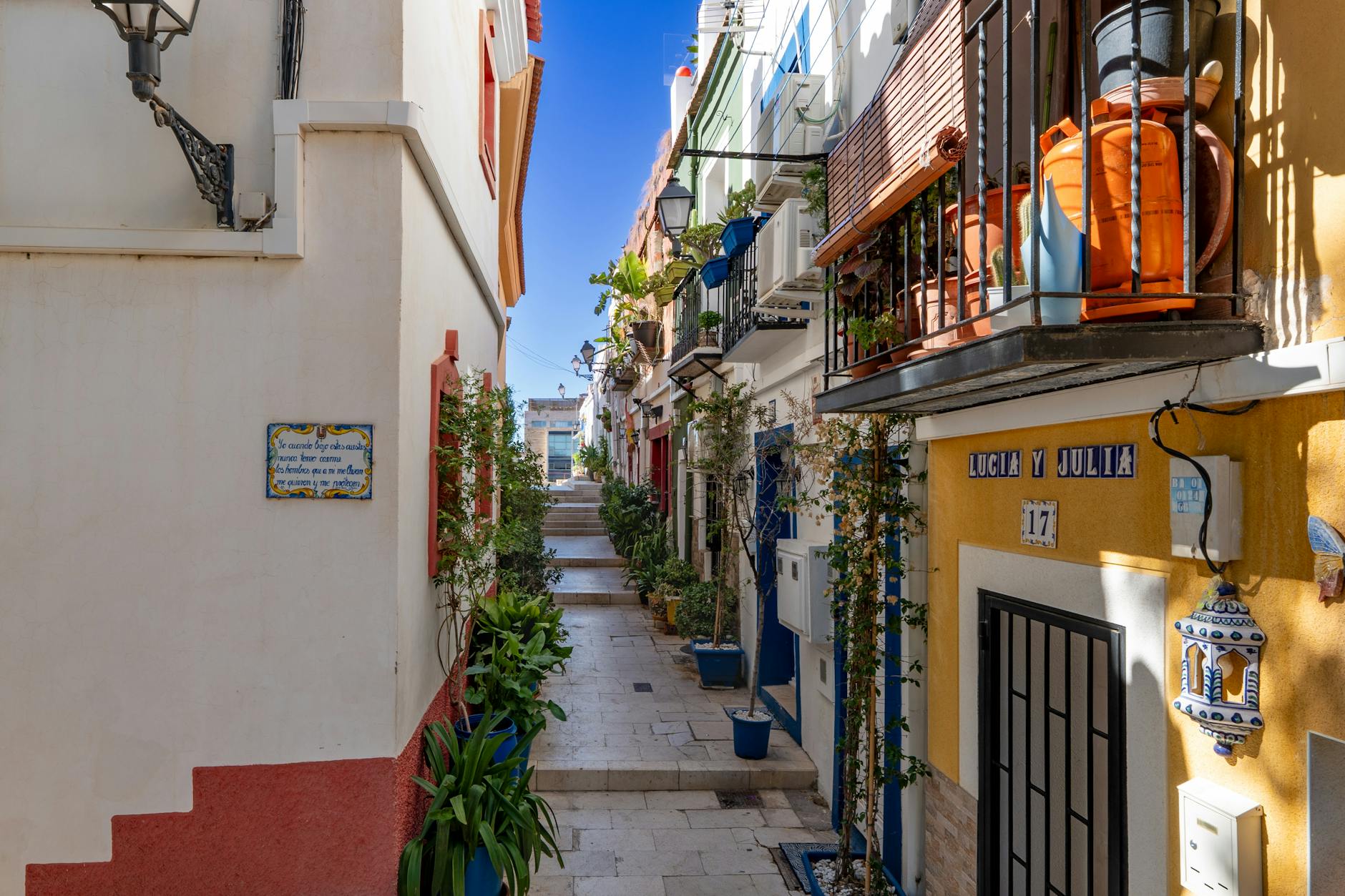
The Alicantes That Matter Most
Castle Alicante: Santa Bárbara, skyline control, and the city’s high vantage.[4]
Center Alicante: the old core, Explanada side, and the everyday urban version of the stay.
Market Alicante: Mercado Central and the lunch-hour city.[6]
Beach Alicante: Postiguet as a genuinely urban beach.[5]
TRAM Alicante: the outward-facing version of the city that connects too easily to broader coastal temptation.[3]
Santa Bárbara, the Center, and Postiguet
These three are the real first-time spine.
Santa Bárbara matters because it organizes the city visually and mentally. The official city page is very direct about the castle’s strategic height and bay views, and it also makes clear that current access conditions can change depending on works or the season.[4] That combination of beauty and logistics is typical Alicante: simple enough, but only if you pay attention.
The center matters because Alicante is better as a city than many beach-first visitors expect. The old center and seafront grids are what keep the trip from turning into generic coast time.
Postiguet matters because it proves Alicante’s central claim. The city itself says the beach lies at the foot of the castle in the center of Alicante.[5] Few places can say that honestly and still remain workable.
Mercado Central and Food
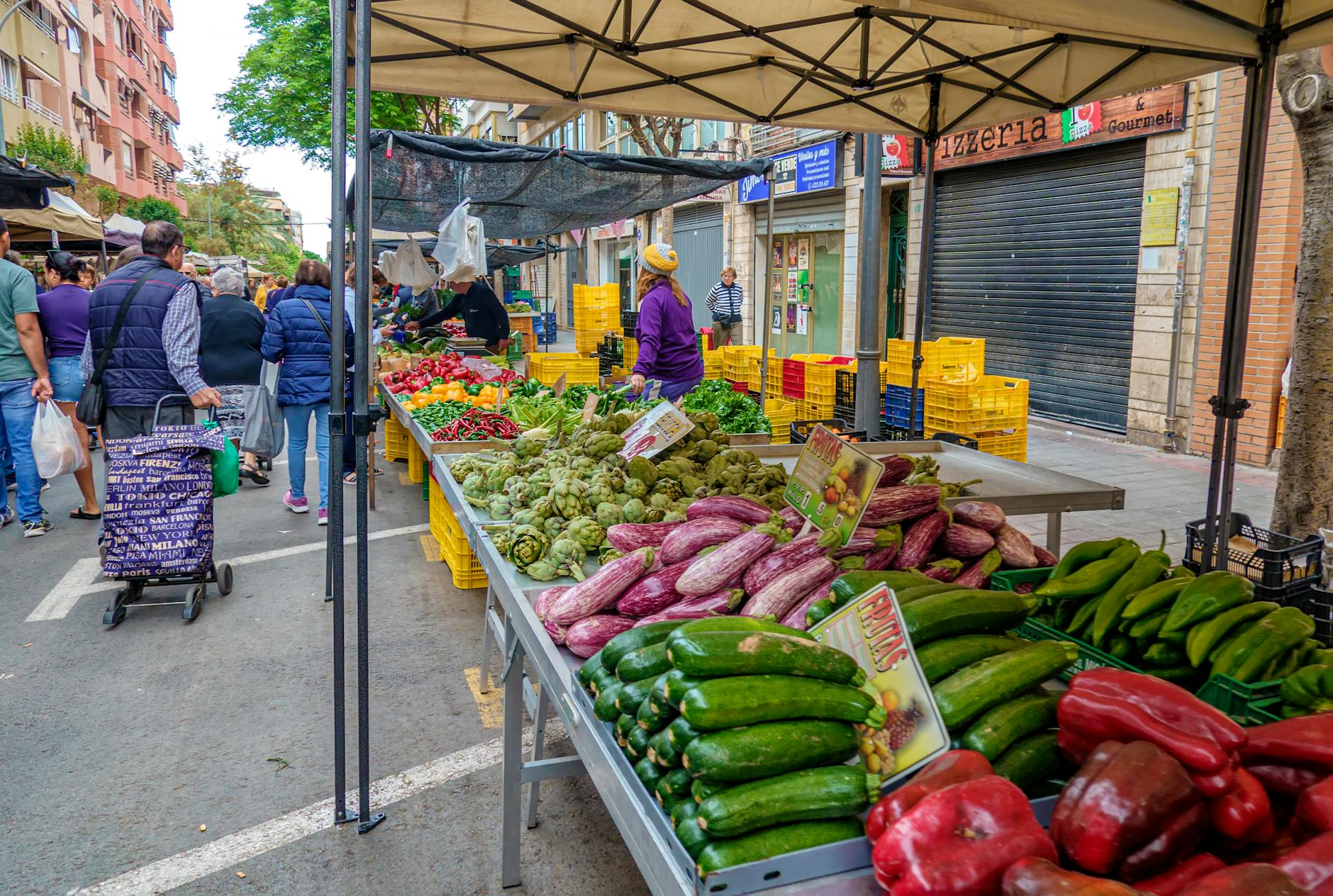
Mercado Central gives Alicante the kind of daytime credibility that beach cities often lack.
The official market page says the market opened in `1921`, spans `5,500 m2`, and contains `291` commercial units, with morning opening hours from Monday through Saturday.[6] That is more than enough reason to treat it as part of the trip’s structure rather than an optional stop.
Food in Alicante should not be reduced to a few seafood clichés. The market gives you a better sense of the city’s appetite and daily life. The right trip uses the market to anchor one morning or lunch, then lets the rest of the city’s seafront and old-center restaurant life carry the evenings.
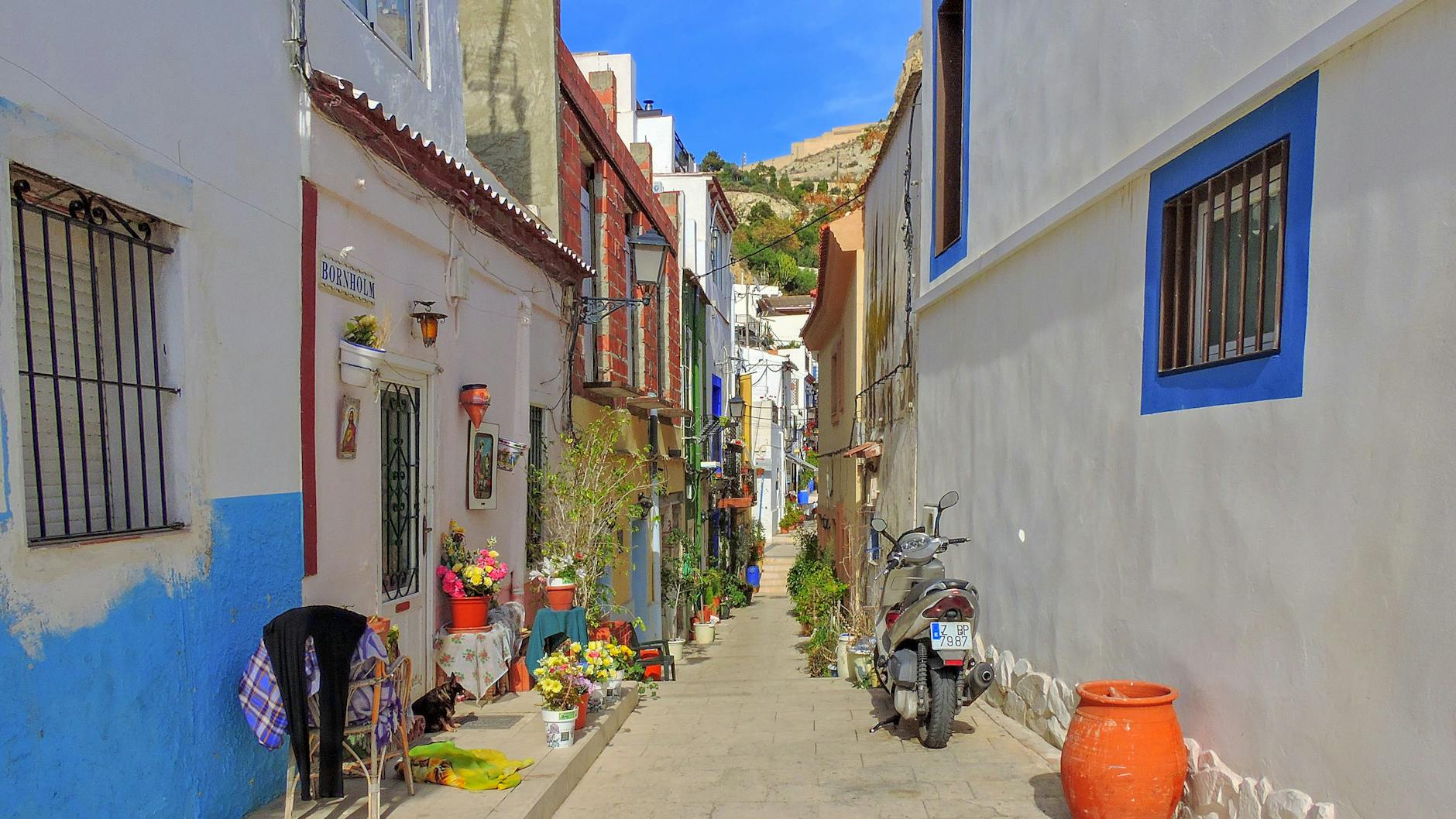
Getting Around
For most first-time visitors, Alicante is walking first, airport bus second, local bus or tram as needed.
If you stay central, the city works best on foot. The C6 solves the arrival cleanly.[1] The TAM and TRAM systems matter when you stretch outward.[2][3]
Do not over-abstract Alicante into transport products too soon. One of the city’s virtues is that the first stay does not need much machinery.
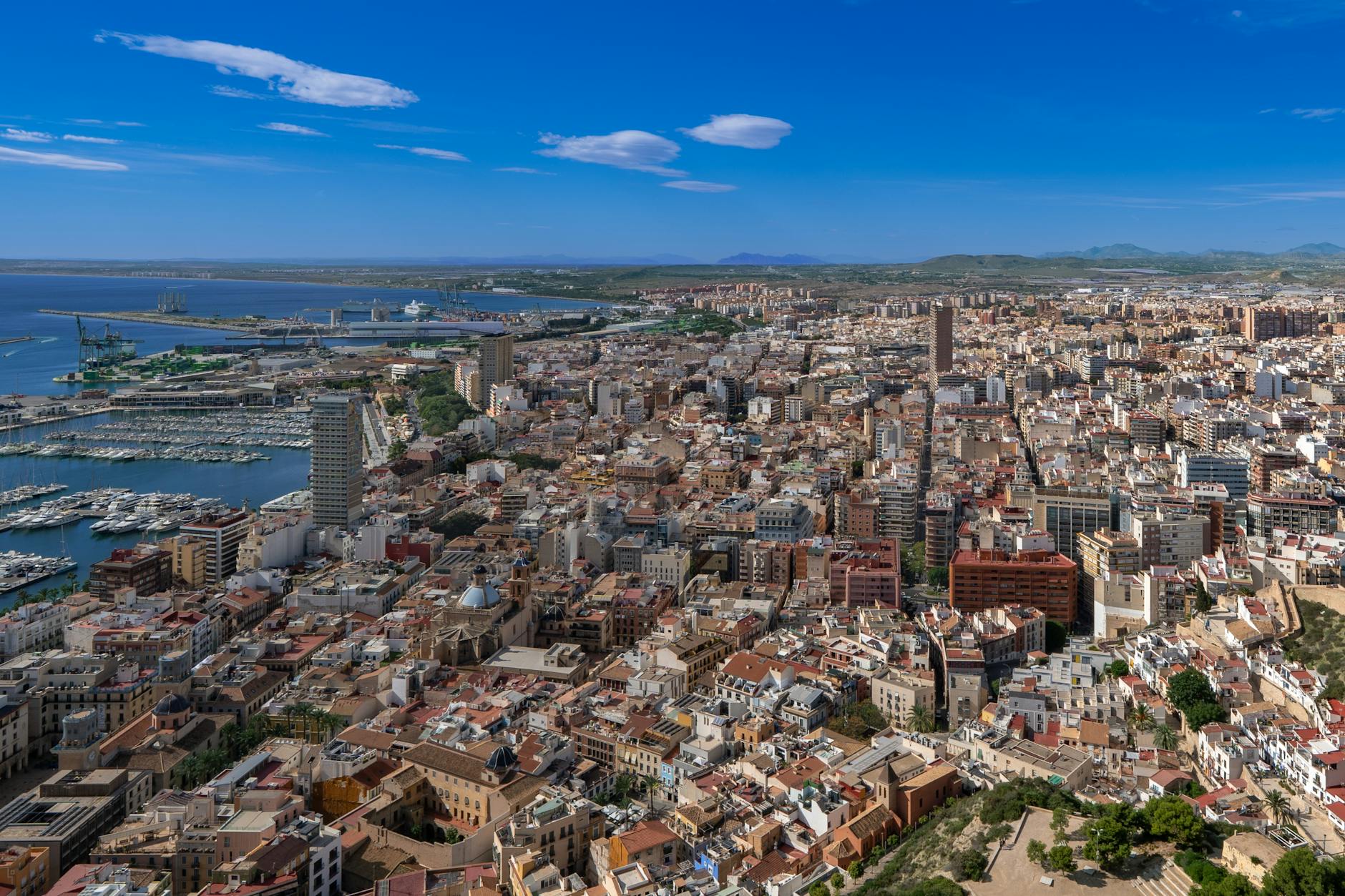
Where Alicante Fits in a Spain Trip
Alicante often ends up in the wrong category before the trip even starts.
People place it mentally with beach resorts, airport convenience cities, or generic Mediterranean break destinations and then plan it accordingly. That is how they end up with a thinner trip than the city can support. Alicante is certainly easy to reach and easy to like. It does have beach appeal, and it does function well for short breaks. But it is still a city first, not merely a coastal service zone for sun.
Within a broader Spain itinerary, Alicante works especially well as a pressure-release city. It gives you sea, light, and outdoor rhythm without demanding the full cognitive load of Barcelona, Madrid, or Seville. That is not because it is empty or secondary. It is because it is fitted. The center is small enough to be grasped quickly and strong enough to feel complete once grasped.
This is also why Alicante can work beautifully after a denser inland trip or before a more resort-oriented stretch of coast. It allows Spain to become easier without becoming vague.
First-Time Visitors Versus Repeat Visitors
First-time visitors usually need Alicante to prove that it is more than an easy beach city. Repeat visitors often already know that and use it more selectively.
On a first trip, the city should generally be shaped around its strongest integrated argument: castle, center, market, seafront, beach. Once you see how tightly those elements sit together, Alicante stops feeling generic. It becomes a compact urban organism with sea attached rather than a coast-first place with some streets behind it.
Repeat visitors often enjoy Alicante more because they no longer need the city to justify itself so aggressively. They may stay longer by the beach, take a more deliberate TRAM outing, or use the city as a lower-stress Mediterranean return point. That works because the first trip has already established that the center and the seafront belong together.
This is one of the reasons Alicante has better repeat value than outsiders sometimes assume. It can be used lightly only after it has first been used properly.
Daytime Alicante Versus Evening Alicante
The city has two very different emotional registers, and both matter.
Daytime Alicante is about clarity. This is when Santa Bárbara explains the geography, the market gives the city appetite, and the old-center/seafront structure becomes easy to read. If you want to understand how Alicante works, daylight matters.
Evening Alicante is about ease. The city relaxes into meals, the waterfront becomes slower and more social, and the central beach-city compression starts to feel not just convenient but seductive. This is the time when visitors often realize they like the city more than they expected to.
The strongest first stay includes both versions. Day tells you why Alicante is coherent. Evening tells you why people come back.
Why the Hotel Decision Matters So Much
Some cities can survive a mediocre hotel location because their inner logic is so strong that you are always willing to commute back into the center. Alicante is better than that, but it is also more sensitive than people think to where you sleep.
The city’s great advantage is that beach, promenade, castle, and center can all sit within one walkable rhythm if your base supports that. If you break that rhythm unnecessarily, the destination can start to feel more generic. You move from “city with beach” to “hotel near coast plus periodic old-town visits.” That is a worse trip.
This is why a central or center-adjacent seafront base is so often the right choice for first-timers. It preserves the city’s fitted logic. You can return easily, change pace easily, and let one day lean more urban while the next leans more coastal without the whole trip reconfiguring itself.
In Alicante, the right base is not just convenience. It is part of the destination’s identity.
Why Santa Bárbara Needs to Come Early
Santa Bárbara is not simply a viewpoint to tick off whenever there is spare time. It is one of the tools that makes the city legible.
The official city material emphasizes the castle’s commanding position above the bay and its strategic height.[4] For the traveler, that means one thing above all: go early enough in the stay that the view can teach you the city. Once you have looked down from the castle, the relation between Postiguet, the center, the seafront, and the wider urban spread becomes easier to understand.
This matters because Alicante can feel almost too easy at ground level. Things seem so close and pleasant that the city risks becoming a blur of nice weather and palm-shaded ease. Santa Bárbara restores structure. It reminds you that Alicante is not just a mood. It is a place with physical hierarchy.
The city almost always improves after the castle because the map in your head becomes firmer.
Why Postiguet Is Better Than a Resort Beach Day
Postiguet’s value is not that it is the greatest beach on the Spanish coast. Its value is that it is so clearly part of the city.[5]
This distinction is everything. You are not losing a whole day to transfers and resort infrastructure. You are stepping into sand that belongs to the same urban system as your market, castle, dinner, and evening walk. That makes beach time in Alicante unusually efficient and unusually easy to integrate.
The mistake is to then expect Postiguet to behave like a remote resort fantasy. It is a city beach. That is its point and its strength. Used well, it gives you exactly enough sea in the middle of a real urban stay. Used badly, it can encourage travelers to flatten Alicante into generic sunshine and never return to the city that makes the beach meaningful.
The Market as Antidote to Generic Pleasantness
Mercado Central does a specific kind of work in Alicante: it stops the city from floating away into pure atmospheric niceness.[6]
Markets matter in many Mediterranean cities, but here the function is particularly important because Alicante can otherwise feel dangerously frictionless. The market gives the day a productive morning core. It gives appetite a civic setting. It reminds you that the city has daily life beyond promenades and terraces.
This is why I would strongly resist treating the market as optional if the goal is to understand Alicante rather than just pass a nice weekend. One good market morning or lunch-side visit often gives the stay more substance than another hour of undirected wandering on the seafront.
It also helps correct a common bias. Visitors sometimes assume Alicante is all about afternoons and evenings. Mercado Central proves that the city has a real daytime pulse too.
TRAM Temptation and Excursion Discipline
The official TRAM material makes outward movement look seductively easy, and in practical terms it often is.[3] That does not mean it always belongs.
This is one of the main second-order planning traps in Alicante. Once travelers see how accessible the wider Costa Blanca can be, they start mentally outsourcing the trip’s most interesting moments to other places. Suddenly Alicante becomes the bed, not the city. The stay begins to point away from itself.
This can be fine on a longer trip. On a short first stay, though, it is usually a mistake. One selective excursion is enough. In many cases, none is better. The city’s own balance of castle, beach, center, and market is already strong. The TRAM should extend a coherent stay, not replace one.
The key question is not “What else can I reach?” It is “Has Alicante itself already become clear?”
Weather, Heat, and Seasonal Honesty
Alicante is a city that rewards seasonal honesty more than some travelers expect.
In spring and autumn, the fitted city-beach balance is often close to ideal. In summer, the same compactness can turn harder if the hotel is badly placed or the plan ignores midday heat. In winter, the city can still be excellent, but the trip becomes more city-and-light than city-and-swim.
What matters most is not to book one seasonal fantasy and then blame the city when it behaves like another. Alicante’s great advantage is adaptability, but it still belongs to a real Mediterranean climate. The day should bend accordingly: earlier movement, market mornings, beach at the right time rather than any time, and evenings that let the city do its social work.
This is not overplanning. It is simply respecting what makes the stay feel easy rather than depleted.
Alicante With Family or Low-Energy Travelers
Alicante can be excellent for mixed-energy groups because its core argument is so compact.
Families often benefit from the fact that castle, beach, promenade, and food do not require heroic transfers. Low-energy travelers often do well because one anchor can be enough for a day. You can go to the castle and be done. You can use the market and a beach hour and be done. You can do a proper evening and no major day trip and still feel the trip succeeded.
This is one of Alicante’s real strengths. The city does not need escalation to stay enjoyable. It can absorb a slower pace without collapsing into boredom. That makes it much better for short breaks than many more famous cities whose pleasures depend on volume.
The only real caution is not to let the ease trick you into adding too much. Easy cities are often the easiest to overstuff.
Why Some People Leave Alicante Underwhelmed
When travelers say Alicante was pleasant but forgettable, the cause is usually one of three things.
Either they treated it as a resort suburb of itself, they skipped the market-and-castle structure, or they reached for wider coastal day trips before the city had established its own terms. In each case, the stay becomes lighter than it should be. Alicante is then reduced to weather, not place.
That outcome is avoidable because the city’s central argument is actually very strong. Castle, center, market, seafront, beach, repeat. The traveler simply has to allow that argument to lead before importing other ones.
Why Alicante Often Improves on Revisit
Alicante can feel better on a second trip because the traveler no longer asks it to exceed its category.
The first stay often contains a small defensiveness: is this enough city, enough beach, enough Spain, enough culture? On the second, the answer is already known. That frees the traveler to use the city more lightly and more intelligently. You can let one day drift. You can add a TRAM outing without destabilizing the whole stay. You can enjoy Postiguet without worrying whether you should have gone somewhere grander.
This is one of the best signs of a well-built Mediterranean city. It can support both a properly structured first trip and a looser return.
A Good Alicante Day Versus a Bad One
A good Alicante day has one clear daytime anchor and one clear evening center.
Maybe the day belongs to Santa Bárbara and the old center, with a market-led lunch and a seafront evening. Maybe it belongs to the beach and one supporting city layer. Maybe it belongs to a careful TRAM extension with enough time still left for Alicante itself to matter when you come back. The day feels shaped.
A bad Alicante day is generic coastal drift: a late start, no market, no castle, some beach, some promenade, maybe a transport temptation, and an evening that could have happened in half a dozen interchangeable Mediterranean towns. That version is comfortable. It is just weaker than the city deserves.
How the City Changes Over the Course of a Stay
Alicante is often more convincing after the first full day than on arrival.
At first, the place can seem almost suspiciously easy. The sky is blue, the sea is there, the airport bus worked, the beach is central, and dinner does not require much effort. It can all feel a little too smooth. After the castle, the market, and a second evening walk, that smoothness starts to look like intelligence rather than superficiality.
That is when the city’s coherence becomes visible. The trip stops feeling like convenience and starts feeling like design. Alicante begins to seem less generic and more precise. That change is the real reward of using the city properly.
Airport Timing and the First-Day Trap
Alicante’s efficient arrival can tempt visitors into overusing the first day.
Because the C6 bus is so simple and the trip from airport to city is so manageable, travelers often assume they should hit the ground running and clear half the city before dinner.[1] That is not always the smartest move. A smooth arrival is valuable partly because it allows a lighter first afternoon. You can check in, orient along the seafront, eat well, and save the castle or the market for the next morning when the city is fresher in your body.
This matters especially on short stays. If you burn the easy arrival advantage by turning the first day into a miniature conquest, Alicante can start feeling oddly rushed and thinner than it should. The irony is that the destination’s convenience is one of the things that should help you relax into it, not accelerate past it.
The best first afternoon often does less and gains more.
Center Alicante Versus Coast-Leaning Alicante
One reason Alicante divides opinion is that travelers are often describing two different trips without realizing it.
Center Alicante is a city trip with a beach attached. The market matters, the castle matters, the old core matters, and the sea edge acts as relief and atmosphere. Coast-leaning Alicante is more about light, terraces, sand, and the emotional ease of being by the water. Both are valid. Problems begin only when a traveler books one and expects the other.
If you want the city to explain itself, stay central enough that Mercado Central, Santa Bárbara, and the seafront all sit inside the same daily rhythm. If you want the coast to dominate and the city merely to support it, be honest about that too. Alicante can handle either choice. It just cannot make them both lead simultaneously without losing clarity.
This is another reason why the city is better than its reputation. It can carry two different holiday styles. It just needs the traveler to pick one as the main register.
Why One Underplanned Afternoon Helps So Much
Alicante is one of those cities where one slightly open afternoon can improve the whole stay more than one more formally planned excursion or “must-see.”
This is because the city’s best qualities are not only attractions but transitions: the walk from market to seafront, the move from castle to beach, the shift from hot afternoon to evening promenade, the ability to sit somewhere central and let the city’s pace reassert itself. If every block of time is assigned too aggressively, Alicante can become generic despite all its advantages.
An open afternoon lets the city answer back. If the beach feels right, you stay. If the center has more appetite than expected, you lean that way. If the weather is hotter than planned, the day softens without collapsing. This elasticity is part of what Alicante is offering. It is not laziness. It is one of the real pleasures of a fitted Mediterranean city.
The traveler who leaves room often ends up with the stronger memory.
Why Alicante Is Stronger Than Many Comparable Short-Break Cities
There are many Mediterranean places that are easier to market than to actually use well.
Alicante is stronger than a lot of them because its parts are unusually well aligned. The airport is genuinely close enough to matter. The central beach is truly central. The castle is more than scenic background. The market is real enough to structure a morning. The transport network is useful without being mandatory on a short first stay. And the scale is compact without being trivial.
That level of fit is rare. It means the city can support a wide range of travelers without demanding that all of them use it in exactly the same way. Couples, solo travelers, families, shoulder-season visitors, and repeat Spain travelers can all find a clean version of the place. The city does not need spectacular uniqueness to work. It needs internal rightness.
That is what many people only notice after they have already gone home.
Common Mistakes
Treating Alicante As Resort Overflow
This is the core mistake, and it makes the city feel smaller than it is.
Overcommitting to Day Trips
The TRAM makes temptation easy. That does not make it wise on day one.
Choosing a Hotel That Solves Only the Beach
You lose the city and weaken the whole trip.
Underusing the Market
Mercado Central is one of the simplest ways to make Alicante feel real.
Ignoring the Castle’s Role
Santa Bárbara is not a scenic extra. It is part of the city’s structure.
My Blunt Advice
Sleep centrally.
Use Postiguet because it is there, not because you owe the trip a full resort beach day.
Go to Santa Bárbara early enough to let the city read itself below you.
Use Mercado Central to make the stay feel like a city stay.
And resist the urge to turn Alicante into a “base for the Costa Blanca” before it has even had a chance to be Alicante.
Source Notes
- 1. Alicante city transport / Vectalia. "Línea Directa C6." Official airport-bus leaflet with route, frequency, fare, and journey-time information for the Alicante Airport to city service. https://www.alicante.es/sites/default/files/documentos/equipamientos/centro-cultural-cigarreras/linea-c6.pdf
- 2. Ayuntamiento de Alicante. "Transport Alacant Metropolità (TAM)." Official city transport page with standard fares, Móbilis products, and Alicante Tourist Card information. https://www.alicante.es/va/contenidos/transport-alacant-metropolita-tam
- 3. TRAM d'Alacant. "Go sightseeing with TRAM d'Alacant." Official page describing the coastal network linking Alicante with towns along the Costa Blanca. https://www.tramalacant.es/en/go-sightseeing-with-tram-dalacant/
- 4. Ayuntamiento de Alicante. "Castillo de Santa Bárbara." Official city page with location, seasonal hours, access conditions, and links for elevator tickets and further castle information. https://www.alicante.es/es/equipamientos/castillo-santa-barbara
- 5. Ayuntamiento de Alicante. "La Ciudad de Alicante." Official city page noting that Postiguet Beach sits in the city center at the foot of Santa Bárbara and beside the Explanada. https://www.alicante.es/es/contenidos/ciudad-alicante
- 6. Ayuntamiento de Alicante. "Mercado Central." Official municipal market page with opening year, size, number of stalls, and current hours. https://www.alicante.es/es/equipamientos/mercado-central