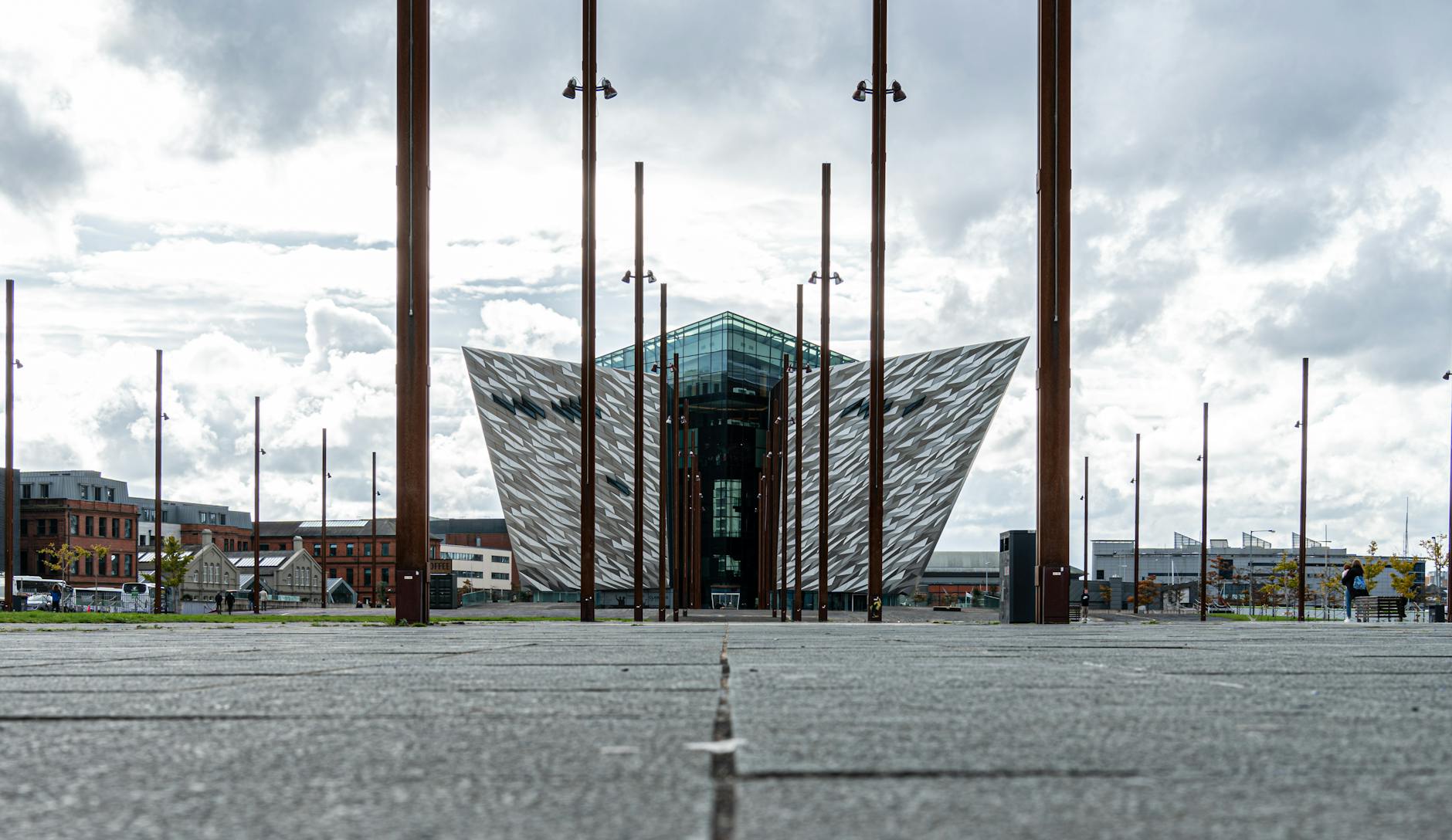
Belfast can work well for a woman traveler because the city is compact, friendly in many everyday interactions, and easier to understand than many larger capitals. That does not mean every hotel location, evening plan, transfer, or day trip is equally practical. A short stay works best when the traveler has already decided how she will arrive, where she will return at night, and when a taxi is the better answer. The goal is not to make Belfast smaller. It is to use the city well: City Hall, Titanic Quarter, Cathedral Quarter, the riverfront, museums, restaurants, music, guided history, and regional trips can all fit into a strong visit when the logistics are not left vague.
Choose lodging by the return, not just the sights
A woman traveler should choose a Belfast base by the quality of the return route, not only by daytime convenience. City centre, Linen Quarter, Cathedral Quarter, and selected Titanic Quarter hotels can all work, but the right answer depends on dinner plans, venue locations, taxi pickup, reception coverage, and how the final walk feels after dark or in rain.
A cheaper room that adds quiet final streets, weak food access, or uncertain check-in can cost more in attention than it saves in money. The hotel should make arrival, meals, evening movement, and recovery straightforward.
- Judge lodging by evening return, reception coverage, nearby meals, and taxi access.
- Choose a base that reduces late decision-making.
- Do not trade away the final walk for a small room-rate saving.
Make arrival and the first evening predictable
Belfast City Airport, Belfast International, Dublin connections, rail, coach, and private transfers create different first-hour problems. A woman arriving late, carrying luggage, or starting after a long flight should usually favor the route that is simplest to execute, even if another route is cheaper or theoretically faster.
The first evening should include a clear hotel entrance, food plan, backup ride option, and enough phone battery for routing and payment. That is not anxious planning. It is basic control over the part of the trip when fatigue and luggage make improvisation weaker.
- Pre-decide the airport or rail transfer and the backup route.
- Keep the first-night meal close if arrival is late or tiring.
- Confirm check-in, hotel entrance, and ride options before departure.

Use transport with the final stretch in mind
Belfast's centre is walkable, but a woman traveler should judge each route by weather, daylight, footwear, crowd level, and the final stretch. A short daytime walk between City Hall and the river is different from a late return after dinner or a music session. Taxis are often a practical tool, not a failure of independence.
The traveler should avoid standing in thresholds or on curbs while comparing routes on a visible phone. Check directions inside a cafe, hotel, museum lobby, or other staffed place, then move with the route already chosen.
- Judge routes by weather, time of day, and the final few minutes.
- Use taxis when the last segment is the weakest part of the plan.
- Check directions from a settled place instead of on the street edge.
Plan pubs, music, and restaurants around exits
Belfast can be enjoyable at night, especially around restaurants, hotel bars, pubs, music, and Cathedral Quarter venues. The evening should still have a clear end. A woman traveler should know how she will leave, whether the venue is easy for someone alone, how much alcohol fits the next movement, and what ride option is available if the weather turns.
The best evening plans are specific without being restrictive. A central dinner, a music session, or one well-chosen pub can be more satisfying than wandering until the return route becomes the main event.
- Choose evening venues with exits and return routes in mind.
- Keep alcohol, phone battery, and ride options under control.
- A shorter, better-positioned evening often beats a vague late one.
Keep phone, bag, and digital visibility deliberate
Belfast is not a city where every moment needs defensive posture, but ordinary urban habits still matter. A zipped bag, separated payment backup, controlled phone use, and caution with real-time posting reduce avoidable exposure. Crowded streets, transport points, nightlife exits, and visitor-heavy sites deserve more attention than a quiet museum cafe.
Digital visibility matters too. Travelers with public profiles, contentious work, or active social channels should delay hotel, venue, and solo-location posts until after leaving. The habit costs little and removes a category of unnecessary risk.
- Use zipped bags, payment backup, and controlled phone habits in busy places.
- Delay location posts from hotels, venues, and solo movements.
- Step into a staffed place before handling complicated messages or route changes.

Treat local history with care
Belfast's political and community history can be one of the most important parts of the trip. A woman traveler should choose guided tours by credibility, tone, route, group size, and how much emotional weight she wants in the day. Sensitive neighborhoods and memorialized spaces are not just visual content.
The traveler can ask serious questions, listen carefully, and still maintain boundaries around photography, captions, and conversations with strangers. Good context makes the city richer. Casual handling of that context makes the trip thinner.
- Choose history tours by credibility, tone, route, and group size.
- Be careful with photos, captions, and quick conclusions.
- Leave space after heavier context instead of stacking the day too tightly.
When to order a short-term travel report
A woman traveler with a central hotel, daytime museum plans, and flexible evenings may not need a custom Belfast report. A report becomes useful when the trip includes solo travel, late arrival, nightlife, public-facing work, unfamiliar hotel districts, regional day trips, medical or mobility constraints, or anxiety about how local geography will feel in practice.
The report should test lodging, arrival, evening returns, transport, tours, local context, weather, day trips, budget, and what to cut. The value is a Belfast plan that supports confidence through specific choices rather than generic reassurance.
- Order when solo movement, late arrival, evenings, hotel choice, or day trips need testing.
- Provide dates, arrival route, hotel options, evening plans, interests, comfort concerns, and constraints.
- Use the report to make Belfast more usable, not smaller.