National Infrastructure and Eight City Case Studies for Visitors and Residents
Japan is best understood not as one transportation system, but as a highly coordinated network of public and private operators. Railways provide the backbone, buses fill neighborhood and sightseeing gaps, taxis handle late-night and luggage-heavy trips, domestic flights and ferries connect distant or island destinations, and private vehicles become more useful outside dense urban cores. For most visitors, the winning strategy is simple: use an IC card or mobile IC wallet for daily travel, reserve intercity trains when appropriate, rely on route-planning apps, and avoid assuming that every pass covers every operator.
The national challenge is fragmentation. Japan’s trains, subways, buses, ferries, and airport links often work beautifully from the passenger’s perspective, but they are run by many different companies and public agencies. The same station may contain JR platforms, a municipal subway, and two private railways, each with its own gates, fare rules, ticket machines, and service disruptions. IC cards and multilingual signage reduce this friction, but they do not eliminate it.
For residents, the same system creates a different set of concerns: commuter crowding, last-train timing, station transfers, rising fares, bicycle rules, parking costs, barrier-free access, and whether a neighborhood has enough late-night, bus, or step-free service. Locals learn the operator geography of their region. Visitors usually do not need that depth, but they do need to know when operator boundaries matter.
The biggest practical lessons are:
- Use rail for most intercity and big-city travel. The Shinkansen and limited express trains are fast, reliable, and easy to combine with local rail.
- Use buses where rail is thin. This matters especially in Kyoto, Nara, Fukuoka, Hiroshima, and outer neighborhoods everywhere.
- Do not overbuy passes. A pass is valuable only when it matches your route, operator, and number of rides.
- Carry a fallback payment method. IC cards are widely accepted, but not universal. Keep small cash, especially for buses, rural routes, older ticket machines, taxis, coin lockers, and temples or small shops.
- Plan around luggage and crowds. Oversized baggage, peak commuter hours, tourist bottlenecks, and station stairs are often more important than the raw travel time shown by an app.
- Private cars are situational. They are useful for rural Japan, mountain regions, remote onsen, and family travel, but often inefficient in Tokyo, Osaka, Kyoto, Yokohama, and central Fukuoka.
- Transportation etiquette is part of the system. Quiet cars, orderly lines, priority seating, and not blocking doors or aisles make the dense network function.
1. The national mobility pattern
Japan’s national transportation system is built around a few recurring patterns:
For a visitor, the most important mindset is not “Which company owns this line?” but “Does my ticket, pass, or IC card cover this operator and route?” For a resident, operator boundaries become more consequential because commuting passes, school passes, route choices, and housing decisions often depend on them.
- Rail dominance in dense corridors. The Tokaido-Sanyo axis from Tokyo through Nagoya, Kyoto, Osaka, Kobe, Hiroshima, and Fukuoka is one of the world’s most rail-oriented intercity corridors. The Shinkansen competes directly with domestic aviation on speed, frequency, and city-center access.
- Private railways as urban developers. In metropolitan regions, major private railway companies do much more than operate trains. They often own department stores, malls, hotels, real estate, and bus companies around their terminal stations. This is why stations such as Shibuya, Shinjuku, Umeda, Namba, Sannomiya, and Tenjin function as commercial districts as much as transport nodes.
- Buses as local connective tissue. Buses serve places where rail is not dense enough: hillsides, temples, residential neighborhoods, university campuses, airports, and rural towns. Some city buses are flat fare; others use distance-based fares with numbered tickets or IC tap-in/tap-out systems.
- High reliability with strict operating culture. Timetables, platform markings, train formations, door positions, and transfer flows are treated seriously. Delays happen, especially because of weather, accidents, congestion, and infrastructure incidents, but the system is designed around predictable movement.
- Fragmented operators with practical interoperability. Japan has many operators, but IC cards, through-running rail services, shared stations, and common route-planning apps let riders cross between systems with less friction than the ownership map would suggest.
2. Payment, tickets, and IC cards
2.1 IC cards are the default daily tool
Japan’s major rechargeable IC cards—such as Suica, PASMO, ICOCA, PiTaPa, TOICA, manaca, SUGOCA, nimoca, and Hayakaken—are the everyday payment layer for trains, subways, many buses, lockers, vending machines, convenience stores, and some taxis. The Japan National Tourism Organization describes IC cards as usable across a broad range of trains, buses, ferries, shops, vending machines, and some taxis, though exact acceptance still depends on the operator and location.
A traveler using an IC card usually:
The core benefit is not a large discount. It is reduced friction. IC cards prevent mistakes at ticket machines, make transfers easier, and help when a traveler changes plans mid-route.
2.2 Temporary visitor IC cards changed after the chip shortage
Tourist IC-card availability has changed several times in recent years because of semiconductor shortages and operator policy changes. As of 2025, sales of standard unregistered Suica and PASMO cards resumed in parts of the Tokyo region. JR East also sells Welcome Suica at specific travel service centers and airport-related locations, with limits such as one card per person.
A major 2026 update is that the PASMO Council announced TOURIST PASMO, a new IC card for international visitors, with availability near international airports beginning in May 2026.
The practical advice is: do not rely on old blog posts about IC-card shortages or PASMO PASSPORT availability. Check the official Suica, PASMO, or airport access pages shortly before arrival.
2.3 Mobile IC cards are excellent but not universal for every traveler
Mobile Suica, Mobile PASMO, and Apple Wallet transit cards can be very convenient, especially for travelers with compatible phones and payment cards. However, setup can vary by phone region, payment card issuer, and app version. JR East’s Welcome Suica Mobile information notes specific mobile service conditions and known issues, including iOS-related information and top-up considerations.
Visitors should have a backup plan. A physical IC card plus a credit card plus some cash is safer than assuming that a mobile wallet will work immediately after landing.
2.4 Paper tickets, passes, and QR tickets still matter
Paper tickets remain relevant for:
Some systems also use QR tickets or digital passes. Tokyo Subway Ticket, for example, is available in 24-hour, 48-hour, and 72-hour versions for Tokyo Metro and Toei Subway, and the official site lists adult prices of ¥1,000, ¥1,500, and ¥2,000 respectively.
2.5 Cash remains the universal backup
Japan is much more cashless than it used to be, but transportation still has edge cases. Local buses may require coins or ¥1,000 notes, older fare boxes may not accept large bills, smaller taxis may have payment limitations, and rural railways may have unmanned stations. JNTO warns that not all buses accept IC cards and explains how riders should use numbered tickets and fare screens on distance-based bus systems.
Tokyo’s Toei Bus FAQ is a good example of why small cash matters: it states that only coins and ¥1,000 notes can be changed or used in fare machines, not ¥5,000 or ¥10,000 notes.
- Taps at the entry gate or bus reader.
- Travels without buying a paper ticket.
- Taps out at the exit gate or when alighting.
- Tops up at machines, convenience stores, or supported mobile wallets.
- Shinkansen and limited express reserved seats.
- Regional rail passes.
- Airport express trains.
- Highway buses.
- Tourist day passes.
- Routes outside IC-card coverage.
- Buses that still require cash or local-only payment.
3. Intercity rail and the Shinkansen
3.1 The Shinkansen is the national spine
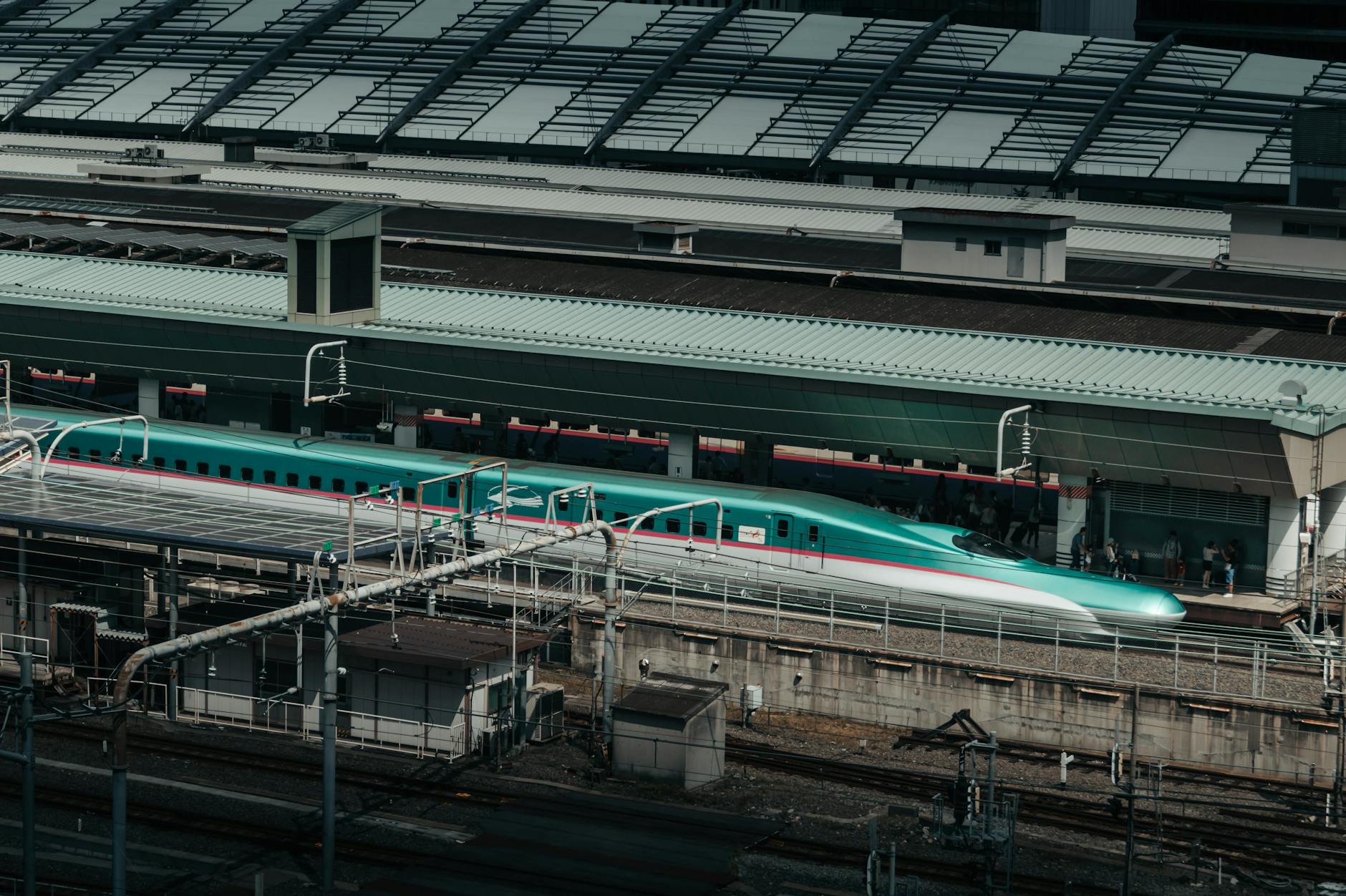
The Shinkansen connects Tokyo with major regional cities and is often the easiest way to move between Tokyo, Kyoto, Osaka, Kobe, Hiroshima, and Fukuoka. JNTO describes the bullet-train network as operating from Tokyo to major cities around the country.
For a visitor, the Shinkansen’s advantages are:
For locals, the Shinkansen is also a business tool. Same-day Tokyo-Osaka, Tokyo-Nagoya, Osaka-Hiroshima, and Fukuoka-Hiroshima trips are normal for work.
3.2 Train categories and reservations
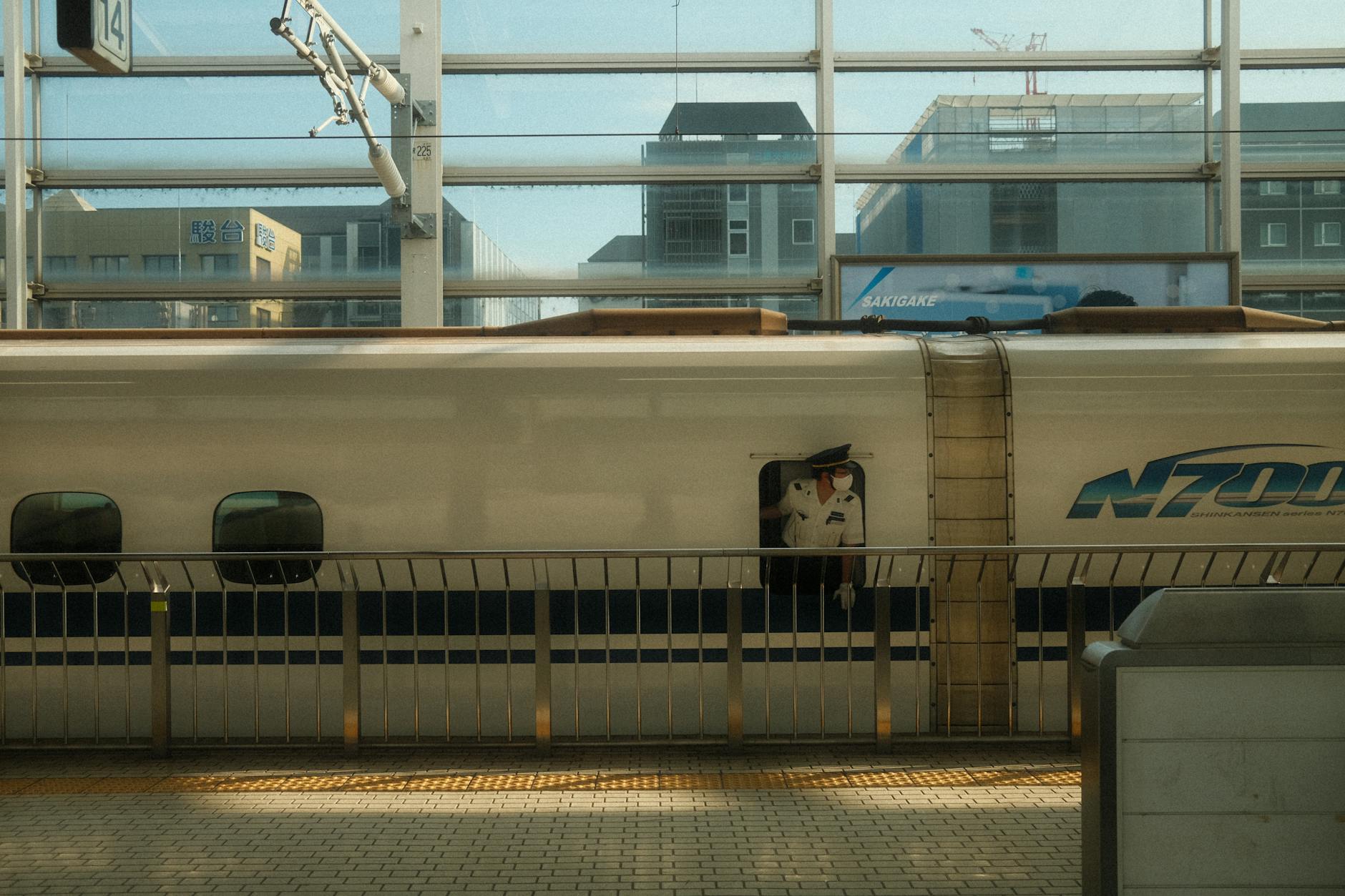
Japan’s rail system includes local, rapid, express, limited express, and Shinkansen services. JNTO notes that local, rapid, and many ordinary express services generally do not require reservations, while Shinkansen, some limited express trains, and sightseeing trains require or strongly recommend seat reservations.
A traveler should distinguish among:
Apps and ticket machines hide some of this complexity, but it explains why a long-distance ticket can look like multiple tickets or QR records.
3.3 Japan Rail Pass: useful, but no longer automatic value
The nationwide Japan Rail Pass is available in 7-day, 14-day, and 21-day versions in Ordinary and Green Car classes. The official price page lists adult Ordinary prices of ¥50,000, ¥80,000, and ¥100,000, and Green Car prices of ¥70,000, ¥110,000, and ¥140,000 for 7, 14, and 21 days respectively.
The pass can be valuable for long, rail-heavy itineraries, but it is not automatically worthwhile. It does not cover subways or most private railways, and it does not cover every Shinkansen use without conditions. The official JR Pass site explains that ordinary pass holders must purchase a special “ONLY WITH JAPAN RAIL PASS” ticket to use Nozomi and Mizuho services; otherwise those trains are not covered by the standard pass.
A current planning concern is price volatility. Travel trade reporting in April 2026 said Japan Rail Pass prices sold through overseas agents are scheduled to rise from October 1, 2026, with 7-day Ordinary rising to ¥53,000 and other durations increasing similarly. Travelers planning autumn 2026 or later should verify the official price before purchasing.
3.4 SmartEX and online Shinkansen booking
For the Tokaido, Sanyo, and Kyushu Shinkansen, SmartEX lets passengers reserve seats online and change reservations under the service’s conditions. The official SmartEX site describes online booking for the “Golden Route” and related Shinkansen lines.
SmartEX is especially useful for:
3.5 Oversized luggage on the Tokaido-Sanyo-Kyushu Shinkansen
Oversized baggage rules are a major visitor concern. JR Central defines oversized baggage as luggage with total outside dimensions from 160 cm to 250 cm and requires a reservation for seats with an oversized baggage area on relevant Shinkansen lines. JR West similarly states that passengers with oversized baggage should reserve a seat with an oversized baggage area or compartment, with no extra fee when booked in advance.
The practical implications are simple:
3.6 Peak periods and crowding
Major holiday periods—New Year, Golden Week, Obon, and major local festivals—can strain intercity trains, highways, airports, and ferries. Reservation rules may also change during peak periods, including more all-reserved Shinkansen services on some routes. Even outside holidays, Friday evenings, Sunday afternoons, and Monday mornings can be busy on intercity routes.
For visitors, the mistake is waiting until the last minute for a group, luggage-heavy, or holiday trip. For locals, the issue is less confusion and more capacity: crowded trains, sold-out reserved seats, and higher stress during seasonal travel.
- City-center station access.
- Frequent departures on major corridors.
- Low hassle compared with airport security and transfers.
- High punctuality.
- Comfortable seating and luggage space when planned correctly.
- Base fare: the basic distance fare.
- Limited express or Shinkansen surcharge: the speed/reserved-service supplement.
- Reserved seat fee: included in some limited express tickets but conceptually separate.
- Green Car fee: first-class-style seating.
- Special tickets: airport express, private railway limited express, sleeper trains, or event trains.
- Tokyo-Kyoto-Osaka-Hiroshima-Fukuoka routes.
- Selecting window/aisle seats.
- Booking oversized-baggage seats.
- Avoiding ticket-counter lines.
- Adjusting departures if plans change.
- A standard carry-on or medium suitcase usually fits overhead or at your feet.
- A very large suitcase may require a special seat reservation.
- If you board without the required reservation, you may be charged or redirected depending on the operator rules.
- Baggage delivery services can be better than hauling large luggage through stations.
4. Urban rail, subways, and private railways
4.1 The operator map matters
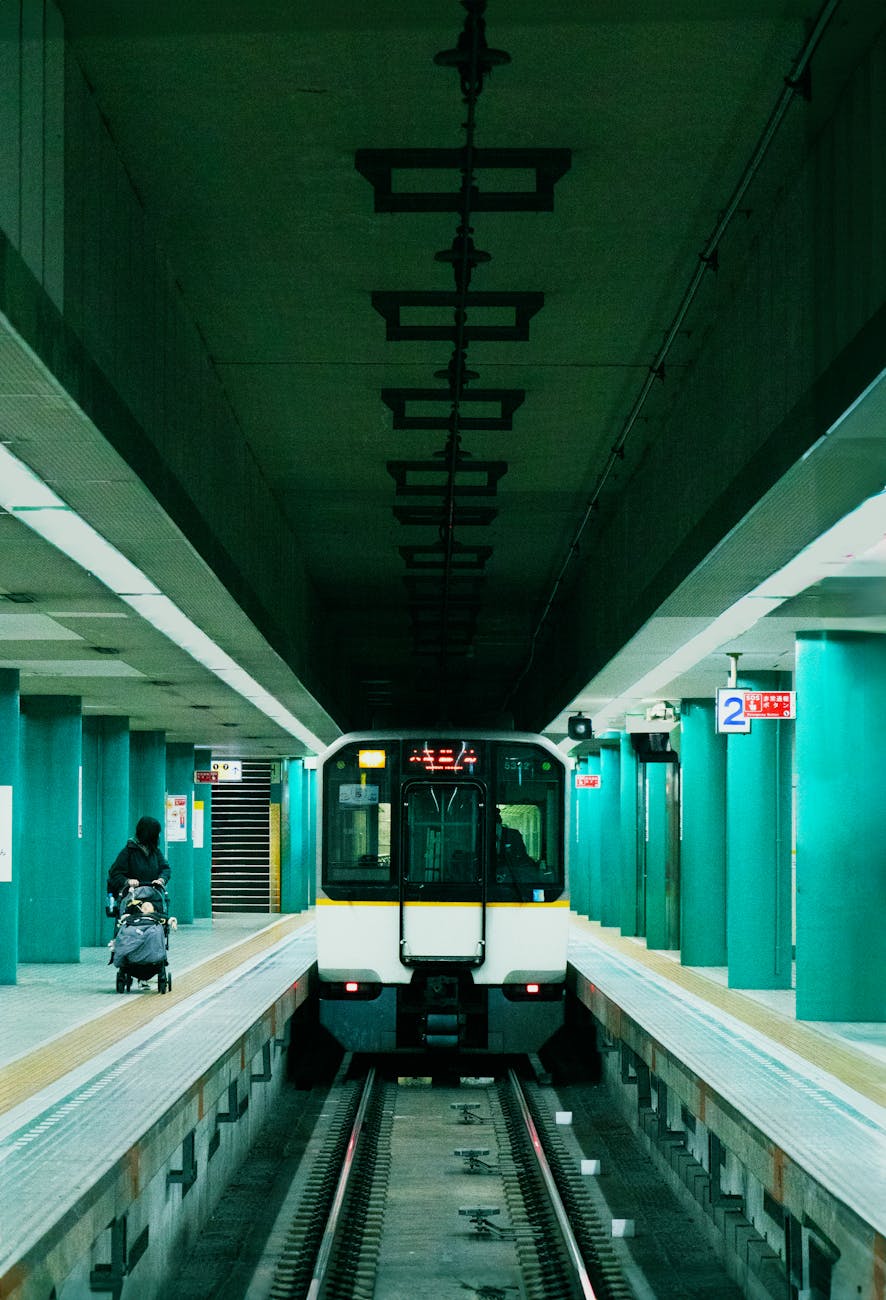
Urban Japan is not just JR plus subway. Private railways are essential. In Tokyo, private railways connect suburbs to terminal stations and often through-run into subway lines. In Kansai, Hankyu, Hanshin, Keihan, Kintetsu, and Nankai are central to movement between Osaka, Kyoto, Kobe, Nara, Wakayama, and Kansai Airport. In Fukuoka, Nishitetsu is indispensable for buses and regional rail. In Hiroshima, Hiroden streetcars define the city’s local mobility.
For visitors, the operator boundary matters when using:
For residents, the operator boundary also affects commuter pass price, transfer convenience, rent, school access, and daily time cost.
4.2 Through-running is powerful but confusing
A train may begin as a private railway train, enter a subway line, then continue onto another private railway. This is convenient because riders avoid transfers. It is confusing because the line name, destination, train type, and platform may not match the simplified map a visitor saw in a guidebook.
The practical habit is to check:
4.3 Stations are three-dimensional districts
Major stations such as Shinjuku, Tokyo, Shibuya, Ikebukuro, Umeda/Osaka, Namba, Kyoto, Hakata, Yokohama, and Sannomiya are not merely platforms. They are underground cities. The exit number can matter as much as the station name. A “seven-minute walk from the station” can become twenty minutes if you emerge from the wrong gate.
Visitors should use route apps that specify exits. Residents learn shortcuts, underground passages, weather-protected paths, and transfer gates.
4.4 Last trains and late-night mobility
Japan’s urban rail systems are excellent, but they are not 24-hour systems. Last trains can be before or shortly after midnight depending on the line, day, and direction. Missing the last train can mean an expensive taxi, a night bus if available, a capsule hotel, or waiting until first train.
This is a major local concern in entertainment districts such as Shinjuku, Shibuya, Roppongi, Namba, Umeda, Sannomiya, Tenjin, and Yokohama. Visitors should check the return trip before the evening begins.
4.5 Women-only cars and peak-hour rules
Some railways operate women-only cars during morning rush hours or other designated times. Toei states that women-only cars operate on the Shinjuku and Oedo lines during morning rush, with platform and train-window markings; exceptions include preschool children, people with disabilities, and caregivers.
Visitors should treat women-only car signs seriously. The rule is not always enforced in the same way everywhere, but ignoring it creates stress for other passengers.
4.6 Accessibility
Japan’s station accessibility has improved significantly, especially in major stations, but the experience is uneven. JNTO notes that many major stations include elevators, escalators, tactile paving, accessible restrooms, and staff assistance systems. Rail operators also provide wheelchair spaces and assistance procedures, and JNTO’s accessible travel material highlights wheelchair seating and support processes on Shinkansen and major rail services.
The challenge is that “accessible route” and “shortest route” are often not the same. Elevators may be far from the desired exit, older stations may require staff coordination, and small stations may have limited step-free access. A wheelchair user, stroller user, older traveler, or traveler with heavy luggage should plan by station exit, not just station name.
- Day passes.
- JR Pass or regional JR passes.
- Private limited express tickets.
- Airport access trains.
- IC-card acceptance outside major regions.
- Destination, not just line color.
- Train type: local, rapid, express, limited express, commuter express, airport express, etc.
- Platform number.
- Whether your train skips your station.
- Whether the train splits or changes type.
5. Buses: local, airport, highway, and sightseeing
5.1 Local bus basics
Japanese bus boarding methods differ by city and route. Common patterns include:
JNTO explains that not all buses accept IC cards and that riders on numbered-ticket systems should check the fare display and pay exact fare when leaving the bus.
The visitor’s core problem is knowing whether to board front or rear and whether to tap once or twice. The local answer is usually visible at the door, on the fare machine, or in the behavior of the passengers ahead of you.
5.2 Highway and night buses
Highway buses connect major cities, airports, theme parks, onsen towns, and rural areas. JNTO describes highway buses as linking cities and tourist spots, often at lower cost than plane or rail, with both day and night services. Japan Bus Online provides multilingual booking for highway and sightseeing buses and lists major international card brands accepted for payment.
Highway buses are useful when:
They are less ideal for people who need high flexibility, dislike long seated travel, or carry excessive luggage.
5.3 Airport buses
Airport limousine buses are often slower than trains in good traffic, but they can be easier with luggage, children, or hotel-door access. JNTO notes that major-city airports are generally connected by trains, buses, taxis, and rental cars, and that travelers should check timetables and reservation requirements.
A practical rule: use the train when speed and predictability matter; use the airport bus when luggage and door-to-door simplicity matter.
- Flat fare, pay when boarding. Common in parts of Tokyo.
- Flat fare, pay when alighting. Common in some local systems.
- Distance-based fare with numbered ticket. Board at rear or middle door, take a numbered ticket, check the fare screen, pay when alighting.
- IC tap-on/tap-off. Tap when boarding and alighting if required.
- Pass display. Show a paper or digital pass to the driver.
- The rail route is indirect.
- The traveler is budget-sensitive.
- The destination is a resort, trailhead, outlet mall, airport, or regional town.
- Overnight travel saves hotel cost.
6. Domestic flights
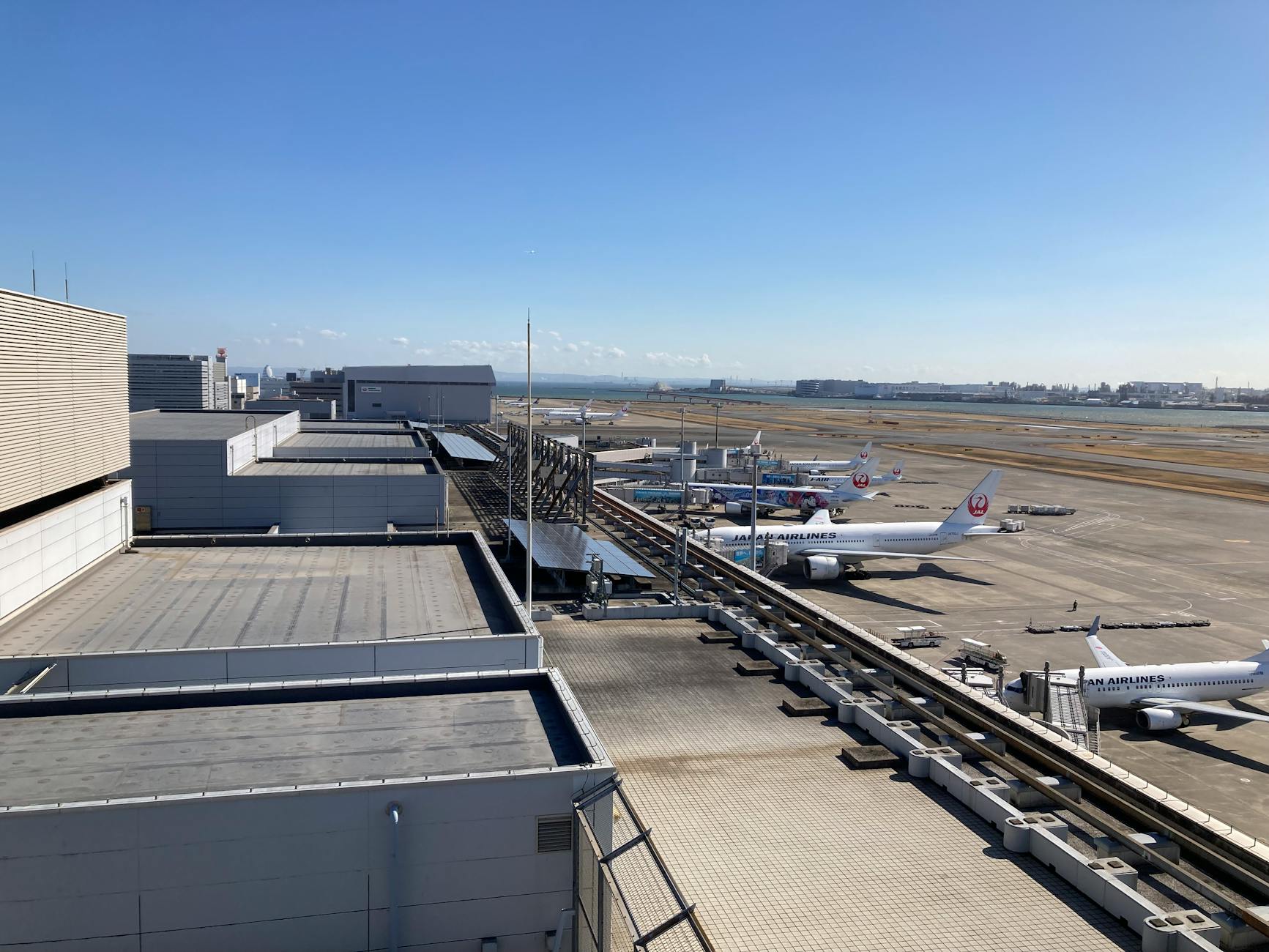
Domestic flights matter because Japan is long, mountainous, and island-rich. JNTO states that Japan has about 90 airports and that domestic flights can be convenient, with visitor fare options from major airlines.
Rail is usually better for Tokyo-Nagoya-Kyoto-Osaka-Kobe-Hiroshima-Fukuoka when the trip is along the Shinkansen corridor and starts near a station. Air can be better for:
Visitors often underestimate airport transfer time. Locals often compare total door-to-door time, not flight time.
- Hokkaido.
- Okinawa.
- Kyushu routes from Tokyo when not stopping en route.
- Tohoku or San’in routes depending on origin.
- Island destinations.
- Travelers using airport-adjacent hotels or domestic connections.
7. Taxis and ride-hailing apps
Japanese taxis are clean, safe, and reliable, but expensive compared with trains and buses. JNTO notes that taxis are generally clean and trustworthy, while also warning that some taxis may be cash-only or have limited card acceptance.
Taxi apps such as GO are widely used in major regions. GO’s inbound information describes app taxi service in most of Japan’s prefectures and offers larger vehicle options in major tourist areas including Tokyo, Nagoya, Kyoto, Osaka, Hyogo, Hiroshima, and Fukuoka.
Taxis are especially useful for:
Taxi concerns include surge-like demand during rain, shift-change shortages, language barriers, long airport fares, and traffic in central cities. A hotel name and address in Japanese is still useful even when using an app.
- Late-night travel after last train.
- Heavy luggage.
- Rain.
- Mobility limitations.
- Rural stations with poor bus frequency.
- Small groups splitting cost.
- Reaching temples, trailheads, hotels, or restaurants away from rail.
8. Private vehicles, rental cars, expressways, and parking
8.1 When a car helps
A private vehicle or rental car is usually not needed for central Tokyo, Osaka, Kyoto, Fukuoka, Hiroshima, Yokohama, or the core parts of Kobe and Nara. It becomes valuable for:
8.2 Driver documentation
JNTO explains that International Driving Permits are generally valid in Japan for up to one year from issue and one year from arrival, and that travelers may need proof of entry date such as a passport stamp if they used automated gates.
Travelers should check license rules before arrival. Some countries require official Japanese translations rather than standard IDPs, and rental companies can refuse service if documentation is not correct.
8.3 Expressways, ETC, and toll passes
Japanese expressways are high quality but expensive. JNTO notes that tolls add up and that regional expressway passes can provide unlimited toll use within designated areas for a fixed period.
Electronic Toll Collection, or ETC, is the standard low-friction way to use expressways. Some regional passes require a designated ETC card and rental vehicle. NEXCO’s Tohoku Expressway Pass page, for example, specifies application conditions through September 30, 2026 and describes use with ETC lanes and designated cards.
ETC is also becoming more important in urban expressway systems. Metropolitan Expressway's ETC-only entrance guidance warns that cash and credit cards are not accepted at ETC-only entrances, so rental-car users should check whether their planned ramps require ETC before driving.
8.4 Urban driving concerns
Private vehicles in dense cities face:
For visitors, the biggest mistake is renting a car for a city itinerary. For locals, the issue is cost and storage: parking can be a monthly household expense, and in many places proof of parking is required for car ownership.
- Rural Hokkaido, Tohoku, Shikoku, Kyushu, and Okinawa.
- Mountain onsen and ryokan.
- National parks.
- Family travel with children or elderly relatives.
- Multi-stop countryside routes.
- Areas with low bus frequency.
- Expensive parking.
- Narrow streets.
- One-way systems.
- Pedestrian and bicycle traffic.
- Traffic near tourist sites.
- Highway tolls.
- Hotel parking limits.
- Low-emission or local restrictions in some contexts.
10. Ferries and water transport
Ferries matter more than many first-time visitors expect. JNTO describes Japanese ferry travel as ranging from short crossings to overnight trips, cruises, and urban waterways. It also notes that island access commonly involves ships, including slower passenger vessels and high-speed ferries, while some destinations such as the Ogasawara Islands depend on fixed boat schedules rather than air access.
Ferries appear in many travel patterns:
Ferry concerns include weather cancellations, last departures, luggage handling, port access, and whether a rail pass or tourist pass covers the crossing.
- Hiroshima to Miyajima.
- Fukuoka-area island routes.
- Seto Inland Sea routes.
- Kyushu-Shikoku-Honshu links.
- Okinawa islands.
- Tokyo Bay and Yokohama sightseeing boats.
12. National travel decision rules
12.1 Choose by trip type
| Trip type | Best first choice | Common backup | Main concern |
|---|---|---|---|
| City-center to city-center on Shinkansen corridor | Shinkansen | Highway bus or flight | Price, seat reservation, luggage |
| Big-city sightseeing | Subway/JR/private rail + IC card | Taxi for short hops | Station exits and transfers |
| Kyoto temple circuit | Subway/train + targeted bus/taxi | Bus pass or taxi | Bus crowding and luggage |
| Rural onsen or national park | Rental car or highway bus | Train + local bus/taxi | Low frequency, last bus |
| Airport with heavy luggage | Airport train or limousine bus | Taxi | Traffic vs transfer stairs |
| Late-night return | Last train planned in advance | Taxi/night bus | Cost and availability |
| Island destination | Ferry/air depending route | Overnight ferry | Weather and port access |
12.2 Pre-arrival checklist
Before traveling to Japan, decide:
- Will you use a physical IC card, mobile IC, or both?
- Do you actually need a nationwide JR Pass, or only point-to-point tickets?
- Are your Shinkansen suitcases oversized?
- Which airport are you using, and how will you reach your hotel?
- Are any city passes worth it for your exact route?
- Do you need an International Driving Permit or official translation?
- Are there holiday periods, festivals, or major events on your dates?
- What is your last-train route back from nightlife areas?
Tokyo
System identity
Tokyo has the world’s most complex urban rail environment from a visitor’s perspective. It is not one subway system. It is a layered metropolitan network of JR East lines, Tokyo Metro, Toei Subway, private railways, monorails, airport railways, buses, taxis, ferries, and walking corridors. The official Tokyo tourism guide emphasizes that the city’s rail network is extensive, multilingual signage is widespread, and travelers can use IC cards and a range of passes on subways, buses, and other services.
Tokyo’s core logic:
Airports
Tokyo has two primary airports: Haneda and Narita.
Haneda is close to central Tokyo. The airport states that it is directly connected to the Keikyu Line and Tokyo Monorail. Haneda also provides inter-terminal transfer information and bus options, which matter because domestic and international terminals can be separated by shuttle, train, or walkway depending on origin and destination.
Narita is farther away but has strong rail and bus links. Narita Airport’s official access information lists JR Narita Express service to Tokyo, Shibuya, Shinjuku, and western Tokyo, and Keisei Skyliner access toward Nippori and Ueno. Keisei describes the Skyliner as the fastest central Tokyo rail access, with reserved seats and luggage space. The TYO-NRT airport bus advertises Tokyo-Narita service with fares such as ¥1,500 one way and fastest travel around 65 minutes under favorable conditions.
Tickets and passes
The most important Tokyo visitor tools are:
What is unique and important
Tokyo’s challenge is not lack of transportation. It is too many valid choices. A route app may show several options with similar travel times but different transfer difficulty. The best route for a visitor with luggage is not always the fastest route.
Key concerns:
Best strategy for visitors
Use an IC card for most trips. Buy the Tokyo Subway Ticket only if your itinerary repeatedly uses Tokyo Metro and Toei lines. Use airport trains or buses based on hotel location, not generic advice. Avoid moving large luggage during weekday rush hours. Choose hotel locations near a line that directly serves your main activities.
Local concerns
Tokyo residents think in terms of commute line, transfer count, crowding, rent, last trains, and station access. The best neighborhood is not simply the closest to central Tokyo; it is the place with reliable access to work, school, childcare, and backup routes during disruption.
- JR Yamanote Line forms a useful loop around major centers such as Tokyo, Ueno, Ikebukuro, Shinjuku, Shibuya, Shinagawa, and Akihabara.
- Tokyo Metro and Toei Subway fill the central grid and connect many neighborhoods not on JR.
- Private railways carry commuters from suburban regions into terminal stations: Tokyu, Odakyu, Keio, Seibu, Tobu, Keisei, Keikyu, and others.
- Airport railways and buses connect Haneda and Narita.
- Taxis are useful late at night, during rain, and for luggage-heavy short trips.
- IC card or mobile IC for nearly everything.
- Tokyo Subway Ticket if your sightseeing is concentrated on Tokyo Metro and Toei Subway. The official 2026 pricing is ¥1,000 for 24 hours, ¥1,500 for 48 hours, and ¥2,000 for 72 hours.
- JR tickets or JR Pass only for JR lines and eligible intercity rail, not Tokyo Metro or Toei Subway.
- Airport express tickets for Narita Express or Skyliner.
- Toei Bus One-Day Pass if doing bus-heavy travel in the 23 wards. Toei lists the pass at ¥500 for adults and ¥250 for children.
- Station exits: Shinjuku, Tokyo, Shibuya, Ikebukuro, and Ueno can punish the wrong exit choice.
- Transfer distance: A “transfer” may involve long underground walks.
- Peak crowding: Morning inbound and evening outbound trains can be intense.
- Airport choice: Haneda is usually easier for central Tokyo; Narita can still be efficient with Skyliner, Narita Express, or bus depending on destination.
- Pass boundaries: Tokyo Subway Ticket does not cover JR or private railways.
- Bus cash: Toei buses may not handle large bills, so IC or small cash is safer.
- Late nights: Last trains matter. A taxi from central Tokyo to a distant suburb can be very expensive.
Osaka
System identity
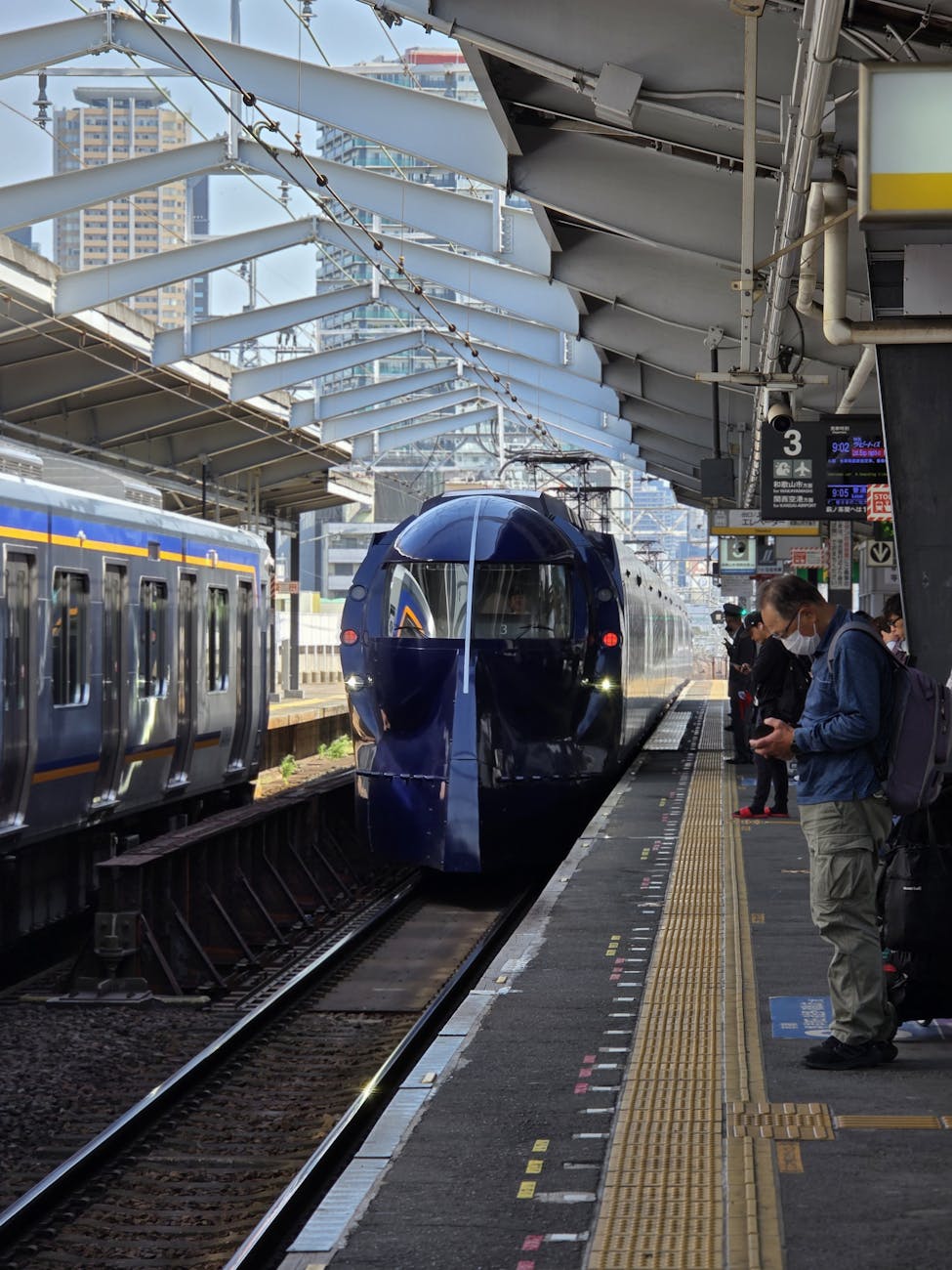
Osaka is the rail and subway center of the Kansai region. Its system is more compact than Tokyo’s but still operator-rich. The Osaka Metro provides the core urban network, and the Midosuji Line is the most important north-south spine through Umeda, Yodoyabashi, Honmachi, Shinsaibashi, Namba, Tennoji, and Shin-Osaka. Osaka Metro’s official route information lists the Midosuji, Tanimachi, Yotsubashi, Chuo, Sennichimae, Sakaisuji, Nagahori Tsurumi-ryokuchi, Imazatosuji, and New Tram lines.
Private and JR lines define the region:
Airports
Kansai International Airport is the major international gateway. Kansai Airport’s access information lists Nankai Rapi:t service from the airport to Namba in about 34 to 39 minutes depending on service pattern, with ordinary Airport Express service taking about 43 minutes. Nankai describes Rapi:t as a reserved-seat airport limited express between Kansai Airport and Namba, with a limited express surcharge in addition to the base fare.
Osaka International Airport, commonly called Itami, primarily handles domestic flights and is connected by monorail and airport buses.
Tickets and passes
Useful tools include:
What is unique and important
Osaka has two station-name traps:
The city also functions as the Kansai transfer hub. A visitor staying in Osaka can day-trip to Kyoto, Nara, Kobe, Himeji, and Wakayama, but each destination may be best served by a different operator.
Key concerns:
Best strategy for visitors
Stay near Namba, Umeda/Osaka, Tennoji, or Shin-Osaka based on your onward travel. Use the Midosuji Line as the basic urban spine, but do not ignore private railways for Kyoto, Kobe, Nara, or the airport. When going to Kyoto or Kobe, compare JR, Hankyu, Keihan, and Hanshin based on the exact neighborhood, not just the city name.
Local concerns
Osaka locals often optimize around station district, commute line, shopping access, and transfer convenience. Umeda and Namba are powerful but crowded. Housing choices are shaped by whether a line gives direct access to work without fighting the worst transfers.
- JR West serves Osaka Station, the Osaka Loop Line, Shin-Osaka, Kyoto, Kobe, Nara, and Kansai Airport routes.
- Hankyu links Osaka with Kyoto and Kobe.
- Hanshin links Osaka with Kobe and connects toward Nara through through-service.
- Keihan links Osaka with eastern Kyoto.
- Kintetsu links Osaka with Nara, Ise, and Nagoya.
- Nankai links Namba with Kansai Airport, Wakayama, and Koyasan.
- IC card for routine travel.
- Osaka Metro day or digital passes for subway-heavy sightseeing. Osaka’s tourist pass pages describe Osaka Metro and Osaka City Bus unlimited-ride products such as the Enjoy Eco Card and digital tickets.
- Private railway tickets for Nara, Kyoto, Kobe, Koyasan, and Kansai Airport depending on route.
- JR tickets for Shin-Osaka Shinkansen, airport, Kyoto/Kobe, or longer trips.
- Osaka/Umeda: JR Osaka Station and multiple Umeda subway/private railway stations form one huge district.
- Namba: JR Namba, Osaka-Namba, Nankai Namba, and subway Namba are connected but not identical.
- Midosuji Line crowding: It is often the fastest but busiest subway line.
- Private railway choice: Kyoto, Kobe, and Nara may be cheaper or easier by private rail than JR depending on start point.
- Airport access: Namba favors Nankai; Shin-Osaka/Umeda may favor JR or bus depending on luggage and transfers.
- Shin-Osaka vs Osaka Station: Shinkansen uses Shin-Osaka, not Osaka/Umeda.
Kyoto
System identity
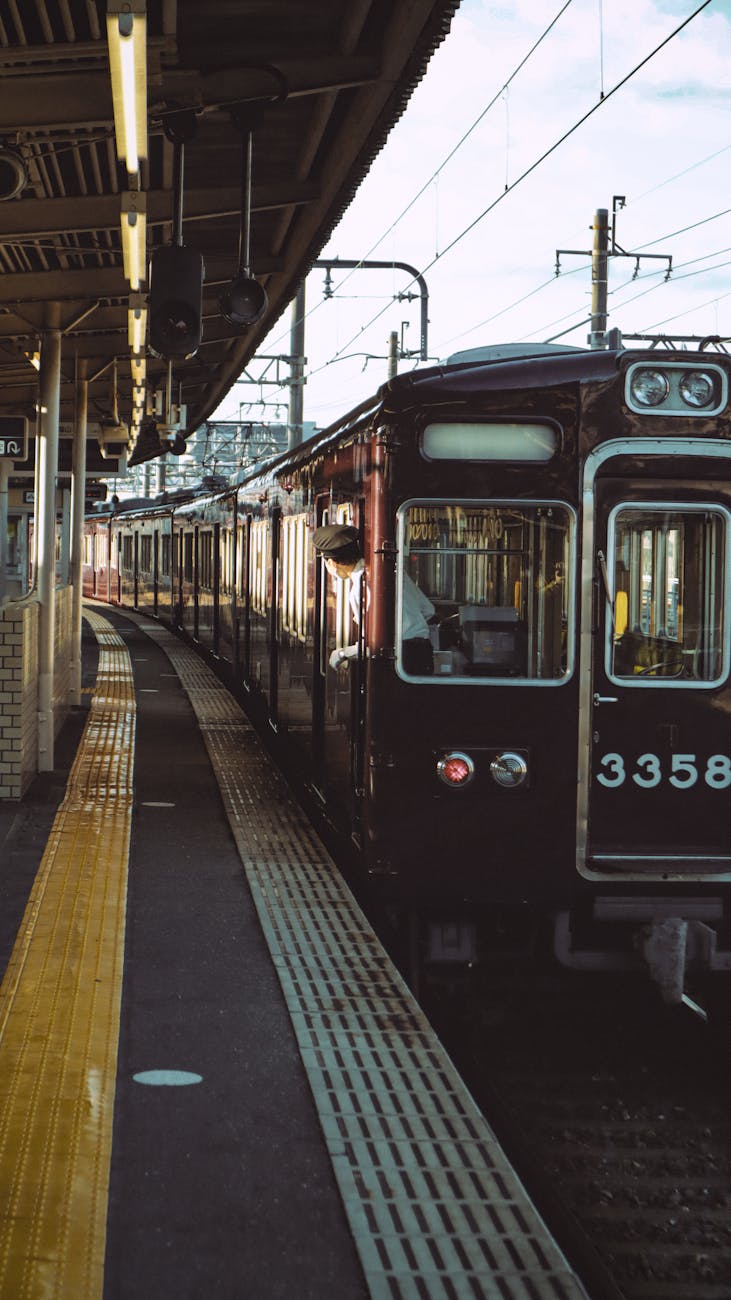
Kyoto is the most misunderstood transportation city in Japan. It has rail, subway, buses, taxis, bicycles, and walking routes, but no single mode solves everything. The city’s tourist destinations are spread around a basin, often near hills and temple districts where rail is indirect. Buses are therefore essential, but buses are also the system’s pressure point.
Kyoto’s main components are:
Tourism pressure and bus crowding
Kyoto’s official transport information has been actively adjusted to manage crowding. The city states that from June 1, 2024, it introduced a new bus timetable intended to reduce crowding, increased frequencies on loop and mainline routes, and added EX100 and EX101 “Rakuraku” sightseeing-oriented lines.
For spring 2026, Kyoto’s official tourism site published specific congestion-reduction measures, including temporary bus and subway increases, frequent bus service to Kiyomizu/Gion areas, live bus location information, crowd cameras, and hands-free travel advice.
This is a strong signal: Kyoto buses are not merely transportation. They are a civic capacity issue.
Tickets and passes
The official Kyoto subway and bus pass information describes the Subway & Bus 1-Day Pass as valid for unlimited rides for one calendar day, not a rolling 24-hour period. Kyoto’s ticket pages also state that IC cards such as PiTaPa, ICOCA, and Suica can be used on municipal buses and subway services.
The Kyoto Subway 1-Day Pass is listed at ¥800 for adults and ¥400 for children.
Passes can be useful, but the best Kyoto strategy is often not “ride buses all day.” It is “use rail where possible, then bus or taxi only for the final gap.”
What is unique and important
Kyoto is a city where the fastest route on a map may be the worst lived experience. A packed bus from Kyoto Station to Kiyomizu-dera can be slow and uncomfortable. A train to a nearby station plus a walk may be better.
Key concerns:
Best strategy for visitors
Use Kyoto Station as an arrival hub, but do not default to buses from Kyoto Station for every sight. For Fushimi Inari, use JR or Keihan. For Arashiyama, use JR, Hankyu, or Randen depending on origin. For Gion and eastern Kyoto, use Keihan or subway plus walking when possible. Use buses for places rail does not serve well, and avoid bringing large luggage on them.
Local concerns
Kyoto locals experience tourism as daily mobility pressure. City buses are used by residents, students, elderly passengers, and workers, not just sightseers. The most respectful visitor behavior is to travel off-peak, use rail alternatives, keep luggage out of aisles, and avoid blocking bus stops or station corridors.
- Kyoto Municipal Subway: Karasuma Line north-south and Tozai Line east-west.
- JR lines: Kyoto Station access, Arashiyama/Sagano direction, Nara direction, Biwako/Kosei directions.
- Keihan Railway: eastern Kyoto, Gion/Shijo, Fushimi Inari, Uji, and Osaka direction.
- Hankyu Railway: downtown Kyoto to Osaka via Karasuma/Kawaramachi area.
- Kintetsu Railway: Kyoto to Nara and southern Kyoto.
- Randen tram: Arashiyama and northwest tourist access.
- City buses and Kyoto Bus: temple, university, and neighborhood coverage.
- Taxis: often practical for short temple-to-temple hops or late evenings.
- Kyoto Station bus queues: Tourists overload direct buses from the station.
- Temple geography: Many famous temples are near hills, narrow roads, or old neighborhoods.
- Luggage: Large suitcases on city buses are a major friction point. Hands-free luggage delivery is often worth it.
- Seasonality: Cherry blossoms, autumn leaves, school trips, and holidays produce severe crowding.
- Taxi usefulness: Short taxi hops can preserve energy and reduce bus pressure.
- Bicycle caution: Kyoto can be pleasant by bike in some areas, but tourist zones are crowded and parking rules matter.
Nara
System identity
Nara is smaller and calmer than Kyoto, but transportation choices still matter. The city has two main rail arrival points: Kintetsu Nara and JR Nara. Kintetsu Nara is closer to Nara Park and many central sights, while JR Nara is still walkable or bus-connected. Nara’s sightseeing geography is compact around Nara Park, Todai-ji, Kofuku-ji, Kasuga Taisha, and Naramachi, but wider Nara Prefecture requires more planning.
Buses and walking
Nara Kotsu operates the main local bus network. Visit Nara describes Nara Kotsu as having an extensive network, including tourist-friendly routes, and identifies Gurutto buses as low-cost routes useful for sightseeing.
The Nara Travelers Guide explains that Gurutto Bus routes connect Nara Park, Heijo Palace, and Mt. Wakakusa areas, with one ride priced at ¥100 on relevant routes.
Tickets and passes
Nara Kotsu offers one-day bus passes. Its official pass page lists a Nara Park/Nishinokyo World Heritage 1-Day Pass at ¥600 for adults and ¥300 for children, and a wider 1-day option at ¥1,100 for adults and ¥550 for children.
Kintetsu’s 1-Day Rail Pass is another useful tool for Osaka-Nara-Kyoto movement. The official Kintetsu page describes a one-day pass covering designated Kintetsu lines and Nara Kotsu bus zones, with adult and child pricing listed at ¥1,900 and ¥950 respectively.
What is unique and important
Nara is deceptively walkable. Many visitors can walk from Kintetsu Nara to the main park sights, but the full loop can become tiring, especially in summer heat or with children. Buses are useful for Heijo Palace, Nishinokyo, Horyu-ji, and less central sights.
Nara also manages tourist vehicle pressure. The Nara Park Bus Terminal was developed partly to control tourist buses and private-car inflow around Nara Park, and to support park-and-ride and Gurutto Bus circulation.
Key concerns:
Best strategy for visitors
Arrive by Kintetsu if coming from Osaka Namba or Kyoto and focusing on central Nara. Use buses selectively for outer sights or tired legs. Consider a Nara Kotsu or Kintetsu pass only if you will ride enough to justify it. Walk early in the day before crowds and heat build.
Local concerns
Nara residents balance tourist flows with ordinary bus and road use. The city’s transportation issue is less megacity crowding and more seasonal concentration around Nara Park, roads, and bus stops.
- Station choice: Kintetsu Nara is often more convenient for park sightseeing; JR Nara may be better for JR pass users or certain hotel locations.
- Heat and walking distance: The park feels compact until you add temples, slopes, deer, crowds, and summer weather.
- Bus frequency: Tourist buses are useful but not as dense as Tokyo or Osaka rail.
- Car congestion: Driving directly to Nara Park during peak seasons can be inefficient.
Kobe
System identity
Kobe is shaped by geography: mountains to the north, sea to the south, and a relatively narrow east-west urban strip. This makes rail corridors efficient, but hills make buses, taxis, and walking conditions more important than a flat map suggests.
The main hub is Sannomiya, not necessarily Kobe Station. Sannomiya connects JR, Hankyu, Hanshin, Kobe Municipal Subway, Port Liner, buses, shopping districts, and nightlife. Shin-Kobe is the Shinkansen station, uphill and one subway stop from Sannomiya.
Kobe’s main systems include:
Airport and port access
Kobe Airport is unusually convenient from central Kobe. Kobe Airport’s official access page states that the Port Liner connects Kobe Airport and Sannomiya in 18 minutes. Kobe New Transit likewise describes Port Liner and Rokko Liner access times, including the 18-minute Sannomiya-Kobe Airport link.
Kobe is also a port city, so cruise, ferry, and waterfront access matter more than in many inland cities.
Tickets and passes
The Kobe 1-Day Loop Bus Ticket and related products provide unlimited travel on City Loop and Port Loop buses and include discounts at participating facilities. Kobe’s official loop-bus information explains that 1-day and 2-day loop tickets cover City Loop and Port Loop and should be shown to the conductor when getting off.
Kobe City’s transit information states that major IC cards such as ICOCA, Suica, PASMO, PiTaPa, SUGOCA, nimoca, Hayakaken, Kitaca, manaca, and TOICA can be used on relevant buses, railways, and subways.
What is unique and important
Kobe’s uniqueness is topography plus parallel rail. Getting east-west is usually easy. Getting uphill can be tiring. Sightseeing areas such as Kitano, Nunobiki, Shin-Kobe, Mount Rokko access points, Harborland, Meriken Park, and Nankinmachi are not all on one simple rail line.
Key concerns:
Best strategy for visitors
Use Sannomiya as the central orientation point. Use JR, Hankyu, or Hanshin depending on where you are coming from in Osaka or where you are going in Kobe. Use the Port Liner for Kobe Airport and Port Island. Use City Loop/Port Loop or taxis for sightseeing when hills and waterfront transfers make rail less direct.
Local concerns
Kobe locals often choose between JR, Hankyu, and Hanshin based on exact neighborhood, fare, and destination. Hills affect daily mobility, especially for older residents. Transit access can vary sharply between waterfront, central, hillside, and island districts.
- JR West: Osaka-Kobe-Himeji corridor.
- Hankyu and Hanshin: parallel private railway links to Osaka and beyond.
- Kobe Municipal Subway: access to Shin-Kobe, Sannomiya, and western/northern areas.
- Port Liner: automated guideway to Port Island and Kobe Airport.
- Rokko Liner: access to Rokko Island.
- City Loop and Port Loop buses: tourist circulation.
- Sannomiya complexity: Many operators and underground passages converge there.
- Hills: A short distance on the map may involve steep walking.
- Tourist loop buses: Useful for first-time visitors, but not always faster than rail plus walking.
- Shin-Kobe separation: Shinkansen arrival is not the same as central Sannomiya arrival.
- Airport convenience: Port Liner makes Kobe Airport very easy compared with many city airports.
Fukuoka
System identity
Fukuoka is one of Japan’s easiest big cities for transportation because it is compact, its airport is extremely close to the city center, and Hakata and Tenjin divide the urban core into a clear rail/business axis. The city is also bus-heavy, especially through Nishitetsu’s network.
The main systems are:
Airport access
Fukuoka Airport is one of the strongest airport-access stories in Japan. The official tourism site states that the subway takes about 5 minutes from Fukuoka Airport to Hakata and 11 minutes to Tenjin, with frequent service.
Fukuoka Airport’s own access information notes that the domestic terminal is directly connected to the Fukuoka City Subway. The Fukuoka City International Foundation explains the important caveat: the subway is at the domestic terminal, so international passengers use a free shuttle bus to the domestic terminal, usually taking about 10 to 15 minutes.
Tickets and passes
The Fukuoka City Subway 1-Day Pass provides unlimited rides on all subway lines for one day. The official page lists the adult price at ¥640 and child price at ¥320.
The Fukuoka Tourist City Pass covers one-day unlimited travel on selected buses, trains, subways, and ferries, with versions for city-only travel and city-plus-Dazaifu travel. The official tourism page lists adult prices of ¥2,500 for the Fukuoka City pass and ¥2,800 for the Dazaifu version.
Nishitetsu’s official bus guide explains local boarding procedure: board through the center door, take a numbered ticket if paying cash, tap IC cards when boarding, check the fare monitor, and pay exact fare when alighting; it also notes which bills and coins can be exchanged.
What is unique and important
Fukuoka is compact enough that taxis can be rational for small groups, short trips, and rain. But buses remain central. Many places that look close on a map may be easiest by bus from Hakata or Tenjin.
Key concerns:
Best strategy for visitors
Use the subway for airport, Hakata, Tenjin, Ohori Park, and major cross-city movement. Use buses for places the subway does not serve directly. Consider the subway day pass for subway-heavy days and the Fukuoka Tourist City Pass only when using multiple modes enough to justify the higher price.
Local concerns
Fukuoka locals experience buses as part of ordinary urban life, not merely tourism. Road congestion can slow buses, while subway extensions and station access shape housing and commuting choices. The airport’s proximity is a major economic advantage but also concentrates movement through Hakata and the airport corridor.
- Fukuoka City Subway: Airport Line, Hakozaki Line, and Nanakuma Line.
- JR Kyushu: Hakata Station, Shinkansen, and regional rail.
- Nishitetsu buses: dense city and regional bus network.
- Nishitetsu Tenjin Omuta Line: regional rail south from Tenjin.
- Ferries: island and bay routes.
- Taxis: useful for short urban hops because the city is compact.
- Hakata vs Tenjin: Hakata is the Shinkansen/JR/airport rail gateway; Tenjin is the commercial and Nishitetsu hub.
- Airport terminal distinction: International arrivals need the shuttle to the domestic subway station.
- Bus density: Buses are useful but can be confusing because many routes converge downtown.
- Dazaifu: Rail via Nishitetsu or pass products may be better than ad hoc travel depending on itinerary.
- Nightlife: Tenjin, Nakasu, and Hakata are close enough that walking, subway, bus, and taxi can all be reasonable.
Hiroshima
System identity
Hiroshima is a streetcar city. Rail matters, buses matter, and the Shinkansen station matters, but the local identity of transportation is Hiroden’s tram network. Streetcars connect Hiroshima Station, downtown, the Peace Memorial Park/Atomic Bomb Dome area, Miyajima-guchi, and many neighborhoods.
The main systems are:
Tickets and passes
Hiroden’s official site lists economical ticket options including one-day trip cards and the Visit Hiroshima Tourist Pass.
The Visit Hiroshima Tourist Pass provides unlimited rides for specified time periods on central Hiroshima transport, including all Hiroden streetcar lines, the Miyajima ferry route, and bus routes operated by multiple companies in central Hiroshima. The pass page notes that it does not include the Miyajima Visitor Tax.
Hiroden’s how-to-ride guidance states that major IC cards including Suica, PASMO, ICOCA, SUGOCA, nimoca, Hayakaken, Kitaca, manaca, TOICA, and PiTaPa are accepted, and that on streetcars riders touch the card only when getting off.
For sightseeing, Hiroshima’s official tourism material describes the Meipuru-pu loop bus serving central attractions such as museums and Peace Park areas, with a one-day pass listed at ¥400 for adults and ¥200 for children.
What is unique and important
Hiroshima streetcars are legible, atmospheric, and useful. They are also slower than heavy rail. For visitors, this is usually a feature rather than a problem because many central sights are not far apart. For locals, streetcar speed, road interaction, and crowding are daily practical issues.
Miyajima is the other major transportation concern. Visitors can reach Miyajima-guchi by JR rail or Hiroden streetcar, then cross by ferry. Pass coverage varies: some JR passes cover JR ferry, while local tourist passes may cover other ferry routes but not the visitor tax. Always check the specific pass.
Key concerns:
Best strategy for visitors
Use Hiroden for central sightseeing and the Peace Park area. Use JR or Hiroden plus ferry for Miyajima depending on pass coverage and desired speed. Consider Meipuru-pu for museum-heavy sightseeing. Keep the pace realistic: Hiroshima is easy to navigate, but Miyajima plus Peace Park plus downtown can still be a full day.
Local concerns
Residents balance streetcar convenience with road congestion and central-city redevelopment. Hiroshima’s system is less intimidating than Tokyo’s, but the streetcar network’s at-grade nature means it shares the city’s surface constraints.
- Hiroden streetcars: the signature urban mode.
- JR West: Hiroshima Station, regional rail, and Miyajima-guchi access.
- Local buses: neighborhood and hillside access.
- Meipuru-pu sightseeing loop bus: tourist loop service.
- Ferries: Miyajima access.
- Taxis: useful late, in rain, or for hillside destinations.
- Streetcar boarding rules: IC-card handling differs from some train systems; follow Hiroden instructions.
- Hiroshima Station construction and transfers: Station-area routing can change as redevelopment continues.
- Miyajima timing: Ferry schedules, crowding, and visitor tax matter.
- Peace Park access: Streetcar, bus loop, taxi, and walking can all work depending on origin.
Yokohama
System identity
Yokohama is both a major city and part of the Greater Tokyo rail region. It is not just a Tokyo suburb. Its transportation system combines JR, Tokyu, Keikyu, Sotetsu, Minatomirai Line, Yokohama Municipal Subway, buses, waterfront loop services, taxis, and Shinkansen access at Shin-Yokohama.
The main visitor zones are:
Tickets and passes
Yokohama’s official tourism information lists the Minato Burari Ticket for municipal subway and bus travel in the waterfront-oriented area. A 2026 Yokohama City page lists the Minato Burari Ticket Wide at ¥750 for adults and ¥380 for children, with the Wide version including Shin-Yokohama access.
Yokohama’s tourism site also lists the standard Minato Burari Ticket at ¥700 for adults and ¥350 for children and the Wide version at ¥750 and ¥380.
Tourist buses and waterfront movement
Yokohama operates distinctive visitor-oriented buses. Official tourism information describes Bayside Blue as connecting Yokohama Station with Minato Mirai, Chinatown, Yamashita, and the Red Brick Warehouse area. The Akai Kutsu loop bus serves popular tourist areas, and official information lists fares such as ¥220 for adults and ¥110 for children, with day-pass options available.
What is unique and important
Yokohama’s uniqueness is that walking can be as important as transit. The waterfront is scenic and walkable, but distances can add up. For example, Yokohama Station to Minato Mirai, Red Brick Warehouse, Yamashita Park, Chinatown, and Motomachi can be done by train, bus, taxi, or long walks depending on stamina and weather.
Key concerns:
Best strategy for visitors
Use rail from Tokyo based on origin: Tokyu/Minatomirai for Shibuya-to-Chinatown/Minato Mirai flows, JR for Tokyo/Shinagawa/Yokohama Station flows, and Keikyu for Shinagawa/Haneda-related flows. Use Minato Burari products if making multiple municipal bus/subway rides around the waterfront. Walk when weather is good, but do not underestimate distances.
Local concerns
Yokohama residents often commute into Tokyo or within Kanagawa, so operator choice affects daily life. Recent through-services and private railway integration have improved some flows but also made route choice more complex. Event traffic and waterfront tourism affect residents around Minato Mirai, Kannai, and Chinatown.
A traveler who wants to use Japan’s transportation well should avoid two extremes. The first extreme is trying to master every operator before arrival. That is unnecessary. The second is assuming that Japan has one unified transit system where any ticket works everywhere. That is false.
The productive middle ground is:
Japan rewards travelers who combine preparation with flexibility. The system is dense, safe, and usually reliable, but it is not frictionless. Once a visitor understands IC cards, operator boundaries, station exits, luggage rules, and when to choose rail versus bus or taxi, transportation becomes one of the strongest parts of traveling in Japan rather than a source of stress.
: Japan National Tourism Organization, “IC Travel Cards,” https://www.japan.travel/en/plan/ic-card/
: JR East, “Sales of Suica and PASMO Cards Resume,” March 1, 2025, https://www.jreast.co.jp/e/press/pdf/0225_suica_en.pdf
: JR East, “Welcome Suica,” https://www.jreast.co.jp/en/multi/welcomesuica/purchase.html
: PASMO Council, “PASMO Council Will Issue a New IC Card for International Visitors,” April 17, 2026, https://www.pasmo.co.jp/visitors/en/news/pdf/TOURIST_PASMO_PressRelease_EN_20260417.pdf
: JR East, “Welcome Suica Mobile,” https://www.jreast.co.jp/en/multi/wsmlp/
: Tokyo Metro / Toei Subway, “Tokyo Subway Ticket,” https://www.tokyometro.jp/en/ticket/travel/index.html
: Japan National Tourism Organization, “Trains & Buses,” https://www.japan.travel/en/guide/how-to-travel-by-train-and-bus-in-japan/
: Toei Transportation, “Frequently Asked Questions — Toei Bus,” https://www.kotsu.metro.tokyo.jp/eng/guides/faq/
: Japan National Tourism Organization, “Shinkansen,” https://www.japan.travel/en/plan/shinkansen/
: Japan National Tourism Organization, “Traveling by Rail,” https://www.japan.travel/en/guide/traveling-by-rail/
: Japan Rail Pass, “Prices,” https://japanrailpass.net/en/purchase/price/
: Japan Rail Pass, “NOZOMI MIZUHO Ticket,” https://japanrailpass.net/en/use/special-ticket/
: Travel Weekly Asia, “Japan Rail Pass prices to increase from October,” April 20, 2026, https://www.travelweekly-asia.com/Travel-News/Tour-Operators/Japan-Rail-Pass-price-increase-2026 ; Japan Today, “Japan Rail Pass prices to rise 5-6% from Oct 1,” April 12, 2026, https://japantoday.com/category/travel/japan-rail-pass-prices-to-rise-5-6-from-oct-1
: SmartEX, “Tokaido Sanyo Kyushu Shinkansen Internet Reservation Service,” https://smart-ex.jp/en/
: JR Central, “Oversized Baggage,” https://global.jr-central.co.jp/en/info/oversized-baggage/
: JR West, “Baggage Information,” https://www.westjr.co.jp/travel-information/en/train-usage-guide/luggage/
: Toei Transportation, “Women Only Cars,” https://www.kotsu.metro.tokyo.jp/eng/other/women.html
: Japan National Tourism Organization, “Accessible Tourism,” https://www.japan.travel/en/guide/accessibility-in-japan/
: Ministry-linked transport accessibility platform, “Railway Accessibility Information,” https://www.transport-pf.or.jp/english/yasasii/01_barrier_free.html
: Japan National Tourism Organization, “Buses,” https://www.japan.travel/en/plan/getting-around/buses/
: Japan Bus Online, https://japanbusonline.com/en
: Japan National Tourism Organization, “Airport Access,” https://www.japan.travel/en/plan/airport-access/
: Japan National Tourism Organization, “Domestic Air Travel,” https://www.japan.travel/en/plan/getting-around/domestic-air-travel/
: Japan National Tourism Organization, “Taxis,” https://www.japan.travel/en/plan/getting-around/
: GO Inc., “GO Taxi App for Visitors,” https://go.goinc.jp/en/taxiguide
: Japan National Tourism Organization, “Car Rental,” https://www.japan.travel/en/plan/getting-around/cars/
: Japan National Tourism Organization, “Expressway Passes,” https://www.japan.travel/en/au/plan/expressway-passes/
: NEXCO East / Drive Plaza, “Tohoku Expressway Pass,” https://en.driveplaza.com/drawari/tohoku_expass/
: Metropolitan Expressway, “ETC-only entrances,” https://www.shutoko.jp/ss/etc_only_no_cash/en/
: Hyogo Prefectural Police, bicycle traffic safety materials, https://www.police.pref.hyogo.lg.jp/foreign/01english/data/04-06.pdf
: Japan National Tourism Organization, “Ferries & Cruises,” https://www.japan.travel/en/plan/getting-around/ferry-cruise-ships/
: Japan National Tourism Organization, “Island Travel,” https://www.japan.travel/en/plan/getting-around/going-to-islands/
: Japan National Tourism Organization, “Local Laws and Etiquette,” https://www.japan.travel/en/guide/japanese-manners-dos-and-donts/
: Go Tokyo, “Getting Around Tokyo,” https://www.gotokyo.org/en/plan/getting-around/index.html
: Tokyo Haneda Airport, “Train / Monorail,” https://tokyo-haneda.com/en/access/train/index.html
: Tokyo Haneda Airport, “Terminal Transfer,” https://tokyo-haneda.com/en/access/travel_between_terminals/index.html
: Narita International Airport, “Train Access,” https://www.narita-airport.jp/en/access/train/
: Keisei Electric Railway, “Skyliner,” https://www.keisei.co.jp/keisei/tetudou/skyliner/us/skyliner/index.php
: TYO-NRT Airport Bus, https://tyo-nrt.com/en
: Toei Transportation, “Toei Bus One-Day Pass,” https://www.kotsu.metro.tokyo.jp/eng/tickets/
: Osaka Metro, “Route Map / Timetable,” https://subway.osakametro.co.jp/en/guide/routemap.php
: Kansai International Airport, “Access by Train,” https://www.kansai-airport.or.jp/en/access/from-airport/train
: Nankai Electric Railway, “Limited Express Rapi:t,” https://www.nankai.co.jp/en_railway/traffic/express/rapit.html
: Osaka Metro / Osaka tourism pass information, https://subway.osakametro.co.jp/en/guide/page/enjoy-eco.php
: Kyoto City Official Travel Guide, “Getting Around Kyoto,” https://kyoto.travel/en/getting-around/
: Kyoto City Official Travel Guide, “Comfortable Sightseeing in Spring,” March 27, 2026, https://kyoto.travel/en/news/spring-sightseeing-tips/
: Kyoto City Bus & Subway, “Subway & Bus 1-Day Pass,” https://www2.city.kyoto.lg.jp/kotsu/webguide/en/ticket/regular_1day_card_comm.html
: Kyoto City Bus & Subway, “Tickets / IC Cards,” https://www2.city.kyoto.lg.jp/kotsu/webguide/en/ticket/index_ticket.html
: Kyoto City Bus & Subway, “Subway 1-Day Pass,” https://kyoto.travel/en/getting-around/in-kyoto/
: Visit Nara, “Getting Around Nara,” https://www.visitnara.jp/getting-around-nara/
: Nara Travelers Guide, “Nara City Loop Bus / Gurutto Bus,” https://www.naracity-guide.com/en/feature/gurutto-bus/
: Nara Kotsu Bus Lines, “Discount Tickets,” https://www.narakotsu.co.jp/language/en/pass.html
: Kintetsu Railway, “Kintetsu Rail Pass 1day,” https://www.kintetsu.co.jp/foreign/english/ticket/krp_1day.html
: Nara Park Bus Terminal, https://npbt.jp/en/
: Kobe Airport, “Access,” https://www.kairport.co.jp/en/access/portliner
: Kobe New Transit, “Port Liner / Rokko Liner,” https://www.knt-liner.co.jp/en/
: Kobe Transportation Bureau / Kobe Loop Bus ticket information, https://kobeloop.bus-japan.net/
: Kobe City Transportation Bureau, “Tourist Tickets and IC Card Information,” https://kotsu.city.kobe.lg.jp/english/en-ticket/
: Fukuoka City Official Tourist Guide, “Getting Around Fukuoka,” https://gofukuoka.jp/plan/detail02.html
: Fukuoka Airport, “Subway Access,” https://www.fukuoka-airport.jp/en/access/subway.html
: Fukuoka City International Foundation, “Airport access and shuttle information,” https://www.fcif.or.jp/en/en-information/living/public-transportation/
: Fukuoka City Subway, “1 Day Pass,” https://subway.city.fukuoka.lg.jp/eng/fare/one/
: Fukuoka City Official Tourist Guide, “Fukuoka Tourist City Pass,” https://gofukuoka.jp/citypass.html
: Nishitetsu Bus, “How to Ride the Bus,” https://www.nishitetsu.jp/en/bus/
: Hiroshima Electric Railway, “Fares and Tickets,” https://www.hiroden.co.jp/en/
: MOBIRY, “Visit Hiroshima Tourist Pass,” https://www.mobirytravel.jp/en/ticket/1vf0m4hys4/
: Hiroshima Electric Railway, “How to Ride Streetcars,” https://www.hiroden.co.jp/en/s-howtoride.html
: Dive Hiroshima, “Hiroshima Sightseeing Loop Bus Meipuru-pu,” https://dive-hiroshima.com/en/information/ticket/
: Yokohama City, “Minato Burari Ticket Wide,” April 1, 2026, https://www.city.yokohama.lg.jp/lang/residents/en/bus-subway/around/burari-ticket.html
: Yokohama Official Visitors Guide, “Discount Tickets,” https://www.yokohamajapan.com/information/discount-tickets-passes/
: Yokohama Official Visitors Guide, “BAYSIDE BLUE,” https://www.yokohamajapan.com/article/bayside-blue/
: Yokohama Official Visitors Guide, “Akai Kutsu Loop Bus,” https://www.yokohamajapan.com/information/getting-around-yokohama/akaikutsu.php
- Yokohama Station: massive rail and shopping hub.
- Minato Mirai: waterfront business, hotel, museum, and event district.
- Sakuragicho: gateway to waterfront and municipal transit.
- Kannai/Isezakicho: civic and entertainment areas.
- Motomachi-Chukagai: Chinatown and harbor access.
- Shin-Yokohama: Shinkansen and event access.
- Shin-Yokohama separation: Shinkansen travelers arrive away from the waterfront; the Wide pass can matter if using municipal transit.
- Event crowds: Minato Mirai, Pacifico Yokohama, K-Arena, Nissan Stadium, and Yokohama Stadium can produce crowd surges.
- Tokyo integration: Routes from Tokyo may use JR, Tokyu/Minatomirai, Keikyu, or other operators depending on origin.
- Waterfront last-mile: Buses, walking, and taxis compete with short rail hops.
- Use an IC card for ordinary local travel.
- Buy reserved tickets for long-distance or airport express services when appropriate.
- Check pass coverage before buying.
- Use rail first in big cities, then buses, taxis, bikes, or walking for gaps.
- Avoid large luggage in rush hour and on crowded buses.
- Plan airport access by hotel location, not by generic city advice.
- Use baggage delivery when moving between cities with large suitcases.
- Treat local etiquette as part of the transportation system.
- Build buffers before flights, ferries, rural buses, and holiday travel.
- Remember that residents are sharing the system for daily life, not sightseeing.