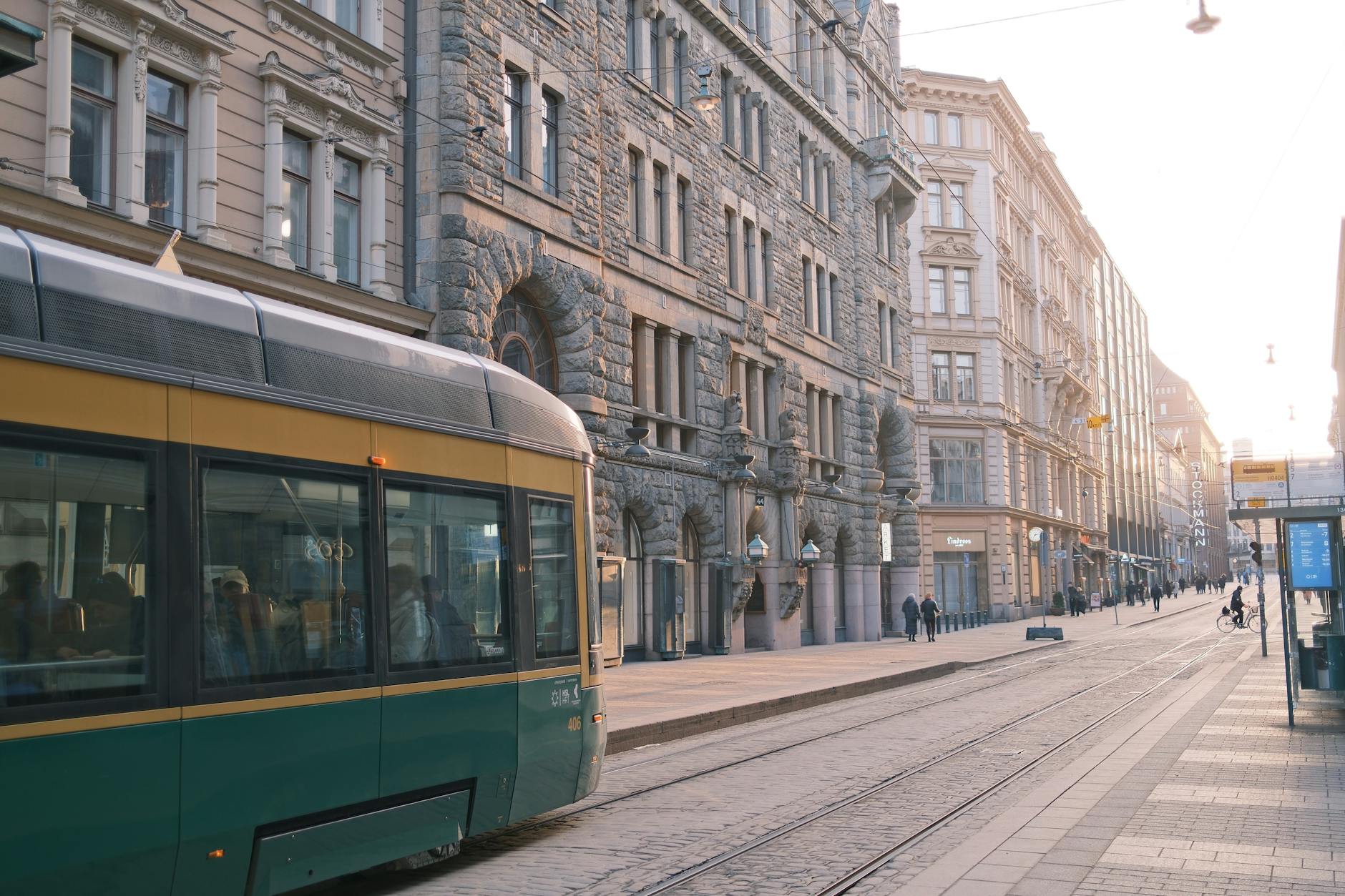
*A practical analysis for visitors, temporary residents, and locals, with city-specific guidance for Helsinki, Turku, and Rovaniemi* Prepared: April 22, 2026
Scope and important note
This paper explains how transportation in Finland works from a practical user perspective: how to move between cities, how to use local public transport, when to drive, how taxis work, what winter changes, and what concerns visitors and locals commonly face. It first covers the national-scale systems that apply across Finland, then gives city-by-city guidance for Helsinki, Turku, and Rovaniemi.
Transportation details change more often than the underlying structure. Ticket prices, routes, disruptions, app policies, airport bus arrangements, and seasonal timetables should always be checked close to travel. This is especially true in Finland because weather, construction projects, holiday demand, and seasonal tourism can significantly affect travel plans.
Contents
- [Executive summary](#executive-summary)
- [Part I — National-scale transportation in Finland](#part-i--national-scale-transportation-in-finland)
- [1. Finland’s transportation model](#1-finlands-transportation-model)
- [2. The practical decision framework](#2-the-practical-decision-framework)
- [3. National and regional transport operators](#3-national-and-regional-transport-operators)
- [4. Tickets, payment, and travel planning](#4-tickets-payment-and-travel-planning)
- [5. Intercity trains](#5-intercity-trains)
- [6. Long-distance buses](#6-long-distance-buses)
- [7. Local public transport](#7-local-public-transport)
- [8. Airports and domestic flights](#8-airports-and-domestic-flights)
- [9. Taxis](#9-taxis)
- [10. Private vehicles and driving](#10-private-vehicles-and-driving)
- [11. Ferries and water transport](#11-ferries-and-water-transport)
- [12. Walking, cycling, scooters, and micromobility](#12-walking-cycling-scooters-and-micromobility)
- [13. Accessibility, luggage, children, pets, and bikes](#13-accessibility-luggage-children-pets-and-bikes)
- [14. Weather, seasonality, disruption, and safety](#14-weather-seasonality-disruption-and-safety)
- [15. Practical strategies for visitors and residents](#15-practical-strategies-for-visitors-and-residents)
- [Part II — City-by-city analysis](#part-ii--city-by-city-analysis)
- [Helsinki](#helsinki)
- [Turku](#turku)
- [Rovaniemi](#rovaniemi)
- [Comparative mode matrix](#comparative-mode-matrix)
- [Practical itinerary examples](#practical-itinerary-examples)
- [Quick checklist](#quick-checklist)
- [References](#references)
Executive summary
Finland is easy to navigate in the main urban and intercity corridors, but it is not a country where one transportation rule fits all places. Helsinki works like a mature European transit city. Turku is bus-centered and compact. Rovaniemi is a small Arctic city where buses serve the main urban and tourist corridors, but taxis, rental cars, and prearranged transfers become much more important once a traveler leaves the core.
At the national level, the most important user principles are:
For the three cities in this paper:
- Public transport works well, but coverage varies by density. Finland has good trains, coaches, local bus systems, airports, and ferries, but frequency and convenience drop sharply outside larger cities and main corridors. InfoFinland describes Finnish public transport as generally working well, with travel possible to many places by train or bus, and local public transport organized in larger cities and surrounding areas.
- Use the right planning tool for the layer of travel. VR is central for trains, Matkahuolto and coach operators are important for buses, HSL is central in the Helsinki region, Föli is central in Turku, and Linkkari is central in Rovaniemi.
- Finland is highly seasonal. Winter affects driving, walking, cycling, delays, airport operations, and rural access. Summer improves cycling and water transport but can bring holiday demand. Lapland travel around Christmas and ski periods should be booked early.
- Driving is simple in concept but serious in winter. Finland drives on the right. Roads are generally good, but winter tires, snow, ice, darkness, long distances, wildlife, and rural service gaps matter. Finland also has no road or bridge tolls, which simplifies road travel for visitors.
- Taxis are legitimate but not always available on demand. Finland’s taxi market is regulated but decentralized. Passengers must be shown the price or pricing basis before the trip, and rural or late-night trips should often be reserved in advance.
- Local public transport is usually ticket-before-or-at-boarding, with inspection risk. In Helsinki especially, ticket inspectors are common and proof of payment matters. In smaller systems, ticketing is simpler but service is less frequent.
- Mobile apps help, but do not rely on a single app nationally. Finland has multiple regional systems. A traveler should expect to use more than one app or website across a trip.
- Helsinki is the only city in this guide where a visitor can comfortably rely almost entirely on rail-based and high-frequency public transport. HSL tickets cover buses, trams, Metro, commuter trains, light rail, and the Suomenlinna ferry.
- Turku is compact, walkable, and bus-based. Föli operates the local transport system across Turku and surrounding municipalities, with yellow buses and seasonal water buses.
- Rovaniemi is different from the southern cities. Buses are the only form of local public transport, and the key visitor corridor is between the railway station, city centre, Santa Claus Village, and the airport.
1. Finland’s transportation model
Finland’s transportation system is shaped by four facts: the country is large, population density is low outside the south, winter is a serious operational condition, and urban public transport is locally organized. This creates a system that is excellent in the right corridors and sparse in the wrong ones.
A visitor who understands Finland only through Helsinki will underestimate the role of cars, buses, taxis, and prearranged transfers elsewhere. A visitor who understands Finland only through Lapland will underestimate how easy rail and local transit can be in the south.
1.1 The basic national structure
Finland’s transportation layers are:
| Layer | Main uses | Typical user experience |
|---|---|---|
| Intercity rail | Helsinki–Tampere–Turku–Oulu–Rovaniemi and other city pairs | Comfortable, reliable, bookable in advance, good for city-to-city travel |
| Long-distance coach | Towns not well served by rail, budget travel, airport/region links | Often cheaper than train, sometimes slower, essential in rural areas |
| Domestic air | Long north-south distances, Lapland, business travel, island/remote access | Fast but airport transfers and weather matter |
| Regional/local public transport | Daily urban travel | Excellent in Helsinki, bus-based in many other cities |
| Private car | Rural Finland, cottages, national parks, Lapland touring, families with luggage | Convenient but winter conditions require respect |
| Taxi/transfer | Airports, late nights, low-density areas, accessibility, ski resorts | Useful but should often be prebooked outside dense cities |
| Ferries/water buses | Archipelago, islands, urban waterfront routes, Suomenlinna | Some are daily transit, some are seasonal/touristic |
| Walking/cycling/micromobility | City centres, summer travel, short trips | Good in many cities, highly seasonal outside hardened winter users |
1.2 Why Finland feels different from many European countries
Finland is modern and orderly, but it is not uniformly dense. This means:
1.3 What visitors usually get wrong
Common visitor mistakes include:
1.4 What locals experience
Locals experience the system differently from visitors:
- Intercity trains can be excellent, but many destinations require a bus or car after the train.
- A local bus network may be easy to use in a city but infrequent in the evening or on Sundays.
- A taxi may arrive quickly in Helsinki but require advance booking in smaller towns.
- A rental car may be unnecessary for Helsinki and Turku but genuinely useful in Lapland.
- Winter can turn a “simple” trip into a trip requiring spare time, warm clothing, charged devices, and realistic expectations.
- Assuming the Helsinki model applies everywhere. It does not. Helsinki has Metro, trams, commuter rail, ferries, dense buses, contactless payment, and frequent service. Rovaniemi does not.
- Assuming a car is always necessary. A car is a liability in central Helsinki, optional in Turku, and useful in rural Lapland.
- Underestimating winter. Winter does not stop Finland, but it changes how you should plan. Add buffer time, dress properly, and check conditions.
- Leaving Lapland transfers until arrival. Around Christmas, ski weeks, and aurora season, trains, cabins, buses, taxis, and rental cars can sell out.
- Expecting one national transit card. Finland has national and regional tools, but local transport systems still have separate ticket rules.
- In Helsinki, locals often optimize around zone boundaries, monthly or season tickets, commuting patterns, and winter cycling or walking conditions.
- In Turku, locals care about bus frequency, the trunk line network, suburb-to-centre connections, and service at night or on Sundays.
- In Rovaniemi, locals rely more on private cars outside the core, and public transport is more limited by geography, season, and frequency.
- Across Finland, locals often plan around weather, school schedules, public holidays, roadworks, rail disruptions, and major events.
2. The practical decision framework
A traveler in Finland should choose transportation based on destination density, distance, season, luggage, schedule risk, and group size.
2.1 Best mode by trip type
| Trip type | Best default | Alternative | Notes |
|---|---|---|---|
| Helsinki Airport to central Helsinki | HSL airport train | Bus 600, taxi | Airport train station is under the terminal, and P/I trains connect to the city centre in about 30 minutes. |
| Helsinki city sightseeing | HSL public transport + walking | Bike/city bike in season, taxi | HSL covers most visitor needs with one regional system. |
| Helsinki to Turku | VR train or long-distance coach | Car | Check 2026 rail works and replacement buses on the Helsinki–Turku corridor. |
| Turku local travel | Föli bus + walking | Bike, taxi | Föli is the main system; no metro or tram. |
| Turku airport or harbour | Föli line 1 corridor | Taxi | Line 1 links the airport and harbour corridor. |
| Helsinki/Turku to Rovaniemi | VR night train or flight | Long-distance coach, car | Night trains are a major Lapland travel tool. |
| Rovaniemi city to Santa Claus Village | Linkkari bus 8 | Taxi, tour transfer | Bus 8 links the railway station, centre, and Santa Claus Village. |
| Rovaniemi airport to centre | Airport Express or taxi | Rental car | Airport Express runs from the airport via Santa Claus Village to the city centre. |
| National parks, cottages, remote lodges | Rental car | Tour bus/transfer | Public transport may be limited or absent at the last-mile level. |
| Archipelago travel | Car, bike, bus + ferry | Organized tour | Ferry schedules and seasonality matter. |
2.2 When public transport is enough
Public transport is enough when:
2.3 When a car becomes useful
A car becomes useful when:
A car is least useful in central Helsinki and only moderately useful in central Turku. It is often quite useful around Rovaniemi and Lapland, but only if the driver is comfortable with winter roads or traveling in summer conditions.
2.4 When taxis or transfers are the smart choice
Use taxis or transfers when:
In low-density areas, do not assume taxis are cruising or instantly available. Traficom notes that taxis are no longer obligated to be on call, and rural taxis should be ordered in advance.
- You are staying in Helsinki and visiting central or well-connected suburban destinations.
- You are moving between major cities by train.
- You are in Turku and your lodging is near the centre, university, harbour, or major bus corridors.
- You are in Rovaniemi and only need the centre, railway station, airport corridor, and Santa Claus Village.
- You have a flexible schedule and can plan around infrequent services.
- You are staying at a cottage, rural lodge, or remote aurora accommodation.
- You are visiting national parks, trailheads, ski areas, or multiple scattered destinations.
- You are traveling with children, heavy winter gear, skis, or multiple suitcases.
- You are touring Lapland beyond Rovaniemi.
- You are visiting archipelago or rural areas outside fixed bus schedules.
- You arrive late at night.
- You have heavy luggage or mobility needs.
- Your destination is outside frequent public transport corridors.
- You are going to a cabin, hotel, or activity provider that offers a shuttle.
- You are in Lapland during extreme cold or with children.
- You are making a time-sensitive airport or train connection.
3. National and regional transport operators
Finland does not have one unified transport operator. It has several important national and regional actors.
3.1 VR — national rail
VR is Finland’s national passenger rail operator. It is the main provider for intercity trains, commuter rail services outside certain local arrangements, and night trains to Lapland. VR tickets are normally best bought through VR’s website or app, and advance purchase is often cheaper than last-minute purchase.
VR is central for:
3.2 Matkahuolto — long-distance and regional bus ecosystem
Matkahuolto is an important bus ticketing and planning platform in Finland. Its travel guidance emphasizes that long-distance buses are often cheaper than trains, that buying in advance can save money and ensure a seat, and that bus terminals are common starting points for intercity bus travel.
Matkahuolto is useful for:
Matkahuolto’s Matkat app is designed to combine local tickets, long-distance buses, trains, and walking routes in one travel chain. This is helpful, but travelers should still verify each leg in the operator’s own app or website when the trip is critical.
3.3 OnniBus and other coach operators
OnniBus is Finland’s best-known budget coach brand. It is useful for price-sensitive city-to-city travel and for routes where rail is expensive or indirect. It can be a very good choice for travelers with flexible time and limited luggage, but train comfort is usually better for long journeys.
3.4 HSL — Helsinki regional transport
HSL is the public transport authority for the Helsinki region. For most visitors, HSL is the most important local transport system in Finland. HSL tickets cover buses, trams, Metro, commuter trains, light rail, and the Suomenlinna ferry.
3.5 Föli — Turku regional transport
Föli is Turku’s regional public transport system. It operates in Turku and nearby municipalities, including Kaarina, Raisio, Lieto, Naantali, Paimio, and Rusko. It is primarily a bus system, with seasonal water buses and city bikes.
3.6 Linkkari — Rovaniemi local transport
Linkkari is Rovaniemi’s local public transport system. It is bus-based and comparatively simple. The most important visitor route is bus 8, connecting the railway station, city centre, and Santa Claus Village.
3.7 Waltti — shared ticketing platform used in many regions
Waltti is a nationwide ticketing system used by many regional public transport authorities. Waltti describes itself as a nationwide public transport ticketing system already in use in many urban areas, with zone pricing and similar ticket products across participating regions. It matters because travelers may encounter Waltti cards, Waltti Mobile tickets, or Waltti-based pricing in cities outside Helsinki.
HSL is separate from Waltti. Föli and Linkkari use their own local systems but integrate with some shared digital/payment tools. Do not assume a ticket purchased in one city works in another.
- Helsinki–Tampere
- Helsinki–Turku
- Helsinki–Oulu
- Helsinki/Turku–Rovaniemi
- Intercity travel with bikes, pets, luggage, accessible spaces, or sleeper cabins
- Rail + bus connections to some Lapland destinations
- Towns without rail service
- Rural or regional bus routes
- Comparing coach options
- Long-distance bus tickets
- Local + long-distance combinations in some regions
- Connections beyond a train station
4. Tickets, payment, and travel planning
4.1 The most important ticket principle
In Finland, a ticket is not just a purchase; it is proof of right to travel. In many systems, especially Helsinki, you may enter without a physical barrier but still need a valid ticket. Ticket inspection can happen on trains, trams, Metro, buses, and ferries.
The safest habit is:
4.2 Payment methods visitors should expect
Depending on city and mode, common payment methods include:
Cash is less central than in the past. It may still work on some buses, but relying only on cash is a bad strategy.
4.3 App strategy
A practical visitor app setup:
| Need | Recommended tool |
|---|---|
| Helsinki local transport | HSL app or HSL contactless payment |
| Helsinki Airport public transport | HSL app/contactless, Finavia airport access page |
| Intercity trains | VR app or VR website |
| Intercity buses | Matkahuolto, OnniBus, operator websites |
| Turku local transport | Föli app/site/contactless |
| Rovaniemi local buses | Linkkari/Waltti Mobile/contactless |
| Road conditions | Fintraffic Traffic Situation |
| Weather warnings | Finnish Meteorological Institute |
| Taxi | Local taxi company app/phone, airport taxi lanes, hotel assistance |
Do not expect Google Maps alone to be perfect for every rural connection, seasonal shuttle, airport express, ferry, or event-related diversion.
4.4 Contactless payment
Contactless payment is common but not identical everywhere.
Contactless is convenient, but it is best for simple adult travel. Families, children, discounts, bikes, luggage, and special tickets may require an app or ticket machine.
4.5 Advance purchase and seat reservation
Advance purchase matters most for:
For short urban trips, advance purchase usually means buying shortly before travel in the app, not days ahead.
4.6 Ticket inspectors and mistakes
Avoid these mistakes:
Carry a power bank during winter or long days. Cold weather drains batteries faster.
- Know the zone or route.
- Buy the ticket before boarding or before entering the paid area when required.
- Keep the app, card, or payment card available until after the trip.
- Check transfer validity if changing vehicles.
- Regional app ticket
- Contactless bank card
- Travel card
- Ticket machine
- Online ticket
- Cash on some buses
- Prepaid ticket through a long-distance operator
- Mobile app ticket through Waltti, Föli, Linkkari, VR, Matkahuolto, or HSL
- In Helsinki, HSL contactless payment can be used for adult single tickets, with rules on zones and paid areas. HSL states that contactless payment is valid on all HSL public transport, and that passengers must buy the ticket before entering the Metro or ferry payment area.
- In Turku, Föli contactless payment can be used on buses and water buses, with daily and multi-day fare caps under defined rules.
- In Rovaniemi, Linkkari contactless payment supports price caps for 60-minute and 24-hour travel.
- Long-distance trains
- Night trains and sleeper cabins
- Car-carrier trains
- Peak Lapland travel
- Holiday periods
- Buses to ski resorts or remote areas
- Budget coach fares
- Airport transfers in smaller cities
- Groups
- Boarding the Helsinki Metro without buying a ticket before entering the paid area.
- Buying AB when you need ABC for the airport.
- Assuming a city ticket works on a long-distance train.
- Assuming a VR ticket includes local bus or tram travel unless explicitly bundled.
- Forgetting that a contactless tap may need the same card/device at inspection.
- Buying a ticket for one passenger by contactless and trying to cover a group.
- Relying on a phone ticket when the phone battery is nearly dead.
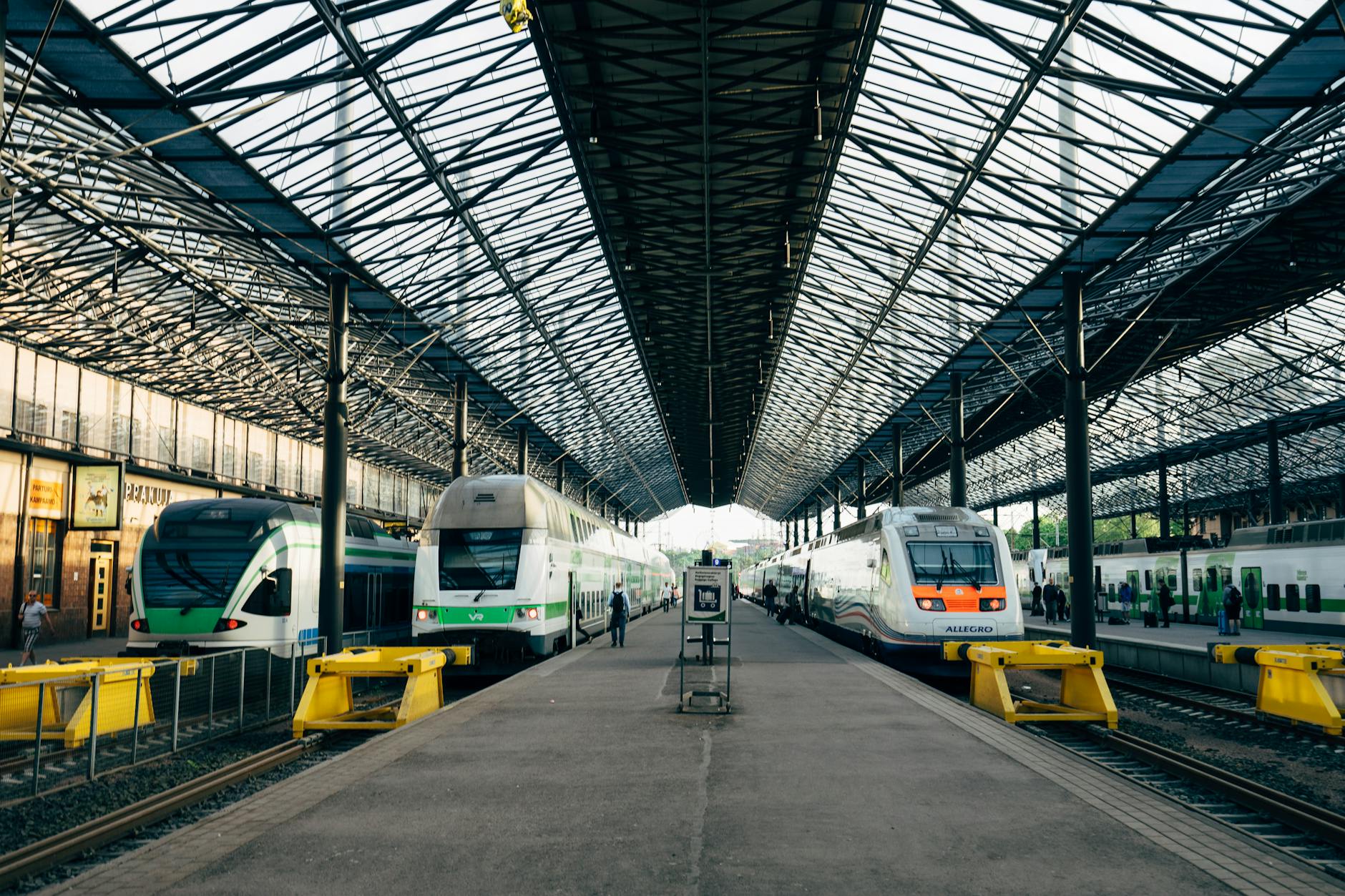
5. Intercity trains
Rail is one of the most useful ways to travel in Finland, especially between major cities and for overnight travel to Lapland.
5.1 What trains are best for
Finnish trains are best for:
5.2 Train types
Typical Finnish rail services include:
5.3 Buying tickets
The easiest way to buy VR train tickets is through VR’s app or website. Ticket machines and service counters may exist at major stations, but do not plan around buying at the last possible moment for a long-distance train.
Book early for:
5.4 Night trains to Lapland
Night trains are a defining feature of Finnish long-distance travel. VR states that night trains run to Rovaniemi, Kolari, and Kemijärvi, and that travelers can continue by their own car, connecting bus, rental car, or taxi after arrival.
For visitors, the night train is useful because:
Concerns:
5.5 Helsinki–Turku rail disruption in 2026
Travelers using the Helsinki–Turku rail corridor in 2026 should check VR before travel. VR’s information on the Espoo Rail Line project notes changes between Helsinki and Turku beginning in May 2026, including a traffic interruption between Helsinki and Karjaa from June 22 to July 26, 2026, with replacement buses and altered service patterns.
This matters especially for:
For critical trips during construction periods, build in extra time or compare long-distance coaches.
5.6 Luggage, bikes, and pets on trains
Finnish trains are generally comfortable for luggage, but travelers should still avoid overpacking. Large suitcases are easier on InterCity trains than on crowded commuter trains.
Pets can travel on VR trains under specific rules. VR states that pets can travel on all trains, but only in pet-designated areas, wheelchair spaces, or pet cabins, with fees on long-distance services and free travel on commuter services.
For bikes, check VR’s bike rules before booking. Bike spaces can be limited and may require advance reservation.
5.7 Accessibility on trains
VR offers assistance services for passengers who need help at stations or boarding. VR’s accessibility guidance says assistance can be ordered by phone, travelers should arrive at the rendezvous point before departure, and assistants do not lift passengers.
Important practical points:
- Helsinki–Turku
- Helsinki–Tampere
- Helsinki–Lahti
- Helsinki–Oulu
- Helsinki/Turku–Rovaniemi
- Comfortable long-distance travel
- Business travel
- Families with children
- Travelers with bikes, pets, or lots of luggage, if booked correctly
- Travelers who prefer not to drive in winter
- InterCity trains: long-distance trains with reserved seats, luggage areas, toilets, family options, and often restaurant/cafe services.
- Pendolino or high-speed-style intercity services: faster long-distance services on selected corridors.
- Commuter trains: regional services, especially around Helsinki.
- Night trains: sleeper services to northern Finland and Lapland.
- Car-carrier trains: trains that can transport a passenger’s car on certain long-distance routes.
- Night trains
- Sleeper cabins
- Christmas and New Year travel
- Ski holiday weeks
- Summer weekends
- Car-carrier spaces
- Accessible spaces
- Pet cabins or pet seats
- Large groups
- It saves a hotel night.
- It avoids winter driving over long distances.
- It turns Helsinki/Turku-to-Lapland travel into an overnight experience.
- It can be paired with car transport.
- It is family-friendly compared with a very long daytime drive.
- Sleeper cabins sell out in peak periods.
- Arrival times can be early.
- Connections to ski resorts may be seasonal.
- A rail ticket may not include the final transfer.
- Extreme weather can still affect onward travel.
- Airport-to-Turku same-day transfers
- Cruise passengers
- Tight business trips
- Travelers with luggage
- Travelers with children
- People connecting to ferries or flights
- Book assistance in advance.
- Confirm the station has the needed service.
- Do not assume every small station is staffed.
- Check platform changes.
- Allow more transfer time than an able-bodied passenger would need.
- In winter, snow and ice can complicate the first and last 200 meters even when the train itself is accessible.
6. Long-distance buses
Long-distance buses are essential in Finland because rail does not reach everywhere. They are also useful for budget travel and for connections from train stations to smaller towns, ski areas, and rural destinations.
6.1 When buses beat trains
A bus may beat a train when:
Matkahuolto notes that long-distance buses are often cheaper than trains and recommends buying tickets in advance to save money and ensure a seat.
6.2 Where buses are especially important
Buses are especially important for:
6.3 Buying bus tickets
Common methods:
For critical intercity trips, buy in advance. For small local buses, check whether the driver accepts contactless, cash, or only a regional app.
6.4 Luggage on buses
Long-distance coaches usually have luggage holds. Matkahuolto guidance notes that long-distance buses generally have luggage compartments for free luggage, while trains have storage areas for larger luggage.
Still, travelers should verify:
6.5 Reliability and comfort
Finnish buses are generally clean and orderly, but comfort varies by operator and route. Long winter routes can be slow in bad weather. In rural areas, a missed bus may mean a very long wait.
Build extra time when:
- There is no direct train.
- The train route is indirect.
- The bus stop is closer to your destination.
- You are traveling on a budget.
- Rail construction or disruptions make trains slower.
- You are going from an airport to a regional city.
- You are connecting from Rovaniemi to a Lapland resort.
- Rural Finland
- Lapland last-mile routes
- Ski resorts
- Archipelago routes
- Airport access outside Helsinki
- Towns without rail
- Connections from railway stations to smaller communities
- Evening or weekend trips where train timing is poor
- Matkahuolto website/app
- OnniBus website/app
- Operator website
- Bus station
- Driver, when allowed
- Regional app for local buses
- Waltti Mobile in participating regions
- Ski bags
- Bikes
- Extra-large suitcases
- Strollers
- Pets
- Musical instruments
- Wheelchairs
- More than one large bag per person
- Connecting to a flight
- Connecting to a train
- Traveling in snow or freezing rain
- Traveling around Christmas or ski holidays
- Traveling to Lapland attractions
- Traveling late in the evening or on Sunday
7. Local public transport
Local public transport is organized regionally or municipally. The main lesson: every city has its own rules.
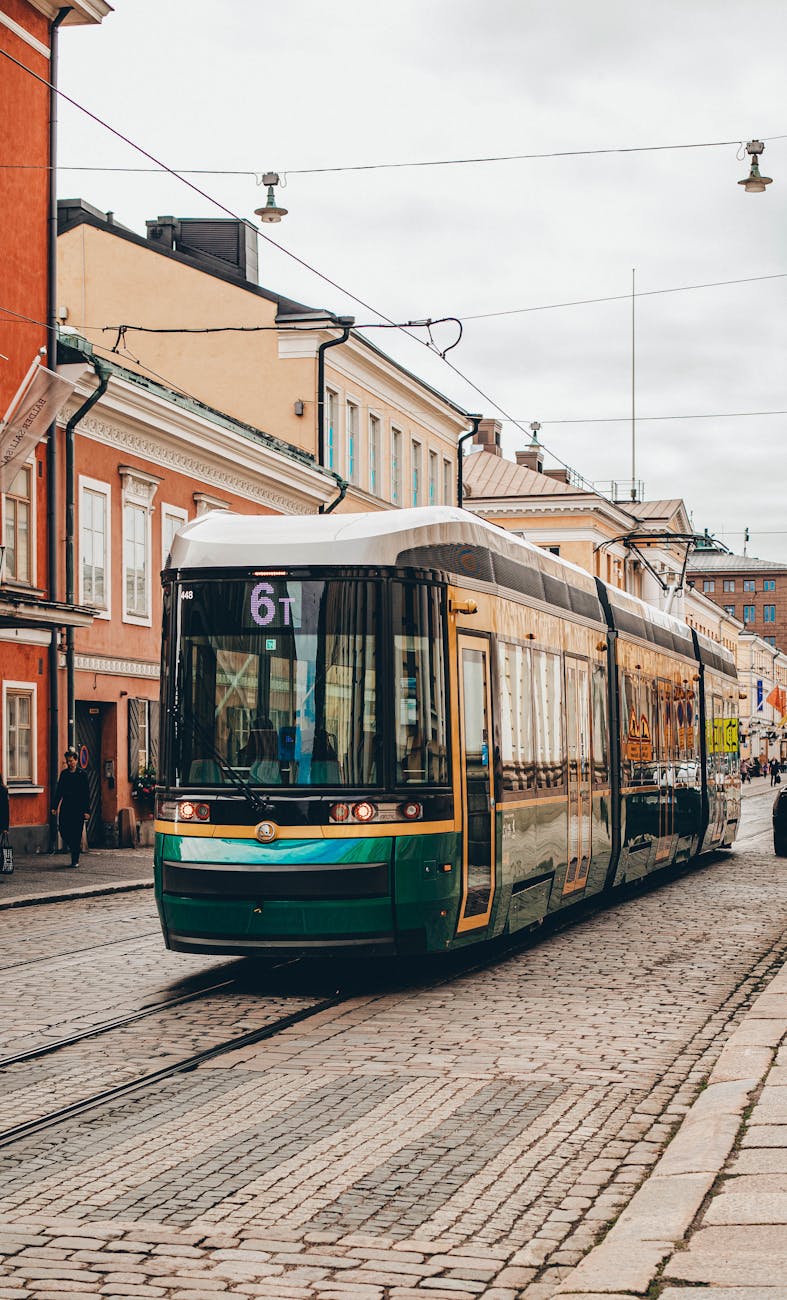
7.1 Helsinki region
Helsinki has the broadest and most integrated local system in Finland. HSL tickets cover multiple modes and municipalities, which makes the region easy for visitors.
Modes include:
Helsinki is the one Finnish city where many visitors can travel for days without a taxi or car.
7.2 Turku region
Turku’s local transport is Föli. It is bus-centered and regional. Föli covers Turku and neighboring municipalities, and the system uses yellow buses.
Turku’s structure is easier than Helsinki in one way: fewer modes and no metro-zone complexity. It is harder in another: many trips depend on bus frequency and transfers.
7.3 Rovaniemi
Rovaniemi’s local transport is Linkkari. It is a bus-only system. Visit Rovaniemi explicitly describes buses as the only form of public transport in Rovaniemi.
For visitors, the system is useful but limited. It can handle the main city-to-Santa Claus Village corridor, but it will not replace a car for broad Lapland touring.
7.4 Local ticket differences
| City/region | Main local system | Visitor payment notes |
|---|---|---|
| Helsinki | HSL | App, contactless, ticket machines, travel card; zones matter |
| Turku | Föli | Contactless, app, card, ticket machine, cash on bus at higher fare |
| Rovaniemi | Linkkari | Contactless, Waltti Mobile, Waltti card, cash/driver options; zones and validity matter |
- Metro
- Trams
- Buses
- Commuter trains
- Light rail
- Ferry to Suomenlinna
- Seasonal city bikes
8. Airports and domestic flights
Finland’s long north-south distances make domestic flights important, especially for Lapland, business travel, and winter itineraries.
8.1 Helsinki Airport
Helsinki Airport is Finland’s main international gateway. It is in Vantaa, outside central Helsinki but inside the HSL regional system.
Public transport options include:
Finavia states that Helsinki Airport’s train station is under the terminal, that P and I trains connect the airport and city centre in about 30 minutes, and that bus line 600 connects the airport and city centre in about 40 minutes.
8.2 Turku Airport
Turku Airport is much smaller. Finavia’s Turku Airport guidance states that bus line 1 serves the route between the airport and city centre and is operated by Föli.
For a visitor, this is straightforward:
8.3 Rovaniemi Airport
Rovaniemi Airport is a key Lapland gateway. It becomes especially busy during winter tourism periods. Finavia states that Airport Express runs from the airport via Santa Claus Village to Rovaniemi city centre, with tickets sold on the bus.
Use a taxi, transfer, or rental car if:
8.4 Domestic flights versus trains
Domestic flights are useful for long distances, but they are not automatically better than trains. Compare door-to-door time.
A flight may be better for:
A train may be better for:
- P and I commuter trains from the airport station under the terminal
- HSL bus line 600 to central Helsinki
- Long-distance buses
- Taxis
- Rental cars
- Use line 1 if your timing works.
- Use a taxi if arriving late, carrying heavy luggage, or staying outside the centre.
- Check bus frequency before assuming a quick connection.
- Your accommodation is outside the centre.
- You arrive late.
- You have heavy winter luggage.
- You are going directly to a cabin or resort.
- You are traveling during peak Christmas demand.
- You need guaranteed timing.
- Helsinki–Rovaniemi short trips
- Business travel
- Travelers with limited time
- Lapland trips with only a few days
- Travelers who dislike airport logistics
- Families
- Winter trips where sleeping overnight is attractive
- Travelers with lots of luggage
- Travelers who want the “Santa Claus Express” experience
- Lower-carbon travel
9. Taxis
Taxis in Finland are useful, safe, and legitimate, but the system is more variable than visitors might expect.
9.1 How taxis work
Traficom states that taxi vehicles have taxi lights, passengers must be able to see the license holder’s name/contact information, the driver’s name, and key pricing information, and customers must be informed of the total price or pricing basis before the ride begins.
Practical implication: before entering a taxi, check the operator, displayed fare, or app quote.
9.2 Taxi stands, apps, and booking
Common taxi access methods:
At Helsinki Airport, taxis operate around the clock from the arrivals level, and the taxi station includes lanes for contract taxi operators plus other taxis. This makes airport taxi use relatively straightforward.
9.3 Taxi concerns
Visitors should watch for:
9.4 When taxis are worth it
A taxi is often worth it when:
9.5 Rural and Lapland taxi planning
In rural Finland, the correct taxi strategy is not “walk outside and find one.” It is “book ahead.” Traficom specifically notes that taxis are no longer required to be on call and that rural taxi services should be ordered well in advance.
For Rovaniemi and Lapland:
- Taxi stands at airports and major railway stations
- Local taxi company app
- Phone booking
- Hotel reception
- Street hail in dense areas
- Prearranged transfer
- Event or tour operator shuttle
- High prices compared with public transport
- Variable pricing between companies
- Limited availability in rural areas
- Long waits during peak arrival waves
- Reduced availability late at night
- Winter weather delays
- Extra need to prebook accessible taxis
- There are two to four people traveling together.
- It is late or very cold.
- You have heavy luggage.
- You are making a flight/train connection.
- You are traveling with children.
- You need door-to-door service.
- Public transport requires multiple transfers.
- You are outside a dense transit area.
- Reserve airport transfers if your accommodation is remote.
- Confirm pickup location in writing.
- Ask whether the price is fixed.
- Have a backup number.
- Book early during Christmas season.
- Do not rely on late-night availability after tours or aurora excursions.
10. Private vehicles and driving
Driving in Finland is straightforward in legal structure but demanding in seasonal reality.
10.1 Basic driving environment
InfoFinland notes that Finnish roads are generally in good condition and that vehicles drive on the right side of the road.
For visitors from right-side-driving countries, Finland is familiar. For visitors from left-side-driving countries, the roads are calm enough to adapt, but winter and rural darkness add difficulty.
10.2 Tolls
Finland is unusually simple for road tolls. Visit Finland’s driving guide states that Finland has zero toll roads and zero toll bridges.
This makes rental car budgeting easier than in many European countries. You still need to budget for:
10.3 Winter tires
Winter tires are not a suggestion. Finnish police guidance states that winter tires are required from November 1 to March 31 when weather or road conditions require them.
For rental cars, winter tires should normally be included during winter, but confirm the details. Visitors should also understand that winter tires do not make ice harmless.
10.4 Headlights
Visit Finland’s driving guidance notes that drivers in Finland must keep lights on in all seasons and even during midnight sun conditions. This is easy to forget in a rental car if the automatic headlight setting behaves differently than expected.
10.5 Alcohol and driving
Finland’s legal blood alcohol limit is low. Liikenneturva states that the drink-driving limit is exceeded at 0.05% blood alcohol content.
For visitors, the practical rule is simple: do not drink and drive. If you are driving in winter, even legal impairment is a bad idea.
10.6 Road conditions
Use Fintraffic before and during longer drives. Fintraffic’s road weather service produces up-to-date road weather information using hundreds of weather stations and cameras, and its Traffic Situation service includes disruptions, driving conditions, roadworks, congestion, restrictions, and camera information.
Check conditions before:
10.7 Wildlife
Reindeer, elk, deer, and other animals are a real concern, especially in northern and rural Finland. The risk is higher at dawn, dusk, and in darkness. In Lapland, reindeer may stand or move unpredictably on roads.
Practical rules:
10.8 Parking
Parking is the main car concern in cities.
In Helsinki:
In Turku:
In Rovaniemi:
10.9 Electric vehicles
Finland has charging infrastructure, but winter reduces range. EV travelers should:
10.10 Rental car considerations
Ask before booking:
A rental car can expand a Finland trip enormously, but in winter it also shifts risk onto the traveler.
- Fuel or charging
- Parking
- Rental insurance
- Winter equipment
- One-way rental fees
- Possible ferry fees
- Speeding or parking fines
- Hotel parking
- Long winter drives
- Lapland travel
- Rural cottage travel
- Early-morning departures
- Cross-country routes
- Trips after snow, freezing rain, or high winds
- Drive below the limit when visibility is poor.
- Do not outrun headlights.
- Assume wildlife signs mean something.
- Use high beams when legal and safe.
- Slow down when one animal crosses; more may follow.
- Avoid sudden swerving if it risks a worse crash.
- Report collisions as required.
- Central parking is expensive and often unnecessary.
- Public transport usually beats driving.
- Parking rules are strictly enforced.
- Winter street maintenance can affect parking.
- Parking is more manageable than Helsinki but still not ideal in the centre.
- A car is useful for outskirts, Naantali, Ruissalo, archipelago approaches, and rural trips.
- Parking is more straightforward, but snowbanks, icy lots, and winter visibility matter.
- Hotels and lodges may have specific winter parking instructions.
- Plan charging stops ahead.
- Assume reduced range in cold weather.
- Avoid arriving at remote lodgings with a low battery.
- Confirm charger availability at hotels.
- Check whether charging stations are working before departure.
- Leave buffer for detours or weather delays.
- Are winter tires included?
- Is an engine block heater available or needed?
- Are cross-border trips allowed?
- Are ferries allowed?
- Is there a mileage limit?
- Is one-way rental allowed?
- Is snow brush/ice scraper included?
- Does the car have navigation in English?
- What happens if the car is stuck in snow?
- Can you drive on unpaved/private roads to lodges?
11. Ferries and water transport
Finland has many forms of water transport: urban ferries, archipelago ferries, lake routes, coastal ferries, and international ferries.
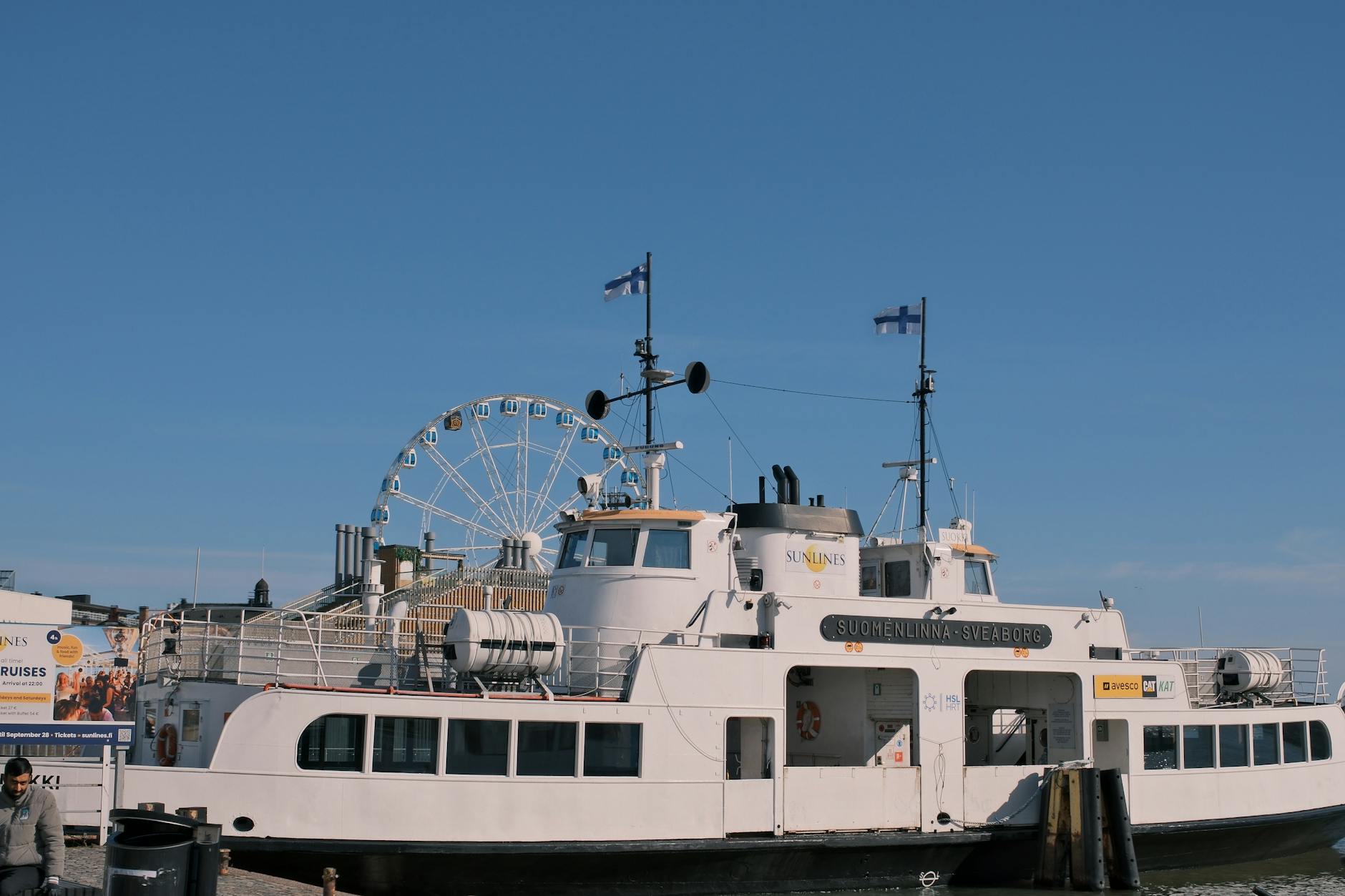
11.1 Urban ferries
The most important urban ferry for visitors in this paper is the HSL ferry to Suomenlinna in Helsinki. HSL states that the ferry from Market Square to Suomenlinna takes about 15 minutes, runs year-round, and uses ordinary HSL tickets.
This is important because visitors often assume Suomenlinna is a tour boat. It is also a normal public transport route.
11.2 Seasonal water buses
Turku has seasonal water buses through Föli. Föli’s 2026 water bus information says the water bus operates daily from May 9 to August 30, 2026, plus selected September weekends, and that a water bus trip is paid for the same way as a bus trip.
Water buses matter because they turn Turku’s riverfront and island access into part of the transport system, not just a sightseeing extra.
11.3 Archipelago ferries
Finland’s archipelago routes can involve public roads, ferries, buses, bikes, and private vehicles. Finferries states that it serves more than 50 ferry routes and transports millions of vehicles and passengers annually.
For archipelago travel:
Finferries publishes seasonal schedules for routes such as the Archipelago Road.
11.4 International ferries
Although this paper focuses on domestic Finnish transport, many travelers enter or leave Finland by ferry. Helsinki and Turku have important ferry links to Sweden and Estonia, and these terminals affect local transport planning.
For Helsinki and Turku ferry passengers:
- Check ferry schedules in advance.
- Confirm whether the ferry is free or paid.
- Watch seasonal differences.
- Allow time for queues in summer.
- Do not assume late-evening service.
- Plan food and fuel stops.
- Cyclists should check distances carefully.
- Check terminal location.
- Check whether a tram/bus goes directly to the terminal.
- Build time for passport/border/security processes when applicable.
- Do not confuse cruise terminals with local ferry piers.
- Avoid tight same-day train or airport connections after international ferry arrival.
12. Walking, cycling, scooters, and micromobility
Finland’s cities can be excellent for walking and cycling, but seasons matter.
12.1 Walking
Walking is a serious part of Finnish transportation in city centres. Helsinki, Turku, and Rovaniemi all have walkable central areas, though the scale and winter conditions differ.
Walking concerns:
Winter footwear matters. Smooth-soled shoes that are fine in Paris or Rome can be dangerous on Finnish ice.
12.2 Cycling
Cycling is strong in Finland, especially during warmer months. Winter cycling exists but is more common among locals with equipment, habits, and route knowledge.
Cycling is best for:
Cycling is less ideal for:
12.3 City bikes
Helsinki and Turku both have city-bike systems.
HSL’s Helsinki city bike guidance says the city bike season runs from April to October 2026 and that there are nearly 4,600 bikes and 460 stations in Helsinki and Espoo.
Föli’s bike guidance says Turku has 700 bikes and more than 200 stations, operated through Donkey Republic and connected to Föli information systems.
City bikes are excellent for short trips but less useful for:
12.4 E-scooters
E-scooters exist in Finland, but rules are serious. Liikenneturva states that e-scooter drivers must be at least 15, the maximum design speed is 25 km/h, riders must follow cyclist rules, use bike paths when available, and not ride on footpaths.
Practical e-scooter guidance:
- Ice
- Slush
- Snowbanks
- Darkness
- Road crossings
- Tram tracks in Helsinki
- Cobblestones and waterfront surfaces in Turku
- Very cold temperatures in Rovaniemi
- Phone battery loss in cold weather
- Helsinki in spring/summer/autumn
- Turku riverfront and central areas
- Short urban trips
- Student and commuter travel
- Archipelago touring in summer
- Heavy winter tourism luggage
- Rovaniemi in deep winter for casual visitors
- Long rural distances without planning
- Icy conditions
- Families without local route knowledge
- Airport transfers
- Heavy luggage
- Snowy or icy weather
- Late-night travel if station availability is poor
- Long-distance sightseeing outside the system area
- Do not ride on sidewalks.
- Do not ride drunk.
- Do not carry passengers.
- Watch tram tracks in Helsinki.
- Avoid icy or slushy surfaces.
- Park without blocking sidewalks, wheelchairs, strollers, or doors.
- Wear a helmet.
- Expect rental availability to vary by season and city.
13. Accessibility, luggage, children, pets, and bikes
13.1 Accessibility overview
Finland is generally accessibility-aware, but the practical experience varies greatly by city, season, station, and vehicle type.
Better accessibility conditions are found in:
More difficult conditions may occur with:
13.2 Helsinki accessibility
Helsinki is the most accessible transport city in this paper, but it is still not frictionless. HSL has dedicated accessibility guidance, and its route planner can be filtered for accessible routes. In practice, wheelchair users should check lift outages, station access, tram type, and snow conditions.
13.3 Train assistance
VR provides station assistance under defined rules. It is important to book assistance and arrive at the meeting point early. Do not assume staff can lift a passenger or improvise assistance at a small station.
13.4 Luggage
Luggage is manageable but affects mode choice.
Best modes for heavy luggage:
Worst modes for heavy luggage:
13.5 Children and strollers
Families should check local rules. In many Finnish systems, strollers are accommodated, but space can be limited. In Helsinki and Turku, low-floor vehicles make family travel easier than in many countries. In Rovaniemi, winter clothing and snow make even short movements slower.
Family strategies:
13.6 Pets
VR allows pets on trains but with restrictions and designated spaces. Local transport pet rules vary by city and vehicle. Always check if traveling with a dog, especially on long-distance buses, taxis, or ferries.
13.7 Bikes on public transport
Bike rules vary. A bike may be allowed:
For touring cyclists, plan the full chain, not just the scenic segment.
- Helsinki Metro stations
- Newer trams, buses, and trains
- Major railway stations
- Airport terminals
- Larger hotels
- Newer public buildings
- Snow and ice
- Rural bus stops
- Small railway stations
- Older vehicles or street environments
- Long distances between platforms
- Unstaffed stations
- Cobblestones
- Ferry ramps in bad weather
- Airport train
- Intercity train
- Taxi
- Prebooked transfer
- Long-distance coach with luggage compartment
- Hotel shuttle
- Crowded trams
- Peak commuter buses
- City bikes
- E-scooters
- Snowy sidewalks
- Transfers with stairs
- Tight bus/train connections
- Use day tickets if making many small trips.
- Avoid peak commuter times with strollers when possible.
- Use elevators instead of escalators.
- Keep children’s gloves/hats accessible.
- Add buffer time in winter.
- Choose direct routes over cheaper multi-transfer routes.
- On some trains with reservation or fee
- On some local rail/Metro services under rules
- On ferries
- On certain buses only if space allows
- Not on crowded services or during peak times
14. Weather, seasonality, disruption, and safety
14.1 Winter is not an emergency, but it is a system condition
Finland operates through winter. That does not mean travel is identical to summer.
Winter affects:
14.2 Weather information
Use the Finnish Meteorological Institute for weather warnings. FMI’s warnings service provides warning information and links to traffic cameras and related services.
Use Fintraffic for road and traffic conditions. Fintraffic’s Traffic Situation service includes disruptions, driving conditions, road works, congestion, restrictions, and cameras.
14.3 Winter clothing as transport equipment
In Finland, winter clothing is not just comfort; it is part of transportation safety.
Minimum winter urban setup:
For Rovaniemi or Lapland:
A traveler who plans to wait for a bus, walk from a station, or stand at an airport taxi queue in Rovaniemi needs clothing appropriate for waiting outdoors.
14.4 Summer season
Summer improves:
Summer can worsen:
14.5 Rail and road disruptions
Disruption causes include:
For rail:
For roads:
14.6 Public holidays and school breaks
Service may be reduced on:
Lapland has the opposite issue during peak tourism: services may run, but demand can overwhelm taxis, rental cars, and popular trains.
- Road speed
- Braking distance
- Walking safety
- Bus punctuality
- Train operations
- Airport deicing
- Battery life
- Bike/scooter availability
- Taxi demand
- Clothing requirements
- Visibility
- Rural rescue response time
- Warm waterproof footwear
- Hat
- Gloves or mittens
- Scarf or neck warmer
- Warm socks
- Layered coat
- Phone power bank
- Reflective accessory in dark months
- Serious winter boots
- Thermal base layer
- Insulated outerwear
- Backup gloves
- Face protection in extreme cold
- Warm clothing even if traveling by car
- Walking
- Cycling
- City bikes
- Water buses
- Archipelago travel
- Late daylight
- Outdoor transfer comfort
- Ferry queues
- Road congestion to holiday areas
- Accommodation/transport availability
- Event-related crowding
- Construction disruptions
- Construction projects
- Track work
- Snow and ice
- Storms
- Technical faults
- Wildlife collisions
- Road accidents
- Public holidays
- Events
- Industrial action
- Check VR before departure.
- Build buffer time for critical connections.
- Pay attention to replacement bus instructions.
- Know whether a replacement bus accepts bikes, pets, or large luggage.
- Check Fintraffic.
- Avoid overly ambitious winter driving days.
- Keep fuel/charge above emergency levels.
- Carry warm clothing in the car.
- Christmas
- New Year
- Easter
- Midsummer
- May Day
- Independence Day
- Sundays/holidays
- School holiday periods
15. Practical strategies for visitors and residents
15.1 First-time visitor strategy
For a first Finland trip including Helsinki, Turku, and Rovaniemi:
15.2 Budget traveler strategy
15.3 Family strategy
15.4 Business traveler strategy
15.5 Local resident strategy
For locals or longer-stay residents:
- Use HSL in Helsinki.
- Use train or coach between Helsinki and Turku.
- Use Föli within Turku.
- Use train, night train, or flight to Rovaniemi.
- Use Linkkari for Santa Claus Village and city routes.
- Prebook Rovaniemi airport transfers, winter tours, taxis, or rental cars if going beyond the main bus corridor.
- Use Fintraffic and FMI in winter.
- Avoid renting a car until you actually need one.
- Use public transport in cities.
- Compare VR and OnniBus/Matkahuolto for intercity travel.
- Book VR in advance.
- Use night trains to save on lodging if the fare works.
- Stay near public transport corridors.
- Avoid taxis except for late-night or group use.
- Use day tickets only if making enough trips to justify them.
- In Rovaniemi, choose accommodation near the centre, station, or bus 8 corridor if not renting a car.
- Prefer trains to long bus rides for comfort.
- Use taxis/transfers when luggage and children make public transport stressful.
- Avoid tight transfers.
- Choose lodging near a major stop.
- Confirm stroller rules.
- Pack winter clothing for waiting outside.
- In Lapland, book everything early around Christmas.
- Use Helsinki Airport train to avoid road congestion.
- Use taxis when schedule reliability outweighs cost.
- Book flexible train tickets where possible.
- Check construction disruptions.
- Stay near rail stations or meeting districts.
- For Turku, check whether line 1 works for airport/harbour access.
- For Rovaniemi, prebook taxis for early flights or noncentral hotels.
- Learn the local ticket zones and subscription options.
- Choose housing based on commute reliability, not just map distance.
- In Helsinki, check HSL zone boundaries and rail/tram/Metro proximity.
- In Turku, check bus frequency at the times you actually travel.
- In Rovaniemi, realistically assess whether a car is needed for daily life.
- Plan winter commuting, not just summer commuting.
- Keep backup routes for strikes, disruptions, and severe weather.
Helsinki
1. Helsinki’s transportation identity
Helsinki is Finland’s most complete public transport city. It has the country’s strongest mix of rail, tram, bus, metro, ferry, walking, cycling, and airport connectivity. For many visitors, it is one of the easiest northern European capitals to navigate without a car.
The important thing to understand is that “Helsinki” in transportation terms often means the Helsinki region, not just the municipality. HSL coordinates travel across Helsinki, Espoo, Vantaa, and surrounding municipalities. Helsinki Airport is in Vantaa, but the same HSL system covers the airport connection.
2. Main modes
#### Metro
The Helsinki Metro is useful for east-west travel and connections to Espoo and eastern Helsinki. It is fast, accessible in many stations, and integrated with HSL tickets.
Important points:
#### Trams
Trams are one of Helsinki’s defining modes. They are excellent for central travel, sightseeing, and short trips.
Best uses:
Concerns:
#### Buses
Buses fill gaps not covered by trams, Metro, or rail. They are especially important for suburbs and cross-town routes.
For visitors, buses are most important for:
#### Commuter trains
Commuter trains are essential for the airport and regional travel. P and I trains connect Helsinki Airport and the city centre from the airport station under the terminal.
Commuter trains are also useful for:
#### Light rail
Helsinki’s region increasingly includes light rail as part of the HSL system. For visitors, the key principle is simple: if it is in the HSL system, the same zone ticket logic applies.
#### Suomenlinna ferry
The Suomenlinna ferry is one of the best examples of Helsinki’s integrated system. HSL states that the ferry leaves from Market Square, takes about 15 minutes, runs year-round, and uses HSL tickets.
Visitor notes:
#### City bikes
Helsinki’s city-bike system is excellent in season. HSL notes the city bike season in Helsinki and Espoo runs from April to October 2026, with nearly 4,600 bikes and 460 stations.
Best uses:
Avoid for:
3. Tickets and zones
HSL’s system is zone-based. For most visitors:
| Trip | Likely ticket |
|---|---|
| Central Helsinki only | AB |
| Helsinki + Espoo/Vantaa inner areas | AB or ABC depending destination |
| Helsinki Airport to central Helsinki | ABC |
| Suomenlinna | AB |
| Far outer areas | ABC, BCD, or ABCD depending route |
HSL explicitly tells airport users to buy an ABC ticket for the airport-to-centre trip.
In 2026, HSL’s single-ticket page lists adult single ticket prices by zone and payment method, with validity periods ranging from 80 to 110 minutes depending on zone combination. Travelers should verify current pricing before travel because fares can change.
4. Payment
HSL payment options include:
Contactless payment is convenient for adult single trips. HSL states that contactless can be used on all HSL public transport and that passengers must buy the ticket before entering the Metro or ferry payment area.
Important contactless warning: use the same card or device for inspection and for later taps. A physical card and the same card in Apple Pay/Google Pay may be treated differently.
5. Airport access
Helsinki Airport is one of the easiest airports in Europe to reach by public transport.
Options:
| Mode | Best for | Notes |
|---|---|---|
| Airport train | Most travelers | Station under terminal; P/I trains to centre in about 30 minutes. |
| Bus 600 | Some central routes, backup | Finavia lists city-centre service in about 40 minutes. |
| Taxi | Groups, late arrivals, heavy luggage | Airport taxi station has contract taxi lanes and other taxi lanes. |
| Long-distance bus | Regional onward travel | Some coaches serve airport directly. |
| Rental car | Rural onward trips | Not needed for central Helsinki. |
Visitor strategy:
6. Driving in Helsinki
Driving is usually the wrong default in central Helsinki.
Reasons:
Driving can make sense for:
But even then, consider renting a car only for the days you need it.
7. Taxis in Helsinki
Taxis are easy to find at the airport, railway station, hotels, and major nightlife areas. They are useful for:
Because taxi pricing can vary, check price displays or app quotes. At Helsinki Airport, Finavia identifies specific contract taxi operators at the official taxi station.
8. Walking and public space
Helsinki is very walkable, especially around:
Winter walking considerations:
9. Accessibility
Helsinki is the best city in this guide for public transport accessibility, but it still requires planning. Use HSL’s accessible route planning tools, check lifts, and build extra time in winter. Ferry ramps, snow, and older tram stops can complicate otherwise accessible trips.
10. Visitor pain points
Common Helsinki pain points:
11. Local resident concerns
For locals, Helsinki transportation concerns include:
12. Helsinki bottom line
Helsinki is a public transport city. A visitor should use HSL, walk, and take the airport train. A car is only useful for trips outside the dense region. The biggest user mistake is not understanding zones and ticket validation.
- Buy a ticket before entering the Metro paid area.
- Check direction carefully; branches can matter.
- Elevators and escalators may be essential for luggage or accessibility.
- Metro stations can be spaced farther apart than tram stops, so walking may still be required.
- City centre
- Design District
- Railway station area
- Market Square
- West Harbour connections depending on route
- Central neighborhoods
- Trams can be crowded at peak times.
- Snow and roadworks can affect service.
- Tram tracks are dangerous for bikes and scooters.
- Older stops may be less comfortable in bad weather.
- Airport bus line 600
- Suburban hotels
- Some museum/park destinations
- Night routes
- Areas beyond tram/Metro reach
- Pasila
- Tikkurila
- Vantaa
- Espoo corridors
- Regional rail connections
- Some event venues
- Suomenlinna is in zone A, but HSL does not sell single-zone A tickets, so most visitors use an AB ticket.
- Buy before the ferry payment area.
- In summer, lines can be long; build time.
- In winter, dress for wind on the pier and island.
- Short sunny-day trips
- Waterfront travel
- Parks
- Neighborhood exploration
- Combining with transit
- Heavy luggage
- Icy conditions
- Airport trips
- Long late-night trips
- Unfamiliar riders in central traffic
- HSL app
- Contactless payment
- HSL card
- Ticket machines
- Sales points
- Use the train unless there is a specific reason not to.
- Buy ABC, not AB.
- Keep ticket valid until arrival.
- If going to Turku or Tampere, compare direct long-distance connections versus train via central Helsinki/Tikkurila/Pasila.
- Public transport is good.
- Parking is expensive.
- Tram lanes, one-way streets, and winter conditions add friction.
- Many visitor destinations are walkable.
- Taxis and transit handle most needs.
- Suburban accommodation
- Multi-person trips outside the city
- Family luggage
- Rural day trips
- Cottage stays
- Archipelago or national park outings
- Late-night trips
- Heavy luggage
- Groups
- Accessibility
- Early flights
- Direct hotel transfers
- Central Railway Station
- Senate Square
- Market Square
- Esplanadi
- Design District
- Töölö
- Kallio
- Katajanokka
- Kamppi
- waterfront areas
- Ice on sidewalks
- Slush at crossings
- Darkness
- Wind near the water
- Need for reflectors
- Wet floors in stations
- Buying AB instead of ABC for the airport.
- Not buying a ticket before entering Metro/ferry paid areas.
- Assuming every contactless tap covers a group.
- Confusing long-distance trains with HSL commuter trains.
- Forgetting that Suomenlinna ferry is public transport.
- Underestimating winter wind.
- Trying to use a car in the central city.
- Missing tram route changes during roadworks.
- Zone boundary costs
- Monthly ticket value
- Rail and tram disruptions
- Winter cycling infrastructure
- Parking costs
- Commuter rail reliability
- Station lift outages
- Crowding at peak times
- Housing decisions based on transport access
- Construction related to network expansion
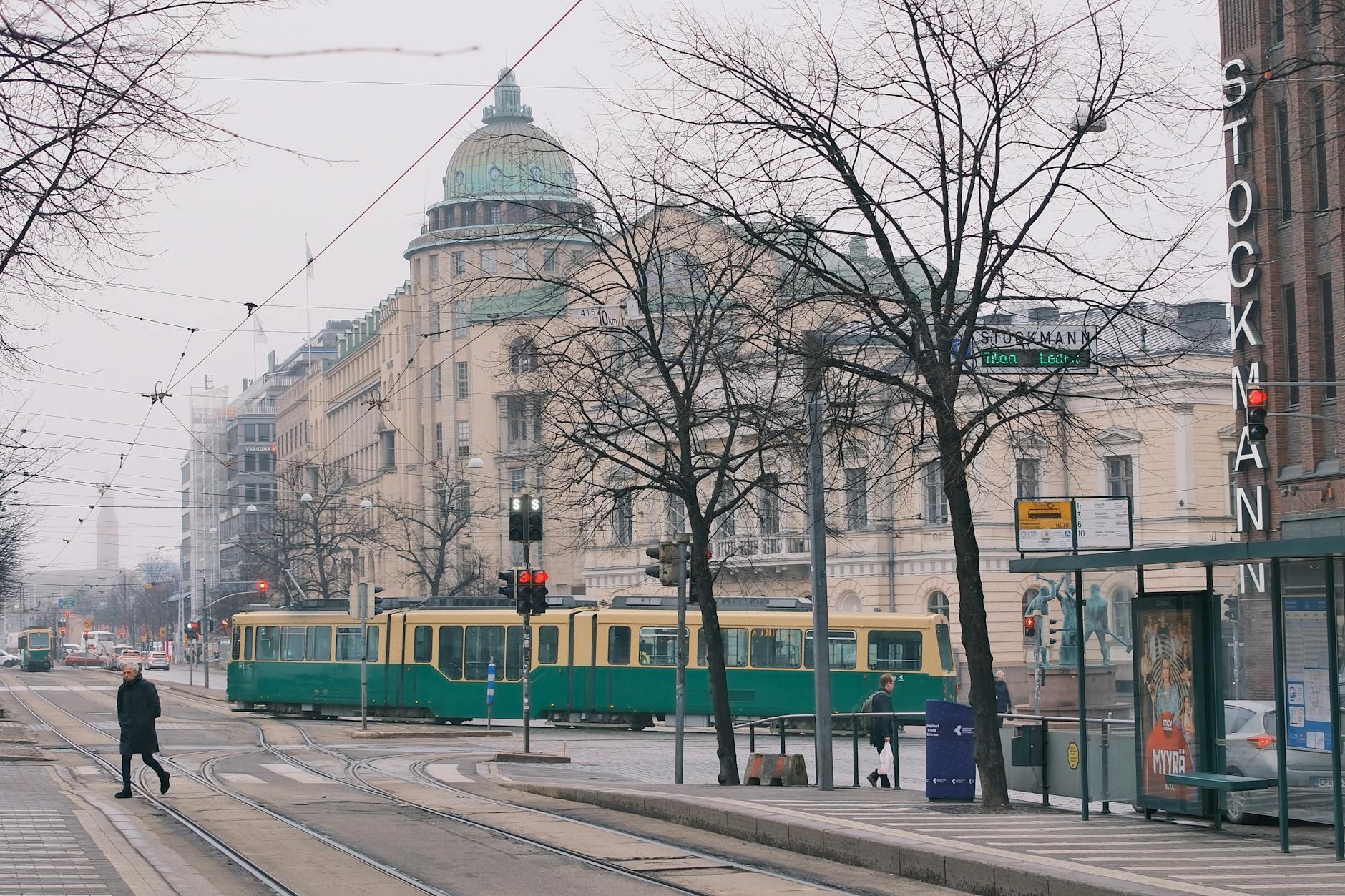
Turku
1. Turku’s transportation identity
Turku is Finland’s historic southwest city and a practical contrast to Helsinki. It has no metro, no urban rail system, and no tram network. It is a compact, walkable city where the local transport backbone is buses.
The visitor experience is usually simple: walk near the centre and river, use Föli buses for airport/harbour/outskirts, use trains or coaches for intercity travel, and consider seasonal water buses or bikes in summer.
2. The Föli system
Föli is the local public transport system for Turku and nearby municipalities. Föli states that it operates in Turku, Kaarina, Raisio, Lieto, Naantali, Paimio, and Rusko, and that its yellow buses are used across the area.
This regional coverage is important because a visitor may travel beyond the municipality of Turku without switching to a totally separate local bus system.
3. Main modes
#### Buses
Buses are the core of Turku transport. They connect:
Föli’s trunk line network began on July 1, 2025, and includes key corridors such as the harbour-airport line. This matters because older route advice may be outdated.
#### Walking
Turku’s central areas are highly walkable. The Aura River corridor is the main pedestrian spine for many visitors.
Good walking zones:
Winter concerns:
#### Föli water bus
The Föli water bus is a seasonal highlight. For 2026, Föli states that the water bus runs daily from May 9 to August 30, plus selected September weekends, and is paid the same way as a bus.
The water bus is useful for:
It is not useful as a year-round commute replacement.
#### City bikes
Turku’s Föli bikes are a strong warm-season tool. Föli states that the system has 700 bikes and more than 200 stations, operated through the Donkey Republic app.
Best uses:
Avoid for:
#### Taxis
Taxis are useful in Turku for:
Because Turku is smaller than Helsinki, taxi availability is good but less infinite than in a capital. Prebook for early flights or unusual times.
4. Tickets and payment
Föli tickets are comparatively easy. Föli’s ticket information states that single journeys are valid for two hours on buses and water buses, and lists payment options including contactless, the app, service points, R-kiosks, ticket machines, and bus cash.
Contactless payment is especially useful. Föli states that contactless can be used on all buses and water buses, that a contactless single ticket is valid for two hours throughout the Föli area, and that the system can apply caps such as daily and multi-day caps under its rules.
Practical implications:
5. Airport access
Turku Airport is served by Föli line 1. Finavia states that bus line 1 operates between the airport and city centre and is operated by Föli.
Traveler advice:
6. Harbour and ferry access
Turku is a major ferry city. The harbour matters for travel to and from Sweden, as well as cruise/ferry itineraries.
Line 1 is especially important because Föli lists it as the Harbour–Airport trunk corridor.
Ferry traveler concerns:
Do not assume a ferry terminal is “central enough” to walk with luggage in winter.
7. Rail and long-distance travel
Turku has intercity train and coach links. Helsinki–Turku travel is normally a major rail route, but 2026 is a special case because of the Espoo Rail Line project and VR’s listed disruptions/replacement bus periods.
For Turku travelers in 2026:
8. Driving in Turku
Driving in Turku is more reasonable than in Helsinki, but not needed for the compact centre.
A car helps for:
A car is less useful for:
9. Archipelago travel from Turku
Turku is a gateway to the archipelago. This is where transportation becomes more complex: buses, bikes, cars, ferries, seasonal schedules, and weather all interact.
Archipelago advice:
Finferries’ nationwide ferry network and Archipelago Road schedules are important resources for these trips.
10. Visitor pain points
Common Turku pain points:
11. Local resident concerns
Local concerns include:
12. Turku bottom line
Turku is a walk-and-bus city. Use Föli, walk the riverfront, use line 1 for airport/harbour when timing works, and check rail construction if traveling to or from Helsinki in 2026. A car is optional for the city but useful for the archipelago and rural southwest Finland.
- City centre
- Turku Airport
- Harbour
- Railway station
- Bus station
- University areas
- Hospital areas
- Suburbs
- Neighboring municipalities
- Naantali and other nearby destinations depending on route
- Market Square
- Aura River
- Cathedral area
- University area
- Turku Castle approach, depending on distance tolerance
- Museums and restaurants near the river
- Icy pavements
- Slush along the river
- Darkness
- Wind
- Uneven surfaces near older streets
- Ruissalo
- Riverfront sightseeing
- Summer recreation
- Combining public transport and leisure
- Visitors who want a local rather than tour-only experience
- Riverfront trips
- Short errands
- University/city centre travel
- Warm-weather sightseeing
- Last-mile links from buses
- Winter ice
- Heavy luggage
- Airport/harbour trips with bags
- Long archipelago touring without proper bike planning
- Airport arrivals outside bus times
- Ferry terminal luggage
- Late-night trips
- Trips to hotels outside the centre
- Families
- Mobility needs
- Contactless is excellent for adult visitors.
- App/card may be better for discounts or special needs.
- Cash on bus may be possible but is more expensive and less convenient.
- The two-hour transfer window is generous for many city trips.
- Use line 1 if it matches your arrival.
- Check frequency before relying on it.
- Use taxi for heavy luggage, late arrivals, or noncentral lodging.
- If connecting to Helsinki by train, check current rail disruption information first.
- Early departures and late arrivals
- Luggage
- Terminal walking distance
- Bus frequency
- Cruise/ferry schedule changes
- Need for taxi if public transport is inconvenient
- Check VR before booking.
- Compare coach options.
- Avoid tight same-day connections to flights/ferries.
- Build extra time with luggage.
- Watch replacement bus instructions.
- Confirm whether pets, bikes, and accessibility services work during replacement bus segments.
- Naantali
- Ruissalo beyond easy public transport
- Archipelago Trail
- Rural accommodation
- Family day trips
- Multi-stop southwest Finland itineraries
- Central Turku sightseeing
- Riverfront restaurants
- Market Square area
- Airport/harbour if line 1 works
- Short city stays
- Start planning with the full route, not just the first leg.
- Check ferry schedules.
- Confirm whether your route is circular or out-and-back.
- If cycling, be realistic about distances.
- If driving, plan ferry queues in summer.
- If using buses, check weekend and seasonal service.
- Book accommodation early.
- Do not assume a taxi is available on islands.
- Assuming it has rail-based urban transit like Helsinki.
- Missing bus frequency differences at night or on weekends.
- Ignoring the 2025 trunk line changes and using outdated route numbers.
- Assuming the water bus runs year-round.
- Underestimating the distance from harbour to some central hotels with luggage.
- Planning archipelago travel without ferry schedules.
- Leaving airport bus timing unchecked.
- Bus frequency outside the core
- Trunk line network changes
- Student and university commuting
- Harbour/airport reliability
- Night service
- Suburban access
- Winter sidewalks
- Parking balance in the centre
- Regional access to neighboring municipalities
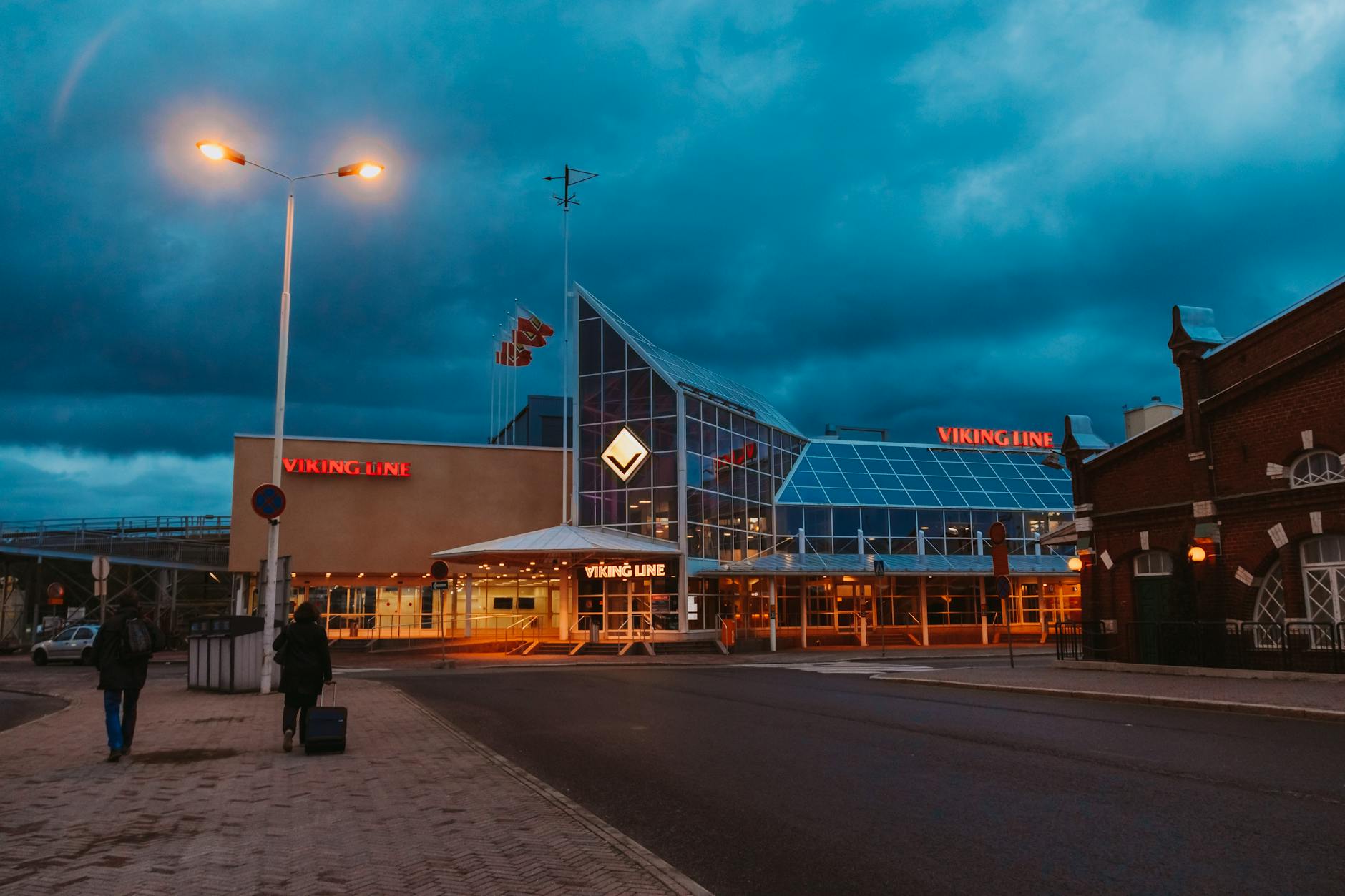
Rovaniemi
1. Rovaniemi’s transportation identity
Rovaniemi is not simply a smaller Helsinki or Turku. It is the urban gateway to Finnish Lapland, with a transportation system shaped by tourism, winter, long distances, and low density.
A visitor can use public transport for the main city corridor, but broader mobility often depends on taxis, rental cars, airport shuttles, tour transfers, or hotel arrangements.
Visit Rovaniemi states plainly that buses are the only form of public transport in Rovaniemi. That sentence should shape every transportation expectation.
2. Main modes
#### Linkkari local buses
Linkkari is the local bus system. The most important visitor route is bus 8, which Linkkari identifies as running between Rovaniemi railway station, the city centre, and Santa Claus Village.
Useful Linkkari routes include:
Limitations:
#### Airport Express
Finavia states that Airport Express runs from Rovaniemi Airport via Santa Claus Village to Rovaniemi city centre, with tickets available on the bus.
Use it when:
Use taxi/transfer when:
#### Taxis
Taxis are very important in Rovaniemi. They fill gaps between buses, hotels, airport, attractions, and lodges.
Taxi advice:
#### Rental cars
A rental car can be valuable in Rovaniemi and Lapland, but winter driving is serious.
Useful for:
Risk factors:
#### Trains
Rovaniemi is a major rail destination. VR night trains to Lapland are central to the travel market. VR states that night trains run to Rovaniemi, Kolari, and Kemijärvi, and that onward travel may involve connecting bus, rental car, taxi, or own car.
For many visitors, the train is the best way to combine transport and experience.
#### Flights
Rovaniemi Airport is a major winter tourism gateway. Flights are fast but the airport transfer is only part of the trip. If staying outside the centre, prearrange onward transport.
3. Tickets and payment
Linkkari ticketing is more varied than visitors might expect. Linkkari states that single tickets can be purchased on the bus with cash/contactless, through Waltti Mobile, or at a Waltti machine, and that single tickets are valid immediately with transfer validity within 60 minutes.
Linkkari contactless payment supports 60-minute and 24-hour price caps by zone.
Practical strategy:
4. Railway station, city centre, and Santa Claus Village
The most important Rovaniemi visitor triangle is:
Bus 8 connects this corridor.
For a simple visit:
For a broader Lapland stay:
5. Santa Claus Village transport
Santa Claus Village is one of Finland’s most visited tourist destinations, and it creates unique transport patterns.
Options:
Concerns:
Do not wait until the last bus if you have children, dinner reservations, or a flight.
6. Airport access
Rovaniemi Airport is close enough to the city that taxi and bus are both practical, but the right choice depends on season and luggage.
| Mode | Best for | Watch out for |
|---|---|---|
| Airport Express | Budget trips to centre/Santa Claus Village | Schedule and luggage |
| Taxi | Door-to-door hotel transfer | Peak queues and price |
| Prebooked transfer | Lodges, families, groups | Book early |
| Rental car | Lapland touring | Winter driving |
Finavia also notes that Pyhä-Luosto connections operate directly from Rovaniemi Airport, with winter and summer service patterns. This illustrates a broader Lapland principle: some transport is seasonal and resort-oriented, not normal urban transit.
7. Winter as the dominant transport condition
Rovaniemi winter affects every mode.
#### Bus
#### Taxi
#### Driving
#### Walking
8. Aurora and activity transport
Many visitors come for aurora hunting, huskies, reindeer farms, snowmobiling, and remote excursions. These are often not reachable by ordinary public transport.
Options:
Do not assume a public bus can take you to an aurora viewing spot. Even if a road exists, returning late at night can be the problem.
9. Driving and rental cars in Rovaniemi
A rental car is often useful, but visitors must be honest about their winter driving ability.
Use a rental car if:
Avoid or reconsider if:
If renting:
10. Accessibility
Rovaniemi can be challenging for mobility-impaired travelers, not because transport operators ignore accessibility, but because snow, ice, cold, and low-density infrastructure create real obstacles.
Strategies:
11. Visitor pain points
Common Rovaniemi pain points:
12. Local resident concerns
Local transport concerns include:
13. Rovaniemi bottom line
Rovaniemi is manageable but not transit-dense. Use buses for the main city and Santa Claus Village corridor, use Airport Express or taxi for the airport, and prebook transfers for remote lodging or activities. A car can be very useful, but winter driving must be taken seriously.
| Mode | Helsinki | Turku | Rovaniemi |
|---|---|---|---|
| Metro | Yes | No | No |
| Tram | Yes | No | No |
| Local rail | Yes | No urban rail | No local rail |
| Local bus | Extensive | Main mode | Only public transport mode |
| Airport public transport | Excellent | Bus line 1 | Airport Express/taxi |
| Intercity rail | Major hub | Major city link | Major Lapland terminus |
| Long-distance coach | Useful supplement | Useful supplement | Important regional supplement |
| Taxi | Easy, expensive | Useful, prebook early/late | Important, prebook in peak |
| Car | Usually unnecessary in centre | Optional; useful for region | Often useful beyond core |
| Bike/city bike | Strong in season | Strong in season | Limited for visitors, seasonal |
| Ferry/water | Suomenlinna + ports | Seasonal water bus + ferries | Not central locally |
| Winter difficulty | Moderate | Moderate | High |
| Best visitor default | HSL + walking | Föli + walking | Bus + taxi/transfer/car as needed |
- Railway station to centre
- Centre to Santa Claus Village
- Some university/hospital/neighborhood routes
- Local city travel where timing works
- Lower frequency than big-city systems
- Less useful late at night
- Not a substitute for remote lodge transport
- Not ideal for multi-stop aurora chasing
- Weather and seasonal demand affect practical comfort
- Your timing matches.
- You are staying in the centre.
- You are visiting Santa Claus Village directly.
- You want a budget airport transfer.
- You arrive late.
- You have heavy luggage.
- You are going outside the central corridor.
- Your accommodation is remote.
- You need reliability with children.
- You are traveling during peak Christmas demand.
- Prebook during winter peak.
- Prebook for early flights.
- Ask your hotel/lodge to arrange pickup.
- Confirm whether the fare is fixed.
- Have a backup number.
- Do not assume a taxi line will be enough during arrival waves.
- Remote cabins
- Aurora hunting
- Ranua Zoo
- Ski areas
- National parks
- Multi-stop Lapland routes
- Photographers
- Families with gear
- Travelers staying outside bus corridors
- Snow and ice
- Darkness
- Reindeer
- Extreme cold
- Long distances
- Limited services
- Reduced EV range
- Unfamiliar road signs
- Private or unplowed roads near lodges
- Use contactless for simple adult trips.
- Use Waltti Mobile if comfortable with the app.
- Keep cash/card backup.
- Check zones if traveling beyond the centre.
- Do not assume airport or special shuttles use the same fare rules as local buses.
- Railway station
- City centre
- Santa Claus Village / Arctic Circle
- Arrive by train.
- Take bus/taxi to hotel.
- Use bus 8 to Santa Claus Village.
- Use Airport Express or taxi to airport.
- Arrive by train or flight.
- Rent a car or use prearranged transfers.
- Use tours for aurora/snowmobile/reindeer/husky activities.
- Do not rely solely on local buses.
- Bus 8 from railway station/city centre
- Airport Express route via Santa Claus Village
- Taxi
- Tour transfer
- Rental car
- Peak winter crowding
- Family luggage and strollers
- Cold waiting conditions
- Limited late return options
- Tourist shuttle confusion
- Different timetables by season
- Stops can be snowy.
- Waiting can be cold.
- Timetables matter more because missing a bus is costly.
- Children need serious clothing.
- Phone batteries drain quickly.
- Demand spikes during airport arrivals and tourist periods.
- Prebooking is safer.
- Drivers may be delayed by weather or traffic.
- Reindeer and darkness matter.
- Roads may look clear but be icy.
- Parking lots can be snow-covered.
- Remote roads may be unplowed.
- Extreme cold affects cars.
- Distances feel longer in cold.
- Sidewalks can be icy.
- Darkness affects visibility.
- Reflectors are useful.
- Tour pickup
- Hotel transfer
- Taxi
- Rental car
- Private guide
- You are comfortable with snow/ice driving.
- You have a flexible schedule.
- You are visiting remote destinations.
- Your accommodation requires it.
- You want independence.
- You have never driven on snow/ice.
- You are arriving exhausted after a long-haul flight.
- You are traveling during extreme cold.
- You plan to drive at night in rural areas.
- You are uncomfortable with wildlife risk.
- You are only visiting the centre and Santa Claus Village.
- Confirm winter tires.
- Ask about engine heaters.
- Keep warm clothing in the car.
- Keep fuel/charge margin.
- Use main roads when possible.
- Check Fintraffic and FMI.
- Do not chase aurora alone on unfamiliar icy roads without preparation.
- Stay near the centre or major corridor.
- Prebook accessible taxis.
- Ask hotels about step-free entrances in winter.
- Confirm bus accessibility and stop conditions.
- Avoid relying on unverified walking distances.
- Build extra time.
- Check tour operators’ accessibility honestly.
- Assuming there is a metro/tram-style system.
- Not realizing buses are the only public transport.
- Missing bus 8 or Airport Express timing.
- Staying in a remote cabin without a car or transfer.
- Underestimating cold while waiting.
- Assuming taxis are always instantly available.
- Waiting too long to book Christmas-season transport.
- Renting a car without winter-driving confidence.
- Trying to visit remote attractions by normal public bus.
- Car dependence outside central corridors
- Public transport frequency
- Winter road maintenance
- School/work commuting
- Airport tourism traffic
- Parking and snow clearance
- Taxi availability in peak periods
- Fuel/maintenance costs
- Long distances to services outside the urban core
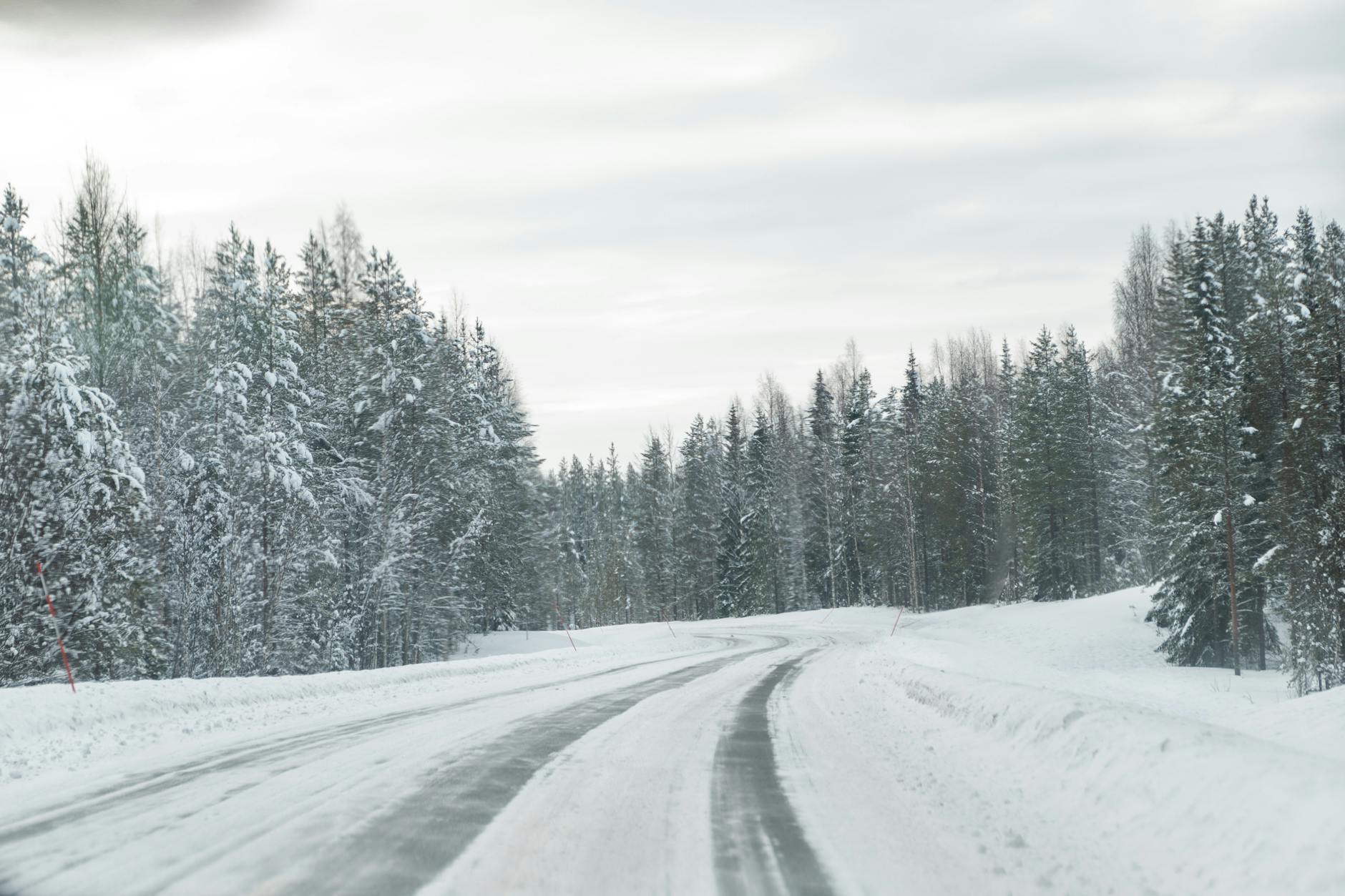
Example 1: Helsinki weekend without a car
Plan:
Main risk: buying the wrong zone ticket or forgetting to buy before entering Metro/ferry paid areas.
- Arrive at Helsinki Airport.
- Buy HSL ABC ticket.
- Take P/I train to central Helsinki.
- Use AB tickets/day ticket for central sightseeing.
- Visit Suomenlinna by HSL ferry.
- Use trams for central neighborhoods.
- Use taxi only for late-night or luggage-heavy trips.
Example 2: Helsinki + Turku in 2026
Plan:
Main risk: assuming normal rail service during construction periods.
- Use HSL in Helsinki.
- Check VR’s Helsinki–Turku disruption information before booking.
- Compare train and coach.
- If using train during replacement bus periods, add buffer time.
- In Turku, use Föli buses and walking.
- Use line 1 for airport/harbour if timing works.
Example 3: Turku summer archipelago day
Plan:
Main risk: planning from a map rather than ferry and bus timetables.
- Use Föli to move around Turku.
- Use water bus for Ruissalo if available.
- For farther archipelago travel, check Finferries schedules.
- Decide early whether the trip requires bike, bus, car, or organized tour.
- Avoid last ferry/tight return connections.
Example 4: Rovaniemi Christmas visit without a car
Plan:
Main risk: staying remote without a transfer plan.
- Arrive by night train or flight.
- Stay in central Rovaniemi or near a known pickup corridor.
- Use bus 8 for Santa Claus Village.
- Use Airport Express or taxi for airport.
- Book activity transfers through tour operators.
- Prebook taxis/transfers for early/late movements.
Example 5: Rovaniemi/Lapland with rental car
Plan:
Main risk: underestimating winter driving and overestimating daily distance.
- Book winter-equipped rental car.
- Confirm winter tires and engine heater.
- Check Fintraffic and FMI daily.
- Keep warm clothing in the car.
- Avoid unnecessary night driving.
- Leave extra time for reindeer, snow, and road conditions.
- Use main roads and avoid remote routes in severe weather.
Before traveling to Finland
- [ ] Decide which parts of the trip truly need a car.
- [ ] Download VR, HSL, and city-specific apps as needed.
- [ ] Check whether long-distance train or bus tickets should be bought in advance.
- [ ] Check winter tire/rental car details if driving.
- [ ] Pack proper winter footwear if traveling in cold months.
- [ ] Check rail construction or disruption notices.
- [ ] Book Lapland trains, cabins, transfers, and rental cars early.
- [ ] Confirm airport transfer options.
- [ ] Carry a payment card that works contactlessly.
- [ ] Carry a power bank in winter.
Helsinki checklist
- [ ] Use HSL.
- [ ] Buy ABC for airport.
- [ ] Buy AB for central Helsinki/Suomenlinna.
- [ ] Buy before entering Metro/ferry paid areas.
- [ ] Use airport train unless taxi is justified.
- [ ] Avoid renting a car for central Helsinki.
- [ ] Check tram/Metro disruptions.
Turku checklist
- [ ] Use Föli.
- [ ] Check line 1 for airport/harbour.
- [ ] Use walking for the compact centre.
- [ ] Use water bus only in season.
- [ ] Check 2026 Helsinki–Turku rail disruptions.
- [ ] Plan archipelago trips around ferry schedules.
- [ ] Use taxi for late/early luggage-heavy trips.
Rovaniemi checklist
: InfoFinland, “Traffic in Finland.” https://infofinland.fi/information-about-finland/traffic-in-finland. Accessed April 22, 2026.
: Waltti, “What is Waltti?” https://waltti.fi/en/what-is-waltti/. Accessed April 22, 2026.
: Matkahuolto, “Travel in Finland with public transport.” https://www.matkahuolto.fi/travel/travel-in-finland-with-public-transport. Accessed April 22, 2026.
: VR, “Travel to Lapland by train.” https://www.vr.fi/en/to-lapland-by-train. Accessed April 22, 2026.
: VR, “Accessible train travel.” https://www.vr.fi/en/facilities-and-services/accessible-train-travel. Accessed April 22, 2026.
: VR, “Pets on trains.” https://www.vr.fi/en/facilities-and-services/pets. Accessed April 22, 2026.
: VR, “Traffic interruption / Espoo Rail Line project changes between Helsinki and Turku.” https://www.vr.fi/en/on-track/traffic-interruption. Accessed April 22, 2026.
: HSL, “For visitors.” https://www.hsl.fi/en/travelling/visitors. Accessed April 22, 2026.
: HSL, “Single ticket prices in the HSL area.” https://www.hsl.fi/en/tickets-and-fares/single-tickets/single-ticket-prices-in-the-hsl-area. Accessed April 22, 2026.
: HSL, “Contactless payment.” https://www.hsl.fi/en/tickets-and-fares/contactless-payment. Accessed April 22, 2026.
: HSL, “Suomenlinna.” https://www.hsl.fi/en/travelling/visitors/suomenlinna. Accessed April 22, 2026.
: HSL, “Helsinki and Espoo city bikes.” https://www.hsl.fi/en/citybikes/helsinki. Accessed April 22, 2026.
: HSL, “Accessibility.” https://www.hsl.fi/en/travelling/accessibility. Accessed April 22, 2026.
: Finavia, “Helsinki Airport access.” https://www.finavia.fi/en/airports/helsinki-airport/access. Accessed April 22, 2026.
: Finavia, “Helsinki Airport taxis.” https://www.finavia.fi/en/airports/helsinki-airport/access/taxis. Accessed April 22, 2026.
: Finavia, “Turku Airport public transport.” https://www.finavia.fi/en/airports/turku/parking-access/public-transport. Accessed April 22, 2026.
: Föli, “Hello and welcome.” https://www.foli.fi/en/hello-and-welcome. Accessed April 22, 2026.
: Föli, “Tickets.” https://www.foli.fi/en/tickets. Accessed April 22, 2026.
: Föli, “Contactless payment.” https://www.foli.fi/en/tickets/contactless-payment. Accessed April 22, 2026.
: Föli, “Water bus.” https://www.foli.fi/en/timetables-and-routes/water-bus. Accessed April 22, 2026.
: Föli, “Trunk lines.” https://www.foli.fi/en/trunklines. Accessed April 22, 2026.
: Föli, “Föli bikes.” https://www.foli.fi/en/f%C3%B6li-bikes. Accessed April 22, 2026.
: Linkkari, “Routes and timetables.” https://linkkari.fi/In-English/Routes-and-timetables. Accessed April 22, 2026.
: Linkkari, “Tickets and fares.” https://linkkari.fi/In-English/Tickets-and-fares. Accessed April 22, 2026.
: Linkkari, “Contactless payment.” https://linkkari.fi/In-English/Tickets-and-fares/Contactless-payment. Accessed April 22, 2026.
: Visit Rovaniemi, “Getting around.” https://www.visitrovaniemi.fi/plan/getting-around/. Accessed April 22, 2026.
: Finavia, “Rovaniemi Airport public transport.” https://www.finavia.fi/en/airports/rovaniemi/parking-access/public-transport. Accessed April 22, 2026.
: Traficom, “Taxi passengers.” https://www.traficom.fi/en/road-passengers/taxi-passengers. Accessed April 22, 2026.
: Visit Finland, “Guide to driving in Finland.” https://www.visitfinland.com/en/articles/guide-to-drive-in-finland/. Accessed April 22, 2026.
: Finnish Police, “Winter tyres required in wintry conditions.” https://poliisi.fi/en/-/winter-tyres-required-in-wintry-conditions-the-police-will-assess-whether-use-is-necessary. Accessed April 22, 2026.
: Liikenneturva, “Drink-driving.” https://www.liikenneturva.fi/en/road-safety/drink-driving/. Accessed April 22, 2026.
: Liikenneturva, “Ride right.” https://www.liikenneturva.fi/en/campaigns/ride-right/. Accessed April 22, 2026.
: Fintraffic, “Road weather.” https://www.fintraffic.fi/en/road_traffic/road-traffic-services/road-weather. Accessed April 22, 2026.
: Fintraffic, “Traffic Situation.” https://www.fintraffic.fi/en/digitalservices/traffic-situation. Accessed April 22, 2026.
: Finnish Meteorological Institute, “Warnings.” https://en.ilmatieteenlaitos.fi/warnings. Accessed April 22, 2026.
: Finferries, official website. https://www.finferries.fi/en. Accessed April 22, 2026.
: Finferries, “The Archipelago Road ferry schedules.” https://www.finferries.fi/en/news/the-archipelago-road-ferry-schedules.html. Accessed April 22, 2026.
- [ ] Understand buses are the only local public transport.
- [ ] Use bus 8 for railway station–centre–Santa Claus Village.
- [ ] Check Airport Express schedule.
- [ ] Prebook taxis/transfers in peak winter.
- [ ] Do not stay remote without transport.
- [ ] Rent a car only if prepared for winter driving.
- [ ] Check weather and road conditions.
- [ ] Dress for outdoor waiting.