National Infrastructure and Seven City Case Studies for Visitors and Residents
Executive summary
Germany is one of the easiest countries in Europe to cross by public transport, but it is not one unified transport system in the way a first-time visitor might expect. Long-distance rail is largely planned around Deutsche Bahn and a small number of competitors. Local transport is organized by regional transport associations, known as Verkehrsverbünde, which set ticketing rules for buses, trams, U-Bahn, S-Bahn, ferries, and regional trains inside their territories. The result is a strong national network wrapped in many local rulebooks.
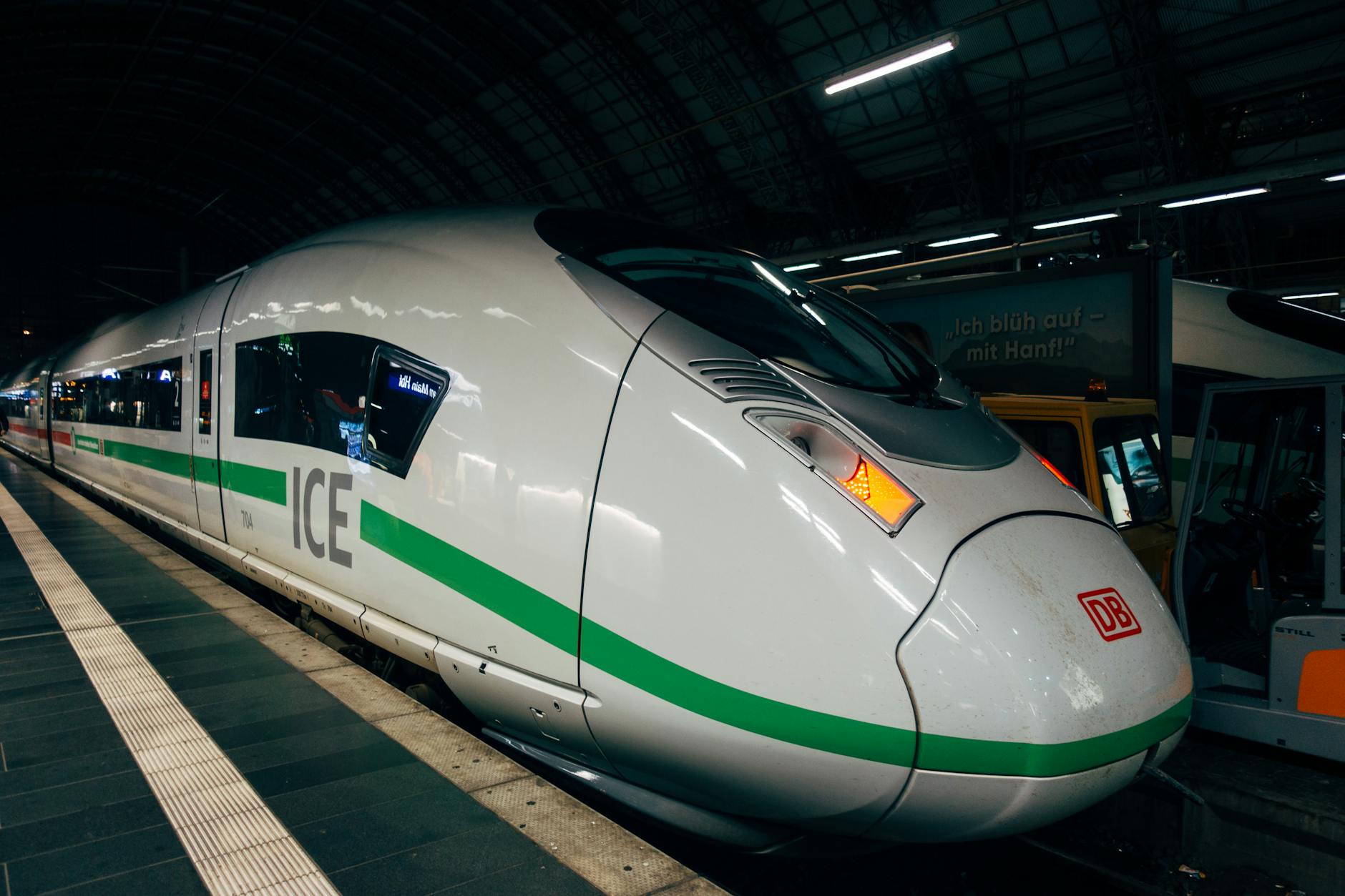
The most important national rule is the distinction between long-distance transport and local or regional transport. High-speed and intercity trains such as ICE, IC, and EC are usually ticketed separately. Local and regional services such as U-Bahn, trams, buses, S-Bahn, RB, and RE trains are covered by local fare systems and, for many users, by the national Deutschlandticket. The Deutschlandticket costs €63 per month in 2026, is a subscription, is personal rather than transferable, and is valid on local and regional public transport throughout Germany, but not on standard ICE, IC, or EC long-distance trains.
The second key rule is that Germany often uses proof-of-payment systems rather than ticket gates. Many stations have no barriers. That does not mean travel is free. Travelers are expected to buy the correct ticket before boarding, validate it when required, carry identification when using a personal or discounted ticket, and show it to plainclothes or uniformed inspectors. The typical increased fare for riding without a valid ticket is €60 in many German systems.
The third key rule is that driving is useful but not always efficient. Germany’s roads are excellent for rural areas, business trips, luggage-heavy journeys, and travel between smaller towns. In the covered cities, however, central driving brings congestion, parking scarcity, resident-only zones, environmental sticker rules, diesel restrictions, pedestrian areas, construction, and aggressive camera enforcement. Visitors who rent cars should understand the Umweltplakette environmental sticker, which is required only when driving into low-emission zones, not simply for entering Germany.
For travelers, the best strategy is usually this: use long-distance rail between major cities, use local transit inside cities, use taxis or ride-hailing selectively, use Park & Ride when approaching historic or dense centers by car, and rent a car only when the trip includes rural areas or places poorly served by rail. For residents, the daily concerns are slightly different: commuting reliability, construction disruption, subscription value, last-mile access, cycling safety, regional fare boundaries, overcrowding, accessibility gaps, school travel, parking permits, and whether local governments can make transit more reliable without making driving impossible.
Germany works best for people who understand layers:
- ICE/IC/EC for fast intercity travel. Use DB Navigator, bahn.de, or operator apps; reserve seats when comfort matters.
- RE/RB/S-Bahn/U-Bahn/tram/bus for local and regional travel. These are usually the domain of local fare systems and the Deutschlandticket.
- Validate paper tickets where the local system requires it. A ticket in your hand is not always a valid ticket.
- Do not assume airport tickets are ordinary city tickets. Some airports sit in outer fare zones.
- Do not assume one city’s app or rules apply in the next city. Berlin, Munich, Hamburg, Frankfurt, Cologne, Düsseldorf, and Stuttgart all have different fare geography.
- Check disruption before important journeys. Germany has strong rail coverage, but major construction and reliability problems have become a central issue for users.
- Drive with documents, an environmental sticker where required, and patience. German road infrastructure is good; urban parking and compliance are the hard parts.
1. Germany’s national mobility pattern
Germany is a federal, polycentric country. Unlike France or the United Kingdom, it does not have one dominant capital that organizes all travel. Berlin, Munich, Hamburg, Frankfurt, Cologne, Düsseldorf, Stuttgart, Leipzig, Dresden, Nuremberg, Hanover, Bremen, Essen, Dortmund, and many smaller cities all generate significant traffic. This creates a transportation system that is dense, distributed, and often excellent for point-to-point travel between regions, but complex for ticketing.
Three structural ideas explain most of the system.
First, rail is the backbone of intercity travel. Deutsche Bahn’s long-distance network connects more than 300 stations with ICE, IC, and EC services, with many major corridors running at least hourly and the broader long-distance network often organized around two-hour intervals. Between major cities such as Berlin-Hamburg, Frankfurt-Cologne, Munich-Stuttgart, Berlin-Frankfurt, Hamburg-Cologne, and Frankfurt-Munich, rail is usually the most useful first choice unless the traveler needs a car at the destination.
Second, local transit is managed regionally. Each urban region has its own transport association: VBB in Berlin-Brandenburg, MVV in Munich, hvv in Hamburg, RMV in Frankfurt/Rhine-Main, VRS around Cologne, VRR around Düsseldorf and the Ruhr, and VVS in Stuttgart. These associations coordinate fare zones, day tickets, passes, route maps, and sometimes customer information across multiple operators.
Third, the Deutschlandticket has changed the local-transport decision. A resident or long-stay visitor who uses local and regional transport heavily may find the national monthly pass far simpler than buying local day tickets. But it is not a tourist pass, not a flexible paper ticket, and not valid on normal ICE, IC, or EC services. It is a subscription and must be cancelled correctly.
2. The vocabulary a visitor needs
| Term | Meaning | Practical significance |
|---|---|---|
| ICE | Intercity-Express high-speed train | Fastest domestic rail category; separate long-distance fares; seat reservations usually optional but recommended on busy routes. |
| IC / EC | Intercity / EuroCity train | Long-distance trains, often slower than ICE but important for national and international corridors. Not covered by the standard Deutschlandticket. |
| RE / RB / IRE | Regional express / regional train | Local or regional rail; slower than ICE/IC but widely covered by local tickets and Deutschlandticket. |
| S-Bahn | Suburban and regional urban rail | Connects city centers with suburbs, airports, and satellite towns. Usually part of local fare system. |
| U-Bahn | Underground or metro | City rapid transit; important in Berlin, Munich, Hamburg, Frankfurt, Stuttgart, and parts of the Rhine-Ruhr. |
| Stadtbahn | Light-rail/metro-tram hybrid | Common in Cologne, Düsseldorf, Stuttgart, and Frankfurt; may run underground in the center and on street elsewhere. |
| Straßenbahn / Tram | Tram or streetcar | Important in Berlin, Munich, Frankfurt, Cologne, Düsseldorf, Stuttgart, and many other cities. |
| Verkehrsverbund | Transport association | Sets local fares and coordinates tickets across operators. |
| Umweltzone | Low-emission zone | Driving zone requiring an environmental sticker or meeting local restrictions. |
| Umweltplakette | Environmental sticker | Sticker displayed on windshield for entry into low-emission zones. |
| Entwerter / Stempelautomat | Validation machine | Used to validate some paper tickets before boarding. |
| Schwarzfahren | Traveling without a valid ticket | Can trigger an increased fare, commonly €60. |
3. Long-distance rail
3.1 ICE, IC, and EC services
Germany’s long-distance rail is built around ICE, IC, and EC trains. ICE trains are the flagship services and are the fastest way to connect major regions. IC and EC trains are usually intercity services with more intermediate stops or international roles. Some journeys are high-speed in the French or Japanese sense; others are fast conventional rail mixed with congested tracks, regional traffic, and construction zones.
A visitor should not judge Germany’s rail system only by maximum speed. Its value is network density. A journey such as Berlin-Hamburg, Cologne-Frankfurt, Frankfurt-Stuttgart, Munich-Nuremberg, or Düsseldorf-Cologne can be very efficient because stations are central and airport-style security is absent. The platform-to-platform simplicity is one of the country’s great travel advantages.
The weakness is reliability. German rail users have faced persistent delay, construction, and capacity problems. Deutsche Bahn publishes construction notices, and current infrastructure modernization affects many trunk routes. Reuters reported in April 2026 that 40% of Deutsche Bahn long-distance trains were delayed in 2025, while the government and DB were increasing infrastructure investment and planning a major overhaul across the decade. That does not mean visitors should avoid trains. It means important transfers, airport departures, and business meetings should be planned with margins.
3.2 Buying tickets and using DB Navigator
DB Navigator is the most useful national rail app for most visitors and residents. It supports digital tickets for trains and many local transport services, seat reservations, best-price search, demand indicators, and travel notifications. It is not the only possible app, but it is the default starting point for national rail.
Long-distance rail fares vary by flexibility:
The mistake visitors make is buying a cheap train-specific ticket and then assuming they can board any later train. They often cannot. Always read the ticket conditions, especially the train-binding rule known as Zugbindung.
3.3 City-Ticket and station access
Some DB long-distance tickets include or can add a City-Ticket, which permits travel to or from the long-distance station by local public transport in participating cities. DB describes City-Ticket as valid in about 140 cities for local transit to and from the station, and notes that it is included with flexible fares while saver products may require a separately issued add-on depending on the connection.
This matters because a traveler arriving at Berlin Hauptbahnhof, Hamburg Hbf, Munich Hbf, Frankfurt Hbf, Cologne Hbf, Düsseldorf Hbf, or Stuttgart Hbf may still need to reach a hotel several kilometers away. City-Ticket can cover that last segment, but only within its rules. Do not assume every DB ticket includes local transit.
- Super saver and saver fares are cheaper but more restrictive.
- Flexible fares cost more but allow more freedom within the ticket rules.
- Seat reservations are normally separate from the ticket on many domestic DB long-distance services. They are worth buying on Fridays, Sundays, holidays, school-vacation periods, business peaks, and luggage-heavy journeys.
- BahnCard products offer percentage discounts on DB fares and can make sense for residents, frequent visitors, business travelers, and anyone taking multiple paid long-distance journeys. BahnCard 25, for example, discounts many flexible and saver fares by 25%.
4. Regional rail and the Deutschlandticket
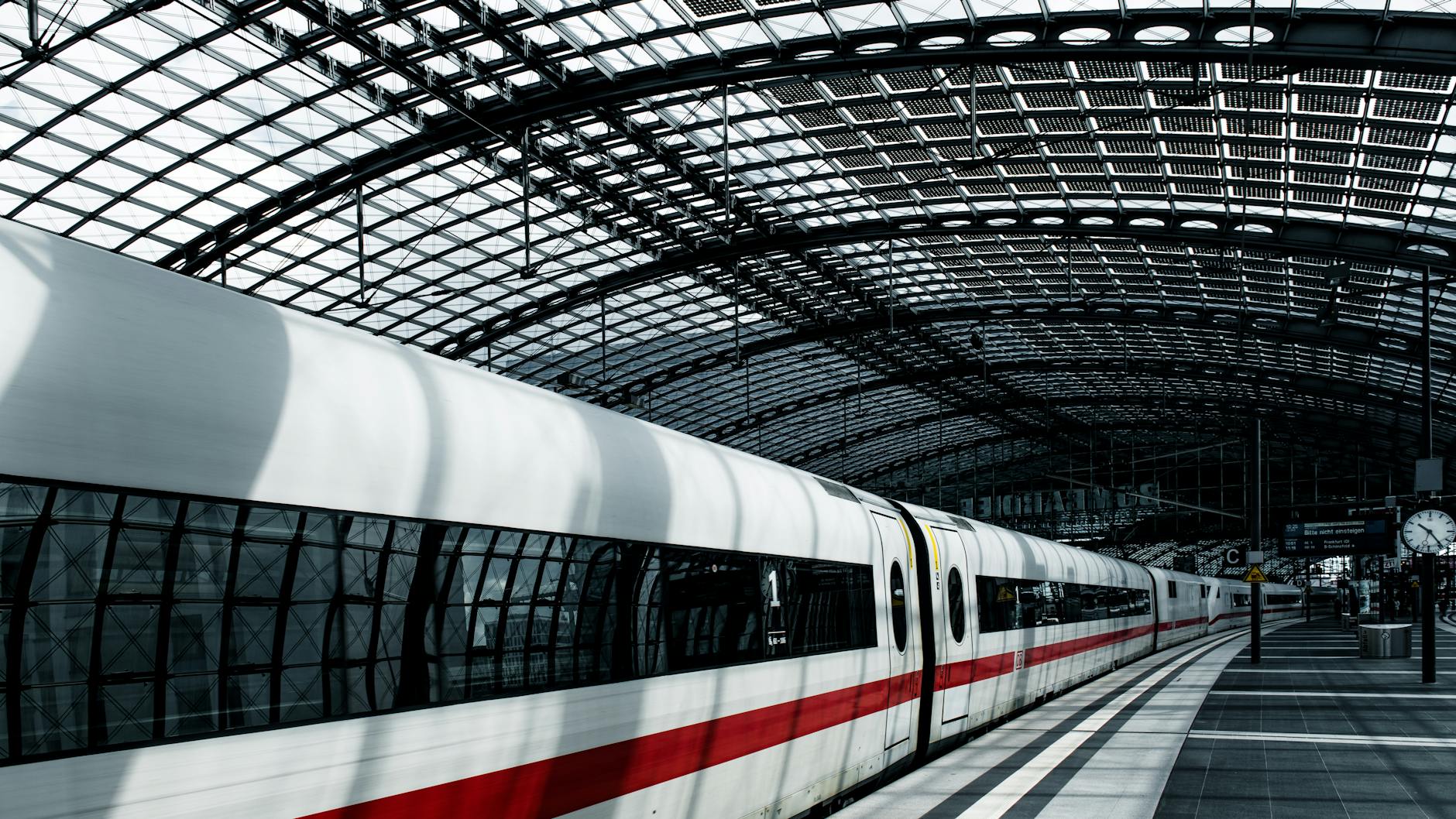
Regional trains include RE, RB, IRE, and many S-Bahn services. They are slower than long-distance services but essential for airports, suburbs, small towns, and day trips. They also form the practical backbone of the Deutschlandticket.
The Deutschlandticket is the single most important recent change in German transportation. In 2026 it costs €63 per month, is valid nationwide on local and regional public transport, and includes buses, trams, U-Bahn, S-Bahn, RB, RE, and many similar services. It is not valid on normal ICE, IC, or EC trains, is personal and non-transferable, and is second-class unless a separate first-class upgrade exists locally.
The pass is powerful for:
It is weak for:
The cancellation rule matters. DB states that cancellation by the 10th of the month ends the subscription at the end of that month; later cancellation generally ends it at the end of the following month.
- residents who commute by local transport;
- students or interns staying several weeks;
- tourists taking many regional day trips;
- travelers moving slowly between cities by regional trains;
- people who value simplicity over speed.
- one-week visitors who only take a few rides;
- people who need ICE speed between major cities;
- travelers who dislike subscription cancellation rules;
- families, because it is personal rather than a group pass;
- visitors without a comfortable payment method or app setup.
5. Local tickets, validation, and inspection
German local transport ticketing is usually reliable, but it is unforgiving.
Many city and regional systems sell:
Ticket validation is where visitors get caught. In some systems, a paper ticket bought from a machine must be stamped before travel. In others, the ticket is valid immediately. In some systems, a bus ticket bought from the driver is already valid. In others, tickets from apps activate at purchase or after a chosen start time. The safest habit is this: when buying a paper ticket from a machine, look for whether it says it is already validated; if not, stamp it before boarding or immediately on the platform/vehicle.
Germany often has open stations without gates. Inspectors can board trains, trams, buses, and U-Bahn at any time. Berlin’s public-transport guide explicitly warns that the fine for traveling without a valid ticket is €60 and that there are no exceptions for tourists, with inspectors often in plain clothes. RMV, the Rhine-Main transport association, also lists an increased charge of €60 for invalid or missing tickets.
Common ticket mistakes include:
- single tickets;
- short-trip tickets;
- day tickets;
- group day tickets;
- weekly and monthly passes;
- airport tickets;
- tourist cards;
- bike tickets;
- dog tickets;
- local subscription products;
- the Deutschlandticket through local apps.
- buying the wrong fare zone;
- forgetting airport zone extensions;
- failing to validate a paper ticket;
- using a short-trip ticket too far;
- assuming a local day ticket works in a neighboring fare association;
- assuming the Deutschlandticket covers ICE/IC/EC;
- using someone else’s personal pass;
- forgetting photo ID when the ticket requires it;
- using a local tourist card outside its stated area;
- treating a confirmation email as the ticket when the app requires a QR code.
6. Buses, trams, Stadtbahn, U-Bahn, and S-Bahn
German cities are built around a hierarchy of local transport.
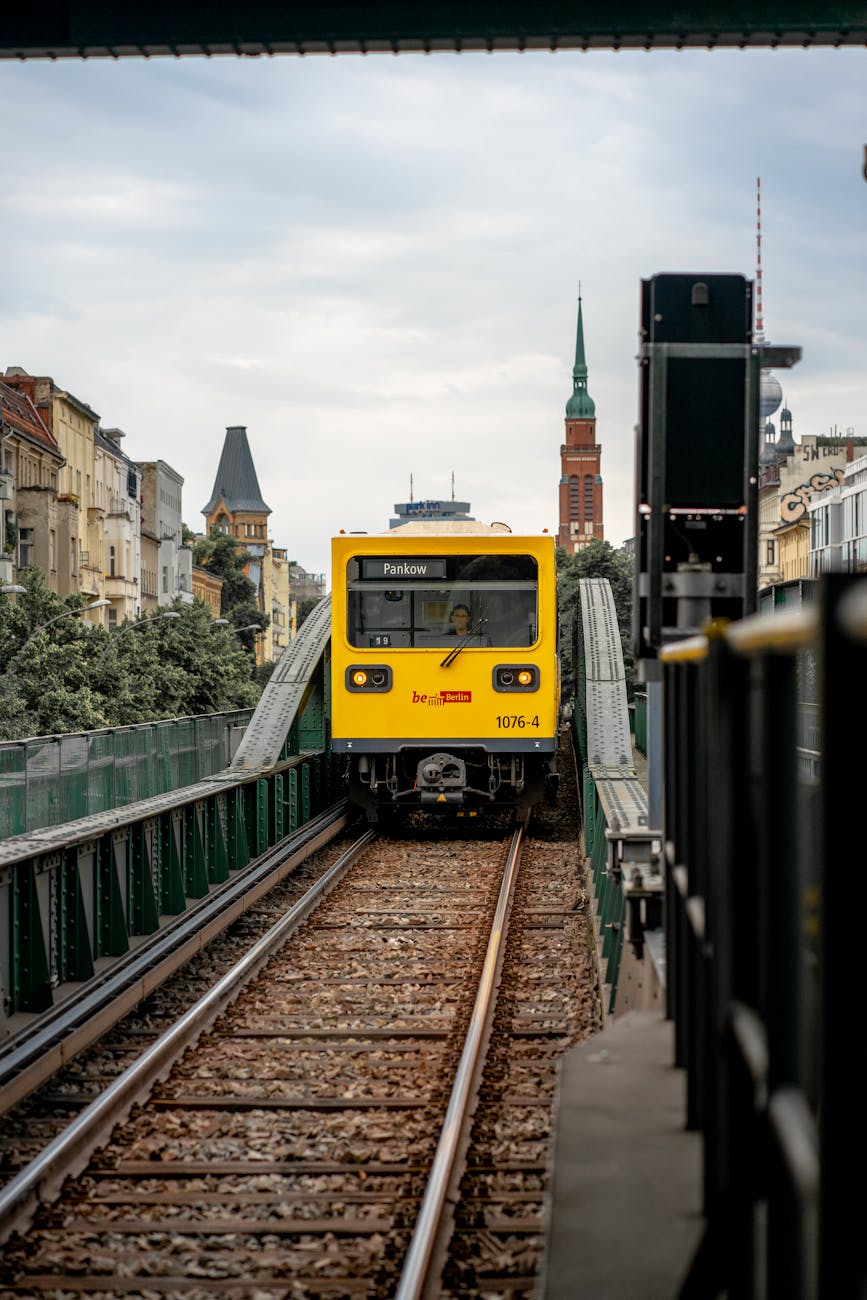
S-Bahn is the metropolitan rail layer. It connects central stations, suburbs, airports, and nearby towns. In Berlin, Munich, Hamburg, Frankfurt, Cologne/Düsseldorf, and Stuttgart, S-Bahn lines are often the most useful regional transit mode.
U-Bahn is the urban rapid-transit layer. Berlin, Munich, Hamburg, Frankfurt, and Stuttgart use it heavily; Cologne and Düsseldorf rely more on Stadtbahn, where light-rail vehicles use tunnels in central areas and surface tracks farther out.
Trams are crucial in Berlin, Munich, Frankfurt, Cologne, Düsseldorf, Stuttgart, and many secondary cities. They are not just tourist vehicles. They carry commuters and often serve neighborhoods that rail does not.
Buses fill the gaps. They are essential at night, in outer districts, for replacement service during construction, and in hilly or less rail-served neighborhoods.
The strength of German local transport is coverage. The challenge is edge cases: fare zones, platform changes, rail replacement buses, crowded peak services, limited late-night frequencies, elevator outages, and the fact that a route that looks simple on a map may involve stairs, long station walks, or a bus stop on the far side of a busy road.
7. Intercity coaches and alternative rail
Long-distance coaches are a major budget alternative to rail. FlixBus is the dominant brand and sells e-tickets, app tickets, and cross-border services, often with amenities such as Wi-Fi or power depending on vehicle and route. Coaches are slower than trains on many city-pairs but can be much cheaper, especially when rail fares are high or when the coach serves an airport directly.
FlixTrain also operates low-cost rail services in Germany on selected corridors. It can be useful when the route and time match your needs, but it does not offer the same frequency or network depth as DB. Treat it as a specific alternative, not a general national rail replacement.
Long-distance buses are strongest for:
They are weaker for:
- budget travelers;
- overnight travel where available;
- direct airport links;
- routes where rail requires awkward transfers;
- students and backpackers;
- travelers who can tolerate traffic uncertainty.
- tight schedules;
- large luggage if the bus is crowded;
- travelers needing step-free station-style infrastructure;
- routes affected by road congestion;
- last-minute bookings during holidays.
8. Private vehicles and driving
8.1 When a car helps
A car is useful in Germany for rural Bavaria, the Black Forest, wine villages, castles, business parks, families with luggage, trips involving multiple small towns, and regions where buses are infrequent. It is less useful in the seven covered city centers, where public transport usually beats driving once parking and stress are included.
Visitors should rent a car when the itinerary genuinely requires one. A common good pattern is: train between major cities, rent a car only for the rural segment, return it before entering the next large city.
8.2 Road rules and motorway expectations
Germany drives on the right. Urban default speed limits are commonly 50 km/h unless signed otherwise, rural roads commonly 100 km/h, and many autobahn stretches have posted or variable limits; where no maximum is posted for passenger cars, the recommended speed is 130 km/h. Visitors should not treat the Autobahn as a racetrack. Lane discipline, high closing speeds, construction zones, trucks, weather, and sudden congestion require full attention.
Passenger cars do not use a Swiss- or Austrian-style motorway vignette in Germany. The German toll system applies to road-haulage vehicles above 3.5 tonnes, according to Toll Collect’s 2024+ rules; ordinary rental cars are not normally part of that truck toll regime.
8.3 Environmental zones and stickers
Germany’s low-emission system is not a toll. It is a zone-entry compliance system. The Federal Environment Ministry explains that the emissions sticker is mandatory only for cars that want to drive into a low-emission zone; it is not required just to cross into Germany.
Practical advice:
Among the cities in this paper, Berlin, Munich, Frankfurt, Cologne, Düsseldorf, and Stuttgart all require special attention to environmental-zone rules. Hamburg is unusual because it currently has no general citywide low-emission zone requiring a sticker, though targeted diesel restrictions exist and travelers should still check signs.
8.4 Parking and Park & Ride
German city parking can be expensive, scarce, and heavily controlled. Central parking garages are usually easier than street parking, but they can have height restrictions and narrow ramps. Residential areas may require permits. Bus lanes, bicycle lanes, delivery zones, and pedestrian areas are actively enforced.
Park & Ride is often the best compromise. It is especially useful for Munich, Hamburg, Frankfurt, Stuttgart, and outer Berlin. It is less useful if the P+R lot itself is full during commuter peaks. When using P+R, check overnight rules, maximum stay, payment method, and whether the transit ticket is included.
- Rental cars in Germany often already have the correct sticker, but check before driving into a zone.
- Foreign cars need the sticker if entering a low-emission zone.
- Stickers are tied to the vehicle registration number.
- Some cities have diesel restrictions beyond the simple green-sticker rule.
- Navigation apps may not fully protect you from zone rules.
- Parking inside a zone can still count as being in the zone.
9. Taxis, ride-hailing, car-sharing, and rental cars
Germany has regulated taxi systems. Taxis are reliable for airports, late-night travel, luggage, mobility needs, and short hops when transit would require awkward transfers. Taxi ranks at stations and airports are normal.
Ride-hailing exists but differs from the U.S. model. Uber operates in Germany through licensed professional passenger-transport structures: drivers need a passenger-transport license, and vehicles must meet commercial requirements. This means availability, pricing, and service types vary by city. FREE NOW and other taxi apps can be useful for calling licensed taxis and paying cashlessly.
Car-sharing is more embedded in German cities than many visitors expect. Berlin, Hamburg, Munich, Frankfurt, Cologne, Düsseldorf, and Stuttgart all have car-sharing of some form. It is often a resident tool rather than a tourist tool because registration, license verification, insurance terms, and parking rules can be cumbersome for a short stay. Still, for locals it can reduce the need for private car ownership.
10. Cycling and micromobility
Cycling is important but city-dependent. Berlin and Hamburg have large cycling cultures but mixed infrastructure. Munich has strong cycling habits. Cologne and Düsseldorf have urban cycling demand but conflict with cars, trams, pedestrians, and delivery traffic. Stuttgart’s hills make cycling less universal, though e-bikes have changed the equation.
Bike rental, bike-share, and e-scooters are common in major cities. Users should understand that:
German federal transport guidance notes that carriage of small electric vehicles on public transport is ultimately controlled by operators; the federal ministry supports carriage in principle but cannot require operators to allow it.
- riding on sidewalks is generally restricted unless explicitly permitted;
- e-scooters usually belong in bike lanes or roads, not pedestrian areas;
- parking improperly can generate fees and public anger;
- alcohol rules apply to cycling and e-scooters;
- taking bikes on transit may require a separate ticket and may be restricted at peak times;
- folding bikes are easier than full-size bikes on trains;
- long-distance DB trains require bike reservations where bicycle carriage is offered.
11. Luggage, children, dogs, and everyday travel
Germany is easier with luggage than many countries because main stations are central and rail platforms are generally wide. But elevators can fail, old stations can have stairs, and trains can be full. Avoid overpacking if using regional trains or trams.
DB’s family rules can be generous. Children up to 14 can travel free with accompanying adults in many booked long-distance cases, while children traveling alone receive discounts under specific rules. Local systems have their own child fares and family day tickets.
Dogs are common on German transit, but rules vary. DB’s general guidance is that small dogs in carriers can travel free, while larger dogs need a ticket similar to an adult fare in some contexts. Local systems may require muzzles, leashes, dog tickets, or restrictions. Do not assume a dog can ride free everywhere.
12. Accessibility and mobility assistance
Germany has improved accessibility but remains uneven. Newer stations, major hubs, low-floor trams, and modern buses are often good. Older U-Bahn stations, S-Bahn platforms, small-town stations, elevators, cobblestone streets, and construction detours can still create real barriers.
DB’s Mobility Service Centre organizes boarding and alighting assistance, including lifts, at many stations. DB recommends booking assistance no later than 8 p.m. on the day before travel within Germany and earlier for international trips, and says service staff are available at almost 300 stations.
Practical accessibility advice:
- Check station accessibility before booking.
- Do not assume “step-free station” means level boarding onto the train.
- Leave longer transfer times at major hubs.
- Watch for elevator outages in city apps.
- Trams and buses may be easier than old U-Bahn stations in some areas.
- Ask station staff early when a platform change is announced.
- For wheelchair users, regional trains can be easier or harder depending on platform height and rolling stock.
13. Disruption, construction, strikes, and passenger rights
German transport users live with construction. Rail modernization is necessary but disruptive. A journey that worked perfectly last year may involve replacement buses this year. Weekend and evening works are common, but major corridor closures can last months.
For long-distance rail, build a buffer before flights, cruises, weddings, business presentations, and prepaid tours. For local transport, check the city app before leaving, especially late at night.
DB passenger rights cover compensation in cases of delay, missed connection, or cancellation for eligible DB services, and claims can be submitted through DB Navigator or DB customer channels. This is useful, but compensation does not recover a missed flight or ruined connection. Planning still matters.
14. Safety, etiquette, and common concerns
Germany is generally safe for public transport users. The practical concerns are pickpocketing in crowded stations, late-night disorder, bike theft, fare mistakes, and missing the last frequent connection.
Etiquette matters:
For locals, the biggest daily concerns are not tourism mistakes. They are rent-and-commute tradeoffs, service reliability, fare increases, whether the Deutschlandticket remains affordable, whether cycling infrastructure is safe, whether construction will ruin commutes, whether elevators work, and whether car restrictions arrive before transit quality improves.
- Let people exit before boarding.
- Move away from doors.
- Offer priority seats when appropriate.
- Keep voice volume moderate.
- Do not block aisles with luggage.
- On escalators, standing on the right and passing on the left is common.
- Do not place feet on seats.
- Keep dogs controlled.
- Do not walk in bike lanes casually; German cyclists may not be forgiving.
15. National quick-decision guide
| Situation | Best default choice | Why |
|---|---|---|
| Berlin to Hamburg | ICE/IC unless budget is dominant | Fast central-station connection; check construction. |
| Frankfurt Airport to Cologne | ICE often works well | Airport has long-distance rail; faster than driving. |
| Munich city center to airport | S-Bahn S1/S8 | Direct and frequent; allow time for disruptions. |
| Several regional trips in one month | Deutschlandticket | Simple if local/regional only and subscription is managed. |
| One city weekend | Local day ticket or tourist card | Easier than subscription if rides are limited. |
| Rural Bavaria or Black Forest | Rental car | Transit can be sparse and indirect. |
| Historic city center by car | Park & Ride or public transport | Parking and access rules are often painful. |
| Late-night luggage trip | Taxi or ride-hailing | Worth the cost when transit frequency drops. |
| Mobility-limited intercity trip | Rail with assistance booking | Plan in advance and check station access. |
1. Network character
Berlin has Germany’s most historically layered urban transport system. It combines U-Bahn, S-Bahn, trams, buses, ferries, regional rail, taxis, bike-share, car-share, e-scooters, and heavy walking. The city’s transport geography reflects its divided Cold War history: western Berlin developed more U-Bahn and bus dependence, while eastern Berlin retained a denser tram network. Today the system is integrated under the VBB fare framework and operated mainly by BVG for U-Bahn, trams, buses, and ferries, and by S-Bahn Berlin for S-Bahn services.
For visitors, Berlin is easier than it looks because the system is broad and frequent. For locals, it can be frustrating because the city is huge, transfers can be long, construction is frequent, and some outer-district trips are slow despite the famous network.
Berlin’s urban rail layers are:
- U-Bahn: dense metro network, especially useful inside the inner city and western districts.
- S-Bahn: regional urban rail, including the Ringbahn, east-west Stadtbahn, north-south lines, airport access, and suburbs.
- Tram: especially strong in eastern districts such as Mitte, Prenzlauer Berg, Friedrichshain, Lichtenberg, Pankow, and Marzahn.
- Bus: essential in western Berlin, at night, and for orbital trips not covered by rail.
- Ferries: useful in lake and river districts, more local than tourist-oriented.
2. Fare geography and tickets
Berlin fare zones are simple compared with many German regions. Zone A covers the central city inside the S-Bahn Ring, B covers the rest of Berlin to the city boundary, and C covers surrounding areas such as Potsdam and Berlin Brandenburg Airport. Most visitors need AB for central sightseeing and ordinary city travel. They need ABC for BER Airport, Potsdam, and some outer excursions.
Berlin’s official transport guide states that a valid ticket gives access to S-Bahn, U-Bahn, buses, trams, and ferries, and that fares depend on zone and validity period. Tickets can be bought at multilingual machines, in apps, and through sales outlets. The same guide warns that buses no longer accept cash payment from passengers and that fare evasion can trigger a €60 fine.
A visitor should choose between:
- single tickets for one or two rides;
- 24-hour tickets for repeated local travel;
- small-group tickets for groups;
- Berlin WelcomeCard for transport plus tourist discounts;
- Deutschlandticket for longer stays or regional-heavy travel;
- ABC tickets when using BER Airport or Potsdam.
3. Airport and intercity access
Berlin Brandenburg Airport is in Zone C. The easiest airport mistake is buying AB instead of ABC. Airport Express and regional trains can be faster than S-Bahn depending on destination, but the right choice depends on where the hotel is. S-Bahn can be convenient for eastern and southern destinations; FEX or regional rail can be better for Hauptbahnhof, Gesundbrunnen, Ostkreuz, or central connections.
Berlin Hauptbahnhof is the main long-distance rail hub. Ostbahnhof, Gesundbrunnen, Südkreuz, Spandau, and Ostkreuz also matter. Locals often choose whichever station avoids crossing the whole city before the intercity trip.
4. Night service
Berlin is one of Germany’s best late-night transit cities. On weekends and before public holidays, Berlin’s S-Bahn and U-Bahn operate through the night, with S-Bahn often every 30 minutes and U-Bahn commonly every 15 minutes, while Metrotram and night buses fill gaps. On weeknights, night buses replace many U-Bahn corridors.
The local concern is not whether any night service exists; it is whether the night route is direct, how safe the transfer feels, and whether construction has changed the pattern.
5. Private vehicles, environmental zone, and parking
Berlin is not an easy city to enjoy by car. Distances are large, roadworks are common, parking is regulated, cycling lanes and bus lanes require attention, and the inner city has a low-emission zone. The Berlin environmental zone is generally bounded by the S-Bahn Ring, and only vehicles with the green environmental sticker have been allowed in the zone since 2010.
Driving can still be useful for families, mobility needs, late-night outer-district travel, or suburban destinations. For ordinary sightseeing, use public transport and walking. If arriving by car, choose accommodation with parking or park outside the inner zone and ride transit.
6. Cycling, sharing, and taxis
Berlin has extensive shared mobility. Jelbi, BVG’s mobility platform, integrates public transport with bike, e-scooter, e-moped, car-sharing, and taxi options through one account and shows more than 60,000 shared vehicles in the city ecosystem. This is useful for residents and tech-comfortable visitors, though registration and parking rules can still be annoying.
Cycling is common, but infrastructure quality varies sharply by district. Visitors should avoid riding casually on tram tracks, cobblestones, and major arterial roads unless confident. E-scooters are convenient but heavily criticized when parked carelessly.
7. Accessibility and traveler concerns
Berlin has improved accessibility, but elevators and escalators are weak points. A step-free route may disappear if one lift is out. BVG provides barrier-free travel information and a VBB guide service for assistance in parts of the network.
Common visitor concerns:
Common local concerns:
- buying AB instead of ABC for the airport;
- not validating a paper ticket;
- underestimating city size;
- assuming U-Bahn serves all districts equally;
- taking a slow bus across the city when S-Bahn would be faster;
- traveling late without checking night routes.
- construction and replacement service;
- crowding on the Ringbahn and key U-Bahn lines;
- outer-district transit frequency;
- cycling safety;
- fare-policy uncertainty;
- elevator outages;
- parking pressure and street redesign conflicts.
8. Berlin visitor strategy
Stay near an S-Bahn or U-Bahn station, not merely near a bus stop. Buy AB for central travel and ABC for the airport or Potsdam. Use S-Bahn for cross-city speed, U-Bahn for dense inner-city movement, tram for eastern neighborhoods, and taxi/ride-hailing for late-night luggage or awkward transfers. Do not rent a car for ordinary Berlin sightseeing.
1. Network character
Munich’s transport system is cleaner in shape than Berlin’s but can feel more rigid. It is built around a strong S-Bahn trunk through the center, a dense U-Bahn network, trams, buses, regional trains, and the MVV fare system. Munich’s city center is compact and walkable, while its metropolitan region is large and commuter-heavy.
For visitors, Munich is one of the easiest German cities to use without a car. The U-Bahn covers central and inner-suburban destinations well; the S-Bahn links the airport, main station, Marienplatz, Ostbahnhof, suburbs, and many day-trip towns. For locals, the central concern is capacity and reliability on the S-Bahn trunk. When the trunk has problems, large parts of the region feel it.
2. Fare geography and tickets
MVV uses fare zones. Zone M covers the Munich urban area, while zones 1 through 12 cover surrounding districts. Munich Airport is in Zone 5. MVV explains that Zone M is used for travel within the city and that a trip from Marienplatz to the airport requires M-5.
This is the most important visitor rule in Munich: the airport is not a normal city-center ticket. If you buy only a city-zone ticket and ride to the airport, you are exposed to inspection risk.
Good ticket choices include:
MVV group day tickets can be excellent value for small groups, with children counted under special rules.
- single ticket for isolated rides;
- stripe ticket for flexible occasional use if you understand it;
- day ticket for sightseeing;
- group day ticket for couples, families, or friends;
- Airport-City-Day-Ticket for airport plus city movement;
- Deutschlandticket for longer stays and regional local transport.
3. Airport access
Munich Airport is connected by S1 and S8. The airport states that both lines connect the airport to the city, taking about 40 minutes to the main station, and alternating service creates frequent access to the center. The S8 has strong late-night coverage, while S1 and S8 patterns vary by time and disruptions.
S1 and S8 take different routes. Which is best depends on destination and service status. Locals check before choosing, because delays on one branch can make the other better.
4. Intercity and regional rail
Munich Hauptbahnhof is a major national and international rail hub. It connects to Berlin, Frankfurt, Stuttgart, Nuremberg, Salzburg, Innsbruck, Zurich, Vienna, and many Bavarian destinations. Ostbahnhof and Pasing are also important. For some travelers, boarding at Pasing or Ostbahnhof avoids crossing the entire center.
Regional rail makes Munich excellent for day trips: Dachau, Starnberg, Augsburg, Landshut, Salzburg, Füssen, Garmisch-Partenkirchen, and many Alpine destinations are rail-accessible, though not always fast. For mountain trips, check last return times carefully.
5. Private vehicles, environmental zone, and parking
Munich has heavy traffic, expensive parking, and a low-emission zone. The city states that the area within the Mittlerer Ring is an environmental zone and requires a valid green sticker.
Driving in Munich makes sense for suburban business sites, families, luggage, Alpine extensions, and places with parking. It is usually a poor choice for Marienplatz, the old town, museums, beer halls, and ordinary sightseeing. Park & Ride can be useful when approaching from outside, but lots fill during commuter periods.
6. Night service
Munich’s night service is less free-flowing than Berlin’s but usable. MVG night trams and night buses operate through core corridors, and several night lines meet at Karlsplatz/Stachus in the early morning hours. Late-night travelers should plan the route rather than assuming the daytime U-Bahn pattern continues.
7. Cycling, taxis, and micromobility
Munich is a strong cycling city by German standards, with many residents using bikes for commuting and errands. The Isar river corridors and park routes are pleasant; ring roads and construction zones are more challenging. Bike carriage on MVV services has rules and restrictions, and full-size bikes are generally not a casual add-on at peak times.
Taxis are reliable but not cheap. Ride-hailing exists through regulated models. For visitors, taxi use is most justified for late arrivals, luggage-heavy airport alternatives, mobility needs, or destinations poorly aligned with the S-Bahn/U-Bahn.
8. Accessibility and traveler concerns
Munich’s U-Bahn and S-Bahn have many accessible stations, but platform-train gaps, elevator outages, and construction can still matter. The central transfer stations can be crowded and physically complex.
Common visitor concerns:
Common local concerns:
- buying the wrong airport ticket;
- assuming S1 and S8 are interchangeable without checking destination;
- underestimating Oktoberfest crowding;
- trying to drive into the old town;
- missing late-night transit changes;
- confusing MVV local tickets with DB long-distance tickets.
- S-Bahn trunk reliability;
- crowding at Marienplatz, Hauptbahnhof, and Ostbahnhof;
- housing-cost-driven long commutes;
- airport fare burden;
- construction around the main station and second S-Bahn trunk projects;
- cycling safety and winter maintenance.
9. Munich visitor strategy
Use public transport for the city and rail for day trips. Buy the correct airport-zone ticket. Stay near U-Bahn or S-Bahn. Use trams for surface sightseeing and neighborhood movement. Avoid central driving unless the hotel provides parking. Add buffer time for airport trips and Alpine day trips.
1. Network character
Hamburg’s transport system reflects the city’s geography: a port city on the Elbe with water, bridges, rail corridors, tunnels, and wide districts. The network includes U-Bahn, S-Bahn, regional trains, buses, express buses, night buses, harbour ferries, taxis, bikes, and car-sharing. The local transport association is hvv.
For visitors, Hamburg is pleasantly easy because the central city, harbor, Speicherstadt, HafenCity, St. Pauli, Altona, and many neighborhoods are well linked. For locals, the network is useful but exposed to port traffic, bridge and tunnel chokepoints, weather, construction, and crowding on S-Bahn/U-Bahn corridors.
2. Fare system and tickets
hvv integrates U-Bahn, S-Bahn, regional trains, buses, and harbor ferries. Its network information includes rail services, MetroBus, Xpress buses, night buses, through-the-night services, and harbour ferries.
Ticket choices include single tickets, day tickets, group tickets, weekly/monthly products, Hamburg CARD, and Deutschlandticket. The Deutschlandticket is valid on hvv local and regional transport, including normal hvv buses, U-Bahn, S-Bahn, regional trains, and ferries, but not long-distance ICE/IC/EC travel.
Hamburg’s fare geography is less intuitive to a casual visitor than Berlin’s AB/ABC model, but most central visitor movement is straightforward if using app routing and buying the suggested ticket.
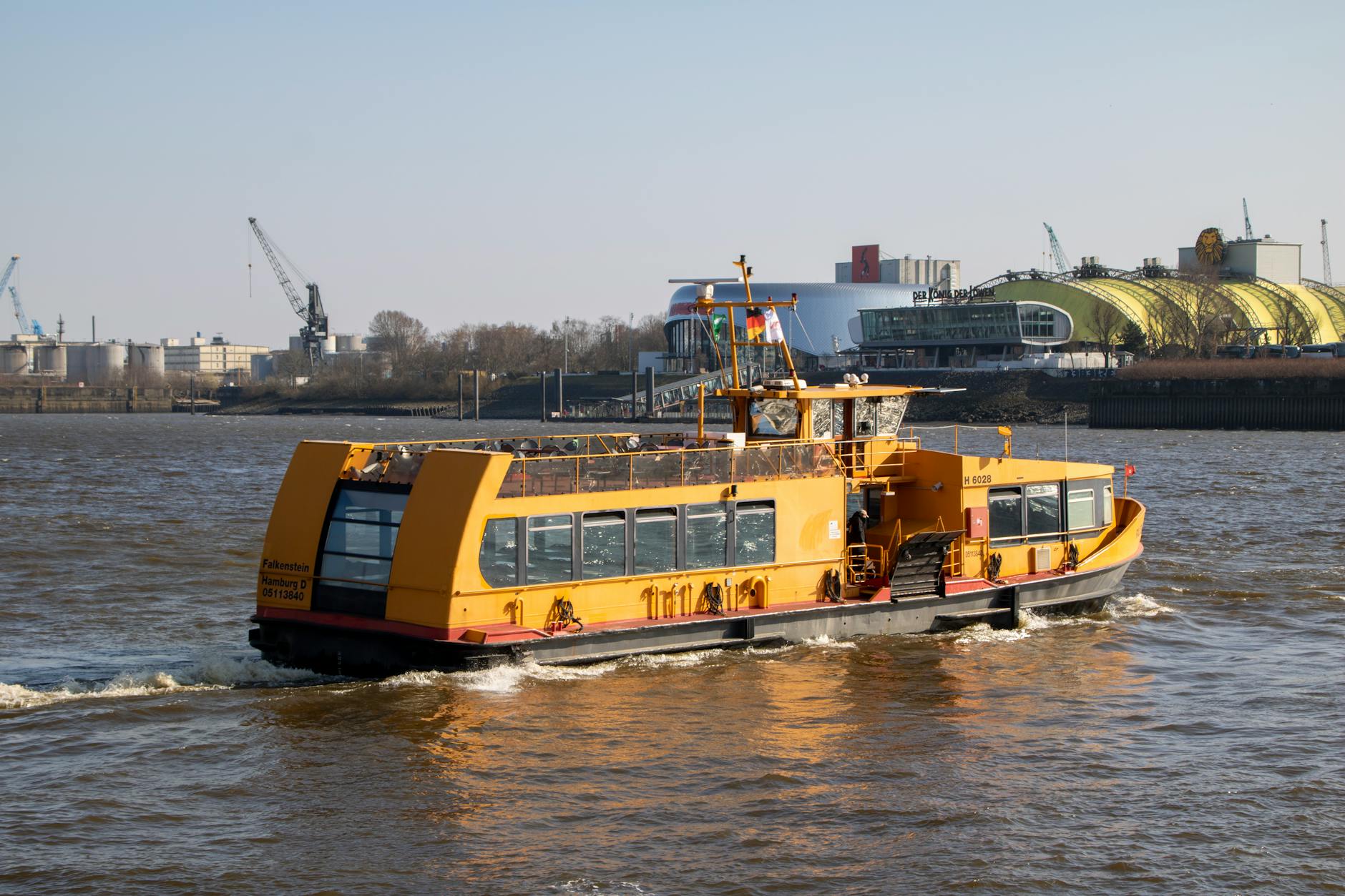
3. Harbour ferries
Hamburg is the German city where ferries matter most for ordinary travelers. HADAG harbour ferries are part of local public transport, and normal hvv tickets, the Hamburg CARD, and the Deutschlandticket are valid on the seven harbour ferry lines. Ferry Line 62 from Landungsbrücken toward Finkenwerder is famous because it passes port scenery, docks, the fish auction hall area, Dockland, and the Elbe beach zone.
For visitors, a public ferry can substitute for a budget harbor tour if expectations are realistic. It is public transport, not a narrated cruise. For locals, ferries are commuter tools and can be crowded with tourists.
4. Airport access
Hamburg Airport is one of the easiest German airports to reach by urban rail. The airport states that S-Bahn S1 connects the main station to the airport every 10 minutes in about 25 minutes, with direct terminal access by elevators and escalators.
The practical issue is train splitting on certain S1 patterns historically and service changes during works. Follow platform signs and app instructions carefully.
5. Intercity and regional rail
Hamburg Hauptbahnhof is extremely central and extremely busy. Altona, Dammtor, Harburg, and Bergedorf also matter depending on route. Hamburg is a major rail node for Berlin, Bremen, Hanover, Kiel, Lübeck, Copenhagen connections, and the North Sea/Baltic regions.
The Hamburg-Berlin corridor has been affected by major infrastructure modernization from August 2025 to April 2026, illustrating why even simple-looking German rail trips need current checks.
6. Private vehicles, environmental rules, and parking
Hamburg is not as sticker-centric as Berlin or Munich. The city’s public-service information states that Hamburg currently has no low-emission zone, so an environmental sticker is not needed for Hamburg itself, though it may be mandatory when driving to other German cities. However, targeted diesel restrictions and local signage still matter, and port/bridge/tunnel traffic can be intense.
A car helps for suburban industry, countryside, coastal trips, or luggage-heavy travel. It is not needed for central sightseeing. Parking near the harbor, St. Pauli, city center, and event venues can be expensive and scarce.
7. Cycling, taxis, and night service
Hamburg has good cycling potential but mixed infrastructure. Weather, wind, bridges, and construction shape daily behavior. Bike-share and e-scooters are common, but the public tolerance for badly parked scooters is low.
Hamburg has a strong night network for a German city, including night buses and weekend through-the-night rail service on important corridors. Visitors going out in St. Pauli, Sternschanze, or Altona should check the return route before the last simple connection disappears.
8. Accessibility and traveler concerns
Elevators are common in major stations, but Hamburg’s central station and transfer points can be crowded. Ferries require extra attention for mobility users because gangway conditions can depend on tide, vessel, and stop.
Common visitor concerns:
Common local concerns:
- assuming the ferry is a tourist cruise rather than public transport;
- underestimating Hauptbahnhof crowding;
- choosing a hotel far from U/S-Bahn;
- missing airport S-Bahn instructions;
- driving into port-event traffic;
- failing to check construction on Hamburg-Berlin rail.
- crowding at Hauptbahnhof;
- S-Bahn reliability;
- port and road chokepoints;
- bridge and tunnel bottlenecks;
- late-night safety around nightlife zones;
- cycling infrastructure continuity;
- tourist pressure on ferry routes.
9. Hamburg visitor strategy
Use U-Bahn/S-Bahn for most movement. Treat ferries as part of transit and ride one if the weather is good. Stay near an U-Bahn or S-Bahn station. Use taxis for late-night luggage or awkward harbor-area trips. Do not rent a car for the city, but consider one for North Sea, Baltic, or countryside extensions.
1. Network character
Frankfurt is Germany’s most important air-rail-business interchange city. It is smaller than Berlin, Munich, or Hamburg by population, but its airport, financial district, trade fairs, and Rhine-Main region make its transport system nationally significant.
The local transport association is RMV. The system includes U-Bahn, S-Bahn, trams, buses, regional trains, night buses, taxis, airport rail, and long-distance rail. Frankfurt is also highly walkable inside the center, but the broader Rhine-Main area is sprawling.
For visitors, Frankfurt’s key asset is the airport-rail connection. For locals, the key challenge is regional commuting across a polycentric metro area: Frankfurt, Offenbach, Wiesbaden, Mainz, Darmstadt, Hanau, Bad Homburg, and many smaller municipalities.
2. Fare system and tickets
RMV covers bus and rail across the Rhine-Main region and provides timetables and ticket purchase information through its English-language site and apps. Tickets are zone-based, and Frankfurt Airport has specific fare implications depending on origin and destination.
Useful ticket categories include single tickets, day tickets, group day tickets, short-trip tickets in limited contexts, weekly/monthly passes, the Deutschlandticket, and event-specific tickets. Business travelers should check whether trade-fair or conference badges include local transport; some do, some do not.
RMVgo is the local app for real-time route planning, ticket purchase, traffic information, and disruption data.
3. Airport access
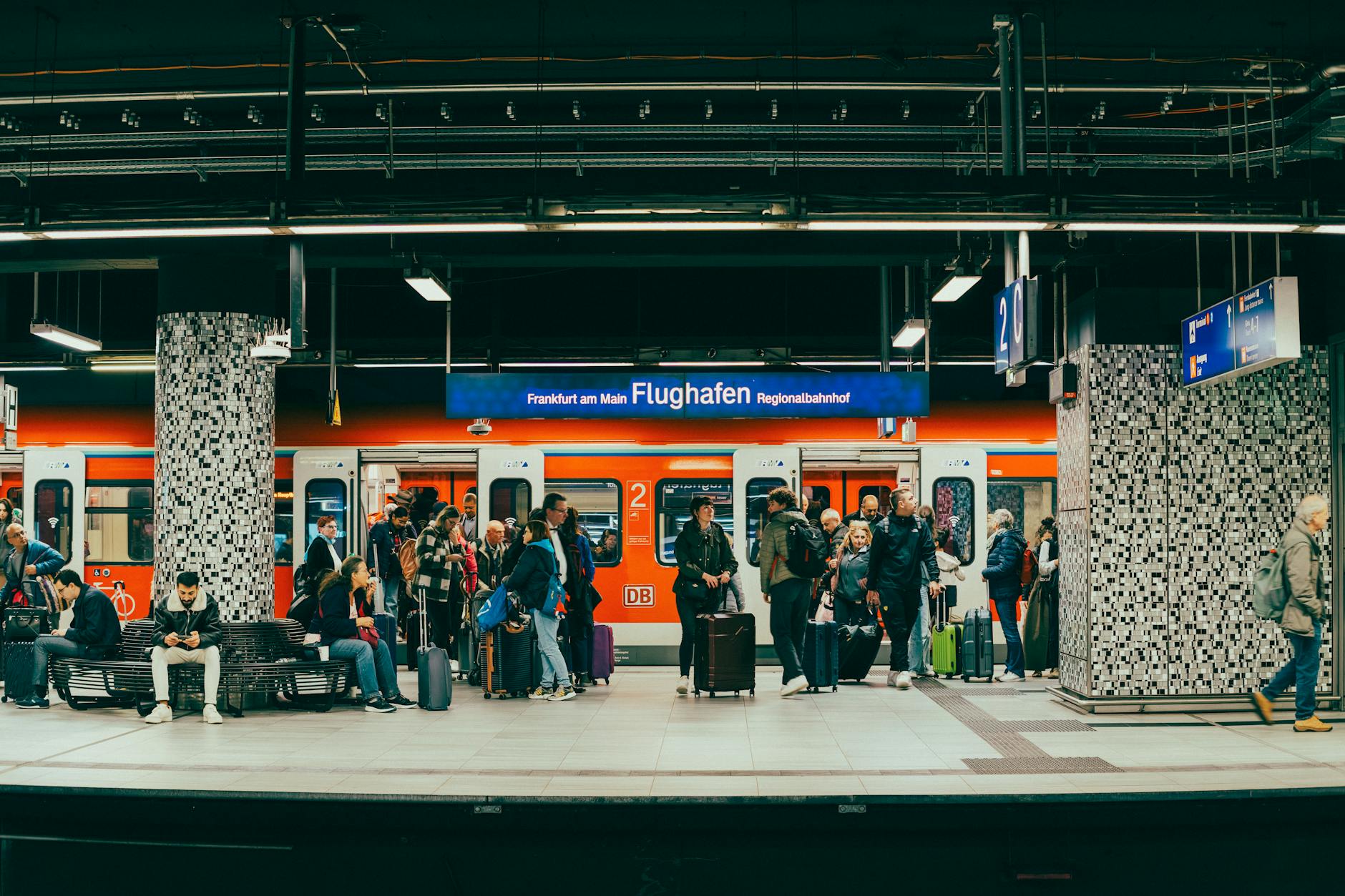
Frankfurt Airport is one of Europe’s best rail-connected airports. The airport states that its regional station is served by RMV trains directly to Frankfurt, Hanau, Aschaffenburg, Mainz, and Wiesbaden, including S-Bahn S8 and S9 as well as regional express services. The airport also has its own long-distance station for direct connections within Germany and to neighboring countries.
This creates two different airport strategies:
Visitors transferring from plane to train should leave time for terminal walking, baggage, immigration, and the correct station. Frankfurt Airport has both regional and long-distance rail areas; going to the wrong one wastes time.
- Local city access: S8/S9 or regional trains to Frankfurt Hbf, Hauptwache, Konstablerwache, or other city points.
- National access: ICE/IC from the long-distance station, often avoiding central Frankfurt entirely.
4. Intercity rail
Frankfurt Hauptbahnhof is one of Germany’s most important rail hubs. Frankfurt Flughafen Fernbahnhof is equally important for air-rail transfers. Many routes pass through Frankfurt even when the traveler is not visiting the city.
For business users, the advantage is speed and frequency. The downside is disruption exposure: a delayed train through Frankfurt can affect national connections.
5. Night service
Frankfurt has a structured night network. RMV describes a mix of 24-hour operation on important routes, frequent night metrobus service, weekend U-Bahn and tram backbone lines, and weekday trackside night buses.
For visitors, the rule is to plan late-night routes around actual night lines, not the daytime map. For locals, the issue is whether outer suburbs receive enough overnight service.
6. Private vehicles, environmental zone, and parking
Frankfurt has an environmental zone where only vehicles with a green sticker may enter. Visitor guidance describes the zone as covering a large central area and requiring green-badge compliance.
Driving can be useful for corporate campuses, trade-fair logistics, suburbs, luggage-heavy travel, and nearby rural areas. It is less useful inside the dense center, especially around Hauptbahnhof, the financial district, Sachsenhausen, and event areas. Parking garages are common but expensive.
7. Cycling, taxis, and ride-hailing
Frankfurt has improved cycling but remains car- and commuter-rail-heavy. The Main river paths are pleasant; arterial roads can be stressful. Taxis are abundant at the airport, Hauptbahnhof, trade fair, hotels, and business districts. Ride-hailing exists but follows German licensing constraints.
8. Accessibility and traveler concerns
Frankfurt Airport provides elevator and station-access information, but the airport’s size means mobility-impaired travelers should plan extra time. Frankfurt Hauptbahnhof is central but busy and can feel rougher around its surrounding streets than the city’s business image suggests.
Common visitor concerns:
Common local concerns:
- confusing the airport regional station with the long-distance station;
- assuming an airport ticket is the same as a short city ticket;
- underestimating walking time inside the airport;
- booking tight rail-air connections;
- staying near Hauptbahnhof without understanding the neighborhood context;
- driving into the environmental zone without a sticker.
- S-Bahn tunnel capacity and disruption;
- regional commuter reliability;
- airport shift-worker access;
- trade-fair crowding;
- cycling safety;
- parking cost;
- late-night service to suburbs.
9. Frankfurt visitor strategy
Use rail to and from the airport. For an overnight stop, choose a hotel based on your next connection: airport, Hauptbahnhof, Messe, or city center. Use U-Bahn/S-Bahn/trams for city travel, taxis for luggage-heavy or late-night trips, and avoid central driving unless the trip is business- or suburb-driven.
1. Network character
Cologne’s transport system is shaped by the Rhine, the cathedral-centered city core, and the larger Rhine-Ruhr/Rhineland urban region. It uses a mix of Stadtbahn, trams, buses, S-Bahn, regional trains, long-distance rail, and airport rail. The main local operator is KVB, and the wider fare association is VRS.
Cologne is not a classic metro city. Its Stadtbahn network runs underground in central areas and above ground elsewhere. This makes it flexible but sometimes slower and more exposed to street conflicts than a full metro.
For visitors, Cologne is easy because the central sights around the cathedral, main station, old town, Rhine, and museums are walkable. For locals, the issue is citywide reliability, crowding, bridge capacity, event traffic, and connections across the Rhine.
2. Fare system and tickets
KVB sells the main local tickets, including single tickets, 24-hour tickets, longer-period passes, and the KölnCard. VRS coordinates fare zones and ticket validity across Cologne and the wider region, allowing one ticket framework across neighboring towns and transport modes.
The visitor decision is usually simple:
The official KölnCard provides free local public transport within Cologne city limits on buses, trams, S-Bahn, and regional trains in second class, plus discounts. It must be validated before first use and is valid for 24 or 48 hours depending on product.
- walk for the cathedral/old town/Rhine core;
- use KVB for neighborhoods and museums beyond the core;
- use VRS/regional rail for Bonn, Brühl, Düsseldorf connections, or airport trips;
- use KölnCard if tourist discounts and local travel match your plan.
3. Airport access
Cologne Bonn Airport has its own railway station near the terminals. The airport states that the station is served around the clock by S-Bahn, regional, bus, and long-distance connections from Cologne, Bonn, and Bergisch Gladbach, with an express bus link to Bonn Hauptbahnhof.
For visitors, the key is choosing between Cologne and Bonn routings. For locals, the airport’s rail station is valuable because it avoids a taxi-dependent airport model.
4. Intercity rail
Cologne Hauptbahnhof sits beside the cathedral and is one of Germany’s best-located major stations. Köln Messe/Deutz, across the Rhine, is also very important, especially for ICE services, trade fairs, and connections that bypass the main station.
Visitors sometimes make the mistake of ignoring Messe/Deutz. For some trips, it is the better station. For others, arriving at Hauptbahnhof is unbeatable because you step directly into the historic core.
5. Private vehicles, environmental zone, and parking
Cologne has a low-emission zone. Cologne tourism guidance states that only vehicles with a green environmental sticker can enter the zone, and points drivers toward Park & Ride and public transport alternatives.
Driving into central Cologne is rarely necessary for visitors. The street network is constrained by the Rhine, bridges, pedestrian areas, and event traffic. Parking garages exist but can be expensive and fill during events, Christmas markets, Carnival, football matches, and trade fairs.
6. Cycling, taxis, and local movement
Cologne is relatively flat and cycle-friendly in principle, but street design, tram tracks, delivery vehicles, and crowds can make cycling stressful. The Rhine paths are useful and scenic.
Taxis are common at the main station, airport, Messe/Deutz, and nightlife zones. Ride-hailing availability varies within the German regulated model.
7. Accessibility and traveler concerns
Cologne’s central station is busy but compact. Stadtbahn access varies by station; some stops are underground and elevator-dependent, while others are surface-level. Cobblestones and crowds around the cathedral and old town can be difficult for mobility users.
Common visitor concerns:
Common local concerns:
- mixing up Cologne Hbf and Köln Messe/Deutz;
- assuming KölnCard covers the wider VRS region beyond stated limits;
- driving into the low-emission zone without a sticker;
- underestimating Carnival and Christmas-market crowding;
- expecting a fully grade-separated metro;
- confusing Cologne with Düsseldorf airport options.
- KVB reliability;
- crowded Stadtbahn corridors;
- Rhine bridge bottlenecks;
- construction and street works;
- cycling safety;
- event management;
- airport and Bonn connections.
8. Cologne visitor strategy
Walk the central core, use Stadtbahn/trams for neighborhoods, and use regional rail for airport or Bonn-area trips. Check whether your train uses Hauptbahnhof or Messe/Deutz. Avoid driving centrally, especially during Carnival, Christmas markets, trade fairs, and football events.
1. Network character
Düsseldorf is part of the Rhine-Ruhr metropolitan region and operates in the orbit of VRR, one of Germany’s largest transport associations. The local operator is Rheinbahn, whose network includes U-Bahn/Stadtbahn, trams, buses, and connections to S-Bahn and regional rail. Düsseldorf is smaller and more compact than Cologne, but it is deeply connected to Essen, Duisburg, Dortmund, Wuppertal, Cologne, and the wider NRW region.
For visitors, Düsseldorf’s transit is convenient for the old town, Königsallee, MedienHafen, trade fair, airport, and Rhine riverfront. For locals, the important question is not just Düsseldorf movement; it is cross-region commuting within NRW.
2. Fare system and tickets
Rheinbahn provides journey planning, network maps, and ticket information for buses and trains in Düsseldorf and surrounding areas. VRR tickets cover the wider region, and the right fare depends on origin-destination geography. Rheinbahn also participates in eezy.nrw, a check-in/check-out distance-based tariff that can simplify occasional travel if the user is comfortable with app-based billing.
Useful ticket categories include single tickets, 24-hour tickets, group tickets, Deutschlandticket, and NRW/regional products. Rheinbahn’s 24-hour ticket is valid for unlimited use in the selected tariff zone for 24 hours after validation and covers bus, tram, and second-class train travel under its rules.
3. Airport access
Düsseldorf Airport has two rail concepts. The airport states that more than 350 trains per day serve Düsseldorf Flughafen station, connected to the terminal by the SkyTrain, while only S11 stops directly under the terminal building. SkyTrain accepts valid VRR/VRS tickets, the Deutschlandticket, DüsseldorfCard, and other listed tickets, and normally runs every few minutes during operating hours.
This is the essential visitor rule: do not confuse Düsseldorf Flughafen station with the terminal S-Bahn stop. If your train stops at Flughafen, you still need the SkyTrain to the terminal. If you use S11, you arrive below the terminal.
4. Intercity and regional rail
Düsseldorf Hauptbahnhof is important for ICE, IC, regional, and S-Bahn services. The city is close to Cologne, Essen, Duisburg, Wuppertal, Dortmund, and the Netherlands/Belgium corridors. Many residents use rail for work across city boundaries.
The region’s strength is frequency. Its weakness is complexity: VRR/VRS boundaries, construction, platform changes, and multiple cities sharing the same infrastructure.
5. Private vehicles, environmental zone, and parking
Düsseldorf has a low-emission zone requiring compliance for vehicles entering the zone. Driving is useful for business parks, trade fair logistics, luggage, and suburban trips, but central driving is often inconvenient. Parking around the old town, Königsallee, Rhine, and event venues can be expensive.
For visitors driving in NRW, Düsseldorf and Cologne both require attention to environmental stickers, but they sit in different fare associations and city contexts. Do not treat them as the same transport system simply because they are close.
6. Cycling, taxis, and local movement
Düsseldorf is relatively flat and has useful cycling corridors, especially along the Rhine. The challenge is sharing space with trams, cars, pedestrians, and delivery traffic. Bike-share and e-scooters are common, but parking rules matter.
Taxis are reliable at the airport, station, Messe, old town, and hotels. Ride-hailing exists but under German professional-transport rules.
7. Accessibility and traveler concerns
Düsseldorf’s airport rail setup is useful but can be confusing for accessibility planning because the SkyTrain transfer adds a step. Rheinbahn’s Stadtbahn/tram network includes a mix of station and platform types. Mobility users should check the exact route and elevator status.
Common visitor concerns:
Common local concerns:
- confusing Düsseldorf Flughafen and terminal S-Bahn access;
- assuming Cologne and Düsseldorf use the same local fare logic;
- not validating a 24-hour ticket;
- driving into low-emission zones without a sticker;
- underestimating trade-fair and airport crowds;
- choosing a hotel far from rail in a business district.
- NRW commuter reliability;
- Rhine crossing bottlenecks;
- airport worker access;
- trade-fair surges;
- VRR fare complexity;
- parking and street-space conflicts;
- cycling infrastructure continuity.
8. Düsseldorf visitor strategy
Use Rheinbahn and S-Bahn/regional rail for almost everything. Check airport station routing carefully. Use taxis for late-night old-town returns or luggage. If visiting both Cologne and Düsseldorf, plan around the rail connection but remember that local tickets and tourist cards are not automatically interchangeable.
1. Network character
Stuttgart is Germany’s hilliest major transport case among the cities in this paper. Its urban form is shaped by a basin, steep slopes, tunnels, vineyards, valleys, and surrounding towns. The transport system includes S-Bahn, U-Bahn/light rail, buses, regional trains, a rack railway, a funicular, airport rail, taxis, bikes, and car traffic that can be intense.
The local transport association is VVS. It coordinates fares across Stuttgart and the surrounding region. For visitors, Stuttgart’s system is more scenic and more physically complex than the flatter cities. For locals, the hills, car dependence, air quality, construction, and regional commuting are central concerns.
2. Fare system and tickets
VVS fares are based on fare zones between origin and destination. VVS explains that users count the zones from the starting zone to the destination zone, with both included, and that children under six, baby carriages, wheelchairs, and hand luggage travel free under stated rules. The VVS Mobile app supports ticket purchase and real-time timetable information.
Useful ticket categories include single tickets, day tickets, group day tickets, weekly/monthly passes, Deutschlandticket, and event-related tickets. Because Stuttgart’s region is spread across valleys and towns, fare-zone awareness matters more than in a compact tourist city.
3. Airport access
Stuttgart Airport is linked by S-Bahn and U-Bahn. The airport states that S2 and S3 connect the airport every 15 minutes, taking about 25 to 30 minutes to the center, while U6 light rail serves Flughafen/Messe with a short walk to the terminals.
This dual access is useful: S-Bahn is often best for central Stuttgart and regional rail connections, while U6 can be useful for certain city districts and Messe travel.
4. Intercity rail and construction context
Stuttgart Hauptbahnhof is a major long-distance and regional hub, and the wider Stuttgart 21 rail redevelopment has shaped local movement, station access, and public debate for years. Travelers should watch for changed walking routes, platform arrangements, and construction-related wayfinding around the main station.
Intercity rail connects Stuttgart with Frankfurt, Munich, Mannheim, Karlsruhe, Zurich routes, and other German centers. Regional rail and S-Bahn are important for suburbs and the industrial region.
5. Unique transport: rack railway and funicular
Stuttgart has two transport experiences that are also real local infrastructure.
The Zacke rack railway connects Marienplatz with Degerloch and climbs gradients of up to 17.8%. Stuttgart tourism describes it as the only rack-and-pinion railway in Germany mainly serving daily commuter traffic, with panoramic views and a bicycle trailer for the uphill route.
The Standseilbahn funicular links Südheimer Platz with Waldfriedhof and is a historic technical monument.
For visitors, these are scenic rides. For locals, they are part of the city’s practical answer to steep terrain.
6. Private vehicles, environmental zone, and diesel rules
Stuttgart is one of Germany’s most important cities for environmental driving restrictions. The city states that Stuttgart has had an environmental zone since 2008 and that a vehicle needs a green badge to drive and park in Stuttgart. Federal environmental information also notes Stuttgart diesel restrictions affecting older diesel vehicles, including Euro 4/IV and smaller zones for Euro 5/V vehicles or below in some contexts.
Visitors should not drive into Stuttgart casually with an older diesel vehicle or a car lacking the correct sticker. Even compliant vehicles face congestion and parking scarcity. A car is useful for regional factory visits, business parks, rural Swabia, castles, or the Black Forest, but less useful for central Stuttgart.
7. Cycling, taxis, and local movement
Stuttgart’s hills historically limited cycling, but e-bikes have changed what is practical. Still, cycling is not as easy as in Hamburg, Cologne, or Düsseldorf. The city’s topography makes route choice important.
Taxis are useful for late-night hillside trips, airport transfers with luggage, and mobility needs. Ride-hailing availability is regulated and varies. Buses matter more in hillside neighborhoods than visitors might expect.
8. Accessibility and traveler concerns
Stuttgart’s terrain makes accessibility more than a station-design question. Elevators, steep streets, long ramps, and construction detours can all matter. Light-rail stations are often accessible, but not every final approach is easy.
Common visitor concerns:
Common local concerns:
- underestimating hills and walking gradients;
- missing fare-zone implications;
- driving into environmental/diesel restriction areas;
- assuming the U-Bahn is a classic underground metro;
- failing to check main-station construction access;
- choosing accommodation high on a hill without checking transit.
- congestion and air quality;
- diesel restrictions and vehicle compliance;
- construction around Stuttgart 21;
- regional commuter reliability;
- hillside bus frequency;
- cycling safety in steep terrain;
- airport/Messe access during events.
9. Stuttgart visitor strategy
Use S-Bahn/U-Bahn for normal travel and choose accommodation near a good rail stop. Check airport routes before choosing S-Bahn or U6. Ride the Zacke or funicular if you have time. Avoid driving centrally unless necessary, and be especially careful with environmental sticker and diesel rules.
| City | Best transit modes for visitors | Most important ticket issue | Main driving concern | Local pain points |
|---|---|---|---|---|
| Berlin | U-Bahn, S-Bahn, tram, bus | AB vs ABC, validation, airport in Zone C | Green environmental zone inside Ring, parking | Construction, crowding, outer-district travel, elevator outages |
| Munich | U-Bahn, S-Bahn, tram | Airport requires M-5 from center | Environmental zone inside Mittlerer Ring, parking | S-Bahn trunk reliability, construction, airport fares |
| Hamburg | U-Bahn, S-Bahn, ferries, buses | hvv ticket validity; ferries included | No general sticker zone, but traffic/parking/diesel signage | Hauptbahnhof crowding, port chokepoints, ferry tourist crowding |
| Frankfurt | S-Bahn, U-Bahn, tram, airport rail | Airport/local vs long-distance station; RMV zones | Green sticker environmental zone, parking | S-Bahn reliability, airport/trade-fair crowding, regional commuting |
| Cologne | Walking, Stadtbahn, S-Bahn/regional | KölnCard limits; VRS zones | Green environmental zone, event parking | Rhine bridges, KVB reliability, Carnival/market crowds |
| Düsseldorf | Rheinbahn, S-Bahn/regional, airport rail | VRR/VRS boundaries; airport station vs terminal S-Bahn | Environmental zone, Messe/event traffic | NRW commuter reliability, airport access complexity, Rhine crossings |
| Stuttgart | S-Bahn, U-Bahn/light rail, bus | VVS zones; airport S2/S3 vs U6 | Green badge plus diesel restrictions, hills, parking | Congestion, air quality, Stuttgart 21 construction, terrain |
A visitor doing Berlin, Hamburg, Cologne, and Munich
Use ICE/IC between cities. Use local transit within each city. Consider the Deutschlandticket only if you will spend a full month or use many regional/local services. If the trip is two weeks and mostly ICE, local day tickets plus DB long-distance fares may be cleaner.
A visitor flying into Frankfurt and visiting Cologne or Düsseldorf
Do not automatically go into Frankfurt city. Frankfurt Airport’s long-distance station can connect directly to Cologne, Düsseldorf, and other cities. Compare direct ICE options before booking a hotel or transfer.
A visitor renting a car for Bavaria or the Black Forest
Take the train to the region, rent the car there, and return it before entering a major city. Check environmental sticker status before driving into Munich or Stuttgart.
A family with luggage
Use trains between cities, but choose hotels near stations or direct transit lines. Taxis are worth using for the last kilometer if the route has stairs, cobblestones, or multiple transfers. Group day tickets can be good value locally, but compare them with Deutschlandticket only for longer stays.
A resident deciding whether to keep a car
The answer depends on city, neighborhood, job location, children, mobility needs, and weekend habits. Berlin, Munich, Hamburg, Frankfurt, Cologne, Düsseldorf, and Stuttgart all support car-free living in many central districts. The case for keeping a car grows with suburban work, family logistics, rural trips, disability needs, shift work, or poor late-night transit.
Germany’s transportation system is powerful because it gives users multiple layers: high-speed rail, regional rail, S-Bahn, U-Bahn, Stadtbahn, trams, buses, ferries, taxis, cycling, car-sharing, and roads. It is difficult because those layers are not governed by one simple national fare rule.
For visitors, the winning formula is simple: travel between major cities by rail, move inside cities by local public transport, check zones for airports and suburbs, avoid central driving unless necessary, and validate tickets carefully. For residents, the deeper issue is quality of daily life: reliability, affordability, accessibility, safe cycling, commuting time, construction disruption, air quality, and whether a car is freedom or burden.
The best mental model is not “Germany has trains.” It is this: Germany has an integrated national-local mobility ecosystem, but every layer has boundaries. The traveler who understands those boundaries will find Germany impressively easy to move through.
: Deutsche Bahn, “Deutschland-Ticket,” stating the €63 monthly price, subscription basis, nationwide validity on local public transport, non-transferability, second-class validity, and exclusion of ICE/IC/EC: https://int.bahn.de/en/offers/regional/deutschland-ticket
: Deutsche Bahn, “Cancel Deutschland-Ticket,” explaining monthly cancellation through the Aboportal or DB Navigator and the 10th-of-month cancellation deadline: https://int.bahn.de/en/faq/deutschlandticket-cancel
: Deutsche Bahn, “Route maps for long-distance trains,” describing ICE, IC, and EC long-distance service to more than 300 stations and regular corridor frequencies: https://int.bahn.de/en/trains/long-distance-trains/route-maps
: Deutsche Bahn, “Construction sites,” current long-distance construction and timetable-adjustment information: https://int.bahn.de/en/booking-information/construction-sites
: Reuters, April 1, 2026, reporting Deutsche Bahn’s continuing reliability problems, 2025 long-distance delays, and increased infrastructure investment plans: https://www.reuters.com/
: Deutsche Bahn, “DB Navigator,” listing digital tickets for trains and local transit, seat reservation, best-price search, demand indicators, and travel notifications: https://int.bahn.de/en/booking-information/db-navigator
: Deutsche Bahn, “BahnCard,” and BahnCard 25 details for discounts on flexible, saver, and super saver fares: https://int.bahn.de/en/offers/bahncard and https://int.bahn.de/en/offers/bahncard/bahncard25-2-class
: Deutsche Bahn, “City-Ticket,” describing local public transport access in about 140 cities and inclusion/availability rules with different DB fares: https://int.bahn.de/en/offers/to-and-from-station/city-ticket
: Berlin.de, “Tickets, fares and route maps,” explaining Berlin fare zones, ticket purchase, no bus cash, €60 fare evasion penalty, plainclothes inspectors, and use of S-Bahn, U-Bahn, buses, trams, and ferries: https://www.berlin.de/en/public-transportation/1772016-2913840-tickets-fares-and-route-maps.en.html
: RMV, “Travelling without a ticket or with an invalid ticket,” listing the increased charge for invalid or missing tickets: https://www.rmv.de/c/en/tickets/information-fare-regulations/important-ticket-price-information/travelling-without-a-ticket-or-with-an-invalid-ticket
: FlixBus, “Bus travel in Germany,” describing online/app booking and intercity coach service: https://www.flixbus.com/bus/germany
: FlixTrain, official site for low-cost train services in Germany: https://www.flixtrain.com/
: RAC, “Speed limits in Germany — your complete travel guide,” updated April 2026, summarizing urban, rural, and autobahn speed-limit expectations: https://www.rac.co.uk/drive/travel/driving-in-europe/speed-limits-in-germany-your-complete-travel-guide/
: Toll Collect, “Toll for vehicles over 3.5 tonnes,” explaining the German toll obligation for road-haulage vehicles above 3.5 tonnes: https://www.toll-collect.de/en/toll_collect/rund_um_die_maut/3_5_tonnen_maut/p1745_3_5_tonnen_maut.html
: German Federal Ministry for the Environment, “Emissions-control sticker and low-emission zone,” explaining that stickers are mandatory for cars that want to enter low-emission zones, not for simply crossing the German border: https://www.bundesumweltministerium.de/en/topics/air/emissions-control-sticker-and-low-emission-zone
: Uber Germany, driver and vehicle requirements, including passenger-transport license and commercial vehicle requirements: https://www.uber.com/de/en/drive/requirements/ and https://www.uber.com/de/en/drive/requirements/vehicle-requirements/
: FREE NOW, taxi and mobility app operating in many European cities with cashless taxi booking: https://www.free-now.com/uk/
: Deutsche Bahn, “Bicycle tickets,” explaining bicycle carriage and reservation requirements for long-distance bicycle spaces: https://int.bahn.de/en/offers/additional-services/bicycle-tickets
: German Federal Ministry for Digital and Transport, “Light electric vehicles FAQ,” noting public-transport carriage of personal light electric vehicles is ultimately controlled by operators: https://www.bmv.de/SharedDocs/EN/Articles/StV/Roadtraffic/light-electric-vehicles-faq.html
: Deutsche Bahn, “Travelling with children,” describing children’s fare rules and discounts: https://int.bahn.de/en/offers/additional-services/travelling-with-children
: Deutsche Bahn FAQ on dogs and day tickets, noting small dogs in carriers and tickets for larger dogs in relevant contexts: https://int.bahn.de/en/faq/day-ticket-for-germany-dog
: Deutsche Bahn, “Accessible travel,” describing the Mobility Service Centre, advance assistance booking, and station support: https://int.bahn.de/en/booking-information/accessible-travel
: Deutsche Bahn, “Passenger rights,” describing compensation and claims for delays, cancellations, and missed connections on eligible DB services: https://int.bahn.de/en/booking-information/passenger-rights
: S-Bahn Berlin, “The VBB fare explained: fare zones,” describing Zones A, B, and C and common AB/ABC ticket use: https://sbahn.berlin/en/tickets/the-vbb-fare-explained/fare-zones/
: Berlin.de, “Night buses and public transport at night,” explaining Berlin’s overnight weekend U-Bahn/S-Bahn service and night transit patterns: https://www.berlin.de/en/public-transportation/1859225-2913840-night-buses-public-transport-at-night.en.html
: VisitBerlin, “Berlin environmental zone,” and Berlin.de travel information on the low-emission zone inside the S-Bahn Ring and green-sticker requirement: https://www.visitberlin.de/en/berlin-environmental-zone and https://www.berlin.de/en/tourism/travel-information/1760452-2862820-environmental-zone.en.html
: Jelbi, official Berlin shared-mobility platform integrating public transport, e-scooters, bikes, mopeds, cars, and taxis: https://www.jelbi.de/en/home/
: BVG, “Barrier-free travel,” including accessibility information and guide-service references: https://www.bvg.de/en/service-and-support/barrier-free-travel
: MVV, “Zones,” explaining Zone M, zones 1-12, and Munich Airport in Zone 5: https://www.mvv-muenchen.de/en/tickets-and-fares/tariff-structure/zones/index.html
: Munich Airport, “Public transport,” describing S1/S8 airport rail service, approximate travel time to the main station, and service intervals: https://www.munich-airport.com/public-transport-260822
: MVV, “Group Day Ticket,” describing unlimited use for groups under MVV rules: https://www.mvv-muenchen.de/en/tickets-and-fares/tickets-daytickets/group-day-ticket/index.html
: City of Munich, environmental-zone service information, describing the area within the Mittlerer Ring and green-sticker requirement: https://stadt.muenchen.de/service/en-GB/info/hauptabteilung-ii-fahrzeugzulassungs-und-fahrerlaubnisbehorde-ausnahmegenehmigung-umweltzone/10422459/
: MVG, “Night lines,” describing Munich night trams and night buses: https://www.mvg.de/verbindungen/nachtlinien.html?lang=en
: MVV carriage rules and bicycle information, including restrictions on bicycle carriage in parts of the network: https://www.mvv-muenchen.de/en/tickets-and-fares/ticket-information/bicycle-day-ticket/index.html
: hvv, “Timetables and network overview,” listing U/S/A/R rail, MetroBus, Xpress buses, night buses, through-the-night services, and harbour ferries: https://www.hvv.de/en/timetables/overview
: Hamburg Travel, “Harbour ferries,” explaining HADAG ferries as part of local transport and ticket validity with hvv tickets, Hamburg CARD, and Deutschlandticket: https://www.hamburg-travel.com/discover-hamburg/information/getting-around-hamburg/harbour-ferries/
: Hamburg Airport, “Arrival and departure to the airport,” describing S1 service from Hauptbahnhof to the airport every 10 minutes and about 25 minutes: https://www.hamburg-airport.de/en/arrival-and-departure-to-the-airport-36990
: DB Engineering & Consulting, “General renovation of the Hamburg–Berlin line,” describing the August 2025 to April 2026 modernization period: https://db-engineering-consulting.com/en/updates/generalsanierung-der-strecke-hamburg-berlin/
: Hamburg public-service information, “Apply for an environmental badge,” stating that Hamburg currently has no low-emission zone and no environmental sticker is needed for Hamburg itself: https://www.hamburg.com/publicservice/info/11941707/n0/
: RMV English homepage for Rhine-Main bus and rail information, timetables, and tickets: https://www.rmv.de/c/en/homepage
: RMV, “RMVgo app,” describing real-time route planning, tickets, and traffic/disruption information: https://www.rmv.de/c/en/timetable/rmvgo-app
: Frankfurt Airport, “Local public transportation,” describing regional and long-distance rail stations and S8/S9/regional connections: https://www.frankfurt-airport.com/en/transport-and-parking/archive-parking/by-train/local-public-transportation.html
: RMV, “Night-time transport in Frankfurt,” describing 24-hour important routes, Metro buses, weekend U-Bahn/tram backbone service, and night buses: https://www.rmv.de/c/en/start/frankfurt/verkehrsmittel/night-time-transport-in-frankfurt
: Frankfurt visitor guidance on the Frankfurt environmental zone and green-sticker requirement: https://www.frankfurt-tipp.de/en/index/specials/frankfurt-environmental-zone.html
: KVB, “Tickets,” listing local ticket categories including single, 24-hour, longer-period, and KölnCard options: https://www.kvb.koeln/en/tickets_prices/tickets.html
: VRS, “VRS fare zone,” explaining VRS ticket validity and integrated fare framework across the region: https://www.vrs.de/en/tickets/ticket-knowledge/vrs-fare-zone
: Cologne Tourism, “KölnCard,” explaining 24/48-hour validity, local public transport validity within Cologne, validation requirement, and discounts: https://www.cologne-tourism.com/booking/koelncard
: Cologne Bonn Airport, “Train, bus, taxi,” describing the airport railway station, S-Bahn/regional/bus/long-distance access, and Bonn express bus: https://www.cologne-bonn-airport.com/en/passengers/transport/train-bus-taxi.html
: Cologne Tourism, “Arrival and mobility,” describing Cologne’s low-emission zone and green environmental sticker requirement: https://www.cologne-tourism.com/service/arrival-mobility
: Rheinbahn official homepage, including journey planner, maps, ticket information, and eezy.nrw references: https://www.rheinbahn.com/
: Rheinbahn, “24-hour ticket,” explaining unlimited use in the selected tariff zone for 24 hours after validation: https://www.rheinbahn.com/tickets-and-tariffs/occasional/24hour
: Düsseldorf Airport, “Bus and train,” describing Düsseldorf Flughafen station, terminal S11 stop, SkyTrain transfer, frequency, and accepted tickets: https://www.dus.com/en/to-and-from/bus-and-train
: German Emissions Sticker / Düsseldorf low-emission-zone guidance, describing the Düsseldorf environmental zone and sticker requirement: https://www.germanemissionssticker.com/low-emission-zone-in-dusseldorf/
: VVS, “Purchase,” explaining zone-based fares, free carriage categories, app ticket purchase, and subscriptions: https://www.vvs.de/en/tickets-and-subscriptions/purchase
: Stuttgart Airport, “Public transport,” describing S2/S3 and U6 airport access and travel times: https://www.stuttgart-airport.com/en/travellers-visitors/arrival-parking/public-transport
: Stuttgart Tourism, “Cogwheel train Stuttgart Zacke,” describing the rack railway, gradients, commuter role, views, and bicycle trailer: https://www.stuttgart-tourist.de/en/a-cogwheel-train-stuttgart-zacke
: Stuttgart Tourism, “Funicular railway Stuttgart,” describing the Südheimer Platz–Waldfriedhof funicular and its historic role: https://www.stuttgart-tourist.de/en/a-funicular-railway-stuttgart
: City of Stuttgart, environmental badge service information, stating that a green badge is needed to drive and park in Stuttgart’s environmental zone: https://www.stuttgart.de/organigramm/leistungen/umweltplakette-beantragen?loc=en
: German Federal Ministry for the Environment, information on low-emission zones and Stuttgart diesel restrictions affecting older diesel vehicles: https://www.bundesumweltministerium.de/en/topics/air/emissions-control-sticker-and-low-emission-zone
- Using the Deutschlandticket on ICE/IC/EC. It generally does not cover those trains.
- Forgetting subscription cancellation. Cancel by the stated deadline, commonly the 10th, if you do not want another month.
- Buying the wrong airport zone. Berlin BER, Munich Airport, Frankfurt Airport, Düsseldorf Airport, Cologne/Bonn Airport, Hamburg Airport, and Stuttgart Airport all have specific routing and fare implications.
- Failing to validate a paper ticket. A purchased but unvalidated ticket may be treated as invalid.
- Assuming open stations mean free travel. Inspectors can board at any time.
- Underestimating construction. Check before every important rail trip.
- Driving into low-emission zones without a sticker. The sticker is not needed for Germany generally, but it is needed in many city zones.
- Booking tight train-to-flight transfers. Add margin, especially at Frankfurt and Munich.
- Choosing hotels by distance alone. Choose by direct transit lines, not just kilometers.
- Ignoring station names. Köln Hbf and Köln Messe/Deutz, Düsseldorf Flughafen and Düsseldorf Flughafen Terminal, Frankfurt Flughafen Regionalbahnhof and Fernbahnhof are not interchangeable.