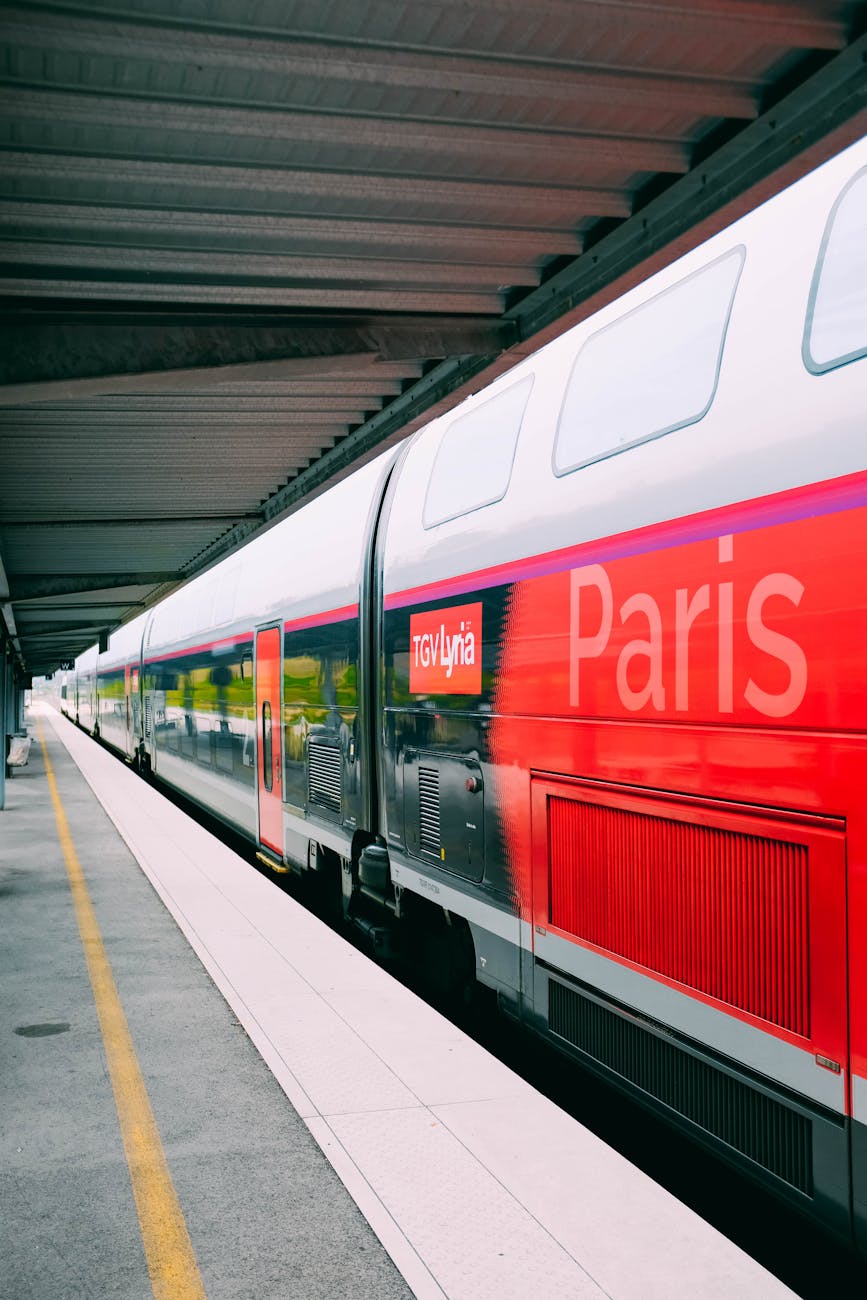
National Infrastructure and Six City Case Studies for Visitors and Residents
Cities covered: Paris, Nice, Lyon, Marseille, Bordeaux, Toulouse
Executive summary
France is one of the easiest countries in Europe to navigate without a car if the trip is organized around major cities, high-speed rail corridors, and urban transit. The national rail system gives visitors fast links between Paris and most large cities, while regional TER trains, city metros, trams, buses, bikes, walking networks, taxis, and intercity coaches fill in the rest. The main trap is assuming that France has one transport system. It does not. National rail, regional rail, local city networks, airports, bike-share schemes, low-emission driving zones, taxis, and long-distance buses all use different fare rules, apps, operators, and disruption channels.
For a visitor, the default France strategy is simple: use trains between cities; use metro, tram, bus, walking, and bike-share inside cities; rent a car only for rural areas, small villages, vineyard routes, mountain areas, or multi-stop countryside itineraries. For a local, the picture is more mixed. France has strong public transit in major urban areas, but commuting can still be constrained by strikes, crowding, construction, fare increases, ZFE low-emission rules, parking scarcity, outer-suburb service gaps, and the social cost of moving away from car dependence.
The six cities in this paper illustrate the range. Paris is a dense, multi-layered rail metropolis where the challenge is choosing the right ticket and surviving crowding. Nice is a tram-and-coastal-bus city where the airport tram is central. Lyon has one of France's strongest all-purpose urban networks, with metro, tram, bus, funicular, river shuttle, airport rail shuttle, and strict vehicle rules. Marseille is large, hilly, coastal, and less transit-dense; buses and maritime shuttles matter more than a map of the metro suggests. Bordeaux is a tram, bike, and river-shuttle city with a newly direct airport tram. Toulouse is a metro-led city with tram, buses, Téléo cable car, airport shuttle, and major metro expansion under construction.
1. The national mobility pattern
France is centralized but not one-dimensional. Paris is the dominant rail and air hub, and many long-distance train routes still radiate from it. Yet regional cities increasingly operate as mobility hubs in their own right: Lyon connects the southeast and the Alps; Marseille links Provence and the Mediterranean; Bordeaux anchors the southwest; Toulouse anchors Occitanie and aerospace-region commuting; Nice connects the Côte d'Azur; and Lille, Strasbourg, Nantes, Rennes, Montpellier, and others are also major nodes.
The national traveler should think in layers:
| Layer | Main modes | Best use | Main risk |
|---|---|---|---|
| Intercity | TGV INOUI, OUIGO, INTERCITÉS, Intercités de nuit, Eurostar/TGV Lyria/international trains | City-to-city movement | Seat availability, fare variability, strikes, station transfers |
| Regional | TER trains, regional buses, liO/ZOU/Nouvelle-Aquitaine/Région Sud and other regional coach networks | Smaller towns, day trips, commuter belts | Timetable gaps, reduced Sunday service, bike rules by region |
| Urban | Metro, tram, bus, suburban rail, funicular, cable car, river shuttle | Local travel | Ticket rules differ by city; validation is taken seriously |
| Road | Rental cars, private cars, taxis, VTC/ride-hailing, car-share | Rural areas, late-night gaps, luggage-heavy travel, families | Parking, tolls, ZFE/Crit'Air rules, traffic, unfamiliar signage |
| Active mobility | Walking, cycling, bike-share, e-bikes | City centers and short trips | Hills, cobblestones, heat, theft risk, incomplete lanes |
France rewards travelers who plan the long-distance leg first, then solve the first-mile and last-mile. The train may be easy, but the station-to-hotel transfer, late arrival, step-free route, airport leg, or Sunday bus timetable can be the real constraint.
2. Trip planning, ticketing, and apps
National rail and long-distance planning
SNCF Connect is the main practical gateway for most domestic rail planning and sales. It covers TGV INOUI, OUIGO, INTERCITÉS, many TER routes, and some partner/international services. Travelers can also buy directly from regional TER sites, international operators, or third-party sellers. The important point is that French train tickets are not all alike. TGV INOUI and many INTERCITÉS services are reservation-based. TER is usually more flexible, but regional rules vary. OUIGO is low-cost and can be cheaper, but it has stricter baggage, station, exchange, and boarding expectations.
A good planning habit is to check both journey time and station names. A city may have multiple stations, and in Paris each major long-distance direction uses a different terminal. A transfer from Gare du Nord to Gare de Lyon, Gare Montparnasse, or Gare d'Austerlitz is a local urban trip, not a same-platform connection. Build in time.
Local transit apps
Each major city has its own transport authority and app ecosystem. For the cities in this paper:
| City | Main local authority/operator ecosystem | Practical visitor tools |
|---|---|---|
| Paris/Île-de-France | Île-de-France Mobilités, RATP, SNCF Transilien | Île-de-France Mobilités app, Bonjour RATP, Citymapper/Google/Apple Maps |
| Nice | Lignes d'Azur, Région Sud/ZOU, SNCF TER | Lignes d'Azur app, ZOU/SNCF tools, airport site |
| Lyon | TCL/SYTRAL Mobilités, Rhônexpress | TCL app/site, bank-card validation, Rhônexpress site |
| Marseille | RTM, Aix-Marseille-Provence, Région Sud/ZOU | RTM app/site, airport shuttle information, maritime shuttle schedules |
| Bordeaux | TBM | TBM app/site, Bordeaux CityPass, airport tram info |
| Toulouse | Tisséo, Toulouse Métropole | Tisséo app/site, airport shuttle info, tourist office pages |
National route planners are useful, but they do not replace local apps when the issue is a closed metro entrance, a bus diversion, an elevator outage, a fare inspection, a strike timetable, or a special event.
3. Rail: TGV, OUIGO, INTERCITÉS, TER, and suburban systems
TGV INOUI
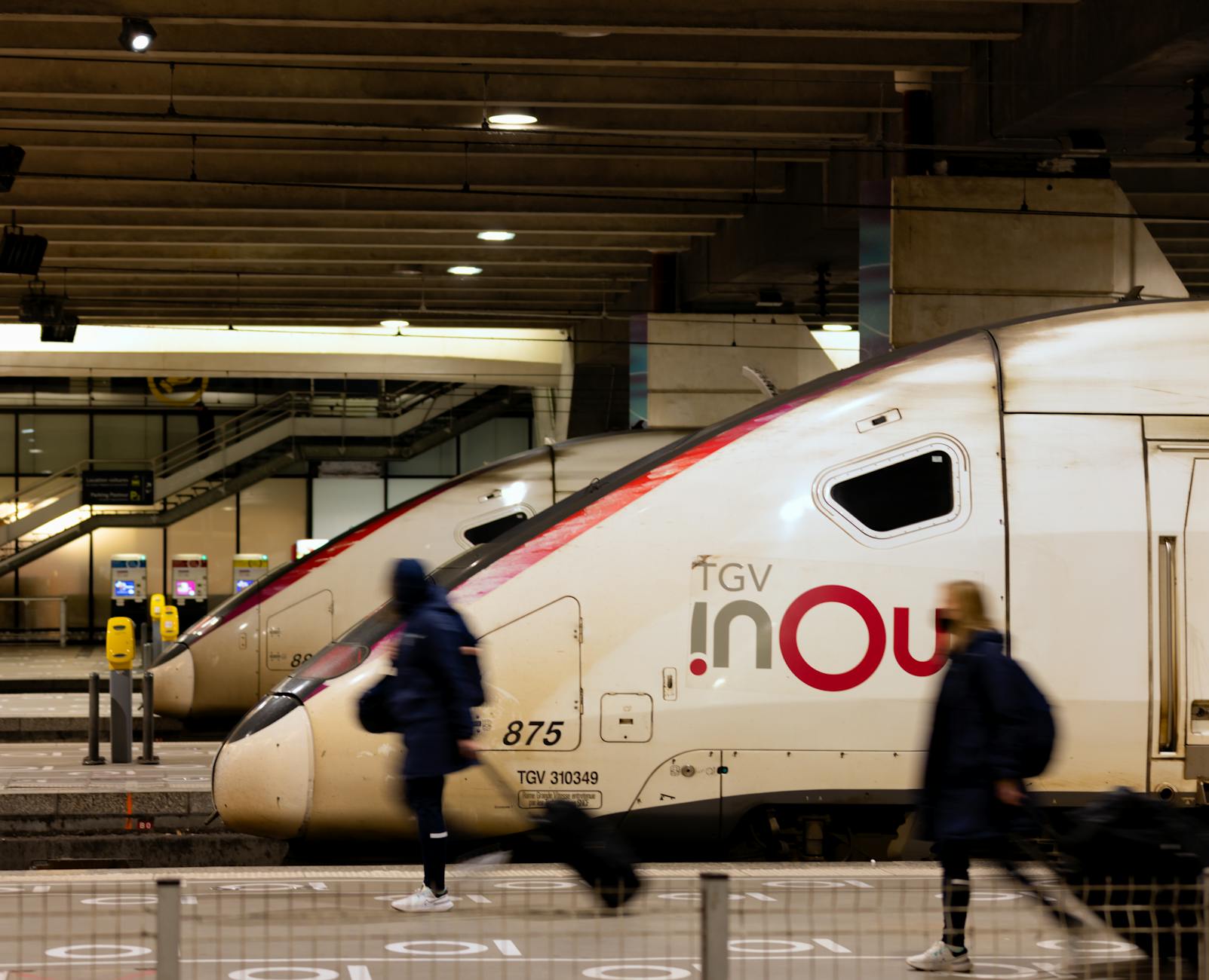
TGV INOUI is the conventional high-speed product: reserved seats, city-center stations on many routes, flexible fare classes, and generally strong reliability. It is the best default for Paris–Lyon, Paris–Marseille, Paris–Bordeaux, Paris–Nice via transfer or direct slower services, Paris–Toulouse, and many other intercity trips. Prices vary by demand and booking date. Book early for peak weekends, school holidays, summer Mediterranean routes, and Friday/Sunday commuter flows.
OUIGO
OUIGO is the low-cost SNCF product. It can be very cheap, but the tradeoff is less flexibility, add-on fees, stricter baggage expectations, and sometimes use of secondary stations or less convenient times. It works well for price-sensitive travelers who can commit to a specific train, travel light, and read the baggage conditions before buying.
INTERCITÉS and night trains
INTERCITÉS covers classic long-distance routes not served by high-speed rail, including some reservation-required services and night trains. It matters for routes such as Paris–Clermont-Ferrand, Paris–Limoges–Toulouse, and cross-country corridors where TGV is not the main answer.
TER regional trains
TER trains are the backbone of regional mobility. They are crucial for day trips, smaller cities, coastal travel, wine regions, and commuter belts. TER tickets and bike rules vary by region. A route can be easy on weekdays and awkward on Sundays or holidays. A tourist planning a day trip should check the last return train before leaving in the morning, not while standing at a rural station at night.
Suburban rail
Paris has RER and Transilien. Other cities have strong TER commuter patterns but not always a fully integrated suburban rail identity. In Lyon, Bordeaux, Toulouse, Marseille, and Nice, TER can function like a commuter rail option for some trips, but ticketing and frequency are not always as simple as metro or tram.
4. Rail usage concerns: luggage, bikes, accessibility, delays, strikes
Luggage
French trains are generally generous compared with airlines, but travelers still need to manage their own bags. SNCF states that on TGV INOUI and INTERCITÉS you must be able to carry your luggage yourself, and luggage must fit within the allowed conditions for the train product. Luggage should also be labelled with passenger details. This matters in practice: stairs, narrow aisles, overhead racks, crowded vestibules, and short station stops can make oversized luggage a real burden.
Practical guidance:
Bikes on trains
France is good for cycling, but bikes on trains require planning. SNCF allows assembled bikes on some TGV INOUI and INTERCITÉS services where reservable bike spaces exist, often with a supplement; TER bike policies are regional and often space-available; folded or dismantled bikes in a bag are much easier to carry across train categories. On tourist routes, coastal routes, summer weekends, and commuter peaks, bike spaces can fill quickly.
For a visitor, the safest approach is to rent locally unless the bike is essential to the trip. For a local, bike-train commuting can be powerful but fragile: one overcrowded train, a replacement bus, or a region-specific reservation rule can break the journey.
Accessibility and reduced mobility
France has improved rail accessibility, but a traveler with reduced mobility should not improvise station assistance. SNCF's Assist'enGare service can be requested from 90 days before travel and up to 24 hours before departure; users are advised to arrive at the assistance meeting point at least 30 minutes before departure, and assistance staff can handle only limited luggage under the service rules. The service is valuable, but it is not a private porter service or a guarantee that every station layout will be simple.
Important accessibility habits:
Delays and compensation
SNCF's commercial guarantee for TGV INOUI and INTERCITÉS can compensate passengers for delays from 30 minutes depending on conditions and train category. However, compensation rules differ by operator and product. OUIGO, TER, international services, and multi-operator tickets may have different rules. Keep the ticket, delay notification, and booking reference until the journey is complete.
Strikes and disruption
France has periodic strikes, engineering works, weather disruption, security incidents, and station access changes. The traveler concern is not just whether a train runs, but whether the replacement journey is feasible. On strike days, major routes may still run with reduced frequency, while late-night, regional, and branch services may be hit harder. Check the operator the day before and the morning of travel. Do not schedule a same-day international flight after a complicated regional train journey unless there is a buffer.
- Bring fewer bags than you think you can carry.
- Label luggage visibly.
- Board early enough to find rack space.
- Do not block doors, corridors, wheelchair spaces, or bike areas.
- On OUIGO, check paid baggage rules before purchase; do not assume TGV INOUI rules apply.
- Check both departure and arrival station accessibility.
- Book assistance early.
- Verify elevator status on urban networks on the day of travel.
- Allow extra time for large stations.
- Prefer newer tram/metro lines and buses when step-free access is essential.
5. Intercity coaches and long-distance buses
Long-distance coaches are useful when trains are expensive, sold out, or poorly aligned with a route. BlaBlaCar Bus and FlixBus operate many intercity and international routes, and SNCF Connect also surfaces bus options through partner offerings. Coaches are usually cheaper than trains, but travel times are longer, station locations can be less central, and congestion can be severe around Paris, Lyon, Marseille, and holiday routes.
Best uses:
Main concerns:
- Budget travel between major cities when time is flexible.
- Late-night or early-morning airport access on certain corridors.
- International connections where rail is indirect.
- Backup during rail disruption, if seats remain.
- Bus stations can be less comfortable than rail stations.
- Luggage allowance and hold access vary by operator.
- Delays from road congestion are common.
- Accessibility varies and should be confirmed in advance.
6. Driving and private vehicles
When a car is useful
A car is often unnecessary, expensive, and inconvenient inside French cities. It is useful for rural France, small villages, castles, vineyards, national parks, family trips, mobility-impaired travelers where transit is not workable, and itineraries that connect many small places in one day. In the six cities covered here, a car is usually a liability inside Paris, Lyon, Marseille, Bordeaux, and Toulouse city centers, and only selectively useful around Nice if the plan includes hill villages or remote coastal/mountain sites.
Licenses and rental basics
EU/EEA licenses and qualifying UK licenses are generally valid in France under Service-Public conditions. Non-EU licenses can be used for short stays if valid and either written in French or accompanied by an International Driving Permit or official translation. Rental companies may apply their own stricter requirements, so visitors should check both legal requirements and rental contract terms before arrival.
Road rules and safety equipment
France drives on the right. Seat belts and child restraints are mandatory. Mobile phone use without hands-free equipment is prohibited, and earphones/headsets are not allowed for drivers. A warning triangle and reflective vest are mandatory safety equipment in vehicles. On motorways, a typical dry-weather limit is 130 km/h; this drops to 110 km/h in wet weather and 50 km/h when visibility is below 50 meters.
Mountain and winter rules matter. Some mountain departments require winter tires or chains in signed areas from November 1 to March 31. This is important for Alpine, Pyrenean, Jura, Massif Central, and some highland trips. Do not assume a rental car is winter-compliant unless the booking confirms it.
Tolls
French autoroutes are often tolled. Payment can be by card, cash at some lanes, or electronic toll badge depending on the motorway and lane type. ASFA, the French motorway companies' association, explains payment methods and electronic tolling options. Visitors should avoid entering lanes reserved for electronic tags unless they have a compatible badge.
Low-emission zones: Crit'Air and ZFE
Many French cities use Crit'Air emissions stickers for low-emission or pollution-response zones. The sticker is a physical vignette attached to the vehicle and classifies vehicles by emissions category. It applies to French and foreign vehicles where required. The legal status of some ZFE policies has been politically contested, but official tourism and government sources still warn drivers that local restrictions remain legally binding until legislative changes are complete. The practical advice is blunt: if you plan to drive into Paris, Lyon, Marseille, Toulouse, Bordeaux, or other major cities, check the current local ZFE page and order the official Crit'Air sticker well before travel.
Parking and park-and-ride
City-center parking is expensive and scarce. Many cities encourage park-and-ride: leave the car at a suburban tram/metro station and continue by transit. This is often the best compromise for locals who live outside the dense transit core and for visitors staying in peripheral lodging.
What locals experience
For locals, the car issue is not simply preference. It is geography, income, shift work, school logistics, accessibility, outer-suburb transit, and housing cost. A central resident may live happily without a car; a suburban household may need one or two; a rural worker may have no realistic alternative. ZFE policies improve air quality goals but create affordability pressure for owners of older vehicles. French transport debates often sit exactly at this tension: climate and public health goals versus the daily reality of people whose jobs or families still depend on driving.
8. Urban transit norms that apply across France
The biggest urban transit mistake in France is failing to validate. In many systems, every rider must validate at entry and sometimes at transfers, even when using a pass. Inspectors can check tickets on platforms, vehicles, and exits. A tourist's misunderstanding is usually not a defense.
Common norms:
- Validate every time the local rules require it.
- Keep the ticket/card/phone until after exiting the system.
- Do not put feet on seats.
- Offer priority seats to elderly, pregnant, disabled, or mobility-limited riders.
- Let passengers exit before boarding.
- On buses, board where indicated and validate immediately.
- On trams, buy before boarding unless the city explicitly supports onboard/contactless payment.
- During strikes or special events, follow operator notices rather than generic maps.
9. Walking, cycling, and micromobility
French city centers are often best experienced on foot. Paris, Lyon, Bordeaux, Toulouse, Nice, and parts of Marseille all reward walking. But cobblestones, hills, heat, rain, crowds, and step-free access can change the experience dramatically. For cyclists, France has improved quickly, especially in Paris and Bordeaux, but bike-lane quality is uneven. Always lock bikes securely, even docked or rental bikes when rules require it.
Visitors should be careful with headphones and phones at crossings. French drivers may be assertive, scooters can be fast, and tram tracks are dangerous for bike wheels. Locals often combine walking, bikes, and transit: bike to a station, tram across the city, walk the last 800 meters.
10. National decision rules for visitors
- Paris to another major city: train first, then compare flight only if the destination is far and not high-speed-rail competitive.
- Within Paris, Lyon, Marseille, Bordeaux, Toulouse, or Nice: transit/walk first, taxi second, car last.
- Rural villages, vineyards, mountains, and dispersed beaches: car may be the right tool.
- Airport to city center: use fixed rail/tram/shuttle if luggage is manageable; use official taxi if late, tired, mobility-limited, or traveling in a group.
- Multiple people with luggage: taxi may beat transit in stress even when transit is cheaper.
- One person traveling light: metro/tram/RER/bus usually wins.
- Short city stay: day or 24/48/72-hour passes may be simpler than optimizing every fare.
- Longer stay or local life: monthly passes, employer reimbursements, bank-card validation, and bike-share subscriptions become more relevant.
Paris
1. System character
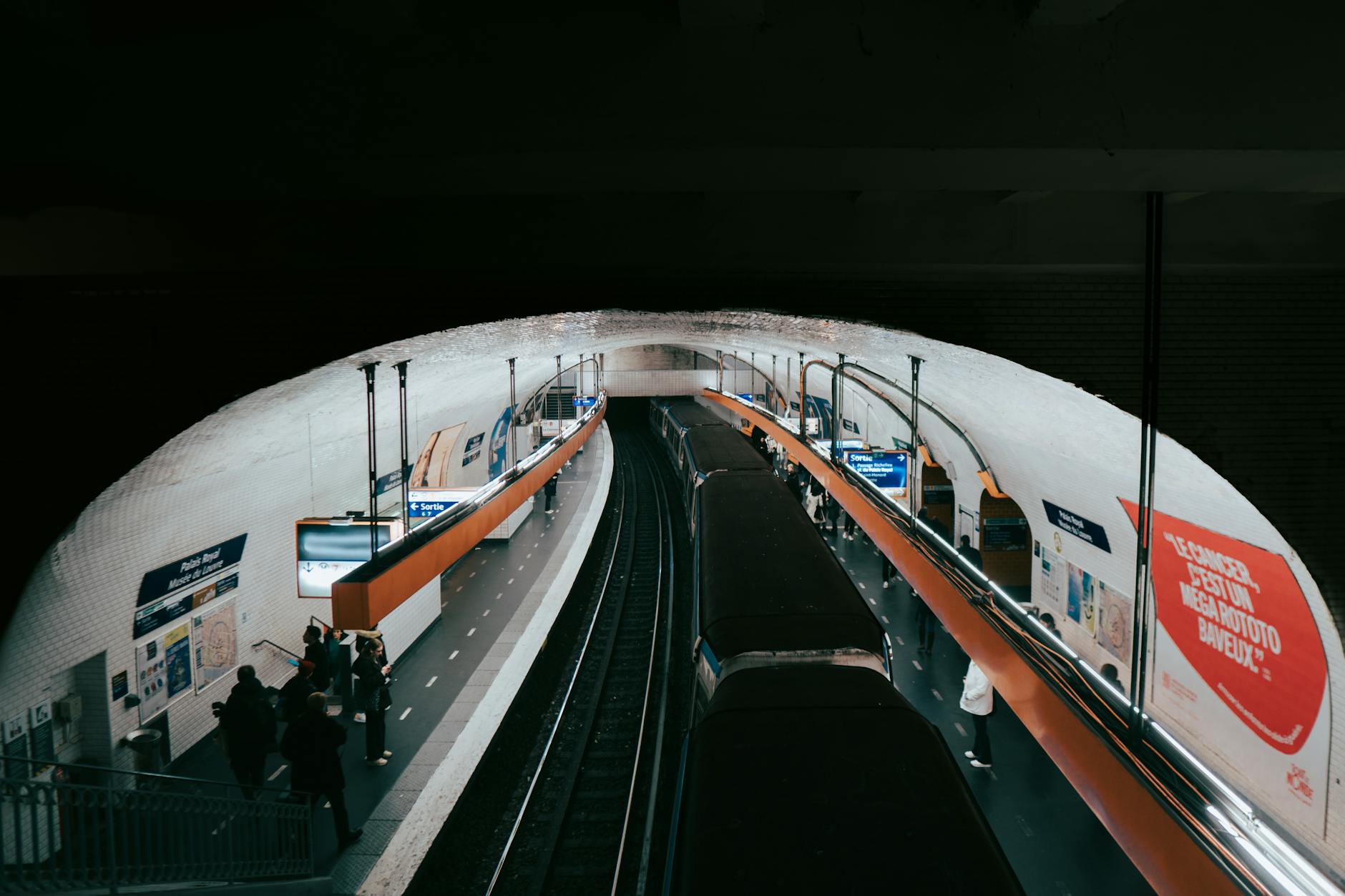
Paris is not just a metro city. It is a layered regional system: Métro for dense urban movement, RER for fast cross-city and suburban travel, Transilien for outer-suburban rail, trams around the edges, buses for surface access, Noctilien for night service, airport rail links, taxis, VTC, Vélib' bikes, walking, and an expanding network of cycling corridors. The system is powerful but stressful because it is crowded, old in places, politically contested, and constantly under maintenance.
For visitors, Paris transport is usually excellent once ticketing is understood. For locals, it is indispensable but often frustrating: crowding on RER and metro lines, elevator outages, strikes, platform heat, fare enforcement, bus slowdowns, and long suburban commutes are normal concerns.
2. Main modes
| Mode | What it does well | Visitor concerns | Local concerns |
|---|---|---|---|
| Métro | Dense, frequent travel inside Paris | Stairs, crowding, ticket type, pickpockets | Crowding, heat, outages, accessibility limits |
| RER | Fast regional/cross-city routes, airports, suburbs | Correct direction/branch, airport fares | Reliability, branch delays, commuter crowding |
| Transilien | Regional suburban rail | Station names and terminal stations | Long commutes, strike exposure |
| Bus | Surface access, accessible alternative to metro | Traffic, slower routes, validation | Bus-lane conflicts, slow speeds |
| Tram | Ring/suburban links | Less useful for central sightseeing | Strong for suburb-to-suburb trips |
| Noctilien | Night bus network | Routes can be confusing late at night | Essential when metro is closed |
| Vélib'/cycling | Short trips, scenic movement | Traffic confidence, docking, theft/damage charges | Daily commuting, bike-lane politics |
| Taxi/VTC | Airport/luggage/late-night | Use official ranks, fixed fares | Cost, availability, traffic |
3. Tickets and fares
Île-de-France fares changed significantly in recent years toward simpler flat pricing. For 2026, Île-de-France Mobilités lists a single Metro-Train-RER ticket at €2.55 full fare, a Bus-Tram ticket at €2.05 full fare, and a Paris Region airport ticket at €14. Monthly and weekly Navigo passes remain central to local life; the 2026 all-zone monthly Navigo fare is €90.80 and the weekly is €32.40.
Key rules:
For visitors, the right answer depends on trip style:
4. Airport access
Charles de Gaulle (CDG): RER B connects CDG with central Paris. It is usually the best balance of cost and speed for solo travelers with manageable luggage, but it can be crowded and affected by works. Official taxis from CDG to Paris have fixed fares: €56 to the Right Bank and €65 to the Left Bank in 2026.
Orly: Metro line 14 and Orlyval/RER combinations changed the airport-access picture. Île-de-France's airport ticket covers rail/metro airport access products according to its conditions. Official taxi fares from Orly are €45 to the Right Bank and €36 to the Left Bank in 2026.
For groups of three or four with luggage, an official taxi can be rational. For one traveler, rail is usually cheaper. For late-night arrivals, check whether rail is still running before rejecting taxis.
5. Station transfers
Paris has multiple long-distance rail terminals:
A cross-Paris rail transfer can take 30 to 60+ minutes with luggage, stairs, ticketing, and platform changes. Locals know this; visitors often underestimate it.
6. Cars, taxis, and street policy
Driving in central Paris is usually a poor choice. Congestion, parking scarcity, bus lanes, bike lanes, pedestrian areas, delivery windows, and ZFE/Crit'Air rules make it difficult. Paris also introduced a limited traffic zone in the central arrondissements, with local access allowed and through-traffic restricted during its pedagogical rollout. The direction of policy is clear: central Paris is becoming less welcoming to private through-traffic.
For residents, this shift is divisive. Many central residents enjoy quieter streets, more cycling, and reduced car dominance. Some tradespeople, families, disabled drivers, and suburban commuters experience it as added complexity or exclusion. For visitors, the conclusion is straightforward: do not rent a car for Paris.
7. Accessibility
Paris is challenging for wheelchair users and travelers with heavy luggage because much of the historic metro was built before modern accessibility standards. RATP states that all Paris bus routes are declared wheelchair accessible, although not every stop on an accessible route is necessarily accessible. Île-de-France Mobilités notes that inaccessible historic metro lines have alternative routes by bus, RER, or tram, and newer metro projects/extensions are designed to be accessible.
Practical accessibility advice:
8. Safety and comfort
Paris public transport is generally safe, but pickpocketing is common in crowded tourist areas, airport trains, escalators, and major stations. Keep phones and wallets secure, especially near doors. Avoid standing near metro doors with a phone visible. At night, choose busier carriages, official taxis, or VTC when tired or alone.
9. Best practical strategy
For most visitors: use metro/RER/tram/bus with Navigo Easy or phone tickets, walk heavily, use official taxis for airport/luggage-heavy transfers, and avoid driving. For locals: the optimal setup depends on commute pattern—monthly Navigo for heavy use, Liberté+ or tickets for occasional use, bike/transit combinations for central travel, and car only where work/family/geography require it.
- Metro/RER/train and bus/tram are separate single-ticket categories.
- A Metro-Train-RER ticket is not the same as a Bus-Tram ticket.
- Airport tickets are separate for many rail airport journeys.
- Many products load onto Navigo Easy or a phone.
- RATP reminds users to validate each journey and whenever required during transfers.
- One or two rides: buy single tickets on Navigo Easy/phone.
- Several rides in one day: compare day pass vs singles.
- A week starting Monday: Navigo weekly can be excellent if staying long enough and traveling widely.
- Airport plus sightseeing: compare airport ticket plus singles against a pass that includes airport travel.
- Occasional local resident: Navigo Liberté+ can reduce per-ride costs, but setup may require local eligibility/documentation.
- Gare du Nord: northern France, Eurostar, Belgium/Netherlands connections, RER B/D.
- Gare de l'Est: eastern France and Germany-oriented routes.
- Gare de Lyon: southeast, Lyon, Marseille, Alps, Switzerland/Italy-related routes.
- Gare Montparnasse: Brittany, western France, Bordeaux/Toulouse corridors.
- Gare d'Austerlitz: some central/southwest and night-train services.
- Gare Saint-Lazare: Normandy and western suburban/regional services.
- Prefer buses, trams, RER stations with confirmed elevators, and newer lines where possible.
- Check elevator status before leaving.
- Avoid tight transfers with luggage or mobility needs.
- Use official assistance for national rail legs.
- Budget for taxis when a step-free route would otherwise be too complicated.
Nice
1. System character
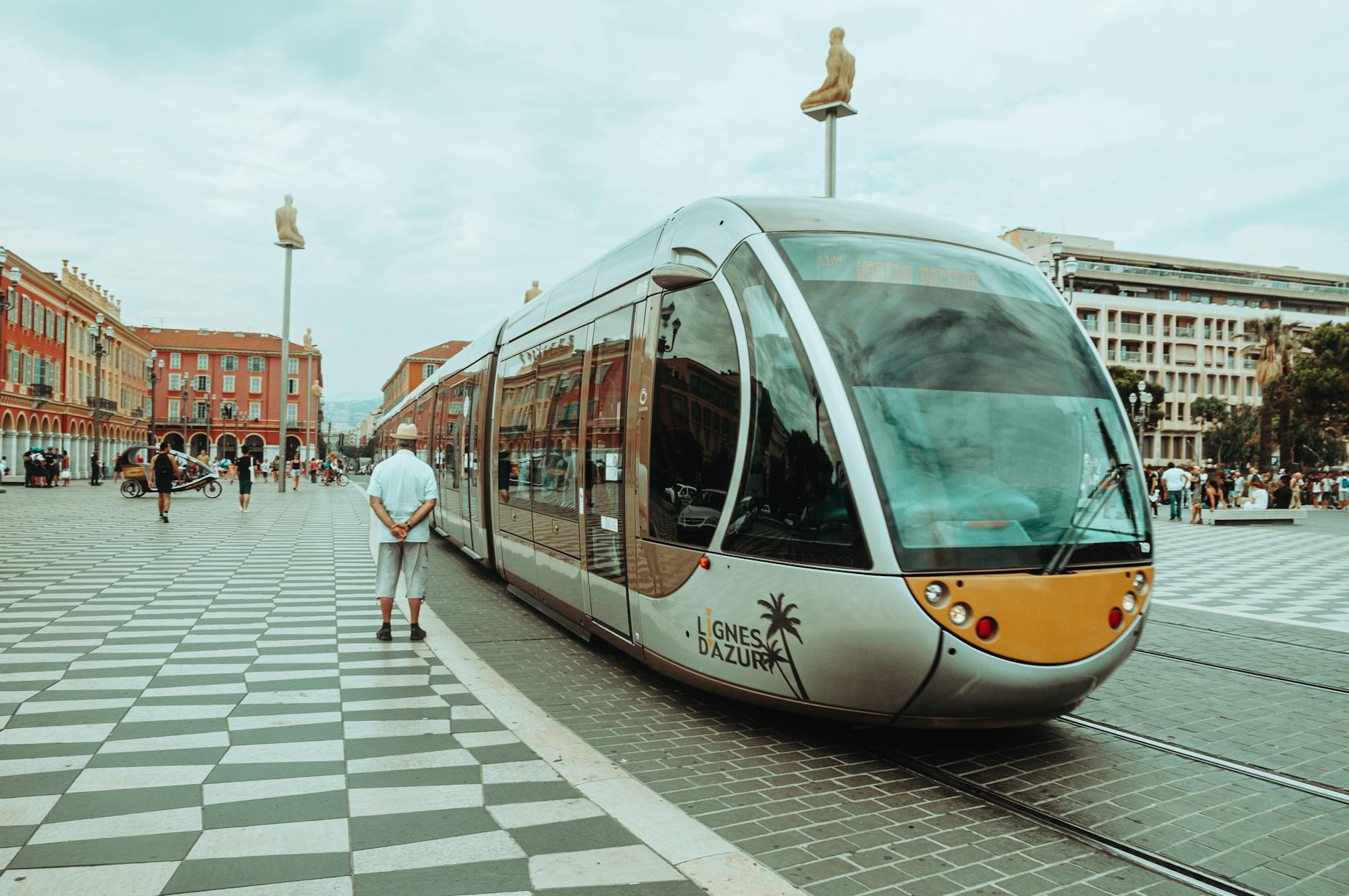
Nice is a coastal, airport-integrated tram city. Its transport system is shaped by the Promenade des Anglais, the old town, the railway corridor, hill neighborhoods, the airport on the western edge, and the broader French Riviera. The tram is the easiest urban mode for visitors, but buses and regional trains are essential for Monaco, Antibes, Cannes, Menton, hill towns, and local commuting.
2. Main modes
| Mode | Use |
|---|---|
| Tram line 1 | North-east/city-center axis through Jean Médecin/Masséna area |
| Tram line 2 | Airport to city center and Port Lympia corridor |
| Tram line 3 | Western corridor, Allianz Riviera/Saint-Isidore, connections toward Eco-Vallée |
| Line B airport/CADAM link | Airport-administrative/western connection |
| Bus | Hills, neighborhoods, coastal suburbs, local gaps |
| TER train | Riviera coast: Cannes, Antibes, Monaco, Menton, Ventimiglia direction |
| ZOU/regional buses | Longer regional routes and areas not ideal by train |
| Walking/cycling | Promenade, old town, seafront, central districts |
| Taxi/VTC | Airport, hills, late night, luggage |
Nice Côte d'Azur Tourist Office describes the tram network as including line 1 via the center, line 2 from the airport to the port via Jean Médecin, line 3 toward Saint-Isidore/Allianz Riviera, and line B between the airport and CADAM.
3. Tickets and airport access
Lignes d'Azur lists a Solo ticket at €1.70 for one trip on urban lines with 74-minute connections, and an airport round-trip ticket at €10. Nice Airport states that tram route 2 connects terminals 1 and 2 with Jean Médecin and Port Lympia in under 30 minutes, and that travel between Terminal 2, Terminal 1, and Grand Arénas is free.
This creates a common visitor issue: airport machines and airport-specific products can confuse people who only need a normal urban trip after reaching Grand Arénas. The safe approach is to read the airport's current fare instructions and decide whether you need the airport round-trip fare, a standard Lignes d'Azur product, or a broader Sud Azur Explore pass.
4. Regional movement along the Riviera
Nice is not isolated. Many trips are regional:
The Riviera's geography creates congestion. A journey that looks short by distance can be slow by car, especially in summer, during events, or near Monaco/Cannes peaks.
5. Cars and parking
A car is usually unnecessary in central Nice. The old town, seafront, and central shopping areas are better on foot or tram. Parking is constrained and costly. A car becomes useful for hill villages, remote viewpoints, countryside lodging, or multi-stop itineraries away from rail and bus corridors.
For locals, car dependence varies sharply. Central residents can rely on tram/bus/walking; hill and outer neighborhoods may still require cars or scooters. Tourism-season traffic, parking scarcity, and airport flows are recurring pain points.
6. Taxis
Service-Public's 2026 national taxi fare notice lists fixed Nice Côte d'Azur airport fares including €32 between the airport and Nice center, €85 to Cannes, €95 to Monaco, and €72 to Cap d'Antibes/Juan-les-Pins. These are useful reference points when deciding between tram, taxi, and private transfer.
7. Visitor and local concerns
Visitors should watch for pickpockets around the airport tram, seafront crowds, and major events. Locals face a different issue: Nice is compact along the coast but steep behind it. A flat seafront route may be easy; a hillside home can make buses, scooters, or cars more necessary. Summer heat also changes the calculus: walking 25 minutes uphill in July is not the same as walking it in March.
8. Best practical strategy
Use tram line 2 for the airport-city axis, line 1 for the central spine, TER for coastal day trips, and buses for hills or regional gaps. Avoid driving in the center unless the lodging provides parking. For Riviera exploration, compare train, ZOU bus, and car based on the exact destination—not the city name alone.
- Nice–Monaco/Menton by TER is often faster than road.
- Nice–Antibes/Cannes can be rail or bus depending on destination and budget.
- Nice airport is close to Nice Saint-Augustin station, useful for some rail trips.
- Hill villages may require buses, tours, taxis, or a car.
Lyon
1. System character
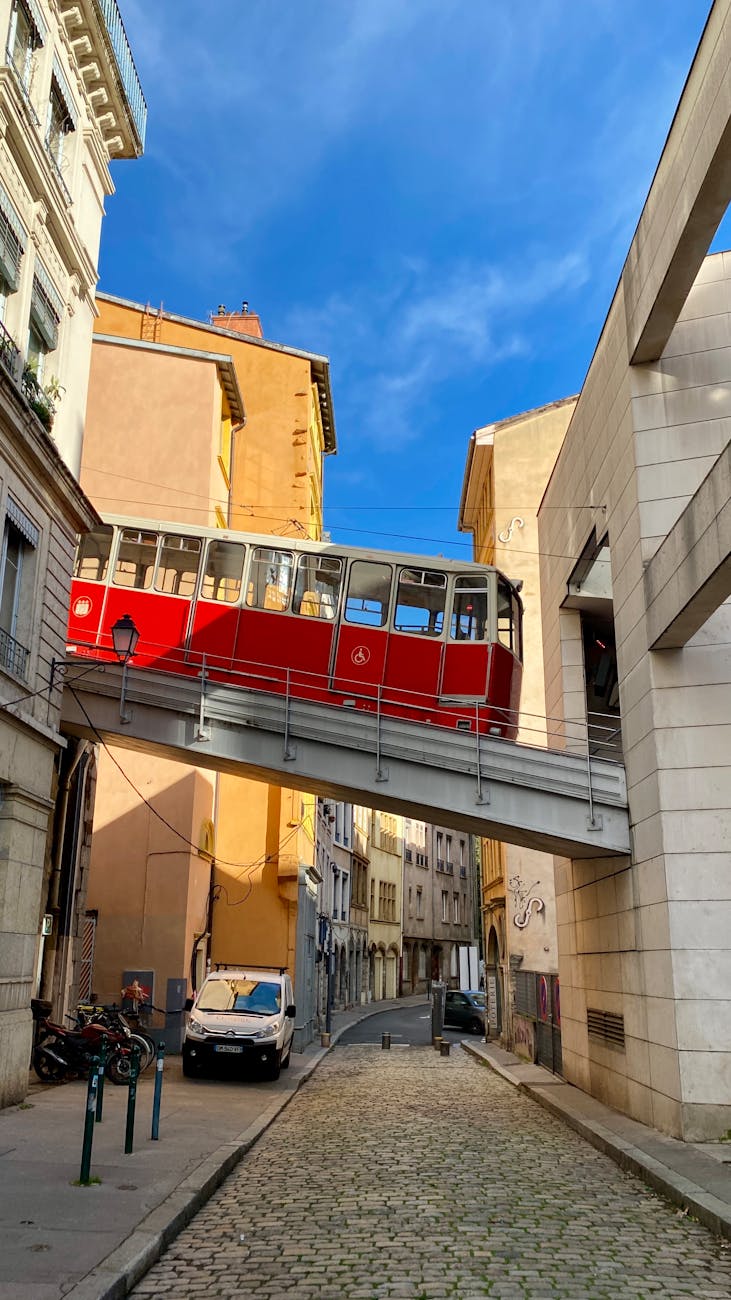
Lyon is one of France's strongest transit cities. It has metro, tram, bus, trolleybus, funicular, park-and-ride, bike-share, river shuttle, regional rail, and a dedicated airport rail shuttle. It is also topographically distinctive: two rivers, two hills, dense Presqu'île streets, the Part-Dieu business/rail district, the old town, and large suburbs all shape how people move.
For visitors, Lyon's network is easier than Paris and more comprehensive than many French cities. For locals, the big issues are commuting from suburbs, Part-Dieu congestion and construction, ZFE rules, river crossings, hills, and the cost/time tradeoff of Rhônexpress for the airport.
2. Main modes
Lyon's tourist office summarizes the TCL network as 4 metro lines, 7 tramway lines, 150 bus/trolleybus/shuttle lines, 2 funicular lines, 1 river shuttle, and thousands of stops serving the metropolitan area.
| Mode | Strength |
|---|---|
| Metro | Fast core mobility; lines A, B, C, D cover key axes |
| Tram | Suburban and cross-city links, universities, business districts |
| Bus/trolleybus | Dense local coverage and hill/outer-neighborhood access |
| Funicular | Essential for Fourvière/Saint-Just tourist and resident access |
| Vélo'v | Strong bike-share for short trips, especially flatter central areas |
| Rhônexpress | Dedicated Lyon-Saint Exupéry airport link |
| TER | Regional commuting and day trips |
| River shuttle/Navigône | Seasonal/specific corridor value, not a full metro substitute |
Metro C is unusual because it climbs toward Croix-Rousse on a steep alignment; the funiculars are part of daily life as well as tourism.
3. Tickets and contactless use
TCL's 2026 fare structure uses zones. A standard 1-trip fare in zones 1 and 2 is €2.10, with onboard bus fares higher; day passes and multi-trip products are available. TCL also lets riders use a contactless bank card or connected device as a ticket on most lines in zones 1 and 2; the fare adapts to use, and the system caps a day after multiple trips under its rules.
For visitors, contactless bank-card validation is one of the easiest systems in France. The caution is to use the same card/device for every validation and to remember that not all outer zones are covered by the bank-card service.
4. Lyon City Card
The Lyon City Card includes unlimited TCL access in zones 1 and 2 and tourist benefits in 24h, 48h, 72h, and 96h versions. It can be good for museum-heavy visitors, but pure transit users should compare it against TCL day passes.
5. Airport access
Rhônexpress links Lyon-Saint Exupéry Airport with Lyon Part-Dieu in less than 30 minutes, also serving Vaulx-en-Velin La Soie and Meyzieu Z.I.; it runs frequently during the day and less frequently early/late. It is fast, reliable, and expensive relative to ordinary urban transit. A single Rhônexpress ticket is sold through the Lyon airport store; prices and youth fares should be checked when booking.
Some TCL bus options can be cheaper but slower and less direct depending on final destination. For business travelers and tight rail-air connections, Rhônexpress often wins. For budget travelers with time, bus/TCL combinations may be rational.
6. Rail stations
Lyon Part-Dieu is the main high-speed and business station. Perrache remains important for central and regional services. Do not assume a train to Lyon uses the station nearest your lodging. Part-Dieu is practical but busy and undergoing long-term urban change; build extra time for navigation.
7. Cars and ZFE
Driving in Lyon is complicated by hills, tunnels, river crossings, congestion, and low-emission rules. Lyon's tourist office notes that the metropolitan ZFE covers Lyon, Villeurbanne, Caluire, and parts of Bron and Vénissieux within the ring road; since January 1, 2025, private vehicles with Crit'Air 3, 4, 5, or unclassified/no sticker are no longer authorized to drive and park in the concerned zone.
For visitors, this means a rental car should stay outside the center unless compliant and necessary. For locals, the ZFE is a serious household-budget issue if an older vehicle must be replaced.
8. Accessibility and comfort
Lyon is much easier than Paris for step-free planning on many trips, especially trams and newer metro infrastructure. Hills remain the catch. A route that is short on a map can be physically demanding. Use funicular, metro C, buses, or taxis for steep climbs when needed.
9. Best practical strategy
Use TCL for almost everything inside the city, contactless payment for short stays, and Rhônexpress or a planned bus alternative for the airport. Avoid driving into the core. For sightseeing, combine walking in Vieux Lyon/Presqu'île with metro/funicular for hills and tram/metro for Part-Dieu, Confluence, and outer districts.
Marseille
1. System character
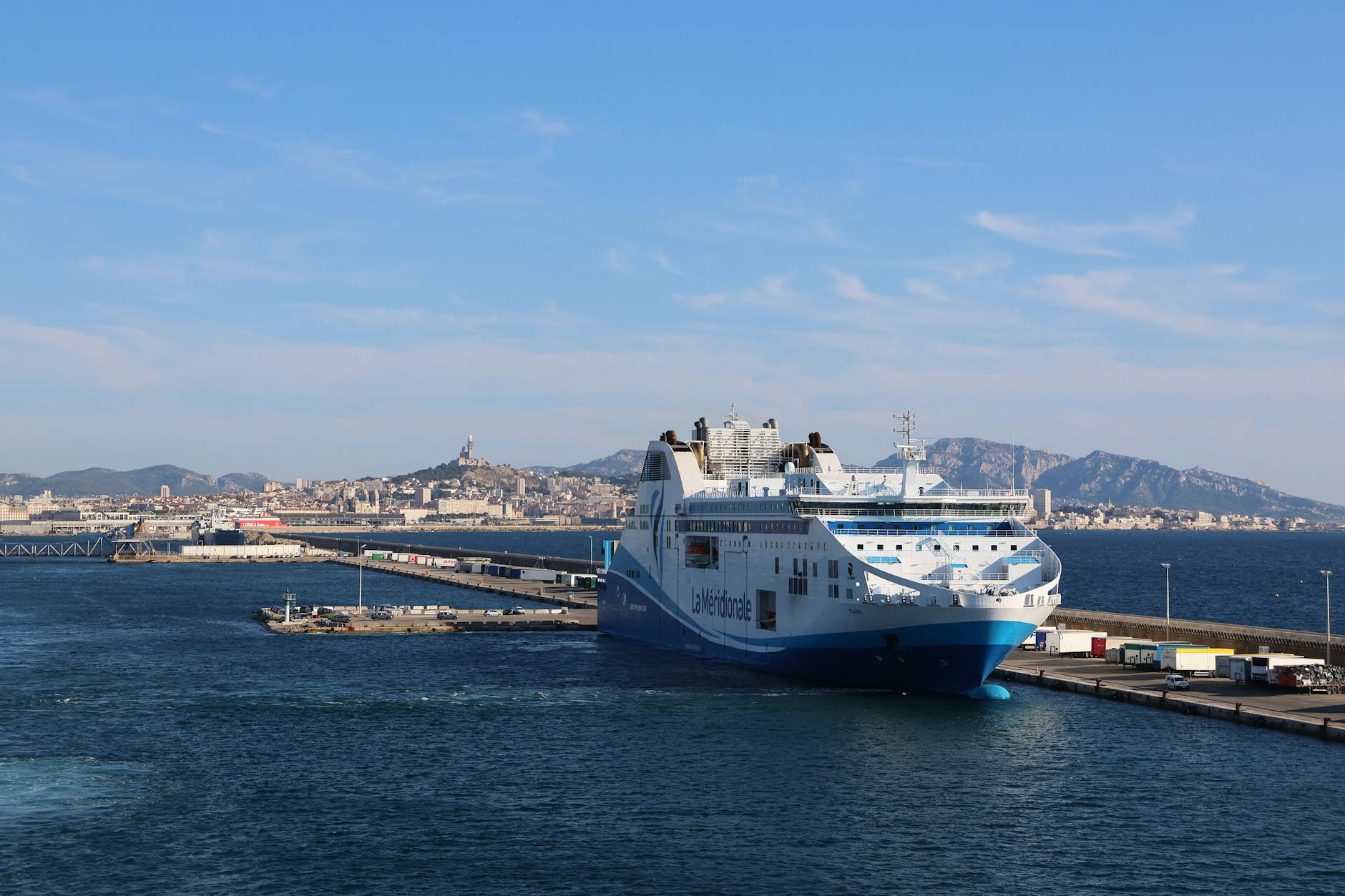
Marseille is France's most geographically challenging major transit city in this group. It is large, hilly, coastal, spread out, and socially diverse, with a major port, beaches, dense old districts, distant residential areas, and the Calanques National Park at the edge. Its transit network is useful but less comprehensive than Paris or Lyon. The metro is important but limited; buses carry much of the real coverage burden; trams serve key corridors; maritime shuttles matter seasonally and symbolically.
For visitors, Marseille rewards neighborhood-based planning. For locals, the daily issue is that many trips are not simple metro trips. Bus reliability, road congestion, parking, safety perceptions, and the gap between central improvements and outer-district mobility are recurring concerns.
2. Main modes
RTM and Marseille tourism sources describe a network with 2 metro lines, 3 tram lines, and extensive bus service; RTM fares cover bus, metro, tram, and some ferry-boat services depending on ticket/pass.
| Mode | Best use |
|---|---|
| Metro M1/M2 | Fast core routes: Saint-Charles, Vieux-Port, Castellane, La Timone, Rond-Point du Prado areas |
| Tram | Euroméditerranée, Joliette, city-center corridors, Blancarde/Noailles/Caillols axes |
| Bus | Beaches, hills, outer districts, Calanques access points, neighborhood coverage |
| Ferry-boat | Short Old Port crossing and local identity |
| Maritime shuttles | Seasonal links to Pointe Rouge, L'Estaque, Les Goudes/Frioul depending on service |
| Train | Saint-Charles for regional/intercity; TER to Aix, Cassis, Toulon, Avignon, Côte Bleue |
| Airport shuttle | Marseille Provence Airport to Saint-Charles |
| Car/taxi/VTC | Some late-night, luggage, beach, hill, and outer-district trips |
3. Tickets
Marseille tourism lists a Solo ticket at €1.70 when loaded at terminals, a Solo Secours onboard bus ticket at €2, a 10-trip card at €15, a 24h pass at €5.20, a 72h pass at €10.80, and a 7-day pass at €15.50; these include RTM bus, metro, tram, and ferry-boat line under the stated conditions.
A Marseille-specific rule that catches visitors: for single tickets, metro access can be limited to one metro entry even if transfers are otherwise allowed. Read the exact ticket conditions before assuming Paris-style interchange logic.
RTM also supports contactless bank-card payment on much of the network; visitors should still validate correctly and use the same card/device when a fare product depends on it.
4. Airport access
The Marseille Provence Airport shuttle A1 links the airport with Marseille Saint-Charles. The airport describes frequent departures during the day and a traffic-dependent travel time around 25 to 50 minutes. Saint-Charles is central for onward metro, train, and city access, but its surrounding area can feel chaotic to first-time visitors. Keep luggage secure.
5. Maritime movement and the Calanques
Marseille's relationship with the sea is part of its transport identity. The small Ferry Boat across the Vieux-Port is inexpensive and free for some pass holders. Seasonal maritime shuttles connect the Old Port with destinations such as Pointe Rouge and L'Estaque; Marseille tourism lists a €5 single fare for boat-bus crossings with a one-hour RTM connection, under conditions.
The Calanques are not a casual urban park. Access can be restricted between June 1 and September 30 due to fire risk, and some roads have seasonal motor-vehicle restrictions. Visitors should check the official park or Marseille tourism information before planning a hike or car access. Locals know that summer access is a moving target; tourists often learn too late.
6. Cars and ZFE
Driving in Marseille can be stressful. Roads are congested, parking near the Old Port/beaches is difficult, and topography makes short trips slower than they look. Marseille also has a central low-emission zone. The city states that only vehicles with Crit'Air 3, 2, 1, or 0 can circulate in the ZFE, with restrictions applying every day and all day to specified vehicle categories within the perimeter.
For visitors, do not rent a car for central Marseille. Rent only for Provence touring, remote lodging, or itineraries where rail/bus does not work. For locals, cars remain important in parts of the metropolis where transit is weaker, which makes ZFE, parking, and fuel costs sensitive issues.
7. Safety and comfort
Marseille is lively and rewarding, but transport comfort varies by neighborhood and time. Use ordinary city caution at Saint-Charles, Noailles, crowded buses, beaches, and late-night stops. Do not confuse reputation with reality—many trips are routine—but plan late-night returns rather than improvising.
8. Best practical strategy
Base yourself near a metro/tram/bus corridor. Use metro for Saint-Charles/Vieux-Port/Castellane/Prado axes, buses for beaches and outer districts, maritime shuttles for seasonal coastal trips, and TER for regional day trips. Use taxis/VTC selectively at night or with luggage. Avoid central driving.
Bordeaux
1. System character
Bordeaux is a tram, walking, cycling, and river city. The historic center is unusually pleasant to explore without a car, and the tram network provides the main structure for urban movement. TBM integrates tram, bus, Bat³ river shuttle, park-and-ride, and V3 bike-share. The city is flatter than Lyon or Marseille and more bike-friendly than many French cities, though crowding and tram disruptions can still matter.
For visitors, Bordeaux is one of the easiest French cities to use without a car. For locals, the transport story is about tram dependence, suburban growth, ring-road congestion, bike commuting, and the balance between pedestrianized central charm and metropolitan commuting needs.
2. Main modes
| Mode | Use |
|---|---|
| Tram | Primary urban backbone; city center, station, university, airport via line F |
| Bus | Neighborhood and suburban coverage beyond tram corridors |
| Bat³ river shuttle | Useful and scenic Garonne crossings/corridor trips |
| V3/Le Vélo | Bike-share, including e-assisted bikes |
| Walking | Excellent in the historic center and quays |
| TER | Regional wine towns, Arcachon, Libourne, Saint-Émilion, commuter rail |
| Car | Useful for vineyards/countryside; inconvenient in the center |
Bordeaux tourism notes 4 tram lines, 139 stations, 82 km of track, and more than 70 bus lines.
3. Tickets and passes
Bordeaux tourism lists TBM public transport prices including a 1-trip fare of €1.90 when bought normally and €2.10 on the bus, with tickets valid for one hour on the network. TBM visitor information covers tram, bus, and Bat³ products, including pay-as-you-go fares and day tickets.
Bat³ is included in TBM tickets and passes under TBM rules, and onboard Bat³-specific tickets are also available.
The Bordeaux CityPass includes unlimited public transport on tram, bus, river shuttle, and park-and-ride, plus cultural benefits. It is often worthwhile for museum-heavy visitors, less so for someone who only needs two tram rides.
4. Airport access
Bordeaux Airport's tram stop for line F is directly outside the terminals. The airport states that line F reaches Bordeaux Saint-Jean in 45 minutes and Hôtel de Ville in 35 minutes, with connections to other tram lines. Bordeaux Airport announced that line F began running directly to the airport from December 6, 2025, removing the need for previous shuttle or multiple-tram workarounds from Saint-Jean.
This is a major simplification. Older travel guides may still mention line A or shuttle transfers; verify current airport tram information before relying on outdated directions.
5. Bikes and walking
TBM's V3/Le Vélo system provides more than 2,000 bikes, including e-assisted bikes, across the metropolitan area. Bordeaux's flat terrain and riverfront make cycling practical. Visitors should still watch tram tracks, pedestrians, and one-way street rules.
Walking is excellent in the center. Bordeaux tourism describes the city as having a very large pedestrian area, making the center easy to explore on foot.
6. Cars and regional trips
A car is not needed for central Bordeaux. It is useful for Médoc, Saint-Émilion countryside beyond the rail station, Sauternes, small châteaux, Atlantic beaches not conveniently served by train, and multi-stop vineyard days. For drinking-related wine tourism, use trains, tours, taxis, or a designated driver.
Bordeaux has been part of the broader French ZFE/Crit'Air policy environment. The safest advice for drivers is to check the current Bordeaux Métropole rules before entering the city with a private or rental vehicle. Even when enforcement is light or rules are changing, signage and local decrees matter.
7. Local concerns
Locals often experience Bordeaux transport through tram reliability, tram crowding, suburban bus frequency, bike safety, and ring-road traffic. The tram is elegant and central, but when a tram line is disrupted the city feels it quickly. Residents outside tram corridors may still depend heavily on buses or cars.
8. Best practical strategy
Stay near a tram line or in walking distance of the center. Use line F for the airport, tram/bus/Bat³ for urban travel, V3 bikes for short flat trips, and TER or organized tours for wine-country days. Avoid central parking unless your accommodation provides it.
Toulouse
1. System character
Toulouse is a metro-led city with a strong bus network, tram service, an airport shuttle, bike-share, park-and-ride, and a distinctive urban cable car. It is more transit-capable than many visitors expect, but less rail-dense than Paris or Lyon. The city is also in the middle of major change: the future line C metro project is designed to reshape travel by adding a new 27 km line, 21 stations, rail connections, and airport-area access improvements.
For visitors, Toulouse is straightforward for central travel: metro A/B, walking, and occasional buses. For locals, the story is growth—suburban expansion, aerospace employment zones, road congestion, the airport corridor, and construction impacts around future metro works.
2. Main modes
Toulouse tourism describes public transport as metro, bus, and tram under Tisséo, with one ticket usable across the network; it highlights metro lines A and B as the fastest way around the city.
| Mode | Use |
|---|---|
| Metro A/B | Fast central and cross-city travel; driverless system |
| Bus and Linéo | Neighborhoods, suburbs, high-frequency bus corridors |
| Tram T1 | Blagnac/Aeroscopia/MEETT and connection to metro at Arènes |
| Airport shuttle | Direct airport-city/coach station connection |
| Téléo cable car | South Toulouse link between Oncopole/Rangueil/Paul Sabatier area |
| Bike-share/cycling | Center, Canal du Midi, short trips |
| TER | Regional trips and some commuter corridors |
| Car | Peripheral aerospace/industrial zones, rural Occitanie, late-night gaps |
3. Tickets and validation
Tisséo's online store lists a 1-trip ticket at €1.80, valid for one journey using up to four different lines within one hour from first validation, with no return trip allowed. Tisséo also emphasizes that validation is mandatory before metro platforms and at each boarding or connection across metro, tram, bus, Téléo, demand-responsive transport, airport shuttle, and relevant TER line C use.
This is a classic French transit rule: even with a valid pass, validate when required.
4. Airport access
Toulouse Airport states that the airport shuttle costs €9 for one trip, can be used on the broader Tisséo metro/tram/bus network, runs every 15 minutes daily, and takes about 25 to 45 minutes depending on traffic. The shuttle is simple, but traffic-sensitive. Taxis may be better for early flights, groups, or luggage-heavy trips.
5. Téléo cable car
Téléo is one of Toulouse's distinctive transport features. Tisséo describes it as a fast link of about 10 minutes between Oncopole and Rangueil, 100% accessible to people with reduced mobility, usable with all Tisséo tickets, and integrated with metro B, Linéo, and bus connections. It is not a tourist gimmick; it solves a real geography problem in south Toulouse.
6. Line C and construction impacts
The future line C project is one of the most important mobility changes in Toulouse. Tisséo's project page describes a 27 km line with 21 stations, multiple connections to existing metro/tram/rail, 4 park-and-ride facilities, and expected high ridership. Until completion, construction will affect streets, station access, and local travel patterns. The Toulouse tourism office notes, for example, that the underground access between Matabiau station and Matabiau-SNCF metro station is closed from June 2025 to June 2026, requiring travelers to allow extra time.
7. Cars and ZFE
Toulouse has a ZFE. The Toulouse tourism office states that since January 1, 2023, vehicles with Crit'Air 4 or 5 stickers and non-classified vehicles are banned from driving inside the defined area, including inside the ring road and parts of Colomiers and Tournefeuille. Toulouse Métropole's own FAQ states that non-classified, Crit'Air 5, and Crit'Air 4 vehicles remain concerned by circulation and parking bans in the ZFE.
For visitors, the car question depends on the itinerary. You do not need a car for central Toulouse. You may want one for rural Occitanie, Airbus-adjacent work sites not well served by transit, Pyrenees trips, or multi-stop countryside travel. For locals, the car still matters for orbital and suburban trips, but metro expansion is intended to reduce that pressure.
8. Bikes and walking
Toulouse is pleasant on foot in the central core and along the Garonne/Canal du Midi. Cycling is useful but requires attention to traffic and construction. The city's scale makes biking more practical than in Marseille but more variable than in flat Bordeaux.
9. Best practical strategy
Use metro A/B as the backbone, buses/Linéo for neighborhoods, the airport shuttle for standard airport transfers, and Téléo when it fits the south-city corridor. Add taxis for early/late airport trips and cars only for regional travel or difficult peripheral destinations. Watch construction notices around Matabiau and future line C works.
| City | Best visitor default | When to use a car | Biggest ticket trap | Biggest local issue |
|---|---|---|---|---|
| Paris | Metro/RER/walk + official airport taxi when needed | Almost never inside city; rural day trips only after leaving | Metro/RER vs bus/tram vs airport ticket categories | Crowding, accessibility gaps, strikes, suburban commute reliability |
| Nice | Tram + TER for Riviera | Hill villages, remote beaches, countryside | Airport tram fare/free segment confusion | Tourism-season congestion, hills, parking |
| Lyon | TCL metro/tram/bus/funicular; contactless card | Rare inside core; regional countryside/Alps | Contactless zone limits and airport not being ordinary TCL | ZFE, Part-Dieu congestion, suburb-core commuting |
| Marseille | Metro/tram/bus + maritime shuttles where useful | Provence touring, remote lodging, some Calanques approaches | Single-ticket metro-entry limits | Bus dependence, road congestion, uneven coverage |
| Bordeaux | Tram/walk/bike/Bat³ | Vineyards and rural Gironde | Older airport directions; line F now direct | Tram disruption sensitivity, suburban growth |
| Toulouse | Metro/bus/Téléo + airport shuttle | Rural Occitanie, Pyrenees, peripheral work zones | Validation at every required transfer | Growth, construction, airport/peripheral access |
A first-time France city trip without a car
A visitor landing in Paris can travel to Lyon, Marseille, Bordeaux, or Toulouse by train and never need a rental car. Inside each city, choose lodging near a rail station or primary tram/metro line. For Nice, fly or train depending on origin, then use the tram from the airport. Add regional trains for day trips: Nice to Monaco, Bordeaux to Saint-Émilion/Arcachon, Marseille to Cassis or Aix, Lyon to Vienne, Toulouse to Albi/Carcassonne, Paris to Versailles/Fontainebleau.
A countryside extension
The best time to rent a car is after the city stay, not before it. Pick up at an edge-of-city station or airport, drive the rural portion, then return before re-entering a dense center. Confirm Crit'Air, toll payment, parking, and winter equipment if relevant.
A family with luggage
Do not optimize only for fare. A family of four with luggage may find official taxis cheaper in stress terms than navigating stairs and transfers. Use rail between cities, but consider taxis at the first and last kilometer.
A mobility-limited traveler
Prioritize newer tram systems, buses, confirmed step-free stations, official taxi transfers, and pre-booked SNCF assistance. Paris requires the most careful route planning. Bordeaux, Lyon, Nice, and Toulouse can be easier on many routes, but station and elevator status still matter.
A local-style month
A resident or long-stay visitor should investigate monthly passes, employer reimbursement rules if employed in France, bike-share subscriptions, park-and-ride, and local reduced-fare eligibility. The economics change completely once daily travel becomes routine.
France's transportation strength is not one system but the combination of many systems: high-speed national rail, dense urban transit in major cities, strong tram networks, good regional trains in many corridors, regulated taxis, bike-share growth, and improving airport transit. Its weaknesses are fragmentation, social tension around car restriction, uneven suburban and rural service, accessibility gaps in older infrastructure, and disruption sensitivity.
For visitors, the winning approach is to stay flexible but not vague. Know the operator, know the ticket category, validate correctly, and check disruption notices. For locals, transportation is a daily negotiation between cost, time, reliability, housing location, environmental regulation, and the physical geography of each city.
The most important practical rule is this: use the mode that fits the geography, not the mode you are used to at home. In Paris that is usually metro/RER/walking. In Nice, tram plus coastal rail. In Lyon, TCL plus funicular and airport shuttle. In Marseille, a planned mix of metro, bus, tram, ferry, and taxi. In Bordeaux, tram/bike/walk. In Toulouse, metro/bus/Téléo with construction awareness. Cars belong in rural France and carefully chosen edge cases, not in the center of the cities covered here.
: SNCF Connect, "What are the terms and conditions for carrying my luggage?" https://www.sncf-connect.com/en-en/help/transport-luggage
: SNCF Connect, "Travelling with your bike." https://www.sncf-connect.com/en-en/help/bringing-your-bike-on-board
: SNCF Gares & Connexions, Assist'enGare station assistance booking information. https://www.garesetconnexions.sncf/en/customer-service/PRM-train-station-assistance-service/book
: SNCF Connect, "My train was delayed, can I claim compensation?" https://www.sncf-connect.com/en-en/help/delay-train
: SNCF Connect, bus travel information, including BlaBlaCar Bus and FlixBus options. https://www.sncf-connect.com/en-en/train-ticket/bus
: Service-Public.fr, "Driving in France with a European license (EU/EEA)." https://www.service-public.gouv.fr/particuliers/vosdroits/F1757?lang=en
: Service-Public.fr, "Driving in France with a foreigner's license during a short stay or the length of studies." https://www.service-public.gouv.fr/particuliers/vosdroits/F1459?lang=en
: European Commission, road safety rules in France. https://transport.ec.europa.eu/transport-themes/road-safety/going-abroad/france_en
: ASFA, French motorway safe speed and driving-distance guidance. https://www.autoroutes.fr/en/safe-speed-driving-distance.htm
: ASFA, French motorway toll payment methods. https://www.autoroutes.fr/en/payment-methods.htm
: France.fr, "The Crit'Air anti-pollution vehicle sticker." https://www.france.fr/en/article/crit-air-anti-pollution-vehicle-sticker/
: France.fr, Crit'Air/ZFE status note explaining that abolition proposals were not yet in force and restrictions remained legally binding until the legislative process was complete. https://www.france.fr/en/article/crit-air-anti-pollution-vehicle-sticker/
: Service-Public.fr, "Taxis: fares applicable in 2026." https://www.service-public.fr/particuliers/actualites/A15396
: Île-de-France Mobilités, "What are the transport fares in Île-de-France in 2026?" https://www.iledefrance-mobilites.fr/en/tarifs-titre-de-transport-en-commun-2026
: RATP, visitor guidance on travel passes and validating tickets. https://www.ratp.fr/en/visiting-paris/prepare-stay-paris-travel-passes
: City of Paris, limited traffic zone information. https://www.paris.fr/pages/zone-a-trafic-limite-ltz-28480
: RATP, "Traveling as a wheelchair user." https://www.ratp.fr/en/accessibility/traveling-wheelchair-user
: Île-de-France Mobilités, "Accessibility: the complex case of the Paris metro." https://www.iledefrance-mobilites.fr/en/accessibilite-du-metro-historique
: Lignes d'Azur, travel tickets. https://www.lignesdazur.com/en/travel-tickets
: Nice Côte d'Azur Airport, public transport access by bus or tram. https://www.nice.aeroport.fr/en/directions/public-transport
: Explore Nice Côte d'Azur, bus and tram information. https://www.explorenicecotedazur.com/en/practical-information/getting-around/bus-and-tram/
: Lyon Tourist Office, "Travelling with TCL." https://en.visiterlyon.com/stay/access-come-and-move-in-lyon/travelling-with-tcl-lyon-s-public-transport-operator
: TCL Lyon, tickets and fares. https://www.tcl.fr/en/tickets-fares/fares
: TCL Lyon, contactless bank-card ticket holder information. https://www.tcl.fr/en/tickets-fares/transport-ticket-holders/tcl-carte-bancaire
: TCL Lyon, Visit Lyon/Lyon City Card information. https://www.tcl.fr/en/discover/visit-lyon
: Lyon Airport/Rhônexpress, airport shuttle information. https://store.lyonaeroports.com/en/access-transports/rhonexpress
: Lyon Airport Store, Rhônexpress single-ticket information. https://store.lyonaeroports.com/en/aller-simple
: Lyon Tourist Office, arriving by car and ZFE information. https://en.visiterlyon.com/stay/access-come-and-move-in-lyon/arriving-to-lyon-by-car
: Marseille Tourism, public transport in Marseille. https://www.marseille-tourisme.com/en/organize-your-stay/practical-information/move-around/public-transport-in-marseille/
: Marseille Provence Airport, Marseille Saint-Charles airport shuttle information. https://www.marseille-airport.com/access-car-parks/access/bus/marseille-st-charles
: Marseille Tourism, Ferry Boat information. https://www.marseille-tourisme.com/en/discover-marseille/traditions/ferry-boat/
: Marseille Tourism, maritime shuttles. https://www.marseilletourisme.fr/en/discover/useful-info/transportation/marseille-maritime-shuttles/
: Marseille Tourism, Calanques access rules. https://www.marseille-tourisme.com/en/discover-marseille/nature/the-calanques-of-marseille/how-to-access-the-calanques/access-rules-to-the-calanques/
: City of Marseille, ZFE-m information. https://www.marseille.fr/environnement/qualite-de-l-air/zone-a-faibles-emissions-mobilite-zfe-m
: Bordeaux Tourism, public transport in Bordeaux. https://www.bordeaux-tourism.co.uk/transports/public
: TBM, tickets and fares for visitors. https://www.infotbm.com/en/visit/tickets-and-fares-visitors.html
: TBM, Bat³ prices. https://www.infotbm.com/en/bat3-prices.html
: Bordeaux Airport, tram access. https://www.bordeaux.aeroport.fr/en/tram
: Bordeaux Airport, "The Tram F arrives at Bordeaux Airport!" https://www.bordeaux.aeroport.fr/en/news-updates/tram-f-arrives-bordeaux-airport
: TBM, V3/Le Vélo bike-share information. https://www.infotbm.com/en/v3-how-it-works.html
: Bordeaux Tourist Office, Bordeaux CityPass. https://www.visiter-bordeaux.com/en/bordeaux-citypass.html
: Toulouse Tourist Office, getting around Toulouse. https://www.toulouse-tourisme.com/en/prepare-for-your-stay/getting-around-toulouse/
: Tisséo online store, 1-trip ticket. https://eboutique.tisseo.fr/fr/produits/1-deplacement-pour-tous-occ
: Tisséo, validation requirements. https://www.tisseo.fr/aide-et-contact?question=la-validation-est-elle-obligatoire-en-correspondance
: Toulouse-Blagnac Airport, public transport. https://www.toulouse.aeroport.fr/en/transports/public-transport
: Tisséo, Téléo cable car line. https://www.tisseo.fr/nos-mobilites/transports-en-commun/ligne-teleo
: Tisséo, line C project. https://www.projetsmetro.tisseo.fr/le-projet-ligne-C
: Toulouse Tourist Office, LEZ/ZFE information. https://www.toulouse-tourisme.com/en/prepare-for-your-stay/lez-low-emission-zone/
: Toulouse Métropole, ZFE/air quality FAQ. https://metropole.toulouse.fr/faq-qualite-de-lair-et-zfe