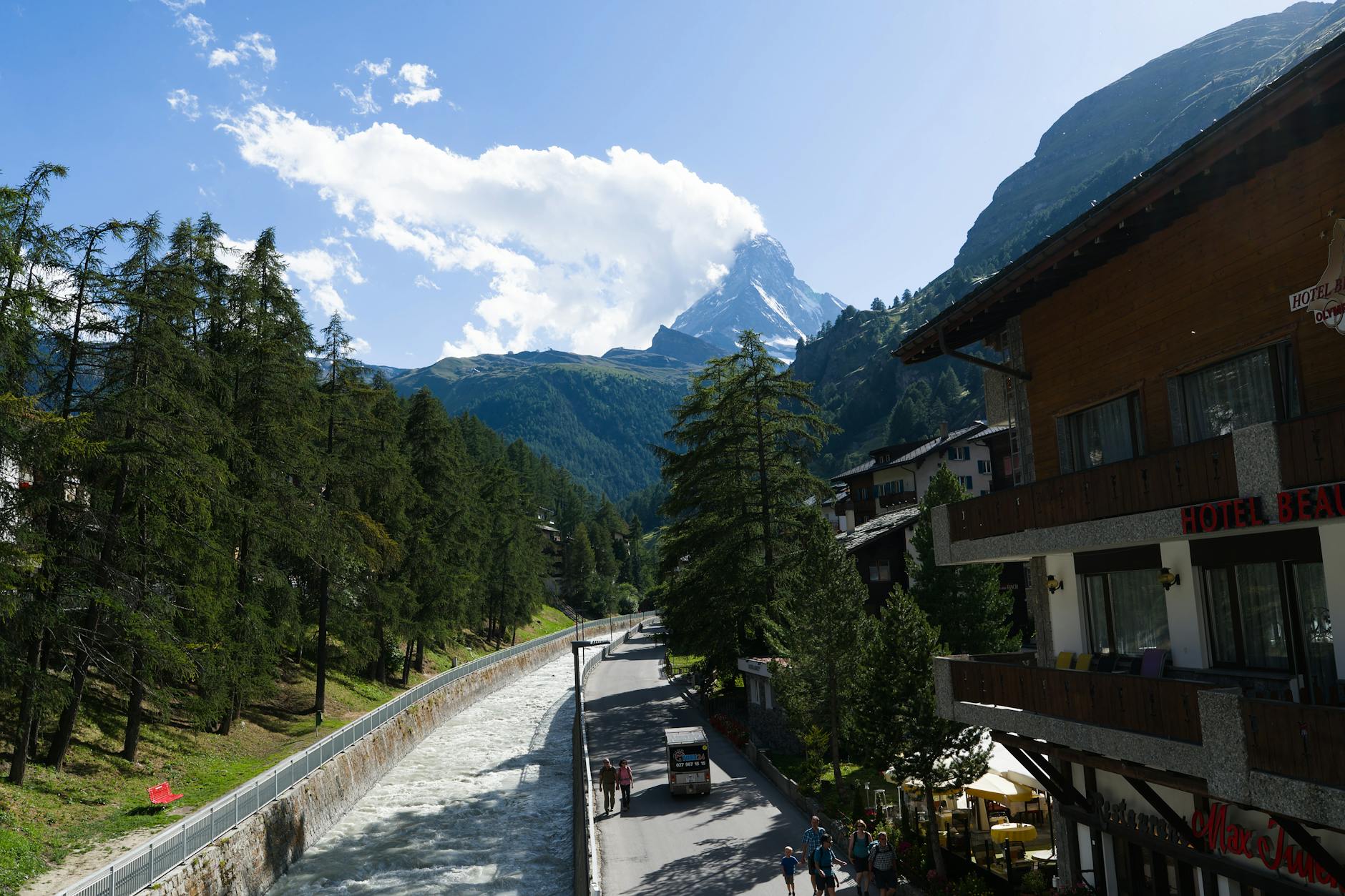
Zermatt is one of the most over-imagined mountain destinations in Europe.
Start Here
That sounds strange because the place really is extraordinary. The Matterhorn image is not fake. The car-free village is not a gimmick. The mountain railways, wooden chalets, balconies, and ringing-bell version of Switzerland that people carry in their heads all have some foundation in reality. But fame creates a problem. Travelers arrive expecting one mountain, one angle, one perfect village, one seamless set of alpine feelings. Then they discover that a real Zermatt trip has structure: the arrival through Täsch, the station area, the walking burden, hotel placement, altitude choices, weather windows, expensive mountain lifts, and the difference between a good panoramic day and a badly forced one.
That is not a flaw in Zermatt. It is the reason the destination rewards care. Once you stop treating the Matterhorn as though it were the whole itinerary, the village becomes richer. The church and cemetery matter. The museum matters. Gornergrat and Matterhorn Glacier Paradise are not interchangeable. The car-free rhythm matters because it changes how the place sounds underfoot. And the right hotel matters more here than in many equally famous places because every unnecessary uphill drag with luggage or tired legs weakens the mood.
Zermatt Tourism’s current planning guidance still makes the essential premise very clear: private vehicles stop at Täsch, and the final approach happens by shuttle, taxi, or authorized transfer into a car-free village.[1] That is not a technical inconvenience to be worked around. It is the first sentence of the destination. Zermatt begins by requiring a slight surrender of normal movement habits. If you resist that surrender, the trip starts in friction. If you accept it, the village begins to make emotional sense.
The best Zermatt trip is therefore not an alpine hallucination. It is a composed mountain stay. Let the famous peak remain the headline, but do not let it become the whole text.
Zermatt in one sentence: it is one of the world’s great mountain villages, but only when the trip is built around arrival, altitude, walking, and viewpoint choices rather than around the fantasy that one famous mountain can do all the work alone.
Basic data
| Population | About 6,000 permanent residents |
|---|---|
| Area | 243 km2 in the municipality; the village core is much smaller |
| Major religions | Christian heritage with a strongly secular visitor culture |
| Political system | Municipal government inside a federal republic |
| Economic system | Tourism-led alpine economy centered on hospitality, mountain transport, skiing, and services |
Quick Verdict
Best for: first-time Swiss mountain travelers, rail travelers, hikers, couples, photographers, and anyone who enjoys destinations where the village and the mountain infrastructure both matter.
Less ideal for: travelers who hate walking, resent weather dependence, or expect a cheap and casual alpine stop.
Ideal first stay: 3 nights.
Still worthwhile: 2 nights if the trip is tightly shaped.
Can justify more: yes, especially for hikers, slower luxury travelers, or travelers who want weather flexibility.
Biggest planning mistake: thinking the Matterhorn view is the whole product.
One thing to prioritize: where you stay in relation to the station and your main mountain plans.
One thing to keep flexible: which mountain excursion gets the clearest weather.
The blunt version: Zermatt gets worse when the trip is all icon and no structure.
Who Will Love Zermatt?
Zermatt works for travelers willing to let mountain places set the pace. If you like the idea of a destination where one clear morning can matter more than three overplanned days, where trains and lifts are part of the atmosphere rather than an inconvenience, and where evenings in the village are part of the reward, Zermatt is strong.
It is especially good for people who understand that beauty can still require management. Zermatt is not difficult, but it is not passive. It asks something from you: realistic packing, honest walking expectations, a willingness to let weather choose the order of things, and enough patience to see the village as more than an annex to the mountain image.
It is weaker for travelers who want their mountains to function like scenic wallpaper behind ordinary hotel life. Zermatt is too structured for that.
Zermatt at a Glance
| Question | Practical Answer |
|---|---|
| Can you drive into Zermatt? | No, private cars stop at Täsch |
| Shuttle from Täsch | Every 20 minutes, about 12 minutes[1] |
| Main village transport | Walking, e-taxis, free e-bus |
| Best-known panoramic rail outing | Gornergrat |
| Highest major alpine excursion | Matterhorn Glacier Paradise |
| Why stay here? | Village atmosphere plus mountain access |
| Car required? | No |
| Best first stay length | 3 nights |
2026 Visitor Notes
Zermatt Remains Properly Car-Free
Zermatt Tourism’s current arrival guidance continues to make the essential point very clearly: private vehicles are allowed only as far as Täsch, where you transfer onward by shuttle train, taxi, or other authorized service.[1]
The Täsch Transfer Is Built Into the Destination
The same official arrival guidance still notes shuttle trains every `20` minutes with a journey time of about `12` minutes from the Matterhorn Terminal in Täsch into the center of Zermatt.[1]
Village Movement Is Still Mostly Foot-Based
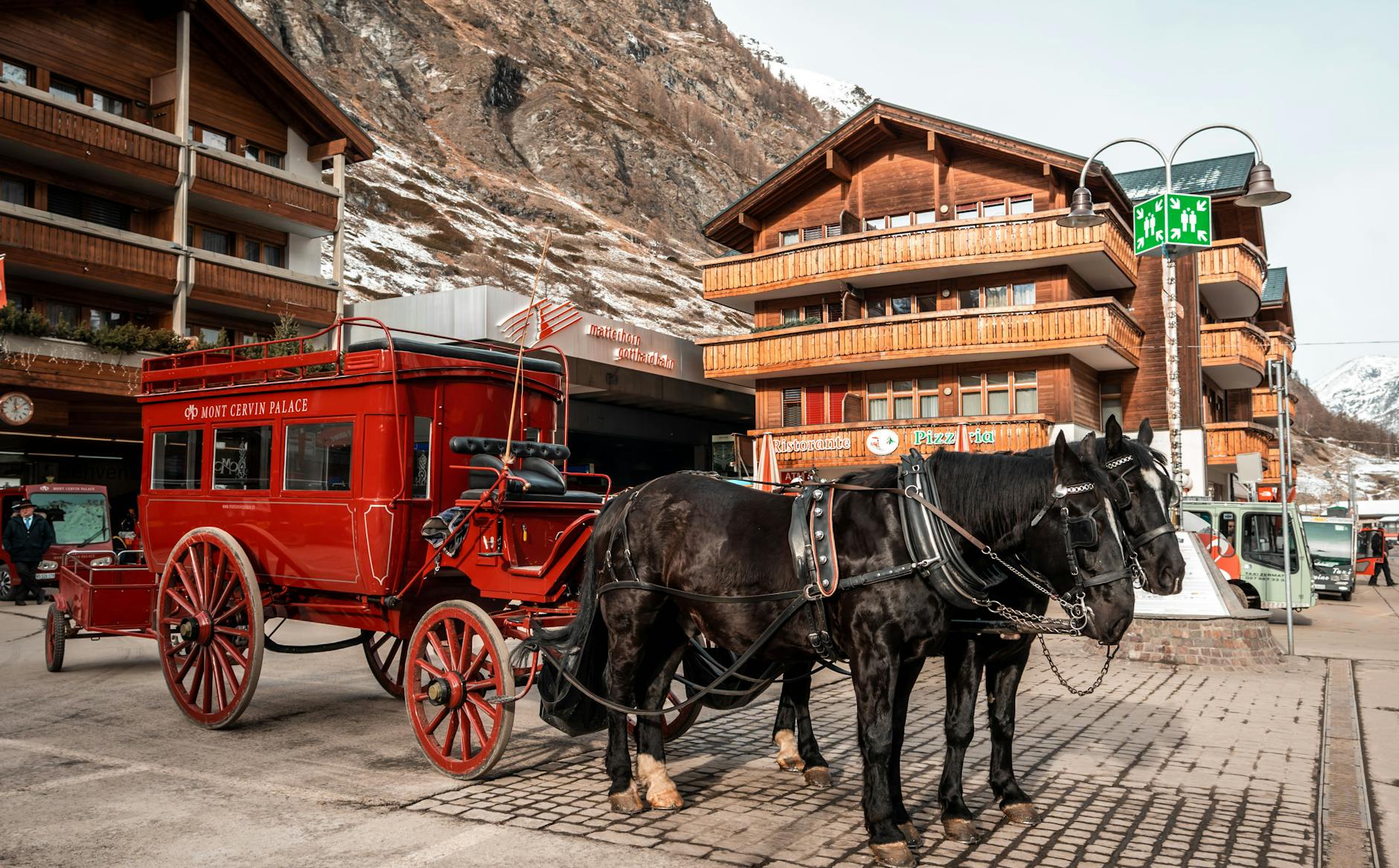
Zermatt Tourism’s current travel page still frames getting around through walking, e-taxis, horse-drawn carriages, bicycles, and the free e-bus routes rather than through normal private-car logic.[1]
Gornergrat Still Provides One of the Cleanest Matterhorn Encounters
The official Gornergrat Bahn pages still frame the ride as a major panoramic excursion directly from Zermatt station, with intermediate stops and about `33` minutes to the top station.[3]
Matterhorn Glacier Paradise Still Operates as the Highest-Altitude Showpiece
Matterhorn Paradise’s current official peak pages still present the Matterhorn Glacier Paradise as the highest mountain station in Europe at `3,883` meters above sea level, with glacier, viewing platform, and summit infrastructure forming a distinct high-alpine outing.[4][5]
How to Understand Zermatt
Zermatt works through five forces.
The first is arrival discipline. The Täsch transfer and car-free village are not footnotes. They shape the mood from the beginning.
The second is walking geography. Not every hotel location is equally pleasant after a long day.
The third is viewpoint distinction. Gornergrat, Matterhorn Glacier Paradise, and the village itself do different jobs.
The fourth is weather leverage. The mountain decides more than you do.
The fifth is village integrity. Zermatt is not only scenery infrastructure. It is still a place with history, memory, and a daily rhythm worth inhabiting.
The Main Mental Shift
Do not ask, “How do I get the famous Zermatt photo?” Ask, “What arrangement will make this mountain village actually work for me over several days?” That answer is more important than the first glimpse of the Matterhorn.
What Makes Zermatt Distinct
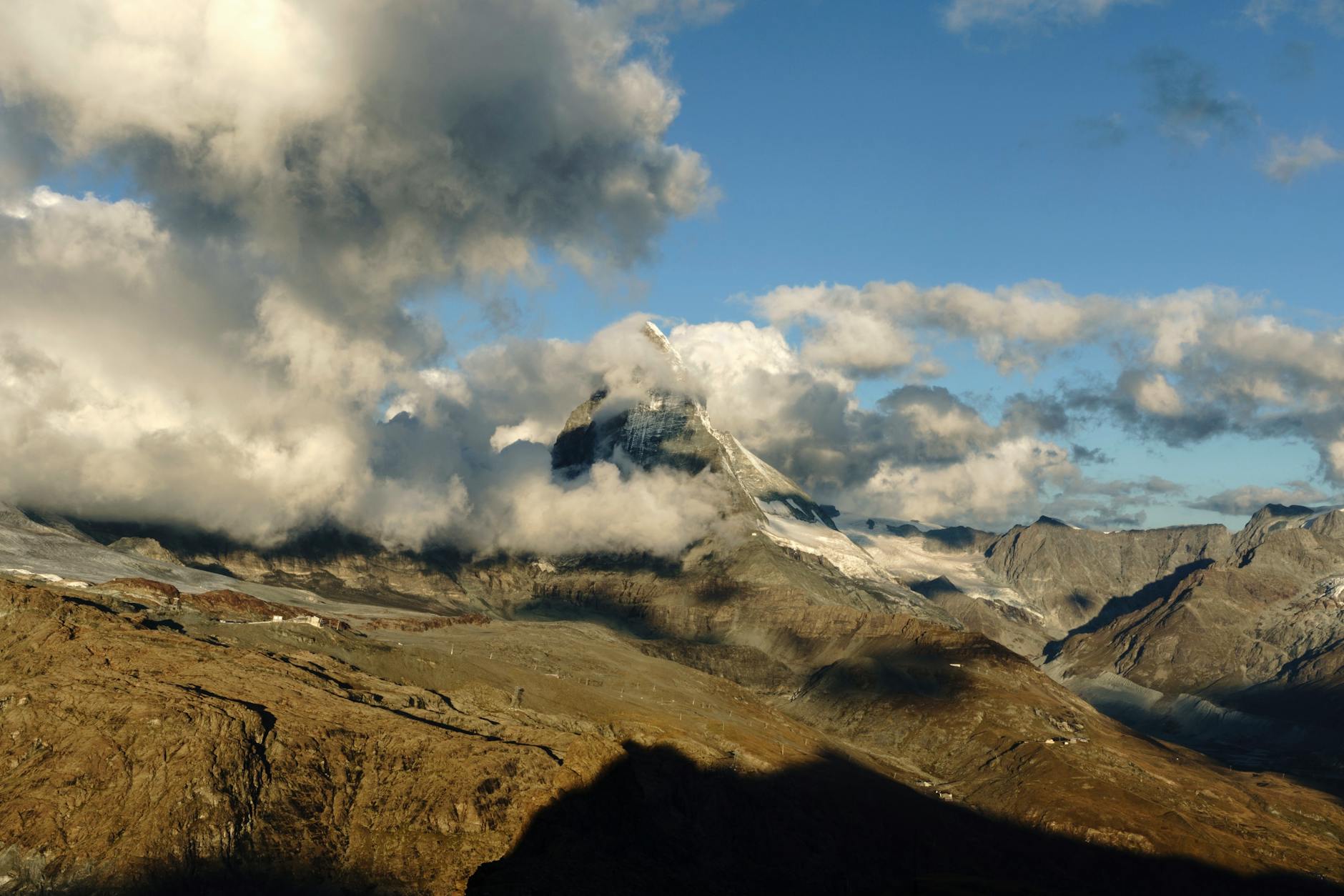
Zermatt’s distinction is that it remains a true mountain village while also being a serious alpine transport system.
That combination is rare. Many famous alpine places are either beautiful but operationally thin, or highly developed but emotionally flattened. Zermatt still feels like a destination with edges, history, mountain consequence, and a recognizable village life. The mountain railways do not erase the village. They intensify it. The absence of ordinary cars changes the sound, the tempo, and the way the whole place is perceived. Even when the destination is crowded, it keeps a rhythm different from most equally famous resorts.
It is also distinct because it turns logistics into atmosphere. The train arrival, the final transfer, the luggage rolling over village surfaces, the lift maps, the uphill return, the clear morning scramble to use good weather well: all of this is part of the destination’s identity. Zermatt is beautiful partly because it insists on its own operating logic.
Where Zermatt Fits in a Switzerland Trip
Zermatt often arrives in a Switzerland itinerary as the big mountain icon. That is fair, but incomplete.
It is also one of the strongest tests of whether a traveler genuinely likes alpine destinations or only likes alpine images. If your Switzerland trip needs one place where rail, scenery, village life, and mountain weather all matter at once, Zermatt is ideal. If you want a calmer mountain town with lower stakes and less myth, other places may fit better.
As a first Swiss mountain stay, Zermatt is extremely strong because it is legible. The mountain is famous, the transport structure is clear, the village is compact, and the choices between major outings can be explained. As a luxury stop, it also works well because hotel life and mountain drama support one another naturally. As a pure speed-stop, it works less well. The place is too structured to be reduced comfortably to “one view and out.”
In other words: Zermatt is best when it gets to be a mountain stay, not merely a mountain sighting.
First-Time Visitors Versus Repeat Visitors
First-time visitors often arrive with too much symbolic pressure. They want the perfect Matterhorn, the perfect weather, the perfect hotel, the perfect high-mountain day, and the perfect village feeling immediately. That can make the destination feel more fragile than it is.
Repeat visitors usually become calmer. They know the village is part of the experience, not dead time between excursions. They understand that weather may decide the main mountain day. They know the difference between Gornergrat elegance and Glacier Paradise spectacle. They stop trying to force “peak Zermatt” every hour.
This is why Zermatt often becomes more enjoyable after the first visit. The village stops being background and starts being one of the reasons to return.
Why Sleeping in Zermatt Matters More Than in Many Alpine Places
Some mountain destinations are perfectly usable as scenic day trips. Zermatt is not at its best that way.
You can certainly arrive, look at the Matterhorn, take one lift, have lunch, and leave. But that version of the destination reduces everything to extraction. It treats the village as a transfer space and the mountain as a product to be collected before the last train back out. What disappears is the rhythm that makes Zermatt emotionally persuasive: early weather decisions, the way the village sounds before excursion traffic thickens, the slightly dreamy quality of returning at dusk, the easier second morning when you no longer need to orient yourself, and the relief of not having to compress every decision into one alpine gamble.
Sleeping in Zermatt gives the place time to become a village rather than just a mountain-service platform. It lets the church, the lanes, the museum, the evening meal, and the morning platform all belong to the same story. That is why even one night changes the tone so much. The place stops being a famous view and starts becoming a stay.
This matters especially because Zermatt’s strongest qualities are cumulative rather than explosive. The destination gets better when it has time to repeat itself a little.
Best Time to Visit
Zermatt should be chosen by mountain intention.
Summer and early autumn suit hiking, panoramic rail days, and longer outdoor use of the village. Winter changes the place into a snow and ski destination where the whole tone is different. Shoulder periods can be excellent, but only if you accept that some lift openings, trail conditions, or visibility patterns may not line up with the fantasy version you carried in.
The critical point is that Zermatt is never just a village stay. It is always a village-plus-mountain-conditions stay. If that sounds obvious, good. Many people still forget it.
How Many Days You Need
Two Nights
Enough for one major mountain excursion and one village-focused or lighter scenic day.
Three Nights
The strongest first answer. This gives you one major viewpoint or rail day, one alternate weather-dependent excursion, and one more relaxed village-history or shorter-walk day.
Four Nights or More
Very reasonable if hiking, photography, or a slower luxury rhythm matters more than checklist travel.
The Real Question
Do not ask how many “sights” Zermatt contains. Ask how many days give the weather and your legs enough margin to stop the destination becoming a strain. For most first visits, that answer is three nights.
Arrival Strategy
The first Zermatt task is psychological as much as logistical: accept the transfer.
Zermatt Tourism’s current arrival page still makes plain that the route by car ends in Täsch, with covered parking at the Matterhorn Terminal and onward shuttle trains into the village center.[1] If you resist this, the destination immediately starts feeling inconvenient. If you accept it, the transfer becomes part of the cleansing mechanism. Ordinary road travel ends. Village travel begins.
Travel light if possible. In Zermatt, luggage weight is not an abstract annoyance. It becomes physically moralized by the terrain. This is one of the rare places where bringing less can genuinely improve the beauty of the experience.
The best arrival in Zermatt is not dramatic. It is tidy.
Where to Stay
For most travelers, the real Zermatt decision is not simply star rating or view. It is placement.
Station-Adjacent or Lower-Village Stay
Best for: easy arrival, shorter baggage drag, simpler early departures, and travelers who expect to use major mountain transport quickly. Tradeoff: slightly less removed from the flow of the village.
This is often a stronger choice than people think. Practical ease supports mountain mood.
Central Village Stay
Best for: balanced first trips, evening atmosphere, restaurants, and a fuller sense of the village. Tradeoff: can still involve meaningful walking depending on the exact property.
This is the strongest general answer for many first-time visitors, as long as the “central” label is real and not optimistic marketing.
Higher or More Remote Edge Stay
Best for: travelers prioritizing seclusion, certain views, or a luxury-retreat rhythm. Tradeoff: can become physically annoying if every movement begins with an uphill or a longer return.
Many weak Zermatt trips come from beautiful hotels used in the wrong bodily reality.
The Main Rule
In Zermatt, a better-located hotel often beats a more glamorous one.
The Zermatts That Matter Most
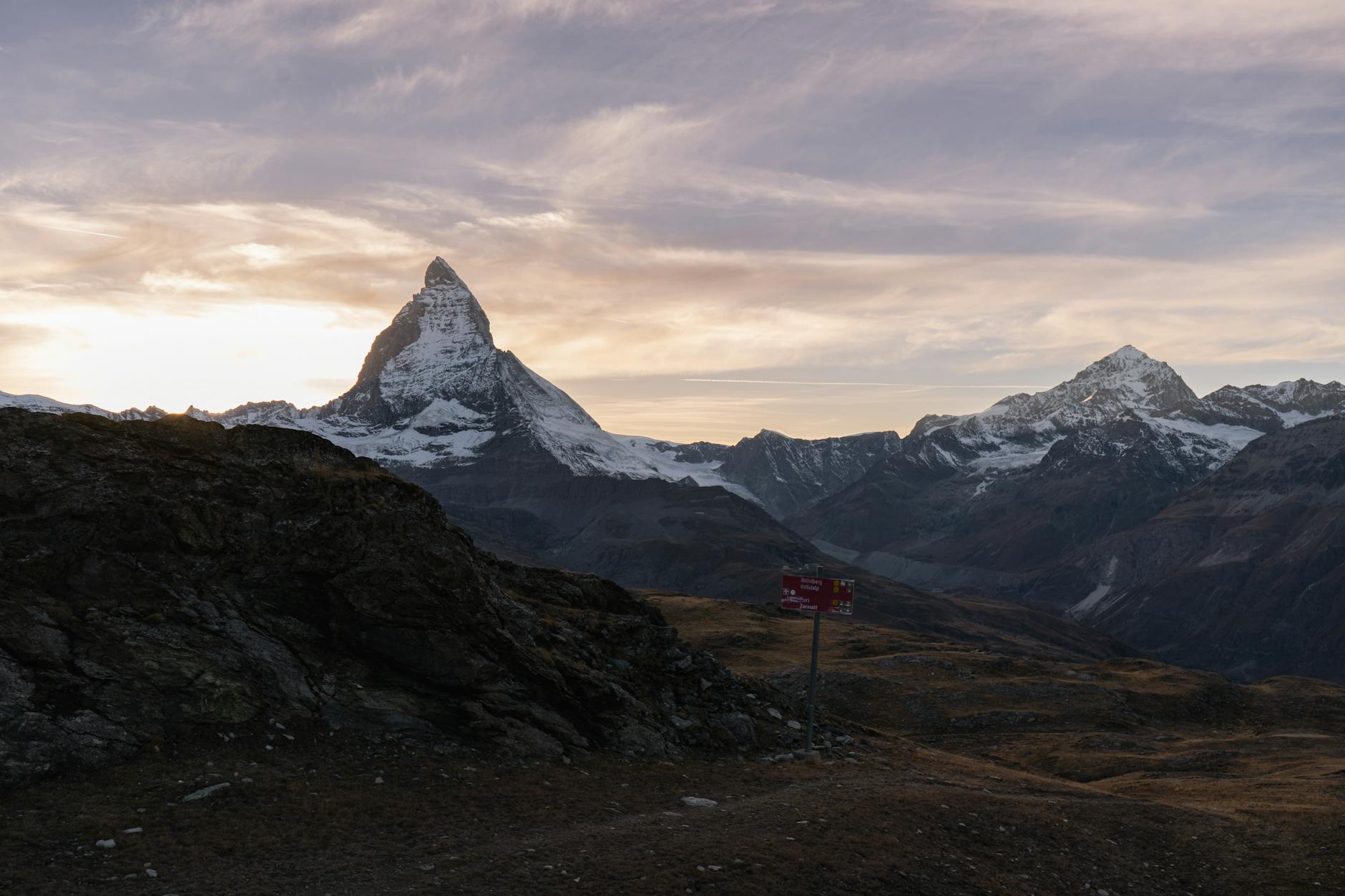
Village Zermatt: car-free streets, church area, hotels, bakeries, and the human-scale side of the stay.
Historical Zermatt: the Matterhorn Museum and the mountaineering story that stop the village becoming mere décor.[2]
Gornergrat Zermatt: the most elegant panoramic rail interpretation of the destination.[3]
Glacier Zermatt: Matterhorn Glacier Paradise and the high-altitude engineered drama of the place.[4][5]
Walking Zermatt: the version that teaches you how much hotel placement and route sequencing matter.
The Car-Free Village and Why It Matters
The absence of normal private traffic is not a branding flourish. It changes Zermatt’s atmosphere profoundly.
You hear feet, small electric vehicles, church bells, luggage wheels, weather, and the minor sounds of a village trying to remain a village under enormous fame. That is part of the magic people respond to even when they do not name it directly.
But the car-free rule also has practical consequences. Walking is real here. Distance is real here. A charming uphill on the map can become irritating on the third day if the hotel choice was careless. A village that looks tiny in photographs can still feel like a lot when you are carrying bags or returning from altitude.
This dual truth is central to Zermatt: the thing that makes it more beautiful also makes it more demanding.
Matterhorn Myth and Matterhorn Reality
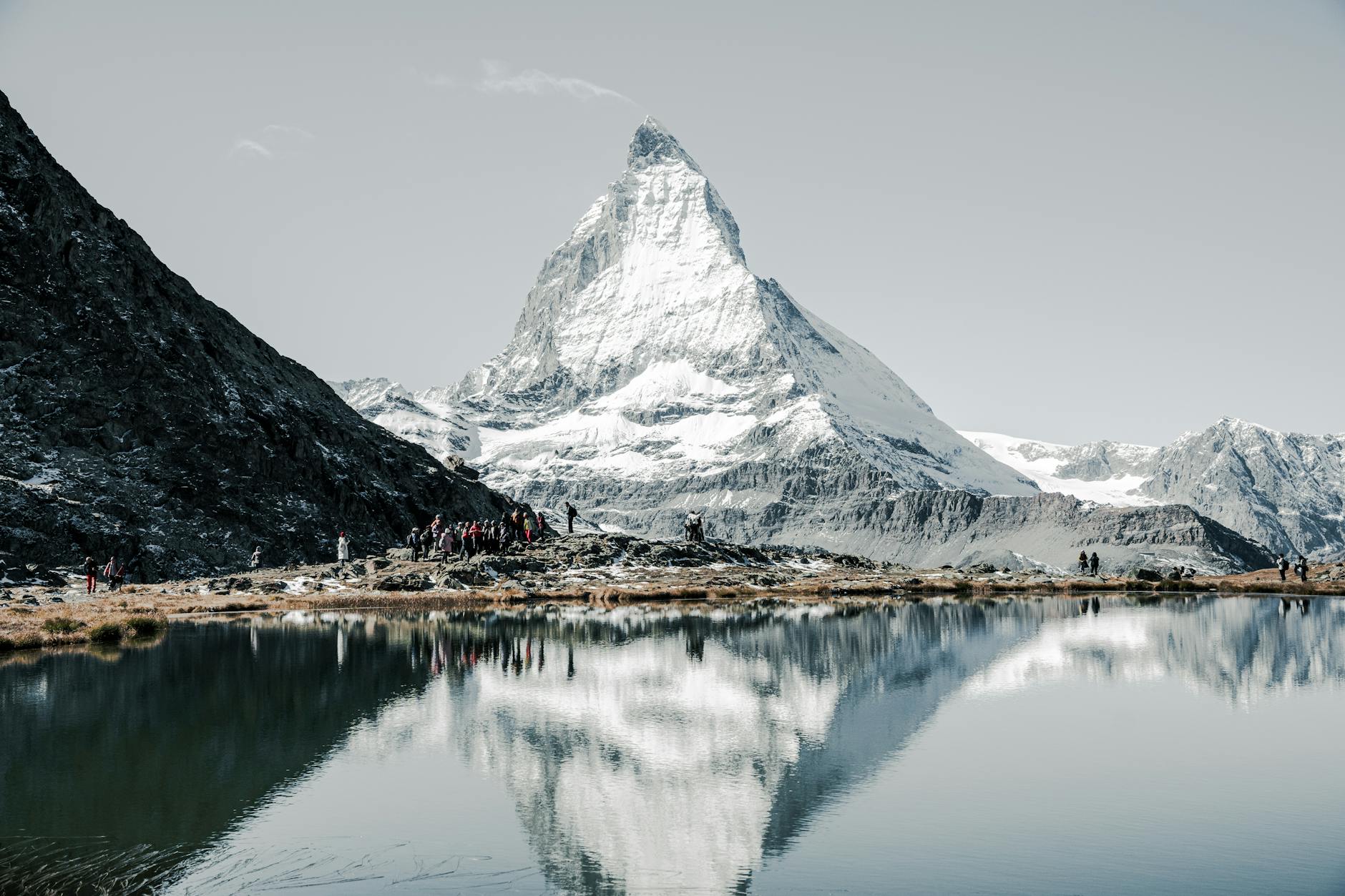
The Matterhorn is not overrated. It is over-centralized in the imagination.
Zermatt Tourism’s official Matterhorn page still leans into the obvious truth: it is one of the world’s most photographed mountains, a myth and symbol for alpinists and photographers alike.[6] But that same page is more useful than people realize because it points back into the village too: the museum, the cemetery, and other places where the mountain’s cultural and historical weight becomes tangible.[6]
The mistake is to treat the mountain as a static background. Zermatt becomes deeper when the Matterhorn is allowed to be history, risk, memory, and changing light, not only silhouette. The village is full of the consequences of that mountain. If you look only upward, you miss half the meaning.
Gornergrat and the Classic Panoramic Day
For many first-time visitors, Gornergrat is the cleanest single mountain excursion from Zermatt.
The official Gornergrat pages still emphasize direct departure from Zermatt station, intermediate stops, and the fact that the line climbs to `3,100` meters in about `33` minutes.[3] That matters because it makes Gornergrat not just scenic but structurally elegant. The day can be as simple or as layered as you want: ride up, stop along the way, walk sections, or let the summit panorama be the main event.
If the weather is clear, Gornergrat is often the strongest first answer because it combines classic Matterhorn logic with unusually graceful transport. It is the mountain day that feels most like Zermatt understood itself properly.
Matterhorn Glacier Paradise and the High-Alpine Spectacle
Matterhorn Glacier Paradise is not the same kind of day as Gornergrat.
The official Matterhorn Paradise material frames it through extreme altitude, glacier scale, the highest mountain station in Europe, and a cluster of summit attractions rather than through the rail-romantic logic of Gornergrat.[4] It is a stronger fit for travelers who want engineered alpine drama, higher altitude, and a broader sense of entering the glacier world.
That also means it should be chosen intentionally. It is not automatically the “better” outing. It is the more extreme one. If Gornergrat is elegant, Glacier Paradise is emphatic.
Many first-time travelers do well by understanding this difference before booking anything.
The Museum, the Cemetery, and Why Zermatt Needs History
The Matterhorn Museum - Zermatlantis is one of the things that keeps Zermatt honest.
Its official material still frames it around the development of the village, the first ascent of the Matterhorn, and the original snapped rope from 1865.[2] This matters because Zermatt without history can become a luxury mountain product floating free of consequence. The museum and related village memory bring back the human scale, the danger, and the long transformation from farming village to world-famous resort.
The cemetery matters for the same reason. Zermatt is not merely a famous mountain backdrop. It is one of the places where alpinism and mortality are still legible in the landscape of the village.
Do not skip this layer if you want the destination to feel like more than premium scenery.
Walking, Lifts, and the Cost of Overbuilding
The simplest way to ruin Zermatt is to behave as though every lift, trail, and panoramic platform belongs in the same stay.
Mountain destinations punish greed. One major high outing in a day is usually enough, especially once walking, altitude, transfers, and changing weather are counted honestly. Zermatt is more beautiful when you still have the capacity to enjoy the village in the evening than when you stagger back having collected one mountain product too many.
This is not a city that rewards efficiency theater. It rewards enough margin to be happy after the mountain.
Food, Hotels, and Evenings in Zermatt
Zermatt is a place where the evening matters.
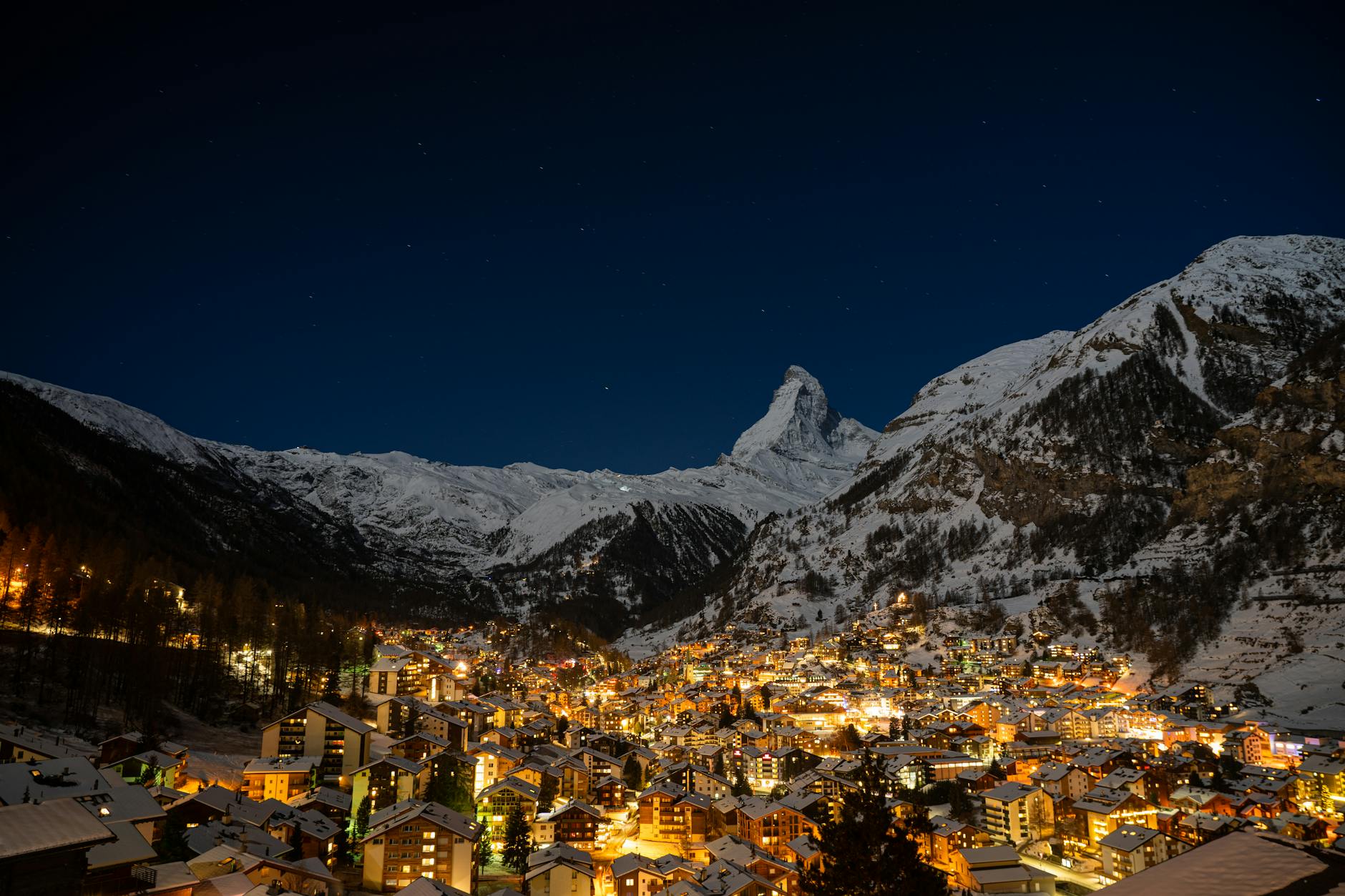
The village’s restaurants, hotel lounges, and general afterglow under the mountain are part of the reason the destination feels special. This is another argument for staying somewhere that makes return easy. A village that is best at dusk should not be reduced to a place you only rush through on the way to bed.
Evenings in Zermatt often rescue the day from overbuilding. A good dinner, a short walk, and the quieter texture of the village after excursion traffic thins can make the place feel human again.
Zermatt as a Walking Test
Some mountain destinations are mainly about what you see. Zermatt is also about what your legs are willing to do repeatedly.
That is why the village is not simply charming. It is instructive. If your hotel is too far uphill, if your route to dinner is annoying, if the return from the station feels longer than it should, the village is teaching you something about the trip’s design. A lot of Zermatt satisfaction comes from reducing these minor frictions before they become emotional.
This is one reason the destination improves with experience. People learn that apparently small walking choices have outsized mood consequences here.
Why Zermatt Improves on a Return Visit
First-time visitors often treat Zermatt like a test of whether the famous image can survive reality. By the second trip, that question is gone. You already know the mountain is real. You already know the village is beautiful. The destination then becomes easier to use with intelligence.
You stay in a better place. You choose weather windows more calmly. You understand whether you really want Gornergrat, Glacier Paradise, or simply a better village day. You stop trying to make every hour prove something. That is when Zermatt often becomes more enjoyable.
This is a common pattern in heavily mythologized destinations: once the myth has been confirmed, structure becomes the real source of pleasure.
Morning Zermatt Versus Evening Zermatt
Morning Zermatt is often strategic. This is when the village is clearest, weather decisions matter most, and major mountain plans either become possible or not.
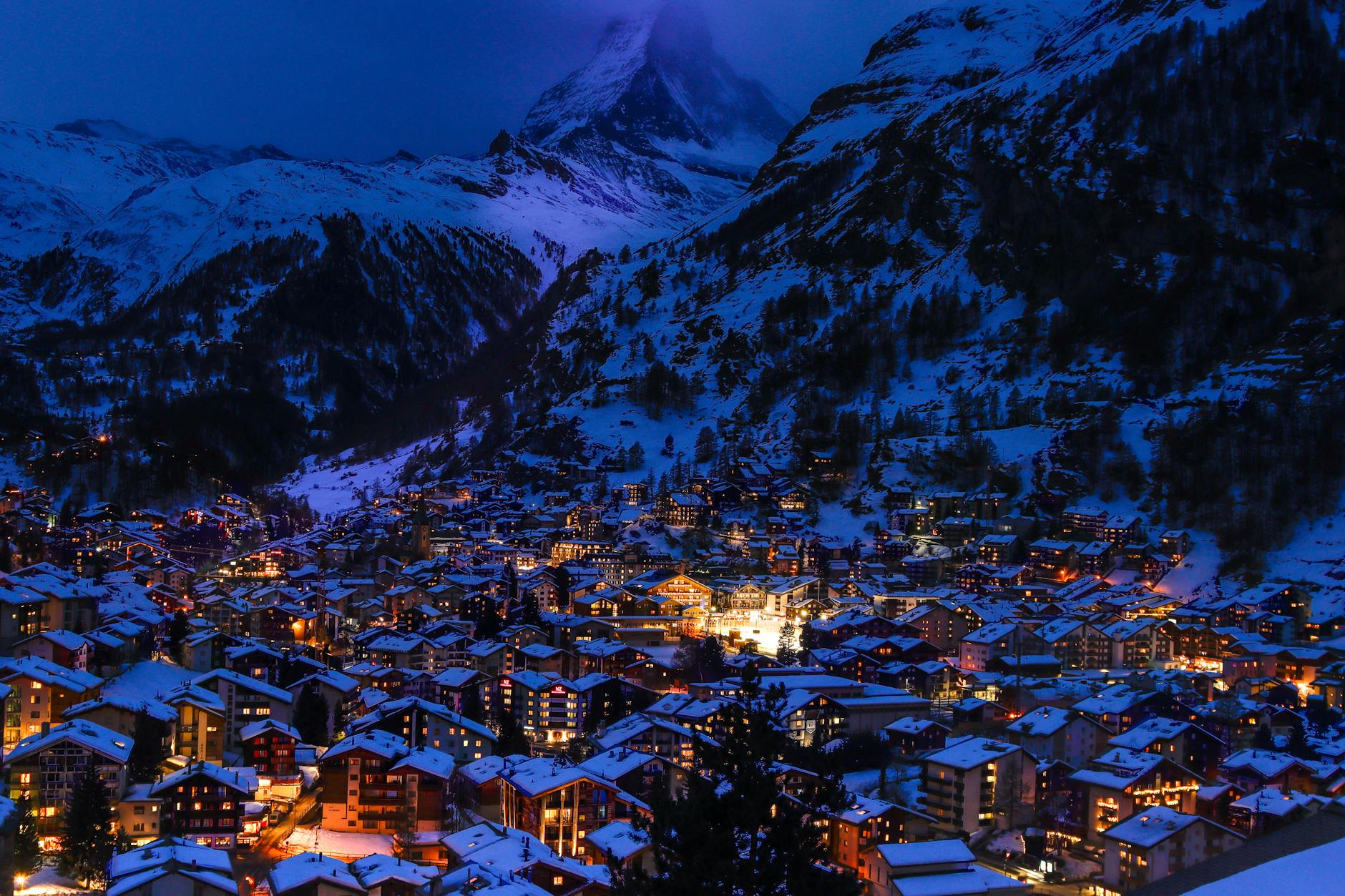
Evening Zermatt is often emotional. The mountain may disappear into shadow, but the village softens, dinners make sense, and the whole place becomes more coherent. This is why a good Zermatt day often contains both registers: one where you use the mountain system seriously, and one where you recover into the village.
If you only know Zermatt as a daytime excursion platform, you are missing half the destination.
Who Zermatt Handles Especially Well
Zermatt is unusually strong for travelers who like destinations with a clear operating logic and are willing to cooperate with it.
Couples often do especially well here because the village naturally supports scenic evenings, hotel-centered recovery, and a shared sense that one clear mountain day can justify the trip. Solo travelers often do well because the destination’s structure is so legible: station, village, lift, weather, return. Hikers and rail travelers obviously do well. But even travelers who are not especially athletic can do well in Zermatt if they choose the hotel honestly, keep the altitude plans selective, and stop confusing “mountain trip” with “constant effort.”
Where Zermatt becomes harder is for people who resent dependency: dependency on weather, dependency on lifts, dependency on luggage strategy, dependency on route fit. This is not a destination that flatters denial. It flatters travelers who plan accurately and then relax inside the plan.
That distinction matters because it explains why some people fall in love with Zermatt and others leave wondering why it felt more effortful than expected.
Why Zermatt Often Feels Better on the Second Day
The first day in Zermatt is usually burdened with interpretation. Is the hotel too far? Is the village smaller or larger than expected? Is the weather good enough? Which mountain outing really matters? Are the prices making the place feel too precious? Is the Matterhorn visible enough to count?
By the second day, much of that noise is gone. You know where the station is. You know how the village lies. You know what kind of walking is easy and what kind is mildly annoying. You know whether the trip needs Gornergrat elegance or Glacier Paradise altitude. The destination becomes much easier to enjoy once it no longer has to explain itself from zero.
This is one reason short stays can undersell Zermatt so badly. The place often becomes more precise, and therefore more pleasurable, after the first cycle of arrival, mountain use, and return has already happened once.
One Strong Mountain Day Is Better Than Two Forced Ones
This is one of the most important Zermatt rules.
Because the destination is expensive, famous, and structured around big-ticket mountain infrastructure, travelers often feel pressure to maximize every clear hour. If the weather looks good, they want to fit Gornergrat and Glacier Paradise and perhaps another lift, hike, or panoramic walk into the same compressed stay. The logic seems reasonable: use the mountain while the mountain is available.
In practice, this often produces thin satisfaction. The views blur. The village disappears. Altitude becomes fatigue. The second excursion is judged through the first one’s exhaustion. And the evening, which should help complete the destination emotionally, is spent recovering from overuse.
Zermatt usually gives more value when one mountain day is allowed to be genuinely excellent. One clear rail ride, one summit or panoramic line, one good lunch, one intelligent return, and one evening back in the village can produce a more memorable destination than two oversized, expensive, badly paced attempts to extract everything at once.
This is not caution for its own sake. It is a way of protecting what the destination actually sells well: mountain clarity plus village atmosphere.
Cost, Value, and the Wrong Way to Chase Return
Zermatt makes many travelers slightly anxious because almost every major choice seems expensive. The train in, the hotel, the mountain railways, the meals, the possibility of poor weather: all of it can create a quiet pressure to extract visible value from every franc.
That pressure usually makes the trip worse. Once you start trying to justify every ticket through total use, Zermatt becomes mechanical. You overbuild the day because the pass cost money. You stay out too long because the view is “supposed” to be worth it. You add one more segment because not adding it feels wasteful.
The better way to think about value here is composure. If one magnificent outing, one good dinner, one proper village walk, and one strong hotel return make the place feel unforgettable, that is value. If three overworked lifts and a tired body make the destination feel like an expensive obligation, that is not value just because more infrastructure was consumed.
Zermatt is one of those places where using less, more accurately, often feels more luxurious and more worthwhile than using everything.
Why the Village Feels Bigger Than It Looks
Zermatt often appears tiny in photographs and maps. In practice, it can feel much larger because every incline, suitcase, tired return, and weather shift is amplified by the fact that you are doing it on foot or with limited local transport logic. This is another reason hotel placement and daily restraint matter so much.
The village is not difficult. It is simply honest about distance in a way many resort destinations are not.
That honesty is one of Zermatt’s hidden virtues. It keeps the trip from becoming fake, even when the scenery is almost absurdly beautiful.
A Good Zermatt Day Versus a Bad One
A Good Day
It accepts the weather, gives one major mountain outing enough space, keeps walking burdens realistic, returns with enough energy for the village, and treats the evening as part of the destination rather than dead time.
A Bad Day
It overpacks altitude, underestimates walking, chooses the wrong mountain product for the weather, drags luggage too far, and ends by blaming Zermatt for being expensive and tiring when the real problem was design.
Zermatt is rarely disappointing on its own terms. It becomes disappointing when the traveler insists on using it as a fantasy instead of a place.
Common Mistakes
Treating the Matterhorn View as the Entire Itinerary
This is the main conceptual error.
Choosing the Wrong Hotel Location
The wrong hill, distance, or baggage drag changes the whole mood.
Assuming Gornergrat and Matterhorn Glacier Paradise Do the Same Job
They do not.
Overplanning Mountain Excursions
One excellent clear-weather outing often beats two oversized ones.
Ignoring the Village’s History
Without the museum and mountaineering context, Zermatt can feel thinner than it should.
Refusing the Logic of the Transfer
Täsch is not a mistake in the trip. It is part of the trip.
My Blunt Advice
Accept the Täsch transfer and pack like you mean it.
Stay where arrival and return both feel easy.
Choose Gornergrat for elegance, Matterhorn Glacier Paradise for altitude and spectacle, and do not pretend they are interchangeable.
Give the museum and village core some real time.
Let weather choose the biggest mountain day whenever possible.
Do not try to turn every expensive lift into emotional value just because you bought it.
Remember that Zermatt is not just a famous view with some chalets attached. It is a mountain system with a village at its heart, and the trip gets better the moment you respect both halves.
If the destination leaves you feeling calmer, more precise, and more attached to the village than you expected, you probably used it correctly.
If it leaves you only with a photograph, you probably did not.
Zermatt deserves more than a single angle.
It deserves a village day, a mountain day, and enough patience to tell the difference between them.
That patience is the whole point.
In Zermatt, it matters.
Source Notes
- 1. Zermatt Tourism, "Planning Your Trip to Zermatt." Used for current car-free access rules, Täsch parking and shuttle-train guidance, village movement options, and general arrival logistics. https://zermatt.swiss/en/plan-book/arrival
- 2. Zermatt Tourism, "Matterhorn Museum - Zermatlantis." Used for current museum framing, opening hours, and the official presentation of the village's development and first-ascent material. https://zermatt.swiss/en/p/matterhorn-museum-zermatlantis-01tVj000005DjZ9IAK
- 3. Gornergrat Bahn official ticket and info pages. Used for current ride structure, travel time, intermediate-stop logic, and ticket framing from Zermatt station. https://www.gornergrat.ch/en/pages/ticket and https://www.gornergrat.ch/en/pages/faq-tickets
- 4. Matterhorn Paradise, "Matterhorn Glacier Paradise." Used for current official high-altitude framing, viewing-platform and glacier-palace context, and summit infrastructure. https://www.matterhornparadise.ch/en/experience/peaks/matterhorn-glacier-paradise and https://www.matterhornparadise.ch/en/experience/peaks/matterhorn-glacier-paradise/glacier-palace
- 5. Matterhorn Paradise main site and pass overview. Used for current Peak Pass framing and route-validity language relevant to multi-mountain planning. https://www.matterhornparadise.ch/en
- 6. Zermatt Tourism, official Matterhorn attraction page. Used for the mountain's current official framing and the destination's own linking of the peak to village history, museum, and mountaineering memory. https://zermatt.swiss/en/Media/Attractions/Matterhorn