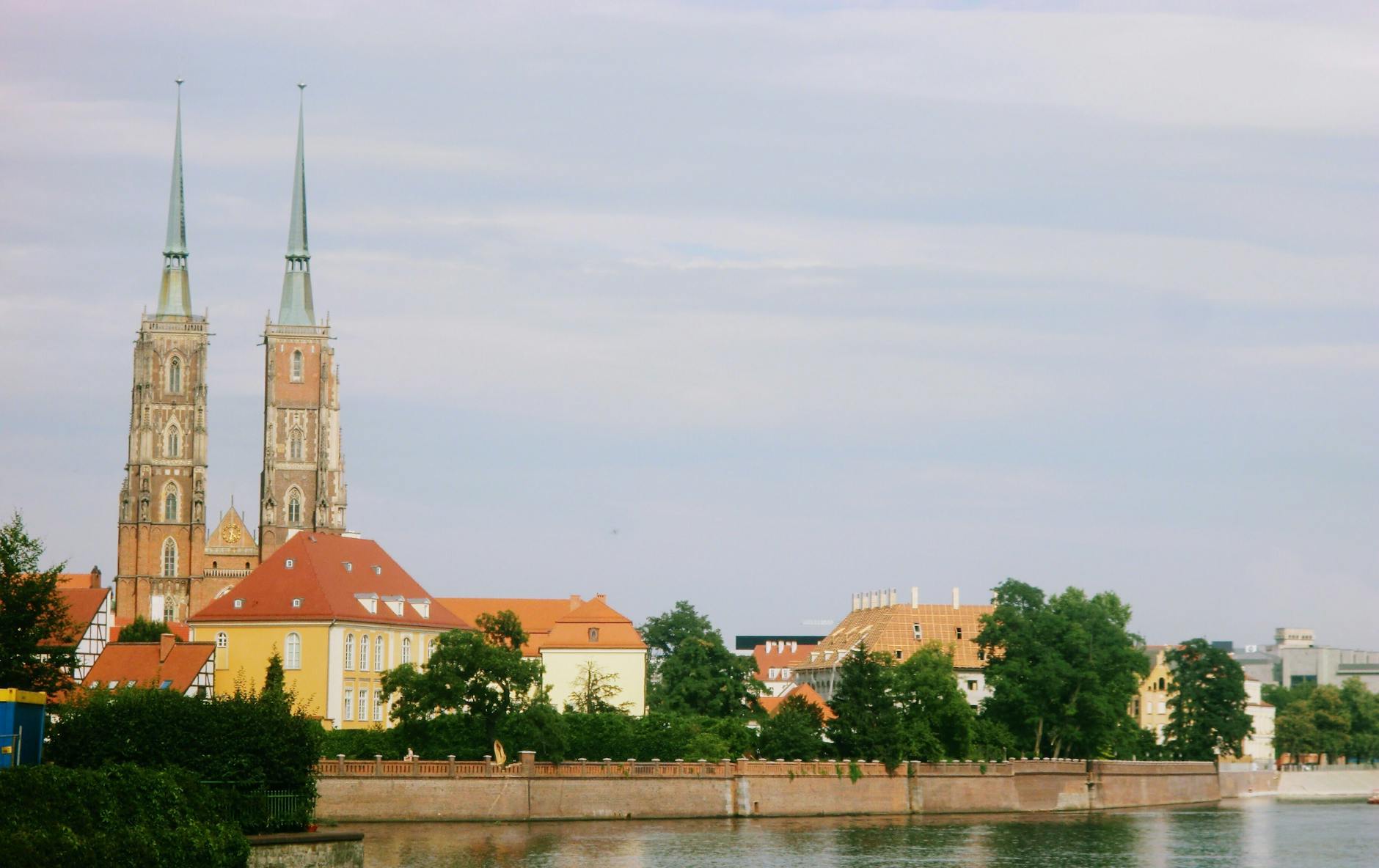
Wroclaw is one of those cities that people often discover too late. They know Krakow. They know Warsaw. They may know Gdansk. Wroclaw, by contrast, tends to arrive in conversation as a pleasant surprise, which is a polite way of admitting that many travelers had underestimated it. That underestimation is the city’s recurring problem.
Start Here
This is not a backup city. It is not a lesser Polish option for people who ran out of time for somewhere else. Wroclaw is one of the most enjoyable city breaks in Central Europe because it combines real urban substance with unusual ease of use. The city works through bridges, islands, river branches, market-square life, Gothic and baroque layers, university energy, late-day terrace culture, and a degree of visual generosity that many first-time visitors do not expect.
The first mistake is to think of Wroclaw as mostly cute. The second is to think of it as mostly cheap. Both ideas flatten the place. Yes, it has charm. Yes, it can be very good value. Neither is enough to explain what makes the city strong. Wroclaw succeeds because it is spatially interesting. It gives the traveler multiple centers of gravity: the Rynek, the surrounding old city fabric, the river islands, Ostrów Tumski, the university zone, the modern-historical contrast of Centennial Hall, and neighborhoods that keep the place from feeling like a preserved postcard.
The strongest Wroclaw trips come from reading it as a river city first. Not just a city with a river, but a city made legible by water. The bridges are not incidental. The islands are not decorative. The best route through Wroclaw is one that keeps crossing, reorienting, and letting the city reveal how its parts fit together. Stay centrally, walk heavily, use trams intelligently, and give the city enough time to become more than a market-square photo stop.
The city in one sentence: Wroclaw is a bridge-and-islands city where the best trip comes from combining old-town life, river movement, neighborhood texture, and a few well-chosen cultural anchors rather than treating it as a charming second-tier extra.
Basic data
| Population | About 675,000 |
|---|---|
| Area | 293 km2 |
| Major religions | Roman Catholic heritage with growing secular and minority-faith communities |
| Political system | City government inside a parliamentary republic |
| Economic system | High-income mixed economy led by technology, education, services, finance, and culture |
Quick Verdict
Best for: couples, first-time Poland itineraries, value-conscious European city breaks, walkers, food-and-bar travelers, history-and-architecture travelers, and anyone who likes cities with strong public-space life.
Not ideal for: travelers who want a single overwhelming monument, people who insist on prestige hierarchies, or anyone who thinks "smaller than Warsaw" automatically means "not worth real time."
Ideal first visit: 2 to 3 full days.
Minimum worthwhile stay: 2 full days, if one is focused on Wroclaw itself rather than immediately disappearing into day trips.
Best overall months: May, June, September, and early October.
Best winter case: December for lights and winter atmosphere around the center, or late winter for lower crowds and a more museum-and-dining-focused city break.
Biggest planning mistake: seeing the Rynek, checking off the cathedral side, and leaving before the river-city logic has had time to work.
One thing to prioritize: a central base that lets you walk the old center and river districts easily.
One thing to leave flexible: your evening route. Wroclaw often becomes more attractive and more coherent later in the day.
The blunt version: Wroclaw is one of Europe’s better mid-sized city breaks, but only if you treat it as a full destination rather than a bargain curiosity.
Who Will Love Wroclaw?
Wroclaw suits travelers who like cities that feel generous. It is very good for people who want architecture, food, public space, and walkability without the logistical or financial load of the most overexposed European capitals. It is especially strong for travelers who enjoy the way water changes a city. Wroclaw’s islands and crossings keep the urban experience moving. The place feels dynamic without becoming exhausting.
It is excellent for couples because the city combines visual pleasure with practical ease. You can do long walks, river views, church-and-university architecture, bars, restaurants, and late-evening square life without feeling as though every good moment requires an expensive reservation or a major cross-city transfer. Wroclaw is romantic in a grounded way, not in a lacquered fantasy way.
It is also strong for solo travelers. The center is legible, the city feels liveable rather than merely touristed, and there is enough variation to fill several days without the pressure of a huge metropolis. Solo coffee, museum, tram, and neighborhood days all work naturally here.
Wroclaw is also one of the better Polish cities for travelers who want to understand how history, rebuilding, and postwar identity have shaped the urban landscape. It has a more complex background than casual visitors often appreciate, and that complexity gives the city real weight beneath the easy surface charm.
It is less ideal for travelers who want every city to announce its importance immediately. Wroclaw reveals itself by accumulation. If you allow that process, the city tends to outperform expectations.
Wroclaw at a Glance
| Question | Practical Answer |
|---|---|
| Main airport | Wroclaw Airport (WRO) |
| Distance from center | Roughly 10 km |
| Best airport transfer | City bus or taxi/rideshare, depending on arrival time and luggage |
| Main public transport operator | MPK Wroclaw |
| Best first-time base | Around the Rynek / Old Town / river-adjacent central core |
| Best food-and-evening area | Old Town core, surrounding streets, and selected Nadodrze or riverside pockets |
| Best major historical walk | Rynek to university zone to Ostrów Tumski |
| Best major family/cultural extension | Centennial Hall and the zoo / Afrykarium side |
| Best way to understand the city | Walking first, trams second |
| Signature city structure | Bridges, islands, and multiple Odra branches |
| Emergency number | 112 |
| Tap water | Safe to drink |
| Currency | Polish zloty |
| Power plugs | Type C and E |
| Car needed? | No |
2026 Visitor Notes
Airport Access Is Simple, But Not Abstractly “Rail-Linked”
Wroclaw Airport is close enough to the center that arrivals are usually easy, but the city's logic is bus-and-tram rather than airport-train romance. Official transport guidance notes that buses 106 and 129 run between the airport and the city during the day, and bus 206 covers the night connection.[1] For many visitors that is entirely fine. For late arrivals, multiple bags, or short stays, taxi or rideshare can still be the saner call.
Trams Matter More Than Many First-Timers Expect
Wroclaw’s old center is very walkable, but the city becomes more useful when you accept that trams are not a backup plan. They are part of how the city expands beyond the immediate core without friction. That matters if you are going to Centennial Hall, the zoo, or neighborhoods beyond the square.
The Zoo Side Is A Real Destination
Wroclaw Zoo and the Afrykarium are not small family add-ons. Current official zoo information keeps opening hours broad in the high season, and the whole eastward cultural complex around Centennial Hall can justify a major block of the day.[2] If you are interested, plan it as a genuine excursion inside the city.
The Panorama And Other Institutions Need Deliberate Timing
Wroclaw has enough serious institutions that you should choose rather than vaguely sample. Panorama Raclawicka, the university, museums, cathedral district, and Centennial Hall side all compete for attention.[3][4] The city gets better when you pick a lane for part of the day instead of drifting into low-yield attraction grazing.
River Time Is Not Optional
A lot of visitors see the square, eat, maybe spot a few dwarfs, and leave. That is exactly how Wroclaw gets under-read. The river branches, islands, and bridge logic are what lift the city into a more memorable category.
Wroclaw Has More Scale Than It First Appears
The center feels compact enough that some visitors assume the city will be “done” fast. That is misleading. Wroclaw opens outward in layers. It is very easy to have a weak short stay because the city looked easy on the map.
How to Understand Wroclaw
Wroclaw works through five forces.
The first is the river. More specifically, the multiple branches of the Odra and the urban pattern they create. Water is not background here. It is a structuring element.
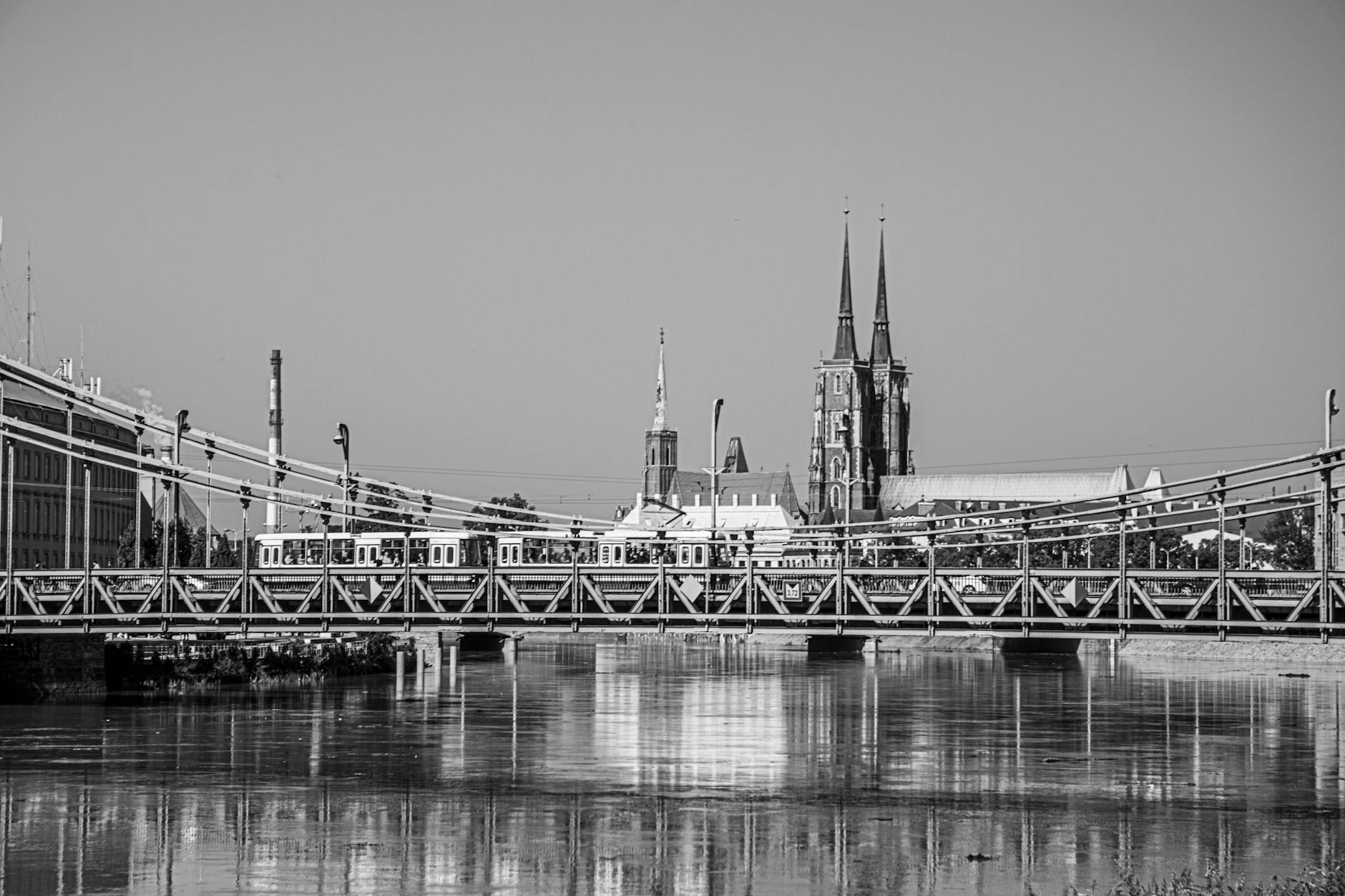
The second is the bridges and islands. Wroclaw’s identity depends on crossings. The city changes tone as you move across them.
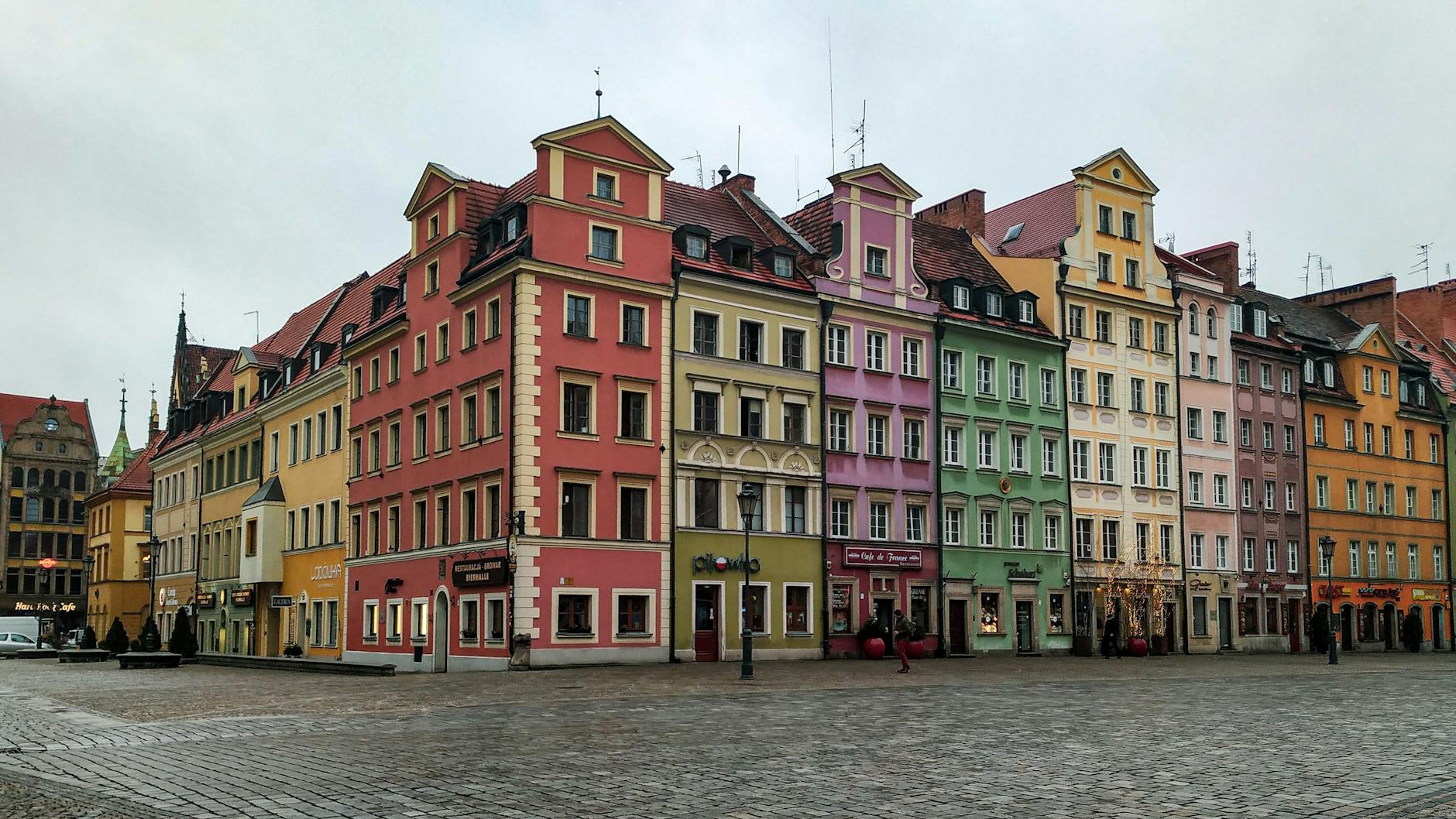
The third is the old center. The Rynek is not the whole city, but it is still a very strong urban heart and one of Poland’s more enjoyable central squares.
The fourth is the historical layering. Wroclaw has Polish, Bohemian, Austrian, Prussian, German, and postwar layers, and that mixed inheritance changes the way the city reads architecturally and culturally.
The fifth is livability. Wroclaw often feels less burdened than cities whose fame has outrun their daily usability. People use this place. That is part of its appeal.
The Five Wroclaws A Visitor Actually Meets
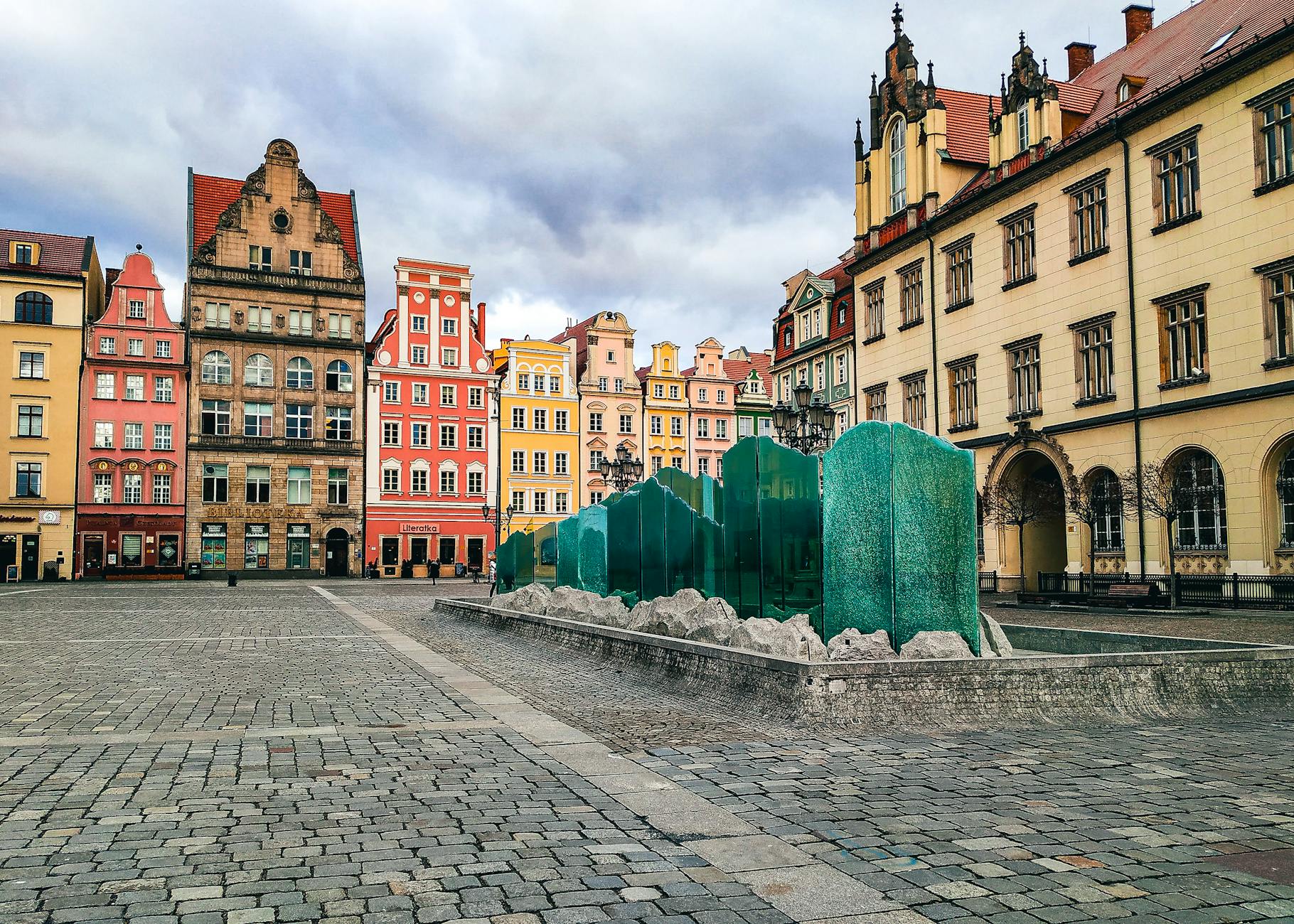
Market-Square Wroclaw: the Rynek, old facades, terraces, civic showpiece energy, and the easiest first-time version of the city.
River Wroclaw: promenades, embankments, islands, bridges, and the part that makes the city spatially distinctive.
Cathedral Wroclaw: Ostrów Tumski, church towers, evening lamps, old stone, and one of the city’s most atmospheric zones.
Institutional Wroclaw: university, museums, Centennial Hall, zoo side, and the more formal cultural structures of the city.
Local Wroclaw: Nadodrze, surrounding streets, cafés, bars, and the broader lived city beyond the postcard core.
The Main Mental Shift
Do not ask, "What are the famous things?" Ask, "How does this river city actually unfold?" That is the better question. The answer usually begins with the square and ends with water, crossing, and a wider understanding of how the center fits together.
What Wroclaw Does Better Than People Think
Wroclaw is excellent at urban generosity. Streets open nicely. The square breathes. Water gives relief and movement. The city feels expansive without being hard to use.
It is also better than many first-time visitors expect at tone variation. The Rynek is lively and polished. Ostrów Tumski is contemplative and atmospheric. Riverside walks feel open. The university areas give weight. Neighborhoods beyond the absolute core soften the tourist frame. This range matters.
Another underrated strength is value without shabbiness. Wroclaw can still offer a very good city break at a more forgiving price point than many Western European comparators, but it does not feel as though the value comes from accepting a lesser experience. The city often feels genuinely good.
Wroclaw is also strong at late-day life. Many European cities peak visually in the afternoon but flatten later. Wroclaw often improves in the evening, when the square, bars, bridges, and river edges settle into a more relaxed rhythm.
Finally, it is one of those cities that feels socially easy. The traveler does not need to overwork every hour. The city carries some of the load itself.
Best Time to Visit Wroclaw
Wroclaw is a year-round destination, but not a season-proof one. Weather changes how much the river and outdoor life can do for the city.
Best Overall Months
May, June, September, and early October are the safest broad-appeal windows. The city remains very walkable, terraces work, and river movement feels relevant.
Summer
Summer makes Wroclaw easy to enjoy quickly. The square is full, river routes open up emotionally, and the city feels outward-facing. The tradeoff is heavier tourism and the occasional risk that the center feels a little too self-aware if your route never leaves the obvious zone.
Autumn
Early autumn is one of the smartest seasons. The city keeps its urban charm and outdoor usability, but the pace softens and the center can feel more elegant.
Winter
Winter can work well if you want old-town atmosphere, food, and a colder central-European city break, especially around December. The main compromise is that some of the river-city pleasure becomes more visual than lived.
Spring
Spring suits Wroclaw because the city’s river and park life begins to reactivate, and the old center can feel fresh rather than crowded.
Month-by-Month Guidance
January: cold and quieter, best for travelers who like low-season urban texture. February: similar, with slightly improving mood as daylight lengthens. March: transitional, often useful for lower-cost stays. April: increasingly attractive, though weather can still be mixed. May: one of the best first-time months. June: excellent for a full city break. July: lively, strongest if you embrace outdoor time. August: still good, though central areas can feel busier. September: one of the best-balanced months. October: often rewarding, especially early in the month. November: grayer and more interior-facing. December: festive and strong for winter atmosphere if that is what you want.
How Many Days You Need
One Day
Enough for the square and a quick first impression, not enough to understand the city properly.
Two Days
The minimum respectable stay. One day should include the old center and river logic, not just the square.
Three Days
Ideal for a first visit. This gives enough room for the center, islands, cathedral side, and one larger institutional or neighborhood block.
Four To Five Days
Very good if you want to take the city more slowly or add cultural depth without rush.
One Week
More than enough for the city itself, but useful if Wroclaw is the anchor for a broader Lower Silesia route.
Where to Stay in Wroclaw
Base choice matters because Wroclaw is best when you can use the old center and river zones freely, without wasting energy on corrective transport.
Fast Answer
For most first-time visitors, stay near the Rynek, the Old Town ring, or a central riverside-adjacent zone. Stay in Nadodrze or nearby only if you actively want a slightly more local, less obvious version of the city and are comfortable being just outside the classic core. Stay near the station only if you know exactly why convenience matters more than atmosphere.
Neighborhood Decision Table
| Traveler Type | Best Area |
|---|---|
| First-time visitor | Old Town / Rynek / central core |
| Couple weekend | Old Town edge or river-adjacent central stay |
| Practical short stay | Central core with easy tram access |
| Food-and-bars trip | Old Town periphery or selected Nadodrze-side areas |
| Family | Central with easy tram access to zoo/Centennial Hall side |
| Rail-heavy traveler | Station-adjacent only if balanced against city feel |
Old Town Core
Best for: first-timers, short stays, travelers who want the city to feel immediately legible.
Why it works: walking access to the square, river routes, food, bars, and much of the historic center.
Tradeoff: some central properties lean too hard on location and not enough on quality.
Old Town Edge / Riverside Central
Best for: travelers who want both center and river access.
Why it works: this is often the sweet spot between atmosphere and movement.
Tradeoff: hotel stock varies more block to block.
Nadodrze Side
Best for: repeat visitors, neighborhood travelers, and people who want Wroclaw to feel broader than the obvious center.
Why it works: more local texture, good food and bar potential, and a useful counterweight to pure old-town tourism.
Tradeoff: not the simplest one-night city-break base for everyone.
Station Zone
Best for: logistics-first stays.
Why it works: rail convenience.
Tradeoff: easier to make the city feel generic if you sleep here without a deliberate route.
Area Profiles
Rynek and the Old Core
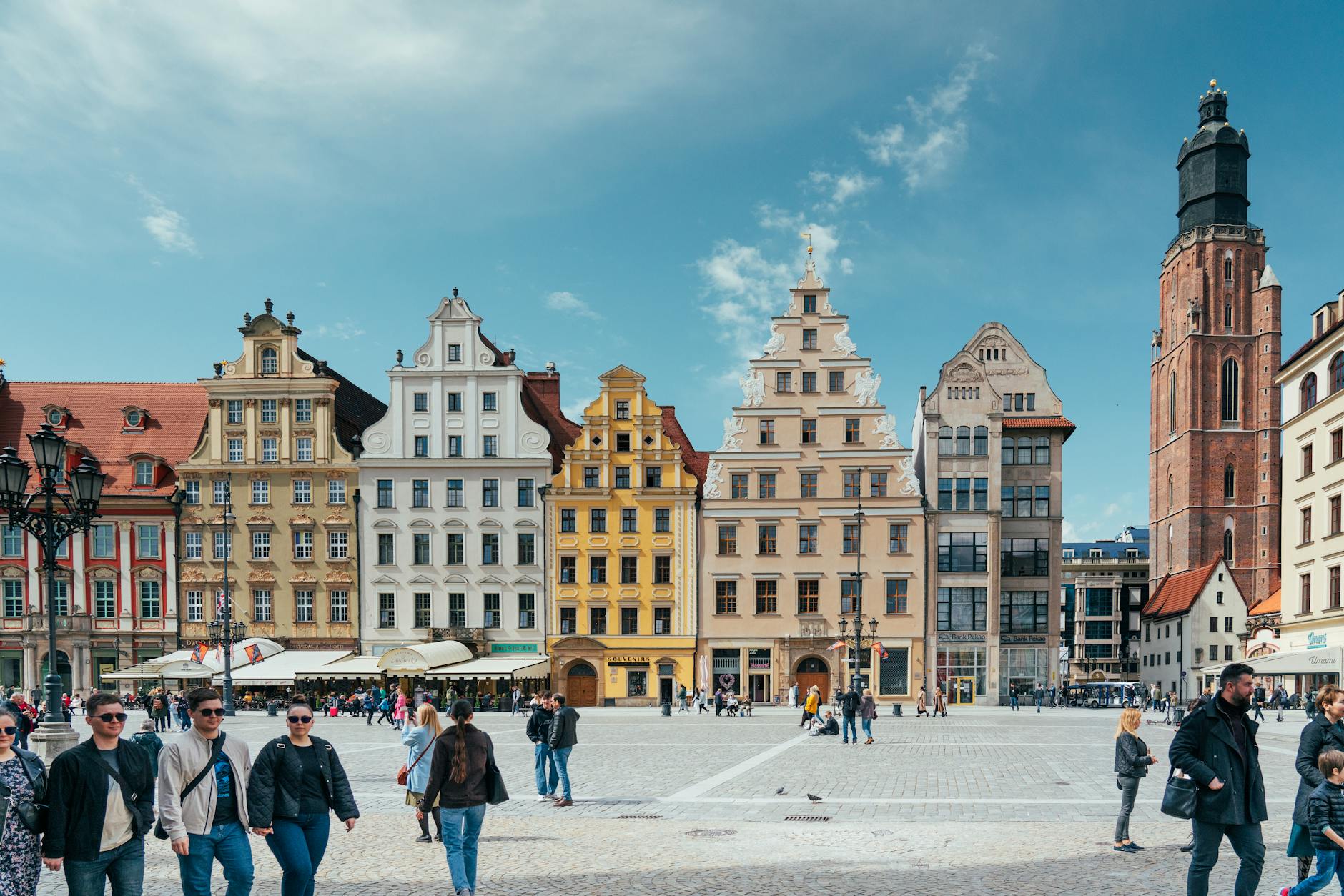
This is the city’s front room and still one of its strongest spaces. Big enough to breathe, active enough to feel alive, handsome enough to justify the attention.
University and Northward River Side
This helps deepen Wroclaw’s identity beyond the square and toward a more layered historic center.
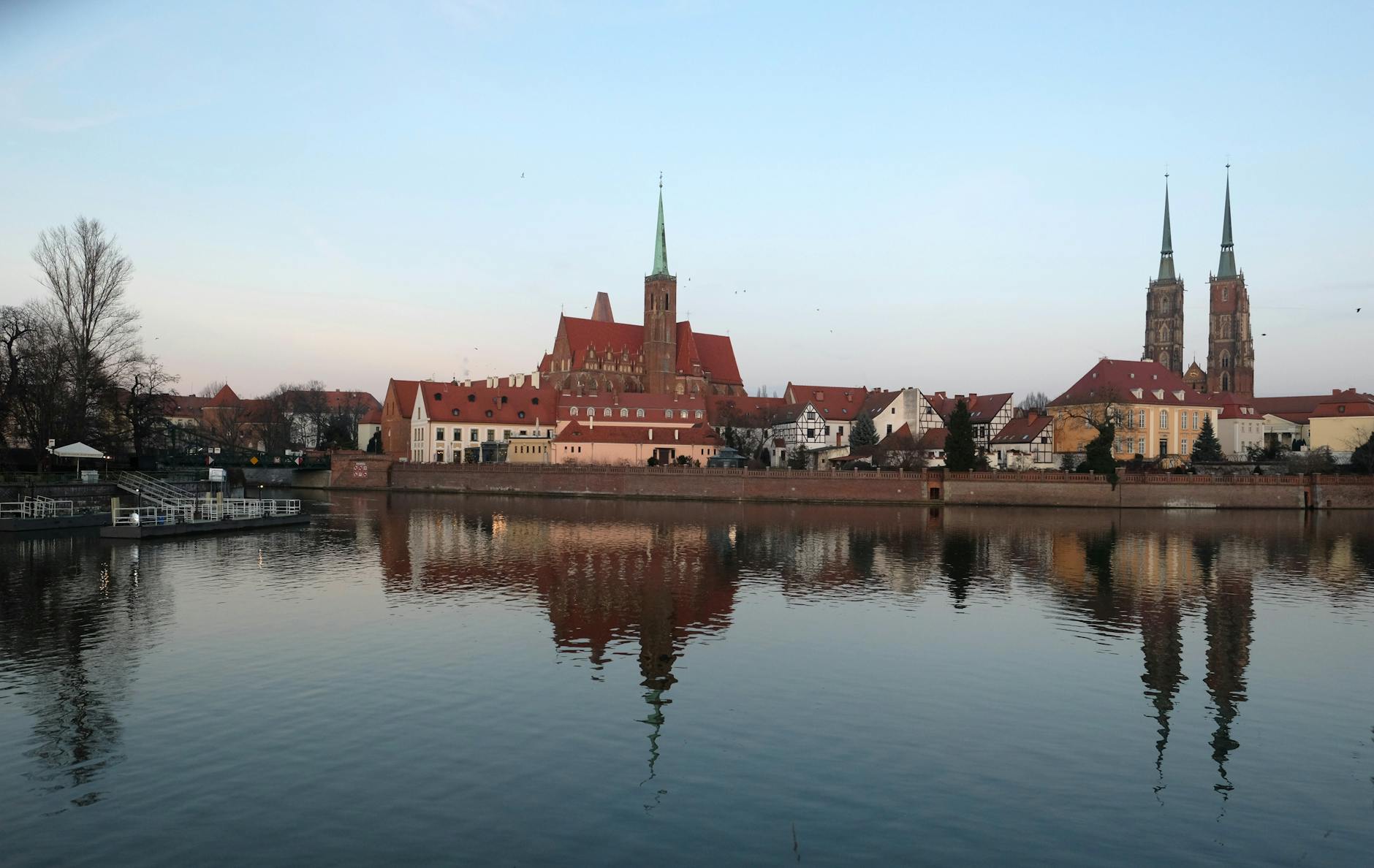
Ostrów Tumski
The cathedral island area is one of the clearest ways to shift the city from lively to atmospheric.
Nadodrze
A more local, less formal side of central Wroclaw that can improve the trip for travelers who want more than postcard routing.
Centennial Hall / Zoo Side
A major extension inside the city, worth respecting rather than tagging on lazily.
Neighborhood Guide: Where to Explore, Not Just Sleep
The Rynek
Use it at more than one hour. Morning, afternoon, and evening all read differently.
The Route Toward Ostrów Tumski
This is one of the city’s best structural walks, especially when you let the bridges do some of the storytelling.
University Side
Worth using to feel Wroclaw’s intellectual and architectural weight, not just its prettiness.
Nadodrze
Good for travelers who want a city that still feels inhabited, not only presented.
Ołbin / Centennial Hall Direction
A different kind of Wroclaw: greener, more institutional, and stronger for larger attractions and slower urban breathing space.
The Best Things to Do in Wroclaw
1. Walk The Rynek Properly
Not as a photo stop, but as the city’s operating center.
2. Cross Toward Ostrów Tumski Slowly
This walk is one of the best arguments for Wroclaw as a real destination.
3. Spend Time On Cathedral Island
The city needs this atmospheric counterweight to the square.
4. Use The River Edges
Wroclaw without the river is a weaker version of itself.
5. Give Centennial Hall Or The Zoo Side Real Time
This is not filler. It is one of the city’s strongest expansion zones.
6. Take The University And Historic Center Seriously
Wroclaw’s civic and academic layers deepen the whole stay.
7. Let The City Turn Into Evening
Late-day Wroclaw is often where the city becomes most convincing.
8. Eat Beyond The Most Obvious Square Traps
The center can feed you well, but only if you choose with some discipline.
9. Notice The Dwarfs, But Don’t Build The Trip Around Them
They are part of the city’s playfulness, not the sum of its identity.
10. Take At Least One Longer, Looser Walk
Wroclaw rewards drift more than checklist behavior.
Itineraries
One Excellent Day In Wroclaw
Start in the Rynek, move through the university side toward the river, cross toward Ostrów Tumski, have a serious meal, then finish with evening square or riverside life.
Two Days
Day 1: old core, river walk, and cathedral side. Day 2: Centennial Hall / zoo side or a deeper neighborhood-and-food day.
Three Days
Day 1: Rynek and historic center. Day 2: river, islands, and Ostrów Tumski. Day 3: institutional or neighborhood Wroclaw, depending on your interests.
Four To Five Days
Add slower museum time, more neighborhood depth, or a nearby Lower Silesia extension without hollowing out the city.
One Week
Use Wroclaw as a regional anchor, but only after giving the city several serious days of attention.
Itineraries By Traveler Type
First-Timer
Stay central, walk a lot, and make sure one day is about bridges and islands rather than just the Rynek.
Couple Weekend
Good central hotel, one long evening, river walks, Ostrów Tumski, and one very good dinner.
Solo Traveler
Excellent fit: clear, active, human-scale, and easy to inhabit.
Food Traveler
Center plus a few smarter neighborhood moves, with real attention to where you eat rather than defaulting to the first terrace on the square.
Family
The zoo / Afrykarium side becomes much more relevant, and the city’s walkability plus tram network help a lot.
Food and Drink
Wroclaw is a very good city for eating and drinking if you avoid the laziest old-town choices. The city benefits from Polish dining energy, a large student and young-professional population, and enough tourism to support variety without flattening everything into generic visitor food.
What To Prioritize
Prioritize places that feel rooted in the city rather than merely positioned for square traffic. Prioritize one or two thoughtful meals over endless snacking in over-obvious locations.
Best Food Zones
Old Town beyond the square itself: often smarter than the most central terraces. University-side and surrounding streets: useful for broadening the dining map. Nadodrze and adjacent districts: better for travelers who want a slightly more local read on the city. Riverside or island-adjacent spots: strongest when chosen for both atmosphere and quality.
Restaurant Strategy
Book if something really matters, especially on weekends. Wroclaw is not impossible to improvise, but good places are still good places.
Drinks
Bars, beer, wine, and late evening terrace culture all work well here. Wroclaw is more about sociable ease than scene-chasing.
Coffee and Morning Logic
This is a city that opens nicely through cafés. Start well and the center feels much better.
Getting Around Wroclaw
Airport To City
Daytime bus links are very workable, especially for travelers staying centrally and arriving lightly. Taxi or rideshare can still be smart for late arrivals or short stays.
Walking
Excellent in the core, essential to the experience, and the best way to understand the bridge-and-islands structure.
Trams and Buses
Very useful for expanding outward without hassle, especially for Centennial Hall, the zoo, and non-core districts.
Taxis and Rideshare
Useful when the weather is bad, time is short, or you are connecting with the airport.
Car Hire
Not needed for a city stay and usually more trouble than value.
Budget and Costs
Wroclaw remains one of the better-value city breaks in Europe when judged by actual quality of stay rather than only by raw prices.
What Costs Less Than Western Europe
Hotels, many restaurants, drinks, and routine city spending often feel gentler than in comparable Western European destinations.
What Feels Worth It
A strong central room, one or two serious meals, and not compromising on base quality just because the city is cheaper than somewhere else.
What Feels Like Better Value
Walking, public space, river routes, and the fact that Wroclaw gives back a lot without forcing constant paid activity.
Worth The Splurge
A better central hotel, a room with genuine location advantage, or a proper dinner in the right part of town.
Usually Not Worth It
Choosing the weakest tourist-square convenience options just because they are right there.
Safety, Weather, and Practical Reality
Wroclaw is broadly easy for visitors, but city quality still depends on sensible routing and expectations.
The Main Risk Is Thin Planning, Not Threat
Most visitors will find the city straightforward. The bigger problem is building a shallow itinerary.
Weather Changes The River Experience
Bad weather can make the city feel more square-centered and less spatially open. Good weather does the opposite.
General Urban Safety
Standard awareness is enough for most travelers. The usual station-area caution and night common sense apply, but Wroclaw is not a city that tends to menace the attentive visitor.
Accessibility
Wroclaw can be rewarding for travelers with accessibility needs, but cobbles, bridges, and older urban fabric still require planning.
Easier Areas
Selected central hotel zones, large squares, trams, and newer cultural facilities.
Harder Areas
Some older streets, bridge-heavy walking routes, and heritage areas with uneven surfaces.
Practical Moves
Choose location carefully, use trams early rather than late, and avoid turning the city into an all-day cobblestone endurance test.
Families, Solo Travelers, and Special Considerations
Families
Wroclaw works well for families thanks to open squares, river walks, trams, and the zoo/Afrykarium side.
Solo Travelers
Very strong fit. The city is social without being overwhelming.
Couples
One of Wroclaw’s best categories. Evening walks, bridges, cathedral side, and good dinners all combine well.
Winter Travelers
Winter can still work if the trip is built around atmosphere, food, and the old-town core rather than pure outdoor wandering.
Shopping and Souvenirs
Wroclaw is not the place for grand luxury-shopping campaigns. Shop for character, books, crafts, ceramics, food, and objects that actually connect to place.
What To Buy
Polish design objects, books, ceramics, food products, and thoughtful gifts rather than dwarf-themed filler.
Best Shopping Zones
Central streets off the Rynek, market-adjacent areas, and selected independent shops.
What To Avoid
Reducing the city to novelty merchandise because it looked playful for ten minutes.
Culture, History, and Local Context
Wroclaw’s story is deeper and more complicated than a quick weekend read often suggests. This is a city with medieval Polish roots, long Bohemian and Habsburg periods, Prussian and German history, immense wartime destruction, postwar border changes, and a rebuilt identity shaped by people who arrived after 1945 and had to make the city theirs.
That layered history matters because it explains why Wroclaw can feel both old and strangely reassembled. The city is not simply preserved. It is inhabited after rupture. That gives it a distinctive emotional register: handsome, active, rebuilt, and more resilient than romantic.
Its university culture, civic life, river planning, and public-space energy have helped turn it into one of Poland’s most attractive everyday cities rather than merely one of its most picturesque ones. That difference is important. Wroclaw is not just seen. It is used.
Day Trips and Side Trips
Lower Silesia
Wroclaw is a good base for wider Lower Silesia, but the city should come first, not last.
Centennial Hall Side As An Internal Excursion
This is not technically a day trip, but it can function like one in the shape of your day.
Short Regional Excursions
Possible, but not necessary on a first short stay. Wroclaw itself already has enough structure to justify your time.
What To Skip, or Treat Carefully
Skip Treating The Rynek As The Entire City
It is strong, but it is not enough.
Skip Building The Trip Around Dwarfs
They are fun, not foundational.
Skip A Weak Hotel Just Because The City Is “Affordable”
The point is a strong stay, not a cheap one.
Skip Ignoring The River
That is how you flatten Wroclaw into a standard old-town break.
Skip Over-Day-Tripping
The city is too often underused in favor of elsewhere.
Common First-Timer Mistakes
- Staying only one rushed night.
- Treating the square as the whole product.
- Not crossing enough bridges.
- Underusing trams for non-core areas.
- Eating only in the most obvious tourist pockets.
- Forgetting the zoo/Centennial Hall side exists.
- Mistaking charm for superficiality.
- Treating price advantage as the main reason to go.
- Failing to give Ostrów Tumski enough time.
- Leaving before evening.
Responsible and Respectful Travel
Use Wroclaw thoughtfully. Respect its residential calm away from the loudest central areas, and remember that the city’s rebuilt beauty sits on top of difficult twentieth-century history. Support museums, local food businesses, and independent shops that reflect the city’s actual life rather than only its tourist image.
Travel gently around the river edges and public spaces, and let the city remain a lived place rather than a themed old-town stage.
Why Wroclaw Feels So Easy To Like
Part of Wroclaw’s strength is that it gives back quickly. Some cities demand patience before they offer pleasure. Wroclaw is more generous. The square works fast. The bridges register immediately. The river light helps. The terraces and bars make sense without a long decoding process. That surface ease is real, but it can also trick people into thinking they have fully understood the place after one afternoon.
What makes Wroclaw stronger than the “pleasant surprise” label is that the easy first layer keeps opening. The square is not the whole city. Ostrów Tumski changes the atmosphere entirely. The rebuilt and inherited architectural layers raise questions about rupture, continuity, and memory. The university side gives the city intellectual shape. The outer central districts and the Centennial Hall side stop the place from feeling like a perfect but limited old-town weekend.
In other words, Wroclaw’s charm is not shallow. It is simply unusually accessible. That is one reason the city overperforms. It does not punish the first-time visitor, but it still rewards the more serious one.
Wroclaw By Time Of Day
Morning Wroclaw can feel cleaner and more spacious than people expect, especially in the square before the full social rhythm takes over. This is a good time to register the architecture and civic scale without the pressure of constant terrace life.
Midday is when the city becomes more obviously social. Cafés fill, the Rynek turns outward, and the old-town core performs its easiest version of itself. This is useful, but also the point at which some travelers make the mistake of never leaving the central frame.
Late afternoon and early evening are often when Wroclaw is at its best. The river routes start to matter more, the light softens, and the walk toward Ostrów Tumski becomes more atmospheric. If you time it well, the city’s whole argument becomes clearer at this hour: not only a handsome central square, but a broader urban landscape shaped by crossings and gradual changes in tone.
Night matters too. Wroclaw is not a city that has to become wild to become rewarding. It often improves through sociability rather than intensity: bars, late dinners, illuminated streets, and a looser central-European urban ease. Travelers who leave before evening often miss one of the strongest parts of the city.
FAQ
Is Wroclaw worth visiting on its own?
Yes, very much so.
How many days should I spend in Wroclaw?
Three days is ideal for a first proper stay. Two is the minimum that still respects the city.
Is Wroclaw walkable?
Yes, especially in the core, though trams improve the trip.
Do I need a car?
No.
Is Wroclaw cheap?
It can be good value, but the point is that it is good, not just cheap.
Is the zoo worth it?
Yes for many travelers, especially families and anyone pairing it with the Centennial Hall side.
What is the best area to stay?
Old Town or a central river-adjacent area for most first-timers.
When is the best time to go?
May, June, September, and early October are the strongest broad-appeal windows.
Final Planning Shortcuts
Best First-Timer Plan
Stay central, build one day around the old core and one around river crossings and Ostrów Tumski, then use the third day for either the zoo/Centennial Hall side or deeper neighborhood time.
Best Couple Plan
Good hotel, long evening walk, one strong dinner, cathedral side, and plenty of river time.
Best Short-Stay Plan
Do not spend the whole trip inside the square. Cross outward early.
Best Value Plan
Use the city’s price advantage to improve your hotel and meals, not to lower your standards.
Best Family Plan
Keep the hotel central, use trams intelligently, and let the zoo side do some of the heavy lifting.
Source Notes
- 1. Visit Wroclaw, "Transportation by Plane." https://visitwroclaw.eu/en/transportation-by-plane/
- 2. Wroclaw Zoo, "Opening Hours." https://zoo.wroclaw.pl/en/
- 3. Panorama Raclawicka, "Visitor Information." https://panoramaraclawicka.pl/en/
- 4. Centennial Hall, "For Visitors." https://halastulecia.pl/en