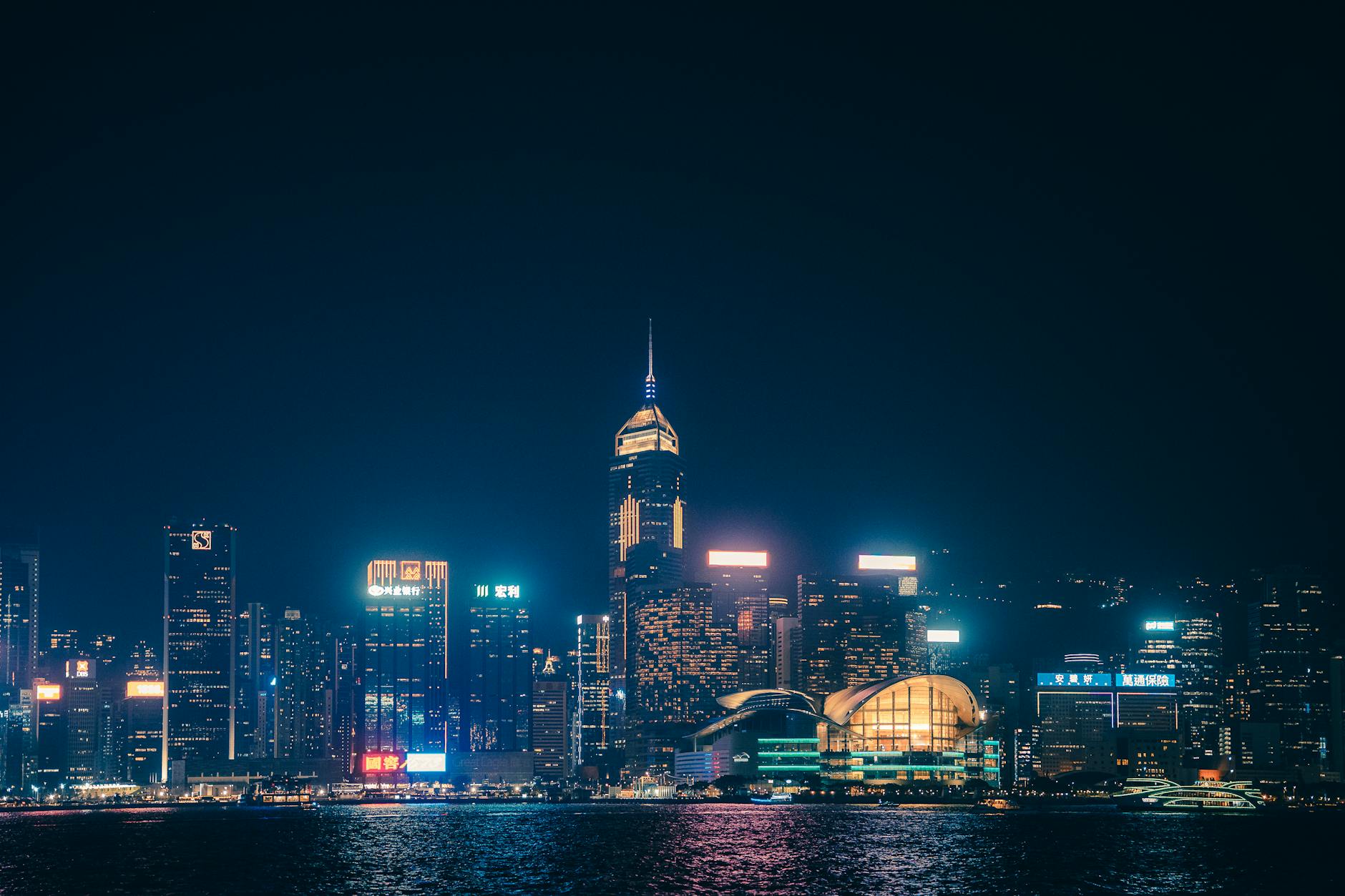
Wan Chai is one of the Hong Kong districts people think they already understand before they get there.
Start Here
The old stereotypes are still stubborn: neon, bars, late nights, expat residue, and a district supposedly defined by yesterday’s stories rather than today’s city. But Hong Kong Tourism Board’s current official framing is closer to the truth. It still presents Wan Chai as a place where traditional charm and modern flair collide, with nightlife and towers on one side and hidden temples, old buildings, and neighborhood texture on the other.[1]
That is the correct starting point. Wan Chai is not simply old Hong Kong surviving under skyscrapers, nor is it just a polished business-and-dining corridor for people who have aged out of Lan Kwai Fong. It is one of the city’s clearest mixed districts: civic harbor edge, older side streets, transport usefulness, food, nightlife, and small pockets of genuine historical continuity all pressed together in a narrow stretch of Hong Kong Island.
Wan Chai in one sentence: it is a district of layers, and the visit improves dramatically once you stop reducing it to either heritage nostalgia or bar-strip cliché.
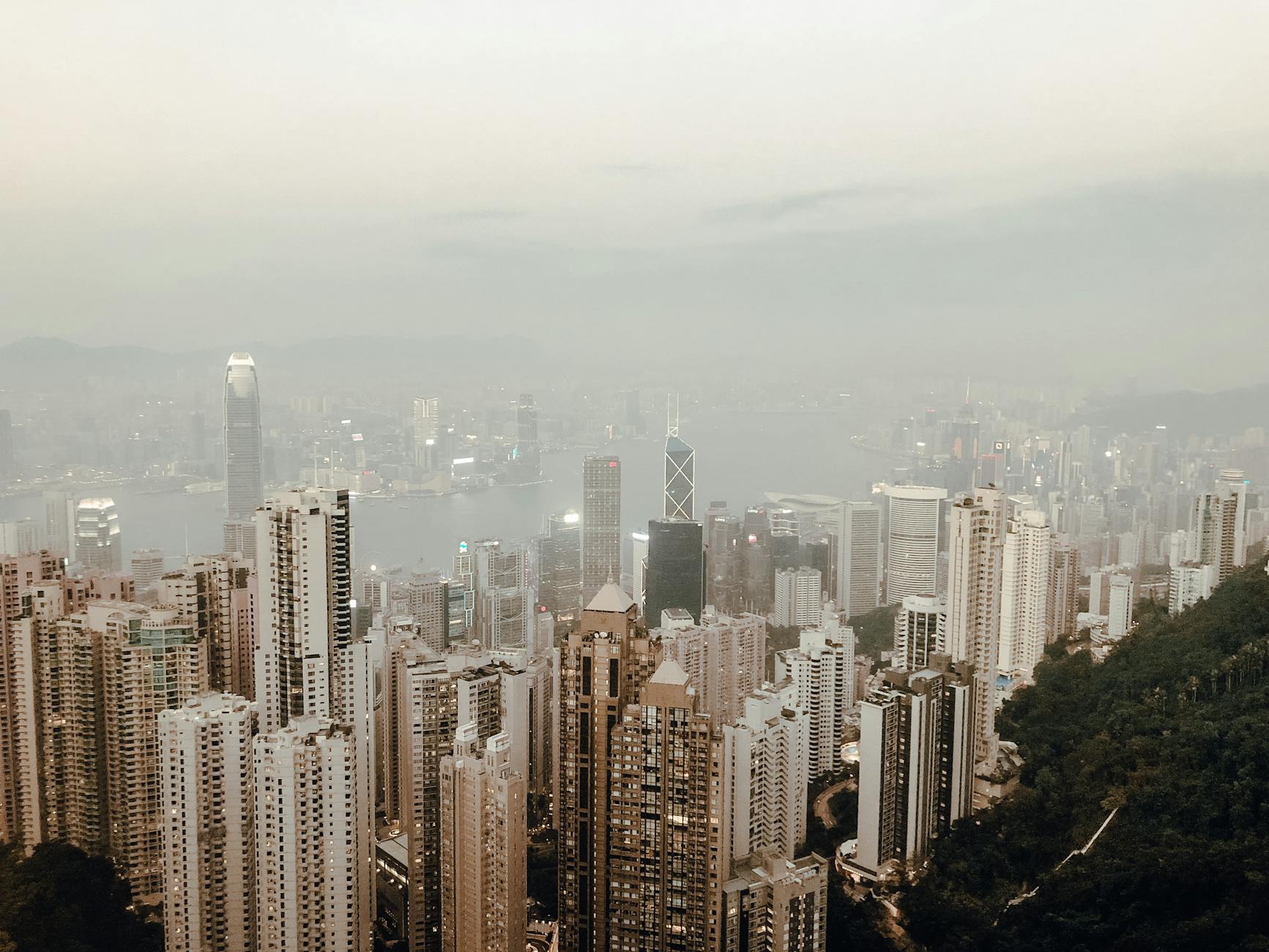
Basic data
| Population | Dense urban district inside Hong Kong Island; the wider Hong Kong population is about 7.5 million |
|---|---|
| Area | Mixed-use urban district spanning harborfront and inland slopes |
| Major religions | Buddhism, Taoism, Christianity, Islam, folk religion, and a large secular population |
| Political system | District inside a special administrative region |
| Economic system | High-income services economy led by business services, hospitality, retail, events, and government activity |
Quick Verdict
Best for: first-time Hong Kong visitors who want a more mixed district than Central, repeat visitors, urban walkers, and travelers who like cities where older street texture still survives inside a very modern frame.
Less ideal for: visitors who want a single clean “sightseeing” district or a quiet neighborhood with low stimulation.
Ideal first use: a half-day into evening, or as part of a longer Hong Kong Island day.
Can justify more time: yes, especially if you divide the district between older inland Wan Chai, Star Street, and the civic harbor edge.
Biggest planning mistake: choosing only one version of Wan Chai and deciding that is the whole district.
One thing to prioritize: contrast.
One thing to keep under control: nightlife mythology.
The blunt version: Wan Chai is much more interesting than its reputation, but only if you walk beyond the obvious roads.
Who Will Love Wan Chai?
Wan Chai works for travelers who want Hong Kong to feel mixed rather than monumental. If you like districts where old tenements, temples, towers, bars, civic spaces, and new-food streets all coexist without resolving neatly, Wan Chai is excellent.
It is especially good for visitors who like urban districts that change character every few blocks.
Wan Chai at a Glance
| Question | Practical Answer |
|---|---|
| Best visit style | walking district with a few deliberate anchors |
| Main mood | layered, active, mixed-use |
| Best structural entry | Wan Chai MTR |
| Best contrast move | older streets plus Star Street or harbor edge |
| Main visitor trap | reducing the district to nightlife |
| Physical challenge | density and sequencing, not terrain |
| Core payoff | one of Hong Kong’s clearest old-and-new mixtures |
2026 Visitor Notes
Wan Chai Still Reads as a District Where Old and New Collide
Hong Kong Tourism Board continues to frame Wan Chai as a dynamic district where heritage and hipness coexist, with older buildings and hidden temples mixed into a skyline of towers, bars, and restaurants.[1] That remains the most useful overall interpretation.
Wan Chai Station Still Makes the District Highly Usable
MTR continues to publish Wan Chai as its own Island Line station-and-tunnels environment, which matters because the district is easiest when you approach it as a connected pedestrian zone rather than a set of isolated attractions.[2]
The Blue House Cluster Still Anchors the Heritage Side
Hong Kong Tourism Board continues to highlight the Blue House as a major heritage landmark in the district, emphasizing its Lingnan-style architecture, living community dimension, and Hong Kong House of Stories role.[3] This remains one of the clearest pieces of evidence that Wan Chai still has genuine neighborhood depth.
The Harbor Edge Still Carries Civic Weight
Golden Bauhinia Square continues to function officially as both a reunification monument and a harbor-view public space on Expo Promenade.[4] That means Wan Chai still includes a formal, symbolic waterfront register quite different from its inland street life.
How to Understand Wan Chai
Wan Chai works through three overlapping versions of itself.
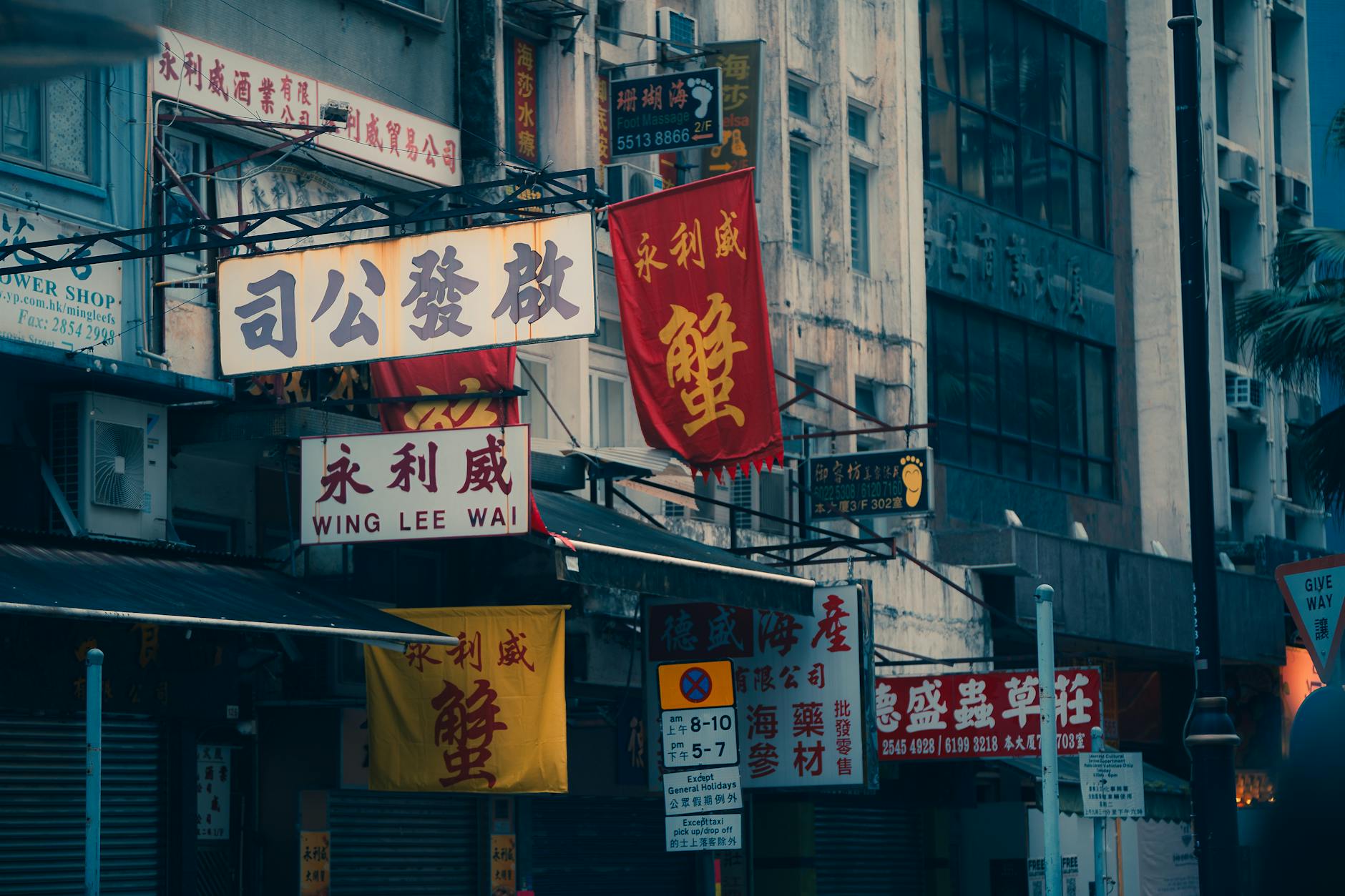
The first is older Wan Chai: narrower streets, temples, tong lau remnants, and the district’s lived memory.
The second is reinvented Wan Chai: Star Street, Ship Street, new restaurants, boutique drift, and the fashionable side of district renewal.[1][5]
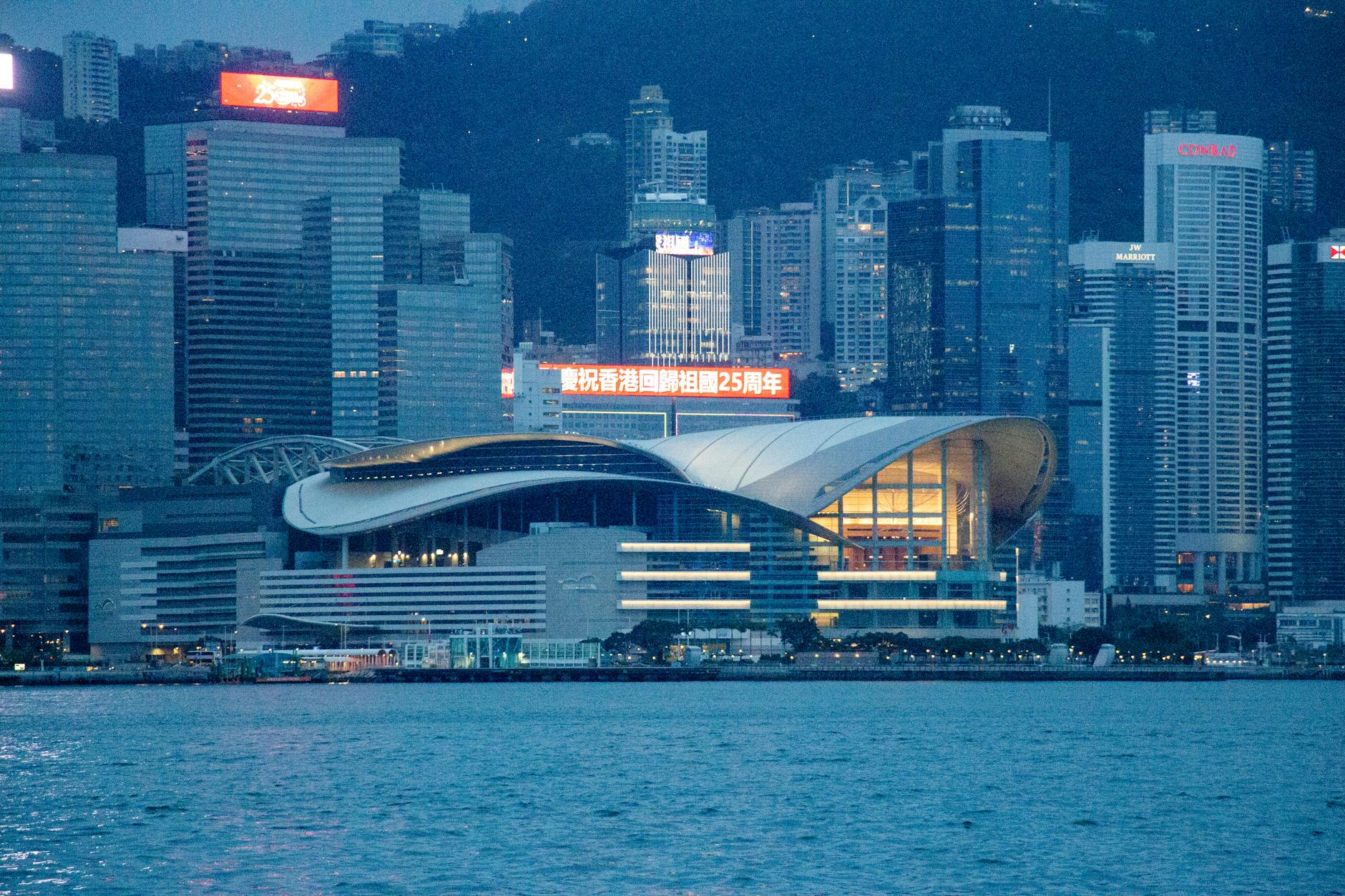
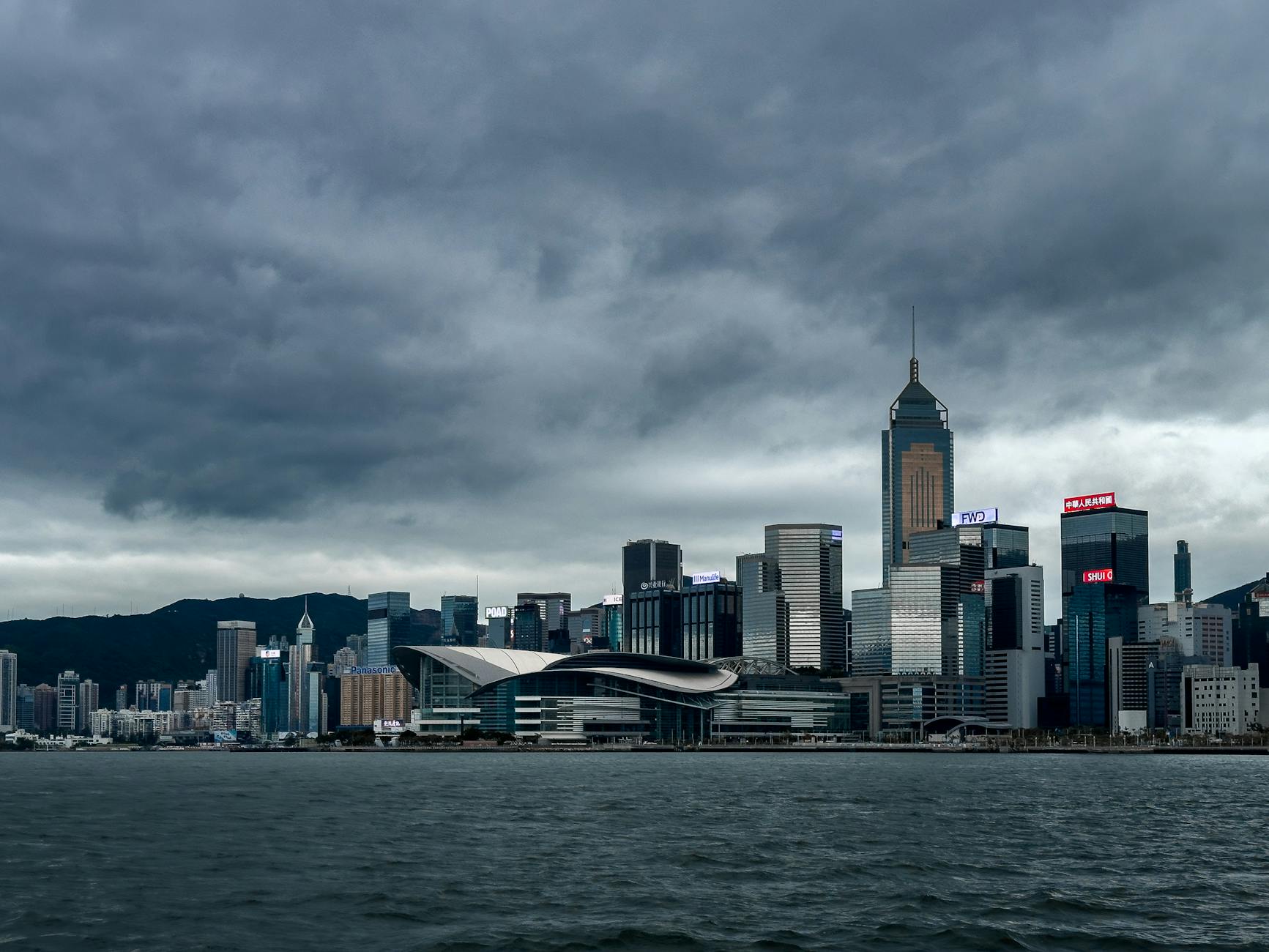
The third is civic-commercial Wan Chai: convention-area scale, Golden Bauhinia, transport infrastructure, and the wide harbor-facing edge.[4]
The Main Mental Shift
Do not ask, “What is Wan Chai known for?” Ask, “Which Wan Chai am I walking?” That question makes the district coherent. Without it, Wan Chai can feel scattered because it is doing several urban jobs at once.
What Makes Wan Chai Distinct
Wan Chai is distinct because it still shows Hong Kong changing in real time.
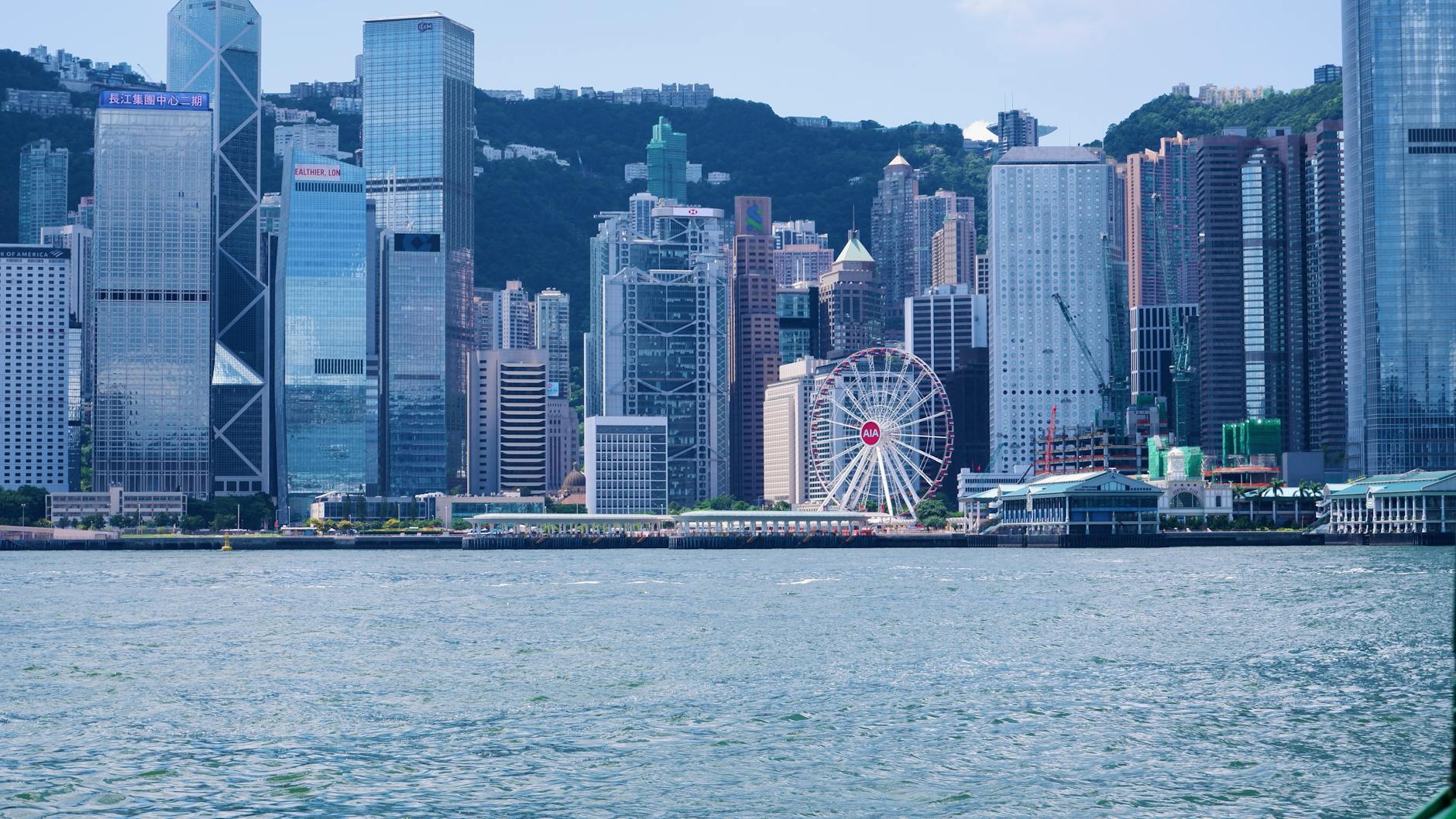
Other districts can feel more singular: Central as finance and civic prestige, Causeway Bay as retail voltage, Tsim Sha Tsui as harbor spectacle. Wan Chai is more mixed and less neatly branded. That is its strength. It still has working old streets, stylish reinvention, nightlife, institutional harbor frontage, and a deeply Hong Kong way of letting contradictory things coexist without formal explanation.
It is also one of the districts where Hong Kong’s tendency toward self-reinvention becomes easiest to observe without becoming sterile. In some places, “old versus new” becomes a simple tourism slogan. In Wan Chai, the contrast still feels lived. The district genuinely contains older residential and street-level textures, then just a few blocks away offers entirely different registers of consumption, office use, or nightlife. That tension is not a side note. It is the subject.
Why Wan Chai Gets Flattened
Wan Chai is often reduced to one of three bad summaries.
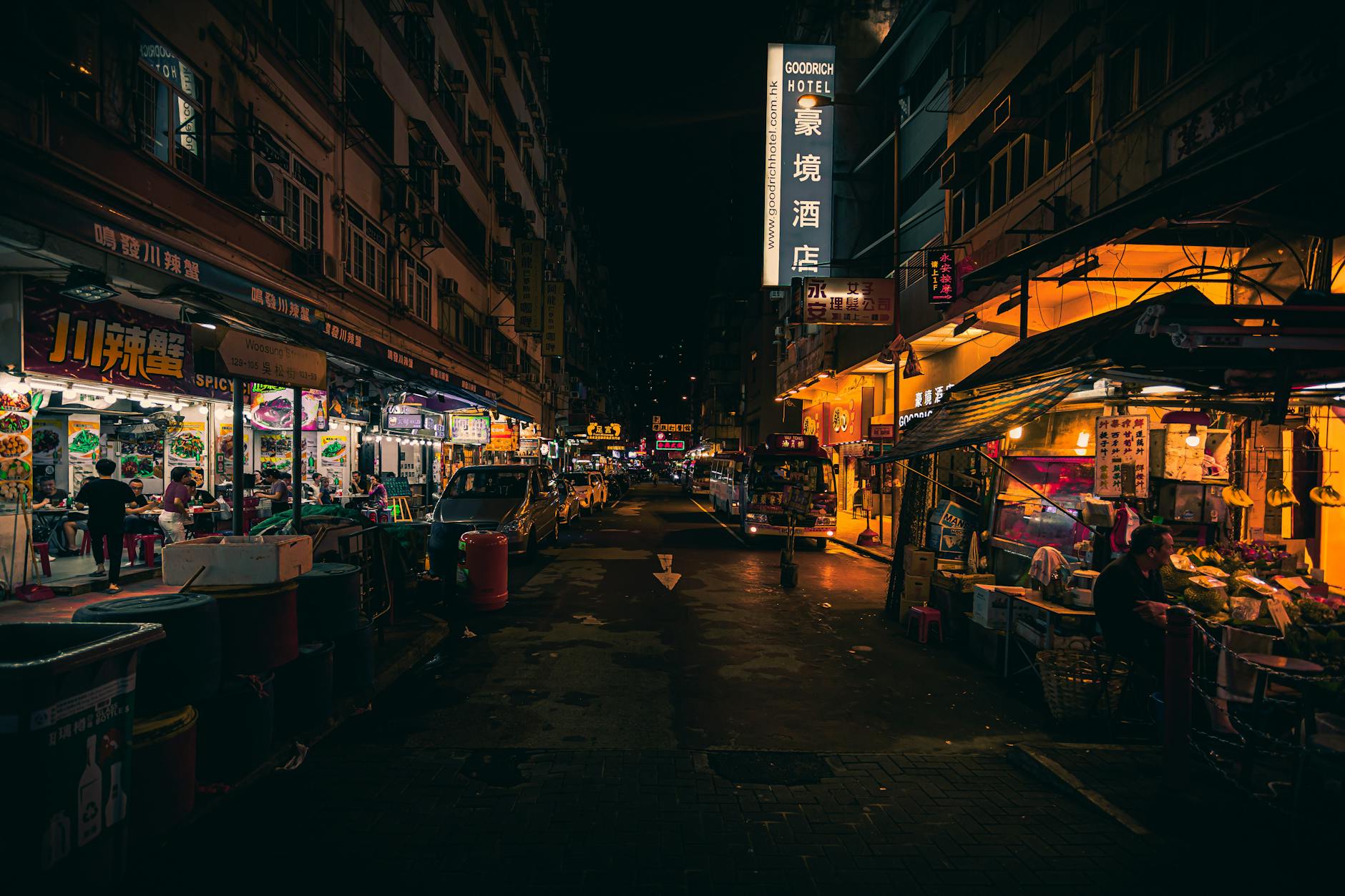
The first is the old stereotype: bars, sailors, neon, and a district defined by late-night history more than current reality.
The second is the gentrified stereotype: Star Street, polished restaurants, boutiques, and a conveniently tasteful version of urban reinvention.
The third is the heritage stereotype: Blue House, temples, and a surviving old Hong Kong village-inside-the-city fantasy.
All three contain partial truth. None is enough by itself. The district gets flattened whenever one layer is allowed to stand in for the whole. The job of a better guide is not to pick the “real” Wan Chai and dismiss the others. It is to explain how the layers sit together and how a traveler should move between them.
Best Time to Visit
Wan Chai is best when you give it two different times of day.
Daytime is useful for older streets, Blue House, and the district’s structural reading. Late afternoon and evening are when restaurants, bars, and the more social parts of the district begin to feel convincing. If you only come late at night, you risk getting a distorted version. If you only come in the daytime, you miss part of the district’s pulse.
The best first visit is usually a walk that begins in daylight and ends after the district has shifted register.
That matters because Wan Chai can appear to contradict itself depending on when you arrive. A daytime-only read might make it seem more architectural, residential, and transitional. A night-only read might make it feel as though the social and commercial layers dominate everything. Both impressions are real, but both are incomplete. The district is unusually dependent on time-of-day contrast.
How Much Time You Need
Short Visit
Enough for one inland route plus one harbor or Star Street detour.
Half Day
The best first answer for most visitors.
Full Day
Reasonable if Wan Chai is being used as a base district and not just a pass-through.
More Than One Visit
Often ideal. Wan Chai improves once you no longer insist on solving it in one pass. A first visit can establish the inland-old-street logic. A later return can use the harbor edge, dining, or evening mood more intelligently.
Arrival Strategy
Wan Chai should begin with a district choice, not an attraction choice.
MTR still presents Wan Chai Station as a clear access anchor.[2] From there, the question is whether you are going inland toward older streets and Blue House, diagonally toward Star Street, or outward toward the harbor civic edge. Wan Chai becomes much easier once you decide which layer you are entering first.
This matters because the district is narrow enough to look simple and complex enough to become shapeless if you drift.
Useful first-entry choices include:
- old-street-first if you want the district’s memory before its polish
- Star Street first if you are deliberately comparing old and reinvented Wan Chai
- harbor-edge first if the wider day is civic or harbor-facing in structure
What you should avoid is treating the station exit as the beginning of a random walk. Wan Chai is not difficult, but it becomes much better once you decide what kind of Wan Chai you are entering.
Older Wan Chai, Properly Used
Older Wan Chai is the part that saves the district from becoming generic.
This is where the temples, side lanes, older building stock, and surviving neighborhood scale still give the area grain. HKTB’s current district description explicitly notes the coexistence of old apartment buildings and hidden temples among the district’s towers.[1] If you skip this layer, you miss the district’s best argument for itself.
This older zone is also where Wan Chai feels least like a brand and most like a city that had to absorb growth without fully surrendering its prior life. The streets are not necessarily “pretty” in the polished sense. They are useful, compressed, and still marked by ordinary habitation. This is exactly why they matter.
For a first-time visitor, older Wan Chai should not be rushed. It is the part of the district that rewards looking slightly longer than the architecture or signage initially asks you to.
Temples, Side Streets, and the Density of Meaning
One of the reasons older Wan Chai works well is that meaning accumulates in small units. You do not need one great landmark every few blocks, because the district’s value often comes from compression rather than scale.
Temples tucked into busier urban fabric, older apartment buildings, narrow side streets, and leftover social uses all help build the district’s emotional credibility. Hong Kong Tourism Board explicitly points to hidden temples and older structures as part of Wan Chai’s identity.[1] That is not background decoration. It is evidence that the district still has local depth beneath its more public-facing reputations.
If you are the kind of traveler who prefers a city to reveal itself through repeated short signals instead of one overwhelming monument, Wan Chai can be one of the more rewarding parts of Hong Kong Island.
The Blue House and Why It Matters
The Blue House still matters because it proves Wan Chai’s history is not only archival. HKTB continues to frame it as a preserved early-20th-century Lingnan-style residence with a living-community dimension and an active cultural-history role through the Hong Kong House of Stories.[3]
This is important because Wan Chai’s older identity should not be imagined only as mood. In the Blue House cluster, it is physically present.
It also matters because it complicates the easy story people often tell about Hong Kong: that the old city either vanished or survives only in museums and curated fragments. The Blue House is not simply a heritage object. It is a sign that preservation, community memory, and present-day use can coexist in more complicated ways than the simplistic “old versus new” narrative allows.
That makes it one of the district’s most important interpretive sites, even for visitors who are not normally architecture-led.
Star Street, Ship Street, and the Reinvented Register
HKTB continues to present Starstreet Precinct as a connected day-to-night enclave of cafés, restaurants, bars, boutiques, and galleries, linked closely to Admiralty and Pacific Place.[5]
This is one of Wan Chai’s most obvious newer identities, and it is genuinely useful. But it should be read as one layer of the district, not as the whole district’s aspirational future. It works best when contrasted with older Wan Chai rather than replacing it.
Star Street and Ship Street are good examples of why Wan Chai deserves more than a short guide. They are easy to misread. If you arrive only here, Wan Chai can seem like a polished urban quarter for design-minded dining and evening social life. If you arrive only in the older streets, this newer precinct can seem like a self-conscious insertion with little relation to district memory.
Both views are too simple. The real point is that Wan Chai contains both, and the emotional movement between them is part of what makes the district interesting.
Reinvention Without Total Erasure
Many city districts undergo renewal by losing almost all readable connection to the earlier neighborhood. Wan Chai is more interesting because that process remains incomplete.
The district does reinvent itself, absolutely. But it has not fully erased the friction between older and newer social worlds. That is why walking here can feel more revealing than walking a cleaner, more self-contained lifestyle district.
This is also why Wan Chai can feel slightly unstable in identity, and why some travelers initially struggle to “sum it up.” It is not one thing, and the instability is productive.
Golden Bauhinia, Expo Promenade, and the Civic Harbor Edge
Golden Bauhinia Square remains one of the district’s most symbolically loaded harbor-edge sites, and HKTB still frames it as both reunification monument and harbor-view space.[4]
For travelers, this part of Wan Chai is useful less because it is emotionally intimate and more because it shows the district’s institutional face. It is the part of Wan Chai that looks outward and official.
This matters because many visitors think of Wan Chai only in terms of nightlife or old streets. The harbor edge corrects that. It reminds you that Wan Chai also belongs to Hong Kong’s public and ceremonial image. The district is not only social and commercial. It is also civic in ways that become clearest at this outward-facing edge.
Used well, the harbor side gives the district scale. Used badly, it becomes a quick photo stop with no relationship to the rest of the walk. The difference is whether you let it complete the district or interrupt it.
Wan Chai and the Harbor
Wan Chai does not “own” the harbor in the same iconic way Tsim Sha Tsui or Central do, but that is partly what makes its waterfront edge useful. It feels less like a dedicated spectacle strip and more like part of a broader city system.
The district’s harbor-facing side should usually be read as:
- the public face of a district that is otherwise dense and interior
- a place where formal symbolism and everyday city movement briefly meet
- a useful counterweight to the messier, more intimate inland streets
This balance between inward grain and outward civics is one of Wan Chai’s strongest structural features.
Nightlife, Food, and the Need for Restraint
Wan Chai absolutely still has nightlife, and it would be silly to pretend otherwise. HKTB’s own district framing includes bars and vivid evening energy.[1]
But this part of the district is easiest to use well when it is treated as a possible ending, not the entire thesis. If you build the whole district around the nightlife idea, Wan Chai becomes flatter than it really is. The better move is to let food or drinks close the day after the district has already shown you its other selves.
This is particularly important for first-timers. If your only exposure to Wan Chai is after dark and socially pitched, you may leave with the feeling that the district is lively but emotionally narrow. In reality, the evening scene makes more sense after daylight has already shown you its other layers.
Why Wan Chai Is Better Than Its Reputation
Wan Chai’s reputation lags behind its actual value because outdated clichés are sticky. For a long time, the district could be summarized lazily through vice, expat nightlife, and old urban seediness. That narrative remains far too available.
But what makes Wan Chai strong now is precisely that it outgrew any one summary without becoming smooth. It did not become a perfect boutique quarter. It did not become pure business district. It did not become fully preserved heritage theater. It became mixed.
That is a much better outcome for the traveler, even if it is slightly harder to market in one sentence.
Wan Chai for Different Travelers
Wan Chai is unusually sensitive to the type of traveler using it.
First-Time Hong Kong Visitors
Wan Chai is good if you want something more mixed and more grounded than Central, but still highly accessible.
Repeat Visitors
The district often improves with repetition because the pressure to “find the main attraction” disappears.
Nightlife-Oriented Travelers
Wan Chai can support that, but it is a mistake to let the nightlife reading consume the district.
Architecture and Urbanism Travelers
This is one of the better districts on the island for observing how preservation, redevelopment, and everyday use overlap imperfectly.
Food-First Travelers
Wan Chai can work very well as a district for structured eating and drinking, but only if you are willing to let the streets matter alongside the meals.
Daylight Wan Chai Versus Evening Wan Chai
This distinction deserves more emphasis because it changes almost everything.
Daylight Wan Chai is about:
- older street texture
- heritage clues
- the real shape of the blocks
- the mixed-use city reading
Evening Wan Chai is about:
- restaurants and bars
- social energy
- a more curated sense of district identity
- more overt lifestyle performance
The best first visit usually includes some of both. If you only do one, you get a true but partial Wan Chai.
How to Walk Wan Chai Well
Wan Chai is one of those districts where route discipline creates understanding.
A weak Wan Chai walk usually looks like this:
- random exit from the MTR
- vague drift through one appealing street
- abrupt jump into a completely different precinct
- a meal that breaks the route rather than punctuates it
- no clear sense of what the district was trying to show
A stronger Wan Chai walk usually looks like this:
- choose an initial layer: old streets, Star Street, or harbor edge
- walk that layer long enough for it to become legible
- cross deliberately into a contrasting layer
- pause for food or drink once the district has already done some explanatory work
- let the day end in a different register than it began
This does not require rigidity. It simply requires enough intention to let the district’s structure emerge.
One Strong Half-Day in Wan Chai
If you only have half a day, this is the strongest first-time version:
- enter through Wan Chai MTR with an old-streets-first plan
- use the Blue House area and nearby lanes to read the district’s memory layer
- shift toward Star Street or Ship Street for the reinvention layer
- decide whether the day ends inland with food or outward at the harbor edge
This route works because it lets Wan Chai unfold through contrast rather than random appeal.
A Better Full-Day Version
If Wan Chai is getting more time, use it in parts.
Morning: older streets and heritage reading Midday: a controlled transition into a reinvention zone or a calmer food stop Afternoon: broader district wandering or harbor edge Evening: food, drinks, or nightlife as a conclusion rather than a premise
This sequencing tends to produce a much fuller understanding of the place than any “best of Wan Chai” checklist.
Staying in Wan Chai
Wan Chai can be a very good base, but for reasons different from Central.
It works well if you want:
- strong transport without Central’s full formality
- easier access to food and evening life
- a district that still changes meaningfully across the day
- a more mixed sense of Hong Kong outside the hotel door
It is less ideal if you want:
- total quiet
- a single iconic harbor-front identity
- a district that flatters visitors immediately and continuously
The case for staying in Wan Chai is not glamour. It is usability with character. That can be a stronger proposition than it first sounds.
Wan Chai in Bad Weather
Wan Chai handles imperfect weather better than some more purely scenic or promenade-dependent districts.
If it is rainy or oppressive:
- stay more tightly within one district layer
- let old streets and shorter transitions do more of the work
- avoid turning the harbor edge into an obligation if conditions flatten it
- use food and indoor pauses as structural aids rather than as consolation prizes
This is useful because Hong Kong weather does not always cooperate, and Wan Chai’s value is not dependent on one perfect visual payoff.
Why Wan Chai Works So Well for Return Visitors
Wan Chai often gets better once the pressure to “get the main thing” has vanished.
Return visitors usually use it more intelligently because they already know:
- the district is not reducible to one attraction
- its pleasures are relational
- food and drinks belong at the end of a route, not instead of one
- the old streets and newer precincts are stronger in contrast than in isolation
This is one reason Wan Chai can outgrow flashier districts in memory. It may not dominate the first impression of Hong Kong, but it often matures better.
The Day Shapes Wan Chai Supports Best
There are really three strong ways to use the district.
Heritage-to-Evening Wan Chai
Start with the old streets and end with food or drinks. This is the strongest first-timer version.
Reinvention Wan Chai
Use Star Street, Ship Street, and the newer lifestyle layer, but only after making peace with the fact that this is one slice of the district rather than the whole.
Civic-Edge Wan Chai
Use the harbor edge and institutional side to understand the district’s public face, then move inward to make that formality feel human again.
These are all legitimate trips. The mistake is trying to force all three equally into one compressed outing.
What Wan Chai Teaches About Hong Kong
If Central teaches power and Tsim Sha Tsui teaches spectacle, Wan Chai teaches mixture.
It teaches that Hong Kong’s most revealing districts are often not the ones with the simplest image. It shows how the city can preserve, replace, market, socialize, and improvise at the same time. It demonstrates that urban identity does not have to resolve neatly to be persuasive.
That is why Wan Chai deserves more room in a guide set than its tourism clichés suggest. It is not simply one district among many. It is one of the better places to understand how Hong Kong carries contradiction without trying too hard to smooth it away.
Why This Guide Needed a Second Pass
Wan Chai is exactly the kind of district that suffers from short-guide treatment. A compressed guide can list the Blue House, Star Street, Golden Bauhinia, nightlife, and older streets and still fail to explain anything important.
That happens because Wan Chai is not defined by its named attractions. It is defined by how its layers sit against one another. Without enough room, a guide simply reproduces the same flattening mistakes visitors already bring with them:
- “heritage Wan Chai”
- “bar Wan Chai”
- “cool Wan Chai”
- “harbor Wan Chai”
The district deserves a more structural explanation than that, because its real value lies in the collisions.
How to Leave Wan Chai Well
Departure matters. Wan Chai is easier to appreciate if you leave it after the district has shifted register once.
A good exit often means:
- ending with a meal or drink after an older-street walk
- moving outward to the harbor edge after the inland district has become legible
- or returning toward another island district once Wan Chai’s internal contrast is clear
The worst exit is the one where you give the district only one layer and then move on convinced that layer was everything. Wan Chai improves when the day closes on contrast rather than confirmation.
Why Wan Chai Rewards a Second Walk
Some districts give up most of their meaning in the first pass. Wan Chai does not. The second walk is often where it becomes persuasive, because by then you already know that no single street, mood, or precinct can explain it.
That second walk is where the district stops feeling scattered and starts feeling layered. For a place like this, that is the difference between seeing it and actually understanding it.
That is also why Wan Chai earns a place in a serious Hong Kong itinerary rather than only as overflow from better-known neighbors. It is one of the districts that deepens the whole city once you allow it to.
It may not be the district you remember first. It is often the district you understand better later, and that is usually the stronger compliment.
That delayed payoff is exactly the kind of thing a second-pass guide should protect. Wan Chai is better when explained with enough room for its contradictions to remain visible.
It rewards patience.
Wan Chai and Its Neighbors
Wan Chai becomes clearer when seen in relation to what borders it.
Wan Chai and Central
Central is more formal, more institutional, and more sharply prestige-driven. Wan Chai feels looser, more socially mixed, and less narratively complete.
Wan Chai and Causeway Bay
Causeway Bay is more overtly retail-charged and crowd-dense. Wan Chai is more textured and internally contradictory.
Wan Chai and Admiralty
Admiralty tends to feel more connector-heavy and infrastructural. Wan Chai feels more lived and mixed.
These boundaries matter because Wan Chai’s identity comes partly from what it is not. It is not as polished as Central, not as shopping-dominated as Causeway Bay, and not as formal as Admiralty.
Why Wan Chai Improves After the First Walk
Wan Chai is not always instantly lovable. It often becomes better after the first pass because the district’s contradictions start to make sense.
At first, those contradictions can feel messy:
- old lanes then polished bars
- temples then towers
- civic harbor edge then boutique dining
- local texture then overt visitor-facing energy
But once you accept that Wan Chai’s value lies in this unresolved mix, the district often becomes one of the more satisfying places on the island. It stops asking to be pure and starts rewarding complexity.
Why This Guide Needed a Second Pass
Wan Chai is exactly the kind of district that suffers from short-guide treatment. A compressed guide can name the Blue House, Star Street, Golden Bauhinia, nightlife, and old streets and still fail to explain the place.
That failure happens because Wan Chai is not a list of attractions. It is a problem of layers. Without enough room, a guide ends up reproducing the same flattening mistakes travelers already bring with them: “heritage Wan Chai,” “bar Wan Chai,” or “cool Wan Chai.” The district deserves more than that.
The longer form is necessary here because the district’s real quality lies in how its parts collide.
Common Mistakes
Reducing Wan Chai to Bars
This is the oldest bad reading of the district and still one of the most common.
Treating Star Street as the Whole Story
It is real, but it is only one register.
Skipping the Harbor Edge Entirely
You miss the district’s civic side if you never go outward.
Skipping the Old Streets Entirely
Then you lose the district’s memory.
Wandering Without a Layer in Mind
Wan Chai needs a little more intention than it first appears to.
Assuming the Harbor Edge Will Explain the Whole District
It explains one register only.
Treating the District as Instantly Readable
Wan Chai often needs one more pass than people expect before it really lands.
My Blunt Advice
Start with the old streets or Blue House while you still have attention for detail. Then let the district widen into either Star Street or the harbor edge, depending on your mood. End with food or drinks if you want, but do not let nightlife be the only reason you came.
Wan Chai is one of Hong Kong’s most revealing districts because it refuses to be one thing. That is not a problem to solve. It is the entire point.
If a district can still hold memory, reinvention, civic frontage, appetite, and social life without fully collapsing into one branded identity, that is a strength. Wan Chai still has that strength. Use it slowly enough to notice.
Source Notes
- 1. Hong Kong Tourism Board page for Wan Chai. Used for current official district framing around heritage, nightlife, hidden temples, towers, and evolving neighborhood identity. https://www.discoverhongkong.com/anz/explore/neighbourhoods/wanchai.html
- 2. MTR page for Wan Chai Station and tunnels. Used for current official station-layout reference. https://www.mtr.com.hk/en/corporate/operations/station_url_wc.html
- 3. Hong Kong Tourism Board page for The Blue House. Used for current official heritage and community reference. https://www.discoverhongkong.com/eng/place-to-go/travel.guide-the-blue-house.html
- 4. Hong Kong Tourism Board page for Golden Bauhinia Square. Used for current official monument and harbor-edge reference. https://www.discoverhongkong.com/eng/interactive-map/golden-bauhinia-square.html
- 5. Hong Kong Tourism Board page for Starstreet Precinct. Used for current official reference to the area’s day-to-night dining, shopping, and gallery character. https://www.discoverhongkong.com/eng/interactive-map/starstreet-precinct-wan-chai.html