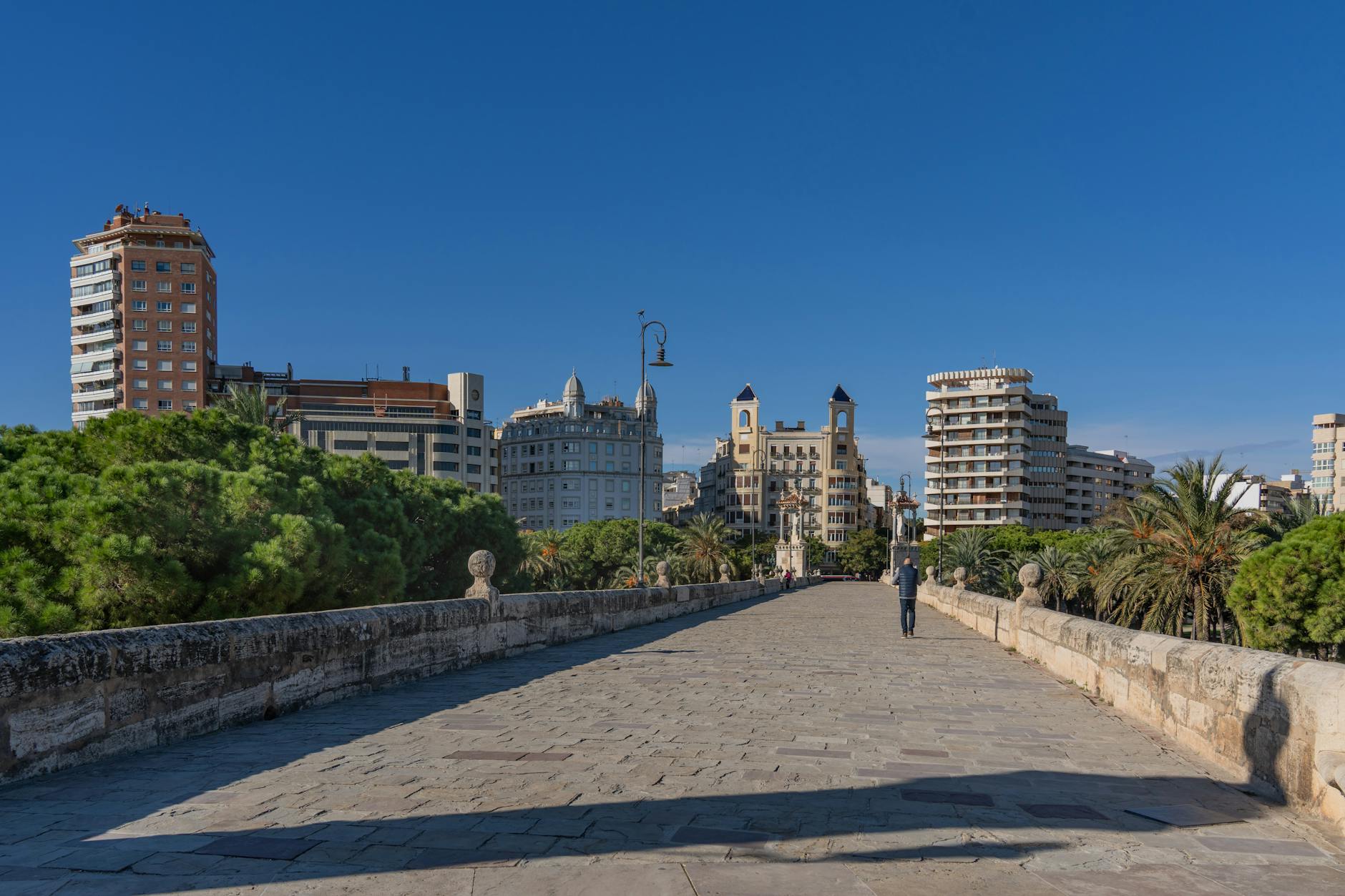
Valencia is one of the easiest cities in Spain to underplan because almost everything about it sounds pleasant.
Start Here
There is a historic center, but not one so overwhelming that it intimidates the visitor. There is a beach, but not one that totally swallows the city. There is serious food, but also an easygoingness that makes people assume they can simply wander into the right version of it. There is famous contemporary architecture, but it sits inside a city that does not live only for spectacle. Add warm light, broad avenues, and a lower pressure level than Barcelona or Madrid, and many travelers conclude that Valencia will take care of itself.
Sometimes it does. Often it does not.
The mistake is not that Valencia is hard. The mistake is that it is balanced. Balance creates choice, and choice creates the need for clarity. If you stay too close to the beach while pretending you mainly want historic Valencia, the trip starts to feel thin. If you stay too deep in the old center while talking about sea air and long coastal afternoons, the city begins to feel more enclosed than you expected. If you treat the City of Arts and Sciences as a quick photo stop instead of a real district, you lose one of the city's major spatial pleasures. If you treat paella as just a dish to check off in the center, you miss the landscape and social logic that explain why it belongs here.
What makes Valencia strong is not raw intensity. It is proportion. The old city, the nineteenth-century expansion, the Turia Gardens, the futuristic riverbed architecture, the beach districts, and the rice-and-lagoon world south of town all fit together into a city that feels complete without becoming exhausting. But to get that payoff, you need to decide what kind of Valencia trip you are actually taking.
For some people, Valencia is a city-first stay with one afternoon by the sea and one properly chosen paella meal. For others, it is a softer Mediterranean urban break where beach time, bike rides, and late dinners matter as much as churches or museums. For others still, it is a design-and-urbanism city: Gothic mercantile center, market culture, reclaimed riverbed, Calatrava spectacle, and a coastline that changes the emotional temperature of the whole place.
The good news is that Valencia can do all of these versions. The bad news is that it does not do them all equally well on the same day.
This is why the best first-time Valencia trip is usually built around three ideas. First, understand that the old center, Ruzafa, the Turia corridor, the City of Arts and Sciences, and the beach are connected but not interchangeable. Second, choose a hotel base that reflects whether you want a city holiday with some coast or a coast-inflected city holiday. Third, treat food and landscape as part of the city's structure, not as decorative extras.
Valencia is not trying to overwhelm you. It is trying to reward you for being just a little more intentional than you first thought necessary.
The city in one sentence: Valencia is a beautifully proportioned Mediterranean city where the best first trip comes from balancing old-center depth, Turia-riverbed movement, contemporary architecture, food, and coast without pretending they all belong to one seamless stroll.
Quick Verdict
Best for: couples, first-time Spain trips, food travelers, urbanists, architecture travelers, and visitors who want a Spanish city with both beach access and real city substance.
Not ideal for: travelers who want nonstop monument intensity, people who expect the beach to dominate the experience, or anyone who refuses to choose between city-led and coast-led trip design.
Ideal first visit: 3 full days.
Minimum worthwhile stay: 2 full days.
Best overall months: April, May, June, late September, and October.
Best summer logic: early starts, a stronger hotel, and days with a clear center of gravity.
Biggest planning mistake: treating Valencia as "easy" instead of as a city with several distinct and equally tempting centers.
One thing to prioritize: the base.
One thing to leave flexible: the exact balance between old center and coast.
The blunt version: Valencia is not a secondary Barcelona. It is its own kind of success, and it becomes much better once you stop asking it to imitate louder Spanish cities.
Who Will Love Valencia?
Valencia suits travelers who want range without chaos. If you like cities where you can have a market morning, a green-space afternoon, a serious dinner, and a touch of sea air without feeling that you are switching destinations entirely, Valencia is very strong.
It works especially well for couples because the city supports a good rhythm. Days can be built around one anchor rather than five. The old center gives atmosphere and history. Ruzafa and the surrounding districts give food, nightlife, and everyday city life. The Turia Gardens create movement and breathing room. The City of Arts and Sciences gives a more theatrical and modern chapter. The coast changes the emotional tone when needed.
It is also strong for solo travelers because the city is legible once you understand its zones. Walking is rewarding, transit is useful, and the city has enough public life that even a quieter itinerary still feels full.
Valencia is especially good for visitors who care about how a city works physically. The diverted riverbed turned park is not just an amenity. It explains the city. It creates a green corridor that links neighborhoods, cools the trip psychologically, and helps Valencia feel larger and calmer at the same time.
The city is less ideal for people who need every destination to announce itself constantly. Valencia has big sights, but its deeper pleasure comes from cumulative quality.
Valencia at a Glance
| Question | Practical Answer |
|---|---|
| Main airport | Valencia Airport |
| Best first-time base | Ciutat Vella edge, Eixample/Gran Vía, or Ruzafa depending style |
| Best beach-aware base | near the City of Arts and Sciences side or carefully chosen beach-adjacent stay |
| Main historic anchor | Ciutat Vella |
| Main modern architectural anchor | City of Arts and Sciences |
| Main green-space anchor | Turia Gardens |
| Main food identity | paella, market culture, rice, and a very strong all-round eating life |
| Best easy day trip from the city itself | Albufera |
| Public transport backbone | Metro, bus, tram, walking, and bikes |
| Car needed? | No |
| Currency | Euro |
| Emergency number | 112 |
| Tap water | Safe to drink |
| Power plugs | Type C and F |
2026 Visitor Notes
The Airport Is Easy To Use
Aena's official Valencia Airport transport page makes the most important point clearly: Metrovalencia lines 3 and 5 connect the airport directly with the city, with line 5 continuing toward the port side of Valencia.[1] That makes arrival relatively painless if your hotel is sensibly chosen.
The Tourist Card Includes Airport Metro Travel
Visit València's official Tourist Card pages state that the 24-, 48-, and 72-hour cards include buses, metro, tram, and commuter trains in zone AB, including the airport metro stop.[2][3] This matters because it can simplify the first days significantly.
The City Of Arts And Sciences Is A Real District Commitment
Visit València's official City of Arts and Sciences materials emphasize both the scale of the complex and the fact that a serious visit takes time.[6][7] That is exactly right. It should not be treated like a five-minute photo stop unless you genuinely only want the exterior effect.
The Lonja Still Matters More Than Many Visitors Expect
Visit València's official Lonja page continues to present the Silk Exchange as one of the city's essential historical monuments and a UNESCO World Heritage Site.[5] It is one of the clearest explanations of mercantile Valencia and deserves more than a rushed pass-through.
Albufera Is Easy Enough To Reach That It Changes The Food Logic Of The Trip
Visit València's Albufera page notes that EMT buses 24 and 25 connect the center with the park and nearby areas, and that the trip takes under an hour.[8] That means a first-time visitor can integrate lagoon-and-rice-country Valencia without needing a full logistical production.
The Central Market Is Still A Working Market, Not A Decorative Hall
The official Mercado Central site keeps the practical reality front and center: this is an operating market with market hours, stalls, and real shopping use.[10] That is the right mindset for visiting it.
How to Understand Valencia
Valencia works through five forces.
The first is the old mercantile city. Ciutat Vella, the cathedral zone, the Lonja, and the market quarter give Valencia depth and shape.
The second is the Turia corridor. The old riverbed turned linear garden is one of the main reasons Valencia feels so livable.
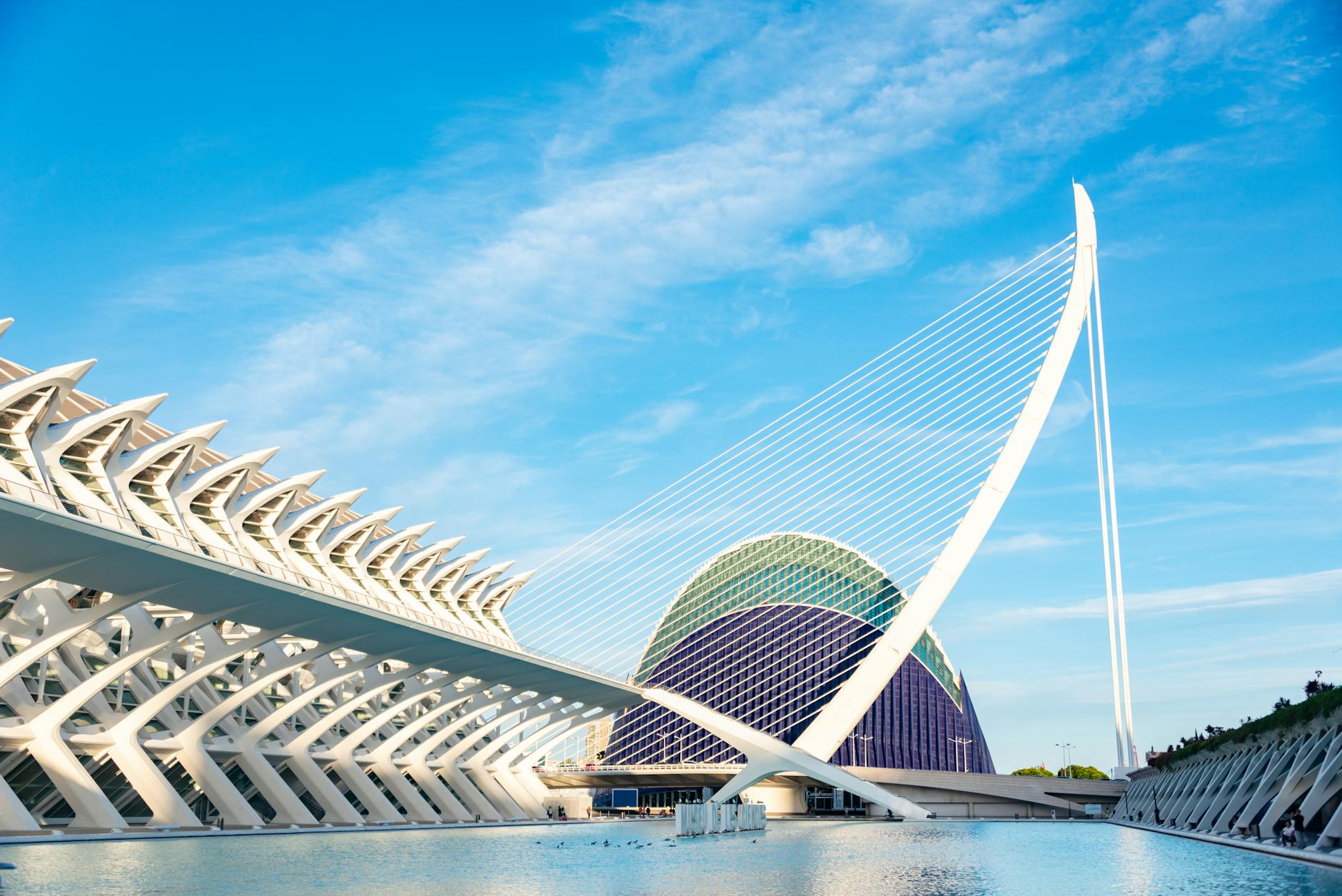
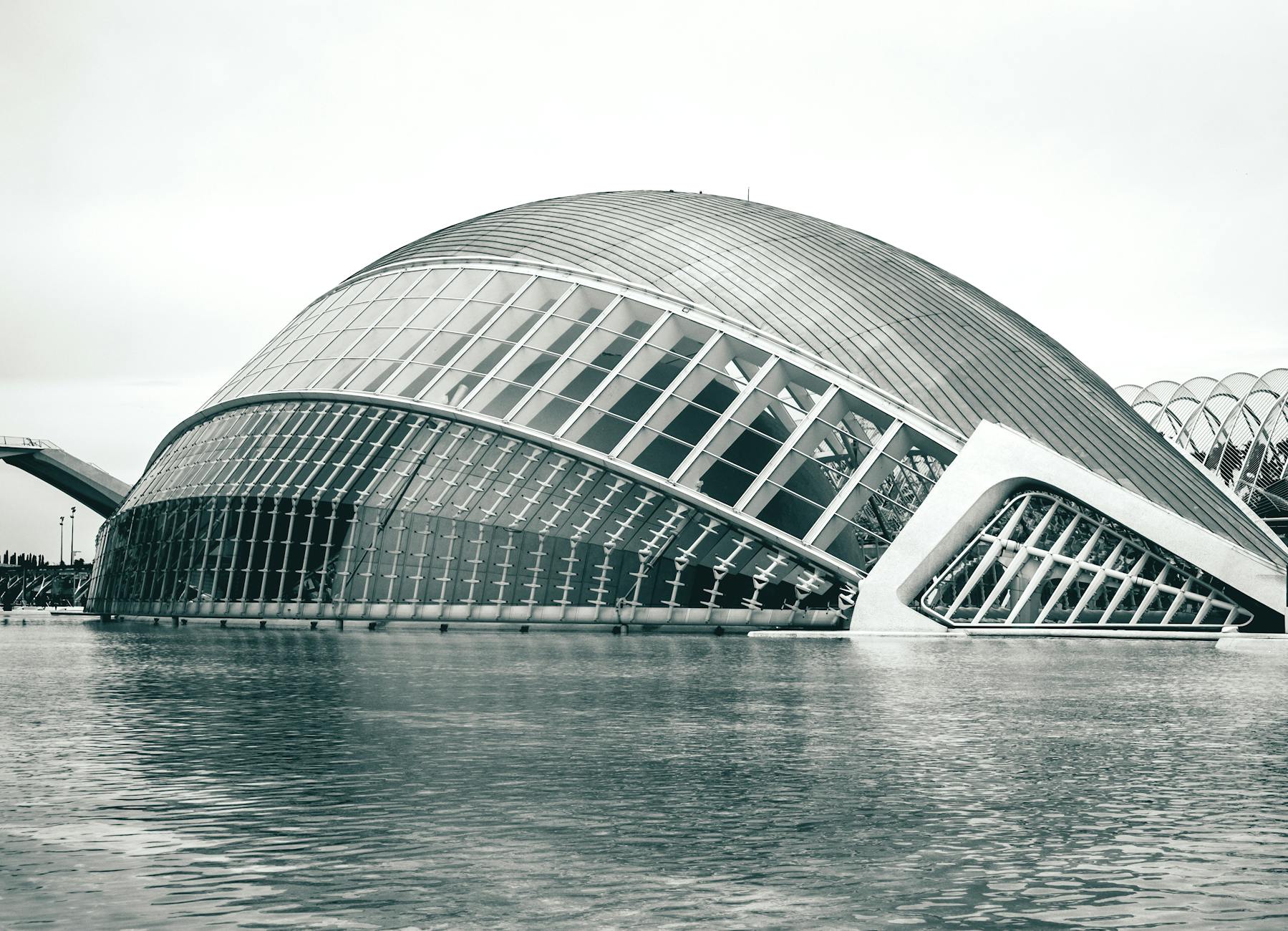
The third is the modern architectural chapter. The City of Arts and Sciences is not the whole city, but it permanently changes the city's image and spatial logic.
The fourth is the coast. Valencia is not a beach resort, yet the presence of the sea changes how people eat, move, and pace their stay.
The fifth is rice-and-market food culture. Paella, produce, and the wider eating life connect the city to its surrounding landscape.
The Five Valencias A Visitor Actually Meets
Historic Valencia: cathedral, plazas, Gothic remnants, the Lonja, and the market world.[5][9]
Garden Valencia: the Turia Gardens and the long green axis that organizes movement through the city.
Modern Valencia: the City of Arts and Sciences and the broad, more contemporary urban spaces around it.[6]
Neighborhood Valencia: Ruzafa, Eixample, Gran Vía, and the parts of the city where many visitors actually end up living their evenings.
Coastal-and-lagoon Valencia: Malvarrosa, Cabanyal mood shifts, and the Albufera side of the city's food and landscape identity.[8]
The Main Mental Shift
Do not ask, "What are the top attractions in Valencia?" Ask, "Which version of Valencia is this day for?" Historic center, market city, green corridor, modern spectacle, beach, or rice-country edge. The city gets better immediately once each day has a dominant register.
What Valencia Does Better Than People Think
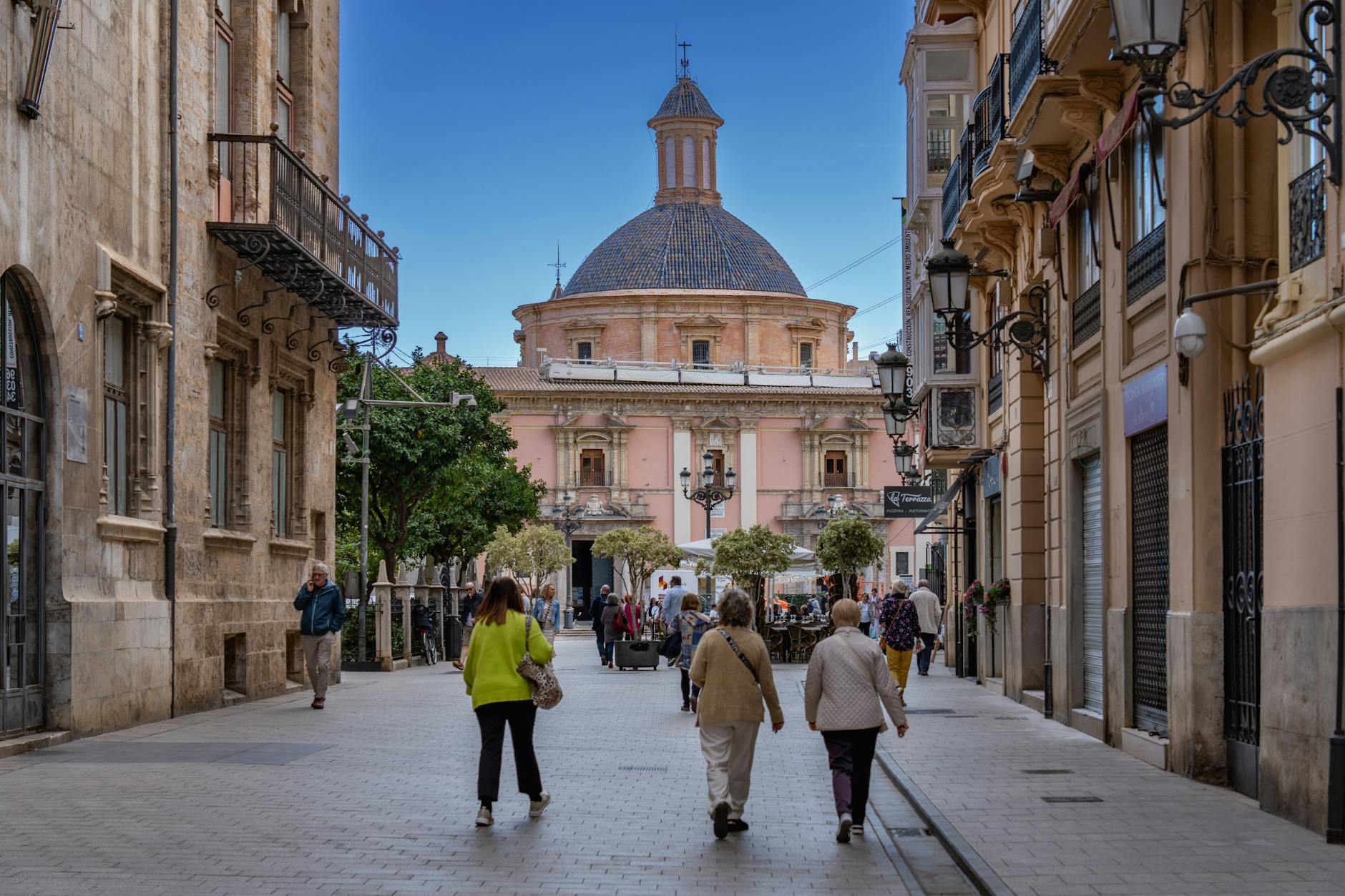
Valencia is better than people think at combining city and coast without becoming shallow. It does not force you to choose as hard as some places do, but it still rewards a decision.
It is also better than people think at urban breathing room. The Turia Gardens are not trivial. They make Valencia feel open in a way that many historic Mediterranean cities do not.
Another underrated strength is food context. Valencia is not just a place where you can eat paella. It is a place where rice, markets, produce, and surrounding landscape explain each other.
The city is also better than people think at being lived in after dark without theatrical strain. It has nightlife, but the deeper win is the sense of broad, usable evening life.
Finally, Valencia is stronger than people think at architectural contrast. The medieval and mercantile layers, the nineteenth-century city, and the modern riverbed spectacle all sit in useful tension.
Best Time to Visit Valencia
Valencia is more forgiving than many southern European cities, but season still shapes the trip strongly.
Best Overall Months
April, May, June, late September, and October are usually the cleanest answers. You get city comfort, enough warmth for outdoor life, and an easier balance between old center and coast.
Summer
Summer can be good, but only if you admit that the heat changes the city. Midday becomes slower, the beach becomes more tempting, and city-crossing on foot becomes less elegant. Valencia remains usable, but only edited Valencia is good Valencia in high heat.
Autumn
Early autumn is excellent. The sea still matters, evenings are long, and the city regains some composure after peak summer.
Winter
Winter can be a very smart city-first season. The beach matters less, but the old center, markets, museums, and food all still work well.
Spring
Spring is close to ideal. The gardens are especially rewarding, outdoor meals feel natural, and the whole city becomes easy to use.
How Many Days You Need
One Full Day
Enough for a sketch, not enough for the city to show its range.
Two Full Days
The minimum good version. One day should belong to the old center plus market and Turia logic. The second should choose between the City of Arts and Sciences and coastward Valencia, or between coast and Albufera.
Three Full Days
Ideal for many first-time visitors. This gives the city room to be historic, modern, and Mediterranean without everything being compressed.
Four Days Or More
Very good if you want a beach afternoon, a slower food rhythm, or a proper Albufera outing without stealing too much from the city itself.
Where to Stay in Valencia
The hotel decision here is really a decision about what kind of Valencia you want to wake up inside.
Fast Answer
For most first-time visitors, stay on the Ciutat Vella edge, in Eixample/Gran Vía, or in Ruzafa if you want a livelier local-neighborhood feel. Stay closer to the coast only if the beach is a true pillar of the trip rather than a minor bonus.
Neighborhood Decision Table
| Traveler Type | Best Area |
|---|---|
| First-time couple | Eixample / Gran Vía or Ciutat Vella edge |
| Food-and-evening traveler | Ruzafa |
| Historic-center lover | Ciutat Vella edge rather than the deepest interior |
| Coast-aware traveler | around the Arts-and-Sciences side or carefully chosen beach-side stay |
| Cleanest all-round answer | Eixample / Gran Vía |
Eixample / Gran Vía
Best for: most first-time visitors. Why it works: broad streets, easy movement, strong hotel stock, and good access to both center and newer city. Tradeoff: slightly less atmospheric than sleeping inside the old core. Best use: the most reliable all-round base.
Ciutat Vella Edge
Best for: visitors who want history close without being crushed by the busiest old-center rhythms. Why it works: you can walk into the heart of old Valencia quickly. Tradeoff: the deeper you go into the old center, the more comfort and calm can become variable. Best use: short stays that want atmosphere first but not only atmosphere.
Ruzafa
Best for: food, nightlife, and a younger-feeling city stay. Why it works: strong evening life and a more neighborhood-based sense of Valencia. Tradeoff: it is not the same thing as staying in the historical core. Best use: visitors who want dinner and late city energy to matter as much as sights.
Beach Side
Best for: travelers who truly want a city-and-sea split. Why it works: easy access to the waterfront changes the mood of the stay. Tradeoff: historic-center time becomes more intentional. Best use: longer stays or summer stays that genuinely prioritize the coast.
Area Profiles
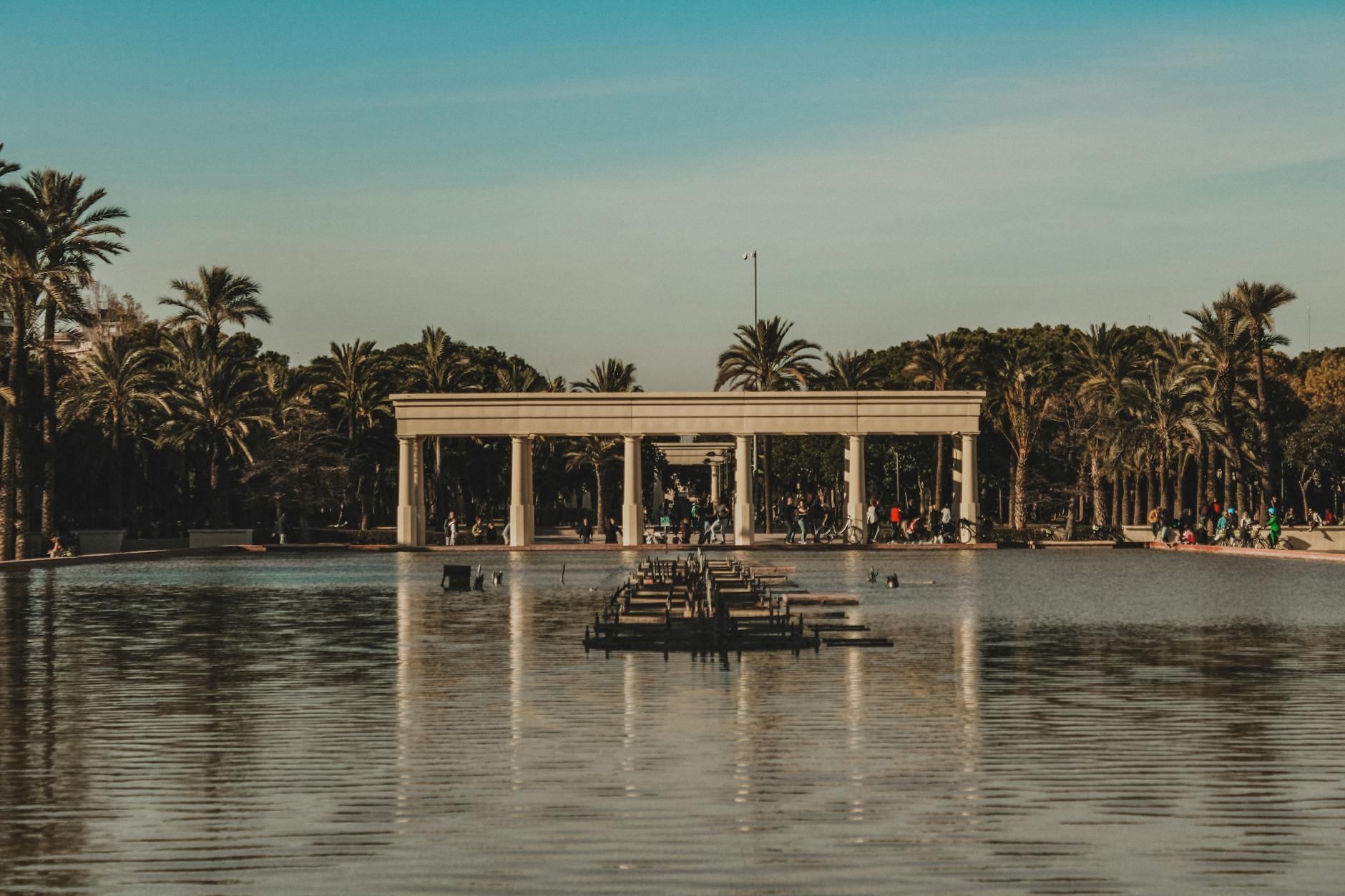
Ciutat Vella: best for history, plazas, market quarter, and cathedral-zone wandering.
Eixample / Gran Vía: best for first-time balance, hotels, and elegant movement.
Ruzafa: best for food, bars, and contemporary neighborhood life.
City of Arts and Sciences side: best for modern spectacle and broader urban spaces.
Beach side: best for sea-led stays.
Neighborhood Guide: Where to Explore, Not Just Sleep
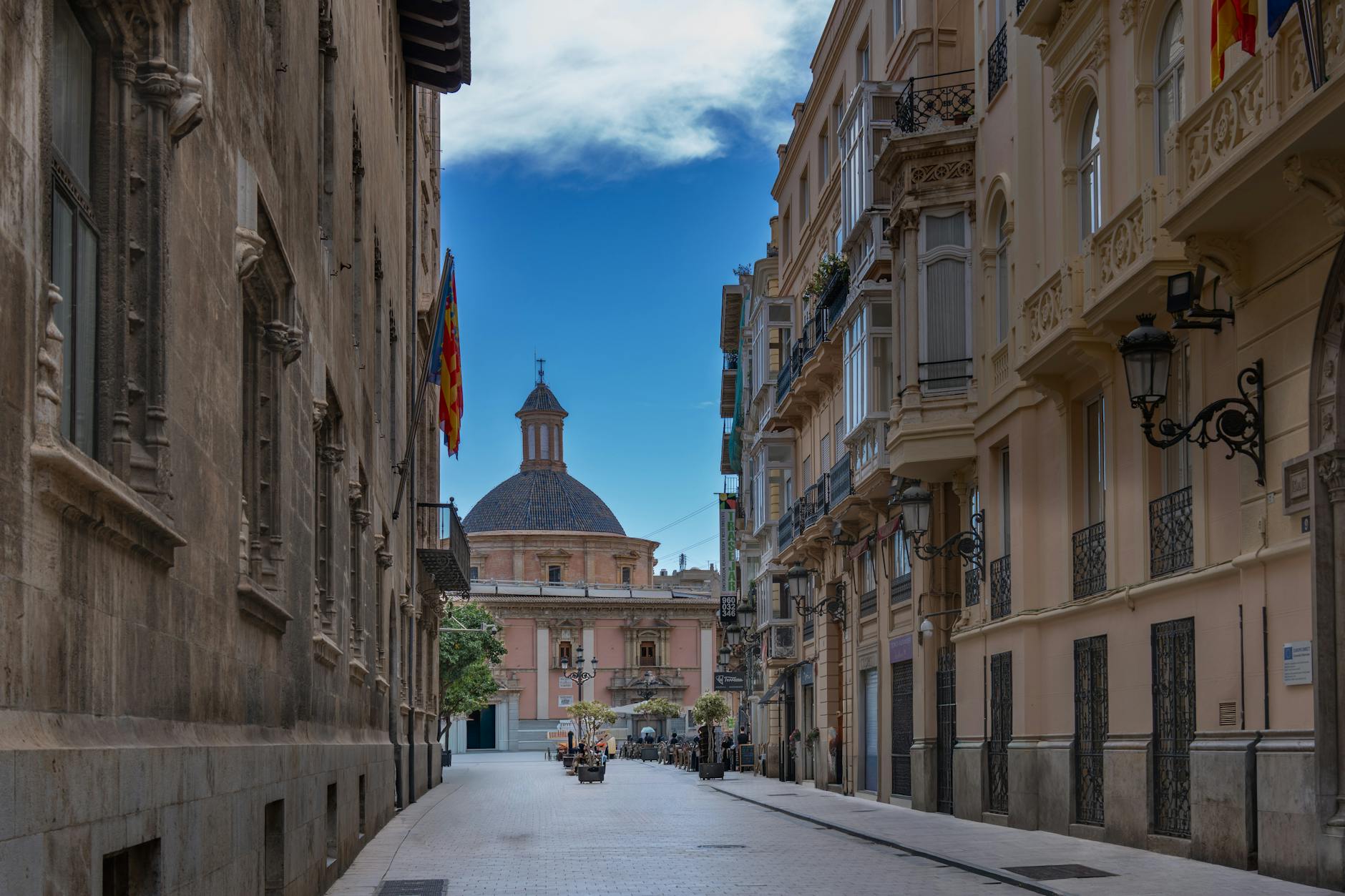
Ciutat Vella should not be treated as one undifferentiated old center. The market quarter, cathedral area, and El Carmen side create different kinds of density. The strongest first visit usually gives the district a real morning or evening instead of scattering it into fragments.
Ruzafa is where Valencia often starts to feel less like a set of attractions and more like a city with appetite. If your trip values dinners, bars, and street life, it matters.
The Turia Gardens are not merely connective tissue. Walking or biking through them is part of how Valencia explains itself.
The City of Arts and Sciences area should be entered with either conviction or restraint. Either give it real time, or treat it honestly as an exterior-architecture chapter and move on.[6][7]
The beach districts make the most sense when used as a mood shift rather than an obligation. A good Valencia trip does not need to prove its relationship to the sea constantly.
The Best Things to Do in Valencia
- Give the old center one serious block built around the Lonja, cathedral quarter, and market world.[5][9][10]
- Use the Turia Gardens as a lived route, not just as a thing to notice from a taxi.
- Decide whether the City of Arts and Sciences is an exterior-architecture stop or a real half-day-plus commitment, and plan accordingly.[6][7]
- Eat rice in a way that respects place rather than treating paella as just another central reservation.
- If you have the time, use Albufera to understand why Valencia's food tastes the way it does.[8]
- Let one evening belong to Ruzafa or a similarly food-led neighborhood rather than only to the oldest streets.
Itineraries
If You Have One Full Day
Do the historic center and market quarter in the morning, move through the Turia in the afternoon, and end with either Ruzafa or one coastward chapter. Do not try to force the old center, the City of Arts and Sciences, full beach time, and Albufera into one day.
If You Have Two Full Days
Use one day for old Valencia plus the Turia spine. Use the second for either the City of Arts and Sciences and coast, or for beach plus Albufera if the trip leans more Mediterranean than monument-heavy.
If You Have Three Full Days
This is the ideal first pattern. One day for the old city and market core. One day for Turia-to-Arts-and-Sciences Valencia. One day for either beach, Albufera, or a slower neighborhood-and-food version of the city.
Itineraries By Traveler Type
Historic-city traveler: old center, Lonja, cathedral, market quarter, and one slower Turia walk.
Food-first traveler: market morning, Ruzafa evening, and an Albufera or rice-led meal strategy.
Design-and-urbanism traveler: Ciutat Vella, Eixample structure, Turia Gardens, and the City of Arts and Sciences.
City-and-coast traveler: city hotel, one beach chapter, one coastward dinner or late afternoon, and no pressure to make every day a beach day.
Food and Drink
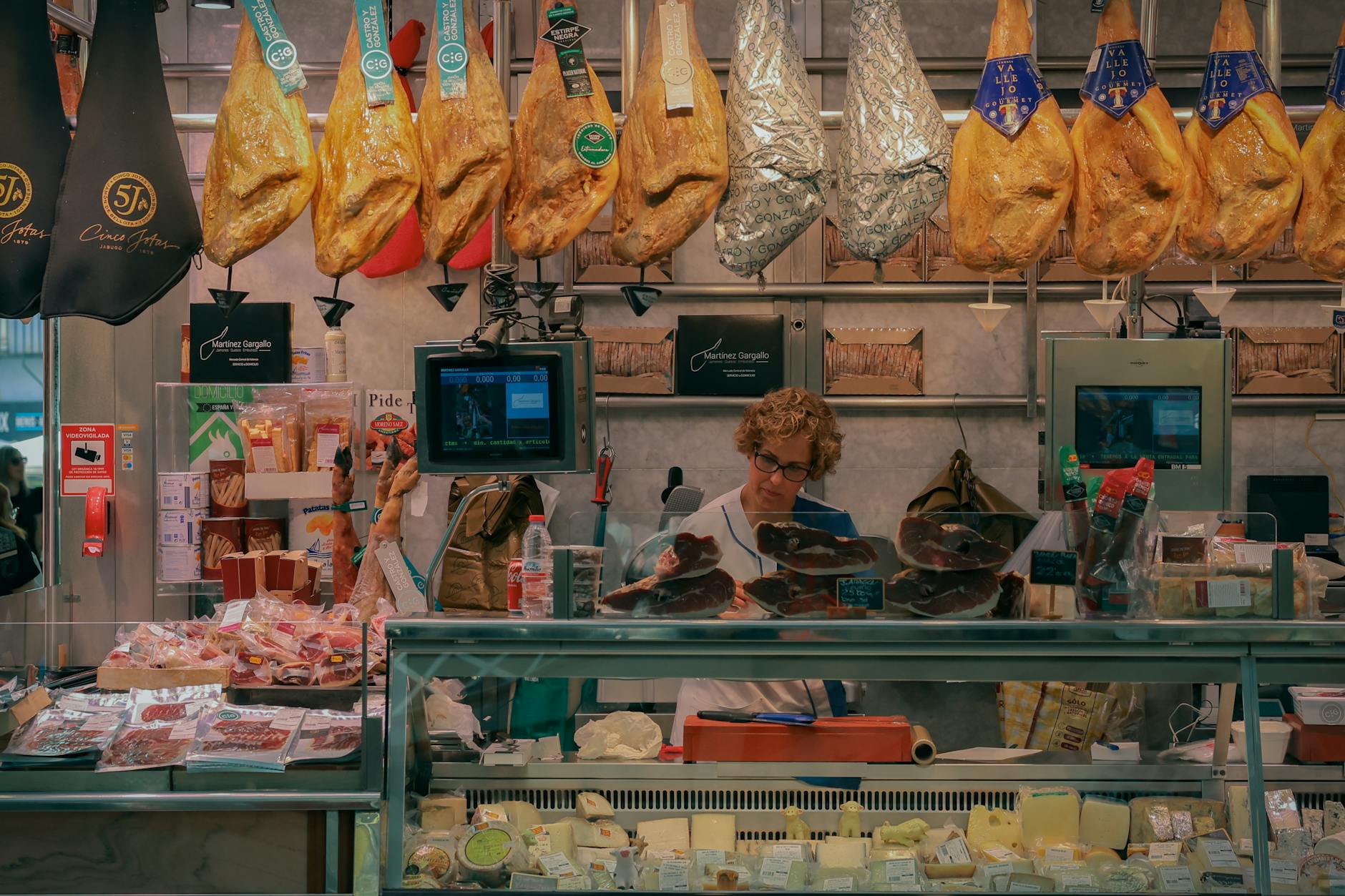
Valencia is one of the places where a visitor should think less in terms of "top restaurants" and more in terms of food landscape. The Central Market matters because the city still takes produce seriously.[10] Rice matters because the surrounding geography still explains the dish.[8] Long lunches matter because Valencia is a city that rewards deceleration more than frantic culinary trophy hunting.
The right approach is not to eat paella anywhere convenient. The right approach is to choose one meal where rice is the point, and then let the rest of the trip be shaped by markets, tapas, pastries, seafood, and neighborhood appetite.
Getting Around
Valencia is one of Spain's easier cities to move through. Aena's official airport guidance makes the airport-metro connection straightforward, and once in town the mix of metro, bus, tram, walking, and bikes is strong.[1][4]
What matters most is not mastering the whole network. It is keeping each day geographically clean. Historic-center mornings should not automatically become beach commutes and then return to the center again for no reason. Valencia rewards edited movement.
What To Skip
Skip asking Valencia to be Barcelona with less pressure.
Skip eating paella in the first convenient place purely because it appears on a menu in the center.
Skip treating the City of Arts and Sciences as mandatory interior sightseeing if you only care about the exterior and the urban effect.
Skip staying by the beach because it sounds relaxing if your real trip is city-first.
Common Mistakes
The first mistake is choosing the wrong base.
The second is underestimating how much the Turia corridor shapes the best version of the city.
The third is reducing Valencia either to beach-plus-old-town or to one futuristic architecture complex.
The fourth is eating without any relationship to place.
The fifth is trying to do coast, historic center, and Albufera all at full strength in too little time.
My Blunt Advice
If this is your first Valencia trip, stay somewhere that lets you move easily between old city and everyday city, not somewhere that forces you to declare for the beach too early.
Give the historic core real time, let the Turia organize at least one of your days, use the City of Arts and Sciences deliberately instead of symbolically, and earn your paella with better context than convenience. Valencia is one of Spain's most complete medium-large cities, but it only feels complete when the traveler stops treating its balance as an excuse to be vague.
Where Valencia Fits in a Spain Trip
Valencia occupies a very useful middle ground in Spain, and that middle ground is exactly why it is sometimes undervalued. It does not hit as hard, immediately, as Barcelona's spectacle or Madrid's scale. It does not market itself as fiercely through a single historical fantasy the way Seville or Granada can. Instead, Valencia offers something more structurally satisfying: a city that feels whole.
That matters in itinerary design. If Madrid is a capital city that radiates out into museums, formal boulevards, and heavier cultural weight, and Barcelona is a compressed collision of sea, architecture, tourism pressure, and neighborhood energy, Valencia often works as the place where a Spain itinerary finally relaxes without becoming thin. It is the city that can absorb a traveler after louder places. It is also the city that can introduce Spain to someone who wants warmth, food, and beauty without starting at maximum intensity.
For a first Spain trip, Valencia is strongest in one of three roles.
The first is as a counterweight city after either Madrid or Barcelona. This is probably the cleanest use. Valencia restores proportion. It lets meals slow down, walking become more breathable, and public space feel less contested without giving up real urban substance.
The second is as a Mediterranean city-first stay. If you want a Spanish city with real coast access but do not want a resort destination or a beach town pretending to be an urban one, Valencia is one of the best answers in the country.
The third is as a bridge city between monument-heavy Spain and more relaxed regional travel. Because the historic core, modern riverbed geography, beach districts, and Albufera all belong to the same urban story, Valencia helps a broader trip change tempo without collapsing.
It is slightly weaker only if your main goal is maximum old-world density or maximum museum weight. That is not what Valencia is for. What it offers instead is a better ratio than many cities manage: enough history, enough contemporary life, enough food seriousness, enough coast, enough green space, and enough urban coherence that you can actually enjoy the place instead of only consuming it.
Valencia Versus Barcelona, Seville, and Malaga
Valencia improves immediately once you stop comparing it lazily.
The most common bad comparison is Barcelona-lite. Yes, both are Mediterranean Spanish cities with beaches, strong food, and major architectural chapters. But the emotional experience is different. Barcelona is denser, more pressured, more famous, more immediately dramatic, and often more exhausting. Valencia is more spacious, more balanced, and usually easier to inhabit. If Barcelona feels like a city that keeps insisting on its greatness, Valencia feels like a city that reveals its quality through proportion.
Against Seville, Valencia can initially seem less atmospheric because it does not rely on one dominant historical register. Seville is more unified in image: heat, courtyards, cathedral, Alcazar, riverfront, and Andalusian intensity. Valencia is more plural. It asks you to accept Gothic mercantile space, nineteenth-century expansion, long green linear parkland, futuristic riverbed architecture, and coastward openness as parts of the same city. It is a little less immediately intoxicating and a little more usefully livable.
Against Malaga, Valencia is usually the stronger city for travelers who want substance rather than just sun-plus-center. Malaga can be enjoyable, but it more often functions as an access city to a wider coast. Valencia functions more convincingly as a destination in its own right. Its old center has more structural importance, its green-space logic is much stronger, and its relationship to food and landscape is more persuasive.
The key is not to ask which city is "better" in the abstract. The better question is: what kind of Spain trip am I building? If you want sheer energy and density, Barcelona may win. If you want historical seduction, Seville may win. If you want a city that lets coast, food, old center, modern urbanism, and breathing room coexist without shouting over one another, Valencia is often the best answer.
First-Time Visitors Versus Repeat Visitors
Valencia is kind to first-time visitors because its first outline is easy to grasp. Old center. Market. Turia Gardens. City of Arts and Sciences. Ruzafa. Perhaps the beach. Perhaps Albufera. That is already a good trip skeleton.
But Valencia often improves sharply on the second visit because the city is more modular than it first appears. On a return trip, you stop feeling obliged to prove every part of the city in one stay. You might let the old center be lighter because you already know its major forms. You might use Ruzafa or Eixample more fully. You might actually allow the Turia to be a route rather than a sightseeing item. You might choose coast or Albufera with more confidence because you are no longer trying to "cover" the city.
For first-timers, the correct question is: what is the most coherent first read of Valencia? For repeat visitors, the better question becomes: which version of Valencia am I staying inside this time?
That shift matters because Valencia's strengths are not only in its attractions. They are in the relationship between districts and in the feeling that a day can move from market to garden to architecture to dinner without becoming strained. Once that logic is already understood, the second visit becomes freer and often more pleasurable.
This is also why some travelers leave a first Valencia trip feeling that the city was "really nice" without yet fully understanding why it was so satisfying. The second visit often clarifies the answer. The city is not trying to stun you every hour. It is trying to remain good across many hours and many moods, which is a rarer urban achievement than people sometimes admit.
Summer Valencia Versus Shoulder-Season Valencia
Valencia is highly seasonal in feel even though it remains usable most of the year.
Shoulder-season Valencia is the version many first-time visitors should aim for. In April, May, June, late September, and October, the city is easier to read as a whole. Walking the old center feels natural. The Turia can be used generously. The City of Arts and Sciences can be approached without heat becoming the real protagonist. Beach time feels optional but available. Evenings remain one of the city's great strengths. In these periods, Valencia's balance is easiest to appreciate.
Summer Valencia is not bad, but it is more edited. Midday heat changes distance. The beach starts pulling harder. Urban movement that looked elegant on paper can become wasteful if you overbuild the day. This is when the wrong hotel base becomes especially expensive in energy rather than only in money. You will want stronger interiors, more deliberate lunch plans, and a clearer understanding of when the city should slow down instead of pretending it has no climate.
The common summer mistake is assuming that Valencia's apparent ease means it can absorb a fully improvised high-heat day. In reality, summer rewards one anchor in the morning, one reduced or interior chapter in the hottest hours, and one evening district with enough substance to justify staying out. If you try to force old center, Turia, Calatrava architecture, beach, and a big dinner across one hot day, the city loses its elegance.
Shoulder season, by contrast, makes it easier to let Valencia behave like a complete city. You can walk more, shift registers more naturally, and let appetite rather than heat dictate more of the trip. If your schedule is flexible, this is the smarter time.
Why the Base Matters More Than It First Appears
Valencia is not a city where "somewhere central" is a sufficient lodging philosophy. The base changes the entire emotional structure of the trip.
If you stay too deep inside the old center, the trip can become too enclosed, especially if what you really wanted was a city with Mediterranean spaciousness. If you stay too close to the beach without genuinely planning a coast-led stay, the center begins to feel like an excursion rather than your city's natural core. If you stay in the wrong generic zone, Valencia can feel easier to commute through than to inhabit.
That is why Eixample and Gran Vía work so well for first-timers. They keep the city open. You are close enough to the old center to use it naturally, but not trapped inside it. You are also better positioned to let Ruzafa, the Turia, and the broader city matter. Ruzafa works when food and evenings are central to the trip, but it assumes you are happy for the city to tilt a little more neighborhood-first than monument-first. Ciutat Vella edge works best when the trip is short and atmosphere is worth some tradeoffs. Beach-side stays only work cleanly when the coast is truly one of the trip's main purposes.
The right test is simple: when you leave the hotel, does the version of Valencia you most wanted begin quickly and naturally? If not, the base is probably making you negotiate too much.
This becomes even more important on a three-day stay. Three days is enough for Valencia to feel complete, but only if your base supports the version of the city you came for. The wrong hotel turns the city into separate errands. The right hotel turns it into an unfolding sequence.
Why One Proper Valencia Day Matters
Valencia is often weakened by fragmentation. Travelers arrive on a late train, wander the cathedral zone, do a quick Central Market pass the next morning, then jump to the City of Arts and Sciences, then go to the beach "because you have to," then leave for Madrid or Barcelona. On paper, it looks like a full Valencia stay. In reality, the city never had a full day to become itself.
One proper Valencia day changes everything. By "proper," I mean a day where the city is the point from morning through evening rather than the container for scattered symbolic stops. You begin in one register and let it develop: perhaps market-and-old-center Valencia in the morning, a Turia transition in the afternoon, and a Ruzafa evening. Or perhaps garden-to-modern Valencia, followed by a coastward late afternoon and a dinner that belongs to the same side of the city.
That kind of continuity is what reveals Valencia's strength. The city is not built to reward frantic range. It is built to reward proportion. A proper day lets you feel how the old center contracts and the Turia opens, how the futuristic architecture works differently after the denser streets, how food lands better when the day has not been overstuffed, and how evening helps the city settle into its most persuasive form.
If you only have one full day, build it around one dominant Valencia with one secondary register. If you have two or three, then the city can widen naturally. But every good Valencia trip needs at least one day that is not divided into isolated proofs.
Day Valencia Versus Evening Valencia
Valencia is one of those cities where the difference between day and evening meaningfully changes the argument.
Day Valencia is the explanatory city. This is when the old center's mercantile logic reads most clearly, when the Central Market makes social sense, when the Turia feels like a feat of urban editing, and when the City of Arts and Sciences can be read as spatial theater rather than just as lights and reflections. Daytime is when the city's structure is easiest to understand.
Evening Valencia is the persuasive city. This is when temperatures ease, Ruzafa and surrounding districts become more magnetic, plazas feel less like waypoints and more like destinations, and the city's sociability becomes one of its strongest arguments. Valencia is not an all-night pressure cooker in the way some larger cities are. Instead, it excels at long, usable evenings where dinner, walking, and public life feel unforced.
This matters because visitors who only use Valencia in daylight often underrate it. They understand it, but they do not always feel it. Conversely, visitors who overbuild nightlife expectations can also misread it, because the city is not primarily trying to perform intensity. What it offers is a broad, durable evening life that makes staying out feel natural.
A good first trip therefore needs at least one evening with real intention. Not just "whatever is near the hotel," but a dinner district and a walk that allow the city to soften and recompose itself. Valencia often wins its case after sunset.
Why the Beach Should Not Own the Whole Trip
The beach is one of Valencia's greatest advantages, but also one of its easiest distortions.
Because the sea is there, visitors start thinking the coast must play a starring role every day. In practice, that often weakens the trip. Valencia is not strongest when it is treated as a beach city with some old buildings attached. It is strongest when the beach works as tonal contrast: a widening of the city's atmosphere, not a replacement for the city.
This is especially important for first-timers. If you came for Valencia rather than for a generalized Mediterranean holiday, the beach should usually be one chapter, one afternoon, one dinner, or one mood shift. It does not need to dominate the stay unless you have consciously built a coast-led trip.
There are two common mistakes here. The first is staying by the beach because it sounds relaxing, then spending half the trip commuting back toward the parts of Valencia that actually made you choose the city. The second is feeling guilty if the beach only gets a modest slice of time. There is no need. Valencia's distinction is precisely that the sea changes the city's emotional climate even when you do not organize the whole stay around sand.
The strongest move is to let the coast sharpen the city, not displace it.
Why Food Is Structural, Not Decorative
Valencia is one of the places where food should not be treated as a side reward for sightseeing. It is part of the city's architecture.
The Central Market matters not because it is picturesque, though it is, but because it demonstrates that Valencia still has working food infrastructure at the heart of its identity.[10] Rice matters not because paella is famous, but because the dish only fully makes sense when the city is understood in relation to the fields, water, and lagoon landscapes that support it.[8] Neighborhood choice matters because evening appetite in Valencia belongs to district life, not only to monument zones.
This has a practical consequence. One meal in Valencia should be chosen as a true place-defining meal rather than a convenience. That does not always mean expensive. It means context-sensitive. The rest of the trip can then build around markets, pastries, quick savory stops, seafood, vermouth, or neighborhood dinners without every meal having to carry symbolic weight.
When food is treated structurally, Valencia becomes more coherent. The market quarter explains the old city. Albufera explains rice. Ruzafa explains part of contemporary urban appetite. The coast explains certain moods of dining and leisure. This is a much stronger reading than merely trying to accumulate "best places to eat."
Why Valencia Often Works Better Than It Sounds
Valencia can sound, in description, almost too reasonable. Historic center, gardens, beach, modern architecture, good food, lower pressure. Nothing about that sentence fully captures the city because the appeal lies less in any one ingredient than in how unusually well the ingredients coexist.
Many destinations are memorable because they are singular. Valencia is memorable because it is proportioned. It gives enough of several good things without letting one entirely flatten the others. That makes it hard to sell in one sentence and very satisfying to inhabit over several days.
This is also why people often like Valencia more than they expected. The city does not announce itself as loudly as some of Spain's biggest tourist names. But once the trip is moving properly, the advantages accumulate: broad public space, edible markets, an old center with real weight, a green axis that improves mood, a coast that expands possibility, and evenings that feel social without becoming oppressive.
That combination is harder to find than it looks.
How Valencia Changes Over the Course of a Stay
On arrival, Valencia often reads as attractive and easy. The airport connection works. The streets feel broad. The old center looks manageable. The weather may be kind. Nothing seems too difficult. This is a real advantage, but it can also keep the city from fully registering at first.
By the second day, the differences between Valencias start to sharpen. The old center stops being "the center" and starts breaking into more specific districts and moods. The Turia begins to feel less like a park and more like the city's organizing line. Ruzafa or Eixample start to matter not just as hotel zones but as actual environments. The City of Arts and Sciences either earns real time or is reduced honestly to what you actually want from it.
By the third day, if the trip is working, you stop trying to prove the city and start inhabiting it. You understand whether the coast belongs today or not. You know which parts of the center are worth repeating. You allow lunch or dinner to anchor a district. You stop thinking in categories like "historic" and "modern" and simply let Valencia be itself.
That is why three days is such a strong first-visit length. It gives the city time to move from pleasant outline to actual place. Valencia does not rely on shock. It relies on improved judgment. The better the traveler chooses, the more complete the city becomes.
Source Notes
- 1. Aena, official Valencia Airport metro access page: [https://www.aena.es/en/valencia/arriving/underground.html](https://www.aena.es/en/valencia/arriving/underground.html)
- 2. Visit València, official València Tourist Card page: [https://www.visitvalencia.com/en/valencia-tourist-card](https://www.visitvalencia.com/en/valencia-tourist-card)
- 3. Visit València, official Tourist Card FAQ page: [https://www.visitvalencia.com/en/valencia-tourist-card/faqs-frequent-asked-questions](https://www.visitvalencia.com/en/valencia-tourist-card/faqs-frequent-asked-questions)
- 4. Metrovalencia, official fares page: [https://www.metrovalencia.es/en/fares/](https://www.metrovalencia.es/en/fares/)
- 5. Visit València, official Lonja (Silk Exchange) page: [https://www.visitvalencia.com/en/what-to-do-valencia/valencian-culture/monuments-in-valencia/lonja-silk-exchange](https://www.visitvalencia.com/en/what-to-do-valencia/valencian-culture/monuments-in-valencia/lonja-silk-exchange)
- 6. Visit València, official City of Arts and Sciences overview page: [https://www.visitvalencia.com/en/what-to-see-valencia/city-of-arts-and-sciences/](https://www.visitvalencia.com/en/what-to-see-valencia/city-of-arts-and-sciences/)
- 7. Visit València, official City of Arts and Sciences visitor guide: [https://www.visitvalencia.com/en/what-to-see-valencia/city-of-arts-and-sciences/what-to-see](https://www.visitvalencia.com/en/what-to-see-valencia/city-of-arts-and-sciences/what-to-see)
- 8. Visit València, official Albufera Natural Park page: [https://www.visitvalencia.com/en/what-to-see-valencia/albufera-natural-park](https://www.visitvalencia.com/en/what-to-see-valencia/albufera-natural-park)
- 9. Visit València, official Cathedral, Miguelete, and Holy Grail page: [https://www.visitvalencia.com/en/what-to-do-valencia/valencian-culture/monuments-in-valencia/catedral-valencia-cathedral](https://www.visitvalencia.com/en/what-to-do-valencia/valencian-culture/monuments-in-valencia/catedral-valencia-cathedral)
- 10. Mercado Central de València, official market site: [https://www.mercadocentralvalencia.es/?cn=1](https://www.mercadocentralvalencia.es/?cn=1)