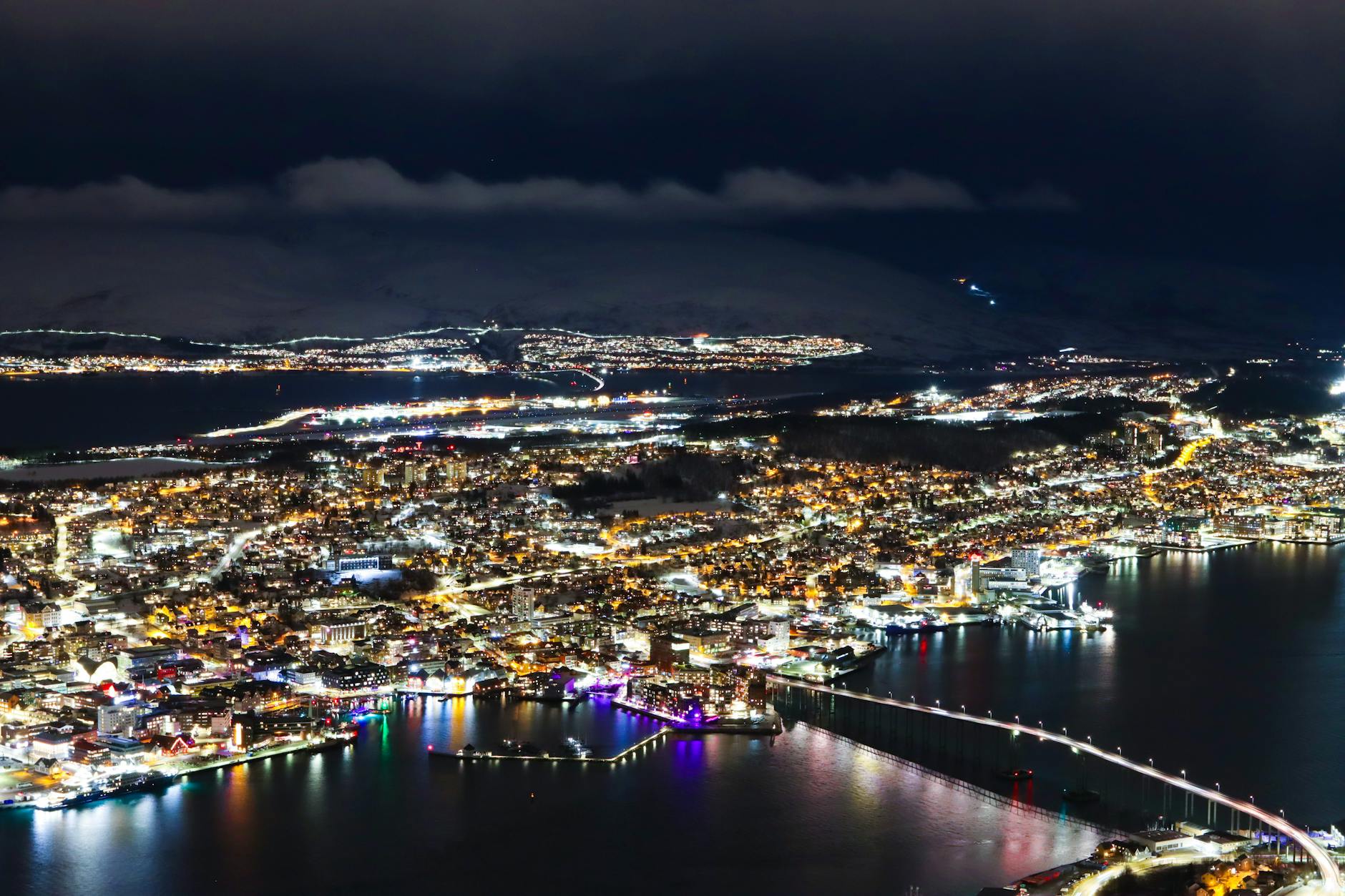
Tromso is one of Europe's easiest cities to misunderstand.
Start Here
People arrive imagining aurora, snow, whale boats, reindeer, dramatic cold, and the proud idea that they are going somewhere truly Arctic. That part is real. But many first-time visitors still use the city badly because they assume Tromso itself is only a booking platform for excursions and a warm bed between them. They overfill the days, underuse the city, ignore the difference between winter Tromso and summer Tromso, and leave with a memory full of tours but only a weak sense of place.
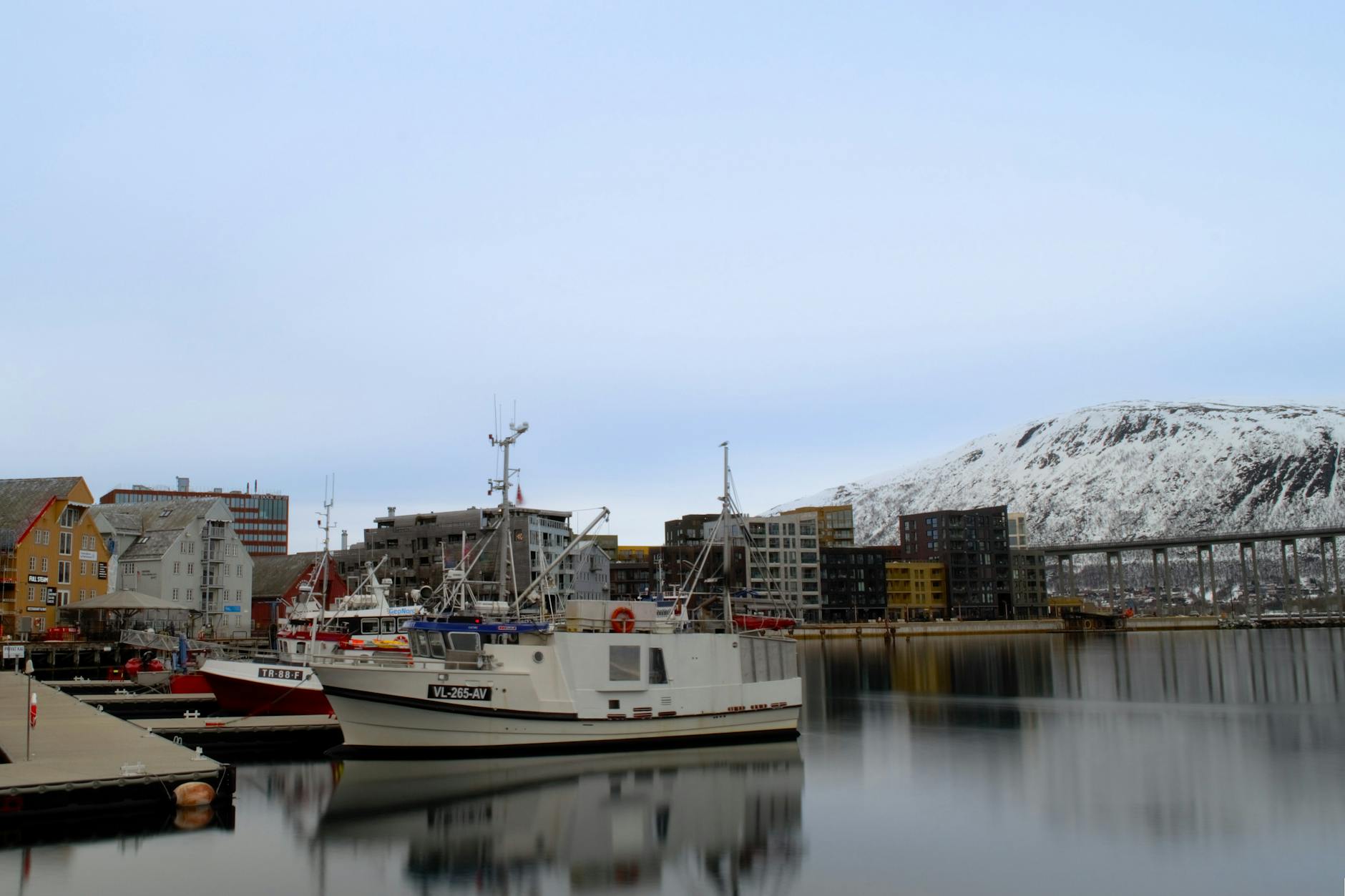
Tromso deserves better than that. It is a real city, not a staging yard with good branding. The island setting matters. The bridge and mainland side matter. The harbor, museum layer, churches, bars, and cafés matter. The short-distance urban scale matters. The city also imposes a kind of Arctic discipline that many travelers resist at first: one good outing may be enough for a day, weather can change the emotional logic of everything, and recovery time is not wasted time when daylight, darkness, cold, or midnight sun distort your usual sense of effort.
The best Tromso trip is therefore not a maximal Arctic conquest. It is a carefully edited northern stay. Use the city center properly. Choose only the excursions that actually fit the season and your energy. Let the cable car, the Arctic Cathedral, one or two museums, and one or two evenings in town give the trip texture. Accept that the city is at its strongest when it still feels like a city.
Tromso in one sentence: it is a compact Arctic city whose best first trip comes from balancing urban life, weather, and excursions rather than chasing every northern fantasy at once.
Basic data
| Population | About 80,000 in the municipality |
|---|---|
| Area | 2,521 km2; the urban core is much smaller |
| Major religions | Christian heritage with a strongly secular contemporary public culture |
| Political system | Municipality inside a parliamentary constitutional monarchy |
| Economic system | High-income mixed economy led by services, education, tourism, fisheries, and Arctic research |
Quick Verdict
Best for: first-time Arctic travelers, couples, winter travelers, photographers, museum-and-excursion travelers, and anyone who likes places where urban life and landscape remain visibly connected.
Less ideal for: travelers who hate uncertainty, people who want every day to be packed from morning to night, or anyone who expects aurora, wildlife, or mountain weather to behave on command.
Ideal first stay: 3 nights.
Still worthwhile: 2 nights if the trip is tightly shaped.
Can justify more: yes, especially in winter or in a broader northern Norway route.
Biggest planning mistake: turning every day into a hunt for "Arctic experiences."
One thing to prioritize: the season-specific logic of the trip.
One thing to keep flexible: which evening belongs to an aurora or other weather-dependent outing.
The blunt version: Tromso weakens when the city disappears behind the excursions.
Who Will Love Tromso?
Tromso works for travelers who like cities that feel physically tied to their landscape. If you enjoy the idea that a museum morning, a harbor walk, an early dinner, and a late-night sky chase can all belong to the same place without contradiction, Tromso is strong.
It is also excellent for people who accept that the Arctic is not a performance. A good Tromso trip often comes from respecting fatigue, darkness, wind, and weather instead of trying to dominate them.
Tromso at a Glance
| Question | Practical Answer |
|---|---|
| Main gateway | Tromsø Airport, Langnes |
| Best first-time base | City center on Tromsøya |
| Simplest airport public-bus options | Route 40 or 42 |
| Best-known viewpoint | Fjellheisen cable car |
| Signature landmark outside the center | The Arctic Cathedral |
| Main planning issue | overbooking weather-dependent excursions |
| Car required? | No |
| Best first stay length | 3 nights |
2026 Visitor Notes
The Airport Remains Convenient by Northern Standards
Avinor's current airport transport guidance shows that Tromsø Airport is served not only by the airport express bus but also by public-bus routes `40` and `42`, with tickets available through the relevant app or at the ticket machine at the stop.[1]
Public Transport Still Matters More Than Many Visitors Assume
Visit Tromso's current getting-around guidance continues to frame buses as a normal part of using the city and nearby region, with tickets available through the Svipper app or by card on board district buses.[2]
Tromso's Key Sights Are Still Surprisingly Reachable
Visit Tromso's current attraction-access guide emphasizes how short many of the practical links are: the Arctic Cathedral is walkable from the center in about 25 minutes, the cable car can be reached by bus `26` or on foot, and many museums remain concentrated around the center and harbor.[3]
Fjellheisen Still Anchors the City's Vertical Logic
Fjellheisen's official site continues to position the cable car as one of Tromso's major attractions, with regular service, no private-car parking, and explicit relevance both for midnight-sun and northern-lights seasons.[4]
The City Pass Still Exists for Museum-Heavy Travelers
Visit Tromso's current Tromsø Pass still bundles some of the city's core museum-and-attraction set, including the cable car, Polaria, the Arctic Cathedral, and the Polar Museum, but it is useful only if your trip is genuinely attraction-dense.[5]
How to Understand Tromso
Tromso works through four forces.
The first is seasonality. Winter darkness and summer light do not merely decorate the trip. They define it.
The second is city-excursion balance. Tromso can hold the trip together only if the city gets real time of its own.
The third is short-distance geography. The center is compact, but the mainland side, bridge, and higher viewpoints shift the city's feel quickly.
The fourth is energy management. Late tours, cold conditions, and irregular daylight make bad scheduling more expensive than usual.
The Main Mental Shift
Do not ask, "What Arctic things can I buy from Tromso?" Ask, "What version of Tromso will make the Arctic feel livable and not just dramatic?" That answer should decide the hotel, the season, and the number of excursions.
What Makes Tromso Distinct
Tromso's distinction is not just that it is far north. A lot of places are far north. Its distinction is that it remains legible as a city while still feeling unquestionably Arctic.
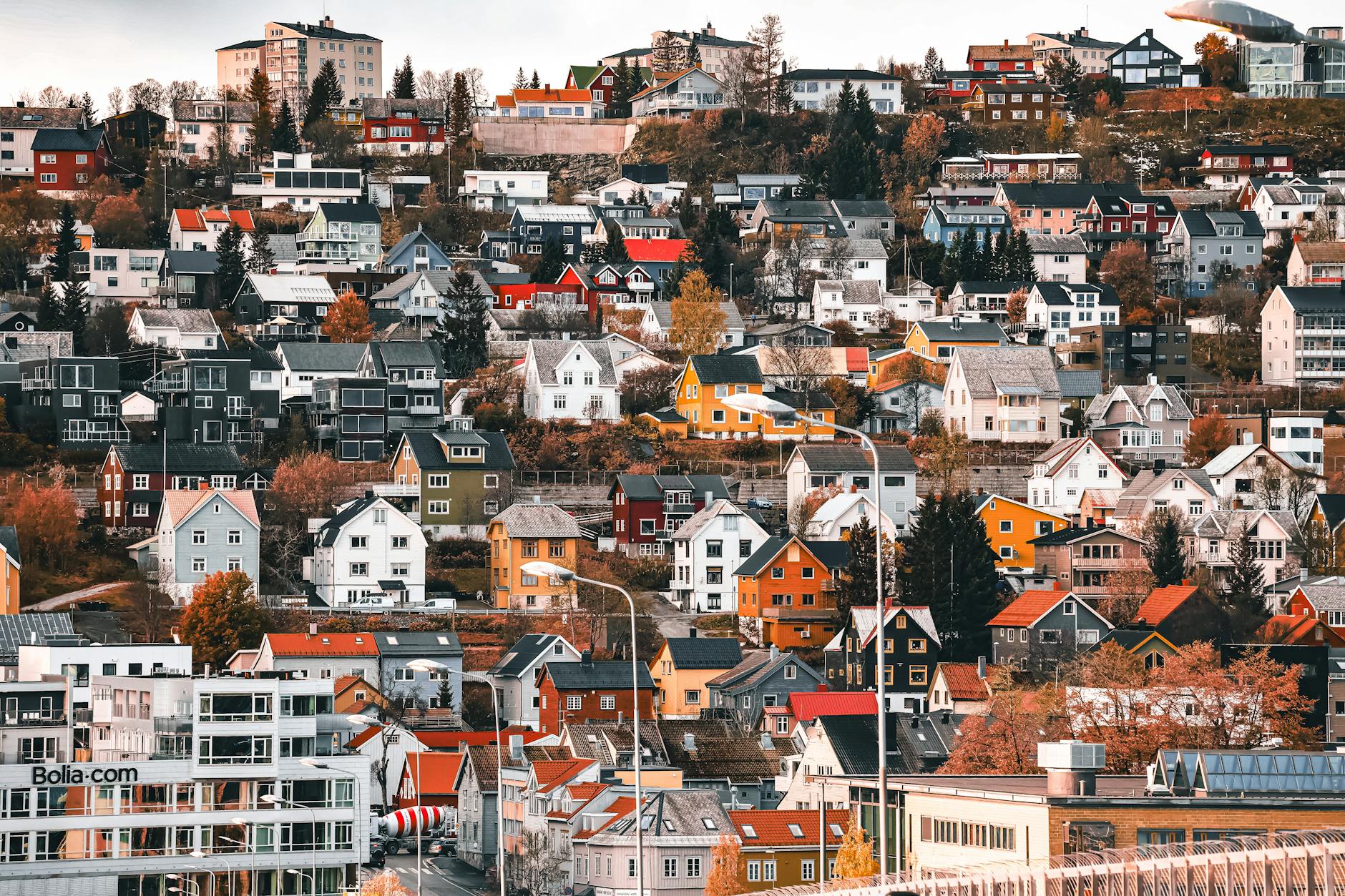
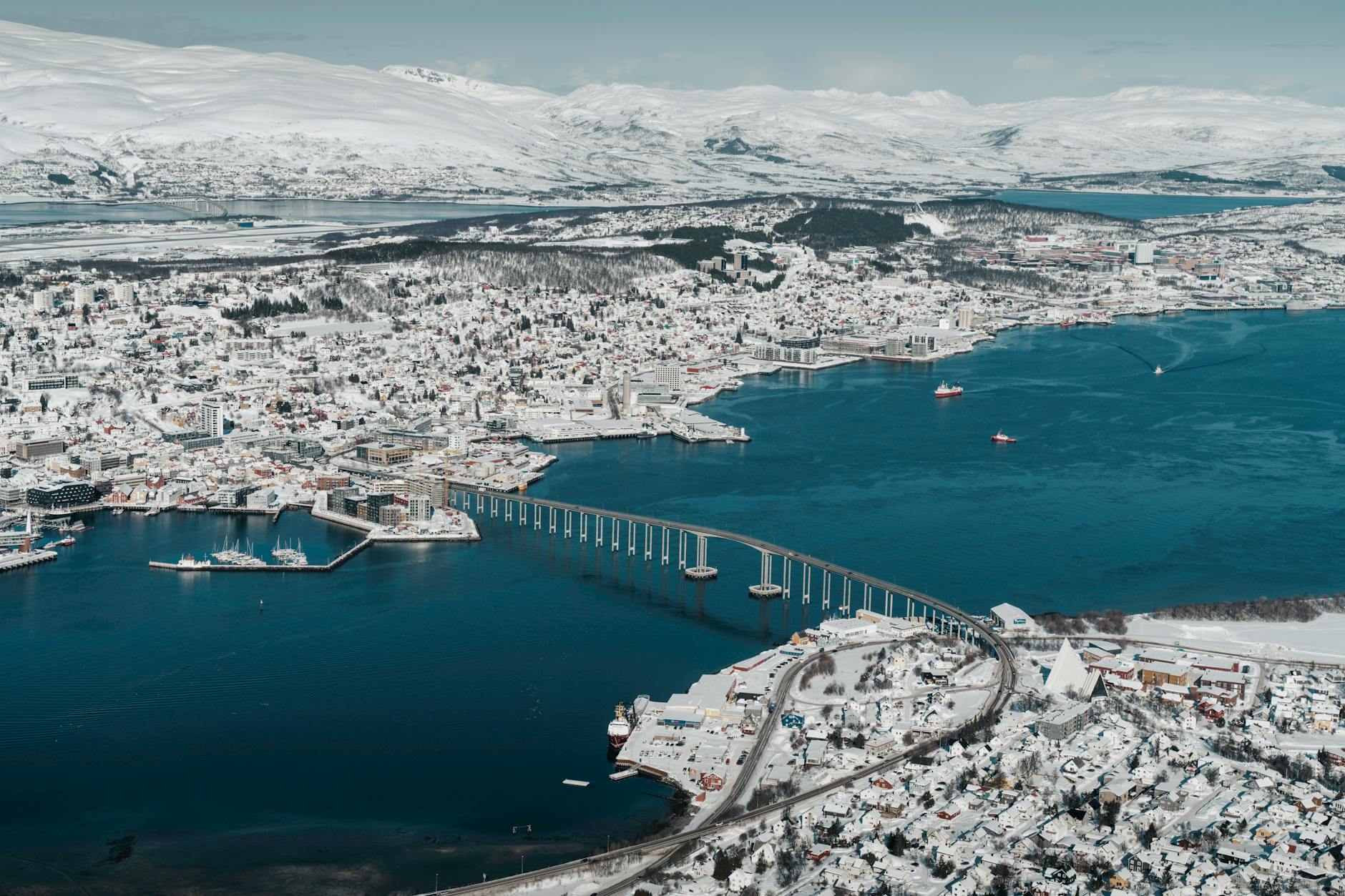
You can walk a real center, use a public bus, go to a serious museum, cross to a landmark church, ride a cable car to a broad northern view, and still feel that fjord, island, mountain, and sky conditions are shaping the whole place. That combination is rare. Tromso is not wilderness, and it is not trying to be. It is an urban outpost with enough cultural density to keep the trip grounded.
Where Tromso Fits in a Norway Trip
Tromso often enters Norway itineraries through one of two fantasies. The first is the northern-lights fantasy: come north, hunt sky, leave. The second is the Arctic-summer fantasy: midnight sun, hiking, and sea light with just enough city for logistics. Both are valid, but both can shrink Tromso if they become the whole frame.
The city works better when it is treated as a genuine northern urban base. That means a place where excursions matter, but so do museums, food, church architecture, harbor walks, and the practical emotional relief of having a real city in the Arctic rather than a resort or a transport node. This is one reason Tromso is such a strong first northern-Norway stop: it introduces Arctic scale without forcing the traveler to give up urban structure.
As a short standalone city break, it is strong in the right season. As part of a broader Norway trip, it provides one of the clearest contrasts to the south. And as a weather-dependent destination, it benefits more than many places from an itinerary that grants it actual room instead of treating it as a single-function stage.
First-Time Visitors Versus Repeat Visitors
First-time visitors often approach Tromso with too much inventory in mind: aurora, whales, dogsledding, Sami experiences, fjords, snowshoeing, cable car, cathedral, museums, and perhaps a heroic confidence that all of this can fit into two or three days without cost. That usually creates the worst version of the city: one where Tromso itself is barely present.
Repeat visitors tend to be calmer. They know the city can carry a day. They know weather may move the entire emotional logic of the trip. They know Fjellheisen is sometimes the right answer and sometimes not. They know that one good evening in the city may be worth more than one more half-forced excursion category. As a result, repeat visitors often like Tromso more because they stop using it as a purchase platform and start using it as a place.
This is one of Tromso's central lessons: the city becomes stronger when the Arctic no longer needs to perform nonstop.
Best Time to Visit
Tromso should be chosen by season on purpose.
Winter is for darkness, snow probability, aurora hopes, and the whole emotional architecture of the Arctic night. Summer is for midnight sun, hikes, sea light, and a very different city mood. Shoulder periods can work, but they are not "best of both worlds" in any simple sense.
The main point is that Tromso is not one destination with weather variations. It is multiple versions of itself.
Winter Tromso Versus Summer Tromso
This distinction is more than a packing issue. It changes what the city means.
Winter Tromso is about darkness, snow possibility, low light, excursion timing, warm interiors, and the emotional architecture of a city that becomes a refuge between colder ambitions. In winter, the city often feels more inward, more luminous, and more reliant on evening life. Restaurants, bars, museums, and hotel quality matter more because darkness and cold make the interior city part of the destination rather than only a supplement to it.
Summer Tromso is almost another place. The midnight sun shifts the whole psychology of effort. Long walks feel easier to justify. The harbor can stay visually alive late into the night. A hike or boat outing fits more naturally into the day. The city’s relationship to time becomes strange in a different direction: not because darkness compresses you, but because light keeps inviting one more hour.
This matters because travelers often book Tromso through image rather than through season. If you want the classic aurora-and-snow emotional structure, summer will not provide it no matter how beautiful it is. If you want long bright northern evenings and a lighter relationship to outdoor movement, winter will not provide that either. Tromso must be chosen honestly.
How Many Days You Need
Two Nights
Enough to understand the outline, but not enough to absorb the city if one excursion dominates the stay.
Three Nights
The strongest first answer. One day can belong largely to the city, one to a major excursion or weather-dependent evening outing, and one to the mainland-side sights or one further regional emphasis.
Four Nights or More
Very reasonable in winter, when fatigue, weather variability, and the late timing of some excursions reward extra space.
The Real Question
Do not ask how many excursions you can fit into Tromso. Ask how many days give the city, the weather, and your own energy enough margin to still feel coherent. For most first trips, that answer is three nights.
Arrival Strategy
Tromso opens quickly if the arrival is simple.
Avinor's airport page makes clear that public-bus routes `40` and `42` serve the airport, while the airport express bus covers several central hotels and key institutional stops.[1] For many visitors, that means a car is unnecessary from the beginning.
The first day should usually stay urban. Walk the center, reset the body clock, eat early, and do not immediately force a huge Arctic narrative onto the trip.
Why the First Night Should Usually Stay in the City
Many first-time visitors make the same mistake in Tromso that they make in famous mountain or northern destinations everywhere: they assume the first available evening should be spent chasing the biggest possible experience. In practice, this often wastes energy at exactly the wrong time.
The first night in Tromso usually works best when it remains mostly urban. Walk the harbor. Understand the weather. Have dinner. Notice how the city sounds and feels. Cross the bridge only if it makes sense. Let the body adapt to whatever version of Arctic light or darkness you have arrived into. This gives the trip a center.
A huge outing on the first evening can still work, especially if timing is ideal. But it should be a deliberate choice, not an automatic act of Arctic panic. Tromso is one of those places where the city often needs to be trusted before the wider region starts to make emotional sense.
Why Sleeping in Tromso Matters
Tromso is one of those cities that can look almost too efficient if you only borrow it for a day. You arrive, do one outing, maybe cross a bridge, maybe eat a decent meal, and leave with the impression that the city was useful. That is true, but it is thin.
Sleeping in Tromso changes the emotional sequence. The place has time to become evening, then weather, then morning, then city again. A late return from an aurora trip feels different when you are coming back into a real center with bars, lights, and a known hotel rather than treating the city as a staging lot. The next morning also matters. You see what remains when the excursion has finished and the place still has to carry itself.
This is especially important in Arctic travel because so much energy gets concentrated into the extraordinary. Tromso improves the moment the ordinary parts of the city are allowed to count.
Where to Stay
For most first-time visitors, central Tromso on Tromsøya is the right answer.
City-Center Tromso
Best for: first-timers, walkability, museum access, restaurants, harbor atmosphere, and easier recovery between outings. Tradeoff: less of the isolated-lodge fantasy some people imagine when they hear "Arctic Norway."
Slightly Outer or Bridge-Adjacent Stay
Best for: travelers who want calmer surroundings or a specific hotel style. Tradeoff: weaker spontaneity, especially in cold weather or after late excursions.
Outside-City Base
Best for: travelers deliberately building the trip around a remote property or a specialized experience. Tradeoff: worse first-time city understanding.
The Main Rule
Stay where evenings still work. Tromso is better when a late return does not become an ordeal.
The Tromsos That Matter Most
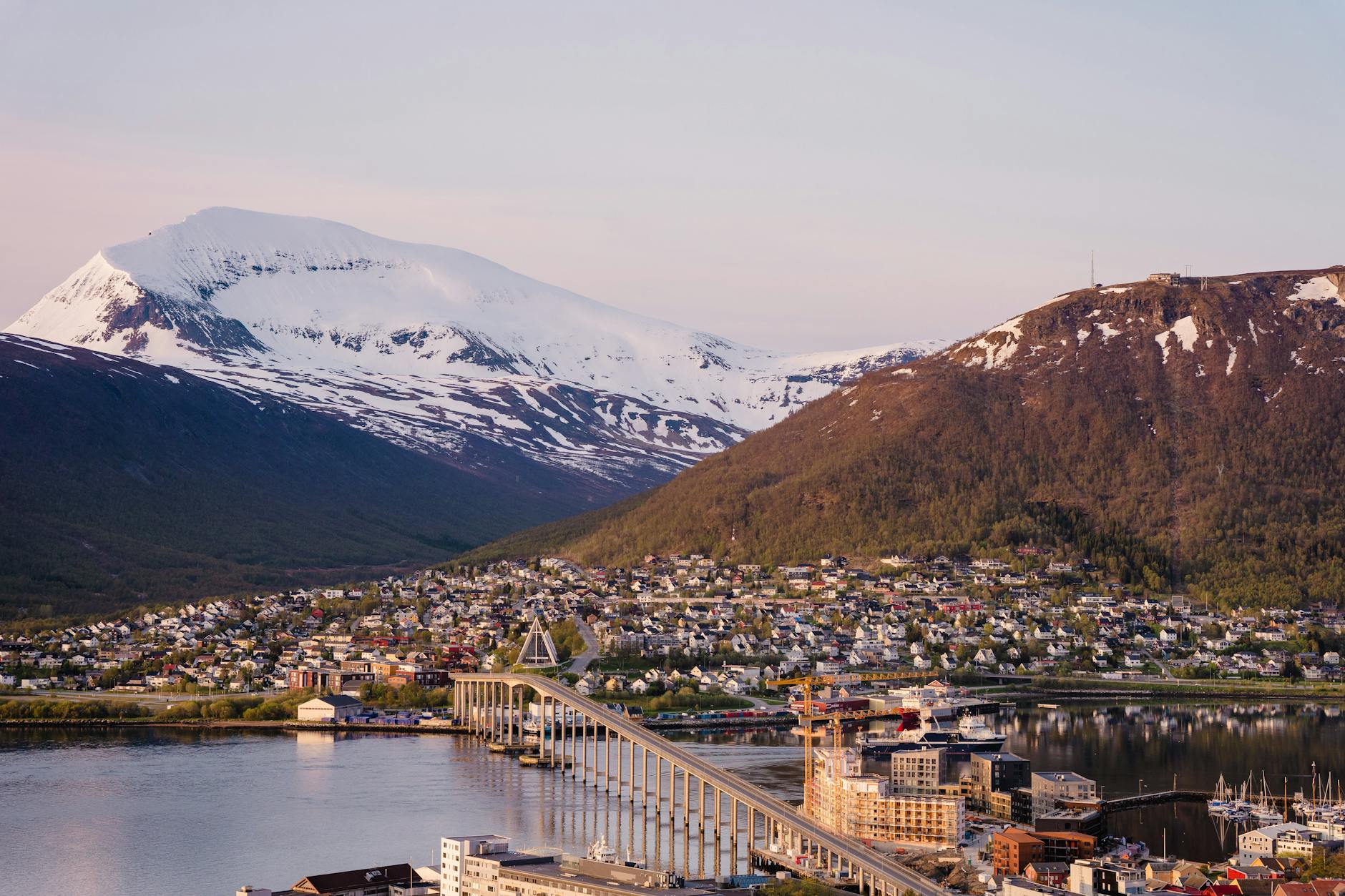
Center-city Tromso: harbor, compact streets, bars, cafés, and most of the urban stay.[3]
Bridge-and-mainland Tromso: the Arctic Cathedral, the cable-car side, and the visual logic of the city opening outward.[3][4]
Museum Tromso: Polaria, the Polar Museum, the university museum, and the places that prevent the trip from becoming only sky and weather.[5][3]
Excursion Tromso: the booked version of the city, which is useful but should not be allowed to consume the whole stay.
The City Center and Why It Matters
Tromso's center is one of the main reasons the destination works so well.
It is not huge, but it is enough. The harbor edge, the cathedral, museums, cafés, and restaurants are all close enough that the city can support an actual rhythm. You can return to the hotel, reset after bad weather, change clothes for a late outing, or simply walk off a heavy dinner without turning the whole day into logistics. That compactness is a major strength.
A Tromso trip improves the moment the traveler stops acting as if the city is only a holding pen.
Morning Tromso Versus Night Tromso
Morning Tromso is often practical and clarifying. This is when the harbor edge, museums, church lines, and weather decisions make the most sense. You can see what the day is going to be and whether your plans are actually aligned with it.
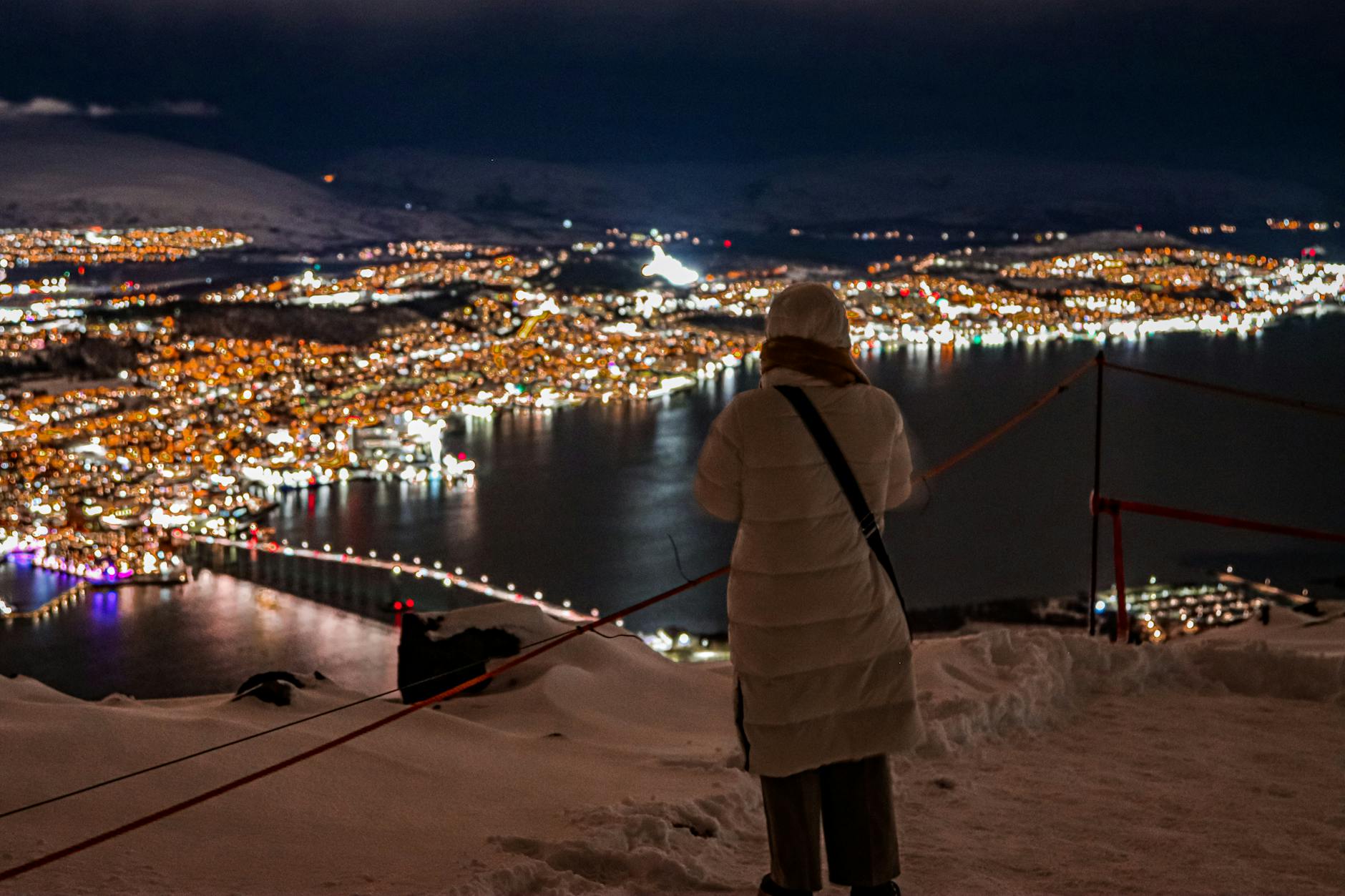
Night Tromso is often where the city becomes emotional. In winter, darkness turns the center into a lit refuge between colder, bigger ideas. In summer, evening can drift into a strange luminous continuity. This is why the city should not be reduced to a daytime booking zone. Some of its strongest identity appears after the obvious sightseeing has thinned out.
A good Tromso trip usually contains both registers: one where you understand the place and one where you feel it.
The Arctic Cathedral and the Mainland Side
The Arctic Cathedral matters not because it is the only sight worth crossing for, but because it changes the spatial understanding of Tromso.
Visit Tromso's current attraction guide notes that it is about a 25-minute walk from the center across the bridge and also reachable by several bus lines.[3] The attraction page continues to describe it as a 1965 landmark visible from the sound, the bridge, and even from arriving aircraft.[6]
That is exactly how it should be used: not only as an interior visit, but as part of understanding Tromso as a city stretched between island, bridge, and mainland.
Why the Bridge Matters More Than It Looks
Tromso’s bridge can appear to be just an obvious piece of infrastructure. In practice, it is one of the things that makes the city legible.
Crossing it or even looking along its line reminds you that Tromso is not a generic compact center with some attractions nearby. It is a place built out of crossing, exposure, water, and shifts in perspective. The island center feels one way. The mainland side feels another. Fjellheisen turns that difference into altitude. The Arctic Cathedral turns it into form.
This is why a first trip usually benefits from going across at least once with intention. Otherwise Tromso can remain too flat in the mind, as if everything meaningful happened on one urban strip.
Fjellheisen and the Need for Height
Fjellheisen is one of the clearest ways to understand Tromso in one glance.
The official site notes that the cable car ride itself takes about five minutes, that private-car parking at the site is not available, and that access is practical either by shuttle, by bus `26`, by taxi, or on foot from the center.[4] It also explicitly ties the experience to both midnight-sun and northern-lights seasons.[4]
That matters because the cable car is not just a scenic add-on. It is a city-reading tool. Use it when visibility is good and when the weather can reward the height.
Museums, Polaria, and the Non-Excursion Day
One of the smartest Tromso moves is to give the city one proper indoors-and-nearby day.
Polaria, the Polar Museum, the Arctic University Museum, and related stops keep the trip from becoming meteorological gambling plus transport. They also explain why Tromso matters beyond tourism: Arctic research, polar exploration history, marine identity, and northern culture all sit inside the city.
This is often the day that makes the trip feel whole.
The Value of a Bad-Weather Day
Some travelers hear “bad-weather day” and think “lost day.” In Tromso, that is often a category error.
Bad weather can redirect the trip toward exactly the parts of the city that keep it from becoming shallow. A museum-heavy day, a long lunch, a harbor walk done in fragments, a quieter church or architecture-oriented route, or simply the experience of watching the city continue under low sky all add depth. Tromso is not broken by weather. In many cases, it becomes more itself through weather.
This is one reason the city is stronger than a pure excursion base. If the trip were only about clear-sky payoff, every grey or windy day would feel like theft. Because Tromso has real city content, poor conditions can still produce a meaningful northern day.
Excursions, Aurora, and Expectation Control
Tromso is probably the place where some travelers most need to hear this: booking something does not entitle you to the sky.
Aurora, wildlife, and even broad scenic clarity remain conditional. That is part of the destination, not a defect in it. The right way to use Tromso is to pick one or two excursions that genuinely fit the season and your tolerance for uncertainty, then let the city absorb the rest.
The wrong way is to book every Arctic category because the names sound once-in-a-lifetime.
One Good Excursion Day Is Better Than Two Forced Ones
This is one of the most important Tromso rules.
Because excursions are expensive, seasonal, and emotionally loaded, travelers often feel pressure to fill every available slot. If one company offers whales, another offers aurora, another offers dogsledding, another offers fjord landscapes, the trip starts to behave like a shopping cart instead of a city stay.
In practice, one excellent outing often does more for Tromso than two compromised ones. A well-timed excursion that leaves enough room for the city before or after it tends to strengthen the whole trip. Two overbuilt days, by contrast, often make Tromso feel like an expensive booking interface with a hotel attached.
The destination improves the moment you stop measuring value by category count.
Getting Around
Tromso is very manageable without a car.
Visit Tromso's current practical pages and Avinor's airport information together make the main case clearly: buses matter, the airport is connected, the city center is compact, and regional public transport can handle more than many first-timers expect.[1][2]
For travelers who are not deeply comfortable with winter driving, that is often a feature, not a limitation.
Driving and the Arctic Fantasy of Self-Sufficiency
Visit Tromso's getting-around page explicitly warns that Arctic driving can be challenging, especially in winter, with narrow and winding roads and slippery conditions.[2]
That warning should be taken literally. Some routes are fine. Some travelers are competent for them. But the fantasy that a rental car automatically produces freedom can be especially misleading in the Arctic, where darkness, wind, road conditions, and fatigue all cost more.
Why Not Renting a Car Can Be a Strength
In many destinations, no car means less control. In Tromso, no car often means a cleaner first experience.
You stay in the city. You use the buses that exist for ordinary life. You book guided outings where local driving, weather reading, and timing are part of the service. You come back without having turned every road condition into a private problem. For many first-time visitors, this is not a compromise. It is the right relationship to the place.
The Arctic does not always reward self-sufficiency. Sometimes it rewards choosing the more intelligent dependence.
Who Tromso Handles Especially Well
Tromso is unusually good for travelers who can tolerate uncertainty without treating it as failure.
Couples often do well because the city supports both shared urban evenings and weather-dependent larger moments. Solo travelers often do well because the center is easy to use and excursions are structured enough to keep the trip from becoming lonely. Museum-oriented travelers do well because the city can still sustain an excellent non-excursion day. Even travelers who are not particularly adventurous can do well if they stop expecting the Arctic to behave like a theme park and instead let the city mediate the experience.
Where Tromso becomes harder is for travelers who need every paid thing to yield visible reward. Weather and darkness make that demand too brittle. The city works best when the trip keeps some humility.
Food, Bars, and Evening Tromso
Tromso is not only a day-trip city. Its evenings matter.
Part of what makes the place satisfying is that you can have a proper dinner, a drink, a late walk in shifting light or darkness, and then perhaps one late excursion without the whole destination collapsing into performance tourism. The city gives the trip somewhere to land.
That is why the hotel and the central base matter so much.
Why Tromso Feels More Real Than Its Branding
Tromso’s marketing image is powerful: aurora, snow, whales, Arctic Cathedral silhouette, dramatic coast, and the rhetoric of the north. But the actual city often feels more convincing than the branding because ordinary life is still clearly visible inside all that symbolism.
Students, buses, groceries, office life, cafés, museums, bars, local errands, ferries, and people going home in difficult weather all remain present. That lived texture is part of what keeps Tromso from becoming a northern theme park. It is also why the city works as a destination even for people who do not get every sky or wildlife moment they wanted.
The more you notice the ordinary Tromso inside the extraordinary one, the stronger the trip usually becomes.
How Tromso Changes Over the Course of a Stay
On arrival, Tromso can feel slightly abstract. The signs all point to Arctic scale, but the city itself may still seem surprisingly normal. This can make some travelers uncertain about whether they are really “there” yet.
By the second day, if the trip is built well, the city begins to sharpen. The bridge matters. The mainland side matters. The excursions start to fit into an urban frame rather than replacing it. Even the weather feels less like a disruption and more like part of the city’s operating logic.
By the third day, Tromso often becomes more persuasive precisely because it no longer has to prove its Arctic credentials constantly. It is just a real northern city with excursions attached. That is usually when the trip becomes strongest.
Why Tromso Often Gets Better on the Second Full Day
The first full day in Tromso is often crowded by interpretation. You are still figuring out the weather, the darkness or daylight, the bridge, the city center, the excursion logic, and the emotional gap between the marketed Arctic and the actual city around you. Even a good first day can carry too much explanation inside it.
By the second full day, the destination often improves sharply. The city no longer feels abstract. You understand whether you want more center-city time, more mainland-side perspective, or one stronger outing. You know what a realistic evening looks like. You know whether your hotel and district were chosen well. You also stop expecting every hour to prove the trip’s northern legitimacy.
This is one reason Tromso is often undersold by stays that are too short. The city tends to become more convincing only after one full cycle of city, weather, excursion, and return has already happened once.
Why One Proper City Day Is Not a Fallback
Many visitors talk about having “a city day” in Tromso as if it were what happens when the weather ruins the real plan. That is the wrong hierarchy.
One proper day that belongs mainly to Tromso itself is often what prevents the whole trip from becoming thin. It is the day when the museums, harbor, bridge logic, cable-car possibility, cafés, and evening life all get to count as the destination rather than as compensation. Without this, Tromso can become all Arctic category and very little city memory.
The right city day is not a consolation prize. It is what makes the rest of the trip mean more.
In Tromso, that matters enormously.
The city should still feel present when the sky does not cooperate. If it does, the trip was built correctly.
That is the standard.
For Tromso, it is enough.
Common Mistakes
Treating Tromso Only as an Aurora Base
This strips out most of what makes the destination durable.
Booking Too Many Excursions
The city weakens when every day belongs to transport and anticipation.
Picking the Wrong Season for the Trip You Actually Want
Winter and summer Tromso are not interchangeable.
Ignoring Fatigue
Late nights, cold, and irregular light make rest more important, not less.
Renting a Car by Reflex
For many first-time visitors, public transport and guided outings make for a cleaner trip.
My Blunt Advice
Stay central.
Choose the season first and the excursions second.
Use Fjellheisen when visibility is worthy of it.
Cross to the Arctic Cathedral side so the city stops feeling abstract.
Give Tromso one day that belongs mainly to the city itself.
And remember that the place is strongest when the Arctic stays large but the trip stays controlled.
Source Notes
- 1. Avinor, Tromsø Airport public transportation page. Used for current airport-bus and public-bus access, including routes `40` and `42` and ticket-purchase guidance. https://www.avinor.no/en/airport/Tromso/info/public-transportation/
- 2. Visit Tromso, "Getting around in Tromso and the region." Used for current bus-ticketing guidance, regional-bus context, and the official warning about winter driving conditions. https://www.visittromso.no/getting-around
- 3. Visit Tromso, "How to get to Tromsø's attractions." Used for current practical access guidance to the Arctic Cathedral, Fjellheisen, Polaria, the Polar Museum, the university museum, and other core city sights. https://www.visittromso.no/travel/getting-around/sights
- 4. Fjellheisen official site. Used for current cable-car timing, access options, no-private-parking rule, and midnight-sun / northern-lights seasonal framing. https://www.fjellheisen.no/
- 5. Visit Tromso, "Tromsø pass." Used for current pass composition and 2026 price context, especially for travelers considering a museum-heavy city stay. https://www.visittromso.no/tromso-pass
- 6. Visit Tromso, "The Arctic Cathedral." Used for the cathedral's architectural history, current admission context, and its standing as one of the city's defining landmarks. https://www.visittromso.no/arctic-cathedral