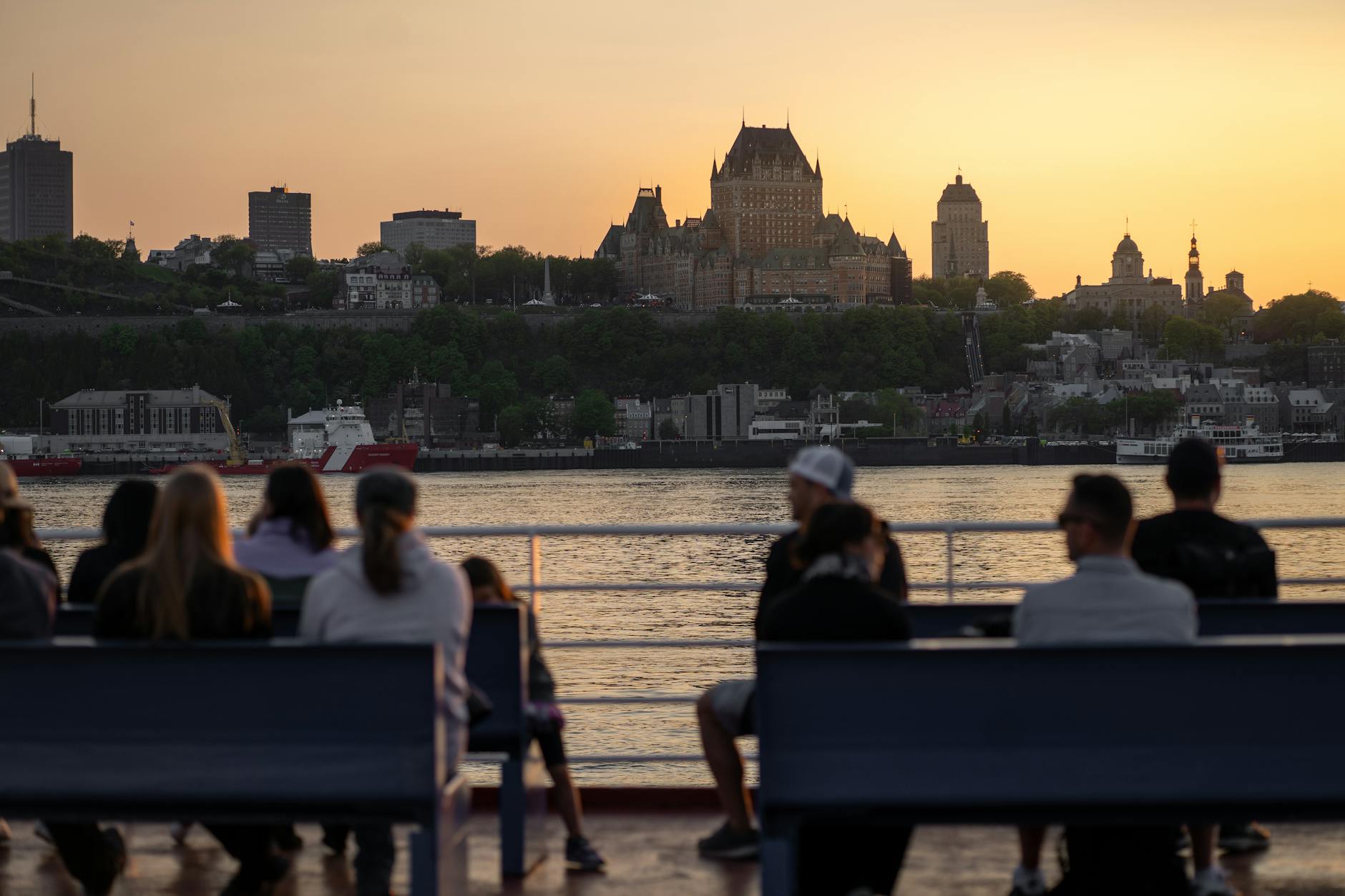
Quebec City is one of the easiest places in North America to visit lazily because the opening image is so strong.
Start Here
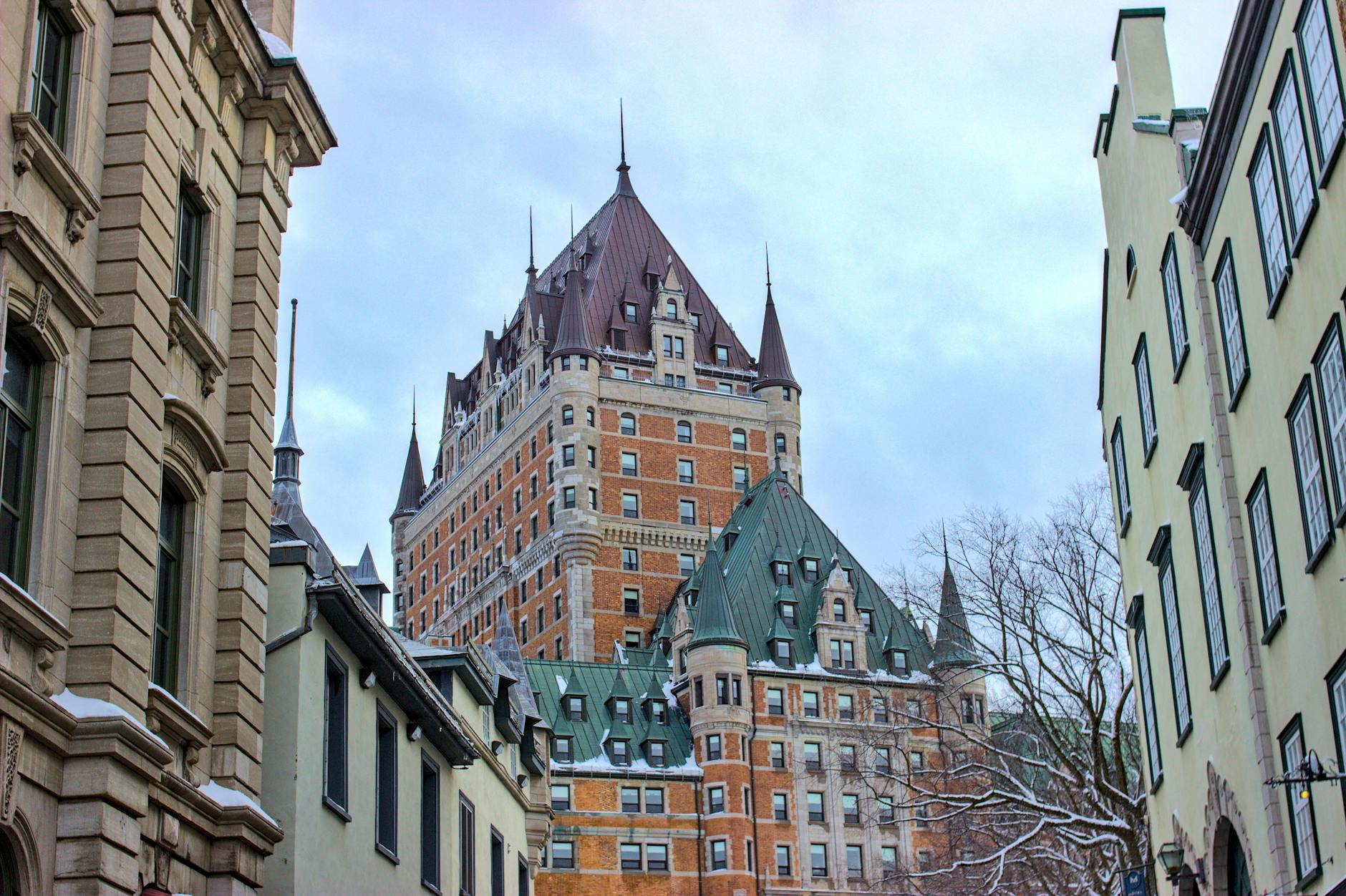
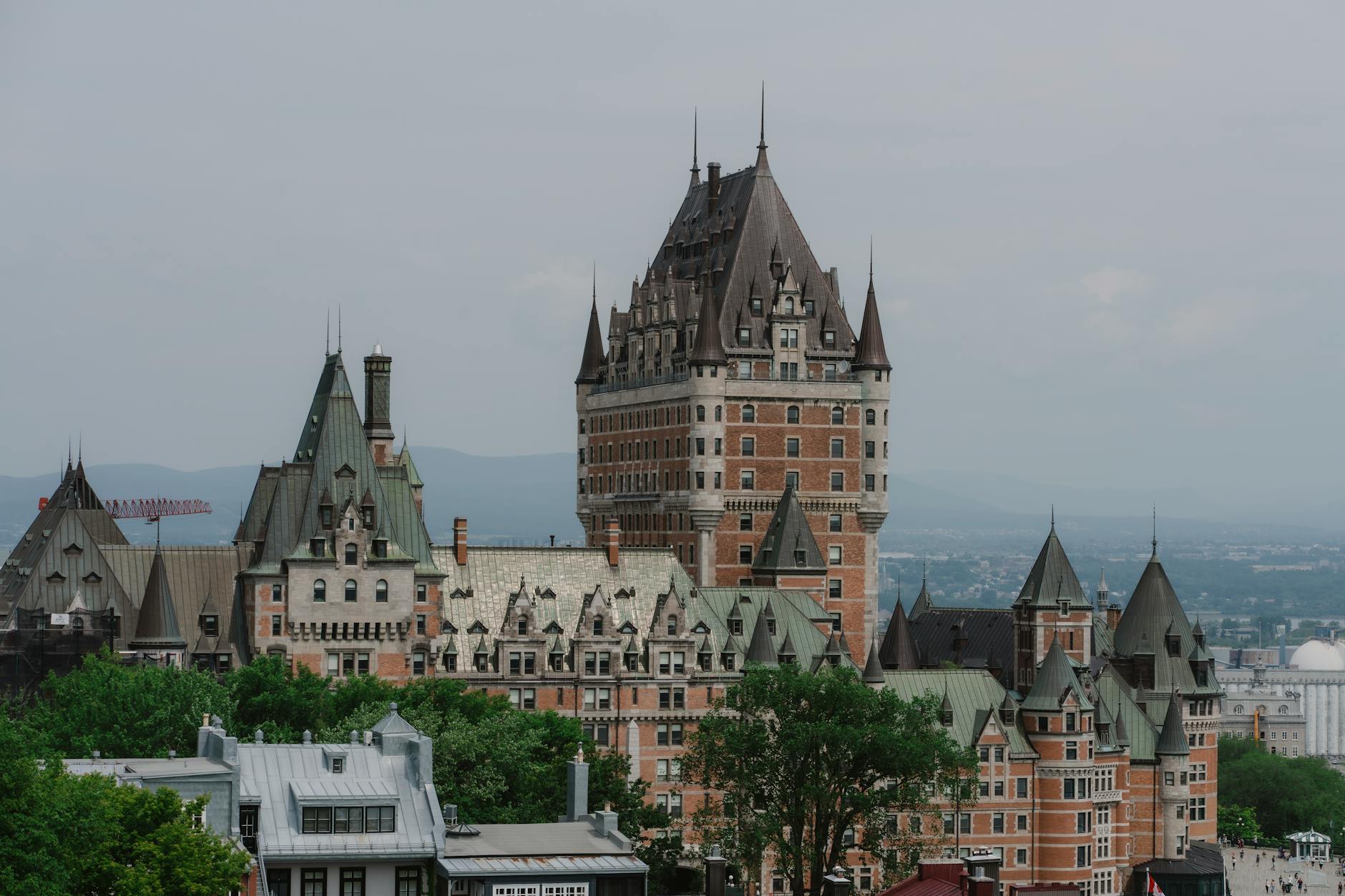
You arrive and immediately get stone walls, steep streets, church towers, French signage, the Château Frontenac profile, and the broad line of the St. Lawrence. The city appears to explain itself at once. That is the trap. Visitors take one look at Old Quebec and assume the trip will now run on atmosphere alone. Sometimes that works for half a day. It does not work for a properly shaped stay.
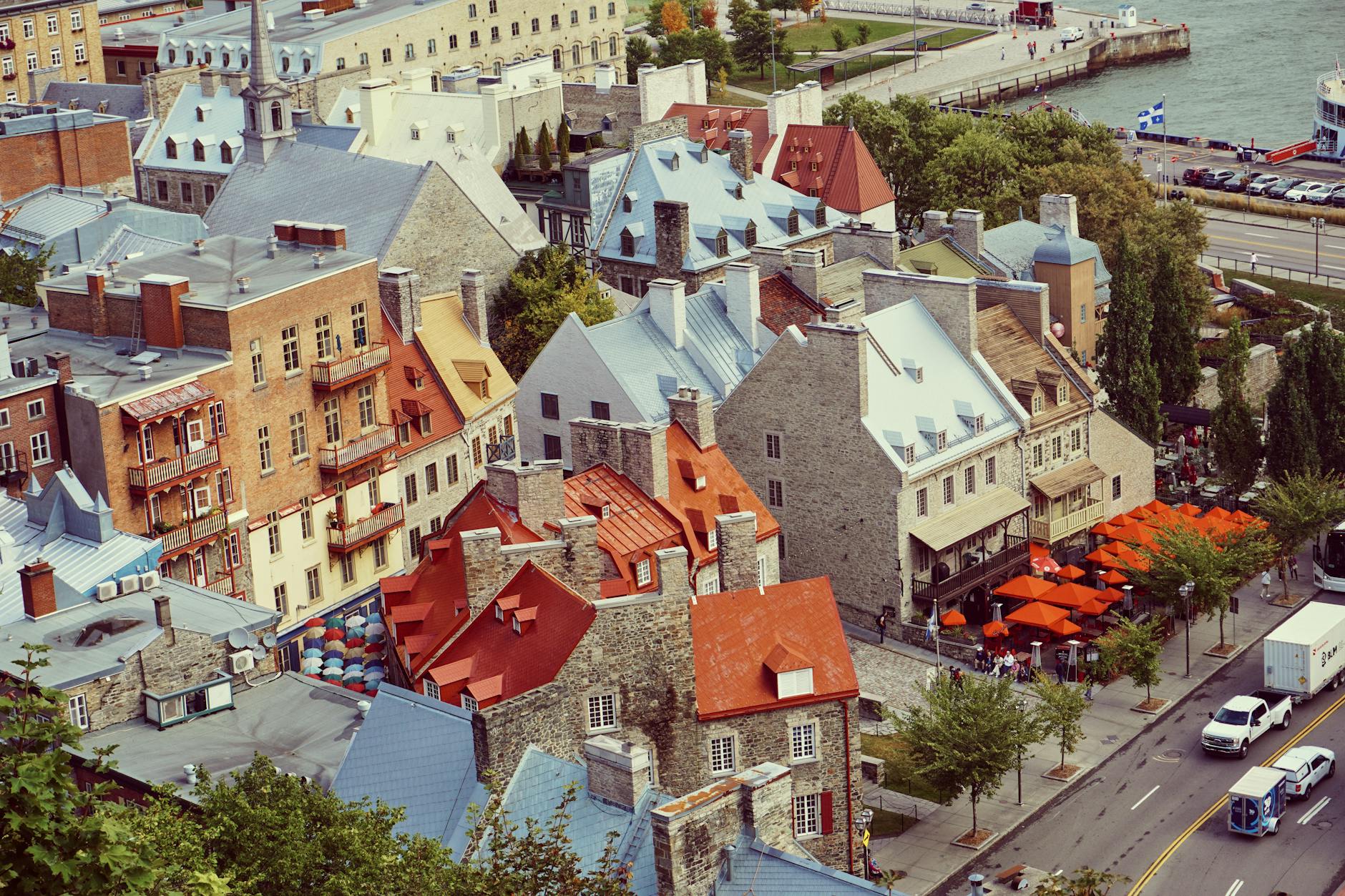
The stronger Quebec City trip begins by rejecting the postcard as a sufficient plan. This is not just the oldest, prettiest, most European-looking slice of urban North America. It is also a city of levels, weather, ceremony, and language. Upper Town gives you the civic, defensive, and symbolic city. Lower Town gives you the trading, river-facing, more textured city. The ramparts and the gates explain the military logic. The river explains the scale. The neighborhoods just outside the most famous lanes help prevent the destination from collapsing into a heritage set.
That matters because Quebec City can become thin surprisingly fast if the traveler never moves beyond the most overfamous handful of streets. The weak version of the trip is obvious: Château views, Petit-Champlain photos, a scenic dinner, perhaps a quick walk on Terrasse Dufferin, and then the sense that one has “done” the place. The stronger version respects the city’s internal structure. It walks the walls. It uses the change between Upper and Lower Town deliberately. It gives the Plains of Abraham or the museum district real time. It pays attention to food and evening atmosphere. It remembers that this is a living French-speaking capital, not just a preserved historic district with unusually good stonework.
The other common mistake is to treat Quebec City as if atmosphere were its only difficulty. In fact, the city asks for judgment. Slopes matter. Stairs matter. Season matters. Summer crowds change the emotional texture of the old core. Winter cold changes the body’s relationship to the streets. The wrong base can make the whole destination feel more exhausting than it is. The right base can make it feel almost improbably exact: coherent, walkable, romantic without sentimentality, and full of small transitions that keep rewarding repeat walks.
Quebec City is also best when allowed to be itself rather than compared too aggressively to Europe. Yes, that comparison is part of the city’s attraction. But the stronger reading is not “this feels like France.” It is “this feels like a North American city with a rare continuity of French language, fortified history, and civic form.” That difference matters, because it helps the traveler look for the city that exists rather than the one marketing copy keeps promising.
The city in one sentence: Quebec City is a fortified, river-facing French-speaking capital whose best first trip comes from balancing Upper Town ceremony, Lower Town texture, food, language, and strategic walking instead of treating Old Quebec like a frozen postcard loop.
Basic data
| Population | About 550,000 in the city; metro about 850,000 |
|---|---|
| Area | 485 km2 |
| Major religions | Christian heritage with a largely secular contemporary public culture |
| Political system | Mayor-council city government inside a federal parliamentary constitutional monarchy |
| Economic system | Advanced mixed economy led by government, services, tourism, education, and technology |
Quick Verdict
Best for: couples, solo travelers, first-time Quebec trips, architecture travelers, food-focused travelers, autumn city breaks, winter romantics who plan properly, and anyone who likes strong historical form.
Not ideal for: travelers who need flat, frictionless movement all day, people who hate tourist concentration in small historic areas, or anyone expecting nonstop big-city variety.
Ideal first visit: 2 to 3 full days.
Minimum worthwhile stay: 2 full days.
Best overall months: May, June, September, and October.
Best winter case: if you deliberately want cold-weather atmosphere, strong hotels, evening warmth, and a version of the city sharpened by snow and river light.
Biggest planning mistake: letting the most photogenic few streets stand in for the whole destination.
One thing to prioritize: the base. In Quebec City, the right relationship to the old core matters more than chasing maximum postcard exposure.
One thing to leave flexible: the steepest or most scenic walking segment of the day. Weather and energy change the return dramatically.
The blunt version: Quebec City is one of the strongest short stays in North America if you treat it as a city of layers and not as a heritage stage set.
Who Will Love Quebec City?
Quebec City works especially well for travelers who like cities with a clear physical and cultural thesis. Within minutes, you understand that the place is not generic. The fortifications, the street names, the vocabulary, the church spires, the river drop, the steep transitions between upper and lower levels, and the presence of French as daily reality all make the city feel unusually self-possessed.
Couples tend to do very well here because Quebec City is highly efficient at turning a short trip into something memorable. It offers scenic density without requiring a giant metropolitan schedule. A good day can include a morning on the ramparts, a long lunch, a walk into Lower Town, one museum or historical anchor, and an evening that feels intimate rather than loud. Romance here comes more from urban form and atmosphere than from any single attraction.
Solo travelers also do well. The destination is compact, visually rich, and easy to inhabit alone. There are few better North American cities for unstructured walking with purpose. That matters because Quebec City often reveals itself best in the transitions between named sights rather than at the sights alone.
Travelers who care about language and identity will find the city especially rewarding. Quebec City is not only historically French; it is presently Francophone, and that gives daily life a coherence visitors should notice. Even basic things like menus, signage, and conversational sound contribute to the feeling that the destination is culturally continuous rather than merely curated.
The city is less ideal for travelers who need constant novelty over several days. Quebec City is powerful, but it is not infinite. It rewards concentration, not sprawl. This is a compliment, not a warning, provided the traveler shapes the stay accordingly.
Quebec City at a Glance
| Question | Practical Answer |
|---|---|
| Main airport | Québec City Jean Lesage International Airport (YQB) |
| Main city transit system | RTC |
| Useful public airport link | RTC airport service into the city network |
| Best first-time base | Inside or just outside Old Quebec, depending tolerance for slopes and crowds |
| Signature structural divide | Upper Town and Lower Town |
| Signature big historical zone | Old Quebec within the walls |
| Signature open-space anchor | Plains of Abraham |
| Best museum anchor | Musée de la civilisation |
| Best easy vertical shortcut | Funiculaire du Vieux-Québec |
| Best river perspective extension | Québec-Lévis ferry |
| Car needed? | No, not for a normal first stay |
| Emergency number | 911 |
| Tap water | Safe to drink |
| Currency | Canadian dollar |
| Power plugs | Type A and B |
2026 Visitor Notes
YQB Public Transit Exists, But It Should Be Treated Pragmatically
YQB’s official public transportation information confirms that RTC serves the airport, with airport-connected service linking YQB into the city network.[1][2] This is useful, but the smarter framing is practical rather than romantic: public transit is real and usable, not magical.
RTC Fare Logic Is Simple Enough For Visitors
RTC publishes both a fare schedule and a general rates-and-passes overview, which means visitors can quickly understand the basic day-pass and single-trip logic before arrival.[3][4] In a city this walkable, transit mostly exists to support rather than define the trip.
Old Quebec Is Best Read On Foot
Destination Québec cité’s own guidance emphasizes that Old Quebec is a fully walkable UNESCO World Heritage area best explored on foot.[5][6] This is exactly right. Cars complicate what walking clarifies.
The Funicular Is Small, Useful, And Not Just A Tourist Gimmick
The Funiculaire du Vieux-Québec remains the direct link between Terrasse Dufferin and Petit-Champlain / Place Royale, and Destination Québec cité still lists it with current hours and practical details.[7] In a city where vertical change shapes the experience, that matters.
The Plains Of Abraham Are Not Optional Filler
The National Battlefields Commission describes Battlefields Park as a central urban park and historical zone, with the Plains of Abraham Museum as the welcome and information point.[9][8] This is not just green space. It is part of the city’s explanatory structure.
The Quebec-Lévis Ferry Is One Of The Best Cheap Perspective Shifts In The Region
The Société des traversiers du Québec continues to publish current fares and schedules for the Québec-Lévis ferry.[10][11] Even if Lévis is not the destination, the crossing can sharpen your understanding of the city.
The Musée De La Civilisation Gives The City Needed Depth
The Musée de la civilisation remains one of Quebec City’s strongest all-weather anchors, with regular opening hours and a substantial visitor-facing planning section.[12][13] It is one of the best ways to keep the trip from becoming only architectural admiration.
How to Understand Quebec City
Quebec City works through five forces.
The first is elevation. Upper Town and Lower Town are not cute labels. They affect movement, mood, hotel choice, and what kind of day you are actually having.
The second is fortification. Gates, walls, and defensive logic are not merely historical decoration. They explain the city’s form.
The third is the river. The St. Lawrence gives scale, weather, light, and a sense that the city belongs to something much larger than its compact core suggests.
The fourth is language. French is not ambience here. It is one of the city’s main living realities, and visitors should let it alter their reading of the place.
The fifth is ceremony versus texture. Quebec City contains both the monumental and the intimate. The trip improves when both are allowed to appear.
The Five Quebec Cities A First-Time Visitor Actually Meets
Upper Town Quebec City: gates, terraces, formal civic beauty, the château profile, and the city at its most symbolic.
Lower Town Quebec City: Place Royale, Petit-Champlain, the old port edge, museum access, and a more tactile version of the city.
Fortified Quebec City: walls, ramparts, defensive lines, and the reason the place still feels unlike any other city on the continent.
River Quebec City: the St. Lawrence, ferry views, old port atmosphere, and the version of the city that remembers its scale.
Lived Quebec City: Saint-Jean-Baptiste, Saint-Roch, and the edges where the city stops performing for visitors and starts feeling more ordinary in the best way.
The Main Mental Shift
Do not ask, “What are the top sights in Quebec City?” Ask, “Which level and which version of the city am I using today?” Upper, lower, fortified, river-facing, or more local. That produces better days almost immediately.
What Quebec City Does Better Than People Think
Quebec City is better than people think at repeat walking. Many scenic old quarters are powerful once and then begin to flatten. Quebec City often improves on the second or third pass because light, slope, crowding, and temperature keep changing the same routes.
It is also better than people think at offering strategic relief from its own postcard self. The Plains, the museum, the ferry, and neighborhoods beyond the most famous loops stop the city from becoming overconcentrated.
Another underrated strength is evening atmosphere. Once day-trippers thin out, some parts of the city become more persuasive, not less. The destination often reads best after it exhales.
The city is also good at cold-weather beauty chosen deliberately. Winter here is not a bonus feature. It is a real product, and when embraced intentionally it can be one of the city’s strongest modes.
Finally, Quebec City is better than people think at being culturally specific without needing explanation every five minutes. The city simply is what it is, and that confidence helps.
Best Time to Visit Quebec City
Quebec City is good in all four seasons, but not in the same way.
Best Overall Months
May, June, September, and October are the broadest recommendations. These months often give the best combination of walkability, visual atmosphere, and manageable visitor pressure.
Summer
Summer is easy, beautiful, and busy. The city looks magnificent, terraces function well, and the old core can feel fully alive. The tradeoff is that the most famous areas become more crowded and slightly less intimate.
Autumn
Autumn is arguably the smartest season for many travelers. The air sharpens, the stone looks even better, and the city often regains some breathing room while retaining all its atmospheric power.
Winter
Winter Quebec City should be chosen on purpose. If you want snow, lights, fortified-city drama, and a stay built around warmth, cold, and evening interiors, it can be exceptional. If you merely tolerate cold, it will feel punitive.
Spring
Spring is transitional but attractive, especially for travelers more interested in city shape than in peak tourism polish.
Month-by-Month Guidance
January: cold, dramatic, and best for deliberate winter travelers. February: still strongly winter and often festive in tone. March: transitional but still potentially wintry. April: improving, though uneven. May: one of the best times to go. June: excellent overall. July: beautiful and busier. August: still strong, still visitor-heavy. September: one of the smartest choices. October: arguably the finest month for many travelers. November: quieter, moodier, and more interior-led. December: festive and highly atmospheric if chosen for winter reasons.
How Many Days You Need
One Day
Enough for a first impression. Not enough for a real reading.
Two Days
The minimum respectable stay. One day should be mostly old-core and wall-based. The second should broaden the city with the Plains, museum, ferry, or neighborhood time.
Three Days
Ideal for most first-timers. This gives room for pacing, repeat walks, and one proper extension beyond the obvious circuits.
Four Days
Excellent if Quebec City is the point rather than a stop inside a larger Quebec route.
Where to Stay in Quebec City
Where you stay matters because Quebec City’s beauty is partly physical strain. The most atmospheric-looking room is not always the smartest room.
Fast Answer
For most first-time visitors, stay inside Old Quebec only if you truly want maximum atmosphere and can tolerate slopes, stone streets, and crowd pockets. Otherwise, choose just outside or on the edge of the old core for a better balance of beauty and ease.
Neighborhood Decision Table
| Traveler Type | Best Area |
|---|---|
| First-time couple | Old Quebec edge or just outside the walls |
| Maximum atmosphere trip | Upper Town inside the walls |
| Food-and-local balance | Old Quebec edge with easy access to Saint-Jean-Baptiste or Saint-Roch |
| Practical short stay | Upper Town or edge-of-core hotel with clean taxi/transit access |
| Repeat visitor | Outside the tightest core with intentional walking back in |
Upper Town / Inside The Walls
Best for: travelers who want iconic atmosphere on the doorstep. Why it works: ceremonial Quebec City is immediate. Tradeoff: crowds, slopes, and occasional overexposure. Best use: short romantic stays and first-timers who understand the tradeoffs.
Edge Of Old Quebec
Best for: most travelers. Why it works: you keep easy access to the historic core without living entirely inside it. Tradeoff: slightly less dramatic out-the-door effect. Best use: smartest all-around base.
Lower Town / Old Port Side
Best for: visitors drawn to texture, the river, and a slightly different atmosphere. Why it works: more tactile, less ceremonially exposed, and well-placed for the museum. Tradeoff: more vertical transitions back upward. Best use: travelers who understand how much climbing shapes the stay.
Area Profiles
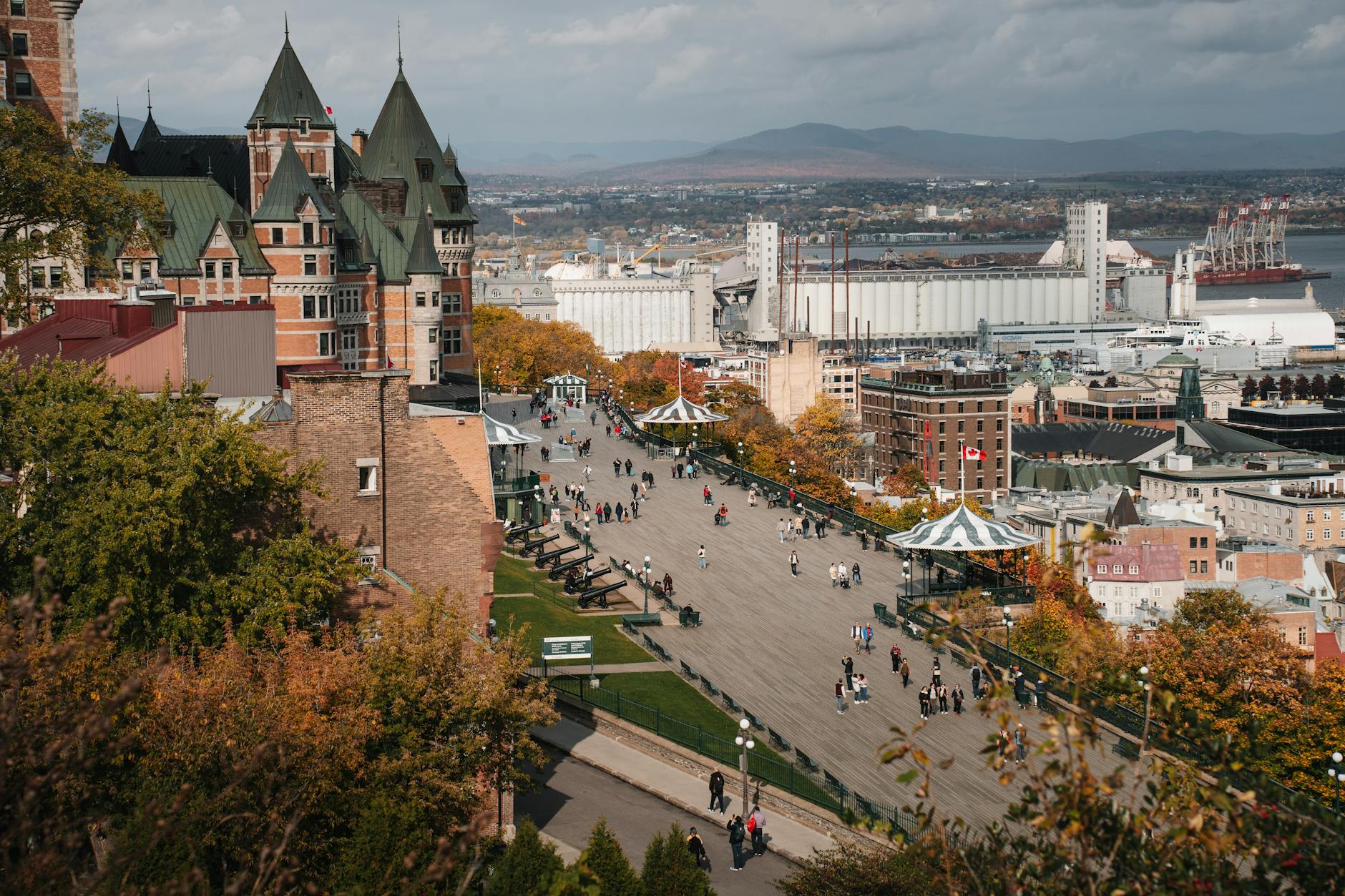
Upper Town: best for symbolic Quebec City and first-time atmosphere. Lower Town: best for tactile historic texture and river orientation. Old Quebec edge: best for balance. Saint-Jean-Baptiste: best for a nearby local-feeling extension. Saint-Roch: best for broader city context and a less heritage-packaged feel.
Neighborhood Guide: Where to Explore, Not Just Sleep
Old Quebec within the walls is the obvious starting point, and rightly so. Destination Québec cité continues to emphasize its UNESCO status, fortifications, and preserved urban form.[5] But the key is to use it as a district rather than as a backdrop.
Upper Town matters because that is where the ceremonial and defensive city still feels clearest. You understand the destination fastest there, but you do not understand it completely there.
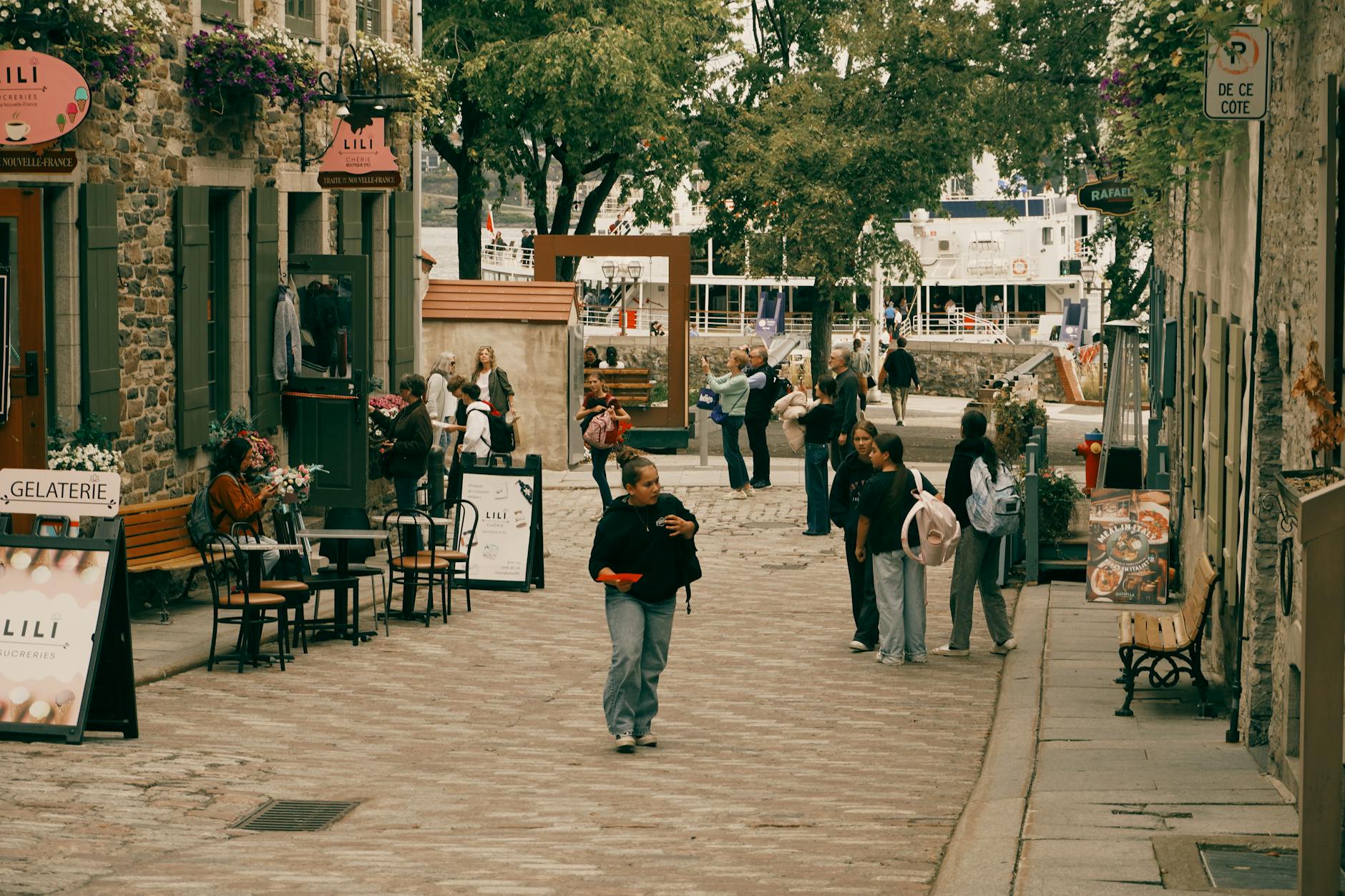
Lower Town, especially around Petit-Champlain and Place Royale, adds texture, trade-memory, and a more intimate relationship to the river. This is where the city can feel less monumental and more physically inhabited.
The funicular is worth using if only once, because it turns one of the city’s central structural facts, the altitude change, into a direct experience instead of a chore.[7]
The Plains of Abraham matter because they give you relief, perspective, and historical scale all at once.[8][9] Without them, some first-time visitors overconcentrate the city into a handful of lanes.
The Musée de la civilisation is valuable because it pulls the city back toward interpretation and away from pure visual consumption.[12]
The Québec-Lévis ferry is the best optional perspective shift for many travelers. Even if you do not do much in Lévis, the crossing is a reminder that Quebec City’s river life is not theoretical.[10][11]
The Best Things to Do in Quebec City
- Walk a serious stretch of the walls or fortified edge rather than glancing at it once.[5][14]
- Use Upper and Lower Town as different urban experiences, not as one continuous blur.
- Take the funicular or at least note how the city’s vertical logic shapes your route.[7]
- Give either the Plains of Abraham or the Musée de la civilisation enough time to deepen the trip.[9][12]
- Use the ferry to Lévis if you want one of the best river perspectives for very little effort.[10][11]
- Eat well and let the evening city make its case.
- Walk the old core more than once, ideally at different times of day.
Itineraries
If You Have Two Days
Use day one for the fortified core, Upper Town, and a controlled descent into Lower Town. Use day two for the Plains or the museum, plus one evening return to the old center after crowds thin out.
If You Have Three Days
This is the best first-time pattern. Keep the two-day structure, then add one broader city or river day: ferry perspective, museum and Lower Town depth, or nearby neighborhood time beyond the pure heritage zone.
If You Have Four Days
Use the extra time to slow down rather than to stuff the schedule. Quebec City improves when allowed to repeat.
Itineraries By Traveler Type
For Couples
Stay near the old core, prioritize one scenic but not overhyped dinner, and build the trip around repeat harbor-and-wall atmosphere instead of checklist accumulation.
For Solo Travelers
Use walking as the main tool, let transit support rather than dominate the day, and make one strategic move beyond the center to keep the city broad enough.
For Food-First Travelers
The old core matters, but one of your best meals should happen outside the most performative tourist strip.
For Winter Travelers
Choose a strong hotel, reduce daily mileage, and let the city work through atmosphere, light, and evening interiors.
Food and Drink
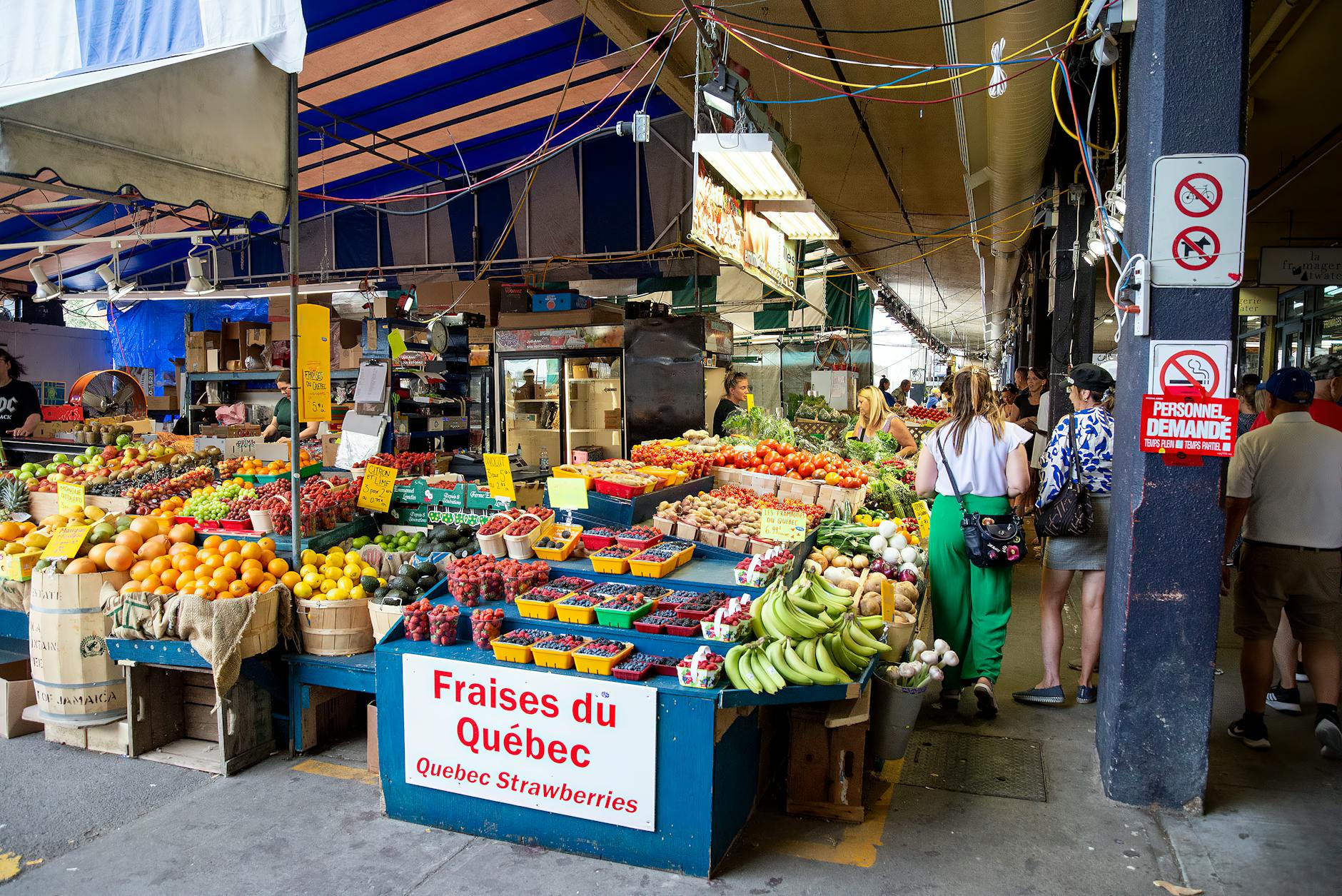
Quebec City’s food life is stronger than its postcard reputation sometimes suggests. Yes, some meals will trade heavily on heritage setting, and that can be pleasant. But the city is best when one atmospheric meal is balanced by one more grounded, more locally confident one. This is not a place where every good dinner needs to happen beneath the most photographed facade.
The larger point is that food here helps complete the city’s rhythm. Lunch can soften a steep morning. A glass of wine or cider can slow the transition between upper and lower levels. Dinner can rescue the city from its own prettiness by reminding you that people actually live here.
Getting Around
Quebec City is a walking destination first, a transit destination second. RTC is useful, especially for airport access and some outer movements, but the old core reveals itself mostly on foot.[4][6]
The key is not to confuse compactness with effortlessness. Distances may be short, but the city is not flat. Walking works brilliantly here, provided you respect the vertical logic.
What To Skip
Skip pretending one pass through Petit-Champlain explains the city. Skip overcommitting to restaurants that are famous mostly for being located in the right photograph. Skip choosing a hotel solely because it looks cinematic. Skip treating the museum, the Plains, or the ferry as expendable when they are often what gives the trip shape.
Common Mistakes
- Overconcentrating the trip inside the most famous few blocks.
- Underestimating how much slopes and stairs change the day.
- Treating Europe-comparison rhetoric as a substitute for actual city understanding.
- Missing the river logic.
- Choosing the most romantic-looking base instead of the most usable one.
My Blunt Advice
Use Quebec City as a real layered capital, not as an old-town costume. Stay close enough to the core to repeat it, but not necessarily swallowed by it. Walk the fortifications. Let Upper and Lower Town perform different functions. Give the museum, the Plains, or the ferry one proper block of time. Notice the language. Notice the river. Notice how much stronger the city becomes when it is used rather than admired.
That is when Quebec City stops being charming and becomes exact.
Where Quebec City Fits in a Canada Trip
Quebec City works best in Canada itineraries when you let it represent a version of the country that no other major stop can quite supply. It is not Toronto's scale, Montreal's metropolitan looseness, Vancouver's landscape-led confidence, or Halifax's harbor-town ease. Quebec City is more compressed, more ceremonial, more historically legible, and more dependent on urban form. That is what makes it useful.
For first-time Canada visitors, Quebec City is often strongest as the city that adds texture and historical specificity to a route that might otherwise lean too heavily on larger metropolitan centers. If Montreal gives you breadth, Quebec City gives you concentration. If Toronto gives you modern scale, Quebec City gives you older spatial logic and a more explicit relationship between language, history, and place.
For repeat visitors, Quebec City can be even more valuable because it supports a trip built around atmosphere, pacing, and repeat walking rather than sheer volume. It is one of the few North American cities where three days can feel richly structured without requiring a giant list of neighborhoods or a vast transit map. That compactness is a strength when used deliberately.
The wrong use of Quebec City is as a quick old-town photo stop inside a bigger Quebec route. The right use is as a city that can hold a real short stay through fortifications, river perspective, food, language, and highly controlled walking.
Quebec City Versus Montreal, Halifax, And European Fantasy
Quebec City versus Montreal is not really a contest of "better" or "worse." Montreal has more breadth, more neighborhoods, more culinary range, more nightlife, and more ways to build a trip. Quebec City usually wins when the traveler wants concentration, atmospheric coherence, and a city whose internal structure is immediately legible. Montreal sprawls outward productively. Quebec City compresses inward beautifully.
Quebec City versus Halifax comes down to type. Halifax is more maritime, looser in mood, and easier to treat casually. Quebec City is more architectural, more ceremonial, and more dependent on a clear physical reading of upper and lower levels. Travelers who want harbor-town sociability often prefer Halifax. Travelers who want stone, walls, and historically shaped urban drama often prefer Quebec City.
The more important comparison, though, is the one visitors keep making with Europe. This is where bad travel writing does the most damage. Quebec City can absolutely evoke European urban forms, especially to North American travelers. But the stronger comparison is not "this is basically France." It is "this is a North American Francophone capital with unusually intact fortified urban structure." That framing protects the visitor from disappointment and makes the real city easier to appreciate.
That is the practical conclusion. Quebec City is one of Canada's strongest short stays when you want cultural specificity and physical form to carry more of the trip than nightlife scale or metropolitan sprawl.
First-Time Visitors Versus Repeat Visitors
First-time visitors often experience Quebec City through its highest-visibility coordinates: Château Frontenac views, Terrasse Dufferin, Petit-Champlain, Place Royale, the funicular, one church, one fortification segment, and maybe the Plains if the itinerary is not too compressed. That can already make a powerful first trip. But first-timers often still use the city in simplified scenic terms.
Repeat visitors tend to become much more sensitive to how the city actually functions. They choose bases more intelligently, time the old core better, understand when to leave the densest scenic loops, and use the Plains, museum, ferry, or nearby neighborhoods more confidently. They also start valuing repetition rather than avoiding it. A second walk through the same area, under different weather or at a different hour, is often one of the best things Quebec City offers.
This matters because the city is not a one-pass destination. It is a city that often deepens through return movement more than through constant novelty.
Why the Base Matters More Than It First Seems
Quebec City punishes weak hotel logic faster than many travelers expect. The issue is not only charm or convenience. It is energy management. A poorly chosen base can turn slopes, stairs, and crowd pockets into daily friction. A strong base can make the whole destination feel precise and surprisingly easy.
The best base is not automatically the most romantic-looking one inside the walls. Sometimes it is. But very often the smartest first-time choice is somewhere just outside or at the edge of the old core, where you can enter the most atmospheric parts quickly without having every return uphill or every luggage move happen on cobbles and gradients.
This is especially true for winter travelers and anyone who wants two or three good urban days rather than one huge scenic effort followed by fatigue. Quebec City rewards preserving energy. A hotel that lets you retreat, reset, and re-enter the city cleanly often improves the whole trip more than a slightly prettier out-the-window view.
Why One Proper Quebec City Day Matters
Quebec City is highly vulnerable to partial use. The postcard areas are so visually persuasive that many visitors believe a few hours of concentrated wandering have given them the city's essence. What they usually have is the scenic shell.
A proper Quebec City day needs at least three chapters. Morning should belong to the fortified or ceremonial city: walls, terraces, gates, Upper Town, and the broad symbolic reading. Midday and afternoon should descend into texture, whether that means Lower Town, the museum, the ferry, or a slower river-facing walk. Evening should belong to atmosphere, food, and a second encounter with the old core after the day has thinned out.
Without that full-day arc, the city can remain charming but slightly thin. With it, Quebec City starts to feel complete.
Day Quebec City Versus Evening Quebec City
Daytime Quebec City often feels more obviously scenic. The stonework is on display, the river is readable, the terraces function, and the city can seem almost too willing to satisfy the camera. This is when many first-time visitors either fall in love too fast or become slightly suspicious that the whole destination may be little more than visual theater.
Evening Quebec City often answers that suspicion. As the crowds ease, the destination tends to become less performative and more persuasive. Streets quiet down, lighting sharpens the form of the city, and dinner or a late walk begins to reveal how much of the place depends on mood and repetition rather than on a single heroic sightline.
That is why at least one evening should be treated as essential rather than incidental. Quebec City needs one hour when you are not still "finishing the sightseeing." It wants one period of time in which you are simply in it.
Why Old Quebec Should Not Own the Whole Trip
Old Quebec is the reason most people come, and it absolutely deserves real time. But if every decision remains trapped inside the same small scenic circuits, the trip can become flatter than the destination deserves. This is one of the city's core paradoxes: the most famous part of it is real and worthy, but overusing it still weakens the visit.
What makes Old Quebec powerful is the structure around it. The Plains of Abraham provide space and historical scale. The museum offers interpretation and relief from pure surface admiration. The ferry reframes the city from the river. The nearby districts show that the destination is not only one concentrated heritage machine. Old Quebec can open the trip. It should not close every question the trip asks.
That means the right discipline is not to avoid the famous core. It is to keep letting other chapters talk back to it.
Why Quebec City Often Improves on the Second Visit
Quebec City improves on repeat because it is built for reconsideration. The first visit usually proves that the famous image is real: the walls, the levels, the river, the French-speaking continuity, the old stone. The second visit usually reveals that the city is stronger when you stop trying to consume it efficiently.
Repeat visitors often understand hotel placement better, avoid peak crowd rhythms more instinctively, and make better use of the river and the Plains. They also stop being disappointed that the city is not larger. Instead, they begin appreciating how much is achieved within a tightly bounded form.
This is the second-visit reward. Quebec City moves from "beautiful and famous" to "deliberately shaped and very well judged."
How Quebec City Changes Over the Course of a Stay
On arrival, Quebec City often feels almost too exact. The walls, the château profile, the terraces, and the French signage announce the destination so clearly that it can seem finished before the trip has even started. During the first substantial walk, though, the city begins to separate into functions: upper versus lower, scenic versus lived, ceremonial versus textured.
By the first evening, the destination usually grows in seriousness. The old core becomes less of a set and more of a place. Light, quiet, and dinner help the city recover from its own fame.
By the second day, the different Quebec Cities start linking: fortified Quebec City, river Quebec City, Lower Town Quebec City, museum Quebec City, and the more ordinary city beyond the tightest scenic loops. This is when many visitors finally feel they are inside the place rather than merely passing through its image.
By the third day, if you stay that long, Quebec City often feels surprisingly inhabitable. You know which slope to avoid when tired, which repeat walk is worth doing, and which version of the city suits your mood. That is usually the point at which affection replaces admiration.
Source Notes
- 1. YQB, official public transportation page: [https://aeroportdequebec.ca/en/airport-access/public-transportation](https://aeroportdequebec.ca/en/airport-access/public-transportation)
- 2. YQB, official public transportation FAQ: [https://www.aeroportdequebec.com/en/faq/transport/public-transportation](https://www.aeroportdequebec.com/en/faq/transport/public-transportation)
- 3. RTC, official fare schedule page: [https://www.rtcquebec.ca/en/rates-and-purchase/rates-and-passes/fare-schedule/](https://www.rtcquebec.ca/en/rates-and-purchase/rates-and-passes/fare-schedule/)
- 4. RTC, official rates and passes page: [https://www.rtcquebec.ca/en/rates-and-passes](https://www.rtcquebec.ca/en/rates-and-passes)
- 5. Destination Québec cité, official Old Québec page: [https://www.quebec-cite.com/en/old-quebec-city](https://www.quebec-cite.com/en/old-quebec-city)
- 6. Destination Québec cité, official responsible travel in Old Québec page: [https://www.quebec-cite.com/en/quebec-city/responsible-travel-old-quebec](https://www.quebec-cite.com/en/quebec-city/responsible-travel-old-quebec)
- 7. Destination Québec cité, official Funiculaire du Vieux-Québec page: [https://www.quebec-cite.com/en/businesses/transportation-sightseeing/local/funicular/funiculaire-du-vieux-quebec/](https://www.quebec-cite.com/en/businesses/transportation-sightseeing/local/funicular/funiculaire-du-vieux-quebec/)
- 8. National Battlefields Commission, official “How to get there” page for Battlefields Park: [https://www.ccbn-nbc.gc.ca/en/contact-us/how-get-there/](https://www.ccbn-nbc.gc.ca/en/contact-us/how-get-there/)
- 9. National Battlefields Commission, official Plains of Abraham Museum contact and hours page: [https://www.ccbn-nbc.gc.ca/en/contact-us/contact/](https://www.ccbn-nbc.gc.ca/en/contact-us/contact/)
- 10. Société des traversiers du Québec, official Québec-Lévis ferry fares page: [https://www.traversiers.com/fr/nos-traverses/traverse-quebec-levis/tarifs/](https://www.traversiers.com/fr/nos-traverses/traverse-quebec-levis/tarifs/)
- 11. Société des traversiers du Québec, official Québec-Lévis ferry schedule page: [https://www.traversiers.com/en/our-ferries/quebec-city-levis-ferry/schedule/](https://www.traversiers.com/en/our-ferries/quebec-city-levis-ferry/schedule/)
- 12. Musée de la civilisation, official plan-your-visit page: [https://mcq.org/en/visit/plan-your-visit/](https://mcq.org/en/visit/plan-your-visit/)
- 13. Musée de la civilisation, official schedule-and-rates page: [https://mcq.org/en/visit/schedule-and-rates/](https://mcq.org/en/visit/schedule-and-rates/)
- 14. Destination Québec cité, official Porte Saint-Jean page: [https://www.quebec-cite.com/en/what-to-do-quebec-city/porte-saint-jean](https://www.quebec-cite.com/en/what-to-do-quebec-city/porte-saint-jean)