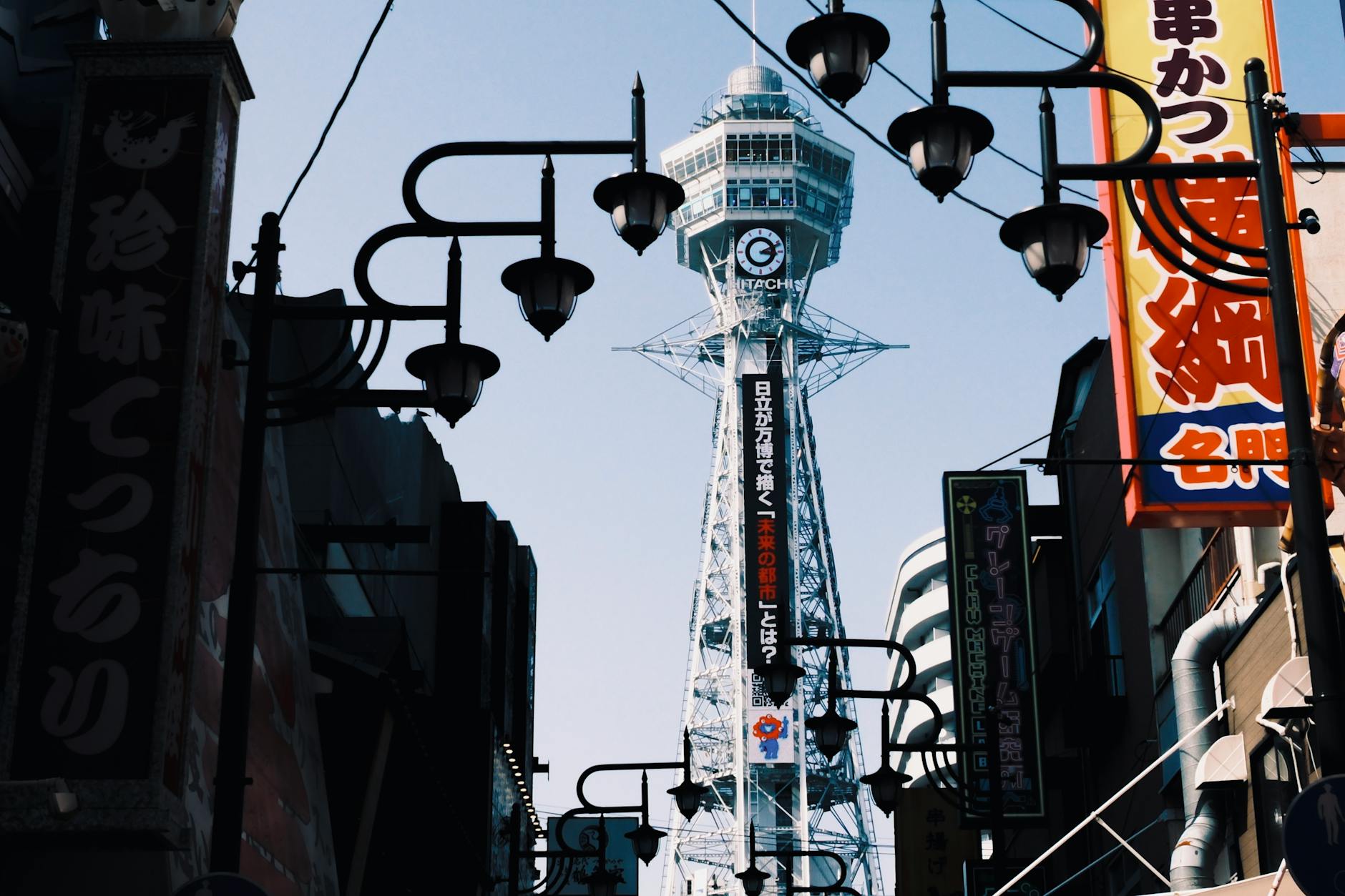
Osaka is one of Japan's easiest cities to enjoy badly.
Start Here
That sounds unfair, because Osaka is generous. It feeds you quickly. It moves you easily. It does not ask for the same ceremonial attention that Kyoto seems to demand, or the same systems literacy that Tokyo rewards. You can arrive tired, drop your luggage near Namba or Umeda, eat takoyaki under neon, wander along the canal, ride a train to Kyoto the next morning, come back for okonomiyaki, and still have a good time.
But that is the trap. Osaka gives so much pleasure so quickly that many visitors never learn the city. They treat it as Kyoto's hotel annex, a cheaper base for Kansai day trips, a night out in Dotonbori, or a place to sleep after Universal Studios Japan. They leave saying they liked the food. They often do not realize how much they missed.
Osaka is not a consolation prize after Tokyo and Kyoto. It is a merchant city, a food city, a port city, a comedy city, a station city, a neighborhood city, and one of the best urban bases in Japan. It is less polished than Tokyo, less preserved than Kyoto, less solemn than Hiroshima, less pretty than Kanazawa, and less immediately scenic than Kobe. Its strength is different. Osaka feels practical, appetitive, theatrical, funny, blunt, and human. It is a city where commerce and appetite are not side notes; they are the bloodstream.
The first-time visitor usually arrives with three images: Dotonbori neon, takoyaki, and maybe Osaka Castle. Those images are real, but they are not enough. The better Osaka trip understands the city as a set of connected urban zones: Umeda's vertical station city, Namba's food-and-nightlife gravity, Shinsaibashi's shopping spine, Dotonbori's bright tourist theater, Shinsekai's nostalgic rough edge, Tenma's everyday eating lanes, Nakazakicho's small-scale retro texture, Nakanoshima's river and civic architecture, Osaka Castle's symbolic center, the Bay Area's aquarium and theme-park world, and quieter residential pockets where Osaka stops performing and starts breathing.
Osaka also works as a route machine. From here, Kyoto, Nara, Kobe, Himeji, Wakayama, Koyasan, Uji, and much of Kansai become practical. But Osaka is too often sacrificed to that convenience. The city should not merely be where you sleep between day trips. If you use Osaka well, it becomes the trip's appetite, its evening rhythm, its easiest logistics, and often its most relaxed memory.
This guide is designed to solve that problem. It explains where to stay, how to choose between Namba and Umeda, how to handle Kansai airport arrival, how many days Osaka deserves, when to base here instead of Kyoto, where the food experience actually lives, what to book ahead, how to use rail without overbuying passes, how to avoid a shallow Dotonbori-only trip, and how to make Osaka feel like a city rather than a checklist.
Osaka in one sentence: Osaka is Japan's most immediately edible big city, where the best trip comes from pairing station-smart logistics with food neighborhoods, late-day energy, Kansai day-trip discipline, and the confidence to let Osaka be more than Kyoto's practical neighbor.
Quick Verdict
| Question | Answer |
|---|---|
| Best for | Food, nightlife, easy trains, Kansai day trips, shopping, theme parks, aquarium visits, street energy, relaxed city wandering, baseball, comedy, families, value-oriented Japan trips, and travelers who want a less formal urban counterweight to Tokyo and Kyoto. |
| Not ideal for | Travelers who want a compact old capital, quiet temple immersion, postcard streets at every turn, mountain scenery inside the city, or a destination where the famous sights alone explain the place. Osaka is best when you follow neighborhoods and appetite, not only landmarks. |
| Ideal first visit | 3 full days if Osaka is a real stop. Two days works for food, neighborhoods, and one major attraction. Four or five days works if you add Universal Studios Japan, the aquarium, deeper eating, or day trips. A week is excellent if Osaka is your Kansai base. |
| Best months | March to May and October to November are the easiest for walking, eating, and day trips. December is crisp and good for urban travel. January and February are fine for food and low-friction city days. June is rainy. July to September can be hot, humid, stormy, and tiring. |
| Best first-timer base | Namba/Shinsaibashi if food, nightlife, Dotonbori, and immediate Osaka energy matter most. Umeda/Osaka Station if rail access, comfort, shopping, business travel, and day trips matter most. Honmachi/Yodoyabashi/Nakanoshima if you want a calmer central compromise. |
| Biggest planning mistake | Treating Osaka as a one-night Dotonbori stop while using every daylight hour for Kyoto and Nara. Osaka needs at least one full day and one real evening to make sense. |
| One thing to book ahead | Universal Studios Japan date-specific tickets and Express Passes, high-demand restaurants, better hotels during cherry blossom/autumn weekends, popular baseball games, major event periods, and any special-entry or timed attraction. |
| One thing to leave unscheduled | Dinner wandering in Namba, Tenma, Fukushima, Shinsekai, or a depachika food hall. Osaka rewards appetite-led evenings better than over-scripted restaurant hopping. |
| Best free or low-cost pleasures | Dotonbori canal walks, Hozenji Yokocho, Shinsekai wandering, Nakanoshima riverfront, department-store basements, Tenjinbashisuji Shopping Street, local shotengai streets, Osaka Castle Park grounds, station food floors, and watching the city shift after dinner. |
| Most important warning | Osaka is easy, but it is not small. Poor hotel placement can turn a relaxed city into daily rail friction. Choose your base by your actual trip: food nights, Kyoto day trips, USJ, airport access, or a calmer urban stay. |
The Move
For a first Osaka trip, build around one south-city evening, one north-city/station day, one food-focused neighborhood night, and one Kansai decision. Either give Osaka its own time, or be honest that you are using it as a base. The city suffers when you pretend those are the same trip.
Who Will Love Osaka?
You will probably love Osaka if you want:
- A Japanese city that feels less formal, less precious, and more immediately social than Tokyo or Kyoto.
- Food as a daily organizing principle: takoyaki, okonomiyaki, kushikatsu, udon, sushi, ramen, izakaya, market snacks, department-store food halls, standing bars, coffee, sweets, and serious restaurants.
- A base that can handle Kyoto, Nara, Kobe, Himeji, Universal Studios Japan, Kansai Airport, and multiple rail operators without making every transfer feel like a project.
- Big-city energy without Tokyo's overwhelming scale.
- A first Japan itinerary that includes temples and tradition elsewhere, then lets Osaka handle appetite, shopping, nightlife, and logistics.
- A family trip with a strong mix of aquarium, theme park, easy food, shopping, parks, and short rail hops.
- A city that is comfortable with humor, commerce, signs, noise, and appetite.
You may struggle with Osaka if you want:
- A city where the historic core is preserved as a walkable museum district.
- Quiet romance as the default mood.
- Elegant old streets at every turn.
- A trip that can be understood from a short list of famous sights.
- Dinner plans that are always refined, reserved, and hushed.
- A city where Dotonbori's tourist crowd is the whole experience.
Osaka is not hard in the way Delhi can be hard, or huge in the way Tokyo can be huge, or culturally loaded in the way Kyoto can be loaded. The challenge is more subtle: Osaka looks easy enough to improvise, so travelers under-plan the parts that matter and overdo the parts that are obvious.
The city works best when you give it shape. Choose a base with purpose. Build days around station clusters. Eat by neighborhood rather than by viral list. Use Osaka as a Kansai base only if you also let Osaka have evenings and at least one daylight stretch. Book the scarce things and leave the generous things loose.
Osaka at a Glance
| Practical | Detail |
|---|---|
| Country | Japan. Osaka is the capital city of Osaka Prefecture and the largest city in the Kansai region by urban presence, even though the Kyoto-Osaka-Kobe corridor functions as a broader metropolitan system. |
| Region | Kansai, western Honshu. Osaka is the most practical urban base for many Kansai trips because of its rail links, airports, hotels, food, and late-day energy. |
| Language | Japanese. English signage is strong at airports, major stations, Osaka Metro stops, and major attractions. Spoken English varies. Translation apps help, but basic courtesy phrases matter. |
| Currency | Japanese yen, written as JPY or yen. Cards are common in hotels, department stores, chains, and larger restaurants; cash remains useful in small restaurants, markets, shrines, temples, lockers, and older shops. |
| Time zone | Japan Standard Time, UTC+9 year-round. Japan does not use daylight saving time. |
| Main airports | Kansai International Airport (KIX) for most international flights and some domestic flights; Osaka Itami Airport (ITM) for many domestic flights. Kobe Airport can matter for some domestic routes but is less common for first-time foreign visitors. |
| Airport-to-city default | From KIX, Nankai trains are especially useful for Namba; JR Haruka and JR routes are useful for Tennoji, Osaka/Umeda, Shin-Osaka, Kyoto, and some onward rail plans. Airport buses can be better for specific hotels or heavy luggage. Check current timetables before travel.[6] |
| Main rail hubs | Osaka/Umeda, Namba, Shin-Osaka, Tennoji, Kyobashi, Tsuruhashi, Osaka-Namba, Osaka-Uehommachi, Yodoyabashi, Honmachi, and Universal City depending trip. |
| Shinkansen station | Shin-Osaka, north of the main Osaka/Umeda cluster. Do not confuse it with Osaka Station. |
| Core transit | Osaka Metro, JR West, Nankai, Hankyu, Hanshin, Kintetsu, Keihan, buses, taxis, and airport buses. The rail network is excellent, but operator boundaries matter. |
| Best payment/transit tool | ICOCA or another compatible IC card/mobile IC. It works across much of Kansai rail, buses, convenience stores, vending machines, lockers, and small purchases, but passes can still make sense for specific days. |
| Useful visitor passes | Osaka Amazing Pass / Osaka e-Pass for attraction-heavy days; Osaka Metro one-day products for subway-heavy days; Kansai regional passes only when route math supports them. Do not buy passes automatically.[8][7] |
| Emergency numbers | Police: 110. Fire/ambulance: 119. JNTO operates a Japan Visitor Hotline for tourist information and assistance during accidents, illness, and disasters.[4] |
| Tap water | Generally safe to drink. Carrying a bottle is useful in hot months. |
| Tipping | Not customary in ordinary restaurants, taxis, and hotels. Pay cleanly, use trays when offered, and say thank you. |
| Best first-timer mode | Metro and rail for most movement, walking inside neighborhood clusters, taxi for late-night or luggage friction, and deliberate hotel placement. |
First-Timer Mistake
The most common Osaka mistake is asking, "Should I stay near Dotonbori?" before asking, "What am I actually doing every day?" If your trip is food nights and south-city energy, Namba is excellent. If your trip is Kyoto, Kobe, Himeji, Shin-Osaka, and polished hotel convenience, Umeda may be better. If your trip is Universal Studios Japan plus one Dotonbori night, neither answer is automatic.
2026 Visitor Notes
Japan Entry Rules Are Passport-Specific
Japan's Ministry of Foreign Affairs lists visa-exemption arrangements by country and region, and the period of stay depends on nationality and status.[1] Japan also operates an eVISA system for eligible applicants in listed countries and regions.[2]
The move: Do not rely on a generic "Japan is visa-free" claim. Check passport nationality, residence, length of stay, re-entry plans, work restrictions, medication rules, and whether you need a visa or eVISA. Osaka is easy after arrival; entry rules still start before departure.
Visit Japan Web Is Worth Setting Up
Visit Japan Web is Japan's official digital service for arrival procedures including immigration, customs, and tax-free shopping services.[3] It is useful even when not strictly required.
The move: Complete Visit Japan Web before your flight, save the relevant QR codes, and make sure passport details are consistent. KIX is efficient, but arrival after a long-haul flight is not the time to troubleshoot forms.
Kansai Airport Access Depends on Your Base
Kansai International Airport sits on an artificial island south of Osaka Bay. The best transfer depends heavily on where you sleep. Nankai's airport trains are natural for Namba. JR services can be better for Tennoji, Osaka/Umeda, Shin-Osaka, Kyoto, and onward rail. Airport buses can be simpler for some hotel zones, families, or heavy luggage.[6]
The move: Choose airport transfer after hotel choice, not before. "Osaka" is not one station.
Universal Studios Japan Requires Advance Thinking
Universal Studios Japan is one of Osaka's biggest visitor draws, and it is not a casual "maybe tomorrow" attraction during busy periods. Tickets, Express Pass products, Area Timed Entry behavior, Super Nintendo World, event calendars, school holidays, and crowd patterns can all affect the day.[10][9]
The move: If USJ matters, plan the date early, check official ticketing, and treat the day as its own itinerary. Do not put a serious Nara day trip, Dotonbori dinner crawl, and USJ on the same travel day.
Expo 2025 Changed Some Osaka Attention, But Not The Core Trip
The Osaka-Kansai Expo closed in October 2025, but the years around it left a more visible Bay Area conversation, more visitor attention on Yumeshima, and continuing interest in Osaka as a major international events city.[11] For most 2026 travelers, though, the core Osaka trip is still Namba, Umeda, food neighborhoods, Osaka Castle, Shinsekai, Nakanoshima, the Bay Area, and Kansai day trips.
The move: Do not plan 2026 Osaka as an Expo trip. Plan it as Osaka, then check if any post-Expo site, event, or infrastructure development matters to your dates.
Osaka Passes Can Help, But Only On The Right Day
Osaka offers visitor products such as the Osaka Amazing Pass / Osaka e-Pass and Osaka Metro day-ticket options.[8][7] These can be useful if your day stacks eligible attractions and subway travel. They can be poor value if your day is mostly eating, shopping, wandering, JR/private rail, or one paid sight.
The move: Build the day first, then price the pass. Pass-first planning is how travelers turn a good city into coupon homework.
Tax-Free Shopping Rules Are Changing Around Late 2026
Japan's tax-free shopping procedures are shifting toward a refund method from November 1, 2026, according to National Tax Agency guidance.[12] Rules around passport presentation, consumables, sealed goods, customs confirmation, and refund timing can affect shopping-heavy visitors.
The move: If shopping matters, check current tax-free procedures close to travel. Do not rely on old guidebook instructions.
Osaka Is Low-Crime, Not Low-Risk
Japan is generally a low-crime destination for visitors, but Osaka still has urban risks: lost property, nightlife overdrinking, touts in entertainment districts, traffic, heat, typhoons, earthquakes, medical access, and ordinary exhaustion. The Japan Visitor Hotline and official disaster information are worth saving.[4][5]
The move: Treat Osaka as comfortable, not consequence-free. The biggest problems for visitors are usually logistics, fatigue, heat, late-night judgment, and overstuffed Kansai itineraries.
How to Understand Osaka
Osaka becomes easier when you stop comparing it to Kyoto and Tokyo.
Tokyo is a vast system of worlds. Kyoto is a cultural capital that asks for timing, restraint, and temple logic. Osaka is something else: a commercial city with a direct appetite. Its old identity is tied to merchants, markets, waterways, entertainment, food, and practical exchange. That identity still matters. The city is not trying to be a museum of itself. It is trying to move, eat, sell, commute, shop, laugh, and keep going.
The Five Osakas A First-Timer Actually Meets
| Osaka | Where you feel it | What it gives you |
|---|---|---|
| The food-theater city | Dotonbori, Namba, Hozenji, Kuromon, Shinsekai | Neon, snacks, takoyaki, okonomiyaki, kushikatsu, canals, signs, crowds, the postcard Osaka. |
| The station-power city | Umeda, Osaka Station, Grand Front, Lucua, Hankyu/Hanshin areas | Rail access, shopping, department stores, polished hotels, day-trip convenience, vertical urbanism. |
| The neighborhood-eating city | Tenma, Fukushima, Nakazakicho, Tsuruhashi, Noda, Ura-Namba | Izakaya lanes, small bars, local food culture, less staged evenings, better second-night Osaka. |
| The historic-symbolic city | Osaka Castle Park, Shitennoji, Sumiyoshi Taisha, Nakanoshima | History, civic space, older religious sites, river architecture, gardens, museums. |
| The bay-and-entertainment city | Universal City, Tempozan, Kaiyukan, Osaka Bay Area | Universal Studios Japan, aquarium, family days, harbor atmosphere, event infrastructure. |
You do not need all five on a first trip, but you should understand which one your itinerary is emphasizing. A traveler who spends two nights in Namba and one day at USJ has had a real Osaka trip, but not the same Osaka as someone staying in Umeda, eating in Tenma, visiting Nakanoshima, and day-tripping to Kyoto. Both can work. The problem is not choosing. The problem is drifting.
Osaka Is A North-South City For Visitors
The easiest mental map is north and south.
North Osaka means Umeda, Osaka Station, Kita, Nakanoshima, Fukushima, and the business-shopping-station world around them. It is polished, useful, layered, and rail-powerful. If you care about department stores, easy Kyoto/Kobe rail, Shin-Osaka access, business hotels, higher-end dining, and a less chaotic first night, the north is strong.
South Osaka means Namba, Dotonbori, Shinsaibashi, Amerikamura, Nipponbashi, Kuromon, Shinsekai, Tennoji/Abeno, and the entertainment-food-shopping world around them. It is more obviously Osaka to many visitors: louder, more appetitive, more theatrical, and better for late-night wandering.
Do not reduce this to "Umeda boring, Namba fun." That is lazy. Umeda has excellent food and nightlife if you know where to look. Namba has hotels and logistics, not just neon. But the north/south split is useful because it shapes how your days feel.
Osaka Is Not One Rail System
Osaka's rail map is excellent, but it is not one simple network. Osaka Metro, JR, Nankai, Hankyu, Hanshin, Kintetsu, Keihan, and other services all matter. A trip from Namba to KIX is not the same logic as Umeda to Kyoto, Shin-Osaka to Hiroshima, Osaka-Namba to Nara, or Universal City to Dotonbori.
The city is easy if you use maps and IC payment. It becomes frustrating when travelers buy a pass that does not cover the lines they actually need, or book a hotel "near Osaka" without checking the exact station.
Osaka Is A Night City, But Not Only A Night City
Osaka's reputation lives after dark: Dotonbori signs, izakaya, bars, late food, laughter, and the city loosening up. That reputation is deserved. But the best Osaka trips use the daytime well too: markets, parks, museums, station food floors, river walks, castle grounds, temples, shopping streets, and neighborhood scouting.
If you sleep late every day because Osaka nights are fun, you can still have a great trip. But you will miss the city's quieter competence: coffee shops opening, market shutters rising, station basements filling, office workers moving through Umeda, older residents shopping on covered arcades, and temples before the day heats up.
The City's Central Contrasts
Osaka is compelling because its contradictions are practical rather than decorative.
- Friendly vs brusque: Osaka often feels warmer and more direct than Tokyo, but service norms still matter.
- Easy vs layered: You can enjoy Osaka with almost no preparation, but the deeper city rewards neighborhood literacy.
- Food city vs food cliche: Takoyaki and okonomiyaki are real, but Osaka's food life is far broader than two dishes.
- Base vs destination: Osaka is one of Japan's best bases, but it deserves not to be reduced to that role.
- Tourist theater vs local routine: Dotonbori is bright and useful; Tenma, Fukushima, and neighborhood shotengai reveal other versions.
- Modern convenience vs older texture: Umeda's towers and Shinsekai's nostalgia can both be true on the same day.
The best Osaka itinerary lets these contrasts breathe. It does not pretend the city is only neon, only food, only a hub, or only a cheaper Kyoto hotel plan.
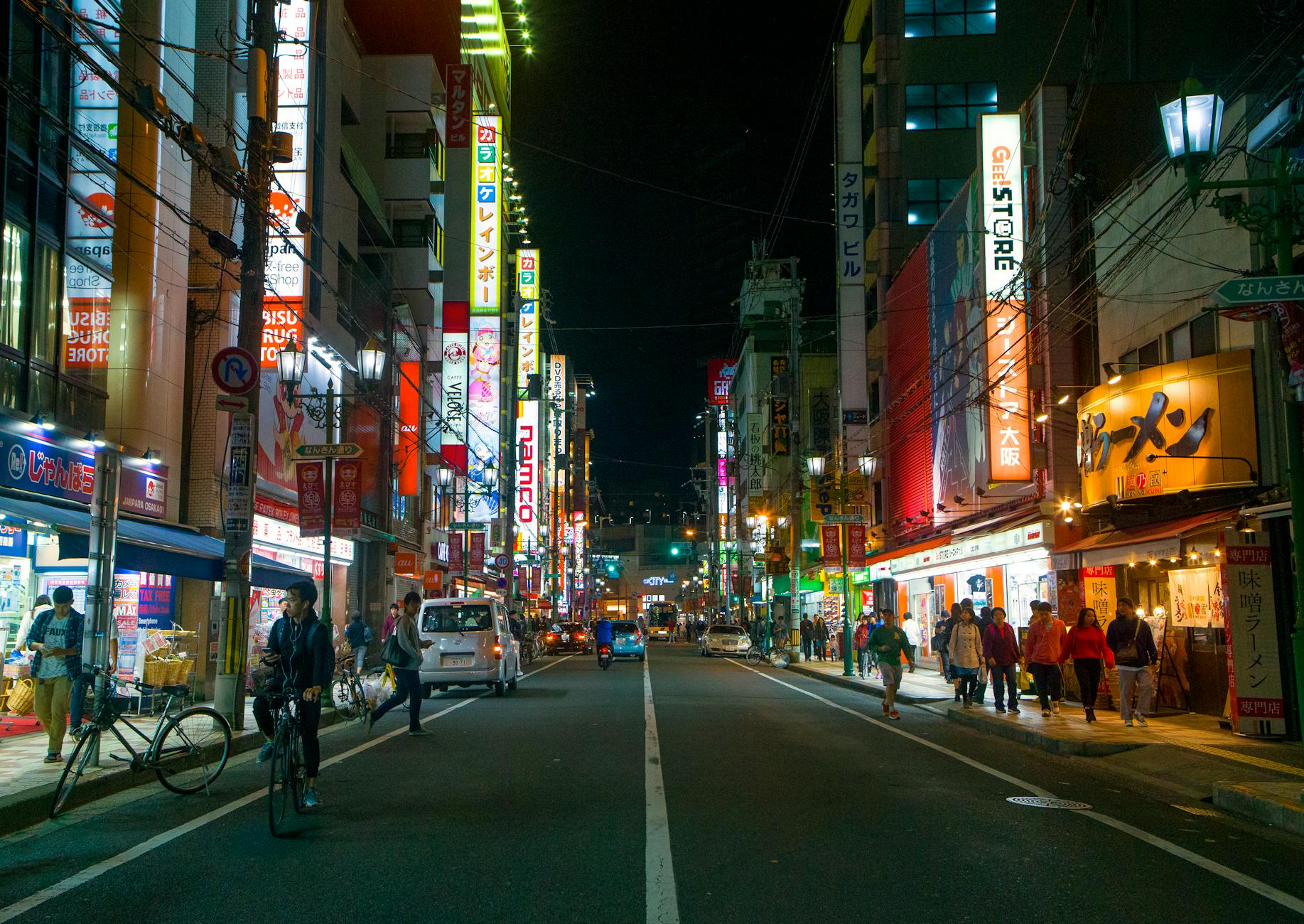
Best Time to Visit Osaka
Osaka is a year-round city. Unlike a beach destination, it does not depend on one narrow season. Unlike Kyoto, it is not as visually tied to blossoms and autumn leaves, though those still matter. Osaka is fundamentally an urban trip: food, rail, shopping, neighborhoods, theme parks, museums, and day trips. That gives it flexibility.
But weather still matters. Kansai summers can be punishing. Rainy season can change walking days. Typhoons can disrupt rail and flights. Winter can be more comfortable than many first-timers expect. Cherry blossom season can make hotels expensive and day trips crowded. Autumn weekends can fill Kyoto and Nara, which affects Osaka-base travelers too.
Best Overall Months
March to May is excellent if you accept crowds around cherry blossoms and Golden Week. March can still be cool, late March and early April bring blossom pressure, and May after Golden Week can be one of the easiest times to walk, eat, and use Osaka as a base.
October and November are the easiest broad recommendation. Humidity drops, walking improves, food nights feel good, and Kansai day trips become more comfortable. Kyoto and Nara are busy in foliage periods, but Osaka itself handles autumn well.
December is underrated. Osaka works beautifully as a crisp city trip: food, shopping, lights, department stores, aquarium, castle park, and easy trains. It is not the greenest or most floral Osaka, but it can be very satisfying.
Cherry Blossom Season
Osaka's blossoms are not the city's whole identity, but they improve the trip. Osaka Castle Park, river areas, parks, and neighborhood walks become more attractive. The issue is not whether blossoms are worth seeing. They are. The issue is that cherry blossom timing is fragile, hotel rates rise, and Kyoto/Nara day trips can become crowded.
The move: If Osaka is part of a blossom-season Kansai route, book hotels early, keep one flexible park or river walk, and do not make every day dependent on peak bloom. Blossom trips are better when they include food and neighborhoods that still work in rain.
Golden Week
Golden Week usually falls from late April into early May and is one of Japan's major domestic travel periods. Osaka remains usable, but hotels, trains, USJ, Kyoto, Nara, and attractions can become more difficult.
The move: Avoid Golden Week if you can. If you cannot, book early, reserve important transport, expect crowds, and avoid building a fragile itinerary around walk-up spontaneity.
Rainy Season
June into early July can be humid and rainy. Osaka still works because it has covered arcades, station complexes, department stores, food floors, museums, aquarium days, and indoor shopping. The problem is not rain alone. It is rain plus poor shoes, outdoor-heavy plans, and overconfident day trips.
The move: Keep a rain plan: Umeda shopping and food floors, Nakanoshima museums, Kaiyukan, covered shopping streets, Kuromon, Tenjinbashisuji, cafes, and a slower dinner.
Summer Heat
July, August, and early September can be hot, humid, and tiring. Osaka's food-and-nightlife identity helps because evenings matter, but daytime sightseeing becomes more strategic. USJ can be exhausting in heat. Castle grounds, Shinsekai walks, and outdoor day trips need pacing.
The move: Use mornings and evenings. Make afternoons indoor or hotel-based. Drink water, use convenience stores, carry a towel, and do not schedule an exposed monument day as if it were November.
Typhoon Season
Typhoons and heavy rain can affect Kansai, especially from summer into early autumn. Flights, trains, ferries, outdoor attractions, and day trips can be disrupted. Most trips are not ruined, but brittle itineraries suffer.
The move: Do not place your only international departure connection after a complicated same-day return from a remote side trip. Keep weather flexibility if traveling in late summer or early autumn.
Winter
Winter is a good Osaka season for travelers who prioritize food, shopping, museums, easy rail, and lower-stress city days. It can be cold, but not usually brutal by northern standards. Daylight is shorter, gardens are less lush, and some day trips feel less scenic. But Osaka's indoor and evening life remains strong.
The move: Winter Osaka is not a consolation trip. Use it for food, lights, department stores, aquarium, museums, bars, and clean rail days to Kyoto or Nara without summer heat.
Month-by-Month Guide
| Month | Osaka reality | Best for | Watch out for |
|---|---|---|---|
| January | Cool, manageable, post-New Year closures early in the month. | Food, shopping, lower-pressure city travel. | Holiday closures, shorter days. |
| February | Cool and often practical. | Budget-conscious city trips, food, museums. | Less greenery, chilly evenings. |
| March | Warming, blossom anticipation, better walking. | First spring trips, parks, early blossoms. | Hotel rates rise near bloom. |
| April | Blossom residue, mild weather, very attractive Kansai travel. | Walking, day trips, food nights. | Crowds, Golden Week lead-in. |
| May | Excellent after Golden Week; comfortable and lively. | First-timers, families, day trips. | Golden Week crowding early May. |
| June | Rainy, humid, still usable. | Indoor Osaka, food, shopping. | Wet shoes, outdoor-heavy plans. |
| July | Hot, humid, energetic. | Nightlife, festivals, indoor/outdoor balance. | Heat fatigue, USJ exhaustion. |
| August | Hot, humid, domestic holiday pressure. | Late nights, food, family attractions if paced. | Obon travel, heat, storms. |
| September | Still warm, typhoon-aware. | Shoulder-season attempts, food trips. | Weather disruption, humidity. |
| October | One of the best months. | Walking, day trips, food, neighborhoods. | Weekend crowds. |
| November | Excellent, with autumn travel pressure. | Kyoto/Nara day trips, city walking. | Foliage crowds outside Osaka. |
| December | Crisp, urban, festive. | Shopping, food, lights, lower-stress city days. | Holiday timing, cold evenings. |
How Many Days You Need
Osaka can be sampled quickly, but it rewards more time than most first-timers give it.
The right length depends on whether Osaka is a destination, a base, or an evening add-on to Kyoto. Be honest about that. A "two-night Osaka stay" can mean one real Osaka day, two food nights, and a departure morning. That is worthwhile. But it is not the same as understanding the city.
One Day
One day is enough for a taste, not a city relationship.
Use it for:
- Namba/Dotonbori/Hozenji/Kuromon or Shinsekai.
- One major daytime anchor such as Osaka Castle Park, Nakanoshima, or Umeda.
- A food-focused evening.
Do not try to include USJ, Nara, Kyoto, Osaka Castle, Kaiyukan, Dotonbori, and Tenma in one day. That is not ambitious. It is incoherent.
Two Days
Two full days is the minimum for a satisfying first Osaka if you are not using it mainly as a base.
Good structure:
- Day 1: Umeda/Nakanoshima/Osaka Castle or station-city Osaka, then Namba/Dotonbori evening.
- Day 2: Shinsekai/Tennoji, Kuromon or Nipponbashi, Shinsaibashi, and a Tenma/Fukushima/Ura-Namba food night.
Two days can also handle USJ plus one real city day, but that becomes a theme-park-and-food trip rather than a deep Osaka trip.
Three Days
Three full days is the best first-timer answer.
It allows:
- One south-city food and nightlife day.
- One north-city/Umeda/Nakanoshima/Osaka Castle day.
- One choice day: USJ, Kaiyukan/Bay Area, deeper neighborhoods, or a day trip.
Three days gives Osaka enough space to stop being just Dotonbori.
Four To Five Days
Four or five days works well if Osaka is your Kansai base.
Possible structure:
- Two Osaka days.
- One USJ or Bay Area day.
- One Kyoto or Nara day trip.
- One flexible day for Kobe, Himeji, Uji, more Kyoto, or deeper Osaka.
This is where Osaka's value becomes obvious. You get cheaper or more practical hotels than Kyoto in many periods, easier food nights, and strong rail access. The tradeoff is that Kyoto early mornings and late evenings become harder if you are always commuting.
One Week
A week in Osaka is not too much if you use it correctly.
Best for:
- Food-focused travelers.
- Families using Osaka as a low-friction base.
- Repeat Japan visitors.
- Travelers who want Kyoto and Nara without moving hotels repeatedly.
- People who dislike one-night stays and luggage transfers.
A week lets you do Osaka properly and still add Kyoto, Nara, Kobe, Himeji, and maybe Koyasan or Wakayama depending appetite and stamina.
Osaka vs Kyoto As A Base
This is one of the most important Kansai decisions.
Choose Osaka as a base if you want nightlife, food, cheaper/larger hotel options, USJ, easy airport access, broad rail options, and a less temple-centered trip.
Choose Kyoto as a base if your priority is early temple mornings, atmospheric evenings in Kyoto, garden/temple depth, traditional lodging, and minimizing daily Kyoto commute friction.
Choose both if you have enough nights. A clean first Kansai split might be three nights Kyoto and three nights Osaka. That lets each city do what it does best.
Where to Stay in Osaka
Hotel placement is the single biggest practical decision in Osaka.
The city is not difficult, but the wrong base can make it feel less good than it should. The right base lets you walk to dinner, return easily after a long day, use the airport without drama, and reach day trips without turning every morning into a puzzle.
Fast Answer
| Area | Best for | Tradeoff |
|---|---|---|
| Namba / Dotonbori / Shinsaibashi | Food, nightlife, first-timer energy, KIX via Nankai, Dotonbori walks. | Busy, touristy in pockets, less polished, less ideal for some north/west rail days. |
| Umeda / Osaka Station | Rail access, shopping, department stores, business travel, Kyoto/Kobe/Himeji access, polished hotels. | Less immediately "neon Osaka"; large station complexes can be confusing. |
| Honmachi / Yodoyabashi / Nakanoshima | Calmer central stay, business hotels, north-south balance, river/civic Osaka. | Quieter evenings; you may commute to food/nightlife. |
| Tennoji / Abeno | Value, Abeno Harukas, Shinsekai access, south/east movement, some KIX access. | Not as central for Umeda/Kyoto; area feel varies by block. |
| Universal City / Bay Area | USJ families, aquarium pairing, theme-park convenience. | Poor base for general Osaka unless USJ is the priority. |
| Shin-Osaka | Early/late shinkansen, business, one-night logistics. | Not the best city-feel base; limited atmosphere for first-timers. |
Namba, Dotonbori, and Shinsaibashi
This is the most obvious first-timer base because it feels like Osaka immediately. You can walk to Dotonbori, Hozenji Yokocho, Shinsaibashi-suji, Amerikamura, Kuromon Market, Nipponbashi, Namba Parks, and many food streets. Nankai Namba is useful for Kansai Airport. Osaka-Namba connects to Kintetsu/Hanshin routes. Metro access is strong.
Stay here if:
- You want food and nightlife at your feet.
- You are arriving or leaving via KIX and like Nankai convenience.
- Dotonbori, Kuromon, Shinsekai, and south Osaka are priorities.
- You like stepping out into energy rather than commuting to it.
Watch out for:
- Noise and crowds near the brightest Dotonbori/Shinsaibashi blocks.
- Hotels that look central but are awkward with luggage.
- Over-touristed restaurants with lines and weak value.
- The temptation to never leave south Osaka.
Best fit: first-timers who want the city to feel immediate, food-focused travelers, friend groups, younger travelers, and short stays.
Umeda and Osaka Station
Umeda is the other obvious base. It is not as postcard-Osaka as Dotonbori, but it is incredibly useful. Osaka Station, Umeda stations, department stores, underground malls, Grand Front Osaka, Lucua, Hankyu, Hanshin, rail links, and hotel options make this one of Japan's most practical big-city bases.
Stay here if:
- You plan day trips to Kyoto, Kobe, Himeji, or northern Kansai.
- You want polished hotels and station convenience.
- Shopping and department-store food floors matter.
- You prefer a more orderly first arrival.
- You are traveling for business or with travelers who value comfort.
Watch out for:
- Station complexity. Umeda is a cluster, not one simple station.
- Hotel exits and underground routing.
- The need to intentionally plan south-city evenings.
Best fit: rail-heavy travelers, business travelers, families who want convenience, shoppers, and first-timers who prefer polish over immediate nightlife.
Honmachi, Yodoyabashi, and Nakanoshima
This central belt can be a smart compromise. It is calmer than Dotonbori, less overwhelming than Umeda, and well positioned between north and south. Yodoyabashi and Nakanoshima have river, civic, and business energy. Honmachi has practical hotels and transit.
Stay here if:
- You want quiet evenings and easy access both north and south.
- You prefer business hotels and lower drama.
- You like walking river areas and civic architecture.
- You do not need Dotonbori outside your door.
Watch out for:
- Less obvious nightlife.
- Some blocks feel office-heavy.
- Weekend energy can be quieter.
Best fit: couples, older travelers, business/leisure mixes, and people who value calm over spectacle.
Tennoji and Abeno
Tennoji/Abeno is more useful than many first-timers realize. Abeno Harukas, Tennoji Park, Tennoji Station, Shinsekai access, and south/east movement make it a credible base. It can offer good value and a different urban feel.
Stay here if:
- You want value without being too far out.
- Abeno Harukas, Shinsekai, and south Osaka interest you.
- You are comfortable with a less conventional first-timer base.
- You have specific rail needs that Tennoji solves.
Watch out for:
- It is not as seamless for Umeda/Kyoto-heavy days.
- Area feel changes quickly by block.
- Some hotels are more practical than atmospheric.
Best fit: repeat visitors, value-focused travelers, and people who want south Osaka without Dotonbori intensity.
Universal City and The Bay Area
Universal City is excellent if Universal Studios Japan is the point. It is not excellent if Osaka itself is the point. The Bay Area can also work for families visiting Kaiyukan and USJ, but it adds friction to ordinary city evenings.
Stay here if:
- You have one or two USJ days.
- You are traveling with children and want theme-park convenience.
- You do not mind commuting for general city exploration.
Watch out for:
- Weak general Osaka atmosphere.
- Longer transfers to Namba/Umeda.
- Dining choices that are oriented around attraction traffic.
Best fit: USJ-focused families and short theme-park trips.
Shin-Osaka
Shin-Osaka is where the shinkansen stops. It is practical, not atmospheric. It can make sense for early trains, late arrivals, business, or one-night logistics. It is usually not where a first-time leisure traveler should base a proper Osaka stay.
Stay here if:
- You have an early shinkansen.
- You are in Osaka for one night between cities.
- Your work or logistics require it.
Avoid it if:
- You want easy food wandering.
- You want the city outside your hotel.
- You are spending multiple leisure nights.
Hotel Booking Rules
- Check the exact station, not just the neighborhood name. "Namba" can mean several station exits and walking experiences.
- Check the route from KIX or Shin-Osaka with luggage. A technically short route can be annoying with transfers.
- Do not overvalue map centrality. Station access matters more than being geometrically central.
- For Kyoto day trips, Umeda can be easier than Namba. But for Nara via Kintetsu, Namba can be strong.
- For food nights, walking home matters. A great Osaka evening is better when you are not staring at the last train.
- In summer, closer is better. Heat makes casual transfer plans feel worse.
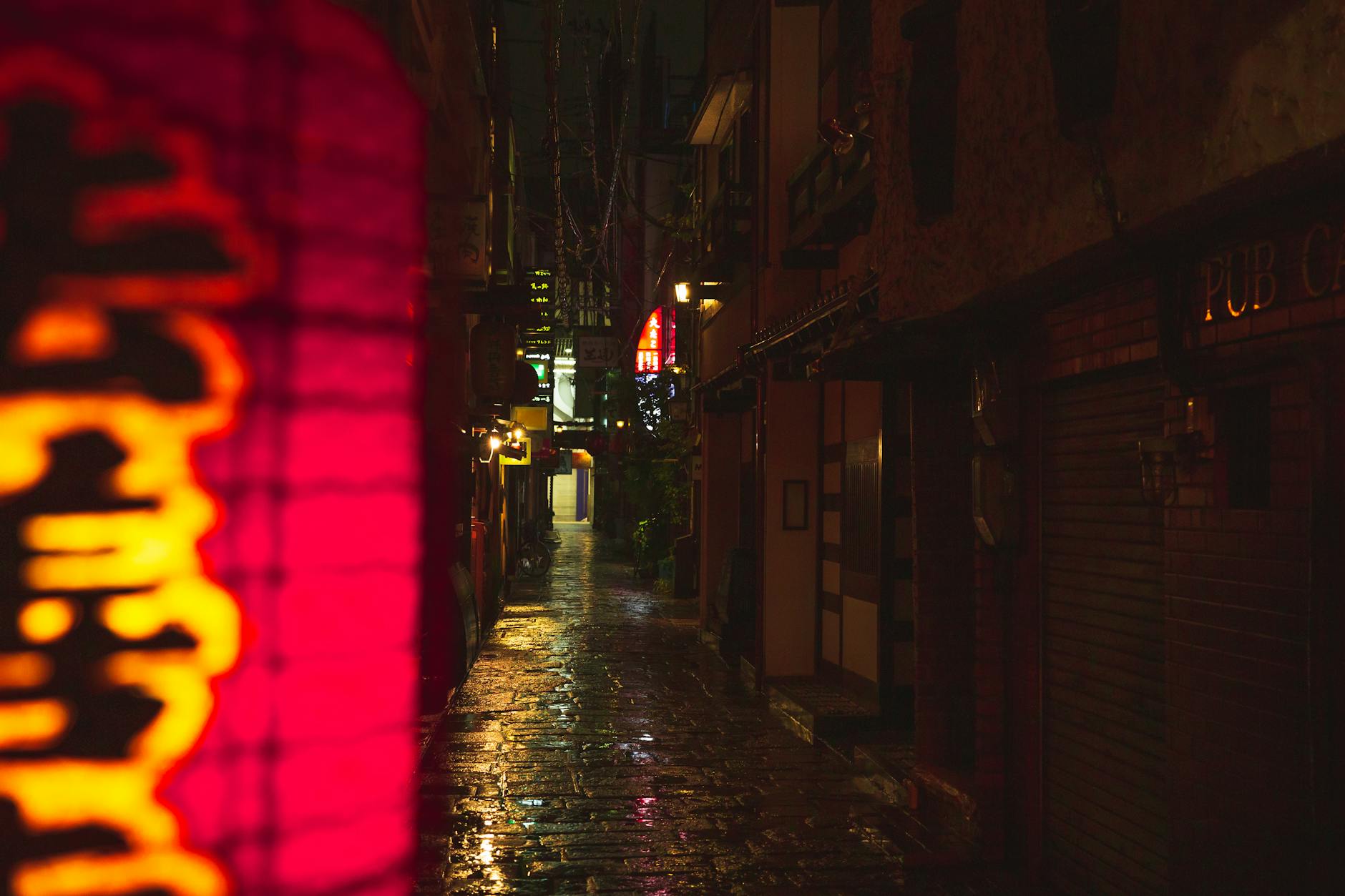
Neighborhood Guide
Osaka is best understood as a set of neighborhoods and station zones. You do not need every area, but you need to know what each one is good for.
Namba
Namba is the south-city hub: transport, food, nightlife, shopping, and tourist energy. It is not one clean district but a cluster: Nankai Namba, Osaka-Namba, Metro Namba, Dotonbori, Hozenji, Namba Parks, and surrounding lanes.
Best for:
- First-timer energy.
- Dotonbori and Hozenji access.
- Food nights.
- Nankai to/from KIX.
- Shinsaibashi and Nipponbashi walks.
Use it well:
- Stay slightly off the loudest Dotonbori blocks if sleep matters.
- Do one obvious neon walk, then move into smaller lanes.
- Treat Namba as a starting point, not the whole city.
Dotonbori
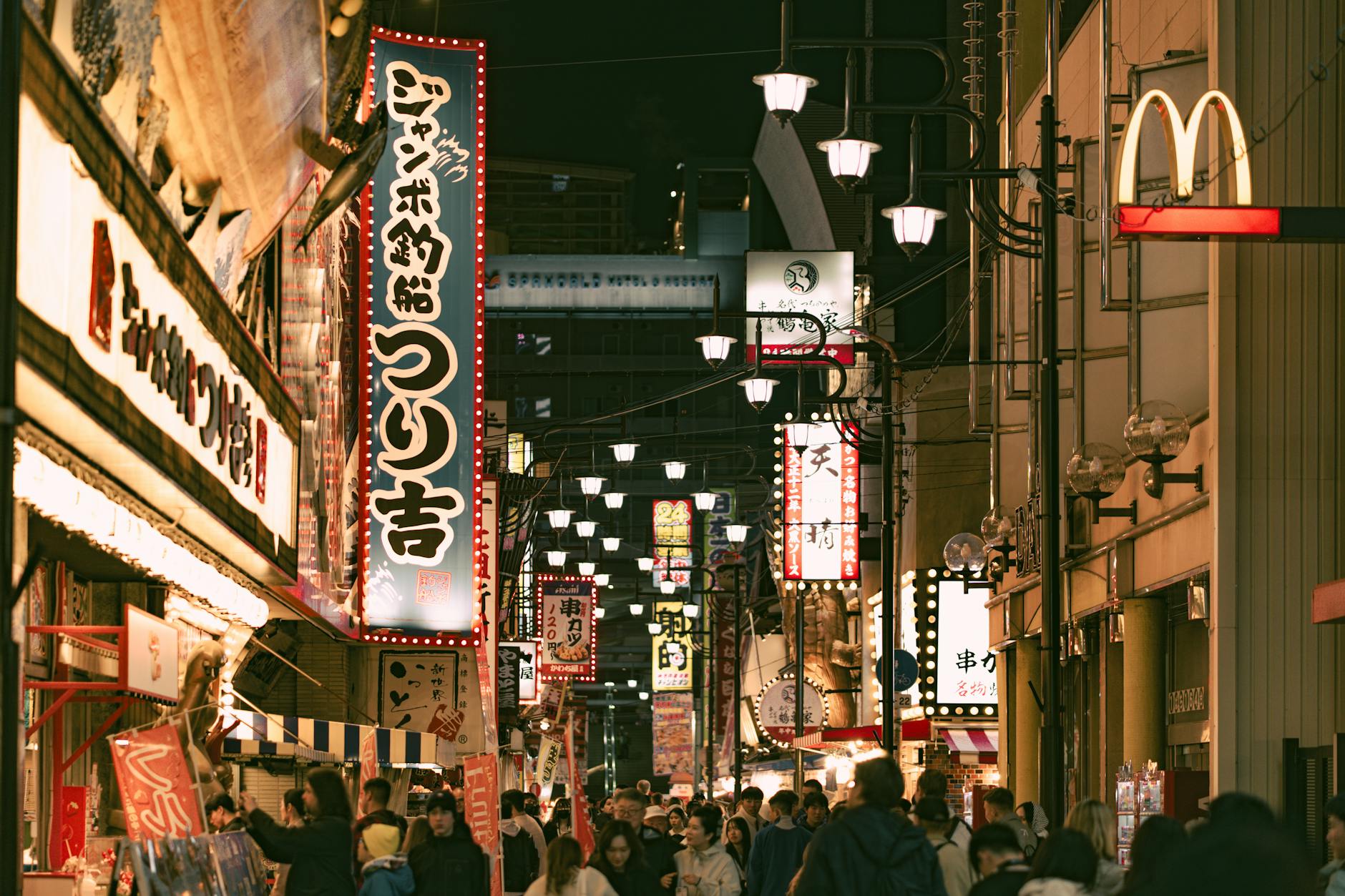
Dotonbori is tourist theater, and that is not automatically a bad thing. The canal, signs, moving crab, crowds, bridges, snacks, and bright reflections are part of Osaka's public image for a reason.
Best for:
- First-night orientation.
- Photos.
- Street-food grazing.
- A short, high-energy walk.
Use it well:
- Go once at night, preferably early in the trip.
- Do not assume the longest line is the best food.
- Pair it with Hozenji Yokocho or Ura-Namba for a more textured evening.
- Leave before annoyance replaces excitement.
Hozenji Yokocho
Hozenji Yokocho is a small atmospheric lane near Dotonbori centered on Hozenji Temple. It gives a useful contrast: stone, lanterns, narrow lanes, restaurants, and a quieter register inside the bright south-city zone.
Best for:
- A short atmospheric pause.
- Dinner lanes.
- Seeing that south Osaka is not only neon.
Use it well:
- Visit in the evening.
- Keep your voice down around the temple.
- Do not treat it as a long attraction; it is a small moment.
Shinsaibashi
Shinsaibashi is a shopping spine and central connector. Shinsaibashi-suji is covered, busy, and practical in rain. The wider area connects toward luxury retail, Amerikamura, Dotonbori, and Nagahoribashi.
Best for:
- Shopping.
- Rainy-day movement.
- Linking Namba and central Osaka.
- Department stores and fashion.
Use it well:
- Walk the arcade, but do not eat every meal on the most obvious tourist blocks.
- Use side streets for better texture.
- Pair with Amerikamura or Dotonbori depending mood.
Amerikamura
Amerikamura is youth culture, vintage, street fashion, cafes, small stores, and a different energy from polished Shinsaibashi. It is not huge, but it helps break the assumption that Osaka is only food signs and station malls.
Best for:
- Street fashion.
- Vintage and casual shopping.
- Younger travelers.
- A short afternoon browse.
Use it well:
- Pair with Shinsaibashi.
- Go with curiosity rather than a fixed checklist.
- Expect variable quality; the point is texture.
Ura-Namba
Ura-Namba is one of the better areas for eating beyond the most tourist-facing Dotonbori blocks. It has narrow lanes, izakaya, standing bars, small restaurants, and a more local-feeling south-city energy.
Best for:
- Dinner wandering.
- Bar hopping.
- Second-night Osaka.
- Travelers who want Namba without only Dotonbori.
Use it well:
- Go hungry and flexible.
- Keep groups small.
- Have a backup plan if places are full.
- Do not block narrow lanes while deciding.
Kuromon Market
Kuromon has become visitor-heavy, but it remains useful if approached correctly. It is a food market with seafood, snacks, fruit, sweets, and prepared bites. It can be enjoyable, but it is not a secret local market.
Best for:
- Morning or lunch grazing.
- Families.
- First-time food browsing.
- Rainy-day covered wandering.
Use it well:
- Go earlier rather than at peak crush.
- Do not expect everything to be cheap.
- Treat it as one food stop, not Osaka's entire food identity.
- Respect shop signs and eating areas.
Nipponbashi and Den Den Town
Nipponbashi/Den Den Town is Osaka's electronics, anime, game, and otaku-oriented district. It is smaller and less overwhelming than Tokyo's Akihabara, but useful for pop culture shopping.
Best for:
- Anime, games, figures, electronics.
- Pairing with Namba/Kuromon.
- Rainy afternoons.
Use it well:
- Check store floors carefully.
- Compare prices before buying big items.
- Do not assume tax-free procedures are identical everywhere.
Umeda
Umeda is the north-city machine: stations, towers, department stores, underground malls, hotels, offices, food halls, and rail links. It can feel confusing at first because it is vertical and layered. Once you understand it, Umeda is one of the most useful urban zones in Japan.
Best for:
- Rail access.
- Shopping.
- Department-store food.
- Polished hotels.
- Rainy-day Osaka.
- Kyoto/Kobe/Himeji movement.
Use it well:
- Learn your station exit.
- Use department-store basements for food.
- Do not judge Umeda only from the first confusing underground corridor.
- Pair with Nakazakicho, Nakanoshima, or Fukushima for more character.
Nakazakicho
Nakazakicho is a small-scale retro neighborhood near Umeda with cafes, older houses, shops, and a slower mood. It is not a major sight, and that is part of its appeal.
Best for:
- Cafes.
- Low-key wandering.
- A break from station intensity.
- Repeat visitors or slower trips.
Use it well:
- Go in daylight or early evening.
- Do not expect a dense attraction list.
- Respect residential quiet.
Tenma and Tenjinbashisuji
Tenma is one of Osaka's great eating areas. Tenjinbashisuji Shopping Street is a long covered arcade with everyday energy. The surrounding lanes have izakaya, standing bars, small restaurants, and less staged food culture than Dotonbori.
Best for:
- Food nights.
- Shotengai wandering.
- Local-feeling Osaka.
- Repeat meals after the obvious first night.
Use it well:
- Go hungry.
- Keep parties small.
- Be flexible if a place is full.
- Pair with Osaka Tenmangu or Nakanoshima depending route.
Fukushima
Fukushima, near Umeda, has developed into a strong dining neighborhood with izakaya, wine bars, casual restaurants, and a more grown-up food-night feel than Dotonbori.
Best for:
- Dinner near Umeda.
- Couples.
- Better second or third nights.
- Travelers who want food without tourist crush.
Use it well:
- Reserve if you care about a specific place.
- Wander if you are flexible.
- Use it as a north-side alternative to Namba nights.
Nakanoshima
Nakanoshima is Osaka's river island and civic-cultural corridor: water, bridges, museums, public architecture, offices, and calmer walking. It shows a more dignified side of the city.
Best for:
- River walks.
- Museums.
- Architecture.
- A calmer daytime break.
Use it well:
- Pair with Umeda, Yodoyabashi, Kitahama, or Osaka Castle.
- Use it in good walking weather.
- Do not expect Dotonbori energy; that is the point.
Osaka Castle Area
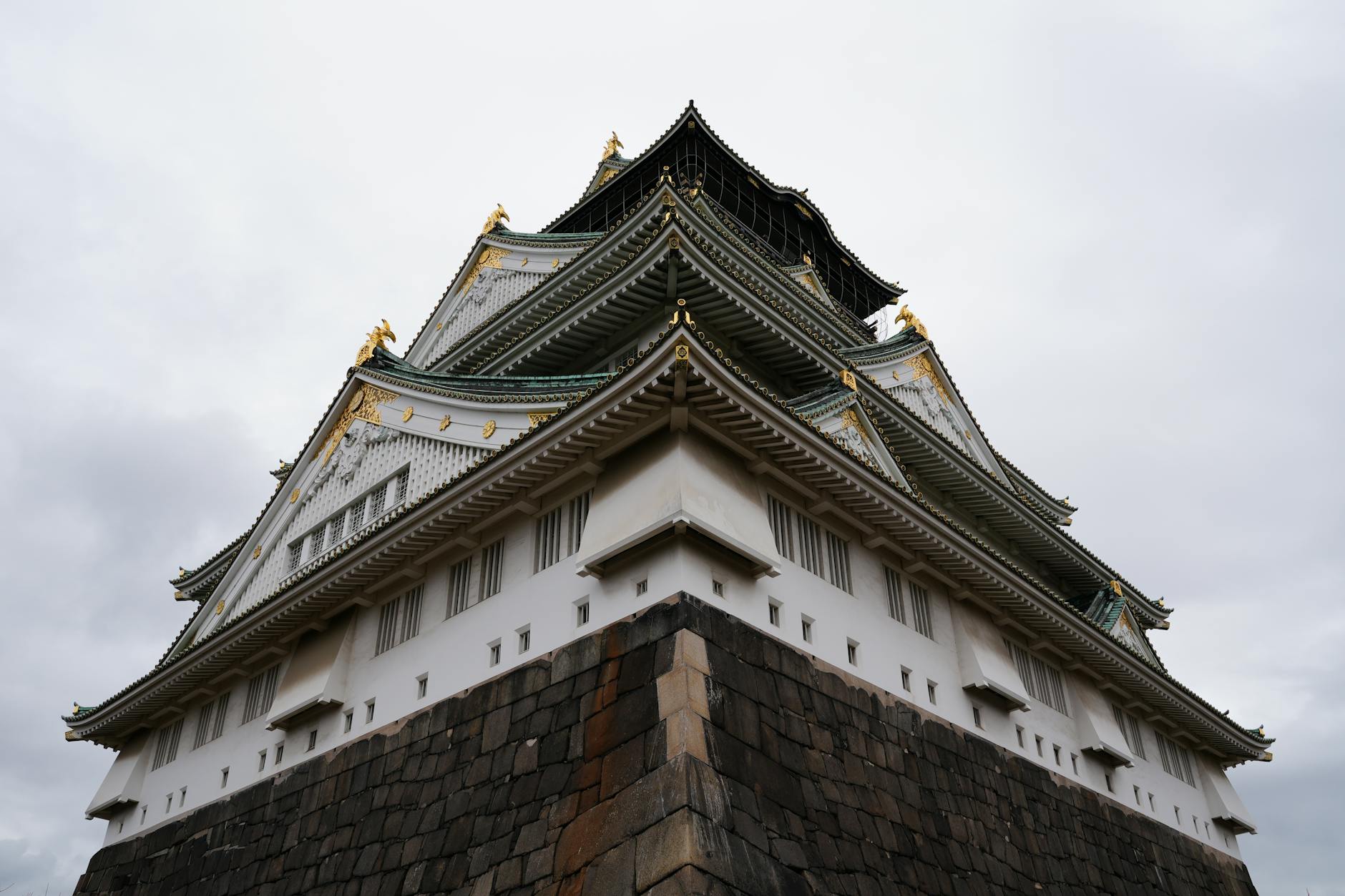
Osaka Castle is visually important and symbolically useful. The current main keep is a reconstruction, but the park, moats, walls, and scale help visitors understand Osaka's historical position. The museum can be useful if you want context, but the grounds are the bigger general pleasure for many travelers.
Best for:
- First-time orientation.
- Park walking.
- Cherry blossoms.
- Families.
- History context.
Use it well:
- Go in the morning or late afternoon.
- Treat the park and walls as part of the experience.
- Pair with Nakanoshima or Tenma rather than scattering the day.
Shinsekai and Tsutenkaku
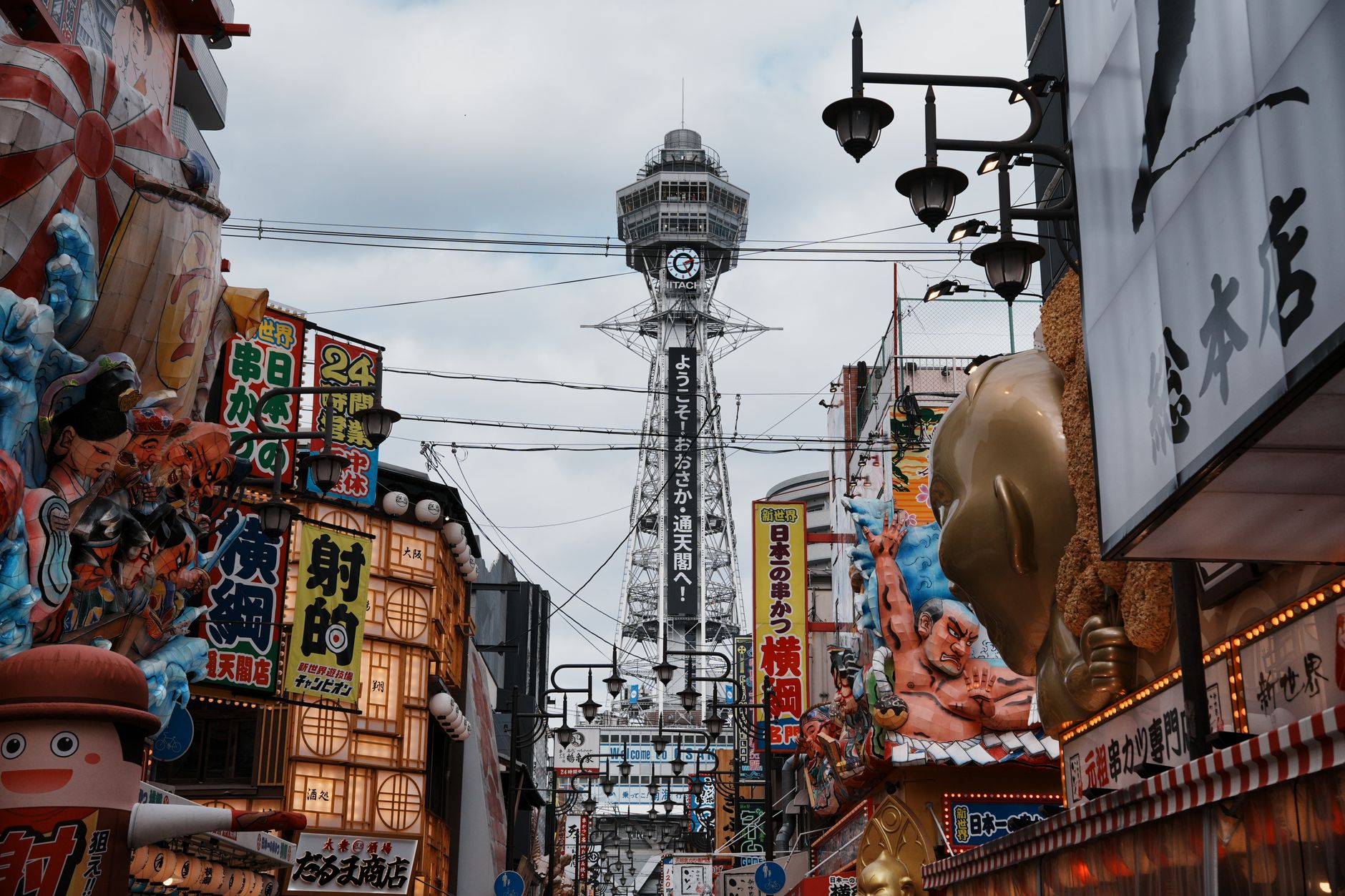
Shinsekai is nostalgic, rough-edged, colorful, and heavily associated with kushikatsu and Tsutenkaku Tower. It can feel touristy, but it also gives a different Osaka texture from polished stations and Dotonbori.
Best for:
- Kushikatsu.
- Retro city atmosphere.
- Photos.
- Pairing with Tennoji/Abeno.
Use it well:
- Visit in daylight into evening.
- Eat selectively.
- Be aware that "old Osaka" here is partly real and partly staged.
Tennoji and Abeno
Tennoji/Abeno combines station convenience, parks, shopping, Abeno Harukas, Shinsekai access, and a slightly different south-city feel. It is a practical area, not just a transit point.
Best for:
- Abeno Harukas views.
- Tennoji Park.
- Shinsekai pairing.
- Value hotels.
- South/east movement.
Use it well:
- Pair with Shinsekai or Shitennoji.
- Use it for a half-day rather than a rushed station transfer.
Tsuruhashi and Korea Town
Tsuruhashi is known for Korean food, yakiniku, markets, and a distinct cultural texture. It is one of the best ways to remind yourself that Osaka's food identity is not only takoyaki and okonomiyaki.
Best for:
- Korean food.
- Yakiniku.
- Market wandering.
- Repeat visitors.
Use it well:
- Go for a meal, not just a photo stop.
- Be respectful in market lanes.
- Pair with Tennoji or Osaka Castle depending route.
Universal City and Osaka Bay
Universal City is theme-park Osaka; Tempozan/Kaiyukan is aquarium-and-bay Osaka. These areas are not central to everyday Osaka, but they are important for families and entertainment-focused trips.
Best for:
- USJ.
- Kaiyukan.
- Family days.
- Weather-proof attraction planning.
Use it well:
- Do not underestimate transfer time back to Namba/Umeda.
- Treat USJ as a full day.
- Pair Kaiyukan with Tempozan rather than trying to cram it between distant sights.
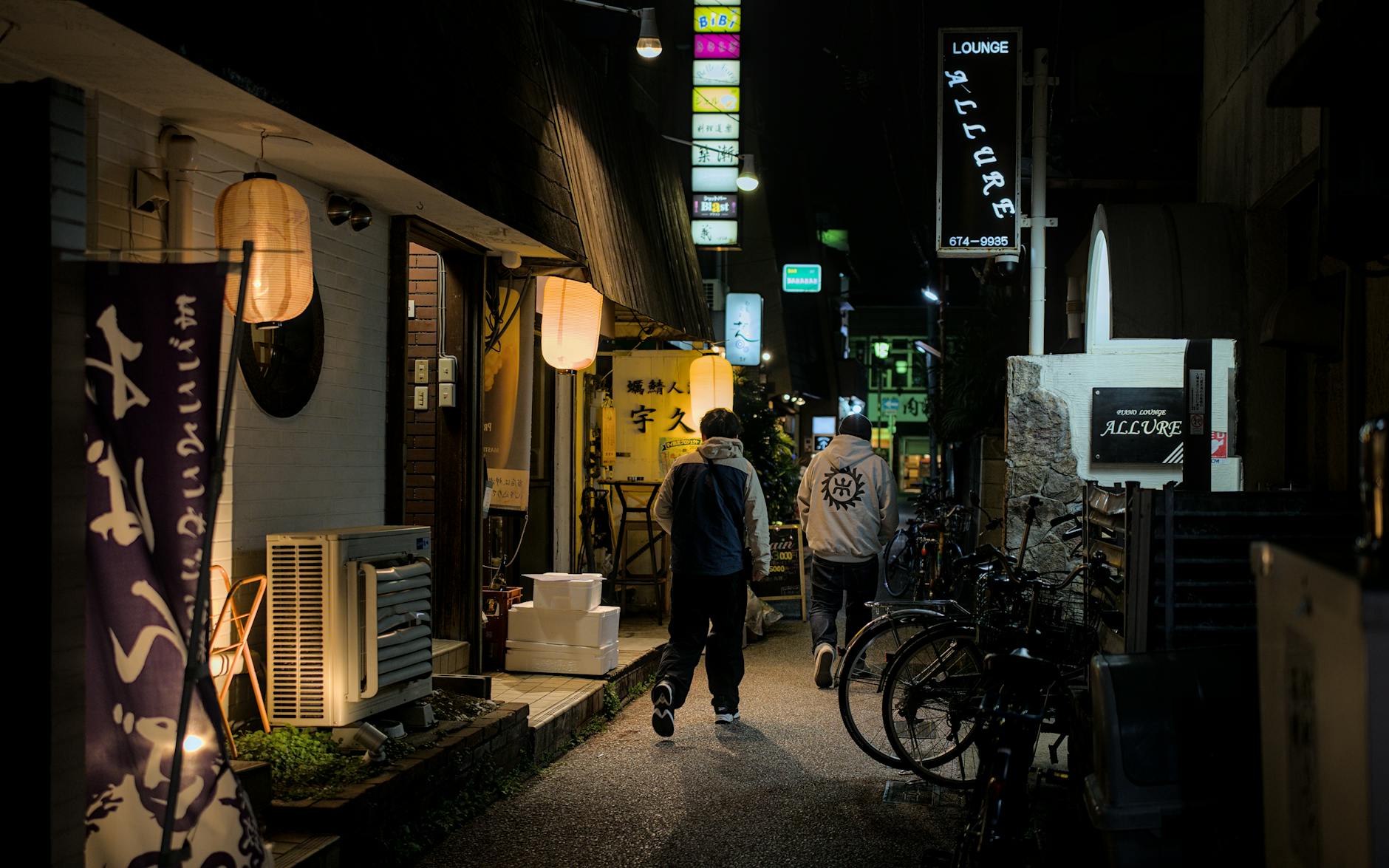
Best Things to Do
Osaka's best experiences are not only "sights." They are food sequences, station-city movement, neighborhood wandering, evening energy, and Kansai decisions. Still, a first-timer needs anchors.
Walk Dotonbori At Night, Then Keep Going
Dotonbori is the obvious Osaka. You should probably see it. The canal, Glico sign, giant food signs, bridges, and crowded restaurant streets are part of the city's visual language.
But Dotonbori is best as an opening scene, not the whole film.
Best time: Evening, ideally not when you are starving and impatient.
How long: 45 minutes to 2 hours depending food stops.
Pair with: Hozenji Yokocho, Ura-Namba, Shinsaibashi, or Amerikamura.
Watch out for: tourist-trap restaurants, long lines of uncertain value, blocked sidewalks, and the belief that the busiest block is the best block.
Eat Takoyaki, But Do Not Make It A Personality
Takoyaki is iconic: hot batter balls with octopus, sauce, mayo, bonito flakes, and green laver. It is fun, cheap-ish, and absolutely part of Osaka. But Osaka food is bigger than takoyaki.
The move: Eat takoyaki once or twice, then move on to okonomiyaki, kushikatsu, udon, sushi, izakaya, depachika food, standing bars, coffee, sweets, and neighborhood meals.
Have A Proper Okonomiyaki Meal
Okonomiyaki is one of Osaka's defining dishes, but it is better as a sit-down meal than as a rushed checkbox. The pleasure is heat, batter, cabbage, sauce, smoke, grill, and the feeling of a meal built in front of you.
Best for: lunch or casual dinner.
Book ahead? For famous places, yes or expect lines. For casual neighborhood shops, flexibility helps.
Watch out for: stacking too many flour-heavy foods in one evening.
Do One Serious Food Neighborhood Beyond Dotonbori
Choose at least one:
- Tenma for izakaya lanes and shotengai energy.
- Fukushima for a more adult dinner/bar night.
- Ura-Namba for south-city small-restaurant density.
- Tsuruhashi for Korean food and yakiniku.
- Shinsekai for kushikatsu and retro mood.
This is the difference between "I ate in Osaka" and "I started to understand Osaka."
Visit Osaka Castle Park
Osaka Castle is historically central and visually useful. The current keep is reconstructed, so do not approach it like an untouched medieval castle. Approach it as a symbol, a park, a set of massive stone walls and moats, and a place to understand Osaka's role in national history.
Best time: Morning, late afternoon, or cherry blossom season.
How long: 1.5 to 3 hours.
Book ahead? Usually not for ordinary visits, but check current museum hours and ticketing.[13]
Pair with: Nakanoshima, Tenma, Osaka Museum of History, or Kyobashi.
Spend Time In Umeda's Station City
Umeda is not merely a place to change trains. It is a city inside the city: department stores, food basements, restaurants, rooftop spaces, shopping towers, underground corridors, and rail operators. Visitors who skip Umeda because they think Osaka equals Dotonbori miss half the city.
Best for: shopping, food floors, rainy days, rail logistics, polished Osaka.
Do: Grand Front Osaka, Lucua, Hankyu/Hanshin department stores, station food floors, Umeda Sky Building if the view interests you.
Watch out for: getting lost underground. It happens. Build margin.
Go Up For A View: Umeda Sky Building Or Abeno Harukas
Osaka is not a city of one perfect skyline view, but a high view helps. Umeda Sky Building gives a memorable architectural experience and north-city perspective. Abeno Harukas gives a high south-city view from one of Japan's tallest building complexes.[14][15]
Choose Umeda Sky Building if: you are staying north, like architecture, or want a more iconic visitor view.
Choose Abeno Harukas if: you are pairing Tennoji, Shinsekai, or south Osaka.
Skip both if: views are not your thing. Osaka is more about street and food than skyline.
Visit Shitennoji
Shitennoji is one of Japan's historically important Buddhist temple sites and gives Osaka a deeper time horizon than neon-and-food itineraries suggest.[16] It is not Kyoto, and that matters. The temple shows that Osaka has older religious and cultural layers, even if the city does not perform them as relentlessly as Kyoto.
Best time: Morning.
Pair with: Tennoji, Abeno, Shinsekai.
Watch out for: expecting the same atmospheric density as Kyoto's major temple districts.
See Sumiyoshi Taisha If You Want A Different Shrine Experience
Sumiyoshi Taisha is one of Osaka's most important shrines and has a distinct architectural and cultural identity.[17] It sits away from the most obvious first-timer corridor, which makes it feel like a deliberate choice.
Best for: repeat visitors, shrine interest, slower Osaka, photographers.
Pair with: South Osaka exploration.
Watch out for: travel time relative to your priorities.
Use Nakanoshima For Civic Osaka
Nakanoshima gives Osaka river, architecture, museums, public institutions, and calmer walking. It is a strong corrective to a trip that is becoming only food and crowds.
Best for: morning or afternoon walks, museums, architecture, couples, solo travelers.
Pair with: Umeda, Kitahama, Yodoyabashi, Osaka Castle.
Visit Kaiyukan If You Like Aquariums Or Travel With Kids
Osaka Aquarium Kaiyukan is one of the city's major family and all-weather attractions. It sits in the Tempozan/Bay Area and can anchor a half-day.[18]
Best for: families, rainy days, aquarium fans.
How long: 2 to 3 hours, longer with meals and Tempozan.
Book ahead? Check current ticketing and crowd guidance.
Pair with: Tempozan, bay views, a slower evening.
Treat Universal Studios Japan As A Full Day
USJ is not just another Osaka attraction. It is a full operational day, especially if Super Nintendo World, major rides, shows, seasonal events, or Express Pass decisions matter.[9]
Best for: families, theme-park fans, Nintendo/Harry Potter/Jurassic/Minion interests, groups.
How long: Full day.
Book ahead? Yes. Check official tickets, Express Passes, hours, event calendars, and Area Timed Entry behavior.
Watch out for: assuming you can casually add USJ to a packed city itinerary. You cannot, at least not well.
Watch Baseball If Timing Works
Baseball in Japan is a cultural experience, and Kansai has strong teams and fan cultures. Depending schedule, you may consider an Orix Buffaloes or Hanshin Tigers game. Hanshin's Koshien Stadium is outside central Osaka but regionally important.
Best for: sports travelers, families, repeat visitors, summer evenings.
Book ahead? For popular games, yes.
Watch out for: stadium location and post-game transport.
Browse A Department-Store Food Basement
Depachika food halls are one of Japan's great urban pleasures. Osaka's department stores make this easy, especially in Umeda and Namba. This is not a backup plan. It is a real food experience.
Best for: lunch, picnic supplies, gifts, sweets, rainy days, solo travelers.
The move: Go late afternoon, browse slowly, buy a few things, and treat it as a city ritual.
Osaka Itineraries
Osaka itineraries should be built around clusters. The city gets worse when you ricochet between far-flung stations for isolated sights. Keep each half-day coherent.
One Perfect First Day In Osaka
Morning: Umeda or Osaka Castle
If staying north, start with Umeda station-city orientation and a department-store basement. If staying south, start with Osaka Castle Park to give the day historical scale.
Lunch: Depachika or local lunch
Use Umeda food floors, Namba, or a neighborhood lunch. Do not waste the first day in a random chain unless you need recovery.
Afternoon: Shinsaibashi, Amerikamura, or Nakanoshima
Choose based on mood: shopping and youth culture south, civic river Osaka north.
Evening: Dotonbori, Hozenji, and Ura-Namba
See the lights. Take the photos. Then move into smaller lanes for dinner or drinks.
Late: Stop before the city turns from fun to tired. Osaka rewards second nights too.
Two Days In Osaka
Day 1: South Osaka
- Kuromon Market or Nipponbashi.
- Namba and Hozenji.
- Shinsaibashi/Amerikamura.
- Dotonbori at night.
- Ura-Namba dinner or bar stop.
Day 2: North and historic Osaka
- Osaka Castle Park.
- Nakanoshima or Osaka Museum of History.
- Umeda station city.
- Umeda Sky Building or department-store food halls.
- Tenma or Fukushima dinner.
This two-day plan gives you the contrast most Osaka visitors miss.
Three Days In Osaka
Day 1: Namba, Dotonbori, Shinsaibashi
Use the obvious south-city route, but do it well.
Day 2: Osaka Castle, Nakanoshima, Umeda
Give the city history, river, architecture, and north-side logistics.
Day 3: Choose Your Osaka
Pick one:
- USJ full day.
- Kaiyukan/Bay Area plus Tenma dinner.
- Shinsekai/Tennoji/Abeno plus Tsuruhashi dinner.
- Deeper food day: Kuromon, Tenma, Fukushima, depachika.
- Day trip to Nara or Kobe if Osaka evenings remain protected.
Four Days In Osaka
Day 1: Namba/Dotonbori/Shinsaibashi.
Day 2: Osaka Castle/Nakanoshima/Umeda/Tenma.
Day 3: USJ or Kaiyukan/Bay Area.
Day 4: Nara, Kobe, or deeper Osaka neighborhoods.
This is the best balanced plan for many first-timers who want one attraction-heavy day and one day trip without demoting Osaka.
Five Days In Osaka
Day 1: South Osaka classic.
Day 2: North Osaka and civic/historic core.
Day 3: Kyoto or Nara day trip.
Day 4: USJ, Kaiyukan, or Kobe.
Day 5: Food neighborhoods, shopping, and slower recovery.
The fifth day is where Osaka becomes more than a base. Use it for the city itself, not another long commute unless your trip really demands it.
Food-Focused Osaka Itinerary
Day 1: Dotonbori, Hozenji, Ura-Namba.
Day 2: Kuromon, Nipponbashi, Shinsaibashi, depachika.
Day 3: Tenma and Tenjinbashisuji, with dinner in Tenma.
Day 4: Tsuruhashi or Fukushima.
Rules:
- Do not eat five famous flour dishes in one day.
- Mix street snacks, sit-down meals, food halls, and bars.
- Reserve one or two serious meals if that matters.
- Leave space for accidental eating. Osaka is good at that.
Family-Friendly Osaka Itinerary
Day 1: Easy Namba/Dotonbori walk, early dinner, no late-night overreach.
Day 2: Kaiyukan and Tempozan, then simple dinner.
Day 3: Osaka Castle Park, Umeda food halls, shopping.
Day 4: USJ full day.
Day 5: Nara day trip or Tennoji/Abeno/Shinsekai depending ages.
Rules:
- Keep hotel transit simple.
- Avoid overpacked restaurant queues with hungry kids.
- Use convenience stores and department stores strategically.
- Do not put USJ after a late Dotonbori night.
Rainy-Day Osaka
Good rainy-day options:
- Umeda station complexes.
- Department-store food basements.
- Shinsaibashi covered arcade.
- Tenjinbashisuji Shopping Street.
- Kaiyukan.
- Museums around Nakanoshima.
- Cafes in Nakazakicho.
- Nipponbashi/Den Den Town.
Bad rainy-day choices:
- Long exposed walks between scattered sights.
- Osaka Castle grounds without proper gear.
- Trying to "save" the day by adding too many indoor stops.
Osaka As Kansai Base
If Osaka is your base, protect Osaka evenings.
Good base structure:
- Kyoto day, Osaka dinner.
- Nara day, Osaka evening.
- Kobe half-day, Osaka night.
- Himeji day, quiet Osaka dinner.
- Osaka recovery day.
Bad base structure:
- Leave early for Kyoto.
- Stay in Kyoto through dinner.
- Return exhausted.
- Repeat for Nara.
- Repeat for Kobe.
- Leave saying Osaka was just a hotel.
That is not Osaka's fault.
Food and Drink
Food is Osaka's most famous promise, but the promise is often misunderstood.
"Kuidaore" is often translated as eating yourself into ruin, and Osaka wears the idea proudly. But a good Osaka food trip is not about maximal consumption. It is about rhythm: what to eat where, when to snack, when to sit, when to queue, when to stop, and when to ignore the viral list in favor of the room that feels right.
What Osaka Food Does Well
Osaka excels at:
- Casual food that feels like civic identity.
- Griddle dishes.
- Street snacks.
- Izakaya and standing-bar culture.
- Department-store food.
- Market grazing.
- Late-night eating.
- Comfort food.
- Regional variety through Kansai access.
It is not only cheap food. Osaka has serious restaurants, refined counters, hotel dining, and polished bars. But the city's emotional food center is more democratic than that: hot, direct, social, and generous.
Dishes To Know
| Food | What it is | How to approach it |
|---|---|---|
| Takoyaki | Octopus-filled batter balls with sauce and toppings. | Eat hot, but carefully. Do not spend the whole trip chasing one "best" stand. |
| Okonomiyaki | Savory pancake/griddle dish with cabbage and fillings. | Make time for a sit-down meal. It is better when not rushed. |
| Kushikatsu | Skewered, breaded, fried foods, especially associated with Shinsekai. | Fun in moderation. Follow sauce and shop etiquette. |
| Negiyaki | Green-onion-forward griddle dish related to okonomiyaki. | Good when you want a lighter variation. |
| Udon | Thick wheat noodles, with Kansai broth often lighter than Tokyo styles. | Excellent lunch option; do not ignore simple noodle shops. |
| Kitsune udon | Udon topped with sweet fried tofu, strongly associated with Osaka/Kansai. | A classic comfort choice. |
| Oshizushi / battera | Pressed sushi traditions, including mackerel styles. | Seek it if you want older Osaka food identity beyond street snacks. |
| Yakiniku/Korean food | Especially strong around Tsuruhashi. | Good for group dinners and a different Osaka food angle. |
| Depachika food | Department-store basement prepared foods, sweets, bento, gifts. | One of the city's easiest high-quality food experiences. |
Where To Eat By Area
Dotonbori/Namba: Best for first-night grazing, iconic snacks, bright atmosphere, and easy options. Watch for tourist traps.
Ura-Namba: Better for smaller restaurants, izakaya, and a more textured south-city dinner.
Tenma: Excellent for casual eating, standing bars, izakaya, and local-feeling food nights.
Fukushima: Strong for dinner and drinks near Umeda, often more adult and less chaotic.
Umeda: Department stores, station restaurants, polished dining, easy lunch, rainy-day food.
Tsuruhashi: Korean food, yakiniku, markets, and a different Osaka identity.
Shinsekai: Kushikatsu and retro atmosphere.
Kuromon: Visitor-heavy market grazing; useful but not definitive.
How To Avoid Bad Osaka Eating
- Do not eat only in the brightest Dotonbori blocks. They are fun, not comprehensive.
- Do not confuse a line with quality. Some lines are for fame, convenience, or social media.
- Do not schedule every meal. Osaka rewards wandering.
- Do not ignore department stores. Food basements are a serious advantage.
- Do not overdo fried/flour dishes in one day. Your second night will be better if your first night has restraint.
- Do not bring a large group to tiny places without a plan. Osaka is easier in pairs and small groups.
- Do not be loud because Osaka feels relaxed. The city is warmer, not normless.
Reservation Strategy
Reserve:
- High-demand restaurants.
- Fine dining.
- Specific sushi, tempura, yakiniku, or kappo counters.
- Restaurants with limited seating.
- Friday/Saturday dinner if you care where you eat.
Leave flexible:
- Takoyaki.
- Casual okonomiyaki unless famous.
- Depachika meals.
- Market grazing.
- Tenma/Ura-Namba wandering if your group is small.
Breakfast
Osaka breakfasts are often shaped by hotels, cafes, bakeries, convenience stores, and station options. Many Japanese restaurants are not breakfast-oriented in the way visitors imagine.
Good breakfast moves:
- Hotel breakfast if you have a busy rail day.
- Convenience-store breakfast before an early train.
- Coffee and pastry near your base.
- Department-store or station options when open.
- Market grazing if you are going to Kuromon.
Lunch
Lunch is often the best value meal. Use it for:
- Udon.
- Okonomiyaki.
- Sushi sets.
- Department-store restaurants.
- Casual curry.
- Market snacks.
- A proper meal before a food-wandering evening.
Dinner
Dinner is Osaka's emotional center.
Good dinner patterns:
- Namba/Dotonbori first-night energy.
- Tenma second-night casual crawl.
- Fukushima or Umeda for a more polished north-side night.
- Tsuruhashi for Korean/yakiniku.
- Shinsekai for kushikatsu if that mood fits.
Drinking And Nightlife
Osaka nightlife ranges from casual izakaya to tiny bars, clubs, karaoke, hotel bars, standing drinks, craft beer, and neighborhood drinking lanes. The city is more socially open than some Japanese cities, but visitors should still read the room.
Rules:
- Keep voices controlled in small bars.
- Do not assume every tiny bar wants foreign walk-ins.
- Check cover charges.
- Know your last train or plan a taxi.
- Avoid tout-driven nightlife decisions.
- Do not pressure staff over language.
Solo Eating
Osaka is good for solo travelers. Counters, ramen/udon shops, standing bars, department stores, and casual restaurants make solo meals easy. The main issue is not loneliness; it is choice overload.
Good solo moves:
- Counter meals.
- Tenma early evening.
- Depachika dinner in hotel room on a tired night.
- Udon lunches.
- Small okonomiyaki shops outside peak times.
Vegetarian, Vegan, Halal, Allergies, And Dietary Needs
Osaka is easier than it used to be, but dietary planning still matters. Dashi, bonito, meat broth, shared grills, hidden ingredients, and language friction can complicate vegetarian, vegan, halal, kosher, gluten-free, and allergy-safe travel.
The move:
- Research specific restaurants ahead.
- Carry translated allergy cards.
- Do not assume "vegetable" means vegetarian.
- Be careful with okonomiyaki, takoyaki, ramen, sauces, broths, and fried foods.
- Use hotel concierge help for serious needs.
- Keep backup meals near your hotel.
Getting Around
Osaka's transport is excellent, but the map has a trick: it is not one system. You will use Osaka Metro, JR, and private railways depending destination. IC cards make this easy. Passes can help. But the best tool is still route logic.
The Main Systems
| System | Useful for | Visitor note |
|---|---|---|
| Osaka Metro | City movement: Namba, Umeda, Honmachi, Shinsaibashi, Tennoji, central corridors. | Strong everyday tool; day tickets can help on subway-heavy days.[7] |
| JR West | Osaka Station, Shin-Osaka, Universal City, Kyoto, Kobe, Himeji, airport routes. | Essential for regional movement and some city routes. |
| Nankai | KIX to Namba, south Osaka routes, Wakayama/Koyasan connections. | Very important if staying Namba and arriving through KIX. |
| Hankyu | Umeda to Kyoto/Kobe/Takarazuka corridors. | Useful from Umeda; different Kyoto arrival points than JR. |
| Hanshin | Osaka-Namba/Umeda to Kobe and Koshien. | Useful for Kobe and baseball. |
| Kintetsu | Osaka-Namba/Uehommachi/Tsuruhashi to Nara and beyond. | Often the best Nara route from Namba. |
| Keihan | Yodoyabashi/Kitahama to Kyoto east-side routes. | Useful for certain Kyoto plans from central/north Osaka. |
IC Cards
Use ICOCA or a compatible IC/mobile IC where possible. You tap in and out, avoid ticket-machine friction, and use the same stored-value logic across much of Kansai. IC cards do not make every pass irrelevant, but they make everyday movement easier.
The move: For most first-timers, IC card first, pass only when the day clearly benefits.
From Kansai International Airport To Osaka
KIX access depends on your base.[6]
To Namba: Nankai is the obvious rail choice for many travelers. It is direct to Nankai Namba and fits south-city stays.
To Tennoji: JR options can be convenient.
To Osaka/Umeda: JR and airport buses can be sensible depending hotel and luggage.
To Shin-Osaka/Kyoto: JR Haruka and other JR routing may matter.
To specific hotels: Airport limousine buses can reduce transfer stress, especially with luggage or children.
Rule: Do not choose a KIX train because someone online said it is "best." Best for which hotel?
From Itami Airport
Itami is closer to central Osaka and handles many domestic flights. Access often involves airport limousine buses, monorail plus rail transfers, taxis for some situations, or hotel-specific choices. It can be easier than KIX for domestic connections, but not always easier for your exact address.
Shin-Osaka vs Osaka Station
This matters.
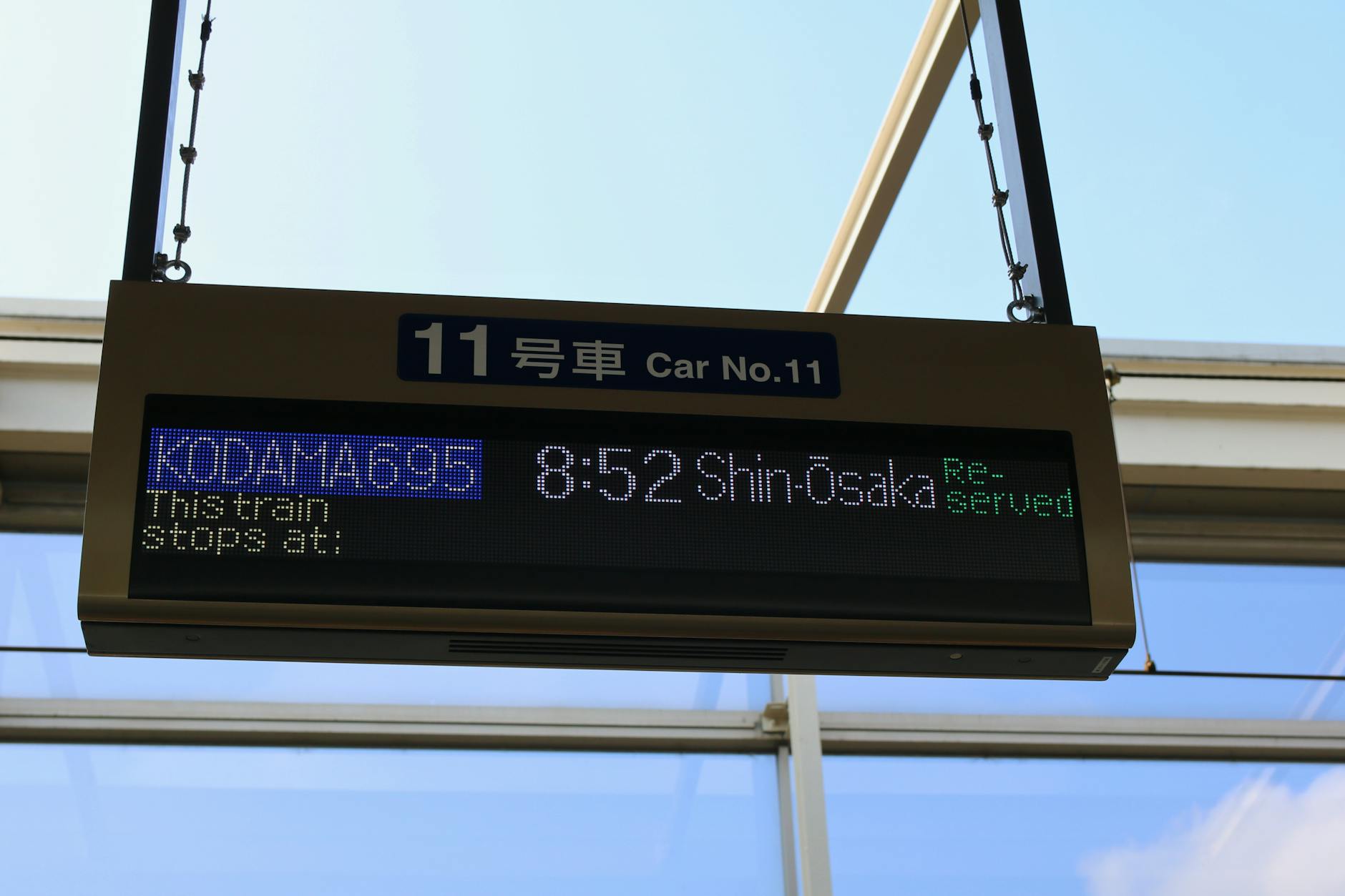
Shin-Osaka is the shinkansen station.
Osaka Station/Umeda is the main north-city urban hub.
They are connected, but they are not the same. If you book a hotel "near Osaka Station" and assume your bullet train is downstairs, you will be wrong. If you book Shin-Osaka for shinkansen convenience and expect Dotonbori outside, you will also be wrong.
Namba Station Is Also Not One Simple Thing
"Namba" can mean multiple operators and station areas: Osaka Metro Namba, Nankai Namba, Osaka-Namba for Kintetsu/Hanshin, JR Namba, and surrounding underground/aboveground routes. This is manageable, but luggage and wrong exits can make it annoying.
The move: On arrival day, know the exact station exit or route to your hotel.
Should You Buy The Osaka Amazing Pass Or Osaka e-Pass?
Maybe. The Osaka Amazing Pass / Osaka e-Pass products can be good when your day includes multiple covered attractions and relevant transport.[8]
Good pass day:
- Castle museum, river cruise, tower/view, museum, subway movement, and a planned attraction stack.
Bad pass day:
- Eating in Namba, shopping in Umeda, one paid sight, JR/private rail, and lots of wandering.
The move: Price your actual day. Do not let the pass design the trip unless you enjoy attraction stacking.
Should You Use A Japan Rail Pass?
For Osaka city travel, no. For a wider Japan route, maybe. After major price increases, a nationwide JR Pass often does not pay off for simple Tokyo-Kyoto-Osaka routing. It can work for heavy long-distance travel inside a pass window, but you must do the math.
Regional JR West passes can be useful for specific Kansai/Chugoku/Hokuriku routes. They are not automatically useful for Osaka city days, Nankai KIX access, private railway routes to Nara, or Osaka Metro movement.
The move: Separate city transit, Kansai day trips, airport access, and long-distance shinkansen. They may need different ticket logic.
Taxis
Taxis are clean, safe, and useful when:
- You have luggage.
- It is late.
- You are traveling with tired children.
- Rain makes transfers miserable.
- Your hotel is awkward from the station.
- You missed the last train.
They are not usually necessary for ordinary sightseeing, and they can be slower in traffic.
Walking
Osaka is walkable inside clusters, not across the whole city. Namba-Dotonbori-Shinsaibashi is a strong walking zone. Umeda has huge station complexes. Nakanoshima is pleasant. Tenma is good on foot. But do not plan the city as if every area naturally links by scenic walking.
Biking
Cycling can be pleasant for experienced urban riders and local residents, but it is not the default recommendation for first-time visitors. Sidewalk behavior, parking rules, traffic, and rental logistics require attention.
Luggage
Osaka is easier with modest luggage. Large suitcases turn station exits, transfers, small hotel rooms, and restaurant stops into friction.
Use:
- Luggage forwarding between hotels.
- Station lockers where available.
- Airport luggage services if useful.
- Smaller bags for multi-city Kansai routes.
Budget and Costs
Osaka can be better value than Tokyo and Kyoto, but it is not automatically cheap. Hotels rise during peak seasons, USJ can be expensive, and food costs depend on how you eat. The good news is that Osaka gives strong pleasure at many price points.
Daily Budget Ranges
| Style | Approximate daily shape, excluding long-distance transport | What it feels like |
|---|---|---|
| Budget-conscious | Convenience-store breakfast, casual lunch, street snacks, budget hotel/hostel, IC transit, mostly free wandering. | Very doable, especially outside peak hotel dates. |
| Mid-range | Business or mid-range hotel, casual restaurants, one paid attraction, metro/JR movement, occasional taxi. | The sweet spot for many visitors. |
| Comfortable | Better hotel, reserved dinners, USJ/Kaiyukan/towers, taxis when useful, shopping, luggage forwarding. | Smooth and still less formal than luxury Tokyo/Kyoto. |
| High-end | Luxury hotel, fine dining, private guide, premium USJ products, taxis, curated shopping. | Osaka can do this, but the city's soul is not only luxury. |
Biggest Cost Drivers
- Hotel season and district. Cherry blossoms, autumn weekends, major events, and USJ periods can raise rates.
- Universal Studios Japan. Tickets, Express Passes, food, merchandise, and hotels add up quickly.
- Day trips. Kyoto/Nara/Kobe are not expensive individually, but repeated regional movement adds cost.
- Shopping. Osaka is dangerous for casual purchasing because the food halls and retail are excellent.
- Dining ambition. Casual Osaka is affordable; serious restaurants are still serious spending.
Where Osaka Saves Money
- Casual food is strong.
- Business hotels can be good value.
- Public transport is excellent.
- Many neighborhood walks are free.
- Department-store food can replace expensive meals.
- Osaka can reduce hotel moves if used as a base.
Where Not To False-Economize
- A bad hotel location.
- A weak USJ plan if USJ is important.
- Shoes in summer/rainy season.
- Airport transfers with heavy luggage.
- Allergy/dietary planning.
- Travel insurance.
Value Moves
- Stay near the station you will actually use.
- Eat lunch as the larger meal when possible.
- Use depachika for one excellent casual dinner.
- Put Dotonbori early, then eat in Tenma/Fukushima/Ura-Namba later.
- Use Osaka as a base only when it reduces hotel churn.
- Price passes against real plans.
Safety, Health, and Scams
Osaka is generally safe for visitors by global big-city standards. Most travelers will feel comfortable walking, using trains, eating out, and exploring independently. But safe does not mean nothing can go wrong.
Main Visitor Risks
| Risk | Where it appears | Practical response |
|---|---|---|
| Lost property | Trains, stations, restaurants, lockers. | Keep bags zipped and track phone/passport. Japan is good at lost property, but do not test it. |
| Nightlife judgment | Namba, Dotonbori, bars, clubs, late streets. | Watch alcohol, avoid touts, keep group plans, know last train/taxi. |
| Heat illness | July-September, outdoor walks, USJ, castle park. | Hydrate, use shade, schedule indoor afternoons. |
| Weather disruption | Typhoon season, heavy rain, airport days. | Monitor official weather and transit; keep buffer before flights. |
| Overexhaustion | Kansai day-trip chains. | Build recovery. Osaka nights plus early Kyoto mornings add up. |
| Food/diet issues | Allergies, hidden dashi/meat/seafood, shared grills. | Use translated cards, research ahead, communicate clearly. |
| Earthquake/disaster risk | Japan generally. | Know emergency numbers, hotel evacuation routes, and official info sources. |
Entertainment Districts
Namba and Dotonbori are busy and generally manageable, but the usual nightlife rules apply:
- Avoid aggressive touts.
- Do not follow strangers to unknown bars.
- Check cover charges.
- Keep your drink with you.
- Use taxis if you miss last trains.
- Keep your passport secure.
Osaka's relaxed mood can make travelers careless. That is usually the problem.
Heat And Hydration
Summer Osaka can be physically draining. The city is full of vending machines and convenience stores, but you still need to plan.
In hot months:
- Carry water.
- Use a small towel.
- Wear breathable clothes.
- Avoid exposed afternoon sightseeing.
- Make USJ a heat-management operation, not just a ride list.
- Choose hotels with easy transit.
Medical Help
For emergencies, call 119 for ambulance/fire and 110 for police. JNTO's Japan Visitor Hotline can assist tourists with information and support during illness, accidents, and disasters.[4]
Travelers with medical needs should:
- Bring prescriptions and documentation.
- Check medication import rules before travel.
- Carry insurance information.
- Know the hotel address in Japanese.
- Ask hotels for clinic/hospital guidance when needed.
Air Quality And Allergies
Osaka is not Delhi, but pollen, heat, humidity, and urban air can affect travelers. Spring pollen can be an issue. Summer humidity can worsen fatigue. Carry medication you know works for you, and check import rules for medicines before Japan travel.
Women Travelers
Many women travelers find Osaka manageable and comfortable, including solo travel. Usual precautions still apply: be aware late at night, avoid isolated intoxicated situations, use women-only train cars if available and desired, and choose hotel locations that feel good for evening returns.
LGBTQ+ Travelers
Japan is generally safe for LGBTQ+ travelers in day-to-day visitor contexts, and Osaka has nightlife and community spaces, though public attitudes and legal frameworks differ from some travelers' home countries. Discretion may still be preferred by some locals. Same-sex couples should not expect every hotel or formal process to mirror Western norms.
Scams And Annoyances
Osaka is not a high-scam city for ordinary tourists, but watch for:
- Overpriced tourist restaurants in the most obvious blocks.
- Touts in nightlife areas.
- Confusing cover charges.
- Fake urgency around "must buy now" experiences.
- Bad exchange rates if changing cash casually.
- Overbuying passes because marketing sounds attractive.
Accessibility and Mobility
Osaka can be workable for travelers with mobility needs, but it requires planning. Major stations have elevators and accessible routes, but the shortest route on a map may involve stairs, long underground corridors, crowded platforms, or confusing transfers. Older restaurants and small bars may be inaccessible. Attractions vary.
What Helps
- Major stations often have elevators and accessible routing.
- Osaka Metro and JR provide station information online.
- Newer malls, department stores, hotels, and major attractions are generally easier.
- Taxis can solve specific gaps.
- Umeda and Namba have extensive indoor connections, useful in weather.
What Can Be Difficult
- Large station complexes with long walking distances.
- Small restaurants with steps or tight seating.
- Crowded Dotonbori/Shinsaibashi evenings.
- Shinsekai or older areas with variable sidewalks.
- Multi-operator transfers.
- Heat and humidity.
- Attractions with crowd pressure.
Best Accessible-Leaning Bases
Umeda/Osaka Station can work well if your hotel is directly connected or very close to a route you understand. It has complexity, but also infrastructure.
Namba can work if the hotel is close to the right station exits and you prioritize south-city food. But crowds and station complexity matter.
Honmachi/Yodoyabashi/Nakanoshima can be calmer, especially if hotel access is clean.
Planning Rules
- Ask hotels about step-free access from the nearest station exit.
- Use official station maps where possible.
- Avoid tight transfers.
- Do not assume a restaurant is accessible because it is famous.
- In summer, consider heat a mobility factor.
- Use taxis strategically.
Families, Solo Travelers, LGBTQ+ Travelers, and Special Considerations
Families With Kids
Osaka is one of Japan's better family cities because it combines easy food, strong transit, USJ, Kaiyukan, parks, shopping, and manageable day trips. It is less culturally fragile than Kyoto with children, and less overwhelming than Tokyo if the base is right.
Good family moves:
- Stay near a station with simple routes.
- Use USJ as a full day, not an add-on.
- Use Kaiyukan as a weather-proof anchor.
- Keep Dotonbori early enough to avoid exhausted late crowds.
- Use department-store food halls for flexible meals.
- Build rest between Kyoto/Nara day trips.
Watch out for:
- Tiny restaurant seating.
- Smoking policies in some older venues.
- Long USJ days.
- Summer heat.
- Stroller friction in crowded stations and narrow dining lanes.
Solo Travelers
Osaka is strong for solo travelers. The city gives counters, casual food, safe-feeling transit, easy hotels, and enough evening life that you do not feel stranded.
Good solo moves:
- Namba or Umeda base.
- Counter meals.
- Tenma early evening.
- Depachika dinners.
- Museum/river walks.
- Day trip to Nara or Kyoto.
Watch out for:
- Tiny bars where regulars dominate the room.
- Overdrinking alone late at night.
- Long lines where a solo spot may be easier, but not guaranteed.
Couples
Osaka is not Kyoto-romantic by default, but it can be a great couples city if you like food, walking, bars, shopping, and easy logistics.
Best couple areas:
- Nakanoshima for calm walks.
- Fukushima for dinner.
- Umeda for hotels and views.
- Hozenji for atmosphere near Namba.
- Nakazakicho for cafes.
Older Travelers
Osaka can be comfortable for older travelers if hotel placement is good. Umeda, Nakanoshima, Honmachi, and some Namba hotels can work well. The main risks are station walking distances, summer heat, and overpacked day trips.
Muslim Travelers
Osaka has more halal and Muslim-friendly options than many smaller Japanese cities, but planning remains necessary. Check current restaurant status, prayer spaces, ingredients, and hotel support. Do not assume seafood or vegetable dishes are halal because dashi, sauces, alcohol, and preparation methods vary.
Vegetarian And Vegan Travelers
Plan ahead. Osaka is food-rich, but much of its famous food uses fish stock, meat, seafood, shared grills, or sauces with hidden ingredients. Vegetarian/vegan restaurants exist, but spontaneous eating in traditional places can be harder.
Business Travelers
Osaka works well for business travel. Umeda, Honmachi, Yodoyabashi, Nakanoshima, and Shin-Osaka may be more practical than Namba depending meetings. Build one food night if you can; the city is wasted if you only see conference rooms.
Shopping and Souvenirs
Osaka is an excellent shopping city because it has both high-function retail and food gifts. It may not have Tokyo's endless specialty depth, but it is easier to use and less overwhelming.
Best Shopping Areas
Umeda: Department stores, fashion, cosmetics, gifts, food basements, station malls.
Shinsaibashi: Covered arcade, fashion, drugstores, international brands, street traffic.
Namba: Souvenirs, food, electronics nearby, casual shopping.
Nipponbashi/Den Den Town: Anime, games, electronics, figures.
Amerikamura: Vintage, street fashion, youth culture.
Tenjinbashisuji: Everyday shopping arcade, less polished but useful.
Depachika: The best edible souvenirs.
What To Buy
Good Osaka/Kansai souvenirs:
- Sweets from department stores.
- Regional snacks.
- Tea and food gifts.
- Kitchen tools if you know what you need.
- Stationery.
- Ceramics or craft items from reputable shops.
- Baseball merchandise if you attend a game.
- Character goods.
- Packaged food gifts from respected counters.
What Not To Buy
- Random airport snacks because you forgot to shop.
- Fragile ceramics without packing plan.
- Tax-free goods you do not understand procedurally.
- Knives without checking airline and customs rules.
- Food items your home country may restrict.
- Cheap souvenirs that will feel like clutter by the time you get home.
Tax-Free Shopping
Japan's tax-free shopping rules require attention, and procedures are changing toward a refund method from November 1, 2026.[12] Bring your passport when shopping if you intend to use tax-free services, follow consumables rules, and check current procedures.
Shopping Strategy
Use Umeda for serious retail and food gifts. Use Shinsaibashi/Namba for browsing and energy. Use Nipponbashi for pop culture. Use depachika for gifts that actually feel good to give.
Arts, Culture, History, and Context
Osaka's cultural identity is not subtle in the way Kyoto's can be subtle. It is built from commerce, food, humor, theater, neighborhoods, and water. To understand the city, you need to understand why it feels less ceremonial and more transactional than other Japanese cities, and why that is a strength rather than a flaw.
Merchant City
Osaka's historical role as a commercial center matters. The city has long been associated with merchants, markets, rice exchange, distribution, and practical urban life. That history helps explain its food culture, directness, and lack of temple-city preciousness.
Travel implication:
- Osaka is not trying to impress you with stillness.
- Its beauty is often in movement, appetite, exchange, and everyday urban competence.
Comedy And Directness
Osaka is strongly associated with comedy and a more direct conversational style. Visitors who speak no Japanese may still feel the difference: shop energy, restaurant warmth, local humor, and a slightly less guarded tone than Tokyo.
Travel implication:
- Enjoy the warmth, but do not overperform.
- "Osaka is friendly" is not permission to be loud or careless.
Food As Civic Identity
Many cities have good food. Osaka makes food part of its civic self-image. This can become cliche, but it is still true. The best way to honor it is not to chase only famous dishes, but to eat in ways that follow the city's neighborhoods and rhythm.
Water And Urban Form
Osaka's waterways are part of its history and visual identity. Dotonbori is the obvious canal, but Nakanoshima and river walks show a calmer water-city logic. Do at least one river/canal walk that is not only the Glico sign.
Osaka And Kyoto
Osaka and Kyoto are often paired, but they are not interchangeable. Kyoto asks for attention to temples, gardens, seasons, craft, and cultural restraint. Osaka asks for appetite, logistics, humor, and urban use. The best Kansai trip lets them differ.
Osaka And Tokyo
Tokyo is larger, more complex, more polished, and more overwhelming. Osaka is easier to read, warmer in tone, and better for travelers who want big-city Japan without Tokyo scale. Do not call Osaka "Tokyo lite." That misses both cities.
Museums And Culture
Osaka's museum scene will not replace Tokyo or Kyoto for most travelers, but it adds depth:
- Osaka Museum of History for city context.
- Nakanoshima museums for art/culture depending exhibitions.
- Osaka Castle Museum for castle-era context.
- Smaller specialty museums depending interests.
Check current exhibitions before building a museum-heavy day.
Seasonal and Month-by-Month Guide
Osaka is a city of food and logistics, so season changes the rhythm rather than the entire viability of the trip.
Spring
Spring is beautiful, busy, and emotionally high-stakes if you chase blossoms. Osaka Castle Park and river/park areas become more attractive. Kyoto day trips become crowded. Hotels rise.
Best spring plan:
- Osaka Castle Park or river blossom walk.
- Kyoto/Nara with early starts.
- Namba/Tenma food nights.
- One flexible day for weather.
Mistake:
- Trying to see every Kansai blossom spot while sleeping too little and eating badly.
Summer
Summer is hot, humid, and still rewarding if you adapt. Osaka's evening culture helps. USJ and outdoor attractions require heat strategy.
Best summer plan:
- Early starts.
- Indoor afternoons.
- Hotel breaks.
- Aquarium/museums/department stores.
- Late dinners.
- Light clothing and hydration.
Mistake:
- Scheduling Osaka Castle, Shinsekai, Nara, and Dotonbori as one exposed day in August.
Autumn
Autumn is excellent. The air improves, walking gets easier, food nights feel good, and Kansai day trips are more comfortable. Kyoto foliage crowds affect Osaka-based travelers.
Best autumn plan:
- Osaka days mixed with Kyoto/Nara.
- Umeda/Namba food nights.
- Nakanoshima walks.
- Hotel booking early for peak weekends.
Mistake:
- Assuming Osaka hotels stay cheap because the foliage is in Kyoto.
Winter
Winter is underrated. Osaka becomes an urban comfort trip: food, shopping, lights, aquarium, museums, bars, and easy rail. It is less scenic but very usable.
Best winter plan:
- Food neighborhoods.
- Department stores.
- Kaiyukan.
- Umeda and Namba.
- One crisp day trip.
Mistake:
- Thinking winter Osaka is not worth it because there are no blossoms.
Festivals And Events
Osaka has major festivals, seasonal events, baseball, concerts, exhibitions, and theme-park calendars. Tenjin Matsuri in summer is one of the city's major traditional festivals, while USJ has its own seasonal programming.
The move:
- Check official event calendars close to travel.
- Book hotels early around major events.
- Treat festivals as crowd events, not casual background.
Day Trips and Side Trips from Osaka
Osaka is one of Japan's best day-trip bases. That is a gift and a danger. The gift is obvious: Kyoto, Nara, Kobe, Himeji, and more. The danger is that you use Osaka only for sleep and never experience the city.
Kyoto
Kyoto is the most obvious day trip, though it deserves its own stay if you have enough time. From Osaka/Umeda, JR, Hankyu, and Keihan routes can all matter depending where in Kyoto you are going. From Shin-Osaka, shinkansen is technically fast but often unnecessary for ordinary planning.
Best for:
- Temples, gardens, old streets, craft, food, culture.
Watch out for:
- Crowds, buses, overpacked days, and the commute back if you want Kyoto evenings.
Rule:
- If Kyoto is the main reason for the trip, sleep in Kyoto at least some nights.
Nara
Nara is one of the best day trips from Osaka. Kintetsu routes from Osaka-Namba are often convenient for first-timers. Nara gives Todai-ji, deer, parkland, temples, and a calmer historic day than Kyoto.
Best for:
- First Kansai trip, families, temple/history interest.
Watch out for:
- Feeding deer carelessly, heat, and trying to combine too much.
Rule:
- Nara is an excellent day trip; do it early and do not rush the park.
Kobe
Kobe is close and easy, but it is not just "beef." It offers harbor, hills, Kitano, Chinatown, sake districts nearby, cafes, and a different urban mood. It can be a half-day or full day depending interests.
Best for:
- Harbor walks, food, cafes, a softer city contrast.
Watch out for:
- Treating Kobe beef as the only reason to go.
Himeji
Himeji Castle is one of Japan's great castle experiences and a strong day trip from Osaka by rail. If you want a more historically authentic castle experience than Osaka Castle's reconstructed keep, Himeji matters.
Best for:
- Castle lovers, architecture, photography, history.
Watch out for:
- Heat, stairs, and combining with too many stops.
Uji
Uji works well for tea, Byodoin, river atmosphere, and a calmer day. It is often paired with Kyoto-region travel rather than treated as an Osaka default, but it can be worthwhile.
Best for:
- Tea, slower travelers, repeat visitors.
Koyasan
Koyasan is not a casual Osaka half-day. It is a mountain temple settlement and deserves time, ideally overnight if temple lodging matters. Nankai routes make Osaka a logical starting point, but the journey is part of the day.
Best for:
- Buddhist temple stays, spiritual history, mountain atmosphere.
Watch out for:
- Underestimating travel time and treating it like Nara.
Wakayama
Wakayama can offer castle, coast, ramen, and routes toward deeper Kii Peninsula travel. It is more for repeat visitors or specific regional interests than first-timer Osaka.
Hiroshima Or Miyajima
Possible by shinkansen from Shin-Osaka, but not ideal as a casual day if you want depth. Hiroshima and Miyajima deserve an overnight if your itinerary allows.
Day Trip Ranking For First-Timers
| Rank | Trip | Why |
|---|---|---|
| 1 | Nara | Easy, distinct, deeply rewarding, works well from Namba. |
| 2 | Kyoto | Essential for many Japan trips, but better with its own nights. |
| 3 | Himeji | Best castle-focused day. |
| 4 | Kobe | Easy contrast and food/harbor day. |
| 5 | Koyasan | Excellent, but better overnight and less casual. |
The Osaka Base Rule
For every two day trips, give Osaka one real day or evening. Otherwise, stop pretending you are visiting Osaka and admit you are using it as a cheaper rail hotel. That may be practical, but it is not a city guide strategy.
What to Skip
Skipping well is part of good Osaka planning. The city is generous, but not every famous thing earns time on every trip.
Skip Dotonbori As A Full Evening Every Night
Go once. Enjoy it. Photograph it. Eat something. Then graduate to Ura-Namba, Tenma, Fukushima, Tsuruhashi, or Umeda food floors.
Skip Osaka Castle Interior If You Only Want An Old Castle
Osaka Castle's keep is reconstructed and museum-like. The park, moats, walls, and symbolism are valuable. But if your dream is an original castle interior, prioritize Himeji as a day trip.
Skip Universal Studios Japan If You Are Only Mildly Interested
USJ is expensive, time-consuming, and operationally demanding. If you love theme parks, go. If you are only going because it appears on lists, spend that day in Osaka or Kyoto.
Skip Overpriced Tourist Food Lines
Some famous lines are worth it. Many are not. Osaka's food quality is too broad to waste hunger on a weak queue.
Skip A New Hotel Every Night
Osaka works well as a base. Use that. Luggage churn is one of the easiest ways to damage a Kansai trip.
Skip "Kyoto Every Day, Osaka Every Night" If You Care About Kyoto
Kyoto is better early and late. If Kyoto is the core of your trip, sleep there for part of it. Osaka evenings are great, but commuting back every night means you miss Kyoto's best quiet hours.
Skip Passes You Do Not Understand
Do not buy a pass because it feels efficient. Buy it because your actual route makes it efficient.
Common Mistakes
Treating Osaka As Filler
This is the original sin. Osaka is not filler. It can be a base, but it should still get real time.
Staying In The Wrong Area
Namba and Umeda solve different problems. Shin-Osaka solves shinkansen logistics, not city atmosphere. Universal City solves USJ, not general Osaka. Choose accordingly.
Eating Only In Dotonbori
Dotonbori is fun. It is also the easiest place to have a shallow Osaka food trip.
Buying The Wrong Pass
Osaka's rail operators make pass logic complicated. A subway pass does not cover every useful line. A JR pass does not cover Osaka Metro or private rail. Attraction passes only help if you visit covered attractions.
Trying To Do Kyoto And Osaka In One Day
This is common and usually bad. Kyoto needs time. Osaka needs evening. Do not turn both into a photo commute.
Underestimating Umeda
Many visitors think Umeda is just a station. It is a major urban world. Learn it and Osaka becomes easier.
Overloading USJ Day
USJ plus late-night Dotonbori plus early Kyoto is not a plan. It is future resentment.
Ignoring Heat
Summer Osaka punishes heroic sightseeing. Adjust.
Assuming Osaka Is Norm-Free
Osaka may feel warmer and looser, but Japanese etiquette still applies: queues, trains, noise, trash, restaurant behavior, payment norms, and respect.
Not Leaving Time To Wander
Osaka's best moments often happen between meals and stations. If every minute is scheduled, you miss the city.
Responsible Travel
Osaka is heavily visited, but its overtourism problems are different from Kyoto's. The main issue is not just crowding at sacred sites; it is behavior in food streets, narrow lanes, transit, nightlife, markets, and residential pockets.
In Food Areas
- Do not block shopfronts.
- Follow eating-area rules.
- Do not film staff or diners intrusively.
- Queue properly.
- Keep groups compact in narrow lanes.
- Do not treat working markets as props.
In Residential Or Small-Bar Areas
- Keep voices down.
- Do not photograph private homes casually.
- Do not linger in doorways.
- Accept that tiny bars may not be for every group.
At Temples And Shrines
- Be quiet.
- Follow photography rules.
- Do not treat religious spaces as costume backdrops.
- Step aside when others are praying.
On Trains
- Queue.
- Keep bags controlled.
- Avoid loud calls.
- Give priority seats to those who need them.
- Move away from doors.
With Food Culture
Respect Osaka's food culture by doing more than chasing viral snacks. Eat in different neighborhoods, learn what dishes are, avoid waste, and pay attention to the room.
Packing List
Year-Round
- Comfortable walking shoes.
- Compact day bag.
- Portable battery.
- IC card/mobile IC setup.
- Passport for tax-free shopping.
- Translation app.
- Small coin/card pouch.
- Any necessary medication with documentation.
- Travel insurance details.
- Light packable layer.
Spring
- Light jacket.
- Allergy medication if pollen-sensitive.
- Umbrella or packable rain shell.
- Comfortable shoes for park and temple day trips.
Summer
- Breathable clothing.
- Small towel.
- Refillable bottle.
- Sun protection.
- Hat.
- Extra socks.
- Deodorant.
- Electrolytes if useful.
- Rain protection.
Autumn
- Light layers.
- Comfortable walking shoes.
- Light jacket for evenings.
- Hotel bookings made early for peak weekends.
Winter
- Warm layer.
- Coat or insulated jacket.
- Scarf if sensitive to cold.
- Shoes suitable for long station walks.
For USJ
- Battery pack.
- Weather gear.
- Comfortable shoes.
- Ticket/app setup.
- Patience.
- A plan for timed entry and crowd patterns.
For Food Travel
- Small notebook or saved map list.
- Translation cards for dietary needs.
- Cash backup.
- Clothes that can handle smoke/food smells in older places.
FAQ
Is Osaka Worth Visiting?
Yes. Osaka is worth visiting for food, neighborhoods, nightlife, shopping, logistics, and its role as a Kansai base. It is especially good when paired with Kyoto because the two cities solve different parts of a Japan trip.
How Many Days Should I Spend In Osaka?
Three full days is the best first-timer answer if Osaka is a real destination. Two days works for a taste. Four or five days works if you add USJ, Kaiyukan, deeper food, or day trips.
Should I Stay In Osaka Or Kyoto?
Stay in Osaka if you want food nights, nightlife, easier hotels, USJ, broad rail access, and a less formal base. Stay in Kyoto if temples, gardens, early mornings, and old-city atmosphere are the main purpose. Split both if you can.
Is Namba Or Umeda Better?
Namba is better for food, nightlife, Dotonbori, and KIX via Nankai. Umeda is better for rail access, shopping, polished hotels, and many day trips. Neither is universally better.
Is Dotonbori Too Touristy?
It is touristy, but still worth seeing. The mistake is spending every night there or assuming it represents all Osaka food.
Is Universal Studios Japan Worth It?
Yes if you like theme parks, Nintendo, Harry Potter, major rides, and full-day attractions. No if you are only mildly interested and have limited Kansai time.
Is Osaka Good For Families?
Very. USJ, Kaiyukan, easy food, transit, parks, and day trips make Osaka one of Japan's better family bases. Choose the hotel carefully.
Is Osaka Safe?
Generally yes, by big-city standards. Main visitor issues are nightlife judgment, lost property, heat, weather, overexhaustion, and ordinary urban caution.
Can I Visit Kyoto From Osaka?
Yes, easily. But if Kyoto is the emotional center of your trip, sleep there for some nights. Day-tripping from Osaka is practical but not always the best Kyoto experience.
Can I Visit Nara From Osaka?
Yes. Nara is one of the easiest and best Osaka day trips, especially from Namba via Kintetsu routes.
Is Osaka Cheaper Than Tokyo?
Often, especially for hotels and casual food, but not always. USJ, peak hotel dates, shopping, and high-end dining can make Osaka expensive.
Do I Need A Car In Osaka?
No for ordinary visitors. Rail and walking are better. A car is usually a liability inside the city.
What Should I Book Ahead?
USJ tickets/Express Passes, high-demand restaurants, hotels in peak seasons, popular baseball games, and any special timed attractions.
What Should I Leave Flexible?
Food wandering, department-store browsing, Dotonbori/Hozenji timing, Tenma or Ura-Namba evenings, and one weather-adjustable day.
What Is The Best Osaka Food Area?
There is no single answer. Namba/Dotonbori is iconic, Ura-Namba is better textured, Tenma is excellent for casual eating, Fukushima is strong for dinner, Tsuruhashi is best for Korean/yakiniku, and Umeda is excellent for department-store food.
What Is The Biggest Osaka Mistake?
Treating Osaka as a sleeping base for Kyoto and never giving it a real day or real evening.
Source Notes
The following official or high-reliability sources were used for current logistics, entry framing, attraction planning, and transport context. Re-check all prices, hours, ticketing rules, pass inclusions, transport schedules, and entry procedures close to travel.
- 1. Ministry of Foreign Affairs of Japan, "Visa Exemption Arrangements," https://www.mofa.go.jp/j_info/visit/visa/short/novisa.html
- 2. Ministry of Foreign Affairs of Japan, "Japan eVISA," https://www.evisa.mofa.go.jp/index
- 3. Digital Agency / Visit Japan Web, official arrival procedures service, https://services.digital.go.jp/en/visit-japan-web/
- 4. Japan National Tourism Organization, emergency assistance and Japan Visitor Hotline, https://www.japan.travel/en/plan/hotline/
- 5. Japan National Tourism Organization, Japan Safe Travel information, https://www.japan.travel/en/news/JapanSafeTravel/
- 6. Kansai International Airport, "Access from Kansai International Airport," https://www.kansai-airport.or.jp/en/access/from-airport
- 7. Osaka Metro, "Enjoy Eco Card" visitor/day ticket information, https://subway.osakametro.co.jp/en/guide/page/enjoy-eco.php
- 8. Osaka Amazing Pass / Osaka e-Pass official information, https://www.osp.osaka-info.jp/en/
- 9. Universal Studios Japan official website, https://www.usj.co.jp/web/en/us
- 10. Universal Studios Japan official ticket information, https://www.usj.co.jp/web/en/us/tickets
- 11. Expo 2025 Osaka, Kansai, Japan official site, https://www.expo2025.or.jp/en/
- 12. National Tax Agency of Japan, tax-free shopping system revision information, https://www.nta.go.jp/publication/pamph/shohi/menzei/2026kaisei_en.pdf
- 13. Osaka Castle Museum official visitor information, https://www.osakacastle.net/english/
- 14. Umeda Sky Building / Kuchu Teien Observatory official information, https://www.skybldg.co.jp/en/
- 15. Harukas 300 / Abeno Harukas official observatory information, https://www.abenoharukas-300.jp/en/
- 16. Shitennoji Temple official information, https://www.shitennoji.or.jp/
- 17. Sumiyoshi Taisha official information, https://www.sumiyoshitaisha.net/en/
- 18. Osaka Aquarium Kaiyukan official visitor information, https://www.kaiyukan.com/language/eng/