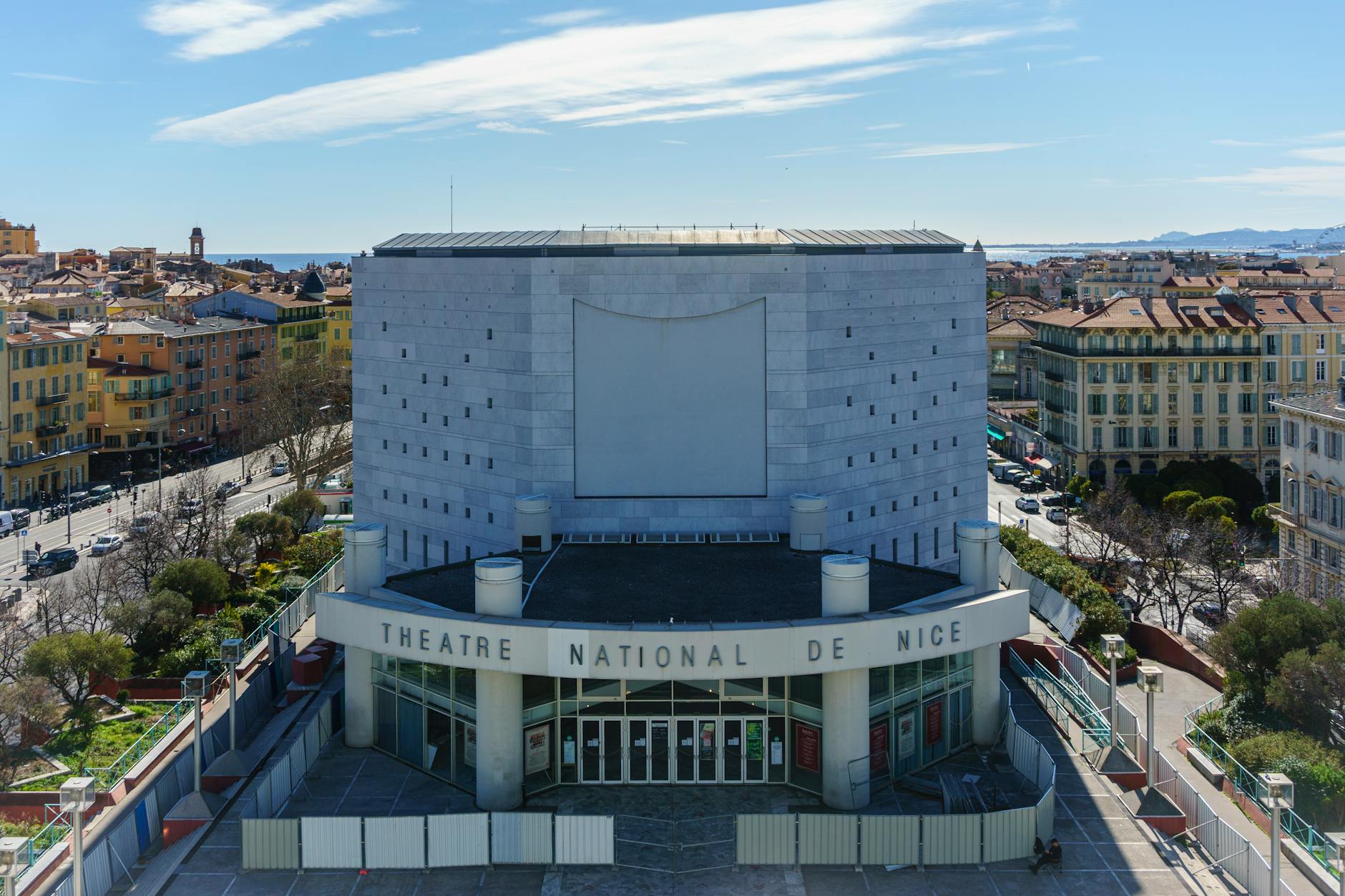
Nice has one of the most flattering first impressions in Europe, which is exactly why people misuse it.
Start Here
The landing is dramatic. The sea appears almost impossibly blue, the curve of the Baie des Anges looks pre-arranged for postcards, the city seems to sit in effortless balance between promenade, old town, hotels, and hills, and within a very short time many visitors start assuming they have understood it. Then they make the standard mistake: they turn Nice into a base without allowing it to become a city.
This is the central problem with first-time Nice itineraries. People tell themselves they are coming to Nice, but what they are often really booking is a sequence of escapes from Nice. Monaco one day, Eze the next, Antibes or Cannes after that, perhaps Villefranche-sur-Mer in between, with the city itself reduced to breakfast, luggage, and a late drink on the way home. The coast is full of worthy places, but that use of Nice is thin. It leaves the traveler with a good train network and a weak memory.
Properly used, Nice is something richer and more complete. It is not only a Riviera platform. It is a city of sea-facing ritual, winter-resort history, Italianate old-town density, market appetite, hilltop calm, museum depth, and one of the strongest day-to-evening urban rhythms on the Mediterranean. It does not demand the same intensity as Naples, Barcelona, or Istanbul. Its strength is proportion. The city knows how to let you have a real urban stay without feeling punished by it.
That balance is also what makes Nice easy to underplan. Because movement is relatively simple and the city is visually generous, people assume weak decisions will be absorbed harmlessly. They are wrong. The wrong hotel area can leave the city feeling generic. Too much dependence on the beach makes Nice feel shallow. Too many day trips make it feel disposable. Too little attention to its neighborhoods leaves the traveler with only the postcard surfaces.
The strongest Nice trip usually has three things. First, a base that matches the actual tone of the stay rather than an imagined one. Second, a clear decision about whether the trip is mainly city-led with one or two regional excursions, or genuinely split between Nice and the wider Riviera. Third, some understanding that Nice's real pleasures are cumulative: the Promenade at different hours, the old-town market quarter before and after the crush, a museum or hill district that slows the trip down, a dinner that belongs to the city rather than to tourism generally.
Nice is very good at feeling easy. The traveler still has to decide what the ease is for.
The city in one sentence: Nice is a deeply usable Mediterranean city whose best first trip comes from balancing promenade, old town, markets, museums, and selective Riviera movement rather than treating the place as a stylish rail junction.
Quick Verdict
Best for: couples, first-time Riviera trips, city-and-coast travelers, food travelers, walkers, museum visitors, and anyone who wants a destination that can be relaxed without being empty.
Not ideal for: travelers who want sandy beaches as the main event, people who need nonstop landmark density, or visitors who intend to spend every day somewhere else.
Ideal first visit: 3 full days.
Minimum worthwhile stay: 2 full days.
Best overall months: April, May, June, September, and October.
Best summer logic: stronger hotel choice, earlier walks, fewer side trips, and realistic expectations about beach crowding.
Biggest planning mistake: confusing convenience with purpose.
One thing to prioritize: the base.
One thing to leave flexible: whether one day becomes a regional excursion or a slower all-Nice day.
The blunt version: Nice gets much better the moment you stop trying to prove you can outsmart it with constant Riviera movement.
Who Will Love Nice?
Nice works very well for travelers who want a city that can carry a full trip without requiring aggressive effort. If you like places where walking is rewarding, food is woven into daily life rather than saved for nighttime, and a hotel can either sharpen or blur the whole experience, Nice is unusually accommodating.
It is especially good for couples because it offers several different kinds of pleasure without forcing them into conflict. There is seafront Nice: the promenade, the blue chairs, the visual theatre of the bay, and the temptation to build the whole trip around the water. There is old-town Nice: tighter, louder, more Italian in emotional register, more market-led, more nocturnal. There is elevated Nice: Cimiez, museum time, historical depth, and a different pace altogether. And there is regional Nice: the city as a beautifully efficient launch point that still deserves to be returned to at the end of the day.
The city is also good for solo travelers because it is legible. You do not need to master a complicated transit system or tolerate punishing distances to get value from it. One of Nice's underrated strengths is that it gives the solo traveler enough structure to feel directed and enough looseness to feel free.
It is less ideal for visitors who want the city to dominate them. Nice is persuasive rather than overwhelming. Its power is cumulative, not explosive. The traveler who wants every hour to be maximal may end up misreading its calm as a lack of substance.
Nice at a Glance
| Question | Practical Answer |
|---|---|
| Main airport | Nice Cote d'Azur Airport |
| Simplest airport transfer | tram line 2 |
| Best first-time base | Carré d'Or / central seafront edge / central city near but not inside Vieux Nice |
| Main symbolic axis | Promenade des Anglais |
| Main old-city anchor | Vieux Nice and Cours Saleya |
| Best higher-ground cultural district | Cimiez |
| Main practical challenge | overusing Nice as a transit base |
| Beach type | mostly pebbles, not soft sand |
| Public transport backbone | tram, buses, walking, and regional rail when needed |
| Car needed? | No |
| Currency | Euro |
| Emergency number | 112 |
| Tap water | Safe to drink |
| Power plugs | Type C and E |
2026 Visitor Notes
The Airport-To-City Connection Is Genuinely Good
The official Nice Airport public transport page says tram line 2 connects both terminals with Jean Medecin in the city centre in under 30 minutes, then continues to Port Lympia.[1] That is one of Nice's real advantages and one reason hotel choice can safely prioritize quality over raw airport proximity.
Airport Access Uses A Specific Fare Logic
Lignes d'Azur's official airport page says access to the airport requires a dedicated "Aero" ticket priced at 10 euros return, while also noting that loaded network cards can be used for airport access under the applicable fare structure.[2][3] This matters because airport transport in Nice is easy, but not quite as plug-and-play as some visitors assume.
The Promenade Is Not Just Scenery
The Nice Cote d'Azur Tourism Office continues to describe the Promenade des Anglais as one of the world's iconic seafronts, lined with major hotels and cultural sites.[4] That sounds obvious, but it is important because many travelers experience it only as a path between other things instead of as one of the city's main urban rituals.
Cours Saleya Is A Working Rhythm, Not A Token Market Stop
The official tourism office page describes Cours Saleya as an essential living space in Vieux Nice, famous for its flower market, produce, antiques on Mondays, and evening craft market in summer.[5] That is exactly right. It is not a five-minute photo opportunity. It is part of the city's daily metabolism.
Nice's UNESCO Identity Changes How The City Makes Sense
UNESCO continues to define Nice as a "Winter Resort Town of the Riviera," recognizing the city's role in the history of global tourism and winter-resort urban development.[6] This explains why Nice feels more structured, cosmopolitan, and hotel-shaped than a simple beach town.
Cimiez Still Matters
The Ville de Nice's official Matisse museum page places the museum inside the broader Cimiez heritage site alongside Roman remains, olive groves, and the monastery zone.[7] That is why Cimiez is such an important counterweight to the promenade-and-old-town version of Nice.
How to Understand Nice
Nice works through five forces.
The first is the seafront image. The promenade and the bay define the city's emotional front door.
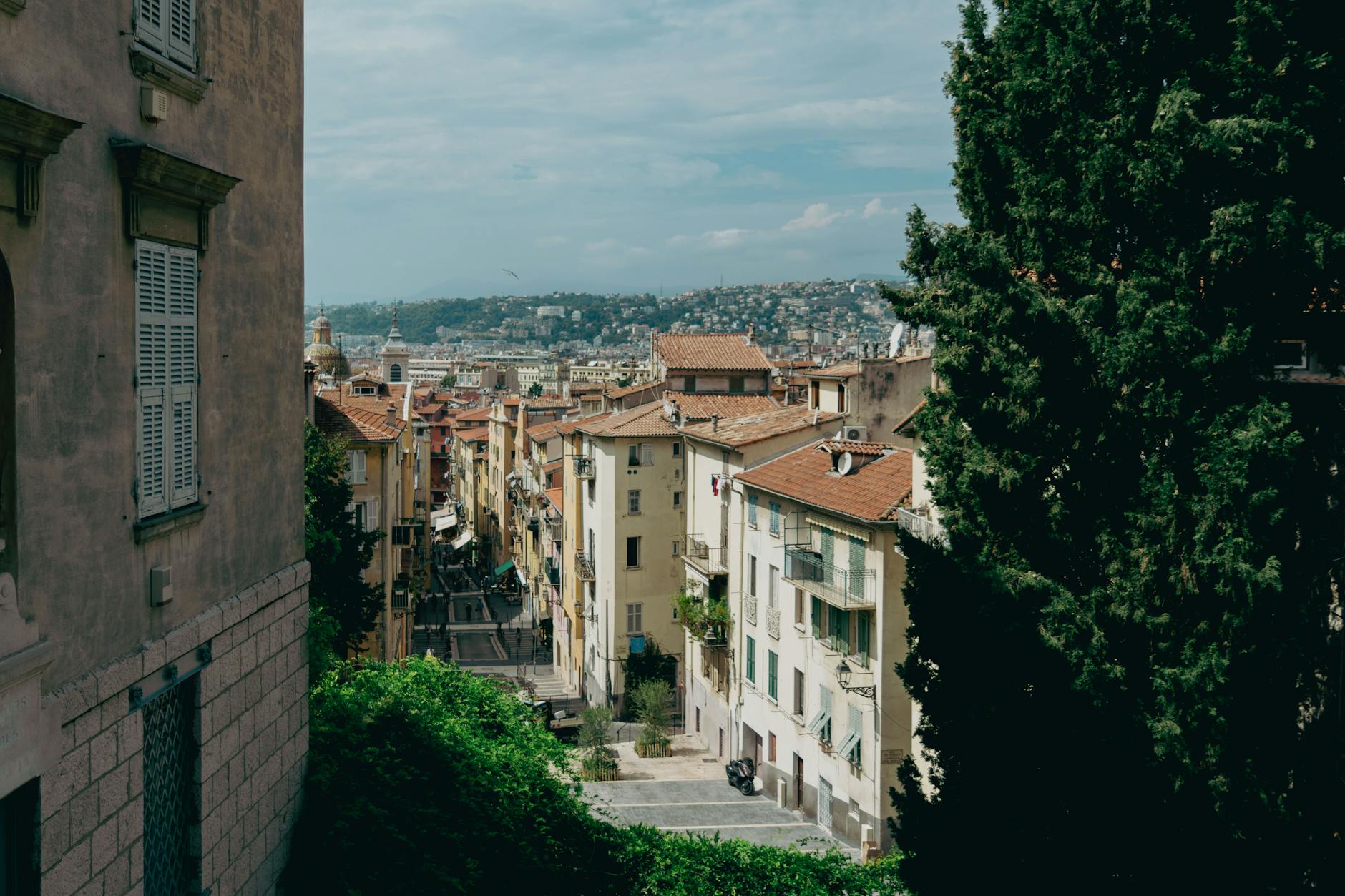
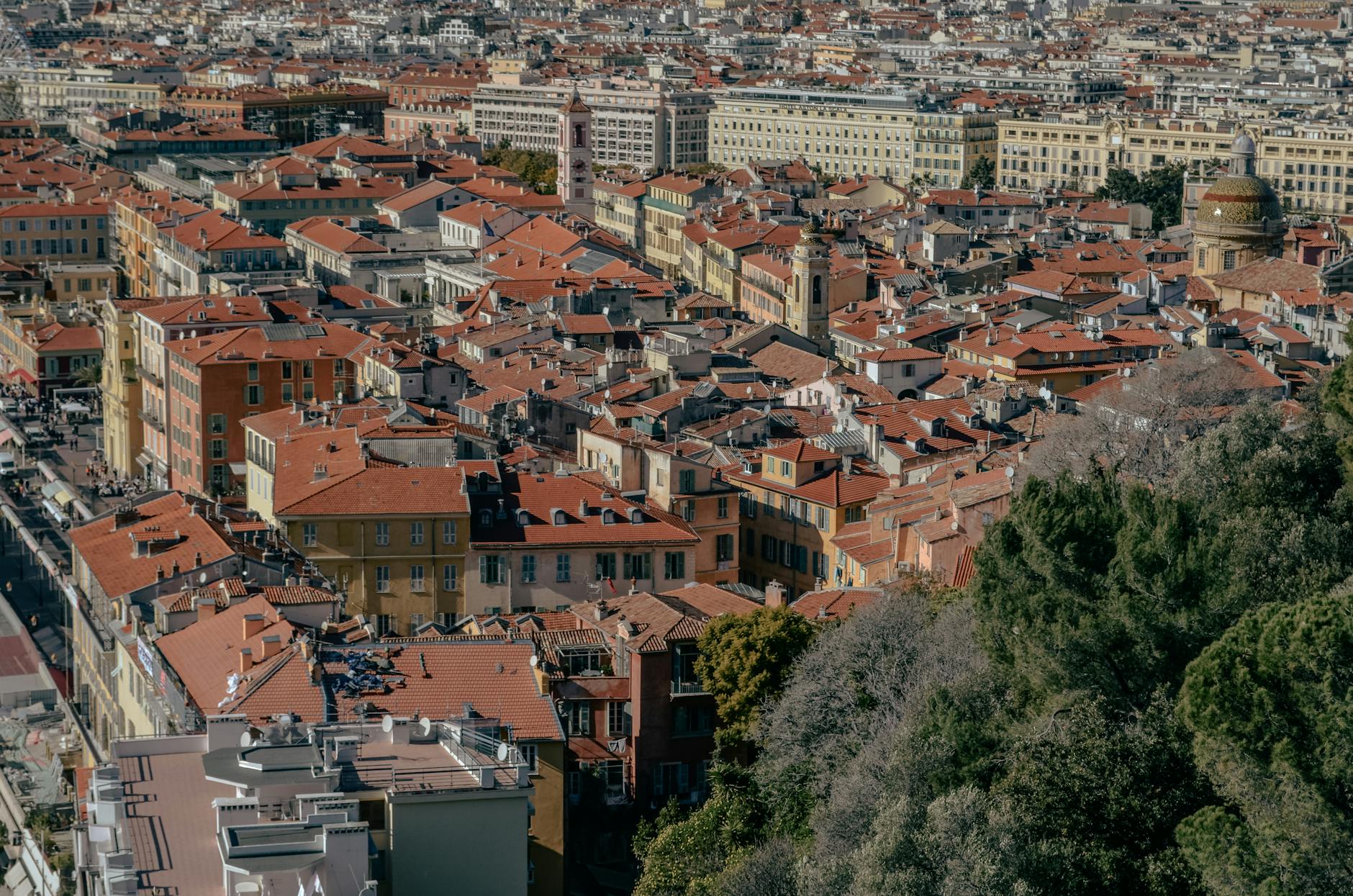
The second is the old-town core. Vieux Nice gives density, appetite, shadow, and noise.
The third is the winter-resort city. Boulevards, hotels, Belle Epoque scale, and UNESCO logic explain why Nice feels unusually composed for a coastal city.[6]
The fourth is the hill-and-museum side. Cimiez, Matisse, and the more elevated historical chapters stop the city from becoming only seafront glamour.[7]
The fifth is the Riviera temptation. Nearby destinations are real assets, but they can weaken the stay if used without discipline.
The Five Nices A First-Time Visitor Actually Meets
Promenade Nice: sea light, ritual walking, large hotels, and the city's most legible image.[4]
Vieux Nice: tighter streets, churches, food, market life, and a more Italian urban feel.
Market Nice: Cours Saleya, produce, flowers, old-town appetite, and daily street theatre.[5]
Cimiez Nice: museum time, olive groves, Roman residue, and a slower, more historical register.[7]
Excursion Nice: the version of the city that manages departures and returns to the rest of the Riviera.
The Main Mental Shift
Do not ask, "Which Riviera places can I reach from Nice?" Ask, "How much Nice itself do I want the trip to contain?" Once you answer that honestly, the right number of side trips becomes much easier to see.
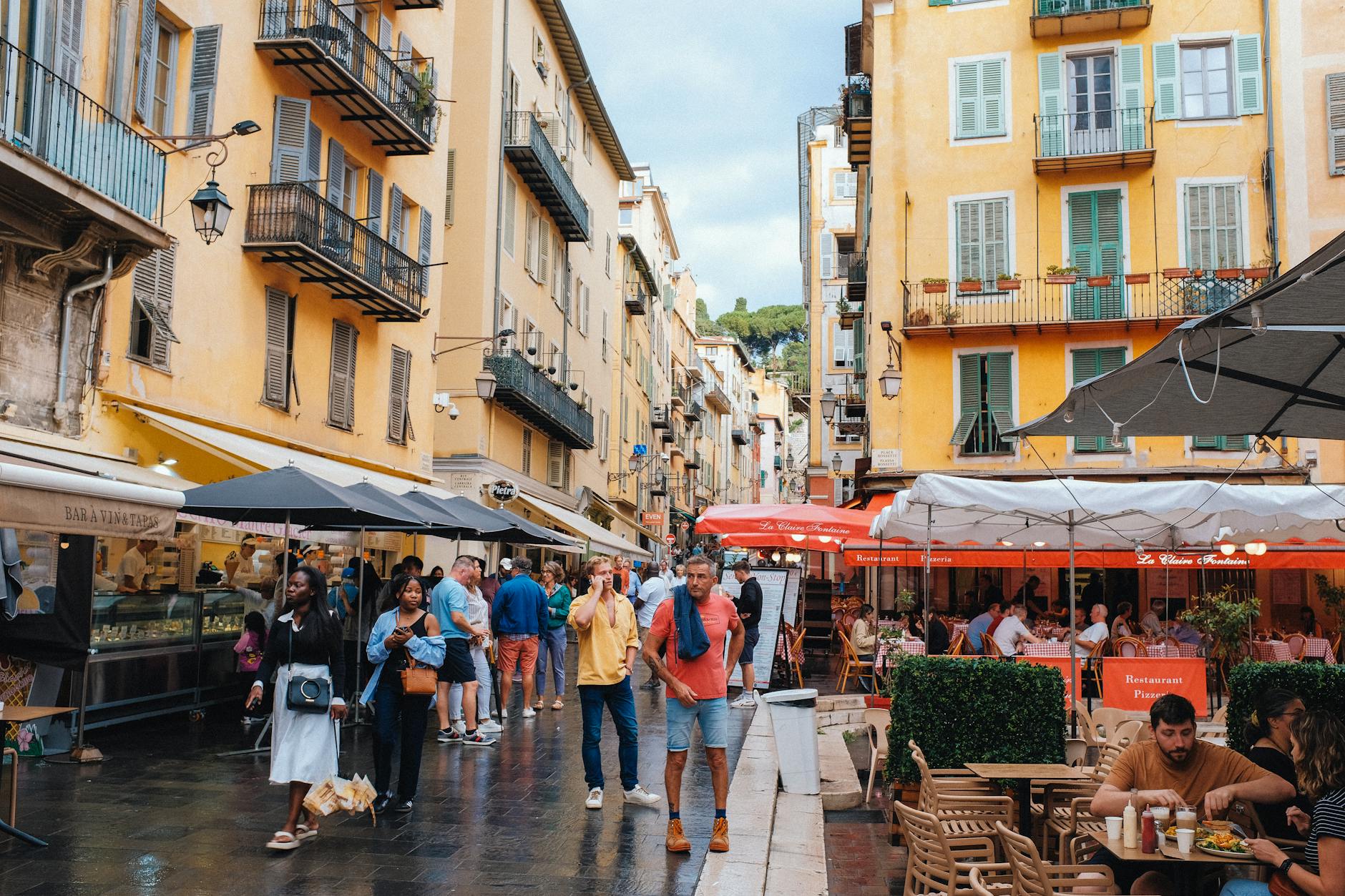
What Nice Does Better Than People Think
Nice is better than many people expect at supporting a complete city break. It is often discussed as if its main purpose were to facilitate more glamorous addresses nearby. That undersells it badly.
It is also better than people think at day structure. Breakfast, market wandering, museum time, afternoon reset, promenade walk, aperitif, dinner: this city understands a day that unfolds rather than attacks.
Another underrated strength is hotel payoff. The difference between a merely located hotel and a genuinely good base is significant here. A good room in the right zone can make Nice feel adult, elegant, and extremely easy.
The city is also better than people think at museum contrast. People arrive expecting coast and terraces. They often leave remembering Matisse, Cimiez, or the way the city widens beyond the postcard core.
Finally, Nice is better than many first-timers expect at making moderation feel smart rather than timid. You do not need to overprogram this city for it to feel full.
Best Time to Visit Nice
Best Overall Months
April, May, June, September, and October are the cleanest answers for most first-time visitors. The city is lively, the seafront is usable, and day trips remain easy without the whole coast feeling overcompressed.
Summer
Summer can be lovely, but it magnifies weak decisions. The beach becomes more crowded, hotel quality matters more, and the difference between a city-led stay and a generic sunny one becomes sharper.
Winter
Winter is more interesting here than many people assume, partly because Nice was historically shaped as a winter-resort town.[6] The city can feel elegant, calm, and less overdetermined by beach expectations. If you care more about urbanity than swimming, winter is viable.
Shoulder Season
Shoulder season is where Nice often feels most intelligent. You can still use the coast, but the city itself keeps its weight.
How Many Days You Need
One Full Day
Enough for a sketch, not enough for Nice to separate itself from the rest of the Riviera.
Two Full Days
The minimum good version. One day should belong mainly to Nice itself, and the second can either deepen the city or allow one carefully chosen regional excursion.
Three Full Days
Ideal for many first-time visitors. This gives room for a proper old-town and promenade day, a museum or hill district day, and one optional regional day without turning the trip into commuter tourism.
Four Days Or More
Very good if you want to enjoy the region without sacrificing Nice, or if you care about a more hotel-led and relaxed pace.
Where to Stay in Nice
The base matters because Nice can feel either polished and coherent or slightly generic depending on where you sleep.
Fast Answer
For most first-time visitors, stay in Carré d'Or, the central seafront edge, or a central neighborhood just outside Vieux Nice. These options usually give the right balance between walkability, hotel quality, and access to both beach and city life.
Neighborhood Decision Table
| Traveler Type | Best Area |
|---|---|
| First-time couple | Carré d'Or / central seafront edge |
| Maximum old-town atmosphere traveler | near Vieux Nice, but not necessarily deep inside it |
| Museum-and-city traveler | central city with easy tram or bus access to Cimiez |
| Riviera-base traveler | near Nice-Ville or central tram access, but still with quality surroundings |
| Cleanest all-round answer | Carré d'Or |
Carré d'Or
Best for: most first-time visitors. Why it works: balanced access to promenade, shops, restaurants, and the old town without requiring full commitment to any one mood. Tradeoff: less raw atmosphere than staying right against Vieux Nice. Best use: the safest elegant answer.
Vieux Nice Edge
Best for: travelers who want immediate character and market proximity. Why it works: you are close to Cours Saleya and old-town energy. Tradeoff: noise, tighter streets, and more tourist density. Best use: short stays where atmosphere genuinely matters more than room calm.
Seafront
Best for: travelers who want the promenade to be part of the daily ritual. Why it works: the emotional payoff is obvious, especially if the property is genuinely strong. Tradeoff: exposure, price, and the risk of paying mainly for view. Best use: travelers who will actually use the promenade multiple times a day.
Near Nice-Ville / Central Grid
Best for: more practical regional movement, easier station access, and often better value. Why it works: efficient without being dead, if chosen carefully. Tradeoff: less romance right outside the door. Best use: longer stays with one or two train-based excursions.
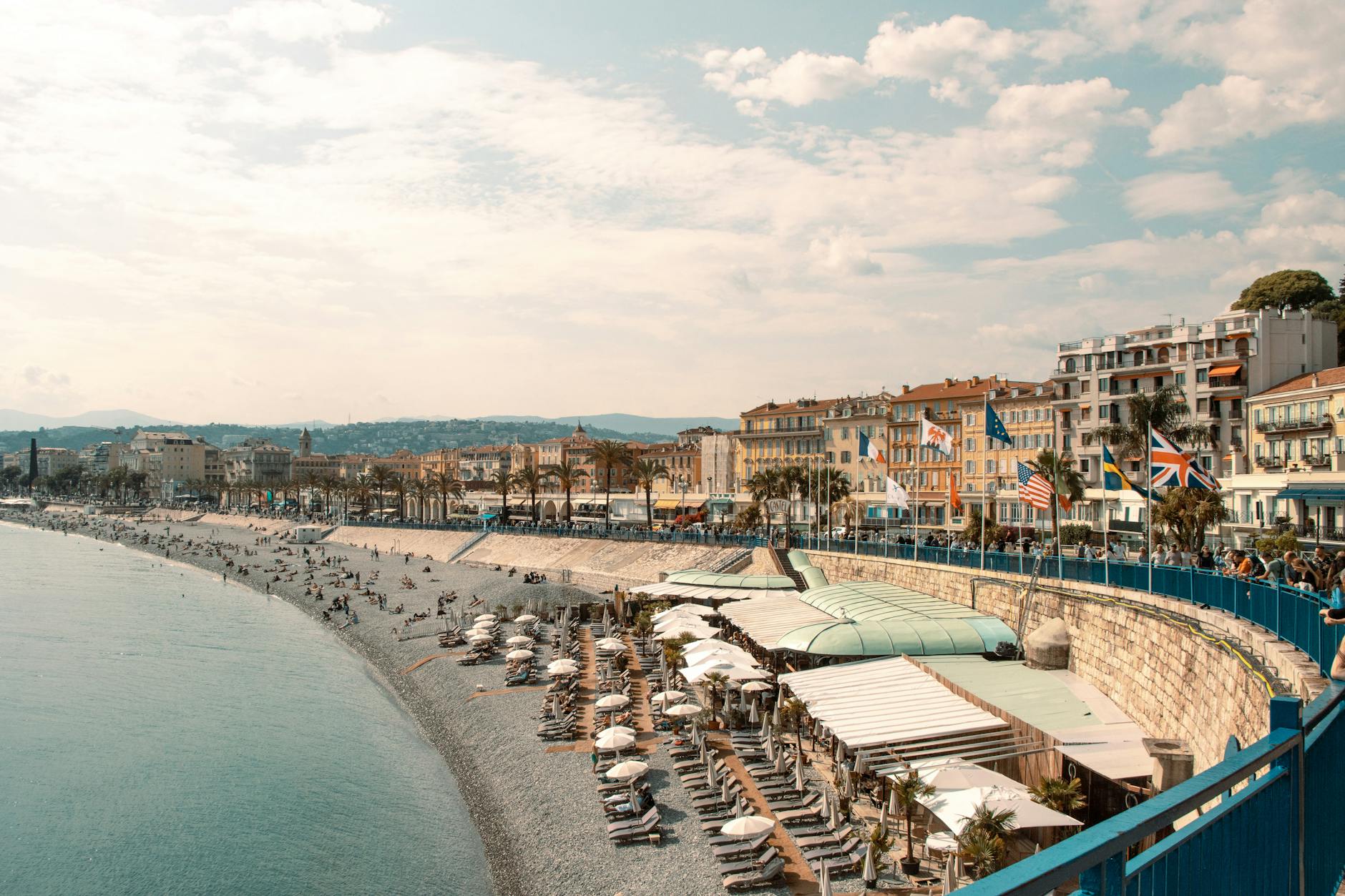
Area Profiles
Vieux Nice: best for atmosphere, food, and market-led city use.
Carré d'Or: best for balanced first-time convenience and a more polished urban feel.
Promenade / seafront: best for ritual walking and visual Nice.
Port side: best for a slightly less classic, more local-feeling extension of the center.
Cimiez: best for museums, hill calm, and the historical Nice beyond the postcard.
Neighborhood Guide: Where to Explore, Not Just Sleep
Vieux Nice should not be treated as one undifferentiated old quarter. Around Cours Saleya the city feels performative in the best sense: flowers, produce, terraces, noise, and tourist energy all concentrated together.[5] Deeper into the lanes, the mood becomes more residential, more shadowed, and sometimes less charming if you arrive at the wrong hour with the wrong expectation.
The promenade is not just a line on a map. It changes with the time of day. Morning promenade Nice feels athletic and orderly. Afternoon promenade Nice feels more exposed and scenic. Evening promenade Nice is where the city starts to persuade again.
Cimiez is where Nice stops being only Riviera Nice and becomes historical Nice. The hill, the museum, and the larger heritage site complicate the city in a healthy way.[7]
The port side is useful if you want a version of Nice that feels slightly less ceremonial than the main seafront. It is not a mandatory first-time district, but it often rewards travelers who want the city to feel lived in rather than presented.
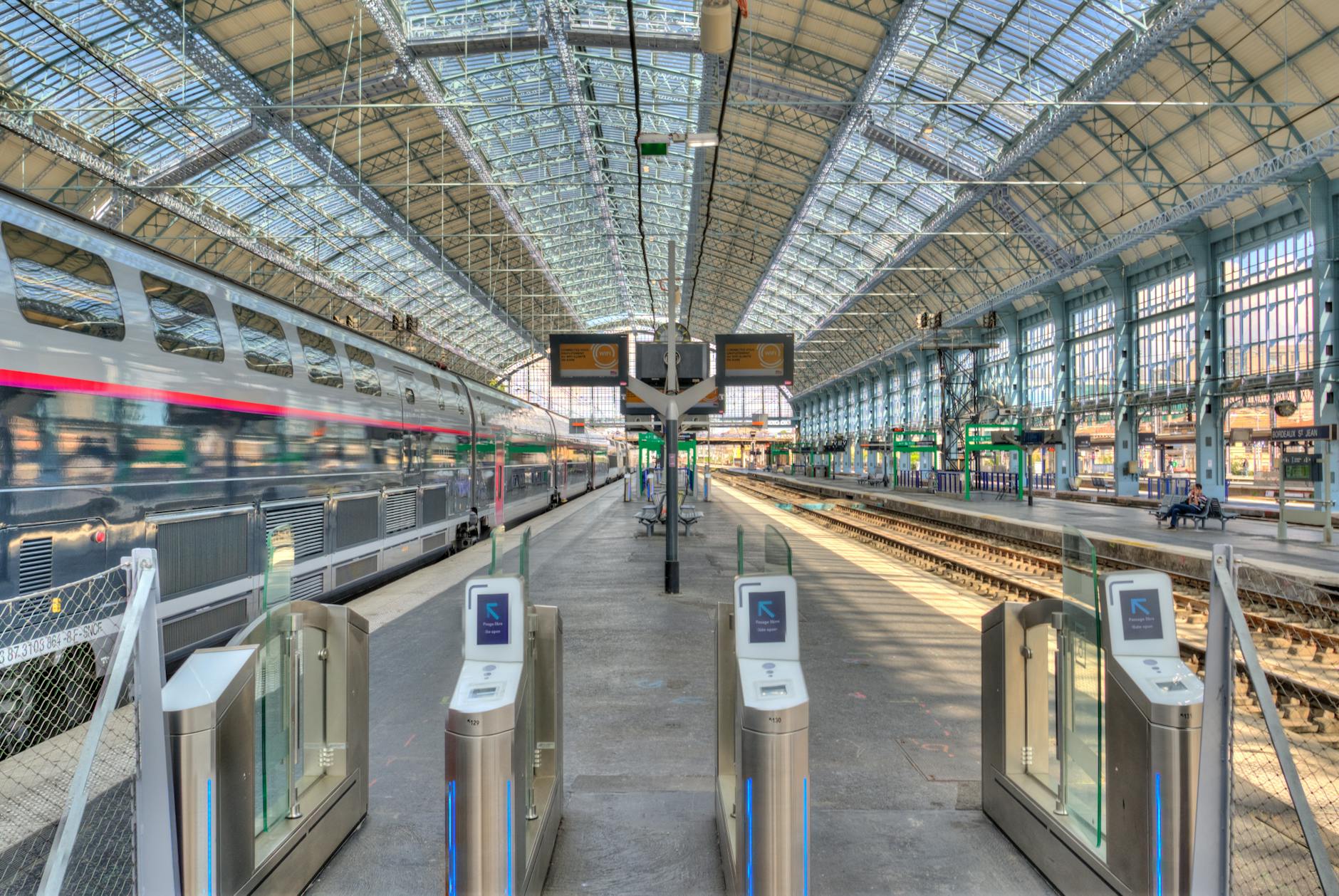
Beach, City, or Both?
Nice is often wrongly forced into a false choice between beach town and urban destination.
In reality, it is both, but not in equal measure for every traveler. The beach matters, but Nice is not the best destination on earth for the beach alone. The city's pebbled waterfront, the style of seaside use, and the promenade culture matter at least as much as sunbathing comfort.
This is why the strongest first-time Nice trip is usually city first, coast second, Riviera third. Let the beach and sea soften the stay, not define it entirely. Let the region widen the trip, not replace the city.
The Best Things to Do in Nice
Walk the Promenade des Anglais more than once and at different hours.[4]
Give Cours Saleya and the surrounding old-town quarter real time rather than symbolic time.[5]
Use at least one higher-ground cultural move, ideally Cimiez and the Matisse Museum, so the city opens beyond the waterfront.[7]
Spend time simply understanding the city grid between the old town and the promenade. Nice rewards the middle ground between famous names.
And if you do take a regional excursion, make it one that returns something to your understanding of Nice rather than draining energy from it.
Itineraries
Two Full Days
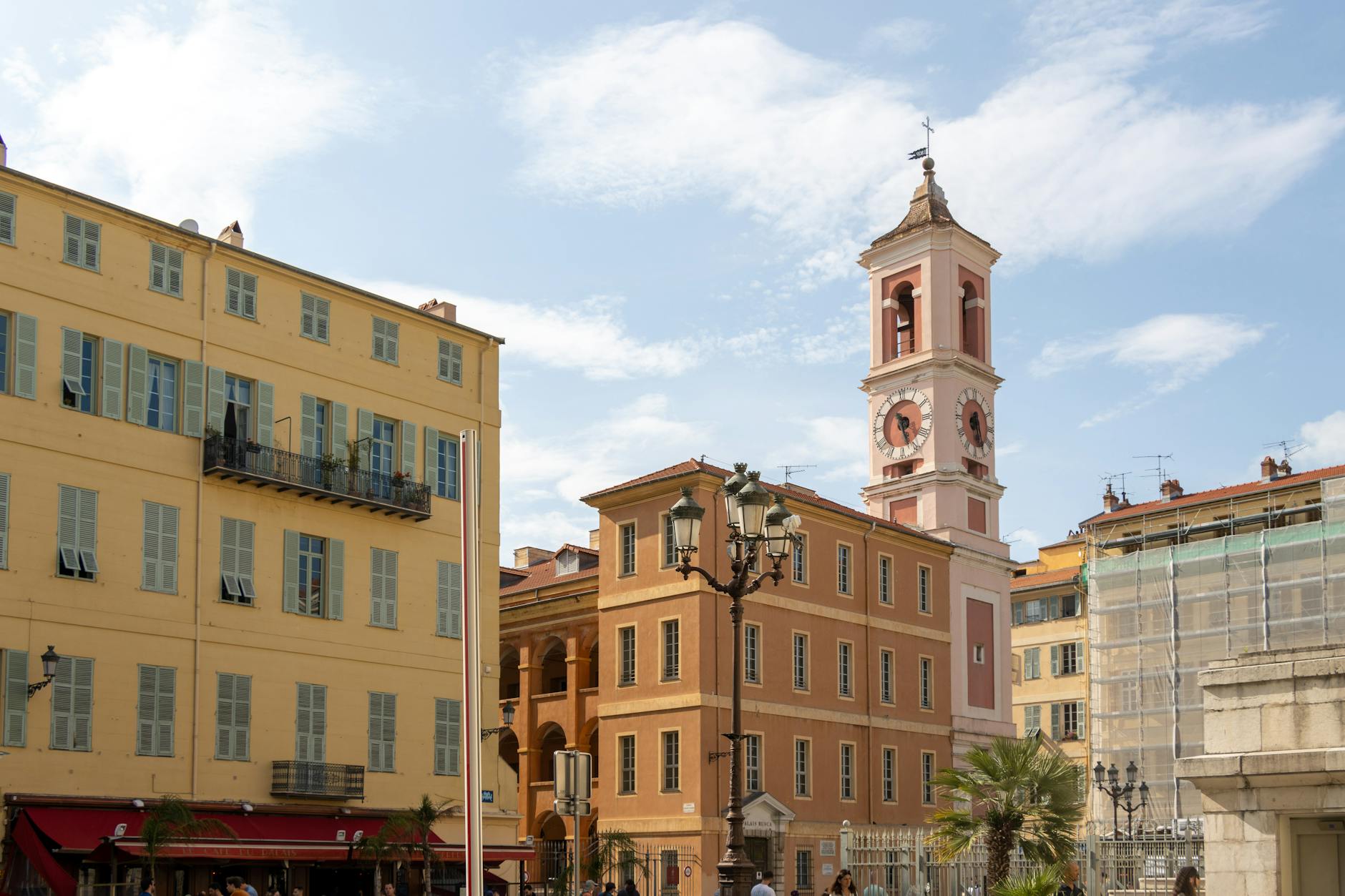
Day one: promenade, Vieux Nice, Cours Saleya, a slower lunch, afternoon reset, then evening return to the promenade or old town.
Day two: Cimiez and museum time, or one short and selective Riviera excursion with a real Nice evening on return.
Three Full Days
Day one: all-Nice orientation day. Day two: deeper Nice day with museum or port-side extension. Day three: optional regional day or a slower city-and-seafront day.
The key is that at least two of those days should feel unmistakably like Nice days.
Food and Drink
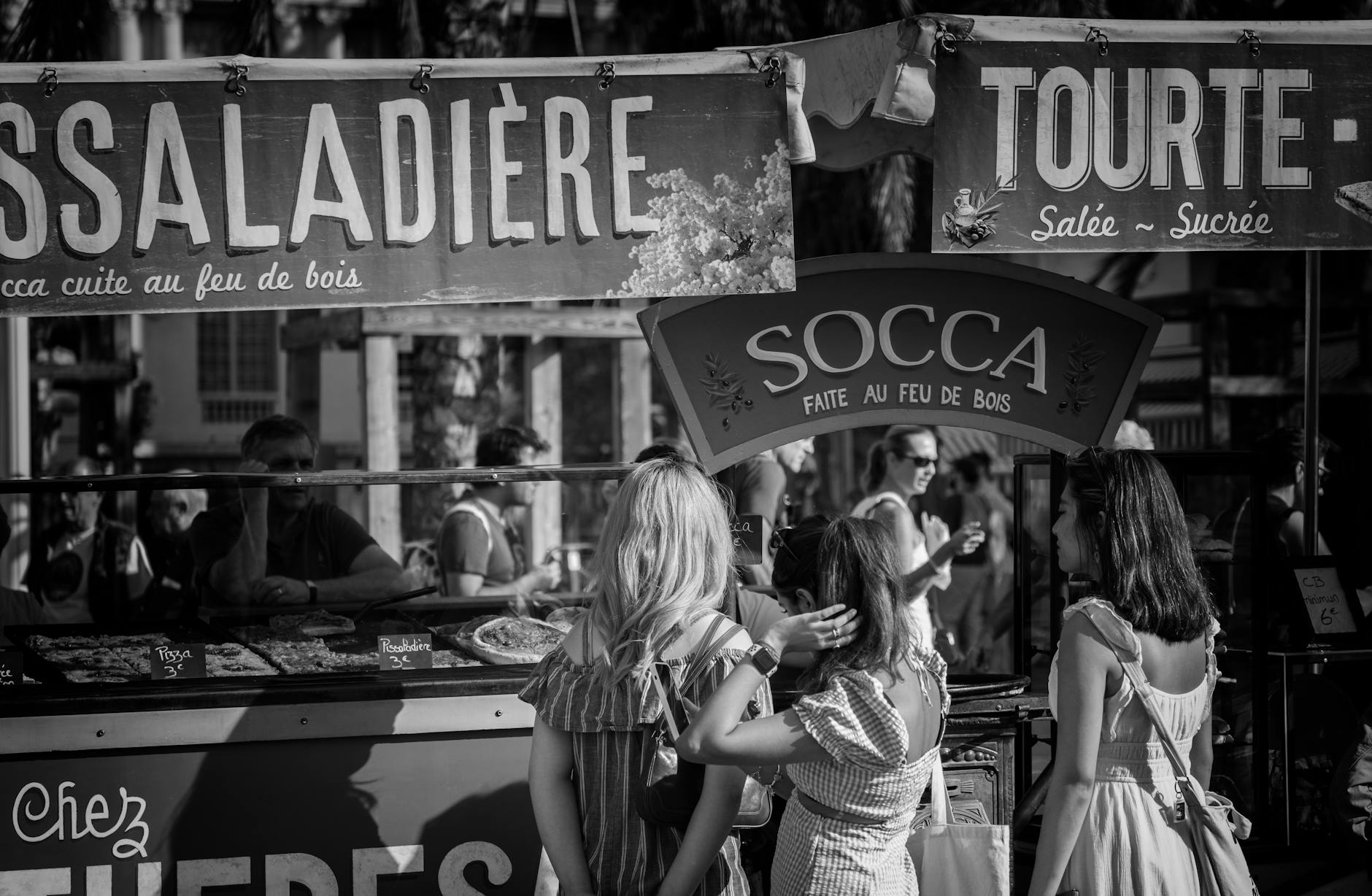
Nice is at its best when eating remains tied to place. Markets matter. Olive oil, produce, seaside appetite, and the old-town food rhythm matter. The mistake is eating only on the promenade for the view or only in the most tourist-heavy lanes for convenience.
Cours Saleya is an anchor because it joins spectacle and appetite in a way that still belongs to the city.[5] But the wider central grid matters too. Nice is good at lunches that reset the day rather than interrupt it and at evenings that drift from aperitif to dinner without theatrical strain.
This is also a city where moderation often wins. A long lunch, a quieter dinner, one good terrace, one market visit, one proper gelato or pastry stop: Nice does not need gastronomic overproduction to feel satisfying.
Getting Around
For most first-time visitors, the practical answer is walk a lot, use the tram intelligently, and take regional rail only when the day genuinely calls for it.[1][2]
The airport connection is one of the easiest in Europe if your hotel is sensibly chosen. Inside the city, the real question is not whether movement is possible. It is whether you are moving for good reasons.
Nice is the sort of destination where easy transit can tempt you into too much ambition. Resist that.
What To Skip
Skip treating every day as a Riviera collecting exercise.
Skip assuming a hotel on the water is automatically better than a better-run hotel one row back.
Skip reducing Vieux Nice to one crowded lunch and a few photos.
Skip ignoring Cimiez if you want the city to feel like more than coastline.
Skip pretending the beach alone is the point.
Common Mistakes
The first mistake is using Nice only for sleeping and transport.
The second is overvaluing day trips at the expense of the city.
The third is booking for a sea view when what you actually need is a stronger room and better location logic.
The fourth is never leaving the promenade mentally, even when leaving it physically.
The fifth is assuming Nice is simple because it is easy.
My Blunt Advice
If this is your first Nice trip, give the city the dignity of being the trip at least as much as being the base.
Walk the promenade repeatedly, not just once. Use Cours Saleya as part of a day rather than as a token stop. Let Vieux Nice be vivid but not total. Give Cimiez or one museum district enough room to complicate your picture of the city. And if you take a Riviera day trip, make sure you come back with enough energy and enough time for Nice to matter again that evening.
Nice does not need you to prove how efficiently you can use it. It needs you to stop underestimating how complete it already is.
Where Nice Fits in a France Trip
Nice is often sold as a special-case Riviera destination, as if its main relevance begins and ends with sunshine, sea views, and access to nearby glamorous names. That is too narrow. Nice matters in a France trip because it gives you a version of the country that is unmistakably French in infrastructure and civic competence, but also deeply Mediterranean, partly Italian in visual feeling, and structurally shaped by leisure, health, and winter-resort culture. That mix is unusually specific.
If Paris gives you scale, capital logic, and intellectual self-importance, Nice gives you proportion, light, and the knowledge that a city can be serious without becoming heavy. If Marseille gives you port-city force and rougher civic texture, Nice gives you composition and ease. If Bordeaux gives you harmony and polish, Nice gives you color, sea pressure, and a more daily relationship between tourism and life.
This makes Nice especially useful in a broader France itinerary when you want contrast without punishment. It is a city that can slow a trip down without becoming inert. It can offer a coastal chapter without becoming only a beach chapter. It can provide museum time, food rhythm, and neighborhood logic without asking for the total intensity of the country's larger urban heavyweights.
Travelers often misuse Nice by treating it as a neutral stop between "bigger" cultural cities and "prettier" Riviera villages. In reality, Nice is one of the strongest places in France for learning how to travel well at a Mediterranean pace. The right question is not whether Nice is more important than the places around it. The right question is whether your trip contains any other city that can do what Nice does. Usually the answer is no.
Nice Versus Barcelona
Nice and Barcelona share certain surface traits that make the comparison tempting: sea frontage, visual generosity, strong walking logic, old-town density, and international visibility. But they create pleasure in radically different ways, and understanding that difference helps travelers plan better.
Barcelona pushes at you. Its architecture announces itself, its fame is self-confident, and its scale encourages long landmark-driven days. Nice does almost the opposite. Its strengths are more distributed. The promenade, the old town, the market quarter, the hotel logic, the museum hill, the regional rail temptation, and the repeated return to the sea all matter together. Nice does not try to overwhelm you into admiration.
That distinction is crucial because some travelers arrive expecting Barcelona-level monument pressure or constant urban escalation. Then they misread Nice as slight. It is not slight. It is edited. The city relies less on singular headline sights and more on total fit. The room, the morning route, the lunch hour, the market street, the late light, and the ease of getting home all count.
Food rhythm differs too. Barcelona can feel expansive and extroverted. Nice often feels more measured. Appetite is woven into the day rather than staged as a climax. The sea is present in both places, but in Nice the seafront often functions less as spectacle and more as repeated ritual.
For many travelers, Nice works best when they stop comparing it to larger Mediterranean capitals and start asking whether the city is delivering exactly the kind of stay it promises. If you want a less punishing, more composed coastal city that still feels complete, Nice often wins on those terms.
First-Time Visitors Versus Repeat Visitors
Nice is generous to first-time visitors because its main logic is easy to grasp. You can land, take the tram in, understand the promenade quickly, find the old town, and feel oriented with much less effort than in many European cities of similar appeal. That is a real strength. But it also creates a subtle trap: first-timers often assume legibility equals completion.
On a first trip, people tend to focus on the obvious visible pleasures. The sea, the old town, the market, the evening promenade, maybe one museum, maybe one side trip. That can already make an excellent stay. But repeat visitors usually discover that Nice improves once you stop asking it to produce novelty and start asking it to produce quality of use.
That is when hotel choice becomes even more consequential. That is when the difference between a merely central street and a truly good central street starts to matter. That is when Cimiez can become more meaningful than another coastal transfer, and when a slow morning in Nice can beat a technically more impressive excursion.
Repeat visitors also tend to understand the city’s limits more gracefully. They stop demanding sandy-beach fantasy from a pebbled waterfront. They stop confusing movement with richness. They stop trying to "cover" the Riviera from one hotel. In exchange, Nice becomes more itself.
The best first-time travelers borrow this repeat-visitor mindset early. Treat Nice as a city with repeatable pleasures, not as a problem to optimize.
Cooler-Season Nice Versus Summer Nice
Summer makes Nice easier to desire and harder to use well. The light is strong, the water is inviting, and the city looks exactly like the image many people carried into the trip. But that same clarity encourages shallow planning. Too much time gets handed automatically to the seafront, too many hours disappear to beach logistics, and too many excursions seem irresistible simply because the weather permits them.
Cooler-season Nice often produces a smarter trip. Not necessarily a more photogenic one, and not a more swim-oriented one, but a more balanced one. The promenade becomes more walkable as actual urban space rather than as a hot-weather stage. Museum time feels proportionate instead of like a guilty interruption. Long lunches matter more. The city’s UNESCO winter-resort identity becomes easier to understand because you can feel how Nice was designed to be lived in, not only sunbathed in.[6]
Winter and late autumn also help clarify that Nice is not a beach town with some extra stone attached. It is a city built to support a cultivated seasonal stay. That reading can actually be cleaner when the whole coast is not shouting at you to maximize sea time.
Shoulder season remains the easiest recommendation because it gives you both sides: the city remains open and bright, the sea still matters emotionally, and movement is comfortable enough for repetition. But travelers who can only go outside peak months should not apologize for it. They are often getting the more intellectually legible Nice.
Why One Proper Nice Day Matters
Because Nice is easy to move through, travelers often assume it can be understood in passing. They arrive, walk the promenade, cross Vieux Nice, take market photos, maybe ride uphill or sit down for lunch, and conclude they have essentially done the city. They have not. They have only confirmed that the city is pleasant.
One proper Nice day is what separates a weak Riviera stop from a real city stay. A proper Nice day means the city itself is not being squeezed around transit errands. It means you are not mentally half-absent because of tomorrow’s excursion. It means the promenade, the market quarter, the central grid, and at least one slower chapter have time to connect.
This matters because Nice’s value is relational. The promenade means more when you have already seen the city behind it. Cours Saleya means more when it sits inside a day rather than standing alone as a market event. Cimiez means more when it interrupts and corrects your seafront assumptions. Even dinner means more when the city around it has become coherent.
Travelers who give Nice one proper city day usually make better decisions afterward. If they then choose a side trip, it feels additive rather than evasive. If they choose another all-Nice day, it feels deserved rather than cautious.
Why the Base Matters More Than Visitors Expect
Nice is one of those cities where hotel choice can quietly determine whether the whole stay feels elegant or generic. This is not only about luxury level. It is about alignment. A room that looks fine on a booking site can still place you in a stretch of the city that disconnects you from the daily rhythm you actually came for.
The right base in Nice does several things at once. It makes the promenade easy enough to use repeatedly rather than ceremonially. It keeps Vieux Nice close enough to matter without forcing you to live inside its most crowded and performative zones. It gives you a good return path at night. It preserves flexibility when a day trip becomes unappealing or weather changes the plan.
That is why Carré d'Or works so often: it gives a controlled version of Nice. You can move toward the sea, toward the old town, or toward the more practical central grid without letting any one mood consume the whole trip. Seafront hotels can be excellent too, but only if you will genuinely use the promenade as daily ritual and not merely pay for the idea of it.
Bad hotel logic in Nice usually takes one of three forms. Paying too much for view at the expense of overall quality. Booking only for station convenience and then wondering why the city feels flat. Or choosing deepest-old-town atmosphere and then being surprised that romance includes noise, crowds, and less room to reset.
Nice is forgiving in many ways. It is not especially forgiving about the base.
Day Nice Versus Evening Nice
Nice has one of the best day-to-evening transitions in Europe, but only if you let the city breathe enough for the shift to register. By day, Nice is crisp, bright, and visually explicit. The bay is almost too beautiful. The promenade is formal and open. The old town can feel hot, compressed, and exuberant. The city is legible in daylight.
By evening, some of that obviousness softens. The promenade becomes less about scenery and more about ritual. The old town becomes less about navigation and more about appetite. The central grid between them often becomes more attractive than it looked by day because it starts functioning socially instead of merely practically. Nice becomes harder to summarize and easier to enjoy.
This is one reason rushed day-trippers often misread the city. They get the visual Nice but not the atmospheric Nice. They see where the city is attractive, but not how it feels once the hours settle into sequence. A good Nice stay uses evening not as an afterthought but as a second reading.
That does not mean every night must be elaborate. In fact, Nice often works best when the evening is only moderately programmed. A walk, an aperitif, a dinner, another walk. The point is repetition, not performance.
Why the Riviera Should Not Own the Whole Trip
The surrounding region is real and seductive. This is not a case where the famous day trips are all overhyped. The trains are convenient, the names are familiar, and the coastline genuinely offers variety. The problem is not that the Riviera lacks appeal. The problem is that Nice can disappear under it if you do not choose limits.
A stay that spends every full day elsewhere leaves Nice acting as infrastructure. That may still produce a pleasant vacation, but it does not produce a meaningful memory of the city. Worse, it often leaves travelers believing Nice itself was thin, when in fact they never gave it enough uninterrupted time to accumulate.
The strongest Nice itineraries usually permit one, maybe two, regional moves depending on the total length of the trip. But those moves should be chosen for fit, not for bragging rights. If a side trip drains the evening, destroys the food rhythm, or keeps you from having a real second Nice day, it may not be a good use of the city no matter how photogenic the destination looks online.
Nice is improved by regional context. It is diminished by regional greed.
Why Food Is Structural, Not Decorative
Food in Nice is not only about famous dishes or pretty terraces. It is part of how the city functions. Markets matter because they anchor the day. The old town matters because it concentrates appetite and movement. Lighter lunches matter because they preserve the afternoon. Aperitif matters because evening in Nice is often about tempo rather than drama.
This is why weak Nice trips often involve strangely forgettable meals. Travelers either eat for view, eat for convenience, or eat too late after exhausting themselves elsewhere. The city then seems nice enough but not especially nourishing. Strong Nice trips tend to have the opposite structure: the market quarter is used properly, lunch is allowed to reset the day, and dinner belongs to an area chosen for mood rather than desperation.
The city is also a reminder that moderation can be a travel skill. You do not need constant rich meals to feel satisfied here. A market breakfast, a composed lunch, something simple in the late afternoon, and one properly chosen dinner can make the stay feel better than a heavier, more performative route.
When food is used structurally, Nice becomes deeper. When it is used decoratively, Nice can start to feel like scenery with menus attached.
Why Nice Often Works Better Than It Sounds
Nice has a peculiar reputation problem. It is so famous, so accessible, and so visually easy to sell that some serious travelers start distrusting it before they arrive. They assume it must be shallow because it is beloved, or generic because it is easy, or only beautiful in the laziest possible way.
Then they get there and discover that Nice, while not difficult, is not empty. The city has enough depth, enough historical logic, enough day structure, and enough neighborhood variation to support a real stay. Its calm is not a lack of substance. It is one of the things that makes the place skillful.
This is part of Nice’s quality: it does not need adversity to feel earned. You do not have to fight the city in order to respect it. For some travelers, that is unsettling at first. They are used to measuring depth by friction. Nice asks for a slightly more mature standard: can a place be elegant, useful, and still memorable? Yes.
Why Nice Often Improves on the Second Visit
First visits to Nice are often strong but slightly over-obvious. The traveler does what the city clearly presents: promenade, old town, market, maybe one museum, maybe one regional ride. There is nothing wrong with that. But it often leaves the sense that the city was excellent without being fully inhabited.
The second visit is where many people realize how much quality Nice can hold. They stay better. They overmove less. They understand which side trips are worth the cost and which are not. They make peace with the fact that the beach is part of the stay rather than the reason for it. They return to the promenade at hours that are no longer strategic, only pleasurable.
Repeat visits are also when Nice’s quieter strengths come forward: the central streets between headline zones, the comfort of a good hotel, the way the city absorbs weather shifts, the way a museum morning can improve a whole day, the way the town becomes more Riviera by being less frantic about proving it.
Not every city improves on a second visit. Some are mostly solved at first contact. Nice is not like that. It gains dignity once you stop asking it to perform surprise and let it deliver consistency.
How Nice Changes Over the Course of a Stay
On arrival, Nice often feels almost suspiciously manageable. The airport is easy. The tram works. The sea appears quickly. The old town is findable. The promenade explains itself instantly. The traveler thinks: this will be simple. That thought is both true and dangerous.
During the first full day, Nice usually confirms the obvious beauty but not yet the deeper logic. The promenade is lovely. Vieux Nice is vivid. Lunch is pleasant. The city feels successful. But it may still feel somewhat like a stage on which a good vacation will happen rather than the substance of the vacation itself.
By the second day, a stronger version of Nice often begins to emerge. You know which route back to the hotel feels right. You know whether the old town is better in the morning or evening for you. You understand whether the promenade is a spectacle, a reset, or both. If you have given Cimiez or another quieter chapter real time, you have also started to see how much more than coast the city contains.
By the end of a good stay, Nice generally feels less like a famous place and more like a usable one. That is its highest achievement. It stops being "the Riviera city everyone knows" and becomes your own working version of a Mediterranean urban life. That transformation is subtle, but it is the difference between a pleasant stop and a memorable trip.
Source Notes
- 1. Nice Cote d'Azur Airport, official public-transport page: [https://en.nice.aeroport.fr/acces/transports-en-commun](https://en.nice.aeroport.fr/acces/transports-en-commun)
- 2. Lignes d'Azur, official airport-access page: [https://www.lignesdazur.com/fr/aeroport](https://www.lignesdazur.com/fr/aeroport)
- 3. Lignes d'Azur, official fares and purchases FAQ: [https://www.lignesdazur.com/en/faq-fares-purchases-subscriptions-and-points-of-sale](https://www.lignesdazur.com/en/faq-fares-purchases-subscriptions-and-points-of-sale)
- 4. Nice Cote d'Azur Tourism Office, official Promenade des Anglais page: [https://www.explorenicecotedazur.com/en/fiche/promenade-des-anglais-en/](https://www.explorenicecotedazur.com/en/fiche/promenade-des-anglais-en/)
- 5. Nice Cote d'Azur Tourism Office, official Cours Saleya page: [https://www.explorenicecotedazur.com/en/culture/cours-saleya/](https://www.explorenicecotedazur.com/en/culture/cours-saleya/)
- 6. UNESCO World Heritage Centre, Nice, Winter Resort Town of the Riviera: [https://whc.unesco.org/en/list/1635/](https://whc.unesco.org/en/list/1635/)
- 7. Ville de Nice, official Musee Matisse page: [https://www.nice.fr/fr/culture/musees-et-galeries/musee-matisse](https://www.nice.fr/fr/culture/musees-et-galeries/musee-matisse)