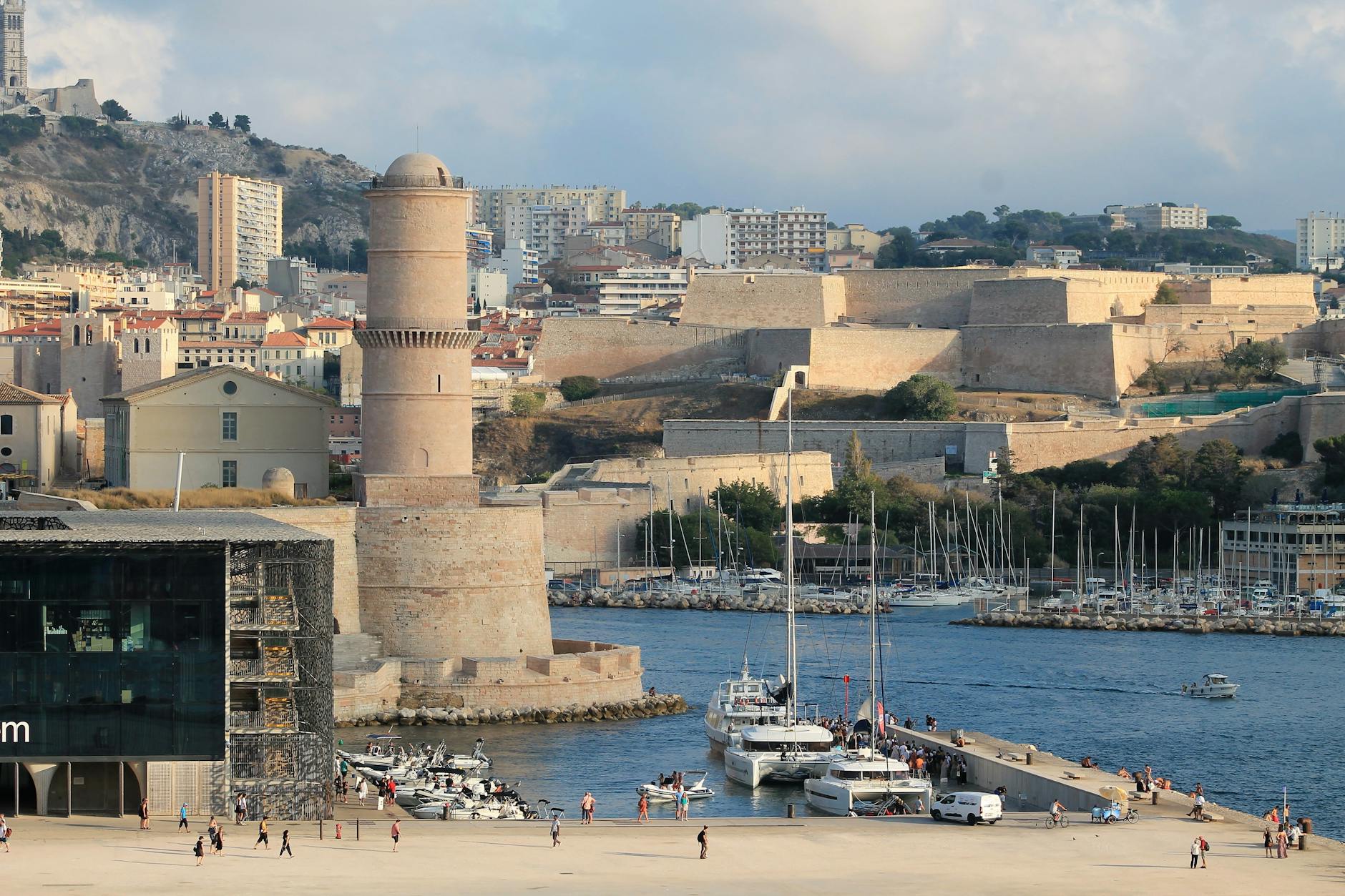
Marseille is one of Europe's most frequently misdescribed major cities. Some people sell it through romance about grit, multicultural energy, disorder, sea light, and danger just enough to make the city sound exciting. Others reduce it to warnings and roughness, as if the only intelligent travel posture were suspicion. Both views are lazy. Marseille is neither a fantasy of chaos nor a problem to be managed. It is a very old Mediterranean port city with several different urban worlds pressed together along a complicated coastline.
Start Here
That complexity is exactly why the city can be so rewarding. Marseille can give you the Vieux-Port, Notre-Dame de la Garde, Le Panier, Cours Julien, sea crossings to Frioul or If, serious food, beautiful late-afternoon harbor light, and a far less polished but often more memorable version of urban France than Paris, Bordeaux, or Lyon. But it does not hand those pleasures to you in one clean package. The city needs selection.
The first mistake travelers make is reacting to Marseille's reputation instead of planning for its reality. They arrive tense, or over-romanticized, and keep reading every street as confirmation of a prewritten story. That is a poor way to see any city, and especially poor here. Marseille works best when you stop asking whether it is safe, rough, authentic, beautiful, or chaotic in the abstract, and start asking which part of Marseille you are actually in and what that part is for.
The second mistake is trying to consume too many versions of the city in a short stay. Marseille is not one continuous mood. The Vieux-Port is not Le Panier. Le Panier is not Cours Julien. Notre-Dame is not the seaside. The islands are not the center. If you try to do all of them in one long heroic day, Marseille often starts to feel like a disorganized blur. If you split the city into cleaner chapters, it becomes legible and vivid.
This is also a place where sea logic matters. Marseille is not just "a city near the sea." The sea is one of the city's emotional and practical dimensions. The old port, the ferries, the island crossings, the calanque pressure, the light off the water, and the view from the basilica all help explain why Marseille feels so unlike inland France. But again, this is strongest when sequenced properly. One urban day, one sea-facing day, one neighborhood-and-food day. That shape works.
Marseille rewards the traveler who builds a route instead of an argument. Choose the base carefully. Use the harbor as orientation rather than magnet for every hour. Give one district real time. If you go out on the water, let it be a real chapter rather than a symbolic checkbox. On those terms, Marseille can be one of France's most memorable city breaks.
The city in one sentence: Marseille is a layered port city where the best first trip comes from balancing Vieux-Port, Le Panier, Cours Julien, Notre-Dame, and the sea with disciplined neighborhood sequencing instead of reacting to stereotypes or trying to force the entire coastline into one stay.
Quick Verdict
Best for: couples, solo travelers, repeat France visitors, food travelers, sea-loving city travelers, and anyone drawn to cities with friction, character, and genuine local force.
Not ideal for: travelers who want immaculate urban polish, people who dislike visible disorder, or anyone who expects one neat postcard center to explain everything.
Ideal first visit: 2 to 3 full days.
Minimum worthwhile stay: 2 full days, if one of them gives the sea or islands real space rather than squeezing them around city errands.
Best overall months: April, May, June, September, and October.
Best winter case: a city-and-food break with museums, harbor walking, and a moodier version of Marseille rather than a sea-swimming one.
Biggest planning mistake: trying to do too many incompatible parts of Marseille in one day.
One thing to prioritize: the base. Marseille changes drastically depending on whether you sleep by the Vieux-Port, higher up, or in a more local-feeling district.
One thing to leave flexible: sea time. Weather, wind, and energy affect Marseille more than first-timers often expect.
The blunt version: Marseille is one of France's most vivid city trips if you sequence it properly, and one of the easiest cities to make feel messy and unsatisfying if you try to sample all of it at once.
Who Will Love Marseille?
Marseille suits travelers who like cities that still seem to belong to themselves. This is not a polished destination built entirely around the comfort of outsiders. That is part of its attraction. The city feels lived in, argued over, and used hard.
Couples can do especially well here if they want a Mediterranean city break with more edge than polish. A strong Marseille stay might include harbor walking, one real fish-focused meal, a Notre-Dame chapter, a neighborhood evening in Cours Julien or nearby, and maybe a boat or island outing. The city gives romance, but a more weathered kind.
Solo travelers also tend to do well if they like urban complexity and know how to move decisively. Marseille rewards people who can choose their areas, keep a clean route, and enjoy the fact that the city often feels more local than visitor-facing. It is a city where solo wandering can be excellent, but not directionless wandering.
It is also ideal for travelers who care about port cities specifically. Marseille has one of the oldest and strongest urban-sea identities in Europe. You feel it in the geography, the food, the views, the air, and the social mix.
The city is less ideal for travelers who need constant urban reassurance. Marseille is better if you enjoy some contradiction.
Marseille at a Glance
| Question | Practical Answer |
|---|---|
| Main airport | Marseille Provence Airport |
| Best airport public move | airport shuttle bus to Saint-Charles |
| Airport-to-city timing | roughly 30 to 50 minutes to Saint-Charles in normal traffic[1] |
| Best first-time base | Vieux-Port side or a well-chosen nearby central district |
| Best atmospheric district | Le Panier, but not always the smartest place to sleep |
| Best evening district | Cours Julien / Notre-Dame-du-Mont side |
| Public transport backbone | metro, tram, bus, walking |
| Signature viewpoint | Notre-Dame de la Garde |
| Signature cultural anchor | Mucem |
| Best sea extension | Frioul or Château d’If |
| Best pass worth knowing | Marseille CityPass |
| Car needed? | No |
| Currency | Euro |
| Emergency number | 112 |
| Tap water | Safe to drink |
| Power plugs | Type C and E |
2026 Visitor Notes
The Airport Shuttle Is Still The Practical Default
Marseille Airport’s official bus information confirms the A1 shuttle to Marseille Saint-Charles, with departures throughout the day and an estimated travel time of 30 to 50 minutes in normal traffic.[1] For most first-time visitors, this remains the cleanest airport move.
RTM’s 24-Hour Pass Is Straightforward And Good Value
RTM’s official fare page lists the standard `Pass 24h` at `€5.20`, valid for unlimited travel for 24 hours from first validation on the blue zone network.[2] This is often the simplest answer if you know you’ll use transit more than a couple of times.
The CityPass Is Broad Enough To Matter
Marseille Tourism’s CityPass page says it includes unlimited public transport, a small-train ride, a hop-on hop-off bus, and either a Frioul/If crossing or a Cosquer Méditerranée entry depending on the version and choices made.[3] That is a real bundle, not a symbolic one.
Notre-Dame Is Still The City’s Defining Viewpoint
The official tourism page describes Notre-Dame de la Garde as the most visited monument in Marseille and emphasizes its 360-degree panorama over the city and sea.[4] A first trip that skips it is usually missing one of the city’s clearest explanations of itself.
Mucem Should Be Treated As A Real Visit, Not A Decorative Stop
Mucem’s own visitor page makes clear that the museum spreads across multiple sites, typically open from `10:00 to 18:00` and closed on Tuesdays.[5] It works best when given proper time rather than squeezed between harbor photos.
Le Panier Is Essential, But It Is Not The Whole Emotional Story
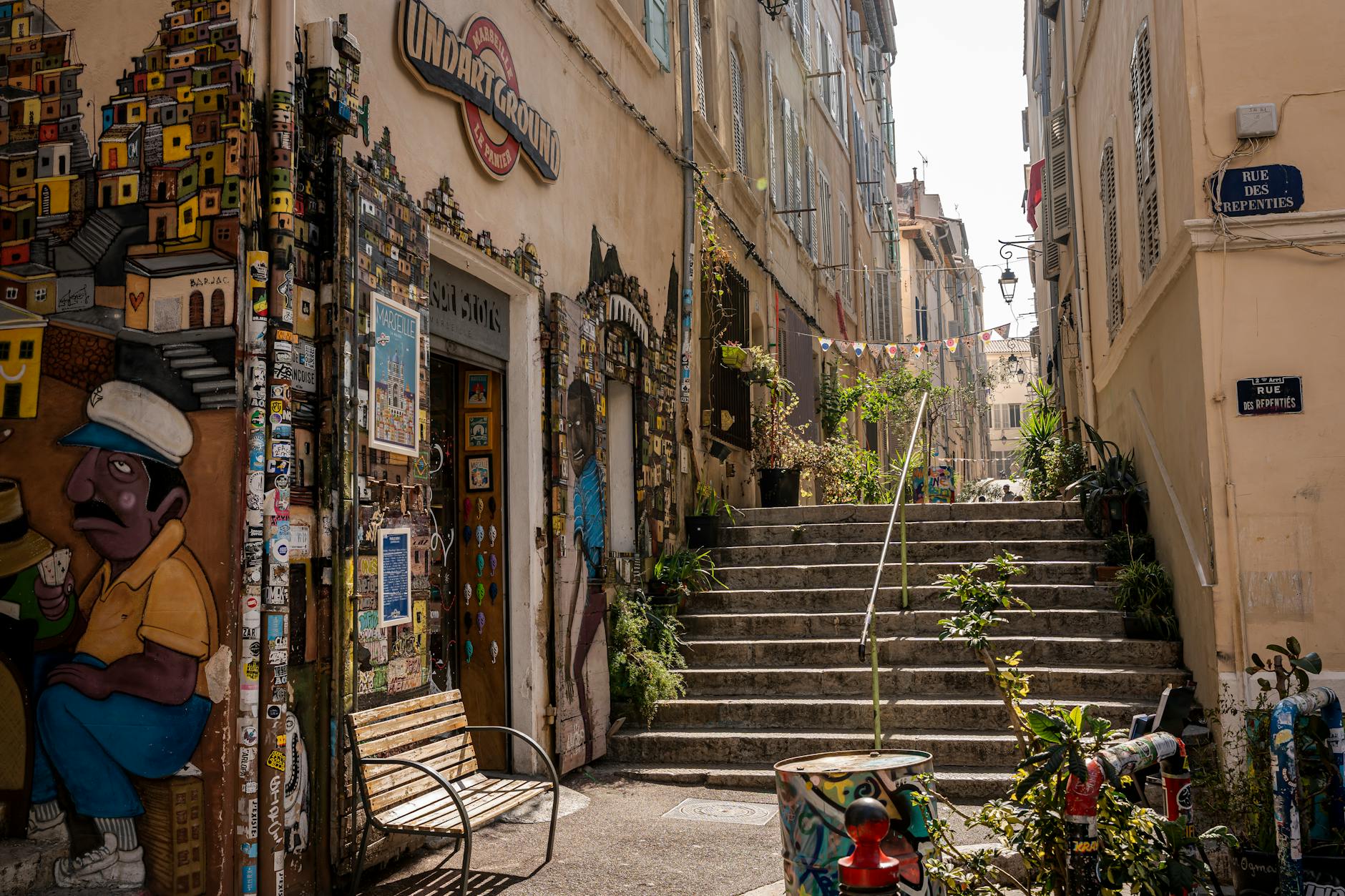
Marseille Tourism’s Panier page describes it as the city’s oldest district, full of narrow streets, stairs, terraces, and color.[6] That is all true. It is also why travelers should use it as one chapter of Marseille, not as a complete substitute for the rest of the city.
How to Understand Marseille
Marseille works through five forces.
The first is the port. This is a harbor city in the deepest sense, not simply a city with a nice waterfront.
The second is district separation. Marseille’s areas carry radically different energies, and the city is better once you stop pretending they blur smoothly together.
The third is the sea edge. Islands, calanques pressure, ferries, salt, wind, and harbor light all change the city’s emotional range.
The fourth is Mediterranean roughness. Marseille is beautiful in places and abrasive in others. That mix is structural, not accidental.
The fifth is public life. Terraces, markets, bars, stairways, ferries, and open air matter here more than in many French cities.
The Five Marseilles A Visitor Actually Meets
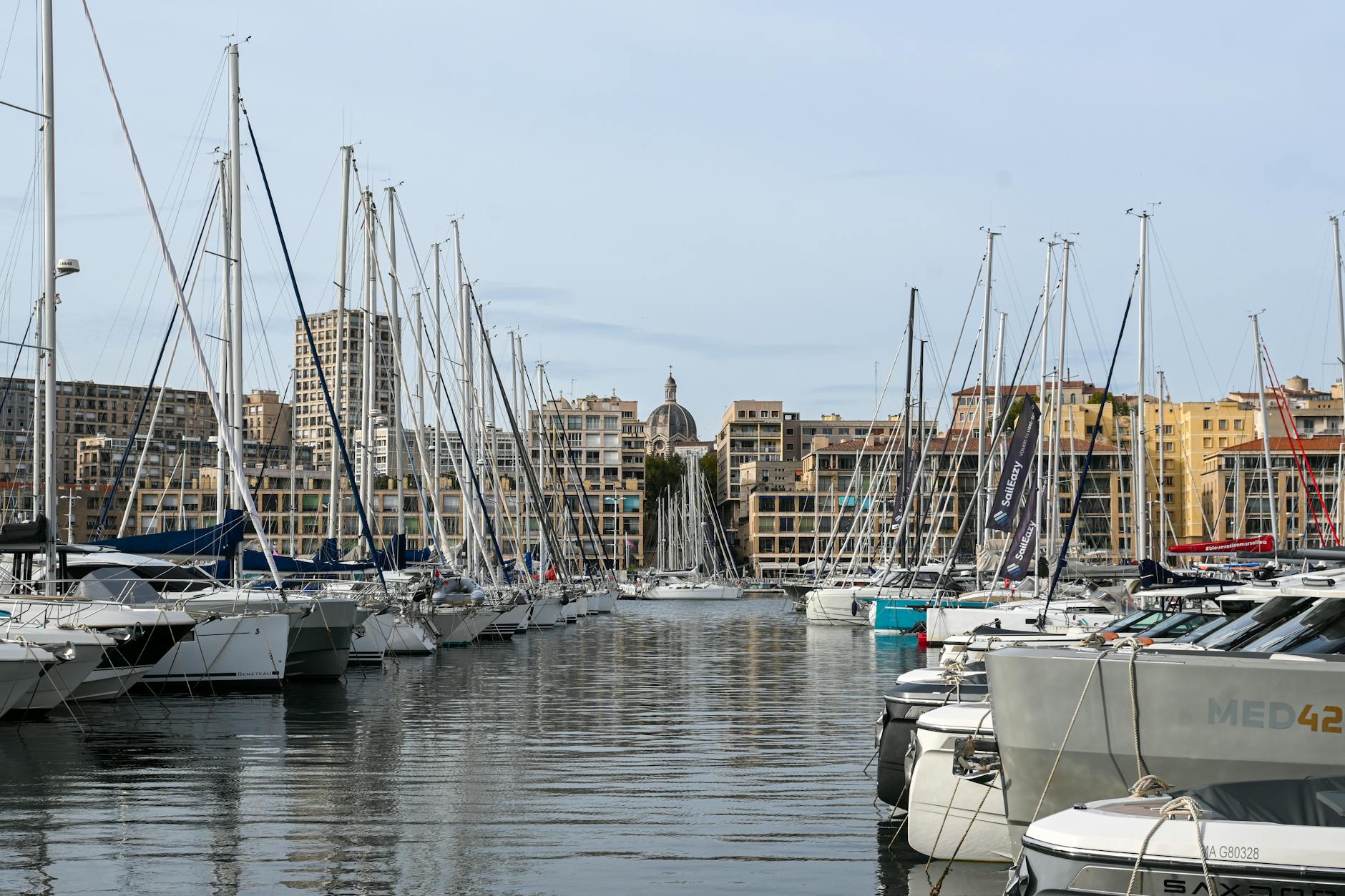
Vieux-Port Marseille: the city’s anchor, orientation device, and most obvious first reading.
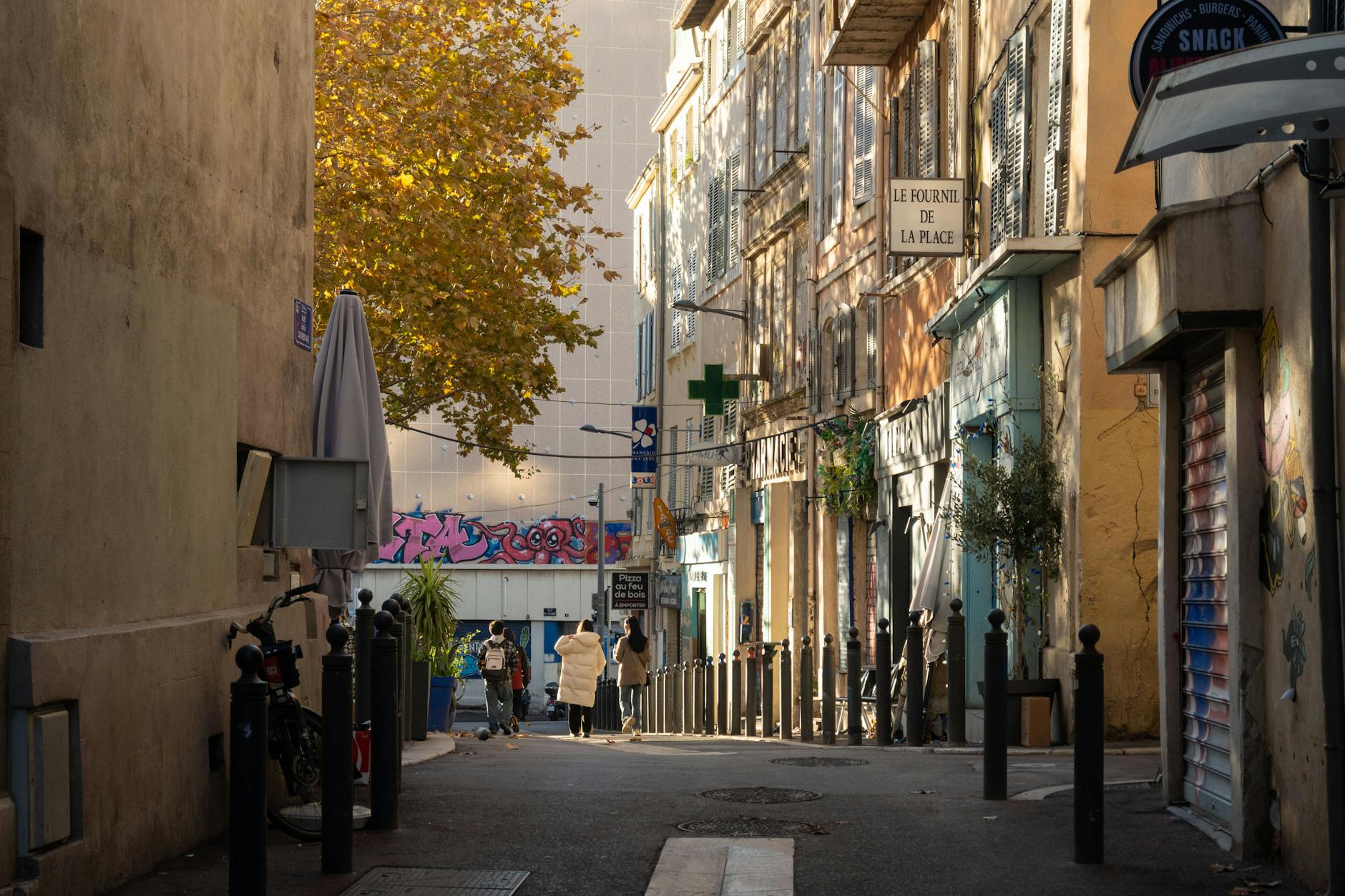
Le Panier Marseille: the oldest district, full of stairs, color, craft, and a tighter old-city grain.[6]
Cours Julien Marseille: artists, bars, street art, and one of the city’s strongest evening zones.[7]
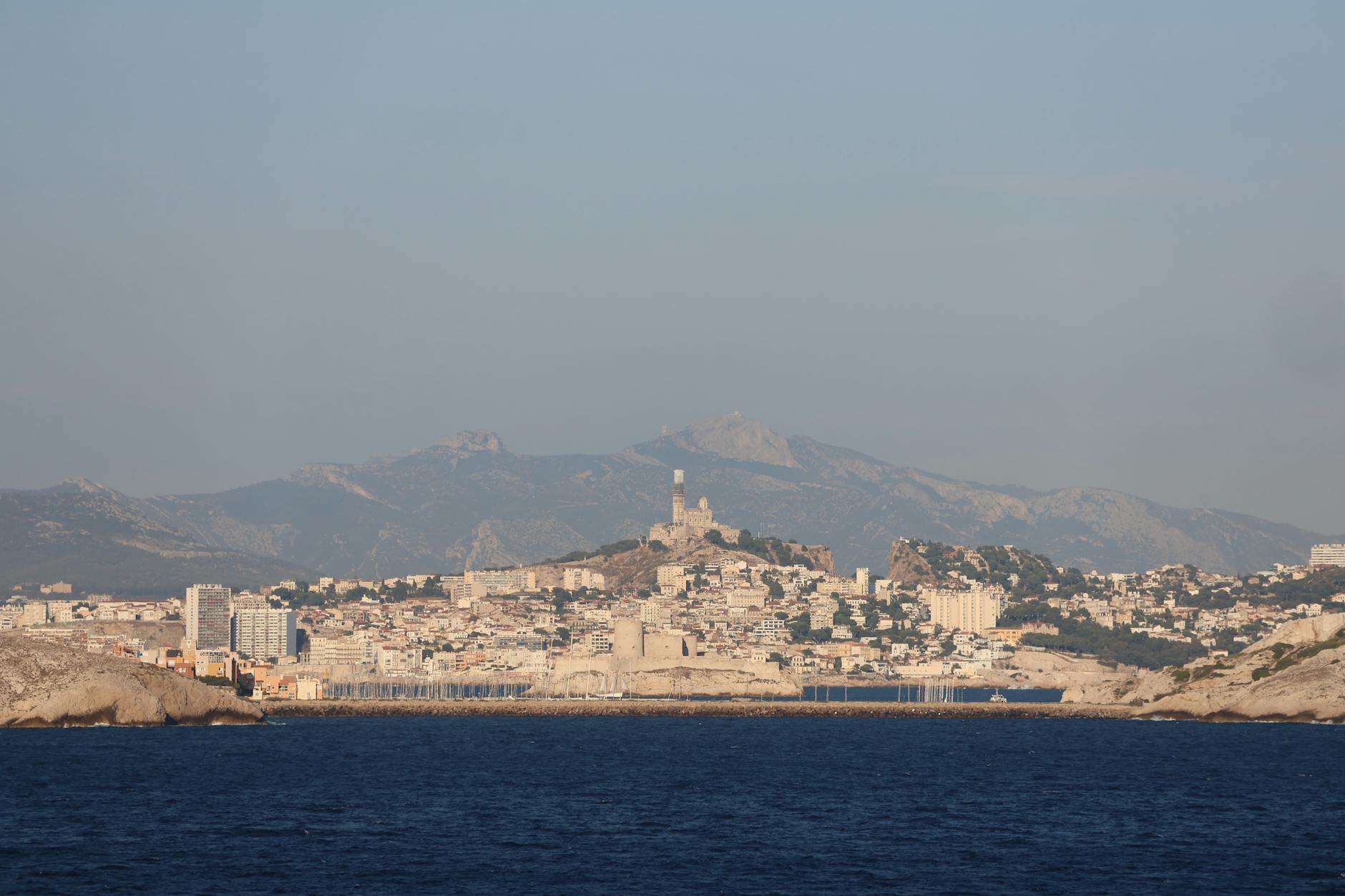
Notre-Dame Marseille: the symbolic and visual summit, where Marseille’s whole geography snaps into focus.[4]
Sea Marseille: Frioul, If, ferries, harbors, and the version of the city that only makes sense once you leave the street grid behind.[8]
The Main Mental Shift
Do not ask, “What are the top sights in Marseille?” Ask, “Which Marseille am I using today?” Harbor Marseille, hill Marseille, old-district Marseille, sea Marseille, nightlife Marseille. That question prevents the city from dissolving into contradiction.
What Marseille Does Better Than People Think
Marseille is better than many first-time visitors expect at urban vividness. Plenty of coastal cities become soft or generic around tourism. Marseille stays forceful.
It is also stronger than people think at balancing city and sea. The port, the ferries, and the islands do not sit outside the city experience. They help define it.
Another underrated strength is how much atmosphere survives imperfection. Marseille does not need smoothness to be compelling.
The city is also very good at food with real place behind it. Fish, North African influence, Provençal crossover, everyday bars, and harbor proximity create a much more specific culinary character than people who only know bouillabaisse clichés expect.
Finally, Marseille does late-day beauty extremely well. Harbor light, sea wind, and elevation shifts often make the city more convincing in the afternoon and evening than at first arrival.
Best Time to Visit Marseille
Marseille is a year-round city, but not a season-neutral one. Light, sea use, and comfort change the entire stay.
Best Overall Months
April, May, June, September, and October are the strongest first-visit windows. The city is more comfortable, the sea logic still works, and long outdoor days remain appealing.
Summer
Summer can be excellent, but weak route planning gets punished more quickly. Heat, crowded waterfronts, and badly timed climbs all matter more.
Autumn
Early autumn is one of Marseille’s best seasons. The sea still counts, but the city often feels more navigable and less strained.
Winter
Winter Marseille is moodier and more urban. It can be very good for food, museums, and harbor walking, though not every sea plan will feel worth forcing.
Spring
Spring is often ideal. The city opens outward, terraces work, the islands become tempting again, and the whole harbor logic is easier to love.
Month-by-Month Guidance
January: moody, urban, and good for a food-and-museum break. February: still subdued, with clearer local rhythm. March: transitional and increasingly attractive. April: one of the strongest overall choices. May: excellent. June: bright, lively, and very strong for first-timers. July: vivid, but more demanding. August: workable, though crowding and heat matter more. September: one of the smartest months to go. October: often ideal. November: softer and more harbor-led than sea-led. December: atmospheric if your expectations are city-first.
How Many Days You Need
One Day
Enough for a vivid first impression of the harbor and perhaps Notre-Dame. Not enough to understand the city’s internal shifts.
Two Days
The minimum respectable stay. One day should belong mostly to Vieux-Port, Le Panier, and a clear central route. The other should give either the sea or one more distinct neighborhood real time.
Three Days
Ideal for a first visit. This gives enough room for one sea extension, one district-led evening, and one cultural anchor without forcing Marseille into a blur.
Four To Five Days
Very good if you want calanques or more island time without hollowing out the city itself.
One Week
Excellent for a wider Provence-and-coast route, provided Marseille still gets several direct days.
Where to Stay in Marseille
Where you stay matters because Marseille can feel either fascinatingly layered or annoyingly scattered depending on the base.
Fast Answer
For most first-time visitors, stay near the Vieux-Port, on its better-positioned edges, or in a central district with easy harbor access and evening options. Stay deep in more local districts only if you understand exactly what tone you want.
Neighborhood Decision Table
| Traveler Type | Best Area |
|---|---|
| First-time couple | Vieux-Port edge or polished central base |
| Nightlife-first traveler | Cours Julien / Notre-Dame-du-Mont side |
| Sea-and-harbor traveler | Vieux-Port with easy ferry logic |
| Culture-first traveler | center with easy Mucem / harbor access |
| Repeat visitor | more local-feeling central neighborhood |
| Rail-dependent traveler | carefully chosen Saint-Charles-adjacent or harbor-connected base |
Vieux-Port Edge
Usually the safest strong answer. You get orientation, activity, and good access to many first-time essentials without overcomplicating the stay.
Cours Julien / Notre-Dame-du-Mont Side
Best if bars, street life, and a more locally energetic Marseille matter to you.
Le Panier
Atmospheric, historic, and rewarding, but not always the most operationally smooth place to sleep.
Saint-Charles Side
Sometimes practical, sometimes too functional. Choose it for a specific property, not because the map suggested it.
Area Profiles
Vieux-Port
The city’s front room and still the best first orientation point.
Le Panier
The oldest Marseille and one of its most photogenic districts, but also a place of stairs and deliberate wandering.[6]
Cours Julien
The artistic and street-art district, stronger at night and socially richer than many first-timers expect.[7]
Mucem / Joliette Side
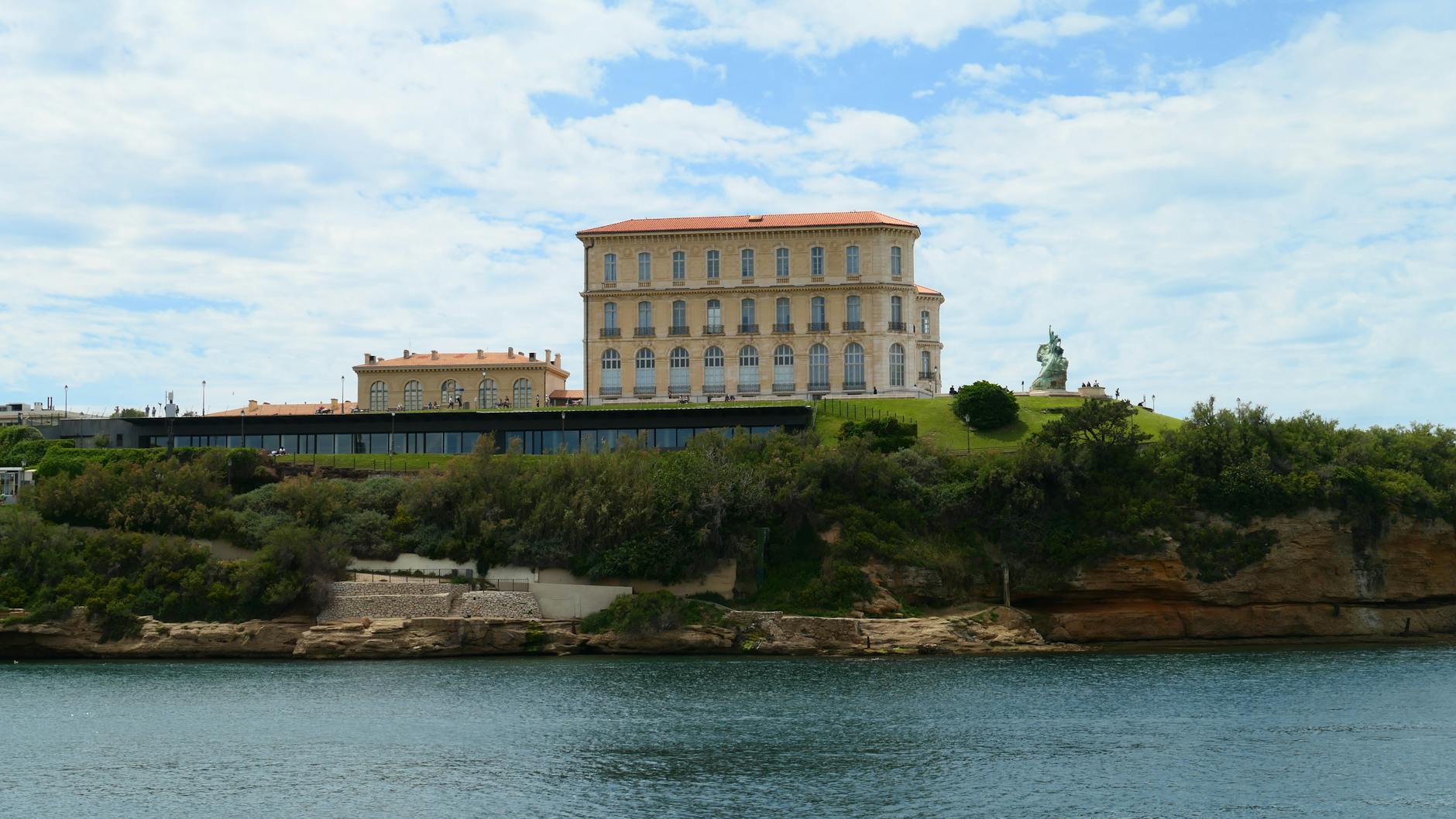
A more modern and cultural-facing version of Marseille with better transitions to the sea and museum chapter.[5]
Frioul / If Axis
Not a neighborhood, exactly, but crucial to understanding Marseille as a sea city rather than just a port backdrop.[8]
Neighborhood Guide: Where to Explore, Not Just Sleep
Vieux-Port: the essential first anchor and a place to keep returning to as light changes.
Le Panier: old streets, stair logic, artisan feel, and some of the city’s most useful atmospheric texture.[6]
Cours Julien: bars, restaurants, design, murals, and a more contemporary Marseille pulse.[7]
Notre-Dame side: not for lingering as a district in the same way, but vital for the city’s visual understanding.
Mucem/Fort Saint-Jean edge: a cultural-sea threshold that makes a lot of Marseille’s modern identity legible.[5]
The Best Things to Do in Marseille
- Go up to Notre-Dame de la Garde and let the city explain itself from above.[4]
- Walk the Vieux-Port more than once, in different light.
- Give Le Panier real time instead of treating it as a fifteen-minute photo errand.[6]
- Use Mucem as a serious cultural chapter, not just a building to admire from outside.[5]
- Spend one evening in or around Cours Julien if nightlife or street life matters to you.[7]
- Take the sea seriously, whether through Frioul, If, or a well-timed harbor crossing.[8]
- Consider the CityPass only if its bundled transport and attractions genuinely match your plan.[3]
- Let one meal belong to Marseille’s harbor identity rather than generic French city dining.
Itineraries
One Excellent Day
Start at the Vieux-Port, move through Le Panier, give Mucem or the sea edge real time, then either go up to Notre-Dame late in the day or save the climb for the following morning and spend the evening in Cours Julien or a better harbor-side dining zone.
Two Days
Day one should be central Marseille: Vieux-Port, Le Panier, Mucem, and a clean evening plan. Day two should either belong to Notre-Dame and the sea or to one more neighborhood plus an island crossing.
Three Days
Use the extra day to separate sea Marseille from district Marseille properly: one day for harbor and oldest city, one for islands or coast logic, one for food, street life, and the more contemporary city.
Itineraries By Traveler Type
For The First-Time France Visitor
Let Marseille be your lesson that France contains a Mediterranean major city that does not behave like Paris, Lyon, or Bordeaux.
For The Couple Weekend
Prioritize harbor access, one serious seafood-or-local meal, one evening district, and either Notre-Dame or the islands as the trip’s visual anchor.
For The Sea-Loving City Traveler
Keep one full chapter for islands or sea-facing movement. The water is not a side note here.
For The Repeat Europe Traveler
Lean harder into Cours Julien, neighborhood sequencing, and Marseille’s contradictions rather than expecting one smooth visitor core.
Food and Drink
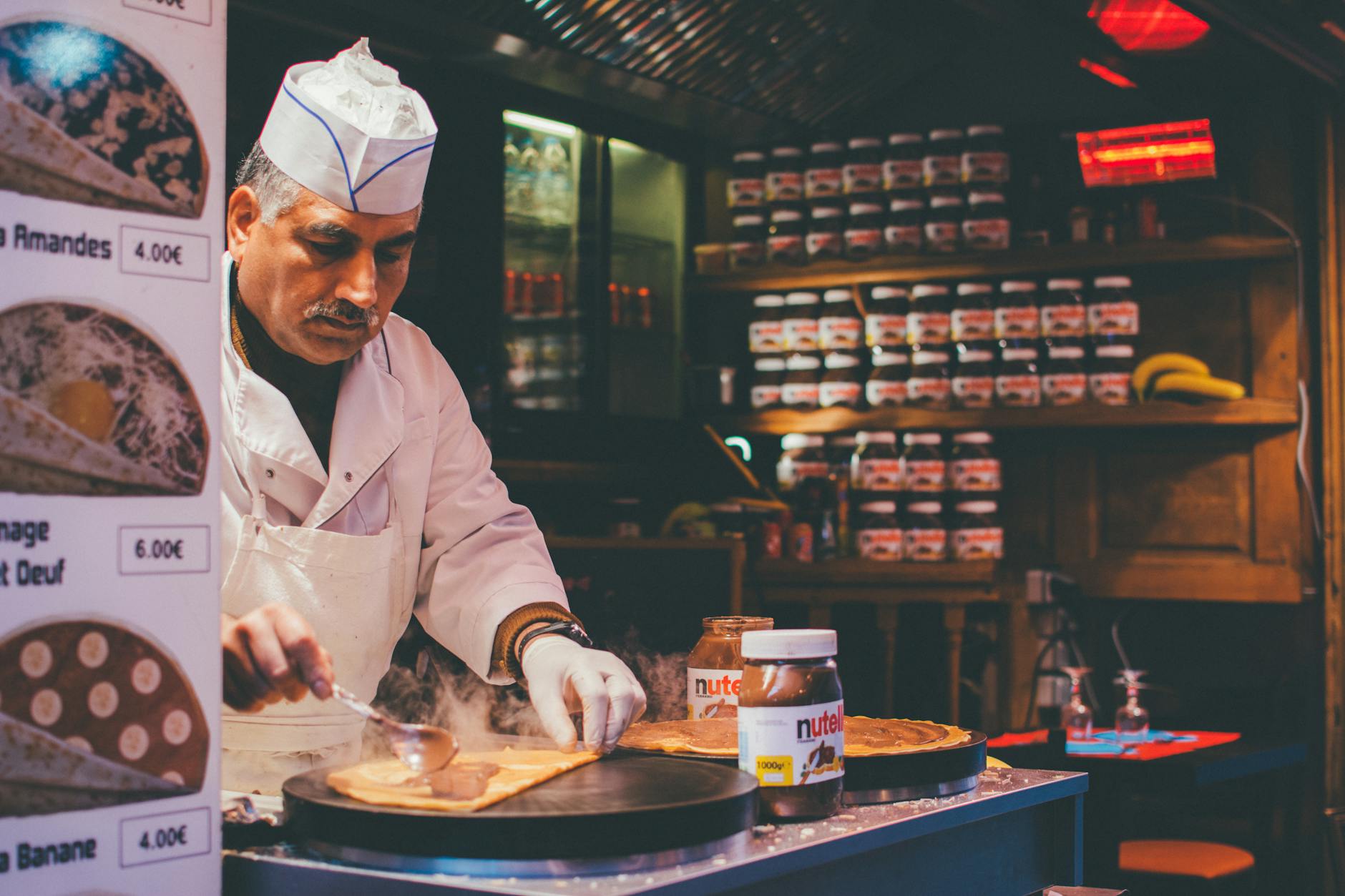
Marseille’s food culture is stronger and broader than the usual clichés suggest. Yes, fish matters. Yes, bouillabaisse exists. But the city is also shaped by migration, port trade, North African influence, Provençal overlap, and a street-and-terrace culture that makes eating feel embedded in daily life rather than presented for tourism.
The mistake is either chasing only iconic fish dishes or eating too generically around the harbor. Marseille rewards more discrimination than that. A better strategy is one clearly chosen local meal, one simpler neighborhood meal, and enough openness to let the city’s everyday appetite show itself.
Getting Around
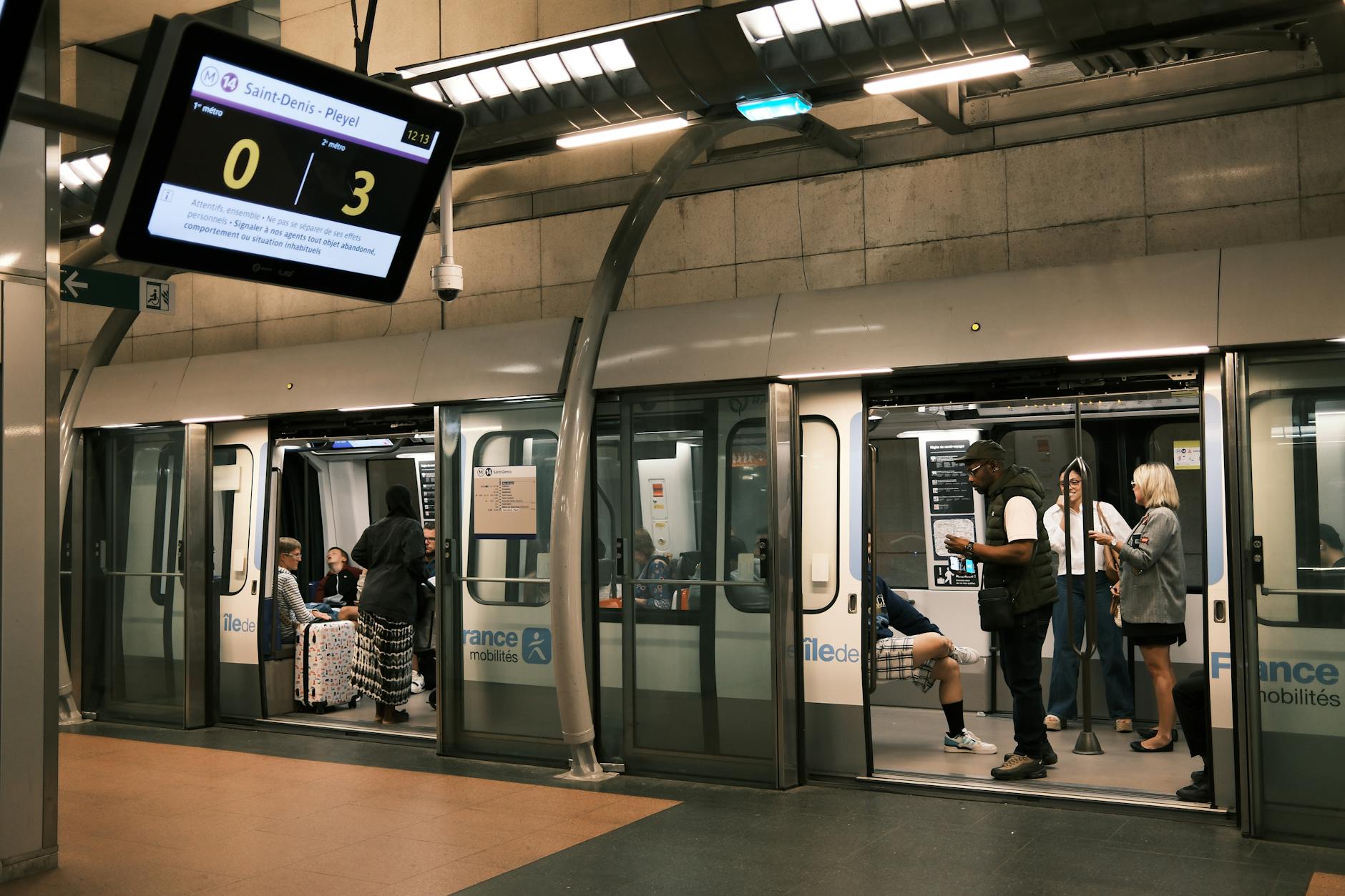
Marseille is manageable if you use metro, tram, bus, and walking selectively. The airport shuttle handles arrival well.[1] RTM’s 24-hour pass is often the simplest urban product if you know you’ll move around more than a little.[2] But the deeper trick is not ticketing. It is keeping the city in coherent clusters instead of zigzagging across it.
Harbor Marseille, Sea Marseille, And The Problem Of Forced Totality
Many weak Marseille itineraries suffer from forced totality. Travelers want to do the old port, the oldest district, the basilica, the museum, the islands, the beach, street art, and a “real local neighborhood” in one compressed stay. The result is not richness. It is muddle.
Marseille is better when handled as separate but connected chapters. Harbor Marseille one day. Sea Marseille another. Cours Julien or a more local evening on its own terms. This is not about limiting the city. It is about letting each version of it arrive clearly enough to matter.
That is the real correction for first-timers. Marseille is not a place to summarize quickly. It is a place to sequence intelligently.
Common Mistakes
- Reacting to Marseille’s reputation more than to the city in front of you.
- Trying to sample every district in one stay.
- Staying somewhere operationally awkward because it looked atmospheric online.
- Treating Mucem as a photo backdrop instead of a real museum.
- Skipping Notre-Dame.
- Underestimating how much the sea chapter deserves its own time.
- Eating too generically around the harbor.
My Blunt Advice
Stay somewhere that makes the Vieux-Port easy. Use the airport shuttle. Choose cleaner daily clusters than your first instinct suggests. Give Notre-Dame one proper visit. Let Le Panier be a walk, not a checklist. If you go to Frioul or If, let it be a real half-day chapter. If you want nightlife, give Cours Julien its own evening instead of bolting it onto an already overfull route.
Marseille does not become better by being tamed into neatness. It becomes better when you stop trying to force every part of it into the same day and let the city speak in sections. On those terms, it is excellent.
Where Marseille Fits in a France Trip
Marseille is at its best in a France itinerary when you use it as a counterweight. If Paris gives structure, museums, and capital-city confidence, Marseille gives weathered scale, salt, port logic, migration, and a much looser relationship between beauty and order. If Lyon gives gastronomic certainty and Bordeaux gives handsome coherence, Marseille gives contradiction, sea pressure, and the feeling that the city still belongs first to itself. That difference is exactly why it matters.
For many travelers, the smartest use of Marseille is not as an all-purpose Provence base but as a city with its own claim on your time. It can connect to wider southern routes, yes, but it should not be reduced to a stop between prettier villages or cleaner beaches. The city is strongest when it is allowed to be the point, not merely the transport node.
That means Marseille often works especially well in three kinds of France trips. The first is a broader first-timer route where you want to understand that France contains radically different urban identities. The second is a repeat-visitor trip focused on the Mediterranean and the south, where Marseille gives you the largest and least decorative urban chapter. The third is a city-led trip for travelers who care more about place, food, and atmosphere than about postcard consensus.
It is less successful when travelers try to make it do too many unrelated jobs at once. If you want one destination that is simultaneously a polished old center, an easy beach resort, a calm museum city, and a frictionless Provence springboard, Marseille will probably irritate you. If you want a serious Mediterranean city that rewards selection and tolerance for edges, it can be one of the best stops in the country.
Marseille Versus Naples
The comparison that helps many travelers most is not Marseille versus Nice, or even Marseille versus Bordeaux. It is Marseille versus Naples. Both cities are coastal, forceful, frequently stereotyped, and often discussed through clichés about danger, intensity, beauty, and disorder. Both are much more satisfying when you stop trying to judge them morally and instead learn how to move through them.
But the differences matter. Naples is denser, more theatrically compressed, and often more overwhelming at first contact. Marseille is broader, more spread out, and more fragmented by district mood. Naples grabs you immediately; Marseille often reveals itself in chapters. Naples pulls hard toward the historic core; Marseille pulls between harbor, hill, district, and sea.
Food logic differs too. In Naples, food can dominate the whole emotional memory of the city. In Marseille, food is essential, but it sits inside a wider port-city identity shaped by migration, ferries, elevation, and the Mediterranean edge. One is not better. They simply ask for different travel behavior.
This is useful because it clarifies who will love Marseille. Travelers who admired Naples because it felt alive, contradictory, and structurally itself often do well here. Travelers who hated Naples because they wanted urban comfort above all else may struggle in Marseille too, though Marseille can feel less relentless if you stay and move smartly.
First-Time Visitors Versus Repeat Visitors
Marseille is very good on a first visit, but it is even better once some of the noise is gone. On a first trip, travelers naturally spend energy decoding the city: Which areas feel right? How much of the reputation is real? How much harbor time is enough? Which route actually makes sense? Those are reasonable first-trip questions, but they consume attention.
On a repeat visit, Marseille often relaxes into focus. You stop trying to solve the entire city and start choosing the Marseille you want that day. Maybe that is a harbor-to-Mucem line with a stronger museum commitment. Maybe it is a slower Le Panier walk and a more local evening. Maybe it is a second sea chapter because the first one proved that leaving the center is essential to understanding the place.
This is one reason Marseille gets undersold by travelers who only gave it a rushed first pass. Many cities are legible in a single dramatic sweep. Marseille usually is not. It improves when you return knowing that you do not need to prove you have “covered” it.
The first-timer should therefore borrow something from the repeat visitor’s mindset. Do not try to win Marseille. Do not try to summarize it. Choose the strongest version of it for the stay you actually have.
Cooler-Season Marseille Versus Summer Marseille
People sometimes talk about Marseille as if it only truly works in hot weather, when the coast, boats, and swimming logic are fully open. That misses half the city. Summer amplifies the sea, but cooler-season Marseille often improves the urban reading.
In summer, the temptation is to let the sea own everything. Travelers chase islands, coves, crossings, terraces, and waterfront light, then discover that heat, crowding, and movement fatigue make the city itself harder to absorb. That does not mean summer is bad. It means summer punishes undisciplined overplanning more severely.
Cooler months often rebalance the city. The harbor becomes more walkable for longer stretches. Museums become more central. Long lunches feel more natural. Notre-Dame is less of a physical tax. Even Le Panier can read more clearly when you are not managing heat and crowd density at the same time.
The ideal first trip still usually falls in shoulder season because you get both sides. But travelers who can only go in winter or late autumn should not assume they are getting a lesser Marseille. They are getting a more urban Marseille, and that may in fact be the cleaner first lesson.
Why One Proper City Day Matters
One of the biggest errors in Marseille planning is treating the city center as something you can absorb between transport tasks, sea errands, and scenic outings. That usually produces a stay where the traveler has “been” to several places without truly understanding any of them.
Marseille needs one proper city day. Not a half day around arrival. Not a museum stop jammed between basilica views and an island ferry. A real day given to the city as city. That means using the Vieux-Port as a base, allowing Le Panier to breathe, deciding whether Mucem belongs, and moving through at least one district or one harbor-side sequence without constantly checking the clock.
Why does this matter? Because Marseille’s value is not just in isolated sights. It is in how the sights connect through the grain of the city. The walk, the change in street texture, the harbor reappearance, the visual relationship between old stone, port infrastructure, and sea light. Those things only register if one day is not broken into fragments.
Travelers who give Marseille a proper city day often find that the rest of the stay becomes easier. They no longer feel pressure to force symbolic coverage. They have already met the city on its own terms once.
Why the Base Matters More Than Visitors Expect
Many destinations are forgiving about where you sleep. Marseille is not one of them. Here, the base changes not just convenience but mood, confidence, and the number of small frictions you absorb over the course of the trip.
Stay in a well-positioned part of the Vieux-Port orbit and Marseille often feels vivid, legible, and pleasantly active. You can orient yourself quickly, return easily, shift plans without drama, and keep the harbor as a stable reference. Stay somewhere chosen only for price, abstract map centrality, or a misleading idea of atmosphere, and the city can start to feel harder than it is.
This is especially important for first-time visitors because Marseille’s emotional read happens early. If arrival, hotel access, evening return, or neighborhood fit go wrong, travelers can start writing the whole city off before they have even built a coherent route. A good base corrects for this. It gives the city more opportunities to seem generous.
There is also a deeper point here: Marseille is not a place where the hotel is simply where you sleep. Because the city can feel spread, because weather and energy matter, and because evening patterns shift the mood so much, the hotel becomes part of the route design. A useful base turns Marseille from effort into rhythm.
Day Marseille Versus Evening Marseille
Some cities peak in the morning when streets are clean and museums are fresh. Some peak late at night when atmosphere thickens. Marseille changes by hour more than many travelers expect, and understanding that helps shape a better stay.
Daytime Marseille is often sharper, more visual, more inspectable. The city’s physical logic makes sense in daylight: the basin of the harbor, the rise to Notre-Dame, the edges of Le Panier, the brightness off the water, the contrast between civic fronts and rougher seams. This is when Marseille explains itself.
Evening Marseille is less explanatory and more emotional. Harbor light softens the city. Cours Julien becomes more socially convincing. Meals start to matter more. The sheer fact of staying out in a city that many outsiders misunderstand can become part of the pleasure. But evening Marseille is not automatically better. It is better when the day has already given you structure.
That is why the strongest Marseille itineraries usually avoid the mistake of spending the entire day in motion and then expecting the evening to rescue the experience. Evening works here when it completes a good route, not when it compensates for a weak one.
Why the Coast Should Not Own the Whole Trip
There is a temptation, especially in good weather, to let every Marseille conversation bend toward the sea. Beaches, ferries, islands, coves, viewpoints, and coastal imagery are powerful here. They should be. But the city weakens if you give all authority to the water.
A Marseille trip dominated entirely by sea logic can start to feel oddly generic. A boat, a scenic edge, a swim, a waterside drink: these are pleasurable, but they do not by themselves explain Marseille. What makes the city distinctive is the tension between water and urban force. Without the streets, the port texture, the elevation changes, the district moods, and the harder civic grain, you do not really have Marseille. You have a Mediterranean outing.
This is why even travelers who come primarily for the coast should protect one full urban chapter. Let the sea be one great answer, not the only one. Marseille’s identity is strongest when harbor and city remain in conversation.
Why Food Is Structural, Not Decorative
Food matters in Marseille in a deeper way than “find a good restaurant.” The city’s appetite helps explain the place. Port life, migration, North African influence, Provençal overlap, fish traditions, terrace culture, and everyday neighborhood eating all sit inside the same urban story.
This is why food planning here should not be purely prestige-based. A high-profile meal may be worth it, especially if fish is central to your hopes, but Marseille often becomes more convincing through range: something harbor-facing but not empty, something neighborhood-based, something casual, something that lets you feel the city eating rather than performing for outsiders.
Food is also structural because it helps set tempo. Marseille is a city where a well-placed meal can reset the whole day. A long lunch can prevent overprogramming. An early evening drink can make the harbor feel newly intelligible. A dinner in the right district can save you from wasting the night in the wrong part of town.
Weak itineraries treat food as filler between sights. Strong Marseille itineraries let meals and pauses become part of the route itself.
Why Marseille Often Works Better Than It Sounds
Marseille has a serious reputation problem. Too many people arrive carrying second-hand narratives about roughness, danger, beauty, authenticity, or “realness.” Those narratives are so loud that they often flatten the first actual encounter with the city.
In practice, Marseille usually works better than it sounds because it gives more texture, more choice, and more layered urban pleasure than the reputation suggests. It is not that the city secretly behaves like an easy polished classic. It does not. It is that the reality is usually more usable than the mythology.
Once travelers see that, they often relax into better planning. They stop asking the city to validate a warning or a fantasy. They start noticing what is actually good: the harbor as anchor, the basilica as explanation, Le Panier as texture, Mucem as seriousness, Cours Julien as release, and the sea as a real dimension rather than mere backdrop.
That shift is important. Marseille improves as soon as you stop consuming the story about Marseille and start using the city itself.
Why Marseille Often Improves on the Second Visit
Very few first-time visitors leave Marseille thinking they saw everything they should have seen. But the more important truth is that many do not leave thinking they understood the city’s best pacing. That understanding often arrives later.
On a second visit, you can usually correct the first trip’s distortions. You know whether you were too harbor-bound, too scattered, too sea-heavy, too reputation-driven, or too anxious about neighborhood choice. You have already learned that Marseille’s pleasures are sectional. That knowledge improves almost every subsequent decision.
The second visit is also when more specific Marseille pleasures become available. You may return to a district you rushed through the first time. You may give an extra half-day to the islands. You may stop trying to convert the city into a list of top sights and instead let it become a base, a set of rhythms, or a particular emotional register.
This does not mean the first trip cannot be excellent. It can. It means Marseille belongs to the class of cities that reward revisiting because the first layer is not the whole layer.
How Marseille Changes Over the Course of a Stay
Arrival in Marseille is often ambiguous. The city can feel loose, raw, and less obviously beautiful than travelers expected. The first harbor encounter may charm you or leave you uncertain. Saint-Charles may feel more functional than seductive. Some streets may seem rougher than the glossy tourism frame implied. None of this is unusual.
Then the city usually starts assembling itself. The harbor becomes an orientation system. The climb or ride to Notre-Dame reveals the urban basin. Le Panier gives the old-city grain the harbor lacked. A better meal lands. Evening light improves the waterfront. Suddenly Marseille begins to feel less like a question and more like a place with internal logic.
By the second full day, strong itineraries often become calmer. Travelers stop forcing cross-city range. They return somewhere on purpose. They understand which moods they want more of and which they can leave behind. That is when Marseille becomes rewarding rather than merely interesting.
By the end of a good stay, many visitors realize that the city was not difficult so much as improperly framed. It did not need taming. It needed sequencing. That is the real arc of Marseille: from uncertainty, to structure, to preference.
Source Notes
- 1. Marseille Provence Airport, "Bus" and related airport help pages on airport/rail links. https://www.marseille.aeroport.fr/parkings-et-acces/acces/bus and https://aide.marseille.aeroport.fr/hc/fr/articles/360000499671-Quelles-sont-les-gares-les-plus-proches-et-comment-les-rejoindre
- 2. RTM, "Pass 24h." https://www.rtm.fr/tarifs/pass-24h
- 3. Marseille Tourism, "Marseille CityPass." https://www.marseille-tourisme.com/en/experience/marseille-citypass/
- 4. Marseille Tourism, "Notre-Dame de la Garde basilica." https://www.marseille-tourisme.com/en/discover-marseille/culture-heritage/discover-the-sites-and-monuments-in-marseille/notre-dame-de-la-garde-basilica/
- 5. Mucem, visitor information / opening hours. https://mucem.org/horaires-dete
- 6. Marseille Tourism, "The district of le Panier." https://www.marseille-tourisme.com/en/discover-marseille/culture-heritage/the-districts-of-marseille/the-suburb-of-le-panier/
- 7. Marseille Tourism, "Le Cours Julien, the artists' and street art district." https://www.marseille-tourisme.com/en/discover-marseille/culture-heritage/the-districts-of-marseille/le-cours-julien-the-artists-and-street-art-district/
- 8. Marseille Tourism, "The islands of Frioul and Château d’If." https://www.marseille-tourisme.com/en/discover-marseille/highlights/nature/the-islands-of-frioul-and-chateau-dif-if-castle/