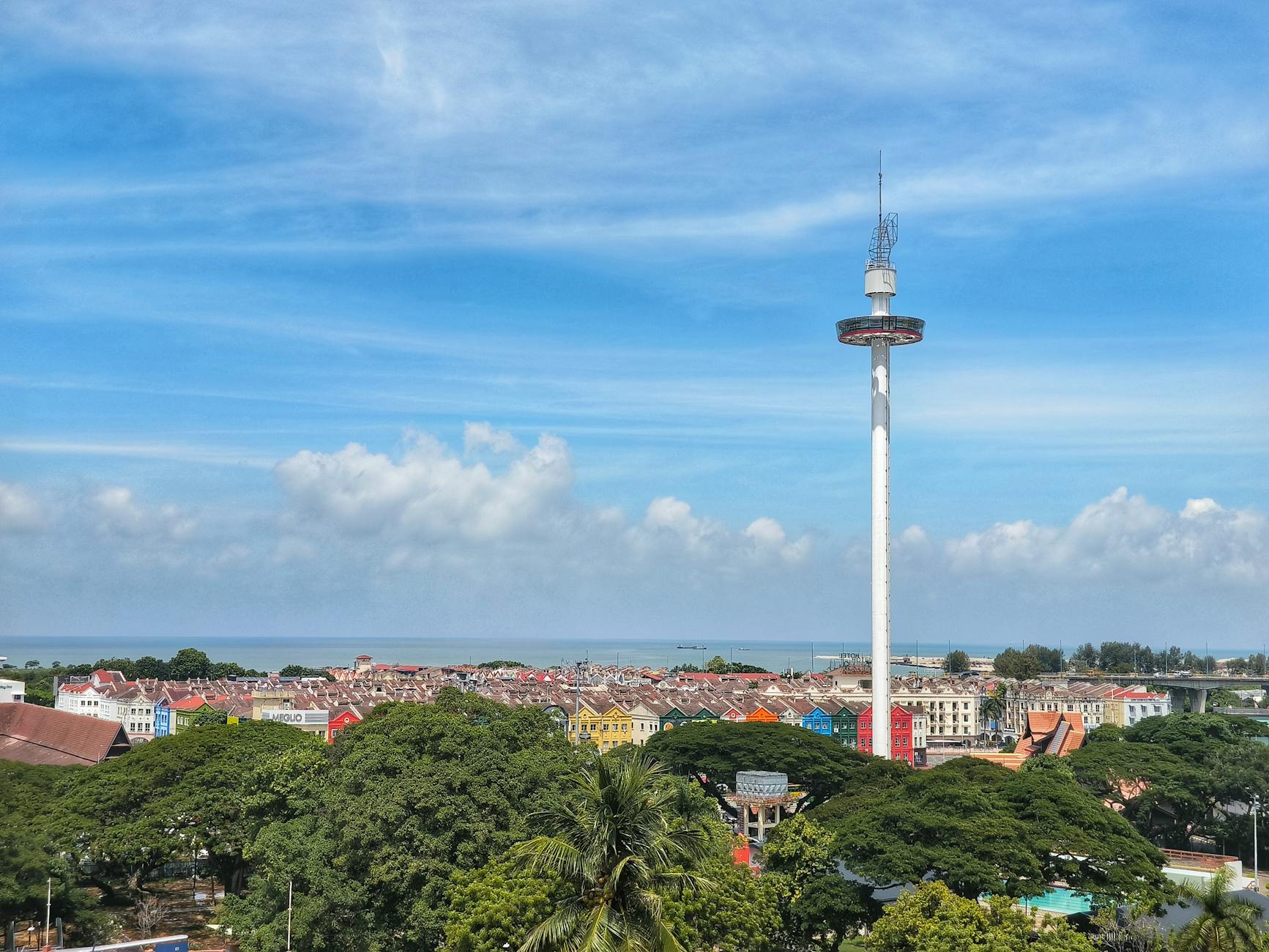
Malacca City is easy to underestimate because it is easy to sample.
Start Here
Travelers arrive, photograph the red square, walk Jonker Street, eat a few things, perhaps take a river cruise, and leave with the feeling that the city was pleasant, compact, and essentially complete in half a day. That is the standard first-visit mistake. Malacca can survive that treatment, but it becomes flatter than it deserves to be.
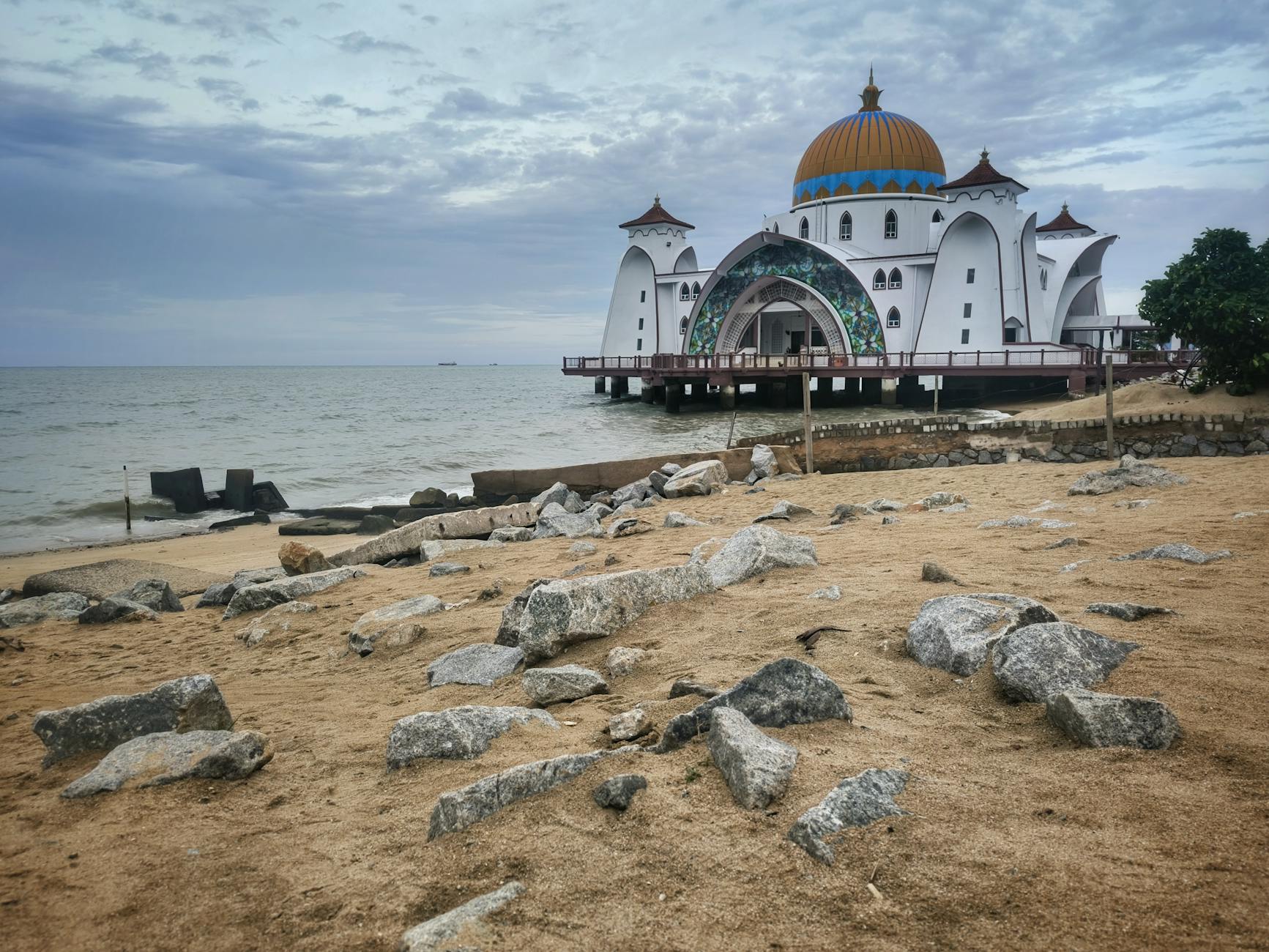
What makes Malacca City good is not only that it is historic. Plenty of Southeast Asian cities are historic. What matters here is that Melaka still reads as an old trading city where Malay, Chinese, Indian, Portuguese, Dutch, and British layers remain legible in the urban fabric. UNESCO’s official framing of Melaka and George Town as historic cities of the Straits of Malacca is not inflated language; it describes exactly why the place still has weight.[1]
The better Malacca trip therefore slows the city down. It uses the compact center, but does not confuse the center with the whole experience. It understands that Jonker Street changes meaning by time of day. It uses the river as an organizing line rather than a gimmick. It lets churches, mosques, temples, shophouses, food streets, and civic leftovers share the same map.
Malacca City in one sentence: it is one of the most legible old port cities in the region, but only if you stop treating it like a heritage backdrop with snacks attached.
Basic data
| Population | About 580,000 in the wider city area |
|---|---|
| Area | About 300 km2 in the city-administrative area |
| Major religions | Islam, Buddhism, Christianity, Hinduism, Taoism, and Chinese folk traditions |
| Political system | State capital city inside a federal constitutional monarchy |
| Economic system | Upper-middle-income mixed economy led by tourism, services, trade, logistics, and manufacturing |
Quick Verdict
Best for: heritage-city travelers, food-and-walking travelers, Malaysia return visitors, and anyone who likes compact cities with visible layers of trade and colonial history.
Less ideal for: travelers who want a huge museum schedule, late-night sophistication, or a city that performs dramatically beyond its historic core.
Ideal first stay: 1 to 2 nights.
Still worthwhile: as a day trip, but diminished.
Can justify longer: yes, if paired with a slower regional Malaysia route.
Biggest planning mistake: letting Jonker Street define the entire city.
One thing to prioritize: the relationship between the old core and the river.
One thing to keep simple: the attraction list.
The blunt version: Malacca improves the moment you stop trying to finish it quickly.
Who Will Love Malacca City?
Malacca works for travelers who enjoy historical cities that are readable on foot and rich in cultural mixture rather than in size. If you like places where architecture, religion, food, and urban memory overlap tightly, Malacca is strong.
It is especially good for visitors who can accept that the city’s pleasures are cumulative. Malacca does not overwhelm. It reveals itself in layers.
Malacca City at a Glance
| Question | Practical Answer |
|---|---|
| Best first stay length | 1 to 2 nights |
| Main logic | Historic core plus river corridor |
| Most famous street | Jonker Walk / Jonker Street |
| Key official framing | UNESCO World Heritage city |
| Most obvious tourist add-on | Melaka River Cruise |
| Main risk | weekend-overload superficiality |
| Best way to use it | slow urban walking with selective food and heritage stops |
2026 Visitor Notes
UNESCO Status Still Explains the City Better Than Marketing Does
UNESCO continues to describe Melaka and George Town as historic cities shaped by more than 500 years of trading and cultural exchange between East and West, with Melaka specifically representing the earlier phases of that history through its Malay sultanate, Portuguese, and Dutch layers.[1] That remains the clearest high-level explanation of why the city matters.
Jonker Walk Is Still a Real Weekend Force
Tourism Melaka’s current official page continues to present Jonker Walk as a heritage-commercial street that becomes especially active on Friday, Saturday, and Sunday evenings, when the flea-market and street-market atmosphere takes over.[2] That is useful because it confirms what many visitors feel: Jonker is not one fixed experience.
The River Is Still Both Spectacle and Structure
The Melaka River Cruise’s current official material and MBMB’s current tourism material both continue to frame the river as a historic trading artery turned visitor experience.[3][4] That is exactly how travelers should think about it: not as a mandatory ride, but as one of the clearest ways to read the city’s form.
How to Understand Malacca City
Malacca works through four forces.
The first is port history. Trade created the city before tourism simplified it.
The second is cultural layering. Different communities and empires left distinct traces close together.
The third is compactness. Much of what matters is near enough to feel coherent.
The fourth is timing. Jonker, the river, the heat, and the weekend crowd all change the city’s mood.
The Main Mental Shift
Do not ask, “How fast can I do the heritage area?” Ask, “How did this old trading city actually organize itself?” That question makes the trip much better.
What Makes Malacca Distinct
Malacca’s distinction is that it still feels like a historical trading city rather than a merely preserved colonial fragment.
UNESCO’s official statement emphasizes not only the age of the site but the cumulative cultural mixture: Malay, Chinese, Indian, and multiple European layers across almost 500 years.[1] In practice, that means the city is not one architectural style or one era. It is a layered civic and commercial environment whose density of religious buildings, shopfronts, lanes, and reused structures gives it unusual interpretive clarity.
That is why it remains more interesting than the standard photo loop suggests.
Why the UNESCO Framing Actually Matters
UNESCO’s framing is useful here not because it gives the city prestige, but because it gives you the right mental model.[1]
Malacca is not interesting simply because it is old. It is interesting because it was a trading city where different systems of belief, commerce, governance, and architecture accumulated in unusually close quarters. Once you understand that, the city becomes more than a sequence of nice façades and heritage labels. It becomes a place where adjacency matters.
A church near a square matters differently if you understand the political layers behind it. A Chinese clan-house or temple zone matters differently if you understand that the city’s historic life was never only European or only Malay. Even the street pattern and shophouse rhythm begin to feel more consequential once you read them as the urban residue of exchange rather than only as "heritage atmosphere."
This is why a slower first trip is so important. Malacca needs enough time for its layers to reattach to one another.
Best Time to Visit
Malacca is hot, humid, and timing-sensitive.
The strongest walking usually happens in the morning and late afternoon. Midday can still work, but only if expectations are adjusted. Weekend energy can make the city feel lively and theatrical, particularly around Jonker, but it can also flatten the subtler parts of the place if that is all you see.[2]
So the real timing question is less about season than about day shape and crowd shape.
Weekday Malacca Versus Weekend Malacca
One of the most important decisions in Malacca is whether you are meeting the city in its more readable state or its more performative one.
Weekday Malacca usually allows the urban logic to come forward. The heritage core is easier to read, the river edge feels less like a crowd-management exercise, and Jonker can be understood as part of a living historic district rather than primarily as an event corridor.
Weekend Malacca, especially in Jonker hours, can be fun, busy, snack-heavy, and memorable. But it can also mislead first-time visitors into thinking the whole destination is basically a heritage market with a few important monuments nearby.
Neither version is false. The mistake is to see only one and assume it defines the city.
Morning Malacca Versus Night Malacca
Malacca changes meaning across the day more than some first-time visitors expect.
Morning Malacca is usually the best time to read the historic core clearly. The heat has not yet fully hardened, the streets are more legible, and the city’s older civic and religious structures are easier to relate to one another without the same crowd pressure. If you want to understand what the place is, mornings help.
Night Malacca, especially around Jonker, is something else. It becomes more performative, more visibly social, more food-driven, and in certain stretches more theatrical. This is not fake. It is simply one register of the city rather than the definitive one.
The strongest first trip uses both. See the city in daylight before asking the weekend energy to explain it to you.
How Many Days You Need
Half a Day
Enough to see the outline, not enough to understand the city.
One Night
A strong first answer. This gives you the heritage center by day and Jonker or the river by night.
Two Nights
Better if you want the city to feel calmer and more complete.
Arrival Strategy
Most first-time travelers do not need to overengineer arrival. Malacca is the kind of destination where what matters is not the transport drama but where you land within the city once you get there.
The real question is whether you are close enough to the historic core to walk it well, but not so badly placed that movement becomes annoying. This is a city where final positioning matters more than abstract arrival.
First Arrival and First Walk
Malacca is one of those cities where the first hour can quietly determine the tone of the stay.
If you arrive, check in, and immediately plunge into the busiest possible stretch without any sense of the city’s larger pattern, Malacca can seem smaller and more commercial than it really is. If instead you let the first walk be orienting rather than acquisitive, the city often opens much faster.
That means noticing how the river relates to the core, where the squares sit relative to Jonker, where the more obvious tourist energy gives way to a more ordinary mixed-city feeling, and how easy it is to return to your hotel on foot. Those are not glamorous discoveries, but they make the trip work.
The Day-Trip Trap
Malacca’s compactness creates a very specific trap: it encourages visitors to believe that because the city is easy to reach and walk, it must therefore be almost entirely consumable in a single burst.
That assumption is what flattens it.
A day trip can work, certainly. But day trips tend to overconcentrate the most obvious streets and leave little room for timing changes, river understanding, or evening atmosphere. They also encourage visitors to see Malacca mainly at peak human volume, which can make the city feel more commercial and less layered than it actually is.
An overnight does not make Malacca larger. It makes it more proportional.
Where to Stay
Hotel choice in Malacca is mostly about historical access and noise tolerance.
Near the Core
Best for: first-timers, walkers, and short stays. Tradeoff: more crowd spill, especially around peak Jonker hours.
River-Adjacent
Best for: visitors who want visual atmosphere and easier evening movement. Tradeoff: not every river-adjacent block is equally charming.
Slightly Outside the Core
Best for: more space, easier car access, and travelers who do not need to step directly into the heritage zone. Tradeoff: a weaker first-visit relationship to the city’s main logic.
The Main Rule
For a first trip, stay close enough that walking back after dinner still feels natural.
Why Base Choice Still Matters in a Compact City
Compact destinations tempt travelers into thinking location barely matters because "everything is close anyway." That is only half true.
In Malacca, the difference between five calm minutes back to the room and fifteen noisy, congested, or irritating ones can shape your whole relationship to the evening. Likewise, the difference between stepping into the heritage core with a small amount of buffer versus living directly inside its busiest pulse can determine whether the city feels atmospheric or exhausting.
Compact is not the same as frictionless. The best first stay chooses convenience that still leaves some breathing room.
Hotel Logic and Noise Logic
In Malacca, where you stay is partly a question of romance, but it should also be a question of timing and tolerance.
A room very close to the busiest heritage-commercial zone may sound ideal, but if your trip includes weekend Jonker hours, the same closeness can become tiring fast. A room slightly off the thickest flow can make the stay feel calmer without sacrificing the center’s usability. Conversely, if you stay too far out, you weaken one of Malacca’s best traits, which is the ability to let an evening continue on foot.
The right first-time answer is usually proximity with a little insulation.
The Malacca That Matters Most
Heritage-core Malacca: churches, civic remnants, squares, and the main historical argument.[1]
Jonker Malacca: commercial, performative, useful, and often overinterpreted.[2]
River Malacca: the clearest way to understand the city as a trading settlement turned heritage destination.[3][4]
Everyday mixed Malacca: the neighborhoods and smaller streets that keep the city from becoming a stage set.
Reading the Heritage Core Properly
Many visitors walk the heritage core as though it were a sequence of disconnected pretty surfaces: a square, a façade, a lane, a bridge, a market stretch, a church, a temple. Malacca becomes much more persuasive when you read those elements as parts of a trading city that accumulated power, faith, and commerce layer by layer.
That means noticing what sits beside what. A colonial civic residue is near a commercial street. A religious building stands close to another tradition’s space. A tourist-heavy lane opens into a part of the city that still feels locally used. The core is compact enough that these adjacencies do real interpretive work.
You do not need a scholarly tour to notice this. You only need to stop treating the center as a themed district and start treating it as an urban palimpsest.
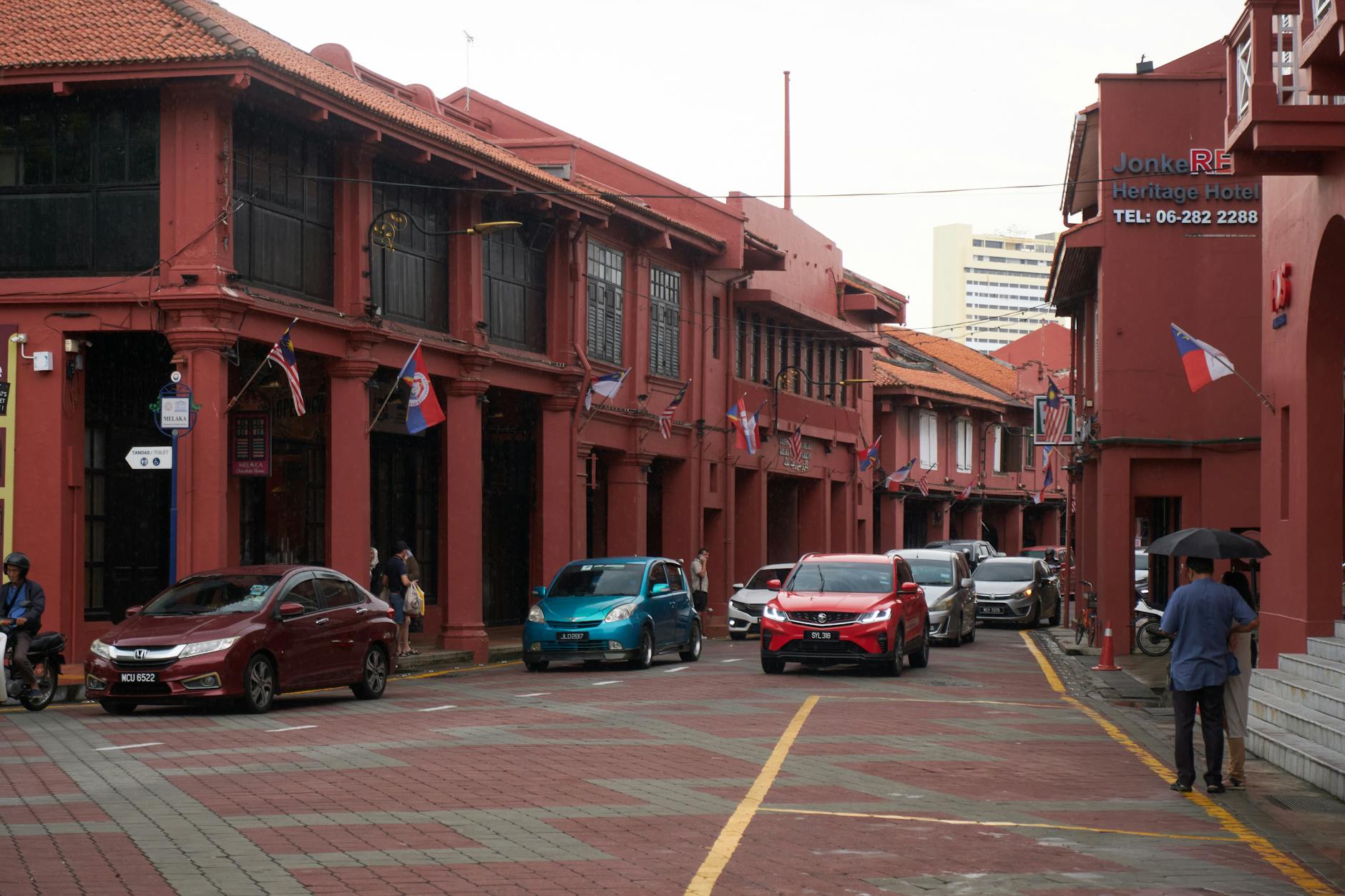
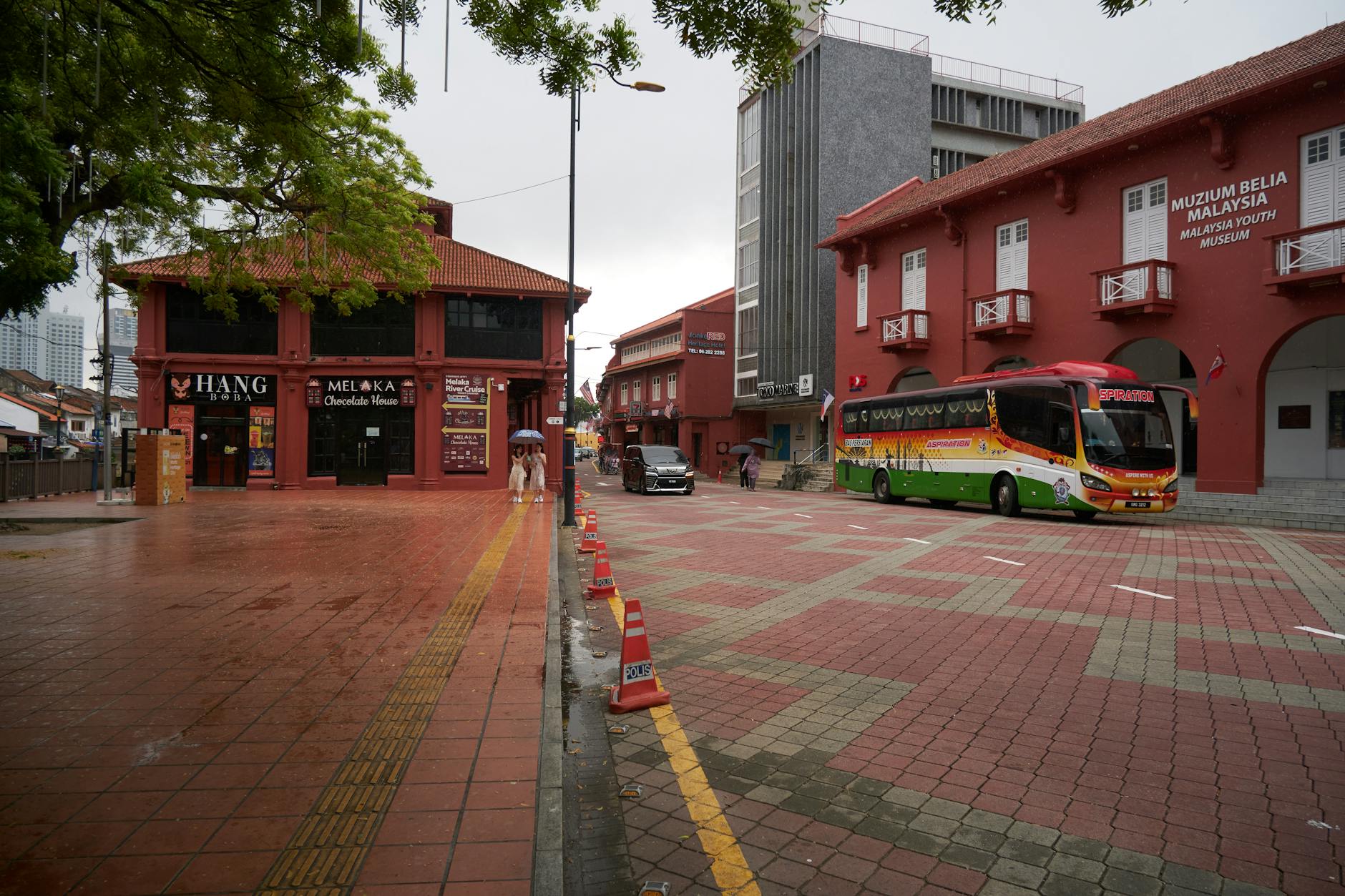
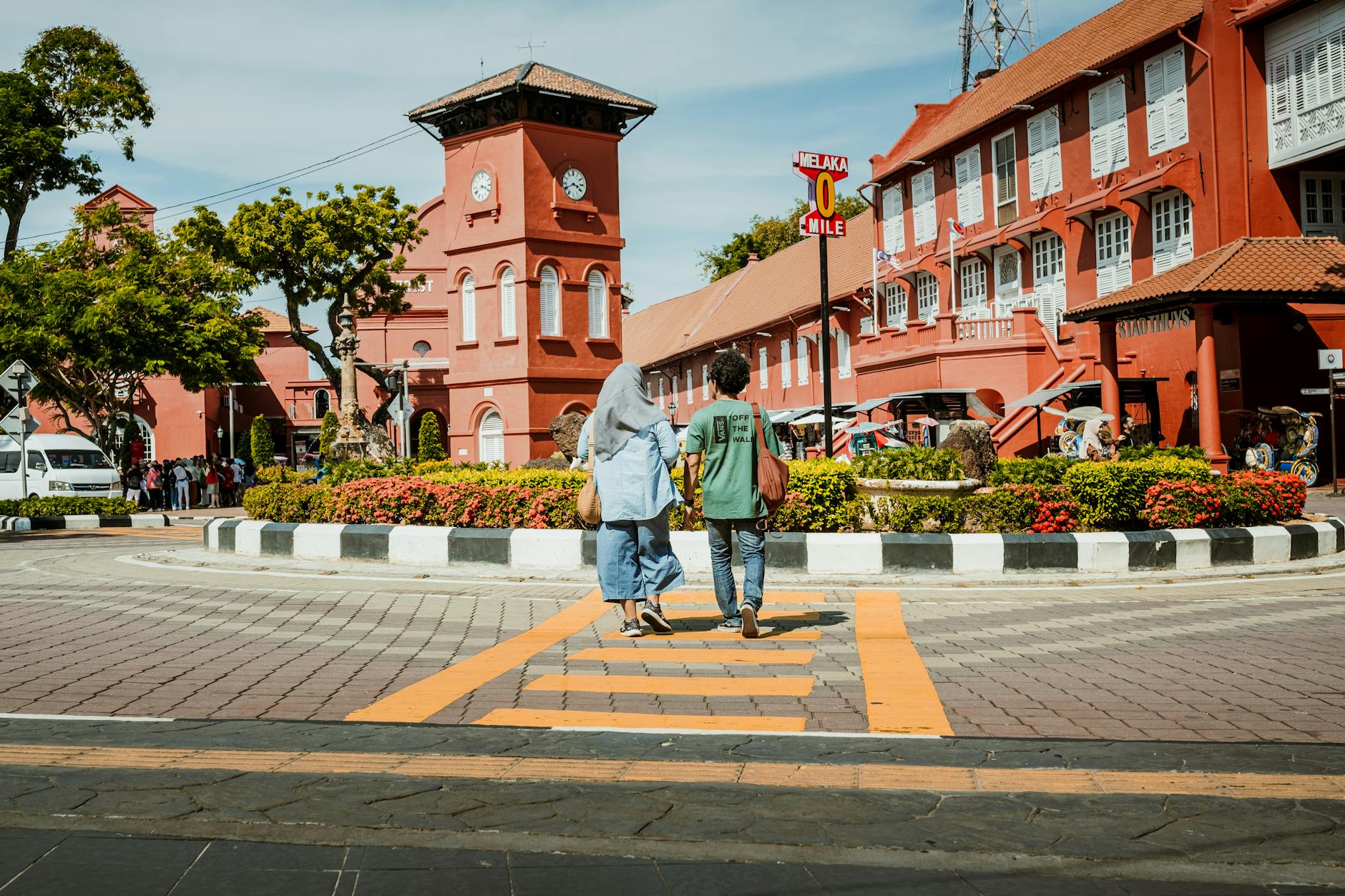
The Red Square Problem
The red square area is one of the most photographed parts of Malacca, which makes it both useful and dangerous.
It is useful because it gives the city an immediate civic and visual center. A first-time visitor can start there and quickly gain orientation. It is dangerous because it can flatten Malacca into one image: red buildings, heritage surface, a few minutes of interest, then onward to Jonker.
If that is all the square becomes, the city has been undersold. The better approach is to use it as a beginning rather than a summary. Let it establish one layer of the story and then move on to what sits around it: the river, the commercial streets, the religious layering, the smaller transitions that make the city feel mixed rather than staged.
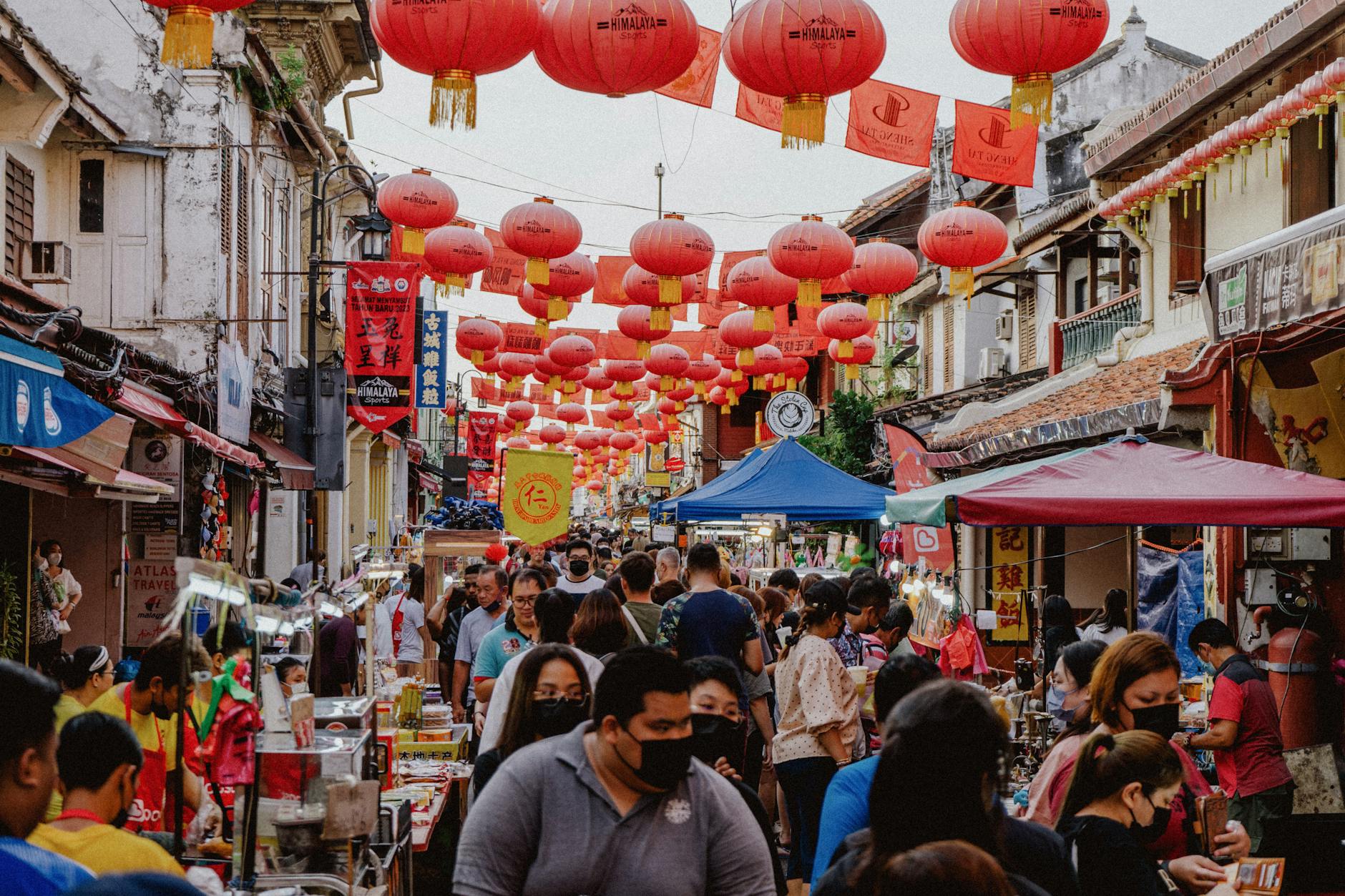
Jonker Street at the Right Scale
Jonker Street is worth using, but it should not be allowed to dominate your reading of Malacca.
Tourism Melaka’s official material still presents it as a place of galleries, antique and traditional trades, food outlets, and a weekend market transformation.[2] All of that is true. But the mistake is to think Jonker is the entire city in concentrated form. It is not. Jonker is one expression of Malacca: sociable, commercial, tourist-facing, and often enjoyable. It is not the only one, nor always the most revealing one.
Use it, especially if the timing is right, but keep it in proportion.
Jonker and the Problem of Heritage Consumption
Jonker is where Malacca most risks being consumed instead of understood.
The street is easy, photogenic, food-friendly, and event-capable. That is why it works. It is also why it attracts the least disciplined version of heritage travel: show up, snack hard, buy something approximate, photograph the signs, and move on.
There is nothing wrong with enjoying Jonker. There is something wrong with allowing Jonker’s easiest pleasures to define your understanding of the city. Once that happens, Malacca can feel more like a curated retail-historic lane than a layered old port city. The street has to be reinserted into the wider city if the trip is going to feel complete.
Jonker at the Right Time of Day
Jonker Street in late morning or afternoon is not the same thing as Jonker at weekend night, and travelers who fail to notice that often misjudge the city.
In quieter hours, Jonker can be read more easily as part of the old fabric, with shops, façades, and ordinary heritage-commercial continuity. At peak weekend hours, it becomes much more about atmosphere, snacks, movement, and crowd energy. That version can be fun, but it is also the version most likely to convince visitors that Malacca is little more than a heritage-night-market set piece.
The better approach is comparative. See Jonker when it is calmer if you can, then decide what the night version is adding rather than letting the busiest version define the whole street.
The River and Why It Matters
The Melaka River is one of the city’s most useful interpretive tools.
Official river-cruise material still emphasizes both the history of the river as a commercial artery and the cruise as a modern way to see the city.[3] MBMB’s tourism language does something similar, describing the river as part of the city’s old grandeur and present beauty.[4]
That duality is exactly correct. The river is not only a leisure ride. It is a spatial explanation. Even if you skip the cruise, you should still use the river mentally to understand how the city developed and why so much of the historic core sits where it does.
The River as an Urban Tool
What makes the river so useful is not only beauty. It is that it restores orientation.
On foot, the city can sometimes feel compressed into isolated moments: one square, one bridge, one church, one line of food stalls. The river reconnects these into a continuous trading-city logic. You start to see why movement, commerce, and settlement arranged themselves the way they did. That is why even a short river segment, whether on foot or by cruise, can do more explanatory work than another cluster of random heritage stops.
Cruise or No Cruise?
This is a genuine choice, not an obligation test.
If you take the river cruise, use it because you want the city’s spatial logic clarified, not because the city supposedly requires one branded attraction to count as complete. If you skip it, make sure you still spend enough time by the river that the city does not become just a lane-and-square destination in your mind.
The important thing is not the ticket. It is the river’s explanatory role.
Food and the Weekend Trap
Malacca is easy to overeat in for the wrong reasons.
Weekend density, Jonker temptation, and the city’s snack-and-stall atmosphere can produce a shallow, overfull version of the place. The better approach is to eat selectively and allow some meals to be calm. Malacca’s food matters, but not as a competitive exercise.
This is another reason one overnight stay is often better than a rushed day trip. It allows the food to become part of the city instead of just part of the crowd.
Eating Well Without Turning the City Into a Food Dare
Malacca can tempt visitors into a kind of shallow overeagerness. The density of treats, snacks, and recognizable food spots makes it easy to mistake constant eating for cultural depth.
A better approach is selective. Let one or two meals do the real work. Let one or two smaller food moments support the walk instead of replacing it. Malacca’s culinary life is part of the city’s trading and mixed-community story, but that story lands better when the meals are attached to urban rhythm rather than to an endless queue of tastes.
This is another place where the overnight helps. It separates lunch hunger, afternoon snack temptation, and evening dining into different moods rather than forcing everything into one compressed block.
Day Trip or Overnight?
A day trip can work. The city is compact enough for that.
But Malacca gets stronger if you stay. Evening changes the place. The river light changes the place. Jonker’s timing changes the place. A morning before the busiest visitor wave can change the place too. Overnighting gives Malacca time to shift from sightseeing zone to actual city.
That shift is worth more than many first-time visitors realize.
One Night Versus Two Nights
One night is enough for a strong first understanding if you use the city properly. You can read the heritage core by day, experience the river or Jonker at the right hour, and give the evening enough weight to let the stay feel real.
Two nights, however, often produce a better Malacca. They let the city exist in more than one tempo. You can have one more legible daytime pass, one calmer meal, one second river look, one less crowded interpretation of the core. The city starts to feel less like a compact visitable zone and more like a real historical settlement with repeating rhythms.
Malacca does not strictly need two nights. But it often rewards them more than first-time visitors expect.
Why Malacca Often Improves on the Second Walk
One of the quiet strengths of an overnight is that it allows the city to be walked twice without the second walk feeling redundant.
The first pass gives you recognition. The second pass gives you relation. You stop seeing only named sights and begin to understand how the old core, the river, and the market-commercial streets fit together. That is often when Malacca stops feeling merely pleasant and starts feeling intelligently composed.
Cities like this benefit from repetition. The second walk is not extra. It is often the moment of comprehension.
Why the City Can Feel Better in Retrospect
Malacca is not always the kind of place that overwhelms you while you are standing in it. Sometimes it becomes stronger later, when the structure of the stay begins to settle in memory.
You remember that the river made the center more legible. You remember that Jonker was better once you stopped treating it as the whole point. You remember that the city’s historical layering had more force than the most famous photo spots suggested. That retrospective strengthening is usually a sign that the destination was richer than its most obvious surfaces implied.
Cities built from layers often work this way. Malacca is one of them.
Common Mistakes
Treating Jonker as the Whole Destination
It is an important strip, not the entire meaning of Malacca.
Walking Only the Famous Blocks
The city needs a little spillover and texture to work properly.
Using the River Only as a Nighttime Gimmick
It is part of the city’s historical logic.
Rushing the Visit
Malacca is compact, but compact is not the same as disposable.
Expecting Maximum Drama
The city persuades through layering, not theatrical scale.
What Success Looks Like Here
Success in Malacca is not that you managed to photograph every famous block before lunch.
It is that the city felt like more than a preserved set. It is that the river helped the core make sense. It is that Jonker became one register among several rather than the whole definition of the place. It is that an evening and a morning did different interpretive work. It is that the city’s mixed port history remained visible beneath the tourist ease.
That is a smaller and smarter kind of success than many visitors initially aim for. It is also the one that tends to stay in memory.
A Good Malacca Day in One Formula
If you want the simplest possible practical formula, it is this:
One daylight pass through the core when you are not yet tired.
One river-facing period, whether on foot or by boat.
One deliberate use of Jonker instead of allowing it to use you.
One evening or one morning that proves the city has more than peak-hour atmosphere.
One decision to leave something out.
That is enough to make a first Malacca stay feel whole.
Why Malacca Needs a Little Patience
Malacca is not difficult, but it does need patience if you want the city rather than the package.
The package is easy: the square, Jonker, the cruise, a few well-known snacks, a quick sense that you have "done" the historic city. The city takes longer. It asks for a second pass, a calmer hour, a moment when you stop following the most obvious pedestrian flow and start noticing how religious, commercial, and civic histories sit on the same map.
That patience does not need to become scholarship. It just needs to outlast the first burst of surface pleasure.
The Value of the Second Day
If you have two nights or even one full extra morning, Malacca often improves sharply.
The second day is usually when the place stops behaving like a compact heritage errand and starts acting like a port city with memory. You see the river with more context. Jonker feels less tyrannical. The smaller streets stop looking like overflow and start looking like structure. The city’s mixed inheritance becomes easier to feel because you are no longer trying to establish orientation at the same time.
This is why people who dismiss Malacca quickly often sound as though they visited a version of the city that was too compressed to defend itself.
Port-City Memory
What really distinguishes Malacca is not simply architecture. It is port-city memory.
Even after tourism, river cruises, restored façades, and weekend crowds, the city still carries the logic of exchange. You feel it in the mixed religious presence, the old commercial fabric, the layering of different powers, and the way the river continues to act as the city’s main explanatory line. Some cities preserve buildings. Malacca preserves a way of having been connected to the world.
That is what gives the place more gravity than a casual visit sometimes allows.
Why the City Can Feel Smaller Than It Is
This is another useful warning for first-time visitors.
Malacca can feel smaller than it really is because so much of its most obvious energy concentrates in a few walkable zones. That concentration is convenient, but it can fool you into thinking the city is almost entirely one-dimensional. In reality, what is compact is the visitor’s first route, not the city’s whole meaning.
The cure is not to wander aimlessly for miles. The cure is simply to allow the obvious route to open into a slightly larger reading of the place.
What Malacca Does Better Than Many Heritage Cities
Malacca does something many heritage cities struggle with: it remains easy to use without becoming entirely deadened by that ease.
You can walk it. You can understand the main urban logic relatively quickly. You can find food without too much effort. You can let one evening do real work. Yet the city still has enough historical density and cultural layering that the stay can deepen on a second pass. That balance is rare. Many heritage cities are either too overmanaged to feel alive or too scattered to feel coherent. Malacca stays in a productive middle ground.
That is one reason it keeps attracting repeat visitors even when the first visit seemed straightforward.
It is also why the city responds so well to restraint. You do not need to wring every drop from it. If you let the river explain the core, let Jonker be only part of the story, and give the place one real evening and one clear morning, Malacca usually gives back more than its size first suggests.
That, in the end, is the real argument for staying just a little longer and walking just a little more carefully. Malacca is not asking to impress through scale. It is asking to be read with enough patience that its port history, mixed inheritance, and everyday urban life can still be felt underneath the easiest version of the visit.
Once that happens, the city stops feeling merely convenient and starts feeling earned.
And that earned feeling is usually what separates a real Malacca stay from a fast heritage errand.
It is also why the city so often feels wiser on the second pass than on the first glance.
My Blunt Advice
Stay one night if you can.
Walk the core in daylight before you decide what the city is. Use Jonker, but do not submit to it. Think of the river as a structural clue, not just an attraction. Let the city be small without punishing it for that. And remember that Malacca is strongest when it feels like an old port city that still contains real life, not when it is reduced to a red-square weekend performance.
That is the difference between visiting it and merely consuming it.
Source Notes
- 1. UNESCO World Heritage Centre listing for “Melaka and George Town, Historic Cities of the Straits of Malacca.” Used for the official heritage framing of Melaka as a historic trading city shaped by Malay, Portuguese, Dutch, and broader multicultural influences. https://whc.unesco.org/en/list/1223/
- 2. Tourism Melaka official Jonker Walk page. Used for current official description of Jonker Walk and its Friday-Sunday evening market rhythm. https://visitmelaka.com.my/index.php/culture-heritagemenu/heritage/46-jonker-walk
- 3. Melaka River Cruise official FAQ. Used for current official operating context, current hours, route length, and the operator’s description of the river’s historical role. https://www.melakarivercruise.my/faq.php
- 4. MBMB tourism page for Melaka River Cruise. Used for current official city-level framing of the river as part of Melaka’s historic and present-day identity. https://www.mbmb.gov.my/en/tourism/bandaraya-melaka/melaka-river-cruise