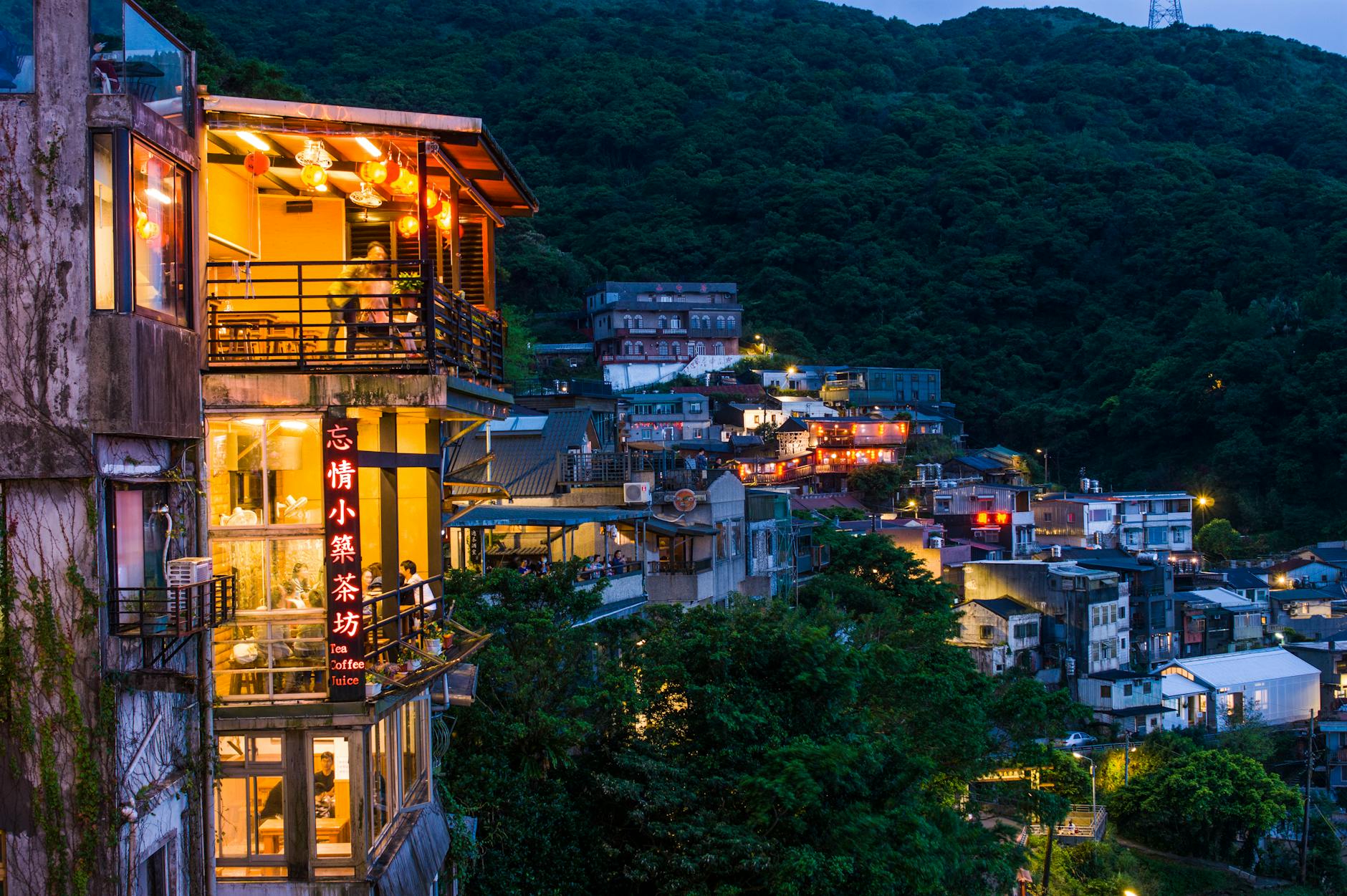
Jiufen is one of those places that almost everyone gets to see and very few people get to use well.
Start Here
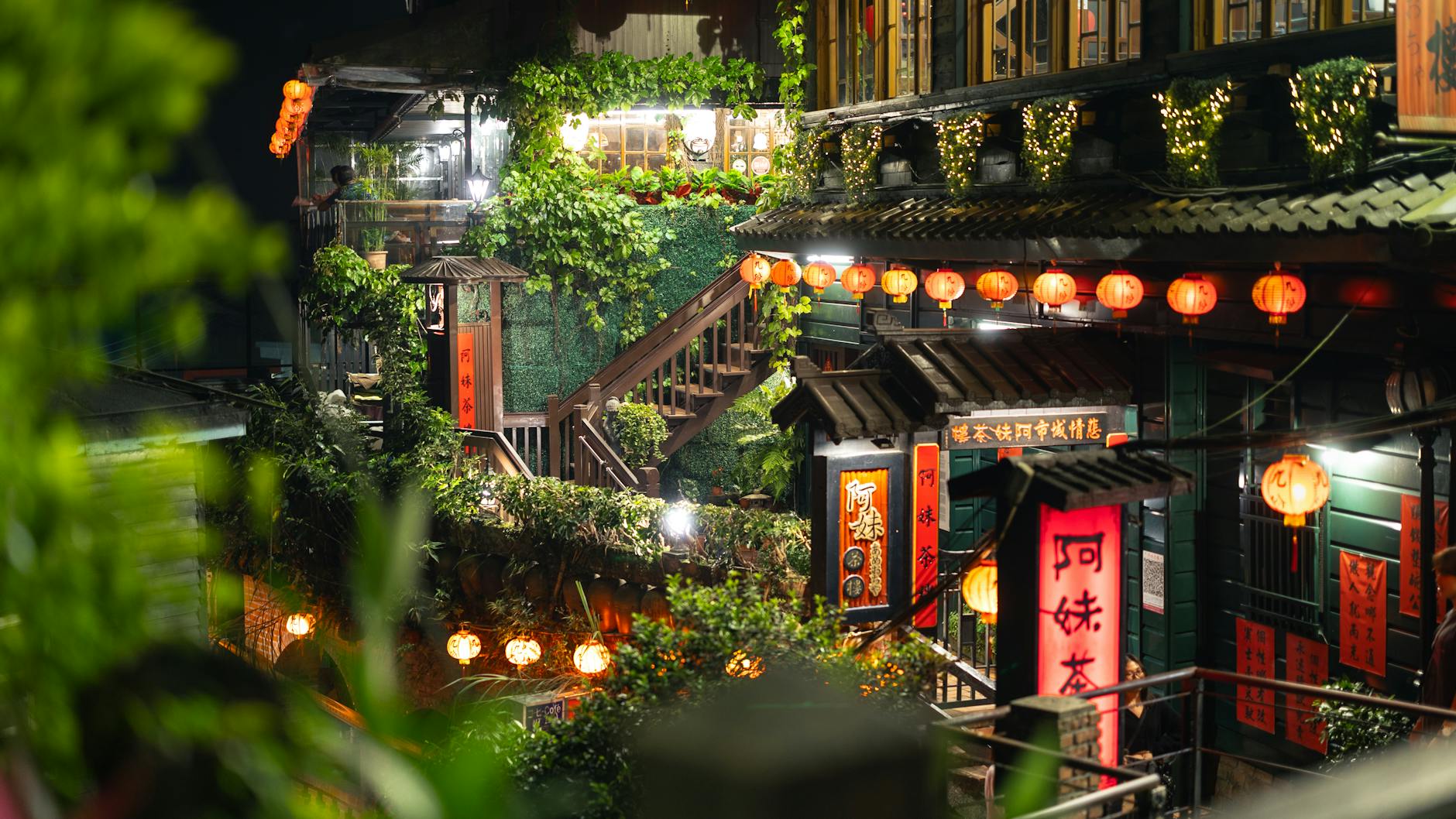
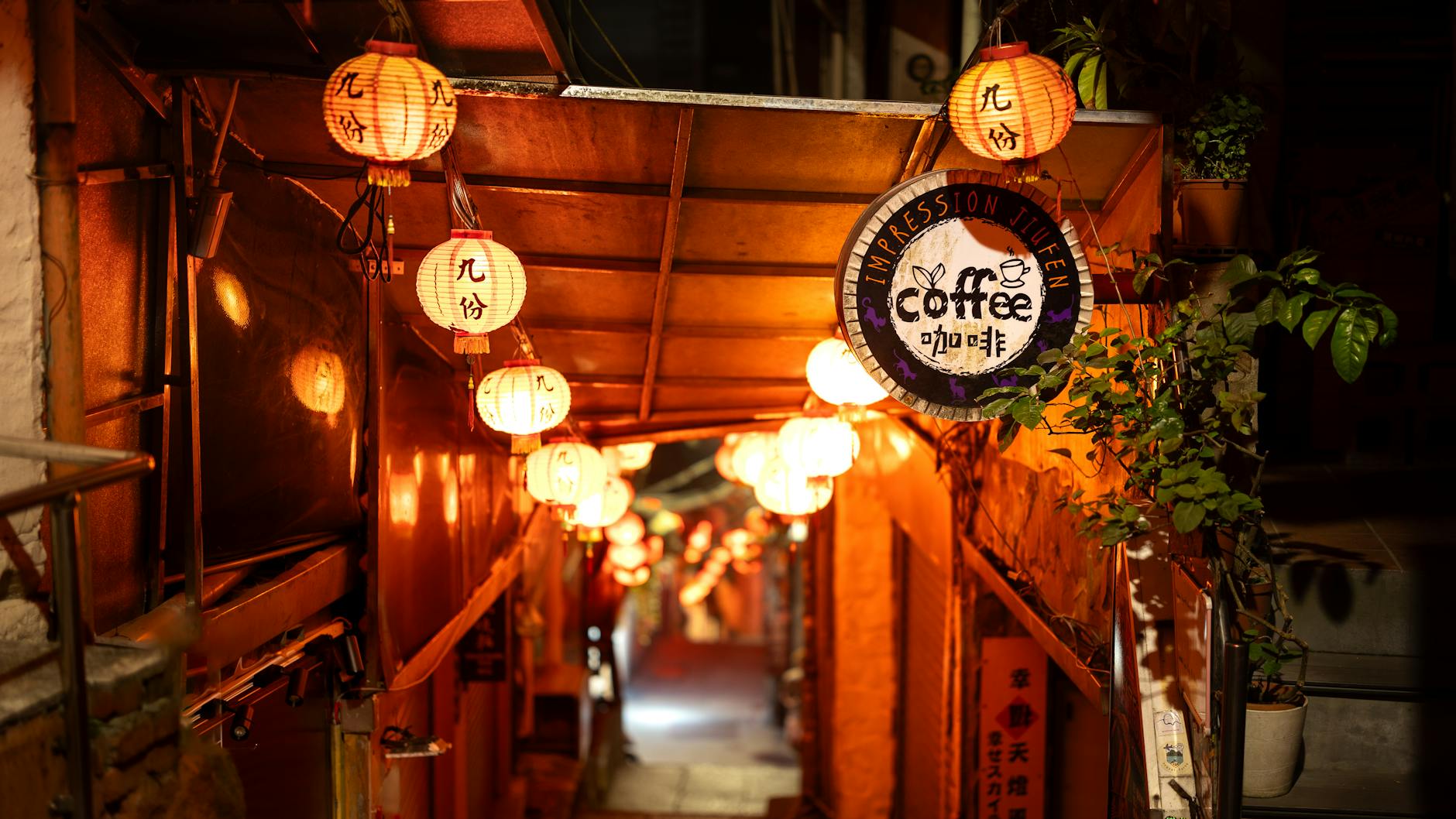
Most travelers arrive carrying an image first and a plan second: lanterns, steps, tea houses, mist, sea views, narrow alleys, and the idea of a mountain town suspended somewhere between nostalgia and theatricality. Jiufen does offer all of that. The problem is that first visits are often organized around photography and emotional expectation rather than the physical reality of the place. Jiufen is steep, crowded, weather-sensitive, transit-dependent, and easy to flatten into a hurried Taipei excursion.
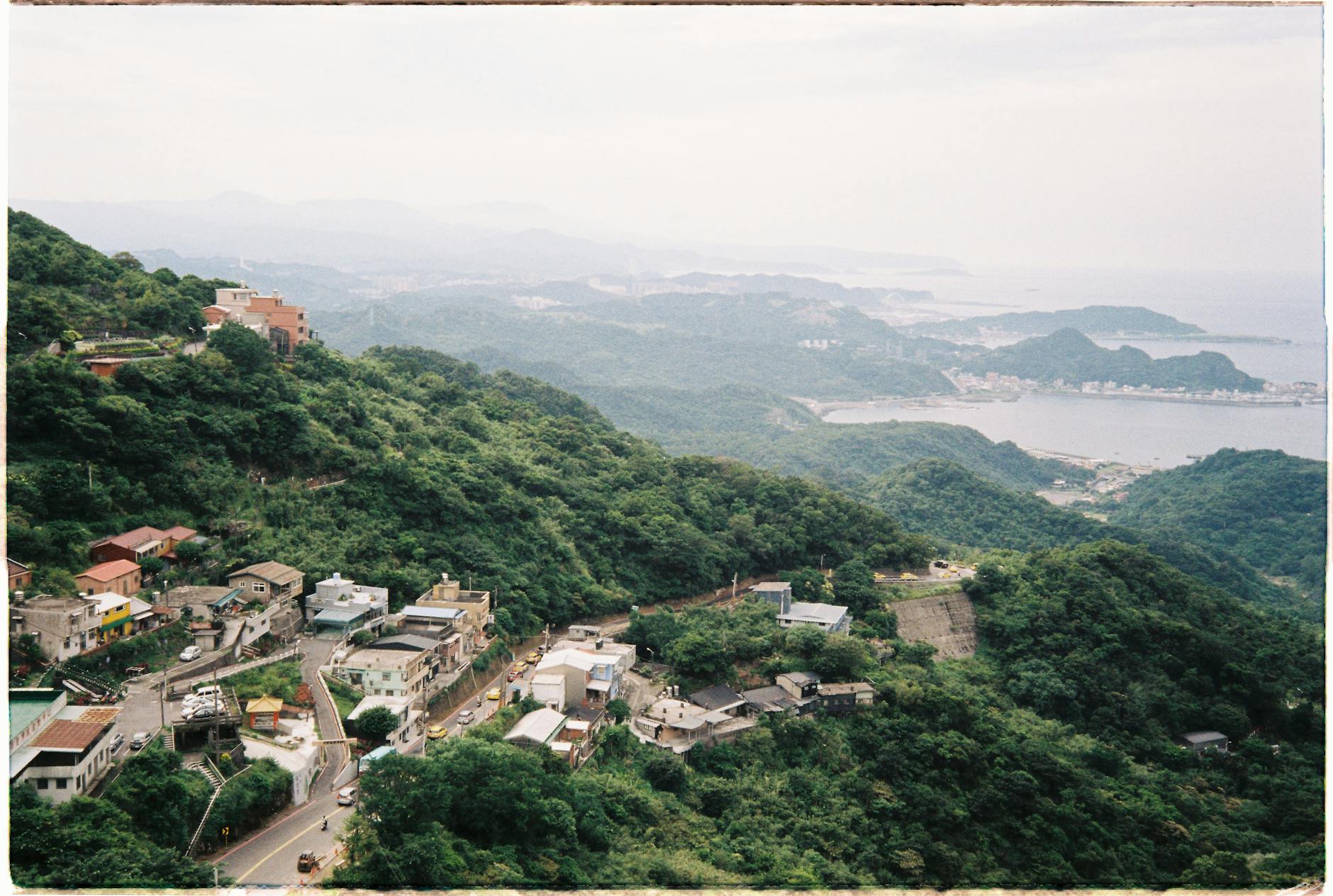
That is a mistake, because Jiufen is stronger as an experience of rhythm than as a checklist stop. Taiwan’s national tourism authorities still describe it through its gold-mining past, its ocean-facing mountain setting, its tea houses, and the possibility of staying overnight for the starlight and fishing lights.[1] New Taipei City continues to describe Jiufen Old Street as a “Golden Mountain City” environment of retro buildings, sloping terrain, tea houses, and night atmosphere.[2] Those official descriptions are actually useful, because they point to what matters: grade, history, light, and timing.
Jiufen in one sentence: it is a former mining settlement whose beauty only really appears once you stop treating it like a compressed one-hour photo errand.
Basic data
| Population | Small hillside town in New Taipei |
|---|---|
| Area | Compact old-town settlement on a mountain slope |
| Major religions | Buddhism, Taoism, folk religion, and a large secular visitor culture |
| Political system | Town district inside a special municipality |
| Economic system | Tourism-led local economy supported by hospitality, tea houses, and retail |
Quick Verdict
Best for: first-time Taiwan visitors, atmospheric walkers, tea-house travelers, and anyone who likes mountain-settlement texture more than museum-style sightseeing.
Less ideal for: travelers with low patience for crowds, stairs, weather shifts, or heavily touristed alleys.
Ideal first use: one late-afternoon-through-evening visit, ideally with enough time to stay overnight nearby or move slowly.
Still worthwhile as a day trip: yes, but only if you accept its limits.
Biggest planning mistake: arriving in peak crowd hours, doing one lane of Old Street, and leaving convinced you have “done Jiufen.”
One thing to prioritize: timing.
One thing to keep simple: the attraction count.
The blunt version: Jiufen is much better when you give it fewer objectives and more time.
Who Will Love Jiufen?
Jiufen works for travelers who enjoy atmosphere, contour, and repeated small views more than monumental sights. If you like places that unfold through lanes, stairs, snacks, terraces, and changing light, it can be excellent.
It is especially rewarding for visitors who can tolerate imperfection. Jiufen is not tidy. It is damp, sloped, intermittently overrun, and physically awkward. Those are part of its character rather than defects to be solved. Travelers who need clean linear sightseeing often find it frustrating; travelers who understand that the place is experienced in fragments tend to like it much more.
It is also strong for people who can accept that beauty in Taiwan is sometimes infrastructural rather than purely scenic. Jiufen is not a mountain village sealed off from tourism. It is a former mining settlement whose current life is entangled with buses, signs, queues, snack counters, tea houses, and visitor pressure. The right traveler does not ask it to be purer than it is.
Jiufen at a Glance
| Question | Practical Answer |
|---|---|
| Best visit style | late afternoon into evening |
| Main arrival logic | rail or city connection to Ruifang, then bus/shuttle onward |
| Main physical challenge | stairs, slopes, and crowd pinch points |
| Best emotional register | slow, observant, slightly restrained |
| Most useful district anchor | Jiufen Old Street |
| Most common mistake | treating Jiufen as one single alley |
| Best upgrade | staying long enough for night atmosphere or an overnight |
| What matters most | timing and pacing, not sight count |
2026 Visitor Notes
Jiufen Is Still Defined Officially by Mining Memory and Mountain-Sea Setting
Taiwan Tourism Administration continues to present Jiufen through its camphor and gold-mining past, its position in Ruifang District, its tea houses, ocean views, and its suitability for an overnight stay.[1] That is still the right frame. Jiufen is not just “an old street.” It is a settlement shaped by extraction history and difficult terrain.
Jiufen Old Street Remains the Main Visitor Spine
New Taipei City Travel still presents Jiufen Old Street as the heart of the mountain town, emphasizing the retro streetscape, sloping fields, lights at night, tea houses, snacks, and cultural atmosphere.[2] This remains accurate, but visitors should understand that the “Old Street” is not one simple corridor. It is a network of lanes, stairs, and pressure points.
The Visitor Center Is Still a Real Practical Tool
New Taipei City continues to operate the Jiufen Visitor Center on Qiche Road and still recommends that first-time visitors stop there for orientation, bus information, and local conditions.[3] That is unusually useful advice for a destination like this, because Jiufen genuinely becomes easier once you understand its larger Shuei-Jin-Jiou context.
The 965 Jiufen-Jinguashi Shuttle Still Matters
New Taipei City’s 965 Taiwan Tourist Shuttle route continues to be promoted as a direct way to link major metro and rail nodes, including Ruifang Train Station, with Jiufen Old Street and Jinguashi.[4] Even if you do not use that exact route, the official emphasis tells you something important: Jiufen is best handled as a transit-connected regional movement, not as a private fantasy village.
The Main Mental Shift
Do not ask, “What are the Jiufen sights?”
Ask instead, “What pace lets Jiufen breathe?”
That question produces better decisions about arrival time, tea-house stops, whether to stay overnight, and how much else to combine with it. It also forces you to acknowledge that Jiufen is not just scenic in the abstract. It is scenic through weather, light, elevation, and compression. If you get any of those wrong, the town can feel smaller and more touristed than it really is.
Jiufen rewards the traveler who arrives with less appetite and more patience.
What Makes Jiufen Distinct
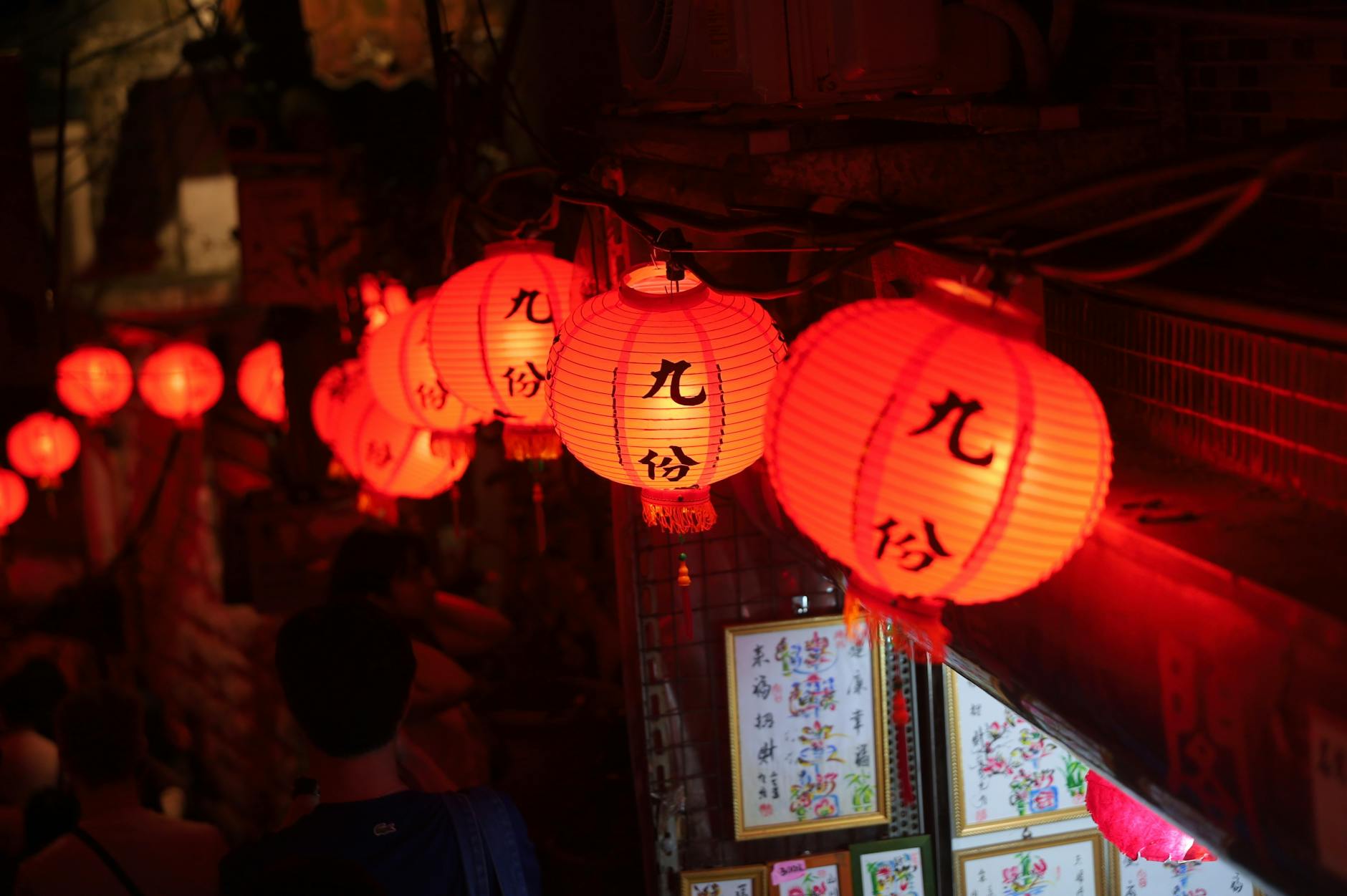
Jiufen is distinct because it feels assembled out of incline, weather, memory, and commerce all at once.
New Taipei City still emphasizes the movie connection to A City of Sadness, the sloping old streets, the tea houses, and the nighttime lights.[2] Taiwan Tourism Administration emphasizes the gold history, sea views, and tea houses.[1] Put together, these describe the real place well: Jiufen is not a preserved historical artifact so much as a mountain settlement whose surviving form has been adapted into one of Taiwan’s most atmospheric visitor environments.
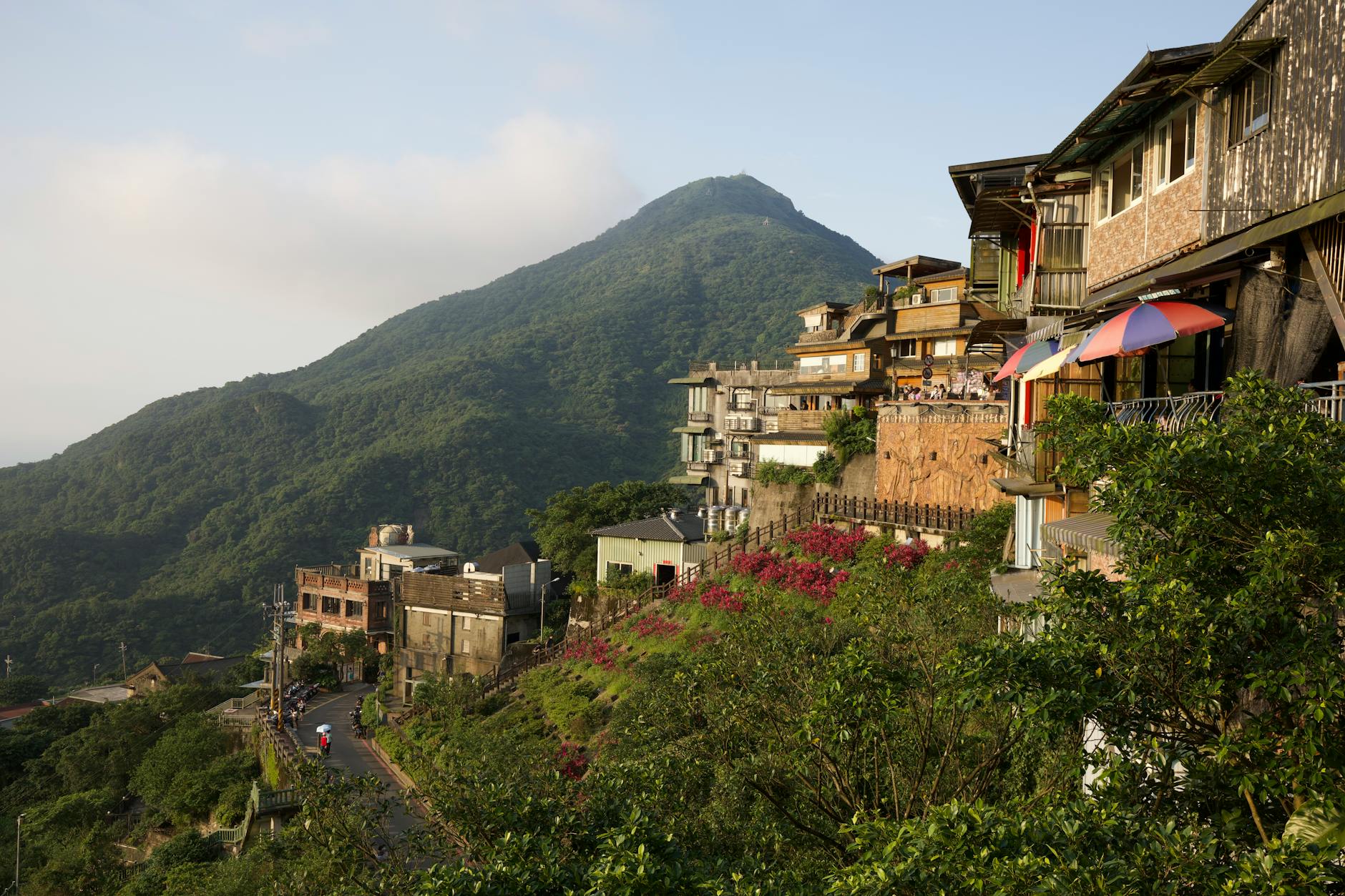
What keeps it from becoming merely decorative is the grade. The steepness is not cosmetic. It determines how the place feels in your legs, how long you stay put once you find a perch, where crowds accumulate, how rain changes the ground, and why a tea-house pause often matters more than one more "must-see" corner.
Why Jiufen Is More Physical Than People Expect
The most common misunderstanding about Jiufen is that it is atmospheric first and physical second. In reality, the physical dimension is what determines whether the atmosphere can be accessed at all.
Stairs, compression, dampness, weight in your bag, crowd direction, and simple fatigue all shape the town. If you are already tired when you arrive, Jiufen often feels smaller and harsher. If you arrive with enough energy and enough time to stop, the same slopes and lanes can feel textured and alive rather than merely inconvenient.
This is one reason day-trip compression is so dangerous here. It strips away the margin you need to let the town work.
Why Jiufen So Often Disappoints the Rushed Visitor
Jiufen disappoints people when they ask it to behave like a smooth heritage district.
They arrive in the middle of peak crowd hours. They push through one obvious lane, photograph a few façades, buy a snack, and leave still thinking the real Jiufen must have been hidden just beyond the next cluster of umbrellas and tour groups. In reality, what was missing was not access but pace.
Jiufen cannot reveal itself to a rushed body very easily. It is too compressed and too sloped. Without at least one real pause, one less-crowded angle, and one transition in light, the place often remains only partially available.
Best Time to Visit
Jiufen is better late than early, but only if you control the crowd problem.
Morning can be quieter, but often gives you a flatter reading of the town if your goal is atmosphere. Midday is usually the least appealing: more day-trippers, harsher light, and the least emotional payoff. Late afternoon into evening is the strongest first answer because the slopes, sea-facing views, and lantern-lit commercial texture begin to work together.
If you can manage it, the ideal move is to arrive before peak evening crush, settle into the town slowly, and still be there when the light changes. That sequence matters far more than many first-timers realize.
Fog, Rain, and the Myth of Perfect Jiufen
Many first-time visitors arrive with a visual fantasy of Jiufen that depends on one exact kind of light: glowing, clear enough for views, misty enough for poetry, but not rainy enough to be awkward. Real Jiufen is less obedient than that.
Fog can make the place more haunting or more closed-in. Rain can make it more atmospheric or just more slippery. Clear weather can give you the sea but reduce some of the mystery. There is no single ideal condition that guarantees success.
The better approach is to accept that weather changes which side of Jiufen becomes strongest. On some days the view matters more. On others the lanes and tea houses do. Trying to force one imaginary Jiufen onto the actual one is how disappointment happens.
Weekday Jiufen Versus Weekend Jiufen
This distinction matters enormously.
A calmer weekday Jiufen is usually easier to understand as a town. The lanes breathe more, the tea houses feel less besieged, and you can see how the settlement’s shape actually works.
Weekend Jiufen can still be worthwhile, but it behaves more like an atmospheric event. The lights may be stronger, the food more animated, and the popular-image version of the town more visible. The tradeoff is density. If you meet Jiufen only at its most compressed, you may leave with the feeling that the place is all queue and no soul.
Neither version is false. The key is knowing which one you are getting.
How Much Time You Need
Short Visit
Enough for one district loop, one tea-house or snack pause, and one good viewpoint. Anything less becomes pure transit overhead.
Half Day
The best day-trip answer if Jiufen is the main destination.
Overnight
Often the best choice if you actually care about atmosphere. Taiwan Tourism Administration is right to note that staying for the night view changes the experience.[1]
The Day-Trip Trap
Jiufen is famous enough that most first-time visitors try to fit it into a larger northeast-Taiwan day. That is often where things go wrong.
The town does not combine gracefully with unlimited ambition. If you stack Jiufen with Shifen, another mining-town stop, a rail detour, and a long Taipei return while still hoping for the right evening atmosphere, the result is usually frustration. Jiufen gets the wrong time of day, the wrong energy level, or both.
A place this dependent on timing should not be treated like one checkbox among four.
Arrival Strategy
Jiufen should be approached as a sequence, not a leap.
The practical official pattern remains straightforward: get yourself into the Ruifang system, then continue by bus or shuttle toward Jiufen.[4] New Taipei City’s travel information continues to maintain both the Jiufen Visitor Center and the Ruifang Railway Station Visitor Information Center, which tells you how central those two anchors remain.[5]
The real issue is not whether arrival is possible. It is whether you arrive at a time and with an energy level that still lets the town work. Jiufen is not forgiving if you show up already tired, late, and determined to move quickly.
Return Planning Matters as Much as Arrival
Because so many first-time visits are still day trips, people focus heavily on how to get there and not nearly enough on how they will leave.
That is a mistake. A rushed, anxious mental countdown toward the return bus or onward connection can poison the entire visit. Once you feel time tightening, you stop pausing properly, stop taking in the changing light, and start treating every staircase as an obstacle rather than part of the place.
If you are not staying overnight, the return should still feel generous enough that Jiufen does not become a timed extraction exercise.
Ruifang First, Jiufen Second
This may sound overly practical, but it matters. Jiufen becomes easier as soon as you stop imagining it as an isolated fantasy hill and start seeing it as part of the Ruifang system.
Ruifang is where the transition becomes real. Once you understand the relationship between rail arrival, shuttle/bus movement, and the mountain roads beyond, Jiufen becomes less mysterious and much more manageable. That is one reason the visitor-center infrastructure matters more here than at many heritage destinations. Orientation is not a formality. It is part of the experience design.
Where to Stay
If you stay overnight, where you sleep matters a lot more than the promotional photos suggest.
In or Very Near the Core
Best for travelers who want immediacy, night atmosphere, and early access to the lanes. The tradeoff is obvious: access can be awkward, stairs can be punishing, and some properties romanticize difficulty as charm.
Slightly Removed But Still Jiufen-Adjacent
Often the strongest first-time answer. You retain the town’s atmosphere without turning every arrival and departure into a physical test.
Back Down Toward Ruifang or a More Practical Base
Best if your priorities are easier transport, more room, and less lane pressure, though it weakens the after-dark return value that makes Jiufen strongest.
The Main Rule
Do not pick the most atmospheric-sounding room until you understand what carrying bags, returning at night, and climbing stairs will actually feel like.
Jiufen Old Street, Properly Used
Jiufen Old Street is the core, but it is not the whole story.
New Taipei City still describes the Old Street as a narrow, uphill route lined with food, souvenirs, tea houses, and preserved fragments of earlier life.[2] That is correct, but the biggest practical point is this: Jiufen’s main lane is strongest when used as a spine rather than as a trap. Walk it, yes. But also look for lateral movement, pauses, and the moments when the town opens back out to air and view.
If you only move with the crowd, Jiufen can feel like a queue with weather.
Old Street Is Not the Whole Emotional Story
It helps to say this plainly, because many first-time visitors unconsciously treat Old Street as if it were Jiufen in miniature.
It is not. Old Street is the town’s most visible commercial and visitor-facing register. It is useful, lively, and often attractive. But Jiufen’s emotional power usually comes from the interaction between that crowded spine and everything around it: the slope, the openings to sea, the side stairs, the brief quieter patches, the sense that the town was once held together by work and geology rather than by visitor flow alone.
If you only remember one lane of food and lanterns, you have remembered the easiest version of Jiufen, not the best one.
The Difference Between the Main Lane and the Town
This is one of the most important distinctions for first-time visitors.
The main lane is not false, but it is not sufficient. It gives you the concentrated version of Jiufen: shops, snacks, lantern-lit nostalgia, tea-house cues, and crowd pressure. The town includes that, but also the transitions, steps, side glances, quieter corners, and occasional moments when the settlement’s shape suddenly reveals itself against the slope and sea.
If you confuse the main lane with the whole town, Jiufen will always feel more commercial than it truly is.
Why Side Views Matter More Than Famous Angles
Jiufen’s most publicized views are rarely the ones that make the town emotionally convincing.
What tends to stay with people are the side openings: a sudden glimpse of sea beyond the slope, a run of steps with red light appearing deeper in the lane, a terrace-like pause where the crowd pressure softens, a point where the town briefly looks like a settlement again instead of an attraction.
That is why constant forward movement works so badly here. If you are only hunting the most famous angle, you often miss the quieter geometries that make Jiufen feel real.
Tea Houses, Rest, and the Value of Not Constantly Moving
Official descriptions of Jiufen repeatedly return to tea houses, and for once the tourism cliché is deserved.[2][1]
Jiufen needs stillness. A tea-house stop is not just a cultural accessory. It is a structural correction to the town’s crowd pressure. Without one intentional pause, many first visits become all incline and no absorption.
A town this steep and compressed asks to be punctuated. If you keep moving only because the lanes are busy, you usually end up with less of the place, not more.
Tea-House Time as Travel Method
In some destinations, tea houses are atmosphere. In Jiufen, they are also method.
They force you to stop climbing and scanning long enough for the town to gather around you. They let noise become background rather than pressure. They let weather, light, and the mountain-sea setting do some of the interpretive work that constant walking interrupts.
That is why visitors who skip any substantial pause often leave with a thinner experience. Jiufen is not a place that yields well to uninterrupted motion.
Night, Lamps, and Why Evening Matters
New Taipei City explicitly notes that the Old Street looks different in the morning and at night, and that the lights in the evening are part of the appeal.[2]
This is not decorative language. Jiufen is genuinely a light-sensitive place. At night, commercial clutter can become atmosphere; during the day, the same density can feel merely busy. That is why evening matters so much here.
Even if you do not stay overnight, you should at least let the place change register once. Jiufen is not fully itself in a single flat hour.
Dusk Is the Real Threshold
Jiufen often becomes most persuasive not when it is fully daytime or fully night, but in the transition between them.
At dusk, the sea-facing edges begin to dim, the lights gain significance, and the town’s theatrical reputation finally starts to earn itself. If you leave before this shift, you have probably seen Jiufen; if you stay through it, you have a much better chance of understanding why people care about it.
That threshold is one of the strongest arguments against overpacked Taipei day-trip planning.
Overnight Jiufen: Why It Is Better Than It Sounds
Taiwan Tourism Administration is right to point out the value of staying overnight for the starlight and fishing lights.[1]
An overnight does not transform Jiufen into a secret village. It does something more useful: it changes your relationship to time. You stop racing the last bus in your head. You stop feeling that every pause must be justified. You stop experiencing the town only as a transit-conditioned objective. That change alone can be enough to make the place feel more like a real settlement and less like a pressured attraction.
For travelers who truly care about atmosphere, this is often the smartest upgrade available.
Why Overnighting Changes the Ethics of the Visit
An overnight does more than improve the light. It changes your posture toward the town.
When you know you are not racing away, you become less extractive. You stop trying to seize every impression. You are more willing to sit, look, and let the place do less. This often makes Jiufen feel less like an object and more like a settlement in which you are temporarily a guest.
For a destination so often consumed visually, that change in attitude matters.
The Difference Between Leaving and Returning
There is another subtle advantage to staying longer: you stop relating to Jiufen only as somewhere you must leave efficiently.
The moment a place is defined mainly by the need to get out of it on schedule, your behavior changes. You become more hurried, less observant, and more transactional. Staying overnight, or at least giving the visit enough time that departure is not breathing down your neck, changes the town from a transit problem into a temporary environment.
That is one reason even modest extra time can have outsized value here.
Jiufen and the Wider Shuei-Jin-Jiou Area
New Taipei City repeatedly places Jiufen inside the larger Shuei-Jin-Jiou system, alongside Jinguashi and surrounding mountain-and-sea landscapes.[3][4]
This matters because the best Jiufen trip is not always the one that tries to absorb everything nearby. Sometimes the right move is to let Jiufen be Jiufen. Other times, especially on a second visit, pairing it with Jinguashi or a regional trail makes the town feel less isolated and more intelligible.
The key is not to assume that "more nearby places" automatically means "more complete trip." Jiufen is too timing-sensitive for that kind of greed.
Why the Second Pass Through Jiufen Matters
Jiufen is one of those places that often improves on a second walk.
The first pass is usually about orientation, crowd tolerance, and figuring out which atmospheric expectations were realistic. The second pass, especially if it happens after a tea-house rest or after dark, is where the town becomes more legible. You notice the grade better. You understand which turns open to air and which collapse back into density. You stop asking the place to be endlessly photogenic and start letting it be physically specific.
That is often the moment when Jiufen becomes memorable rather than merely famous.
Repetition Is the Upgrade
Some places need novelty to stay alive. Jiufen often needs repetition instead.
A second walk, a second look at the same steps under different light, a second tea-house pause, or even a second descent toward the edge of the settlement can reveal more than another linked destination ever would. That is why Jiufen is often improved by subtraction. Remove the extra stop and the town itself becomes legible.
What a Good Jiufen Visit Actually Feels Like
A good Jiufen visit does not usually feel efficient.
It feels a little slower than you expected, a little more physical than the photographs prepared you for, and a little less dependent on named attractions than your planning notes implied. It includes one or two moments when the town opens, one or two moments when you deliberately stop, and at least one stretch when you are no longer trying to optimize your route.
That is usually when Jiufen stops being a famous location and becomes a lived place, even if only for a few hours.
Common Mistakes
Arriving at the Worst Possible Time
Peak afternoon crowds plus no overnight plan is the classic bad version of Jiufen.
Treating Jiufen as a Single Photo Spot
It is a settlement, not a backdrop.
Combining Too Much in One Day
Jiufen suffers when it is squeezed between too many northeast-Taiwan obligations.
Refusing to Sit Down
Without one real pause, the town becomes tiring faster than many visitors expect.
Ignoring Weather and Stairs
Slope and rain are not minor details here.
Wanting It to Be Pure
Jiufen is atmospheric, but it is not untouched. Expecting purity makes the real place harder to appreciate.
Why Jiufen Is Better in Memory Than in Crowd
Jiufen often feels stronger later than it did in the thick of the visit.
That is partly because the crowd pressure recedes in memory while the right impressions remain: the sea-facing mountain edge, the lights, the stairs, the tea-house pause, the old mining-town residue, and the sensation that the place was always a little harder and more physical than the romantic image suggested.
That aftereffect is part of the destination’s power. Jiufen is not only pretty. It is textured.
What Success Looks Like Here
Success in Jiufen is not that you photographed the most famous angle in the shortest possible time.
It is that the town changed character while you were there. It is that you felt both the pressure and the pause. It is that the mining-town slope became more important than the souvenir flow. It is that you left with a sense of sequence: arrival, climb, stop, light change, return.
That kind of success is quieter than social-media certainty, but it is much closer to the real place.
Why Jiufen Often Feels Better in Memory
Jiufen often improves after the trip because the crowd pressure falls away in memory while the right structures remain.
You remember the steps, the red lights, the view breaking open, the tea-house rest, the feeling of the old mining settlement hanging above the sea. What often fades is the impatience that a rushed visit creates. That is another sign that the place wanted more time than the average itinerary first gave it.
Image Jiufen Versus Settlement Jiufen
One of the most useful distinctions a first-time visitor can make is between image Jiufen and settlement Jiufen.
Image Jiufen is the version already circulating in your head before arrival: lanterns, stairs, mist, mountain romance, a nostalgic alley somehow floating above the sea. Settlement Jiufen is the actual place: steep, commercial, transit-reliant, weather-marked, and still shaped by the old mining logic that made the slope necessary rather than picturesque.
The trip improves when those two versions stop competing and start informing one another. If you insist on image Jiufen alone, the real place will always feel compromised. If you accept settlement Jiufen, the atmosphere begins to feel more earned and far less fragile.
That is usually the difference between a famous stop and a memorable one.
Jiufen Inside a Wider Taiwan Trip
Jiufen also works best when it is given the right role inside a larger Taiwan itinerary.
It is not a replacement for Taipei. It is not a substitute for a major mountain region. It is not the place to prove how many northeast-Taiwan nodes you can combine in one day. It is best understood as a compact, atmosphere-heavy, slope-defined settlement that rewards focused attention.
If you give it that role, it adds a very particular texture to a Taiwan trip: one based on mining memory, tea-house pauses, changing light, and the relationship between town and sea. If you ask it to do too many other jobs at once, it becomes thin.
Why Jiufen Rewards a Second Reading
Jiufen is also one of those places that often becomes easier to admire once you stop trying to solve it immediately.
The first encounter is full of pressure: crowds, famous angles, expectations, transit awareness, physical awkwardness. The second reading, whether later the same day or on another visit, usually has more clarity. You begin to see the place as shaped rather than merely crowded. You understand why stillness matters. You notice how much the town depends on timing rather than on a static “best view.”
That is another reason the destination benefits from being slowed down. Jiufen is not a place that always gives its best self to the fastest visitor.
In practical terms, that means one less linked destination, one more pause, and one more willingness to let the town change around you before deciding what it was.
That slower judgment is often the whole difference between leaving with a stock image and leaving with a place that still feels specific in the body: the climb, the sea air, the damp steps, the light turning, the relief of sitting down, and the odd satisfaction of not having rushed the mountain town into banality.
That specificity is the real reward.
And it only appears when the town is given time.
That is the whole point of coming properly.
My Blunt Advice
If this is your first time, give Jiufen the best light and the fewest competing commitments. Arrive early enough to orient yourself, stay late enough for the town to change, and if you can, stay overnight or at least linger like someone who is not rushing back to prove efficiency.
Jiufen is touristy, yes. It is also legitimately beautiful. The way to protect that beauty is not to deny the crowds. It is to plan around them, slow the visit down, and let the mountain town reveal itself in stages instead of demanding everything from it at once.
Used properly, Jiufen does not feel like a checklist lane at all. It feels like a place where timing, grade, and restraint finally aligned.
That alignment is the real reason to come.
Source Notes
- 1. Taiwan Tourism Administration page for Jiufen. Used for current official framing of Jiufen’s camphor and gold-mining history, mountain-and-sea setting, tea-house culture, and overnight appeal. https://eng.taiwan.net.tw/m1.aspx?sNo=0002016&id=290
- 2. New Taipei City Travel page for Jiufen Old Street. Used for current official description of the old street, retro buildings, sloping terrain, tea houses, snacks, night atmosphere, and opening-hours presentation. https://newtaipei.travel/en/Attractions/Detail/112939
- 3. New Taipei City Travel page for Jiufen Visitor Center. Used for current official location, hours, and visitor-orientation role. https://newtaipei.travel/en-us/Attraction/Detail?id=402755&wnd_id=60
- 4. New Taipei City Travel news release on the Taiwan Tourist Shuttle 965 Jiufen-Jinguashi Route. Used for current official framing of shuttle connectivity through Ruifang, Taipei-area nodes, Jiufen Old Street, and Jinguashi. https://newtaipei.travel/en/news/detail/2677
- 5. New Taipei City Travel information page. Used for current official listing of Jiufen Visitor Center and Ruifang Railway Station Visitor Information Center. https://newtaipei.travel/en/plan/travel-info